
As per case facts, the petitioner filed a Writ Petition under Article 32 seeking the release of children under 16 from jails, information on juvenile facilities, and direction for State ...
http://JUDIS.NIC.IN SUPREME COURT OF INDIA Page 1 of 6
PETITIONER:
SHEELA BARSE & ANR.
Vs.
RESPONDENT:
UNION OF INDIA & ORS.
DATE OF JUDGMENT05/08/1986
BENCH:
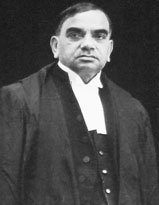
BHAGWATI, P.N. (CJ)
BENCH:
BHAGWATI, P.N. (CJ)
MISRA RANGNATH
CITATION:
1986 AIR 1773 1986 SCR (3) 443
1986 SCC (3) 596 JT 1986 53
1986 SCALE (2)184
CITATOR INFO :
RF 1988 SC1531 (87)
E 1988 SC2211 (8)
RF 1992 SC1701 (35,48,53)
ACT:
Constitution of India, 1950, Art. 144,-Scope of-Duty of
the Subordinate Courts/Judicial authorities to comply with
the directions of the apex Court explained.
Constitution of India, Art 39(f)-Legislation,
enactment and enforcement of Children's Acts-Constitutional
obligation of State-States to enforce Children's Acls-
District Judges to visit jails and see that child prisoners
are accorded the benefit of Jail Manual.
Children Acts-Children-legislation for benefit of-
Enactment and enforcement by States-Necessity of.
HEADNOTE:
The petitioner filed the present petition under Article
32 of the Constitution for release of children below the age
of 16 years detained in jails within different States of the
country, production of complete information of children in
jails and existence of juvenile Courts, homes and schools in
the country. The petitioner also asked for a direction to
the State Legal Aid Boards to appoint duty counsel to ensure
availability of legal protection for children as and when
they are involved in criminal cases. The Supreme Court while
directing the State Legal Aid and Advice Board in each State
or any other Legal Aid organisation existing in the State
concerned, to send two lawyers to each jail within the State
once a week for the purpose of providing legal assistance to
children below the age of 16 years who are confined in the
jails, called for information from the District Judges about
the children below the age of 16 years detained in various
jails. However several District Judges did not comply with
the direction within the time granted.
While showing concern and surprise that a direction
given by the apex Court has not been properly carried out by
the District Judges who are an effective instrumentality in
the hierarchy of the judicial system, the Court,
444
^
http://JUDIS.NIC.IN SUPREME COURT OF INDIA Page 2 of 6
HELD: (1) Every defaulting District Judge who had not
submit ted his report shall unfailingly comply with the
direction and furnish the report by August 31, 1986 through
his High Court, and the Registrar of every High Court shall
ensure that compliance of the present direction is made. It
is surprising that the High Courts have remained aloof and
indifferent and have never endeavored to ensure submission
of the reports by the District Judges within the time
indicated in the order of this Court. [447G-H]
(2)(I) Enough the Children's Acts are on the statute
book, in some States the Act has not been brought into
force. This piece of legislation is for the fulfilment of a
constitutional obligation and is a beneficial statute. There
is hardly any justification for not enforcing the statute.
Ordinarily it is a matter for the State Government to decide
as to when a particular statute should be brought into force
but in the present setting, it is appropriate that without
delay every State should ensure that the Act is brought into
force and administered in accordance with the provisions
contained therein. [448B-E]
(2)(II) Such of the States where the Act exists but has
not been brought into force should indicate by filing a
proper affidavit as to why the Act is not being brought into
force in case the Act is still not in force. [448E]
(3)(I) The safeguards which are provided in Jail
Manuals prevalent in different States should be strictly
complied with and the prisoners should have the full benefit
of the provisions contained in the Manual. It is also the
obligation of the High Court to ensure that all persons in
judicial custody within its jurisdiction are assured of
acceptable living conditions. [448F; 449A]
(3)(II) Every District and Session Judge should visit
the district jail at least once in two months, and in the
course of his visit, he should take particular care about
child prisoners, both convicts and under trials and as and
when he sees any infraction in regard to the children in the
prison he should draw the attention of the Administration as
also of his High Court. [448G-H]
JUDGMENT:
CRIMINAL ORIGINAL JURISDICTION: Writ Petition
(Criminal) No. 1451 of 1985
Under Article 32 of the Constitution of India.
S.B. Bhasme, Harbans Lal, A.S. Bhasme, Badri Das
Sharma,
445
C.V. Subba Rao, R. Kumar, D.N. Mukharji, R. Mukherji, Tapash
A Roy, Dilip Sinha and J.R. Das for the Respondents.
The order of the Court was delivered by
BHAGWATI, CJ. This application under Article 32 of the
Constitution has asked for release of children below the age
of 16 years detained in jails within different States of the
country, production of complete information of children in
jails, information as to the existence of juvenile courts
homes and schools and for a direction that the District
Judges should visit jails or sub-jails within their
jurisdiction to ensure that children are properly looked
after when in custody as also for a direction to the State
Legal Aid Boards to appoint duty counsel to ensure
availability of legal protection for children as and when
they are involved in criminal cases and are proceeded
against. The Union of India and all the States and Union
Territories have been impleaded as respondents.
http://JUDIS.NIC.IN SUPREME COURT OF INDIA Page 3 of 6
On September 24, 1985, notice was directed to all the
respondents. A few of the respondent States filed counter
affidavits in response to the notice. The matter was
adjourned on March 31, 1986. to April 15, 1986, to enable
the respondents who had not yet filed their affidavits to
file such affidavits. On April 15, 1986, after hearing
counsel who appeared for the parties this Court pointed out:
" ....It is an elementary requirement of any
civilised society and it had been so provided in
various statutes concerning children that children
should not be confined to jail because
incarceration in jail has a dehumanising effect
and it is harmful to the growth and development of
children. But even so the facts placed before us,
which include the survey made by the Home Ministry
and the Social Welfare Department show that a
large number of children below the age of 16 years
are confined in jails in various parts of the
country ."
This Court directed the District Judges in the country to
nominate the Chief Judicial Magistrate or any other Judicial
Magistrate to visit the District Jail and Sub-Jail in their
districts for the proposes of ascertaining how many children
below the age of 16 years are confined in jail, what are the
offences in respect of which they are charged, how many of
them have been in detention-whether in the same jail or
previously
446
in any other jail-before being brought to the jail in
question, whether they have been produced before the
children's court and, if so, when and how many times and
whether any legal assistance is provided to them. The Court
also directed that "each District Judge will give ut most
priority to this direction and the Superintendent to each
jail in the district will provide full assistance to the
District Judge or the Chief Judicial Magistrate or the
Judicial Magistrate, in this behalf who will be entitled to
inspect the registers of the jail visited by him as also any
other document/documents which he may want to inspect and
will also interview the children if he finds it necessary to
do so for the purpose of gathering the correct information
in case of any doubt. The District Judge, Chief Judicial
Magistrate or the Judicial Magistrate, as the case may be,
will submit report to this court within 10 weeks from today.
It will also be stated in the report as to whether there are
any children's home, Remand Home or observation Homes for
children within his district and if there are, he will
inspect such children homes, remand homes and observation
homes for the purpose of ascertaining as to what are the
conditions in which children are kept there and whether
facilities for education or vocational training exist. Such
reports will be submitted by each District Judge through the
Registrars of the respective High Courts to the Registrar of
this Court. Each State Government will also file affidavit
stating as to how many children homes, remand homes and
observation homes for children are in existence in the
respective State and how many inmates are kept in such
children homes, remand homes or observation homes. The would
also direct the State Legal Aid & Advice Board in each State
or any other Legal Aid organisation existing in the State
concerned, to send two lawyers to each jail within the State
once in a week for the purpose of providing legal assistance
to children below the age of 16 years who are confined in
the jails." The writ petition was adjourned to July 17,
1986.
http://JUDIS.NIC.IN SUPREME COURT OF INDIA Page 4 of 6
On April 24, 1986 the Court again made the following
order:
"We have adjourned the writ petition to 17.7.1986
for hearing and final disposal but we feel that it
would be desirable to take it up when the Bench
sits in vacation. We would direct that the matter
may be placed for final disposal before a Bench of
this Court on 24.6.1986. We have granted two
months' time to the District Judges to make their
reports vide our order dated 15.4.1986. Fresh
intimation to this effect may be sent to the
District Judges through the Registrars of the High
Courts. We may re-
447
iterate that as soon as the reports are received
copies A thereof may be supplied to the Advocates
during the vacation itself .. "
The writ petition was thereafter listed on July 12, 1986,
during the long vacation for hearing. The Court found that
though reports from several District Judges had come in
response to the earlier direction, yet several District
Judges had not sent their reports. The Court observed:
"It is a little surprising that though we gave
directions long back directing the District
Judges/Chief Judicial Magistrates to send their
reports of inspection of not only the District
Jails but also Sub-Jails in the districts on or
before 10.6.86 (24.6.86), the reports have not yet
come in respect of several Districts and
particularly in respect of sub-jails in the
Districts. We propose to give directions for
expediting submission of these reports at the next
hearing of the writ petition. We are very keen
that the High Courts should be requested to
monitor the submission of these reports and we
have therefore requested the counsel appearing in
the case to make constructive suggestions in that
behalf.
Six further weeks have passed beyond the time indicated if
the order dated April 15, 1986, and even till this day
analysis shows that several District Judges have not
complied with the direction. This Court had intended that
the report of the District Judges would be sent to the
Registry of this Court through the Registrars of the
respective High Courts. This obviously meant that the
Registrars of the High Courts were to ensure compliance. We
are both concerned and surprised that a direction given by
the apex Court has not been properly carried out by the
District Judges who are an effective instrumentality in the
hierarchy of the judicial system. Failure to submit the
reports within the time set by the Court has required
adjournment of the hearing of the writ petition on more than
one occasion. We are equally surprised that the High Courts
have remained aloof and indifferent and have never
endeavoured to ensure submission of the reports by the
District Judges within the time indicated in the order of
this Court. We direct that every defaulting District Judge
who has not yet submitted his report shall unfailingly
comply with the direction and furnish the report by August
31, 1986, through his High Court and the Registrar of every
High Court shall ensure that compliance with the present
direction is made.
448
Article 39(f) of the Constitution provides that the
State shall direct its policy towards securing that children
http://JUDIS.NIC.IN SUPREME COURT OF INDIA Page 5 of 6
are given opportunities and facilities to develop in a
healthy manner and in conditions of freedom and dignity and
that childhood and youth are protected against exploitation
and against moral and material abandonment. Every State
excepting Nagaland has a Children's Act. It is a fact some
of the Acts have been in existence prior to inclusion of the
aforesaid clause in Article 39 by the amendment of 1976.
Though the Acts are on the statute hook. in some States the
Act has not yet been brought into force. This piece of
legislation is for the fulfilment of a constitutional
obligation and is a beneficial statute. Obviously the State
Legislatures have enacted the law on being satisfied that
the same is necessary in the interest of the society,
particularly of children. There is hardly any justification
for not enforcing the statute. For instance, in the case of
Orissa though the Act is of 1982, for four years it has not
been brought into force. Ordinarily it is a matter for the
State Government to decide as to when a particular statute
should be brought into force but in the present setting we
think that it is appropriate that without delay every State
should ensure that the Act is brought into force and
administered in accordance with the provisions contained
therein. Such of the States where the Act exists but has not
been brought into force should indicate by filing a proper
affidavit by August 31, 1986, as to why the Act is not being
brought into force in case by then the Act is still not in
force.
Under the Jail Manuals prevalent in different States
every jail has a nominated committee of visitors and
invariably the District and Sessions Judge happens to be one
of the visitors. The purpose of having visitors is to ensure
that the provisions in the Manual are strictly complied with
so far as the convicts and the under-trials prisoners
detained in jail are concerned. Being in jail results in
curtailment of freedom. lt is, therefore, necessary that the
safeguards which are provided in the Manual should be
strictly complied with and the prisoners should have the
full benefit of the provisions contained in the Manual. We
direct that every District and Sessions Judge should visit
the District Jail at least once in two months and in course
of his visit he should take particular care about child
prisoners, both convicts and undertrials and as and when he
sees any infraction in regard to the children in the prison
he should draw the attention of the Administration as also
of his High Court. We hope and trust that as and when such
reports are received in the High Court the same would he
looked into
449
and effective action would be taken thereupon. It is hardly
necessary A to point out that it is the obligation of the
High Court to ensure that all persons in judicial custody
within its jurisdiction are assured of acceptable living
conditions.
The Court had made a direction to the State Legal Aid
Boards to provide the facility of lawyer's service in regard
to under-trial children. No report has yet been received
from any Board as regards action taken in this direction.
The State Boards will now furnish the information also by
August 31, 1986.
Certain other directions have been given earlier by
this Court. All such directions shall be complied with and
returns shall be furnished to this Court also by August 31,
1986. We hope and trust that there would be strict
compliance with these directions now made and there would be
no occasion for any further direction to be made for the
http://JUDIS.NIC.IN SUPREME COURT OF INDIA Page 6 of 6
self same purpose. The writ application shall be placed for
directions on September 8, 1986.
The petitioner, we must record, has undertaken real
social service in bringing this matter before the Court. She
has stated to us that she intends visiting different parts
of the country with a view to gathering further information
relevant to the matter and verifying the correctness of
statements of facts made in the counter affidavits filed by
the respondent States. We are of the view that the
petitioner should have access to information and should be
permitted to visit jails, children's homes, remand homes,
observation homes, Borstal schools and all institutions
connected with housing of delinquent or destitute children.
We would like to point out that this is not an adversary
litigation and the petitioner need not be looked upon as an
adversary. She has in fact volunteered to do what the State
should have done. We expect that each State would extend to
her every assistance she needs during her visit as
aforesaid. We direct that the Union Government-respondent
no. 1-shall deposit a sum of rupees ten thousand for the
time being within two weeks in the Registry of this Court
which the petitioner can withdraw to meet her expenses.
We would like to make it clear that the information
which the petitioner collects by visiting the children's
institutions in different States as indicated above is
intended to be placed before this Court and utilised in this
case and not intended for publications otherwise.
S.R.
450
The landmark 1986 Supreme Court ruling in Sheela Barse & Anr. vs. Union of India & Ors. stands as a pivotal moment in Indian jurisprudence concerning the rights of children in jails and the critical importance of judicial directives and compliance. This case, extensively documented on CaseOn, not only shed light on the appalling conditions of juvenile detainees but also served as a stern reminder to the state and subordinate judiciary of their constitutional obligations. The judgment underscored the Supreme Court's role as the ultimate guardian of fundamental rights, particularly for the most vulnerable sections of society.
The case originated from a Public Interest Litigation (PIL) filed under Article 32 of the Constitution by petitioner Sheela Barse. Horrified by the widespread practice of detaining children under the age of 16 in adult jails across various states, she moved the Supreme Court seeking immediate action. The petition called for:
Initially, the Supreme Court had directed District Judges across the country to inspect jails and submit detailed reports. However, the Court was met with widespread non-compliance, prompting the stern and comprehensive order that forms the basis of this judgment.
The Supreme Court was confronted with three primary issues:
The Court anchored its judgment in several key constitutional and statutory provisions:
The bench, led by Chief Justice P.N. Bhagwati, expressed deep concern and surprise at the systemic apathy. The analysis focused on two fronts: judicial accountability and state responsibility.
The Court admonished the defaulting District Judges and the High Courts for their failure to ensure compliance. It highlighted that District Judges are an "effective instrumentality in the hierarchy of the judicial system" and their failure to carry out a direct order from the apex court was unacceptable. This inaction had stalled the entire legal process aimed at protecting children's rights.
Furthermore, the Court took a proactive stance on the non-enforcement of Children's Acts. While acknowledging that the timing of a statute's enforcement is typically a government decision, it declared that in this context of constitutional obligation, there was no justification for delay. The Court effectively directed the States to bring these beneficial statutes into force immediately.
Understanding the nuances of judicial frustration and the push for legislative enforcement is crucial for legal professionals. For a quick grasp of these pivotal moments, the CaseOn.in 2-minute audio briefs offer an invaluable tool for analyzing complex rulings like this one on the go.
The judgment also reinforced the need for a robust monitoring mechanism, ordering District and Sessions Judges to conduct regular visits to jails and personally ensure that the rights of child prisoners are protected and that they receive the benefits outlined in the Jail Manuals.
Instead of merely passing remarks, the Supreme Court issued a set of clear, time-bound directives to rectify the situation. It set a firm deadline for the submission of all pending reports from District Judges, ordered states to explain their failure to enforce Children's Acts, and reiterated the need for legal aid. By doing so, the Court reasserted its authority and made it clear that its orders were not mere suggestions but binding commands to be followed by every level of the judiciary and state administration.
This judgment is essential reading for several reasons. Firstly, it is a powerful example of judicial activism and the transformative potential of Public Interest Litigation (PIL) in enforcing the fundamental rights of marginalized groups. Secondly, it provides a crucial lesson on the hierarchy and discipline within the Indian judicial system, emphasizing that orders of the apex court are sacrosanct. For law students and lawyers, it illustrates how constitutional provisions like Article 39(f) can be invoked to compel state action and ensure that beneficial legislation does not remain a dead letter.
---
Disclaimer: The information provided in this article is for informational purposes only and does not constitute legal advice. It is a summary and analysis of a judicial pronouncement and should not be relied upon as a substitute for professional legal counsel.

 Login with google
Legal Notes
Add a Note....