
As per case facts... The writ petitioners were applicants before the West Bengal Administrative Tribunal, seeking regularization of their engagement as ad-hoc lecturers in polytechnics since 2009. The Tribunal directed ...
IN THE HIGH COURT AT CALCUTTA
CIVIL APPELLATE JURISDICTION
APPELLATE SIDE
Present:-
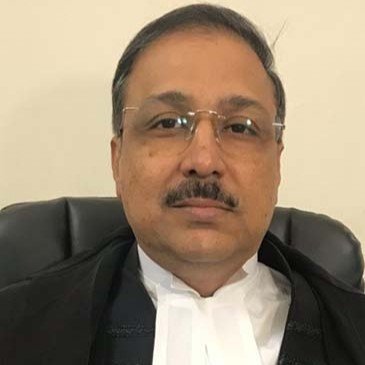
The Hon’ble Justice Madhuresh Prasad
And
The Hon’ble Justice Prasenjit Biswas
W.P.S.T. 121 of 2025
Smt. Debasree Polley @ Koley & Ors.
Vs.
The State of West Bengal & Ors.
With
W.P.S.T. 122 of 2025
Biplab Ketan Ghatak & Ors.
Vs.
The State of West Bengal & Ors.
For the Petitioners :Mr. Bikash Ranjan Bhattacharyya, Ld. Sr. Adv.
Mr. Dibyendu Chatterjee,
Ms. Satabdi Das,
Mr. Mainak Singha Barua,
For the State : Mr. D. N. Ray, Ld. G.P.,
Mr. Sahasrangshu Bhattacharya, Ld. AGP,
Ms. Marry Datta,
For the P.S.C.W.B. : Ms. Shraboni Sarkar,
Ms. Umme habiba Khatun,
Heard on : 04.08.2026
Judgment on : 15.10.2026
Madhuresh Prasad, J.:
1. The writ petitioners were the applicants before the West Bengal
Administrative Tribunal (for short “Tribunal”). They filed the original
application being OA No.490 of 2021, seeking relief in the form of
2
direction upon the respondent authorities to regularize their
engagement on the post of lecturer in the polytechnic.
2. The Tribunal found that the applicants were serving on the post of
lecturer on ad hoc basis since 2009. They put in a major part of their
life in this ad hoc service. The Tribunal also recorded that it is
undesirable that the post of lecturers in Government Polytechnic
Colleges continues to be occupied on ad hoc basis. The Tribunal thus
directed:
“Therefore, a direction is given to the Respondent No. 2,
the, Secretary now re-designated, as the. Additional
Chief Secretary, Department of Technical Education and
Training to initiate concrete steps in filling the vacant
posts of lecturers either through absorption of these
contractual lecturers or through fresh, recruitment
process. Such steps shall be initiated within three (03)
months from the date of communication of this order.
With this direction, this application is disposed of”.
3. Being aggrieved by the order of the Tribunal, in as much as it did not
allow the petitioner’s claim for regularization, the writ petition was
filed, for setting aside the order dated 04.04.2025 passed by the
Tribunal in the original application. The writ petitioners also sought
direction upon the respondents to absorb them on the posts on which
they are serving as permanent employees. They sought a direction
restraining the respondent no.2 (The Secretary) Department of
Technical Education Training and Skill Development from initiating
any fresh selection process.
3
4. The brief factual background, in the two writ petitions arise from one
advertisement published in the newspaper, whereby and whereunder
desirous candidates were invited to participate in the walk-in
interview to be conducted for engagement of lecturers in government
polytechnics, (on purely contract basis).
W.P.S.T 121 of 2025
5. The advertisement was dated 08.11.2007. The successful candidates
were to be engaged on a consolidated remuneration, initially for six
months. The writ petitioners applied in response to the advertisement.
They emerged successful in the walk-in interview and were initially
engaged in between 2008-2009, for a period of six months. Thereafter,
they were successively re-engagement on contractual basis. As such
they rendered service as contractual lecturers in the government
polytechnics till December, 2021.
6. The writ petitioners thus, moved the secretary of the department
through their learned Advocate by way of a representation requesting
the Secretary to regularize their service. The representation in this
regard was submitted on 25.02.2021.
7. The Government, however, considered revision of service conditions,
including revision of remuneration of the contractual lecturers in
government polytechnics. On careful consideration of the matter the
government in the Finance Department decided to enhance the
remuneration of the ad-hoc lecturers, including the present
petitioners. The government thus, issued an order dated 26.02.2021
4
which allowed certain other benefits also to the ad-hoc lecturers,
including:
(i) Continuation of their contractual engagement up to
the age of 60 years.
(ii)Grant of terminal benefit Rs.3 lakh on attainment of
age of 60 years,
(iii) Annual enhancement of remuneration at the rate of
3 per cent, subject to assessment of their performance.
8. The enhancement of remuneration was to be granted to the
petitioners having regard to a fact whether they were having
qualifications at par with AICTE norms, or not. Grant of such benefit
was contemplated with effect from 01.03.2021. The Government,
however, did not allow the petitioner’s claim for absorption/
regularization.
9. The petitioners under such circumstances moved the Tribunal by
filing OA 490 of 2021. After the exchange of pleadings before the
Tribunal and considering the stand of the parties, the same was
disposed of by the order which is impugned in the present writ
proceeding.
W.P.S.T 122 of 2025
10. Insofar as the second writ petition arising out of OA No.495 of 2021
is concerned, we found that there are minor distinctions in the facts.
The advertisement inviting applications for contractual engagement is
5
dated 27.05.2008 instead of 08.11.2007. The joining of the writ
petitioners was between the years 2008-2009.
11. However, the petitioners in this case also continued till February,
2021. They also filed their OA on the same date as the writ petitioners
in the first writ petition. The order dated 26.02.2021 issued by the
government giving enhanced remuneration and other benefits is also
common to the writ petitioner in both the cases.
12. Therefore, the facts and circumstances falling for consideration in
both the cases are substantially one and the same, having
insignificant distinction. The writ petitions were therefore, considered
together. The learned Advocate representing the writ petitioners and
respondents have also made submissions common to both the writ
petitions, without reference to the insignificant distinction.
13. The common issue therefore arising for consideration is whether the
writ petitioners had an enforceable claim for issuance of directions by
the Tribunal to regularize their service.
14. The learned Senior Advocate for the applicant/writ petitioner
submitted that the petitioner’s initial engagement on contract basis
was preceded by an advertisement in the newspaper. The
advertisement specified qualifications for the engagement in question
which were at par with the qualification specified for appointment of
regular lecturer. The engagement was done against vacant sanctioned
posts. He further submitted that the authorities renewed the contract
successively for more than 10 years. With a view to deprive the
6
petitioners an opportunity to claim benefits attached to continuity of
contractual engagement, the authorities deliberately renewed the
successive contracts after gap of 3 to 4 days. Therefore, the
petitioners are in a position to claim that they have served on
contractual basis as lecturers against sanctioned posts for a period of
more than 10 years. Since they were qualified for regular appointment
to the post of lecturer, the petitioners were entitled to
regularization/absorption of their service.
15. The learned Senior Advocate, in order to substantiate his
submission regarding the posts being sanctioned, relied upon
averments made in the rejoinder to the reply filed by the State
respondents before the Tribunal. He relied upon a communication
dated 09.07.2008 issued by the Principal of Dr. Meghnad Saha
Institute of Technology to the Director of Technical Education and
Training. The communication is in respect of one Shri Tarun Kumar
Changdar, similarly engaged as the present petitioners. One
information given under the Right to Information Act by the principal
of the Contai polytechnic which is dated 31.08.2022, is relied upon in
this regard in WPST 122 of 2025. The information relates to queries
made under Right to Information Act by one Sri Subrata
Bandyopadhyay who is also not a writ petitioner before this court.
16. Insofar as the requisite qualification for recruitment of regular
lecturers in the polytechnics the learned Senior Advocate for the writ
petitioners relied upon the “All India Council for Technical Education
(Pay Scales Service Conditions and Qualifications For the Teachers and
7
Other Academic Staff In Technical Institutions (diploma)), Regulation,
2010”. And AICTE Regulations on pay scales namely: “The All India
Council for Technical Education Pay Scales, Service Conditions and
Minimum Qualifications for the Appointment of Teachers and other
Academic Staff such as Library and Physical Education Personnel in
Technical Institutions and Measures for the Maintenance of Standards
in Technical Education- (Diploma) Regulation, 2019.
17. It is thus, submitted that in terms of the decision of the Hon’ble
Supreme Court of India in the case of Secretary, State of
Karnataka & Ors., vs. Umadevi (3) & Ors.
1. The writ petitioners
were fulfilling all the requisites for being considered for regularization.
18. Learned Senior Advocate for the writ petitioner further submitted
that the writ petitioners were performing an essential function in the
Polytechnics by imparting education, which is intrinsic to the
functioning of the polytechnics. They have rendered such service
continuously for a decade. The authorities have taken advantage of
their services for more than a decade. They have invested their prime
part of their life to sustain the activities of the polytechnics, which
otherwise could not continue with imparting education. The
authorities having taken advantage of the services rendered by the
writ petitioners for such a long time were obliged to consider the
petitioner for regularization. The authorities were also required to
consider that the writ petitioners were discharging their duties at par
with regular lecturers. They were being assigned work other than
1
(2006) 4 SCC 1
8
teaching such as performing the duties of head of department and
internal coordinator. They were also required to discharge the duties
of training and placement officer. Such submissions are supported by
orders to this effect dated 12.06.2017, 26.07.2016 and 20.02.2013
respectively enclosed with the writ petition. Such long term extraction
of regular work under a temporary label according to the learned
Advocate for the petitioner offends the promise of equal protection and
corrodes the confidence in public administration.
19. It is further submitted that such “ ad-hocism” thrives where
administration is opaque. The state cannot prefer such precarious
engagement on sanctioned posts where the work is perennial. In
support of such submission the learned Sr. advocate for the writ
petitioner relied upon decisions of the Hon’ble Supreme Court in the
case of (1) Dharam Singh & Ors. vs. State of U.P. & Ors.,
2
(2) U.P
Junior High School Council Instructor Welfare Association vs.
State of UP and Ors.,
3
and (3) Jaggo vs. Union of India and ors.
4
.
Thus, it is submitted that the writ petitioners in view of the facts and
circumstances above were entitled to benefit of the law as laid down
by these judgments, favouring regularization of such employees.
20. The learned advocate for the State respondent, on the other hand
submitted that the Notification for engagement of contractual
lecturers in response to which the petitioners applied; as well as order
of individual engagement of the writ petitioners leave no doubt that
2 2025 SCC OnLine SC 1735
3
(2026) 5 SCC 321
4
(2024) SCC Online SC 3826
9
the engagement was made purely on contractual basis. The service
was liable to automatic termination after expiry of the period of
contract. The engagement order stipulated that engagement will not
confer any right to claim regular appointment/absorption against a
regular post. The applicants in explicit acknowledgement of such
stipulation executed written undertaking that the engagement will not
confer any right; and that they will not claim regular
appointment/absorption. The engagement was for six months, being
the duration of a semester.
21. The post of lecturers of the different disciplines can be filled up only
in accordance with rules of recruitment issued in exercise of power
conferred upon the Government by the proviso to Article 309 of the
Constitution of India. The recruitment rules were notified by the
Department of Technical Education and Training (Polytechnics
Branch), by Gazette Notification dated 21.11.2012. The recruitment
rules contemplate recruitment through the PSC. In fact, the Public
Service Commission, West Bengal (hereinafter in short referred to as
the PSC) initiated a process for recruitment on the vacancy of
lecturers in the various disciplines of polytechnics by publication of
Advertisement No. 24/2018. He referred to the decision of the
Constitution Bench of the Hon’ble apex Court in the case of Uma Devi
(supra). He submitted that the decision of the Constitution Bench in
the case of Uma Devi (supra) holds the field in so far as a claim for
regularization is concerned. Unless petitioners are in a position to
show that they fulfill the requisites as per paragraph 53 of the
10
decision in the case of Uma Devi (supra) there is no scope for the
petitioner to assert a claim for regularization. The learned
Government Pleader also relied upon decision of this Court in the case
of Smt. Nupur Basu v. Union of India
5
and the copy of the
Judgment dated 17.12.2025 is handed over to the Court.
22. The learned G.P. also relied upon decision of the coordinate Bench
of this Court in the case of Sirshendu Ghosh v. State of West
Bengal & Ors.,
6. Copy of the judgment dated 22.12.2021 is handed
over to this Court. The division bench took note of facts which are
common to the present case such as the fact that all the writ
petitioners have been placed in a consolidated monthly pay revised to
35,000/- from 14, 890, subject to enhancement at the rate of 3 per
cent every year based on performance report. They have also been
provided terminal benefits of Rs. 3 lacs on attaining the age of
superannuation (60 years). The Division Bench thus found that the
contractual lecturers in the Polytechnics draw the minimum pay of
the pay band of Rs. 15,600-39-39,100 with AGP of RS. 5,000 meant
for the regular lecturers of polytechnics. The Division Bench
considered the parity in pay of the contractual lecturers vis-à-vis the
regular lecturers and found no reason to grant any further benefit to
writ petitioners. Therefore, the petitioners were rightly not granted
any relief by the Tribunal.
23. The learned Senior Advocate further laid emphasis on the
5
MAT 1066 of 2025
6
(WPST) 107 of 2016
11
recruitment process undertaken for filling up posts in the
polytechnics by Advertisement No. 24/2018, under the recruitment
Rules of 2012. Despite opportunity in this regard there is no material
on record to suggest that the writ petitioners participated in the
recruitment process. In the present case the authorities did not prefer
a precarious contractual employment over regular appointments. In
fact, process for regular appointment to the post was initiated vide
Advertisement No.24/2018. It was, therefore, open to the petitioners
to avail the opportunity to become regular employees, but they did not
do so. Therefore, it is submitted by the learned G.P that the facts of
the present case are at variance with the facts arising for
consideration in the decisions of the Supreme Court in the case of
Dharam Singh (supra), U.P. Junior School Welfare Association
(supra) and Jaggo (supra).
24. The learned GP further submitted that very recent decision of the
Hon’ble Supreme Court of India in the case of Najma Khatun v. The
State of West Bengal & Ors.
7
, has reiterated the law as laid down
by the Constitution Bench in the case of Uma Devi (supra). The writ
petitioners did not fulfill the requisites for consideration for
regularization of this service. It is therefore, submitted that the
Tribunal rightly rejected the petitioners’ claim for regularization. The
order of the Tribunal dated 04.04.2025 in OA No. 490 of 2026, does
not merit any interference.
25. Upon consideration of rival submissions made by learned Counsel
7
2026 SCC OnLine SC 1313
12
for the parties, the undisputed facts emerged that the petitioners’
recruitment on contractual basis was preceded by an Advertisement
for such recruitment wherein there was prescription of qualification
for recruitment of lecturers in the polytechnics. However, we find that
the advertisement does not indicate that the contractual engagement
was being done on or against sanctioned posts. There is no dispute
that writ petitioners’ contractual engagements were extended from
time to time, subject to undertaking given by the petitioners that the
engagement is purely contractual and that they shall not claim any
benefit of regularization/absorption.
26. It is also not in dispute that the recruitment rules for appointment
of regular lecturers was notified on 21.11.2012. Thereafter
recruitment process was also initiated by the PSC in the year 2018 by
Advertisement No. 24 of 2018. There is nothing on record to suggest
that the petitioners applied/participated in the recruitment process
pursuant to Advertisement No. 24 of 2018. There is also no dispute
that the petitioners’ consolidated pay was revised placing them in the
minimum pay scale for lecturers in Polytechnics with other benefits
such as annual increment at the rate of 3 per cent subject to
performance of result. They were also allowed terminal benefits at Rs.
3 lacs upon attaining the age of superannuation. The petitioners have
thus been granted those benefits along with a security tenure till the
age of 60 years.
27. Under such circumstances we find that the petitioners’ claim is
squarely covered by a decision of the coordinate bench in the case of
13
Sirshendu Ghosh (supra). While considering the case of Sirshendu
Ghosh (supra) the coordinate bench also considered their rights with
reference to decisions of the Constitution Bench of the Hon’ble
Supreme Court of India in the case of Uma Devi (supra). The
coordinate bench still did not find any sustainable claim for
regularization being made by the petitioners therein. We are of the
view that the case of the present petitioners was covered by the
decisions of the coordinate bench in the case of Sirishendu Ghosh
(supra). The communications dated 31.08.2022 and information
09.07.2008 under RTI relied upon in WPST 121 of 2025 and WPST
122 of 2025 respectively to sustain a plea that the petitioners were
appointed against sanctioned post is untenable. The communication
dated 31.08.2022 and the information dated 09.07.2008 under RTI
are in respect of appointment of Mr. Tarun Kumar Changdar and
information sought by one Subrata Bandyopadhyay under R.T.I. The
communications did not state anything as regards the posts against
which the present petitioners were appointed on contract basis.
Therefore, these documents do not support the writ petitioners pleas
that they were appointed against sanctioned posts. The petitioners,
therefore, did not fulfill the requisite criteria mentioned in paragraph
53 of the Constitution Bench Decision of the Hon’ble Supreme Court
in the case of Uma Devi (supra).
28. Uma Devi (supra) case was subsequently considered by the Hon’ble
Supreme Court of India in the case of State of Karnataka v. M.L.
14
Kesari
8
The relevant extract of the decision of the apex Court is as
follows:
“7. It is evident from the above that there is an exception to the
general principles against “regularisation” enunciated in Umadevi (3)
[(2006) 4 SCC 1] , if the following conditions are fulfilled:
(i) The employee concerned should have worked for 10 years
or more in duly sanctioned post without the benefit or protection
of the interim order of any court or tribunal. In other words, the
State Government or its instrumentality should have employed
the employee and continued him in service voluntarily and
continuously for more than ten years.
(ii) The appointment of such employee should not be illegal,
even if irregular. Where the appointments are not made or
continued against sanctioned posts or where the persons
appointed do not possess the prescribed minimum qualifications,
the appointments will be considered to be illegal. But where the
person employed possessed the prescribed qualifications and
was working against sanctioned posts, but had been selected
without undergoing the process of open competitive selection,
such appointments are considered to be irregular.
10. At the end of six months from the date of decision in
Umadevi (3) [(2006) 4 SCC 1] , cases of several daily-wage/ad
hoc/casual employees were still pending before courts.
Consequently, several departments and instrumentalities did
not commence the one-time regularisation process. On the other
hand, some government departments or instrumentalities
undertook the one-time exercise excluding several employees
from consideration either on the ground that their cases were
pending in courts or due to sheer oversight. In such
circumstances, the employees who were entitled to be
considered in terms of para 53 of the decision in Umadevi (3)
[(2006) 4 SCC 1] , will not lose their right to be considered for
regularisation, merely because the one-time exercise was
completed without considering their cases, or because the six-
month period mentioned in para 53 of Umadevi (3) [(2006) 4
SCC 1] has expired. The one-time exercise should consider all
daily-wage/ad hoc/casual employees who had put in 10 years
of continuous service as on 10-4-2006 without availing the
protection of any interim orders of courts or tribunals. If any
employer had held the one-time exercise in terms of para 53 of
Umadevi (3) [(2006) 4 SCC 1] , but did not consider the cases of
some employees who were entitled to the benefit of para 53 of
Umadevi (3) [(2006) 4 SCC 1] , the employer concerned should
consider their cases also, as a continuation of the one-time
exercise. The one-time exercise will be concluded only when all
the employees who are entitled to be considered in terms of
para 53 of Umadevi (3) [(2006) 4 SCC 1] , are so considered.”
29. We already found that the petitioners herein were not appointed
against sanctioned post. They also did not complete 10 years of
8
(2010) 9 SCC 247
15
continuous service as on 10.04.2006 as contemplated in the M.L
Kesari (supra).
30. Insofar as the decision of the apex Court in the case of Jaggo
(supra) is concerned we find that the appellants therein were working
on Group D posts and discharging their duties since 1993 to 2004.
They were all abruptly terminated in the year 2018. The apex Court
found their abrupt termination to be arbitrary and devoid of any
justification. Their termination was held to be in violation of principle
of natural justice. The apex Court further took notice of the conduct
of the respondent therein by issuing tenders for outsourcing the same
task, during pendency of the judicial proceedings despite stay order
directing maintenance of status quo. The apex Court thus found the
action of the employer to be lacking in bona fides, in contravention of
judicial directives and highlighting the respondents’ unwillingness to
acknowledge the appellants’ rights. The appellants also established a
fact that individuals with lesser tenure of comparable roles were
regularized by the respondent. It is under such circumstances the
apex Court held the appellants therein to be entitled to relief of setting
aside of their termination orders and that they be taken back in duty
forthwith by regularizing their services. The facts of that case are at
stark variance with the facts of the petitioners herein taken note of
above. The petitioners, therefore are not in a position to claim benefit
of decision of the apex court in the case of Jaggo (supra).
31. In the case of Dharam Singh (supra) the appellant therein were
engaged by the Uttar Pradesh Higher Education Service Commission
16
between 1989 and 1999. They were discharging ministerial and
support function in the organization. The commission resolved to
create posts and sought sanction from the State Government. The
State, in turn, asked for details of the daily wage hands working in
the organization. The commission thereafter reiterated its requests for
sanction for the posts on which the appellants therein were
discharging ad hoc duties. The State rejected the proposal which was
questioned by the appellants. They filed Writ Petition before the High
Court, wherein they sought relief of quashing of the State’s order
dated 11.11.1999, rejecting the proposal for sanction of posts. They
also sought directions in the nature of a writ of mandamus to
sanction/create posts. No such issue arose for consideration in the
present case. In the present case the petitioners accepted their
successive contractual engagements which was not made against
sanctioned post, with explicit stipulation that the same will not entitle
them to any benefits of absorption /regularization. The petitioners’
case therefore, is factually distinguishable from the case of Dharam
Singh (supra). Therefore, they cannot claim any benefit from the
judgment.
32. In so far as the case of U.P. Junior High School Council
Instructors Welfare Association (Supra). we find that the
Instructors/Teachers were contractually engaged. The authorities
continued to take work from them on fixed honorarium at Rs. 7,000/-
per month. The authorities had recommended for enhancement of
their honorarium. On refusal to grant enhancement the appellants
17
therein invoked writ jurisdiction. The Single Bench of the High Court
directed for payment at enhanced rate which was assailed before the
Division Bench which directed the State Government to pay
honorarium at the enhanced rate per months but only for the year
2017-18.
33. Since the petitioners were deprived of their payment for the period
after 2017-18 they approached the Apex Court. The Apex Court took
notice of the various proposals made by the State Government to the
Project Approval Board for enhancement of honorarium payable to the
Instructors/Teachers. The decision of the Additional Chief Secretary
accepting such proposal was also considered by the apex Court
Thereafter, the Apex Court took notice of the fact that despite such
decision necessary funds were not released and the amount of
honorarium was decreased by the Executive Committee of the
Shiksha Pariyojna Parishad of the State. The Apex Court in the said
case also considered that appointment of the Instructors/Teachers
was with a condition that they would not directly or indirectly take up
any part time appointment or whole-time job anywhere else. The apex
court thus, was of the view that the moment the Government
prohibits the instructors/teachers from taking up any part-time or
whole-time job anywhere else, they have to be treated as full time
teachers. No such facts arise for consideration in the present case and
the present case is distinguishable with the facts which arose for
consideration in the case of UP Junior School Council (supra).
34. We therefore, find no force in the claim set out by the writ
18
petitioners. On the contrary we find the petitioners’ case covered by a
decision of the coordinate Bench in the case of Sirshendu Ghosh
(supra).
35. The judgment of the Hon’ble Apex Court in the case of Najma
Khatun (supra) reiterated the law laid down by the Constitution
Bench of the Hon’ble Supreme Court in the case of Uma Devi (supra)
in the following terms:
“31.…..d). We find no merit in such prayer. First, this petitioner has
not claimed the relief of regularisation in the writ petition. Grant of
relief beyond the prayer clauses, though normally impermissible,
could be considered in exceptional cases. This does not qualify to be
an exceptional case warranting departure from the settled rule of “no
prayer, no relief”. Secondly, the question of regularisation in service
does not arise in this case because of the nature of breach that has
occasioned. This Court in Jaggo (supra) and even in the most recent
decision in Sukhendu Bhattacharjee (supra) might have taken a
liberal view but such views have to be read as confined to its own
facts rather than laying down law which is binding under Article 141
of the Constitution. State of Karnataka v. Umadevi (3) and Official
Liquidator v. Dayanand are larger Bench decisions of this Court. The
ratio laid down therein has neither been doubted nor diluted by any
Bench of co-equal strength. The principle of stare decisis and Article
141 of the Constitution leaves us with no choice. Article 141
commands and the law declared in Umadevi (supra) and Dayanand
(supra) binds all. Ratio, if any, laid down in the said decisions of
Benches of lesser strength is debatable and we are not persuaded to
follow the same…”
We already found that the petitioners failed to make out a case based
on facts so as to claim any benefit of regularization in terms of
paragraph 53 of the judgment, Uma Devi (supra).
19
36. The writ petitioners therefore, in our opinion could not make out a
case for regularization/absorption before the Tribunal. The Tribunal
therefore in our opinion rightly rejected the writ petitioners’ claim for
regularization. The order of the Tribunal requires no interference in
exercise of judicial review under Article 226 of the Constitution of
India.
37. Both the writ petitions are dismissed.
38. Urgent certified copy of this judgment, if applied for, be supplied to
the parties, expeditiously after complying with all necessary legal
formalities.
(Madhuresh Prasad, J.)
I agree.
(Prasenjit Biswas, J.)

 Login with google
Legal Notes
Add a Note....