
As per the case facts, the appellant sought partition of ancestral and self-acquired properties from her brother. A previous appellate court judgment was challenged for failing to consider the evidence ...
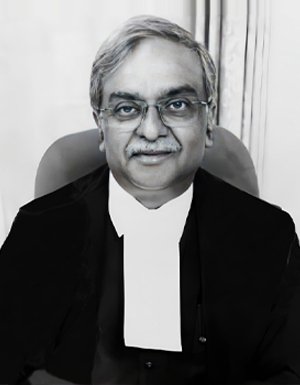

No Acts & Articles mentioned in this case
REPORTABLE
IN THE SUPREME COURT OF INDIA
CIVIL APPELLATE JURISDICTION
CIVIL APPEAL No (s). 1117 of 2009
SOMAKKA (DEAD) BY LRS. …APPELLANT (S)
VERSUS
K.P.BASAVARAJ(DEAD) BY LRS. ... RESPONDENT(S)
J U D G M E N T
Vikram Nath, J.
1.The appellant is the own sister of the sole
respondent. Their father Puttanna had inherited
certain properties from his father which were
ancestral properties and are described as item
nos. 1 and 2 of Schedule ‘A’ to the plaint,
whereas property described at item no. 3 was
1
alleged to be selfacquired property of Puttanna
on the basis of occupancy rights. In so far as the
property described at Schedule ‘B’, it belonged
to the respondent which the appellant claimed
to have purchased.
2.The appellant is the plaintiff in OS No. 2506
of 1991 instituted in the Court of the City Civil
Judge, Bangalore, wherein the sole defendant is
the respondent herein (brother of the appellant).
Primarily, two reliefs were claimed in the said
suit; firstly a partition and separate possession
of
¼ (one fourth) share in properties described
at item nos. 1 and 2 and
½(one half) share in
the property described in item no. 3 of Schedule
‘A’ to the plaint; the second relief prayed was for
a decree of specific performance of the
agreement and sale dated 25.05.1981 with
2
respect to the property described in Schedule ‘B’
to the plaint.
3.The claim set up by the appellant was that
properties described at item nos. 1 and 2 in
Schedule ‘A’ were ancestral properties and,
therefore, upon the death of her father in 1974,
she would be entitled to
¼ share and further
that the property described as item no.3 of
Schedule ‘A’ was exclusively occupied by her
father who had applied before the revenue
authorities for being declared as an occupant
and the same was pending at the time when her
father died. Later on, it was continued to be
prosecuted by the respondent and it was
ordered that his name be recorded as occupant
as such she would be entitled to
½ share. With
respect to the relief of specific performance of
3
contract, it was alleged that she had paid a sum
of Rs. 12,000/ for purchasing 1 acre and 10
guntas in Survey no. 60 situated on
Dyavasandra Village, Krishnarajapura Hobli,
Bangalore South Taluk and for which an
agreement to sell dated 25.05.1981 was
executed. The respondent had placed the
appellant in possession of the said property.
Later on, he declined to execute the sale deed
despite appellant being always ready and willing
to perform her part of the obligation to the
agreement.
4.The respondent contested the suit, filed
written statement and denied averments made
in the plaint. According to the respondent his
father had already spent substantial amount on
the marriage of the appellant. She was also
4
given jewellery worth Rs. 50,000/ and also an
additional sum of Rs. 8,000/for establishing a
stationarycumcoffee shop. Other averments
made in the written statement were to the effect
that the appellant had access to the savings of
her father and that she had secretly utilized the
savings of both her and her father’s in
purchasing property in the name of her
husband. In paragraph 15 of the written
statement, further details have been mentioned
with regard to the property acquired by the
appellant and also which is received from their
father.
5.The respondent, however, admitted that the
properties described at item nos. 1 and 2 of the
Schedule ‘A’ were ancestral properties. It is,
further, stated that the property described at
5
item no. 3 of Schedule ‘A’ of the plaint was
jointly cultivated by him and his father and after
the death of his father, he was exclusively
cultivating the same and upon the coming of the
Mysore (Religious and Charitable) Inams
Abolition Act, 1955
1
, he became entitled to
occupancy rights and accordingly applied for it,
which was granted. Further, the respondent
denied the alleged agreement to sell and stated
that it was a false and fabricated document and
he never received any consideration amount as
alleged by the appellant. On such pleadings, it
was prayed that the suit be dismissed with
exemplary costs.
6.Parties led evidence, both oral and
documentary. The XIX Additional City Civil
Judge, Bangalore vide judgement and order
1 In short “Inam Act”
6
dated 02.09.2003 decreed the suit declaring that
the appellant was entitled for
¼ share in
properties described as item nos. 1 and 2 and
½
share in item no. 3. of Schedule ‘A’ and for
separate possession by metes and bounds. It,
further, directed the respondent to execute the
sale deed in respect of the property described in
Schedule ‘B’ of the plaint.
7.The respondent preferred an appeal under
Section 96 of the Code of Civil Procedure, 1908
2
before the High Court of Karnataka registered as
RFA No. 214 of 2004. Before the High Court, the
counsel for the appellant, gave up the relief for
specific performance. The High Court vide
judgment and order dated 19.08.2006 upheld
the
¼ share of the appellant in the property
described at item nos. 1 and 2 of Schedule ‘A’.
2 In short “CPC”
7
However, it agreed with the contention of the
respondent that the property described at item
no. 3 of Schedule ‘A” was jointly cultivated by
the defendant and his father, and therefore,
upon death of his father, defendant would get
½
share of his own and the remaining
½ share of
his father would be divided between his heirs i.e.
¼
to his daughter and ¼ to his son. Thus, the
appellant would be entitled for
¼ share in the
property described at item no. 3 of Schedule ‘A’
and not
½ share as decreed by the Trial Court.
To this limited extent the decree of the Trial
Court was modified.
8.Aggrieved by the same, the appellant has
filed the present appeal with respect to the
reduction of her share from
½ to ¼ with respect
to the property described at item no. 3 of
8
Schedule ‘A’. There is no appeal by the
respondent with respect to the
¼ share given to
the appellant by the Trial Court and affirmed by
the High Court with respect to item nos.1 and 2
of Schedule ‘A’ properties.
9.Heard learned counsel for the parties and
perused the material on record. It may be
noticed that this Court, while issuing notice vide
Order dated 30.07.2007 had confined it to the
question of shares of the parties in Item No.3 of
Schedule ‘A’ of the property.
10. The only issue thus which survives for our
consideration and adjudication is whether the
appellant is entitled to
½ share or ¼ share in
the property described at item no. 3 of Schedule
‘A’ property over which occupancy rights under
the Inam Act were claimed. Remaining claim of
9
the appellant regarding
½ share in item nos. 1
and 2 of Schedule ‘A’ and Schedule ‘B’
properties stand closed at the stage of first
appeal before the High Court.
11.The Trial Court framed six (6) issues, which
read as follows:
"1.Whether plaintiff proves that suit property
are the joint family property of herself and
defendant?
2.Whether plaintiff proves that defendant
executed an agreement in respect of ‘B’ Schedule
property in favour of plaintiff on 25.05.81 for a sale
consideration of Rs.12,000/?
3.Whether suit is barred by limitation?
4.Whether suit is not properly valued and
court fee paid is insufficient?
5.Whether plaintiff is entitled for suit relief?
6.What order or decree?"
12.While dealing with issue no.1, the Trial
Court records that, although, the defendant
respondent denied the right, title and interest of
the appellant in item nos.1 and 2 of Schedule ‘A’
10
properties, but having admitted that his father
Puttanna succeeded to item nos.1 and 2, and
that they were ancestral properties, as such, the
appellant would be entitled to
¼ (one fourth)
share in item nos.1 and 2 of Schedule ‘A’
properties. This finding has been confirmed by
the High Court also in appeal and as there is no
further appeal by the respondent with respect to
item nos.1 and 2 of Schedule ‘A’ properties, the
relief granted to the appellant to that extent
stands finalized and closed.
13.Now coming to item no. 3 of Schedule ‘A’
property, it was a Devadaya Inamathi Land.
During life time of Puttanna, father of the
parties, he was cultivating the same on the basis
of Panchashala Gutta and on the coming of the
Inam Act, Puttanna filed an application for grant
11
of occupancy rights before the Special Deputy
Commissioner, Inam Abolition, Bangalore. Later
on, the said matter came up before the Land
Tribunal, Bangalore and during pendency of the
said application, Puttanna died. Thereafter, the
respondent came on record and he carried
forward the application, filed by Puttanna for
occupancy rights, which ultimately came to be
granted in his favour.
14.The respondent had set up a specific claim
that he was cultivating item no.3 of the
Schedule ‘A’ property personally and he alone
had made the application for occupancy rights
and the same being granted in his name, it
became his selfacquired property.
15.The Trial Court discussed in detail the
evidence led by the parties with regard to item
12
no.3 of the Schedule ‘A’ property. It noted that
the appellant (P.W.1) had stated that the said
property was personally cultivated by the father
of the parties namely, Puttanna, which was an
agricultural land of the Devadaya Inamathi on
the basis of a Panchashala Gutta. Puttanna had
applied for grant of occupancy rights under the
Inam Act on 17.04.1971. However, while the
matter was pending before the Karnataka Land
Tribunal, Puttanna died. The respondent got
himself impleaded as legal representative of late
Puttanna and he was, thereafter, granted
occupancy rights by the Land Tribunal. The
Trial Court further noticed that occupancy
rights were heritable in nature and it is for this
reason that after death of Puttanna, the
respondent could get his name substituted and
was also successful in obtaining the occupancy
13
rights, but the fact remains that upon the death
of Puttanna, the item no.3 of Schedule ‘A’
property, being heritable in nature, would be
inherited by both his children i.e. the appellant
and the respondent and under law, both of them
would be entitled to
½ (half) share each. The
said property would be deemed to be self
acquired property of Puttanna.
16.The Trial Court further considered Exts. P2
to P36, which were receipts of payment of
Panchashala Gutta and the revenue by
Puttanna i.e. to say that Puttanna was
throughout cultivating item no.3 of Schedule ‘A’
property on the basis of Panchashala Gutta.
Ext. P37 was also relied upon by the Trial
Court, which was a document of the RTC extract
to show that the said land was recorded as Inam
14
land and Puttanna was cultivating the same.
Exts. P2 to P36 reveal that Puttanna had been
cultivating the said land since 1955
continuously. Exts. P38 and P39 were copies
of the applications, filed by late Puttanna before
the Special Deputy Commissioner, Inam
Abolition, Bangalore. Exts. P40 and P41 were
copies of the notices issued by the Revenue
Authorities calling upon him to appear for
consideration of his applications for grant of
occupancy rights. Further, Exts. P42 and P43
were copies of the statements given by one G.K.
Gurunath and the respondent before the Land
Tribunal, Bangalore. Ext. P44 is the statement
of one Narasimhaiah and Ext. P45 is the order
of the Land Tribunal, Bangalore granting
occupancy rights in favour of the respondent.
15
17.The Trial Court further proceeded to
consider the statement of the respondent, who
entered the witness box as DW1. He had set up
a case that he was jointly cultivating item no.3
of the Schedule ‘A’ property along with his father
and, as such, after death of his father, he was
exclusively cultivating the said land. He also
stated that he had applied for grant of
occupancy rights before the Special Deputy
Commissioner and, as such, rights were granted
in his name. He denied that appellant was in
joint possession of item no.3 of Schedule ‘A’
property. He claimed the said property to be his
selfacquired.
18.The Trial Court discussed the cross
examination of respondent (DW1) threadbare.
The Trial Court noticed the admission of the
16
respondent (DW1) from his crossexamination
as follows:
“(i) Item No.3 of ‘A’ schedule property was given
to Puttanna on basis of Panchashala Gutta.
(ii) Puttanna during his life time was paying the
revenue and cultivating the said land.
(iii)Respondent had applied as legal
representative in the proceedings initiated by
Puttanna for grant of occupancy rights.
(iv)Before the Land Tribunal, respondent DW1
has stated that his father Puttanna was cultivating
the said property and after his death, he is claiming
occupancy rights being the legal representative.”
19.The Trial Court further relied upon a
statement of one Narasimhaiah marked as Ext.
P44, given before the Land Tribunal, wherein
he stated that he knew Puttanna, and that he
was cultivating the said land.
20. The Trial Court also noticed that even the
order granting occupancy rights, passed by the
Land Tribunal (Ext. P45) clearly mentions that
the respondent was claiming occupancy rights
17
on basis of the fact that his father was
cultivating the land and that after his death, he
is entitled for occupancy rights being his legal
heir and representative.
21.On such material, the Trial Court came to
the conclusion that item no.3 Schedule ‘A’
property was the acquisition of Puttanna himself
and that upon his death, it would be inherited
in equal shares by his heirs being both his
children, the appellant and the respondent.
22. On the above findings the Trial Court
decreed the claim of the appellant to be having
half share in item no.3 of Schedule ‘A’ property
vide judgment dated 02.09.2003.
23.Respondent preferred an appeal before the
High Court under Section 96 CPC registered as
RFA No. 214 of 2004. Before the High Court,
18
the appellant gave up her claim regarding
specific of performance with respect to Schedule
‘B’ property. The High Court vide judgment
dated 19.08.2006 confirmed the finding relating
to
¼ share to the appellant with respect to item
nos.1 and 2 of Schedule ‘A’ properties. It,
however, went on to modify the decree of the
Trial Court relating to item no.3 of Schedule ‘A’
property by reducing the share of appellant from
½
to ¼.
24.The High Court in a very cursory and
cryptic manner, partly allowed the first appeal.
It did not consider the evidence considered by
the Trial Court. Neither did it deal with the
statements or the other documentary evidence
on record and only on a bald statement of the
respondent, which according to it, was
19
mentioned in the order of the Land Tribunal
that respondent was jointly cultivating the said
land along with his father held that it became a
joint family estate and, accordingly, reduced the
share of the appellant to
¼ (one fourth) from
1/2 (one half).
25.The only discussion made by the High
Court in the impugned judgment is reproduced
hereunder:
"The contention of the defendant that the
properties were given to plaintiff during the lifetime
of her father. Therefore, not entitled to any share in
the estate of her father by way of succession is an
untenable contention and not a triable defence.
Whatever the properties gifted to her during his
lifetime constitute separate properties of the
plaintiff and such a gift/assignment does not
deprive the right of the plaintiff to seek share by
way of succession after the demise of the father.
Item No.3 of ‘A’ schedule property is an agricultural
land and it was Devadaya Inamathi land cultivated
by the father of the plaintiff. He had made an
application in Form No.1 for grant of occupancy
rights. The defendant also made an application in
Form No.7 for grant of occupancy rights in respect
of the same land. Ex.P5 is the order of the Land
Tribunal, in which, it categorically mentions that
the defendant had made a statement before the
Tribunal that the land was jointly cultivated by
20
himself and by his father. Therefore, it becomes a
joint family estate.
In that view, after the demise of the father, the
defendant and his father are entitled to the notional
share of 11/2 each and the plaintiff would be
entitled to the 1/4th share in Item No.3 of ‘A’
schedule property and not half share as claimed."
26.Section 96 of the CPC provides for filing an
appeal from original decree. Further Order XLI
Rule 31 of the CPC provides for the contents of
the judgment of the First Appellate Court.
According to it, the judgement of the Appellate
Court shall be in writing and would include the
points for determination, the decision thereon,
the reasons for the decision and where the
decree is reversed or varied, the relief to which
the appellant is entitled. Section 96 and Order
XLI Rule 31 of the CPC are reproduced below:
“Section 96Appeal from original decree.
(1) Save where otherwise expressly provided in the
body of this Code or by any other law for the time
being in force, an appeal shall lie from every decree
21
passed by any Court exercising original jurisdiction
to the Court authorized to hear appeals from the
decisions of such Court.
(2) An appeal may lie from an original decree
passed ex parte.
(3) No appeal shall lie from a decree passed by the
Court with the consent of parties.
(4) No appeal shall lie, except on a question of law,
from a decree in any suit of the nature cognizable
by Courts of Small Causes, when the amount or
value of the subjectmatter of the original suit does
not exceed 2 [ten thousand rupees.]”
Order XLI Rule 31
“Contents, date and signature of Judgment"
The Judgment of the Appellate Court shall be in
writing and shall state(a) the points for
determination;(b) the decision thereon;(c)
the reasons for the decision; and(d) where the
decree appealed from is reversed or varied, the
relief to which the appellant is entitled, and shall at
the time that it is pronounced be signed and dated
by the Judge or by the Judges concurring therein.”
27.It has been a matter of debate in a catena of
decisions as to what would be the scope, power
and duty of the First Appellate Court in deciding
an appeal under Section 96 CPC read with
Order XLI Rule 31 CPC. We briefly deal with the
law on the point.
22
28.Learned Judge V.R. Krishna Iyer, J., [as
he then was a Judge of the Kerala High Court]
in 1969, while deciding the case between Kurian
Chacko vs. Varkey Ouseph
3
, dealing with a
similar judgment of the First Appellate Court
which had been disposed of by a brief order,
observed as follows:
“…2. An appellate court is the final court of fact
ordinarily and therefore a litigant is entitled to a
full and fair and independent consideration of the
evidence at the appellate stage. Anything less than
this is unjust to him and I have no doubt that in
the present case the learned Subordinate Judge
has fallen far short of what is expected of him as an
appellate court.”
29.Further following the above, there have
been a series of judgments by this Court;
29.1 In Santosh Hazari vs. Purushottam
Tiwari
4
(relevant portion of para 15) is
reproduced below:
3 AIR 1969 Ker 316
4 (2001) 3 SCC 179 para 15
23
“15…The appellate court has jurisdiction to reverse
or affirm the findings of the Trial Court. First
appeal is a valuable right of the parties and unless
restricted by law, the whole case is therein open for
rehearing both on questions of fact and law. The
judgment of the mind and record findings
supported by reasons, on all the issues arising
along with the contentions put forth, and pressed
by the parties for decision of the appellate court. …
while reversing a finding of fact the appellate court
must come into close quarters with the reasoning
assigned by the Trial Court and then assign its own
reasons for arriving at a different finding. This
would satisfy the court hearing a further appeal
that the first appellate court had discharged the
duty expected of it.”
29.2 In H.K.N. Swami vs. Irshad Basith
5
,
this Court again reiterated the same principle in
paragraph 3 of the judgment:
“3. The first appeal has to be decided on facts as
well as on law. In the first appeal parties have the
right to be heard both on questions of law all issues
and decide the case by giving reasons.
Unfortunately, the High Court, in the present case
has not recorded any finding either on facts or on
law. Sitting as the first appellate court it was the
duty of the High Court to deal with all the issues
and the evidence led by the parties before recording
the finding regarding title.”
5 (2005) 10 SCC 243
24
29.3 In 2015, this Court again in Vinod
Kumar vs. Gangadhar
6
considering the previous
judgment recorded its view in paras 18 and 19
which are reproduced hereunder:
“18. In our considered opinion, the High Court did
not deal with any of the submissions urged by the
appellant and/or the respondent nor it took note of
the grounds taken by the appellant in grounds of
appeal nor made any attempt to appreciate the
evidence adduced by the parties in the light of the
settled legal principles and decided case law
applicable to the issues arising in the case with a
view to find out as to whether the judgment of the
Trial Court can be sustained or not and if so, how,
and if not, why.
19. Being the first appellate court, it was the duty
of the High Court to have decided the first appeal
keeping in view the scope and powers conferred on
it under Section 96 read with Order 41 Rule 31
CPC mentioned above. It was unfortunately not
done, thereby, resulting in causing prejudice to the
appellant whose valuable right to prosecute in the
first appeal on facts and law was adversely affected
which, in turn, deprived him of a hearing in the
appeal in accordance with law. It is for this reason,
we unable to uphold the impugned judgement of
the High Court.”
29.4 Very recently, this Court in 2022 (to
which one of us, Brother Abdul Nazeer, J. was a
6 (2015) 1 SCC 391
25
member) in Manjual and others vs.
Shyamsundar and Others
7
, reiterated the same
view in para 8 thereof, which is reproduced
hereunder:
“8. Section 96 of the Code of Civil Procedure, 1908
(for short, ‘CPC’) provides for filing of an appeal
from the decree passed by a court of original
jurisdiction. Order 41 Rule 31 of the CPC
provides the guidelines to the appellate court for
deciding the appeal. This rule mandates that the
judgment of the appellate court shall state
(a) points for determination;
(b) the decision thereon;
(c) the reasons for the decision; and
(d) where the decree appealed from is reversed or
varied, the relief to which the appellant is entitled.
Thus, the appellate court has the jurisdiction to
reverse or affirm the findings of the Trial Court. It is
settled law that an appeal is a continuation of the
original proceedings. The appellate court’s
jurisdiction involves a rehearing of appeal on
questions of law as well as fact. The first appeal is a
valuable right, and, at that stage, all questions of
fact and law decided by the Trial Court are open for
reconsideration. The judgment of the appellate
court must, therefore, reflect conscious application
of mind and must record the court’s findings,
supported by reasons for its decision in respect of
all the issues, along with the contentions put forth
and pressed by the parties. Needless to say, the
first appellate court is required to comply with the
requirements of Order 41 Rule 31 CPC and non
observance of these requirements lead to infirmity
in the judgment.”
7 (2022) 3 SCC 90
26
30.From the above settled legal principles on
the duty, scope and powers of the First
Appellate Court, we are of the firm view and
fully convinced that the High Court committed a
serious error in neither forming the points for
determination nor considering the evidence on
record, in particular which had been relied upon
by the Trial Court. The impugned judgment of
the High Court is thus unsustainable in law and
liable to be set aside.
31.The next question which arises is that
where the judgment of the Appellate Court is
being set aside on the ground of non
consideration of the evidence on record, the
matter would normally be required to be
remanded to the First Appellate Court, whether
27
in the facts and circumstances this case
requires a remand. In the facts and
circumstances of the present case, we find that
the suit was instituted in the year 1991, more
than three decades ago; the evidence discussed
by the Trial Court is neither disputed nor
demolished by the learned Counsel for the
respondent. As such, we do not find any good
reason to remand the matter to the High Court.
We are of the view that in order to put a quietus
to the litigation and relieve the parties from any
further harassment, we set aside the judgment
of the High Court and confirm the judgment and
decree of the Trial Court to the extent it relates
to item no. 3 of Schedule ‘A’ property described
in the plaint, i.e. to say that the appellant and
the respondent would be entitled to
½ share
each in the said property. The Trial Court shall
28
accordingly proceed to draw out the proceedings
for final decree of partition.
32.The appeal is accordingly allowed. There
shall be no order as to costs.
…………..........................J.
[S. ABDUL NAZEER]
………….........................J.
[VIKRAM NATH]
NEW DELHI
JUNE 13, 2022.
29

 Login with google
Legal Notes
Add a Note....