
As per case facts, Dwarka Nath Ghose dedicated properties to an idol through his will, appointing his sons as executors and sevayats. Subsequent generations, including Nagendra, dealt with these dedicated ...

No Acts & Articles mentioned in this case
http://JUDIS.NIC.IN SUPREME COURT OF INDIA Page 1 of 8
PETITIONER:
SREE SREE ISHWAR SRIDHAR JEW
Vs.
RESPONDENT:
SUSHILA BALA DASI AND OTHERS.
DATE OF JUDGMENT:
16/11/1953
BENCH:
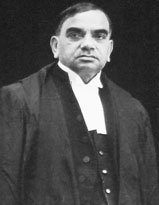
BHAGWATI, NATWARLAL H.
BENCH:
BHAGWATI, NATWARLAL H.
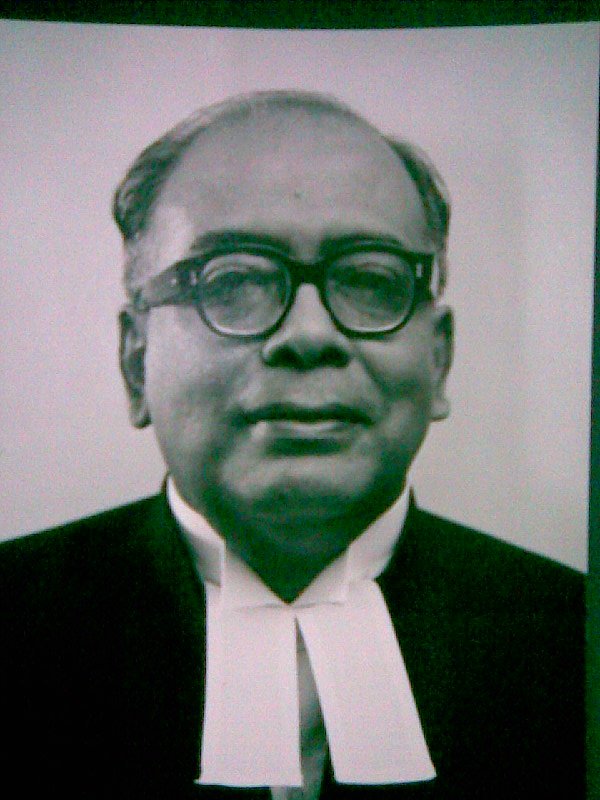
MUKHERJEA, B.K.
BOSE, VIVIAN
CITATION:
1954 AIR 69 1954 SCR 407
CITATOR INFO :
R 1965 SC1874 (17)
R 1974 SC 740 (10)
ACT:
Hindu law-Religious endowments-Dedication of properties
Dedication to idol subject to charge in favour of heirs or
bequest to heirs subject to charge in favour of idol-
Construction of will-Adverse possession-Possession of
shebait, whether can be adverse to idol.
HEADNOTE:
The question whether the idol itself is the true
beneficiary subject to a charge in favour of the heirs of
the testator, or the heirs are the true beneficiaries
subject to a charge for the upkeep, worship and expenses of
the idol, has to be determined by a conspectus of the entire
provisions of the deed or will by which the properties are
dedicated.
Pande Har Narayan v. Surja, Kunwari (I.L.R. 47 I.A. 143)
referred to.
A provision giving a right to the sevayats to reside in
the premises dedicated to the idol for the purpose of
carrying on the daily and periodical worship and festivals
does not detract from the absolute character of a dedication
to the idol.
Gnanendra Nath Das v. Surendra Nath Das (24 C.W.N. 1026)
referred to.
No shebait can, so long as he continues to be the shebait,
ever claim adverse possession against the idol.
Surendrakrishna Ray v. Shree Shree Ishwar Bhubaneshwari
Thakurani (I.L.R. 60 Cal. 54) approved.
Judgment of the Calcutta High Court affirmed.
JUDGMENT:
CIVIL APPELLATE JURISDICTION Civil Appeal No. 201 of 1952.
Appeal from the Judgment and Decree dated the 5th March,
1951, of the High Court of judicature at Calcutta (Harries
C.J. and Banerjee J.) in Appeal from Original Decree No. 118
of 1950, arising out of the Judgment and Decree dated the
http://JUDIS.NIC.IN SUPREME COURT OF INDIA Page 2 of 8
15th June, 1950, of the said High Court in its Ordinary
Original Civil jurisdiction in Suit No. 2379 of 1948.
N.C. Chatterjee (S. N. Mukherjee, with him) for the
appellant.
N.N. Bose (A. K. Dutt, with him) for the respondent in
Civil Appeal No. 201 of 1952 and petitioner for special
leave.
408
M.C. Setalvad, Attorney-General for India, (B. Sen, with
him) for respondents Nos. 1, 2 and 3 in the petition for
special leave.
1953. November 16. The Judgment of the Court was
delivered by
BHAGWATI J.-This is an appeal on a certificate under
article 133(1) of the Constitution from a judgment and
decree passed by the Appellate Bench of the High Court of
Calcutta, modifying on appeal the judgment and decree passed
by Mr. Justice Bose on the original side of that court.
One Dwarka Nath Ghose was the owner of considerable
moveable and immoveable properties. On the 10th June, 1891,
he made and published his last will and testament whereby he
dedicated to this family idol Shree Shree Iswar Sridhar Jew
his two immoveable properties, to wit, premises No. 41 and
No. 40/1. Grey Street in the city of Calcutta. He
appointed his two sons Rajendra and Jogendra executors of Ms
will and provided that his second wife Golap Sundari and the
two sons Rajendra and jogendra should perform the seva of
the deity and on their death their heirs and successors
would be entitled to perform the seva.
Dwarka Nath died on the 16th March, 1892, leaving him
surviving his widow Golap Sundari and his two sons Rajendra
and Jogendra. On the 19th July, 1899, Rajendra made and
published his last will and, testament whereby he confirmed
the dedication made by Dwarka Nath with regard to premises
Nos. 41 and 40/1 Grey Street and appointed his brother
Jogendra the sole executor thereof. He died on the 31st
January,1900, and Jogendra obtained on the 24th April,
1900,. probate of his said will. Probate of the will of
Dwarka Nath was also obtained by jogendra on the 31st
August, 1909.
On the 4th September 1909, Bhupendra, Jnanendra. and
Nagendra, then a minor, the three sons of Rajendra filed a
suit, being Suit No. 969 of 1909,on the original side of the
High Court at Calcutta against Jogendra, Golap Sundari and
Padma Dassi, the widow of Sidheswar, another son of
Rajendra, for the
409
construction of the wills of Dwarka Nath and Rajendra, for
partition and other reliefs. The idol was not made a party
to this suit. The said suit was compromised and on the 24th
November, 1910, a consent decree was passed, whereby
jogendra and Golap Sundari gave up their rights to the
sevayatship and Bhupendra, Jnanendra and Nagendra became the
sevaits of the idol, a portion of the premises No. 41 Grey
Street was ;allotted to the branch of Rajendra and the
remaining portion was allotted to jogendra absolutely and in
consideration of a sum of Rs. 6,500 to be paid to the
plaintiffs, jogendra was declared entitled absolutely to the
premises No. 40/1 Grey Street. The portions allotted to
Jogendra were subsequently numbered 40/2-A Grey Street and
the portion of the premises No. 41 Grey Street allotted to
the branch of Rajendra was subsequently numbered 41-A Grey
Street.
Jogendra died on the 5th August, 1911, leaving a will
whereby he appointed his widow Sushilabala the executrix
http://JUDIS.NIC.IN SUPREME COURT OF INDIA Page 3 of 8
thereof. She obtained probate of the will on the 6th
August, 1912.
Disputes arose between Bhupendra, jnanendra and
Nagendra, the sons of Rajendra, and one Kedar Nath Ghosh was
appointed arbitrator to settle those disputes. The
arbitrator made his award dated the 12th October, 1920,
whereby he allotted premises No. 41-A Grey Street,
exclusively to Nagendra as his share of the family
properties. Nagendra thereafter executed several mortgages
of the said premises. The first mortgage was created by him
in favour of Snehalata Dutt on the 19th May, 1926. The
second mortgage was executed on the 4th June, 1926, and the
third mortgage on the 22nd February, 1927. On the 23rd
February, 1927, Nagendra executed a deed of settlement of
the said premises by which he appointed his wife Labanyalata
and his wife's brother Samarendra Nath Mitter trustees to
carry out the directions therein contained and in pursuance
of the deed of settlement he gave up possession of the said
premises in favour of the trustees.
Snehalata Dutt filed in the year 1929 a suit, being Suit
No. 1042 of 1929, against Nagendra, the trustees
410
under the said deed of settlement and the puisne mortgagees,
for realisation of the mortgage security,. A consent decree
was passed in the said suit on the 9th September, 1929.
Nagendra died in June, 1931, and the said premises were
ultimately put up for sale in execution of the mortgage
decree and were purchased on the 9th December, 1936, by Hari
Charan Dutt, Hari Pada Dutt and Durga Charan Dutt for a sum
of Rs. 19,000. A petition made by the purchasers on the
12th January, 1937, for setting aside the sale was rejected
by the court on the 15th March, 1937. Haripada Dutt -died
on the 3rd June, 1941, leaving him surviving his three sons,
Pashupati Nath Dutt, Shambhunath Dutt and Kashinath Dutt,
the appellants before us. Haricharan Dutt conveyed Ms one
third share in the premises to them on the 4th
March,1944, and Durga Charan Dutt conveyed his one-third
share to them on the 3rd May, 1946. They thus became
entitled to the whole of the premises which had been
purchased at the auction sale held on the 9th December,
1936.
On the 19th July, 1948, the family idol of Dwarka Nath,
Sree Sree Iswar Sridhar Jew, by its next friend Debabrata
Ghosh, the son of Nagendra, filed the suit, out of which the
present appeal arises, against the appellants as, also
against Susilabala and the two sons of Jogendra by her,
amongst others, for a declaration that the premises Nos. 41-
A and 40/2-A Grey Street, were its absolute properties and
for possession thereof, for a declaration that the consent
decree dated the 24th November, 1910, in Suit No. 969 of
1909 and the award dated the 12th October, 1920, and the
dealings made by the heirs of jogendra and/or Rajendra
relating to the said premises or any of them purporting to
affect its rights in the said premises were invalid and
inoperative in law and not binding on it, for an account of
the dealings with the said premises, for a scheme of
management of the debutter properties and for its worship,
for discovery, receiver, injunction and costs.
411
Written statements were filed by the appellants and by
Susilabala and the two sons of Jogendra denying the claims
of the idol and contending inter alia that there was no
valid or absolute dedication of the suit properties I to the
idol and that the said premises had been respectively
acquired by them by adverse possession and that the title of
http://JUDIS.NIC.IN SUPREME COURT OF INDIA Page 4 of 8
the idol thereto had been extinguished.
The said suit was heard by Mr. Justice Bose who declared
the premises No. 41-A Grey Street to be the absolute
property of the idol and made the other declarations in
favour of the idol as prayed for. The idol was declared
entitled to possession of the said premises with mesne
profits for three years prior to the institution of the suit
till delivery of possession, but was ordered to pay as a
condition for recovery of possession of the said premises a
sum of Rs. 19,000 to the appellants with interest thereon at
the rate of 6 per cent. per annum from the 19th July, 1945,
till payment or till the said sum was deposited in court to
the credit of the suit. The learned judge however dismissed
the suit of the idol in regard to the premises No. 40/2-A
Grey Street as, in his opinion, Sushilabala as executrix to
her husband's estate and her two sons had acquired title to
the said premises by adverse possession and the title of the
idol thereto had been extinguished.
The appellants filed on the 18th August, 1950, an appeal
against this judgment being Appeal No. 118 of 1950. The
idol filed on the 20th November, 1950, cross-objections
against the decree for Rs. 19,000 and interest thereon as
also the dismissal of the suit in regard to the premises No.
40/2-A Grey Street. The appeal, and the cross-objections
came on for hearing before Harries C. J. and S. N. Banerjee
J., who delivered judgment on the 5th March, 1951,
dismissing the said appeal and allowing the cross-objection
in regard to Rs. 19,000 filed by the idol against the
appellants. In regard however to the cross-objection
relating to premises No. 40/2-A Grey Street which was
directed against Sushilabala and the two sons of jogendra
the
412
learned judges held- that the cross-objection against the
co-respondents was not maintainable and dismissed the same
with costs.
The appellants filed on the 31st May, 1951, an appli-
cation for leave to prefer an appeal to this court against
the said judgment and decree of the High Court at Calcutta.
A certificate under article 133(1) of the Constitution was
granted on the 4th June, 1951, and the High Court admitted
the appeal finally on the 6th August, 1951. On the 22nd
November, 1951, the idol applied to the High Court for leave
to file cross-objections against that part of the judgment
and decree of the High Court,which dismissed its claims with
regard to the premises No.40/2-A Grey Street. The High
Court rejected the said application stating that there was
no rule allowing cross-objections in the Supreme Court.The
said cross-objections were however printed as additional
record,
By an order made by this court on the 24th May, 1953, the
petition of the idol for filing cross-objections in this
court was allowed to be treated as a petition for special
leave to appeal against that part of the decree which was
against it, subject to any question as to limitation. The
appeal as also the petition for special leave to appeal
mentioned above came on for hearing and final disposal
before us. The appeal was argued but so far as the petition
for special leave to appeal was concerned the parties came
to an agreement whereby the idol asked for leave to withdraw
the petition on certain terms recorded between the parties.
The petition for special leave was therefore allowed to be
withdrawn and no objection now survives in regard to the
decree passed by the trial court dismissing the idol's claim
to the premises, No. 40/2-A Grey Street. The appeal is
http://JUDIS.NIC.IN SUPREME COURT OF INDIA Page 5 of 8
concerned only with the premises No. 41-A Grey Street.
It was contended on behalf of the appellants that the,
dedication of the premises NO. 41 Grey Street made by Dwarka
Nath under the terms of his will was a. partial dedication,
and that his sons Rajendra and jogendra and his widow Golap
Sundari, who were
413
appointed sevayats of the idol were competent to deal with
premises No. 41 Grey Street after making the due provision
for the idol as they purported to do by the terms of
settlement, dated the 24th November, 1910. It was further
contended that Nagendra, by -virtue of the award dated the
12th October, 1920, claimed to be absolutely entitled to the
premises No. 41-A Grey Street and that his possession of the
said premises thereafter became adverse which adverse
possession continued for upwards of 12 years extinguishing
the right of the idol to the said premises.
The first contention of the appellants is clearly un-
tenable on the very language of the will of Dwarka Nath.
Clause 3 of the said will provided
"With a view to provide a permanent habitation for the
said deity, I do by means of this will, dedicate the
aforesaid immovable property the said house No. 41 Grey
Street together with land thereunder to the said Sri Sri
Issur Sridhar Jew. With a view to provide for the expenses
of his daily (and) periodical Sheba and festivals, etc. The
3 1/2 Cattahs (three and half Cattahs) of rent free land
more or less that I have -on that very Grey Street No.
40/1.......his also I dedicate to the Sheba of the said Sri
Sri Sridhar Jew Salagram Sila Thakur. On my demise none of
my heirs and representatives shall ever be competent to
take the income of the said land No. 40/1 and spend (the
same)for household expenses. If there be any surplus
left after defraying the Debsheba expenses the same shall be
credited to the said Sridhar Jew Thakur's fund and with the
amount so deposited repairs, etc; from time to time will be
effected to the said house No. 41 with a view to preserve it
and the taxes etc., in respect of the said two properties
will be paid. . . ...... For the purpose of the carrying on
the daily (and) periodical sheba and the festivals, etc. of
the said Sri Issur Sridhar Jew Salagram Sila Thakur my said
,second wife Srimati Golap Moni Dasi, and 1st Sriman
Rajendara Nath and 2nd, Sriman Jogendra Nath Ghose born of
the womb of my first wife on living in the said house No. 41
Grey Street dedicated by me shall
414
properly and agreeably to each other perform the sheba.
etc., of the said Sri Sri Issur Sridhar Jew Salagram Sila
Thakur and on the death of my said two sons their
representatives, successors and heirs shall successively
perform the sheba in the aforesaid manner and the executors
appointed by this will of mine having got the said two
properties registered in the Calcutta Municipality in the
name of the said Sri Sri Issur Sridhar Jew Thakur shall pay
the municipal taxes, etc.' and shall take the municipal
bills in his name. None of my representatives heirs,
successors, executors, administrators or assigns shall have
any manner of interest in or right to the said two debutter
properties and no one shall ever be competent to give away
or effect sale, mortgage or in respect of the said two
properties nor shall the said two properties, be sold on
account of the debts of any one."
It is quite true,that a dedication may be either
absolute or partial. The property may be given out and
out to the idol, or it may be subjected to a charge in
http://JUDIS.NIC.IN SUPREME COURT OF INDIA Page 6 of 8
favour of the idol. "The question whether the idol itself
shall be considered the true beneficiary, subject to a
charge in favour of the heirs or specified relatives of the
testator for their upkeep, or that, on the other hand, these
heirs shall be considered the true beneficiaries of the
property, subject to a charge for the upkeep, worship and
expenses of the idol, is a question which can only be
settled by a conspectus of the entire provisions of the
will": Pande Har Narayan v. Surja Kunwari(1).
What we find here in clause 3 of the will is an absolute
dedication of the premises No. 41 Grey Street to the idol as
its permanent habitation with only the right given to the
sevayats to reside in the said premises for the purposes of
carrying on the daily and periodical seva and the festivals,
etc., of the deity. The said premises are expressly
declared as dedicated to the deity. They are to be
registered in the municipal records in the name of the
deity, the municipal bills have got to be taken also in his
name and none of the
(1) [1921] L. R. 48 I. A. 143, 145, 146.,
415
testator's representatives, heirs, successors, executors,
administrators or assigns is to have any manner of interest
in or right to the said premises or is to be competent to
give away or effect sale, mortgage, etc., of the said
premises. There is thus a clear indication of the intention
of the testator to absolutely dedicate the said premises to
the deity and it is impossible to urge that there was a
partial dedication of the premises to the deity. The only
thing which was urged by Shri N. C. Chatterjee in support of
his contention was that the right to reside in the premises
was given to the sevayats and that according to him
detracted from the absolute character of the dedication.
This argument however cannot avail the appellants. It was
observed by Lord Buckmaster in delivering the judgment of
the Privy Council in Gnanendra Nath Das v. Surendra Nath
Das (1):
"In that case it is provided that the shebait for the
time being shall be entitled to reside with his family in
the said dwelling-house, but the dwelling-house itself is
the place specially set apart for the family idols to which
specific reference is made in the will, and in their
Lordships' opinion the gift is only a perfectly reasonable
arrangement to secure that the man in whose hands the
supervision of the whole estate is vested should have
associated with his duties the right to reside in this named
dwelling place."
The first contention of the appellants therefore fails
and we hold that the dedication of the premises No. 41 Grey,
Street to the idol was an absolute dedication.
As regards the second contention, viz., the adverse
possession of Nagendra, it is to be noted that under the
terms of clause 3 of the will of Dwarka Nath the
representatives, successors and heirs of his two sons
Rajendra and Jogendra were successively to perform the seva
in the manner therein mentioned and Nagendra was one of the
heirs and legal representatives Of Rajendra. He was no
doubt a minor on the 24th November, 1910, when the terms of
settlement were arrived at between the parties to the suit
No. 969 of
(1) (1920) 24 C.W.N. 1926 at p. 1030.
416
1909. His two elder brothers Jnanendra and Bhupendra were
declared to be the then sevayats, but a right was reserved
to Nagendra to join with them as a sevayat on, his attaining
http://JUDIS.NIC.IN SUPREME COURT OF INDIA Page 7 of 8
majority. So far as Nagendra is concerned there is a clear
finding of fact recorded by Mr. Justice Bose on a specific
issue raised in that behalf, viz, "Did Nagendra act as
shebait of the plaintiff deity under the wills of Dwarka
Nath Ghosh and Rajendra Nath Ghosh ?" that he did act as
such shebait and that his possession of the premises No. 41A
Grey Street was referable to possession on behalf of the
idol, This finding was not challenged in the appeal court
and it is too late to challenge the same before us. If
Nagendra was thus a sevayat of the idol it could not be
urged that his possession could in any manner whatever be
adverse to the idol and his dealings with the said premises
in the manner he purported to do after the 12th October,
1920, could not be evidence of any adverse possession
against the idol. The position of the sevayat and the
effect of his dealings with the property dedicated to the
idol has been expounded by Rankin C.J. in Surendrakrishna
Ray v. Shree Shree Ishwar Bhubaneshwari Thakurani (1) :-
"But, in the present case, we have to see whether the
possession of two joint shebaits becomes adverse to the idol
when they openly claim to divide the property between them.
The fact of their possession is in accordance with the
idol's title, and the question is whether the change made by
them, in the intention with which they hold, evidenced by an
application of the rents and profits to their own purposes
and other acts, extinguishes the idol's right. I am quite
unable to hold that it does, because such a change of inten-
tion can only be brought home to the idol by means of the
shebait's knowledge and the idol can only react to it by the
shebait. Adverse possession,in such circumstances is a
notion almost void of content. True, any heir or perhaps
any descendant of the founder can bring a suit. against the
shebaits on the idol's behalf and, in the present case, it
may be said that the acts of the shebaits must have I been
notorious in the family.
(1) (I 933) 60 Cal 54 at 7 7
417
But such persons have no legal duty to protect the
endowment and, until the shebait is removed or controlled by
the court, he alone can act for the idol."
We are in perfect accord with the observations made by
Rankin C.J. If a shebait by acting contrary to the terms of
his appointment or in breach of his duty as such shebait
could claim adverse possession of the dedicated property
against the idol it would be putting a premium on dishonesty
and breach of duty on his part and no property which is
dedicated to an idol would ever be safe. The shebait for
the time being is the only person competent to safeguard the
interests of the idol, his possession of the dedicated
property is the possession of the idol whose sevait he is,
and no dealing -of his with the property dedicated to the
idol could afford the basis of a claim by him for adverse
possession of the property against the idol. No shebait
can, so long as he continues to be the sevait, ever claim
adverse possession against the idol. Neither Nagendra nor
the appellants who derive their title from the auction sale
held on the 9th December, 1936, could therefore claim to
have perfected their title to the premises No. 41-A Grey
Street by adverse possession. The second contention of the
appellants also therefore fails.
The further contention urged on behalf of the appellants
in regard to the disallowance of the sum of Rs. 19,000 by
the appeal court could not be and was not seriously pressed
before us and does not require any consideration.
The result therefore is that the appeal fails and must
http://JUDIS.NIC.IN SUPREME COURT OF INDIA Page 8 of 8
stand dismissed with costs.
Appeal dismissed.
Agent for the appellant : P. K. Chatterice.
Agent for the respondent No. 1 in the appeal and the
petitioner, in the petition for special leave :
Sukumar Ghose.
Agent, for the respondents Nos. 1, 2 & 3 in the petition for
special leave : P. K. Ghose.
418
The 1953 Supreme Court ruling in SREE SREE ISHWAR SRIDHAR JEW Vs. SUSHILA BALA DASI AND OTHERS. stands as a landmark decision in the realm of Hindu law-Religious endowments, a critical area of property and trust law in India. This case, extensively documented on CaseOn, delves into the complex issue of Adverse possession-Possession of shebait, clarifying the legal boundaries between the rights of a deity and the duties of its manager. The Court's definitive pronouncements on what constitutes an absolute dedication of property to an idol and the fiduciary nature of a shebait’s role continue to guide judicial interpretation in countless property disputes involving religious institutions.
The case originated from the last will and testament of Dwarka Nath Ghose, executed in 1891. He bequeathed two of his properties in Calcutta to his family deity, Sree Sree Ishwar Sridhar Jew, to serve as a permanent residence and to fund its worship and rituals.
In his will, Dwarka Nath explicitly dedicated the properties to the idol. He appointed his sons and wife as 'shebaits' (managers or guardians of the deity’s property) and stipulated that they could reside in one of the properties to facilitate their duties of performing the daily 'seva' (worship). Crucially, the will expressly forbade any heir or representative from selling, mortgaging, or claiming any personal interest in the dedicated properties.
Decades later, a series of family disputes led to actions that directly contravened the founder's will. A consent decree in 1910, arising from a suit to which the idol was not a party, partitioned the dedicated properties among the heirs. Following this, Nagendra, one of the heirs and a shebait, came into possession of one of the properties (No. 41-A Grey Street) and began treating it as his absolute personal property. He proceeded to mortgage it multiple times. Eventually, the mortgage was foreclosed, and the property was sold in a court-supervised auction in 1936 to the predecessors of the appellants in this case.
In 1948, the deity, Sree Sree Ishwar Sridhar Jew, acting as a juristic person through a 'next friend', filed a suit to reclaim its property. The suit sought a declaration that the properties were absolutely dedicated to it and that all subsequent transactions—including the 1910 consent decree, the mortgages, and the auction sale—were invalid and not binding on the idol.
The Supreme Court systematically addressed the two core legal questions at the heart of the appeal.
The first critical question was whether Dwarka Nath Ghose's will created an absolute dedication in favour of the idol, or merely created a charge on the property for the idol's upkeep, leaving the beneficial ownership with the heirs.
The Court reiterated the established legal principle that the founder's intention is paramount. This intention must be determined by a holistic reading of the entire will or deed of dedication. A provision allowing a shebait to reside on the dedicated premises to perform their duties does not, in itself, diminish the absolute nature of the dedication. It is often a practical arrangement to ensure the deity's worship is properly conducted.
Applying this rule, the Court closely examined the language of Dwarka Nath's will. It noted the clear and unambiguous phrases like "provide a permanent habitation for the said deity" and the express prohibition on heirs having any "manner of interest in or right to the said two debutter properties." The Court concluded that these provisions overwhelmingly indicated an intention to divest the family of all personal interest and vest the property absolutely in the deity. The right of residence granted to the shebaits was merely ancillary to their duties and did not confer any ownership rights.
The second, and perhaps more significant, issue was whether Nagendra, as a shebait, could have acquired title to the deity's property through adverse possession, which could then be passed on to the auction purchasers.
The Supreme Court firmly established that a shebait holds the deity's property in a fiduciary capacity. Their possession is, by its very nature, the possession of the idol itself. A shebait is a manager, protector, and guardian of the deity's interests. To claim that their possession is 'adverse' would be a direct contradiction of their fundamental duty. The Court cited with approval the judgment in Surendrakrishna Ray v. Shree Shree Ishwar Bhubaneshwari Thakurani, which explained that an idol, being a perpetual minor, can only act through its shebait. Therefore, a shebait cannot take advantage of their own breach of duty to claim a right against the very entity they are bound to protect.
For legal professionals navigating complex precedents like this, tools that simplify case analysis are invaluable. CaseOn.in offers 2-minute audio briefs that distill the essence of landmark rulings, including this one on Hindu law-Religious endowments and Adverse possession-Possession of shebait, enabling quick and effective understanding on the go.
The Court found that Nagendra was a shebait of the idol. As such, his possession of the property was legally considered to be on behalf of the idol. His subsequent actions of mortgaging the property were not acts of adverse possession but egregious breaches of his fiduciary duty. The Court held unequivocally: "No shebait can, so long as he continues to be the shebait, ever claim adverse possession against the idol." Since Nagendra could not acquire a valid title through adverse possession, the appellants, who derived their title from him through the auction sale, could not claim any better right.
Based on this reasoning, the Supreme Court dismissed the appeal. It affirmed the High Court's judgment, holding that the dedication of the property to Sree Sree Ishwar Sridhar Jew was absolute and unconditional. The claim of adverse possession by a shebait was deemed legally impossible. Consequently, the property rightfully belonged to the idol, and the title claimed by the appellants was invalid.
The Supreme Court's judgment established two key principles:
Disclaimer: This article is for informational purposes only and does not constitute legal advice. Readers are advised to consult with a qualified legal professional for advice on any specific legal issue.

 Login with google
Legal Notes
Add a Note....