
As per case facts, the State of HP appealed an interim order allowing a workman's application for full wages under Section 17-B of the ID Act, 1947, from the award ...
No Acts & Articles mentioned in this case
( 2026:HHC:29442 )
IN THE HIGH COURT OF HIMACHAL PRADESH, SHIMLA
FAO (OS)No. 05 of 2025
Reserved on 15.05.2026
Pronounced on: 18.07.2026
Uploaded on: 18.07.2026
State of HP and Another …..Appellants
Vs.
Bir Singh ...Respondent
Coram:
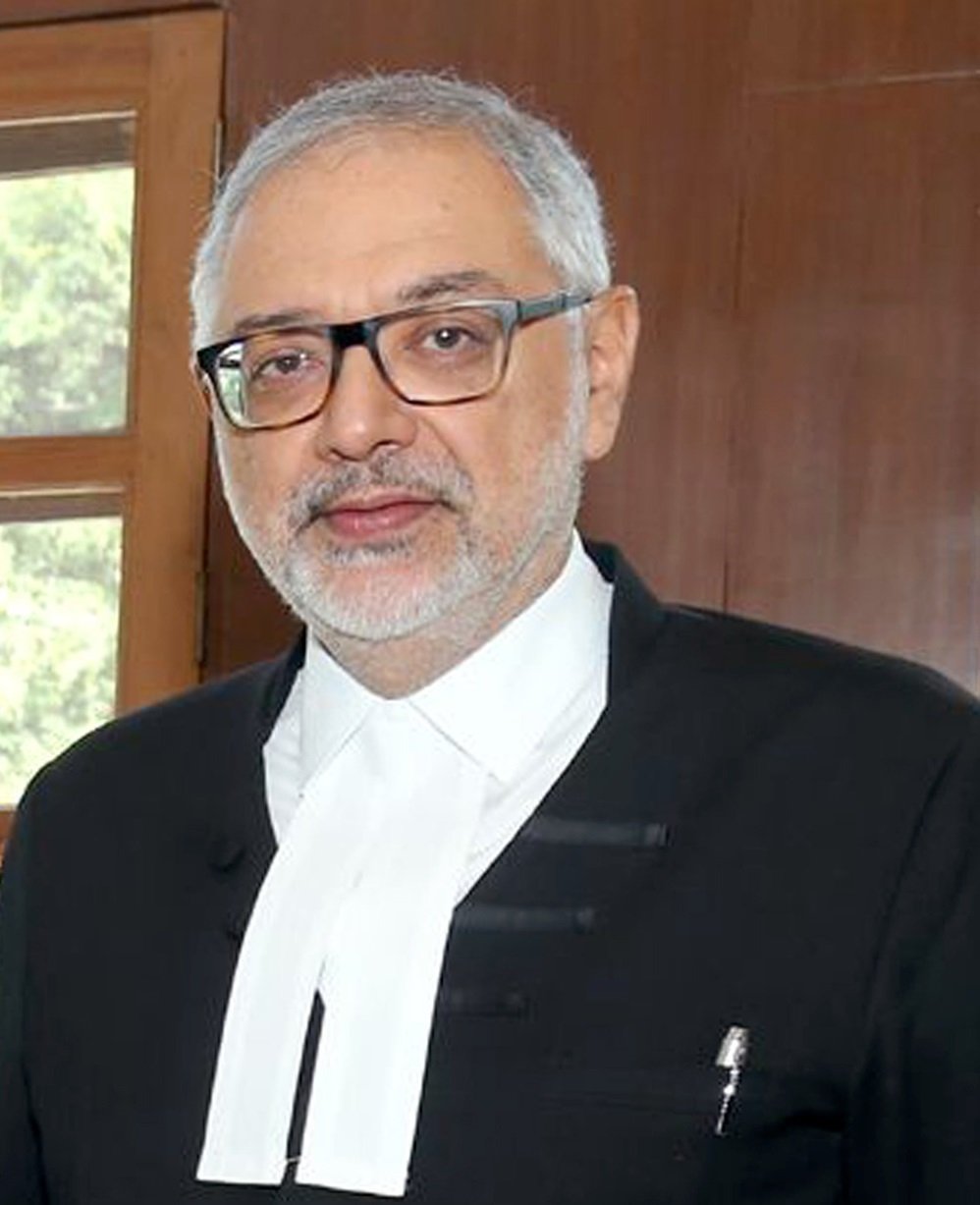
The Hon'ble Mr. Justice G.S. Sandhawalia, Chief Justice.
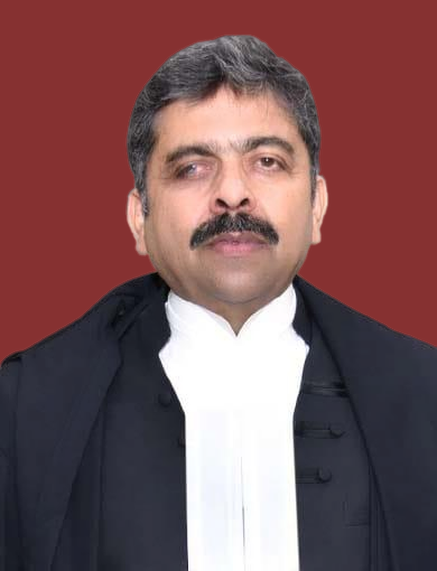
The Hon’ble Mr. Justice Bipin Chander Negi, Judge.
Whether approved for reporting? Yes.
For the Appellants :Mr. Rakesh Dhaulta, Additional
Advocate General.
For the respondent:Mr. Rahul Mahajan, Advocate.
G.S. Sandhawalia, Chief Justice .
The present Appeal has been preferred by the
appellant/State challenging the interim order dated
27.07.2023, passed by the learned Single Judge in CMP
No.10900/2022 (in Civil Writ Petition No. 8386 of 2021),
whereby the application filed by the applicant/respondent
herein under Section 17-B of the Industrial Disputes Act, 1947,
(hereinafter referred to as “the ID Act 1947”) has been allowed
2
and the appellant/State was directed to pay full wages last
drawn by the applicant/respondent herein, inclusive of
allowances, to the respondent, from the date of passing the
award, i.e., 21.11.2017.
2. The present case apparently pertains to a daily
wage casual labourer, who was performing various seasonal
forestry works right from the year 1987 with respondent No.2-
the Divisional Forest Officer, Parvati Forest Division at Shamshi
District Kullu, HP in Bhuntar Forest Range and presents a saga
of misery of a poor labourer by termination of his services,
time to time without complying with the provisions of the ID
Act, 1947.
3. The question arising in the present appeal is
whether, due to the employer's delay in filing the writ petition,
the workman’s right to seek wages under Section 17-B of the
ID Act, 1947, should be determined from the date of the Award
or from the date of filing of the application under Section 17-B
of the ID Act, 1947, which is accompanied by the necessary
affidavit.
4. To decide the matter in controversy, a brief
narration of facts to the extent relevant, may be noticed.
3
5. The respondent, namely, Bir Singh w.e.f. January,
1987 had worked intermittently as per availability of works
and funds up to April, 2010 with the appellants/State and
thereafter abandoned the work at his own will against which
he was deployed and stopped altogether to report for his duty
as per the case of the State. The respondent had not
completed 240 days in any calendar year except the years
1999 and 2000 right from the year 1987 till the year 2010, as
is evident from the Mandays chart (Annexure P-II).
6. The respondent herein served demand notice under
Section 2-A of the ID Act, 1947 dated 08.03.2013 (Annexure
P-III), upon Conservator of Forests, Kullu, District Kullu, H.P.
alleging therein that his services were retrenched by the
department during April, 2010 without following procedure
under Sections 23-F, 23-G & 25-H of ID Act, 1947 and
demanded re-engagement in service and to condone fictitious
breaks given to him.
7. Respondent No.2-the Deputy Conservator of Forest
filed reply (Annexure P-IV) to the said demand notice before
the Labour Officer-cum-Conciliation Officer Kullu, whereby he
has denied that the respondent worked continuously from
01/1987 to 04/2010. It was further averred that the
4
respondent worked with the petitioner department
intermittently as per his own convenience on seasonal works
which is evident form Annexure-P-I. It has been stated that
the respondent had never been retrenched during 04/2010. In
fact he had never turned up to the work on his own accord for
the reasons best known to him and himself had abandoned the
work.
8. The Labour Officer-cum-Conciliation Officer Kullu
tried to settle the dispute during conciliation proceedings, but
could not succeed and submitted the report under section 12
(4) of the ID Act, 1947 to the Labour Commissioner H.P.
Shimla.
9. The Labour Commissioner, Himachal Pradesh
Shimla, vide Notification No. 11-3/93 (Lab) ID/2014-Kullu dated
05.12.2014 (Annexure P-V) referred the Industrial Dispute to
the Labour Court-cum-Industrial Tribunal Dharamshala, H.P. for
adjudication on the following question:
"Whether time to time termination of the services
of Sh. Bir Singh son of Shri Paras Ram, R/o Village
Linghar, Post Office Kharihar, Tehsil & Distt. Kullu,
H.P. during year 2000 to year 2010 and finally
during April, 2010 by the Divisional Forest Officer,
Parbati Forest Division Shamshi, District Kullu,
H.P., without complying with the provisions of the
Industrial Disputes Act, 1947, is legal and
justified? If not, what amount of back wages,
seniority, past service benefits and compensation
5
the above worker is entitled to from the above
employer(s)?"
10. The respondent had filed claim petition (Annexure
P-VI) under reference No. 342/14 before the Labour Court-
cum-Industrial Tribunal Kangra at Dharamshala on 16.12.2014
directing the appellant/State to take back the respondent in
service and continue from the date of his appointment. The
said claim petition was decided by the Labour Court, vide
award dated 21.11.2017 (Annexure P-I) directing
reinstatement of the respondent forthwith holding the
petitioner in continuous uninterrupted service with the
respondent from 2000 to 2010. The respondent was held to be
in continuous service with all consequential benefits, except
back wages.
11. The appellant/State feeling aggrieved by the
aforesaid award challenged the same before the learned
Single Judge of this Court by filing CWP No. 8386 of 2021. The
learned Single Judge, while admitting the writ petition on
27.07.2023 allowed the application (CMP No. 10900/2022) filed
by the respondent under Section 17-B of the ID Act, 1947 for
grant of full wages last drawn by the respondent, inclusive of
6
allowances, which order is under challenge, by way of the
present appeal.
12. The learned Single Judge, while allowing the
application noticed that the impugned award directing
reinstatement of the respondent was passed on 21.11.2017
and respondent had submitted his joining on 18.01.2018. The
petition was filed on 30.12.2021 and operation of the
impugned award was stayed on 03.01.2022. Since, there was
considerable long delay in assailing the order passed by the
Industrial Tribunal-cum-Labour Court, it was observed that the
application duly supported by the affidavit would go on to
show that applicant was unemployed and he was unable to get
employment anywhere either in government/semi government
and private institutions and therefore, he was not gainfully
employed in any establishment since his termination.
Arguments of counsel for the appellants-
S t ate:-
13. Counsel for the appellants-State, while placing
reliance upon the bare provisions of Section 17-B of the ID Act,
1947 submitted that the provision mandates that in case of an
award directing reinstatement which is challenged in the High
Court or the Supreme Court, the employer is liable to pay the
7
workman full wages last drawn during the pendency of such
proceedings. This is applicable, if the workman has not been
employed in any establishment during Yes. that period and
has filed an affidavit as such to that effect.
14. It is thus contention of the counsel for the
appellants-State that the workman had filed the necessary
affidavit along with the application only on 04.04.2022/
20.05.2022, respectively and therefore, the learned Single
Judge had erred in allowing the application under Section 17-B
of the ID Act, 1947 from the date of the Award dated
21.11.2017.
15. Reliance is placed upon the judgment of the learned
Single Judge passed by the Delhi High Court in W.P. (C)
1782/2019, titled as M/s Capital Maintenance Corporation
Vs. Government of NCT Delhi and Others, decided on
24.02.2022, wherein the provisions of Section 17-B of the ID
Act, 1947 as such had been discussed and the necessity as
such to file the affidavit that the workman has not been
gainfully employed. Accordingly, it is contended that the said
judgment noted that Section 17-B of the ID Act, 1947, was
enacted to relieve hardship caused to the workman.
Furthermore, it was argued that because the workman was
8
doing agricultural work, he was not entitled to the benefit of
the said period from the date of passing of the Award. It is
further contended that even the son was a government
employee, the benefit could not have been granted
retrospectively from 21.11.2017, when the award was passed
and would be due from the belated filing of the application,
which was only prepared in April, 2022 and filed in May, 2022.
Arguments of counsel for the respondent-
workman:-
16. On the other hand, counsel for the respondent-
workman has submitted that Section 17-B of the ID Act, 1947,
is a beneficial piece of legislation. He argued that the
employee should not be penalized for belated filing of the writ
petition by the employer, which prevented him from receiving
benefits during the intervening period, as it was the
employer's duty to have filed the petition at the earliest. It is
contended that notice was issued in the petition on
03.03.2022, when the operation of the Award dated
21.11.2017 had been stayed. Prior to this, the workman had
already filed his joining report on 08.01.2018 (Annexure A-
2), which he had attached along with his application under
Section 17-B of the ID Act, 1947. Although these documents
9
were duly received by the Superintendent of the Divisional
Forest Officer, Parbati Forest Division, Shamshi, District Kullu,
Himachal Pradesh, the workman was not allowed to be
reinstated.
17. It is further submitted that apparently, an
application bearing CMP No. 20641 of 2024 for vacation of stay
was also filed before the learned Single Judge seeking
directions for the payment of the last drawn wages of Rs.110
per day and in the reply filed by the appellants-State, it had
admitted that Rs. 2,29,460/- had been duly vetted by the
Controller (F&A) in the O/o Principal Chief Conservator of
Forests, Himachal Pradesh, as the last wages drawn for the
period from 21.11.2017 to 07.08.2023. Thereafter, it was
opined to challenge the orders dated 27.07.2023, passed by
the learned Single Judge by filing a First Appeal (FAO).
Although the application for a non-vacation of stay was
contested, but no order has been passed on it, as of now by
the learned Single Judge.
18. Accordingly, it is submitted that the judgment of the
Delhi High Court in M/s Capital Maintenance Corporation
case (supra) is not applicable, as it was a case where the
workman had already been employed for a period of six years
10
in a school and had superannuated from the said school. The
workman had chosen not to apprise his counsel of this fact and
deliberately had filed a false affidavit before the Delhi High
Court. Therefore, in those facts and circumstances of the case,
a sum of Rs. 50,000/- was the only relief granted and the writ
petition was allowed, and the relief of reinstatement was not
granted. In fact, it was an admitted position that the workman
was employed, therein.
19. Counsel for the respondent-workman has placed
reliance upon the judgments of the Apex Court in Dena Bank
Vs. Kiritkumar T. Patel (1999) 2 SCC 106 and Dena Bank
Vs. Ghanshyam (2001) 5 SCC 169. Relying upon these
cases, Counsel contends that Section 17-B of the Industrial
Disputes (ID) Act, 1947, does not preclude High Courts from
granting better benefits if deemed just and equitable on the
facts of the case.
20. It is also contended that the Division Bench of the
Delhi High Court in Municipal Corporation of Delhi Vs.
Santosh Kumari and Another (2012 SCC OnLine Del
4390) had held the reverse proposition: that the filing of a
belated application under Section 17-B of the ID Act, 1947,
would not grant the workman the right to seek payments from
11
the date of the award. In such circumstances, it was noticed
that the workman should be paid wages with effect from the
date of passing of the Award and the interest of both the
workman as well as the employer have to be kept in mind.
21. Similarly, reliance has been placed upon another
judgment of the Division Bench of the High Court of Delhi in
Surender Kumar Vs. North Delhi Municipal Corporation
(2022) SCC OnLine Del 3451 , wherein it was held that
restricting a workman's claim for full wages to the date of filing
the application under Section 17-B of the Industrial Disputes
Act, 1947, was liable to be set aside and noting a delay of four
and a half months in filing the writ petition, the Court had
condoned the delay and directed the employer to pay the
statutory wages from the date of the Award, keeping in mind
the underlying objects and reasons of Section 17-B of the ID
Act, 1947.
Our R e asoning:-
22. It is in such circumstances that we have now to deal
with the issues in the appeal, as to whether the State could
take advantage of its own wrong having chosen not to file the
writ petition within a reasonable time and having only filed the
writ petition on 30.12.2021, after four years from the date of
12
passing of the Award dated 21.11.2017, and whether it could
preclude the workman from getting the benefits of the
application filed under Section 17-B of the ID Act, 1947.
23. We are of the considered opinion that the beneficial
aspect of the legislation cannot be lost sight of. Its purpose
and intent is to ensure that the award is implemented without
delay. Therefore, the employer must firstly avail of their
remedy at the earliest and cannot take advantage of delaying
tactics to the detriment of the poor employee. The employees
having fought an uphill battle against the State to secure
reinstatement and having succeeded in their pursuit of justice,
cannot be denied the fruits of the litigation, especially when
the State had successfully delayed the filing of the petition by
four years and subsequently had obtained a stay order on
03.01.2022, leading to the employee expeditiously filing an
application, which was prepared on 04.04.2022 and filed on
20.05.2022.
24. The objects and reasons for enacting the provisions
of Section 17-B of the ID Act, 1947 reads as under:-
“When the Labour Courts pass award of
reinstatement, these are often contested by an
employer in the Supreme Court or High Court. It
was felt that the delay in the implementation of the
award causes hardship to the workman concerned.
It was, therefore, proposed to provide the payment
13
of wages last drawn by the workman concerned,
under certain conditions, from the date of the
award till the case is finally decided in the Supreme
Court or High Courts.”
25. It was in such circumstances that Section 17-B of
the ID Act, 1947, was incorporated into the Statute Book by
the Industrial Disputes (Amendment) Act, 1982 w.e.f.
21.08.1984 and it reads as under:
“17-B. Payment of full wages to workman
pending proceedings in higher courts- Where
in any case a Labour Court, Tribunal or National
Tribunal by its award directs reinstatement of any
workman and the employer prefers any
proceedings against such award in a High Court or
the Supreme Court, the employer shall be liable to
pay such workman, during the period of pendency
of such proceedings in the High Court or the
Supreme Court, full wages last drawn by him,
inclusive of any maintenance allowance admissible
to him under any rule if the workman had not been
employed in any establishment during such period
and an affidavit by such workman had been filed to
that effect in such Court;
Provided that where it is proved to the satisfaction
of the High Court or the Supreme Court that such
workman had been employed and had been
receiving adequate remuneration during any such
period or part thereof, the Court shall order that no
wages shall be payable under this section for such
period or part, as the case may be.”
26. From a reading of the Objects and Reasons of
Section 17-B of the Industrial Disputes (ID) Act, 1947, it is clear
that delays in the implementation of an award caused
hardship to the workman concerned so to mitigate this, a
provision was made for the payment of interim relief equal to
14
the last drawn wages from the date of the award. Under the
substantive part of Section 17-B, this benefit of full wages last
drawn is made mandatory upon the filing of an affidavit stating
that the workman is not employed. This liability arises when an
award directs reinstatement and the employer challenges the
award in the High Court or the Supreme Court, and the
proceedings remain pending in those higher Courts. The
proviso states that if the workman was employed and received
adequate remuneration during any such period or part thereof,
no wages shall be payable for that period or part, as the case
may be. Therefore, the quantification is left to the concerned
Court, solely to ensure that the benefit is denied only in cases
of actual employment period.
27. In the first case of Dena Bank (supra), decided in
the year 1999, the Apex Court had dealt with the issue of "full
wages last drawn" under Section 17-B of the ID Act, 1947.
Relying on the Statement of Objects and Reasons, the Court
had concluded that this benefit was intended to relieve the
hardship caused to the workman on account of delays in
implementing the order. Consequently, it was held that the
object underlying the provision was to relieve the workman’s
hardship to a certain extent. Such payments cannot be
15
recovered or refunded in any manner, even if the Award was
set aside. Therefore, the workman was entitled to the full
wages last drawn, and not any revised wages that may have
been given to similarly situated workmen.
28. In the second case of Dena Bank (supra), decided
in the year 2001, the primary issues were whether the
employer was liable to pay full salary from the date of filing of
the writ petition or whether the salary was to be paid at par
with other employees working on the same post, and whether
the workman was entitled to regular pay-scale instead of the
Rs.900/- per month, he last drew as wages. Resultantly, it was
held that the relevant provisions empowered the Courts to
grant more just and equitable interim benefits based on the
facts of the case, and that such excess amounts would be
liable to be refunded, if the writ petition was allowed, however,
there could be no recovery of the actual wages last drawn.
The relevant part reads as under:-
“12. We have mentioned above that the import
of Section 17-B admits of no doubt that
Parliament intended that the workman should get
the last drawn wages from the date of the award
till the challenge to the award is finally decided
which is in accord with the Statement of the
objects and reasons of the Industrial Disputes
(Amendment) Act, 1982 by which Section 17- B
was inserted in the Act. We have also pointed out
above that Section 17-B does not preclude the
16
High Courts or this Court from granting better
benefits more just and equitable on the facts of a
case -- than contemplated by that provision to a
workman. By interim order the High Court did not
grant relief in terms of Section 17-B, nay, there is
no reference to that section in the orders of the
High Court, therefore, in this case the question of
payment of full wages last drawn to the
respondent does not arise. In the light of the
above discussion the power of the High Court to
pass the impugned order cannot but be upheld
so the respondent is entitled to his salary in
terms of the said order.
13. It must, however, be pointed out that while
pasing an interlocutory order the interests of the
employer should not be lost sight of. Even
though the amount paid by the employer under
Section 17-B to the workman cannot be directed
to be refunded in the event he loses the case in
the writ petition (see Dena Bank case
1
) any
amount over and above the sum payable under
the said provision, has to be refunded by him. It
will, therefore, be in the interests of justice to
ensure, if the facts of the case so justify, that
payment of any amount over an above the
amount payable under Section 17-B to him, is
ordered to be paid on such terms and conditions
as would enable the employer to recover the
same.
14. It is brought to our notice that pursuant to
the orders of the High Court under challenge the
appellant had paid the amount to the
respondent. It is clarified that if the appellant
succeeds in the writ petition, it will be entitled to
recover the difference of amount (i.e. amount
paid under the impugned order less the amount
payable under Section 17-B of the Act) from the
respondent in accordance with law.”
29. Counsel for the respondent-workman has rightly
placed reliance upon the Division Bench judgment of the Delhi
High Court in Santosh Kumari (supra). In that case, the Court
had considered whether the entitlement under Section 17-B of
17
the ID Act, 1947, should run from the date of the Award or
from the date of the application. The employer had contested
this on the grounds of belated filing of the application.
Consequently, it was held that it was obligatory for a workman
to explain any delay and file an affidavit and workman cannot
claim the benefits of Section 17-B for several years in arrears
without an explanation, as it would be impossible for an
employer to establish whether the workman was gainfully
employed during that delayed period. Therefore, the Division
Bench in various cases had accordingly granted benefits,
choosing not to interfere, if there was no delay in filing the
application, but choosing to interfere when there was an
unexplained delay.
30. The said view was thereafter followed in Surender
Kumar’s case (supra) ten years later. In that case, it was held
that the entitlement to wages under Section 17-B hinges on
whether the workman remained unemployed since his
termination, and that this benefit must be granted from the
date of the Award. Therefore, even if an application is filed
belatedly, the workman can still be given the said benefit while
placing reliance upon the provisions of the second case of
Dena Bank (supra). Resultantly, it was held that the words of
18
the statute must be understood in their natural and ordinary
grammatical sense unless such a conclusion leads to
absurdity.
31. Accordingly, the appeal was allowed, since the
Award had been passed on 31.08.2019, and the State had
taken four and a half months to file the writ petition and the
workman filed his applications immediately after a period of
nine months from his first appearance in the Court.
Consequently, it was held that the delay in filing the
application could not work to the detriment of the workman.
The relevant portion reads as under:-
”12. A perusal of the abovementioned judgment
shows that the general rule is that the workman is
entitled to the benefits under Section 17-B of the
Act from the date of passing of award unless it is
shown that the workman has been indolent and
negligent in not pursuing the relief under Section
17-B of the Act and has filed his application under
Section 17-B of the Act after considerable delay or
at his whim and fancy.
13. In view of the above, the law is clear that
ordinarily the payment of wages under Section 17-
B of the Act would be from the date of passing of
award and only in cases of undue delay on the
part of the workman in approaching the Court, the
payment can be directed to be made from the
date of filing of application under Section 17-B of
the Act.
14. As stated earlier, the Apex Court in Dena
Bank (supra) has held that the Statement of
Objects and Reasons for inserting Section 17-B of
the Act is to ensure that the workman does not
continue to live in penury and await the final
outcome of the challenge to the award of
19
reinstatement. Once the award of reinstatement
has been passed, the employer should reinstate
the workman. The employer cannot be permitted
to keep the workman in limbo just by challenging
the award and even if the employer fails to get a
stay of the award, the employer cannot be
permitted to not allow the workman from working
and at the same time he also cannot be permitted
not to pay wages to the workman as this would go
against the purpose of inserting Section 17-B of
the Act.”
32. The Full Bench of the Kerala High Court took a
similar view in The South Indian Workers Congress Vs.
Sree Sankara University of Sanskrit (2010) 3 SCT 846 .
The Court held that an unemployed workman was entitled to
receive wages under Section 17-B of the Industrial Disputes
Act from the date when the writ petition was instituted,
provided the workman satisfied the Court by filing an affidavit
stating that he had been unemployed since that date. In that
case, the industrial award was passed in favour of the
workman on 14.11.2005. The application under Section 17-B
was allowed despite a delay in filing, against which the
proceedings had been preferred. Resultantly, it was held that
the workman was entitled to receive wages from an anterior
date prior to the institution of the proceedings initiated by the
employer, to give proper effect to the words employed by the
Legislature. It was accordingly held that the court only needed
20
to be satisfied by the filing an affidavit stating that the
workman was unemployed from the date when the
proceedings were instituted. The reference was answered
accordingly.
33. Thus, keeping in view the overall perspective, and
the fact that the Statement of Objects and Reasons provided
that the purpose was to ensure payment of the wages last
drawn due to delays in implementing the Award, it would not
lie in the mouth of the appellant-State to object. The State
delayed filing of the writ petition for a period of four years,
despite the petitioner having submitted his joining report on
18.01.2018 well within three months of the Award passed in
his favour on 21.11.2017. The appellants-State had taken its
sweet time as such in filing the writ petition on 30.12.2021,
had obtained a stay on 03.01.2022. Consequently, it cannot
now argue that the payment of the last drawn wages, under
Section 17-B of the Industrial Disputes Act, should only be
granted from the date the application and affidavits were filed.
The State cannot rely on a strict interpretation of the Section
to escape this liability, especially since it failed to explain
satisfactorily the delay in filing the writ petition in any manner.
21
No valid reasons for filing the writ petition
belatedly:-
34. We are of the considered opinion that the delay in
filing the writ petition has been hardly explained. Apparently,
for the first time, the appellants-State had acted upon the
matter on 16.04.2018, when they had issued a letter to the
Conservator of Forests, Kullu, seeking a legal opinion on
whether the Award should be complied with or agitated. The
matter was then referred to the Additional Chief Secretary
(Forests) to the Government of Himachal Pradesh on
27.10.2018 to render a legal opinion. It was only on
26.02.2019 that a response was received from the Additional
Chief Secretary (Forests), opining that the Award was unfit for
further agitation. However, on account of the Finance
Department objecting to the same, it was directed that action
be taken on the ground that a connected matter of the
workman was pending and as he had also filed an Execution
Petition in the Court of the learned Civil Judge (Senior
Division), Kullu. Therefore, justification was given that the writ
petition could not be filed immediately after the decision of the
Labour Court. The matter had again been taken up on
23.08.2021 to seek legal opinion. Approval was given on
22
17.09.2021, and the Additional Chief Secretary (Forests) had
finally granted approval on 21.09.2021. It is thus apparent that
the appellant-State had initially decided not to contest the
same, as per the opinion given by the Law Department and the
Finance Department. The relevant portion of the explanation
given in the writ petition reads as under:-
“The impugned award has been opined as unfit
for further agitation by the Ld. Dy. District
Attorney, Labour Court Kangra at Dharamshala.
In the facts and circumstances of the case, this
Department tends to agree with the opinion so
tendered by Dy. District Attorney as the
impugned award passed by the Ld. Court
appears to be just, proper and in consonance
with the scheme of things in envisaged in the
Industrial Dispute Act, 1947. The Forest
Department is, therefore advised to contemplate
implementing the impugned award as assailing
the same further is not going to achieve any
fruitful purpose.”
35. It is thus apparent that the State only took into
account the objections of the Finance Department and the
Administrative Department had waken up from its slumber
(Annexure P-VIII) to file the writ petition.
36. A perusal of Annexure P-VIII would also go on to
show that the Government took its sweet time to process the
filing, kick-starting the process of challenging the Award only
because the execution proceedings had begun. Therefore, the
23
Government cannot take advantage of its own belated filing of
the writ petition to the detriment or prejudice of the workman.
37. However, it is clarified that the right to receive
wages would only continue until the workman reaches the age
of superannuation, as an issue has been raised regarding that
aspect.
38. Resultantly, we do not find any ground to interfere
with the well reasoned orders passed by the learned Single
Judge and we uphold the same. Accordingly, the present
appeal stands dismissed.
39. Pending miscellaneous application(s) if any, shall
also stand disposed of.
(G.S. Sandhawalia)
Chief Justice
(Bipin Chander Negi )
Judge
18
th
July, 2026
(C.M. Thakur/Munish Thakur)
In a significant ruling, the Himachal Pradesh High Court recently reinforced the protective intent of Section 17-B of the Industrial Disputes Act, 1947, by dismissing an appeal challenging the payment of workman\'s interim wages from the date of the award. This pivotal judgment, which underscores the principle that an employer cannot benefit from their own delay in challenging a reinstatement order, is now available for detailed review and analysis on CaseOn.
\nThe central question before the Himachal Pradesh High Court was whether a workman\'s entitlement to interim wages under Section 17-B of the Industrial Disputes Act, 1947, should commence from the date of the Labour Court\'s award or from the date the workman filed their application for such wages, especially when the employer had significantly delayed challenging the original award.
\nSection 17-B of the Industrial Disputes Act, 1947, was introduced to alleviate the financial hardship faced by workmen whose reinstatement awards are challenged by employers in higher courts. It mandates that if a Labour Court or Tribunal directs reinstatement and the employer appeals, the employer is liable to pay the workman full wages last drawn, along with any admissible maintenance allowance, during the pendency of proceedings in the High Court or Supreme Court. This payment is contingent on the workman filing an affidavit confirming they have not been gainfully employed elsewhere during that period. The provision also includes a proviso allowing the court to withhold wages if it\'s proven the workman was adequately employed.
\nThe legislative intent behind Section 17-B is crucial. The original "Objects and Reasons" for its insertion clarified that “delay in the implementation of the award causes hardship to the workman concerned. It was, therefore, proposed to provide the payment of wages last drawn by the workman concerned, under certain conditions, from the date of the award till the case is finally decided in the Supreme Court or High Courts.”
\nThe Court referred to several Supreme Court and High Court judgments that have shaped the interpretation of Section 17-B:
\nThe Himachal Pradesh High Court meticulously examined the facts in light of the established legal framework.
\nThe Labour Court\'s award directing reinstatement was passed on November 21, 2017. The workman promptly submitted his joining report on January 18, 2018. However, the appellant-State filed its writ petition challenging the award only on December 30, 2021—a delay of over four years. During this period, the State engaged in internal discussions, seeking legal opinions, with one opinion initially deeming the award “unfit for further agitation.” The decision to challenge was eventually prompted by the workman\'s execution proceedings. This prolonged procrastination by the State was deemed “hardly explained” by the Court.
\nIn contrast, the workman submitted his joining report well within three months of the award. Once the State filed its writ petition and obtained a stay on January 3, 2022, the workman “expeditiously” filed his Section 17-B application in April/May 2022. The Court observed that the workman should not be penalized for the employer\'s delay in challenging the award.
\nThe Court emphasized that Section 17-B is a beneficial piece of legislation designed to prevent hardship to workmen. Allowing the employer to take advantage of their own delay by restricting interim wage payments to the date of the application would fundamentally undermine the purpose and intent of the Act. The judgment highlighted that “the employer must firstly avail of their remedy at the earliest and cannot take advantage of delaying tactics to the detriment of the poor employee.”
\nWhile the State argued that wages should commence from the date the affidavit (confirming non-employment) was filed, the Court, relying on precedents, noted that the general rule is to grant benefits from the award date. The affidavit\'s purpose is to ensure the workman isn\'t gainfully employed, but a belated filing of the application, especially when the employer itself caused significant delay, should not restrict the benefit.
\nFor legal professionals seeking to quickly grasp the nuances of such rulings and their practical implications, CaseOn.in\'s 2-minute audio briefs assist legal professionals in analyzing these specific rulings, providing a concise yet comprehensive overview.
\nThe Court unequivocally stated that the State “cannot rely on a strict interpretation of the Section to escape this liability, especially since it failed to explain satisfactorily the delay in filing the writ petition in any manner.” The payment of wages was thus mandated from the date of the award, acknowledging the employer\'s responsibility to act promptly.
\nThe Himachal Pradesh High Court, led by Chief Justice G.S. Sandhawalia and Justice Bipin Chander Negi, dismissed the State\'s appeal, upholding the Single Judge\'s order. The Court ruled that the workman, Bir Singh, is entitled to full wages last drawn, inclusive of allowances, from the date of the Labour Court\'s award (November 21, 2017), not just from the date of his Section 17-B application. This decision explicitly penalizes the State for its four-year delay in challenging the award and reinforces the protective spirit of Section 17-B. The right to receive wages, however, will continue only until the workman reaches the age of superannuation.
\nThis judgment serves as a critical reminder of several key legal principles:
\nThis case is vital for labour law practitioners, in-house counsel for government bodies, and law students studying industrial law, offering profound insights into the application and interpretation of Section 17-B.
\nAll information provided in this analysis is for informational purposes only and does not constitute legal advice. While efforts have been made to ensure accuracy, readers are advised to consult with a qualified legal professional for advice pertaining to their specific circumstances.
']
 Login with google
Legal Notes
Add a Note....