
As per case facts, disputes among riparian states (Maharashtra, Karnataka, Andhra Pradesh) regarding the utilization of Krishna River water have persisted, leading to prolonged litigation despite the Krishna Water Disputes ...
No Acts & Articles mentioned in this case
http://JUDIS.NIC.IN SUPREME COURT OF INDIA Page 1 of 3
CASE NO.:
Original Suite 1 of 1997
Original Suite 2 of 1997
PETITIONER:
STATE OF KARNATAKA
Vs.
RESPONDENT:
STATE OF ANDHRA PRADESH & ORS.
DATE OF JUDGMENT: 25/04/2000
BENCH:
R.P. Sethi
JUDGMENT:
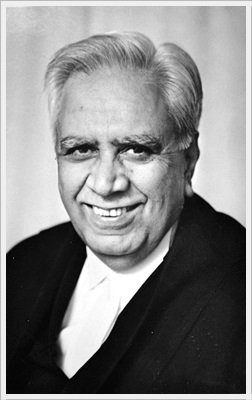
SETHI,J.
While agreeing with the main judgments of brother Pattanaik.J. in
Original Suits Nos. 1 and 2 of 1997 and supplementary concurring
judgment of brother Majmudar,J. in Original Suit No. 2 of 1997, I am
persuaded to place on record some of my observations in addition, which
have been necessitated on account of the unreasonable, unrealistic,
motivated and contradictory attitudes adopted and changed from time to
time by the riparian States of Krishna river basin, obviously under
local pressures and political compulsions. It is hoped and expected
from responsible representative governments of the States concerned
that they would give due weight to the tremendous work done by the
Krishna Water Disputes Tribunal and realise their constitutional
obligations to the nation, being important and mighty Constituents of
the Federation, the Union of India, keeping in view our observations in
the judgment.
Water is a unique gift of nature which has made the planet
earth habitable. Life can not be sustained without water. In the
National Water Policy issued by the Government of India in 1987, it
was declared that water is a prime natural resource, a basic
human need and a precious national asset. Water, like air, is the
essence for human survival. The history of water availability and
its user is tied up with the history of biologically evolution in all
civilizations. It will not be wrong to say that not only the life
started in water but rather water is life itself. It is essential for
mankind, animals, environment, flora and fauna. There is no denial of
the fact that in the ancient times water played an important role in
the origin, development and growth of civilization all over the globe.
Water is an important factor in the economic development of the
countries which ultimately affects the social and human relations
between the habitants. Planned development and proper utilization
of water resources can serve both as a cause as well as an effect off
the prosperity of a nation. Water on earth is available in the form of
frozen snow, rivers lakes, springs, water ways, water falls and
aqueducts, etc.
In this galaxy and the environment surrounding the earth, its
hydrosphere segment mostly consists of water in the shape of oceans.
Out of the total available water on earth 97.3% water is such which can
not be utilised for the benefit of the humanity. Only 2.07 %
water is available for consumption and mankind's utilization. Out of
http://JUDIS.NIC.IN SUPREME COURT OF INDIA Page 2 of 3
this consumable water 30% is used for irrigation , 7% for domestic and
12% for industrial purposes. Rest of the water goes waste on account
of mismanagement and the lack of facilities of better utilisation.
Whereas water is scarce and limited, its users are numerous and ever
increasing. With the development in the living standards of the people,
the consumption of the water is increasing everyday without there being
any corresponding increase in its total availability. According to an
estimate in World Book Encyclopaedia, on an average a person needs
about 60,600 ltrs. of water during his life time and in industrial
countries like U.S.A. each person presently is using about 260 litrs.
of water every day. The consumption in our country is however much
less. On account of the advancement in the technology and of
civilization, water needs are increasing. In their quest to have
comfortable life, people want more and more water. Facilities like
ACs., garbage disposals, automatic washers and modern bathrooms,
earlier considered as luxury are now deemed as necessities of life of
a large human population.
India is one of the most fortunate countries endowed with
enviable wealth of water resources. The average annual
precipitation in this country is higher than that of any other
continent in the world with the exception of South America. However,
on account of meagre resources and lack of developmental facilities,
India uses only 1/10th of the precipitation which it receives
annually with the result that the rest of water goes waste into the
sea. The sources of water in this country are either the frozen snow
which melts in summer or accumulated water in dams during monsoon
seasons which is utilised off that season. In the absence of proper
water source management, great population of the people suffer every
year on account of either the floods or droughts. Geographically,
India has more than 20 major river basins. Some of those, such as
Indus, Chenab, Ganga, Brahamputra and Teestha, though originating
from and flowing in India are yet in effect and essence, international
rivers as they pass through the territories of other sovereign states.
Despite independence for more than half a century, the country
has not been in a position to construct more than 3000 large and small
dams with the result that most of the water otherwise available in the
country remains unutilised. Almost in all countries of the world,
efforts are being made to regulate the user of water resources
alongwith the user of the land resources. Water management is required
to be viewed in the light of the land management. The law relating to
water rights has undergone a sea change all over the world.
International and inter-State disputes regarding the user of water are
sought to be settled by recourse to the process of law in place of
the old doctrine or settlement "by war or diplomacy". Water under all
prevalent systems of law has been declared to be the property of the
public and dedicated to their use, subject to appropriation and
limitations as may be prescribed either under law or by settlement or
by adjudication. The disputes relating to water management, its
development and its distribution are to be considered not from rigid
technical or legal angle but from the pre-eminently important
humanitarian point of view as water wealth admittedly forms a focal
point and basis for the biological essence and assistance of socio
economic progress and well being of human folk of all the countries.
In resolution of the disputes relating to development, management and
distribution of the water reliance has to be placed upon the long
usage, customs, prevalent practices, rules, regulation Acts and
judicial decisions. There is no dispute that under the
constitutional scheme in our country right to water is a right to life
and thus a fundamental right. In India the importance of water is
recognised under the constitution as is evident from Article 262, 7th
Schedule List II Entry 17, List I, Entry 56, and Statutes like
Inter-State Water Disputes Act, 1956 and Rivers Boards Act, 1956.
The controversy, in the present proceedings, amongst the States
of Maharashtra, Karnataka and Andhra Pradesh is with respect to the
utilisation of the water of Krishna River which is the second largest
http://JUDIS.NIC.IN SUPREME COURT OF INDIA Page 3 of 3
river in the Penninsular India. The river has a total length of 870
miles originating from Western Ghats near Mahabaleshwar and flows
through parts of the aforesaid three States. The Krishna River Basin
has an area of about one lakh sq.miles which directly affects about 39
million inhabitants of the three States. The water of this river has
been the bone of contention between the riparian States for over a
period of one and a half century. It was only in 1855 when the Krishna
Delta Canal System was commenced to properly regulate the user of water
of this river. After re-organisation of the States in November, 1956,
the Central Water and Power Commission drew up scheme for re-allocation
of Krishna Waters which was not accepted by the concerned States with
the result that an Inter-State Conference was held in September, 1960
but as no settlement could be arrived at, the matter was ultimately
referred to the Tribunal for adjudication which submitted its reports
Exhibits PK1 and PK2 which have been elaborately dealt with in the main
judgment.
From April, 1969, alongwith the undefined huge water, national
assets being the public money has flown through the river into the Bay
of Bengal on account of pending litigation. Despite huge expenditure
incurred and momenteous job performed by the Tribunal, the most
acceptable solution regarding distribution of water was not accepted by
the concerned States on pretexts and under the wrangles of
technicalities. Even the States initially accepting the reports of the
Tribunal have been changing their stands which resulted in keeping the
matter alive, notwithstanding the consequential losses but obviously
for the concerned States' convenience primarily actuated by political
considerations and changes but apparently for proclaimed interests of
their inhabitants.
The dismissal and disposal of the suits filed by the States of
Karnataka and Andhra Pradesh and rejection of the plea raised by
Maharashtra in its additional written statement would not settle the
dispute or solve the problem but unfortunately will become the basis of
new litigation between the States which is surely likely to adversely
affect their inhabitants resulti
ng in the wastage of the waters of Krishna which otherwise has been
found in abundance. It is hoped that as and when action is initiated
upon our judgment, the Tribunal or the authority appointed in
consequence thereof, for the purposes shall expedite the matter and
ensure that the most precious gift of nature - water and the public
money is not wasted in uncalled for, avoidable and imaginary
litigation. It is not disputed that in the absence of the Reservoir
System under Scheme B as formulated by the Tribunal, a lot of water of
Krishna is wasted and permitted to submerge in the Bay of Bengal. Let
better sense prevail upon all concerned to ensure the safety of the
river and proper utilisation of its water for the benefit of
inhabitants of the Krishna River Basin.

 Login with google
Legal Notes
Add a Note....