
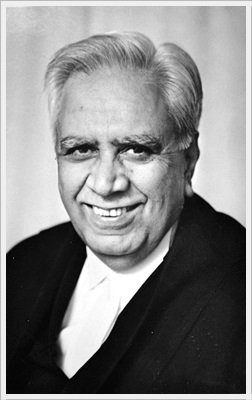
No Acts & Articles mentioned in this case
http://JUDIS.NIC.IN SUPREME COURT OF INDIA Page 1 of 13
CASE NO.:
Appeal (crl.) 801 of 1999
PETITIONER:
STATE OF PUNJAB
Vs.
RESPONDENT:
HARNEK SINGH
DATE OF JUDGMENT: 15/02/2002
BENCH:
R.P. Sethi & Bisheshwar Prasad Singh
JUDGMENT:
(With Crl.A.Nos.802-808/1999,
Crl.A.No.809-810/1999
Crl.A.No.374/2001)
J U D G M E N T
SETHI,J.
In all these appeals, the FIRs and subsequent
proceedings pending against the respondents under the
provisions of Prevention of Corruption Act, 1988
(hereinafter referred to as "the 1988 Act") were quashed by
the High Court in exercise of the powers vesting in it under
Section 482 of the Code of Criminal Procedure. The accused-
respondents had been apprehended while accepting the bribe
by laying the trap under the 1988 Act. The High Court found
that as the investigations had not been conducted by the
authorised officers under the 1988 Act, the same were
vitiated and deserved to be quashed.
The questions of law to be adjudicated upon in these
appeals are:
(1) Whether the notifications issued by the State
Government in exercise of the powers conferred
upon it under Section 5A(1) of the Prevention of
Corruption Act, 1947 (since repealed) empowering
and authorising Inspector of Police to investigate
the cases registered under the said Act are not
saved under the saving provisions of the re-
enacted Prevention of Corruption Act, 1988.
(2) Whether the aforesaid notifications not being
inconsistent with the provisions of the re-enacted
Act continue to be in force and be deemed to have
been issued under the Prevention of Corruption
Act, 1988 till aforesaid notifications are
superseded or specifically withdrawn."
Most of the facts in these appeals are not disputed.
It is agreed that during the subsistence of the Prevention
http://JUDIS.NIC.IN SUPREME COURT OF INDIA Page 2 of 13
of Corruption Act, 1947 (hereinafter referred to as "the
1947 Act"), the Government of Punjab issued a notification
on 9.7.1968 authorising Inspectors of Police, for the time
being serving in the State Vigilance Department or who may
be posted in future to serve with the said agency to
investigate the offences under the 1947 Act within the State
of Punjab so long as they remain posted in the said agency.
In supersession of the notifications dated 9th July, 1968,
the Government of Punjab issued another notification on
12.8.1968 under Section 5A(1) of the 1947 Act authorising
such inspectors of police to investigate the offences under
the Act even beyond the State of Punjab and the restrictions
of investigation within the State of Punjab were removed.
The 1947 Act was repealed on 9.9.1988 by re-enacting the
1988 Act being Act No.49 of 1988. FIRs against the
respondents were, concededly, registered after the coming
into force the 1988 Act and the investigation conducted by
the Inspectors of Police who had been authorised to
investigate the offences by notifications issued under the
repealed Act of 1947. The accused-respondents filed
petitions under Section 482 of the Cr.P.C. (hereinafter
referred to as "the Code") for quashing the FIRs registered
and the proceedings pending against them on the ground that
the inspectors who had investigated the cases were not the
authorised officers in terms of Section 17 of 1988 Act.
In reply to the notices issued by the High Court, the
State filed counter affidavit submitting therein that the
investigating officers were authorised to investigate the
case as provided by first proviso to Sub-section (1) of
Section 5A of the 1947 Act. It was contended that in view
of the provisions of Section 30(2) of the 1988 Act read with
Sections 6 and 24 of the General Clauses Act, the
notifications issued by the State of Punjab under the 1947
Act were still in force which empowered the Inspectors of
the Police of the Vigilance Department to investigate the
cases under the 1947 Act.
The learned Judge, who disposed of the petitions for
quashing the FIRs and the subsequent proceedings vide the
judgment impugned in these appeals, first dealt with the
problem of prevalent corruption in society and described it
as cancer eating the bone marrow of the society. He,
however, found that the repeal of an Act amounted to its
revocation, annulment and abrogation, the effect of which
was that the repealed Act or Ordinance did not exist on the
statute book. The only exception being the saving
provisions in the repeal statute. Referring to Section 30
of the 1988 Act the learned Judge held:
"It is manifestly clear that the legislature had
the intention to bodily lift the provisions of
Section 6 of the General Clauses Act, 1897, and
incorporate the same in the Amending Act of 1988
and (no other provision) of the General Clauses
Act. If the legislature had intended to apply any
other provision or whole of the General Clauses
Act, 1897, it would have so said clearly instead
of saying that section 6 only would apply or would
have said nothing in that regard and in that
eventuality, whole of the Act of 1897 would have
its application. It is trite law that even when a
saving clause reserving the rights and liabilities
under the repealed law is absent in a new
enactment, the same will neither be material nor
http://JUDIS.NIC.IN SUPREME COURT OF INDIA Page 3 of 13
decisive on the question of different intention
because in such cases section 6 of the General
Clauses Act will be attracted and rights and
liabilities acquired, accrued under the repealed
law will remain saved unless there is something to
infer that legislature intended to destroy the
rights and liabilities already accrued. It,
therefore, appears clear that the legislature
intended to apply section 6 only and not the whole
of the Act."
Regarding the continuity of the notifications after the 1988
Act, the learned Judge observed:
"These notifications were issued under sub section
(1) of Section 5-A of the Prevention of Corruption
Act, 1947, and Inspector of Police serving in the
Special Inquiry Agency in the Vigilance Department
of the Punjab Government or who were to be posted
in future to serve in the said agency were
authorised to arrest and investigate the case for
the commission of the offence under the Act of
1947. The notifications enure in respect of any
investigation legal proceedings or remedy that may
be instituted, continued or any such penalty,
forfeiture or punishment that may be imposed under
the Act of 1947, as if the repealing Act or
Regulation had not been passed. These
notifications referred to above, were not
expressly saved by saving provision contained in
Section 30(2) of the Act of 1988. These
notifications, therefore, would not enure or
survive to govern any investigation done or legal
proceedings instituted in respect of cases
registered under the repealing Act, 1988, after it
came into force w.e.f. 9th September, 1988."
After holding that the investigation had not been conducted
by the officers as authorised under Section 17(1) of the
1988 Act, the proceedings against the respondents were
quashed vide the judgment impugned.
Mr.Inderbir Singh Alag, Advocate appearing for the
appellant, contended that the impugned judgment is not
sustainable in view of the mandate of Section 30 of the 1988
Act and Section 6 read with Section 24 of the General
Clauses Act. It is argued that as notifications issued
under Section 5A of the 1947 Act had survived the repeal of
the State Act, there was no necessity of issuing any new
notification. There being no inconsistency between Section
5A of the 1947 Act and Section 17 of the 1988 Act, the
earlier notifications are deemed to be in existence and
Inspector of Police authorised to investigate the offences
under the 1988 Act.
Appearing for some of the respondents Mr.Ranjit Kumar,
Senior Advocate contended that in view of the change in the
nature and scope of Prevention of Corruption Act as to its
ambit and applicability, the penal statute requires to be
strictly construed. As the repealing and saving Section 30
of the 1988 Act refers only to Section 6 of the General
Clauses Act, the other provisions of the General Clauses Act
cannot be relied upon for the purposes of ascertaining the
life of the notifications issued under the 1947 Act. It is
submitted that what is saved by the repealed Act, are only
http://JUDIS.NIC.IN SUPREME COURT OF INDIA Page 4 of 13
the proceedings already having arisen under the repealed Act
and nothing more than that. According to him Section 24 of
the General Clauses Act cannot be pressed into service for
the purpose of deciding the effect of the repeal in the
context of notifications issued under 1947 Act.
Mr.Manoj Swarup, learned counsel appearing for some of
the respondents contended that the provisions made in two
enactments being inconsistent, as is evident from the scheme
of the Acts, sub-section (2) of Section 30 would not save
the notifications issued under the 1947 Act. He contended
that the Legislature intended not to apply any other
provision of the General Clauses Act, as is evident from the
mentioning of the application of Section 6 of the said Act
only in sub-section (2) of Section 30 of the 1988 Act.
Learned counsel appearing for the other respondents
made similar submissions to support the impugned judgment in
these appeals.
Realising that provisions made in the Indian Penal Code
were not adequate to meet the exigencies of the time, an
imperative need was felt to make a law to eradicate the evil
of bribery and corruption for which the 1947 Act was
enacted. The said Act was amended twice by Criminal Law
Amendment Act of 1952 and later in 1964. Ultimately the
said Act was repealed by the 1988 Act being Act No.49 of
1988. The new Act has made the anti corruption law more
effective by widening its coverage and by strengthening its
provisions.
Chapter IV deals with the investigation into cases
under the Act and Section 17 provides:
"17. Persons authorised to investigate. --
Notwithstanding anything contained in the Code of
Criminal Procedure, 1973 (2 of 1974), no police
officer below the rank, --
(a) in the case of the Delhi Special Police
Establishment, of an Inspector of Police;
(b) in the metropolitan areas of Bombay,
Calcutta, Madras and Ahmedabad and in any
other metropolitan area notified as such
under sub-section (1) of section 8 of the
Code of Criminal Procedure, 1973 (2 of 1974),
of an Assistant Commissioner of Police;
(c) elsewhere, of a Deputy Superintendent of
Police or a police officer of equivalent
rank,
shall investigate any offence punishable under
this Act without the order of a Metropolitan
Magistrate or a Magistrate of the first class, as
the case may be, or make any arrest therefor
without a warrant:
Provided that if a police officer not below the
rank of an Inspector of Police is authorised by
the State Government in this behalf by general or
special order, he may also investigate any such
offence without the order of a Metropolitan
Magistrate or a Magistrate of the first class, as
http://JUDIS.NIC.IN SUPREME COURT OF INDIA Page 5 of 13
the case may be, or make arrest therefor without a
warrant:
Provided further than an offence referred to in
clause (e) of sub-section (1) of section 13 shall
not be investigated without the order of a police
officer not below the rank of a Superintendent of
Police."
Section 30 of the Act provides:
"30 Repeal and saving.--(1) The Prevention of
Corruption Act, 1947 (2 of 1947) and the Criminal
Law Amendment Act, 1952 (46 of 1952) are hereby
repealed.
(2) Notwithstanding such repeal, but without
prejudice to the application of section 6 of the
General Clauses Act, 1897 (10 of 1897), anything
done or any action taken or purported to have been
done or taken under or in pursuance of the Acts so
repealed shall, in so far as it is not
inconsistent with the provisions of this Act, be
deemed to have been done or taken under or in
pursuance of the corresponding provision of this
Act."
It is relevant, at this stage, to take note of the
provisions of Section 5A of the 1947 Act which provided:
"5A. Investigation into cases under this Act - (1)
Notwithstanding anything contained in the Code of
Criminal Procedure, 1898 (5 of 1898), no police
officer below the rank, --
(a) in the case of the Delhi Special Police
Establishment, of an Inspector of Police;
(b) in the presidency-towns of Calcutta and
Madras, of an Assistant Commissioner of
Police;
(c) in the presidency-town of Bombay, of a
Superintendent of Police; and
(d) elsewhere, of a Deputy Superintendent of
Police,
shall investigate any officer punishable under
Section 161, Section 165 or Section 165A of the
Indian Penal Code (45 of 1860) or under Section 5
of this Act without the order of a Presidency
Magistrate or a Magistrate of the first class, as
the case may be, or make any arrest therefor
without a warrant:
Provided that if a police officer not below the
rank of an Inspector of Police is authorised by
the State Government in this behalf by general or
special order, he may also investigate any such
offence without the order of a Presidency
Magistrate or a Magistrate of the first class, as
the case may be, or make arrest therefor without a
warrant:
Provided further that an offence referred to in
http://JUDIS.NIC.IN SUPREME COURT OF INDIA Page 6 of 13
clause (e) of sub-section (1) of section 5 shall
not be investigated without the order of a police
officer not below the rank of a Superintendent of
Police.
(2) If, from information received or otherwise, a
police officer has reason to suspect the
commission of an offence which he is empowered to
investigate under sub-section (1) and considers
that for the purpose of investigation or inquiry
into such offence, it is necessary to inspect any
bankers' books, then, notwithstanding anything
contained in any law for the time being in force,
he may inspect any bankers' books in so far as
they relate to the accounts of the person
suspected to have committed that offence or of any
other person suspected to be holding money on
behalf of such person, and take or cause to be
taken certified copies of the relevant entries
therefrom, and the bank concerned shall be bound
to assist the police officer in the exercise of
his powers under this sub-section:
Provided that no power under this sub-section in
relation to the accounts of any person shall be
exercised by a police officer below the rank of a
Superintendent of Police, unless he is specially
authorised in this behalf by a police officer of
or above the rank of a Superintendent of Police.
Explanation.-- In this sub-section, the
expressions "bank" and "bankers' books" shall have
the meaning assigned to them in the Bankers' Books
Evidence Act, 1891 (18 of 1891)."
For deciding the controversy it is also necessary to
take note of the provisions of Sections 6 and 24 of the
General Clauses Act which provide as under:
"6. Effect of repeal. -- Where this Act, or any
Central Act or Regulation made after the
commencement of this Act, repeals any enactment
hitherto made or hereafter to be made, then,
unless a different intention appears, the repeal
shall not--
(a) revive anything not in force or existing at
the time at which the repeal takes effect; or
(b) affect the previous operation of any
enactment so repealed or anything duly done
or suffered thereunder; or
(c) affect any right, privilege, obligation or
liability acquired, accrued or incurred under
any enactment so repealed; or
(d) affect any penalty, forfeiture or punishment
incurred in respect of any offence committed
against any enactment so repealed; or
(e) affect any investigation, legal proceeding or
remedy in respect of any such right,
privilege, obligation, penalty, forfeiture or
punishment as aforesaid,
http://JUDIS.NIC.IN SUPREME COURT OF INDIA Page 7 of 13
and any such investigation, legal proceeding or
remedy may be instituted, continued or enforced,
and any such penalty, forfeiture or punishment may
be imposed as if the repealing Act or Regulation
had not been passed."
24. Continuation of orders, etc., issued under
enactments repeated and re-enacted - Where any
Central Act or Regulation is, after the
commencement of this Act, repealed and re-enacted
with or without modification, then unless it is
otherwise expressly provided, any appointment,
notification, order, scheme, rule, form or bye-law
made or issued under the repealed Act or
Regulation, shall so far as it is not inconsistent
with the provisions re-enacted, continue in force,
and be deemed to have been made or issued under
the provisions so re-enacted, unless and until it
is superseded by any appointment, notification,
order, scheme, rule form or bye-law made or issued
under the provisions so re-enacted and when any
Central Act or Regulation, which, by a
notification under Section 5 or 5A of the
Scheduled District Act, 1874 (XIV of 1974), or any
like law, has been extended to any local area,
has, by a subsequent notification, been withdrawn
from the re-extended to such area or any part
thereof, the provisions of such Act or Regulation
shall be deemed to have been repealed and re-
enacted in such area or part within the meaning of
this section."
The General Clauses Act has been enacted to avoid
superfluity and repetition of language in various
enactments. The object of this Act is to shorten the
language of Central Acts, to provide as far as possible, for
uniformity of expression in Central Acts, by giving
definition of series of terms in common use, to state
explicitly certain convenient rules for the construction and
interpretation of Central Acts, and to guard against slips
and oversights by importing into every Act certain common
form clauses, which otherwise ought to be inserted expressly
in every Central Act. In other words the General Clauses
Act is a part of every Central Act and has to be read in
such Act unless specifically excluded. Even in cases where
the provisions of the Act do not apply, courts in the
country have applied its principles keeping in mind the
inconvenience that is likely to arise otherwise,
particularly when the provision made in the Act are based
upon the principles of equity, justice and good conscience.
The words "anything duly done or suffered thereunder"
used in sub-clause (b) of Section 6 are often used by the
Legislature in saving clause which is intended to provide
that unless a different intention appears, the repeal of an
Act would not affect anything duly done or suffered
thereunder. This Court in Hasan Nurani Malak v. Assistant
Charity Commissioner, Nagpur & Ors. [AIR 1967 SC 1742] has
held that the object of such a saving clause is to save what
has been previously done under the statute repealed. The
result of such a saving clause is that the pre-existing law
continues to govern the things done before a particular date
from which the repeal of such a pre-existing law takes
effect. In Universal Imports Agency v. Chief Controller of
http://JUDIS.NIC.IN SUPREME COURT OF INDIA Page 8 of 13
Imports and Exports [1961 (1) SCR 305 = AIR 1961 SC 41) this
Court while construing the words "things done" held that a
proper interpretation of the expression "things done" was
comprehensive enough to take in not only the things done but
also the effect of the legal consequence flowing therefrom.
Section 24 of the General Clauses Act deals with the
effect of repeal and re-enactment of an Act and the object
of the section is to preserve the continuity of the
notifications, orders, schemes, rules or bye-laws made or
issued under the repealed Act unless they are shown to be
inconsistent with the provisions of the re-enacted statute.
In Neel @ Niranjan Majumdar v. The State of West Bengal
[AIR 1972 SC 2066], the petitioner therein had challenged
the order of his detention under sub-section (1) read with
sub-section (3) of Section 3 of the West Bengal (Prevention
of Violent Activities) Act, 1970. Sub-section (1) read with
sub-section (3) of Section 3 authorised District Magistrate
to direct detention of any person in respect of whom he was
satisfied that such detention should be ordered with a view
to prevent him from acting prejudicially to the security of
the State or the maintenance of public order. Sub-section
(2) of Section 3 contained a special definition of the
expression "acting in any manner prejudicial to the security
of the State or the maintenance of public order" to mean the
acts enumerated in clauses (a) to (e) thereof. Clause (d)
provided:
"(d) committing, or instigating any person to
commit, any offence punishable with death or
imprisonment for life or imprisonment for a term
extending to seven years or more or any offence
under the Arms Act, 1959 or the Explosive
Substances Act, 1908, where the commission of such
offence disturbs, or is likely to disturb, public
order."
In the grounds of detention it was mentioned that the
detenue indulged in activities including causing injuries
with a sword. Under Section 2(1)(c) of the Arms Act, the
word "arms" was defined to mean articles of any description
designed or adapted as weapons for offence or defence which
included firearms, sharp-edged and other deadly weapons.
Section 4 of the Arms Act empowered the Central Government,
if it was of opinion that having regard to the circumstances
prevailing in any area it was necessary or expedient in the
public interest that acquisition, possession or carrying of
arms, other than firearms, should also be regulated, it may
by notification direct that the Section shall apply to the
area specified in such a notification and thereupon no
person shall acquire, have in his possession or carry in
that area arms of such class or description as may be
specified in that notification, except under a licence
issued under the provisions of the Act or the rules made
thereunder. It was found that no notification, as
contemplated by Section 4 of 1959 Act had been issued. But
in 1923 such a notification was issued under Section 15 of
the earlier Indian Arms Act of 1878 which in terms was
similar to Section 4 of the 1959 Act. The question posed
before the court was whether Act No.XI of 1878 having been
repealed, the said notification issued under Section 15
thereof can still be said to be operative. Dealing with
such a situation this Court held:
http://JUDIS.NIC.IN SUPREME COURT OF INDIA Page 9 of 13
"Section 6(b) of the General Clauses Act, however,
provides that where any Central Act or regulation
made after the commencement of the Act repeals any
earlier enactment, then, unless a different
intention appears, such repeal shall not "affect
the previous operation of any enactment so
repealed or any thing duly done or suffered
thereunder". Section 24 next provides that where
any Central Act is repealed and re-enacted with or
without modification, then, unless it is otherwise
expressly provided, any notification issued under
such repealed Act shall, so far as it is
inconsistent with the provisions re-enacted,
continue in force and be deemed to have been made
under the provisions so re-enacted unless it is
superseded by any notification or order issued
under the provisions so re-enacted. The new Act
nowhere contains an intention to the contrary
signifying that the operation of the repealed Act
or of a notification issued thereunder was not to
continue. Further, the new Act re-enacts the
provisions of the earlier Act, and Section 4 in
particular, as already stated, has provisions
practically identical to those of Section 15 of
the earlier Act. The combined effect of Sections
6 and 24 of the General Clauses Act is that the
said notification of 1923 issued under Section 15
of the Act of 1878 not only continued to operate
but has to be deemed to have been enacted under
the new Act."
In Central Bureau of Investigation v. Subodh Kumar
Dutta & Anr. [1997 (10) SCC 567] the cognizance of the
offence had been taken by Special Court constituted under
the West Bengal Special Courts Act. After cognizance had
been taken, the Prevention of Corruption Act, 1947 came to
be repealed by the Prevention of Corruption Act, 1988 w.e.f.
9.9.1988. The accused filed a Criminal Revision Petition in
the High Court seeking quashing of the proceedings in the
case pending against him before the Special Court in which
the principal ground raised was the violation of fundamental
right of the accused to speedy trial. During the arguments
the accused was permitted to raise a plea that the Special
Court, trying the bribery case, had no jurisdiction to take
cognizance of the offence under the Prevention of Corruption
Act, 1947 as that court had not been constituted pursuant to
Section 3 of the Prevention of Corruption Act, 1988 which
had repealed the 1947 Act. Taking note of Section 26 of the
1988 Act, the Single Judge of the High Court opined that the
cognizance taken by the Special Court on 9.7.1988 under the
1947 Act was not saved and thus quashed the proceedings.
Interpreting sub-section (2) of Section 30 of the 1988 Act,
this Court held that a bare look at the provisions of sub-
section (2) of Section 30 shows that anything done or any
action taken or purported to have been taken under or in
pursuance of the Prevention of Corruption Act, 1947 shall be
deemed to have been taken under or in pursuance of the
corresponding provision of the Prevention of Corruption Act,
1988. In view of this specific provision, the cognizance of
the offence taken by the Special Court stood saved.
In Nar Bahadur Bhandari & Anr. v. State of Sikkim &
Others [1998 (5) SCC 39] it was held that sub-section (2) of
Section 30 of the 1988 Act, on the one hand ensures that the
application of Section 6 of the General Clauses Act is not
http://JUDIS.NIC.IN SUPREME COURT OF INDIA Page 10 of 13
prejudiced, on the other it expressed a different intention
as contemplated by the said section. The last part of sub-
section introduced a legal fiction whereby anything done or
action taken under or in pursuance of 1947 Act shall be
deemed to have been done or taken under or in pursuance of
the corresponding provision of the 1988 Act. The fiction is
to the effect that the 1988 Act had come into force when
such thing was done or action was taken.
In Kolhapur Canesugar Works Ltd. & Anr v. Union of
India & Ors. [2000 (2) SCC 356] this Court held that at
common law the normal act of repealing the statute or
deleting the provision is to obliterate it from the statute
book as completely as if it had never been passed, and the
statute must be considered as a law that never existed. To
this rule an exception is engrafted by the provisions of
Section 6(1). If a provision of a statute is
unconditionally omitted without a saving clause in favour of
pending proceedings, all actions must stop where the
omission finds them, and if final relief has not been
granted before the omission goes into, it cannot be granted
afterwards. Savings of the nature contained in Section 6 in
Special Act may modify the position.
There is no dispute that when an Act is repealed but
re-enacted, it is almost inevitable that there will be some
time lag between the re-enacted statute coming into force
and regulations being framed under the re-enacted statute.
In Chief Inspector of Mines & Anr., etc. vs. Karam Chand
Thapar, etc. [AIR 1961 SC 838] this Court observed that:
"However, efficient the rule-making authority may
be it is impossible to avoid some hiatus between
the coming into force of the re-enacted statute
and the simultaneous repeal of the old Act and the
making of regulations. Often, the time lag would
be considerable. It is conceivable that any
legislature, in providing that regulations made
under its statute will have effect as if enacted
in the Act, could have intended by those words to
say that if ever the Act is repealed and re-
enacted, (as is more than likely to happen sooner
or later), the regulations will have no existence
for the purpose of the re-enacted statute, and
thus the re-enacted statute, for some time at
least, will be in many respects, a dead letter.
The answer must be in the negative. Whatever the
purpose be which induced the draftsmen to adopt
this legislative form as regards the rules and
regulations that they will have effect "as if
enacted in the Act", it will be strange indeed if
the result of the language used, be that by
becoming part of the Act, they would stand
repealed, when the Act is repealed. One can be
certain that that could not have been the
intention of the legislature. It is satisfactory
that the words used do not produce that result."
We do not find any force in the submission of the
learned counsel appearing for the respondents that as
reference made in Sub-section (2) of Section 30 of 1988 Act
is only to Section 6 of General Clauses Act, the other
provisions of the said Act are not applicable for the
purposes of deciding the controversy with respect to the
notifications issued under the 1947 Act. We are further of
http://JUDIS.NIC.IN SUPREME COURT OF INDIA Page 11 of 13
the opinion that the High Court committed a mistake of law
by holding that as notifications have not expressly been
saved by Section 30 of the Act, those would not enure or
survive to govern any investigation done or legal proceeding
instituted in respect of the cases registered under the 1988
Act. There is no dispute that 1988 Act is both repealing
and re-enacting the law relating to prevention of corruption
to which the provisions of Section 24 of the General Clauses
Act are specifically applicable. It appears that as Section
6 of the General Clauses Act applies to repealed enactments,
the Legislature in its wisdom thought it proper to make the
same specifically applicable in 1988 Act also which is a
repealed and re-enacted statute. Reference to Section 6 of
General Clauses Act in sub-section (1) of Section 30 has
been made to avoid any confusion or misunderstanding
regarding the effect of repeal with regard to actions taken
under the repealed Act. If the Legislature had intended not
to apply the provisions of Section 24 of the General Clauses
Act to the 1988 Act, it would have specifically so provided
under the enacted law. In the light of the fact that
Section 24 of the General Clauses Act is specifically
applicable to repealing and re-enacting statute, its
exclusion has to be specific and cannot be inferred by
twisting the language of the enactments. Accepting the
contention of the learned counsel for the respondents would
render the provisions of 1988 Act redundant inasmuch as
appointments, notifications, orders, schemes, rules, by-
laws, made or issued under the repealed Act would be deemed
to be non-existent making impossible the working of the re-
enacted law impossible. The provisions of the 1988 Act are
required to be understood and interpreted in the light of
the provisions of the General Clauses Act including Sections
6 and 24 thereof.
There is no substance in the arguments of the learned
counsel appearing for the respondents that the provision
made in two enactments were inconsistent and sub-section (2)
of Section 30 would not save the notifications issued under
the 1947 Act. The consistency, referred to in sub-section
(2) of Section 30 is with respect to acts done in pursuance
of the Repealed Act and thus restricted it to such provision
of the Acts which come for interpretation of the court and
not the whole of the scheme of the enactment. It has been
conceded before us that there is no inconsistency between
Section 5A of the 1947 Act and Section 17 of the 1988 Act
and provisions of General Clauses Act would be applicable
and with the aid of sub-section (2) of Section 30 anything
done or any action taken or purported to have been done or
taken in pursuance of 1947 Act be deemed to have been done
or taken under or in pursuance of the corresponding
provision of 1988 Act. For that purpose, the 1988 Act, by
fiction, shall be deemed to have been in force at the time
when the aforesaid notifications were issued under the then
prevalent corresponding law. Otherwise also there does not
appear any inconsistency between the two enactments except
that the scope and field covered by 1988 Act has been
widened and enlarged. Both the enactments deal with the
same subject matter, i.e. corruption amongst the public
servants and make provision to deal with such a menace.
To justify the impugned judgment and to impress upon us
the inconsistency in the two provisions, the learned counsel
appearing for the respondents referred to some
communications included in the paperbook from pages 109 to
120. It is submitted that the aforesaid correspondence in
http://JUDIS.NIC.IN SUPREME COURT OF INDIA Page 12 of 13
the form of Annexure P-2 to P-5 showed that the Government
had applied its mind under the re-enacted law and took a
conscious decision that the Inspectors of Police were not
competent to investigate the offences punishable under the
new Act and that only officers above the rank of Dy.
Superintendent of Police should investigate the cases under
the Act. Reference to the aforesaid letters is based upon
misconception. In none of the letters the Government is
shown to have taken any decision as argued. The aforesaid
documents are the letters exchanged between different
officials of the Police Department of the State of Punjab
which are not referable to any specific decision of the
State Government. In the Memo of Appeal and the Rejoinder
Affidavit filed on behalf of the State it is specifically
submitted that the proceedings of the high level meeting
presided over by the Chief Secretary, referred to by the
respondents as decision of the Government, "is internal
communication between different wings of the Government and
cannot be made basis to conclude that State Government had
neither any intention to keep alive the notifications under
the Old Act of 1947 nor have any intention to empower the
Inspector of Police in the Vigilance Department to
investigate the afresh cases. It is also relevant that as
per the Old Act, since there were notifications which were
valid under the New Act by virtue of Section 6 and 24 of
General Clauses Act unless these were formally rescinded,
the same hold good and the notings on the file to any effect
cannot be made basis for striking down those notifications".
It is, therefore, evident that the notifications issued
by the Government of Punjab, in exercise of the powers
conferred under Section 5A of the 1947 Act, empowering and
authorising the Inspectors of Police posted in Special
Inquiry Agency of the Vigilance Department, Govt. of Punjab
to investigate the cases registered under the said Act were
saved under the saving provision of the re-enacted 1988 Act.
Such notifications are not inconsistent with the provisions
of re-enacted Act and are deemed to continue in force as
having been issued under the re-enacted 1988 Act till the
aforesaid notifications are specifically superseded or
withdrawn or modified under the 1988 Act. The investigation
conducted by the Inspectors of Police authorised in that
behalf under the 1947 Act are held to be proper, legal and
valid investigation under the re-enacted Act and do not
suffer from any vice of illegality or jurisdiction. The
High Court committed a mistake of law in holding the
aforesaid notifications as not saved under the re-enacted
1988 Act. The quashing of the proceedings on the basis of
the First Information Report registered against the
respondent-accused was illegal and contrary to the settled
position of law. The judgment of the High Court, impugned
in these appeals, is, therefore, liable to be set aside.
Under the circumstances, the appeals are allowed and
the impugned judgments are set aside. The Trial Courts are
directed to proceed with the matter in accordance with law
and after framing the charges decide cases on their merits.
In view of the fact that the proceedings have been
unnecessarily delayed and protracted by the respondents for
a sufficiently long period, the trial courts are impressed
upon to give priority to the aforesaid cases and conclude
the trials at the earliest.
............................J.
http://JUDIS.NIC.IN SUPREME COURT OF INDIA Page 13 of 13
(R.P. Sethi)
...........................J.
(Bisheshwar Prasad Singh)
February 15, 2002

 Login with google
Legal Notes
Add a Note....