
As per case facts, the State of Rajasthan challenged a High Court order granting bail to Jhabra Ram, who was accused of espionage and transmitting sensitive military intelligence to a ...

No Acts & Articles mentioned in this case
2026 INSC 1169 1
NON-REPORTABLE
IN THE SUPREME COURT OF INDIA
CRIMINAL APPELLATE JURISDICTION
Criminal Appeal No. OF 2026
(@ Special Leave Petition (Crl.) No. 13374 OF 2026)
STATE OF RAJASTHAN ..…APPELLANT (s)
VERSUS
JHABRA RAM .….RESPONDENT (s)
J U D G M E N T
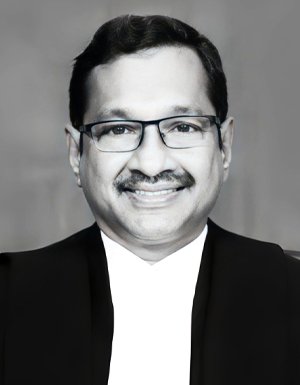
PRASANNA B. VARALE, J.
1. Leave granted.
2. The present Criminal Appeal is directed against the
impugned judgement and order dated 18
th May, 2026
1 passed by
the High Court of Judicature for Rajasthan, Bench at Jaipur
2, in
S.B. Criminal Miscellaneous Bail Application No. 4778 of 2026. By
1
Impugned judgement
2
High Court
2
the order under challenge, the High Court, in exercise of powers
under Section 483
3 of the Bharatiya Nagarik Suraksha Sanhita,
2023,
4 enlarged the respondent on regular bail in connection with
FIR No. 01/2026 registered at Special Police Station, District CID
(Security), Jaipur, for offences punishable under Sections 3
5 and
9
6 of the Official Secrets Act, 1923
7, and Sections 152
8 and 238(b)
9
of the Bharatiya Nyaya Sanhita, 2023
10.
3. A perusal of the impugned judgment reveals that the High
Court allowed the respondent’s regular bail application on the sole
premise that the grounds of arrest were not furnished to him in
writing prior to or at the time of remand proceedings, holding that
oral intimation or disclosure recorded in the case diary does not
satisfy Section 47
11 of the BNSS in light of Mihir Rajesh Shah v.
State of Maharashtra
12.
I. FACTUAL MATRIX
4. The facts of the case are that credible intelligence information
was gathered by the Assistant Sub-Inspector of Police, CID (BI),
Post Pokhran, Jaisalmer, indicating that suspect Jhabra Ram
(hereinafter the “respondent”) was in contact with foreign handlers
3
Special powers of High Court or Court of Session regarding bail.
4
Hereinafter BNSS
5
Penalties for spying.
6
Attempts, incitements, etc.
7
Hereinafter OSA
8
Acts endangering sovereignty, unity and integrity of India
9
Causing disappearance of evidence of offence, or giving false information to screen
offender.
10
Hereinafter BNS
11
Person arrested to be informed of grounds of arrest and of right to bail
12
(2026) 1 SCC 500
3
belonging to a Pakistani intelligence agency and was actively
transmitting sensitive military intelligence regarding the Indian
Army in exchange for financial benefits. Prior to registration of FIR,
statutory notices dated 23
rd January, 2026 and 26
th January,
2026 issued under Section 8(1)
13 of the OSA, 1923 were served
upon the respondent, calling upon him to appear before the Joint
Interrogation Centre, Jaisalmer, on 25
th January, 2026 and the
Central Interrogation Centre, Jaipur, on 28
th January, 2026,
respectively, and to furnish information within his knowledge
regarding a suspected offence under Section 3
14 of the OSA, 1923.
5. Upon completion of preliminary inquiry and technical
analysis establishing that the respondent was operating WhatsApp
number 7726061757 and transmitting sensitive military
photographs, videos, and strategic troop movement details in
Pokhran and Jaisalmer to Pakistani intelligence handlers
(operating via WhatsApp numbers 7688997085, 9352051832, and
virtual number +2762365762 3) in exchange for financial
consideration, FIR No. 01/2026 was registered on 30
th January,
2026 at 12:27 PM. The respondent was formally arrested at 04:00
PM on the same day.
6. At the time of arrest, the specific factual basis of the
accusations was communicated to the respondent. In paragraph
16 of the impugned order, the High Court itself recorded that the
case diary reflects that the respondent was informed by the
investigating officer regarding the fact and reasons of his arrest as
13
Duty of giving information as to commission of offences.
14
Penalties for spying.
4
mandated by Section 47
15 of the BNSS. Subsequently, the Arrest
Memo setting out details of the accusations was drawn up, read
over to the respondent in the presence of two witnesses, both being
police personnel posted at the Special Police Station, Jaipur (an
Assistant Sub-Inspector and a Constable), and bears his
signature.
7. Immediately thereafter, at 04:10 PM on 30
th January, 2026,
the Investigating Officer obtained the mobile number 8290945086
of the respondent’s brother, Shri Bhomaram, as indicated by the
respondent, and telephonically informed him of the arrest of the
respondent in the presence of the same two witnesses. This was
recorded in the Arrest Information Memo, which was read out in
the presence of the witnesses and bears the signature of the
respondent.
8. On 31
st January, 2026, the respondent was produced before
the learned Additional Chief Judicial Magistrate No. 5, Jaipur
Metropolitan-I, the respondent was represented by legal counsel,
who opposed police custody remand on merits. Crucially, as
acknowledged in paragraph 17 of the impugned order, neither the
respondent nor his counsel raised any grievance or objection
before the learned Magistrate regarding non-furnishing or non-
communication of grounds of arrest. The learned Magistrate
perused the case diary and the notice under Section 47
16 BNSS
annexed therewith, recording a specific finding in the remand
order dated 31
st January, 2026 that the respondent’s family had
15
Person arrested to be informed of grounds of arrest and of right to bail
16
Person arrested to be informed of grounds of arrest and of right to bail
5
been informed of the arrest, sufficient grounds existed on record,
and the accused appeared to have been apprised of the same.
9. Following the remand, the respondent’s application for
regular bail was rejected by the learned Additional District and
Sessions Judge-3, Jaipur Metropolitan-I, vide order dated 10
th
March, 2026. The learned Sessions Judge, while adverting to the
merits, held that the detailed grounds recorded in the signed
Arrest Memo constituted complete compliance in substance with
Section 47
17 BNSS, and that non-furnishing of a separate written
document could not be a ground to enlarge the respondent on bail.
The respondent thereafter approached the High Court in S.B.
Criminal Miscellaneous Bail Application No. 4778 of 2026,
culminating in the impugned order dated 18
th May, 2026 enlarging
him on bail.
II. SUBMISSIONS OF THE PARTIES
10. Mr. Rajkumar Bhaskar, learned A.S.G appearing for the
appellant - State of Rajasthan
18 vehemently submitted that the
High Court proceeded to grant regular bail without considering the
gravity of the accusations involving national security, or the
material collected during investigation. It was further submitted
that the High Court committed a grave error in enlarging the
respondent on regular bail under Section 483
19 BNSS on a purely
hyper-technical ground. It was contended that the constitutional
safeguard under Article 22(1)
20 of the Constitution of India
21 and
17
Person arrested to be informed of grounds of arrest and of right to bail
18
State
19
Special powers of High Court or Court of Session regarding bail.
20
Protection against arrest and detention in certain cases.
21
Article 22(1)
6
Section 47
22 BNSS was meaningfully complied with, inasmuch as
the respondent was specifically informed of the factual basis of his
arrest, which was explicitly spelled out in the Arrest Memo signed
by him, and the fact of his arrest was telephonically communicated
to his brother under a contemporaneous Arrest Information Memo.
11. It was further submitted on behalf of the State that the
respondent had full prior knowledge of the allegations through
statutory notices issued under Section 8(1)
23 of the OSA, 1923.
When produced before the learned Magistrate, the respondent was
represented by counsel who opposed remand on merits without
raising any grievance regarding non-communication of grounds of
arrest. Relying upon Kasireddy Upender Reddy v. State of
Andhra Pradesh
24 and State of Karnataka v. Sri Darshan
25,
learned counsel submitted that substantial compliance with
procedural safeguards is sufficient unless demonstrable prejudice
is shown. It was highlighted that unlike Pankaj Bansal v. Union
of India
26 and Prabir Purkayastha v. State (NCT of Delhi)
27,
where the accused had established prejudice, the respondent
herein was directly named in the FIR, knew the precise allegations,
and failed to plead or establish any prejudice whatsoever.
12. Per contra, learned counsel appearing for the respondent
supported the impugned order and submitted that non-furnishing
of grounds of arrest in writing constitutes a mandatory violation of
22
Person arrested to be informed of grounds of arrest and of right to bail
23
Duty of giving information as to commission of offences.
24
(2026) 8 SCC 275
25
(2026) 8 SCC 223
26
(2024) 7 SCC 576
27
(2024) 8 SCC 254
7
Article 22(1)
28 of the Constitution and Section 47
29 of the BNSS. It
was contended that the gravity or seriousness of the allegations
cannot excuse or cure non -compliance with fundamental
constitutional protections.
13. It was submitted on behalf of the respondent that as laid
down by this Court in Pankaj Bansal (supra), Prabir
Purkayastha (supra), Vihaan Kumar v. State of Haryana
30, and
Mihir Rajesh Shah (supra), written grounds of arrest must be
served upon the arrestee or his counsel at least two hours prior to
the remand hearing, and oral communication or case diary entries
cannot substitute actual written service. It was, therefore, prayed
that the Special Leave Petition be dismissed and the bail order be
affirmed.
III. ANALYSIS AND FINDINGS
14. We have accorded our thoughtful consideration to the rival
submissions advanced by Mr. Rajkumar Bhaskar, learned A.S.G
appearing for the appellant-State and learned counsel
representing the respondent, and have perused the materials on
record.
15. Since this order is confined to consideration of the prayer for
cancellation of regular bail, we need not delve into the ultimate
correctness of the allegations or the materials collected during
investigation.
28
Protection against arrest and detention in certain cases.
29
Person arrested to be informed of grounds of arrest and of right to bail
30
(2025) 5 SCC 799
8
16. We have no hesitation in observing that the communication
of grounds of arrest is a crucial constitutional and statutory
safeguard under Article 22(1)
31 of the Constitution and Section
47
32 of the BNSS, designed to ensure that an arrested person is
promptly apprised of the reasons for his apprehension so as to
enable him to consult legal counsel, oppose remand, and seek legal
remedies effectively. There can be no dispute as to the principles
reflected in the judgments of this Court in Pankaj Bansal (supra),
Prabir Purkayastha (supra) and Mihir Rajesh Shah (supra), but
the facts emerging from the material on record in the present case
unequivocally establish that there was substantial and effective
compliance with this mandate of law.
17. In an application seeking regular bail under Section 483
33 of
the BNSS, the Court is mandated to consider well-settled statutory
and judicial parameters, including: (i) the nature and gravity of the
accusation; (ii) the severity of the punishment in the event of
conviction; (iii) the danger of the accused absconding or tampering
with evidence; and (iv) the overarching impact on public interest
and national security. A hyper-technical objection regarding the
form or mode of communicating grounds of arrest cannot be
treated as a self-executing, blanket key to unlock regular bail,
bypassing the core parameters governing bail jurisprudence.
18. A careful examination of the material placed on record reveals
that the constitutional and statutory requirements were duly
satisfied at every stage:
31
Protection against arrest and detention in certain cases.
32
Person arrested to be informed of grounds of arrest and of right to bail.
33
Special powers of High Court or Court of Session regarding bail.
9
(i) Prior to formal arrest, statutory notices dated 23
rd
January, 2026 and 26
th January, 2026 issued under
Section 8(1) of the OSA, 1923
34 were served upon the
respondent, putting him on notice regarding the ongoing
investigation into unauthorized transmission of classified
military data.
(ii) Immediately upon arrest on 30
th January, 2026 at 04:00
PM, the specific factual basis of his apprehension which
includes namely, espionage and transmitting
photographs, videos, and strategic troop movements in
Pokhran and Jaisalmer to foreign handlers was
communicated to him. The High Court itself, in
paragraph 16 of the impugned order, noted upon a
perusal of the case diary that the respondent was
informed by the concerned police officer of the factum
and basis of his arrest, as contemplated under Section
47
35 of the BNSS.
(iii) Referring to the Arrest Memo (Annexure P-5, pages 67–
71 of the paper book), a perusal of the memo in the
vernacular language shows that it sets out in detail the
material against the respondent.
- It records that, on the basis of the technical examination
report of his mobile phone and his interrogation, he was
found to be in contact, through his WhatsApp number,
with the WhatsApp numbers of handlers of a Pakistani
34
Duty of giving information as to commission of offences.
35
Person arrested to be informed of grounds of arrest and of right to bail.
10
intelligence agency in exchange for money, and to have
transmitted photographs and videos of strategic
importance relating to the Indian Army, along with
information regarding army movements. This material,
which itself constitutes the ground of arrest, was thus
informed to the respondent at the time of his arrest.
- The Arrest Memo further records the date and time of
arrest (30
th January, 2026 at 04:00 PM), the activities of
the respondent constituting the alleged offences, the
identity and designation of the arresting officer, namely,
Shri Chaitanya Prakash, Sub-Inspector of Police, and that
the respondent was informed of his constitutional rights.
It was read over to the respondent in the presence of the
witnesses, and a perusal of the document i.e., arrest memo
further shows that the respondent has signed it, as also
noticed by the learned Sessions Judge.
- The personal search conducted at the time of arrest
yielded a sum of Rs.430/- in cash and a copy of the notice
issued to the respondent under Section 8
36 of the OSA,
1923. The cash was deposited in the Malkhana, and the
same was made part of the case record. The Arrest Memo
also records that, when asked which relative should be
informed of his arrest, the respondent named his brother,
Shri Bhomaram (mobile number 8290945086), and that
the information was given to him separately. Accordingly,
36
Duty of giving information as to commission of offences.
11
as recorded in the Arrest Information Memo (Annexure P-
6), the brother was informed of the arrest at 04:10 PM.
- Admittedly, the respondent was arrested at the Special
Police Station, Jhalana Mahal, Jaipur, whereas he is a
resident of Village Nedan, Tehsil Pokaran, District
Jaisalmer. In these circumstances, the only practicable
way of promptly informing his brother was by
telephone/mobile phone and the arresting officer could not
have obtained the brother’s signature on a written
intimation. The information was therefore passed over
mobile phone and stands duly recorded in the Arrest
Memo.
(iv) When produced before the learned ACJM No. 5, Jaipur
Metropolitan-I on 31
st January, 2026, the respondent
was represented by legal counsel who opposed police
custody remand on merits. Significantly, as
acknowledged by the High Court in paragraph 17 of the
impugned order, no grievance or objection was raised on
behalf of the respondent regarding non-furnishing or
non-communication of grounds of arrest.
(v) The learned Magistrate while referring to the record and
case diary, recorded a specific finding in the remand
order dated 31
st January, 2026 that the family was
informed, sufficient grounds existed on record, and the
accused appeared to have been apprised of the same.
19. In evaluating the effect of alleged procedural defects in
communicating grounds of arrest, this Court in State of
Karnataka v. Sri Darshan (supra) definitively established that
12
the governing principle is the prejudice-oriented test. The Court
categorically observed as follows:
“32.5. While Section 50 CrPC is mandatory, the consistent
judicial approach has been to adopt a prejudice-oriented test
when examining alleged procedural lapses. The mere
absence of written grounds does not ipso facto render the
arrest illegal, unless it results in demonstrable prejudice or
denial of a fair opportunity to defend.
32.6. The High Court, however, relied heavily on the alleged
procedural lapse as a determinative factor while overlooking
the gravity of the offence under Section 302 IPC and the
existence of a prima facie case. It noted, inter alia, that there
was no mention in the remand orders about service of memo
of grounds of arrest (SCC OnLine Kar para 45), the arrest
memos were allegedly template-based and not personalised
(SCC OnLine Kar para 50), and eyewitnesses had not stated
that they were present at the time of arrest or had signed the
memos (SCC OnLine Kar para 48). Relying on Pankaj Bansal
v. Union of India [Pankaj Bansal v. Union of India, (2024) 7
SCC 576 : (2024) 3 SCC (Cri) 450] and Prabir Purkayastha v.
State (NCT of Delhi) [Prabir Purkayastha v. State (NCT of
Delhi), (2024) 8 SCC 254 : (2024) 3 SCC (Cri) 573], it
concluded (SCC OnLine Kar paras 43, 49-50) that from 3-10-
2023 onwards, failure to serve detailed, written, and
individualised grounds of arrest immediately after arrest was
a violation entitling the accused to bail.
32.7. In the present case, the arrest memos and remand
records clearly reflect that the respondents were aware of the
reasons for their arrest. They were legally represented from
the outset and applied for bail shortly after arrest, evidencing
13
an immediate and informed understanding of the
accusations. No material has been placed on record to
establish that any prejudice was caused due to the alleged
procedural lapse. In the absence of demonstrable prejudice,
such as irregularity is, at best, a curable defect and cannot,
by itself, warrant release on bail. As reiterated above, the
High Court treated it as a determinative factor while
overlooking the gravity of the charge under Section 302 IPC
and the existence of a prima facie case. Its reliance on Pankaj
Bansal [Pankaj Bansal v. Union of India, (2024) 7 SCC 576 :
(2024) 3 SCC (Cri) 450] and Prabir Purkayastha [Prabir
Purkayastha v. State (NCT of Delhi), (2024) 8 SCC 254 : (2024)
3 SCC (Cri) 573] is misplaced, as those decisions turned on
materially different facts and statutory contexts. The
approach adopted here is inconsistent with the settled
principle that procedural lapses in furnishing grounds of
arrest, absent prejudice, do not ipso facto render custody
illegal or entitle the accused to bail.”
20. In examining the constitutional object underlying Article
22(1)
37 of the Constitution and Section 47
38 of the BNSS, this Court
in Kasireddy Upender Reddy (Supra) reiterated that the
requirement of communicating grounds of arrest is designed to
serve a substantive purpose rather than a mere formalistic routine.
The Court observed as follows:
“32. The object underlying the provision that the grounds of
arrest should be communicated to the person arrested has
been very succinctly explained in Vihaan Kumar [Vihaan
Kumar v. State of Haryana, (2025) 5 SCC 799]. On learning
37
Protection against arrest and detention in certain cases.
38
Person arrested to be informed of grounds of arrest and of right to bail.
14
about the grounds for arrest, the person concerned will be in
a position to make an application before the appropriate court
for bail, or move the High Court for a writ of habeas corpus.
Further, the information will enable the arrested person to
prepare his defence in time for the purposes of his trial. For
these reasons, it has been provided by the Constitution that,
the ground for the arrest must be communicated to the person
arrested as soon as possible.
33. For the purposes of clause (1) of Article 22, it is not
necessary for the authorities to furnish full details of the
offence. However, the information should be sufficient to
enable the arrested person to understand why he has been
arrested. The grounds to be communicated to the arrested
person should be somewhat similar to the charge framed by
the Court for the trial of a case.”
21. Applying these principles to the present facts, the record
clearly reflects that the respondent was fully cognizant of the
grounds for his apprehension and was effectively represented by
counsel at the stage of remand. The substantive mandate of Article
22(1) thus stands meaningfully fulfilled, with no demonstrable
prejudice having been suffered.
22. As affirmed in Kasireddy Upender Reddy (supra) and State
of Karnataka (supra), the constitutional framework requires that
the arrestee be informed of the grounds of arrest but does not
insist upon written communication as an indispensable formality
irrespective of the attendant circumstances. In the absence of
demonstrable prejudice or denial of an opportunity to defend, an
alleged procedural defect in the mode of service cannot ipso facto
invalidate detention or entitle an accused to regular bail, more so
15
in cases involving grave allegations of espionage affecting national
security and sovereign integrity.
IV. CONCLUSION
23. The High Court fell into error in treating an alleged
procedural irregularity as an automatic ground for grant of regular
bail, while completely ignoring the gravity of the offences under
Sections 3
39 and 9
40 of the OSA, 1923, and Sections 152
41 and
238
42(b) of the BNS, as well as the material collected during
investigation and placed on record. In the circumstances, we are
of the considered opinion that the High Court was not justified in
enlarging the Respondent on regular bail. The impugned judgment
and order cannot be sustained in law and is liable to be set aside.
24. At this juncture, we make it clear that we are not expressing
any opinion on the merits of the allegations or the case. The
observations made hereinabove are confined exclusively to the
adjudication of the present appeal seeking cancellation of bail and
shall have no bearing whatsoever on the trial or the merits of the
case.
V. OPERATIVE ORDER
25. In the result, the appeal succeeds and is allowed. The
Impugned Judgment and Order dated 18
th May, 2026 passed by
the High Court, in S.B. Criminal Miscellaneous Bail Application
No. 4778 of 2026, is hereby set aside.
39
Penalties for spying.
40
Attempts, incitements, etc.
41
Acts endangering sovereignty, unity and integrity of India.
42
Causing disappearance of evidence of offence or giving false information to screen
offender.
16
26. The regular bail granted to the respondent, Jhabra Ram,
stands cancelled. The respondent is directed to surrender before
the trial court / investigating agency within a period of two weeks
from today, failing which the appellant-State shall take him into
custody forthwith in accordance with law.
27. Pending application(s), if any, shall stand disposed of.
………………………………….J.
(M.M. SUNDRESH)
………………………………….J.
(PRASANNA B. VARALE)
NEW DELHI;
OCTOBER 28, 2026.

 Login with google
Legal Notes
Add a Note....