
The case involves the appeal by the State of Rajasthan against the acquittal of KashiRam, who was initially convicted of murdering his wife, Kalawati, and their twodaughters. Kalawati had reportedly ...
No Acts & Articles mentioned in this case
http://JUDIS.NIC.IN SUPREME COURT OF INDIA Page 1 of 10
CASE NO.:
Appeal (crl.) 745 of 2000
PETITIONER:
State of Rajasthan
RESPONDENT:
Kashi Ram
DATE OF JUDGMENT: 07/11/2006
BENCH:
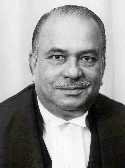
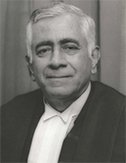
B.P. Singh & Tarun Chatterjee
JUDGMENT:
J U D G M E N T
B.P. Singh, J
This appeal by special leave has been preferred by the State of
Rajasthan against the common judgment and order of the High Court
of Judicature for Rajasthan at Jodhpur in D.B. Criminal Appeal
No.622 of 1999, D.B. Jail Appeal No.619 of 1999 and D.B. Criminal
Murder Reference No.2 of 1999 whereby the High Court by its
impugned judgment and order dated December 21, 1999 allowed the
appeals preferred by the respondent and declined the murder reference
made by the learned Additional Sessions Judge for confirmation of the
sentence of death. We notice that both the criminal appeals were
preferred by the respondent herein, one from jail and the other
presented through an advocate. The judgment and order of the
Special Additional District and Sessions Judge (Women Atrocities),
Sri Ganganagar in Sessions Trial No.39 of 1998 dated September 29,
1999 sentencing the petitioner to death under Section 302 I.P.C. was
set aside.
The respondent herein Kashi Ram was married to Kalawati
(deceased) about seven years before the occurrence. They were
blessed with two children, Suman (deceased) and Guddi (deceased)
aged two and half years and two and half months respectively. It
appears from the record that the relationship between them was not
cordial and there were incidents of the respondent assaulting Kalawati
and treating her with cruelty. A Panchayat had also been convened at
the house of the father of the respondent, however, the respondent's
father pleaded helplessness since the appellant did not pay any heed to
his advice. The result was that Kalawati stayed with her parents for
about two years. Later Harchand, father of the respondent assured her
parents that Kashi Ram had improved in his behaviour and, therefore,
Kalawati should be sent to her matrimonial home. On being
convinced, Kalawati was sent to her matrimonial home.
The case of the prosecution is that after some time Kashi Ram
again started mis-behaving in the same old manner and used to beat
his wife Kalawati off and on.
The case of the prosecution is that the respondent killed his
wife and two daughters on the night intervening 3rd and 4th February,
1998 and thereafter disappeared. The first information regarding the
incident was given by Inder Bhan, PW-6, a cousin of the father of
Kalawati (deceased). On the basis of information given by him, a
formal first information report was drawn up and a case registered
against the respondent under Section 302 IPC. The first information
was recorded at 10.15 a.m. on February 6, 1998 in which the
http://JUDIS.NIC.IN SUPREME COURT OF INDIA Page 2 of 10
informant stated as follows:-
The respondent was married to Kalawati (deceased) about
seven years before the occurrence. Kalawati used to come to her
parents off and on in the first six months after marriage but it appears
that there were frequent quarrels between Kalawati and her husband
(respondent herein) who used to complain that she had brought a
camel instead of a buffalo at the time of marriage. He also
complained that she was dark complexioned. Things came to such a
stage that Kalawati had to return to her parents. On the very next day,
the informant along with the father of the deceased and others went to
the father of the respondent namely - Harchand and complained to
him about the behaviour of his son. Harchand pleaded helplessness
in the matter and advised them to do whatever they liked, since his
son was not under his control. In these circumstances, Kalawati
continued to stay with her parents for about one and half or two years.
One day, Harchand, father of the respondent came to the house of the
father of Kalawati and assured him that his son Kashi Ram
(respondent herein) had improved in his behaviour and assured him
that she will be cared for in her matrimonial home. The father of the
deceased and other relatives after getting assurance from the brothers
of Harchand decided to send her back to her matrimonial home. The
respondent along with his father Harchand came and the deceased
accompanied them to her matrimonial home. The respondent and his
wife Kalawati (deceased) were blessed with two daughters who were
two and half years and two and half months old at the time of
occurrence. The respondent and Kalawati (deceased) resided with the
respondent's parents for some time but about two months before the
occurrence the respondent shifted to a rented premises in Prem Nagar.
Milk used to be sent to Kalawati's house from her father's
house, and her brother Mamraj, PW-2, used to supply milk everyday.
On February 3, 1998 as usual Mamraj, PW-2 had gone to supply milk.
His sister Kalawati told him not to bring milk in future. On the next
day, that is on February 4, 1998 Mamraj PW-2 noticed that the
entrance of the house of the respondent was locked. On enquiry, he
was told by a neighbour Gurdayal Singh that he had seen the
respondent and his family members till last evening but he did not
know where they had gone thereafter.
In the evening at about 5.30 p.m. the mother of Kalawati (PW-
5) came to the informant and told him that she suspected something,
and therefore, requested him to find out the whereabouts of the
respondent and his family members. The informant went on a motor-
cycle along with one Sheo Narayan (PW-1) to search for the
respondent and his family members. On the way, he met Kashmiri
Lal and another son of Harchand on the bridge. On enquiry they told
him that the respondent along with his family members may have
gone to the Suratgarh fair and that they were also waiting for them. In
the meantime, Harchand father of the respondent also came. The
informant asked them to come to the house of the respondent rather
than wait on the bridge. Accordingly, they all proceeded towards the
house of the respondent on their respective vehicles, but as soon as
they came near Prem Nagar, the two brothers of accused disappeared
from his sight. At about 7.30 p.m. the informant came to the house of
the respondent and found the main entrance locked. The doors were
got opened and inside the house they found the dead body of Kalawati
lying on a cot and dead bodies of the two children lying on another
cot. It was, therefore, alleged by the informant that the respondent
had committed the murder of his wife and two daughters and had
thereafter disappeared.
Dr. Prem Arora, PW-10 conducted the post mortem
examination of the dead bodies of Kalawati and her two children. On
Kalawati he found the following injuries:-
"Mark of ligature present on neck 2cm in width and
http://JUDIS.NIC.IN SUPREME COURT OF INDIA Page 3 of 10
knot present on back of neck, ligature mark is situated
just below the thyroid certilage and encircling neck
completely. Base of mark is pale, dry and hard. One
cut section tissue below ligature mark is dry and
white. No external injury present anywhere in body".
Death in his opinion was caused by asphyxia. In his opinion,
death of the two children was also caused by asphyxia. In his opinion,
deaths had occurred 48 to 72 hrs. before the post-mortem examination
which was conducted on February 7, 1998.
At the trial several witnesses were examined to prove the case
of the prosecution. PW-1, Sheo Narayan, is the person with whom
PW-6 Inder Bhan had gone to search for the respondent and his family
members on the request of the mother of the deceased namely - PW-5,
Jai Kauri. He fully supported the case of the prosecution to the effect
that he had gone with the father of the respondent and Inder Bhan,
PW-5 to the house of the respondent in the evening of February 6,
1998 and after opening the main gate and removing the door from the
entrance of the house they entered the house and found the dead
bodies lying on two cots inside the house.
PW-5, Jai Kauri, mother of the deceased has also deposed to the
effect that her daughter was treated with cruelty by the respondent.
She has narrated the incidents which took place before deceased
Kalawati was sent back with her husband to her matrimonial home.
She has deposed that milk used to be delivered by her son Mamraj,
PW-2 at the house of the respondent and on February 3, 1998 when
Mamraj had gone to deliver milk Kalawati had asked him not to bring
milk thereafter since milk was to be supplied by her husband's elder
brother. She claimed that she had gone to the house of the deceased
on Thursday, i.e. on February 5, 1998, but finding the doors locked
she had returned. She had made enquiries from the neighbourers, who
told her that they had seen them on Tuesday (February 3, 1998)
evening but not thereafter. She had again gone to her daughter's
house on Friday and it was again found locked. She grew suspicion
and, therefore, requested Inder Bhan, PW-6 and Sheo Narayan, PW-1
to search for them.
PW-2, Mamraj, a brother of deceased Kalawati has also
narrated the incidents relating to the cruel treatment meted out to
Kalawati by her husband. According to this witness, he used to
deliver milk at the house of the respondent, since the brother of Kashi
Ram, who used to supply milk to them, was ill. On February 3, 1998
when he had gone to supply milk he was told by the respondent and
his sister Kalawati (deceased) to stop further supply of milk. On
February 4, 1998 while returning home he had found the house of
Kalawati (deceased) locked. On the next day, when his mother PW-5,
went to the house of Kalawati, she also found the house locked. The
neighbourers had informed them that Kalawati and Kashi Ram were
last seen on Tuesday evening (3.2.1998). When his mother again
went to the house of Kalawati on February 6, 1998 she found the
house locked and, therefore, she had requested Inder Bhan and Sheo
Narayan to search for them. This witness has been cross-examined at
length but nothing has been elicited in his cross-examination which
may discredit him. The assertion of this witness that he has been told
by deceased Kalawati and her husband (respondent herein) on
Febraury 3, 1998 to stop supply of milk, went unchallenged in his
cross-examination. Only with a view to assure ourselves that this
witness had also said so in his statement recorded under Section 161
Crl.P.C. we read his police statement and we find that he had said so
even in the course of investigation. We have looked into the case
diary not as substantive evidence but only to verify whether PW-2 had
omitted to say so in the course of investigation. The substantive
evidence of PW-2 that he had seen his sister and the respondent on
http://JUDIS.NIC.IN SUPREME COURT OF INDIA Page 4 of 10
February 3, 1998, has gone unchallenged.
The prosecution examined two witnesses Dinesh Kumar, PW-3
and Om Prakash, PW-4 to prove that the respondent had made an
extra-judicial confession before these two witnesses on February 17,
1998. The prosecution also relied on the evidence of recovery made
at the instance of the respondent pursuant to which a waist chord and
keys of the locks put on the two doors were recovered from the
possession of the respondent on February 18, 1998. The prosecution
also examined several other witnesses to prove its case.
The trial court on an exhaustive consideration of the evidence
on record came to the conclusion that the prosecution had successfully
established that the deceased Kalawati was last seen alive in her house
on February 3, 1998 and that Mamraj, PW-2 had seen her as well as
her husband in their rented premises. It also held that the prosecution
had proved that the two doors of the house were found locked on the
morning of February 4, 1998 and that the concerned prosecution
witnesses entered the house after removing the door on February 6,
1998. The house was also found locked on February 4, 1998 when
the mother of deceased Kalawati had gone to her house. The trial
court relied on the recoveries made of the weapon of offence namely -
the waist chord, and the keys of the two locks, from possession of the
respondent pursuant to his statement recorded under Section 27 of the
Evidence Act. Reliance was also placed by the trial court on the
extra-judicial confession said to have been made by the respondent
before PWs 3 and 4. The trial court also found that the house was
found locked on February 4, 1998, and till he was arrested on
February 17, 1998, the whereabouts of the respondent were not
known. Even after his arrest he did not offer any explanation and
even at the trial only denied the allegations made against him without
offering any explanation for his absence during the crucial days.
Relying on these circumstances, and finding that the deaths were
homicidal as proved by the medical evidence on record, the trial court
came to the conclusion that the only inference that could be drawn
from the proved facts and circumstances was that the respondent after
committing the murder of his wife and his two daughters locked the
house and disappeared from the scene. He was arrested two weeks
later but failed to give any explanation in defence. Accordingly, the
trial court finding the respondent guilty of the offence punishable
under Section 302 IPC sentenced him to death having regard to the
heinous nature of the crime committed by him in which three innocent
lives were lost including two infants.
On appeal, the High Court reversed the findings of fact
recorded by the trial court and acquitted the respondent. Before
adverting to the other incriminating circumstances we may at the
threshold notice two of them namely - the circumstance that the
respondent made an extra-judicial confession before PWs 3 and 4, and
the circumstance that recoveries were made pursuant to his statement
made in the course of investigation of the waist chord used for
strangulating Kalawati (deceased) and the keys of the locks which
were put on the two doors of his house. The High Court has
disbelieved the evidence led by the prosecution to prove these
circumstances and we find ourselves in agreement with the High
Court. There was really no reason for the respondent to make a
confessional statement before PWs 3 and 4. There was nothing to
show that he had reasons to confide in them. The evidence appeared
to be unnatural and unbelievable. The High Court observed that
evidence of extra-judicial confession is a weak piece of evidence and
though it is possible to base a conviction on the basis of an extra-
judicial confession, the confessional evidence must be proved like any
other fact and the value thereof depended upon the veracity of the
witnesses to whom it was made. The High Court found that PW-3
Dinesh Kumar was known to Mamraj, the brother of deceased
http://JUDIS.NIC.IN SUPREME COURT OF INDIA Page 5 of 10
Kalawati. PW-3 was neither a Sarpanch nor a ward member and,
therefore, there was no reason for the respondent to repose faith in
him to seek his protection. Similarly, PW-4 admitted that he was not
even acquainted with the accused. Having regard to these facts and
circumstances, we agree with the High Court that the case of the
prosecution that the respondent had made an extra-judicial confession
before PWs-3 and 4 must be rejected.
So far as the recoveries are concerned, the High Court has not
accepted the same since PW-6, Inder Bhan admitted in the course of
his cross-examination that the waist chord which had been used for
strangulating Kalawati was recovered much earlier from the scene of
offence by the police itself. Moreover, the waist chord as well as the
keys were not even produced before the Court. It may be that some
other witnesses have stated that the waist chord was not recovered
from the spot, but in the facts of the case the benefit of doubt must go
to the accused.
The most important circumstance that the respondent was last
seen with the deceased on February 3, 1998 whereafter he had
disappeared and his house was found locked and that he had offered
no explanation whatsoever, was disposed of by the High Court in one
short paragraph observing that there was nothing unusual if the
accused was seen in the company of his own family members in his
house. On such reasoning, the High Court held that the circumstantial
evidence relied upon by the prosecution was not strong enough to
sustain the conviction of the respondent. Accordingly, the High Court
allowed the appeals preferred by the respondent and declined the
death reference made by the trial court for confirmation of the
sentence of death.
We have been taken through the entire evidence on record. The
medical evidence on record clearly proves that the death of Kalawati
and her two minor daughters was homicidal caused by strangulation.
The cause of death was asphyxia. It is also established on record that
the deceased was last seen alive in the company of respondent on
February 3, 1998 at her house. The prosecution has also successfully
established the fact that the house was found locked on the morning of
February 4, 1998 and continued to remain locked till it was opened
after removing the door on February 6, 1998. Throughout this period
the respondent was not to be seen and he was arrested only on
February 17, 1998. Neither at the time of his arrest, nor in the course
of investigation, nor before the Court, has the respondent given any
explanation in defence. He has not even furnished any explanation as
to where he was between February 4, 1998 and February 17, 1998. It
has been argued on behalf of the prosecution that this most important
circumstance has been completely ignored by the High Court. The
case of the prosecution substantially rested on this circumstance. The
respondent was obliged to furnish some explanation in defence. He
could have explained where he was during this period, or he could
have furnished any other explanation to prove his innocence. Counsel
for the respondent on the other hand, contends that though the
respondent furnished no explanation whatsoever, there is evidence on
record to prove that he had gone to attend Suratgarh fair with his
family members. A question, therefore, arises whether the
presumption under Section 106 of the Evidence Act may be drawn
against the respondent in the facts of the case, since the facts as to
where he was during the relevant period and when he parted company
with the deceased, were matters within his special knowledge the
burden of proving which was cast upon him by law.
Learned counsel for the State strenuously urged before us that
the High Court committed an apparent error in ignoring the evidence
on record which disclosed that the respondent was last seen with
deceased Kalawati in his house on February 3, 1998 late in the
http://JUDIS.NIC.IN SUPREME COURT OF INDIA Page 6 of 10
afternoon. Thereafter, he was not seen by anyone and his house was
found locked in the morning. The evidence of PW-5, mother of the
deceased Kalawati, and her brother Manraj, PW-2, clearly prove the
fact that the house was found locked on February 4, 1998. The
evidence also establishes beyond doubt that the doors were removed
and dead bodies of the deceased Kalawati and her daughters were
found inside the house on February 6, 1998. In these circumstances,
the disappearance of the respondent was rather suspicious because if
at all only he could explain what happened thereafter. He, therefore,
submitted that in the facts of the case, in the absence of any
explanation offered by the respondent, an inference must be drawn
against the respondent which itself is a serious incriminating
circumstance against him. He has supported his argument relying
upon several decisions of this Court.
Before adverting to the decisions relied upon by the counsel for
the State, we may observe that whether an inference ought to be
drawn under Section 106 IPC is a question which must be determined
by reference to proved. It is ultimately a matter of appreciation of
evidence and, therefore, each case must rest on its own facts.
In Joseph s/o Kooveli Poulo Vs. State of Kerala (2000) 5 SCC
197; the facts were that the deceased was an employee of a school.
The appellant representing himself to be the husband of one of the
sisters of Gracy, the deceased, went to the St. Mary's Convent where
she was employed and on a false pretext that her mother was ill and
had been admitted to a hospital took her away with the permission of
the Sister in charge of the Convent, PW-5. The case of the
prosecution was that later the appellant not only raped her and robbed
her of her ornaments, but also laid her on the rail track to be run over
by a passing train. It was also found as a fact that the deceased was
last seen alive only in his company, and that on information furnished
by the appellant in the course of investigation, the jewels of the
deceased, which were sold to PW-11 by the appellant, were seized.
There was clear evidence to prove that those jewels were worn by the
deceased at the time when she left the Convent with the appellant.
When questioned under Section 313 Cr.P.C., the appellant did not
even attempt to explain or clarify the incriminating circumstances
inculpating and connecting him with the crime by his adamant attitude
of total denial of everything. In the background of such facts, the
Court held:-
"Such incriminating links of facts could, if at all, have
been only explained by the appellant, and by nobody
else, they being personally and exclusively within his
knowledge. Of late, courts have, from the falsity of
the defence plea and false answers given to court,
when questioned, found the missing links to be
supplied by such answers for completing the chain of
incriminating circumstances necessary to connect the
person concerned with the crime committed (see State
of Maharashtra Vs. Suresh, (2000) 1 SCC 471). That
missing link to connect the accused \026 appellant, we
find in this case provided by the blunt and outright
denial of every one and all the incriminating
circumstances pointed out which, in our view, with
sufficient and reasonable certainty on the facts
proved, connect the accused with the death and the
cause for the death of Gracy".
In Ram Gulam Chaudhary and Ors. Vs. State of Bihar (2001)
8 SCC 311; the facts proved at the trial were that the deceased boy
was brutally assaulted by the appellants. When one of them declared
that the boy was still alive and he should be killed, a chhura blow was
inflicted on his chest. Thereafter, the appellants carried away the boy
http://JUDIS.NIC.IN SUPREME COURT OF INDIA Page 7 of 10
who was not seen alive thereafter. The appellants gave no explanation
as to what they did after they took away the boy. The question arose
whether in such facts Section 106 of the Evidence Act applied. This
Court held:
"In the absence of an explanation, and considering the
fact that the appellants were suspecting the boy to
have kidnapped and killed the child of the family of
the appellants, it was for the appellants to have
explained what they did with him after they took him
away. When the abductors withheld that information
from the court, there is every justification for drawing
the inference that they had murdered the boy. Even
though Section 106 of the Evidence Act may not be
intended to relieve the prosecution of its burden to
prove the guilt of the accused beyond reasonable
doubt, but the section would apply to cases like the
present, where the prosecution has succeeded in
proving facts from which a reasonable inference can
be drawn regarding death. The appellants by virtue of
their special knowledge must offer an explanation
which might lead the Court to draw a different
inference".
In Sahadevan alias Sagadevan Vs. State represented by
Inspector of Police, Chennai (2003) Vol. 1 SCC 534, the prosecution
established the fact that the deceased was seen in the company of the
appellants from the morning of March 5, 1985 till at least 5 p.m. on
that day when he was brought to his house, and thereafter his dead
body was found in the morning of March 6, 1985. In the background
of such facts the Court observed:
"Therefore, it has become obligatory on the
appellants to satisfy the court as to how, where and
in what manner Vadivelu parted company with
them. This is on the principle that a person who is
last found in the company of another, if later found
missing, then the person with whom he was last
found has to explain the circumstances in which
they parted company. In the instant case the
appellants have failed to discharge this onus. In
their statement under Section 313 CrPC they have
not taken any specific stand whatsoever".
It is not necessary to multiply with authorities. The principle
is well settled. The provisions of Section 106 of the Evidence Act
itself are unambiguous and categoric in laying down that when any
fact is especially within the knowledge of a person, the burden of
proving that fact is upon him. Thus, if a person is last seen with the
deceased, he must offer an explanation as to how and when he parted
company. He must furnish an explanation which appears to the Court
to be probable and satisfactory. If he does so he must be held to have
discharged his burden. If he fails to offer an explanation on the basis
of facts within his special knowledge, he fails to discharge the burden
cast upon him by Section 106 of the Evidence Act. In a case resting
on circumstantial evidence if the accused fails to offer a reasonable
explanation in discharge of the burden placed on him, that itself
provides an additional link in the chain of circumstances proved
against him. Section 106 does not shift the burden of proof in a
criminal trial, which is always upon the prosecution. It lays down the
rule that when the accused does not throw any light upon facts which
are specially within his knowledge and which could not support any
theory or hypothesis compatiable with his innocence, the Court can
consider his failure to adduce any explanation, as an additional link
http://JUDIS.NIC.IN SUPREME COURT OF INDIA Page 8 of 10
which completes the chain. The principle has been succinctly stated
in Re. Naina Mohd. AIR 1960 Madras, 218.
There is considerable force in the argument of counsel for the
State that in the facts of this case as well it should be held that the
respondent having been seen last with the deceased, the burden was
upon him to prove what happened thereafter, since those facts were
within his special knowledge. Since, the respondent failed to do so, it
must be held that he failed to discharge the burden cast upon him by
Section 106 of the Evidence Act. This circumstance, therefore,
provides the missing link in the chain of circumstances which prove
his guilt beyond reasonable doubt.
Counsel for the respondent submitted that no reliance can be
placed on the evidence of Mamraj, PW-2, the brother of the deceased,
who stated that when he had gone to the house of the deceased on
February 3, 1998 he had seen his sister as well as the respondent in
the house and he was asked not to bring milk thereafter since
alternative arrangement had been made. This statement of Mamraj,
PW-2 was not even challenged in his cross-examination. Even in the
course of investigation Mamraj, PW-2 had made a statement to the
same effect. It cannot therefore, be said that he had introduced this
fact for the first time at the trial. Learned counsel submitted that the
aforesaid statement of PW-2 was not specifically put to the accused
when he was examined under Section 313 Cr.P.C.. That may be so,
but in the facts of the case, we find that by such omission no prejudice
has been caused to the appellant. Mamraj, PW-2 had deposed in his
presence and was exhaustively cross-examined by counsel appearing
for him. The statement of Mamraj, PW-2 regarding his having seen
the deceased last in the company of the respondent was not even
challenged in his cross-examination. Moreover, from the trend of the
answers given by the respondent in his examination under Section 313
Cr.P.C., it appears that the respondent made only a bald denial of all
the incriminating circumstances put to him, and had no explanation to
offer.
It was then submitted on behalf of the respondent that the
neighbourers who had stated that they had seen the respondent and
deceased Kalawati on the evening of February 3, 1998 were not
examined by the prosecution. In view of the evidence of PW-2,
Mamraj who proved this fact, the non-examination of those witnesses
does not have any adverse effect on the case of the prosecution. It
was also submitted that there is no evidence to show that the
respondent No.1 was absconding after the occurrence. From the facts
proved on record it is established that on February 4, 1998 the house
was found locked. The same was the position on February 5, 1998.
when PW-5, Jai Kauri, mother of deceased Kalawati visited the house
of her daughter and found the house locked. Finding the house also
locked on February 6, 1998, she became anxious to know about the
welfare of her daughter and, therefore, she went to the informant, PW-
6 and requested him to find out the whereabouts of her daughter
Kalawati and members of her family. These facts clearly prove that
while the doors of the house of the respondent were locked, he was
nowhere on the scene. The fact that PWs-1 and 6 went in search of
the respondent and the deceased and their children, and were informed
by the respondent's brother that he may have gone to Suratgarh fair,
also points in the same direction. Obviously, therefore he was
absconding after commission of the offence. In fact, he never
appeared on the scene till his arrest on February 17, 1998. There is,
therefore, abundant evidence to prove that the respondent was
traceless between February 4, 1998 and February 17, 1998. Reliance
placed by counsel on the decision of this Court in P. Mani Vs. State
of Tamil Nadu (2006) 3 SCC 161, is of no avail in the facts and
circumstances of this case.
http://JUDIS.NIC.IN SUPREME COURT OF INDIA Page 9 of 10
It was lastly submitted that in his examination under Section
313 Cr.P.C. though the circumstance regarding his having been seen
on the evening by his neighbourers on February 3, 1998 was put to the
respondent accused, the name of PW-2 was not mentioned as a person
who had also seen him on that day with the deceased. The fact
remains that the incriminating circumstance was put to the accused
and his response was a bald denial. We do not find that any prejudice
was caused to the respondent by not mentioning the name of PW-2,
when the incriminating circumstance appearing against him was put to
him.
In the facts and circumstances of the case, we are satisfied that
this appeal ought to be allowed. The High Court completely brushed
aside the most incriminating circumstance which was proved by the
prosecution namely - that the respondent was last seen with his wife
on February 3, 1998 whereafter the house was found locked and the
respondent was not to be seen anywhere. He continued to be traceless
till February 17, 1998 when he was arrested. The respondent did not
offer any explanation in defence and his response to all the
incriminating circumstances put to him in his examination under
Section 313 Cr.P.C. was a bald denial.
The following incriminating circumstances are clearly
established against the respondent :
a) That he was not on cordial terms with his wife Kalawati.
b) On the evening of February 3, 1998 he was seen in his house
with his wife Kalawati (deceased).
c) The house of the respondent was found locked on the 4th, 5th
and 6th February, 1998.
d) On February 6, 1998 when his house was opened the dead
bodies of his wife and daughters were found, and the medical
evidence established that they had been strangulated to death, the
cause of death being asphyxia.
e) Since the respondent was not traceable the mother of the
deceased PW-5, Jai Kauri became anxious to know about their
whereabouts and requested PWs-1 and 6 to search for them.
f) In the course of investigation the respondent never appeared
at any stage, and for the first time he appeared on the scene when he
was arrested on February 17, 1998.
g) Even after his arrest he did not offer any explanation as to
when he parted company with his wife nor did he offer any
exculpatory explanation to discharge the burden under Section 106 of
the Evidence Act.
These incriminating circumstances in our view form a complete
chain and are consistent with no other hypothesis except the guilt of
the accused respondent. If he was with his wife on the evening of
February 3, 1998, he should have explained how and when he parted
company and/or offered some plausible explanation exculpating him.
The respondent has not pleaded alibi, nor has he given an explanation
which may support his innocence.
We are aware of the fact that we are dealing with an appeal
against acquittal, but having appreciated the evidence on record we
have come to the conclusion that the High Court has completely given
a go bye to the most important incriminating circumstance which
appeared against the accused respondent. In the facts and
circumstances of the case the most incriminating circumstance about
the respondent being seen with his wife on February 3, 1998 and
disappearing thereafter, and his failure to offer any explanation when
arrested, has been completely ignored by the High Court by simply
recording the finding that there was nothing unusual in the husband
being found with the wife in his house. The High Court failed to
appreciate the other co-related circumstances namely - his
http://JUDIS.NIC.IN SUPREME COURT OF INDIA Page 10 of 10
disappearance thereafter locking of the house, and his failure to offer a
satisfactory explanation in defence. Thus, the High Court has ignored
important clinching evidence which proved the case of the
prosecution. Therefore, interference with the judgment of the High
Court is warranted.
In the result, we allow this appeal and set aside the impugned
judgment and order of the High Court. On the question of sentence,
having regard to the fact that the offence took place in February 1998
and the respondent was acquitted by the High Court, we sentence him
to imprisonment for life. The respondent may have been released
pursuant to order of this Court dated 1.9.2000 issuing bailable warrant
of arrest. His bail bonds are cancelled and he is directed to be taken
into custody forthwith to serve out his sentence.

 Login with google
Legal Notes
Add a Note....