
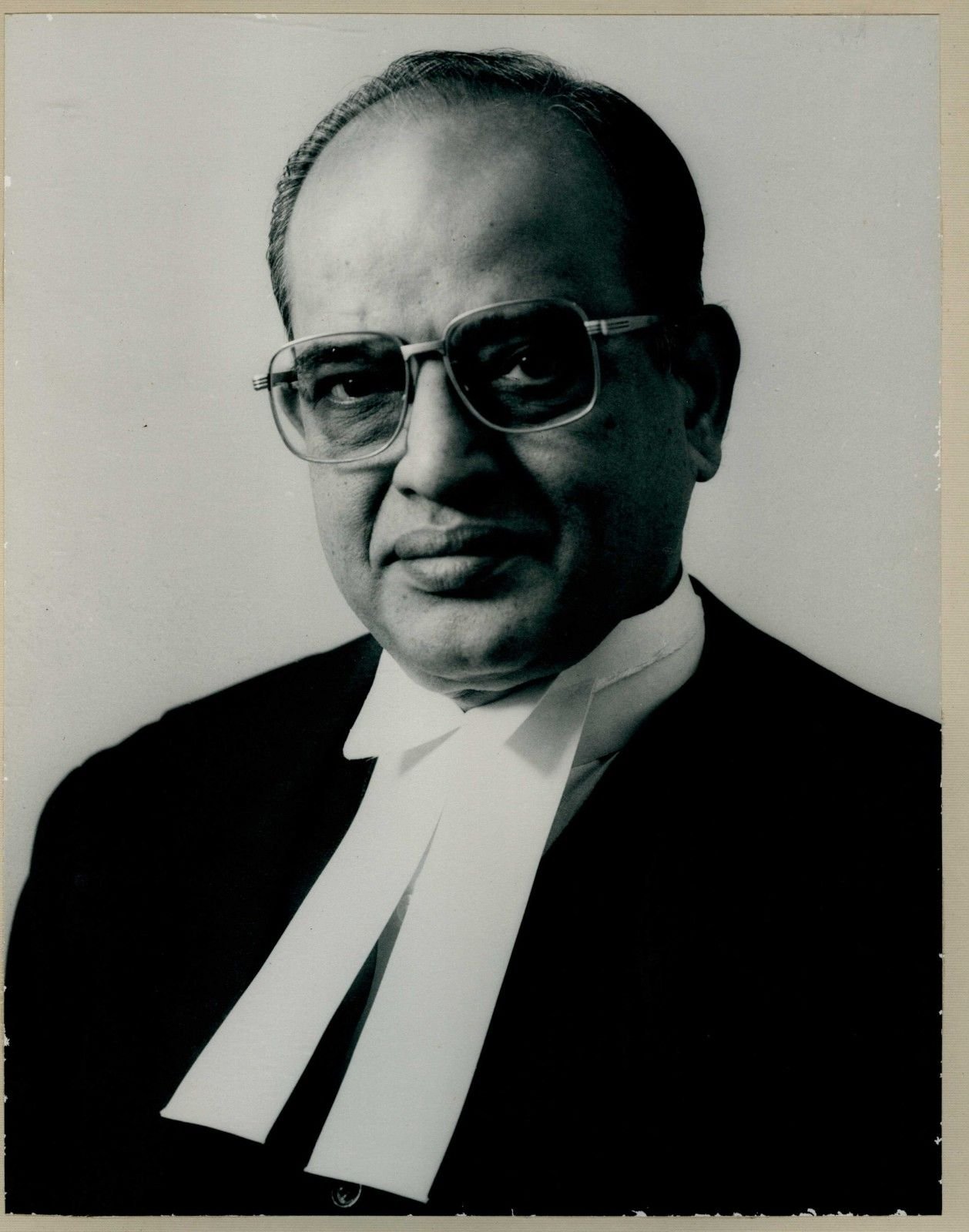
As per case facts, Dr. Girish Bihari, an Indian Police Service member, was set to retire. He was granted a six-month service extension by the Governor, but this order was ...

http://JUDIS.NIC.IN SUPREME COURT OF INDIA Page 1 of 4
PETITIONER:
STATE OF U.P. & ANOTHER
Vs.
RESPONDENT:
GIRISH BIHARI
DATE OF JUDGMENT: 14/02/1997
BENCH:
SUJATA V. MANOHAR, K. VENKATASWAMI
ACT:
HEADNOTE:
JUDGMENT:
J U D G M E N T
Ahmadi, CJI
Leave granted.
The respondent Dr. Girish Bihari, a member of the
Indian Police Service, was to reach the age of
superannuation on 5th March, 1996 and therefore was to
retire from service with effect from the afternoon of
31.3.1996 i.e. on the last date of the month in which he
reached that age. On 20th March, 1996, the Governor, State
of Uttar Pradesh by an order under Rule 16 of All India
Services (Death-cum-Retirment benefits) Rules, 1958
(hereinafter referred to as "the Rules") passed an order for
extension of the service of Dr. Girish Bihari for 6 months
from the date of his retirement i.e. 31.3.1996. On 23rd
March, 1996, the Governor in exercise of powers under
Section 21 of the General Clauses Act issued the impugned
order cancelling the earlier order dated 20th March, 1996
granting extension to the appellant.
The surrounding circumstances of the case are as under
:-
On 18th October, 1995, under a proclamation issued
under Article 356 of the Constitution by the President, the
President assumed to himself all function of the Government
as well as the powers vested in or exercisable by the
Governor. Having assumed powers under Article 356, the
President by a further notification authorised the Governor
to exercise all powers by himself on his behalf. On 19th
March, 1996, the Election Commission announced elections to
the State Legislature and issued instruction known as 'Model
Guidelines for the Government'. On 20th March, 1996, the
Election Commission sent out messages to the Chief
Secretaries about announcement of general elections to the
House of People and Legislative Assemblies inter alia
mentioning therein that the standing instructions of the
Commission including ban on transfers, etc., have come into
force. The Chief Electoral Officer was of the view that the
order retaining the respondent beyond the date of
superannuation required the prior consent of the Election
Commission. The Election Commission directed that the order
dated 20th March, 1996, granting extension to the respondent
http://JUDIS.NIC.IN SUPREME COURT OF INDIA Page 2 of 4
be revoked as it was violative of the Model Code of Conduct
issued by the Commission. The Governor sought advice from
the Advocate General and thereafter by the impugned order
cancelled the order dated 20 the March, 1996. The respondent
challenged the impugned order before the Central
Administrative Tribunal inter alia on the grounds that the
governor instead to acting on his fair judgment acted under
pre-emptory direction of the Election Commission and
therefore the impugned order was bad; that the order dated
20th March, 1996 had created a right to continue for a
period of 6 months and therefore the impugned order passed
without an opportunity to the appellant of being heard was
vitiated on account of violation of the principles of
natural justice. The petition was defended by the appellant
State of Uttar Pradesh on the ground that there was no
infirmity in the order as the Governor had used his own
judgment and discretion in a fair manner after obtaining
constitutional advice under Article 156(2) of the
Constitution of India and that the impugned order was to be
operative with effect from 1.4.1996 and therefore till then
the order had not created any vested right of any kind of
the respondent.
The Tribunal returned findings on all the substantial
questions in favour of the appellant and against the
respondent. The Tribunal held that the letter dated 20th
March, 1996 granting extension to the respondent did not
create any vested right nor was the protection under Article
311(2) of the Constitution of India available in the
circumstances of the case as the order of cancellation of
extension was not passed by way of any disciplinary action.
The Tribunal further held that the advice and direction of
the Election Commission were not without jurisdiction, nor
was the order of cancellation of extension based on
extraneous considerations. The tribunal held that the
impugned order dated 23rd March, 1996 was not arbitrary or
violative of Articles 14 and 16 of the Constitution. The
Tribunal, however, observed that the principles of natural
justice had not been observed before passing the order
inasmuch as the respondent was not given a hearing before
withdrawing the order of extension. The Tribunal observed
that the principles of natural justice implied: (i) the
principles of audi alteram partem; and (ii) justice should
not only be done but must also manifestly appear to be done.
The Tribunal said:
"It is well settled that an
administrative decision which
results in adverse civil
consequences, must follow the
principles of natural justice. In
the present case while it is true
that any vested right did not
accrue to the applicant, before
1.4.1996, it cannot be denied that
the benefit which accrue to him by
the order of extension dated
20.3.96 was withdrawn rather
abruptly within a period of three
days on 23.3.96 without giving him
a show cause or an opportunity for
hearing. We therefore, are of the
considered view that there has been
violation of principles of natural
justice in the present case".
The Tribunal referred to a few judgments on the aspect
of the application of the application of the principles of
http://JUDIS.NIC.IN SUPREME COURT OF INDIA Page 3 of 4
natural justice in the context of administrative law. The
State of Maharashtra and another V. Lok Shikshan Sansatha
and other, (1971) 2 SCC 410 was cited by the State. The two
decisions which are referred to by the Tribunal in support
of its decision are Shrawan Kumar Jha v. State of Bihar,
(1991) Sup.(1) SCC 310, and Scheduled Caste and Weaker
Section Welfare Association v. State of Karnataka, (1991) 2
SCC 604. In Shrawn Kumar's Case, 175 candidates were
appointed as Assistant Teachers but before they could join
the Deputy Development Commissioner Cancelled the orders of
appointment on the ground that the District Superintendent
of Education, Dhanbad, who issued the orders of appointment,
had no authority to make the appointments. A Division Bench
of this Court Comprising kuldip Singh and K. Ramaswamy, JJ.
observed that the candidates should have been given an
opportunity of hearing before their appointments were
cancelled. The Court accordingly directed the solicitor
General to ask the Secretary (Education), Government of
bihar to grant an opportunity of hearing to the Candidates
and to give a finding as to whether they were validly
appointed as Assistant Teachers. The Court also ordered
that if anyone had actually worked as a Teacher, he or she
would be entitled to the salary for that period. it is
interesting to note that this Court while directing that a
hearing be given to those appointed as Assistant Teachers
did not grant any relief in terms of actual appointment in
pursuance to the appointment letters. Nor did the Court
order for any pecuniary benefits being given to those
appellants pursuant to the appointment letters. Salary,
etc., were ordered to be paid only in case anyone of those
candidates had actually joined and worked. The Tribunal,
however, has gone much further by holding that the
respondent would be deemed to have continued in service
after retirement in pursuance to the extension order.
In Scheduled Caste and Weaker Section Welfare
Association's case (supra), the State of Karnataka had
issued a notification in respect of certain area as the slum
area, under Section 3 of the Karnataka Slum (Improvement &
Clearance) Act and subsequently after hearing objections
declared the entire area the slum clearance area under
Section 11 of the same Act but later after about three years
cancelled the earlier notification and redeclared only a
much smaller area as slum area. The residents of the area
not covered by the last notification o slum area contended
that they had been deprived of the benefits of the Act in
violation of the principles of natural justice and Article
14 of the Constitution. One of the points which came up for
consideration in the case was of the principles of natural
justice. The notifications under Section 3 and Section 11 of
the Karnataka Slum (Clearance & Improvement) Act which
provided for declaration of areas as slum areas and as slum
clearance areas respectively, affected the rights of the
inhabitants of that area. This Court held that when any
alteration was sough to be made in the original scheme, it
became incumbent upon the authorities to give an opportunity
to the persons who had been affected by the earlier order
and were required to adopt a certain course of action. This
case is clearly distinguishable on facts. The Tribunal
itself has held that the order of extension of service did
not create any right and had been cancelled before the date
the order came into operation. Consequently, the respondent
was not affected either by the order of extension or by the
order cancelling the extension. In contrast, in Scheduled
Casts & Weaker Section Welfare Association's case (supra),
the Court held that the rights of the inhabitants of the
http://JUDIS.NIC.IN SUPREME COURT OF INDIA Page 4 of 4
concerned areas were affected by declaration under Section 3
and 11 as well as by any change in the declared policy.
In the face of the Tribunal's own findings that till
the order of extension of service could become operative, no
right under order had vested in the incumbent, it is
difficult to agree that there still was a necessity to grant
him hearing before the extension order was cancelled. The
respondent did not ask for an extension. It was a unilateral
action on the part of the State/appellant. The respondent
may or may not have accepted the offer. Till the order came
into force, as correctly observed by the Tribunal, no vested
right could have arisen. If the order of extension did not
create any right, the cancellation order could not have
withdrawn any such right. Hence, the question of right to
hearing did not arise and we see no violation of rules of
natural justice.
Before this court, the principle of estoppel was
pleaded on behalf of the respondent. Again there is no basis
on which any such plea can be taken. There is no statutory
estoppel in favour of the respondent. The respondent does
not say that he altered his position in any way on account
of the extension order dated 20th March, 1996 and hence the
subsequent order of 23.3.1996 could not have prejudiced him
in any way. We do not see how the principle of estoppel can
be attracted to this case.
On the above premises, the judgment of the Tribunal has
to be set aside and the order dated 23rd March, 1996 must be
upheld. The appeal is allowed but we make no order as to
costs.

 Login with google
Legal Notes
Add a Note....