
The State of Uttarakhand filed appeals against the High Court's orders and, later, approached the Supreme Court with special leave petitions. The Supreme Court issued a stay on the High ...
No Acts & Articles mentioned in this case
REPORTABLE
IN THE SUPREME COURT OF INDIA
CIVIL APPELLATE JURISDICTION
CIVIL APPEAL NOS.1134-1135 OF 2002
State of Uttaranchal .. Appellant
Versus
Balwant Singh Chaufal & Others .. Respondents
J U D G M E N T
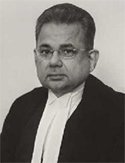
Dalveer Bhandari, J.
1. These appeals have been filed by the State of
Uttaranchal (now Uttarakhand) against the orders dated
12.7.2001 and 1.8.2001 passed by the Division Bench of the
High Court of Uttaranchal at Nainital in Civil Miscellaneous
Writ Petition No. 689 (M/B) of 2001.
2. The appointment of L. P. Nathani was challenged before
the High Court in a Public Interest Litigation on the ground
that he could not hold the august Office of the Advocate
General of Uttarakhand in view of Article 165 read with
Article 217 of the Constitution. According to the respondent,
Mr. Nathani was ineligible to be appointed as the Advocate
General because he had attained the age of 62 years much
before he was appointed as the Advocate General. The High
Court entertained the petition and directed the State
Government to take decision on the issue raised within 15 days
and apprise the same to the High Court.
3. The State of Uttaranchal preferred special leave
petitions before this Court on 6.8.2001. This Court vide order
dated 9.8.2001 stayed the operation of the impugned judgment
of the High Court. Thereafter on 11.2.2002, this Court
granted leave and directed that the stay already granted shall
continue.
4. It may be pertinent to mention that, despite the
service of notice, the respondents who had initially filed the
writ petition before the High Court challenging the
appointment of Nathani as the Advocate General did not appear
before this Court. This clearly demonstrates the non-
seriousness and non-commitment of the respondents in filing
the petition.
5. Before we proceed to examine the controversy involved
in this case, we deem it appropriate to set out Articles 165
and 217 of the Constitution dealing with the post of the
Advocate General and the qualifications for appointment to
this post in the Constitution. Article 165 which deals with
the appointment of the Advocate General for the States is
reproduced as under:
“165. The Advocate-General for the State.-(1)
The Governor of each State shall appoint a
person who is qualified to be appointed a Judge
of a High Court to be Advocate-General for the
State.
(2) It shall be the duty of the Advocate-General
to give advice to the Government of the State
upon such legal matters, and to perform such
other duties of a legal character, as may from
time to time be referred or assigned to him by
the Governor, and to discharge the functions
conferred on him by or under this Constitution
or any other law for the time being in force.
(3) The Advocate-General shall hold office
during the pleasure of the Governor, and shall
receive such remuneration as the Governor may
determine.
6. Article 217 which deals with the appointment and the
conditions of the office of a Judge of a High Court is set out
as under:
217 - Appointment and conditions of the office
of a Judge of a High Court .- (1) Every Judge of
a High Court shall be appointed by the President
by warrant under his hand and seal after
consultation with the Chief Justice of India,
the Governor of the State, and, in the case of
appointment of a Judge other than the Chief
Justice, the Chief Justice of the High court,
and shall hold office, in the case of an
additional or acting Judge, as provided in
article 224, and in any other case, until he
attains the age of sixty-two years:
Provided that--
(a) a Judge may, by writing under his hand
addressed to the President, resign his office;
(b) a Judge may be removed from his office
by the President in the manner provided in
clause (4) of article 124 for the removal of a
Judge of the Supreme Court;
(c) the office of a Judge shall be vacated by
his being appointed by the President to be a
Judge of the Supreme Court or by his being
transferred by the President to any other High
Court within the territory of India.
(2) A person shall not be qualified for
appointment as a Judge of a High Court unless he
is a citizen of India and—
(a) has for at least ten years held a
judicial office in the territory of India; or
(b) has for at least ten years been an
advocate of a High Court or of two or more such
courts in succession;
Explanation: For the purposes of this clause—
(a) in computing the period during which a
person has held judicial office in the territory
of India, there shall be included any period,
after he has held any judicial office, during
which the person has been an advocate of a High
Court or has held the office of a member of a
tribunal or any post, under the Union or a
State, requiring special knowledge of law;
(aa) in computing the period during which a
person has been an advocate of a High Court,
there shall be included any period during which
the person has held judicial office or the
office of a member of a tribunal or any post,
under the Union or a State, requiring special
knowledge of law after he became an advocate;
(b) in computing the period during which a
person has held judicial office in the territory
of India or been an advocate of High Court,
there shall be included any period before the
commencement of this Constitution during which
he has held judicial office in any area which
was comprised before the fifteenth day of
August, 1947, within India as defined by the
Government of India Act,1935, or has been an
advocate of any High Court in any such area, as
the case may be.
(3) If any question arises as to the age of
a Judge of a High Court, the question shall be
decided by the President after consultation with
the Chief Justice of India and the decision of
the President shall be final.”
7. The Division Bench of the High Court in the impugned
judgment observed that the first clause of Article 165 insists
that the Governor shall appoint a person as the Advocate
General who is qualified to be appointed as a Judge of a High
Court. The qualifications for the appointment of a Judge of a
High Court are prescribed in the second clause of Article 217.
It is true that the first clause of Article 217 says that a
Judge of a High Court “shall hold office until he attains the
age of 60 years” (at the relevant time the age of retirement
of a Judge of the High Court was 60 years and now it is 62
years). The Division Bench further held that the real
question then was whether this provision is to be construed as
one prescribing a qualification or as one prescribing the
duration of the appointment of a Judge of a High Court. It
was further held that as the provision does not occur in the
second clause, it can only be construed as one prescribing the
duration of the appointment of a Judge of a High Court. The
Court further observed that the provisions about duration in
the first clause of Article 217 cannot be made applicable to
the Advocate General because the Constitution contains a
specific provision about the duration of the appointment of
the Advocate General in the third clause of Article 165 which
says that the Advocate General shall hold office during the
pleasure of the Governor. This provision does not limit the
duration of the appointment by reference to any particular
age, as in the case of a Judge, it is not permissible to
import into it the words “until he attains the age of sixty
years”. The specific provision in the Constitution must,
therefore, be given effect to without any limitation. If a
person is appointed as an Advocate General, say at the age of
fifty-five years, there is no warrant for holding that he must
cease to hold his office on his attaining sixty two years
because it is so stated about a Judge of a High court in the
first clause of Article 217. If that be a true position, as
we hold it is, then the appointment is not bad because the
person is past sixty two years, so long as he has the
qualifications prescribed in the second clause of Article 217.
8. Shri Dinesh Dwivedi, the learned senior counsel
appearing for the State of Uttarakhand submitted that, over
half a century ago, in G.D. Karkare v. T.L. Shevde & Others
AIR 1952 Nagpur 330, this controversy has been settled by the
Division Bench of the Nagpur High Court and the said judgment
was approved by a Constitution Bench of this Court in the case
of Atlas Cycle Industries Ltd. Sonepat v. Their Workmen 1962
Supp. (3) SCR 89. In Karkare’s case (supra), it was observed
as follows:
“25. It is obvious that all the provisions
relating to a Judge of a High Court cannot be
made applicable to the Advocate-General. The
provisions about remuneration are different for
the two offices. A Judge of the High Court is
governed by Art. 221. The Advocate-General is
governed by clause (3) of Art. 165 and receives
such remuneration as the Governor may determine.
26. What the first clause of Art. 165
insists is that the Governor shall appoint a
person who is qualified to be appointed a Judge
of a High Court to be Advocate-General for the
State. The qualifications for the appointment
of a Judge of a High Court are prescribed in the
second clause of Art. 217. It is true that the
first clause of Art 217 says that a Judge of a
High Court “shall hold office until he attains
the age of 60 years”. The real question then is
whether this provision is to be construed as one
prescribing a qualification or as one
prescribing the duration of the appointment of a
Judge of a High Court. As the provision does
not occur in the second clause, it can only be
construed as one prescribing the duration of the
appointment of a Judge of a High Court.
27. The provision about duration in the
first clause of Art. 217 cannot be made
applicable to the Advocate-General because the
Constitution contains a specific provision about
the duration of the appointment of the Advocate-
General in the third clause of Art. 165 which
says that the Advocate-General shall hold office
during the pleasure of the Governor. As this
provision does not limit the duration of the
appointment by reference to any particular age,
as in the case of a Judge, it is not permissible
to import into it the words “until he attains
the age of sixty years”. The specific provision
in the Constitution must therefore be given
effect to without any limitation. If a person
is appointed Advocate-General, say at the age of
fifty-five, there is no warrant for holding that
he must cease to hold his office on this
attaining sixty years because it is so stated
about a Judge of a High Court in the first
clause of Art. 217. If that be the true
position, as we hold it is, then the appointment
is not bad because the person is past sixty
years, so long as he has the qualifications
prescribed in the second clause of Art. 217.
It was not suggested that the non-applicant does
not possess the qualifications prescribed in
that clause.
28. The provision that every Judge of a High
Court “shall hold office until he attains the
age of sixty years” has two aspects to it. While
in one aspect it can be viewed as a guarantee of
tenure during good behaviour to a person
appointed as a Judge of a High Court until he
attains the age of sixty, in another aspect it
can be viewed as a disability in that a Judge
cannot hold his office as of right after he
attains the age of sixty years.
29. We say as of right because under Art.
224 a person who has retired as a Judge of a
High Court may be requested to sit and act as a
Judge of a High court. The attainment of the
age of sixty by a person cannot therefore be
regarded as a disqualification for performing
the functions of a Judge. But the learned
counsel for the applicant tried to distinguish
between the case of a person qualified to be
appointed a Judge of a High Court under Article
217 and the case of a person requested to sit
and act as a Judge under Article 224.
The distinction between the case of a
person qualified to be appointed a Judge of a
High Court under Article 217 and the case of a
person requested to sit and act under Article
224 is not with respect to the qualifications
for performing the functions of a Judge, but
with respect to the matters provided by Article
221, 222, 223, etc. In the language of the
Constitution a Judge does not lose the
qualifications prescribed in the second clause
of Article 217 on the attainment of the age of
sixty years. A person who attains that age
cannot be appointed as a Judge not because he is
not qualified to be so appointed within the
meaning of the second clause of Article 217, but
because the first clause of that Article
expressly provides that a Judge shall hold
office until he attains the age of sixty years.
(30) If the provision in the first clause of
Article 217 viewed as a guarantee of tenure of
office until the age of sixty is not available
to the Advocate-General because he holds office
during the pleasure of the Governor, we see no
compelling reason why the same provision
construed as a disability should be made
applicable to him. We are, therefore, of the
view that the first clause of Article 217 cannot
be read with the first clause of Article 165 so
as to disqualify a person from being appointed
Advocate-General after the age of sixty years.
We have no doubt on the point. Even if the
question be considered as not free from doubt,
as the applicant desires to construe the first
clause of Article 217 as a disabling provision
against the non-applicant, we cannot forget that
provisions entailing disabilities have to be
construed strictly: ‘Parameshwaram Pillai
Bhaskara Pillai v. State’, 1950-5 Dom L R (Trav)
382. The canon of construction approved by
their Lordships of the Privy Council is that if
there be any ambiguity as to the meaning of a
disabling provision, the construction which is
in favour of the freedom of the individual
should be given effect to : ‘David v. De’silva’,
(1934) A C 106 at p. 114.
(31) There is no force in the contention that
the non-applicant could not have been appointed
Advocate-General because he had retired as a
Judge of the High Court. The learned counsel
referred us to Clause (4)(a) of Article 22 of
the Constitution and submitted that the
Constitution makes a distinction between a
person who has been a Judge and one who is
qualified to be appointed as a Judge of a High
Court. The provision in our view only makes an
exhaustive enumeration of the classes of persons
who can constitute an Advisory Board. Such
persons must either be or must have been or must
be qualified to be appointed as Judges of a High
Court. The provision has therefore no bearing
on the question whether the first clause of
Article 165 has to be read with the first clause
of Article 217, which question we have already
answered in the negative. The case of the non-
applicant is unique. Article 220 is not
applicable to him because he did not hold office
as a Judge of the High Court after the
commencement of the Constitution. So the bar
contained in that Article also does not come in
his way.”
9. Despite the fact that the controversy has been fully
settled by a judgment of this Court, it has been raised from
time to time in a number of writ petitions before the various
High Courts. We would reproduce some of the judgments to
demonstrate that after the controversy has been finally
settled by this Court, the filing of indiscriminate petitions
with the same relief creates unnecessary strain on the
judicial system and consequently leads to inordinate delay in
disposal of genuine and bona fide cases.
10. The following cases would demonstrate that, in how many
High Courts, the similar controversy has been raised after the
matter was finally settled by this Court:
11. In Ghanshyam Chandra Mathur v. The State of Rajasthan
& Others 1979 Weekly Law Notes 773, the appointment of the
Advocate General was once again challenged. The court held
that “…no age of superannuation has been mentioned in Article
165 of the Constitution of India. This clearly means that the
age of superannuation which applies to a High Court Judge,
does not apply to the office of the Advocate General”.
12. In Dr. Chandra Bhan Singh v. State of Rajasthan &
Others AIR 1983 Raj. 149, the question regarding the validity
of the appointment of the Advocate General was challenged.
The Court in this case had held that the age of superannuation
of a High Court Judge did not apply to the post of the
Advocate General. The court noted that all provisions in the
Constitution for High Court Judges, such as remuneration and
tenure of office do not apply to the post of the Advocate
General.
13. In Manendra Nath Rai & Another v. Virendra Bhatia &
Others AIR 2004 All. 133, the appointment of the Advocate
General was yet again challenged. The Court held as under:
“The argument that the provision of Sub-clause (1)
of Article 217 of the Constitution should be
followed in the matter of appointment of Advocate
General is wholly misconceived. Article 217 of the
Constitution deals with the appointment and
conditions of the office of a Judge of a High
Court. The consultation with the Chief Justice of
the State in the matter of appointment of a Judge
of the High Court cannot be made a requirement in
the matter of the appointment of Advocate General.
The appointment of Advocate General is not
governed by the aforesaid Article which falls in
Chapter-V Part-6 of the Constitution whereas
Article 165, which deals with the appointment of
Advocate General for the State falls in Chapter II
of Part 6. The scheme of the Constitution for the
appointment of Advocate General as well as for
appointment of a Judge of the High Court is
totally different.”
14. In a Division Bench judgment dated 4.2.2005 of the
Allahabad High Court in Prem Chandra Sharma & Others v. Milan
Banerji & Others in writ petition No. 716 (M/B) of 2005
reported in 2005 (3) ESC 2001, the appointment of the Attorney
General for India was challenged and a prayer was made to
issue a writ in the nature of quo warranto, because according
to the petitioner, the respondent Milan Banerji had already
attained the age of 65 years and he could not be appointed as
the Attorney General for India. In that case, the Division
Bench relied upon the judgment of the Division Bench of the
Nagpur High Court in G.D. Karkare’s case (supra). The Court
held as under:
“Having examined various provisions of the
Constitution, it is quite clear that the
Constitution of India does not provide the
retirement age of various constitutional
appointees. No outer age limit has been provided
for the appointment of the Attorney General,
Solicitor General and Advocate General in the
State. In the democratic system, prevailing in our
country the Attorney General is appointed on the
recommendation of the Prime Minister by the
President of India and traditionally, he resigns
along with the Prime Minister. Learned Counsel for
the petitioner could not show any law relating to
the age of retirement of Attorney General or
embargo provided in Constitution on appointment of
a person as Attorney General, who has already
attained the age of 65 years. We are of the
considered opinion that the letter and spirit of
the Constitution as far as appointment of the
Attorney General is concerned, looking to
significance, responsibility and high status of
the post, it lays down certain requirements for a
Member of Bar to be appointed as Attorney General
of India. It is in this backdrop that the framers
of the Constitution thought it necessary to
prescribe minimum requisite qualification by
laying that a person who is qualified to be
appointed as Judge of the Hon'ble Court can be
appointed as Attorney-General of India. This
situation, however, cannot lead us to the
conclusion by any stretch of imagination that the
Attorney General cannot hold his office after the
age of 65 years. As already indicated herein-above
there are various constitutional functionaries
where no outer age limit is provided to hold the
office.”
15. In view of the clear enunciation of law in the
aforesaid judgments, the controversy has been fully settled
that the Advocate General for the State can be appointed after
he/she attains the age of 62 years. Similarly, the Attorney
General for India can be appointed after he/she attains the
age of 65 years. In a number of other cases regarding the
appointment of other authorities, the Courts have consistently
taken the similar view.
16. This Court in Binay Kant Mani Tripathi v. Union of
India & Others (1993) 4 SCC 49 has re-affirmed this position.
The Court pointed out that the decision of appointing D.K.
Aggarwal to the position of the Vice-chairman of the Central
Administrative Tribunal could not be held to be illegal or
wrong on the ground that he was more than sixty two years old.
17. In Baishnab Patnaik & Others v. The State AIR 1952
Orissa 60, the appointment of a person to the Advisory Board
under the Preventive Detention Act was challenged on the
grounds that he was older than 60 years (the age of
superannuation for High Court judges at that time). The court
pointed out:
“If the makers of the Constitution thought that
the age limit was one of the qualifications for
appointment as a Judge of a High Court they would
not have specified it in Clause (1) of Article 217
but would have included it in Clause (2) of the
said Article.”
18. In Gurpal Singh v. State of Punjab & Others (2005) 5
SCC 136, the appointment of the appellant as Auction Recorder
was challenged. The Court held that the scope of
entertaining a petition styled as a public interest litigation
and locus standi of the petitioner particularly in matters
involving service of an employee has been examined by this
Court in various cases. The Court observed that before
entertaining the petition, the Court must be satisfied about
(a) the credentials of the applicant; (b) the prima facie
correctness or nature of information given by him; (c) the
information being not vague and indefinite. The information
should show gravity and seriousness involved. The court has
to strike balance between two conflicting interests; (i)
nobody should be allowed to indulge in wild and reckless
allegations besmirching the character of others; and (ii)
avoidance of public mischief and to avoid mischievous
petitions seeking to assail, for oblique motives, justifiable
executive actions.
19. The aforementioned cases clearly give us the picture
how the judicial process has been abused from time to time and
after the controversy was finally settled by a Constitution
Bench of this Court, repeatedly the petitions were filed in
the various courts.
20. In the instant case, one of the petitioners before the
High Court is a practicing lawyer of the court. He has
invoked the extraordinary jurisdiction of the High Court in
this matter. It was expected from a Hon’ble member of the
noble profession not to invoke the jurisdiction of the court
in a matter where the controversy itself is no longer res
integra.
21. Similarly, it is the bounden duty of the court to
ensure that the controversy once settled by an authoritative
judgment should not be reopened unless there are extraordinary
reasons for doing so.
22. In the instant case, the High Court entertained the
petition despite the fact that the controversy involved in the
case was no longer res integra. In reply to that writ
petition, the Chief Standing Counsel of Uttrakhand also filed
a Miscellaneous Application before the High Court. The
relevant portion of the application reads as under:
“3. That the following Attorney Generals
appointed under Article 76 of the Constitution
were appointed when they were appointed as
Attorney General were beyond prescribed age for
appointment as Supreme Court of India.
(I)Sri M. C. Setalvad
(II)Sri C. K. Dapatary
(III)Shri Niren De
(IV)Sri Lal Narain Singh
(V)Sri K. Parasaran
(VI)Sri Soli Sorabjee
4. That the appointment of present Attorney
General (Mr. Milon Banerjee) was challenged before
the Delhi High Court and the petition was
dismissed in limine. The appointment of Mr. R.P.
Goel, Advocate General of U.P. who has passed the
age of 62 at the time of appointment was also
dismissed.
5. That in the Hon’ble High Court of
Judicature at Allahabad Sri JV. K.S. Chaudhary,
Sir Rishi Ram, Pt. Kanhaiya Lal Mishra, Sri Shanti
Swaroop Bhatnagar and several others were
appointed as Advocate General after crossing the
age of 62 years. There were several Advocate
Generals in India who were appointed after 62
years.”
23. The State of Uttrakhand was a part of the State of U.P.
a few years ago. In the State of U.P., a large number of
Advocate Generals appointed were beyond 62 years of age at the
time of their appointment. The petitioner, a local practicing
lawyer, ought to have bestowed some care before filing this
writ petition in public interest under Article 226 of the
Constitution.
24. The controversy raised by the petitioner in this case
was decided 58 years ago in the judgment of Karkare (supra)
which was approved by the Constitution Bench of the Supreme
Court way back in 1962. Unfortunately, the same controversy
has been repeatedly raised from time to time in various High
Courts. When the controversy is no longer res-integra and the
same controversy is raised repeatedly, then it not only wastes
the precious time of the Court and prevent the Court from
deciding other deserving cases, but also has the immense
potentiality of demeaning a very important constitutional
office and person who has been appointed to that office.
25. In our considered view, it is a clear case of the abuse
of process of court in the name of the Public Interest
Litigation. In order to curb this tendency effectively, it
has now become imperative to examine all connected issues of
public interest litigation by an authoritative judgment in the
hope that in future no such petition would be filed and/or
entertained by the Court.
26. To settle the controversy, we deem it appropriate to
deal with different definitions of the Public Interest
Litigation in various countries. We would also examine the
evolution of the public interest litigation.
DEFINITIONS OF PUBLIC INTERST LITIGATION
27. Public Interest Litigation has been defined in the
Black’s Law Dictionary (6
th
Edition) as under:-
“Public Interest - Something in which the public,
the community at large, has some pecuniary
interest, or some interest by which their legal
rights or liabilities are affected. It does not
mean anything so narrow as mere curiosity, or as
the interests of the particular localities, which
may be affected by the matters in question.
Interest shared by citizens generally in affairs
of local, state or national government....”
28. Advanced Law Lexicon has defined ‘Public Interest
Litigation’ as under:-
“The expression ‘PIL’ means a legal action
initiated in a Court of law for the enforcement of
public interest or general interest in which the
public or a class of the community has pecuniary
interest or some interest by which their legal
rights or liabilities are affected.”
29. The Council for Public Interest Law set up by the Ford
Foundation in USA defined "public interest litigation" in its
report of Public Interest Law, USA, 1976 as follows:
“Public Interest Law is the name that has recently
been given to efforts provide legal representation
to previously unrepresented groups and interests.
Such efforts have been undertaken in the
recognition that ordinary market place for legal
services fails to provide such services to
significant segments of the population and to
significant interests. Such groups and interests
include the proper environmentalists, consumers,
racial and ethnic minorities and others.” (M/s
Holicow Pictures Pvt. Ltd. v. Prem Chandra Mishra
& Ors. – AIR 2008 SC 913, para 19).
30. This court in People’s Union for Democratic Rights &
Others v. Union of India & Others (1982) 3 SCC 235 defined
‘Public Interest Litigation’ and observed that the “Public
interest litigation is a cooperative or collaborative effort
by the petitioner, the State of public authority and the
judiciary to secure observance of constitutional or basic
human rights, benefits and privileges upon poor, downtrodden
and vulnerable sections of the society”.
ORIGIN OF PUBLIC INTEREST LITIGATION :
31. The public interest litigation is the product of
realization of the constitutional obligation of the court.
32. All these petitions are filed under the big banner of
the public interest litigation. In this view of the matter,
it has become imperative to examine what are the contours of
the public interest litigation? What is the utility and
importance of the public interest litigation? Whether similar
jurisdiction exists in other countries or this is an
indigenously developed jurisprudence? Looking to the special
conditions prevalent in our country, whether the public
interest litigation should be encouraged or discouraged by the
courts? These are some of the questions which we would
endeavour to answer in this judgment.
33. According to our opinion, the public interest
litigation is an extremely important jurisdiction exercised by
the Supreme Court and the High Courts. The Courts in a number
of cases have given important directions and passed orders
which have brought positive changes in the country. The
Courts’ directions have immensely benefited marginalized
sections of the society in a number of cases. It has also
helped in protection and preservation of ecology, environment,
forests, marine life, wildlife etc. etc. The court’s
directions to some extent have helped in maintaining probity
and transparency in the public life.
34. This court while exercising its jurisdiction of
judicial review realized that a very large section of the
society because of extreme poverty, ignorance, discrimination
and illiteracy had been denied justice for time immemorial and
in fact they have no access to justice. Pre-dominantly, to
provide access to justice to the poor, deprived, vulnerable,
discriminated and marginalized sections of the society, this
court has initiated, encouraged and propelled the public
interest litigation. The litigation is upshot and product of
this court’s deep and intense urge to fulfill its bounded duty
and constitutional obligation.
35. The High Courts followed this Court and exercised
similar jurisdiction under article 226 of the Constitution.
The courts expanded the meaning of right to life and liberty
guaranteed under article 21 of the Constitution. The rule of
locus standi was diluted and the traditional meaning of
‘aggrieved person’ was broadened to provide access to justice
to a very large section of the society which was otherwise not
getting any benefit from the judicial system. We would like
to term this as the first phase or the golden era of the
public interest litigation. We would briefly deal with
important cases decided by this Court in the first phase after
broadening the definition of ‘aggrieved person’. We would
also deal with cases how this Court prevented any abuse of the
public interest litigation?
36. This Court in Akhil Bharatiya Soshit Karamchari Sangh
(Railway) v. Union of India & Others AIR 1981 SC 298 at page
317, held that our current processual jurisprudence is not of
individualistic Anglo-Indian mould. It is broad-based and
people-oriented, and envisions access to justice through
‘class actions’, ‘public interest litigation’, and
‘representative proceedings’. Indeed, little Indians in large
numbers seeking remedies in courts through collective
proceedings, instead of being driven to an expensive plurality
of litigations, is an affirmation of participative justice in
our democracy. We have no hesitation in holding that the
narrow concepts of ‘cause of action’, ‘person aggrieved’ and
individual litigation are becoming obsolescent in some
jurisdictions.
37. In Bandhua Mukti Morcha v. Union of India & Others AIR
1984 SC 802, this court entertained a petition even of
unregistered Association espousing the cause of over down-
trodden or its members observing that the cause of “little
Indians” can be espoused by any person having no interest in
the matter.
38. In the said case, this court further held that where a
public interest litigation alleging that certain workmen are
living in bondage and under inhuman conditions is initiated it
is not expected of the Government that it should raise
preliminary objection that no fundamental rights of the
petitioners or the workmen on whose behalf the petition has
been filed, have been infringed. On the contrary, the
Government should welcome an inquiry by the Court, so that if
it is found that there are in fact bonded labourers or even if
the workers are not bonded in the strict sense of the term as
defined in the Bonded Labour System (Abolition) Act, 1976 but
they are made to provide forced labour or any consigned to a
life of utter deprivation and degradation, such a situation
can be set right by the Government.
39. Public interest litigation is not in the nature of
adversary litigation but it is a challenge and an opportunity
to the government and its officers to make basic human rights
meaningful to the deprived and vulnerable sections of the
community and to assure them social and economic justice which
is the signature tune of our Constitution. The Government and
its officers must welcome public interest litigation because
it would provide them an occasion to examine whether the poor
and the down-trodden are getting their social and economic
entitlements or whether they are continuing to remain victims
of deception and exploitation at the hands of strong and
powerful sections of the community and whether social and
economic justice has become a meaningful reality for them or
it has remained merely a teasing illusion and a promise of
unreality, so that in case the complaint in the public
interest litigation is found to be true, they can in discharge
of their constitutional obligation root out exploitation and
injustice and ensure to the weaker sections their rights and
entitlements.
40. In Fertilizer Corporation Kamagar Union (Regd., Sindri
& Others v. Union of India & Others AIR 1981 SC 844, this
court observed that “public interest litigation is part of the
process of participative justice and ‘standing’ in civil
litigation of that pattern must have liberal reception at the
judicial doorsteps”.
41. In Ramsharan Autyanuprasi & Another v. Union of India
& Others AIR 1989 SC 549, this court observed that the public
interest litigation is for making basic human rights
meaningful to the deprived and vulnerable sections of the
community and to assure them social, economic and political
justice.
EVOLUTION OF THE PUBLIC INTEREST LITIGATION IN INDIA
42. The origin and evolution of Public Interest Litigation
in India emanated from realization of constitutional
obligation by the Judiciary towards the vast sections of the
society - the poor and the marginalized sections of the
society. This jurisdiction has been created and carved out
by the judicial creativity and craftsmanship. In M. C. Mehta
& Another v. Union of India & Others AIR 1987 SC 1086, this
Court observed that Article 32 does not merely confer power on
this Court to issue direction, order or writ for the
enforcement of fundamental rights. Instead, it also lays a
constitutional obligation on this Court to protect the
fundamental rights of the people. The court asserted that, in
realization of this constitutional obligation, “it has all
incidental and ancillary powers including the power to forge
new remedies and fashion new strategies designed to enforce
the fundamental rights”. The Court realized that because of
extreme poverty, a large number of sections of society cannot
approach the court. The fundamental rights have no meaning
for them and in order to preserve and protect the fundamental
rights of the marginalized section of society by judicial
innovation, the courts by judicial innovation and creativity
started giving necessary directions and passing orders in the
public interest.
43. The development of public interest litigation has been
extremely significant development in the history of the Indian
jurisprudence. The decisions of the Supreme Court in the
1970’s loosened the strict locus standi requirements to permit
filing of petitions on behalf of marginalized and deprived
sections of the society by public spirited individuals,
institutions and/or bodies. The higher Courts exercised wide
powers given to them under Articles 32 and 226 of the
Constitution. The sort of remedies sought from the courts in
the public interest litigation goes beyond award of remedies
to the affected individuals and groups. In suitable cases,
the courts have also given guidelines and directions. The
courts have monitored implementation of legislation and even
formulated guidelines in absence of legislation. If the cases
of the decades of 70s and 80s are analyzed, most of the public
interest litigation cases which were entertained by the courts
are pertaining to enforcement of fundamental rights of
marginalized and deprived sections of the society. This can
be termed as the first phase of the public interest litigation
in India.
44. The Indian Supreme Court broadened the traditional rule
of standing and the definition of “person aggrieved”.
45. In this judgment, we would like to deal with the origin
and development of public interest litigation. We deem it
appropriate to broadly divide the public interest litigation
in three phases.
Phase-I: It deals with cases of this Court
where directions and orders were passed
primarily to protect fundamental rights under
Article 21 of the marginalized groups and
sections of the society who because of
extreme poverty, illiteracy and ignorance
cannot approach this court or the High
Courts.
Phase-II:It deals with the cases relating to
protection, preservation of ecology,
environment, forests, marine life, wildlife,
mountains, rivers, historical monuments etc.
etc.
Phase-III:It deals with the directions issued
by the Courts in maintaining the probity,
transparency and integrity in governance.
46. Thereafter, we also propose to deal with the aspects of
abuse of the Public Interest Litigation and remedial measures
by which its misuse can be prevented or curbed.
DISCUSSION OF SOME IMPORTANT CASES OF PHASE-I
47. The court while interpreting the words “person
aggrieved” in Jasbhai Motibhai Desai v. Roshan Kumar, Haji
Bashir Ahmed & Others (1976) 1 SCC 671 observed that “the
traditional rule is flexible enough to take in those cases
where the applicant has been prejudicially affected by an act
or omission of an authority, even though he has no proprietary
or even a fiduciary interest in the subject-matter. That
apart, in exceptional cases even a stranger or a person who
was not a party to the proceedings before the authority, but
has a substantial and genuine interest in the subject-matter
of the proceedings will be covered by this rule”.
48. The rule of locus standi was relaxed in Bar Council of
Maharashtra v. M. V. Dabholkar & Others 1976 SCR 306. The
court observed as under:
“Traditionally used to the adversary system, we
search for individual persons aggrieved. But a new
class of litigation public interest litigation-
where a section or whole of the community is
involved (such as consumers' organisations or
NAACP-National Association for Advancement of
Coloured People-in America), emerges in a
developing country like ours, this pattern of
public oriented litigation better fulfils the rule
of law if it is to run close to the rule of life.
xxx xxx xxx
“The possible apprehension that widening legal
standing with a public connotation may unloose a
flood of litigation which may overwhelm the judges
is misplaced because public resort to court to
suppress public mischief is a tribute to the
justice system.”
49. The court in this case observed that “procedural
prescriptions are handmaids, not mistresses of justice and
failure of fair play is the spirit in which Courts must view
procession deviances.”
50. In The Mumbai Kamgar Sabha, Bombay v. Abdulbhai
Faizullabhai & Others AIR 1976 SC 1455, this Court made
conscious efforts to improve the judicial access for the
masses by relaxing the traditional rule of locus standi.
51. In Sunil Batra v. Delhi Administration & OthersAIR 1978
SC 1675, the Court departed from the traditional rule of
standing by authorizing community litigation. The Court
entertained a writ petition from a prisoner, a disinterested
party, objecting to the torture of a fellow prisoner. The
Court entertained the writ after reasoning that “these
'martyr' litigations possess a beneficent potency beyond the
individual litigant and their consideration on the wider
representative basis strengthens the rule of law.”
Significantly, citing “people's vicarious involvement in our
justice system with a broad-based concept of locus standi so
necessary in a democracy where the masses are in many senses
weak,” the Court permitted a human rights organization to
intervene in the case on behalf of the victim.
52. In Hussainara Khatoon & Others v. Home Secretary,
State of Bihar, Patna AIR 1979 SC 1369, P. N. Bhagwati, J. has
observed that “today, unfortunately, in our country the poor
are priced out of the judicial system with the result that
they are losing faith in the capacity of our legal system to
(sic) about changes in their life conditions and to deliver
justice to them. The poor in their contact with the legal
system have always been on the wrong side of the line. They
have always come across 'law for the poor" rather than law of
the poor'. The law is regarded by them as something mysterious
and forbidding--always taking something away from them and not
as a positive and constructive social device for changing the
social economic order and improving their life conditions by
conferring rights and benefits on them. The result is that the
legal system has lost its credibility for the weaker section
of the community.
53. In Prem Shankar Shukla v. Delhi Administration AIR 1980
SC 1535, a prisoner sent a telegram to a judge complaining of
forced handcuff on him and demanded implicit protection
against humiliation and torture. The court gave necessary
directions by relaxing the strict rule of locus standi.
54. In Municipal Council, Ratlam v. Vardhichand & Others
AIR 1980 SC 1622, Krishna Iyer, J. relaxed the rule of locus
standi:
“The truth is that a few profound issues of
processual jurisprudence of great strategic
significance to our legal system face us and we
must zero-in on them as they involve problems of
access to justice for the people beyond the
blinkered rules of 'standing' of British Indian
vintage. If the center of gravity of justice is to
shift, as the Preamble to the Constitution
mandates, from the traditional individualism of
locus standi to the community orientation of
public interest litigation, these issues must be
considered…..
xxx xxx xxx
xxx xxx xxx
Why drive common people to public interest action?
Where Directive Principles have found statutory
expression in Do's and Don’ts the court will not
sit idly by and allow municipal government to
become a statutory mockery. The law will
relentlessly be enforced and the plea of poor
finance will be poor alibi when people in misery
cry for justice……”
55. In Fertilizer Corporation Kamgar Union (supra) Krishna
Iyer, J. and Bhagwati, J. had to answer in affirmative as to
whether the workers in a factory owned by government had locus
standi to question the legality of sale of the factory. They
concluded with a quote: ‘Henry Peter Brougham: Nieman Reports,
April 1956 as under:
“It was the boast of Augustus that he found Rome
of brick and left it of marble. But how much
nobler will be the sovereign's boast when he shall
have it to say that he found law dear and left it
cheap; found it a sealed book and left it a living
letter; found it the patrimony of the rich and
left it the inheritance of the poor; found it the
two-edged sword of craft and oppression and left
it the staff of honesty and the shield of
innocence.”
56. In People’s Union for Democratic Rights & Others
(supra), this Court observed as under:
“that public interest litigation which is a
strategic arm of the legal aid movement and which
is intended to bring justice within the reach of
the poor masses, who constitute the low visibility
area of humanity, is a totally different kind of
litigation from the ordinary traditional
litigation which is essentially of an adversary
character where there is a dispute between two
litigating parties, one making claim or seeking
relief against the other and that other opposing
such claim or resisting such relief. Public
interest litigation is brought before the court
not for the purpose of enforcing the right of one
individual against another as happens in the case
of ordinary litigation, but it is intended to
promote and vindicate public interest which
demands that violations of constitutional or legal
rights of large numbers of people who are poor,
ignorant or in a socially or economically
disadvantaged position should not go unnoticed and
un-redressed. That would be destructive of the
Rule of Law which forms one of the essential
elements of public interest in any democratic form
of government. The Rule of Law does not mean that
the protection of the law must be available only
to a fortunate few or that the law should be
allowed to be prostituted by the vested interests
for protecting and upholding the status quo under
the guise of enforcement of their civil and
political rights. The poor too have civil and
political rights and the Rule of Law is meant for
them also, though today it exists only on paper
and not in reality. If the sugar barons and the
alcohol kings have the Fundamental Right to carry
on their business and to fatten their purses by
exploiting the consuming public, have the
'chamars' belonging to the lowest strata of
society no Fundamental Right to earn an honest
living through their sweat and toil? The former
can approach the courts with a formidable army of
distinguished lawyers paid in four or five figures
per day and if their right of exploit is upheld
against the government under the label of
Fundamental Right, the courts are praised for
their boldness and courage and their independence
and fearlessness are applauded and acclaimed. But,
if the Fundamental Right of the poor and helpless
victims of injustice is sought to be enforced by
public interest litigation, the so called
champions of human rights frown upon it as waste
of time of the highest court in the land, which,
according to them, should not engage itself in
such small and trifling matters. Moreover, these
self-styled human rights activists forget that
civil and political rights, priceless and
invaluable as they are for freedom and democracy,
simply do not exist for the vast masses of our
people. Large numbers of men, women and children
who constitute the bulk of our population are
today living a sub-human existence in conditions
of abject poverty: utter grinding poverty has
broken their back and sapped their moral fibre.
They have no faith in the existing social and
economic system. What civil and political rights
are these poor and deprived sections of humanity
going to enforce?
57. Justice Bhagwati of this court in his judgment in S.P.
Gupta v. President of India & Others AIR 1982 SC 149
altogether dismissed the traditional rule of standing, and
replaced it with a liberalized modern rule. In this case, the
Court awarded standing to advocates challenging the transfer
of judges during Emergency. Describing the traditional rule
as an “ancient vintage” of “an era when private law dominated
the legal scene and public law had not been born,” the Court
concluded that the traditional rule of standing was obsolete.
In its place, the Court prescribed the modern rule on
standing:
“where a legal wrong or a legal injury is caused
to a person or to a determinate class of persons
by reason of violation of any constitutional or
legal right or any burden is imposed in
contravention of any constitutional or legal
provision or without authority of law or any such
legal wrong or legal injury or illegal burden is
threatened and such person or determinate class of
persons is by reason of poverty, helplessness or
disability or socially or economically
disadvantaged position, unable to approach the
Court for relief, any member of the public can
maintain an application for an appropriate
direction, order or writ, in the High Court under
Article 226, and in case of breach of any
fundamental right, in this Court under Article
32.”
58. Finding that the practicing advocates “are vitally
interested in the maintenance of a fearless and an independent
Judiciary,” the Court granted standing to the advocates under
the modern rule to bring cases challenging the transfer of
judges during Emergency. In this case, this Court further
observed as under:
“……it must now be regarded as well settled law
where a person who has suffered a legal wrong or a
legal injury or whose legal right or legally
protected interest is violated, is unable to
approach the Court on account of some disability
or it is not practicable for him to move the Court
for some other sufficient reasons, such as his
socially or economically disadvantaged position,
some other person can invoke assistance of the
Court for the purpose of providing judicial
redress to the person wronged or injured, so that
the legal wrong or injury caused to such person
does not go un-redressed and justice is done to
him.
xxx xxx xxx
xxx xxx xxx
……Today a vast revolution is taking place in the
judicial process; the theatre of the law is fast
changing and the problems of the poor are coming
to the forefront. The Court has to innovate new
methods and devise new strategies for the purpose
of providing access to justice to large masses of
people who are denied their basic human rights and
to whom freedom and liberty have no meaning. The
only way in which this can be done is by
entertaining writ petitions and even letters from
public spirited individuals seeking judicial
redress for the benefit of persons who have
suffered a legal wrong or a legal injury or whose
constitutional or legal right has been violated
but who by reason of their poverty or socially or
economically disadvantaged position are unable to
approach the Court for relief. It is in this
spirit that the Court has been entertaining
letters for Judicial redress and treating them as
writ petitions and we hope and trust that the High
Courts of the country will also adopt this pro-
active, goal-oriented approach.”
59. In Anil Yadav & Others v. State of Bihar and Bachcho
Lal Das, Superintendent, Central Jail, Bhagalpur, Bihar (1982)
2 SCC 195, a petition was filed regarding blinding of under-
trial prisoners at Bhagalpur in the State of Bihar. According
to the allegation, their eyes were pierced with needles and
acid poured into them. The Court had sent a team of the
Registrar and Assistant Registrar to visit the Central Jail,
Bhagalpur and submit a report to the Court. The Court passed
comprehensive orders to ensure that such barbarous and inhuman
acts are not repeated.
60. In Munna & Others v. State of Uttar Pradesh & Others,
(1982) 1 SCC 545, the allegation was that the juvenile under-
trial prisoners have been sent in the Kanpur Central Jail
instead of Children’s Home in Kanpur and those children were
sexually exploited by the adult prisoners. This Court ruled
that in no case except the exceptional ones mentioned in the
Act, a child can be sent to jail. The Court further observed
that the children below the age of 16 years must be detained
only in the Children’s Homes or other place of safety. The
Court also observed that “a Nation which is not concerned with
the welfare of the children cannot look forward to a bright
future.”
61. Thereafter, in a series of cases, the Court treated
Post Cards and letters as writ petitions and gave directions
and orders.
62. In Sheela Barse v. State of Maharashtra AIR 1983 SC
378, Sheela Barse, a journalist, complained of custodial
violence to women prisoners in Bombay. Her letter was
treated as a writ petition and the directions were given by
the court.
63. In Dr. Upendra Baxi (I) v. State of Uttar Pradesh &
Another 1983 (2) SCC 308 two distinguished law Professors of
the Delhi University addressed a letter to this court
regarding inhuman conditions which were prevalent in Agra
Protective Home for Women. The court heard the petition on a
number of days and gave important directions by which the
living conditions of the inmates were significantly improved
in the Agra Protective Home for Women.
64. In Veena Sethi (Mrs.) v. State of Bihar & Others AIR
1983 SC 339, some prisoners were detained in jail for a period
ranging from 37 years to 19 years. They were arrested in
connection with certain offences and were declared insane at
the time of their trial and were put in Central Jail with
directions to submit half-yearly medical reports. Some were
convicted, some acquitted and trials were pending against some
of them. After they were declared sane no action for their
release was taken by the authorities. This Court ruled that
the prisoners remained in jail for no fault of theirs and
because of the callous and lethargic attitude of the
authorities. Even if they are proved guilty the period they
had undergone would exceed the maximum imprisonment that they
might be awarded.
65. In Labourers Working on Salal Hydro Project v. State
of Jammu & Kashmir & Others AIR 1984 SC 177, on the basis of a
news item in the Indian Express regarding condition of the
construction workers, this Court took notice and observed that
the construction work is a hazardous employment and no child
below the age of 14 years can therefore be allowed to be
employed in construction work by reason of the prohibition
enacted in Article 24 and this constitutional prohibition must
be enforced by the Central Government.
66. In Shri Sachidanand Pandey & Another v. The State of
West Bengal & Others (1987) 2 SCC 295, in the concurring
judgment, Justice Khalid, J. observed that the public
interest litigation should be encouraged when the Courts are
apprised of gross violation of fundamental rights by a group
or a class action or when basic human rights are invaded or
when there are complaints of such acts as shock the judicial
conscience that the courts, especially this Court, should
leave aside procedural shackles and hear such petitions and
extend its jurisdiction under all available provisions for
remedying the hardships and miseries of the needy, the
underdog and the neglected.
67. The case of B. R. Kapoor & Another v. Union of India &
Others AIR 1990 SC 752 relates to public interest litigation
regarding mismanagement of the hospital for mental diseases
located at Shahdara, Delhi. This Court appointed a Committee
of Experts which highlighted the problems of availability of
water, existing sanitary conditions, food, kitchen, medical
and nursing care, ill-treatment of patients, attempts of
inmates to commit suicide, death of patients in hospital,
availability of doctors and nurses etc. The Court went on to
recommend the Union of India to take over the hospital and
model it on the lines of NIMHANS at Bangalore.
68. In Smt. Nilabati Behera alias Lalita Behera v. State
of Orissa & Others AIR 1993 SC 1960, this Court gave
directions that for contravention of human rights and
fundamental freedoms by the State and its agencies, a claim
for monetary compensation in petition under Article 32 of 226
is justified. In a concurring judgment, Anand, J. (as he
then was) observed as under:
“The old doctrine of only relegating the aggrieved to
the remedies available in civil law limits the role of the
courts too much as protector and guarantor of the indefeasible
rights of the citizens. The courts have the obligation to
satisfy the social aspirations of the citizens because the
courts and the law are for the people and expected to respond
to their aspirations.”
69. In Punjab and Haryana High Court Bar Association,
Chandigarh through its Secretary v. State of Punjab & Others
(1994) 1 SCC 616, the allegation was that a practicing
advocate, his wife and a child aged about two years were
abducted and murdered. This Court directed the Director of
the CBI to investigate and report to the Court.
70. In Navkiran Singh & Others v. State of Punjab through
Chief Secretary & Another (1995) 4 SCC 591, in a letter
petition the advocates from the Punjab & Haryana High Court
expressed concerned about the kidnapping/elimination of
advocates in the State of Punjab. This Court directed the
CBI to investigate the matter and also directed the State of
Punjab to provide security to those advocates who genuinely
apprehend danger to their lives from militants/anti-social
elements. The Court also observed that if the request for
security is recommended by the District Judge or the Registrar
of the High Court, it may treated as genuine and the State
Government may consider the same sympathetically.
71. In Delhi Domestic Working Women’s Forum v. Union of
India & Others (1995) 1 SCC 14, the Court expressed serious
concern about the violence against women. The Court gave
significant directions and observed that compensation for
victims shall be awarded by the court on conviction of the
offender and by the Criminal Injuries Compensation Board
whether or not a conviction has taken place. The Board will
take into account pain, suffering and shock as well as loss of
earnings due to pregnancy and the expenses of child birth if
this occurred as a result of the rape.
72. In Citizens for Democracy v. State of Assam & Others
(1995) 3 SCC 743, this Court held that handcuffing and tying
with ropes is inhuman and in utter violation of human rights
guaranteed under the international law and the law of the
land. The Court in para 15 observed as under:
“15. ….. The handcuffing and in addition tying
with ropes of the patient-prisoners who are lodged
in the hospital is, the least we can say, inhuman
and in utter violation of the human rights
guaranteed to an individual under the
international law and the law of the land. We are,
therefore, of the view that the action of the
respondents was wholly unjustified and against
law. We direct that the detenus – in case they
are still in hospital – be relieved from the
fetters and the ropes with immediate effect.”
73. In Paramjit Kaur (Mrs.) v. State of Punjab & Others
(1996) 7 SCC 20, a telegram was sent to a Judge of this Court
which was treated as a habeas corpus petition. The
allegation was that the husband of the appellant was kidnapped
by some persons in police uniform from a busy residential area
of Amritsar. The Court took serious note of it and directed
the investigation of the case by the Central Bureau of
Investigation.
74. In M. C. Mehta v. State of Tamil Nadu & Others (1996) 6
SCC 756, the Court was dealing with the cases of child labour
and the Court found that the child labour emanates from
extreme poverty, lack of opportunity for gainful employment
and intermittency of income and low standards of living. The
Court observed that it is possible to identify child labour in
the organized sector, which forms a minuscule of the total
child labour, the problem relates mainly to the unorganized
sector where utmost attention needs to be paid.
75. In D. K. Basu v. State of West Bengal (1997) 1 SCC 416,
this Court observed that the custodial death is perhaps one of
the worst crimes in a civilized society governed by the rule
of law. The rights inherent in Articles 21 and 22(1) of the
Constitution require to be jealously and scrupulously
protected. The expression “life or personal liberty” in
Article 21 includes the right to live with human dignity and
thus it would also include within itself a guarantee against
torture and assault by the State or its functionaries. The
precious right guaranteed by Article 21 cannot be denied to
convicts, undertrials, detenus and other prisoners in custody,
except according to the procedure established by law by
placing such reasonable restrictions as are permitted by law.
The Court gave very significant directions which are mandatory
for all concerned to follow.
76. In Vishaka & Others v. State of Rajasthan & Others
(1997) 6 SCC 241, this Court gave directions regarding
enforcement of the fundamental rights of the working women
under Articles 14, 19 and 21 of the Constitution. The Court
gave comprehensive guidelines and norms and directed for
protection and enforcement of these rights of the women at
their workplaces.
77. In a recently decided case Prajwala v. Union of India
& Others (2009) 4 SCC 798, a petition was filed in this Court
in which it was realized that despite commencement of the
Persons with Disabilities (Equal Opportunities, Protection of
Rights and Full Participation) Act, 1995, disabled people are
not given preferential treatment. The Court directed the
State Governments/local authorities to allot land for various
purposes indicted in section 43 of the Act and various items
indicated in section 43, preferential treatment be given to
the disabled people and the land shall be given at
concessional rates. The percentage of reservation may be left
to the discretion of the State Governments. However, total
percentage of disabled persons shall be taken into account
while deciding the percentage.
78. In Avinash Mehrotra v. Union of India & Others (2009) 6
SCC 398, a public interest litigation was filed, when 93
children were burnt alive in a fire at a private school in
Tamil Nadu. This happened because the school did not have the
minimum safety standard measures. The court, in order to
protect future tragedies in all such schools, gave directions
that it is the fundamental right of each and every child to
receive education free from fear of security and safety, hence
the Government should implement National Building Code and
comply with the said orders in constructions of schools for
children.
79. All these abovementioned cases demonstrate that the
courts, in order to protect and preserve the fundamental
rights of citizens, while relaxing the rule of locus standi,
passed a number of directions to the concerned authorities.
80. We would not like to overburden the judgment by
multiplying these cases, but brief resume of these cases
demonstrate that in order to preserve and protect the
fundamental rights of marginalized, deprived and poor sections
of the society, the courts relaxed the traditional rule of
locus standi and broadened the definition of aggrieved persons
and gave directions and orders. We would like to term cases
of this period where the court relaxed the rule of locus
standi as the first phase of the public interest litigation.
The Supreme Court and the High Courts earned great respect and
acquired great credibility in the eyes of public because of
their innovative efforts to protect and preserve the
fundamental rights of people belonging to the poor and
marginalized sections of the society.
PHASE-II – DIRECTIONS TO PRESERVE AND PROTECT ECOLOGY AND
ENVIRONMENT
81. The second phase of public interest litigation started
sometime in the 1980’s and it related to the courts’
innovation and creativity, where directions were given to
protect ecology and environment.
82. There are a number of cases where the court tried to
protect forest cover, ecology and environment and orders have
been passed in that respect. As a matter of fact, the Supreme
Court has a regular Forest Bench (Green Bench) and regularly
passes orders and directions regarding various forest cover,
illegal mining, destruction of marine life and wild life etc.
Reference of some cases is given just for illustration.
83. In the second phase, the Supreme Court under Article 32
and the High Court under Article 226 of the Constitution
passed a number of orders and directions in this respect.
84. The recent example is the conversion of all public
transport in the Metropolitan City of Delhi from diesel engine
to CNG engine on the basis of the order of the High Court of
Delhi to ensure that the pollution level is curtailed and this
is being completely observed for the last several years. Only
CNG vehicles are permitted to ply on Delhi roads for public
transport.
85. Louise Erdrich Bigogress, an environmentalist has aptly
observed that “grass and sky are two canvasses into which the
rich details of the earth are drawn.” In 1980s, this court
paid special attention to the problem of air pollution, water
pollution, environmental degradation and passed a number of
directions and orders to ensure that environment ecology,
wildlife should be saved, preserved and protected. According
to court, the scale of injustice occurring on the Indian soil
is catastrophic. Each day hundreds of thousands of factories
are functioning without pollution control devices. Thousands
of Indians go to mines and undertake hazardous work without
proper safety protection. Everyday millions of litres of
untreated raw effluents are dumped into our rivers and
millions of tons of hazardous waste are simply dumped on the
earth. The environment has become so degraded that instead
of nurturing us it is poisoning us. In this scenario, in a
large number of cases, the Supreme Court intervened in the
matter and issued innumerable directions.
86. We give brief resume of some of the important cases
decided by this court. One of the earliest cases brought
before the Supreme Court related to oleum gas leakage in
Delhi. In order to prevent the damage being done to
environment and the life and the health of the people, the
court passed number of orders. This is well-known as M.C.
Mehta & Another v. Union of India & Others AIR 1987 SC 1086.
The court in this case has clearly laid down that an
enterprise which is engaged in a hazardous or inherently
dangerous industry which poses a potential threat to the
health and safety of the persons working in the factory and
residing in the surrounding area owes an absolute and non-
delegable duty to the community to ensure that no such harm
results to anyone on account of hazardous or inherently
dangerous nature of the activity which it has undertaken. The
court directed that the enterprise must adopt highest
standards of safety and if any harm results on account of such
activity, the enterprise must be absolutely liable to
compensate for such harm and it should be no answer to the
enterprise to say that it had taken all reasonable care and
that the harm occurred without any negligence on its part.
87. In Rural Litigation and Entitlement Kendra, Dehradun &
Others v. State of U.P. & Others AIR 1985 SC 652 the Supreme
Court ordered closure of all lime-stone quarries in the Doon
Valley taking notice of the fact that lime-stone quarries and
excavation in the area had adversely affected water springs
and environmental ecology. While commenting on the closure of
the lime-stone quarries, the court stated that this would
undoubtedly cause hardship to owners of the lime-stone
quarries, but it is the price that has to be paid for
protecting and safeguarding the right of the people to live in
healthy environment with minimal disturbance of ecological
balance and without avoidable hazard to them and to their
cattle, homes and agricultural land and undue affectation of
air, water and environment.
88. Environmental PIL has emerged because of the court’s
interpretation of Article 21 of the Constitution. The court
in Chhetriya Pardushan Mukti Sangharsh Samiti v. State of U.P.
& Others AIR 1990 SC 2060 observed that every citizen has
fundamental right to have the enjoyment of quality of life and
living as contemplated by Article 21 of the Constitution of
India. Anything which endangers or impairs by conduct of
anybody either in violation or in derogation of laws, that
quality of life and living by the people is entitled to take
recourse to Article 32 of the Constitution.
89. This court in Subhash Kumar v. State of Bihar & Others
AIR 1991 SC 420 observed that under Article 21 of the
Constitution people have the right of enjoyment of pollution
free water and air for full enjoyment of life. If anything
endangers or impairs that quality of life in derogation of
laws, a citizen has right to have recourse to Article 32 of
the Constitution for removing the pollution of water or air
which may be detrimental to the quality of life.
90. The case of M.C. Mehta v. Union of India & Others
(1988) 1 SCC 471, relates to pollution caused by the trade
effluents discharged by tanneries into Ganga river in Kanpur.
The court called for the report of the Committee of experts
and gave directions to save the environment and ecology. It
was held that “in Common Law the Municipal Corporation can be
restrained by an injunction in an action brought by a riparian
owner who has suffered on account of the pollution of the
water in a river caused by the Corporation by discharging into
the river insufficiently treated sewage from discharging such
sewage into the river. But in the present case the petitioner
is not a riparian owner. He is a person interested in
protecting the lives of the people who make use of the water
flowing in the river Ganga and his right to maintain the
petition cannot be disputed. The nuisance caused by the
pollution of the river Ganga is a public nuisance, which is
widerspread in range and indiscriminate in its effect and it
would not be reasonable to expect any particular person to
take proceedings to stop it as distinct from the community at
large. The petition has been entertained as a Public Interest
Litigation. On the facts and in the circumstances of the
case, the petitioner is entitled to move the Supreme Court in
order to enforce the statutory provisions which impose duties
on the municipal authorities and the Boards constituted under
the Water (Prevention and Control of Pollution) Act, 1974”.
91. In Vellore Citizens Welfare Forum v. Union of India &
Others AIR 1996 SC 2715, this court ruled that precautionary
principle and the polluter pays principle are part of the
environmental law of the country. This court declared
Articles 47, 48A and 51A(g) to be part of the constitutional
mandate to protect and improve the environment.
92. In M.C. Mehta v. Union of India & Others AIR 1988 SC
1037, this court observed that the effluent discharged in
river Ganga from a tannery is ten times noxious when compared
with the domestic sewage water which flows into the river from
any urban area on its banks. The court further observed that
the financial capacity of the tanneries should be considered
as irrelevant without requiring them to establish primary
treatment plants. Just like an industry which cannot pay
minimum wages to its workers cannot be allowed to exist, a
tannery which cannot set up a primary treatment plant cannot
be permitted to continue to be in existence for the adverse
effect on the public at large.
93. In M.C. Mehta v. Union of India & Others AIR 1997 SC
734, this court observed that in order to preserve and protect
the ancient monument Taj Mahal from sulphurdioxide emission by
industries near Taj Mahal, the court ordered 299 industries to
ban the use of coke/coal. The court further directed them to
shift-over to Compressed Natural Gas (CNG) or re-locate them.
94. In A. P. Pollution Control Board v. Prof. M. V. Nayadu
(Retd.) & Others (1999) 2 SCC 718, this Court quoted A.
Fritsch, “Environmental Ethics: Choices for Concerned
Citizens”. The same is reproduced as under:
“The basic insight of ecology is that all living
things exist in interrelated systems; nothing
exists in isolation. The world system in weblike;
to pluck one strand is to cause all to vibrate;
whatever happens to one part has ramifications for
all the rest. Our actions are not individual but
social; they reverberate throughout the whole
ecosystem". [Science Action Coalition by A.
Fritsch, Environmental Ethics: Choices for
Concerned Citizens 3-4 (1980)] : (1988) Vol. 12
Harv. Env. L. Rev. at 313).”
95. The court in this case gave emphasis that the
directions of the court should meet the requirements of public
interest, environmental protection, elimination of pollution
and sustainable development. While ensuring sustainable
development, it must be kept in view that there is no danger
to the environment or to the ecology.
96. In Essar Oil Ltd. v. Halar Utkarsh Samiti & Others AIR
2004 SC 1834, while maintaining the balance between economic
development and environmental protection, the court observed
as under:
“26. Certain principles were enunciated in the
Stockholm Declaration giving broad parameters and
guidelines for the purposes of sustaining humanity
and its environment. Of these parameters, a few
principles are extracted which are of relevance to
the present debate. Principle 2 provides that the
natural resources of the earth including the air,
water, land, flora and fauna especially
representative samples of natural eco-systems must
be safeguarded for the benefit of present and
future generations through careful planning and
management as appropriate. In the same vein, the
4
th
principle says "man has special responsibility
to safeguard and wisely manage the heritage of
wild life and its habitat which are now gravely
imperiled by a combination of adverse factors.
Nature conservation including wild life must,
therefore, receive importance in planning for
economic developments". These two principles
highlight the need to factor in considerations of
the environment while providing for economic
development. The need for economic development has
been dealt with in Principle 8 where it is said
that "economic and social development is essential
for ensuring a favourable living and working
environment for man and for creating conditions on
earth that are necessary for improvement of the
quality of life".”
97. On sustainable development, one of us (Bhandari, J.) in
Karnataka Industrial Areas Development Board v. Sri C.
Kenchappa & Others AIR 2006 SC 2038, observed that there has
to be balance between sustainable development and environment.
This Court observed that before acquisition of lands for
development, the consequence and adverse impact of development
on environment must be properly comprehended and the lands be
acquired for development that they do not gravely impair the
ecology and environment; State Industrial Areas Development
Board to incorporate the condition of allotment to obtain
clearance from the Karnataka State Pollution Control Board
before the land is allotted for development. The said
directory condition of allotment of lands be converted into a
mandatory condition for all the projects to be sanctioned in
future.
98. In another important decision of this Court in the case
of M.C. Mehta v. Kamal Nath & Others (2000) 6 SCC 213, this
Court was of the opinion that Articles 48A and 51-A(g) have to
be considered in the light of Article 21 of the Constitution.
Any disturbance of the basic environment elements, namely air,
water and soil, which are necessary for "life", would be
hazardous to "life" within the meaning of Article 21. In the
matter of enforcement of rights under Article 21, this Court,
besides enforcing the provisions of the Acts referred to
above, has also given effect to Fundamental Rights under
Articles 14 and 21 and has held that if those rights are
violated by disturbing the environment, it can award damages
not only for the restoration of the ecological balance, but
also for the victims who have suffered due to that
disturbance. In order to protect the "life", in order to
protect "environment" and in order to protect "air, water and
soil" from pollution, this Court, through its various
judgments has given effect to the rights available, to the
citizens and persons alike, under Article 21.
99. The court also laid emphasis on the principle of
Polluter-pays. According to the court, pollution is a civil
wrong. It is a tort committed against the community as a
whole. A person, therefore, who is guilty of causing
pollution has to pay damages or compensation for restoration
of the environment and ecology.
100. In Managing Director, A.P.S.R.T.C. v. S. P.
Satyanarayana AIR 1998 SC 2962, this Court referred to the
White Paper published by the Government of India that the
vehicular pollution contributes 70% of the air pollution as
compared to 20% in 1970. This Court gave comprehensive
directions to reduce the air pollution on the recommendation
of an Expert Committee of Bhure Lal appointed by this Court.
101. In Re. Noise Pollution AIR 2005 SC 3136, this Court was
dealing with the issue of noise pollution. This Court was of
the opinion that there is need for creating general awareness
towards the hazardous effects of noise pollution.
Particularly, in our country the people generally lack
consciousness of the ill effects which noise pollution creates
and how the society including they themselves stand to benefit
by preventing generation and emission of noise pollution.
102. In Indian Council for Enviro-Legal Action v. Union of
India & Others (1996) 5 SCC 281 the main grievance in the
petition is that a notification dated 19.2.1991 declaring
coastal stretches as Coastal Regulation Zones which regulates
the activities in the said zones has not been implemented or
enforced. This has led to continued degradation of ecology in
the said coastal areas. The court observed that while
economic development should not be allowed to take place at
the cost of ecology or by causing widespread environment
destruction and violation; at the same time, the necessity to
preserve ecology and environment should not hamper economic
and other developments. Both development and environment must
go hand in hand, in other words, there should not be
development at the cost of environment and vice versa, but
there should be development while taking due care and ensuring
the protection of environment.
103. In S. Jagannath v. Union of India & Others (1997) 2 SCC
87, this Court dealt with a public interest petition filed by
the Gram Swaraj Movement, a voluntary organization working for
the upliftment of the weaker section of society, wherein the
petitioner sought the enforcement of Coastal Zone Regulation
Notification dated 19.2.1991 and stoppage of intensive and
semi-intensive type of prawn farming in the ecologically
fragile coastal areas. This Court passed significant
directions as under:
1. The Central Government shall constitute an
authority conferring on the said authority
all the powers necessary to protect the
ecologically fragile coastal areas,
seashore, waterfront and other coastal
areas and specially to deal with the
situation created by the shrimp culture
industry in coastal States.
2. The authority so constituted by the
Central Government shall implement "the
Precautionary principle" and "the Polluter Pays"
principles.
3. The shrimp culture industry/the shrimp ponds
are covered by the prohibition contained in para
2(i) of the CRZ Notification. No shrimp culture
pond can be constructed or set up within the
coastal regulation zone as defined in the CRZ
notification. This shall be applicable to all
seas, bays, estuaries, creeks rivers and
backwaters. This direction shall not apply to
traditional and improved traditional types of
technologies (as defined in Alagarswami report)
which are practised in the coastal low lying
areas.
4. All acquaculture industries/shrimp culture
industries/shrimp culture ponds operating/set up
in the coastal regulation zone as defined under
the CRZ Notification shall be demolished and
removed from the said area before March 31, 1997.
5. The agricultural lands, salt pan lands,
mangroves, wet lands, forest lands, land for
village common purpose and the land meant for
public purposes shall not be used/converted for
construction of the shrimp culture ponds.
6. No acquaculture industry/shrimp culture
industry/shrimp culture ponds shall be
constructed/set up within 1000 meter of Chilka
lake and Pulicat lake (including Bird Sanctuaries
namely Yadurapattu and Nelapattu).
7. Acquaculture industry/shrimp culture
industry/shrimp culture ponds already operating
and functioning in the said area of 1000 meter
shall be closed and demolished before March 31,
1997.
8. The Court also directed that the shrimp
industries functioning within 1000 meter from the
Coastal Regulation Zone shall be liable to
compensate the affected persons on the basis of
the "polluter pays" principle.
9. The authority was directed to compute the
compensation under two heads namely, for reversing
the ecology and for payment to individuals.
10. The compensation amount recovered from the
polluters shall be deposited under a separate head
called "Environment Protection Fund" and shall be
utilised for compensating the affected persons as
identified by the authority and also for restoring
the damaged environment.
104. The Court also granted substantial costs to the
petitioners.
105. The courts because of vast destruction of environment,
ecology, forests, marine life, wildlife etc. etc. gave
directions in a large number of cases in the larger public
interest. The courts made a serious endeavour to protect and
preserve ecology, environment, forests, hills, rivers, marine
life, wildlife etc. etc. This can be called the second phase
of the public interest litigation in India.
THE TRANSPARENCY AND PROBITY IN GOVERNANCE – PHASE-III OF THE
PUBLIC INTERST LITIGATION
106. In the 1990’s, the Supreme Court expanded the ambit and
scope of public interest litigation further. The High Courts
also under Article 226 followed the Supreme Court and passed a
number of judgments, orders or directions to unearth
corruption and maintain probity and morality in the governance
of the State. The probity in governance is a sine qua non for
an efficient system of administration and for the development
of the country and an important requirement for ensuring
probity in governance is the absence of corruption. This may
broadly be called as the third phase of the Public Interest
Litigation. The Supreme Court and High Courts have passed
significant orders.
107. The case of Vineet Narain & Others v. Union of India &
Another AIR 1998 SC 889 is an example of its kind. In that
case, the petitioner, who was a journalist, filed a public
interest litigation. According to him, the prime
investigating agencies like the Central Bureau of
Investigation and the Revenue authorities failed to perform
their legal obligation and take appropriate action when they
found, during investigation with a terrorist, detailed
accounts of vast payments, called ‘Jain diaries’, made to
influential politicians and bureaucrats and direction was also
sought in case of a similar nature that may occur hereafter.
A number of directions were issued by the Supreme Court. The
Court in that case observed that “it is trite that the holders
of public offices are entrusted with certain power to be
exercised in public interest alone and, therefore, the office
is held by them in trust for the people.”
108. Another significant case is Rajiv Ranjan Singh ‘Lalan’
& Another v. Union of India & Others (2006) 6 SCC 613. This
public interest litigation relates to the large scale
defalcation of public funds and falsification of accounts
involving hundreds of crores of rupees in the Department of
Animal Husbandry in the State of Bihar. It was said that the
respondents had interfered with the appointment of the public
prosecutor. This court gave significant directions in this
case.
109. In yet another case of M. C. Mehta v. Union of India &
Others (2007) 1 SCC 110, a project known as “Taj Heritage
Corridor Project” was initiated by the Government of Uttar
Pradesh. One of the main purpose for which the same was
undertaken was to divert the River Yamuna and to reclaim 75
acres of land between Agra Fort and the Taj Mahal and use the
reclaimed land for constructing food plazas, shops and
amusement activities. The Court directed for a detailed
enquiry which was carried out by the Central Bureau of
Investigation (CBI). On the basis of the CBI report, the
Court directed registration of FIR and made further
investigation in the matter. The court questioned the role
played by the concerned Minister for Environment, Government
of Uttar Pradesh and the Chief Minister, Government of Uttar
Pradesh. By the intervention of this Court, the said project
was stalled.
110. These are some of the matters where the efficacy,
ethics and morality of the governmental authorities to perform
their statutory duties was directed under the scanner of the
Supreme Court and the High Courts.
111. In M. C. Mehta v. Union of India & Others (2007) 12
SCALE 91, in another public interest litigation, a question
was raised before the court whether the Apex Court should
consider the correctness of the order passed by the Governor
of Uttar Pradesh refusing to grant sanction for prosecution of
the Chief Minister and Environment Minister after they were
found responsible in ‘Taj Heritage Corridor Project”. It
was held that the judiciary can step in where it finds the
actions on the part of the legislature or the executive to be
illegal or unconstitutional.
112. In Centre for Public Interest Litigation v. Union of
India & Another AIR 2003 SC 3277, two writ petitions were
filed in public interest by the petitioner calling in the
question of decision of the government to sell majority of
shares in Hindustan Petroleum Corporation Limited and Bharat
Petroleum Corporation Limited to private parties without
Parliamentary approval or sanction as being contrary to and
violative of the provisions of the ESSO (Acquisition of
Undertaking in India) Act, 1974, the Burma Shell (Acquisition
of Undertaking in India) Act, 1976 and Caltex (Acquisition of
Shares of Caltex Oil Refining India Limited and all the
undertakings in India for Caltex India Limited) Act, 1977.
The court upheld the petitions until the statutes are amended
appropriately.
113. These are some of the cases where the Supreme Court and
the High Courts broadened the scope of public interest
litigation and also entertained petitions to ensure that in
governance of the State, there is transparency and no
extraneous considerations are taken into consideration except
the public interest. These cases regarding probity in
governance or corruption in public life dealt with by the
courts can be placed in the third phase of public interest
litigation.
114. We would also like to deal with some cases where the
court gave direction to the executives and the legislature to
ensure that the existing laws are fully implemented.
115. In Pareena Swarup v. Union of India (2008) 13 SCALE 84,
a member of the Bar of this court filed a public interest
litigation seeking to declare various sections of the
Prevention of Money Laundering Act, 2002 as ultra vires to the
Constitution as they do not provide for independent judiciary
to decide the cases but the members and chairperson to be
selected by the Selection Committee headed by the Revenue
Secretary. According to the petitioner, following the case
of L. Chandrakumar v. Union of India & Others (1997) 3 SCC 261
undermines separation of powers as envisaged by the
Constitution.
116. We have endeavoured to give broad picture of the public
interest litigation of Ist, IInd and IIIrd phases decided by
our courts.
117. We would briefly like to discuss evolution of the
public interest litigation in other judicial systems.
EVOLUTION OF PUBLIC INTERST LITIGATION IN OTHER JUDICIAL
SYSTEMS NAMELY, USA, U.K., AUSTRALIA AND SOUTH AFRICA.
AUSTRALIA
118. In Australia also for protecting environment, the
Australian court has diluted the principle of ‘aggrieved
person’.
119. In Australia, Public Interest Litigation has been a
method of protecting the environment. The courts have not
given a definition of ‘Public Interest Litigation’, but in
Oshlack v Richmond River Council (1998) 193 CLR 72 : (1998)
152 ALR 83, the High Court of Australia (apex court) upheld
the concept and pointed out the essential requirements. McHugh
J., quoted Stein J., from the lower court:
“In summary I find the litigation to be properly
characterised as public interest litigation. The
basis of the challenge was arguable, raising
serious and significant issues resulting in
important interpretation of new provisions
relating to the protection of endangered fauna.
The application concerned a publicly notorious
site amidst continuing controversy. Mr. Oshlack
had nothing to gain from the litigation other than
the worthy motive of seeking to uphold
environmental law and the preservation of
endangered fauna.”
120. To the court it was important that the petitioner did
not have any other motive than the stated one of protecting
the environment. The test therefore in Australia seems to be
that the petitioner when filing a public interest litigation,
should not stand to gain in some way.
U.S.A.
121. The US Supreme Court realized the constitutional
obligation of reaching to all segments of society particularly
the black Americans of African origin. The courts’
craftsmanship and innovation is reflected in one of the most
celebrated path-breaking judgment of the US Supreme Court in
Oliver Brown v. Board of Education of Topeka 347 U.S. 483,
489-493 (1954). Perhaps, it would accomplish the
constitutional obligation and goal. In this case, the courts
have carried out their own investigation and in the judgment
it is observed that “Armed with our own investigation” the
courts held that all Americans including Americans of African
origin can study in all public educational institutions. This
was the most significant development in the history of
American judiciary.
122. The US Supreme Court dismissed the traditional rule of
Standing in Association of Data Processing Service
Organizations v. William B. Camp 397 U.S. 150 (1970). The
court observed that a plaintiff may be granted standing
whenever he/she suffers an “injury in fact” – “economic or
otherwise”.
123. In another celebrated case Olive B. Barrows v. Leola
Jackson 346 U.S. 249 (1953), 73 S.Ct. 1031 the court observed
as under:-
“But in the instant case, we are faced with a
unique situation in which it is the action of the
state court which might result in a denial of
constitutional rights and in which it would be
difficult if not impossible for the persons whose
rights are asserted to present their grievance
before any court. Under the peculiar
circumstances of this case, we believe the reasons
which underlie our rule denying standing to raise
another’s rights, which is only a rule of
practice, are outweighed by the need to protect
the fundamental rights which would be denied by
permitting the damages action to be maintained.”
124. In environment cases, the US Supreme Court has diluted
the stance and allowed organizations dedicated to protection
of environment to fight cases even though such societies are
not directly armed by the action.
125. In United States v. Students Challenging Regulatory
Agency Procedures (SCRAP) 412 US 669 (1973), the court allowed
a group of students to challenge the action of the railroad
which would have led to environmental loss.
126. In Paul J. Trafficante v. Metropolitan Life Insurance
Company 409 U.S. 205 (1972) the Court held that a landlord’s
racially discriminatory practices towards non-whites inflicted
an injury in fact upon the plaintiffs, two tenants of an
apartment complex, by depriving them of the “social benefits
of living in an integrated community.”
127. Similarly, the Supreme Court of the United States has
granted standing in certain situations to a plaintiff to
challenge injuries sustained by a third party with whom he/she
shares a “close” relationship.
128. In Thomas E. Singleton v. George J. L. Wulff 428 U.S.
106 (1976), the Court granted standing to two physicians
challenging the constitutionality of a state statute limiting
abortions. Similarly, in Caplin v. Drysdale 491 U.S. 617,
623-24 n. 3 (1989), the Court granted standing to an attorney
to challenge a drug forfeiture law that would deprive his
client of the means to retain counsel.
129. The Supreme Court has also granted organizational
standing. In Robert Warth v. Ira Seldin 422 U.S. 490, 511
(1975), the Court declared that “even in the absence of injury
to itself, an association may have standing solely as the
representative of its members.” This judgment had far
reaching consequence. In James B. Hunt v. Washington State
Apple Advertising Commission, 432 U.S. 333, 343 (1977), the
Court elaborated the parameters for organizational standing
where an organization or association “has standing to bring
suit on behalf of its members when: (a) its members would
otherwise have standing to sue in their own right; (b) the
interests it seeks to protect are germane to the
organization’s purpose; (c) neither the claim asserted, nor
the relief requested, requires the participation of individual
members in the lawsuit”.
ENGLAND
130. The use of PIL in England has been comparably limited.
The limited development in PIL has occurred through broadening
the rules of standing.
Broad Rules of Standing
131. In Re. Reed, Bowen & Co. (1887) 19 QBD 174 to
facilitate vindication of public interest, the English
judiciary prescribed broad rules of standing. Under the
traditional rule of standing, judicial redress was only
available to a ‘person aggrieved’ – one “who has suffered a
legal grievance, a man against whom a decision has been
pronounced which has wrongfully deprived him of something or
wrongfully refused him something or wrongfully affected his
title to something.” However, the traditional rule no longer
governs standing in the English Courts.
132. One of the most distinguished and respected English
Judge Lord Denning initiated the broadening of standing in the
English Courts with his suggestion that the “words ‘person
aggrieved’ are of wide import and should not be subjected to a
restrictive interpretation.” – Attorney-General of the Gambia
v. Pierre Sarr N’Jie (1961) AC 617.
133. The Blackburn Cases broadened the rule of standing in
actions seeking remedy through prerogative writs brought by
individuals against public officials for breach of a private
right. (e.g., mandamus, prohibition, and certiorari). Under
the Blackburn standard, “any person who was adversely
affected” by the action of a government official in making a
mistaken policy decision was eligible to be granted standing
before the Court for seeking remedy through prerogative writs
- Regina v. Commissioner of Police of the Metropolis, Ex parte
Blackburn [1968] 2 W.L.R. 893 (“Blackburn I”) .
134. In Blackburn I, the Court of Appeal granted standing
to Blackburn to seek a writ of mandamus to compel the Police
Commissioner to enforce a betting and gambling statute against
gambling clubs.
135. In Blackburn II, the Court of Appeal found no defects
in Blackburn’s standing to challenge the Government’s decision
to join a common market. Blackburn v. Attorney-General [1971]
1 W.L.R. 1037).
136. In Blackburn III, the Court of Appeal granted standing
to Blackburn to seek a writ of mandamus to compel the
Metropolitan Police to enforce laws against obscene
publications. Regina v. Commissioner of Police of the
Metropolis, Ex parte Blackburn [1973] Q.B. 241.
137. In Blackburn IV, the Court of Appeal granted standing
to Blackburn to seek a writ of prohibition directed at the
Greater London Council for failing to properly use their
censorship powers with regard to pornographic films. Regina
v. Greater London Council ex parte. Blackburn [1976] 1 W.L.R.
550.
138. The English judiciary was hesitant in applying this
broadened rule of standing to actions seeking remedy through
relator claims - Relator claims are remedies brought by the
Attorney General to remedy a breach of a public right. (e.g.,
declaration and injunction). Initially, Lord Denning extended
the broadened rule of standing in actions seeking remedy
through prerogative writs to actions seeking remedy through
relator claims. In Attorney General Ex rel McWhirter v.
Independent Broadcasting Authority, (1973) Q.B. 629 the Court
stipulated that, “in the last resort, if the Attorney-General
refuses leave in a proper case, or improperly or unreasonably
delays in giving leave, or his machinery works too slowly,
then a member of the public who has a sufficient interest can
himself apply to the court.” This rule was promptly overturned
by the House of Lords in Gouriet v. Union of Post Office
Workers [1978] A.C. 435. In this case, the House of Lords
held that in relator claims, the Attorney General holds
absolute discretion in deciding whether to grant leave to a
case. Thus, the English judiciary did not grant standing to
an individual seeking remedy through relator claims.
139. Finally, an amendment to the Rules of the Supreme
Court in 1978 through Order 53 overcame the English
judiciary’s hesitation in applying a broadened rule of
standing to relator claims. Order 53 applied the broadened
rule of standing to both actions seeking remedy through
prerogative writs and actions seeking remedy through relator
claims. Rule 3(5) of Order 53 stipulates that the Court shall
not grant leave for judicial review “unless it considers that
the applicant has a sufficient interest in the matter to which
the applicant relates.” - ORDER 53, RULES OF THE SUPT. CT. (1981).
In Inland Revenue Commissioners v. National Federation of
Self-Employed and Small Businesses Ltd. [1982] A.C. 617, the
Court explained that “fairness and justice are tests to be
applied” when determining if a party has a sufficient
interest.
140. In Regina v. Secretary of State for the Environment,
Ex parte Rose Theatre Trust Co. (1990) 1 Q.B. 504, the Court
elaborated that “direct financial or legal interest is not
required” to find sufficient interest. Thus, under the new
rule of standing embodied in Order 53, individuals can
challenge actions of public officials if they are found to
have “sufficient interest” – a flexible standard.
SOUTH AFRICA
141. The South African Constitution has adopted with a
commitment to “transform the society into one in which there
will be human dignity, freedom and equality.” – See:
Soobramoney v. Minister of Health, KwaZulu-Natal, 1998 (1) SA
765 (CC), p. 5. Thus, improving access to justice falls
squarely within the mandate of this Constitution. In
furtherance of this objective, the South African legal
framework takes a favorable stance towards PIL by prescribing
broad rules of standing and relaxing pleading requirements.
(A) Broad Rules of Standing
142. Section 38 of the Constitution broadly grants standing
to approach a competent court for allegations of infringement
of a right in the bill of rights to:
“(a) anyone acting in their own interest;
(b) anyone acting on behalf of another person
who cannot act in their own name;
(c) anyone acting as a member of, or in the
interest of, a group or class of persons;
(d) anyone acting in the public interest;
(e) an association acting in the interest of
its members.”
143. In expressly permitting class actions and third-party
actions, Section 38 prescribes broad rules of standing for
constitutional claims. Interpreting the language of Section
38, the Constitutional Court elaborated in Ferreira v. Levin
NO & Others 1996 (1) SA 984 (CC), p. 241 that a broad approach
to standing should be applied to constitutional claims to
ensure that constitutional rights are given the full measure
of protection to which they are entitled. In the said
judgment by a separate concurring judgment, Justice O’Regan
suggested that a “wider net for standing” should be extended
to all “litigation of a public character.”
(B) Relaxing Formal Requirements of Pleadings
144. The Constitutional Court has been prompt to relax
formal pleading requirements in appropriate cases. In S v.
Twala (South African Human Rights Commission Intervening),
2000 (1) SA 879, the President of the Court directed that a
hand written letter received from a prisoner complaining about
his frustration in exercising his right to appeal be treated
as an application for leave to appeal.
145. In Xinwa & Others v. Volkswagen of South Africa (PTY)
Ltd. 2003 (4) SA 390 (CC), p. 8 the Court cemented the Twala
principle that “form must give way to substance” in public
interest litigation. The Court explained that “pleadings
prepared by lay persons must be construed generously and in
the light most favourable to the litigant. Lay litigants
should not be held to the same standard of accuracy, skill and
precision in the presentation of their case required of
lawyers. In construing such pleadings, regard must be had to
the purpose of the pleading as gathered not only from the
content of the pleadings but also from the context in which
the pleading is prepared.”
IMPACT OF PUBLIC INTEREST LITIGATION ON NEIGHBOURING COUNTRIES
146. The development of public interest litigation in India
has had an impact on the judicial systems of neighbouring
countries like Bangladesh, Sri Lanka, Nepal and Pakistan and
other countries.
PAKISTAN:
147. By a recent path-breaking historical judgment of the
Pakistan Supreme Court at Islamabad dated 31
st
July, 2009
delivered in public interest litigation bearing Constitution
Petition No.9 of 2009 filed by Sindh High Court Bar
Association through its Secretary and Constitution Petition
No.8 of 2009 filed by Nadeem Ahmed Advocate, both petitions
filed against Federation of Pakistan through Secretary,
Ministry of Law and Justice, Islamabad & Others, the entire
superior judiciary which was sacked by the previous political
regime has now been restored.
148. Another path breaking judgment delivered very recently
on 16
th
December, 2009 by all the 17 judges of the Pakistan
Supreme Court in Constitution Petition Nos.76 to 80 of 2007
and 59 of 2009 and another Civil Appeal No.1094 of 2009 also
has far-reaching implications.
149. In this judgment, the National Reconciliation Ordinance
(No.XV) 2007 came under challenge by which amendments were
made in the Criminal Procedure Code, 1898 and the
Representation of the People Act, 1976 and the National
Accountability Ordinance of 1999. The National Accountability
Ordinance, 1999 (for short, NAO) was designed to give immunity
of the consequences of the offences committed by the
constitutional authorities and other authorities in power and
(NRO) was declared void ab initio being ultra vires and
violative of constitutional provisions including 4, 8, 25,
62(f), 63(i)(p), 89, 175 and 227 of the Constitution. This
judgment was also delivered largely in public interest.
150. In an important judgment delivered by the Supreme Court
of Pakistan in General Secrerary, West Pakistan Salt Miners
Labour Union (CBA) Khewra, Jhelum v. The Director, Industries
and Mneral Development, Punjab, Lahore reported in 1994 SCMR
2061 (Supreme Court of Pakistan) in Human Right Case No.120 of
1993 on 12
th
July, 1994 gave significant directions largely
based on the judgments of this court.
151. The petitioners in the said petition sought enforcement
of the rights of the residents to have clean and unpolluted
water. Their apprehension was that in case the miners are
allowed to continue their activities, which are extended in
the water catchment area, the watercourse, reservoir and the
pipelines would get contaminated. According to the court,
water has been considered source of life in this world.
Without water there can be no life. History bears testimony
that due to famine and scarcity of water, civilization have
vanished, green lands have turned into deserts and arid goes
completely destroying the life not any of human being, but
animal life as well. Therefore, water, which is necessary for
existence of life, if polluted, or contaminated, will cause
serious threat to human existence.
152. The court gave significant directions including
stopping the functioning of factory which created pollution
and environmental degradation.
153. Another significant aspect which has been decided in
this case was to widen the definition of the ‘aggrieved
person’. The court observed that in public interest
litigation, procedural trappings and restrictions of being an
aggrieved person and other similar technical objections cannot
bar the jurisdiction of the court. The Supreme Court also
observed that the Court has vast power under Article 183(3) to
investigate into question of fact as well independently by
recording evidence.
154. In another important case Ms. Shehla Zia v. WAPDA
PLD 1994 Supreme Court 693, a three-Judge Bench headed by the
Chief Justice gave significant directions. In the said
petition four residents of Street No. 35,F-6/1, Islamabad
protested to WAPDA against construction of a grid station in
F-6/1, Islamabad. A letter to this effect was written to the
Chairman on 15.1.1992 conveying the complaint and
apprehensions of the residents of the area in respect of
construction of a grid station allegedly located in the green-
belt of a residential locality. They pointed out that the
electromagnetic field by the presence of the high voltage
transmission lines at the grid station would pose a serious
health hazard to the residents of the area particularly the
children, the infirm and the Dhobi-ghat families that live;
the immediate vicinity. The presence of electrical
installations and transmission lines would also be highly
dangerous to the citizens particularly the children who play
outside in the area. It would damage the greenbelt and affect
the environment. It was also alleged that it violates the
principles of planning in Islamabad where the green belts are
considered an essential component of the city for
environmental and aesthetic reasons.
155. The Supreme Court observed that where life of citizens
is degraded, the quality of life is adversely affected and
health hazards created are affecting a large number of people.
The Supreme Court in exercise of its jurisdiction may grant
relief to the extent of stopping the functioning of such units
that create pollution and environmental degradation.
SRI LANKA:
156. There has been great impact of Public Interest
Litigation on other countries. In Bulankulama and six others
v. Secretary, Ministry of Industrial Development and seven
others (Eppawala case), the Supreme Court of Sri Lanka gave
significant directions in public interest litigation. In the
said case, Mineral Investment Agreement was entered between
the Government and the private company for rapid exploitation
of rock phosphate reserves at Eppawala in Sri Lanka’s
agriculture rich North Central Province – High intensity
mining operation plus establishment of a processing plant on
Trincomalee coast was set up which would produce phosphoric
and sulphuric acid. Six residents of the area of whose
agricultural lands stood to be affected filed a petition
before the court in public interest. It was stated in the
petition that the project was not for a public purpose but for
the benefit of a private company and would not bring
substantial economic benefit to Sri Lanka. The petitioners
claimed imminent infringement of their fundamental rights
under various provisions of the Constitution. The court
invoked the public trust theory as applied in the United
States and in our country in the case of M.C. Mehta v. Kamal
Nath (1997) 1 SCC 388. The court upheld the petitioners’
fundamental rights. The respondents were restrained from
entering into any contract relating to the Eppawala phosphate
deposit. The court allowed the petition and the respondents
were directed to give costs to the petitioners. The Supreme
Court of Sri Lanka protected environmental degradation by
giving important directions in this case.
NEPAL:
157. A three-Judge Bench of the Supreme Court of Nepal in
Surya Prasad Sharma Dhungle v. Godawari Marble Industries in
writ petition No.35 of 1992 passed significant directions. It
was alleged in the petition that Godawari Marble Industries
have been causing serious environmental degradation to
Godawari forest and its surrounding which is rich in natural
grandeur and historical and religious enshrinement are being
destroyed by the respondents. In the petition it was
mentioned that the illegal activities of the respondent
Godawari Marble Industries have caused a huge public losses.
158. The Supreme Court of Nepal gave significant directions
to protect degradation of environment and ecology. The court
adopted the concept of sustainable development.
159. The Indian courts may have taken some inspiration from
the group or class interest litigation of the United States of
America and other countries but the shape of the public
interest litigation as we see now is predominantly
indigenously developed jurisprudence.
160. The public interest litigation as developed in various
facets and various branches is unparalleled. The Indian
Courts by its judicial craftsmanship, creativity and urge to
provide access to justice to the deprived, discriminated and
otherwise vulnerable sections of society have touched almost
every aspect of human life while dealing with cases filed in
the label of the public interest litigation. The credibility
of the superior courts of India has been tremendously enhanced
because of some vital and important directions given by the
courts. The courts’ contribution in helping the poorer
sections of the society by giving new definition to life and
liberty and to protect ecology, environment and forests are
extremely significant.
ABUSE OF THE PUBLIC INTEREST LITIGATION :
161. Unfortunately, of late, it has been noticed that such
an important jurisdiction which has been carefully carved out,
created and nurtured with great care and caution by the
courts, is being blatantly abused by filing some petitions
with oblique motives. We think time has come when genuine and
bona fide public interest litigation must be encouraged
whereas frivolous public interest litigation should be
discouraged.
162. In our considered opinion, we have to protect and
preserve this important jurisdiction in the larger interest of
the people of this country but we must take effective steps to
prevent and cure its abuse on the basis of monetary and non-
monetary directions by the courts.
163. In BALCO Employees’ Union (Regd.) v. Union of India &
Others AIR 2002 SC 350, this Court recognized that there have
been, in recent times, increasing instances of abuse of public
interest litigation. Accordingly, the court has devised a
number of strategies to ensure that the attractive brand name
of public interest litigation should not be allowed to be used
for suspicious products of mischief. Firstly, the Supreme
Court has limited standing in PIL to individuals “acting
bonafide.” Secondly, the Supreme Court has sanctioned the
imposition of “exemplary costs” as a deterrent against
frivolous and vexatious public interest litigations. Thirdly,
the Supreme Court has instructed the High Courts to be more
selective in entertaining the public interest litigations.
164. In S. P. Gupta’s case (supra), this Court has found
that this liberal standard makes it critical to limit standing
to individuals “acting bona fide. To avoid entertaining
frivolous and vexatious petitions under the guise of PIL, the
Court has excluded two groups of persons from obtaining
standing in PIL petitions. First, the Supreme Court has
rejected awarding standing to “meddlesome interlopers”.
Second, the Court has denied standing to interveners bringing
public interest litigation for personal gain.
165. In Chhetriya Pardushan Mukti Sangharsh Samiti (supra),
the Court withheld standing from the applicant on grounds that
the applicant brought the suit motivated by enmity between the
parties. Thus, the Supreme Court has attempted to create a
body of jurisprudence that accords broad enough standing to
admit genuine PIL petitions, but nonetheless limits standing
to thwart frivolous and vexations petitions.
166. The Supreme Court broadly tried to curtail the
frivolous public interest litigation petitions by two methods
– one monetary and second, non-monetary. The first category
of cases is that where the court on filing frivolous public
interest litigation petitions, dismissed the petitions with
exemplary costs. In Neetu v. State of Pubjab & Others AIR
2007 SC 758, the Court concluded that it is necessary to
impose exemplary costs to ensure that the message goes in the
right direction that petitions filed with oblique motive do
not have the approval of the Courts.
167. In S.P. Anand v. H.D. Deve Gowda & Others AIR 1997 SC
272, the Court warned that it is of utmost importance that
those who invoke the jurisdiction of this Court seeking a
waiver of the locus standi rule must exercise restraint in
moving the Court by not plunging in areas wherein they are not
well-versed.
168. In Sanjeev Bhatnagar v. Union of India & Others AIR
2005 SC 2841, this Court went a step further by imposing a
monetary penalty against an Advocate for filing a frivolous
and vexatious PIL petition. The Court found that the petition
was devoid of public interest, and instead labelled it as
“publicity interest litigation.” Thus, the Court dismissed
the petition with costs of Rs.10,000/-.
169. Similarly, in Dattaraj Nathuji Thaware v. State of
Maharashtra & Others (2005) 1 SCC 590, the Supreme Court
affirmed the High Court’s monetary penalty against a member of
the Bar for filing a frivolous and vexatious PIL petition.
This Court found that the petition was nothing but a
camouflage to foster personal dispute. Observing that no one
should be permitted to bring disgrace to the noble profession,
the Court concluded that the imposition of the penalty of Rs.
25,000 by the High Court was appropriate. Evidently, the
Supreme Court has set clear precedent validating the
imposition of monetary penalties against frivolous and
vexatious PIL petitions, especially when filed by Advocates.
170. This Court, in the second category of cases, even
passed harsher orders. In Charan Lal Sahu & Others v. Giani
Zail Singh & Another AIR 1984 SC 309, the Supreme Court
observed that, “we would have been justified in passing a
heavy order of costs against the two petitioners” for filing a
“light-hearted and indifferent” PIL petition. However, to
prevent “nipping in the bud a well-founded claim on a future
occasion,” the Court opted against imposing monetary costs on
the petitioners.” In this case, this Court concluded that
the petition was careless, meaningless, clumsy and against
public interest. Therefore, the Court ordered the Registry to
initiate prosecution proceedings against the petitioner under
the Contempt of Courts Act. Additionally, the court forbade
the Registry from entertaining any future PIL petitions filed
by the petitioner, who was an advocate in this case.
171. In J. Jayalalitha v. Government of Tamil Nadu & Others
(1999) 1 SCC 53, this court laid down that public interest
litigation can be filed by any person challenging the misuse
or improper use of any public property including the political
party in power for the reason that interest of individuals
cannot be placed above or preferred to a larger public
interest.
172. This court has been quite conscious that the forum of
this court should not be abused by any one for personal gain
or for any oblique motive.
173. In BALCO (supra), this court held that the jurisdiction
is being abused by unscrupulous persons for their personal
gain. Therefore, the court must take care that the forum be
not abused by any person for personal gain.
174. In Dattaraj Nathuji Thaware (supra), this court
expressed its anguish on misuse of the forum of the court
under the garb of public interest litigation and observed that
the public interest litigation is a weapon which has to be
used with great care and circumspection and the judiciary has
to be extremely careful to see that behind the beautiful veil
of public interest, an ugly private malice, vested interest
and/or publicity seeking is not lurking. It is to be used as
an effective weapon in the armoury of law for delivering
social justice to the citizens. The court must not allow its
process to be abused for oblique considerations.
175. In Thaware’s case (supra), the Court encouraged the
imposition of a non-monetary penalty against a PIL petition
filed by a member of the bar. The Court directed the Bar
Councils and Bar Associations to ensure that no member of the
Bar becomes party as petitioner or in aiding and/or abetting
files frivolous petitions carrying the attractive brand name
of Public Interest Litigation. This direction impels the Bar
Councils and Bar Associations to disbar members found guilty
of filing frivolous and vexatious PIL petitions.
176. In Holicow Pictures Pvt. Ltd. v. Prem Chandra Mishra &
Others AIR 2008 SC 913, this Court observed as under:
‘It is depressing to note that on account of such
trumpery proceedings initiated before the Courts,
innumerable days are wasted, the time which
otherwise could have been spent for disposal of
cases of the genuine litigants. Though we spare no
efforts in fostering and developing the laudable
concept of PIL and extending our long arm of
sympathy to the poor, the ignorant, the oppressed
and the needy, whose fundamental rights are
infringed and violated and whose grievances go
unnoticed, un-represented and unheard; yet we
cannot avoid but express our opinion that while
genuine litigants with legitimate grievances
relating to civil matters involving properties
worth hundreds of millions of rupees and criminal
cases in which persons sentenced to death facing
gallows under untold agony and persons sentenced
to life imprisonment and kept in incarceration for
long years, persons suffering from undue delay in
service matters -government or private, persons
awaiting the disposal of cases wherein huge
amounts of public revenue or unauthorized
collection of tax amounts are locked up, detenu
expecting their release from the detention orders
etc. etc. are all standing in a long serpentine
queue for years with the fond hope of getting into
the Courts and having their grievances redressed,
the busybodies, meddlesome interlopers, wayfarers
or officious interveners having absolutely no
public interest except for personal gain or
private profit either of themselves or as a proxy
of others or for any other extraneous motivation
or for glare of publicity break the queue muffing
their faces by wearing the mask of public interest
litigation and get into the Courts by filing
vexatious and frivolous petitions and thus
criminally waste the valuable time of the Courts
and as a result of which the queue standing
outside the doors of the Courts never moves, which
piquant situation creates frustration in the minds
of the genuine litigants and resultantly they
loose faith in the administration of our judicial
system.”
The Court cautioned by observing that:
“Public interest litigation is a weapon which has
to be used with great care and circumspection and
the judiciary has to be extremely careful to see
that behind the beautiful veil of public interest
an ugly private malice, vested interest and/or
publicity seeking is not lurking. It is to be used
as an effective weapon in the armory of law for
delivering social justice to the citizens. The
attractive brand name of public interest
litigation should not be used for suspicious
products of mischief. It should be aimed at
redressal of genuine public wrong or public injury
and not publicity oriented or founded on personal
vendetta.
xxx xxx xxx
xxx xxx xxx
The Court has to be satisfied about (a) the
credentials of the applicant; (b) the prima facie
correctness or nature of information given by him;
(c) the information being not vague and
indefinite. The information should show gravity
and seriousness involved. Court has to strike
balance between two conflicting interests; (i)
nobody should be allowed to indulge in wild and
reckless allegations besmirching the character of
others; and (ii) avoidance of public mischief and
to avoid mischievous petitions seeking to assail,
for oblique motives, justifiable executive
actions. In such case, however, the Court cannot
afford to be liberal. It has to be extremely
careful to see that under the guise of redressing
a public grievance, it does not encroach upon the
sphere reserved by the Constitution to the
Executive and the Legislature. The Court has to
act ruthlessly while dealing with imposters and
busybodies or meddlesome interlopers impersonating
as public-spirited holy men. They masquerade as
crusaders of justice. They pretend to act in the
name of Pro Bono Publico though they have no
interest of the public or even of their own to
protect.”
177. The malice of frivolous and vexatious petitions did not
originate in India. The jurisprudence developed by the Indian
judiciary regarding the imposition of exemplary costs upon
frivolous and vexatious PIL petitions is consistent with
jurisprudence developed in other countries. U.S. Federal
Courts and Canadian Courts have also imposed monetary
penalties upon public interest claims regarded as frivolous.
The courts also imposed non-monetary penalties upon Advocates
for filing frivolous claims. In Everywoman's Health Centre
Society v. Bridges 54 B.C.L.R. (2
nd
Edn.) 294, the British
Columbia Court of Appeal granted special costs against the
Appellants for bringing a meritless appeal.
178. U.S. Federal Courts too have imposed monetary penalties
against plaintiffs for bringing frivolous public interest
claims. Rule 11 of the Federal Rules of Civil Procedure
(“FRCP”) permits Courts to apply an “appropriate sanction” on
any party for filing frivolous claims. Federal Courts have
relied on this rule to impose monetary penalties upon
frivolous public interest claims. For example, in Harris v.
Marsh 679 F.Supp. 1204 (E.D.N.C. 1987), the District Court for
the Eastern District of North Carolina imposed a monetary
sanction upon two civil rights plaintiffs for bringing a
frivolous, vexatious, and meritless employment discrimination
claim. The Court explained that “the increasingly crowded
dockets of the federal courts cannot accept or tolerate the
heavy burden posed by factually baseless and claims that drain
judicial resources.” As a deterrent against such wasteful
claims, the Court levied a cost of $83,913.62 upon two
individual civil rights plaintiffs and their legal counsel for
abusing the judicial process. Case law in Canadian Courts and
U.S. Federal Courts exhibits that the imposition of monetary
penalties upon frivolous public interest claims is not unique
to Indian jurisprudence.
179. Additionally, U.S. Federal Courts have imposed non-
monetary penalties upon Attorneys for bringing frivolous
claims. Federal rules and case law leave the door open for
such non-monetary penalties to be applied equally in private
claims and public interest claims. Rule 11 of the FRCP
additionally permits Courts to apply an “appropriate sanction”
on Attorneys for filing frivolous claims on behalf of their
clients. U.S. Federal Courts have imposed non-monetary
sanctions upon Attorneys for bringing frivolous claims under
Rule 11.
180. In Frye v. Pena 199 F.3d 1332 (Table), 1999 WL 974170,
for example, the United States Court of Appeals for the Ninth
Circuit affirmed the District Court’s order to disbar an
Attorney for having “brought and pressed frivolous claims,
made personal attacks on various government officials in bad
faith and for the purpose of harassment, and demonstrated a
lack of candor to, and contempt for, the court.” This judicial
stance endorses the ethical obligation embodied in Rule 3.1 of
the Model Rules of Professional Conduct (“MRPC”): “a lawyer
shall not bring or defend a proceeding, or assert or
controvert an issue therein, unless there is a basis in law
and fact for doing so that is not frivolous.” Together, the
FRCP, U.S. federal case law, and the MRPC endorse the
imposition of non-monetary penalties upon attorneys for
bringing frivolous private claims or public interest claims.
181. In Bar Council of Maharashtra (supra) this court was
apprehensive that by widening the legal standing there may be
flood of litigation but loosening the definition is also
essential in the larger public interest. To arrest the
mischief is the obligation and tribute to the judicial system.
182. In SP Gupta (supra) the court cautioned that important
jurisdiction of public interest litigation may be confined to
legal wrongs and legal injuries for a group of people or class
of persons. It should not be used for individual wrongs
because individuals can always seek redress from legal aid
organizations. This is a matter of prudence and not as a rule
of law.
183. In Chhetriya Pardushan Mukti Sangharsh Samiti (supra)
this court again emphasized that Article 32 is a great and
salutary safeguard for preservation of fundamental rights of
the citizens. The superior courts have to ensure that this
weapon under Article 32 should not be misused or abused by any
individual or organization.
184. In Janata Dal v. H.S. Chowdhary & Others (1992) 4 SCC
305, the court rightly cautioned that expanded role of courts
in modern ‘social’ state demand for greater judicial
responsibility. The PIL has given new hope of justice-starved
millions of people of this country. The court must encourage
genuine PIL and discard PIL filed with oblique motives.
185. In Guruvayur Devaswom Managing Committee & Another v.
C.K. Rajan & Others (2003) 7 SCC 546, it was reiterated that
the court must ensure that its process is not abused and in
order to prevent abuse of the process, the court would be
justified in insisting on furnishing of security before
granting injunction in appropriate cases. The courts may
impose heavy costs to ensure that judicial process is not
misused.
186. In Dattaraj Nathuji Thaware (supra) this court again
cautioned and observed that the court must look into the
petition carefully and ensure that there is genuine public
interest involved in the case before invoking its
jurisdiction. The court should be careful that its
jurisdiction is not abused by a person or a body of persons to
further his or their personal causes or to satisfy his or
their personal grudge or grudges. The stream of justice
should not be allowed to be polluted by unscrupulous
litigants.
187. In Neetu (supra) this court observed that under the
guise of redressing a public grievance the public interest
litigation should not encroach upon the sphere reserved by the
Constitution to the Executive and the Legislature.
188. In M/s. Holicow Pictures Pvt. Ltd. (supra) this court
observed that the judges who exercise the jurisdiction should
be extremely careful to see that behind the beautiful veil of
PIL, an ugly private malice, vested interest and/or publicity-
seeking is not lurking. The court should ensure that there is
no abuse of the process of the court.
189. When we revert to the facts of the present then the
conclusion is obvious that this case is a classic case of the
abuse of the process of the court. In the present case a
practicing lawyer has deliberately abused the process of the
court. In that process, he has made a serious attempt to
demean an important constitutional office. The petitioner
ought to have known that the controversy which he has been
raising in the petition stands concluded half a century ago
and by a Division Bench judgment of Nagpur High Court in the
case of Karkare (supra) the said case was approved by a
Constitution Bench of this court. The controversy involved in
this case is no longer res integra. It is unfortunate that
even after such a clear enunciation of the legal position, a
large number of similar petitions have been filed from time to
time in various High Courts. The petitioner ought to have
refrained from filing such a frivolous petition.
190. A degree of precision and purity in presentation is a
sine qua non for a petition filed by a member of the Bar under
the label of public interest litigation. It is expected from
a member of the Bar to at least carry out the basic research
whether the point raised by him is res integra or not. The
lawyer who files such a petition cannot plead ignorance.
191. We would like to make it clear that we are not saying
that the petitioner cannot ask the court to review its own
judgment because of flaws and lacunae, but that should have
been a bona fide presentation with listing of all relevant
cases in a chronological order and that a brief description of
what judicial opinion has been and cogent and clear request
why where should be re-consideration of the existing law.
Unfortunately, the petitioner has not done this exercise. The
petition which has been filed in the High Court is a clear
abuse of the process of law and we have no doubt that the
petition has been filed for extraneous considerations. The
petition also has the potentiality of demeaning a very
important constitutional office. Such petition deserves to
be discarded and discouraged so that no one in future would
attempt to file a similar petition.
192. On consideration of the totality of the facts and
circumstances of the case, we allow the appeals filed by the
State and quash the proceedings of the Civil Miscellaneous
Writ Petition No. 689 (M/B) of 2001 filed in the Uttaranchal
High Court. We further direct that the respondents (who were
the petitioners before the High Court) to pay costs of
Rs.1,00,000/- (Rupees One Lakh) in the name of Registrar
General of the High court of Uttarakhand. The costs to be
paid by the respondents within two months. If the costs is
not deposited within two months, the same would be recovered
as the arrears of the Land Revenue.
193. We request the Hon’ble Chief Justice of Uttrakhand High
Court to create a fund in the name of Uttarakhand High Court
Lawyers Welfare Fund if not already in existence. The fund
could be utilized for providing necessary help to deserving
young lawyers by the Chief Justice of Uttarakhand in
consultation with the President of the Bar.
194. We must abundantly make it clear that we are not
discouraging the public interest litigation in any manner,
what we are trying to curb is its misuse and abuse. According
to us, this is a very important branch and, in a large number
of PIL petitions, significant directions have been given by
the courts for improving ecology and environment, and
directions helped in preservation of forests, wildlife, marine
life etc. etc. It is the bounden duty and obligation of the
courts to encourage genuine bona fide PIL petitions and pass
directions and orders in the public interest which are in
consonance with the Constitution and the Laws.
195. The Public Interest Litigation, which has been in
existence in our country for more than four decades, has a
glorious record. This Court and the High Courts by their
judicial creativity and craftsmanship have passed a number of
directions in the larger public interest in consonance with
the inherent spirits of the Constitution. The conditions of
marginalized and vulnerable section of society have
significantly improved on account of courts directions in the
P.I.L.
196. In our considered view, now it has become imperative to
streamline the P.I.L.
197. We have carefully considered the facts of the present
case. We have also examined the law declared by this court
and other courts in a number of judgments.
198. In order to preserve the purity and sanctity of the
PIL, it has become imperative to issue the following
directions:-
(1)The courts must encourage genuine and bona fide
PIL and effectively discourage and curb the PIL
filed for extraneous considerations.
(2)Instead of every individual judge devising his
own procedure for dealing with the public
interest litigation, it would be appropriate for
each High Court to properly formulate rules for
encouraging the genuine PIL and discouraging the
PIL filed with oblique motives. Consequently,
we request that the High Courts who have not yet
framed the rules, should frame the rules within
three months. The Registrar General of each
High Court is directed to ensure that a copy of
the Rules prepared by the High Court is sent to
the Secretary General of this court immediately
thereafter.
(3)The courts should prima facie verify the
credentials of the petitioner before
entertaining a P.I.L.
(4)The court should be prima facie satisfied
regarding the correctness of the contents of the
petition before entertaining a PIL.
(5)The court should be fully satisfied that
substantial public interest is involved before
entertaining the petition.
(6)The court should ensure that the petition which
involves larger public interest, gravity and
urgency must be given priority over other
petitions.
(7)The courts before entertaining the PIL should
ensure that the PIL is aimed at redressal of
genuine public harm or public injury. The
court should also ensure that there is no
personal gain, private motive or oblique motive
behind filing the public interest litigation.
(8)The court should also ensure that the petitions
filed by busybodies for extraneous and ulterior
motives must be discouraged by imposing
exemplary costs or by adopting similar novel
methods to curb frivolous petitions and the
petitions filed for extraneous considerations.
199. Copies of this judgment be sent to the Registrar
Generals of all the High Courts within one week.
200. These appeals are listed on 03.05.2010 to ensure
compliance of our order.
……….…………………………….J.
(Dalveer Bhandari)
.……..….………...……….……. J.
(Dr. Mukundakam Sharma)
New Delhi;
January 18, 2010.

 Login with google
Legal Notes
Add a Note....