
As per case facts, appellants were convicted for assaulting a bus driver, causing grievous injury and tearing his uniform, after being identified by villagers following a quarrel where the driver ...
2026:HHC:7979
IN THE HIGH COURT OF HIMACHAL PRADESH, SHIMLA
Cr. Appeal No. 337 of 2024
Reserved on: 25.02.2026
Date of Decision: 20.03.2026
Swaran Singh & another ...Appellant
Versus
State of H.P. ...Respondent
Coram
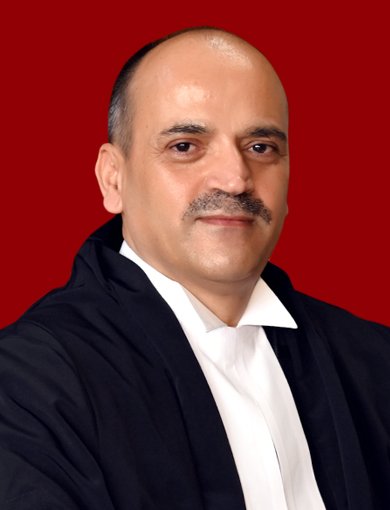
Hon’ble Mr Justice Rakesh Kainthla, Judge.
Whether approved for reporting?
1
No
For the Appellants : Mr Divya Raj Singh, Advocate.
For the Respondent/State : Mr Lokender Kutlehria, Advocate.
Rakesh Kainthla, Judge
The present appeal is directed against the judgment of
conviction dated 26.06.2024 and order of sentence dated
28.06.2024, passed by learned Additional Sessions Judge, Dehra,
District Kangra (learned Trial Court) vide which the appellants
(accused before learned Trial Court) were convicted of the
commission of an offence punishable under Section 333 read with
Section 34 of the Indian Penal Code (IPC) and sentenced to
undergo simple imprisonment for four years, pay a fine of
₹5,000/- each and in default of payment of fine, to undergo
1 Whether reporters of Local Papers may be allowed to see the judgment? Yes.
2
2026:HHC:7979
further simple imprisonment for eight months each for the
commission of the aforesaid offence. The appellants (accused
before the learned Trial Court) were also convicted of the
commission of an offence punishable under Section 353 read with
Section 34 of the Indian Penal Code (IPC) and were sentenced to
undergo simple imprisonment for two years. It was ordered that
both the substantive sentences of imprisonment shall run
concurrently. (Parties shall hereinafter be referred to in the same
manner as they were arrayed before the learned Trial Court for
convenience.)
2. Briefly stated, the facts giving rise to the present appeal
are that the police presented a challan before the learned Trial
Court against the accused for the commission of offences
punishable under Sections 353, 332, 333, and 504 read with
Section 34 of the IPC. It was asserted that informant Ajay Kumar
(PW1) was posted as a Driver in HRTC, Dehra for the last eight
years. He was driving the bus from Chintpurni via Kadhoa on
04.10.2019. The bus was stopped at Kadhoa Bazar at 9:15 AM to
allow the passengers to board it. Two people came on a motorcycle
bearing registration number HP-36C-1509 to the spot from
Dhaliara and stopped the motorcycle in front of the bus. They
3
2026:HHC:7979
started abusing the informant. The shopkeepers and Pradhan of
Gram Panchayat Kadhoa reached the spot. The motorcyclists
opened the window of the bus and dragged the informant out of
the bus. They gave beatings to the informant, who sustained
injuries on his face, and his tooth was broken. His uniform was
also torn in the incident. The names of the motorcyclists were
found to be Swaran Singh and Sohrat. The matter was reported to
the police. An entry No. 10 (Ext.P1/PW11) dated 04.10.2009 was
recorded. HC Surender Kumar (PW11) and Constable Pushpender
went to the spot to verify the correctness of the information. HC
Surender Kumar (PW11) recorded the informant’s statement
(Ext.P1/PW1) and sent it to the Police Station, where FIR
(Ext.P1/PW7) was registered. The informant produced a Khakhi
shirt (Ext.MO-2) whose two buttons were detached in the scuffle.
HC Surender Kumar (PW11) put the shirt in a cloth parcel and
sealed the parcel with five impressions of seal ‘S’. He obtained the
sample of seal (Ext.P3/PW1) on a separate piece of cloth and seized
the parcel vide memo (Ext.P2/PW1). He also seized the bus bearing
registration No. HP-36B-1406 vide memo (Ext.P4/PW1), and
handed over the bus on Sapurdari to ASI Joginder Singh (PW10).
He seized the motorcycle bearing registration No. HP-36C-1509
4
2026:HHC:7979
vide memo (Ext.P1/PW2). He prepared the site plan (Ext.P2/PW11).
He filed an application (Ext.P1/PW6) for the medical examination
of the injured. Dr Kumar Gaurav (PW6) examined the informant
and found the swelling with blackish discolouration under the left
eye, and one tooth loose. He referred the injured to a dental
surgeon for expert opinion. Dr Sajan Sharma (PW8) examined the
informant and found mobility of the left upper central incisor and
eroded enamel of the central incisor. He advised an X-ray of the
tooth. On examination of the X-ray film (Ext.P1/PW8), he found
the tip of the central incisor and its root fractured in the 1/3
rd
region. The nature of the injury was grievous, which could have
been caused within 1-2 days of the examination. He issued the
opinion (Ext. P2/PW8). Dr Kumar Gaurav (PW6) issued the final
opinion stating that the injury was grievous and could have been
caused by a fist blow. He issued the MLC (Ext.P2/PW6). HC
Surender Kumar (PW11) filed an application (Ext.P1/PW5) and
seized the route permit (Ext.P2/PW5), the informant’s
appointment order (Ext.P3/PW5), abstract of duty register
(Ext.P4/PW5), Informant’s character certificate (Ext.P5/PW5),
duty roster (Ext.P6/PW5) and the informant’s driving license
(Ext.P7/PW5) from Regional Manager, HRTC, Dehra. He recorded
5
2026:HHC:7979
the statements of witnesses as per their version. After the
completion of the investigation, the challan was prepared and was
presented before the learned Additional Chief Judicial Magistrate,
Dehra, who committed it to the learned Sessions Judge Kangra at
Dharamshala for trial.
3. Learned Sessions Judge Kangra at Dharamshala
assigned the matter to learned Additional Sessions Judge, Dehra
(learned Trial Court). Learned Trial Court charged the accused
with the commission of offences punishable under Sections 332,
333, 353 and 504 read with Section 34 of IPC to which they pleaded
not guilty and claimed to be tried.
4. The prosecution examined eleven witnesses to prove its
case. Informant Ajay Kumar (PW1) narrated the incident. Ashok
Kumar (PW2), Ajay Dhiman (PW3), and Kaptan Singh (PW4) are
the eyewitnesses. Kushal Kumar (PW5) produced the documents
of the bus. Dr Kumar Gaurav (PW6) medically examined the
informant. SI Gurdev Singh (PW7) signed the FIR. Dr Sajan
Sharma (PW8), Dental Surgeon, examined the injured. Inspector
Ashwani Kumar (PW9) prepared the challan. ASI Joginder Singh
(PW10) was posted as MHC with whom the case property was
deposited. HC Surinder Kumar (PW11) investigated the matter.
6
2026:HHC:7979
5. The accused, in their statements recorded under
Section 313 of Cr.P.C., denied the prosecution’s case in its entirety.
They did not produce any evidence in their defence.
6. Learned Trial Court held that the testimonies of the
witnesses corroborated each other. The recovery of the torn shirt
supported the prosecution’s case. The informant, Ashok Kumar
and Ajay Dhiman had identified the accused in the Court. Minor
discrepancies in the statements of the witnesses were not
sufficient to doubt the prosecution’s case because the
discrepancies would come with time due to the failure of memory.
The prosecution had succeeded in proving its case beyond a
reasonable doubt; hence, the learned Trial Court convicted and
sentenced the accused as aforesaid.
7. Being aggrieved by the judgment and order passed by
the learned Trial Court, the accused have filed the present appeal
asserting that the learned Trial Court erred in appreciating the
material on record. The accused were beaten by the local people.
Material contradictions affecting the prosecution’s case were
ignored by the learned Trial Court. The opinion of the Dental
Surgeon creates a doubt regarding the prosecution’s case. Hence,
7
2026:HHC:7979
it was prayed that the present appeal be allowed and the judgment
and order passed by the learned Trial Court be set aside.
8. I have heard Mr Divya Raj Singh, learned counsel for
the appellants/accused and Mr Lokender Kutlehria, learned
Additional Advocate General for the respondent/State.
9. Mr Divya Raj Singh, learned counsel for the
appellants/accused, submitted that the learned Trial Court erred
in appreciating the material on record. The statements of the
witnesses contradicted each other. The identification of the
accused was not proper. Their names were not mentioned in the
FIR. A Test Identification Parade should have been conducted to
corroborate the testimonies of the witnesses in the Court. The
identification in the Court for the first time, without a previous
Test Identification Parade, is suspect. Learned Trial Court failed to
appreciate this aspect; hence, he prayed that the present appeal be
allowed and the judgment and order passed by the learned Trial
Court be set aside.
10. Mr Lokender Kutlehria, learned Additional Advocate
General for the respondent/State, submitted that the prosecution
witnesses consistently deposed about the prosecution case. Their
8
2026:HHC:7979
testimonies corroborated each other. Recovery of the torn shirt
and the report of the MLC also corroborated the prosecution’s
case. Learned Trial Court had rightly held the accused guilty.
There is no infirmity in the judgment and order passed by the
learned Trial Court. Hence, he prayed that the present appeal be
dismissed.
11. I have given considerable thought to the submissions
made at the bar and have gone through the records carefully.
12. The informant’s statement (Ext.P1/PW1) mentions that
villagers and the Pradhan of Gram Panchayat Kadhoa told him
that the names of motorcyclists were Swaran Singh and Sohrat.
Therefore, as per the statement, the informant was not aware of
the names of the accused, and he was told about the names by
others. Informant Ajay Kumar (PW1) admitted in his cross-
examination that the accused persons were not known to him
before the incident. He admitted that he had seen the accused
persons in the Court for the first time, and no Test Identification
Parade of the accused was conducted. Learned Trial Court held
that the identification of the accused by the informant in the Court
for the first time was proper. This finding cannot be sustained.
Professor Rupert Cross has stated in his celebrated treatise, Cross
9
2026:HHC:7979
on Evidence, Fifth Edition, Butterworths, that identification of the
accused for the first time in the dock is highly suspect. He
observed:
"It might be thought that in criminal cases there could not
be better identification of an accused than that of a witness
who goes into the box and swears that the man in the dock
is the one he saw coming out of a house at a particular time,
or the man who assaulted him. Nevertheless, such evidence
is suspect where there has been no previous identification
of the accused by the witness, and this is because its weight
is reduced by the reflection that, if there is any degree of
resemblance between the man in the dock and the person
previously seen by him. The witness may very well think to
himself that the police must have got hold of the right
person, particularly if he has already described the latter to
them, with the result that he will be inclined to swear
positively to a fact of which he is by no means certain.
People have mistakenly identified friends and relations well
known to them with sufficient frequency to make them
question the propriety of convicting an accused person on
nothing more than the visual identification of a single
witness who may only have had a fleeting glance of him in
poor light."
13. It has been stated in Halsbury's Laws of England 4
th
Edition Volume 2 that the identification of the accused for the first
time in the Court is improper and the witness should be asked to
identify the accused in a prior test identification parade. It has
been observed in para 363:
“A witness shouldn't be asked to identify the defendant for
the first time in the dock at his trial; and as a general
practice, it is preferable that he should have been placed
10
2026:HHC:7979
previously in a parade with other persons, so that potential
witnesses may be asked to pick him up.”
14. It was laid down by the Hon’ble Supreme Court in P.
Sasikumar v. State of T.N., (2024) 8 SCC 600: (2024) 3 SCC (Cri) 791:
2024 SCC OnLine SC 1652 that when the accused were not known to
the witnesses on the date of the incident, their identification in the
dock is not acceptable. It was observed at page 605:
“17. The admitted position in this case is that the test
identification parade (hereinafter referred to as “TIP”) was
not conducted. All the prosecution witnesses who identified
the accused in the Court, such as PW 1 and PW 5, were not
known to the present appellant, i.e. Accused 2. They had not
seen the present appellant before the said incident. He was a
stranger to both of them. More importantly, both of them
have seen the appellant/Accused 2 on the date of the crime
while he was wearing a “green-coloured monkey cap”!
xxx
21.It is well settled that TIP is only a part of the police
investigation. The identification in TIP of an accused is not
a substantive piece of evidence. The substantive piece of
evidence, or what can be called evidence, is only dock
identification, that is, identification made by a witness in
court during the trial. This identification has been made in
court by PW 1 and PW 5. The High Court rightly dismisses
the identification made by PW 1 for the reason that the
appellant i.e. Accused 2 was a stranger to PW 1 and PW 1 had
seen the appellant for the first time when he was wearing a
monkey cap, and in the absence of TIP to admit the
identification by PW 1 made for the first time in the court
was not proper.
xxxx
23. We are afraid the High Court has gone completely wrong
in believing the testimony of PW 5 as to the identification of
11
2026:HHC:7979
the appellant. In cases where the accused is a stranger to a
witness, and there has been no TIP, the trial court should be
very cautious while accepting the dock identification by
such a witness (see: Kunjumon v. State of Kerala, (2012) 13
SCC 750: (2012) 4 SCC (Cri) 406]).
xxx
27. In the facts of the present case, the identification of the
accused before the court ought to have been corroborated
by the previous TIP, which has not been done. The emphasis
of TIP in a given case is of vital importance, as has been
shown by this Court in the recent two cases of Jayanv. State
of Kerala, (2021) 20 SCC 38 and Amrik Singh v. State of
Punjab, (2022) 9 SCC 402: (2023) 2 SCC (Cri) 404.
28. In Jayan v. State of Kerala, (2021) 20 SCC 38, this Court
disbelieved the dock identification of the accused therein by
a witness, and while doing so, this Court discussed the
aspect of TIP in the following words: (Jayan v. State of
Kerala, (2021) 20 SCC 38, SCC p. 44, para 18)
“18. It is well settled that the TI parade is a part of the
investigation, and it is not substantive evidence. The
question of holding a TI parade arises when the
accused is not known to the witness beforehand. The
identification by a witness of the accused in the Court
who has, for the first time, seen the accused in the
incident of the offence is a weak piece of evidence,
especially when there is a large time gap between the
date of the incident and the date of recording of his
evidence. In such a case, the TI parade may make the
identification of the accused by the witness before the
Court trustworthy.”
15. In the present case, the accused were not known to the
informant, and their identification in the Court for the first time,
12
2026:HHC:7979
in the absence of the Test Identification Parade, could not have
been used for recording the conviction.
16. Ashok Kumar, Pradhan of Gram Panchayat Kadhoa
(PW2), stated in his cross-examination that he was informed by
Chowkidar Satish Kumar about the incident, and no brawl had
taken place in his presence. He further clarified that the
motorcycle was already parked beside the road at the time of his
arrival in front of the bus. Therefore, his testimony that Swaran
Singh and Sohrat came from Dhaliara on the motorcycle and
misbehaved with the driver of the bus has become doubtful. If a
motorcycle was already parked at the time of his arrival, he could
not have seen the accused coming from Dhaliara and beating the
informant. This is further made doubtful by the statement in the
cross-examination that no brawl had taken place in his presence.
The part of the statement of this witness that no brawl had taken
place in his presence was not clarified by the prosecution by re-
examination and has to be accepted as correct. In similar
circumstances, when a witness had supported the case of the
defence, but was not re-examined by the prosecution to clarify his
testimony, it was held in Ramsewak v. State of M.P., (2004) 11 SCC
13
2026:HHC:7979
259: 2004 SCC OnLine SC 477 that the benefit of the discrepancy
would go to the defence. It was observed at page 265:
“14…. Even assuming that there is some doubt as to the
interpretation of this part of his evidence since the same is
not clarified by the prosecution by way of re-examination,
the benefit of doubt should go to the defence which has, in
specific terms, taken a stand that the FIR came into being
only after the dead body was recovered….”
17. It was held in Javed Masood v. State of Rajasthan, (2010)
3 SCC 538: (2010) 2 SCC (Cri) 1176: 2010 SCC OnLine SC 347 that the
defence can take advantage of any statement made in the cross-
examination. It was observed at page 543:
“20. In the present case, the prosecution never declared
PWs 6, 18, 29 and 30 “hostile”. Their evidence did not
support the prosecution. Instead, it supported the defence.
There is nothing in law that precludes the defence from
relying on their evidence.
21. This Court in Mukhtiar Ahmed Ansari v. State (NCT of
Delhi) [(2005) 5 SCC 258: 2005 SCC (Cri) 1037] observed: (SCC
pp. 270-71, paras 30-31)
“30. A similar question came up for consideration
before this Court in Raja Ram v. State of
Rajasthan[(2005) 5 SCC 272: 2005 SCC (Cri) 1050]. In
that case, the evidence of the doctor who was
examined as a prosecution witness showed that the
deceased was being told by one K that she should
implicate the accused or else she might have to face
prosecution. The doctor was not declared ‘hostile’.
The High Court, however, convicted the accused. This
Court held that it was open to the defence to rely on
the evidence of the doctor, and it was binding on the
prosecution.
14
2026:HHC:7979
31. In the present case, evidence of PW 1 Ved Prakash Goel
destroyed the genesis of the prosecution that he had given
his Maruti car to the police, in which the police had gone to
the Bahai Temple and apprehended the accused. When Goel
did not support that case, the accused could rely on that
evidence.”
The proposition of law stated in the said judgment is equally
applicable to the facts in hand.”
18. Thus, in the absence of the re-examination, the
testimony of Ashok Kumar (PW2) that he had witnessed the
incident or had told the victim about the names of the accused
would become doubtful. Otherwise, when two versions are
appearing on record, the version in favour of the accused has to be
preferred to the version in favour of the prosecution.
19. Ajay Dhiman (PW3) stated in his cross-examination
that no brawl had taken place in his presence. He volunteered to
say that when he arrived at the spot, both parties had held each
other, and he had pacified the matter. He stated that the
motorcycle was parked in front of the bus on the driver’s side
when he reached the spot. The statement made by him that the
motorcycle was parked in front of the bus shows that he had not
witnessed the genesis of the incident. His statement that no brawl
had taken place in his presence makes his testimony in the
15
2026:HHC:7979
examination-in-chief doubtful that the accused had given
beatings to the informant.
20. Ajay Dhiman (PW3) stated in his cross-examination
that he had not disclosed the names of the accused persons. This
part of his statement also makes the identity of the accused
suspect.
21. Kaptan Singh (PW4) was the conductor on the bus. He
had identified the accused for the first time in the Court. He has
not claimed that the accused were known to him. Therefore, the
Test Identification Parade of the accused was essential to fix the
identity of the accused.
22. Therefore, the learned Trial Court erred in holding that
the Test Identification Parade of the accused was not necessary
and their identification for the first time in the Court could be
relied upon.
23. The informant, Ajay Kumar (PW1), stated that the
accused tore the shirt of his uniform from the pocket. The buttons
of the shirt were also detached in the incident. He admitted in the
cross-examination that the pocket of his shirt was not torn. This
16
2026:HHC:7979
admission makes his testimony doubtful that the accused had torn
the pocket of his shirt.
24. Kaptan Singh (PW4) stated in his cross-examination
that he could not say how many buttons of the shirt were
detached. The seizure memo of the shirt (Ext.P2/PW1) shows that
2 buttons (3 and 4) were detached during the incident. As per the
prosecution, the accused had caught the victim/informant from
the neck, and it is not explained as to how the pocket of the shirt
or the buttons (3 and 4) of the shirt were broken. Catching hold of
the neck of a person would have resulted in damage to the buttons
1 and 2 or 2 and 3, and not 3 and 4. Therefore, the recovery of the
shirt does not corroborate the prosecution’s case.
25. Dr Sajan Sharma (PW8) examined the informant. He
found that the left upper central incisor was mobile, and the
enamel of the central incisor was eroded. He stated that the nature
of the injury was grievous and could have been caused in 1-2 days.
However, he had examined the patient on 04.10.2019, the date of
the incident. Thus, the opinion of the Dental Surgeon does not
support the prosecution’s version that the injury was caused on
the date of the examination and the learned Trial Court erred in
17
2026:HHC:7979
holding that the medical evidence corroborated the prosecution’s
version.
26. The informant stated that he did not know the accused
before the date of the incident. No reason has been assigned as to
why the accused should have picked up the quarrel with the
informant. The prosecution is not required to prove the motive in
the case of direct evidence, but the absence of motive will assume
significance because of the infirmities noticed above.
27. Therefore, the learned Trial Court erred in holding that
the prosecution had succeeded in proving its case beyond a
reasonable doubt, and the judgment and order passed by the
learned Trial Court cannot be sustained.
28. In view of the above, the present appeal is allowed, and
the judgment of conviction dated 26.06.2024 and order of
conviction dated 28.06.2024 passed by the learned Trial Court are
ordered to be set aside. The appellants/accused are acquitted of
the commission of offences punishable under Sections 353 and 333
of the IPC Act. The fine amount, if deposited be refunded to them
after the expiry of the period of limitation for filing an appeal, if
18
2026:HHC:7979
no appeal is filed, and in case of appeal, it be dealt with as per the
judgment of the Hon’ble Supreme Court.
29. In view of the provisions of Section 437-A of the Code
of Criminal Procedure (Section 481 of Bhartiya Nagarik Suraksha
Sanhita, 2023) the appellants/accused are directed to furnish bail
bonds in the sum of ₹25,000/- each with one surety each in the
like amount to the satisfaction of the learned Trial Court within
four weeks, which shall be effective for six months with
stipulation that in the event of Special Leave Petition being filed
against this judgment, or on grant of the leave, the
appellants/accused on receipt of notice thereof, shall appear
before the Hon’ble Supreme Court.
30. A copy of this judgment, along with the record of the
learned Trial Court, be sent back forthwith. Pending applications,
if any, also stand disposed of.
(Rakesh Kainthla)
Judge
20
th
March, 2026
(Nikita)

 Login with google
Legal Notes
Add a Note....