
The appeal arises out of the impugned judgement passed by the High Court, where the appellants were aggrieved by the provisional order of assessment issued by the assessing officer.
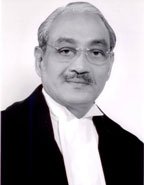


No Acts & Articles mentioned in this case
REPORTABLE
IN THE SUPREME COURT OF INDIA
CIVIL APPELLATE JURISDICTION
CIVIL APPEAL NO. 8859 OF 2011
(Arising out of SLP (C) No.36166 of 2010)
The Executive Engineer & Anr. …
Appellants
Versus
M/s Sri Seetaram Rice Mill … Respondent
J U D G M E N T
Swatanter Kumar, J.
1. Leave granted.
2. Over a period of time, it was felt that the performance
of the State Electricity Boards had deteriorated on account of
various factors. Amongst others, the inability on the part of
the State Electricity Boards to take decisions on tariffs in a
professional and independent manner was one of the main
drawbacks in their functioning. Cross-subsidies had reached
1
unsustainable levels. To address this issue and to provide for
-
distancing of governments from determination of tariffs, the
Electricity Regulatory Commissions Act, 1998 (hereinafter, ‘the
1998 Act’) was enacted in addition to the existing statutes like
Indian Electricity Act, 1910 (hereinafter, ‘the 1910 Act’) and
the Electricity (Supply) Act, 1948 (hereinafter, ‘the 1948 Act’).
For a considerable time, these three legislations remained in
force, governing the electricity supply industry in India. The
Boards created by the 1948 Act and the bodies created under
the 1998 Act, as well as the State Governments, were provided
distinct roles under these statutes. There was still overlapping
of duties and some uncertainty with regard to exercise of
power under these Acts. To address the issues like
deterioration in performance of the Boards and the difficulties
in achieving efficient discharge of functions, a better,
professional and regulatory regime was introduced under the
Electricity Bill, 2001, with the policy of encouraging private
sector participation in generation, transmission and
distribution of electricity and with the objective of distancing
2
regulatory responsibilities from the Government by
transferring the same to the Regulatory Commissions. The -
need for harmonizing and rationalizing the provisions of the
earlier statutes was met by creating a new, self-contained and
comprehensive legislation. Another object was to bring unity
in legislation and eliminate the need for the respective State
Governments to pass any reform Act of their own. This Bill
had progressive features and strived to strike the right balance
between the economic profitability and public purpose given
the current realities of the power sector in India. This Bill was
put to great discussion and then emerged the Electricity Act,
2003 (for short, ‘the 2003 Act’). The 2003 Act had notably
provided for private sector participation, private transmission
licences for rural and remote areas, stand alone systems for
generation and distribution, the constitution of an Appellate
Tribunal, more regulatory powers for the State Electricity
Regulation Commission and provisions relating to theft of
electricity. The additional provisions were introduced in the
2003 Act in relation to misuse of power and punishment of
malpractices such as over-consumption of sanctioned electric
3
load which are not covered by the provisions relating to theft;
all of which had significant bearing upon the revenue focus -
intended by the Legislature. This is the legislative history and
objects and reasons for enacting the 2003 Act.
3. To ensure better regulatory, supervisory and revenue
recovery system, as expressed in the objects and reasons of
the 2003 Act, there was definite concerted effort in preventing
unauthorized use of electricity on the one hand and theft of
electricity on the other. The present case falls in the former.
According to the appellant, there was breach of the terms and
conditions of the Standard Agreement Form for Supply of
Electrical Energy by the Grid Corporation of Orissa Ltd.
(hereinafter, ‘the Agreement’) as the consumer (respondent
herein) had consumed electricity in excess of the contracted
load.
FACTS
4. We may briefly refer to the facts giving rise to the
present appeal. Respondent herein, a partnership firm, claims
to be a small scale industrial unit engaged in the production of
4
rice. For carrying on the said business, it had obtained
electric supply under the Agreement. Between the present
appellant -
No.1 and the respondent the Agreement dated 9
th
December,
1997 was executed for supply of power to the respondent.
Keeping in view the contracted load, the respondent was
classified as ‘medium industry category’. This category deals
with the contract demand of 99 KVA and above but below 110
KVA. According to the respondent, since the day of connection
of power supply, the meter and all other associated
equipments had been inspected by the appellants. On 10
th
June, 2009, the Executive Engineer, Jeypore Electrical
Division and SDO, Electrical MRT Division, Jeypore inspected
the business premises of the respondent’s unit and dump was
conducted. These officers issued a dump report by noticing as
follows:
“Dump of the Meter taken. Calibration of
meter done and error found within limit.
If any abnormality detected in Dump, it
will be intimated later on.”
5
5. It is the case of the respondent that no intimation was
given to it as to finding of defects if any, in dump. On 25
th
July, 2009, provisional assessment order bearing No.854 was
issued by the appellants to the respondent. Intimation -
bearing No.853 had also been issued on the same day which
informed the respondent that there was unauthorized use of
electricity falling squarely within the ambit of provisions of
Section 126 of the 2003 Act. In the dump report dated 10
th
June, 2009, it was stated that there was unauthorized use of
electricity and Maximum Demand (hereinafter MD) had been
consumed up to 142 KVA. On this basis, the appellant passed
the order of provisional assessment by taking the contracted
demand as that applicable to large industry. The demand was
raised, assessing the consumer for the period from June 2008
to August 2009 for a sum of Rs.7,77,300/-. This was
computed for 15 months at the rate of Rs.200 per KVA (i.e.,
tariff for large industry) multiplied by two times, aggregating to
the claimed amount. Vide the provisional assessment order
dated 25
th
July, 2009, assessment was made under Section
126(1) of the 2003 Act for unauthorized use of electricity, the
6
respondent was required to file objections, if any, and to also
pay the amount. The relevant part of the said provisional
assessment order reads as under :
“And Whereas you are entitled to file
objections against the aforesaid -
provisional assessment order under
Section 126(3) of Electricity Act, 2003,
within 30 days from receipt hereof and
further entitled to appear before the
undersigned for an opportunity of being
heard on 25.08.2009 during working
hours from 11.00 AM to 5.00 PM.
And Whereas you are further entitled u/s
126(4) to deposit the aforesaid amount
within 7 days and upon such deposit
being made within 7 days, you shall not
be subject to any further liability or any
action by any authority whatsoever.
And Whereas if you fail to file the
objection within 30 days from receipt
hereof, the undersigned shall presume
that you have no objection to the
provisional assessment and the
undersigned shall proceed to pass final
order u/s 126(3) on assessment of
electricity charges payable by you.
And Whereas, if you fail to appear before
the undersigned at the aforesaid date and
time after filing objections, if any, the
undersigned shall proceed to pass the
final order under section 126(3), based on
the objection filed by you and evidence
available on record.”
7
6. The respondent did not file its objections/reply but
challenged the said provisional assessment order and the
intimation of unauthorized use before the High Court of
Orissa, Cuttack by filing writ petition No.WP(C) No.12175 of -
2009 on the grounds of lack of authority and jurisdiction on
the part of the Executive Engineer to frame the provisional
assessment by alleging unauthorized use of electricity since 4
th
June, 2008. It was also contended that no inspection had
been conducted in the business premises till date of dump,
i.e., 10
th
June, 2009 when unauthorized use of electricity was
found. The respondent also challenged the maintainability
and sustainability of the order of provisional assessment in
calculating the dump charges for a period of 15 months from
June 2008 to August 2009 on the basis of dump charges
relating to large industry while the respondent was classified
as medium scale industry. It was also the contention raised
by the respondent before the High Court that the provisions of
Section 126 of the 2003 Act were not attracted in the present
case at all. This claim of the respondent was contested by the
appellants, as according to them, unauthorized use of
8
electricity as defined under Section 126 will come into play as
per clause (b) of the Explanation appended to Section 126 of
the 2003 Act. The dump report dated 10
th
June, 2009 and the
intimation dated 25
th
July, 2009 had been sent showing -
overdrawal of MD where, according to the appellants, the
respondent had consumed electricity ‘by means unauthorized
by the licencee (overdrawal of maximum demand)’ and thereby
breached the Agreement and, therefore, the provisional
assessment order and the intimation were fully justified.
7. The High Court, vide impugned judgment, accepted
the case of the respondent and held that the words
‘unauthorized use of electricity’ and ‘means’ as provided in
Explanation to Section 126 of the 2003 Act were exhaustive.
Overdrawal of MD would not fall under the scope of
‘unauthorized use of electricity’ as defined under the 2003 Act,
and the appellants had no jurisdiction to issue the intimation
in question and pass the assessment order in terms of Section
126 of the 2003 Act. Aggrieved by the judgment of the High
Court, the appellants have filed the present appeal by way of a
special leave petition before this Court.
9
Questions for Determination :
1.Wherever the consumer consumes electricity in excess of
the maximum of the contracted load, would the -
provisions of Section 126 of the 2003 Act be attracted on its
true scope and interpretation?
2.Whether the High Court, in the facts and circumstances
of the case, was justified in interfering with the
provisional order of assessment/show cause notice dated
25
th
July, 2009, in exercise of its jurisdiction under
Article 226 of the Constitution of India?
3.Was the writ petition before the High Court under Article
226 of the Constitution of India not maintainable
because of a statutory alternative remedy being available
under Section 127 of the 2003 Act?
Discussion on Merits
1.Wherever the consumer consumes electricity in
excess of the maximum of the connected load, would
the provisions of Section 126 of the 2003 Act be
attracted on its true scope and interpretation?
10
8. On the simple analysis of the facts as pleaded by the
parties, it is contended on behalf of the respondent that the
provisions of Section 126 of the 2003 Act are not attracted and
no liability could be imposed upon them by the authorities in
-
exercise of their power under that provision. Even if the case
advanced by the appellants against the respondent without
prejudice and for the sake of argument is admitted, even then,
at best, the demand could be raised under Regulation 82 of
the Orissa Electricity Regulatory Commission Distribution
(Condition of Supply) Regulations, 2004 (for short, ‘the
Regulations’). But recourse to the provisions of Section 126
was impermissible in law. The contention is that the case of a
consumer consuming the electricity in excess of maximum
and the installed load does not fall within the mischief covered
under Section 126 of the 2003 Act. To put it plainly, the
argument is that the appellants lack inherent authority to
raise such demand with reference to the present case on facts
and law both.
11
9. On the contra, submission on behalf of the appellants
is that the case of excessive consumption of power beyond the
sanctioned load would be a case falling within the ambit of
Section 126 of the 2003 Act. Section 126 of the 2003 Act is
incapable of an interpretation which would render the said
provision otiose in cases which do not specifically fall under -
Section 135 of the 2003 Act. In order to answer these
contentions more precisely, we find it appropriate to examine
the question framed above, under the following sub-headings:
(a) Interpretation;
(b)Distinction between Sections 126 and 135 of the 2003
Act;
(c)The ambit and scope of Section 126 with reference to the
construction of the words ‘unauthorised use’ and
‘means’; and
(d)Effect and impact of change in applicability of tariff upon
the power of assessment in accordance with the
provisions of the 2003 Act and the relevant Regulations
in the facts of the case.
12
1(a)Interpretation
10. First and foremost, we have to examine how provisions
like Section 126 of the 2003 Act should be construed. From
the objects and reasons stated by us in the beginning of this
judgment, it is clear that ‘revenue focus’ was one of the -
principal considerations that weighed with the Legislature
while enacting this law. The regulatory regime under the 2003
Act empowers the Commission to frame the tariff, which shall
be the very basis for raising a demand upon a consumer,
depending upon the category to which such consumer belongs
and the purpose for which the power is sanctioned to such
consumer. We are not prepared to accept the contention on
behalf of the respondent that the provisions of Section 126 of
the 2003 Act have to be given a strict and textual construction
to the extent that they have to be read exhaustively in
absolute terms. This is a legislation which establishes a
regulatory regime for the generation and distribution of power,
as well as deals with serious fiscal repercussions of this entire
regime. In our considered view, the two maxims which should
be applied for interpretation of such statutes are ex visceribus
13
actus (construction of the act as a whole) and ut res magis
valeat quam pereat (it is better to validate a thing than to
invalidate it). It is a settled cannon of interpretative
jurisprudence that the statute should be read as a whole. In
other words, its different provisions may have to be construed
-
together to make consistent construction of the whole statute
relating to the subject matter. A construction which will
improve the workability of the statute, to be more effective and
purposive, should be preferred to any other interpretation
which may lead to undesirable results.
11. It is true that fiscal and penal laws are normally
construed strictly but this rule is not free of exceptions. In
given situations, this Court may, even in relation to penal
statutes, decide that any narrow and pedantic, literal and
lexical construction may not be given effect to, as the law
would have to be interpreted having regard to the subject
matter of the offence and the object that the law seeks to
achieve. The provisions of Section 126, read with Section 127
of the 2003 Act, in fact, becomes a code in itself. Right from
14
the initiation of the proceedings by conducting an inspection,
to the right to file an appeal before the appellate authority, all
matters are squarely covered under these provisions. It
specifically provides the method of computation of the amount
that a consumer would be liable to pay for excessive
consumption of the electricity and for the manner of -
conducting assessment proceedings. In other words, Section
126 of the 2003 Act has a purpose to achieve, i.e., to put an
implied restriction on such unauthorized consumption of
electricity. The provisions of the 2003 Act, applicable
regulations and the Agreement executed between the parties
at the time of sanction of the load prohibit consumption of
electricity in excess of maximum sanctioned/ installed load.
In the event of default, it also provides for the consequences
that a consumer is likely to face. It embodies complete
process for assessment, determination and passing of a
demand order. This defined legislative purpose cannot be
permitted to be frustrated by interpreting a provision in a
manner not intended in law. This Court would have to apply
the principle of purposive interpretation in preference to
15
textual interpretation of the provisions of Section 126 of the
2003 Act. We shall shortly discuss the meaning and scope of
the expressions used by the Legislature under these
provisions. At this stage, suffice it to note that this Court
would prefer to adopt purposive interpretation so as to ensure
attainment of the object and purpose of the 2003 Act, -
particularly, of the provisions of Section 126 in question. We
may usefully refer to the judgment of this Court in the case of
Balram Kumawat v. Union of India & Ors. [(2003) 7 SCC 628]
wherein this Court discussed various tenets of interpretation
and unambiguously held that these principles could be
applied even to the interpretation of a fiscal or a penal statute.
This Court held as under :
“20. Contextual reading is a well-known
proposition of interpretation of statute.
The clauses of a statute should be
construed with reference to the context
vis-a-vis the other provisions so as to
make a consistent enactment of the
whole statute relating to the subject-
matter. The rule of 'ex visceribus actus'
should be resorted to in a situation of
this nature.
16
21. In State of West Bengal v. Union of
India [1964] 1 SCR 371], the learned
Chief Justice stated the law thus :
"The Court must ascertain the
intention of the Legislature by
directing its attention not merely to
the clauses to be construed but to
the entire statute; it must compare
the clause with the other parts of
the law, and the setting in which the
clause to be interpreted occurs."
-
22. The said principle has been reiterated
in R.S. Raghunath v. State of Karnataka
and Anr. [AIR 1992 SC 81].
23. Furthermore, even in relation to a
penal statute any narrow and pedantic,
literal and lexical construction may not
always be given effect to. The law would
have to be interpreted having regard to
the subject matter of the offence and the
object of the law it seeks to achieve. The
purpose of the law is not to allow the
offender to sneak out of the meshes of
law. Criminal Jurisprudence does not say
so.
XXX XXX
XXX
25.A statute must be construed as a
workable instrument. Ut res magis valeat
quam pereat is a well-known principle of
law. In Tinsukhia Electric Supply Co. Ltd.
v. State of Assam [AIR 1990 SC 123], this
Court stated the law thus :
17
"118. The courts strongly lean
against any construction, which
tends to reduce a statute to a
futility. The provision of a statute
must be so construed as to make it
effective and operative, on the
principle "ut res magis valeat quam
pereat". It is, no doubt, true that if a
statute is absolutely vague and its
language wholly intractable and
absolutely meaningless, the statute
could be declared void for
vagueness. This is not in judicial
review by testing the law for
arbitrariness or unreasonableness
under Article 14; but what a court of
-
construction, dealing with the
language of a statute, does in order
to ascertain from, and accord to, the
statute the meaning and purpose
which the legislature intended for it.
In Manchester Ship Canal Co. v.
Manchester Racecourse Co. (1900) 2
Ch 352, Farwell J. said : (pp. 360-
61)
"Unless the words were so
absolutely senseless that I
could do nothing at all with
them, I should be bound to
find some meaning and not to
declare them void for
uncertainty."
In Fawcett Properties Ltd. v.
Buckingham County Council [(1960) 3 All
ER 503] Lord Denning approving the
dictum of Farwell, J. said :
18
"But when a Statute has some
meaning, even though it is obscure,
or several meanings, even though it
is little to choose between them, the
courts have to say what meaning
the statute to bear rather than
reject it as a nullity."
It is, therefore, the court's duty to make
what it can of the statute, knowing that
the statutes are meant to be operative
and not inept and that nothing short of
impossibility should allow a court to
declare a statute unworkable. In Whitney
v. Inland Revenue Commissioners [1928
AC 37] Lord Dunedin said :
"A statute is designed to be
workable, and the interpretation -
thereof by a court should be to
secure that object, unless crucial
omission or clear direction makes
that end unattainable."
XXX XXX
XXX
27. The Courts will therefore reject that
construction which will defeat the plain
intention of the Legislature even though
there may be some inexactitude in the
language used. [See Salmon v. Duncombe
(1886) 11 AC 827]. Reducing the
legislation futility shall be avoided and in
a case where the intention of the
Legislature cannot be given effect to, the
Courts would accept the bolder
construction for the purpose of bringing
about an effective result. The Courts,
when rule of purposive construction is
gaining momentum, should be very
19
reluctant to hold that the Parliament has
achieved nothing by the language it used
when it is tolerably plain what it seeks to
achieve. [See BBC Enterprises v. Hi-Tech
Xtravision Ltd., (1990) 2 All ER 118].”
12. Further, in the case of Superintendent and
Remembrancer of Legal Affairs to Government of West Bengal v.
Abani Maity [(1979) 4 SCC 85], this Court held as under :
“Exposition ex visceribus actus is a long
recognised rule of construction. Words in
a statute often take their meaning from
the context of the statute as a whole.
They are therefore, not to be construed in
isolation. For instance, the use of the -
word “may” would normally indicate that
the provision was not mandatory. But in
the context of a particular statute, this
word may connote a legislative
imperative, particularly when its
construction in a permissive sense would
relegate it to the unenviable position, as
it were, “of an ineffectual angel beating its
wings in a luminous void in vain”. If the
choice is between two interpretations”,
said Viscount Simon L.C. in Nokes v.
Doncaster Amalgamated Collieries, Ltd.
[(1940) A.C. 1014] :
‘the narrower of which would fail to
achieve the manifest purpose of the
legislation we should avoid a
construction which would reduce
the legislation to futility and should
rather accept the bolder
20
construction based on the view that
Parliament would legislate only for
the purpose of bringing about an
effective result’.”
13. The relevancy of objects and reasons for enacting an
Act is a relevant consideration for the court while applying
various principles of interpretation of statutes. Normally, the
court would not go behind these objects and reasons of the
Act. The discussion of a Standing Committee to a Bill may not
be a very appropriate precept for tracing the legislative intent
but in given circumstances, it may be of some use to notice
some discussion on the legislative intent that is reflected in
the -
substantive provisions of the Act itself. The Standing
Committee on Energy, 2001, in its discussion said, ‘the
Committee feel that there is a need to provide safeguards to
check the misuse of these powers by unscrupulous elements’.
The provisions of Section 126 of the 2003 Act are self-
explanatory, they are intended to cover situations other than
the situations specifically covered under Section 135 of the
2003 Act. This would further be a reason for this Court to
21
adopt an interpretation which would help in attaining the
legislative intent.
14. By applying these principles to the provisions of this
case requiring judicial interpretation, we find no difficulty in
stating that the provisions of Section 126 of the 2003 Act
should be read with other provisions, the regulations in force
and they should be so interpreted as to achieve the aim of
workability of the enactment as a whole while giving it a
purposive interpretation in preference to textual
interpretation.
-
1(b) Distinction between Sections 126 and 135 of the
2003 Act
15. Upon their plain reading, the mark differences in the
contents of Sections 126 and 135 of the 2003 Act are obvious.
They are distinct and different provisions which operate in
different fields and have no common premise in law. We have
already noticed that Sections 126 and 127 of the 2003 Act
22
read together constitute a complete code in themselves
covering all relevant considerations for passing of an order of
assessment in cases which do not fall under Section 135 of the
2003 Act. Section 135 of the 2003 Act falls under Part XIV
relating to ‘offences and penalties’ and title of the Section is
‘theft of electricity’. The Section opens with the words
‘whoever, dishonestly’ does any or all of the acts specified
under clauses (a) to (e) of Sub-section (1) of Section 135 of the
2003 Act so as to abstract or consume or use electricity shall
be punishable for imprisonment for a term which may extend
to three years or with fine or with both. Besides imposition of
punishment as specified under these provisions or the proviso
thereto, Sub-section (1A) of Section 135 of the 2003 Act
provides that without prejudice to the provisions of the 2003 -
Act, the licensee or supplier, as the case may be, through
officer of rank authorized in this behalf by the appropriate
commission, may immediately disconnect the supply of
electricity and even take other measures enumerated under
Sub-sections (2) to (4) of the said Section. The fine which may
be imposed under Section 135 of the 2003 Act is directly
23
proportional to the number of convictions and is also
dependent on the extent of load abstracted. In
contradistinction to these provisions, Section 126 of the 2003
Act would be applicable to the cases where there is no theft of
electricity but the electricity is being consumed in violation of
the terms and conditions of supply leading to malpractices
which may squarely fall within the expression ‘unauthorized
use of electricity’. This assessment/proceedings would
commence with the inspection of the premises by an assessing
officer and recording of a finding that such consumer is
indulging in an ‘authorized use of electricity’. Then the
assessing officer shall provisionally assess, to the best of his
judgment, the electricity charges payable by such consumer,
as well as pass a provisional assessment order in terms of -
Section 126(2) of the 2003 Act. The officer is also under
obligation to serve a notice in terms of Section 126(3) of the
2003 Act upon any such consumer requiring him to file his
objections, if any, against the provisional assessment before a
final order of assessment is passed within thirty days from the
date of service of such order of provisional assessment.
24
Thereafter, any person served with the order of provisional
assessment may accept such assessment and deposit the
amount with the licensee within seven days of service of such
provisional assessment order upon him or prefer an appeal
against the resultant final order under Section 127 of the 2003
Act. The order of assessment under Section 126 and the
period for which such order would be passed has to be in
terms of Sub-sections (5) and (6) of Section 126 of the 2003
Act. The Explanation to Section 126 is of some significance,
which we shall deal with shortly hereinafter. Section 126 of
the 2003 Act falls under Chapter XII and relates to
investigation and enforcement and empowers the assessing
officer to pass an order of assessment.
-
16. Section 135 of the 2003 Act deals with an offence of
theft of electricity and the penalty that can be imposed for
such theft. This squarely falls within the dimensions of
Criminal Jurisprudence and mens rea is one of the relevant
factors for finding a case of theft. On the contrary, Section
126 of the 2003 Act does not speak of any criminal
25
intendment and is primarily an action and remedy available
under the civil law. It does not have features or elements
which are traceable to the criminal concept of mens rea.
17. Thus, it would be clear that the expression
‘unauthorized use of electricity’ under Section 126 of the 2003
Act deals with cases of unauthorized use, even in absence of
intention. These cases would certainly be different from cases
where there is dishonest abstraction of electricity by any of the
methods enlisted under Section 135 of the 2003 Act. A clear
example would be, where a consumer has used excessive load
as against the installed load simpliciter and there is violation
of the terms and conditions of supply, then, the case would
fall under Section 126 of the 2003 Act. On the other hand,
where a consumer, by any of the means and methods as -
specified under Sections 135(a) to 135(e) of the 2003 Act, has
abstracted energy with dishonest intention and without
authorization, like providing for a direct connection bypassing
the installed meter. Therefore, there is a clear distinction
between the cases that would fall under Section 126 of the
2003 Act on the one hand and Section 135 of the 2003 Act on
26
the other. There is no commonality between them in law.
They operate in different and distinct fields. The assessing
officer has been vested with the powers to pass provisional
and final order of assessment in cases of unauthorized use of
electricity and cases of consumption of electricity beyond
contracted load will squarely fall under such power. The
legislative intention is to cover the cases of malpractices and
unauthorized use of electricity and then theft which is
governed by the provisions of Section 135 of the 2003 Act.
18. Section 135 of the 2003 Act significantly uses the
words ‘whoever, dishonestly’ does any of the listed actions so
as to abstract or consume electricity would be punished in
accordance with the provisions of the 2003 Act. ‘Dishonesty’
-
is a state of mind which has to be shown to exist before a
person can be punished under the provisions of that Section.
19. The word ‘dishonest’ in normal parlance means
‘wanting in honesty’. A person can be said to have ‘dishonest
intention’ if in taking the property it is his intention to cause
27
gain, by unlawful means, of the property to which the person
so gaining is not legally entitled or to cause loss, by wrongful
means, of property to which the person so losing is legally
entitled. ‘Dishonestly’ is an expression which has been
explained by the Courts in terms of Section 24 of the Indian
Penal Code, 1860 as ‘whoever does anything with the intention
of causing wrongful gain to one person or wrongful loss to
another person is said to do that thing dishonestly’. [The Law
Lexicon (2
nd
Edn. 1997) by P. Ramanatha Aiyar]
20. This Court in the case of Dr. S. Dutt v. State of U.P.
[AIR 1966 SC 523] stated that a person who does anything
with the intention to cause wrongful gain to one person or
wrongful loss to another is said to do that dishonestly.
-
21. Collins English Dictionary explains the word ‘dishonest’
as ‘not honest or fair; deceiving or fraudulent’. Black’s Law
Dictionary (Eighth Edition) explains the expression ‘dishonest
act’ as a fraudulent act, ‘fraudulent act’ being a conduct
28
involving bad faith, dishonesty, a lack of integrity or moral
turpitude.
22. All these explanations clearly show that dishonesty is
a state of mind where a person does an act with an intent to
deceive the other, acts fraudulently and with a deceptive mind,
to cause wrongful loss to the other. The act has to be of the
type stated under Sub-sections (1)(a) to (1)(e) of Section 135 of
the 2003 Act. If these acts are committed and that state of
mind, mens rea, exists, the person shall be liable to
punishment and payment of penalty as contemplated under
the provisions of the 2003 Act. In contradistinction to this,
the intention is not the foundation for invoking powers of the
competent authority and passing of an order of assessment
under Section 126 of the 2003 Act.
-
1(c)The ambit and scope of Section 126 with reference to
the construction of the words ‘unauthorised use’ and
‘means’
29
23. Having dealt with the principle of interpretation of
these provisions and the distinction between Sections 126 and
135 of the 2003 Act, we shall now discuss the ambit and scope
of Section 126. The provisions of Section 126 contemplate the
following steps to be taken :
(i)An assessing officer is to conduct inspection of a place or
premises and the equipments, gadgets, machines,
devices found connected or used in such place.
(ii)The formation of a conclusion that such person has
indulged in unauthorized use of electricity.
(iii)The assessing officer to provisionally assess, to the best
of his judgment, the electricity charges payable by such
person.
(iv)The order of provisional assessment to be served upon
the person concerned in the manner prescribed, giving -
him an opportunity to file objections, if any, against the
provisional assessment.
30
(v)The assessing officer has to afford a reasonable
opportunity of being heard to such person and pass a
final order of assessment within 30 days from the date of
service of such order of provisional assessment.
(vi)The person, upon whom the provisional order of
assessment is served, is at liberty to pay the said amount
within seven days of the receipt of such order and where
he files such objections, final order of assessment shall
be passed, against which such person has a right of
appeal under Section 127 of the 2003 Act within the
prescribed period of limitation.
Assessment and Computation
24. Wherever the assessing officer arrives at the
conclusion that unauthorized use of electricity has taken
place, the assessment shall be made for the entire period
during which such unauthorized use of electricity has taken
place and if such period cannot be ascertained, it shall be
limited to a -
31
period of 12 months immediately preceding the date of
inspection and the assessment shall be made at the rate equal
to twice the tariff applicable for the relevant category of service
specified under these provisions. This computation has to be
taken in terms of Sections 126(5), 126(6) and 127 of the 2003
Act. The complete procedure is provided under these sections.
Right from the initiation of the proceedings till preferring of an
appeal against the final order of assessment and termination
thereof, as such, it is a complete code in itself. We have
already indicated that the provisions of Section 126 do not
attract the principles of Criminal Jurisprudence including
mens rea. These provisions primarily relate to unauthorized
use of electricity and the charges which would be payable in
terms thereof.
25. To determine the controversy in the present case, it
will be essential to examine the implication of the expression
‘unauthorised use of electricity’ as contained in Explanation
(b) of Section 126 of the 2003 Act.
32
26. In order to explain these expressions, it will be
necessary for us to refer to certain other provisions and the
Regulations -
as well. These expressions have to be understood and given
meaning with reference to their background and are incapable
of being fairly understood, if examined in isolation. It is
always appropriate to examine the words of a statute in their
correct perspective and with reference to relevant statutory
provisions.
27. The expression ‘unauthorized use of electricity’ on its
plain reading means use of electricity in a manner not
authorized by the licensee of the Board. ‘Authorization’ refers
to the permission of the licensee to use of electricity’, subject to
the terms and conditions for such use and the law governing
the subject. To put it more aptly, the supply of electricity to a
consumer is always subject to the provisions of the 2003 Act,
State Acts, Regulations framed thereunder and the terms and
conditions of supply in the form of a contract or otherwise.
Generally, when electricity is consumed in violation of any or
all of these, it would be understood as ‘unauthorized use of
33
electricity’. But this general view will have to be examined in
the light of the fact that the legislature has opted to explain -
this term for the purposes of Section 126 of the 2003 Act. The
said provision, along with the Explanation, reads as under: -
“126. Assessment.- (1) If on an inspection of any place or
premises or after inspection of the equipments, gadgets,
machines, devices found connected or used, or after inspection
of records maintained by any person, the assessing officer
comes to the conclusion that such person is indulging in
unauthorised use of electricity, he shall provisionally assess to
the best of his judgment the electricity charges payable by
such person or by any other person benefited by such use.
(2) The order of provisional assessment shall be served upon
the person in occupation or possession or in charge of the
place or premises in such manner as may be prescribed.
(3) The person, on whom an order has been served under sub-
section (2), shall be entitled to file objections, if any, against
the provisional assessment before the assessing officer, who
shall, after affording a reasonable opportunity of hearing to
such person, pass a final order of assessment within thirty
days from the date of service of such order of provisional
assessment, of the electricity charges payable by such person.
(4) Any person served with the order of provisional assessment
may, accept such assessment and deposit the assessed
amount with the licensee within seven -
days of service of such provisional assessment order upon
him:
(5) If the assessing officer reaches to the conclusion that
unauthorised use of electricity has taken place, the
assessment shall be made for the entire period during which
such unauthorised use of electricity has taken place and if,
however, the period during which such unauthorised use of
electricity has taken place cannot be ascertained, such period
shall be limited to a period of twelve months immediately
preceding the date of inspection.;
34
(6) The assessment under this section shall be made at a rate
equal to twice the tariff applicable for the relevant category of
services specified in sub-section (5).
Explanation : For the purposes of this section,--
(a) "assessing officer" means an officer of a State Government
or Board or licensee, as the case may be, designated as such
by the State Government;
(b) "unauthorised use of electricity" means the usage of
electricity--
(i) by any artificial means; or
(ii) by a means not authorised by the concerned person or
authority or licensee; or
(iii)through a tampered meter; or
(iv)for the purpose other than for which the usage of
electricity was Authorized; or
-
(v) for the premises or areas other than those for which the
supply of electricity was authorised.”
28. The ‘unauthorized use of electricity’ means the usage
of electricity by the means and for the reasons stated in sub-
clauses (i) to (v) of clause (b) of Explanation to Section 126 of
the 2003 Act. Some of the illustratively stated circumstances
of ‘unauthorised use’ in the section cannot be construed as
exhaustive. The ‘unauthorized use of electricity’ would mean
what is stated under that Explanation, as well as such other
unauthorized user, which is squarely in violation of the above-
mentioned statutory or contractual provisions.
29. The Black’s Law Dictionary (Eighth Edition) defines
‘unauthorized’ as ‘done without the authority, made without
35
actual, implied or apparent authority’. ‘Unauthorized’ is a
concept well-recognized under different statutes, for example,
under Section 31A of the Delhi Development Act, 1957 (the
‘DDA Act’) the authority has the power to seal the
‘unauthorized’ development, if the misuser of the premises
would come within the ambit of unauthorized development.
But if such misuse does not come within the ambit of -
‘unauthorized development’, such power is not available to the
authority. Simplicitor misuse, therefore, may not fall within
the ambit of unauthorized development under the provisions of
the DDA Act. In M.C. Mehta v. Union of India [(2006) 3 SCC
391], this Court held that if the misuse was in violation of the
permission, approval or sanction or in contravention of any
conditions, subject to which the said permission/approval has
been granted in terms of Section 30 of the DDA Act, then it will
be ‘unauthorized use’.
30. We have primarily referred to this case to support the
reasoning that ‘unauthorized development’ is one which is
contrary to a master plan or zonal development plan as was
the case under the DDA Act. Just as the right to develop a
36
property is controlled by the restrictions of law as well as the
terms and conditions of the permission granted for that
purpose, the use of electricity is similarly controlled by the
statutory provisions and the terms and conditions on which
such permission is granted to use the electricity.
31. The unauthorized use of electricity in the manner as is
undisputed on record clearly brings the respondent ‘under -
liability and in blame’ within the ambit and scope of Section
126 of the 2003 Act. The blame is in relation to excess load
while the liability is to pay on a different tariff for the period
prescribed in law and in terms of an order of assessment
passed by the assessing officer by the powers vested in him
under the provisions of Section 126 of the 2003 Act.
32. The expression ‘means’ used in the definition clause of
Section 126 of the 2003 Act can have different connotations
depending on the context in which such expression is used. In
terms of Black’s Law Dictionary (Eighth Edition) page 1001,
‘mean’ is – ‘of or relating to an intermediate point between two
points or extremes’ and ‘meaning’ would be ‘the sense of
37
anything, but esp. of words; that which is conveyed’. The word
ordinarily includes a mistaken but reasonable understanding
of a communication. ‘Means’ by itself is a restrictive term and
when used with the word ‘includes’, it is construed as
exhaustive. In those circumstances, a definition using the
term ‘means’ is a statement of literal connotation of a term and
the courts have interpreted ‘means and includes’ as an
expression defining the section exhaustively. It is to be kept in
-
mind that while determining whether a provision is exhaustive
or merely illustrative, this will have to depend upon the
language of the Section, scheme of the Act, the object of the
Legislature and its intent.
33. ‘Purposive construction’ is certainly a cardinal
principle of interpretation. Equally true is that no rule of
interpretation should either be over-stated or over-extended.
Without being over-extended or over-stated, this rule of
interpretation can be applied to the present case. It points to
the conclusion that an interpretation which would attain the
object and purpose of the Act has to be given precedence over
38
any other interpretation which may not further the cause of
the statute. The development of law is particularly liberated
both from literal and blinkered interpretation, though to a
limited extent.
34. The precepts of interpretation of contractual
documents have also undergone a wide ranged variation in the
recent times. The result has been subject to one important
exception to assimilate the way in which such documents are
interpreted by judges on the common sense principle by which
any serious utterance would be interpreted by ordinary life. In
other -
words, the common sense view relating to the implication and
impact of provisions is the relevant consideration for
interpreting a term of document so as to achieve temporal
proximity of the end result.
35. Another similar rule is the rule of practical
interpretation. This test can be effectuatedly applied to the
provisions of a statute of the present kind. It must be
understood that an interpretation which upon application of
39
the provisions at the ground reality, would frustrate the very
law should not be accepted against the common sense view
which will further such application.
36. Once the court decides that it has to take a purposive
construction as opposed to textual construction, then the
legislative purpose sought to be achieved by such an
interpretation has to be kept in mind. We have already
indicated that keeping in view the legislative scheme and the
provisions of the 2003 Act, it will be appropriate to adopt the
approach of purposive construction on the facts of this case.
We have also indicated above that the provisions of Section
126 of the 2003 Act are intended to cover the cases over and -
above the cases which would be specifically covered under the
provisions of Section 135 of the 2003 Act.
37. In other words, the purpose sought to be achieved is to
ensure stoppage of misuse/unauthorized use of the electricity
as well as to ensure prevention of revenue loss. It is in this
background that the scope of the expression ‘means’ has to be
construed. If we hold that the expression ‘means’ is
40
exhaustive and cases of unauthorized use of electricity are
restricted to the ones stated under Explanation (b) of Section
126 alone, then it shall defeat the very purpose of the 2003
Act, inasmuch as the different cases of breach of the terms and
conditions of the contract of supply, regulations and the
provisions of the 2003 Act would escape the liability sought to
be imposed upon them by the Legislature under the provisions
of Section 126 of the 2003 Act. Thus, it will not be appropriate
for the courts to adopt such an approach. The primary object
of the expression ‘means’ is intended to explain the term
‘unauthorized use of electricity’ which, even from the plain
reading of the provisions of the 2003 Act or on a common
sense view cannot be restricted to the examples given in the
Explanation. The -
Legislature has intentionally omitted to use the word ‘includes’
and has only used the word ‘means’ with an intention to
explain inter alia what an unauthorized use of electricity would
be. It must be noticed that clause (iv) of Explanation (b) and
sub-Section (5) of Section 126 of the 2003 Act were both
amended/substituted by the same amending Act 26 of 2007,
41
with a purpose and object of preventing unauthorised use of
electricity not amounting to theft of electricity within the
meaning of Section 135 of the 2003 Act. This amendment,
therefore, has to be given its due meaning which will fit into
the scheme of the 2003 Act and would achieve its object and
purpose.
38. The expression ‘means’ would not always be open to
such a strict construction that the terms mentioned in a
definition clause under such expression would have to be
inevitably treated as being exhaustive. There can be a large
number of cases and examples where even the expression
‘means’ can be construed liberally and treated to be inclusive
but not completely exhaustive of the scope of the definition, of
course, depending upon the facts of a given case and the
provisions -
governing that law. In the case of K.V. Muthu v. Angamuthu
Ammal [(1997) 2 SCC 53], this Court was dealing with a case
under the Tamil Nadu Rent Act and the expression ‘member of
his family’ as defined under Section 2(6-A) of that Act. Section
2(6-A) provides that ‘member of his family’ in relation to a
42
landlord means his spouse, son, daughter, grand-child or
dependent parents. If the principle of construction advanced
by the learned counsel appearing for the respondent is to be
accepted, then even in that case, the Court could not have
expanded the expression ‘members of his family’ to include any
other person than those specifically mentioned under that
definition. The definition and the expression ‘means’, if
construed as exhaustive would necessarily imply exclusion of
all other terms except those stated in that Section but this
Court, while adopting the principle of purposive construction,
came to the conclusion that even a foster son, who is obviously
not the real son or direct descendant of a person, would be
included. This Court, observing that there was consensus in
precedent that the word ‘family’ is a word of great flexibility
and is capable of different meanings, held as under :
-
“While interpreting a definition, it has to
be borne in mind that the interpretation
placed on it should not only be not
repugnant to the context, it should also
be such as would aid the achievement
of the purpose which is sought to be
served by the Act. A construction which
would defeat or was likely to defeat the
43
purpose of the Act has to be ignored
and not accepted.
Where the definition or expression, as in
the instant case, is preceded by the
words “unless the context otherwise
requires”, the said definition set out in
the section is to be applied and given
effect to but this rule, which is the
normal rule may be departed from if
there be something in the context to
show that the definition could not be
applied.”
39. Another comparable example of such interpretation by
this Court can be traced out in the case of Union of India v.
Prabhakaran Vijaya Kumar & Ors. [(2008) 9 SCC 527] wherein
it was dealing with the provisions of Section 123(c) of the
Railways Act, 1989 which read as under :
“123 (c) “untoward incident” means--
(1) (i) the commission of a terrorist act
within the meaning of sub- section (1) of
section (3) of the Terrorist and
Disruptive Activities (Prevention) Act,
1987 ; or
-
(ii)the making of a violent attack or
the commission of robbery or dacoity; or
(iii)the indulging in rioting, shoot- out
or arson, by any person in or on any
train carrying passengers, or in a
waiting hall, cloak room or reservation
44
or booking office or on any platform or
in any other place within the precincts
of a railway station; or
(2) the accidental falling of any
passenger from a train carrying
passengers.”
40. As is obvious from the bare reading of the above
provision, the provision used the expression ‘untoward
incident means’ and under clause (2) of that provision
‘accidental falling of any passenger from a train carrying
passengers’ is included. If it was to be understood as an
absolute rule of law that the use of the term ‘means’
unexceptionally would always require an exhaustive
interpretation of what is stated in or can be construed to that
provision, then a person who was climbing on the train which
was carrying passengers and who meets with an accident,
would not be covered. However, this Court, while repelling this
contention, held that by adopting a restrictive meaning to the
expression ‘accidental falling of a passenger from a train -
carrying passengers’ in Section 123(c) of the Railways Act,
1989, this Court would be depriving a large number of railway
passengers from receiving compensation in railway accidents.
45
Treating the statute to be a beneficial piece of legislation, this
Court applied purposive interpretation, while observing as
under :
“No doubt, it is possible that two
interpretations can be given to the
expression “accidental falling of a
passenger from a train carrying
passengers”, the first being that it only
applies when a person has actually got
inside the train and thereafter falls
down from the train, while the second
being that it includes a situation where
a person is trying to board the train and
falls down while trying to do so. Since
the provision for compensation in the
Railways Act is a beneficial piece of
legislation, in our opinion, it should
receive a liberal and wider
interpretation and not a narrow and
technical one. Hence, in our opinion
the latter of the abovementioned two
interpretations i.e. the one which
advances the object of the statute and
serves its purpose should be preferred
vide Kunal Singh v. Union of India
[(2003) 4 SCC 524 para 9], B.D. Shetty
v. Ceat Ltd. [(2002) 1 SCC 193 – para
12) and Transport Corpn. Of India v. ESI
Corpn. [(2000) 1 SCC 332]”
-
41. The above judgments clearly support the view that we
have taken with reference to the facts and law of the present
46
case. It cannot be stated as an absolute proposition of law
that the expression ‘means’ wherever occurring in a provision
would inevitably render that provision exhaustive and limited.
This rule of interpretation is not without exceptions as there
could be statutory provisions whose interpretation demands
somewhat liberal construction and require inclusive
construction. An approach or an interpretation which will
destroy the very purpose and object of the enacted law has to
be avoided. The other expressions used by the Legislature in
various sub-clauses of Explanation (b) of Section 126 of the
2003 Act are also indicative of its intent to make this provision
wider and of greater application. Expressions like ‘any
artificial means’, ‘by a means not authorised by the licensee’
etc. are terms which cannot be exhaustive even linguistically
and are likely to take within their ambit what is not specifically
stated. For example, ‘any artificial means’ is a generic term
and so the expression ‘means’ would have to be construed
generally. This Court in the case of Eureka Forbes Ltd. v. -
47
Allahabad Bank [(2010) 6 SCC 193], while examining the
interpretation and application of the word ‘debt’, held that it
was a generic term and, thus, of wide amplitude :
“50. In this background, let us read the language of Section
2(g) of the Recovery Act. The plain reading of the Section
suggests that legislature has used a general expression in
contra distinction to specific, restricted or limited expression.
This obviously means that, the legislature intended to give
wider meaning to the provisions. Larger area of jurisdiction
was intended to be covered under this provision so as to
ensure attainment of the legislative object, i.e. expeditious
recovery and providing provisions for taking such measures
which would prevent the wastage of securities available with
the banks and financial institutions.
51. We may notice some of the general expressions used by
the framers of law in this provision:
a) any liability;
b) claim as due from any person;
c) during the course of any business activity undertaken
by the Bank;
d) where secured or unsecured;
e) and lastly legally recoverable.
52. All the above expressions used in the definition clause
clearly suggest that, -
expression ‘debt’ has to be given general and wider meaning,
just to illustrate, the word ‘any liability’ as opposed to the
word ‘determined liability’ or ‘definite liability’ or ‘any person’
in contrast to ‘from the debtor’. The expression ‘any person’
shows that the framers do not wish to restrict the same in its
ambit or application. The legislature has not intended to
restrict to the relationship of a creditor or debtor alone.
General terms, therefore, have been used by the legislature to
give the provision a wider and liberal meaning. These are
generic or general terms. Therefore, it will be difficult for the
Court, even on cumulative reading of the provision, to hold
that the expression should be given a narrower or restricted
meaning. What will be more in consonance with the purpose
48
and object of the Act is to give this expression a general
meaning on its plain language rather than apply unnecessary
emphasis or narrow the scope and interpretation of these
provisions, as they are likely to frustrate the very object of the
Act.”
42. The expressions ‘means’, ‘means and includes’ and
‘does not include’ are expressions of different connotation and
significance. When the Legislature has used a particular
expression out of these three, it must be given its plain
meaning while even keeping in mind that the use of other two
expressions has not been favoured by the Legislature. To put
it simply, the Legislature has favoured non-use of such -
expression as opposed to other specific expression. In the
present case, the Explanation to Section 126 has used the
word ‘means’ in contradistinction to ‘does not include’ and/or
‘means and includes’. This would lead to one obvious result
that even the Legislature did not intend to completely restrict
or limit the scope of this provision.
43. Unauthorised use of electricity cannot be restricted to
the stated clauses under the explanation but has to be given a
wider meaning so as to cover cases of violation of terms and
49
conditions of supply and the regulations and provisions of the
2003 Act governing such supply. ‘Unauthorised use of
electricity’ itself is an expression which would, on its plain
reading, take within its scope all the misuse of the electricity or
even malpractices adopted while using electricity. It is difficult
to restrict this expression and limit its application by the
categories stated in the explanation. It is indisputable that the
electricity supply to a consumer is restricted and controlled by
the terms and conditions of supply, the regulations framed and
the provisions of the 2003 Act. The requirement of grant of
licence itself suggests that electricity is a controlled commodity
-
and is to be regulated by the regulatory authorities. If a
person unauthorisedly consumes electricity, then he can
certainly be dealt with in accordance with law and penalties
may be imposed upon him as contemplated under the
contractual, regulatory and statutory regime. The Orissa
Electricity Regulatory Commission, in exercise of its powers
under Section 181(2)(t), (v), (w) and (x) read with Part VI of the
2003 Act, Orissa Electricity Reforms Act, 1995 and all other
50
powers enabling it in that behalf, made the regulations to
govern distribution and supply of electricity and procedure
thereof such as system of billing, modality of payment, the
powers, functions and applications of the distribution licensees
form for supply and/or suppliers and the rights and
obligations of the consumers. These were called ‘Orissa
Electricity Regulatory Commission Distribution (Conditions of
Supply) Code, 2004 (hereinafter referred to as ‘Conditions of
Supply) vide notification dated 21
st
May, 2004. The Agreement
has been placed on record. This Agreement was undisputedly
executed between the parties. Clause (2) of the Agreement
deals with Conditions of Supply. It states that consumer had
-
obtained and perused a copy of the Grid Corporation of Orissa
Ltd. (General Conditions of Supply) Regulations, 1995,
understood its content and undertook to observe and abide by
all the terms and conditions stipulated therein to the extent
they are applicable to him. The respondent was a consumer
under the ‘medium industry category’. Clause (A) of the terms
51
and conditions applicable to medium industry category reads
as under :
“This tariff rate shall be applicable to
supply of power at a single point for
industrial production purposes with
contract demand/connected load of 22 KV
and above up to but excluding 110 KVA
where power is generally utilized as a
motive force.”
44. Minimum energy charges are to be levied with
reference to ‘contract demand’ at the rate prescribed under the
terms and conditions. These clauses of the Agreement clearly
show that the charges for consumption of electricity are
directly relatable to the sanctioned/connected load and also
the load consumed at a given point of time if it is in excess of
the sanctioned/connected load. The respondent could
consume electricity up to 110 KVA but if the connected load
exceeded -
that higher limit, the category of the respondent itself could
stand changed from ‘medium industry’ to ‘large industry’
which will be governed by a higher tariff.
52
45. Chapter VII of the Conditions of Supply classifies the
consumers into various categories and heads. The electricity
could be provided for a domestic, LT Industrial, LT/HT
Industrial, Large Industry, Heavy Industries and Power
Intensive Industries, etc. In terms of Regulation 80, the
industry would fall under LT/HT category, if it relates to
supply for industrial production with a contract demand of 22
KVA and above but below 110 KVA. However, it will become a
‘large industry’ under Regulation 80(10) if it relates to supply
of power to an industry with a contract demand of 110 KVA
and above but below 25,000 KVA. Once the category stands
changed because of excessive consumption of electricity, the
tariff and other conditions would stand automatically changed.
The licensee has a right to reclassify the consumer under
Regulation 82 if it is found that a consumer has been classified
in a particular category erroneously or the purpose of supply
as mentioned in the agreement has changed or the -
consumption of power has exceeded the limit of that category
etc. The Conditions of Supply even places a specific
prohibition on consumption of excessive electricity by a
53
consumer. Regulation 106 of the Conditions of Supply reads
as under :
“No consumer shall make use of power in
excess of the approved contract demand
or use power for a purpose other than the
one for which agreement has been
executed or shall dishonestly abstract
power from the licensee’s system.”
46. On the cumulative reading of the terms and conditions
of supply, the contract executed between the parties and the
provisions of the 2003 Act, we have no hesitation in holding
that consumption of electricity in excess of the sanctioned/
connected load shall be an ‘unauthorised use’ of electricity in
terms of Section 126 of the 2003 Act. This, we also say for the
reason that overdrawal of electricity amounts to breach of the
terms and conditions of the contract and the statutory
conditions, besides such overdrawal being prejudicial to the
public at large, as it is likely to throw out of gear the entire
supply system, undermining its efficiency, efficacy and even -
increasing voltage fluctuations. In somewhat similar
circumstances, where the consumer had been found to be
drawing electricity in excess of contracted load and the general
54
conditions of supply of electricity energy by the Board and
clause 31(f) of the same empowered the Board to disconnect
supply and even levy higher charges as per the tariff
applicable, this Court held that such higher tariff charges
could be recovered. While noticing the prejudice caused, the
Court in the case Bhilai Rerollers & Ors. v. M.P. Electricity
Board & Ors. [(2003) 7 SCC 185], held as under :
“21. The respondent-Board, therefore, is
entitled to raise the demand under
challenge since such right has been
specifically provided for and is part of the
conditions for supply and particularly
when such drawal of extra load in excess
of the contracted load is bound to throw
out of gear the entire supply system
undermining its efficiency, efficacy not
only causing stress on the installations of
the Board but considerably affect other
consumers who will experience voltage
fluctuations. Consequently, we see no
merit in the challenge made on behalf of
the appellants. The appeals, therefore, fail
and shall stand dismissed but with no
costs.”
-
47. Similar view was taken by this Court in the case of
Orissa State Electricity Board & Anr. v. IPI Steel Ltd. & Ors.
[(1995) 4 SCC 328].
55
48. It will also be useful to notice that certain malpractices
adopted by the consumer for consuming electricity in excess of
the contracted load could squarely fall within the ambit and
scope of Section 126 of the 2003 Act as it is intended to
provide safeguards against pilferage of energy and
malpractices by the consumer. The Regulations framed in
exercise of power of subordinate legislation or terms and
conditions imposed in furtherance of statutory provisions have
been held to be valid and enforceable. They do not offend the
provisions of the 2003 Act. In fact, the power to impose penal
charges or disconnect electricity has been held not violative
even of Article 14 of the Constitution of India. The expression
‘malpractices’ does not find mention in the provisions under
the 2003 Act but as a term coined by judicial pronouncements.
Thus, the expression ‘malpractices’ has to be construed in its
proper perspective and normally may not amount to theft of
electricity as contemplated under Section 135 of the 2003 Act.
Such -
acts/malpractices would fall within the mischief of
unauthorized use of electricity as stipulated under Section 126
56
of the 2003 Act. Cases of pilferage of electricity by adopting
malpractices which patently may not be a theft would be the
cases that would fall within the jurisdiction of the Board in
furtherance to the terms and conditions of supply. Reference
in this regard can be made to the judgment of this Court in the
case of Hyderabad Vanaspathi Lts. v. A.P. State Electricity
Board & Anr. [(1998) 4 SCC 471].
49. There is another angle from which the present case
can be examined and obviously without prejudice to the other
contentions raised. It is a case where, upon inspection, the
officers of the appellant found that respondent was consuming
142 KVA of electricity which was in excess of the sanctioned
load. To the inspection report, the respondent had not filed
any objection before the competent authority as contemplated
under Section 126(3) and had approached the High Court.
Limited for the purposes of these proceedings, excess
consumption is not really in dispute. As stated above, the
contentions raised by the respondent were to challenge the -
very jurisdiction of the concerned authorities. Consumption in
excess of sanctioned load is violative of the terms and
57
conditions of the agreement as well as of the statutory benefits.
Under Explanation (b)(iv), ‘unauthorised use of electricity’
means if the electricity was used for a purpose other than for
which the usage of electricity was authorised. Explanation (b)
(iv), thus, would also cover the cases where electricity is being
consumed in excess of sanctioned load, particularly when it
amounts to change of category and tariff. As is clear from the
agreement deed, the electric connection was given to the
respondent on a contractual stipulation that he would
consume the electricity in excess of 22 KVA but not more than
110 KVA. The use of the negative language in the condition
itself declares the intent of the parties that there was an
implied prohibition in consuming electricity in excess of the
maximum load as it would per se be also prejudiced. Not only
this, the language of Regulations 82 and 106 also prescribe
that the consumer is not expected to make use of power in
excess of approved contract demand otherwise it would be
change of user falling within the ambit of ‘unauthorised use of
-
58
electricity’. Again, there is no occasion for this Court to give a
restricted meaning to the language of Explanation (b)(iv) of
Section 126. According to the learned counsel appearing for
the respondent, it is only the actual change in purpose of use
of electricity and not change of category that would attract the
provisions of Section 126 of the 2003 Act. The contention is
that where the electricity was provided for a domestic purpose
and is used for industrial purpose or commercial purpose,
then alone it will amount to change of user or purpose. The
cases of excess load would not fall in this category. This
argument is again without any substance and, in fact, needs to
be noticed only to be rejected. We have already discussed in
some detail above that the expressions of the Explanation to
Section 126 are to be given a wider and amplified meaning so
as to ensure the implementation of the provisions in
contradistinction to defeating the very object of the 2003 Act.
Without being innovative and while predicating, we only state
the principles which have been authoritatively pronounced by
this Court in different cases. In the case of Association of
59
Industrial Electricity Users v. State of A.P. & Ors. [(2002) 3 SCC
-
711], this Court, while expressing that fixation of tariff in
electricity or allied matters can hardly be a subject matter of
judicial review. The courts would not venture to examine the
tariff on merit and restrict its power of judicial review only to
procedural matters that too where it is ex facie arbitrary. The
Court rejecting the contention raised before it that Section 126
of the Andhra Pradesh Electricity Reforms Act does not
envisage classification of consumers according to the purpose
for which the electricity is used and held that the supply of
electricity permits differentiation according to the consumer’s
load factor or power factor, total consumption of energy during
the specified period, the time at which the supply is required
and the need for cross-subsidisation or such tariff as is just
and reasonable and such as to promote economic efficiency in
the supply and consumption of electricity. The tariff may also
be such as to satisfy all other relevant provisions of the 2003
Act and the relevant conditions of the Agreement. Thus, there
is a direct relation between the quantum of electricity
60
demanded, supplied and tariff rate. The purpose, therefore,
would include by necessary implication, the category under -
which the electricity supply is being provided by the licensee to
the consumer. Still, in another case of Punjab State Electricity
Board v. Vishwa Caliber Builders Private Ltd. [(2010) 4 SCC
539], this Court was primarily concerned with the question
whether the ombudsman would have the jurisdiction to issue
directions for regularization of unauthorized electricity.
Answering the same in the negative and dealing with the
question of excess load, this Court held as under :
“The fact that the appellant could not
release connection with a load of 2548 KW
on account of non-availability of
transformer necessary for transfer of 8
MVA load from 66 KV sub station, G.T.
Road, Ludhiana had no bearing on the
issue of consumption of electricity by the
respondent beyond the sanctioned load.
Undisputedly, in terms of the request
made by the respondent, the Chief
Engineer had sanctioned connection on
the existing system with a load of 1500
KW, but the respondent used excess load
to the tune of 481.637 KW and this
amounted to unauthorized use of electrical
energy.”
61
50. The consistent view of this Court would support the
proposition that the cases of excess load of consumption would
be squarely covered under Explanation (b)(iv) of Section 126 of
-
the 2003 Act. Once this factor is established, then the
assessing officer has to pass the final order of assessment in
terms of Sections 126(3) to 126(6) of the 2003 Act.
Discussion on Question No.2 and 3
51. Under the procedure prescribed, the person (the
consumer) has to be served with the notice inviting him to file
objections, if any, within the stipulated time in terms of
Section 126(3) and the assessing officer is required to pass a
final order within 30 days from the date of service of such
order of provisional assessment. If the consumer does not pay
the provisional assessment amount, as required under Section
126(4) and file objections under Section 126(3), then after
affording opportunity to the consumer, the assessing officer
shall assess the amount and pass an order of final
assessment, as stated in Section 126(5). Section 126(6)
contemplates that the assessment under the Section shall be
62
made at a rate equal to twice the tariff applicable for the
relevant category of services specified in Sub-section (5). The
reference to the category in Section 126(6) fully substantiate
the view that we have taken that change of category by -
consumption of excess load will automatically bring the
defaulter within the mischief of Explanation to Section 126(6).
Once the order of assessment is finally passed and is served
upon the consumer, he is expected to pay the said charges
unless, being aggrieved from such an order, he prefers an
appeal under Section 127 of the 2003 Act. The appeal under
Section 127 would lie only against the final order passed under
Section 126 that too within 30 days of the said order. The
appeal shall be filed, maintained and dealt with in accordance
with the procedure specified in Section 127 of the 2003 Act. A
bare reading of the provisions of Section 127 shows that it is
the final order made under Section 126 which is appealable
under Section 127 of the 2003 Act. In other words, issuance of
a notice or a provisional order of assessment as may be made
by the assessing officer in terms of sub-section (1) to sub-
63
section (3) of Section 126 of the 2003 Act would not be the
order against which an appeal would lie.
52. It may be noticed that admittedly the present
respondent had not preferred any appeal against the
provisional order of assessment dated 25
th
July, 2009 and, in
fact, had preferred a -
writ petition against the very issuance of a notice issued in
terms of Sub-sections (2) and (3) of Section 126 of the 2003
Act. This brings us to the question as to what is the scope of
jurisdiction under Article 226 of the Constitution of India in
face of the provisions of Section 127 of the 2003 Act.
53. It is a settled canon of law that the High Court would
not normally interfere in exercise of its jurisdiction under
Article 226 of the Constitution of India where statutory
alternative remedy is available. It is equally settled that this
canon of law is not free of exceptions. The courts, including
this Court, have taken the view that the statutory remedy, if
provided under a specific law, would impliedly oust the
jurisdiction of the Civil Courts. The High Court in exercise of
64
its extraordinary jurisdiction under Article 226 of the
Constitution of India can entertain writ or appropriate
proceedings despite availability of an alternative remedy. This
jurisdiction, the High Court would exercise with some
circumspection in exceptional cases, particularly, where the
cases involve a pure question of law or vires of an Act are
challenged. This class of cases we are mentioning by way of
illustration and should not -
be understood to be an exhaustive exposition of law which, in
our opinion, is neither practical nor possible to state with
precision. The availability of alternative statutory or other
remedy by itself may not operate as an absolute bar for
exercise of jurisdiction by the Courts. It will normally depend
upon the facts and circumstances of a given case. The further
question that would inevitably come up for consideration
before the Court even in such cases would be as to what extent
the jurisdiction has to be exercised.
54. Should the Courts determine on merits of the case or
should it preferably answer the preliminary issue or
jurisdictional issue arising in the facts of the case and remit
65
the matter for consideration on merits by the competent
authority? Again, it is somewhat difficult to state with
absolute clarity any principle governing such exercise of
jurisdiction. It always will depend upon the facts of a given
case. We are of the considered view that interest of
administration of justice shall be better subserved if the cases
of the present kind are heard by the courts only where it
involves primary questions of jurisdiction or the matters which
-
goes to the very root of jurisdiction and where the authorities
have acted beyond the provisions of the Act. However, it
should only be for the specialized Tribunal or the appellate
authorities to examine the merits of assessment or even
factual matrix of the case. It is argued and to some extent
correctly that the High Court should not decline to exercise its
jurisdiction merely for the reason that there is a statutory
alternative remedy available even when the case falls in the
above-stated class of cases. It is a settled principle that the
Courts/Tribunal will not exercise jurisdiction in futility. The
law will not itself attempt to do an act which would be vain, lex
66
nil frustra facit, nor to enforce one which would be frivolous—
lex neminem cogit ad vana seu inutilia—the law will not force
any one to do a thing vain and fruitless. In other words, if
exercise of jurisdiction by the Tribunal ex facie appears to be
an exercise of jurisdiction in futility for any of the stated
reasons, then it will be permissible for the High Court to
interfere in exercise of its jurisdiction. This issue is no longer
res integra and has been settled by a catena of judgments of
this Court, which we find entirely unnecessary to refer to in -
detail. Suffices it to make a reference to the judgment of this
Court in the case of Whirlpool Corporation v. Registrar of Trade
Marks, Mumbai [(1998) 8 SCC 1] where this Court was
concerned with the powers of the Registrar of Trade Marks and
the Tribunal under the Trade and Merchandise Marks Act,
1958 and exercise of jurisdiction by the High Court in face of
availability of a remedy under the Act. This Court while
referring to various judgments of this Court and specifying the
cases where the alternative remedy would not bar the exercise
of jurisdiction by the Court, held as under: -
67
“14. The power to issue prerogative writs
under Article 226 of the Constitution is
plenary in nature and is not limited by any
other provision of the Constitution This
power can be exercised by the High Court
not only for issuing writs in the nature of
Habeas Corpus, Mandamus, prohibition,
Qua Warranto and Certiorari for the
enforcement of any of the Fundamental
Rights contained in Part III of the
Constitution but also for “any other
purpose”.
15. Under Article 226 of the Constitution,
the High Court, having regard to the facts
of the case, has a discretion to entertain or
not to entertain a writ petition. But the
High Court has imposed upon itself certain
restrictions one of which is that if an
effective and efficacious remedy is -
available, the High Court would not
normally exercise its jurisdiction. But the
alternative remedy has been consistently
held by this Court not to operate as a bar
in at least three contingencies, namely,
where the writ petition has been filed for
the enforcement of any of the Fundamental
Rights or where there has been a violation
of the principle of natural justice or where
the order or proceedings are wholly
without jurisdiction or the vires of an Act
is challenged. There is a plethora of case
law on this point but to cut down this
circle of forensic whirlpool we would rely
on some old decisions of the evolutionary
era of the constitutional law as they still
hold the field.
XXX XXX
XXX
68
19. Another Constitution Bench decision
in Calcutta Discount Co. Ltd. v. ITO
Companies Distt : [1961] 41 ITR 191 (SC)
laid down :
“Though the writ of prohibition or
certiorari will not issue against an
executive authority, the High Courts
have power to issue in a fit case an
order prohibiting an executive
authority from acting without
jurisdiction. Where such action of an
executive authority acting without
jurisdiction subjects or is likely to
subject a person to lengthy
proceedings and unnecessary
harassment, the High Court will issue
appropriate orders or directions to
prevent such consequences. Writ of
certiorari and prohibition can issue -
against Income Tax Officer acting
without jurisdiction Under Section 34
Income Tax Act.”
20. Much water has since flown under the
bridge, but there has been no corrosive
effect on these decisions which command
though old, continue to hold the field with
the result that law as to the jurisdiction of
the High Court in entertaining a writ
petition under Article 226 of the
Constitution, in spite of the alternative
statutory remedies, is not affected,
specially in a case where the authority
against whom the writ is filed is shown to
have had no jurisdiction or had purported
to usurp jurisdiction without any legal
foundation.
69
21. That being so, the High Court was not
justified in dismissing the writ petition at
the initial stage without examining the
contention that the show cause notice
issued to the appellant was wholly without
jurisdiction and that the Registrar, in the
circumstances of the case, was not
justified in acting as the ‘Tribunal’.”
55. Even in the case of Union of India v. State of Haryana
[(2000) 10 SCC 482], this Court took the view that the question
raised was a legal one which required determination as to
whether provision of telephone connections and instruments
amounted to sale and why the Union of India should not be
exempted from payment of sales tax under the respective -
statutes. Holding that the question was fundamental in
character and need not even be put through the mill of
statutory appeals in hierarchy, this Court remitted the matter
to the High Court for determination of the questions of law
involved in that case.
56. Applying these principles to the facts of the present
case, it is obvious that no statutory appeal lay against a
provisional order of assessment and the respondents herein
were required to file objections as contemplated under Section
70
126 (3) of the 2003 Act. It was only when a final order of
assessment was passed that the respondents could prefer a
statutory appeal which admittedly was not done in the case in
hand.
57. In the present case, the High Court did not fall in error
of jurisdiction in entertaining the writ petition but certainly
failed to finally exercise the jurisdiction within the prescribed
limitations of law for exercise of such jurisdiction. Keeping in
view the functions and expertise of the specialized body
constituted under the Act including the assessing officer, it
would have been proper exercise of jurisdiction, if the High
Court, upon entertaining and deciding the writ petition on a -
jurisdictional issue, would have remanded the matter to the
competent authority for its adjudication on merits and in
accordance with law. In the facts of the present case, the High
Court should have answered the question of law relating to
lack of jurisdiction and exercise of jurisdiction in futility
without travelling into and determining the validity of the
demand which squarely fell within the domain of the
specialized authority. The High Court should have remanded
71
the case to the assessing officer with a direction to the
respondent to file its objections including non-applicability of
the tariff before the assessing authority and for determination
in accordance with law.
58. Having dealt with and answered determinatively the
questions framed in the judgment, we consider it necessary to
precisely record the conclusions of our judgment which are as
follows:-
1.Wherever the consumer commits the breach of the terms
of the Agreement, Regulations and the provisions of the
Act by consuming electricity in excess of the sanctioned
and connected load, such consumer would be ‘in blame -
2.and under liability’ within the ambit and scope of Section
126 of the 2003 Act.
3.The expression ‘unauthorized use of electricity means’ as
appearing in Section 126 of the 2003 Act is an expression
of wider connotation and has to be construed purposively
in contrast to contextual interpretation while keeping in
mind the object and purpose of the Act. The cases of
72
excess load consumption than the connected load inter
alia would fall under Explanation (b)(iv) to Section 126 of
the 2003 Act, besides it being in violation of Regulations
82 and 106 of the Regulations and terms of the
Agreement.
4.In view of the language of Section 127 of the 2003 Act,
only a final order of assessment passed under Section
126(3) is an order appealable under Section 127 and a
notice-cum-provisional assessment made under Section
126(2) is not appealable.
5.Thus, the High Court should normally decline to interfere
in a final order of assessment passed by the assessing -
6.officer in terms of Section 126(3) of the 2003 Act in
exercise of its jurisdiction under Article 226 of the
Constitution of India.
7.The High Court did not commit any error of jurisdiction
in entertaining the writ petition against the order raising
a jurisdictional challenge to the notice/provisional
assessment order dated 25
th
July, 2009. However, the
73
High Court transgressed its jurisdictional limitations
while travelling into the exclusive domain of the Assessing
Officer relating to passing of an order of assessment and
determining factual controversy of the case.
8.The High Court having dealt with the jurisdictional issue,
the appropriate course of action would have been to
remand the matter to the Assessing Authority by
directing the consumer to file his objections, if any, as
contemplated under Section 126(3) and require the
Authority to pass a final order of assessment as
contemplated under Section 126(5) of the 2003 Act in
accordance with law.
-
59. For the reasons afore-recorded, the judgment of the
High Court is set aside and the matter is remanded to the
Assessing Officer to pass a final order of assessment
expeditiously, after providing opportunity to the respondent
herein to file objections, if any, to the provisional assessment
order, as contemplated under Section 126(3) of the 2003 Act.
74
60. The appeal is allowed in the above terms, while leaving
the parties to bear their own costs.
…..............................CJI.
[S.H. Kapadia]
…..................................J.
[K.S. Radhakrishnan]
…..................................J.
[Swatanter Kumar]
New Delhi;
October 20, 2011
75

 Login with google
Legal Notes
Add a Note....