
No Acts & Articles mentioned in this case
http://JUDIS.NIC.IN SUPREME COURT OF INDIA Page 1 of 9
CASE NO.:
Appeal (civil) 4751 of 1992
PETITIONER:
REGISTRAR (ADMN.), HIGH COURT OF ORISSA, CUTTACK
RESPONDENT:
SISIR KANTA SATAPATHY (DEAD) BY LRS. AND ANR. ETC.
DATE OF JUDGMENT: 16/09/1999
BENCH:
DR. A.S. ANAND CJ & K. VENKATASWAMI & G.B. PATTANAIK & S.P. KURDUKAR & M.
JAGANNADHA RAO
JUDGMENT:
JUDGMENT
1999 ( 2 ) Suppl. SCR 473
The Judgment of the Court was delivered by
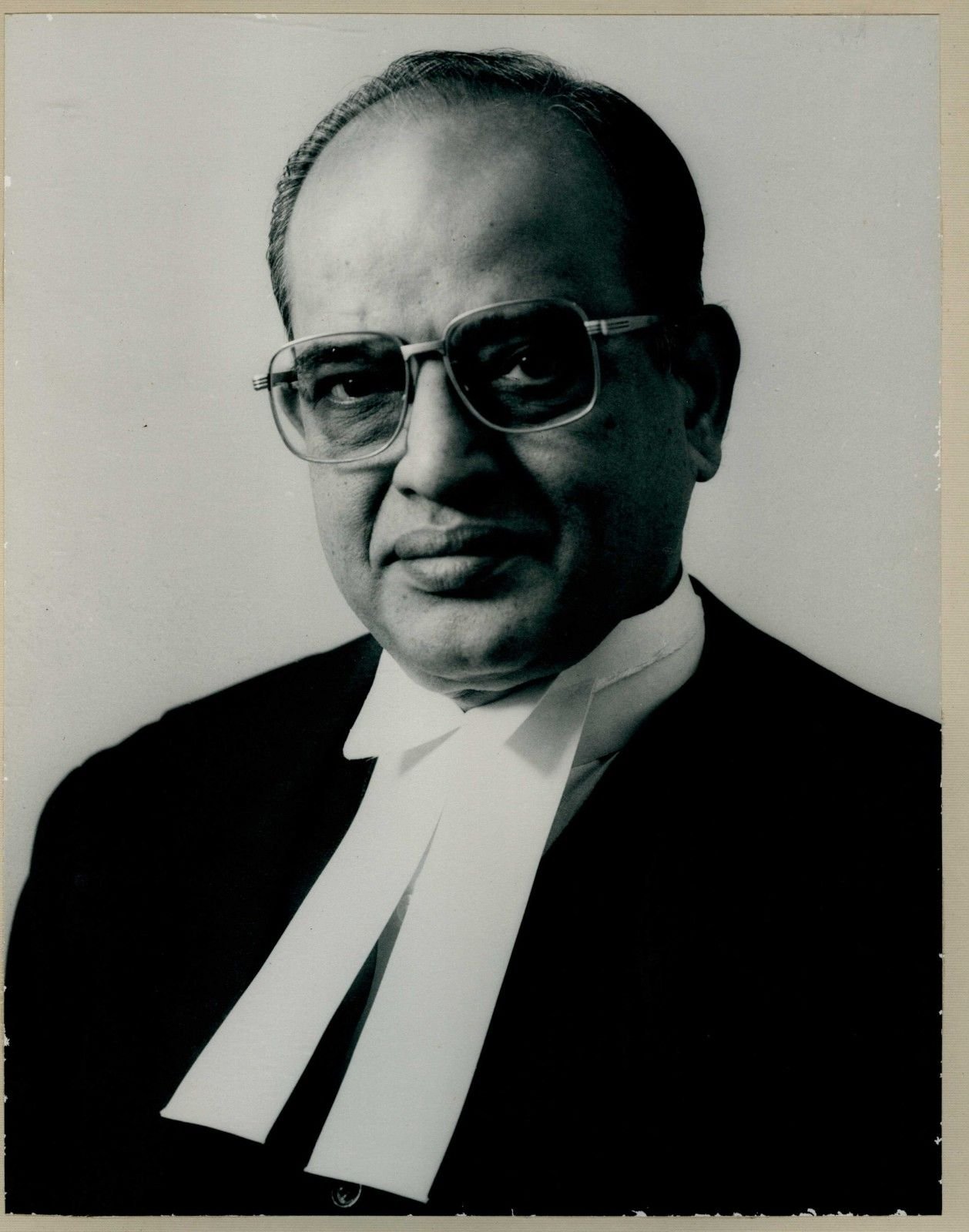
K. VENKATASWAMI, J. An independent judiciary is one of the basic features
of the Constitution of the Republic. In this case, however, we are not
concerned with the various provisions of the Constitution guaranteeing
independence of judiciary but with a limited issue about the scope and
extent of control of the High Court over the subordinate judiciary to the
exclusion of the executive for maintenance of its independence. Our
Constitution has zealously guarded the independence of judiciary. In S. P.
Gupta, etc. v. Union of India & Anr., etc., [1981] Supp. SCC 87, this Court
held that independence of judiciary is doubtless a basic structure of the
Constitution but the said concept of independence has to be confirmed
within the four corners of the Constitution and cannot go beyond the
Constitution. This Court in All India Judges' Association & Ors., etc.v..
Union of India & Ors., etc., [1993] 4 SCC 288 held :
"In view of the separation of the powers under the Constitution, and the
need to maintain the independence of the judiciary to protect and promote
democracy and the rule of law, it would have been ideal if the most
dominant power of the executive and the legislature over the judiciary,
viz., that of determining its service conditions had been subjected to some
desirable checks and balances. This is so even if ultimately, the service
conditions of the judiciary have to be incorporated in and declared by the
legislative enactments. But the mere fact that Article 309 gives power to
the executive and the legislature to prescribe the service conditions of
the judiciary, does not mean that the judiciary should have no say in the
matter. It would be against the spirit of the Constitution to deny any role
to the judiciary in that behalf, for theoretically it would not be
impossible for the executive or the legislature to turn and twist the tail
of the judiciary by using the said power. Such a consequence would be
against one of the seminal mandates of the Constitution, namely, to
maintain the independence of the judiciary."
By way. of a note of caution we may add that the control vested in the High
Court over the subordinate judiciary though absolute and exclusive, it has
to be exercised without usurping the power vested in the Executive under
the Constitution. This necessarily brings us to the consideration of
Articles 233, 234 and 235 of the Constitution of India. Those Articles read
thus :
"Article 233. Appointments of district judges.-(1) Appointments of persons
to be, and the posting and promotion of, district judges in any State shall
be made by the Governor of the State in consultation with the High Court
exercising jurisdiction in relation to such State.
http://JUDIS.NIC.IN SUPREME COURT OF INDIA Page 2 of 9
(2) A person not already in the service of the Union or of the State shall
only be eligible to be appointed a district judge if he has been for not
less than seven years an advocate or a pleader and is recommended by the
High Court for appointment.
Article 234. Recruitment of persons other than district judges to the
judicial service.-Appointments of persons other than district judges to the
judicial service of a State shall be made by the Governor of the State in
accordance with rules made by him in that behalf after consultation with
the State Public Service Commission and with the High Court exercising
jurisdiction in relation to such State.
Article 235. Control over subordinate courts.-The control over district
courts and courts subordinate thereto including the posting and promotion
of, and the grant of leave to, persons belonging to the judicial service of
a State and holding any post inferior to the post of district judge shall
be vested in the High Court, but nothing in this article shall be construed
as taking away from any such person any right of appeal which he may under
the law regulating the conditions of his service or as authorising the High
Court to deal with him otherwise than in accordance with the conditions of
his service prescribed under such law."
The backdrop in which the interpretation of the above Articles comes into
focus is given below.
The first respondent in Civil Appeal No. 4751/92 at the relevant time was
officiating as Chief Judicial Magistrate in the Orissa Superior Judicial
Service (Junior Branch). The first respondent in Civil Appeal Nos. 4752 and
4753 were officiating in Class-I of the Orissa Judicial Service. The Review
Committee constituted by the Full Court of the Orissa High Court met on
30.1.87 and decided to recommend to the Full Court that the first
respondent in each of the appeals be retired prematurely in public
interest. The recommendation of the Review Committee was accepted by the
Full Court, which met on 4.2.87. Pursuant to that, the first respondent in
each of the appeals were retired prematurely as per the Notification issued
by the High Court on 5.2.87. That Notification was challenged in the High
Court mainly on the ground that the High Court was not vested with the
power of making an order of compulsory retirement. It was also challenged
on the ground that there were no materials against them to make the
impugned order.
That the High Court could not itself have passed an order of compulsorily
retirement as above, which amounts to termination of service is borne out
from the plain language cf the above Articles and in particular of Article
235 read with Article 311. This question has been debated and answered by
this Court in a number of cases.
In The State of Wert Bengal v. Nripendra Nath Bagchi, [1966] 1 SCR 771, a
Constitution Bench of this Court while setting aside an order of dismissal
of an officiating District and Sessions Judge passed after consulting the
State Public Service Commission but without consulting the High Court,
elaborately considered the scope of Article 235. Hidayatullah, J., (as His
Lordship then was) speaking for the Bench observed that there is nothing in
Article 311 which compels the conclusion that the High Court is ousted of
the jurisdiction to hold the inquiry if Article 235 vested some power in
it. The control which is vested in the High Court is a complete control
subject only to the power of the Governor into the matter of appointment
(including dismissal and removal) and posting and promotion of District
Judges. Within the exercise of the control vested in the High Court, the
High Court can hold enquiries, impose punishments other than dismissal or
removal subject however to the conditions of service, to a right of appeal
if granted by the conditions of service, and to the giving of an
opportunity of showing cause as required by clause (2) of Article 311,
unless such an opportunity is dispensed with by the Governor acting under
http://JUDIS.NIC.IN SUPREME COURT OF INDIA Page 3 of 9
the provisos (b) and (c) to that clause.
In State of Haryana v. Inder Prakash Anand H.C.S. & Ors., [1976] 2 SCC 977,
a four-Judge Bench of this Court had an occasion to consider the scope and
width of Article 235 of the Constitution. That was a case in which the
State Government compulsorily retired a senior Subordinate Judge though the
High Court recommended only for his reversion. This Court held :
Para 15-This Court in Bagchi's case said that control vested in the High
Court is over the conduct and discipline of the members 'of the Judicial
Service. Orders passed in disciplinary jurisdiction by the High Court are
subject to an appeal as provided in the conditions of service. The High
Court further deals with members of the Judicial Service in accordance with
the rules and conditions of service. This Court in Bagchi's case said that
the word "deal" points to disciplinary and not merely administrative
jurisdiction. The order terminating the appointment of a member of the
service otherwise than upon his reaching the age fixed for superannuation
will be passed by the State Government on the recommendation of the High
Court. This is because the High Court is not the authority for appointing,
removing, reducing the rank or terminating the service.
Para 16 - It is true that the fixation of the age of superannuation is the
right of the State Government. The curtailment of that period under rule
governing the conditions of service is a matter pertaining' to disciplinary
control as well as administrative control. Disciplinary control means not
merely jurisdiction to award punishment for misconduct. It also embraces
the power to determine whether the record of a member of the service is
satisfactory or not so as to entitle him to continue in service for the
full term till he attains the age of superannuation. Administrative,
judicial and disciplinary control over members of the judicial Service is
vested solely in the High Court. Premature retirement is made in the
exercise of administrative and disciplinary jurisdiction. It is
administrative because it is decided in public interest to retire him
prematurely. It is disciplinary because the decision was taken that he does
not deserve to continue in service up to the normal age of superannuation
and that it is in the public interest to do so.
Para 18 - The control vested in the High Court is that if the High Court is
of opinion that particular judicial officer is not fit to be retained in
service the High Court will communicate that to the Governor because the
Governor is the authority to dismiss, remove, reduce in rank or terminate
the appointment. In such cases it is the contemplation in the Constitution
that the Governor as the Head of the State will act in harmony with the
recommendation of the High Court. If the recommendation of the High Court
is not held to be binding on the State consequences will be unfortunate. It
is in public interest that the State will accept the recommendation of the
High Court. The vesting of complete control over the subordinate judiciary
in the High Court leads to this that the decision of the High Court in
matters within its jurisdiction will bind the State. "The Government will
act on the recommendation of the High Court. That is the broad basis of
Article 235".
In State of UP. v. Batuk Deo Pati Tripathi & Anr., [1978] 2 SCC 102, a
Constitution Bench of this Court again had an occasion to consider the
validity of an order of compulsory retirement passed by the State Governor
on the recommendation of the Administrative Committee of the High Court.
The High Court set aside the order compulsorily retiring the District
Munsiff on the ground that the recommendation by the Administrative
Committee cannot be construed as the recommendation of the High Court (Full
Court). Reversing the judgment of the High Court and approving the
procedure of the recommendation through the Administrative Committee, this
Court observed:
"Here, the decision to compulsory retire the respondent was taken by the
Judges of :he High Court itself, though not by all. If some but not all
http://JUDIS.NIC.IN SUPREME COURT OF INDIA Page 4 of 9
Judges of the High Court participate in a decision relating to a matter
which falls within the High Court's controlling jurisdiction over
subordinate courts, the High Court does not efface itself by surrendering
its poet to an extraneous authority. The procedure adopted by the High
Court under its Rules is not subversive of the independence of the
subordinate judiciary, which is what Article 235 recognises and seeks to
achieve.
The learned Judges further held that the recommendation made by the
Administrative Committee cannot be said to suffer from any legal or
constitutional infirmity.
In Chief Justice of A.P. & Ors. v. L.V.A. Dixitulu & Ors. etc., [1979] 2
SCC 34, a Constitution Bench of this Court again considered the validity of
an order of compulsory retirement passed by the State Governor on the
recommendation of the High Court. That order was challenged before the
State Administrative Tribunal and this Court while holding that the State
Administrative Tribunal had no jurisdiction to entertain the appeal,
observed as follows :
"Respondent 1, Shri V.V.S. Krishnamurthy, in that appeal was, at the
material time, a member of the Andhra Pradesh State Judicial Service. He
attained the age of 50 years on November 24, 1974. He was prematurely
retired, in public interest, by an order dated September 29, 1975 of the
State Government on the recommendation of the High Court. Before the
Government passed this order, a Committee of Judges appointed by the High
Court, considered the entire service record of respondent 1 and records of
other Judicial Officers and decided to prematurely retire the first
respondent in public interest.
The interpretation and scope of Article 235 has been the subject of several
decisions of this Court, The position crystalised by these decisions is
that the control over the subordinate judiciary vested in the High Court
under Article 235 is exclusive in nature, comprehensive in extent and
effective in operation. It comprehends a wide variety of matters. Among
others, it includes :
(a) (b) (c) (d) (e) (f)
(g) Premature or compulsory retirement of Judges of the District Courts
and of Subordinate Courts.
In the last-mentioned case (Inder Prakash Anand) the Government servant was
officiating in the cadre of District Judges. The High Court recommended
that he should be reverted to his substantive post of senior Subordinate
Judge/Chief Judicial Magistrate and, as such, allowed to continue in
service till the age of 58 years. Contrary to the recommendation of the
High Court, the State Government passed an order under Rule 5.32(c) of the
Punjab Civil Service Rules, compulsorily retiring him from service at the
age of 55 years. Holding that the order of compulsory retirement was
invalid, this Court stressed that the power of deciding whether a judicial
officer should be retained in service after attaining the age of 55 years
upto the age of 58 years, vests in the High Court, and to hold otherwise
"will seriously affect the independence of the judiciary and take away the
control vested in the High Court". The formal order of retirement, however,
is passed by the Governor acting on the recommendation of the High Court,
that being "the broad basis of Article 235". It was explained that "in such
cases it is the contemplation in the Constitution, that the Governor as the
Head of the State will act in harmony with the recommendation of the High
Court". It was concluded that "the vesting of complete control over the
Subordinate Judiciary in the High Court leads to this that the decision of
the High Court in matters within its jurisdiction will bind the State". In
other words, while in form, the High Court's decision to compulsorily
retire a subordinate judicial officer in the exercise of its administrative
or disciplinary jurisdiction under Article 235 is advisory, in substance
http://JUDIS.NIC.IN SUPREME COURT OF INDIA Page 5 of 9
and effect, it is well-nigh peremptory. "
In Tej Pal Singh v. State of U.P. & Anr., [1986] 3 SCC 604, a Division
Bench of this Court had occasion to consider a question whether the
impugned order of premature retirement passed by the Governor without
having before him the recommendation of the Administrative Committee or of
the Full Court was void and ineffective. The learned Judges, after
referring to earlier judgments of this Court, held as follows:
"Para 4 - Article 235 of the Constitution provides that the control over
district courts and courts subordinate thereto including the posting and
promotion of and the grant of leave to persons belonging to the judicial
service of the State and holding any post inferior to the post of District
Judge shall be vested in the High Court. It has been held in State of U.P
v. Batuk Deo Pati Tripathi that premature retirement of subordinate courts
is a matter which falls squarely within the power of control vested in the
High Courts by Article 235 of the Constitution. Without (he recommendation
of the High Court it is not open to the Governor to issue an order retiring
prematurely Judges of District Courts and of subordinate courts.
Para 13 -................In the instant case the Government had sought the
opinion of the High Court regarding the question whether the appellant
could be prematurely retired and that question was certainly a very
important matter from the point of view of the subordinate judicial
service. The Administrative Judge before giving his opinion in support of
the view expressed by the government should have either circulated the
letter received from the government amongst the members of the
Administrative Committee or placed it before them at a meeting. He did not
adopt either of the two courses. But he on his own forwarded his opinion to
the government stating that the appellant could be prematurely retired.
That he could not do. Ordinarily, it is for the High Court, on the basis of
assessment of performance and all other aspects germane to the matter to
come to the conclusion whether any particular judicial officer under its
control is to be prematurely retired and once the High Court comes to the
conclusion that there should be such retirement, the Court recommends to
the Governor to do so. The conclusion is to be of the High Court since the
control vests therein. Under the Rules obtaining in the Allahabad High
Court, the Administrative Committee could act for and on behalf of the
government proposal was of no consequence and did not amount to
satisfaction of the requirement of Article 235 of the Constitution. It was
only after the Governor passed the order on the basis of such
recommendation, the matter was placed before the Administrative Committee
before the order of retirement was actually served on the appellant. The
Administrative Committee not have dissented from the order of Governor or
the opinion expressed by the Administrative Judge earlier. But it is not
known what the Administrative Committee would have done if the matter had
come up before it before the Governor had passed the order of premature
retirement. In any event the deviation in this case is not a mere
irregularity which can be cured by the ex post facto approval given by the
Administrative Committee to the action of the Governor after the order of
premature retirement had been passed. The error committed in this case
amounts to an incurable defect amounting to an illegality. We may add that
while it may be open to the government to bring to the notice of the High
Court all materials having a bearing on the conduct of a District Judge or
a subordinate judicial officer, which may be in its possession, the
government cannot take the initiative to retire prematurely a District
Judge or a subordinate judicial officer. Such initiative should rest with
the High Court." In Registrar, High Court of Madras v. R. Rqjiah, etc.,
[1988] 3 SCC 211, this Court had an occasion to consider the validity of an
order of compulsory retirement passed by the High Court. The learned Judges
held that the proper procedure for the High Court was to recommend the case
for compulsory retirement and it was for the Governor on whom the
recommendation of the High Court was binding, to pass the formal order.
This Court in the said case observed as follow :
http://JUDIS.NIC.IN SUPREME COURT OF INDIA Page 6 of 9
"The test of control is not the passing of an order against a member of the
subordinate judicial service, but the decision to take such action. It may
be that so far as the members of the subordinate judicial service are
concerned, it is the Governor, who being the appointing authority, has to
pass an order of compulsory retirement or any order of punishment against
such a member. But passing or signing of such orders by the Governor will
not necessarily take away the control of the High Court vested in it under
Article 235 of the Constitution. An action against any government servant
consists of two parts. Under the first part, a decision will have to be
made whether an action will be taken against the government servant. Under
the second part, the decision will be carried out by a formal order. The
power of control envisaged under Article 235 of the Constitution relates to
the power making a decision by the High Court against a member of the
subordinate judicial service. Such a decision is arrived at by holding an
enquiry by the High Court against the member concerned. After the High
Court comes to the conclusion that some action either in the nature of
compulsory retirement or by the imposition of a punishment, as the case may
be, has to be taken against the member concerned, the High Court will make
a recommendation in that regard to the Governor and the Governor will act
in accordance with such recommendation of the High Court by passing an
order in accordance with the decision of the High Court. The Governor
cannot take any action against any member of a subordinate judicial service
without, and contrary to, the recommendation of the High Court.
It is apparent from the observation extracted above that this Court also
understood the power of control of the High Court as the power of taking a
decision against a member of the subordinate judicial service. The High
Court is the only authority that can take such a decision. The High Court
will hold an enquiry and decide on the result of such enquiry whether any
action will be taken against a member of the subordinate judicial service.
If it comes to the conclusion that such an action is required to be taken,
it will make a recommendation in that regard to the State Governor who will
make an order in accordance with the recommendation of the High Court.
The control of the High Court, as understood, will also be applicable in
the case of compulsory retirement in that the High Court will, upon an
enquiry, come to a conclusion whether a member of the subordinate judicial
service should be retired prematurely or not. If the High Court comes to
the conclusion that such a member should be prematurely retired, it will
make a recommendation in that regard to the Governor inasmuch as the
Governor is the appointing authority. The Governor will make a formal order
of compulsory retirement in accordance with the recommendation of the High
Court."
No doubt, the learned Judges also found that there was no sufficient
material warranting an order of compulsory retirement in that case.
In High Court of Judicature for Rajasthan v. Ramesh Chand Paliwal & Anr.,
[1998] 3 SCC 72, a two-Judge Bench of the Court while construing the scope
and extent of Articles 233 to 235 of the Constitution, held as follows:
"This article shows that the High Court has to exercise its administrative,
judicial and disciplinary control over the members of the Judicial Service
of the State. The word "control", referred to in this article, is used in a
comprehensive sense to include general superintendence of the working of
the subordinate courts, disciplinary control over the Presiding Officers of
the subordinate courts and to recommend the imposition of punishment of
dismissal, removal and reduction in rank or compulsory retirement.
"Control" would also include suspension of a member of the Judicial Service
for purposes of holding a disciplinary enquiry, transfer, confirmation and
promotion. (See State of Haryana v. Inder Prakash Anand and State of U.P.
v. Batuk Deo Pati Tripathi). In State of Gujarat v. Ramesh Chandra
Mashruwala it was held that "control" in Article 235 means exclusive and
not dual control. (See also Chief Justice of A.P. v. L. V.A. Dixitulu;
State of W.B. v. Nriendra Nath Bagchi)."
http://JUDIS.NIC.IN SUPREME COURT OF INDIA Page 7 of 9
On going through the judgments of this Court right from Shyam Lai v. State
of U.P., [1955] 1 SCR 26 down to High Court of Judicature for Rajasthan v.
Ramesh Chand Paliwal & Anr, [1998] 3 SCC 72, one cannot but reach one
conclusion regarding the power of the High Court in the matter of ordering
compulsory retirement. That conclusion is that the High Courts are vested
with the disciplinary control as well as administrative control over the
Members of the Judicial Service exclusively, but that does not mean that
they can also pass orders of dismissal, removal, reduction in rank or
termination from service while exercising administrative and disciplinary
control over the Members of Judicial Service. Undoubtedly, the High Courts
alone are entitled to initiate, to hold enquiry and to take a decision in
respect of dismissal, removal, reduction in rank or termination from
service, but the formal order to give effect to such a decision has to be
passed only by the State Governor on the recommendation of the High Court.
It is well settled again by a catena of decisions of this Court that the
recommendation of the High Court is binding on the State
Government/Governor [vide para 18 in Inder Prakash Anand's case (supra)].
We are clearly of the view that while the High Court retains the power of
disciplinary control over the subordinate judiciary, including the power to
initiate disciplinary proceed ngs, suspend them pending enquiries and
impose punishment on them but when it comes to the question of dismissal,
removal, reduction in rank or termination of the services of the judicial
officer, on any count whatsoever, the High Court becomes only the
recommending authority and cannot itself pass such an order [vide Inder
Prakash Anand's case and Rajiah's case (supra)].
In the instant case, the decision of the Orissa High Court dated 4.2.87 (on
the Administrative Side) was required to be forwarded to the Governor for
passing an order of cornpulsorily retirement. That was not done. It was
wrong for the High Court to have passed the order of compulsory retirement
itself. The judicial side of the High Court rightly decided the Writ
Petition in favour of the judicial officers and held the order dated 5.2.87
to be bad. In the words of the Division Bench of the High Court :
"There is a stronger constitutional objection to accept the submission of
Shri Nayak for regarding the High Court as the appointing authority of the
Chief Judicial Magistrate on the basis of what has been provided in rule 10
of the Orissa Superior Judicial Service Rules, 1963, inasmuch as it has
been laid down in Article 234 of the Constitution that appointments of
persons other than District Judges to the judicial service of a State shall
be made by the Governor of the State in accordance with the rules made by
him in that behalf. The aforesaid rules are one set of such rules. So, no
provision in the rules could have altered the constitutional position that
the Governor of the State is the appointing authority of persons other than
District Judges also. Conferment of this power on the High Court by virtue
of what is stated in rule 10 of the Orissa Superior Judicial Service Rules
would have clashed with the constitutional mandate. We would therefore, not
accept because of what is stated in rule 10 that the High Court is the
appointing authority of a Chief Judicial Magistrate."
In view of all that is stated above, we would hold that the High Court is
not the appointing authority of Chief Judicial Magistrates to clothe it
with the power of compulsory retirement conferred by the First proviso to
rule 71 (a) of the Orissa Service Code. In this connection, may we also
point out that it would be really incongruous where, though the High Court
cannot retire a Munsif, or for that matter a District Judge, as fairly
conceded by Shri Nayak it would be in a position to retire a Chief Judicial
Magistrate. We do not think if the concerned provisions permit us to take
this view.
Before closing this aspect of the discussion, we may say that we are
conscious of the legal position that passing of an order of compulsory
retirement by the Governor is a formal matter as stated in Rajiah 's case
http://JUDIS.NIC.IN SUPREME COURT OF INDIA Page 8 of 9
(supra) because, according to this decision, the Governor in such cases
merely acts on the recommendation of the High Court by signing an order in
that regard; but the procedure of the Governor formally passing an order of
retirement has to be complied with. So long as there is no formal order of
the Governor, the compulsory retirement as directed by the High Court
cannot take effect, as opined in Rajiah's case itself.
Having come to the aforesaid conclusion, it is not necessary to deal with
the second submission of Shri Ray that there were no materials in the
present case to order for the compulsory retirement of the
petitioner........
The judgment of the Division Bench of the High Court is strictly in accord
with the catena of judgments referred to above and in particular with the
judgment in Rajiah 's case (supra). We, therefore, see no error in the
orders under appeal.
Had the matters rested here, there would have been no problem but the
subsequent developments have given a new turn and twist to the case.
After the judgment of the Division Bench of the High Court, it appears, the
Full Court on the Administrative Side on 7.11.91 decided to make a
recommendation to the Government for compulsory retirement of the concerned
Judicial Officers. That recommendation was forwarded to the Government on
26.11.91. In the meanwhile, the High Court had also put in issue the
judgment of the Division Bench through the Special Leave Petitions out of
which the present appeals have arisen and an interim order dated 19.12.91
made at the notice stage was as follows:-
"Issue notice on the S.L.P. and LA. No. 1/91 and tag on to S.L.P. (C) No.
18266/91. In the meantime, the operation of the impugned judgment shall
remain stayed.
It is stated by the Learned counsel for the respondent No. 1 that he was
permitted to join. In view of our present order he will not now work in the
post he has joined.
Once month's time is allowed to the respondent No. 1 for filing his Counter
Affidavit and two weeks thereafter to the petitioner for rejoinder."
After the recommendation of the Full Court was received, the Government on
2.12.91 chose not to proceed further on the plea that the matter was
pending in the Supreme Court. They declined to act further on the
recommendation. This, the Government could not have done. The course open
to the Government was to forward the recommendation of the High Court to
the Governor who would have passed an order in accordance with the
recommendation made by the High Court as has been held in Inder Prakash
Anand's case (supra) because the recommendation of the High Court was
binding on the Government.
By not making an order of compulsory retirement on the recommendation of
the High Court, a peculiar situation was created in the sense that the
Judicial Officers were neither in service nor were they technically out of
service. They, however, did not perform any work. The question, therefore,
now arises as to what is the manner in which relief can be moulded to
balance equities between the parties by this Court, so that the litigation
itself is given a quietous.
The first respondent in Civil Appeal No. 4751/92 has died pending appeal.
His legal representatives had been brought on record. The first respondent
in other two appeals have since retired.
Mr. Jayant Das, learned Advocate General, appearing for the State
Government, as well as learned counsel appearing for the High Court rightly
agreed with the suggestion made on behalf of the Judicial Officers that on
http://JUDIS.NIC.IN SUPREME COURT OF INDIA Page 9 of 9
the basis of the recommendation made by the Full Court of the High Court on
7.11.91, the Governor of State be requested to pass a formal order of
compulsory retirement of Judicial Officers with effect from the date when
the recommendation was received by the Government, i.e. 2.12.91. The
Judicial Officers (which would include legal representatives in the case of
deceased 1st respondent in C.A. No. 4751/92) would, thus, be entitled to
their salary, allowances and all other consequential benefits till 2.12.91.
This suggestion appeals to us also as it will balance the equities between
the parties and set at naught a controversy which has unnecessarily
remained pending for so long. The arrears as per the above terms shall be
paid to the Judicial Officers within three months from the date of receipt
of this judgment.
The appeals stand disposed of accordingly. There will be no order as to
costs.
RP.
Appeals disposed of.

 Login with google
Legal Notes
Add a Note....