
As per case facts, while Punjab was under President's Rule, an order was issued to exempt certain raw materials from octroi and simultaneously directed Municipal Committees to impose an Urban ...
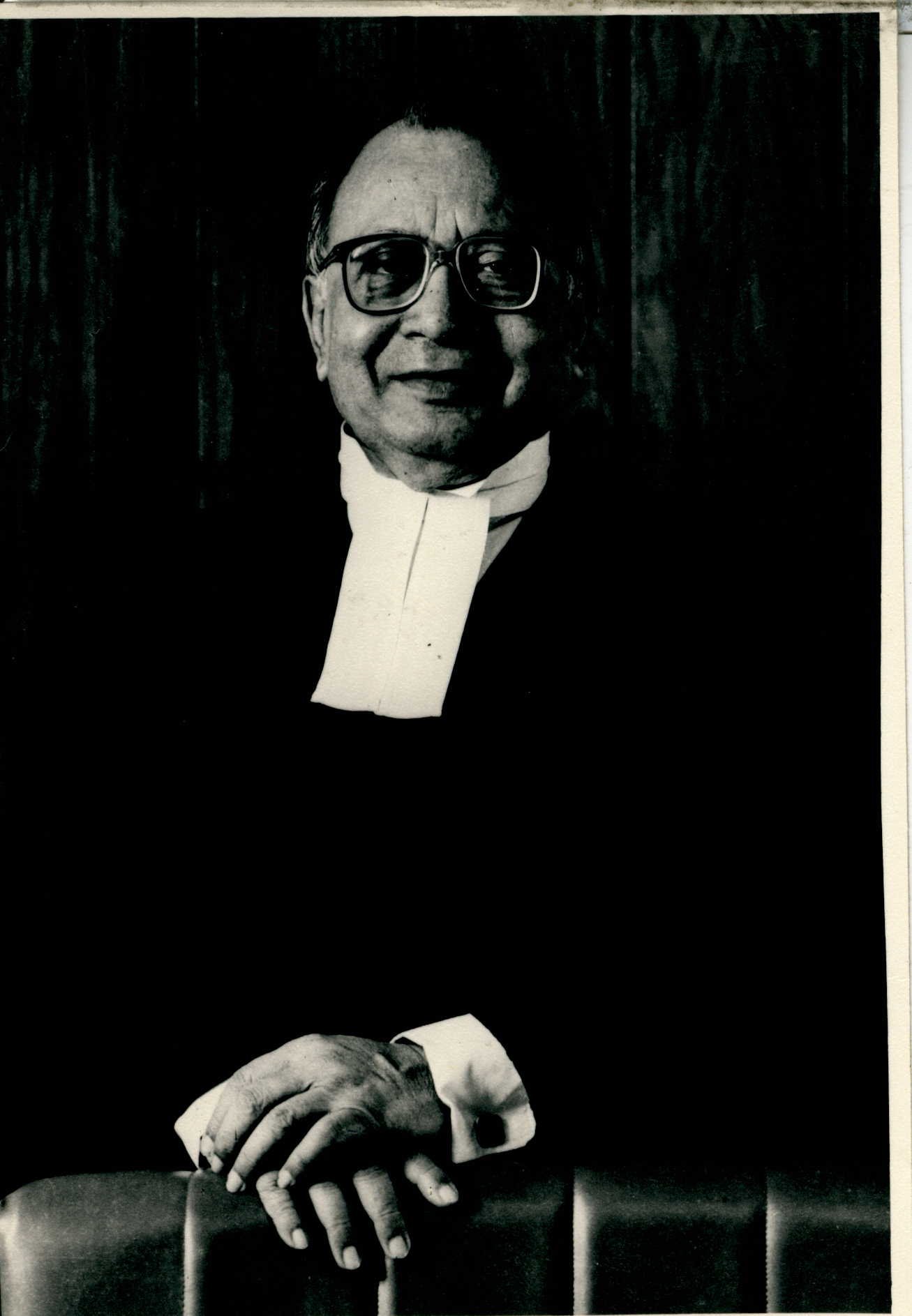
No Acts & Articles mentioned in this case
http://JUDIS.NIC.IN SUPREME COURT OF INDIA Page 1 of 4
PETITIONER:
THE STATE OF PUNJAB & ORS.
Vs.
RESPONDENT:
NARAJAN DASS DOOMRA RICE & GEN. MILLS
DATE OF JUDGMENT: 25/11/1997
BENCH:
S.P. BHARUCHA, S.C. SEN
ACT:
HEADNOTE:
JUDGMENT:
THE 25TH DAY OF NOVEMBER, 1997
President:
Hon'ble Mr. Justice S.P. Bharucha
Hon'ble Mr. Justice S.C. Sen
M.R. Sharma, Sr.Adv., (Ms. Puja Anand) Adv. for G.K. Bansal,
Adv. with him for the appellant for the State of Punjab).
Jayant Dass, Sr.Adv. and B.P. Singh, Adv. with him for the
appellant.
M.S.Ganesh and Yogeshwar Prasad, Sr.Advs., Mrs. Urmila
Sirur, P.N.Puri, (M.K. Dua) Adv. (NP), Mrs. Sheela Goel,
Advs. with them for the Respondents.
J U D G E M N T
The following Judgment of the Court Court was
delivered:
WITH
CIVIL APPEAL NOS. 1226-43 OF 1992, 7498 OF 1993 AND 4540 OF
1991
Bharucha, J.
On 30th November/3rd December, 1990, when the State of
Punjab (the appellant) was under President's Rule, an order
was issued under the provisions of section 71(1) of the
Punjab Municipal Act, 1911, by the President of India
exempting kapas (raw cotton), narma and oil seeds from the
payment of octroi with immediate effect. On the same day,
in exercise of powers conferred by Section 62-A of the said
Act, the President was "pleased to direct all the Municipal
Committees in the state of Punjab to impose Urban
Development Cess on the sales/purchase of kapas (raw
cotton), Narma and oil seeds made within the respective
Municipal Areas at the rate of 0.24 per cent ad valorem with
immediate effect". Pursuant thereto, a Memo was issued on
5th December, 1990 by the appellant to Municipal
Corporations, Municipal Committees and Notified Area
Committees. It noted that the appellant had issued the
notification for imposition of the cess on sales and
purchases of kapas, narma and oil seeds to compensate for
the loss likely to be suffered on account of the abolition
of octroi. The Memo gave directions in regard to the manner
in which the cess was to be collected. It appears that,
without more, the cess was sought to be levied and
http://JUDIS.NIC.IN SUPREME COURT OF INDIA Page 2 of 4
recovered. Writ petitions were, therefore, filed in the
High Court of Punjab & Haryana challenging the levy and
collection. By the judgment and orders under appeal, the
writ petitions were allowed and the appellant was directed
to refund the cess that had been collected by it with
interest at the date of 12 per cent per annum. These
appeals by special leave arise out of the judgment and
orders. At the stage at which special leave was granted,
the judgment and orders under appeal were stayed subject to
the condition that, in the event of it being held that
the respondents were entitled to refund, the amounts
collected from them would be refunded with interest at the
rate of 12 per cent per annum.
Section 62A(1) and (3) of the said Act are relevant,
and read thus:
"62A. Power of Government in
taxation. (1) The State Government
may, by special or general order
notified in the official Gazette,
require a Committee to impose any
tax mentioned in section 61 not
already imposed at a such rate and
within such period as may be
specified in the notification and
the Committee shall thereupon act
accordingly.
xxx xxx xxx
(3) If the Committee fails to carry
out any order passed under sub-
section (1) or (2) the State
Government may by a suitable order
notified in the official Gazette
impose or modify the tax. The
order so passed shall operate as if
it were a resolution duly passed by
the Committee as if the proposal
was sanctioned in accordance with
the procedure contained in section
62".
Section 62, sub-sections (1), (10) and (12) read thus:
"62. Procedure to impose taxes. -
(1) A Committee may, at a special
meeting, pass a resolution to
propose the imposition of any tax
under section 61.
xxx xxx xxx
(10) (a) When a copy of order under
sub-section (6) and (7) has been
received, or
(b) When a proposal has been
sanctioned under sub-section (8)
the State Government shall notify
the imposition of the tax in
accordance with such order or
proposal, and shall in the
notification specify a date not
less than one month from the date
of notification, on which the tax
shall come into force.
xxx xxx xxx
(12) A notification of the
imposition of a tax under this Act
shall be conclusive evidence that
the tax has been imposed in
accordance with the provisions of
http://JUDIS.NIC.IN SUPREME COURT OF INDIA Page 3 of 4
the Act."
Learned counsel for the appellant submitted that the
cess had been imposed in lieu of octroi and that, by virtue
of Section 62(12), the notification of the imposition of the
cess was conclusive evidence that the cess had been imposed
in accordance with the provisions of the said Act.
The argument proceeds upon a misconception. In the
first place, the order dated 30th November/3rd December,
1990 does not impose the cess Its language is clear : it
directs the Municipal Committees to impose the cess. This
is in accord with the terms of Section 62A(1) under which
the order is issued. That there is no imposition of a tax
by reason of an order issued under the provisions of sub-
section (1) of Section 62A in clear from the provisions of
sub-section (3) thereof. Sub-section (3) states that if the
Municipal Committee has failed to carry out an order that
has been passed under sub-section (1), the State Government
may itself notify the imposition of the tax, such imposition
operates as if it were a resolution duly passed by a
Municipal Committee under the provisions of Section 62.
Section 62(12) comes into operation when a Municipal
Committee has imposed a tax after following the procedure
laid down in section 62. it is then that the notification
of the tax is conclusive evidence that it has been imposed.
Alteratively, if the Municipal Committee has failed to act
as required by an order under sub-section (1) of Section 62A
and the State Government has imposed the tax under sub-
section (3) thereof, the provisions of Section 62(12) would
then operate because an order passed by the State Government
under Section 62A(3) operates as if it were a resolution
duly passed by a Municipal Committee.
In the instant case, the order dated 30th November/3rd
December, 1990 was passed under section 62A(1). The
Municipal Committees failed to impose the cess in pursuance
thereof. The State Government, thereafter, did not impose
the cess under the provisions of Section 62A(3)). There
was, therefore, no imposition of the cess, and its recovery
was without the authority of law.
learned counsel for the appellant drew our attention to
the judgment of this Court in Atlas Cycle Industries Ltd. v.
State of Haryana & Anr., (1972) 1 SCR 127. The paragraph
that was relied upon reads thus:
"Section 62(10) of the Act
indicates that there is imposition
of tax only when the State
Government shall notify the
imposition of the tax and shall in
the notification specify a date on
which the tax shall come into
force. In the absence of
imposition of tax by a notification
under section 62(10) of the Act the
municipality is not competent to
impose, levy or collect tax.
Section 62(12) of the Act enacts
that a notification of the
imposition of tax shall be
conclusive evidence that the tax
has been imposed in accordance with
the provisions of the Act. it is
the notification under the statute
which is conclusive evidence of the
imposition of tax"
(at page 133)
What is said does not advance the case of the
http://JUDIS.NIC.IN SUPREME COURT OF INDIA Page 4 of 4
appellant. It is, in fact, consistent with the view that
has been taken by the High Court and which we re inclined to
take.
Reliance is also placed by learned counsel for the
appellant on the decision of a Division Bench of the Punjab
& Haryana High Court in Shri Krishan Kumar Sanan and Others
v. The Punjab State and another, 74 P.L.R. (1972) page 149.
The High Court has referred this decision in the judgment
under appeal and has pointed out that it is inapposite
because it was given in relation to an order that had been
issued in exercise of the powers conferred by Section 62A(3)
of the said Act.
The appeals must, therefore, fail and re dismissed.
The appellant shall refund to the respondents the
amounts collected from them as and by way of the cess with
interests at the rate of 12 per cent per annum from the
dates of collection till the dates of payment
No order as to costs.

 Login with google
Legal Notes
Add a Note....