
No Acts & Articles mentioned in this case
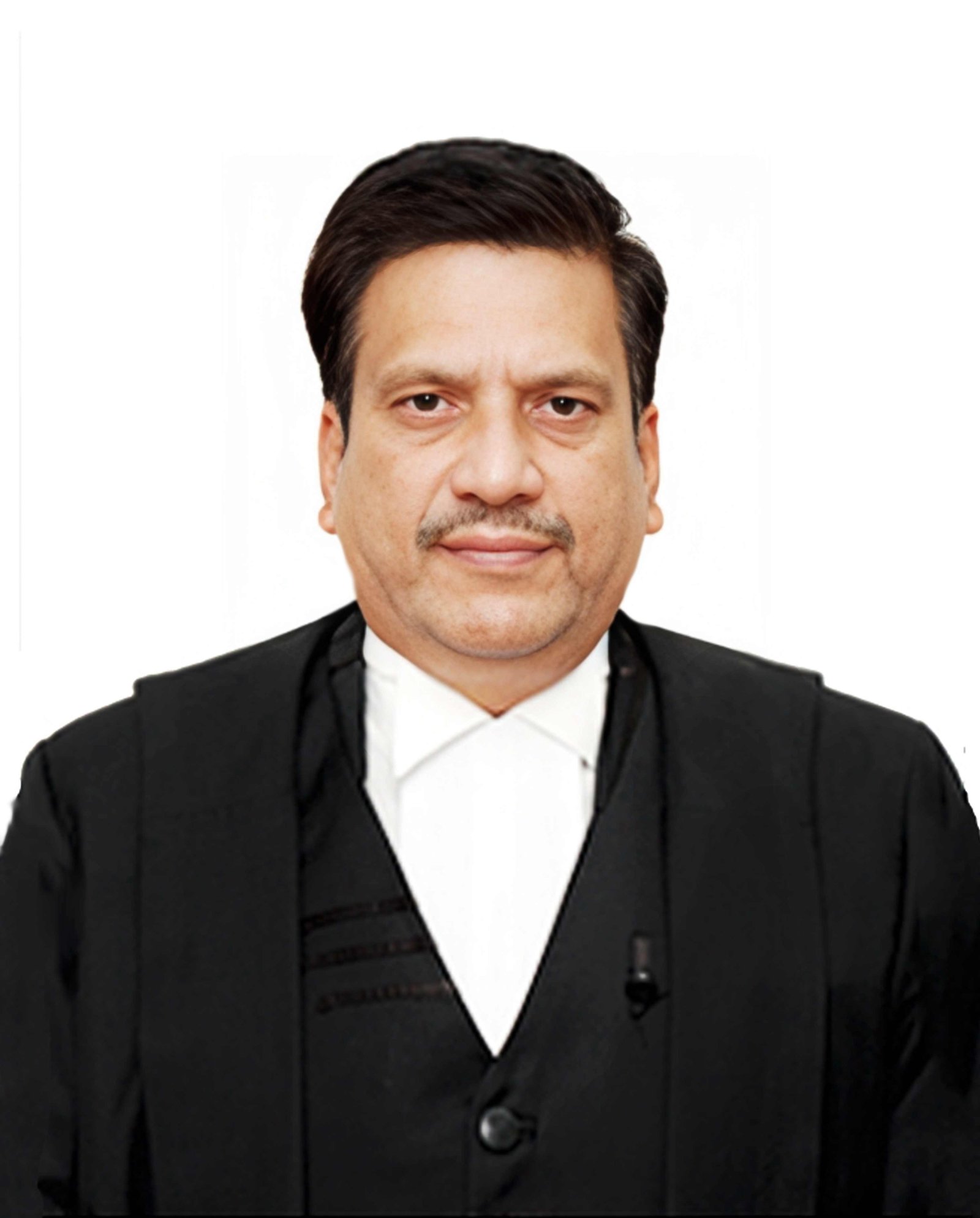
*HON’BLE SRI JUSTICE T.MALLIKARJUNA RAO
+M.A.C.M.A.NO.2893 OF 2012
%03.04.2023
#Between:
The United India Insurance Company
Limited, rep., by its Divisional Manager,
Ananthapur.
…… Appellant / Respondent No.2
$And:
1. G. Shakeera Begum, W/o Late Gulam Ali
Hussain, 35 years,
2. Gulam Anwar Hussain, S/o Late Gulam Ali
Hussain, 14 years,
3. Gulam Jakeer Hussain, S/o Late Gulam Ali
Hussain, 8 years,
Respondents No.2 and 3 are being minors,
rep., by respondent No.1, all are resident of
MPR Dam (p), Garladinne Mandal,
Ananthapur District.
… Respondents / Claimants
4. M.Chakrappa, S/o Gurrappa, Major, Owner
of Tractor and Trailor, resident of
Koppalakonda Post, Garladinne Mandal,
Ananthapur District.
….Respondent / Respondent No.1
!Counsel for the Appellant : Sri V. Srinivasa Rao
^Counsel for the Respondents No.1 to 3 : --
^Counsel for the Respondent No.4 : --
2
MACMA_2893_2012
<Gist:
>Head Note:
? Cases referred:
1. 2015 ACJ 797
2. 2009 ACJ 1725 (S.C.)
3. (2017) 14 SCC 663
4. 2017 A.I.R. (civil 734)
5. 2007 (1) ALT 107 (D.B.)
6. 2007 ACJ 2828
7. 2004 ACJ 1 (SC)
8. 2010 ACJ 1726
9. 2019 ACJ 1849
This Court made the following:
3
MACMA_2893_2012
IN THE HIGH COURT OF ANDHRA PRADESH AT AMARAVATI
***
M.A.C.M.A.NO.2893 OF 2012
Between:
The United India Insurance Company
Limited, rep., by its Divisional Manager,
Ananthapur.
…… Appellant / Respondent No.2
$And:
1. G. Shakeera Begum, W/o Late Gulam Ali
Hussain, 35 years,
2. Gulam Anwar Hussain, S/o Late Gulam Ali
Hussain, 14 years,
3. Gulam Jakeer Hussain, S/o Late Gulam Ali
Hussain, 8 years,
Respondents No.2 and 3 are being minors, rep.,
by respondent No.1, all are resident of MPR Dam
(p), Garladinne Mandal, Ananthapur District.
… Respondents / Claimants
4. M.Chakrappa, S/o Gurrappa,
Major, Owner of Tractor and Trailor,
resident of Koppalakonda Post,
Garladinne Mandal, Ananthapur
District.
….Respondent / Respondent No.1
4
MACMA_2893_2012
DATE OF JUDGMENT PRONOUNCED: 03.04.2023 .
SUBMITTED FOR APPROVAL:
HON’BLE SRI JUSTICE T.MALLIKARJUNA RAO
1. Whether Reporters of Local newspapers may
be allowed to see the Judgments? Yes/No
2. Whether the copies of order may be marked
to Law Reporters/Journals? Yes/No
3. Whether Your Lordships wish to see the fair
copy of the order? Yes/No
___________________________________
JUSTICE T.MALLIKARJUNA RAO
5
MACMA_2893_2012
HON’BLE SRI JUSTICE T.MALLIKARJUNA RAO
M.A.C.M.A. No.2893 OF 2012
JUDGMENT:
1. Aggrieved by the order dated 27.06.2012 in M.V.O.P.No.107 of 2010
passed by the Chairman, Motor Accidents Claims Tribunal-cum-
District Judge, Anantapur (for short 'the Tribunal'), the United India
Insurance Company Limited rep., by its Divisional Manager,
Anantapur, who is the 2
nd respondent in M.V.O.P preferred this
appeal questioning the award passed by the Tribunal and the liability
fastened on it.
2. For the sake of convenience, hereinafter, the parties will be referred to
as per their rankings in the M.V.O.P.
3. The claimants filed a petition under Section 166 of the Motor Vehicles
Act, 1988, claiming compensation of Rs.20,00,000/- on account of
the death of Gulam Ali Hussain (hereinafter referred to as ‘the
deceased’) in a motor vehicle accident that occurred on 11.12.2009.
4. It is not in dispute that the 1st claimant is the wife; and claimants 2
and 3 are the children of the deceased.
5. The claimants’ case is that on 11.12.2009 the deceased was coming
to his village from Garladinne on a motorcycle bearing No.AP-02-F-
4547 along with two pillion riders. At about 10.00 PM, when they
6
MACMA_2893_2012
reached near Budedu village cross, the Tractor and Trailer bearing
No.AP-02-W-1428 and 1429 (hereinafter referred to as ‘the offending
vehicle’) came in the opposite direction driven by its driver in a rash
and negligent manner with high speed, lost control over the same and
dashed against the motorcycle. As a result, the deceased and others
fell down from the motorcycle and sustained grievous injuries. The
deceased and one Thomas were died on the spot and the 2
nd pillion
rider died while shifting to Government Hospital. The Garladinne
Police has registered a case in Cr.No.128 of 2009 under section 304A
of IPC against the offending vehicle’s driver.
6. The claimants’ further case is that the deceased was aged about 39
years at the time of accident and was getting a salary of Rs.12,000/-
per month and contributing the same to the claimants who are his
dependents.
7. The first respondent, owner of the offending vehicle, remained
exparte.
8. The 2
nd respondent-insurance company filed its written statement,
contended that the accident has taken place due to rash and
negligent driving of motorcycle by the deceased without having driving
licence and carrying two pillion riders. There was no negligence on
the part of the offending vehicle’s driver. The owner and insurer of the
7
MACMA_2893_2012
motorcycle are therefore necessary parties to the petition. The
offending vehicle’s driver did not possess valid driving licence, the
Insured has not obtained valid fitness certificate to the offending
vehicle. The claimants’ claim is excessive. The claimants have to
prove that they are dependents and legal heirs of the deceased and
entitled for compensation.
9. Based on the pleadings, the Tribunal framed appropriate issues.
During the trial, on behalf of the claimants, P.Ws.1 to 3 got examined
and marked Exs.A.1 to A.7. On behalf of the 2
nd respondent, R.Ws.1
and 2 got examined and marked Exs.B.1 to B.3 and Exs.X.1 and X.4.
10. On appreciation of the oral and documentary evidence, the Tribunal
held that the accident in question arose due to the contributory
negligence of the offending vehicle’s driver and the deceased and on
account of which the deceased died; and the tribunal granted
compensation of Rs.11,94,000/- with interest at 8% p.a., against the
respondents.
11. I have heard the learned Counsel appearing for both parties.
12. Learned Counsel for the appellant /second respondent contends that
the tribunal ought to have noted that as per the provision of Sec.128
of M.V.Act, triple riding is prohibited and which is cause of
8
MACMA_2893_2012
contributory negligence; the tribunal ought to have noted that the
offending vehicle’s driver does not having valid and effective licence at
the time of accident; the tribunal ought to have noted that Ex.X.4 is
clear enough that the offending vehicle has no fitness at the time of
accident and in that view, it ought not to have mulcted the liability on
the appellant; the tribunal ought to have granted interest @ 8 %
which is over and above the interest rate in vogue.
13. Learned Counsel for the respondents/claimants supported the
Tribunal's findings and observations.
14. Now the points for consideration are,
I. Is there contributory negligence on the part of the
rider of the motorcycle?
II. Is the Tribunal correct in holding that the Driver of
the offending vehicle had a valid driving license at
the time of the accident?
III. Is the insurance company established the expiry of
the fitness certificate as of the date of the
accident?
IV. Is the Interest granted by the Tribunal at 7.5% per
annum is just and reasonable?
15. The evidence adduced on behalf of the claimants that the deceased
died due to the injuries sustained in the accident is not disputed. To
9
MACMA_2893_2012
prove the deceased's death due to the injuries, the claimants relied on
Ex.A.1- certified copy of F.I.R., Ex.A.2-certified copy of inquest report,
Ex.A.3 certified copy of postmortem report and Ex.A.4-Attested copy
of charge sheet. These documents clearly show that the deceased died
due to the injuries sustained in the accident. As seen from the
grounds of appeal and submissions made on behalf of the appellant,
it is clear that the appellant/insurance company has not disputed the
quantum of compensation awarded by the Tribunal. The relationship
of the claimants with the deceased, as pleaded in the petition, is not
seriously disputed. The findings of the Tribunal that the Ex.B1 policy
was issued to the Tractor and Trailer and it was in force as of the date
of the accident; the vehicle belonging to 1
st respondent and insured
with 2
nd respondent are not disputed.
POINT NO.I :
16. To prove the manner of the accident, the petitioners got examined
PWs.1 to 3. The first petitioner, i.e., the wife of the deceased examined
as PW.1, admittedly she did not witness the accident in question. As
such, her evidence is not much relevant to decide the manner of the
accident.
17. PW.2 – Y.Chinnapa Reddy testified that he is an eye witness/injured
in the accident. Admittedly, the deceased was riding the motorcycle
10
MACMA_2893_2012
with two pillion riders including PW.2 at the time of accident. PW.2
testified that when they reached Krishnapuram Rajanna fields on
Garladinne-M.P.R dam, the offending vehicle came in opposite
direction driven by its driver, having lost control over the vehicle and
dashed the motorcycle which was going on the extreme left side of the
road and that due to rash and negligent driving of the tractor, the
accident has taken place. It is admitted in cross examination that
there were two pillion riders on the motorcycle and the deceased was
riding the motorcycle.
18. On the other hand, RWs.1 and 2 got examined on behalf of
respondents. RW.1–Sreerama Naik, is working as the Administrative
Officer of the 2
nd respondent. Admittedly, he is not an eyewitness to
the accident in question. The record shows, RW.2 is an employee in
D.T.C. Office. He got examined in support of the respondent's case to
establish the violation of the policy conditions. Thus, the respondents
have not let in oral evidence to establish the manner of the accident.
19. In K. Rajani and V. M. Satyanarayana Goud and others
1
this Court
observed that:
"when the insurance company came to know that the police
investigation is false, they must also challenge the charge sheet in
appropriate proceedings. If at all the findings of the Police are found
to be incorrect, it is for the insurance company to produce some
1
2015 ACJ 797
11
MACMA_2893_2012
evidence to show that the contents of the charge sheet are false."
20. In the case of Bheemla Devi V. Himachal Road Transport
Corporation
2 the Apex Court observed as follows:
“It was necessary to be borne in mind that strict proof of an accident
caused by a particular bus in a particular manner may not be
possible to be done by the claimants. The claimants are merely to
establish their case on the touchstone of preponderance of
probabilities. The standard of proof beyond a reasonable doubt could
not have been applied”.
21. Nothing on record suggests that the Investigating Officer filed a
charge sheet against the offending vehicle's Driver without conducting
a proper investigation. It is also difficult to hold that the Police Officer
fabricated a case. In a proceeding under the M.V. Act, where the
procedure is a summary procedure, there is no need to go by strict
rules of pleading or evidence. The document having some probative
value, the genuineness of which is not in doubt, can be looked into by
the Tribunal for getting preponderance of probable versions. As such,
it is by now well settled that even F.I.R. or Police Papers, when made
part of a claim petition, can be looked into for giving a finding
regarding the accident.
22. The Tribunal has accepted the observations made by the Investigating
Officer in the charge sheet making the offending vehicle's driver
responsible for the accident. The charge sheet contents also support
2
2009 ACJ 1725 (S.C.)
12
MACMA_2893_2012
the claimants' case regarding the manner of the accident. Reading the
documents placed before the Tribunal, there is clear evidence that the
accident happened because of the negligence of the offending vehicle's
driver.
23. A standard rule is for the claimants to prove negligence. But in
accident cases, hardship is caused to the claimants as the actual
cause of the accident is not known to them but is solely within the
knowledge of the respondents who caused it. It will then be for the
respondents to establish the accident was due to some other cause
than their negligence.
24. This Court views that it must prove either negligence or contributory
negligence like any other fact; there is no different standard for
proving negligence or contributory negligence. But they cannot be
decided on suspicion or surmise. The pleas taken in the counter will
remain as pleas as they are not substantiated by acceptable, relevant
and legal evidence. There must be cogent evidence to prove
contributory negligence. In the instant case, there is no specific
evidence to prove that the accident occurred due to the motorcycle
rider’s negligence. In the absence of cogent evidence to prove the plea
of contributory negligence, this Court can not apply the common law
13
MACMA_2893_2012
doctrine in the present case. Although there are no details of
contributory negligence in the counter, and no evidence is also put
forth except alleging a stray sentence in the counter. The manner in
which the accident happened leaves no doubt that the offending
vehicle’s driver was solely negligent in causing said accident. While
granting relief under the act, the courts are not to be bound by mere
technicalities but would adopt a liberal approach by giving the law a
wider construction and meaning that would favour the victims.
25. As seen from the record, admittedly, along with the rider, two more
pillion riders were proceeding on the motorcycle in violation of 128 of
the MV Act.
Section 128 of MV Act: Safety measures for drivers & pillion riders:
1) No driver of a two-wheeled motorcycle shall carry more than one
person in addition to himself on the motorcycle. No such person
shall be carried otherwise than sitting on a proper seat securely
fixed to the motorcycle behind the Driver's seat with appropriate
safety measures.
2) In addition to the safety measures mentioned in sub-section (1),
the Central Government may prescribe other safety measures for
the drivers of two-wheeled motorcycles and pillion riders thereon.
26. It is to be seen whether Section 128 of the MV Act, per se, amounts to
contributory negligence. The evidence of PW.2 is crystal clear that the
driver of the offending vehicle drove it rashly and negligently and hit
the motorcycle, which was proceeding on the extreme left side of the
14
MACMA_2893_2012
road. The respondent/insurance company has not examined the
Driver of the offending vehicle or any other eye witness whose name is
shown in the charge sheet as a witness to the incident. This Court
finds no reason to disbelieve the evidence of PW.2 in the absence of
any other convincing evidence before the Court. This Court views that
the three persons travelling on a motorcycle may have been guilty of
Traffic Offence. Still, there is no reason for the Court to make any
inference regarding negligence as contributory by the only fact that
three persons were going on a motorcycle. In other words, merely
because there is a violation of the provisions of the Act or Rules on
the policy conditions, it is not automatic that in every case that the
principle of contributory negligence is to be applied mechanically.
27. Unless the vehicle owner or the insurance company can prove that
the accident occurred only because of the act taking more persons
than the prescribed number, the owner/insurance company will be
liable to make good the loss/compensation. There is no evidence
adduced on behalf of the insurer that the accident occurred because
of the triple riding of the motorcycle. In the absence of evidence, it
cannot be assumed or presumed that the accident happened because
of the triple riding of the motorcycle. It is contended on behalf of the
respondent/insurance company that the motorcycle rider did not
15
MACMA_2893_2012
have a license. No evidence is placed by the insurance company to
support the contention. For convenience, if it is assumed correct, this
Court views that inference of negligence cannot be drawn on that
ground. The contributory negligence is not a matter of conjectural
inference, but it shall be based on specific evidence. This Court
accepts the Tribunal’s finding in this regard. It is inclined to hold that
mere triple riding on a motorcycle without any further proof of
negligence on the part of the rider contributing to the accident cannot
be considered a ground to hold that triple riding contributed to the
accident in question. In the case on hand, the material placed before
the Tribunal shows that the Driver of the offending vehicle hit the
motorcycle, causing the accident. In light of the above-said
conclusion, this Court rejects the contra argument made by the
learned Counsel for the appellant. Accordingly, this point is
answered.
POINT NO.II :
28. In support of the contention, the respondent/insurance company got
examined RW.2. RW.2 deposed that Ex.X2 is the Driving Licence
Extract of P.C.Ranganayakalu. It is not in dispute that Ex.X2 is the
driving license of the Driver of the offending vehicle. The evidence of
RW.2 shows that Ex.X2 DL Extract shows P.C.Ranganayakulu has a
16
MACMA_2893_2012
license for L.M.V. and H.T.V. Transport. He deposed that he is not
authorized to drive either transport or non-transport of the vehicle
like tractor and trailer; tractor and trailer is a separate class of
vehicle. A separate endorsement for transport and non-transport of
tractor and trailer is necessary.
29. The Apex Court in Mukund Dewangan vs Oriental Insurance
Company Limited
3
,wherein it held, in paragraphs Nos.60.2
and 60.4, that,
“60.2. For a transport vehicle and omnibus, the gross vehicle weight
does not exceed 7500 kg. Would be a light motor vehicle and also a
motor car or tractor or a road roller, "unladen weight" of which does
not exceed 7500 kg. and holder of a driving license to drive the class
of "light motor vehicle" as provided in Section 10(2)(d) is competent to
drive a transport vehicle or omnibus, the gross vehicle weight of
which does not exceed 7500 kgs or a motor car or tractor or road-
roller, the "unladen weight" of which does not exceed 7500 kg. That is
to say, no separate endorsement on the license is required to drive a
transport vehicle of light motor vehicle class as enumerated above. A
license issued Under Section 10(2)(d) continues to be valid after
Amendment Act 54/1994 and 28.3.2001 in the form.
60.4.The effect of the amendment of Form 4 by insertion of "transport
vehicle" is related only to the categories which were substituted in the
year 1994 and the procedure to obtain a driving license for transport
vehicle of a class of "light motor vehicle" continues to be the same as
it was and has not been changed. There is no requirement to obtain a
separate endorsement to drive a transport vehicle. If a driver is
holding a license to drive a light motor vehicle, he can drive transport
vehicle of such class without any endorsement to that effect."
30. The Hon'ble Apex Court reiterated the same in Santalal Vs.
Rajesh and others
4
, in which it held as follows :
3
(2017) 14 SCC 663
4
2017 A.I.R. (civil 734)
17
MACMA_2893_2012
“the Apex Court has considered whether the holder of a licence for a
light motor vehicle can drive a tractor attached to the trolley carrying
goods and also whether a separate endorsement is required
authorizing him to drive such a transport vehicle.
We have answered the question that a driver with a licence to drive a
light motor vehicle can drive such a transport vehicle of L.M.V. class,
and there is no necessity to obtain a separate endorsement since the
tractor attached to the trolley was a transport vehicle of the category
of a light motor vehicle. Hence, there was no breach of the conditions
of the policy.
Accordingly, given the answer given to reference by the three-Judge
Bench of this Court in Mukund Dewangan vs Oriental Insurance Co.
Ltd. etc. (Civil Appeal No.5826 of 2011), these appeals have to be
here allowed. The right given to the insurer to recover the amount
from the owner is hereby set aside. The liability is held to be joint and
several of the owner, Driver and insurer."
31. In light of the principles laid down in the above decision, this Court
views that the objection raised by the insurance company regarding
the non-holding of a valid driving license is unsustainable.
Accordingly, this point is answered.
POINT NO.III:
32. The Counsel for the appellant/insurance company contends that, as
the vehicle was not having a fitness certificate though it was insured
on the date of the accident, the insurance company is not liable to
pay any compensation amount. In support of the said contention, the
insurance company got examined RW.2. RW.2 deposed that Ex.X4
fitness had expired on 14.02.2008. After its expiry, the fitness
certificate is not renewed. In a decision reported in United India
18
MACMA_2893_2012
Insurance Co.Ltd., Guntur Vs. Dhulipalla Prameela Devi
5, this
High Court held that
Even if there is a breach of conditions of the policy, the insurer is
liable to pay compensation first and recover the same from the
insured next for any breach of conditions of the policy.
33. In New India Insurance Company Limited Vs. G.Sampoorna
6
, this Court
held as follows:
On the strength of the discussion under taken above, it is not
possible for this Court to treat the Judgment in Swaran Singh
7, as
containing mandatory directions to the tribunals and Courts to
invariably direct the insurance companies to pay the amounts at
the first instance and to recover the same held not liable. Pending
resolution of the issues by the larger bench of the Supreme Court,
it would be reasonable to understand the Judgment in Swaran
Singh as leaving discretion to the tribunal and courts to give
appropriate directions depending upon the facts and
circumstances of each case.
34. With regard to discrepancy regarding fitness certificate, the claimants
relied upon the Judgment in Divisional Manager, United India
Insurance Company Limited Vs. S. Sowkath Ali and others
8. In
that case the offending vehicle was not having valid fitness certificate
at the time of accident. Holding that it is a breach of specified policy
condition, the Madras High Court held that the insurer has to satisfy
the award in favour of third party and recover the same from the
insured.
5
2007 (1) ALT 107 (D.B.)
6
2007 ACJ 2828
7
2004 ACJ 1 (SC)
8
2010 ACJ 1726
19
MACMA_2893_2012
35. The Tribunal observed that even though there is no fitness certificate,
the insurance company has to satisfy the award in favour of the third
party and will be entitled to recover the amount from the owner.
Having made such an observation, the Tribunal has to observe the
same in the operative portion of the order. As such, this Court views
that the Tribunal should have given such a direction in the operative
portion of the order so that to incorporate the same in decree.
36. Learned counsel for the insurance company argued that there was no
fitness certificate as of the date of the accident. No such defences
shall be allowed for the exclusion of total liability under the terms of
Section 149 of the Motor Vehicles Act. When the insurer can prove a
breach of policy, but the said breach is not a fundamental breach, or
the breach did not contribute to the accident, it could be termed as
an innocent breach. In such an event, the insurer can only mitigate
its liability, and the insured would be liable to satisfy the Judgment
vis-à-vis the insurer who would have satisfied the claim of the third
party in the first instant. Therefore, the insurer cannot defeat a third-
party claim by an exclusion in the policy regarding four corners of
Section 149 (2) (a) of the MV Act. This Court views that where the
insured vehicle did not possess a fitness certificate on the date of the
20
MACMA_2893_2012
accident that the policy was in force, the insurance company cannot
disown its liability.
37. Given the above-settled law, this Court views that the Tribunal
should have directed the insurance company first to pay the
compensation amount to the respective claimants and permit the
insurance company to recover the same from the offending vehicle’s
owner. Accordingly, this point is answered.
POINT NO. IV:
38. The Appellant's Counsel contends that the rate of Interest awarded
by the Tribunal is excessive, and it is to be scaled down. As far as
issue of rate of interest is concerned, the tribunal awarded interest @
8 % per annum.
39. Along with this appeal, the connected appeals i.e.,
M.A.C.M.A.No.1084 of 2012 and M.A.C.M.A.No.1087 of 2012 which
arose out of the same accident, came up for consideration. In the
said two appeals, the tribunal granted interest to the claimants
therein @ 7.5% per annum. This Court has confirmed the said rate
of interest in those two appeals.
40. In National Insurance Company Ltd., v. Mannat Johal
9, at
paragraph 13, the Apex Court held as under:
9
2019 ACJ 1849
21
MACMA_2893_2012
“13. The aforesaid features equally apply to the contentions urged on
behalf of the claimant as regards the rate of interest. The tribunal
had awarded interest at the rate of 12 percent per annum but the
same had been too high a rate in comparison to what is ordinarily
envisaged in these matters. The High Court, after making a
substantial enhancement in the award amount, modified the interest
component at a reasonable rate of 7.5 per cent per annum and we
find no reason to allow the interest in this matter at any rate higher
than that allowed by High Court”
41. Hence, in view of the principle laid down by the Apex Court and for
the foregoing reasons, this Court is inclined to award the interest at
7.5% per annum. Accordingly, the point is answered.
42. As a result, the appeal is partly allowed without costs by modifying
the order passed by the Tribunal by following the doctrine of pay and
recover and by directing the appellant/insurance company to pay
the compensation awarded by the Tribunal along with interest at
7.5% p.a., instead of 8% p.a., as awarded by the Tribunal, thereon to
the claimants at the first instance and after that, it shall recover the
same from the owner of the offending vehicle without initiating any
separate proceedings by filing Execution Petition before the Tribunal.
The claimants are at liberty to withdraw the amount as awarded by
filing an appropriate application before the Tribunal.
43. Miscellaneous petitions, if any, pending in this appeal shall stand
closed.
___________________________
T.MALLIKARJUNA RAO, J
Date: 03.04.2023
Note: LR copy to be marked.
b/o. KGM/SAK
22
MACMA_2893_2012
HON’BLE SRI JUSTICE T.MALLIKARJUNA RAO
M.A.C.M.A. No.2893 OF 2012
Date:03.04.2023

 Login with google
Legal Notes
Add a Note....