
Vashist Narayan Kumar, originating from the marginalized village of Dheodha in Bihar, aspired to join the police force as a constable under the reserved category, meeting the necessary qualifications of ...

2024 INSC 2 1
REPORTABLE
IN THE SUPREME COURT OF INDIA
CIVIL APPELLATE JURISDICTION
CIVIL APPEAL NO. 1 OF 2024
(Arising out of SLP (C) No. 12230 of 2023)
Vashist Narayan Kumar … Appellant (s)
Versus
The State of Bihar & Ors. ... Respondent(s)
J U D G M E N T
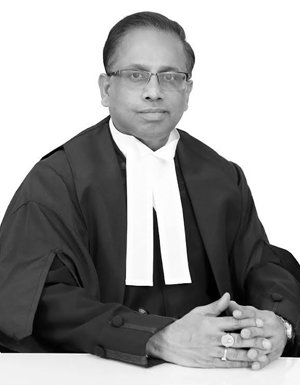
K.V. Viswanathan, J.
1. Leave granted.
2. Vashist Narayan Kumar (the appellant) hails from a
small village named Dheodha in Bihar. He belongs to the
downtrodden segment of the society. He aspired to become a
Police Constable and had applied for the said post under the
reserved category. Having possessed the eligibility criteria of
being an intermediate (10+2 pass), he also cleared the written
examination and the Physical Eligibility Test.
2
3. The appellant submitted his educational
certificates/mark sheet as well as his caste certificate for
document verification. On 11.06.2018, the final results
reflected him as having failed. The only reason was that, while
in the application form uploaded online, his date of birth was
shown as 08.12.1997, in the school mark sheet, his date of
birth was reflected as 18.12.1997.
4. Distraught, the appellant represented and thereafter
having failed to receive any response, filed a writ petition
before the High Court. His explanation was simple and
straight forward. He stated in his writ petition that, after
noticing the advertisement issued by the Central Selection
Board on 29.07.2017, he from his remote village went to the
Cyber café at Pakribarawan - a nearby town. With the
assistance of a person running the Cyber café, he filled in his
form and uploaded it online and he received application No.
7236126 indicating thereby that the online application had
been duly filled. His case was that, while filling up the form,
3
by an inadvertent error, the date of birth had got recorded as
“08.12.1997” instead of “18.12.1997”. He derived no benefit
from it as either way he fulfilled the eligibility criteria and the
age requirement. He prayed for the relief in the nature of a
mandamus to the respondents to consider his claim for
selection and direct them to issue an appointment letter
treating the date of birth as 18.12.1997, as reflected in his
educational certificates.
5. The respondents vehemently opposed the writ petition.
It was their stand that the advertisement had clearly stipulated
that candidates should correctly mention their date of birth
according to their 10
th
board certificate; that if any discrepancy
was found while matching the information, the candidature
would be cancelled; that the candidate should read the
instructions carefully and if any information is found false or
wrong, then the application form would be cancelled and legal
action will also be taken. It was further averred that the
4
advertisement also mentioned the method of making
corrections and that the appellant never availed that facility.
6. They contended that out of 9900 vacancies advertised,
9839 candidates were declared successful. They submitted
that 61 vacancies remained unfilled due to non-availability of
suitable Gorkha candidates. They prayed for the dismissal of
the writ petition.
7. The learned Single Judge, after referring to the clauses
in the advertisement, including the clause providing for
correction, held that since incorrect information was provided,
no relief could be given. The appellant filed a Letters Patent
Appeal to the Division Bench, which has been dismissed by
the impugned order. The Division Bench, while affirming the
order of the learned Single Judge, additionally recorded a
finding that the appellant had not sought for quashing of the
result, as declared on 11.06.2018, on the website.
8. Being aggrieved, the appellant is before us in this
Appeal.
5
9. We have heard Ms. Shaswati Parhi, learned counsel for
the appellant and Mr. Azmat Hayat Amanullah, learned
counsel for the State. Learned counsels have reiterated their
respective contentions as advanced in the Courts below. They
have also relied on the judgments of this Court and of some
High Courts, in support of their respective propositions.
Learned counsels have also filed comprehensive written
submissions.
Question for Consideration
10. The question that arises for consideration is whether the
error committed in the application form, which was uploaded
is a material error or a trivial error and was the State justified
in declaring the appellant as having failed on account of the
same?
Discussion
11. Admittedly, the appellant derived no advantage as even
if either of the dates were taken, he was eligible; the error also
had no bearing on the selection and the appellant himself being
6
oblivious of the error produced the educational certificates
which reflected his correct date of birth.
12. The facts are undisputed. The appellant’s application
uploaded from the cyber café did mention the date of birth as
08.12.1997 while his date of birth as recorded in the
educational certificate was 18.12.1997. It is also undisputed
that it is the appellant who produced the educational
certificates. He was oblivious of the error that had crept into
his application form. It is also undisputed that the
advertisement had all the clauses setting out that in case the
information given by the candidates is wrong or misleading,
the application form was to be rejected and necessary criminal
action was also to be taken. It also had a clause that the
candidates had to fill the correct date of birth, according to
their 10
th
board certificate. The clause further stated that
candidates will fill their name, father’s name, address etc.
correctly in the application form. It states that any
discrepancy, if found, while checking the documents, the
7
candidature of the candidate will stand cancelled. There was
also a clause providing for correction of wrong/erroneously
filled application forms, which stated that the errors can be
corrected once by re-depositing the application fee and filling
a new application. It also provided that those filling the
application on the last date could correct the application till the
following day.
13. Equally undisputed is the fact that after filling out the
application, the appellant cleared the written examination and
the Physical Eligibility Test. It was also stated in the counter
affidavit that there were 61 unfilled vacancies though it was
submitted that it was meant for the Gorkha candidates.
14. We are not impressed with the argument of the State that
the error was so grave as to constitute wrong or mis-leading
information. We say on the peculiar facts and circumstances
of this case. Even the State has not chosen to resort to any
criminal action, clearly implying that even they did not
8
consider this error as having fallen foul of the following clause
in the advertisement:-
“Instructions to fill online application form are available
on the website. It is recommended to all the candidates to
carefully read the instructions before filling the online
application form and kindly fill the appropriate response in
the following tabs. In case, the information given by the
candidates found wrong or misleading, the application
form will get rejected and necessary criminal actions will
also be taken against the candidate.”
15. Recently this Bench in Divya vs. Union of India & Ors.,
2023:INSC:900 = 2023 (13) Scale 730, while declining relief
to candidates who acquired eligibility after the date mentioned
in the notification carved out a narrow exception. There, the
judgment in Ajay Kumar Mishra vs. Union of India & Ors.,
[2016] SCC OnLine Del 6563, a case very similar to the facts
of the present case, was noted. In Ajai Kumar Mishra (supra),
Indira Banerjee, J. (as Her Ladyship then was) speaking for the
Division Bench of the Delhi High Court in para 9 stated as
under:-
9. It is true that whenever any material discrepancy is
noticed in the application form and/or when any
suppression and/ or mis-representation is detected,
9
the candidature might be cancelled even after the
application has been processed and the candidate has
been allowed to participate in the selection process.
However, after a candidate has participated in the
selection process and cleared all the stages
successfully, his candidature can only be cancelled,
after careful scrutiny of the gravity of the lapse, and
not for trivial omissions or errors.”
(emphasis supplied)
The exception for trivial errors or omissions is for the reason
that law does not concern itself with trifles. This principle is
recognized in the legal maxim - De minimis non curat lex.
16. Learned counsel for the appellant, in her written
submissions, cited the following judgments in support of her
proposition that inadvertent error in filling up the date of birth
when no advantage is derived will not constitute a wilful mis-
representation and contended that in all those cases reliefs
were given to the candidates:
i) Arkshit Kapoor vs. Union of India, 2017 SCC OnLine
Del 10154 [para 20]
10
ii) K. Sangeetha vs. Tamil Nadu Public Service
Commission (2018) SCC OnLine Mad 5075 [Paras 9 &
11]
iii) Anuj Pratap Singh vs. Union Public Service
Commission, 2018 SCC OnLine Del 10982 [Paras 15,16
& 21]
iv) Shubham Tushir vs. Union of India, 2019 SCC OnLine
Del 9831 [Paras 4 & 10]
v) Staff Selection Commission & Anr. Vs. Shubham
Tushir LPA No. 237 of 2020 before the Delhi High
Court
vi) Poonam Pal vs. M.P. Gramin Bank, (2022) SCC
OnLine MP 2921 [Paras 9-12]
17. In fact, in Anuj Pratap Singh (supra), as is clear from para
14 of the said judgment, the candidate unable to correct the
error at the first point was forced to repeat it while submitting
the application for sitting in the main exam since he had no
other option. The Court accepted the explanation and
11
condoned the error in the filling up of the column pertaining
to the date of birth.
18. The learned counsel for the State drew attention to the
verification by the appellant, of the details in a printed form
furnished by the selection board. He contended that the
appellant signed the form which carried the date of birth. First
of all, the form was a printed form which reflected the date of
birth as given by the appellant and the appellant signed the
printed form on 10.03.2018. We are inclined to accept the
explanation of the appellant that since the appellant was
unaware of his own mistake he had mechanically signed the
printed form. It is only later, on 11.06.2018, on the publication
of the result that the appellant realized the error. We do not
think that the appellant could be penalised for this insignificant
error which made no difference to the ultimate result. Errors
of this kind, as noticed in the present case, which are
inadvertent do not constitute misrepresentation or wilful
suppression.
12
19. In this case, the appellant has participated in the selection
process and cleared all the stages successfully. The error in
the application is trivial which did not play any part in the
selection process. The State was not justified in making a
mountain out of this molehill. Perhaps the rarefied atmosphere
of the cybercafe, got the better of the appellant. He omitted to
notice the error and even failed to avail the corrective
mechanism offered. In the instant case, we cannot turn a
Nelson’s eye to the ground realities that existed. In the order
dated 22.11.2021 in C.A. No. 6983 of 2021 [Prince Jaibir
Singh vs. Union of India & Ors.], this Court rightly observed
that though technology is a great enabler, there is at the same
time, a digital divide.
20. In one of the cases cited as a precedent in the counter
affidavit, before the High Court, Pankaj Paswan vs. State of
Bihar Anr., 2015 SCC On Line Patna 8739, the State had
taken a defence that many candidates applied in more than one
place and hence there could be deliberate tweaking in the date
13
of birth to take advantage of the selection process in more than
one district or region. It is very important to notice that there
is no such plea taken in the present case. If any such device or
trick had been adopted, the State would have easily detected
the same and placed the same before the Court. The fact that
the same has not been done shows that there was no trick or
device resorted to by the appellant. It is a trivial error which
appears to be a genuine and bona fide mistake. It will be unjust
to penalise the appellant for the same.
21. Learned counsel for the State, in the written submissions,
stated that the instructions clearly stipulated that if two or more
candidates obtain the same marks in the Physical Eligibility
Test, their relative rank in the final merit list could be
determined on the basis of their date of birth. The implication
in the submission is that the date of birth is a significant aspect.
On that basis, he submits that the cancellation ought to be
upheld. We do not find merit in the submission. The original
date of birth, as available is 18.12.1997, in the educational
14
certificates. There is no dispute that the appellant’s date of
birth was, in fact, 18.12.1997. In view of that, we do not see
the said clause in the instructions as an impediment for the
selection of the appellant.
22. Learned counsel for the State has also, in the written
submissions, cited the judgment of this Court in Yogesh
Kumar and Others vs. Govt. of NCT, Delhi and Others,
(2003) 3 SCC 548. The said judgment is clearly
distinguishable. There the issue was about allowing entry of
ineligible persons into the selection. While the eligibility
prescribed was Teacher’s Training Certificate from a
recognized institute or intermediate or equivalent from a
recognized Board/University with an elective subject in the
required language at the matric level, candidates with B.Ed.
degree sought appointment as Assistant Teacher. Negating
their claim, this Court held that the B.Ed. qualification cannot
be treated as a qualification higher than the Teacher’s Training
Certificate, because the nature of the training imparted for
15
grant of certificate and for grant of degree was totally different.
In that context, this Court held that deviating from the rules
and allowing entry to ineligible persons would deprive many
others who could have competed for the post. Yogesh Kumar
(supra) has no application to the facts of the present case.
Equally distinguishable are the judgments of the Delhi High
Court in Rohit Kumar and Another vs. Union of India and
Others, 2022 SCC OnLine Del 1219 and Pradeep Kumar vs.
Union of India and Others, 2022 SCC OnLine Del 239.
23. In the case of Rohit Kumar (supra), the undisputed facts,
as is clear from para 10 of the judgment, was that the candidate
was declared unsuccessful on two counts, namely, that the
OBC certificate uploaded by the candidate was not as per the
format as mentioned in the advertisement and additionally on
the ground that the date of issuance of the certificate was
wrongly mentioned in the online application.
24. In Pradeep Kumar (supra), the identity proof (Aadhaar
Card) was not uploaded and instead the self photograph of the
16
candidate has been uploaded. We find that the said two
judgments are distinguishable on facts for the reasons set out
above.
25. On the peculiar facts of this case, considering the
background in which the error occurred, we are inclined to set
aside the cancellation. We are not impressed with the finding
of the Division Bench that there was no prayer seeking
quashment of the results declared over the web. A reading of
the prayer clause in the writ petition indicates that the
appellant did pray for a mandamus directing the respondents
to consider the candidature treating his date of birth as
18.12.1997 and also sought for a direction for issuance of an
appointment letter. A Writ Court has the power to mould the
relief. Justice cannot be forsaken on the altar of technicalities.
Conclusion
26. For the reasons stated above, we set aside the judgment
of the Division Bench of the Patna High Court in LPA No.
1271 of 2019 dated 22.08.2022 and direct the respondent-State
17
to treat the appellant as a candidate who has “passed”, in the
selection process held under the advertisement No. 1 of 2017
issued by the Central Selection Board (Constable
Recruitment), Patna with the date of birth as 18.12.1997. We
further direct that if the appellant is otherwise not disqualified,
the case of the appellant be considered and necessary
appointment letter issued. We further direct that, in the event
of there being no vacancy, appointment letter will still have to
be issued on the special facts of this case. We make the said
direction, in exercise of powers under Article 142 of the
Constitution of India. We further direct that the State will be
at liberty in that event to adjust the vacancy in the next
recruitment that they may resort to in the coming years. We
notice from the written submissions of the State that 21,391
vacancies have been notified in Advertisement No.1 of 2023
and it is stated that the procedure for selection is ongoing. We
place the said statement on record. We direct compliance to
18
be made of the aforesaid direction within a period of four
weeks from today.
27. The appeal is allowed in the above terms. No order as to
costs.
…..…………………J.
(J.K. Maheshwari)
…..…………………J.
(K.V. Viswanathan)
New Delhi;
January 02, 2024.

 Login with google
Legal Notes
Add a Note....