
No Acts & Articles mentioned in this case
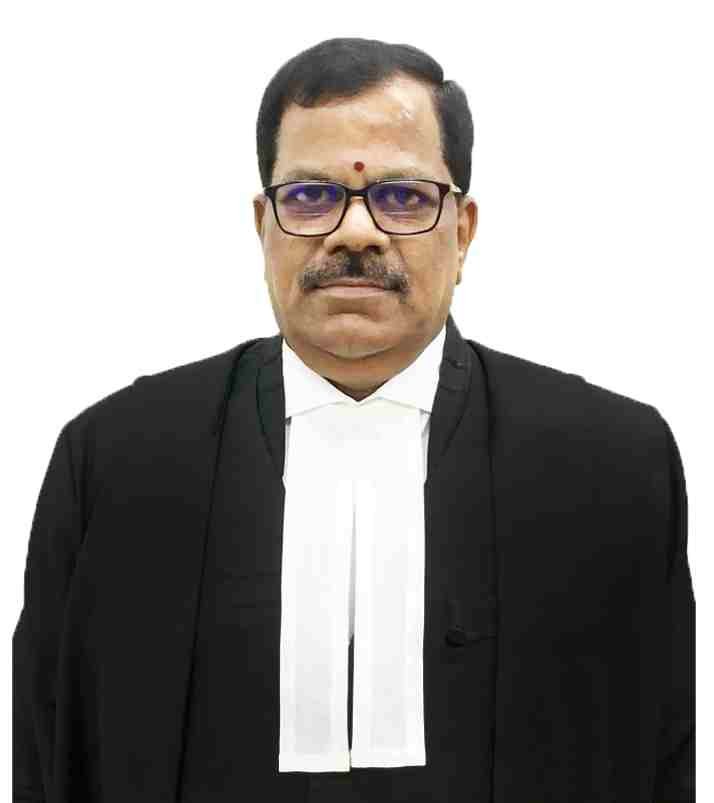
* THE HON’BLE SRI JUSTICE DUPPALA VENKATA RAMANA
+ M.A.C.M.A.No. 136 of 2011
% 04.07.2023
Between:
Vellagada Durgaprasadarao,
S/o.Kondalarao, Hindu, Aged 47 years,
Sound Engineer, Telaga by caste,
R/o.Gunuper Ward No.10, Orissa State. ... Appellant
And
1. B.Chiranjeevulu,
S/o.Dandasi, Aged about not known,
Owner of the Trucker bearing No.AP 30 T 3587,
Chinabahapalli Village, Mandasa Mandal.
2. New India Assurance Company Limited,
Represented by its Divisional Manager,
Opposite to Surya Mahal, G.T.Road,
Srikakulam. ... Respondents
DATE OF JUDGMENT PRONOUNCED : 04.07.2023
SUBMITTED FOR APPROVAL :
THE HON’BLE SRI JUSTICE DUPPALA VENKATA RAMANA
1. Whether Reporters of Local Newspapers
may be allowed to see the judgment? Yes/No
2. Whether the copies of judgment may be
marked to Law Reporters / Journals? Yes/No
3. Whether His Lordship wish to
see the fair copy of the Judgment? Yes/No
DUPPALA VENKATA RAMANA, J
2
* THE HON’BLE SRI JUSTICE DUPPALA VENKATA RAMAN A
+ M.A.C.M.A.No.136 of 2011
% 04.07.2023
Between:
Vellagada Durgaprasadarao,
S/o.Kondalarao, Hindu, Aged 47 years,
Sound Engineer, Telaga by caste,
R/o.Gunuper Ward No.10, Orissa State. ... Appellant
And
1. B.Chiranjeevulu,
S/o.Dandasi, Aged about not known,
Owner of the Trucker bearing No.AP 30 T 3587,
Chinabahapalli Village, Mandasa Mandal.
2. New India Assurance Company Limited,
Represented by its Divisional Manager,
Opposite to Surya Mahal, G.T.Road,
Srikakulam. ... Respondents
! Counsel for Appellant : Sri Aravala Ramarao
^ Counsel for 2
nd Respondent : Sri Naresh Byrapaneni
< Gist:
> Head Note:
? Cases referred:
1. 2014(2) SCC 735
2. (2002) 6 SCC 455
3. (2011) 13 SCC 236
4. (1965) 1 All ER 563
5. (2013) 8 SCC 389
6. (2022) 8 SCC 489
7. (2011) ACJ 1 (SC)
8. (2012) 8 SCC 604
9. 2009 ACJ 1298 (SC)
10. (2003) 2 SCC 274
11. 2019 ACJ 559 (SC)
This Court made the following:
3
HON’BLE SRI JUSTICE DUPPALA VENKATA RAMANA
M.A.C.M.A.No.136 of 2011
JUDGMENT:
This appeal has been preferred under Section 173 of Motor
Vehicles Act, 1988 (for short “the Act”) by the
appellant/claimant challenging the judgment and award dated
02.06.2006 delivered by the Motor Accidents Claims Tribunal-
cum-II Additional District Judge(Fast Track Court), Srikakulam
(for short “the Tribunal”) in M.V.O.P.No.228 of 2002 granting
compensation of Rs.32,000/- along with interest @ 7.5% per
annum from the date of petition till realization to the
appellant/claimant on account of the injuries sustained by him
in a road traffic accident, against both the respondents jointly
and severally.
2. For the sake of convenience, the parties are referred to as
they are arrayed before the Tribunal.
3. The brief facts, necessary for adjudication of the case, are
that a 43 years old – V.Durga Prasadarao (petitioner) was a
Sound and Radio Engineer and was drawing salary of
Rs.3,000/- per month at the time of the accident. On
27.01.2000 at 3.00 p.m., the petitioner along with Sasibhushan
Patnaik was proceeding on his motorcycle towards their village
4
and when they reached Haripuram Junction at 4.30 p.m., the
Trucker bearing No.AP 30-T-3587 driven by its driver came in an
opposite direction in a rash and negligent manner and dashed
the motorcycle due to which the petitioner, who is the rider of
the motorcycle had fallen and received crush injury to the ankle
and all over the body. He was shifted to the Government
Hospital, Palasa, for treatment. The matter was reported to the
Police alleging that the alleged accident took place as a result of
the rash and negligent driving of the said Trucker. Based on the
statement given by the petitioner/injured, Mandasa Police
registered a case in Crime No.10 of 2000 for the offence under
Sections 337 and 338 IPC. After investigation of the case, charge
sheet was submitted against the accused -driver (Ch.Venkata
Rao) for having committed the offence punishable under
Sections 337 and 338 IPC.
(ii) The petitioner/injured filed an application claiming
compensation of a sum of Rs.2,50,000/- before the Tribunal on
account of the injuries sustained by him in the said accident.
(iii) The 1
st respondent filed a written statement
contending inter alia that the averments of the petition are false.
It is further averred that the claims made under various heads
are all imaginary figures to gain wrongfully and in fact, the
5
driver of the offending vehicle was having valid driving licence
and the accident took place only due to the rash and negligent
driving of the motorcycle by its rider (petitioner). It is further
averred that the alleged accident took place in a busy locality
and there was no chance to drive the offending vehicle at a high
speed. It is further averred that the said Trucker was insured
with the 2
nd respondent and this respondent is not liable to pay
the compensation.
(iv) The 2
nd respondent/Insurance Company filed a
written statement denying all the allegations made in the
petition. It is contended inter alia that the driver of the 1
st
respondent was not having valid driving licence to drive the
offending vehicle. Hence, this respondent is not at all liable to
pay the compensation. It is further averred that the petitioner
and the 1
st respondent have to prove that the offending vehicle,
which involved in the accident, was covered by a valid insurance
policy by the date of the accident, otherwise, this respondent is
not liable to pay any compensation. Even if the policy is
established, this respondent is not liable to pay the
compensation unless it is proved that Section 64 VB of the
Insurance Act, 1939 and Rules 58/59 of the Insurance Rules,
1939 are complied with. The petitioner has to prove that he was
6
aged about 43 years and was working as a Sound Engineer
under self-employment and was getting Rs.3,000/- per month
etc. It is further averred that the compensation claimed by the
petitioner is excessive and prayed to dismiss the petition.
(v) In view of the pleadings of the parties, the Tribunal
framed the following issues:
(1) Whether the petitioner received injuries in the motor
accident that took place on 27.01.2000 at Ratti road
junction, Haripuram on NH-5 road, Mandasa Mandal
in which the Trucker bearing No.AP 30 T 3587 owned
by the 1
st respondent was involved?
(2) Whether the accident in question occurred only due to
the rash and negligent driving of the Trucker bearing
No.AP 30 T 3587 by its driver?
(3) Whether the petitioner is entitled for compensation?, if
so, to what amount and from which of the
respondents?
(4) To what relief?
(vi) In order to establish his claim, at the time of
enquiry, P.Ws.1 to 3 were got examined and Exs.A.1 to A.13 and
Ex.X.1 were got marked on behalf of the petitioner/claimant. No
oral evidence was adduced and no documents were marked on
behalf of the 1
st & 2
nd respondents.
(vii) On appreciation of the evidence of P.Ws.1 to 3 and
placing reliance on Exs.A.1 to A.13 i.e., Certified copies of FIR,
7
charge sheet, MVI report, Wound Certificate, Disability
Certificate, Medical Bills etc., the learned Tribunal was of the
view that the alleged accident occurred due to the collision
between two vehicles and the amount of compensation ought to
have been reduced by 50% payable to the claimant and passed
an award granting compensation of Rs.32,000/- with interest @
7.5% per annum and costs against the 1
st and 2
nd respondents
from the date of the claim till realization.
(viii) The breakup details of the compensation awarded by
the Tribunal, are tabulated hereunder:
S.No. Heads of compensation Amount of compensation
awarded in Rs.
1 Medical Expenses 15,000/-
2 Pain & Suffering 10,000/-
3 Loss of earnings 9,000/-
4 Incidental expenses 5,000/-
5 Permanent Disability 25,000/-
Total 64,000 /-
(ix) Since the accident occurred due to head-on collision
of two vehicles (motorcycle and Trucker), the amount of
compensation was reduced by 50% out of Rs.64,000/- payable
to the claimant. Accordingly, the Tribunal passed an award
granting compensation of Rs.32,000/- as stated supra.
(x) Aggrieved by, and dissatisfied with the said award
passed by the learned Tribunal, the petitioner/claimant
8
preferred the present appeal seeking enhancement of
compensation.
4. Learned counsel for the petitioner/claimant would submit
that, considering the evidence on record, the Tribunal ought to
have awarded higher compensation. Further, he would submit
that the claimant has preferred the instant appeal on the ground
that the findings recorded by the Tribunal are not sustainable in
the eye of law and the same suffer from an error apparent on the
face of the record. He would further submit that the finding of
the learned Tribunal in the matter of contributory negligence is
erroneous and the same is liable to be set aside. He would
further submit that, in the absence of any evidence to show that
the wrongful act on the part of the petitioner contributed either
to the accident or to the nature of the injuries sustained, he
could not have been held guilty of contributory negligence.
Hence, the reduction of 50% towards contributory negligence, is
clearly unjustified and the same has to be set aside. He would
further submit that the petitioner would have got more
compensation than the awarded amount and the amount of
compensation awarded by the Tribunal is not justified and called
for interference of this Court.
9
5. Learned Standing Counsel for the 2
nd respondent/New
India Assurance Company would submit that the Tribunal has
rightly assumed the income of the injured and calculated the
compensation amount accordingly and therefore, no interference
is required by this Court. He further argued that, since it was
head-on collision, the learned Tribunal reduced the amount upto
to 50% from the compensation. Further, he would submit that
the driver of the offending vehicle was not negligent in driving
the same. Even if it is held that the driver of the offending
vehicle drove the same rash and negligently, then it is a fit case
of contributory negligence as it was a head-on collision between
the motorcycle and the Trucker. Therefore, the learned Tribunal
has found the percentage of negligence as 50% and accordingly,
evaluated the compensation amount. He, therefore, prayed to
dismiss the appeal.
6. In the light of the above rival arguments, the points for
consideration in this appeal are:
1. Whether a finding of contributory negligence is to be
arrived at, by appreciating the evidence on record,
regarding the aspect whether the claimant or the
driver of the Trucker failed to take reasonable care
and caused the accident?
2. Whether the compensation awarded by the Tribunal
is just and reasonable in the facts and circumstances
of the case, or requires enhancement?
10
POINT No.1:
7. Considered the submissions of the learned counsels,
perused and assessed the entire evidence on record including
the exhibited documents. A perusal of the impugned award
would show that the Tribunal has framed the Issue No.2 as to
whether the accident in question occurred only due to rash and
negligent driving of the Trucker bearing No.AP 30 T 3587, by its
driver, to which, the Tribunal after considering the oral evidence
coupled with the documents, gave a finding on Issue No.2 at
Page No.4 of the judgment that as it was a case of head-on
collision of two vehicles, the amount of compensation has been
reduced by 50% payable to the claimant.
8. On perusal of the judgment, this Court is of the view that
the Tribunal committed an error in reduction of 50% towards
contributory negligence which is clearly unjustified, as there was
no evidence on record to show that the wrongful act on the part
of the injured contributed either to the accident or to the nature
of the injuries sustained by him. The petitioner/injured could
not have been held guilty of contributory negligence in cases
where the Police attributes the negligence against the driver of
one vehicle involved, unless there is any other independent
evidence adduced is available to prov e the contributory
11
negligence. The charge sheet was submitted by the Police under
Ex.A.2, after the investigation, holding that the driver of the
Trucker committed the offence.
9. The Hon‟ble Apex Court in Syed Sadiq & Others Vs.
Divisional Manager, United India Insurance Company
Limited,
1 at Para No.29 held as follows:
“29. On the matter of extent of contribution to the accident,
it is held by the Tribunal that the appellant claimants
herein should have taken utmost care while moving on the
highway. Looking at the spot of the accident, the Tribunal
concluded that the appellant claimants were moving on the
middle of the road which led to the accident. Therefore, the
Tribunal concluded that though the tractor has been
charge-sheeted under Sections 279 and 338 IPC, but given
the facts and circumstances of the case, the appellant
claimants also contributed to the accident to the extent of
25%. The High Court without assigning any reason
concurred with the findings of the Tribunal with respect to
contributory negligence. We find it pertinent to observe that
both the Tribunal and the High Court erred in holding the
appellant claimants in these appeals liable for contributory
negligence. The Tribunal arrived at the above conclusion
only on the basis of the fact that the accident took place in
the middle of the road in the absence of any evidence to
prove the same. Therefore, we are inclined to hold that the
contribution of the appellant claimants in the accident is not
proved by the respondents by producing evidence and
therefore, the finding of the Tribunal regarding contributory
1
2014 (2) SCC 735
12
negligence, which has been upheld by the High Court, is
set aside.”
10. In another decision in Pramodkumar Rasikbhai Jhaveri
Vs. Karmasey Kauvargi Tak and Others
2, the Hon‟ble Apex
Court at Para No.11 held as follows:
“11. It is important to note that the respondents did not
contend before the Tribunal that there was contributory
negligence on the part of the appellant, the driver of the car.
There was not even an allegation in the written statement
filed by the respondents that the car driver was negligent
and the accident occurred as a result of partial negligence
of the car driver. …………………….. In this factual situation,
the High Court was not justified in holding that there was
contributory negligence on the part of the
appellant….………… .”
11. In view of the principles laid down by the Hon‟ble Apex
Court, so far as the contributory negligence on the part of the
appellant/claimant is concerned, since the criminal case was
registered against the driver of the offending vehicle and he did
not turn up to explain in what circumstances the accident
occurred, a perusal of the evidence adduced by the
appellant/claimant reveals that the witnesses examined by the
appellant/claimant corroborated the fact in respect of the
accident. The offending vehicle driven by its driver
2
(2002) 6 SCC 455
13
Ch.Venkatarao was not disputed by the 1
st respondent/owner of
the offending vehicle. Respondent No.2/Insurance Company did
not examine any witnesses to rebut the evidence of t he
claimant/injured and the documents relating to the criminal
case pending against the driver of the offending vehicle and also
Ex.A.2/Certified copy of the charge sheet.
12. After going through the said charge sheet, it is apparent
that the investigating agency has found that the driver of the
Trucker bearing No.AP 30 T 3587 drove the same in a rash and
negligent manner and dashed against the motorcycle of the
petitioner/injured due to which he sustained injuries. The
Tribunal had arrived at a conclusion that it was head-on
collision. Unless there is any evidence to show that the head-on
collision was due to the contributory negligence of the
appellant/claimant or he was driving on the wrong side of the
road or did anything wrong, it cannot be held that the accident
occurred due to the contributory negligence of the
appellant/claimant. In a case of head-on collision, the finding
has to be recorded to the effect that the drivers of both the
vehicles have to be held responsible to have contributed equally
to the accident. In the present case, as stated above, there is no
spot map (rough sketch) to establish head-on collision of the
14
Trucker and the motorcycle. The accident took place in a broad
day light at 4.30 p.m. No independent witnesses have been
examined by the Insurance Company to establish the plea of the
contributory negligence. Merely because that there was a head-
on collision, it cannot be presumed that the drivers of both the
vehicles were equally responsible for the accident. Therefore, this
Court is of the view that the learned Tribunal was not justified in
holding that the appellant/claimant is liable for the said
accident. The finding of the contributory negligence shall stand
set aside.
13. In view of the principles laid down by Hon‟ble Apex Court
in the above judgments, the findings of the learned Tribunal are
found to be contrary to the settled principles of law in respect of
the contributory negligence of the appellant/injured. Therefore,
in the case on hand, the Tribunal went wrong in fixin g the
contributory negligence, in the absence of any evidence to show
that the wrongful act on the part of the appellant/claimant
contributed either to the accident or to the nature of the injuries
sustained, the appellant/claimant could not have been held
guilty of contributory negligence. Therefore, the reduction of 50%
towards contributory negligence is clearly unjustified without
support of any convincing and cogent evidence that too
15
overlooking the Police charge sheet under Ex.A.2. In view of the
matter, the finding entered into by the Tribunal fixing 50%
contributory negligence against the appellant/petitioner is illegal
and the same is accordingly set aside.
POINT No.2:
14. The next question is the quantum of compensation to
which the appellant/claimant is entitled to. Before considering
the said aspect, it is necessary to set out legal position as
emerging from the various judgments of the Hon‟ble Supreme
Court of India.
15. The Tribunal observed that the offending vehicle was
covered with the insurance policy and it was in force at the time
of the accident, which is evident from Ex.A.3/Motor Vehicle
Inspector‟s Report. The description of the vehicles incurred in
the accident was shown in Column No.5 of Ex.A.3/MVI Report.
At Column No.15 - the date of expiry of the insurance, name and
address of the Insurance Company, it was mentioned that the
Insurance Company‟s cover note No.25917 (comp) of the New
India Assurance Company Limited from 20.03.1999 to
19.03.2000 and in Column No.17 the particulars of the driver‟s
licence was mentioned as DL No.2540/98/SKL/V/L:
21.08.2001, LA/SKL. Though the policy of the vehicle was not
16
produced by either of the parties, it is evident from Ex.A.3/MVI
Report that the insurance policy was in existence as on the date
of the accident and the driver of the offending vehicle was
possessing valid driving licence till 21.08.2001.
16. The Tribunal, while assessing the compensation payable to
the claimant, has not taken into consideration of his monthly
earnings, though he pleaded in the claim petition that he was
working as a Sound and Radio Engineer and earning Rs.3,000/-
per month and he lost his income due to the injuries sustained
by him and he was affected with the permanent disability. In
support of his contention, he has not produced any
documentary proof to show that he was a Sound and Radio
Engineer and was earning Rs.3,000/- per month. In the absence
of any material evidence, this Court is of the view that the
appellant/injured can be treated as a skilled labourer and his
monthly income as on the date of the accident has to be taken
into consideration, as per the decision of the Hon‟ble Apex Court
in Ramachandrappa Vs. Manager, Royal Sundaram
Alliance Insurance Company Limited ,
3 wherein, at Para
Nos.13 & 15, it was held as follows:
3
(2011) 13 SCC 236
17
“13. In the instant case, it is not in dispute that the
appellant was aged about 35 years and was working as a
Coolie and was earning Rs.4500/- per month at the time of
accident. This claim is reduced by the Tribunal to a sum of
Rs.3000/- only on the assumption that wages of the
labourer during the relevant period viz., in the year 2004,
was Rs.100/- per day. This assumption in our view has no
basis. Before the Tribunal, though Insurance Company
was served, it did not choose to appear before the Court
nor did it repudiated the claim of the claimant. Therefore,
there was no reason for the Tribunal to have reduced the
claim of the claimant and determined the monthly earning
a sum of Rs.3000/- per month. Secondly, the appellant
was working as a Coolie and therefore, we cannot expect
him to produce any documentary evidence to substantiate
his claim. In the absence of any other evidence contrary to
the claim made by the claimant, in our view, in the facts of
the present case, the Tribunal should have accepted the
claim of the claimant.
14…………….
15. In the present case, appellant was working as a Coolie
and in and around the date of the accident, the wage of the
labourer was between Rs.100/- to Rs.150/- per day or
Rs.4500/- per month. In our view, the claim was honest
and bonafide and, therefore, there was no reason for the
Tribunal to have reduced the monthly earning o f the
appellant from Rs.4500/- to Rs.3000/- per month. We,
therefore, accept his statement that his monthly earning
was Rs.4500/”.
17. In the instant case, it is crystal clear that the accident
occurred in the year 2000. The wages of a labourer was between
Rs.100/- to Rs.150/- per day or Rs.3,000/- to Rs.4,500/- per
18
month. Therefore, following the parameters laid down by the
Hon‟ble Apex Court in Ramachandrappa’s case (supra), this
Court is of the considered opinion that the appellant/claimant,
who claimed himself to be a Sound and Radio Engineer, can be
treated as a skilled labourer. But, in the absence of material
evidence to that effect, the claimant‟s notional income can be
safely fixed @ Rs.3,000/- per month. In the above judgment,
since the accident occurred in the year 2004, the Hon‟ble Apex
Court has fixed the notional income at Rs.4,500/- per month.
Whereas, in the instant case, since the accident occurred in the
year 2000, the notional income of the appellant/injured can
safely be fixed at Rs.3,000/- per month, which is just and
reasonable. There is no reason for the Tribunal for not
considering the monthly income of the injured, while
determining the compensation.
18. It is a well settled principle that while determining the
compensation payable to petitioner/claimant in the claim filed
under the Motor Vehicles Act, 1988, this Court referred to the
judgment of the Court of Appeal in Ward Vs. James
4 Halsbury‟s
Laws of England, 4
th Edition, Volume 12 (Page 446) wherein, it
was held as follows:
4
(1965) 1 All ER 563
19
“When compensation is to be awarded for pain and
suffering and loss of amenity of life, the special
circumstances of the claimant have to be taken into
account including his age, the unusual deprivation he
has suffered, the effect thereof on his future life. The
amount of compensation for non-pecuniary loss is not
easy to determine but the award must reflect that
different circumstances have been taken into
consideration”.
19. Further, it is relevant to refer to the judgment of the
Hon‟ble Apex Court in Rekha Jain Vs. National Insurance Co.
Ltd.,
5 wherein, at Para No.40, it was held as follows:
“40. It is well settled principle that in granting
compensation for personal injury, injured has to be
compensated (1) for pain and suffering (2) for loss of
amenities, (3) shortened expectation of life, if any, (4)
loss of earnings or loss of earning capacity or in some
cases for both, and (5) medical treatment and other
special damages”.
20. It is relevant to refer to the judgment of the Hon‟ble Apex
Court in Abhimanyu Pratap Singh Vs. Namita Sekhon and
another
6 wherein, at Para Nos.11, 12 and 13 it was held as
follows:
11. In Philipps v. London & South Western Railway
Co. [Philipps v. London & South Western Railway Co. ,
5
(2013) 8 SCC 389
6
(2022) 8 SCC 489
20
(1879) LR 5 QBD 78 (CA)] , it was held that by making a
payment of compensation for the damages, the court cannot
put back again the claimant into his original position. On
the date of determination of the compensation, he is being
compensated but he cannot sue again, therefore, the
compensation must be full and final while determining the
same.
12. In Mediana, In re [Mediana, In re, 1900 AC 113
(HL)] , it is said that the determination for an amount of
compensation to the damages is an extreme task. What
may be adequate amount for a wrongful act and can it be
compensated by money, particularly towards pain and
suffering. By an arithmetical calculation, it cannot be
decided what may be the exact amount of money which
would represent the pain and suffering to a person, but as
per recognised principles, damages must be paid.
13. In H. West & Son Ltd. v. Shephard [H. West & Son
Ltd. v. Shephard, 1964 AC 326 : (1963) 2 WLR 1359 (HL)] ,
it was held that payment of compensation in terms of
money may be awarded so that something tangible may be
procured to replace something else of the like nature which
has been destroyed or lost. But money cannot renew a
physical frame that has been battered and shattered,
however the courts must consider to award sums, which
may be reasonable. Simultaneously, uniformity in the
general method of approach is also required. Thereby,
possible comparable injuries can be compensated by
comparable awards……….”
21. If the above judgments are read together, the issue of
adequacy and grant of just and reasonable amount of
compensation requires consideration is what should be the basis
21
for determination and what may be reason for awarding such
compensation. Applying the uniform methodology for
determination of compensation, comparable to the injuries,
thereby a person, can lead his life though his physical frame
cannot be reversed. In the present case of nature, the learned
Tribunal awarded compensation contrary to the Hon‟ble Apex
Court‟s judgments, which is not just and reasonable.
22. In the instant case, the injured sustained 40% disability as
per Ex.A.13/Disability Certificate dated 28.01.2006 issued by
P.W.3-Dr.B.Udaya Kumar, Associate Professor of Orthopedics,
K.G.Hospital, Visakhapatnam, and who treated the injured,
deposed that on 28.01.2006 he has examined the
appellant/claimant and found that he sustained compound
dislocation of right ankle and he estimated the disability at 40%
and the disability is permanent in nature. He further deposed
that he treated the patient from 04.02.2000 to 04.03.2000 at
St.Joseph Hospital, Visakhapatnam. He was treated by external
fixation on 17.02.2000. Subsequently, skin grafting was done
on 26.02.2000. Ex.X.1 is the case sheet and Ex.A.4 is the
Wound Certificate. The appellant/injured produced
Ex.A.4/Wound Certificate issued by Dr.Jagannadham, Civil
Assistant Surgeon, Palasa, who treated the injured. On perusal
22
of Ex.A.4/Wound Certificate, it is noted the following injuries. 1.
Fracture Dislocation of Tibia and Fibula from the ankle joint
open crush injury. 2. Lacerated injury 3 cm over right parietal
region. He opined that Injury No.1 is grievous and Injury No.2 is
simple in nature.
23. A perusal of the evidence of P.W.3 coupled with
Ex.A.4/Wound Certificate and Ex.A.13/Disability Certificate,
shows that the injured sustained 40% disability .
Ex.A.13/disability certificate was issued by P.W.3 but not by the
Medical Board. Mere non-issuance of Disability Certificate by the
Medical Board, Ex.A.13 cannot be discarded and it can be taken
into consideration. So far as the income of the appellant/injured
is concerned, the learned Tribunal committed an error while
evaluating the future earnings without taking into consideration
of his notional income at Rs.3,000/- per month. Therefore, the
award passed by the Tribunal needs to be modified under the
head of loss of earning capacity by following the judgment of the
Hon‟ble Apex Court in Raj Kumar Vs. Ajay Kumar
7.
24. However, it may be appropriate to mention here, while
laying down the legal position with regard to awarding
compensation under the Motor Vehicles Act, the case of Kavita
7
2011 ACJ 1 (SC)
23
Vs. Deepak and Others
8 wherein, the Hon‟ble Apex Court relied
on the judgment in the case of Raj Kumar (supra), to award
compensation. At this juncture, it is relevant to refer to Raj
Kumar’s case (supra) wherein, at Para Nos.4, 5 & 9, it was held
as follows:
“4. The provision of the Motor Vehicles Act, 1988 (`Act' for
short) makes it clear that the award must be just, which
means that compensation should, to the extent possible,
fully and adequately restore the claimant to the position
prior to the accident. The object of awarding damages is to
make good the loss suffered as a result of wrong done as
far as money can do so, in a fair, reasonable and equitable
manner. The court or tribunal shall have to assess the
damages objectively and exclude from consideration any
speculation or fancy, though some conjecture with
reference to the nature of disability and its consequences,
is inevitable. A person is not only to be compensated for
the physical injury, but also for the loss which he suffered
as a result of such injury. This means that he is to be
compensated for his inability to lead a full life, his inability
to enjoy those normal amenities which he would have
enjoyed but for the injuries, and his inability to earn as
much as he used to earn or could have earned. (See
C.K.Subramonia Iyer Vs. T.Kunhikuttan Nair – AIR 1970
SC 376, R.D.Hattangadi Vs. Pest Control (India) Ltd. –
1995 (1) SCC 551 and Baker Vs. Willoughby – 1970 AC
467)
5. The heads under which the compensation need to be
awarded in personal injury cases as under:
Pecuniary Damages (Special Damages)
(i) Expenses relating to treatment, hospitalization,
medicines, transportation, nourishing food, and
miscellaneous expenditure.
(ii) Loss of earnings (and other gains) which the injured
would have made had he not been injured,
comprising:
(a) Loss of earning during the period of treatment;
(b) Loss of future earnings on account of permanent
disability.
(iii) Future medical expenses.
8
(2012) 8 SCC 604
24
Non-pecuniary damages (General damages):
(iv) Damages for pain, suffering and trauma as a
consequence of the injuries.
(v) Loss of amenities (and / or loss of prospects of
marriage)
(vi) Loss of expectation of life (shortening of normal
longevity)
In routine personal injury cases, compensation will
be awarded only under heads (i), (ii) (a) and (iv). It is
only in serious cases of injury, where there is specific
medical evidence corroborating the evidence of the
claimant, that compensation will be granted under
any of the heads (ii)(b), (iii), (v) and (vi) relating to loss
of future earnings on account of permanent
disability, future medical expenses, loss of amenities
(and/or loss of prospects of marriage) and loss of
expectation of life. Assessment of pecuniary
damages under item (i) and item (ii)(a) do not pose
much difficulty as they involve reimbursement of
actual and are easily ascertainable from the
evidence. Award under the head of future medical
expenses – item (iii) – depends upon specific medical
evidence regarding need for further treatment and
cost thereof. Assessment of non-pecuniary damages
– items (iv), (v) and (vi) – involves determination of
lump sum amounts with reference to circumstances
such as age, nature of injury/deprivation/disability
suffered by the claimant and the effect thereof on the
future life of the claimant. Decision of this Court and
High Courts contain necessary guidelines for award
under these heads, if necessary. What usually
poses some difficulty is the assessment of the loss of
future earnings on account of permanent disability –
item (ii)(a). We are concerned with that assessment
in this case. Assessment of future loss of earnings
due to permanent disability.
6. ……….
7. ….…….
8. ….……
9. Therefore, the Tribunal has to first decide whether
there is any permanent disability and if so the extent
of such permanent disability. This means that the
tribunal should consider and decide with reference to
the evidence: (i) whether the disablement is
permanent or temporary; (ii) if the disablement is
permanent, whether it is permanent total
disablement or permanent partial disablement, (iii) if
the disablement percentage is expressed with
25
reference to any specific limb, then the effect of such
disablement of the limb on the functioning of the
entire body, that is the permanent disability suffered
by the person. If the Tribunal concludes that there is
no permanent disability then there is no question of
proceeding further and determining the loss of future
earning capacity. But if the Tribunal concludes that
there is permanent disability then it will proceed to
ascertain its extent. After the Tribunal ascertains the
actual extent of permanent disability of the claimant
based on the medical evidence, it has to determine
whether such permanent disability has affected or
will affect his earning capacity.”
25. In the present case, the Tribunal committed an error in
not applying the multiplier in view of the principles laid down in
Sarla Verma Vs. Delhi Transport Corporation
9, wherein, it was
held at Para-21, as under:
“21. We therefore hold that the multiplier to be used
should be as mentioned in column (4) of the Table above
(prepared by applying Susamma Thomas, Trilok Chandra
and Charlie), which starts with an operative multiplier of
18 (for the age groups of 15 to 20 and 21 to 25 years),
reduced by one unit for every five years, that is M-17 for
26 to 30 years, M-16 for 31 to 35 years, M-15 for 36 to 40
years, M-14 for 41 to 45 years, and M-13 for 46 to 50
years, then reduced by two units for every five years, that
is, M-11 for 51 to 55 years, M-9 for 56 to 60 years, M-7 for
61 to 65 years and M-5 for 66 to 70 years.”
26. The Claims Tribunal committed an illegality in awarding a
meager amount of compensation payable to the claimant
without following the decisions rendered by the Hon‟ble Apex
Court stated supra.
9
2009 ACJ 1298 (SC)
26
27. The Tribunal erred in awa rding compensation under
various conventional heads. As per the decision in Raj Kumar
case (supra), loss of future earnings and the loss of earning
capacity have to be assessed on the basis of the evidence. The
claimant, was a skilled labour by the date of the accident. As per
the judgment in Ramachandrappa’s case (supra), in my view, the
claim was honest and bona fide. Therefore, the notional income
of the appellant/injured is fixed @ Rs.3,000/- per month as
stated supra, at the time of the accident. The Tribunal has failed
to consider the appropriate income of the claimant and did not
award just and reasonable compensation under different heads.
As such, it would be appropriate to consider the quantum by
taking a sum of Rs.3,000/- per month as the income of the
injured at the time of the accident.
28. The Disability Certificate issued by P.W.3(Doctor) under
Ex.A.13 shows 40% disability. But, it was not issued by the
Medical Board. There may be variation of 10% not exceeding
above. Therefore, it should be taken into consideration of the
disability of the appellant at 30%. In view of the suggestion put
to P.W.3 by the counsel for the Insurance Company that the
appellant/injured cannot move without assistance, but with the
help of stick he can walk. Therefore, considering the evidence of
27
P.W.3 and Ex.A.13/disability certificate, taking 30% disability of
the appellant would be just and reasonable. Thus, the
calculation of compensation towards loss of future earnings, as
per the judgment of the Hon‟ble Supreme Court of India in Raj
Kumar’s case will be as follows:
a) Annual income before the accident …. Rs.36,000/-
b) Loss of future earnings per annum
(30% of the prior annual income) …. Rs. 10,800/-
c) Multiplier applicable with reference
to age (appellant‟s age was 43 years
at the time of the accident) …. 14
d) Loss of future earnings (10,800 x 14) ….Rs.1,51,200/-
29. Therefore, the appellant/claimant is entitled to an amount
of Rs.1,51,200/- towards loss of future earnings.
30. The Tribunal awarded an amount of Rs.15,000/- towards
medical expenses. The Tribunal has committed an error while
awarding compensation under Medical Expenses actually which
was spent by the claimant. He produced medical bills under
Exs.A.6 and A.8 showing that he spent an amount of
Rs.63,167/-. The appellant/claimant, who was skilled labour is
not supposed to be that much of meticulous so as to maintain
the bills for any future use. The claimant has remained in the
hospital on two occasions for a total period of more than one
28
month and he must have incurred more expenses. Therefore, the
claimant has been awarded Rs.1,50,000/ - towards medical
expenses as he sustained crush injury and skin grafting was
done by the Doctor while operating the right ankle. Therefore,
the appellant is entitled to an amount of Rs.1,50,000/- against
Rs.15,000/-. The compensation under the head of medical
expenses is enhanced from Rs.15,000/- to Rs.1,50,000/-.
31. The Tribunal ought to have awarded compensation
towards loss of amenities as the person who is suffering
permanent disability at 30% cannot lead a normal life. P.W.3
(Doctor), who treated him, stated that the patient could not walk
freely without the help of a stick. The compensation is only the
means to grant some support for the loss he suffered with which
he is expected to live for the rest of his life. By making a
payment of compensation for damages, the Court cannot be put
back again the claimant into his original position. On the date
of determination of compensation, he is being compensated but
he cannot sue again. Therefore, this Court is of the view that
Rs.1,00,000/- has to be awarded towards the loss of amenities
of life.
32. Further, the Tribunal has not awarded any amount
towards loss of earnings for the period of treatment. The
29
accident occurred on 27.01.2000. He underwent treatment as
inpatient for one month i.e., from 04.02.2000 to 04.03.2000 and
normally the patient was advised two months bed rest because
skin grafting was done to the crush injury. Altogether, for three
months, he lost his earnings. By taking into consideration the
evidence, the loss of earnings for three months (90 days) as
stated above, would come to Rs. 9,000/- (Rs.3,000 x 3 =
Rs.9,000/-). As such, the petitioner/claimant is entitled to an
amount of Rs.9,000/- under the head of „loss of earnings‟.
33. Apart from that, the amount under another conventional
head i.e., Attendant Charges needs to be awarded to the injured,
as the Tribunal has not awarded any amount towards attendant
charges. Since the injured was hospitalized for one month and
he has to take bed rest for two months. As such, the attendant
may also loss his earnings for the said period of treatment and
bed rest of the injured. Therefore, the petitioner/claimant is
entitled to an amount of Rs.9,000/- (Rs.3,000 x 3) towards
attendant charges. Hence, an amount of Rs.9,000/- towards
attendant charges deserves to be granted to the claimant.
34. The Tribunal has not awarded any amount towards extra
nourishment and transportation. This Court is of the view that
30
Rs.25,000/- is sufficient for transportation and extra
nourishment.
35. In the instant case, the Tribunal has awarded
compensation of Rs.10,000/- towards pain and suffering. It
needs to be enhanced to Rs.1,00,000 /- as the injured was
operated for dislocation of his right ankle and skin grafting was
done, definitely he would have suffered a lot. The sufferance of
injured cannot be compensated in terms of money. Therefore,
the compensation under the head of pain and suffering is
enhanced from Rs.10,000/- to Rs.1,00,000/-.
36. In Sarla Verma’s case (supra) the Hon‟ble Apex Court,
while elaborating the concept of „just compensation‟ observed as
under:
“Just compensation is adequate compensation which is
fair and equitable, on the facts and circumstances of the
case, to make good the loss suffered as a result of the
wrong, as far as money can do so, by applying the well
settled principles relating to award of compensation. It is
not intended to be a bonanza, largesse or source of
profit.”
37. On an overall re-appreciation of the pleadings, material on
record and the law laid down by the Hon‟ble Supreme Court in
the afore-cited decisions, I am of the definite opinion that the
appellant/claimant is entitled to enhancement of compensation
31
as modified and recalculated above and given in the table below
for easy reference.
S.No Name of the Head Enhanced/Reduced by
this Court in Rs.
1 Loss of future
earnings
1,51,200/-
2 Medical Expenses &
Cost of Medicines
1,50,000/-
3 Loss of amenities 1,00,000/-
4 Loss of earnings
during the period of
treatment & rest
9,000/-
5 Attendant Charges 9,000/-
6 Transportation &
Extra Nourishment
25,000/-
7 Pain & Suffering 1,00,000/-
Total 5,44,200/-
(-) Compensation awarded
By the Tribunal
32,000/-
Enhanced amount 5,12,200/-
38. As per the decision of the Hon‟ble Supreme Court of India
in the case of Nagappa Vs. Gurudayal Singh and
others
10, under the provisions of the Motor Vehicles Act, 1988,
there is no restriction that compensation could be awarded only
up to the amount claimed by the claimant. In an appropriate
case where from the evidence brought on record, if Tribunal
/Court considers that claimant is entitled to get more
compensation than claimed, the Tribunal may pass such award.
There is no embargo to award compensation more than that
10
(2003) 2 SCC 274
32
claimed by the claimant. Rather it is obligatory for the Tribunal
and Court to award “just compensation”, even if it is in the
excess of the amount claimed. The Tribunals are expected to
make an award by determining the amount of compensation
which should appear to be just and proper. In the present case,
the compensation as awarded by the Claims Tribunal, against
the background of the facts and circumstances of the case, is
not just and reasonable and the claimant is entitled to more
compensation though he might not have claimed the same at the
time of filing of the claim petition.
39. Therefore, in view of the foregoing discussion, this Court is
of the opinion that the award passed by the Tribunal warrants
interference and thereby enhanced the compensation from
Rs.32,000/- to Rs.5,44,200/-.
40. Resultantly, the appeal is allowed with costs and the
compensation amount is enhanced from Rs. 32,000/- to
Rs.5,44,200/- along with interest @ 7.5% per annum from the
date of filing of the claim petition till the date of realization,
against the Respondents 1 and 2 jointly and severally.
(ii) Respondents 1 and 2 are directed to deposit the
compensation amount within two mo nths from the date of this
33
judgment, failing which execution can be taken out against
them.
(iii) The appellant/claimant is directed to pay the
requisite Court-fee in respect of the enhanced amount awarded
over and above the compensation claimed (As per the judgment
of Hon‟ble Apex Court in Ramla Vs. National Insurance
Company Limited
11).
(iv) On such deposit, the claimant is permitted to
withdraw the entire amount with accrued interest and costs, by
filing a proper application before the Tribunal.
(v) The impugned award of the learned Tribunal stands
modified to the aforesaid extent and in the terms and directions
as above.
(vi) The record be sent back to the Tribunal within three
weeks from this day.
(vii) As a sequel, interlocutory applications pending for
consideration, if any, shall stand closed.
JUSTICE DUPPALA VENKATA RAMANA
04.07.2023
Dinesh
Mjl/*
L.R.Copy to be marked
11
2019 ACJ 559 (SC)
34
HON’BLE SRI JUSTICE DUPPALA VENKATA RAMANA
M.A.C.M.A.No.136 OF 2011
04.07.2023
Dinesh
Mjl/*
L.R.Copy to be marked

 Login with google
Legal Notes
Add a Note....