
As per case facts, the appellant sustained injuries in a motor vehicular accident and sought compensation under the Motor Vehicles Act. Dissatisfied with the compensation awarded by the Tribunal, the ...
No Acts & Articles mentioned in this case
FAO-389-2022 (O&M) -1-
IN THE HIGH COURT OF PUNJAB & HARYANA
AT CHANDIGARH
FAO-389-2022 (O&M)
Reserved on : 05.12.2025
Date of Decision: 11.12.2025
Date of Uploading : 13.12.2025
Vijay Kumar ......Appellant
Vs.
M/s New Guru Kansi Transport Company and others......Respondents
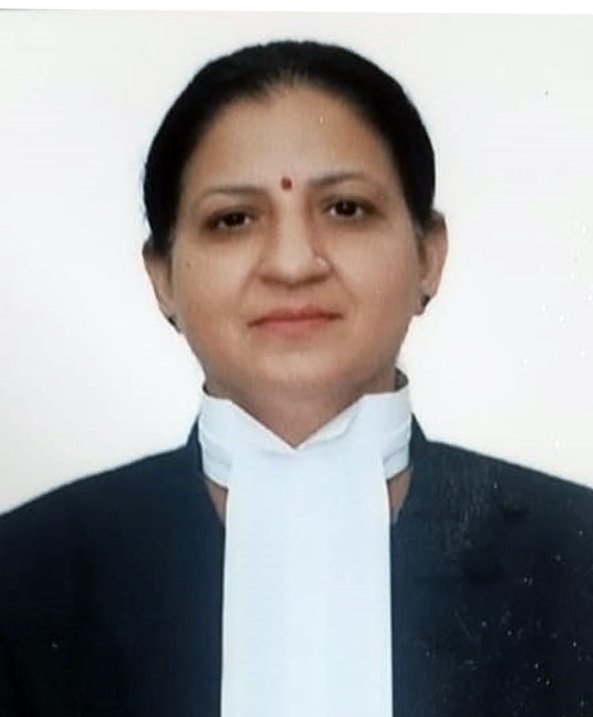
CORAM: HON’BLE MRS. JUSTICE SUDEEPTI SHARMA
Present:Mr. Balbir Singh Jaswal, Advocate,
for the appellant.
Mr. Gopal Mittal, Advocate, for
Mr. Kamal Sharma, Advocate,
for respondent No.4-Insurance Company.
****
SUDEEPTI SHARMA J. (ORAL)
1. The present appeal has been preferred against the award dated
03.09.2021 passed in the claim petition filed under Section 166 of the Motor
Vehicles Act, 1988 by the learned Motor Accident Claims Tribunal, Amritsar
(for short, ‘the Tribunal’) for enhancement of compensation, granted to the
appellant/claimant to the tune of Rs.26,79,574/- along with interest at the
rate of 7.5% per annum, on account of injuries sustained by the
appellant/claimant in a Motor Vehicular Accident, occurred on 19.08.2015.
2. As sole issue for determination in the present appeal is confined
to quantum of compensation awarded by the learned Tribunal, a detailed
narration of the facts of the case is not reproduced and is skipped herein for
the sake of brevity.
FAO-389-2022 (O&M) -2-
SUBMISSIONS OF LEARNED COUNSEL FOR THE PARTIES
3. The learned counsel for the appellant/claimant contends that the
compensation awarded by the learned Tribunal is on the lower side and
deserves to be enhanced. Therefore, he prays that the present appeal be
allowed and the compensation awarded to the appellant/claimant be
enhanced, as per latest law.
4. Per contra, learned counsel for respondent No.4-Insurance
Company, however, vehemently argues that the award has rightly been
passed and the amount of compensation as assessed by the learned Tribunal
has rightly been granted. Therefore, he prays for dismissal of the appeal.
5. I have heard learned counsel for the parties and perused the
whole record of this case with their able assistance.
SETTLED LAW ON COMPENSATION
6. Hon’ble Supreme Court has settled the law regarding grant of
compensation with respect to the disability. The Apex Court in the case of
Raj Kumar Vs. Ajay Kumar and Another (2011) 1 Supreme Court Cases
343, has held as under:-
General principles relating to compensation in injury cases
5. The provision of the Motor Vehicles Act, 1988 ('Act' for
short) makes it clear that the award must be just, which
means that compensation should, to the extent possible,
fully and adequately restore the claimant to the position
prior to the accident. The object of awarding damages is
to make good the loss suffered as a result of wrong done
as far as money can do so, in a fair, reasonable and
equitable manner. The court or tribunal shall have to
FAO-389-2022 (O&M) -3-
assess the damages objectively and exclude from
consideration any speculation or fancy, though some
conjecture with reference to the nature of disability and
its consequences, is inevitable. A person is not only to be
compensated for the physical injury, but also for the loss
which he suffered as a result of such injury. This means
that he is to be compensated for his inability to lead a full
life, his inability to enjoy those normal amenities which
he would have enjoyed but for the injuries, and his
inability to earn as much as he used to earn or could
have earned. (See C.K. Subramonia Iyer v. T.
Kunhikuttan Nair, AIR 1970 Supreme Court 376, R.D.
Hattangadi v. Pest Control (India) Ltd., 1995 (1) SCC
551 and Baker v. Willoughby, 1970 AC 467).
6. The heads under which compensation is awarded
in personal injury cases are the following :
Pecuniary damages (Special Damages)
(i) Expenses relating to treatment, hospitalization,
medicines, transportation, nourishing food, and
miscellaneous expenditure.
(ii) Loss of earnings (and other gains) which the injured
would have made had he not been injured, comprising :
(a) Loss of earning during the period of treatment;
(b) Loss of future earnings on account of
permanent disability.
(iii) Future medical expenses. Non-pecuniary damages
(General Damages)
(iv) Damages for pain, suffering and trauma as a
consequence of the injuries.
(v) Loss of amenities (and/or loss of prospects of
marriage).
FAO-389-2022 (O&M) -4-
(vi) Loss of expectation of life (shortening of normal
longevity).
In routine personal injury cases, compensation will be
awarded only under heads (i), (ii)(a) and (iv). It is only in
serious cases of injury, where there is specific medical
evidence corroborating the evidence of the claimant, that
compensation will be granted under any of the heads (ii)
(b), (iii), (v) and (vi) relating to loss of future earnings on
account of permanent disability, future medical expenses,
loss of amenities (and/or loss of prospects of marriage)
and loss of expectation of life.
xxx xxx xxx xxx
19. We may now summarise the principles discussed
above :
(i) All injuries (or permanent disabilities arising from
injuries), do not result in loss of earning capacity.
(ii) The percentage of permanent disability with reference
to the whole body of a person, cannot be assumed to be
the percentage of loss of earning capacity. To put it
differently, the percentage of loss of earning capacity is
not the same as the percentage of permanent disability
(except in a few cases, where the Tribunal on the basis of
evidence, concludes that percentage of loss of earning
capacity is the same as percentage of permanent
disability).
(iii) The doctor who treated an injured-claimant or who
examined him subsequently to assess the extent of his
permanent disability can give evidence only in regard the
extent of permanent disability. The loss of earning
capacity is something that will have to be assessed by the
Tribunal with reference to the evidence in entirety.
FAO-389-2022 (O&M) -5-
(iv) The same permanent disability may result in different
percentages of loss of earning capacity in different
persons, depending upon the nature of profession,
occupation or job, age, education and other factors.
20. The assessment of loss of future earnings is
explained below with reference to the following
Illustration 'A' : The injured, a workman, was aged 30
years and earning Rs. 3000/- per month at the time of
accident. As per Doctor's evidence, the permanent
disability of the limb as a consequence of the injury was
60% and the consequential permanent disability to the
person was quantified at 30%. The loss of earning
capacity is however assessed by the Tribunal as 15% on
the basis of evidence, because the claimant is continued
in employment, but in a lower grade. Calculation of
compensation will be as follows:
a) Annual income before the accident : Rs.
36,000/-.
b) Loss of future earning per annum
(15% of the prior annual income) : Rs. 5400/-.
c) Multiplier applicable with reference to age : 17
d) Loss of future earnings : (5400 x 17) : Rs.
91,800/-
Illustration 'B' : The injured was a driver aged 30 years,
earning Rs. 3000/- per month. His hand is amputated and
his permanent disability is assessed at 60%. He was
terminated from his job as he could no longer drive. His
chances of getting any other employment was bleak and
even if he got any job, the salary was likely to be a
pittance. The Tribunal therefore assessed his loss of
future earning capacity as 75%. Calculation of
compensation will be as follows :
FAO-389-2022 (O&M) -6-
a) Annual income prior to the accident : Rs.
36,000/- .
b) Loss of future earning per annum
(75% of the prior annual income) : Rs. 27000/-.
c) Multiplier applicable with reference to age : 17
d) Loss of future earnings : (27000 x 17) : Rs.
4,59,000/-
Illustration 'C' : The injured was 25 years and a final
year Engineering student. As a result of the accident, he
was in coma for two months, his right hand was
amputated and vision was affected. The permanent
disablement was assessed as 70%. As the injured was
incapacitated to pursue his chosen career and as he
required the assistance of a servant throughout his life,
the loss of future earning capacity was also assessed as
70%. The calculation of compensation will be as
follows :
a) Minimum annual income he would
have got if had been employed as an
Engineer : Rs. 60,000/-
b) Loss of future earning per annum
(70% of the expected annual income) : Rs. 42000/-
c) Multiplier applicable (25 years) : 18
d) Loss of future earnings : (42000 x 18) : Rs. 7,56,000/-
[Note : The figures adopted in illustrations (A) and (B) are
hypothetical. The figures in Illustration (C) however are based
on actuals taken from the decision in Arvind Kumar Mishra
(supra)].
7. Hon’ble Supreme Court in the case of National Insurance
Company Ltd. Vs. Pranay Sethi & Ors. [(2017) 16 SCC 680] has clarified
FAO-389-2022 (O&M) -7-
the law under Sections 166, 163-A and 168 of the Motor Vehicles Act, 1988,
on the following aspects:-
(A)Deduction of personal and living expenses to determine
multiplicand;
(B)Selection of multiplier depending on age of deceased;
(C)Age of deceased on basis for applying multiplier;
(D)Reasonable figures on conventional heads, namely, loss
of estate, loss of consortium and funeral expenses, with
escalation;
(E)Future prospects for all categories of persons and for
different ages: with permanent job; self-employed or fixed
salary.
The relevant portion of the judgment is reproduced as under:-
“Therefore, we think it seemly to fix reasonable sums. It
seems to us that reasonable figures on conventional
heads, namely, loss of estate, loss of consortium and
funeral expenses should be Rs.15,000, Rs.40,000 and
Rs.15,000 respectively. The principle of revisiting the
said heads is an acceptable principle. But the revisit
should not be fact-centric or quantum-centric. We think
that it would be condign that the amount that we have
quantified should be enhanced on percentage basis in
every three years and the enhancement should be at the
rate of 10% in a span of three years. We are disposed to
hold so because that will bring in consistency in respect
of those heads.”
FAO-389-2022 (O&M) -8-
8. Hon’ble Supreme Court in the case of Erudhaya Priya Vs.
State Express Tran. Corpn. Ltd. 2020 ACJ 2159, has held as under:-
“7. There are three aspects which are required to be
examined by us:
(a) the application of multiplier of '17' instead of '18';
The aforesaid increase of multiplier is sought on the
basis of age of the appellant as 23 years relying on the
judgment in National Insurance Company Limited v.
Pranay Sethi and Others, 2017 ACJ 2700 (SC). In para
46 of the said judgment, the Constitution Bench
effectively affirmed the multiplier method to be used as
mentioned in the table in the case of Sarla Verma (Smt)
and Others v. Delhi Transport Corporation and Another,
2009 ACJ 1298 (SC) . In the age group of 15-25 years,
the multiplier has to be '18' along with factoring in the
extent of disability.
The aforesaid position is not really disputed by learned
counsel for the respondent State Corporation and, thus,
we come to the conclusion that the multiplier to be
applied in the case of the appellant has to be '18' and not
'17'.
(b) Loss of earning capacity of the appellant with
permanent disability of 31.1%
In respect of the aforesaid, the appellant has
claimed compensation on what is stated to be the settled
principle set out in Jagdish v. Mohan & Others, 2018
ACJ 1011 (SC) and Sandeep Khanuja v. Atul Dande &
Another, 2017 ACJ 979 (SC). We extract below the
principle set out in the Jagdish (supra) in para 8:
"8. In assessing the compensation payable the
settled principles need to be borne in mind. A
FAO-389-2022 (O&M) -9-
victim who suffers a permanent or temporary
disability occasioned by an accident is entitled to
the award of compensation. The award of
compensation must cover among others, the
following aspects:
(i)Pain, suffering and trauma resulting from
the accident;
(ii) Loss of income including future income;
(iii)The inability of the victim to lead a normal
life together with its amenities;
(iv)Medical expenses including those that the
victim may be required to undertake in
future; and
(v)Loss of expectation of life."
[emphasis supplied]
The aforesaid principle has also been emphasized
in an earlier judgment, i.e. the Sandeep Khanuja case
(supra) opining that the multiplier method was logically
sound and legally well established to quantify the loss of
income as a result of death or permanent disability
suffered in an accident.
In the factual contours of the present case, if we
examine the disability certificate, it shows the
admission/hospitalization on 8 occasions for various
number of days over 1½ years from August 2011 to
January 2013. The nature of injuries had been set out as
under:
"Nature of injury:
(i)compound fracture shaft left humerus
(ii)fracture both bones left forearm
(iii)compound fracture both bones right forearm
(iv)fracture 3rd, 4th & 5th metacarpals right hand
FAO-389-2022 (O&M) -10-
(v)subtrochanteric fracture right femur
(vi)fracture shaft femur
(vii)fracture both bones left leg
We have also perused the photographs annexed to
the petition showing the current physical state of the
appellant, though it is stated by learned counsel for the
respondent State Corporation that the same was not on
record in the trial court. Be that as it may, this is the
position even after treatment and the nature of injuries
itself show their extent. Further, it has been opined in
para 13 of Sandeep Khanuja case (supra) that while
applying the multiplier method, future prospects on
advancement in life and career are also to be taken into
consideration.
We are, thus, unequivocally of the view that there is
merit in the contention of the appellant and the aforesaid
principles with regard to future prospects must also be
applied in the case of the appellant taking the permanent
disability as 31.1%. The quantification of the same on the
basis of the judgment in National Insurance Co. Ltd. case
(supra), more specifically para 61(iii), considering the
age of the appellant, would be 50% of the actual salary
in the present case.
(c) The third and the last aspect is the interest rate
claimed as 12%
In respect of the aforesaid, the appellant has
watered down the interest rate during the course of
hearing to 9% in view of the judicial pronouncements
including in the Jagdish’s case (supra). On this aspect,
once again, there was no serious dispute raised by the
learned counsel for the respondent once the claim was
FAO-389-2022 (O&M) -11-
confined to 9% in line with the interest rates applied by
this Court.
CONCLUSION
8. The result of the aforesaid is that relying on the settled
principles, the calculation of compensation by the
appellant, as set out in para 5 of the synopsis, would
have to be adopted as follows:
Heads Awarded
Loss of earning power
(Rs.14,648 x 12 x 31.1/100
Rs. 9,81,978/-
Future prospects (50 per cent
addition)
Rs.4,90,989/-
Medical expenses including
transport charges,
nourishment, etc.
Rs.18,46,864/-
Loss of matrimonial prospectsRs.5,00,000/-
Loss of comfort, loss of
amenities and mental agony
Rs.1,50,000/-
Pain and suffering Rs.2,00,000/-
Total Rs.41,69,831/-
The appellant would, thus, be entitled to the
compensation of Rs. 41,69,831/- as claimed along with simple
interest at the rate of 9% per annum from the date of
application till the date of payment.
9. A perusal of the record shows that the appellant/claimant was a
student of 10+2 and he is 18 years old at the time of accident. The learned
Tribunal, however, fell in error in assessing his income as Rs.6,000/- per
month by taking into consideration minimum wages for casual labour
prevailed in the State of Haryana at the time of accident.
FAO-389-2022 (O&M) -12-
10. It is by now a well-settled and consistently reiterated principle
of law that the death or permanent disability of a minor child in a motor
vehicle accident cannot be equated with that of a non-earning individual for
the purposes of computing compensation. The reason is obvious: a child, by
virtue of tender age, is not engaged in gainful employment and, therefore,
any rigid categorisation as a “non-earner” would not only be artificial but
would also defeat the very object of just compensation under the Motor
Vehicles Act, 1988.
11. In such cases, the proper course for determination of
compensation under the head of “loss of income” is to adopt, at the very
least, the minimum wages notified for a skilled worker in the State
concerned at the relevant time. The Hon’ble Supreme Court has, in
categorical terms, laid down this principle in Kajal v. Jagdish Chand &
Ors. [(2020) 4 SCC 413] and Baby Sakshi Greola v. Manzoor Ahmad
Simon & Anr. [2024 SCC OnLine SC 3692], wherein it was held that a
minor’s potential and future prospects cannot be curtailed by treating
him/her as a non-earner, and the yardstick of minimum wages of a skilled
worker is the just and reasonable benchmark.
12. Applying the aforesaid ratio to the present case, the monthly
income of the appellant/claimant, is accordingly assessed at Rs.9,000/-,
being the minimum wages of a skilled worker as notified for the relevant
period in the State of Haryana.
13. A perusal of the award further reveals that appellant/claimant
has suffered 65% permanent disability due to accident and his both legs have
FAO-389-2022 (O&M) -13-
been amputated practically rendering the appellant/claimant 100% functional
disabled. Therefore, the learned Tribunal has rightly assessed the functional
disability of the appellant/claimant as 100% and the same is in consonance
with the judgment rendered by Ho’ble the Supreme Court in Anoop
Maheshwari vs Oriental insurance company Ltd. and others, 2025 INSC
1076, wherein it has been held that while determining compensation under
the motor vehicle act, the assessment of disability must be made with
reference to the functional disability, namely, the extent to which injuries
sustained have impaired the earning capacity of the appellant/claimant,
rather than being confined to the percentage of medical disability as certified
by the medical board. The relevant extracts of the same is reproduced as
under:-
“7. Insofar as the disability is concerned, we have no
doubt that the medical board's certificate can be
accepted, even without a witness being examined. The
disability certificate also indicates that the amputation
suffered by the petitioner is of hemipelvectomy; which is
the amputation of one leg and a portion of the pelvic
bone on the same side. The disability to be assessed for
the purpose of awarding compensation arising from a
motor accident is the functional disability which reduces
the earning capacity of the claimant and not strictly the
medical disability. In the present case, admittedly the
claimant was running a business, and the claimant has
already been fitted with a prosthetic limb to ensure his
mobility. In the above circumstances, the order of the
High Court holding the disability to be 50% for the
purpose of computing loss of income as relatable to the
FAO-389-2022 (O&M) -14-
loss of earning capacity is correct and within the
parameters to be considered for assessing the loss of
income arising from a motor accident which led to
disability of the victim. The disability assessed at 50% is
the functional disability and it is quite reasonable.
8. As far as the income is concerned, we agree with
the High Court that the Tribunal had entered into mere
surmises and conjectures to decline adoption of the
income as per the income tax returns. In this context, we
have to notice that the registration of the firm of the
claimant took place on 06.03.2006 and the income tax
returns produced are also for the assessment years 2005-
2006 and 2006-2007 relatable to the financial years
2004-2005 and 2005-2006 which are prior to the
accident which occurred on 09.04.2007. It cannot be said
that the claimant apprehended an accident and got
registration of a firm and filed his income tax returns two
years prior to the accident. Further, the claimant had
also produced sales tax returns which was also rejected
by the Tribunal on the ground that there was no taxable
profits in the said year. Insofar as the levy of sales tax is
concerned, the levy is on the sales and not on the profits.
The finding of the Tribunal also is that in the first year,
there was no tax payable and hence there was no profits
or income. The exemption from tax is only because the
purchase and sales did not exceed the taxable value. The
sale proceeds being not within the taxable limit is not an
indication of the profit accrued, or the income received
from the business which is reflected in the income tax
returns. On the above reasoning, we have to accept the
income tax returns for the financial year 2007-2008 in
which the total gross income is seen as Rs.1,96,000/- out
FAO-389-2022 (O&M) -15-
of which the tax of Rs.4,641/- has to be deducted. The
income, hence, has to be assessed at Rs.1,91,000/-. In
assessing the loss of income, the multiplier of 18 is
perfectly in order and the disability is 50% as determined
by the High Court.”
Therefore, the finding of the learned Tribunal qua assessment of
functional disability to the tune of 100% is hereby affirmed.
14. A perusal of the award reveals that learned Tribunal has not
awarded any amount of compensation under the head of “Pain and
Sufferings”. Hon’ble Supreme Court in the case of K.S. Muralidhar v. R.
Subbulakshmi and another 2024 SCC Online SC 3385, has settled the law
regarding grant of compensation under the head of “Pain and Suffering”.
The relevant portion of the K.S.Muralidhar’s case is reproduced as under:-
“15. Keeping in view the above-referred judgments, the injuries
suffered, the ‘pain and suffering’ caused, and the life-long nature
of the disability afflicted upon the claimant-appellant, and the
statement of the Doctor as reproduced above, we find the request
of the claimant-appellant to be justified and as such, award
Rs.15,00,000/- under the head ‘pain and suffering’, fully
conscious of the fact that the prayer of the claimant-appellant
for enhancement of compensation was by a sum of
Rs.10,00,000/-, we find the compensation to be just, fair and
reasonable at the amount so awarded.”
Therefore, in view of the judgment referred to above and the
nature of injuries; the facts and circumstances of the present case, this Court,
in the interest of justice, deems it appropriate to grant a compensation of
Rs.10,00,000/- under the head of ‘Pain and Sufferings’.
FAO-389-2022 (O&M) -16-
15. A perusal of the award further shows that a meager amount of
compensation has been granted by the learned Tribunal towards special diet,
attendant charges and marriage prospects. Moreover, no amount has been
awarded under the heads of loss of amenities, transportation, medical
expenses for future treatment. Therefore, the award requires indulgence of
this Court.
RELIEF
16. In view of the law laid down by the Hon’ble Supreme Court in
the above referred to judgments, the present appeal is allowed. The award
dated 03.09.2021 passed by the learned Tribunal is modified accordingly.
The appellant/claimant is entitled to enhanced compensation as per the
calculations made here-under:-
Sr. No. Heads Compensation Awarded
1Monthly Income Rs.9,000/-
2Loss of future prospects (40%)Rs.3,600/- (40% of Rs.9,000/-)
3Annual Income Rs.1,51,200/- (Rs.12,600 X 12)
4Loss of earning due to disability
(100%)
Rs.1,51,200/- (100% of
Rs.1,51,200)
5Multiplier 18
6Loss of future earning per annumRs.27,21,600/- (Rs.1,51,200 X
18)
7Medical Expenses Rs.6,20,174/-
8Pain and Suffering Rs.10,00,000/-
9Special Diet Rs.70,000/-
10Transportation charges Rs.50,000/-
11Attendant Charges Rs.2,00,000/-
12Medical Expenses for future
treatment
Rs.3,50,000/-
FAO-389-2022 (O&M) -17-
13Loss of amenities of life Rs.2,00,000/-
14Loss of marriage prospects Rs.6,00,000/-
Total Compensation Rs.58,11,774/-
DEDUCTION
Compensation awarded by the
Tribunal
Rs.26,79,574/-
Enhanced Compensation Rs.31,32,200/-
(Rs.58,11,774 – 26,79,574)
17. So far as the interest part is concerned, as held by Hon’ble
Supreme Court in Dara Singh @ Dhara Banjara Vs. Shyam Singh Varma
2019 ACJ 3176 and R.Valli and Others VS. Tamil Nadu State Transport
Corporation (2022) 5 Supreme Court Cases 107, the appellant/claimant is
granted the interest @ 9% per annum on the enhanced amount from the date
of filing of claim petition till the date of its realization.
18. Respondent No.4-Insurance Company is directed to deposit the
enhanced amount of compensation along with interest with the Tribunal
within a period of two months from the date of receipt of copy of this
judgment. The Tribunal is further directed to disburse the enhanced amount
of compensation along with interest in the account of the appellant/claimant.
The appellant/claimant is directed to furnish his bank account details to the
Tribunal.
19. Pending application(s), if any, also stand disposed of.
(SUDEEPTI SHARMA)
JUDGE
11.12.2025
Virender
Whether speaking/non-speaking : Speaking
Whether reportable : Yes/No

 Login with google
Legal Notes
Add a Note....