
As per case facts, a complainant filed a case against the accused for dishonour of a cheque issued to repay a loan. The accused admitted taking the loan and issuing ...
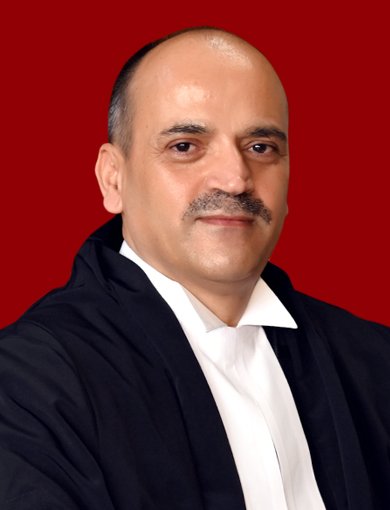
2026:HHC:10813
IN THE HIGH COURT OF HIMACHAL PRADESH, SHIMLA
Cr. Revision No. 25 of 2025
Reserved on: 3.3.2026
Date of Decision: 08.4.2026.
Vinod Sipahiya ...Petitioner
Versus
Anuj Kumar ...Respondent
Coram
Hon’ble Mr Justice Rakesh Kainthla, Judge.
Whether approved for reporting?
1
Yes.
For the Petitioner : Mr Bhupinder Pathania, Advocate.
For the Respondent : Mr Kunal Thakur, Advocate.
Rakesh Kainthla, Judge
The present revision is directed against the
judgement dated 01.10.2024, passed by learned Additional
Sessions Judge-I, Kangra, at Dharamshala, District Kangra, H.P.
(learned Appellate Court), vide which the judgment of
conviction and order of sentence dated 15.02.2024, passed by
learned Judicial Magistrate First Class, Kangra District Kangra
H.P. (learned Trial Court) were upheld (Parties shall hereinafter be
1
Whether reporters of Local Papers may be allowed to see the judgment? Yes.
2
2026:HHC:10813
referred to in the same manner as they were arrayed before the
learned Trial Court for convenience.)
2. Briefly stated, the facts giving rise to the present
revision are that the complainant filed a complaint before the
learned Trial Court against the accused for the commission of an
offence punishable under Section 138 of the Negotiable
Instruments Act (NI Act), read with Section 420 of the Indian
Penal Code (IPC). It was asserted that the complainant and the
accused had a friendly relationship with each other. The accused
approached the complainant at the Nagrota Bagwan on
10.09.2011 and sought a loan of ₹1,50,000/- for his domestic
needs. The complainant paid ₹1,50,000/- to the accused on the
same day through Cheque No. 394621, drawn on State Bank of
Patiala, Nagrota Bagwan, Tehsil and District Kangra, H.P. The
accused issued a post-dated cheque No. 613701 dated 19.12.2011
for ₹1,50,000/- drawn on State Bank of India to discharge his
liability. He also executed an agreement acknowledging his
liability in the presence of marginal witnesses. This agreement
was attested by Mr Yashpal Kachhot, Notary Public at Kangra.
The complainant presented the cheque to his bank, State Bank
of India, branch office Ghorab (Nagrota Bagwan), District
3
2026:HHC:10813
Kangra, H.P., from where it was sent to the bank of the accused
for collection. The bank of the accused dishonoured the cheque
with an endorsement of insufficient funds. The complainant
issued a notice to the accused asking him to pay the money
within 15 days from the date of receipt of the notice. The notice
was duly received by the accused, but he failed to pay the
amount. Hence, the present complaint was filed before the
learned Trial Court for taking action against the accused.
3. Learned Trial Court found sufficient reasons to
summon the accused. When the accused appeared, a notice of
accusation was put to him for the commission of an offence
punishable under section 138 of the NI Act, to which he pleaded
not guilty and claimed to be tried.
4. The complainant examined Anil Kumar (CW1) and
himself (CW2).
5. The accused, in his statement recorded under Section
313 of Cr.P.C., admitted that he had taken a loan of ₹1,50,000/-
from the complainant, the complainant had presented the
cheque, and it was dishonoured with an endorsement of
insufficient funds. He stated that he had handed over three
4
2026:HHC:10813
signed cheques as security to the complainant, which were
misused by the complainant. He had returned ₹ 1,20,000/- with
interest and was liable to pay only ₹ 30,000/-. His signatures
were obtained on blank paper. He denied the receipt of the
notice. He did not produce any evidence in his defence.
6. Learned Trial Court held that the accused admitted
the taking of a loan in his statement recorded under Section 313
of Cr.P.C. He also admitted the issuance of the cheques as
security. Therefore, a presumption would arise that the cheque
was issued for consideration to discharge the debt/liability. The
accused claimed that he had returned ₹ 1,20,000/-; however,
this fact was not proved. The accused had failed to rebut the
presumption attached to the cheque. He admitted that the
cheque was dishonoured with an endorsement of insufficient
funds. The notice was duly served upon the accused. All the
ingredients of the commission of an offence punishable under
Section 138 of the NI Act were duly satisfied. Hence, the learned
Trial Court convicted the accused of the commission of an
offence punishable under section 138 of the NI Act and
sentenced him to undergo simple imprisonment for two months
and pay a compensation of ₹3,00,000/- to the complainant.
5
2026:HHC:10813
7. Being aggrieved by the judgment and order passed by
the learned Trial Court, the accused filed an appeal, which was
decided by the learned Additional Sessions Judge-I, Kangra at
Dharamshala, District Kangra, H.P. (learned Appellate Court).
The learned Appellate Court concurred with the findings
recorded by the learned Trial Court that the receipt of the loan
was not disputed by the accused. The accused also admitted his
signature on the cheque and claimed that the cheque was issued
as security. Therefore, a presumption under Section 118 (a) and
139 of the NI Act arose that the cheque was issued for
consideration to discharge debt/liability. The accused failed to
rebut the presumption. The cheque was dishonoured with an
endorsement of funds insufficient. The accused failed to pay the
amount despite the receipt of a valid notice of demand.
Therefore, the learned Trial Court had rightly convicted the
accused of the commission of an offence punishable under
section 138 of the NI Act. The sentence imposed by the learned
Trial Court was not excessive, and no interference was required
with it. Hence, the learned Appellate Court dismissed the appeal.
8. Being aggrieved by the judgments and order passed
by the learned Courts below, the accused has filed the present
6
2026:HHC:10813
revision asserting that the learned Courts below erred in
appreciating the material on record. They had wrongly held that
the cheque was issued by the accused to discharge his legal
liability. The special Power of Attorney of the complainant
admitted in his cross-examination that more than five cases of
recovery of various amounts were pending in the Court, which
showed that the accused was a money lender. He has not
produced any registration of money lending, and the complaint
was not maintainable. The complainant had misused the cheque
by filling in an amount more than the value of the instrument.
The instrument clearly stated on its face that it was valid for
₹50,000/-. Therefore, the cheque was a void instrument and no
action could have been taken on it. Hence, it was prayed that the
present petition be allowed and the judgments and order passed
by the learned Courts below be set aside.
9. I have heard Mr Bhupinder Pathania, learned counsel
for the petitioner/accused and Mr Kunal Thakur, learned
counsel for the respondent/complainant.
10. Mr Bhupender Pathania, learned counsel for the
petitioner, submitted that the cheque, on the face of it,
7
2026:HHC:10813
mentions that it was valid for ₹50,000. However, an amount of
₹1,50,000/- was filled. Therefore, the instrument was void. It
also corroborates the defence taken by the accused that he had
issued blank security cheques to the complainant, who had
misused them. Learned Courts below failed to appreciate this
important aspect. Hence, he prayed that the present petition be
allowed and the judgments and order passed by the learned
Courts below be set aside.
11. Mr Kunal Thakur, learned counsel for the
respondent/accused, submitted that the cheque was
dishonoured with an endorsement ‘funds insufficient’ and not
with an endorsement that the cheque was invalid. The accused
had not taken this plea before the learned Courts below, and it is
impermissible to take this plea before this Court. Both the
learned Courts below had rightly held the accused guilty of
committing an offence punishable under Section 138 of the NI
Act, and this Court should not interfere with the concurrent
findings of fact. Hence, he prayed that the present revision be
dismissed.
8
2026:HHC:10813
12. It was laid down by the Hon’ble Supreme Court in
Malkeet Singh Gill v. State of Chhattisgarh, (2022) 8 SCC 204:
(2022) 3 SCC (Cri) 348: 2022 SCC OnLine SC 786 that a revisional
court is not an appellate court and it can only rectify the patent
defect, errors of jurisdiction or the law. It was observed at page
207-
“10. Before adverting to the merits of the contentions, at
the outset, it is apt to mention that there are concurrent
findings of conviction arrived at by two courts after a
detailed appreciation of the material and evidence
brought on record. The High Court in criminal revision
against conviction is not supposed to exercise the
jurisdiction like the appellate court, and the scope of
interference in revision is extremely narrow. Section 397
of the Criminal Procedure Code (in short “CrPC”) vests
jurisdiction to satisfy itself or himself as to the
correctness, legality or propriety of any finding, sentence
or order, recorded or passed, and as to the regularity of
any proceedings of such inferior court. The object of the
provision is to set right a patent defect or an error of
jurisdiction or law. There has to be a well-founded error
that is to be determined on the merits of individual cases.
It is also well settled that while considering the same, the
Revisional Court does not dwell at length upon the facts
and evidence of the case to reverse those findings.
13. This position was reiterated in State of Gujarat v.
Dilipsinh Kishorsinh Rao, (2023) 17 SCC 688: 2023 SCC OnLine SC
1294, wherein it was observed at page 695:
“14. The power and jurisdiction of the Higher Court under
Section 397 CrPC, which vests the court with the power to
9
2026:HHC:10813
call for and examine records of an inferior court, is for the
purposes of satisfying itself as to the legality and
regularities of any proceeding or order made in a case.
The object of this provision is to set right a patent defect
or an error of jurisdiction or law or the perversity which
has crept in such proceedings.
15. It would be apposite to refer to the judgment of this
Court in Amit Kapoor v. Ramesh Chander [Amit Kapoor v.
Ramesh Chander, (2012) 9 SCC 460: (2012) 4 SCC (Civ) 687:
(2013) 1 SCC (Cri) 986], where scope of Section 397 has
been considered and succinctly explained as under: (SCC
p. 475, paras 12-13)
“12. Section 397 of the Code vests the court with the
power to call for and examine the records of an
inferior court for the purposes of satisfying itself as
to the legality and regularity of any proceedings or
order made in a case. The object of this provision is
to set right a patent defect or an error of jurisdiction
or law. There has to be a well-founded error, and it
may not be appropriate for the court to scrutinise
the orders, which, upon the face of it, bear a token
of careful consideration and appear to be in
accordance with law. If one looks into the various
judgments of this Court, it emerges that the
revisional jurisdiction can be invoked where the
decisions under challenge are grossly erroneous,
there is no compliance with the provisions of law,
the finding recorded is based on no evidence,
material evidence is ignored, or judicial discretion is
exercised arbitrarily or perversely. These are not
exhaustive classes, but are merely indicative. Each
case would have to be determined on its own merits.
13. Another well-accepted norm is that the revisional
jurisdiction of the higher court is a very limited one and
cannot be exercised in a routine manner. One of the
inbuilt restrictions is that it should not be against an
interim or interlocutory order. The Court has to keep in
mind that the exercise of revisional jurisdiction itself
10
2026:HHC:10813
should not lead to injustice ex facie. Where the Court is
dealing with the question as to whether the charge has
been framed properly and in accordance with law in a
given case, it may be reluctant to interfere in the exercise
of its revisional jurisdiction unless the case substantially
falls within the categories aforestated. Even the framing
of the charge is a much-advanced stage in the
proceedings under CrPC.”
14. It was held in Kishan Rao v. Shankargouda, (2018) 8
SCC 165: (2018) 3 SCC (Cri) 544: (2018) 4 SCC (Civ) 37: 2018 SCC
OnLine SC 651 that it is impermissible for the High Court to
reappreciate the evidence and come to its conclusions in the
absence of any perversity. It was observed at page 169:
“12. This Court has time and again examined the scope of
Sections 397/401 CrPC and the grounds for exercising the
revisional jurisdiction by the High Court. In State of Kerala
v. Puttumana Illath Jathavedan Namboodiri, (1999) 2 SCC
452: 1999 SCC (Cri) 275], while considering the scope of
the revisional jurisdiction of the High Court, this Court
has laid down the following: (SCC pp. 454-55, para 5)
5. … In its revisional jurisdiction, the High Court can
call for and examine the record of any proceedings
to satisfy itself as to the correctness, legality or
propriety of any finding, sentence or order. In other
words, the jurisdiction is one of supervisory
jurisdiction exercised by the High Court for
correcting a miscarriage of justice. But the said
revisional power cannot be equated with the power
of an appellate court, nor can it be treated even as a
second appellate jurisdiction. Ordinarily, therefore,
it would not be appropriate for the High Court to
reappreciate the evidence and come to its
conclusion on the same when the evidence has
11
2026:HHC:10813
already been appreciated by the Magistrate as well
as the Sessions Judge in appeal, unless any glaring
feature is brought to the notice of the High Court
which would otherwise amount to a gross
miscarriage of justice. On scrutinising the
impugned judgment of the High Court from the
aforesaid standpoint, we have no hesitation in
concluding that the High Court exceeded its
jurisdiction in interfering with the conviction of the
respondent by reappreciating the oral evidence. …”
13. Another judgment which has also been referred
to and relied on by the High Court is the judgment
of this Court in Sanjaysinh Ramrao Chavan v.
Dattatray Gulabrao Phalke, (2015) 3 SCC 123: (2015) 2
SCC (Cri) 19]. This Court held that the High Court, in
the exercise of revisional jurisdiction, shall not
interfere with the order of the Magistrate unless it
is perverse or wholly unreasonable or there is non-
consideration of any relevant material, the order
cannot be set aside merely on the ground that
another view is possible. The following has been
laid down in para 14: (SCC p. 135)
“14. … Unless the order passed by the
Magistrate is perverse or the view taken by the
court is wholly unreasonable or there is non-
consideration of any relevant material or there
is palpable misreading of records, the
Revisional Court is not justified in setting aside
the order, merely because another view is
possible. The Revisional Court is not meant to
act as an appellate court. The whole purpose of
the revisional jurisdiction is to preserve the
power in the court to do justice in accordance
with the principles of criminal jurisprudence.
The revisional power of the court under
Sections 397 to 401 CrPC is not to be equated
with that of an appeal. Unless the finding of the
court, whose decision is sought to be revised, is
12
2026:HHC:10813
shown to be perverse or untenable in law or is
grossly erroneous or glaringly unreasonable or
where the decision is based on no material or
where the material facts are wholly ignored or
where the judicial discretion is exercised
arbitrarily or capriciously, the courts may not
interfere with the decision in exercise of their
revisional jurisdiction.”
15. This position was reiterated in Bir Singh v. Mukesh
Kumar, (2019) 4 SCC 197: (2019) 2 SCC (Cri) 40: (2019) 2 SCC (Civ)
309: 2019 SCC OnLine SC 13, wherein it was observed at page 205:
“16. It is well settled that in the exercise of revisional
jurisdiction under Section 482 of the Criminal Procedure
Code, the High Court does not, in the absence of
perversity, upset concurrent factual findings. It is not for
the Revisional Court to re-analyse and re-interpret the
evidence on record.
17. As held by this Court in Southern Sales & Services v.
Sauermilch Design and Handels GmbH, (2008) 14 SCC 457, it
is a well-established principle of law that the Revisional
Court will not interfere even if a wrong order is passed by
a court having jurisdiction, in the absence of a
jurisdictional error. The answer to the first question is,
therefore, in the negative.”
16. A similar view was taken in Sanjabij Tari v. Kishore S.
Borcar, 2025 SCC OnLine SC 2069, wherein it was observed:
“27. It is well settled that in exercise of revisional
jurisdiction, the High Court does not, in the absence of
perversity, upset concurrent factual findings [See: Bir
Singh(supra)]. This Court is of the view that it is not for
the Revisional Court to re-analyse and re-interpret the
evidence on record. As held by this Court in Southern Sales
& Services v. Sauermilch Design and Handels GMBH, (2008)
13
2026:HHC:10813
14 SCC 457, it is a well-established principle of law that
the Revisional Court will not interfere, even if a wrong
order is passed by a Court having jurisdiction, in the
absence of a jurisdictional error.
28. Consequently, this Court is of the view that in the
absence of perversity, it was not open to the High Court in
the present case, in revisional jurisdiction, to upset the
concurrent findings of the Trial Court and the Sessions
Court.
17. The present revision has to be decided as per the
parameters laid down by the Hon’ble Supreme Court.
18. The cheque (Ex.C6) bears an endorsement of Multi
City Cheque payable at par at all branches of SBI and valid for
₹50,000/- and under. The Reserve Bank of India has issued a
policy on Policy On Multi-City (Payable at Par) CTS-2010
Standard Cheques. Clause 4 of the policy reads as follows: -
There will be a cap on payment of MCC at non-home
branches with legend/ ceiling mentioned on the Cheques
as detailed hereunder:- “Valid up to Rs…….lacs at non-
Home branch”
19. A bare perusal of this clause shows that a cap has
been fixed for payment at non-home branches, which would be
mentioned on Multi City Cheques.
20. Clause 6 of the Policy provides for the payment of
multi-city cheques at a non-home branch and reads as under:-
14
2026:HHC:10813
“The payment of MCCs at a non-home branch will be
restricted as per the limit of the Cheque (as per the legend
mentioned on the Cheque as narrated hereinabove).”
21. Thus, the multi-city cheque can be honoured for the
amount mentioned in the cheque as per the policy issued by the
Reserve Bank of India. It was laid down by the Hon’ble Supreme
Court of India in Pro Knits v. Canara Bank, (2024) 10 SCC 292:
2024 SCC OnLine SC 1864 that instructions issued by the Reserve
Bank of India are binding on the banking companies. It was
observed at page 296:
“8. At this juncture, it would also be apt to refer to the
relevant provisions contained in the Banking Regulation
Act, 1949. Section 21 of the said Act empowers the Reserve
Bank of India to control advances by banking companies.
The said section inter alia provides that where the
Reserve Bank is satisfied that it is necessary or expedient
in the public interest or in the interest of the depositors or
banking policy so to do, it may determine the policy in
relation to advances to be followed by banking companies
generally or by any company in particular and when the
policy has been so determined, all banking companies or
the banking company concerned, as the case may be,
shall be bound to follow the policy as so determined. Sub-
section (3) of Section 21 states that every banking company
shall be bound to comply with any directions given to it under
the said section. Further, Section 35-A of the said Banking
Regulation Act reads as under:
“35-A. Power of the Reserve Bank to give directions.—
(1) Where the Reserve Bank is satisfied that—
(a) in the public interest; or
(aa) in the interest of banking policy; or
15
2026:HHC:10813
(b) to prevent the affairs of any banking company
being conducted in a manner detrimental to the
interests of the depositors or in a manner
prejudicial to the interests of the banking company;
or
(c) to secure the proper management of any
banking company generally,
It is necessary to issue directions to banking
companies generally or to any banking company in
particular. It may, from time to time, issue such
directions as it deems fit, and the banking companies or
the banking company, as the case may be, shall be bound
to comply with such directions.
(2) Reserve Bank may, on representation made to it or
on its own motion, modify or cancel any direction
issued under sub-section (1), and in so modifying or
cancelling any direction may impose such conditions
as it thinks fit, subject to which the modification or
cancellation shall have effect.” (emphasis supplied)
9. Thus, Section 21 read with Section 35-A makes it clear
that the directions issued by the Reserve Bank of India to
the banking companies are binding on them and they are
bound to comply with such directions.”
22. Delhi High Court dealt with the multi-city cheques
and the policy of Reserve Bank of India in Boston Beverages Pvt.
Ltd. v. Kingston Beverages, 2014 SCC OnLine Del 7233 held that, as
per the policy, a multicity cheque of more than ₹ 10 lakh cannot
be accepted by a non-home branch of the Royal Bank and has to
be presented at the home branch. It was observed:-
“15….In order to regulate the same, the Reserve Bank of
India also issued a policy which is known as Policy on
Multi-city/payable at par CTS 2010 Standard Cheques.
16
2026:HHC:10813
The perusal of the said policy would reveal that a certain
limit has been prescribed on payment of multi-city
cheques at non-home branches, as mentioned therein.
16. According to the said policy, in case cheque account of
multicity cheque to be presented at non-home branch in
case of saving bank account, is more than Rs.10,00,000/-
(Rupees Ten lakhs) then same would not be accepted by
non-home branch of the drawee bank and thus, it has to
be presented at the home branch of the drawee bank for
its encashment. The same is the position with regard to
other types of bank accounts, like current accounts, cash
credits, etc.”
23. In the present case, the cheque mentions the cap of
₹50,000/-, and it could have been presented for such an amount
before the non-home branch. The complainant had presented
the cheque before the State Bank of India, Ghorab, whereas the
cheque was drawn at the State Bank of India, Palampur.
Therefore, the cheque was presented before the non-home
branch and should have been within the specified amount of
₹50,000/- mentioned on the cheque, and the submission that
the cheque was void has to be accepted as correct. Neither of the
learned Courts below did advert to this important aspect of the
case.
24. It was submitted that this plea was not taken before
the learned Courts below and cannot be taken before this Court.
This submission cannot be accepted. It was specifically
suggested to the complainant, Anuj Kumar (CW2), in his cross-
17
2026:HHC:10813
examination that the accused had handed over three cheques of
₹50,000/- as security, and he had filled an invalid amount in the
cheque. The accused had taken a loan of ₹1,50,000/-. He had
issued a cheque, which was valid at the non-home branch of
₹50,000 and would have been required to issue three cheques for
the payment of ₹1,50,000/-. Therefore, the plea taken by him
that the cheque was invalid as more than the permissible
amount was filled in it was specifically suggested to the
complainant. Both the learned Courts below failed to appreciate
the significance of this fact and thereby committed a
jurisdictional error while entertaining and deciding the
complaint.
25. Therefore, the present revision is allowed and
judgment of conviction and order of sentence dated 15.2.2024,
passed by learned Judicial Magistrate First Class, Kangra,
District Kangra, H.P., in Criminal Case No. 158-III/2015, titled
Anuj Kumar Vs. Vinod Saphiya, affirmed by learned Additional
Sessions Judge (I), Kangra at Dharamshala, District Kangra,
H.P., in Criminal Appeal No.7-D/X/2024, titled Vinod Saphiya Vs.
Anuj Kumar is ordered to be set aside, and the accused is
18
2026:HHC:10813
acquitted of the commission of an offence punishable under
section one 38 of the NI Act.
26. The pending miscellaneous application(s), if any,
also stand disposed of.
27. In view of the provisions of Section 437-A of the Code
of Criminal Procedure (Section 481 of Bhartiya Nagarik Suraksha
Sanhita, 2023) the petitioner/accused is directed to furnish bail
bonds in the sum of ₹50,000/- with one surety of the like
amount to the satisfaction of the learned Registrar (Judicial) of
this Court/ learned Trial Court which shall be effective for six
months with a stipulation that in the event of a Special Leave
Petition being filed against this judgment or on grant of the
leave, the petitioner/accused on receipt of notice thereof shall
appear before the Hon'ble Supreme Court.
28. A copy of this judgment, along with records of the
learned Courts below, be transmitted forthwith.
(Rakesh Kainthla)
Judge
8
th
April, 2026
(Chander)

Legal Notes
Add a Note....