
As per case facts, V.R. Brothers filed complaints against Navneet Aggarwal, an authorized signatory of Alpine Garments Pvt. Ltd., for dishonour of cheques. The trial court convicted the accused, and ...
No Acts & Articles mentioned in this case
CRR-2276-2023 and connected cases -1-
IN THE HIGH COURT OF PUNJAB & HARYANA
AT CHANDIGARH
Date of decision: 24
th
September, 2025
1. CRR-2276-2023
V.R. Brothers
...Petitioner
Versus
Navneet Aggarwal
...Respondent
2. CRR-1686-2023
Navneet Aggarwal
...Petitioner
Versus
V.R. Brothers
...Respondent
3. CRR-2278-2023
V.R. Brothers
...Petitioner
Versus
Navneet Aggarwal
...Respondent
4. CRR-1688-2023
Navneet Aggarwal
...Petitioner
Versus
V.R. Brothers
...Respondent
5. CRR-2279-2023
V.R. Brothers
...Petitioner
Versus
Navneet Aggarwal
...Respondent
6. CRR-1683-2023
Navneet Aggarwal
...Petitioner
Versus
V.R. Brothers
...Respondent
CRR-2276-2023 and connected cases -2-
7. CRR-2280-2023
V.R. Brothers
...Petitioner
Versus
Navneet Aggarwal
...Respondent
8. CRR-1685-2023
Navneet Aggarwal
...Petitioner
Versus
V.R. Brothers
...Respondent
9. CRR-2281-2023
V.R. Brothers
...Petitioner
Versus
Navneet Aggarwal
...Respondent
10. CRR-1675-2023
Navneet Aggarwal
...Petitioner
Versus
V.R. Brothers
...Respondent
11. CRR-2283-2023
V.R. Brothers
...Petitioner
Versus
Navneet Aggarwal
...Respondent
12. CRR-1687-2023
Navneet Aggarwal
...Petitioner
Versus
V.R. Brothers
...Respondent
CRR-2276-2023 and connected cases -3-
13. CRR-2285-2023
V.R. Brothers
...Petitioner
Versus
Navneet Aggarwal
...Respondent
14. CRR-1690-2023
Navneet Aggarwal
...Petitioner
Versus
V.R. Brothers
...Respondent
15. CRR-2287-2023
V.R. Brothers
...Petitioner
Versus
Navneet Aggarwal
...Respondent
16. CRR-1677-2023
Navneet Aggarwal
...Petitioner
Versus
V.R. Brothers
...Respondent
17. CRR-2316-2023
V.R. Brothers
...Petitioner
Versus
Navneet Aggarwal
...Respondent
18. CRR-1689-2023
Navneet Aggarwal
...Petitioner
Versus
V.R. Brothers
...Respondent
CRR-2276-2023 and connected cases -4-
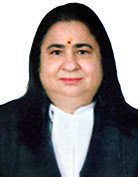
CORAM: HON'BLE MRS. JUSTICE MANISHA BATRA
Present: Mr. Sanjay Kaushal, Senior Advocate with
Mr. A.P. Setia, Advocate and
Mr. Ankit Rana, Advocate for the petitioner.
Respondent in person with
Mr. Yogesh Goel, Ms. Ashima Teria and
Ms. Ankita Jamwal, Advocates.
***
MANISHA BATRA, J (ORAL):-
The above mentioned revision petition Nos. 2276, 2278, 2279,
2280, 2281, 2283, 2285, 2287 and 2316 of 2023, have been filed by the
complainant-V.R. Brothers whereas the revision petition Nos. 1675, 1677,
1683, 1685, 1686, 1687, 1688, 1689 and 1690 of 2023 have been filed by
the accused Navneet Aggarwal (hereinafter to be mentioned as ‘accused’)
against the judgments of conviction and orders on quantum of sentence
dated 15.10.2019 passed by the learned Judicial Magistrate First Class,
Ludhiana in nine criminal complaints bearing Nos. 8706, 8707, 8714, 8715,
8717, 8718, 8720, 8721 and 8722 of 2017, titled as ‘V.R. Brothers vs.
Alpine Garments and others’, whereby the accused had been held guilty
and convicted for commission of offence punishable under Section 138 of
the Negotiable Instruments Act, 1881 (For short, ‘NI Act’) and judgments
dated 15.07.2023 passed by the learned Appellate Court in criminal appeals
bearing CIS Nos. CRA- 2847 of 2019, 2848 of 2019, 2850 of 2019, 2851 of
2019, 2852 of 2019, 2855 of 2019, 2859 of 2019 and 2860 of 2019 filed by
accused whereas, CIS Nos. CRA-9 of 2023, 10 of 2023, 12 of 2023, 13 of
2023, 15 of 2023, 18 of 2023, 19 of 2023 and 20 of 2023 filed by
complainant, whereby the judgments of the trial Court were affirmed with
regard to the conviction of the accused but compensation amount was
CRR-2276-2023 and connected cases -5-
enhanced.
2. Since parties in all these revision petitions are common and
these revision petitions have been filed against the same judgments and
relate to cheques which were issued as part of the same transaction, and as
the facts as well as questions of law involved are also the same, hence, they
have been taken up and heard together. They are being disposed of by this
common judgment.
3. For the sake of continuity and coherence, hereinafter the parties
shall be referred to as per their original nomenclature as given at the time of
trial.
4. The aforementioned nine complaints were filed by the
complainant, M/s V.R. Brothers, which is a partnership firm engaged in the
business of ready-made garments through its authorized signatory and power
of attorney holder Vishal Bhalla on the allegations that Alpine Garments
Pvt. Ltd. (hereinafter to be mentioned as ‘the company’), the accused
Navneet Aggarwal (hereinafter to be mentioned as ‘accused’), and two
directors of the company, namely Pradeep Kumar and Swatantra Ved, had
approached the complainant-firm and expressed willingness for getting job
work done on the fabric supplied by them, from the complainant firm. An
oral deal was struck between the parties. The company had started placing
orders for making ready-made garments from the fabric supplied by it to the
complainant. The complainant performed its job to the satisfaction of the
company, and the accused and the company had agreed to make payment in
an apple pie order. The job work from the fabrics supplied by the company
was done by the complainant, and an amount of Rs. 22,50,000/- became
payable by the company. The accused acknowledged legal liability of the
CRR-2276-2023 and connected cases -6-
company, directors and himself towards the complainant, and to discharge
that liability, issued seven cheques for sums of Rs. 2,50,000/- each on
01.06.2017, whereas two cheques for sum of Rs. 2,00,000/- each were issued
on 18.03.2017 and 01.06.2017 respectively, for discharging liability of
payment of the aforementioned amount of Rs. 22,50,000/-. All these cheques
were presented for realisation by the complainant before its banker, but were
dishonoured with the remarks “funds insufficient”. The complainant served
statutory notices of demand within the stipulated period to the company, its
directors and to the accused, but to no avail, thereby compelling it to file
complaints under Section 138 of the NI Act.
5. After presentation of the complaint and producing preliminary
evidence by the complainant, the learned trial Magistrate passed orders in
the complaints observing that a prima facie case for commission of offence
punishable under Section 138 of the NI Act was made out as against accused
only, who was the signatory of the cheques in question and also observed
that no prima facie case as against the company or its directors had been
made out. The process was accordingly ordered to be issued against the
accused in each complaint. On appearance of the accused, notice of
accusation was served upon him in each case. He pleaded not guilty.
6. To substantiate its case, the complainant-firm examined its
power of attorney holder/authorized signatory Vishal Bhalla as CW-1, who
tendered affidavit by way of examination in-chief and also relied upon
certain documentary evidence.
7. After closing of evidence of the complainant, statements of the
accused were recorded under Section 313 of Cr.P.C. in each complaint. The
accused pleaded false implication and claimed himself to be innocent. In
CRR-2276-2023 and connected cases -7-
defence evidence, he examined himself as DW-1 and produced DW-2 ASI
Sethi Kumar. Documentary evidence was also produced.
8. On appraising the evidence produced on record and after giving
due deliberations to the contentions as raised by both sides, the learned
Magistrate vide judgment and order on quantum of sentences dated
14.10.2019 passed in each complaint held the accused guilty for commission
of offence punishable under Section 138 of the NI Act and sentenced him to
undergo rigorous imprisonment for a period of two years. The accused was
also directed to pay compensation to the complainant in each case. Feeling
aggrieved from the orders of his conviction and sentence, the accused
preferred aforementioned nine criminal appeals, whereas the complainant
also filed nine criminal appeals as detailed out above while feeling
dissatisfied from the amount of compensation as awarded to him, thereby
seeking enhancement in the same.
9. Vide common judgments dated 15.07.2023, the crimi nal
appeals so filed by the accused were dismissed, whereas the appeals filed by
the complainant were partly allowed to the extent of enhancing the amount
of compensation to 1.75 times of the cheque amount in each case. Still
dissatisfied, the accused has preferred Revision Petition Nos. 1675, 1677,
1683, 1685, 1686, 1687, 1688, 1689 and 1690 of 2023, whereas, the
complainant has also filed revision petition Nos. 2276, 2278, 2279, 2280,
2281, 2283, 2285, 2287, and 2316 of 2023.
10. Learned counsel for the accused has argued that the impugned
orders passed by the learned trial Magistrate as well as the learned Appellate
Court are not sustainable in the eyes of law as while passing the same both
these Courts did not appreciate the evidence produced on record in a proper
CRR-2276-2023 and connected cases -8-
manner. They ignored the fact that the cheques in question were issued only
by way of security cheques; that the fabric having worth of ₹50,00,000/- was
lying with the complainant whereas, job work to the extent of amount of
₹22,50,000/- only had been done by the complainant. Further, the
complainant not only withheld the return of the raw material supplied to it,
but also misused the cheques in question, which had been handed over only
as security.
11. Learned counsel for the accused has further argued that he was
neither the director of the company nor he was responsible for day to day
conduct of business of the company, nor he was drawer of the cheques in
question and as such, he was not covered under the provisions of Section
141 of the NI Act. He was simply an authorized signatory to the cheques in
question being an employee of the company. No legally enforceable liability
could be enforced against him being a signatory simplicitor and he could
also not be fastened with liability to pay compensation to the tune of Rs.
1.75 times of the cheque in question. No order for sentencing him to undergo
for imprisonment could be passed. It is submitted that the learned trial Court
as well as Appellate Court did not take these points into consideration at all
and passed non-speaking and perverse orders which are not sustainable in
the eyes of law. With these broad submissions, it is urged that the impugned
judgments as passed by both the Courts are liable to be set aside, the
revision petitions filed by him deserve to be accepted; he deserves to be
acquitted of the accusations and to be exonerated from the liability of
making payment of any compensation/enhanced compensation.
12. While refuting the contentions as raised by learned counsel for
the accused, learned counsel for the complainant has argued that there is no
CRR-2276-2023 and connected cases -9-
illegality or infirmity in the orders passed by the learned trial Court as well
as learned Appellate Court and the same are well reasoned. The accused did
not deny his signatures on the cheques in question by admitting that he had
signed the same as signatory of the company. There was a presumption
under Section 139 of NI Act that the cheques in question were issued by him
in discharge of legally enforceable liability and he has failed to rebut this
presumption by producing any cogent and convincing evidence to the
contrary. The complainant had filed the complaints not only against the
accused but also against the company as well as its directors. It had even
filed application(s) under Section 319 of Cr.P.C. for summoning the
directors as additional accused but it was the trial Court who had not
allowed the same and as such there was no lapse on the part of the
complainant in not prosecuting the company and its directors. He had
produced sufficient evidence on record to prove his case. The learned trial
Court and Appellate Court had committed no error in recording the findings
of guilt of the accused and these findings do not warrant any interference.
13. Learned counsel for the complainant has further argued that no
illegality was committed by the learned trial Court in awarding
compensation to the complainant, but the amount of compensation so
awarded was meager. Even the learned Appellate Court did not award
suitable and proper compensation to the complainant while enhancing the
same, as the fact that the complainant had faced the agony of litigation for a
period of more than eight years without having any fault on the part of its
partners/itself, and had suffered huge financial losses and surely deserved
suitable compensation was not properly appreciated. With these broad
submissions, it is argued that the revision petitions as filed by the
CRR-2276-2023 and connected cases -10-
complainant deserve to be allowed and the amount of compensation as
awarded by the learned Appellate Court in each case deserves to be
enhanced at least to the extent of twice the amount of the cheques in
question, and further that the petitions filed by the accused are liable to be
dismissed.
14. At the very outset, it may be mentioned that the re are
concurrent findings of conviction arrived at by two Courts and the petitioner
has approached this Court to exercise its revisional jurisdiction. It is well
settled that in criminal revisions against conviction, this Court is not
supposed to exercise the jurisdiction like appellate Court and the scope of
interference in the revision is extremely low. Section 438 of Bharatiya
Nagarik Suraksha Sanhita, 2023 (which is pari materia with Section 397 of
Cr.P.C.) vests jurisdiction for the purpose of satisfying itself as to the
correctness, legality or propriety of any finding, sentence or order, recorded
or passed, and as to the regularity of any proceedings of inferior Court. The
object of the provision is to set right a patent defect or an error of
jurisdiction or law. There has to be a well-founded error which is to be
determined on the merits of individual cases. While considering the question
as to whether there is a patent defect or an error of jurisdiction or law, the
revisional Court is not required to dwell at length upon the facts and
evidence of the case to reverse those findings. Reference in this regard can
be had to the observations made by Hon’ble Supreme Court in State of
Gujarat vs. Dilipsinh Kishorsinh Rao, 2023 SCC OnLine SC 1294,
wherein it was held so. The well accepted norm is that a revisional
jurisdiction of higher Court is very limited one and cannot be exercised in a
routine manner and it should not lead to injustice ex-facie. In view of this
CRR-2276-2023 and connected cases -11-
position of law, it is to be seen as to whether a case for exercise of revisional
jurisdiction is made out or not?
15. The accused had been held guilty and convicted for commission
of offence punishable under Section 138 of NI Act. The Hon’ble Apex Court
explained the ingredients which are to be satisfied for making out a case
under Section 138 of the NI Act in Kusum Ingots & Alloys Ltd. vs. Pennar
Peterson Securities Ltd. and Others reported in (2000) 2 SCC 745 in the
following manner:
"10. On a reading of the provisions of Section 138 of the NI Act
it is clear that the ingredients which are to be satisfied for
making out a case under the provision are:
(i) a person must have drawn a cheque on an account
maintained by him in a bank for payment of a certain amount
of money to another person from out of that account for the
discharge of any debt or other liability;
(ii) that cheque has been presented to the bank within a period
of six months from the date on which it is drawn or within the
period of its validity, whichever is earlier;
(iii) that cheque is returned by the bank unpaid, either because
the amount of money standing to the credit of the account is
insufficient to honour the cheque or that it exceeds the amount
arranged to be paid from that account by an agreement made
with the bank;
(iv) the payee or the holder in due course of the cheque makes a
demand for the payment of the said amount of money by giving
a notice in writing, to the drawer of the cheque, within 15 days
of the receipt of information by him from the bank regarding
the return of the cheque as unpaid;
(v) the drawer of such cheque fails to make payment of the said
amount of money to the payee or the holder in due course of the
cheque within 15 days of the receipt of the said notice."
CRR-2276-2023 and connected cases -12-
16. A reference to the proviso to Section 138 of NI Act is also
relevant which reads as follows:-
Provided that nothing contained in this section shall
apply unless –
(a) the cheque has been presented to the bank within a pe-
riod of six months from the date on which it is drawn or
within the period of its validity, whichever is earlier;
(b) the payee or the holder in due course of the cheque, as
the case may be, makes a demand for the payment of the
said amount of money by giving a notice in writing, to
the drawer of the cheque, within thirty days of the receipt
of information by him from the bank regarding the return
of the cheque as unpaid; and
(c) the drawer of such cheque fails to make the payment
of the said amount of money to the payee or, as the case
may be, to the holder in due course of the cheque, within
fifteen days of the receipt of the said notice.
Explanation. - For the purposes of this section, "debt or
other liability" means a legally enforceable debt or other
liability.”
17. From a bare reading of Section 138 of the NI Act, it emerges
that the first and foremost ingredient for applying this provision upon a
person, who is to be made liable is that such person should be the drawer of
the cheque and should have drawn the cheque on an account maintained
by him with a banker for payment of any amount of money to another
person from out of that account that whole or part of any debt or liability.
Since in this case, the aforementioned nine complaints had been filed by the
complainant against the company, its directors, and the accused, who is the
authorized signatory to these cheques, alleging commission of offence
punishable under Section 138 of the NI Act, it is, therefore, appropriate to
CRR-2276-2023 and connected cases -13-
refer to Section 141 of the NI Act which deals with the offence by a
company. The same reads as follows:-
Section 141- OFFENCES BY COMPANY:-
(1) If the person committing an offence under section
138 is a company, every person who, at the time the
offence was committed, was in charge of, and was
responsible to the company for the conduct of the
business of the company, as well as the company, shall be
deemed to be guilty of the offence and shall be liable to
be proceeded against and punished accordingly:
Provided that nothing contained in this sub-section shall
render any person liable to punishment, if he proves that
the offence was committed without his knowledge, or that
he had exercised all due diligence to prevent the
commission of such offence:
Provided further that where a person is nominated as a
Director of a company by virtue of his holding any office
or employment in the Central Government or State
Government or a financial corporation owned or
controlled by the Central Government or the State
Government, as the case may be, he shall not be liable for
prosecution under this Chapter.
(2) Notwithstanding anything contained in sub-section
(1), where any offence under this Act has been committed
by a company and it is proved that the offence has been
committed with the consent or connivance of, or is
attributable to, any neglect on the part of, any director,
manager, secretary or other officer of the company, such
director, manager, secretary or other officer shall also be
deemed to be guilty of that offence and shall be liable to
be proceeded against and punished accordingly.
Explanation.--For the purposes of this section,--
(a) "company" means any body corporate and includes a
firm or other association of individuals; and
CRR-2276-2023 and connected cases -14-
(b) "director", in relation to a firm, means a partner in the
firm."
18. On a bare reading of the aforementioned provision, it is clear
that so far as the companies are concerned, if any offence is committed by it,
then every person who is director or employee of the company is not liable.
Only such person would be held liable who if at the time when offence was
committed, was in charge and responsible for the conduct of business of the
company as well as of the company. However, by way of an exception to the
normal rule that in cases involving criminal liability against vicarious
liability, no-one is to be held liable for an act of another, a specific provision
is made in the statute by way of this Section that criminal liability can be
extended to others.
19. Section 141 of the NI Act is an instance of specific provision,
which in case an offence under Section 138 of the NI Act is committed by a
Company, extends criminal liability for dishonour of cheque to the officers
of the Company. For that purpose certain conditions, which are mentioned
in Section 141 of the NI Act, have to be satisfied and those conditions have
to be strictly complied with. In that case apart from the Company, all
persons, who at the time of commission of offence, were in-charge and were
responsible to the Company for conduct of business of the Company, are
liable for the offence. This section postulates constructive liability of the
directors of the company or the business of the company.
20. It is well settled that what is required for a person, who is
sought to be held vicarously liable for the offence under Section 141 of the
NI Act, is that when the offence was committed, he was in charge and
responsible for conduct and business of the company and this should be
reflected in the averments made in the complaint. Reliance in this context
CRR-2276-2023 and connected cases -15-
can be made to S.M.S. Pharmaceuticals Ltd. Vs. Neeta Bhalla, 2005(3)
Apex Criminal 229, wherein it was observed by Hon’ble Supreme Court
that in a complaint under Section 141 of NI Act, it was necessary to
specifically aver that at the time when the offence was committed, the
person accused was in charge of and was responsible for the conduct of the
business of the company. This was an essential requirement and without this
averment having been made, the requirement of Section 141 of NI Act could
not be set to be satisfied. Similar observations were made in Neeru Gupta
vs. Ajay Dhawan, CRM-M-16269-2018, decided on 18.03.2020 by this
Court, Saroj Kumar Poddar Vs. State (NCT of Delhi), 2007(1) R.A.J. 205,
National Small Industry Corporation Limited vs. Harmeet Singh Paintal,
2010(2) RCR (Criminal) 122, Hitesh Verma vs. M/s Health Care at Home
India Pvt. Ltd. and others, 2025 (1) Apex Court Judgments (SC) 799 and
A.K. Singhania vs. Gujarat State Fertilizer Company Ltd., 2013 (4) RCR
(Criminal) 777 and N.K. Wahi Vs. Shekhar Singh, 2007(2) RCR
(Criminal) 266.
21. In view of the above discussed position of law and applying the
same to the peculiar facts of the petitions in hand, it may be stated that the
accused did not deny the fact that the cheques in question were signed by
him. With regard to question as to liability of the company or himself qua
payment of amount of these cheques, he, however took different stands
before the learned trial Court. When served with notice of accusation, he
stated that the cheques in question were taken by the complainant as
security. They were blank cheques and had been misused by the complainant
by writing the body of the cheques. While cross-examining CW-1 i.e. the
witness of the complainant, no suggestion was given that these cheques were
CRR-2276-2023 and connected cases -16-
security cheques. In his statement(s), recorded under Section 313 of Cr.P.C.,
he stated that nine cheques had been taken by the complainant as security.
He also stated that the cheques were not issued in discharge of any existing
legal liability of the company or himself. Then while appearing as DW-1, he
did not say that the cheques in question were security cheques and the stand
taken by him was that he had signed these cheques only being an employee
and authorized signatory of the company and also that these cheques were
stolen by the partners of the complainant-firm. The learned trial Court as
well as the Appellate Court had observed that it stood proved that the
cheques in question were signed and issued by the accused and since the
accused himself had not disputed this fact, therefore, there cannot be stated
to be any dispute about the fact that the cheques in question were signed by
him.
22. What invariably follows from a perusal of provisions of Section
138 of NI Act is that it is only the drawer of the cheque who can be held
liable under Section 138 of NI Act. Section 6 of the NI Act inter alia defines
a ‘cheque’ as a bill of exchange drawn on a specified banker and not
expressed to be payable otherwise than on demand. Section 7 defines the
"drawer" as the maker of a bill of exchange or cheque and "drawee" as the
person thereby directed to pay. Sections 30 and 31 of the NI Act respectively
define the liability of the drawer and the drawee of a cheque as follows:
"30. Liability of drawer.-The drawer of a bill of exchange or
cheque is bound, in case of dishonour by the drawee or acceptor
thereof, to compensate the holder, provided due notice of
dishonour has been given to, or received by, the drawer as
hereinafter provided.
31. Liability of drawee of cheque.-The drawee of a cheque
CRR-2276-2023 and connected cases -17-
having sufficient funds of the drawer in his hands properly
applicable to the payment of such cheque must pay the cheque
when duly required so to do, and, in default of such payment,
must compensate the drawer for any loss or damage caused by
such default.
23. Since as per Section 138 of NI Act, it is the drawer of the
cheque in question who drew the cheque on an account maintained by him in
a bank, who is to be held liable for payment of the same, therefore, the next
question that arises for consideration before this Court is as to whether, the
accused could be considered to be the drawer of the cheques in question and
further as to whether these cheques are proved to have been drawn on the
account maintained by him as required for applying the provisions of
Section 138 of NI Act against him?
24. For the above purpose, it is relevant to mention that the cheques
in question were admittedly issued from the account maintained by the
company M/s Alpine Garments whose name was printed on the cheques
themselves and the petitioner signed them as authorized signatory thereof.
The accused had not even been summoned/prosecuted as a director of the
company nor he was arraigned as such in the complaint in that capacity.
Though the company as well as its director had been impleaded as accused
in the complaint but as already mentioned, they were not summoned as
accused by the learned trial Court and it was only the accused Navneet
Aggarwal, who has been summoned as such.
25. The issue as to whether, authorized signatory of a company,
who had signed a cheque drawn on the bank account of the company which
was dishonoured, could be held liable under Section 138 of NI Act and also
for making payment of compensation under Section 143-A of NI Act was
CRR-2276-2023 and connected cases -18-
considered by Hon’ble Supreme Court in a recent decision in the case of
Shri Gurudatta Sugars Marketing (P) Ltd. v. Prithviraj Sayajirao
Deshmukh 2024 SCC OnLine SC 1800 and while applying the doctrine of
separate corporate personality, it was held by Hon’ble Supreme Court that it
was only the drawer of the cheque, who could be held to be liable for
payment of compensation and the authorized signatory of a company cannot
be said to be the drawer of the cheque.
26. In
Bijoy Kumar Moni v. Paresh Manna, 2024 SCC Online
SC 3833, the Hon’ble Supreme Court was dealing with a similar question
and observed that if a cheque is issued by a company but has been signed by
its authorized signatory, the latter would not be considered as the maker of
those cheques and it is the company alone, which would continue to maker
of the cheque and also the drawer within meaning Section 7 of NI Act and
the cheque would be considered to be drawn on the account maintained by
the company and not by the authorized signatory. It was further observed
that the authorized signatory of a company was merely the physical limb that
signed and made the cheque on behalf of the company’s incorporeal
personality. The company, for all purposes, continued to remain the drawer
of the cheques. If any other interpretation was accepted then even an
employee of the company, who on account of his being an authorized
signatory signed a cheque issued by the company towards discharge of the
debt or other liability thereof, would be liable to prosecution and conviction
under Section 138 of NI Act even after he resigned from the company or
was no more in its employment. Hon’ble Supreme Court held that this could
not have been the intention of the legislature and even vicarious liability
created under Section 138 would not be attracted in respect of a director or
CRR-2276-2023 and connected cases -19-
an employee of the company, who resigns and severes his connection with
the same. It was also held that a company vis-a-vis its authorized signatory
stood on a completely different footing as compared to account holders of a
joint account. The culpability attached to the dishonour of a cheque could, in
no case, “except in case of Section 141 of the NI Act” be extended to those
on whose behalf the cheque was issued.
27. In N. Harihara Krishnan v. J. Thomas (2018) 13 SCC 663,
while dealing with the issue of commission of an offence under Section 138
of NI Act by a company, it was observed by Hon’ble Supreme Court that
Section 138 only contemplated the drawer of the cheque to be responsible
for the commission of the offence. It is only by virtue of Section 141 that
certain persons other than the drawer of the cheque can be made liable for
the offence in cases where the offence under Section 138 is committed by a
company and not by an individual person. It was also held that the offence
under Section 138 was capable of being committed only by drawer of the
cheque. Section 141 stipulated the liability for the offence punishable under
Section 138, when the person committing such an offence happens to be a
company-in other words, when the drawer of the cheque happens to be a
company.
28. In view of the above discussed proposition of law, it is clear
that in case a cheque is drawn from the account of a company by its
authorized signatory, the latter would not be considered to be the drawer of
the cheque and it is the company which would be considered to be so and
therefore, the petitioner who had been summoned and prosecuted could not
be considered to be drawer of the cheque. Since in these cases, neither the
company nor the director thereof had been summoned and prosecuted as
CRR-2276-2023 and connected cases -20-
accused and since the complainant failed to bring any material on record to
show that the accused was responsible for day to day conduct of business of
the company and was vicariously liable, therefore, due to only being
authorized signatory, criminal liability on account of dishonour of cheque
did not fall on him as such liability primarily falls on the drawer company
and it is only thereafter, it extends to its officers/directors only when the
conditions incorporated in Section 141 of NI Act are satisfied. Rather during
cross-examination, CW-1 i.e. the only witness of the complainant
categorically admitted that the petitioner was not conducting day to day
business/affairs of the company. Reference in this context can be had to the
observations made by Hon’ble Supreme Court in Aneeta Hada v. Godfather
Travels & Tours (P) Ltd., (2012) 5 SCC 661, that commission of an offence
by the company is an express condition precedent and only when the
prosecution is maintainable against the company that the persons mentioned
in other categories under Section 141 can be vicariously made liable for the
company for the offence committed under Section 138. The doctrine of strict
construction is to be applied as per which commission of offence by the
company is a condition precedent to attract the vicarious liability of others.
When the company can be prosecuted, then only the persons mentioned in
other categories could be made vicariously liable.
29. As a result of the discussion made above, it follows that it is the
drawer company which must be first held to be the principal offender under
Section 138 of NI Act before culpability can be extended to the other
directors or persons in charge of and responsible to the company for the
conduct of its business. If the liability of the drawer company is not proved
or if it is not prosecuted then there is no requirement to hold the other
CRR-2276-2023 and connected cases -21-
persons vicariously liable for the offence committed under Section 138 of
the NI Act. Since the cheques in question were not drawn from the account
maintained by the accused but were issued on the account maintained by the
company and as the accused was not the drawer of the company, therefore,
the requirements for establishing the ingredients for Section 138 of NI Act
cannot be stated to have been complied with while recording findings as to
the guilt of accused and hence, these findings not being in accordance with
the well established position of law are not sustainable and are liable to be
reversed. The learned trial Court as well as Appellate Court did not consider
these important aspects of the case as well as the law applicable and
therefore, the findings as given by learned trial Court as to the guilt of the
accused and directing him to pay compensation and as upheld by the learned
trial Court in all the nine complaints are set aside. As a result thereto, the
judgments as passed by the trial Court recording conviction of the accused
and judgments of Appellate Court affirming the same are hereby reversed
and set aside; the revision petitions as filed by the accused are accepted,
whereas, the revision petitions filed by the complainant are dismissed. The
accused is ordered to be acquitted of the accusations in all the
cases/complaints.
30. Photocopy of this order be placed on the files of the connected
cases.
31. Since the main petitions have been disposed of, pending
application, if any, is rendered infructuous.
[MANISHA BATRA]
JUDGE
24
th
September, 2025
Parveen Sharma
1. Whether speaking/ reasoned : Yes / No
2. Whether reportable : Yes / No

 Login with google
Legal Notes
Add a Note....