
As per case facts, Petitioners (West Bengal Pradesh Congress Committee & Anr.) filed a Writ Petition against the Election Committee of India & Ors. concerning a private respondent's (Respondent No. ...
No Acts & Articles mentioned in this case
IN THE HIGH COURT AT CALCUTTA
(Constitutional Writ Jurisdiction)
APPELLATE SIDE
Present:
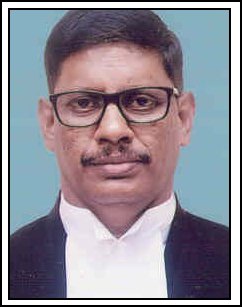
The Hon’ble Justice Krishna Rao
W.P.A. No. 27488 of 2026
West Bengal Pradesh Congress Committee & Anr.
Vs.
Election Committee of India & Ors.
Mr. Ritzu Ghosal, Sr. Adv.
Mr. Sanjay Banerjee
Mr. Sohaib Rauf
Mr. Ajitesh Pandey
Ms. Sreeparna Das
Mr. Anish Mukherjee
Mr. Tathagata Majumder
Mr. Sayantan Chatterjee
Ms. Ledia Dasgupta
Mr. Shamik Roy
Mr. Abid Ali
Mr. Abhijit Raha
Mr. Manojit Bhattacharyya
Mr. Arka Chakraborty
Mr. Anwar Ali
Ms. Sarbani Mukhopadhyay
Mr. Ranjit Mondal
2
Mr. Sayan Datta
Mr. Asfak Ahammad
Mr. Samirul Sardar
Mr. Manish Ojha
....For the petitioners.
Mr. Dama Seshadri Naidu, Sr. Adv.
Mr. Prateek Kumar
Mr. Deepak Sharma
….For the respondent no. 1.
Ms. Sarda Sha
….For the respondent no. 2.
Mr. Jishnu Chowdhury, Sr. Adv.
Ms. Sanskriti Agarwal
Ms. Anamika Pandey
Mr. Deep Basak
….For the respondent no. 3.
Mr. Joydip Kar, Sr. Adv.
Mr. Pijush Biswas
Mr. Tamoghna Pramanick
….For the respondent no. 5.
Hearing Concluded On : 25.09.2026
Judgment Delivered On : 29.09.2026
Judgment Uploaded On : 29.09.2026
3
Krishna Rao, J.:
1. The petitioners have filed the present writ petition praying for the
following reliefs:
“a. hold and declare that permitting
Respondent No. 5's candidature to proceed to the
poll without verification of the apparent and facially
impossible discrepancy between her declared age
and her declared year of passing Class X, as
disclosed in her Form 26 affidavit dated
15.09.2026, would constitute a grave and
continuing violation of the fundamental right to
know of the electorate under Article 19(1)(a) of the
Constitution of India;
b. issue a writ in the nature of Mandamus, or
a writ, order or direction of like nature,
commanding the Respondent Nos. 1, 3 and 4 to
forthwith examine and verify the apparent and
facially impossible discrepancy between the
declared age and the declared year of passing
Class X contained in the Form 26 affidavit dated
15.09.2026 filed by the Respondent No. 5, as being
a live violation of the fundamental right to know of
the electorate under Article 19(1)(a) of the
Constitution of India;
c. direct the Respondent Nos. 1, 3 and 4 to call
for, examine and verify the relevant
contemporaneous educational records of the
Respondent No. 5, including the admission register,
examination records and mark-sheet/certificate of
Chowkhali Ganga Pada Milan Kanya Vidyapith
(H.S.), relating to her stated completion of Class X
in the year 1965;
d. direct the Respondent Nos. 1 and/or 3 to
examine and determine whether the discrepancy
set out above attracts any consequence under the
Representation of the People Act, 1951, including
but not limited to Section 36 and Section 125A
thereof, or under any applicable instruction of the
Election Commission of India, and to pass a
reasoned and speaking order thereon within a
time-bound period and before the date of poll, after
4
affording an opportunity of hearing to the
Respondent No. 5 and the Petitioner;
e. direct the Respondent authorities to
preserve the nomination paper, the Form 26
affidavit and all connected scrutiny records of the
Respondent No. 5, and to produce the same before
this Hon'ble Court if and when called upon to do so;
pending hearing and final disposal of this writ
petition, direct the Respondent authorities to
preserve, and not to destroy, part with, or alter, all
original records relating to the educational
qualification and the nomination of the Respondent
No. 5.”
2. At the time of hearing, Learned Counsel for the petitioners submits that
the petitioners are not challenging the election process. He submits
that the petitioners are only aggrieved with the action of the Returning
Officer who has not acted in terms of Section 36 and Section 125A of
the Representation of the People Act, 1951 and the applicable
instructions of the Election Commission of India without examining
and determining the discrepancy in Form-26 (affidavit) dated 15
th
September, 2026, submitted by the private respondent with regard to
her age and declared year of passing Class 10
th examination.
3. Mr. Ritzu Ghosal, Learned Senior Advocate, representing the petitioners
submits that the private respondent while submitting her nomination
paper before the Returning Officer for Bye-Election to the West Bengal
Legislative Assembly from 210 - Nandigram Assembly Constituency on
15
th
September, 2026, has submitted an Affidavit in FORM 26 wherein
the private respondent has declared her age as “60+ Years” but at
PART-A, page 10, Clause 10, she has declared her educational
5
qualification is - Class X from Chowkhali Ganga Pada Milan Kanya
Vidyapith (H.S.), 1965.
4. Mr. Ghosal submits that in PART-B of the Affidavit at Clause 11, the
private respondent has declared her highest educational qualification is
– Class-X, Chowkhali Ganga Pada Milan Kanya Vidyapith (H.S.), 1965.
By referring the said portions of affidavit, he submits that if the age of
the private respondent is 60 years on the date of filing of her
nomination form then how it is possible that the private respondent
qualified Class-X in the year 1965.
5. Mr. Ghosal submits that as per Sub-Section (2) of Section 36 of the
Representation of People Act, 1951 (hereinafter referred to as “Act of
1951”), the Returning Officer on his own motion after such summary
inquiry, he thinks necessary, reject any nomination. He submits that in
the face of affidavit in Form-26 submitted by the private respondent, it
is clear that the either date of birth or her educational certificate is not
correct but the Returning Officer without considering false declaration,
accepted the nomination form of the private respondent.
6. Mr. Ghosal submits that it is the duty of the Returning Officer to verify
that the candidate who has submitted nomination form to contest
election has complied with the provisions of Sections 33A and 33B of
the Act of 1951 but in the present case, the Returning Officer failed to
comply with the said provisions.
6
7. Mr. Ghosal submits that the defect appearing in the affidavit submitted
by the private respondent in FORM-26 is of a substantial character but
the respondent no.3 has not considered the same and failed to perform
his constitutional duty assigned to him by allowing the nomination of
the private respondent.
8. Mr. Ghosal submits that when the respondent no. 3 has not performed
his constitutional duty, on 21
st
September, 2026, a detailed
representation was made to the respondent no. 4 with regard to the
defects in the affidavit submitted by the private respondent under
FORM-26 with regard to her affidavit, the respondent no.3 failed to
consider the same till date.
9. Mr. Ghosal in support of his submissions, has relied upon the
judgement in the case of Ritzu Ghosal Vs. West Bengal State
Election Commission and Others reported in 2018 SCC OnLine Cal
1747 and submits that the Hon’ble Division Bench of this Court held
that any illegality, whether palpable or otherwise, on the part of the
State Election Commission, can be interfered by the Court sitting in its
Constitutional writ Jurisdiction or in an appeal therefrom especially
when such illegality manifests itself in an action which is arbitrary or
wrongful or is mala fide in nature.
10. Mr. Ghosal has relied upon the judgment in the case of Adhir Ranjan
Chowdhury Vs. West Bengal State Election Commission and
7
Others reported in 2018 SCC OnLine Cal 2135 and submits that the
Hon’ble Division Bench of this Court held that if there is an error
committed in the course of the election process, the Election
Commission had the authority to set it right by virtue of the power
vested in it under Article 324 of the Constitution and to see that the
election process was completed in a fair manner.
11. Mr. Ghosal has relied upon the judgment in the case of Kisan
Shankar Kathore Vs. Arun Dattatray Sawant and Others reported
in (2014) 14 SCC 162 and submits that the grounds stated in Section
36(2) are those which can be examined there and then and on that
basis the Returning Officer would be in a position to reject the
nomination.
12. Mr. Ghosal has relied upon the judgment in the case of Resurgence
India Vs. Election Commission of India and Another reported in
(2014) 14 SCC 189 and submits that the ultimate purpose of filing of
affidavit along with nomination paper is to effectuate the fundamental
right of the citizens under Article 19(1)(a) of the Constitution of India.
The Citizens are supposed to have the necessary information at the
time of filing of nomination paper and for that purpose, the Returning
Officer can very well compel a candidate to furnish the relevant
information.
8
13. Mr. Ghosal has relied upon the judgment in the case of Mairembam
Prithviraj Vs. Pukhrem Sharatchandra Singh reported in (2017) 2
SCC 487 and submits that providing incomplete information or
suppression of material information is to be treated as defect of
substantial character.
14. Mr. Dama Seshadri Naidu, Learned Senior Advocate, representing the
respondent no.1/ Election Commission of India submits that date of
Scrutiny of nominations was fixed on 17
th
September, 2026 and the
last date for the withdrawal of the candidatures was fixed on 19
th
September, 2026. The respondent no.5 has submitted her nomination
form on 15
th
September, 2026. No one has raised any objection to the
nomination submitted by the respondent no. 5. Only on 21
st
September, 2026, a complaint was submitted by one Subrata
Mahapatra but by the time scrutiny of nominations was completed and
nominate documents of the private respondent was accepted.
15. Mr. Naidu submits that the objection raised by the petitioners in the
present writ petition is covered under Section 100(1)(d)(i) of the
Representation of People Act, 1951, thus the writ petition is not
maintainable. He submits that in the Affidavit, the respondent no.5 has
declared that her age is 60+ years and she passed Class X in the year
1965 which cannot be said to be substantial character.
16. Mr. Naidu has relied upon the judgment in the case of Mairembam
Prithviraj (supra) and submits that mere finding that there has been
9
an improper acceptance of the nomination is not sufficient for a
declaration that the election is void under Section 100(1)(d). There has
to be further pleading and proof that the result of the election of the
returned candidate was materially affected.
17. Mr. Naidu further relied upon the judgment passed by this Court in the
case of Arindam Ghosh Vs. Union of India & Others reported in
2026 SCC OnLine Cal 5889 wherein this Court held that if any order
is passed on the allegation of acceptance of defective affidavit, the same
would amount to interfere with the election process.
18. Mr. Jishnu Chowdhury, Learned Senior Advocate, representing the
respondent no. 3/ the Chief Electoral Officer submits that the writ
petition is not coming under the provision of Section 36(1) of the
Representation of People Act, 1951. He submits that the writ petitioner
no.1 is the West Bengal Pradesh Congress Committee, State wing of the
Indian National Congress and the petitioner no.2 is one Mita
Chakravarty. There is no documents submitted by the petitioners that
the petitioner no.2 was the election agent or the proposer or duly
authorized person of the contesting candidate attended the office of the
Returning Officer and examined the nomination papers of the
respondent no.5 or raised any objection before the Returning Officer on
or before 17
th
September, 2026.
10
19. Mr. Chowdhury submits that the petitioners have disclosed a
representation dated 21
st September, 2026 of one Subrata Mahapatra
addressed to the Returning Officer after the scrutiny of the nomination
was completed and the said person is not the writ petitioner before this
Court. Mr. Chowdhury has relied upon the Hand Book for Returning
Officer 2023 and relied upon Clause 6.9.1 and submits that as per the
said clause, nomination paper cannot be rejected which is not
substantial character and any mistake or error of a technical of clerical
nature should be ignored by the Returning Officer.
20. Mr. Chowdhury further relied upon Clause 6.10.1 (iv) and submits that
as per the said clause, the Returning Officer must reject the
nomination papers if prescribed affidavit is not filed by the candidate
but if the prescribed affidavit is filed and alleged or found to be
containing false information, the nomination should not be rejected on
this ground.
21. Mr. Chowdhury submits that mere on the allegation that the
respondent no. 5 has submitted affidavit by disclosing her age as 60+
years and Class-X certificate of 1965, cannot disqualify the respondent
no. 5 to be member of the Legislative Assembly under Section 5 of the
Act of the 1951. He further referred Article 191 of the Constitution of
India and submits that the allegation of the petitioner against the
respondent no.5 is not coming any of the ground of disqualification of
the membership.
11
22. Mr. Chowdhury has relied upon the judgment in the case of Election
Commission of India Vs. Ashok Kumar and Others reported in
(2000) 8 SCC 216 and submits that the petitioners have challenged
the nomination papers submitted by the petitioners but the Returning
Officer already accepted the nomination of the respondent no.5 and
election process has also started and if at this stage, if this Court pass
any order in connection with the nomination of the respondent no.5,
the same would amount to interrupting the election process.
23. Mr. Joydip Kar, Learned Senior Advocate, representing the respondent
no.5 submits that there was no objection at the time of scrutiny of the
nomination papers of the respondent no. 5. He submits that the
petitioners have disclosed one complaint in the writ petition dated 21
st
September, 2026, regarding objection against the affidavit of the
respondent no.5 but by that time scrutiny was completed and
nomination papers of the respondent no. 5 was accepted.
24. Mr. Kar referred Section 100 (1)(d)(i) of the Act of 1951 and submits
that the grounds on which the petitioners have filed the present writ
petition is the ground for the election petition. He further submits that
as per Clause (b) of Article 329 of the Constitution of India, no election
to either House of Parliament or to the House or either House of the
Legislature of a State shall be called in question except by an election
petition.
12
25. Mr. Kar submits that the declaration submitted by the respondent no.5
in the affidavit in FORM-26 is of substantial character or not, is the
matter of evidence and the same cannot be decided in the writ
jurisdiction. Mr. Kar has relied upon the judgement in the case of
Meenakshi Nataranjan Vs. Election Commission of India and
Another passed in Writ Petition(s) (Civil) No(s). 766 of 2026 dated
12
th
June, 2026 and submits that the Hon’ble Supreme Court has not
entertained the petition under Article 32 of the Constitution of India in
view of the expressed bar contained in Article 329(b) of the Constitution
of India.
26. The private respondent has submitted her nomination paper along with
an affidavit under FORM-26 before the Returning Officer on 15
th
September, 2026. In the affidavit at Part–A, she has declared her age as
60+ years. In Clause 10 of Part-A of the Affidavit, the private
respondent has stated as follows:
“(10) My educational qualification is as
under:
Class-X, Chowkhali ganga pada milan Kanya
Vidyapith (H.S.), 1965 (Give details of highest
School/ University education mentioning the full
form of the certificate/ diploma/ degree course,
name of the School/College/University and the
year in which the course was completed).”
27. In Part-B of the affidavit in Clause-11, the private respondent no.5
stated that:
13
“11. Highest education qualification:
Class –X, Chowkhali Ganga Padma Milan
Kanya Vidyapith (H.S.), 1965 (Give details of
highest School/ University education mentioning
the full form of the certificate/ diploma/ degree
course, name of the School/ College/ University
and the year in which the course was completed.)”
The case of the petitioners is that if the age of the petitioner no. 2
as on the date execution of affidavit is 60+ years how the petitioner no.
2 has passed Class-X examination in the year 1965. Either the
declaration of age or the year of qualification of the petitioner no. 2 is
not correct.
28. Section 36 of the Representation of Peoples Act, 1951 reads as follows:
“36. Scrutiny of nominations.— (1) On the
date fixed for the scrutiny of nominations under
section 30, the candidates, their election agents,
one proposer [***] of each candidate, and one other
person duly authorised in writing by each
candidate, but no other person, may attend at such
time and place as the returning officer may appoint;
and the returning officer shall give them all
reasonable facilities for examining the nomination
papers of all candidates which have been delivered
within the time and in the manner laid down in
section 33.
(2) The returning officer shall then examine the
nomination papers and shall decide all objections
which may be made to any nomination and may,
either on such objection or on his own motion, after
such summary inquiry, if any, as he thinks
necessary, [reject] any nomination on any of the
following grounds:—
[(a) [that on the date fixed for the scrutiny
of nominations the candidate] either is not
qualified or is disqualified for being chosen to
fill the seat under any of the following
provisions that may be applicable, namely:—
14
Articles 84, 102, 173 and 191, [***]
[Part II of this Act and sections 4 and 14
of the Government of Union Territories Act,
1963 (20 of 1963)] [***]; or
(b) that there has been a failure to comply
with any of the provisions of section 33 or
section 34; or
(c) that the signature of the candidate or
the proposer on the nomination paper is not
genuine.]
(3) Nothing contained in [clause (b) or clause
(c)] of sub-section (2) shall be deemed to authorise
the [rejection] of the nomination of any candidate
on the ground of any irregularity in respect of a
nomination paper, if the candidate has “been duly
nominated by means of another nomination paper
in respect of which no irregularity has been
committed.
(4) The returning officer shall not reject any
nomination paper on the ground of any [***] defect
which is not of a substantial character.
(5) The returning officer shall hold the scrutiny
on the date appointed in this behalf under clause
(b) of section 30 and shall not allow any
adjournment of the proceedings except when such
proceedings are interrupted or obstructed by riot or
open violence or by causes beyond his control:
Provided that in case [an objection is raised by
the returning officer or is made by any other
person] the candidate concerned may be allowed
time to rebut it not later than the next day but one
following the date fixed for scrutiny, and the
returning officer shall record his decision on the
date to which the proceedings have been
adjourned.
(6) The returning officer shall endorse on each
nomination paper his decision accepting or rejecting
the same and, if the nomination paper is rejected,
shall record in writing a brief statement of his
reasons for such rejection.
15
[(7) For the purposes of this section, a certified
copy of an entry in the electoral roll for the time
being in force of a constituency shall be conclusive
evidence of the fact that the person referred to in
that entry is an elector for that constituency, unless
it is proved that he is subject to a disqualification
mentioned in section 16 of the Representation of
the People Act, 1950 (43 of 1950).]
[(8) Immediately after all the nomination
papers have been scrutinised and decisions
accepting or rejecting the same have been recorded,
the returning officer shall prepare a list of validly
nominated candidates, that is to say, candidates
whose nominations have been found valid, and
affix it to his notice board.]”
29. Admittedly on the date of scrutiny of the nomination papers of the
respondent no. 5, the petitioners have not filed any objection. The
contention of the petitioners is that as per Section 36(2), the Returning
Officer has the power to reject the nomination papers but in the present
case, the Returning Officer has not invoked his power though the
affidavit filed by the respondent no.5 is having defect of substantial
character.
30. The Election Commission of India has fixed Schedule for Bye-Election
which are as follows:
SCHEDULE FOR BYE-ELECTION
Poll Events Schedule
Date of Issue of Gazette Notification 09.09.2026
(Wednesday)
Last date of making nominations 16.09.2026
(Wednesday)
Date for the scrutiny of nominations 17.09.2026
(Thursday)
16
The last date for the Withdrawal of
candidatures
19.09.2026
(Saturday)
Date of Poll 06.10.2026
(Tuesday)
Date of Counting Votes 09.10.2026
(Friday)
Date before which election shall be
completed
11.10.2026
(Sunday)
As per Schedule fixed by the Election Commission of India, the
Scrutiny of nomination papers were completed on 17
th
September,
2026 and nomination papers of the respondent no.5 is accepted. In the
case of Ashok Kumar & Ors. (supra), the Hon’ble Supreme Court held
that:
“32. For convenience sake we would now
generally sum up our conclusions by partly
restating what the two Constitution Benches have
already said and then adding by clarifying what
follows therefrom in view of the analysis made by
us hereinabove:
(1) If an election, (the term election being
widely interpreted so as to include all steps
and entire proceedings commencing from the
date of notification of election till the date of
declaration of result) is to be called in question
and which questioning may have the effect of
interrupting, obstructing or protracting the
election proceedings in any manner, the
invoking of judicial remedy has to be
postponed till after the completing of
proceedings in elections.
(2) Any decision sought and rendered will
not amount to “calling in question an election”
if it subserves the progress of the election and
facilitates the completion of the election.
Anything done towards completing or in
17
furtherance of the election proceedings cannot
be described as questioning the election.
(3) Subject to the above, the action taken
or orders issued by Election Commission are
open to judicial review on the well-settled
parameters which enable judicial review of
decisions of statutory bodies such as on a
case of mala fide or arbitrary exercise of
power being made out or the statutory body
being shown to have acted in breach of law.
(4) Without interrupting, obstructing or
delaying the progress of the election
proceedings, judicial intervention is available
if assistance of the court has been sought for
merely to correct or smoothen the progress of
the election proceedings, to remove the
obstacles therein, or to preserve a vital piece of
evidence if the same would be lost or
destroyed or rendered irretrievable by the time
the results are declared and stage is set for
invoking the jurisdiction of the court.
(5) The court must be very circumspect
and act with caution while entertaining any
election dispute though not hit by the bar of
Article 329(b) but brought to it during the
pendency of election proceedings. The court
must guard against any attempt at retarding,
interrupting, protracting or stalling of the
election proceedings. Care has to be taken to
see that there is no attempt to utilise the
court's indulgence by filing a petition
outwardly innocuous but essentially a
subterfuge or pretext for achieving an ulterior
or hidden end. Needless to say that in the
very nature of the things the court would act
with reluctance and shall not act, except on a
clear and strong case for its intervention
having been made out by raising the pleas
with particulars and precision and supporting
the same by necessary material.”
31. Article 329 (b) of the Constitution of India provides that no election to
either House of Parliament or to the House or either House of the
18
Legislature of a State shall be called in question except by an election
petition presented to such authority and in such manner as may be
provided for by or under any law made by the appropriate Legislature.
32. The defects in the affidavit submitted by the respondent no.5 are
substantial character or not are the matter of evidence. Section 100 of
the Act of 1951 provides as follows:
“100. Grounds for declaring election to be
void.— [(1) Subject to the provisions of sub-section
(2) if [the High court] is of opinion—
(a) that on the date of his election a returned
candidate was not qualified, or was
disqualified, to be chosen to fill the seat
under the Constitution or this Act [***] [or
the Government of Union Territories Act,
1963 (20 of 1963)]; or
(b) that any corrupt practice has been
committed by a returned candidate or his
election agent or by any other person with
the consent of a returned candidate or his
election agent; or
(c) that any nomination has been improperly
rejected; or
(d) that the result of the election, in so far as it
concerns a returned candidate, has been
materially affected—
(i) by the improper acceptance or any
nomination, or
(ii) by any corrupt practice committed in the
interests of the returned candidate 6 [by an
agent other than his election agent], or
(iii) by the improper reception, refusal or
rejection of any vote or the reception of any
vote which is void, or
19
(iv) by any non-compliance with the
provisions of the Constitution or of this Act
or of any rules or orders made under this
Act,
[the High Court] shall declare the election of
the returned candidate to be void.]
[(2)] If in the opinion of [the High Court], a
returned candidate has been guilty by an agent,
other than his election agent, of any corrupt
practice [***] but [the High Court] is satisfied—
(a) that no such corrupt practice was
committed at the election by the candidate or
his election agent, and every such corrupt
practice was committed contrary to the orders,
and [without the consent], of the candidate or
his election agent;
[***]
(c) that the candidate and his election agent
took all reasonable means for preventing the
commission of corrupt [***] practices at the
election; and
(d) that in all other respects the election was
free from any corrupt [***] practice on the part
of the candidate or any of his agents, then [the
High Court] may decide that the election of the
returned candidate is not void.”
As per Sub- Section 1(d)(i) of Section 100 of the Act of 1951, if
any, nomination is improper accepted, the election can be declared to
be void.
33. Recently the Hon’ble Supreme Court in the case of Meenakshi
Natarajan (supra) by considering the case N.P. Ponnuswamy Vs.
Returning Officer, Namakkal Constituency and Others reported in
(1952) 1 SCC 94 held that :
20
“10. As we have seen the most important
question for determination is the meaning to be
given to the word “election” in Article 329(b). That
word has by long usage in connection with the
process of selection of proper representatives in
democratic institutions, acquired both a wide and a
narrow meaning. In the narrow sense, it is used to
mean the final selection of a candidate which may
embrace the result of the poll when there is polling
or a particular candidate being returned unopposed
when there is no poll. In the wide sense, the word
is used to connote the entire process culminating in
a candidate being declared elected.”
34. Though the petitioner No. 2 has made several prayers in the present
writ petition but the petitioner No. 2 has restricted her prayer only to
the effect that the Returning Officer has not invoked his power by
rejecting the nomination papers of the respondent no.5 of his own after
verification of the affidavit submitted by the respondent no.5 wherein
the respondent no.5 is alleged to has disclosed her age or education
qualification wrongly or incorrect.
35. The petitioner No. 2 has not prayed for any relief with regard to the
election process but if at this stage, this Court will decide the issue
raised by the petitioner No. 2 with regard to the nomination papers of
the respondent no. 5, the same will directly affects the present election
process.
36. In view of the above, the writ petition being WPA No. 27488 of 2026 is
dismissed. However, dismissal of writ petition will not prevent the
petitioners to agitate the issue in an election petition at an appropriate
stage.
21
Parties shall be entitled to act on the basis of a server copy of the
Judgment placed on the official website of the Court.
Urgent Xerox certified photocopies of this judgment, if applied for,
be given to the parties upon compliance of the requisite formalities.
(Krishna Rao, J.)

 Login with google
Legal Notes
Add a Note....