
As per case facts, on August 25, 1951, the complainant Abdul Satar was allegedly stabbed by the appellant, Akhlakali Hayatalli. The appellant was apprehended, and a police investigation ensued, including ...
http://JUDIS.NIC.IN SUPREME COURT OF INDIA Page 1 of 6
PETITIONER:
AKHLAKALI HAYATALLI
Vs.
RESPONDENT:
THE STATE OF BOMBAY.
DATE OF JUDGMENT:
09/12/1953
BENCH:
BHAGWATI, NATWARLAL H.
BENCH:
BHAGWATI, NATWARLAL H.
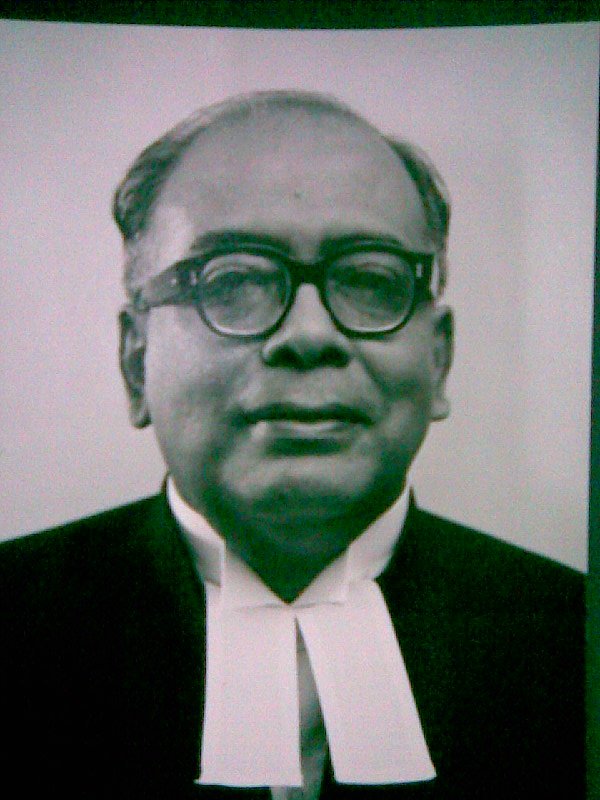
MUKHERJEA, B.K.
CITATION:
1954 AIR 173 1954 SCR 435
CITATOR INFO :
RF 1957 SC 373 (6)
R 1962 SC 605 (14)
ACT:
Criminal Procedure Code (V of 1898 as amended), s. 307-
Reference to High Court-Proper approach-Jury-Sole Judges of
facts-Provided verdict could be arrived at by reasonable
body of men.
HEADNOTE:
The proper method of approach in the matters of
references under s. 307 of the Criminal Procedure Code as
finally settled is that the High Court will only interfere
with the verdict of the jury if it finds the verdict
perverse in the sense of being unreasonable, manifestly
wrong or against the weight of evidence.
If the facts and circumstances of the case are such that a
reasonable body of men could arrive at one conclusion or the
-other, it is not competent to the Sessions Judge or the
High Court to substitute their verdict in place of the
verdict which has been given by the jury. The jury are the
sole judges of the facts and it is the right of the accused
to have the benefit of the verdict of the jury. Even if the
Sessions Judge or the High Court would, if left to
themselves, have arrived at a different verdict, it is not
competent to the Sessions Judge to make a reference nor to
the High ,Court to accept the same and substitute their own
verdict for the -verdict of the jury provided the verdict
was such as could be arrived at by a reasonable body of men
on the facts and circumstances of the case.
Ramanugrah Singh v. Emperor (A. 1. R. 1946 P. C. 151)
referred to.
JUDGMENT:
CRIMINAL APPELLATE JURISDICTION : Criminal Appeal No. 76
of 1953.
Appeal by special leave against the Judgment and -Order
dated the 16th June, 1952, of the High Court of judicature
at Bombay in Criminal Jury Reference No. 58 of 1952.
436
http://JUDIS.NIC.IN SUPREME COURT OF INDIA Page 2 of 6
H. J. Umrigar for the appellant.
Porus A. Mehta for the respondent.
1953. December 9. The Judgment of the Court was
delivered by
BHAGWATI J.-This is an appeal by special leave from a
judgment of the High Court of judicature at Bombay accepting
the reference made by the Additional Sessions Judge, Greater
Bombay, under section 307 of the Criminal Procedure Code,
and convicting the appellant of an offence under section 326
of the Indian Penal Code and sentencing him to four years
rigorous imprisonment.
The case of the prosecution was that at or about 10-30
or 11 p.m. on the 25th August, 1951, the complainant Abdul
Satar was going towards Dhobi Galli through the Bibijan
Street. At the junction of the Chakla Street with Bibijan
Street, he was attacked by the appellant. The appellant
first attempted to strike him on his right shoulder, but
Abdul Satar caught hold of his hand. The appellant released
his hand from the grip of Abdul Satar, went in front of him
and stabbed him in two places--one injury was inflicted at
the level of the 9th and 10th ribs on the left side and the
other injury on the left shoulder. The appellant then ran
away and was pursued by several people. Babu Adam saw him
at the corner, of the Chakla Street and the Masjid Bunder
Road and joined the pursuit. Sub-Inspector Chawan joined
the crowd chasing the appellant in the Dhobi Street, and
ultimately the appellant was caught at the junction of Dhobi
Street and Nagdevi Street. The appellant was then taken to
the police station. He was taken by the police officers to
the place where the attack took place and a panchnama of the
scene of the offence was made at five minutes past one on
the 26th August, 1951. The appellant and the police
officers returned to the police station and at 1-30 a.m.,
that is within half an hour, another panchnama was made in
respect of the clothes which the appellant was wearing.
According to that panchnama there were blood stains
437
on the right arm pit, on the front of the and on 'the right
thigh. There were also 'blood on the right; side collar and
on the back of the shirt
The defence put up by the appellant was he was a fruit
broker and, after collecting his dues from the Crawford
market at 11 p.m.,to he came to the corner of Dhobi Street,
when he heard the shouts,"chor, chor" and - he also then
shouted "chor, chor" and ran after the person who was
running away in order to catch him. When he reached the
junction of Nagdevi Cross Street, he fell down and the
person who, was running ahead of him rushed into a gutter.
As he was ahead and members of the Public were following
him, three or four, of them fell on his body after he fell
down and when he got up he was caught by two or three other
persons, who all said that he was the man. Sub-Inspector
Chawan was one of these persons. Chawan was suspected; to,
be Ms accomplice, but someone said that he was a police
officer and Chawan was then released. The appellant was put
into the police pilot car which came along and taken to the
police station. He was then taken to the, scene of the
offence and a panchnama was drawn there. He was again
brought to, the police 'station thereafter and was made to
sit in the charge room. As he was feeling very hot, he
removed his shirt and kept it by his side. In the,
meanwhile, a police constable came there and gave him a blow
on his nose saying, "Do you think this is your father's
residence that I you removed your shirt? He thereupon
started bleeding from his nose, and due to that bleeding his
http://JUDIS.NIC.IN SUPREME COURT OF INDIA Page 3 of 6
shirt and trousers were, stained with blood. The same
constable then asked him to put on the clothes and took him
to his officer. He produced the appellant before D. 1.
Kakatkar who there noticed his clothes. The panchas were
called and a panchnama was drawn up in which the blood
stains on the shirt and trousers were noted.
The appellant was tried by the Additional Sessions judge
and a common jury. The prosecution called the evidence of
the- complainant Abdul Satar, Babu Adam and Sub-Inspector,
Chawan. Evidence was led Of an identification parade which
was held in the
6-93 S.P.India/59
438
hospital where Abdul Satar was taken from the scene of the
offence and it was proved that Abdul Satar identified the
appellant at that identification parade. Evidence was also
led of the panch witness who deposed to the panchnama noting
the blood stains on the shirt and the trousers of the
appellant.
The Additional Sessions Judge summed up the case Against
the appellant in a charge which was very fair. The charge
was not' attacked before the High Court nor before us as
containing any misdirections or non-directions to the jury
such as to vitiate the verdict. The jury after' due
deliberation could not be unanimous and pronounced a verdict
of not guilty against the appellant by a majority of six to
three. The Additional Sessions Judge did not accept the
verdict of the ,majority. He disagreed with the verdict and
thought that it was necessary for the ends of justice to
submit the case to the High Court and accordingly by an
order of reference dated the 22nd April, 1952, submitted the
case to the High Court under section 307 of the Criminal
Procedure Code.
It is significant to note that prior to the enactment ,of
Bombay Act VI of 1952, sections 305 and 306 of the Criminal
Procedure Code were applicable to the Court of Sessions for
Greater Bombay. It was intended as stated in the objects of
the Bill to provide for a case of ,disagreement with a
unanimous verdict of the jury and enable the Sessions Judge
for Greater Bombay to make a reference under section 307 of
the Criminal Procedure Code even in the case of a unanimous
verdict with which he disagreed. In making the amendment
however by the Bombay Act VI of 1952 the Legislature took
away the powers of the Sessions judge "of Greater Bombay to
discharge the jury and ,order a retrial of the accused by
another jury even in the case of a majority verdict so much
so that even in a verdict of five to four which was not till
then an effective verdict the case would have to be
submitted to the' High Court under section 307 of the
Criminal Procedure Code.
439
The High Court heard the reference and came to the
conclusion after discussing the evidence on the record that,
no other conclusion was possible for a reasonable person
except that the appellant was the assailant of Abdul Satar.
The High Court accordingly convicted the appellant of the
offence under section 326 of the Indian Penal Code and
sentenced him as above. The appellant obtained special
leave to appeal from this court on the 4th February, 1953,
and hence this appeal.
There were various circumstances brought out in the
evidence of the prosecution witnesses Which were
particularly relied upon by the defence. The prosecution
frankly admitted that it had failed to prove any motive for
the commission of the offence by the appellant. Abdul Satar
http://JUDIS.NIC.IN SUPREME COURT OF INDIA Page 4 of 6
had not stated anywhere before he gave evidence in the
Sessions Court that he had any conversation with the
appellant as to why the latter was inflicting the injuries
on him. He however stated for the first time in the
Sessions Court that he' asked the appellant as to why he was
stabbing him and the appellant replied that he was doing it
at the instance of a friend of his. Abdul Satar then stated
that he was on inimical terms with one Sulaiman and it was
at the instance of Sulaiman that the appellant inflicted the
injuries on his person. This was characterised by the
defence as a pure after-thought in order to supply a motive
for the commission of the offence by the appellant and it
was urged that if Abdul Satar was capable of inventing a
story for supplying the motive for the commission of the
offence by the appellant he -could not certainly be relied
upon even in the identification of the appellant by him.
The weapon of offence was also not found upon the person
of the appellant and in spite of a search being made for the
same was not discovered by the police either at or near the
scene of the offence. Neither Babu Adam nor Sub-Inspector
Chawan deposed to having seen the knife in the hands of the
appellant. It was only Mohamed Safi, a witness who was
dropped by the prosecution and was examined by the defence,
440
but treated as a hostile witness even by the defence, who
stated that he saw a knife in the hands of the appellant.
If Babu Adam's evidence was to be accepted Mohamed Safi was
not telling the truth and if Mohamed Safi's evidence was: to
be accepted Babu Adam was -not telling the truth. Tins
conflict of evidence was therefore, rightly commented upon
by the defence.
The identification parade also was challenged as not
proper because it was alleged that mostly ward boys were
mixed up with the appellant when the identification parade
was held. No questions were addressed in the cross-
examination of prosecution witnesses in regard to this
aspect of the case and the Additional Sessions Judge
observed to the jury that in the absence of such cross-
examination, not mulch reliance could be placed on this
criticism of the identification parade. It may be noted, in
passing that even the High observed that "the parade was not
as satisfactory as we expect parades to, be in such cases
further observed that the, only effect of that fact would be
to, put them upon guard with regard to the -evidence of
Abdul Satar and they should not proceed to act upon that
evidence unless it was corroborated.
The blood stains on the shirt and the trousers of the
;appellant were 'not observed in the first instance by
either Babu Adam or Sub-Inspector Chawan and it was only
when the second panchnama was made at about 1-30 a.m. on the
26th August, 1951,, after the appellant was brought back to
the police station from the scene of the offence that these
blood stains were noticed and were noted in the panchnama.
The existence of these blood stains was urged as
corroborative of the testimony of Abdul Satar in so far as
he stated that the appellant caused the injuries on his
person. The defence story of the police constable - having
dealt a blow on the nose of the appellant which led to, the
bleeding of the nose and the blood; stains on the shirt and
the trousers of the appellant was sought to be, negatived by
pointing out the improbability- of the police constable
having, acted in that manner within,
441
the very precincts of the police station The prosecution
theory might possibly have explained the blood stains in the
http://JUDIS.NIC.IN SUPREME COURT OF INDIA Page 5 of 6
right -arm pit, in -front of the shirt as well as the
trousers But, the blood stains on the back of the shirt
could not be easily explained. The blood on the back of the
shirt could certainly be explained by the defence theory and
that was a circumstance which was relied upon by the defence
as maring the defence version probable.
These were the circumstances which were before the jury
when they, deliberated upon the question of the criminality
of the appellant, and the only question which, we have to
consider is whether the verdict which they arrived at by a
majority of six to three was such as no reasonable body of
men could arrive at on the record of the case The proper
method of approach in the matter of, references under
section 307 of the Criminal Procedure Code was laid down by
the Privy 'council in Ramanugrah Singh v. Emperor(1), where
the Privy Council resolved the conflict ,of authorities
which was till then prevalent: in India and accepted,the
view that the High Court will only interfere with the
verdict of the jury if it finds the verdict "perverse in the
sense of being unreasonable", "manifestly wrong" or "as
against' the weight of evidence". The observations of their
Lordships of the Privy Council on the principle underlying
section 307 of the Criminal Procedure Code may be aptly
quoted here :-
"Under sub-section (1), two conditions, are required to
justify a reference. The first,, that the Judge must
disagree with the verdict of the jury, calls for no comment,
since it is obviously the foundation for any Preference.
The second, 'that the judge must be "clearly of opinion that
it is necessary for, the 'ends of justice to submit the
case" is important, and in their Lord,ships' opinion
provides a key to the 'interpretation Of the section. The
legislature no doubt, realised that the 'introduction of
trial by jury in the mofussil would be experimental, and
might lead to miscarriages of justice through jurors, in
their ignorance and inexperience,
(1) (1946) A.I.R. 1946 P. C. 151.
442
returning erroneous verdicts. Their Lordships think that
the section was intended to guard against this danger, and
not to enable the Sessions judge and the High Court to
deprive jurors, acting properly within their, powers, of the
right to determine the facts con'ferred upon them by the
Code. If the jury have reached the conclusion upon the
evidence which a reasonable body of men might reach, it is
not necessary for the ends of justice that the Sessions
Judge should refer the case to the High Court merely because
he himself would have reached a different conclusion upon
the facts, since lie is not the tribunal to determine the
facts. He must go further than that and be of opinion that
the verdict is one which no reasonable body of men could
have reached upon the evidence. The powers of the High
Court in dealing with the reference are contained in sub-
section (3). It may exercise any of the powers which it
might exercise -upon an appeal, and this includes the power
to call fresh evidence conferred by section 428. The court
must consider the whole case and give due weight to ; the
opinions of the Sessions 'Judge and jury, and then acquit or
convict the accused. In their Lordships' view, the
paramount consideration in the High Court must' be whether
the ends of justice -require that the verdict of the jury
should be set aside. In general, if the evidence is such
that it can properly support a verdict either of guilty or
not guilty, according to the view taken of it by the trial
court, and if the jury take one view of the evidence and,
http://JUDIS.NIC.IN SUPREME COURT OF INDIA Page 6 of 6
the judge thinks thatthey should have taken the other,
the view of thejury must prevail, since they, are the
judges of fact. In such a case a reference is not justified,
and it is only by accepting their view that the High Court
can give due weight to the opinion of the jury. If,
however, the High Court considers that upon the evidence no
reasonable body of men could have reached the conclusion
arrived at by, the jury, then the reference was justified
and the ends of justice require that the verdict
disregarded."
443
We are of the opinion that this is the correct method, of
approach in references under section 307 of the Criminal,,
Procedure Code. If the facts and circumstances of the case
are such that a reasonable body of men could arrive at 'the"
one conclusion or the other,- it is not competent to the
Sessions Judge or the High Court to substitute their verdict
in place of the verdict which has been given by the jury.
The jury are the sole judges of the facts and it is the
right of the accused to have the benefit of the verdict of
the jury. Even if the Sessions Judge or the I High Court
would if left to themselves have arrived at a different
verdict it is not competent to the Sessions Judge to make a
reference nor to the High Court to accept the same and
substitute their own verdict for the verdict of the jury
provided the verdict was such as could be arrived at by a
reasonable body of men on the facts and circumstances of the
case.
Having regard to the position which we have set out above
we are clearly of the I opinion that on the facts and
circumstances of the 'case before us there were enough
materials before the jury which would enable the jury to
come to one conclusion or the other in regard to 'the
criminality of the appellant. Six out of the nine, jurors
came to the conclusion that the appellant, was not guilty of
the offence with, which he was charged. Three out of the
nine jurors came to an opposite conclusion and it is
impossible in the circumstances of the case for us to
characterise the one or the other of the conclusions reached
by the members of the jury as -perverse in the sense of
being unreasonable or manifestly wrong or against the weight
of evidence. The verdict reached by the majority was
certainly a verdict which upon the evidence on record a
reasonable body of men could have reached and in our opinion
the ,reference was not competent.
The result therefore is that the appeal will be allowed,
the judgment of the High Court on, reference set aside, the
majority verdict of the jury Pronouncing the appellant -not
guilty of the offence with which he was
444
charged accepted and the appellant acquitted and discharged
and forthwith set at
Appeal allowed.
Agent for the respondent: G. H. Rajadhyaktha.
The landmark Supreme Court ruling in Akhlakali Hayatalli vs. The State of Bombay (1953) stands as a pivotal judgment in Indian legal history, meticulously defining the boundaries of judicial interference with a Jury Verdict under the old Criminal Procedure Code of 1898. This seminal case, which explores the delicate balance between the powers of a judge and the fact-finding role of a jury, remains a cornerstone of criminal jurisprudence. For legal professionals seeking to understand the principles of appellate review and the high standards required to overturn a fact-based decision, this case, available and comprehensively analyzed on CaseOn, is essential reading.
The case originated from a simple yet violent incident. On the night of August 25, 1951, the complainant, Abdul Satar, was stabbed twice on a street in Bombay. He identified his attacker as the appellant, Akhlakali Hayatalli. A chase ensued, involving several members of the public and a Sub-Inspector, culminating in the appellant's capture.
However, the appellant presented a starkly different version of events. He claimed he was a fruit broker who, upon hearing shouts of "chor, chor" (thief, thief), joined the pursuit of the actual culprit. He alleged that in the chaos, he fell, was trampled by others in the crowd, and was mistakenly apprehended. To explain the bloodstains on his clothes—a key piece of prosecution evidence—he stated that a police constable struck him on the nose at the station, causing it to bleed.
The appellant was tried before an Additional Sessions Judge and a common jury. The prosecution presented its witnesses, including the victim, but faced several challenges. They could not establish a clear motive for the attack, the weapon was never recovered, and there were inconsistencies in witness testimonies.
After deliberation, the jury returned a majority verdict of 6 to 3, finding the appellant "not guilty." The Sessions Judge, however, disagreed with this finding. Believing that the verdict was contrary to the evidence and that a conviction was necessary for the "ends of justice," he exercised his power under Section 307 of the Criminal Procedure Code, 1898, and referred the case to the Bombay High Court, recommending a conviction.
The High Court reviewed the evidence and sided with the Sessions Judge. It concluded that no reasonable person could have arrived at a verdict of not guilty, overturned the jury's decision, convicted the appellant, and sentenced him to four years of rigorous imprisonment. The appellant then sought special leave to appeal to the Supreme Court.
The central legal question before the Supreme Court was: What is the correct standard for a High Court to interfere with and set aside a jury's verdict when a case is referred to it by a Sessions Judge under Section 307 of the CrPC?
The Supreme Court heavily relied on the principle laid down by the Privy Council in Ramanugrah Singh v. Emperor (1946). The established rule is that a judge or a higher court cannot simply substitute its own opinion for that of the jury. The jury are the sole judges of fact, and the accused has a right to the benefit of their verdict.
Interference is only justified if the jury's verdict is found to be "perverse"—a high threshold meaning the verdict is:
A mere disagreement on the interpretation of facts is not sufficient grounds for a reference or for overturning the verdict.
The Supreme Court meticulously analyzed the evidence on record and concluded that the jury's verdict was far from perverse. It noted several weaknesses in the prosecution's case that a reasonable person could find significant:
The Court reasoned that given these evidentiary gaps, a reasonable body of people (the jury) could legitimately conclude that the prosecution had not proven its case beyond a reasonable doubt. The 6-3 split in the verdict itself demonstrated that there was room for rational disagreement. Therefore, the majority's decision to acquit was a possible and reasonable view based on the facts presented.
Analyzing such nuanced judicial reasoning, which weighs the roles of judge and jury, can be complex. Professionals often turn to resources like CaseOn.in, where 2-minute audio briefs can quickly distill the core principles of rulings like Akhlakali Hayatalli, making case preparation more efficient.
The Supreme Court concluded that the Sessions Judge was not competent to make the reference simply because he held a different opinion. Consequently, the High Court erred in accepting the reference and substituting its own judgment for the jury's. The verdict was not perverse, as it was a conclusion that a reasonable group of individuals could have reached.
The Court allowed the appeal, set aside the judgment of the High Court, and restored the jury's majority verdict. The appellant, Akhlakali Hayatalli, was acquitted of all charges.
In essence, the Supreme Court in *Akhlakali Hayatalli vs. State of Bombay* reinforced the sanctity of a jury's verdict in criminal trials. It clarified that a judge's disagreement with the jury's conclusion on facts is not enough to warrant a reference to the High Court under Section 307 CrPC. The verdict must be demonstrably perverse, meaning it is one that no reasonable body of men could have arrived at. By upholding the jury's acquittal in the face of judicial disagreement, the Court protected the fundamental role of the jury as the primary and final arbiter of facts.
Even though the jury system has been abolished in India, this judgment remains profoundly important for several reasons:
The information provided in this article is for informational purposes only and does not constitute legal advice. The content is intended to be a general overview of a legal case and should not be relied upon for any specific legal situation. For advice on any legal issue, please consult with a qualified legal professional.

 Login with google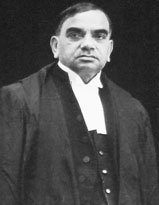
Legal Notes
Add a Note....