
This case involves the use of inherent powers by the High Court to quash criminal proceedings. The dispute centers on whether the allegations and evidence presented justify the continuation of ...
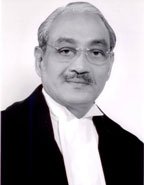

No Acts & Articles mentioned in this case
Page 1 REPORTABLE
IN THE SUPREME COURT OF INDIA
CRIMINAL APPELLATE JURISDICTION
CRIMINAL APPEAL NO. 1407 OF 2012
(Arising out of SLP (Crl.) No.1516 of 2010)
Amit Kapoor ... Appellant
Versus
Ramesh Chander & Anr. ... Respondents
J U D G M E N T
Swatanter Kumar, J .
1.Leave granted.
2.A question of law that arises more often than not in criminal
cases is that of the extent and scope of the powers exercisable by
the High Court under Section 397 independently or read with
Section 482 of the Code of Criminal Procedure, 1973 (for short,
the ‘Code’).
3.The facts as they emerge from the record fall within a very
narrow compass. On 4
th
December, 2007, the Rajouri Garden
Police Station received information that a woman had committed
1
Page 2 suicide at C-224, Tagore Garden Extension, Delhi. Upon making
entry under DD No.16A of that date, Sub Inspector O.P. Mandal
commenced investigation and reached the place of occurrence.
The deceased was identified as Komal Kapoor. Her body was sent
for post mortem. The Investigating Officer recorded the statement
of her son Amit Kapoor and on 5.12.2007 at about 12.15 p.m. an
FIR was registered on the complaint filed by him. This FIR was
registered against Ramesh Chander Sibbal (the accused) and
another, on the basis of the statement of Amit Kapoor and the
suicide note. According to Amit Kapoor, he knew Ramesh
Chander Sibbal for the last 10 years. Father of Amit Kapoor was
running a paint brush business and had purchased property
No.C-225, Tagore Garden, Delhi through the said Ramesh
Chander Sibbal. Since the father of Amit Kapoor had fallen ill,
his mother was also looking after the business. However, the
family business suffered acute losses. The family discussed the
possibility of selling their moveable and immoveable property
situated at Rohini. The accused persons are stated to have
fraudulently obtained signatures of the deceased in this
connection. In order to get over the financial crises and to meet
their liabilities, the deceased had also discussed the possibility of
selling another plot owned by the family situated in Bawana
Industrial Area. At that time also, the accused told the deceased
2
Page 3 that certain documents have to be executed before the plot is
sold. On this pretext, he again got some papers signed by them.
The accused paid a sum of Rs.5,00,000/- to the deceased at the
first instance and thereafter a sum of Rs.3,00,000/- for the plot
situated in Bawana as against the market value of
Rs.28,00,000/-, with an assurance that the rest of the amount
will be paid after execution of the sale deed.
4.Around the time of Dussehra in 2007, the accused
approached the deceased claiming that he be given
accommodation on a temporary basis for a period of ten to twelve
days on the ground floor of her house situated at C-224, Tagore
Garden, Delhi on the pretext that his own house was under
renovation. The deceased believing him and keeping the
relationship in mind, agreed and allowed him to occupy two
rooms on the ground floor. It is alleged that while the deceased
was away at Haridwar, just before the festival of Diwali, the
accused encroached upon one more room in the said house.
When the deceased asked the accused to vacate the said
premises, he refused and, on the contrary, stated that he had
paid a sum of Rs.24,00,000/- and that it was his house. Not only
this, the accused as well as his son threatened the deceased and
her family to vacate the house or else they would ruin them. It is
3
Page 4 also alleged that when the deceased asked the accused as to when
she will get rid of this problem, he is said to have replied that she
could get rid of this only after her death. This was followed by the
accused sending a legal notice dated 1
st
December, 2007 to the
deceased which was received on 3
rd
December, 2007 in which
similar claim was made by the accused against the deceased. The
trust that she had placed upon the accused was totally betrayed
by him. This led to the deceased slipping into depression. In face
of all these circumstances, coupled with the threats extended by
the accused persons, the deceased committed suicide on
4.12.2007 at about 7.30 a.m. by hanging herself from a ceiling
fan, using a scarf (chunni). It may be noticed at this stage, that
the deceased had left a suicide note which can appropriately be
reproduced at this stage as under :
“This Ramesh Sibbal, his wife Suman and his
son Gaurav.
I am committing suicide for the reason that
the aforesaid persons who are residing in our
house forcefully, used to say that he was to
do white wash so please allow him to keep
some of his articles. But after some time,
when I came, I saw that the aforesaid person
has completely occupied my house as his
own house. When my children objected to
his aforesaid act, he said that he was to stay
there only for a period of 04 days and that he
would perform Diwali worship pooja
ceremony at his own house but he did not
4
Page 5 vacate the house. When I had gone to
Haridwar, he occupied front room of my
house as well after giving beatings to my
children. I know this person since that day
when he had got my plot of Rohini disposed
off. As we both (husband and wife) had not
read those papers (relating to disposal of our
Rohini plot) so this person kept on obtaining
our signatures on the stamp papers relating
to our House No. C-224 on the pretext that
these papers were required to execute the
lease. My husband was ill and I used to
remain busy in looking after him. Whenever,
he came to us he used to show urgency in
taking our signature by stating that the sale
proceed of our plot would be given to us that
day itself. He kept on giving payment time to
time to us and we kept on receiving the
same.
Written on the top of page 411
This man gave me only a sum of Rs 05 lacs of
my plot situated in Bawana, but he obtained
my signature on Rs 15 lacs as I did not read
the contents thereof.
When this man got our Bawana a plot sold,
he took the file from us but I do not know as
to what he had done with that amount. He
used to say that he had given us the entire
amount. Whatever amount he gave to us he
used to take in writing on a paper. After
giving his amount, when I asked for the file,
he demanded Rs.05 lacs otherwise, he would
reveal it to my daughter that the file was
lying with him. He also threatened me to
sign the paper without raising any objection
otherwise, he would get our children
grandson and granddaughter kidnapped. On
this, I used to scare and this man used to
succeed in getting the stamp papers signed
by me. When he got our plot of Rohini sold,
he started obtaining my signatures. But at
5
Page 6 the time when the plot of Rohini was sold, he
told me that the plot situated in Bawana has
been sold and he asked us to accompany him
to sign the papers. Thereafter, he said that
the person with whom he has kept the file
was saying to him that he could take away
the file from that person but only in lieu of
keeping papers of some other house with that
person. When this man (suggested) me to
keep other file (of property) in lieu of taking
the said file from that person and this man
(also assured me) that he would return those
papers of property to me as and when the
plot of Bawana would be sold. On this, I
handed over the file of property No. C-225 to
this man. After that, he told that the plot
was not getting higher price and so he offered
us to take some amount, if required by us
urgently whereupon , this man gave us a
sum of Rs. 3 lacs but he kept on taking an
interest at the rate of 10%. This man gave
us Rs.5 lacs earlier and Rs.3 lacs later so he
kept on taking an interest on Rs. 8 lacs.
Before Diwali, I gave him a cheque of
Rs.2,50,000/- and also gave a sum of Rs.3
lacs in cash to his son. Thereafter, I gave a
sum of Rs.2 lacs in cash and his son knows
the account of it whose name is Gaurav.
When I gave money, I asked him to give me
the written paper as I have returned the as I
have returned the money whereupon, he
(Gaurav) said that since he had no paper
with him that time so the same would be
returned to her by his father. This man’s son
Gaurav and wife Suman are together involved
(in this conspiracy). His son also used to do
my fake signatures. Whenever, I demanded
my file back from him, he used to ask me to
return Rs.15 lacs first. On this, when I
asked him as to how the amount of Rs.5 lacs
became to Rs.15 lacs? He replied that it had
become Rs.15 lacs including interest thereon.
I kept on giving him interest because of the
fear of my family. He has also grabbed my
entire money which I had taken on loan basis
6
Page 7 from somewhere. I kept on giving him
interest only for the reason that since he
used to promise me to return the papers that
day itself or on the next day.
Written on top of page no.415
He said that the money of Bawana’s (plot) has
been sent by his father and he asked me to
write down a receipt of Rs.04 lacs and when I
wrote a receipt of it, he said that the money
was kept in the motorcycle and he was first
giving me the cash but this man’s son did not
give me the said cash. He asked me to sign
the papers related to Bawana’s (plot) first and
then he would return the paper as well as the
money to me. On reaching the house, I
demanded the money and paper from him
whereupon he said that he had the paper
written by me and that he would show that
paper to my son and when my son asked him
to return the paper, he replied that he would
not return the paper as his mother had taken
a sum of Rs.15 lacs from him. Kindly take it
guaranteed that out of aforesaid Rs.15 lacs I
have returned a sum of Rs. of Seven and a
half lacs to him. After that, this man’s son
came to me and said that his father was
saying to give papers of property No.C-225 to
you and in lieu thereof he asked me to show
him the file of lease. On this, when I started
to show him the said file to him then, this
man’s son Gaurav said that he was just
giving me the said paper and saying this he
took away the lease file from me and since
then, he had not returned me the said paper.
Kindly save my house. Please save my
children from this person. I have not visited
any court to sign. One day these persons
crossed all the limits when his wife said that
she was agreed to return all the papers in
lieu of giving a receipt of the same in writing.
After that, they gave me the amount of sale
proceeds of Rohini and Bawana’s properties.
7
Page 8 She brought fake papers which were related
to some other person’s property, to me. I saw
that those papers were fake papers and were
in English language and when I showed those
papers to someone, it was found that those
papers were not related to my plot. When I
went to this man’s house to show him that
those papers were not related to my plot, his
wife said that since there was no electricity in
her house that time so they had given some
others property paper to her mistakenly and
that they were just sending their son Gaurav
to give me the correct papers but Gaurav did
not come to me till today. Thereafter, we
started receiving threats from Gunda
elements that they would harm us in
different ways. I have no proof of the money
returned by me. This man used to say to my
female friends that he would show them after
purchasing my house by hook and crook. He
used to spread rumour in the street that I,
Komal have sold out my house to him and
that there were several cases pending related
to that house.
I pray, with folded hands, that keeping in
view the illness of my husband, my house
and the papers related thereto may please be
restored to me. This man’s wife Suman and
their son Gaurav are most dishonest persons.
His wife Suman used to talk in such an
artificial way as she was telling a truth. One
of my sons had died due to cancer and if I
am dishonest to anyone, my rest of both
children may also die from cancer. You can
verify these facts from the residents of the
street as to how many houses (families) has
been ruined by this person. This man is
supported by some reputed persons who use
to give him money but he did not return their
money. He kept on keeping papers of our
property with him and used to lend our
money on interest to other persons. This
man intends to grab my house. My matter
may please be decided. This man Ramesh
8
Page 9 Sibbal, his wife Suman and son Gaurav may
be punished so that they may not commit
such an act with anyone in future. He kept
on threatening me while involving my
daughter-in-law that he would do this and
that. Since the day this man entered my
house, everything has been ruined by him. I
may please be imparted justice.
Sd/-Komal Kapur
(In English)”
5.The Investigating Officer prepared the site plan, effected
recoveries of the articles from the place of occurrence and
thereafter recorded the statements of the witnesses. Upon
completion of the investigation, a charge sheet was filed in terms
of Section 173(2) of the Code wherein Ramesh Chander Sibbal
was stated as the accused and names of his wife, Suman Sibbal
and son Gaurav Sibbal were shown in Column No.2. Upon
committal, the learned Additional Sessions Judge framed charges
against the accused under Sections 306 and 448 of the Indian
Penal Code, 1860 (IPC).
6.The accused filed a criminal revision being Criminal Revision
No.227 of 2009 in the High Court of Delhi at New Delhi
challenging the order of the trial Court dated 2
nd
April, 2009,
framing the charge. The High Court vide its judgment dated 13
th
August, 2009 quashed the charge framed under Section 306 IPC,
9
Page 10 while permitting the Trial Court to continue the trial in relation to
the offence under Section 448 IPC. It will be useful to refer to
certain findings recorded by the High Court in its judgment dated
13
th
August, 2009 :
“3.In the background of the aforesaid case
set up by the prosecution the learned
counsel for the petitioner submitted
that the ingredients of an offence under
Section 306 of the IPC were not present
in the instant case. As a matter of fact
the learned counsel for the petitioner
went further to say that this is not a
case of suicide, rather is, a case of
homicide. For this purpose he took me
through the post mortem report and
also the literature (Pathology of Neck
Injury by Peter Venezis). On being told
that since the trial was on and hence,
the learned counsel decided to give up
the arguments initially advanced on
this aspect of the matter.
3.1As regards whether a charge could be
framed under Section 306 of the IPC,
the upshot of his submissions was that
even if the entire material/evidence
placed on record by the prosecution is
fully accepted to be correct, no offence
under Section 306 of the IPC is made
out against the petitioner accused. For
this purpose the learned counsel for
the petitioner took me through the
suicide note dated 04.12.2007, the
statement of the sons of the deceased
Amit Kapoor (the complainant) and
Sumit Kapoor, as well as, the report of
the Forensic Science Laboratory. It
was his submission that merely
because the petitioner-accused is
10
Page 11 named in the suicide note and has
been referred to as the reason which
propelled the deceased to take the
extreme step of suicide, it would still
not fall within the realm of Section 306
of the IPC.
XXX XXX XXX
g. a perusal of the suicide note brings to
fore the fact the petitioner-accused is
not only named but his illegal
occupation of the house of the
deceased is stated to be one of the
primary reasons for Kamol Kapoor, to
have committed suicide. The
statement of the sons of the deceased,
Amit Kapoor and Sumit Kapoor, is
primarily on the same lines. The issue
for consideration is that, even if it is
assumed at this stage, that the suicide
note was written in the hand writing of
the deceased and the statement of Amit
Kapoor is believed to be true in its
entirety would it be sufficient to charge
the petitioner-accused with the offence
of abetment of suicide by Komal
Kapoor. In my view the answer is in
the negative. The mere fact that the
actions of the petitioner-accused, that
is, forcible occupation of the portion of
the house of the deceased, led her to
take the extreme step of committing
suicide would not bring his act within
the definition of abetment as there is
no material or evidence placed by the
prosecution on record to show that he
intended or had the necessary mens
rea that the Komal Kapoor should take
the extreme step of committing suicide.
As long as there is absence of material
and/or evidence on record to show that
the abettor had intended to aid or
encourage the commission of the
11
Page 12 principal offence, the accused cannot
be charged with the offence of
abetment and, therefore, in the present
case, abetment to commit suicide. Nor
I am persuaded by the submission that
because the name of the petioner-
accused appears in the suicide note it
would be sufficient to charge him with
an offence under Section 306 of the
IPC. In this context see observation in
Sanju @ Sanjay Singh Senger (supra)
and Mahender Singh (supra). In both
the cases not ony was the accused
named in the suicide note but they
were also cited as the reason for
committing suicide by the deceased.
The learned APP may perhaps be
correct in his submission that the
agreement to sell dated 30.06.2007
was executed by the petitioner-
accused, only to grab the property of
the deceased after a receipt had been
executed by the deceased
acknowledging that she had taken a
loan from the petitioner-accused in the
first instance in the sum of Rs.15 lacs
and thereafter, another sum of Rs. 1
lac, but then, this aspect of the matter
will get unravelled only after a full-
fledged trial. I do not wish to comment
any further on this aspect of the matter
as it could impact both, the case of the
prosecution as well as that of the
defence, and perhaps wisely, therefore,
even the learned counsel or the
petitioner-accused has not assailed the
charge framed under Section 448 of
the IPC.
XXX XXX XXX
12.For the aforementioned reasons, I am
of the opinion that it is a fit case in
which this Court should exercise its
12
Page 13 revisional and inherent powers to
quash the charge framed against the
petitioner accused under Section 306
of the IPC. The revision petition is thus
partially allowed. The charge framed
against the petitioner-accused under
Section 306 of the IPC shall be
dropped. The trial court will continue
with the trial of the petitioner-accused
in respect of the remaining charge
framed against him.”
7.Aggrieved from the judgment of the High Court, in the
present appeal, the appellant impugnes the same primarily on the
ground that the High Court had exceeded and not appropriately
exercised its jurisdiction under Sections 397 and 482 of the Code
in quashing the charge framed against the respondent under
Section 306 IPC.
8.Before examining the merits of the present case, we must
advert to the discussion as to the ambit and scope of the power
which the courts including the High Court can exercise under
Section 397 and Section 482 of the Code. Section 397 of the Code
vests the court with the power to call for and examine the records
of an inferior court for the purposes of satisfying itself as to the
legality and regularity of any proceedings or order made in a case.
The object of this provision is to set right a patent defect or an
error of jurisdiction or law. There has to be a well-founded error
and it may not be appropriate for the court to scrutinize the
13
Page 14 orders, which upon the face of it bears a token of careful
consideration and appear to be in accordance with law. If one
looks into the various judgments of this Court, it emerges that the
revisional jurisdiction can be invoked where the decisions under
challenge are grossly erroneous, there is no compliance with the
provisions of law, the finding recorded is based on no evidence,
material evidence is ignored or judicial discretion is exercised
arbitrarily or perversely. These are not exhaustive classes, but
are merely indicative. Each case would have to be determined on
its own merits.
9.Another well-accepted norm is that the revisional jurisdiction
of the higher court is a very limited one and cannot be exercised
in a routine manner. One of the inbuilt restrictions is that it
should not be against an interim or interlocutory order. The
Court has to keep in mind that the exercise of revisional
jurisdiction itself should not lead to injustice ex facie. Where the
Court is dealing with the question as to whether the charge has
been framed properly and in accordance with law in a given case,
it may be reluctant to interfere in exercise of its revisional
jurisdiction unless the case substantially falls within the
categories aforestated. Even framing of charge is a much
advanced stage in the proceedings under the Cr.P.C. Right from
the case of State of West Bengal & Ors. v. Swapan Kumar Guha &
14
Page 15 Ors. [(1982) 1 SCC 561], which was reiterated with approval in
the case of State of Haryana & Ors. v. Bhajan Lal & Ors. [1992
Supp. (1) SCC 335], the courts have stated the principle that if
the FIR does not disclose the commission of a cognizable offence,
the Court would be justified in quashing the investigation on the
basis of the information as laid or received. It is further stated
that the legal position appears to be that if an offence is disclosed,
the court will not normally interfere with an investigation into the
case and will permit investigation into the offence alleged to have
been committed; if, however, the materials do not disclose an
offence, no investigation should normally be permitted. Whether
an offence has been disclosed or not, must necessarily depend on
the facts and circumstances of each case. If on consideration of
the relevant materials, the Court is satisfied that an offence is
disclosed, it will normally not interfere with the investigation into
the offence and will generally allow the investigation into the
offence to be completed in order to collect materials for proving
the offence. In Bhajan Lal’s case (supra), the Court also stated
that though it may not be possible to lay down any precise, clearly
defined, sufficiently channelized and inflexible guidelines or rigid
formulae or to give an exhaustive list of myriad kinds of cases
wherein power under Section 482 of the Code for quashing of an
FIR should be exercised, there are circumstances where the Court
15
Page 16 may be justified in exercising such jurisdiction. These are, where
the FIR does not prima facie constitute any offence, does not
disclose a cognizable offence justifying investigation by the police;
where the allegations are so absurd and inherently improbable on
the basis of which no prudent person can ever reach a just
conclusion that there is sufficient ground for proceeding against
the accused; where there is an expressed legal bar engrafted in
any of the provisions of the Code; and where a criminal
proceeding is manifestly attended with mala fide and/or where the
proceeding is maliciously instituted with an ulterior motive for
wreaking vengeance on the accused and with a view to spite him
due to private and personal grudge. Despite stating these
grounds, the Court unambiguously uttered a note of caution to
the effect that power of quashing a criminal proceeding should be
exercised very sparingly and with circumspection and that too, in
the rarest of rare cases; the Court also warned that the Court
would not be justified in embarking upon an enquiry as to the
reliability or genuineness or otherwise of the allegations made in
the FIR or the complaint and that the extraordinary or inherent
powers do not confer an arbitrary jurisdiction on the Court to act
according to its whims or caprice.
10.The above-stated principles clearly show that inherent as
well as revisional jurisdiction should be exercised cautiously. If
16
Page 17 the jurisdiction under Section 482 of the Code in relation to
quashing of an FIR is circumscribed by the factum and caution
afore-noticed, in that event, the revisional jurisdiction,
particularly while dealing with framing of a charge, has to be even
more limited. Framing of a charge is an exercise of jurisdiction by
the trial court in terms of Section 228 of the Code, unless the
accused is discharged under Section 227 of the Code. Under both
these provisions, the court is required to consider the ‘record of
the case’ and documents submitted therewith and, after hearing
the parties, may either discharge the accused or where it appears
to the court and in its opinion there is ground for presuming that
the accused has committed an offence , it shall frame the charge.
Once the facts and ingredients of the Section exists, then the
Court would be right in presuming that there is ground to proceed
against the accused and frame the charge accordingly. This
presumption is not a presumption of law as such. The
satisfaction of the court in relation to the existence of constituents
of an offence and the facts leading to that offence is a sine qua
non for exercise of such jurisdiction. It may even be weaker than
a prima facie case. There is a fine distinction between the
language of Sections 227 and 228 of the Code. Section 227 is
expression of a definite opinion and judgment of the Court while
Section 228 is tentative. Thus, to say that at the stage of framing
17
Page 18 of charge, the Court should form an opinion that the accused is
certainly guilty of committing an offence, is an approach which is
impermissible in terms of Section 228 of the Code. It may also be
noticed that the revisional jurisdiction exercised by the High
Court is in a way final and no inter court remedy is available in
such cases. Of course, it may be subject to jurisdiction of this
court under Article 136 of the Constitution of India. Normally, a
revisional jurisdiction should be exercised on a question of law.
However, when factual appreciation is involved, then it must find
place in the class of cases resulting in a perverse finding.
Basically, the power is required to be exercised so that justice is
done and there is no abuse of power by the court. Merely an
apprehension or suspicion of the same would not be a sufficient
ground for interference in such cases.
11.At the initial stage of framing of a charge, the court is
concerned not with proof but with a strong suspicion that the
accused has committed an offence, which, if put to trial, could
prove him guilty. All that the court has to see is that the material
on record and the facts would be compatible with the innocence of
the accused or not. The final test of guilt is not to be applied at
that stage. We may refer to the well settled law laid down by this
Court in the case of State of Bihar v. Ramesh Singh (1977) 4 SCC
39:
18
Page 19 “4. Under Section 226 of the Code while
opening the case for the prosecution the
Prosecutor has got to describe the charge
against the accused and state by what
evidence he proposes to prove the guilt of
the accused. Thereafter comes at the initial
stage the duty of the Court to consider the
record of the case and the documents
submitted therewith and to hear the
submissions of the accused and the
prosecution in that behalf. The Judge has to
pass thereafter an order either under
Section 227 or Section 228 of the Code. If
“the Judge considers that there is no
sufficient ground for proceeding against the
accused, he shall discharge the accused and
record his reasons for so doing”, as enjoined
by Section 227. If, on the other hand, “the
Judge is of opinion that there is ground for
presuming that the accused has committed
an offence which— … (b) is exclusively
triable by the Court, he shall frame in
writing a charge against the accused”, as
provided in Section 228. Reading the two
provisions together in juxtaposition, as they
have got to be, it would be clear that at the
beginning and the initial stage of the trial
the truth, veracity and effect of the evidence
which the Prosecutor proposes to adduce
are not to be meticulously judged. Nor is any
weight to be attached to the probable
defence of the accused. It is not obligatory
for the Judge at that stage of the trial to
consider in any detail and weigh in a
sensitive balance whether the facts, if
proved, would be incompatible with the
innocence of the accused or not. The
standard of test and judgment which is to be
finally applied before recording a finding
regarding the guilt or otherwise of the
accused is not exactly to be applied at the
stage of deciding the matter under Section
227 or Section 228 of the Code. At that
stage the Court is not to see whether there is
sufficient ground for conviction of the
19
Page 20 accused or whether the trial is sure to end
in his conviction. Strong suspicion against
the accused, if the matter remains in the
region of suspicion, cannot take the place of
proof of his guilt at the conclusion of the
trial. But at the initial stage if there is a
strong suspicion which leads the Court to
think that there is ground for presuming
that the accused has committed an offence
then it is not open to the Court to say that
there is no sufficient ground for proceeding
against the accused. The presumption of the
guilt of the accused which is to be drawn at
the initial stage is not in the sense of the law
governing the trial of criminal cases in
France where the accused is presumed to be
guilty unless the contrary is proved. But it is
only for the purpose of deciding prima facie
whether the Court should proceed with the
trial or not. It the evidence which the
Prosecutor proposes to adduce to prove the
guilt of the accused even if fully accepted
before it is challenged in cross-examination
or rebutted by the defence evidence, if any,
cannot show that the accused committed
the offence, then there will be no sufficient
ground for proceeding with the trial. An
exhaustive list of the circumstances to
indicate as to what will lead to one
conclusion or the other is neither possible
nor advisable. We may just illustrate the
difference of the law by one more example. If
the scales of pan as to the guilt or innocence
of the accused are something like even, at
the conclusion of the trial, then, on the
theory of benefit of doubt the case is to end
in his acquittal. But if, on the other hand, it
is so at the initial stage of making an order
under Section 227 or Section 228, then in
such a situation ordinarily and generally the
order which will have to be made will be one
under Section 228 and not under Section
227.”
20
Page 21 12.The jurisdiction of the Court under Section 397 can be
exercised so as to examine the correctness, legality or proprietary
of an order passed by the trial court or the inferior court, as the
case may be. Though the section does not specifically use the
expression ‘prevent abuse of process of any court or otherwise to
secure the ends of justice’, the jurisdiction under Section 397 is a
very limited one. The legality, proprietary or correctness of an
order passed by a court is the very foundation of exercise of
jurisdiction under Section 397 but ultimately it also requires
justice to be done. The jurisdiction could be exercised where
there is palpable error, non-compliance with the provisions of law,
the decision is completely erroneous or where the judicial
discretion is exercised arbitrarily. On the other hand, Section 482
is based upon the maxim quando lex liquid alicuiconcedit, conceder
videtur id quo res ipsa esse non protest, i.e., when the law gives
anything to anyone, it also gives all those things without which
the thing itself would be unavoidable. The Section confers very
wide power on the Court to do justice and to ensure that the
process of the Court is not permitted to be abused.
13.It may be somewhat necessary to have a comparative
examination of the powers exercisable by the Court under these
two provisions. There may be some overlapping between these
21
Page 22 two powers because both are aimed at securing the ends of justice
and both have an element of discretion. But, at the same time,
inherent power under Section 482 of the Code being an
extraordinary and residuary power, it is inapplicable in regard to
matters which are specifically provided for under other provisions
of the Code. To put it simply, normally the court may not invoke
its power under Section 482 of the Code where a party could have
availed of the remedy available under Section 397 of the Code
itself. The inherent powers under Section 482 of the Code are of a
wide magnitude and are not as limited as the power under Section
397. Section 482 can be invoked where the order in question is
neither an interlocutory order within the meaning of Section
397(2) nor a final order in the strict sense. Reference in this
regard can be made to Raj Kapoor & Ors. v. State of Punjab & Ors.
[AIR 1980 SC 258 : (1980) 1 SCC 43]}. In this very case, this
Court has observed that inherent power under Section 482 may
not be exercised if the bar under Sections 397(2) and 397(3)
applies, except in extraordinary situations, to prevent abuse of
the process of the Court. This itself shows the fine distinction
between the powers exercisable by the Court under these two
provisions. In this very case, the Court also considered as to
whether the inherent powers of the High Court under Section 482
stand repelled when the revisional power under Section 397
22
Page 23 overlaps. Rejecting the argument, the Court said that the opening
words of Section 482 contradict this contention because nothing
in the Code, not even Section 397, can affect the amplitude of the
inherent powers preserved in so many terms by the language of
Section 482. There is no total ban on the exercise of inherent
powers where abuse of the process of the Court or any other
extraordinary situation invites the court’s jurisdiction. The
limitation is self-restraint, nothing more. The distinction between
a final and interlocutory order is well known in law. The orders
which will be free from the bar of Section 397(2) would be the
orders which are not purely interlocutory but, at the same time,
are less than a final disposal. They should be the orders which do
determine some right and still are not finally rendering the Court
functus officio of the lis. The provisions of Section 482 are
pervasive. It should not subvert legal interdicts written into the
same Code but, however, inherent powers of the Court
unquestionably have to be read and construed as free of
restriction.
14.In Dinesh Dutt Joshi v. State of Rajasthan & Anr. [(2001) 8
SCC 570], the Court held that Section 482 does not confer any
power but only declares that the High Court possesses inherent
powers for the purposes specified in the Section. As lacunae are
23
Page 24 sometimes found in procedural law, the Section has been
embodied to cover such lacunae wherever they are discovered.
The use of extraordinary powers conferred upon the High Court
under this section are, however, required to be reserved as far as
possible for extraordinary cases.
15.In Janata Dal v. H.S. Chowdhary & Ors. [(1992) 4 SCC 305],
the Court, while referring to the inherent powers to make orders
as may be necessary for the ends of justice, clarified that such
power has to be exercise in appropriate cases ex debito justitiae,
i.e. to do real and substantial justice for administration of which
alone, the courts exist. The powers possessed by the High Court
under Section 482 of the Code are very wide and the very
plenitude of the powers requires a great caution in its exercise.
The High Court, as the highest court exercising criminal
jurisdiction in a State, has inherent powers to make any order for
the purposes of securing the ends of justice. Being an extra
ordinary power, it will, however, not be pressed in aid except for
remedying a flagrant abuse by a subordinate court of its powers.
16.If one looks at the development of law in relation to exercise
of inherent powers under the Code, it will be useful to refer to the
following details :
24
Page 25 As far back as in 1926, a Division bench of this Court In Re:
Llewelyn Evans, took the view that the provisions of Section 561A
(equivalent to present Section 482) extend to cases not only of a
person accused of an offence in a criminal court, but to the cases
of any person against whom proceedings are instituted under the
Code in any Court. Explaining the word “process”, the Court said
that it was a general word, meaning in effect anything done by the
Court. Explaining the limitations and scope of Section 561A, the
Court referred to “inherent jurisdiction”, “to prevent abuse of
process” and “to secure the ends of justice” which are terms
incapable of having a precise definition or enumeration, and
capable, at the most, of test, according to well-established
principles of criminal jurisprudence. The ends of justice are to be
understood by ascertainment of the truth as to the facts on
balance of evidence on each side. With reference to the facts of
the case, the Court held that in the absence of any other method,
it has no choice left in the application of the Section except, such
tests subject to the caution to be exercised in the use of inherent
jurisdiction and the avoidance of interference in details and
directed providing of a legal practitioner.
17.Having examined the inter-relationship of these two very
significant provisions of the Code, let us now examine the scope of
25
Page 26 interference under any of these provisions in relation to quashing
the charge. We have already indicated above that framing of
charge is the first major step in a criminal trial where the Court is
expected to apply its mind to the entire record and documents
placed therewith before the Court. Taking cognizance of an
offence has been stated to necessitate an application of mind by
the Court but framing of charge is a major event where the Court
considers the possibility of discharging the accused of the offence
with which he is charged or requiring the accused to face trial.
There are different categories of cases where the Court may not
proceed with the trial and may discharge the accused or pass
such other orders as may be necessary keeping in view the facts
of a given case. In a case where, upon considering the record of
the case and documents submitted before it, the Court finds that
no offence is made out or there is a legal bar to such prosecution
under the provisions of the Code or any other law for the time
being in force and there is a bar and there exists no ground to
proceed against the accused, the Court may discharge the
accused. There can be cases where such record reveals the
matter to be so predominantly of a civil nature that it
neither leaves any scope for an element of criminality nor does it
satisfy the ingredients of a criminal offence with which the
accused is charged. In such cases, the Court may discharge him
26
Page 27 or quash the proceedings in exercise of its powers under these two
provisions.
18.This further raises a question as to the wrongs which
become actionable in accordance with law. It may be purely a
civil wrong or purely a criminal offence or a civil wrong as also a
criminal offence constituting both on the same set of facts. But if
the records disclose commission of a criminal offence and the
ingredients of the offence are satisfied, then such criminal
proceedings cannot be quashed merely because a civil wrong has
also been committed. The power cannot be invoked to stifle or
scuttle a legitimate prosecution. The factual foundation and
ingredients of an offence being satisfied, the Court will not either
dismiss a complaint or quash such proceedings in exercise of its
inherent or original jurisdiction. In the case of Indian Oil
Corporation v. NEPC India Ltd. & Ors. [(2006) 6 SCC 736], this
Court took the similar view and upheld the order of the High
Court declining to quash the criminal proceedings because a civil
contract between the parties was pending.
19.Having discussed the scope of jurisdiction under these two
provisions, i.e., Section 397 and Section 482 of the Code and the
fine line of jurisdictional distinction, now it will be appropriate for
us to enlist the principles with reference to which the courts
27
Page 28 should exercise such jurisdiction. However, it is not only difficult
but is inherently impossible to state with precision such
principles. At best and upon objective analysis of various
judgments of this Court, we are able to cull out some of the
principles to be considered for proper exercise of jurisdiction,
particularly, with regard to quashing of charge either in exercise
of jurisdiction under Section 397 or Section 482 of the Code or
together, as the case may be :
1) Though there are no limits of the powers of the Court under
Section 482 of the Code but the more the power, the more
due care and caution is to be exercised in invoking these
powers. The power of quashing criminal proceedings,
particularly, the charge framed in terms of Section 228 of
the Code should be exercised very sparingly and with
circumspection and that too in the rarest of rare cases.
2) The Court should apply the test as to whether the
uncontroverted allegations as made from the record of the
case and the documents submitted therewith prima facie
establish the offence or not. If the allegations are so
patently absurd and inherently improbable that no prudent
person can ever reach such a conclusion and where the
28
Page 29 basic ingredients of a criminal offence are not satisfied then
the Court may interfere.
3) The High Court should not unduly interfere. No meticulous
examination of the evidence is needed for considering
whether the case would end in conviction or not at the
stage of framing of charge or quashing of charge.
4) Where the exercise of such power is absolutely essential to
prevent patent miscarriage of justice and for correcting
some grave error that might be committed by the
subordinate courts even in such cases, the High Court
should be loathe to interfere, at the threshold, to throttle
the prosecution in exercise of its inherent powers.
5) Where there is an express legal bar enacted in any of the
provisions of the Code or any specific law in force to the
very initiation or institution and continuance of such
criminal proceedings, such a bar is intended to provide
specific protection to an accused.
6) The Court has a duty to balance the freedom of a person
and the right of the complainant or prosecution to
investigate and prosecute the offender.
29
Page 30 7) The process of the Court cannot be permitted to be used for
an oblique or ultimate/ulterior purpose.
8) Where the allegations made and as they appeared from the
record and documents annexed therewith to predominantly
give rise and constitute a ‘civil wrong’ with no ‘element of
criminality’ and does not satisfy the basic ingredients of a
criminal offence, the Court may be justified in quashing the
charge. Even in such cases, the Court would not embark
upon the critical analysis of the evidence.
9) Another very significant caution that the courts have to
observe is that it cannot examine the facts, evidence and
materials on record to determine whether there is sufficient
material on the basis of which the case would end in a
conviction, the Court is concerned primarily with the
allegations taken as a whole whether they will constitute an
offence and, if so, is it an abuse of the process of court
leading to injustice.
10)It is neither necessary nor is the court called upon to hold a
full-fledged enquiry or to appreciate evidence collected by
the investigating agencies to find out whether it is a case of
acquittal or conviction.
30
Page 31 11)Where allegations give rise to a civil claim and also amount
to an offence, merely because a civil claim is maintainable,
does not mean that a criminal complaint cannot be
maintained.
12)In exercise of its jurisdiction under Section 228 and/or
under Section 482, the Court cannot take into
consideration external materials given by an accused for
reaching the conclusion that no offence was disclosed or
that there was possibility of his acquittal. The Court has to
consider the record and documents annexed with by the
prosecution.
13)Quashing of a charge is an exception to the rule of
continuous prosecution. Where the offence is even broadly
satisfied, the Court should be more inclined to permit
continuation of prosecution rather than its quashing at that
initial stage. The Court is not expected to marshal the
records with a view to decide admissibility and reliability of
the documents or records but is an opinion formed prima
facie.
14)Where the charge-sheet, report under Section 173(2) of the
Code, suffers from fundamental legal defects, the Court
may be well within its jurisdiction to frame a charge.
31
Page 32 15)Coupled with any or all of the above, where the Court finds
that it would amount to abuse of process of the Code or
that interest of justice favours, otherwise it may quash the
charge. The power is to be exercised ex debito justitiae, i.e.
to do real and substantial justice for administration of
which alone, the courts exist.
{Ref. State of West Bengal & Ors. v. Swapan Kumar Guha &
Ors. [AIR 1982 SC 949]; Madhavrao Jiwaji Rao Scindia &
Anr. v. Sambhajirao Chandrojirao Angre & Ors. [AIR 1988 SC
709]; Janata Dal v. H.S. Chowdhary & Ors. [AIR 1993 SC
892]; Mrs. Rupan Deol Bajaj & Anr. v. Kanwar Pal Singh Gill
& Ors. [AIR 1996 SC 309; G. Sagar Suri & Anr. v. State of
U.P. & Ors. [AIR 2000 SC 754]; Ajay Mitra v. State of M.P.
[AIR 2003 SC 1069]; M/s. Pepsi Foods Ltd. & Anr. v. Special
Judicial Magistrate & Ors. [AIR 1988 SC 128]; State of U.P. v.
O.P. Sharma [(1996) 7 SCC 705]; Ganesh Narayan Hegde v.
s. Bangarappa & Ors. [(1995) 4 SCC 41]; Zundu
Pharmaceutical Works Ltd. v. Mohd. Sharaful Haque & Ors.
[AIR 2005 SC 9]; M/s. Medchl Chemicals & Pharma (P) Ltd. v.
M/s. Biological E. Ltd. & Ors. [AIR 2000 SC 1869]; Shakson
Belthissor v. State of Kerala & Anr. [(2009) 14 SCC 466];
V.V.S. Rama Sharma & Ors. v. State of U.P. & Ors. [(2009) 7
SCC 234]; Chunduru Siva Ram Krishna & Anr. v. Peddi
Ravindra Babu & Anr. [(2009) 11 SCC 203]; Sheo Nandan
Paswan v. State of Bihar & Ors. [AIR 1987 SC 877]; State of
Bihar & Anr. v. P.P. Sharma & Anr. [AIR 1991 SC 1260];
Lalmuni Devi (Smt.) v. State of Bihar & Ors. [(2001) 2 SCC 17];
M. Krishnan v. Vijay Singh & Anr. [(2001) 8 SCC 645]; Savita
v. State of Rajasthan [(2005) 12 SCC 338]; and S.M. Datta v.
State of Gujarat & Anr. [(2001) 7 SCC 659]}.
20.These are the principles which individually and preferably
cumulatively (one or more) be taken into consideration as
precepts to exercise of extraordinary and wide plenitude and
jurisdiction under Section 482 of the Code by the High Court.
32
Page 33 Where the factual foundation for an offence has been laid down,
the courts should be reluctant and should not hasten to quash
the proceedings even on the premise that one or two ingredients
have not been stated or do not appear to be satisfied if there is
substantial compliance to the requirements of the offence. At this
stage, we may also notice that the principle stated by this Court
in the case of Madhavrao Jiwaji Rao Scindia (supra) was
reconsidered and explained in two subsequent judgments of this
Court in the cases of State of Bihar & Anr. v. Shri P.P. Sharma &
Anr. [AIR 1991 SC 1260] and M.N. Damani v. S.K. Sinha & Ors.
[AIR 2001 SC 2037]. In the subsequent judgment, the Court held
that, that judgment did not declare a law of universal application
and what was the principle relating to disputes involving cases of
a predominantly civil nature with or without criminal intent.
21.In light of the above principles, now if we examine the
findings recorded by the High Court, then it is evident that what
weighed with the High Court was that firstly it was an abuse of
the process of court and, secondly, it was a case of civil nature
and that the facts, as stated, would not constitute an offence
under Section 306 read with Section 107 IPC. Interestingly and
as is evident from the findings recorded by the High Court
reproduced supra that ‘this aspect of the matter will get
33
Page 34 unravelled only after a full-fledged trial’, once the High Court itself
was of the opinion that clear facts and correctness of the
allegations made can be examined only upon full trial, where was
the need for the Court to quash the charge under Section 306 at
that stage. Framing of charge is a kind of tentative view that the
trial court forms in terms of Section 228 which is subject to final
culmination of the proceedings.
22.We have already noticed that the legislature in its wisdom
has used the expression ‘there is ground for presuming that the
accused has committed an offence’. This has an inbuilt element
of presumption once the ingredients of an offence with reference
to the allegations made are satisfied, the Court would not doubt
the case of the prosecution unduly and extend its jurisdiction to
quash the charge in haste. A Bench of this Court in the case of
State of Maharashtra v. Som Nath Thapa & Ors. [(1996) 4 SCC 659]
referred to the meaning of the word ‘presume’ while relying upon
the Black’s Law Dictionary. It was defined to mean ‘to believe or
accept upon probable evidence’; ‘to take as proved until evidence
to the contrary is forthcoming’. In other words, the truth of the
matter has to come out when the prosecution evidence is led, the
witnesses are cross-examined by the defence, the incriminating
material and evidence is put to the accused in terms of Section
34
Page 35 313 of the Code and then the accused is provided an opportunity
to lead defence, if any. It is only upon completion of such steps
that the trial concludes with the court forming its final opinion
and delivering its judgment. Merely because there was civil
transaction between the parties would not by itself alter the
status of the allegations constituting the criminal offence. This
was not a case where the allegations were so predominately of a
civil nature that it would have eliminated criminal intent and
liability. On the contrary, it is a fact and, in fact, is not even
disputed that the deceased committed suicide and left a suicide
note. May be, the accused are able to prove their non-
involvement in inducing or creating circumstances which
compelled the deceased to commit suicide but that again is a
matter of trial. The ingredients of Section 306 are that a person
commits suicide and somebody alone abets commission of such
suicide which renders him liable for punishment. Both these
ingredients appear to exist in the present case in terms of the
language of Section 228 of the Code, subject to trial. The
deceased committed suicide and as per the suicide note left by
her and the statement of her son, the abetment by the accused
cannot be ruled out at this stage, but is obviously subject to the
final view that the court may take upon trial. One very serious
averment that was made in the suicide note was that the
35
Page 36 deceased was totally frustrated when the accused persons took
possession of the ground floor of her property, C-224, Tagore
Garden, Delhi and refused to vacate the same. It is possible and
if the Court believes the version given by the prosecution and
finds that there was actual sale of property in favour of the
accused, as alleged by him, in that event, the Court may acquit
them of not only the offence under Section 306 IPC but under
Section 107 IPC also. There appears to be some contradiction in
the judgment of the High Court primarily for the reason that if
charge under Section 306 is to be quashed and the accused is not
to be put to trial for this offence, then where would be the
question of trying them for an offence of criminal trespass in
terms of Section 448 IPC based on some facts, which has been
permitted by the High Court.
23.The High Court could not have appreciated or evaluated the
record and documents filed with it. It was not the stage. The
Court ought to have examined if the case falls in any of the above-
stated categories.
24.The High Court has also noticed that perusal of the suicide
note brings to fore the fact that the petitioner-accused is not only
named but his illegal occupation of the house of the deceased is
stated to be one of the primary reasons for Komal Kapoor in
36
Page 37 committing the suicide. The statement of the son of the deceased
is also on the same line. Then the High Court proceeds further to
notice that even if it is assumed at this stage that the suicide note
and statement were correct, the action of the petitioner-accused
in forcibly occupying the portion of the house of the deceased and
the deceased taking the extreme step would not bring his act
within the definition of abetment, as there is no material or
evidence placed by the prosecution on record. This finding could
hardly be recorded without travelling into the merits of the case
and appreciating the evidence. The Court could pronounce
whether the offence falls within the ambit and scope of Section
306 IPC or not. These documents clearly show that the accused
persons had brought in existence the circumstances which, as
claimed by the prosecution, led to the extreme step of suicide
being taken by the deceased. It cannot be equated to inflictment
of cruelty as discussed by the High Court in its judgment. Once
Sections 107 and 306 IPC are read together, then the Court has
to merely examine as to whether apparently the person could be
termed as causing abetment of a thing. An abetter under Section
108 is a person who abets an offence. It includes both the person
who abets either the commission of an offence or the commission
of an act which would be an offence. In terms of Section 107 IPC,
Explanation (1) to Section 107 has been worded very widely. We
37
Page 38 may refer to the judgment of this Court in the case of Goura
Venkata Reddy v. State of A.P. [(2003) 12 SCC 469], wherein this
Court held as under :
“8. Section 107 IPC defines abetment of a
thing. The offence of abetment is a separate
and distinct offence provided in the Act as an
offence. A person abets the doing of a thing
when (1) he instigates any person to do that
thing; or (2) engages with one or more other
persons in any conspiracy for the doing of
that thing; or (3) intentionally aids, by act or
illegal omission, the doing of that thing.
These things are essential to complete
abetment as a crime. The word “instigate”
literally means to provoke, incite, urge on or
bring about by persuasion to do any thing.
The abetment may be by instigation,
conspiracy or intentional aid, as provided in
the three clauses of Section 107. Section 109
provides that if the act abetted is committed
in consequence of abetment and there is no
provision for the punishment of such
abetment then the offender is to be punished
with the punishment provided for the original
offence. “Act abetted” in Section 109 means
the specific offence abetted. Therefore, the
offence for the abetment of which a person is
charged with the abetment is normally linked
with the proved offence. In the instant case,
the abetted persons have been convicted for
commission of offence punishable under
Section 304. So in the case of A-1 it is
Section 304 read with Section 109 IPC, that
is attracted.”
25.A wilful misrepresentation or wilful concealment of material
fact and such person voluntarily causing or procuring or
attempting to cause or procure a thing to be done is said to
38
Page 39 instigate the doing of that thing. According to the record, the
accused had made a wrong statement that he had paid a sum of
Rs.24,00,000/- for purchase of the property C-224, Tagore
Garden, Delhi and the property belonged to him. Whether it was
a misrepresentation of the accused and was an attempt to harass
the deceased and her family which ultimately led to her suicide is
a question to be examined by the Court. The allegations as made
in the afore-stated documents clearly reflects that blank
documents were got signed, but the purpose, the consideration
and complete facts relating to the transaction were not disclosed
to the deceased or the family. This would, at least at this stage,
not be a case for examining the correctness or otherwise of these
statements as these allegations cannot be said to be ex facie
perverse, untenable or malicious. It would have been more
appropriate exercise of jurisdiction by the High Court, if it would
have left the matter to be determined by the Court upon complete
trial. May be the accused would be entitled to get some benefits,
but this is not the stage. These are matters, though of some civil
nature, but are so intricately connected with criminal nature and
have elements of criminality that they cannot fall in the kind of
cases which have been stated by us above. There, the case has to
be entirely of a civil nature involving no element of criminality.
39
Page 40 26.The learned counsel appearing for the appellant has relied
upon the judgment of this Court in the case of Chitresh Kumar
Chopra v. State (Government of NCT of Delhi) [(2009) 16 SCC 605]
to contend that the offence under Section 306 read with Section
107 IPC is completely made out against the accused. It is not the
stage for us to consider or evaluate or marshal the records for the
purposes of determining whether offence under these provisions
has been committed or not. It is a tentative view that the Court
forms on the basis of record and documents annexed therewith.
No doubt that the word ‘instigate’ used in Section 107 of the IPC
has been explained by this Court in the case of Ramesh Kumar v.
State of Chhattisgarh [(2001) 9 SCC 618] to say that where the
accused had, by his acts or omissions or by a continued course of
conduct, created such circumstances that the deceased was left
with no other option except to commit suicide, an instigation may
have to be inferred. In other words, instigation has to be gathered
from the circumstances of the case. All cases may not be of direct
evidence in regard to instigation having a direct nexus to the
suicide. There could be cases where the circumstances created
by the accused are such that a person feels totally frustrated and
finds it difficult to continue existence. Husband of the deceased
was a paralysed person. They were in financial crises. They had
sold their property. They had great faith in the accused and were
40
Page 41 heavily relying on him as their property transactions were
transacted through the accused itself. Grabbing of the property,
as alleged in the suicide note and the statement made by the son
of the deceased as well as getting blank papers signed and not
giving monies due to them are the circumstances stated to have
led to the suicide of the deceased. The Court is not expected to
form even a firm opinion at this stage but a tentative view that
would evoke the presumption referred to under Section 228 of the
Code.
27.Thus, we are of the considered view that the finding returned
by the High Court suffers from an error of law. It has delved into
the field of appreciation and evaluation of the evidence which is
beyond the jurisdiction, either revisional or inherent, of the High
Court under Sections 397 and 482 of the Code.
28.For the reasons afore-recorded, this appeal is allowed. The
order of the High Court is set aside. The trial Court shall proceed
with the trial in accordance with law, uninfluenced in any way
whatsoever from what has been recorded in this judgment.
Charge against the accused under Section 306 read with Section
107 and Section 448 IPC are found to be in order.
…….…………................J.
41
Page 42 (A.K. Patnaik)
...….…………................J.
(Swatanter Kumar)
New Delhi;
September 13, 2012.
42

 Login with google
Legal Notes
Add a Note....