
As per case facts, the petitioner sought regular bail in an NDPS Act case. He was arrested following a co-accused's statement, which led to a raid and the recovery of ...
No Acts & Articles mentioned in this case
BAIL APPLN. 4028/2025 Page 1 of 16
$~ J-
* IN THE HIGH COURT OF DELHI AT NEW DELHI
Date of pronouncement: 29.05.2026
+ BAIL APPLN. 4028/2025, CRL.M.A. 34186/2025 &CRL.M.A.
36707/2025
AMIT KUMAR MASURIYA .....Petitioner
Through: Mr. Vikram Hegde with Mr. Abhinav
Hansaraman, Mr. Trishan D., Mr.
Amit Dwivedi, Advocates.
versus
STATE OF NCT OF DELHI THROUGH SPECIAL CELL
.....Respondent
Through: Mr. Akhand Pratap Singh, SPP with
Ms. Samridhi Dobhal, Ms. Krishna
Mohan Maurya, Ms. Lisa Pegwal, Mr.
Apoorv Paliya, Mr. Utkarsh Singh,
Advocates.
SI Vipin Malik, P.S.: Special Cell.
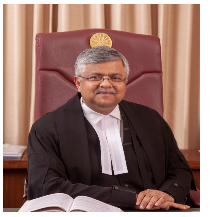
HON ’BLE MR. JUSTICE ANUP JAIRAM BHAMBHANI
J U D G M E N T
ANUP JAIRAM BHAMBHANI J.
By way of the present petition filed under section 37 of the
Narcotic Drugs and Psychotropic Substances Act, 1985 (‘NDPS Act’)
and section 483 of the Bharatiya Nagarik Suraksha Sanhita, 2023
(‘BNSS’), the petitioner seeks regular bail in case FIR No. 455/2024
dated 02.10.2024 registered under sections 8/20/21/25/29 of the NDPS
Act at P.S.: Special Cell, Delhi. Consequent upon completion of
investigation, allegations of offences under sections 22/27A of the
NDPS Act and sections 238B/209 of the Bharatiya Nyaya Sanhita,
BAIL APPLN. 4028/2025 Page 2 of 16
2023 (‘BNS’) have been added vidé chargesheet dated 10.06.2025 filed
in the matter.
2. Notice on this petition was issued vidé order dated 17.10.2025.
3. Status Report dated 04.11.2025 has been filed on behalf of the State.
4. Nominal Roll dated 16.04.2026 in respect of the petitioner has been
received from the concerned Jail Superintendent.
5. This court has heard Mr. Vikram Hegde, learned counsel appearing for
the petitioner; as well as Mr. Akhand Pratap Singh, learned Special
Public Prosecutor for the State, at length.
SUBMISSIONS ON BEHALF OF THE PETITIONER
6. Learned counsel for the petitioner has submitted, that the petitioner has
been arraigned in the present case pursuant to the statement of one Mrs.
Abhilasha Gupta, Head of Operations of one M/s Pharma Solution
Services Pvt. Ltd. (‘Pharma Solution Services’) recorded on
04.10.2024 under section 180 BNSS.
7. It has been submitted that pursuant to the aforesaid statement, the
premises of M/s Aavkar Drugs Pvt. Ltd. (‘Aavkar Drugs’) at
Ankleshwar, Gujarat were raided by the Special Cell on 13.10.2024 and
518.18 kg of a white crystal powder was recovered; and three directors
of Aavkar Drugs, namely Vijay Bhesaniya, Ashwani Ramani and
Brijesh Kothia, alongwith one employee of Pharma Solution Services,
Mayur Desale, and the present petitioner were arrested from the spot.
8. Mr. Hegde has submitted, that the principal allegation against the
petitioner is, that working as a consultant, middleman and marketing
agent under the name of Masuriya Pharma Solution, the petitioner had
BAIL APPLN. 4028/2025 Page 3 of 16
a long-standing relationship with Aavkar Drugs and had facilitated the
execution of a Job Work Agreement dated 08.08.2024 between Aavkar
Drugs and Pharma Solution Services for manufacture of
‘Phenylephrine Hydrochloride Intermediate’, a legal pharmaceutical
substance.
9. It is the petitioner’s case that he was never supplied with the ‘grounds
of arrest’ in writing, either at the time of his arrest or at any time
thereafter. Learned counsel points‑out, that even the Arrest Memo
dated 13.10.2024 qua the petitioner is devoid of any grounds of arrest.
It is submitted that the arrest memo merely reflects a mechanical
narration of alleged ‘reasons for arrest’, which falls foul of the
constitutional requirement of serving grounds of arrest as enunciated
by the Supreme Court in Pankaj Bansal vs. Union of India & Ors.,
1
Prabir Purkayastha vs. State (NCT of Delhi),
2
Mihir Rajesh Shah vs.
State of Maharashtra & Anr.
3
and Dr. Rajinder Rajan vs. Union of
India & Anr.
4
10. Mr. Hegde has argued that the requirement of informing an arrestee of
the grounds of his arrest is a substantive, sacrosanct safeguard of
personal liberty under Article 22(1) of the Constitution, and the law
mandates that such grounds of arrest, specific to the arrestee, must be
communicated in writing in a language understood by the arrestee, at
the time of arrest. It is submitted that even in exceptional cases, where
immediate service of written grounds of arrest is impracticable,
1
(2024) 7 SCC 576
2
(2024) 8 SCC 254
3
(2026) 1 SCC 500
4
Order dated 01.04.2026 in SLP (Crl.) Nos.3326/2026 and 3327/2026
BAIL APPLN. 4028/2025 Page 4 of 16
grounds of arrest are required to be served within a reasonable time and
“in no event later than two hours prior”
5
to production of the arrestee
before the Magistrate.
11. Adverting to the facts of the present case and the steps taken after the
petitioner’s arrest, it has been submitted that the transit remand
application dated 14.10.2024, by which the petitioner, along with other
co‑accused persons, was produced before the learned ACJM,
Ankleshwar, District Bharuch, Gujarat, contains no averment regarding
the specific role alleged against the petitioner; and, in any event, there
is nothing to show that the contents of that application were ever made
known to petitioner prior to his production before the learned
Magistrate seeking transit remand. Likewise, it has been submitted that
even when the petitioner was produced before the learned Special
Judge (NDPS), Patiala House Courts, New Delhi on 16.10.2024, and
police custody remand was sought, the petitioner was still kept in the
dark as regards the grounds of his arrest. The petitioner was thus
deprived of a meaningful opportunity to oppose his transit remand in Gujarat as well as his police custody remand in Delhi.
12. Counsel has also stressed that by not communicating to the petitioner
the grounds of arrest as mandated in law, the investigating agency has
not merely committed a curable procedural irregularity but has
perpetrated a substantive constitutional infraction that has caused
demonstrable prejudice, because the petitioner could neither explain his
5
Mihir Rajesh Shah, para 62
BAIL APPLN. 4028/2025 Page 5 of 16
side of the matter; nor was he able to instruct counsel to challenge the
legality or necessity of transit or police custody remand.
13. In the above context, learned counsel has also placed reliance on a
recent pronouncement by this Bench in Brijesh Kothia vs. State (NCT
of Delhi),
6
wherein this Bench has already tested the validity of the
arrest memo, common transit remand application and common
application seeking police custody remand qua co-accused Brijesh
Kothia (one of the directors of Aavkar Drugs) on the touchstone of the
Supreme Court decisions and the constitutional mandate of Article
22(1); and after a thorough consideration of the matter, this court has
admitted the said co-accused to regular bail, holding that the arrest of
Brijesh Kothia stood vitiated for non-supply of written grounds of
arrest.
14. It has been pointed‑out that in Brijesh Kothia, this Bench has already
held that the very same transit remand application and police custody
remand application do not qualify as valid service of written grounds
of arrest qua co‑accused Brijesh Kothia; which view applies equally to
the petitioner. Learned counsel has argued that the petitioner was not
even a director of Aavkar Drugs; nor was he responsible for the
business and affairs of the said company; and being only a
consultant/middle-man, stands on an even stronger footing.
15. On merits, it has been further urged that there is no recovery of any
contraband from, or at the instance of the petitioner; and that even the
recovery from the premises of Aavkar Drugs was allegedly at the
6
2026 SCC OnLine Del 3410
BAIL APPLN. 4028/2025 Page 6 of 16
instance of its directors. Reliance in this regard has been placed on
Bharat Chaudhary vs. Union of India
7
and Tofan Singh vs. State of
Tamil Nadu
8
, to contend that in the absence of recovery, mere reliance
on statements of co‑accused persons recorded under section 67 NDPS
Act is too tenuous a basis to deny bail and that such statements are in
any event inadmissible as evidence.
16. It has been emphasised that acting as a middle‑man or business
development partner of Aavkar Drugs, the petitioner had only
facilitated the signing of a job‑work agreement between Aavkar Drugs
and Pharma Solution Services for manufacture of Phenylephrine
Hydrochloride, which is a legal pharmaceutical substance; and the
petitioner had no knowledge that any other substance or contraband
was being manufactured at the factory, as alleged by the prosecution.
It has been submitted that the petitioner was not responsible nor did he
owe any legal duty to verify what was being actually manufactured at
the Aavkar Drugs factory.
17. It has also been contended that there is no material indicative of any
culpable mental state on the part of the petitioner, that could trigger the
presumption under section 35 of the NDPS Act, since all material
shows that the petitioner only facilitated the signing of a job‑work
agreement for manufacture of Phenylephrine Hydrochloride, a lawful
pharmaceutical ingredient; that Avkar Drugs was, at the very least, a
legitimate business since it had a website, a registered address and GST
registration; and Pharma Solution Services had expressly declared that
7
2021 SCC OnLine SC 1235, para 14
8
(2021) 4 SCC 1, para 158
BAIL APPLN. 4028/2025 Page 7 of 16
no controlled substance would be manufactured at Aavkar Drugs; and
that Phenylephrine Hydrochloride is neither a narcotic nor a controlled
substance.
18. Learned counsel for the petitioner has also pointed to an evident
mismatch between the result of the field‑testing kit, which had
indicated the seized material to be either ‘cocaine’ or ‘methaqualone’,
while the subsequent FSL report has supposedly identified the
substance as ‘mephedrone’. Reliance has been placed on this court’s
decisions in Taslima @ Putti vs. State (NCT of Delhi) in Bail Appln.
3173/2025 and Sahil Sharma @ Maxx vs. State (Govt. of NCT of
Delhi) in Bail Appln. 3068/2025, to urge that such ex-facie discrepancy
touching upon the very identity of the substance recovered should enure
to the benefit of an accused, at least at the stage of bail.
19. Learned counsel has further submitted, that the chargesheet filed
against the petitioner invokes only section 29 of the NDPS Act; and
that the material cited against him are confined to (i) WhatsApp chats
between him and the alleged kingpin of an international drug
trafficking operation, one Rana Tarandeep, and (ii) the job‑work
agreement between Aavkar Drugs and Pharma Solution Services,
neither of which show the petitioner’s conscious involvement in the
alleged offences.
20. The petitioner further claims parity with various other persons
associated with Pharma Solution Services who have not been arrayed
as accused, notably Ms. Abhilasha Gupta, India Head of Operations,
who executed the job‑work agreement with Aavkar Drugs and arranged
the premises and logistics for storage of alleged contraband. It has been
BAIL APPLN. 4028/2025 Page 8 of 16
argued that if functionaries of Pharma Solution Services have not been
prosecuted, there is no justification to continue the petitioner’s
incarceration.
21. It has also been pointed- out that the petitioner has been in judicial
custody for about 01 year and 06 months; that his jail conduct is
‘satisfactory’; and that he has no criminal antecedents.
22. In the circumstances, it has been prayed that the petitioner deserves to
be released on regular bail, since his case is squarely covered by the
considerations that have weighed with this Bench in Brijesh Kothia;
and the only role alleged against the petitioner is, that working as a
consultant, middleman and marketing agent, he had facilitated the
execution of a certain job-work agreement.
S
UBMISSIONS ON BEHALF OF THE STATE
23. Opposing the grant of bail, Mr. Singh has argued that the petitioner’s
role is not merely that of a middleman and one who facilitated the
signing of the job-work agreement; but the petitioner was in close
contact with Rana Tarandeep, who is the kingpin of an international
drug cartel that has smuggled 1290.967 kgs of cocaine/mephedrone and
39.706 kgs of marijuana into India. In support of his submission,
learned SPP has relied on the WhatsApp chats between the petitioner
and Rana Tarandeep.
24. Learned SPP has also submitted that it was at the instance of the
petitioner and Rana Tarandeep that the job-work agreement had been
signed. It has further been stated that the petitioner, who is an MBA
degree-holder, has been involved in the business of supply of raw
chemicals and possessed sufficient technical knowledge regarding the
BAIL APPLN. 4028/2025 Page 9 of 16
manufacturing of chemical products and intermediates. It has therefore
been argued that the petitioner was very well aware of illegitimacy of
the manufacturing and supply activities that he was involved in.
25. Insofar as the petitioner’s challenge to the validity of his arrest on
13.10.2024 citing non-supply of written ‘grounds of arrest’ is
concerned, it has been submitted that the requirement of serving
grounds of arrest on the petitioner did not arise, since in Mihir Rajesh
Shah, the Supreme Court has observed that grounds of arrest have to
be communicated to the arrestee in writing ‘henceforth,’ i.e., after the
date of pronouncement of the verdict in Mihir Rajesh Shah on
06.11.2025, which requirement had no application to the petitioner’s
arrest on 13.10.2024. Learned SPP has drawn attention to the following
paragraphs of Mihir Rajesh Shah in support of his submission:
“
67. After having come to the above conclusion, it is pertinent
to note that the provision of law under Section 50 CrPC (Section 47
of BNSS 2023) does not provide for a specific mode of or time-frame
for communication of the grounds of arrest to the person arrested.
This Court in Prabir Purkayastha [Prabir Purkayastha v. State (NCT
of Delhi), (2024) 8 SCC 254 : (2024) 3 SCC (Cri) 573], held that the
grounds of arrest be conveyed to the arrestee in writing in all offences
at the earliest, which means it need not be given at the time of arrest
but within a reasonable time thereafter, for offences under all the
statutes, which period would be as has been laid down above in this
order.
“68. We are cognizant that there existed no consistent or
binding requirement mandating written communication of the
grounds of arrest for all the offences. Holding as above, in our view,
would ensure implementation of the constitutional rights provided to
an arrestee as engrafted under Article 22 of the Constitution of India
in an effective manner. Such clarity on obligation would avoid
BAIL APPLN. 4028/2025 Page 10 of 16
uncertainty in the administration of criminal justice. The ends of
fairness and legal discipline therefore demand that this procedure as
affirmed above shall govern arrests henceforth . ”
(emphasis supplied)
26. In furtherance of his submission, Mr. Singh has also relied upon a
decision of a Division Bench of this court in Karan Singh vs. State
NCT of Delhi,
9
wherein the Division Bench has observed that the ratio
in Mihir Rajesh Shah applies prospectively, and accordingly, did not
apply to the case of the petitioner in that case, who was arrested on
07.02.2024.
27. Insofar as the decision of the Supreme Court in Dr. Rajinder Rajan is
concerned, learned SPP has argued that albeit the petitioner therein was
released by the Supreme Court on non-supply of grounds of arrest, the
said decision cannot be treated as a binding precedent, since in that case
the Supreme Court has not discussed the prospective or retrospective
application of Mihir Rajesh Shah.
28. Lastly and most importantly, Mr. Singh has argued that the petitioner,
who is a key member of an international drug cartel, has failed to show
any ‘demonstrable prejudice’
10
that was caused to him due to the non-
supply of grounds of arrest in writing.
29. The State has accordingly prayed that the petitioner’s bail petition be
rejected, keeping in mind the gravity and nature of offences committed
by him.
9
2026 SCC OnLine Del 282
10
State of Karnataka vs. Sri Darshan Etc, 2025 SCC OnLine SC 1702
BAIL APPLN. 4028/2025 Page 11 of 16
DISCUSSION & CONCLUSIONS
30. Having heard the rival submissions raised on behalf of the petitioner
and the State, having considered the material on record and the
precedents cited, the following considerations weigh with the court at
this stage:
30.1. That on material facts that are germane to the legality of arrest
and remand, the case of the present petitioner, Amit Kumar
Masuriya, stands exactly on the same footing as that of his
co‑accused, Brijesh Kothia, in whose favour this Bench has
already delivered judgment dated 13.05.2026 in BAIL APPLN.
No. 439/2026. The said judgment exhaustively examines the
constitutional and statutory requirements of furnishing written
grounds of arrest under Article 22(1) of the Constitution read
with section 47 BNSS (earlier section 50 of the Code of Criminal
Procedure, 1973) as elucidated in Pankaj Bansal, Prabir
Purkayastha, Vihaan Kumar, Mihir Rajesh Shah and the recent
decision of the Supreme Court in Dr. Rajinder Rajan. In Brijesh
Kothia this Bench has concluded that non‑supply of written
grounds of arrest within the stipulated window of time vitiates
the arrest and remand, and entitles the arrestee to be released on
bail, though without nullifying the investigation or trial of the
case.
30.2. That in particular, this Bench has already held in Brijesh Kothia,
that where the police are in possession of documentary material
forming a cogent basis for arrest, the written grounds of arrest
must be furnished to the arrestee on his arrest, or at the very least,
BAIL APPLN. 4028/2025 Page 12 of 16
within a reasonable time, and in no event later than 02 hours
prior to his production before the Magistrate for remand
proceedings, failing which the arrest would be rendered illegal
and the arrestee is entitled to be set free.
30.3. That in Dr. Rajinder Rajan the Supreme Court has applied the
necessity of serving grounds of arrest in writing to arrests
effected even prior to the pronouncement of Mihir Rajesh Shah,
thereby reinforcing the principle that the mandate for serving
grounds of arrest in writing flows directly from Article 22(1) and
is not merely prospective in operation. Relying upon the said
decisions of the Supreme Court, in Brijesh Kothia this Bench has
held as follows:
“26. In its most recent pronouncement dated 1-4-2026 in Dr
Rajinder Rajan, the Supreme Court has applied this dictum to
arrests made on 3-5-2025 - i.e., before Mihir Rajesh Shah came to
be pronounced on 6-11-2025 - namely, to arrests effected prior to
the decision in Mihir Rajesh Shah. In Dr Rajinder Rajan
the
Supreme Court has directed the release of the arrestees on bail,
since the arrest memos merely recorded that grounds of arrest were
orally explained but written grounds were not furnished (at least)
two hours before remand. In the opinion of this court, a reading
of Dr Rajinder Rajan shows that Mihir Rajesh Shah does not create
a fresh prospective regime but merely re-affirms the constitutional
requirement inherent in Article 22(1) as earlier elucidated, inter -
alia in Pankaj Bansal, Prabir Purkayastha, and Vihaan Kumar.
“27. The decision in Mihir Rajesh Shah possibly cannot, and
does not, move forward the date from which the verdict in Pankaj
Bansal takes effect i.e. 3-10-2023, which position is reiterated
in Prabir Purkayastha and Vihaan Kumar .”
(emphasis in original)
BAIL APPLN. 4028/2025 Page 13 of 16
30.4. That applying the same legal yardstick to the present case, the
following features stand-out and are materially indistinguishable
from those in Brijesh Kothia: (a) the arrest memo dated
13.10.2024 pertaining to the petitioner does not record any
person‑specific, written “grounds of arrest” but only sets‑out
generic ‘reasons for arrest’; (ii) there is no material to show that
any separate written grounds of arrest were furnished to the
petitioner at the time of his arrest at Ankleshwar, Gujarat or soon
thereafter; (iii) on the State’s own showing, the transit remand
application dated 14.10.2024 was not served on the petitioner,
and in any case, that application also does not disclose any
personalised grounds for the petitioner’s arrest; and (iv) the
police custody remand application dated 16.10.2024 filed before
the learned Special Judge (NDPS), Patiala House Courts, New
Delhi, even if treated as containing adequate particulars, was
placed before the court only at the time of the petitioner’s
production and was not supplied to the petitioner at least 02
hours prior thereto, thereby failing to satisfy the temporal
mandate laid‑down in Mihir Rajesh Shah.
30.5. The inevitable consequence of the above is that the petitioner
was precluded from meaningfully instructing counsel and
effectively resisting his transit remand and police custody
remand at those crucial stages, defeating the very purpose of
Article 22(1), which is to ensure that an arrestee be put in
possession of sufficient knowledge about the allegations against
him, so that he can meaningfully challenge his custody.
BAIL APPLN. 4028/2025 Page 14 of 16
30.6. That his nominal roll shows that the petitioner has already spent
over 01 year 06 months in judicial custody; that his overall jail
conduct has been ‘satisfactory’ and that he has no other criminal
involvements.
30.7. That consistent with the approach adopted by this Bench in
Brijesh Kothia, this court is also mindful that the illegality in
arrest and remand does not, by itself, nullify the investigation or
preclude the investigating agency from taking such steps as may
be permissible in law, including if so advised, effecting a fresh
arrest in strict compliance with Article 22(1), the BNSS and the
NDPS Act.
30.8. For the present purposes however, the constitutional violation in
not supplying the written grounds of arrest within the time and
manner mandated by the Supreme Court, is sufficient to entitle
the petitioner to be set at liberty on bail, especially when he has
already spent a substantial period in judicial custody.
31. Accordingly, in the totality of circumstances, this court is persuaded to
grant to the petitioner – Amit Kumar s/o Jagdish Bhai – regular bail
pending trial in the present case, on the following terms:
31.1. The petitioner shall furnish a personal bond in the sum of
Rs.1,00,000/- (Rupees One Lac Only) with 02 sureties in the like
amount from family members, to the satisfaction of the learned
trial court;
31.2. The petitioner shall furnish to the Investigating Officer/S.H.O.,
Special Cell, Delhi, a cellphone number on which he may be
BAIL APPLN. 4028/2025 Page 15 of 16
contacted at any time, and shall ensure that the number is kept
active and switched‑on at all times;
31.3. If the petitioner has a passport, he shall surrender the same to the
learned trial court and shall not travel out of the country without
prior permission of the learned trial court;
31.4. The petitioner shall not contact, visit, or offer any inducement,
threat or promise to any of the prosecution witnesses or any other
person acquainted with the facts of the case;
31.5. The petitioner shall not tamper with evidence nor otherwise
indulge in any act or omission that is unlawful or that would
prejudice the proceedings in the pending trial; and
31.6. In case of any change in his residential address or contact details,
the petitioner shall promptly inform the Investigating Officer in
writing.
32. Since the petitioner is facing trial and would, therefore, be appearing
before the learned trial court from time‑to‑time, it is not considered
necessary to impose any additional reporting requirement as a
condition of regular bail, beyond what has been set‑out above.
33. It is clarified that nothing contained in this judgment shall be construed
as an expression of opinion by this court on the merits of the
prosecution case at trial, which shall proceed uninfluenced by any
observation herein.
34. The present petition is disposed‑of in the above terms.
35. Pending applications, if any, also stand disposed‑of.
BAIL APPLN. 4028/2025 Page 16 of 16
36. A copy of this judgment be forwarded to the concerned Jail
Superintendent forthwith for information and necessary compliance.
ANUP JAIRAM BHAMBHANI, J
MAY 29, 2026/HJ

 Login with google
Legal Notes
Add a Note....