
As per case facts, the appellant acquired an import license and ordered cloves, intending to clear them under Item 169 as "Drugs/Drug intermediate not elsewhere specified." However, the Department maintained ...

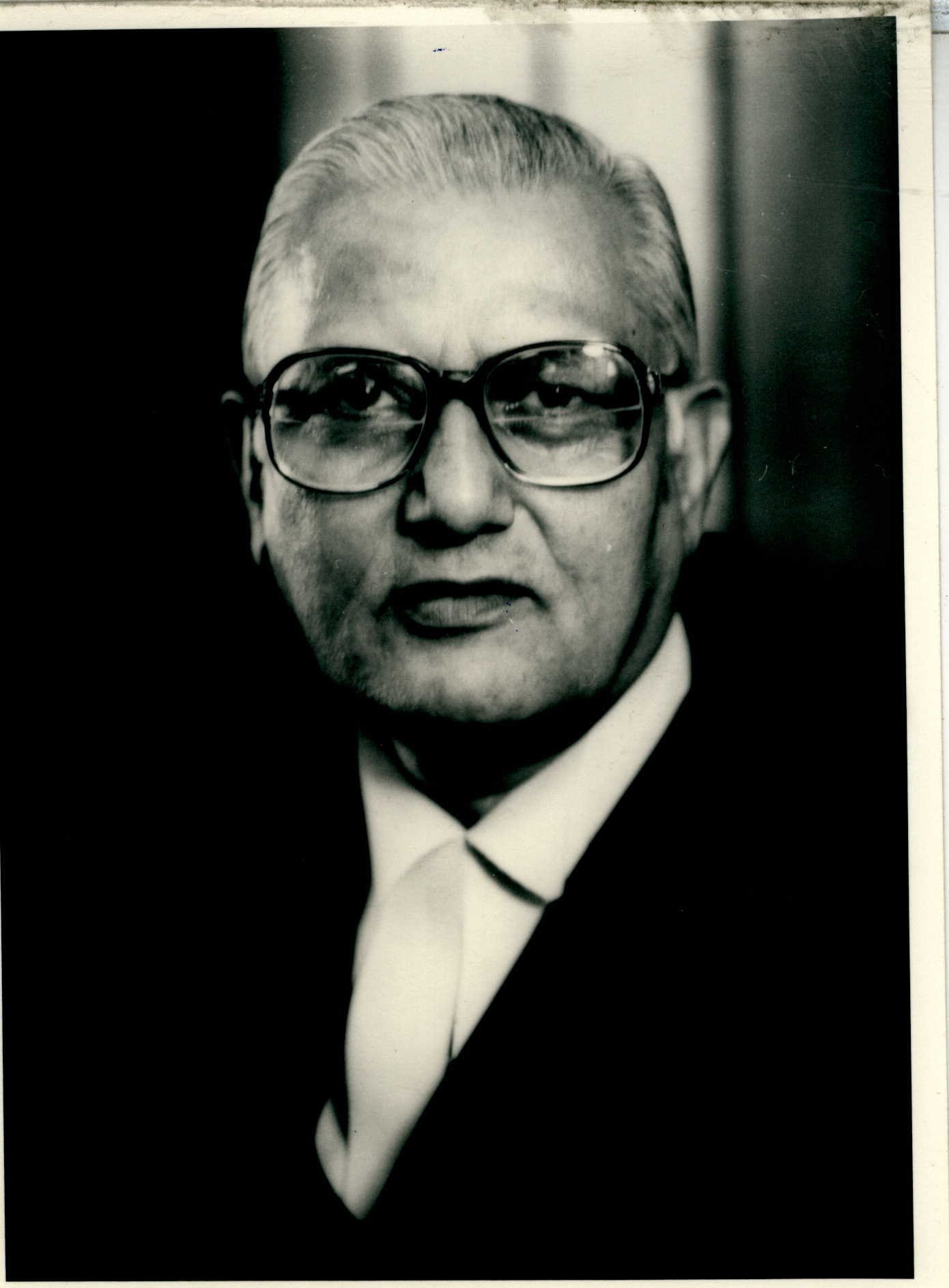
No Acts & Articles mentioned in this case
http://JUDIS.NIC.IN SUPREME COURT OF INDIA Page 1 of 5
PETITIONER:
ANANT B. TIMBODIA
Vs.
RESPONDENT:
UNION OF INDIA AND ORS.
DATE OF JUDGMENT26/02/1992
BENCH:
KASLIWAL, N.M. (J)
BENCH:
KASLIWAL, N.M. (J)
KANIA, M.H. (CJ)
RAMASWAMI, V. (J) II
CITATION:
1992 AIR 1272 1992 SCR (1) 997
1992 SCC Supl. (2) 145 JT 1992 (2) 59
1992 SCALE (1)527
ACT:
Import-Export Policy, April 1990-March, 1993:
Item 169 of List 8, Appendix 6, Part I and Para 167 of
Chapter XIII-Cloves-Classification of-Whether cloves
imported by appellant fell within Item 169 "Drugs/Drug
Intermediate not elsewhere specified."
HEADNOTE:
The appellant obtained, by transfer, an Import Licence
for the import of admissible Items as per Para 220 (2), (3),
(4) and (6) of the Import Policy 1990-93 Vol.I and placed
an order on a foreign firm for the supply of cloves No. 1
quality. On arrival of the goods in the Indian Port, the
appellant filed Bill of Entry for the clearance of the goods
for home consumption, and claimed clearance of the goods
against the additional licence on the ground that the cloves
were covered under Item 169 of Appendix 6, List 8, Part I of
the Import and Export Policy, being Drugs/Drug intermediate
not elsewhere specified." The Department relying on Para
167, which dealt with the import of spices, took the view
that the cloves could be imported only against specific
licence relating to cloves. Hence the appellant filed a
writ petition in the High Court for a direction to the
respondent to clear the goods against the Bill of Entry
filed by the appellant.
The High Court held that cloves could not fall within
the expression "Drugs/Drug intermediate not elsewhere
specified" and the import of the cloves without specific
licence was not permissible, and that the licence relied
upon by the appellant was not valid for the import of
cloves.
In the appeal before this Court, it was contended on
behalf of the appellant-importer that in popular sense and
trade parlance, clove was also used as drug intermediate,
and that in the Import Policies of 1982-83 to 1985-86 cloves
were specified as crude drug and the cloves and clove oil
were used for treatment of dyspepsia, flatulence, etc., and
tooth problems and, therefore, the High Court committed an
error in holding that clove
998
http://JUDIS.NIC.IN SUPREME COURT OF INDIA Page 2 of 5
was not a Drug/Drug intermediate, and that it did not fall
within Item 169.
Dismissing the appeal of the Importer, this Court,
HELD : 1.1 Para 167 under Chapter XIII of the Import
Policy of April 1990-93 clearly provides the heading Import
of Spices and under this heading of spices it further makes
a mention that import of Cloves, Cinnamon/Cassia, Nutmeg and
Mace will be allowed against licences.Thus, it is clear
beyond any doubt that cloves have been included under the
heading Spices and the import of cloves is only permissible
against specific licences obtained in the manner provided in
Para 167. In the face of this provision, dealing with the
import of spices, which specifically includes cloves, the
general provision of Item 169 mentioning Drugs/Drug
intermediates cannot be applied. [1002D-E]
1.2 In the instant case the appellant had obtained the
licence in November, 1990 and has imported the cloves in May,
1991 and as such the import of cloves in question, shall be
governed by the provisions contained in the Import Policy of
April, 1990-93, and not by any meaning given to cloves in
any earlier Policy. Therefore, when para 167 provides of
obtaining specific licence for cloves, there is no necessity
of finding its meaning from earlier Policies or its use as
medicine. There is a clear provision under Para 167 as
regards import of spices and it would govern the import of
cloves. That apart, the High Court was right in holding
that in the common parlance as well as in trade and
commerce, clove is treated as spice and not drug. It is a
matter of common knowledge that the cloves are sold in a
`Kirana' shop and not in the shop of a chemist or druggist.
[1002C, F-G]
JUDGMENT:
CIVIL APPELLATE JURISDICTION: Civil Appeal No. 916 of
1992.
From the Judgment and Order dated 18.6.1991 of the
Bombay High Court in W.P.N. 1914 of 1991.
Harish N. Salve, Rajiv K. Garg and N.D. Garg for the
Appellant.
K.T.S. Tulsi, Addl. Solicitor General, A. Subba Rao, P.
Parmeswaran and A.D.N. Rao for the Respondents.
The Judgment of the Court was delivered by
999
KASLIWAL, J. Special leave granted.
This appeal has been filed against the judgment of the
Bombay High Court dated 18.6.1991. The short controversy
raised in the present case is whether the cloves imported by
the appellant fall within Item 169 in List 8 of appendix 6
or fall within Paragraph 167 of Chapter XIII of the Import
and Export Policy April 1990-March 1993.
Brief facts of the case are that the appellant obtained
by transfer an Import Lincence No. 3412179 dated 29th
November, 1990 for Rs. 16,10,700 for the import of
admissible Items as per Para 220 (2) (3) (4) & (6) of the
Import Policy 1990-93 Vol. I. After acquisition of the
aforesaid additional licence, the appellant placed an order
for the supply of about 200 bags of Madagascar cloves No. 1
quality to a firm of Singapore. The appellant opened a
letter of credit dated 6.5.1991 in favour of the foreign
supplier. On receipt of the letter of credit the foreign
supplier shipped the above mentioned goods in favour of the
appellant. On arrival of the goods at Bombay Port, (e)
appellant filed Bill of Entry for the clearance of the goods
http://JUDIS.NIC.IN SUPREME COURT OF INDIA Page 3 of 5
for home consumption on 30th May, 1991. The appellant
claimed clearance of the goods against the additional
licence on the ground that the cloves were covered under
Item 169 of Appendix 6, List 8, Part-I of the Import and
Export Policy being "Drugs/Drug intermediate not elsewhere
specified." The Department relied on Para 167 which dealt
with the import of spices and took the stand that the cloves
could be imported only against specific licence relating to
cloves.
The appellant in the above circumstances filed a Writ
Petition in the High Court of Bombay seeking a mandamus
against the respondent to clear the goods against the Bill
of Entry filed by the appellant. The High Court held that
th cloves cannot fall within the expression "Drugs/Drug
intermediate not elsewhere specified" and the import of the
cloves without specific licence was not permissible. It was
thus held that the action of the Customs Authorities in not
permitting clearance cannot be faulted and the licence
relied upon by the appellant was not valid for the import of
cloves.
It was contended by Mr. Harish Salve, Learned Counsel
for the appellant that though the use of clove as a spice is
not in much dispute, but at the same time it cannot be
disputed that clove is a Drug/Drug intermediate. It was
submitted that in popular sense and trade parlance, clove is
also used as drug intermediate and that being so the
appellant was
1000
entitled to import the cloves against the additional licence
under para 220 of the Policy. It was also submitted that in
the Import Policies of 1982-83 to 1985-86 cloves were
specified as crude drugs. It was thus submitted that when
clove was considered as crude drugs, there was no
justification now to hold that it did not fall within Item
169 which provided for Drug/Drug intermediates. It was
further argued that cloves are used for treatment of
dyspepsia and flatulence. It is also used to relieve nausea
and vomiting. Clove oil is famous for medicinal use and
specially for tooth problems. It was also argued that in the
Indian Materia Medica by A.K. Nadkarni the use of the cloves
has been stated as follows :-
"Uses - Cloves(unopened flower-buds) are generally
used as spice in curry foods and condiments.
Medicinally they are used to correct griping caused
by purgatives, relieve flatulence, various forms of
gastric irritability, colic, dyspepsia, and to
increase the flow of saliva. Combined with other
spices and rock-salt clove is given to relieve
colic, indigestion and vomiting and to many other
uses."
It was submitted that in the Indian Pharmaceutical Codex
issued by the Counsel of Scientific & Industrial Research,
New Delhi the Action and Uses of cloves have been stated as
under :-
"Action and Uses - Clove is one of the most
stimulant of aromatics. It is carminative and is
used in treatment of flatulence and dyspepsia. It
is sometimes administered in the form of powder or
an infusion to relieve nausea and vomiting, correct
flatulence and excite languid digestion."
It was thus argued that the High Court committed an
error in holding that clove was not a Drug/Drug
intermediate.
On the other hand, it was submitted by Mr. Tulsi,
Learned Additional Solicitor General that Para 167 of the
http://JUDIS.NIC.IN SUPREME COURT OF INDIA Page 4 of 5
Policy clearly provided that import of cloves could be
allowed only against licences and there was no question of
applying Item 169 of List 8 Appendix 6 which provided for
Drugs/Drug intermediate not elsewhere specified. It was also
submitted that in the common parlance as well as in trade
and commerce, the cloves are always considered as spice and
not as a drug or drug intermediate. It was submitted that
the cloves are sold as spice in a `Kirana' shop and not as
drug in a chemist shop.
1001
In order to appreciate the controversy raised before us
it would be necessary to reproduce Para 167 contained in
Chapter XIII and Item 169 appearing in Part I of List 8,
Appendix 6 of the Import & Export Policy, 1991-93 Vol. I:
"Import of Spices:
167. (1) Import of (1) Cloves (2) Cinnamon/Cassia
(3) Nutmeg and (4) Mace will be allowed against
licences. Such licences may be granted to those
who imported these items during any of the
financial years from 1983-84 to the preceding
licensing year. Import licences will be issued on
the basis of the best year's imports of an item
from 1983-84 to the proceding licensing year. The
percentage entitlement as well as minimum value of
licence will be as notified by the Chief Controller
of Imports & Exports. From the licensing year 1991-
92, applicants will be required to furnish
evidence of exports of Indian spices, during the
preceding licensing year, for a value equal to the
value of the import licence granted during the
preceding licensing year. Only exports of (1)
Cardamom (small), (2) all Spices/spice products in
approved consumer packs of 450 gms. or less except
spice oils and oleoresins and saffron (3) Herbal
spices such as rosemary, thyme, terragon, sage,
etc. (4) Vanila (5) Black cumin, (6) Star anise,
(7) Kokum, (8) Garlic, (9) Cardamom (large), (10)
Bishopsweed, (11) Caraway and (12) Cumin seed, will
be taken into account for the above purpose. Items
may be added or deleted by the Chief Controller of
Imports & Exports as and when considered necessary
in public interest.
(2) Exports referred to in sub-paragraph (1) above
should be direct exports by the applicant in his
own name with the export proceeds i.e. the foreign
exchange realisation in his own name, or exports
through the Consortium of Spices Exporters,
membership of which is to be confined only to
dealers of spices who want to avail of the facility
for exports through the Consortium. Documents
required to be furnished alongwith the application
for grant of licences for spices shall be as
provided in sub-paragraph 166(6) above.
(3) Actual users who have no past imports will also
be eligible
1002
for licence on the recommendation of the sponsoring
authority and approval by the Headquarters
Supplementary Licensing Committee.
(4) Applications for import of spices are to be
made to the licensing authority concerned."
Item 169 in Part I of List 8, Appendix 6 :-
"Drugs/Drug intermediates not elsewhere specified."
In the present case we are concerned with the Import
Policy of 1990-93 and not any earlier Policy. The appellant
http://JUDIS.NIC.IN SUPREME COURT OF INDIA Page 5 of 5
had obtained the licence on 29th November, 1990 and has
imported the cloves in May, 1991 and as such the import of
cloves in question shall be governed by the provisions
contained in the Import Policy of April 1990-93, and not by
any meaning given to cloves in any earlier Policy. It cannot
be disputed that the Government has power to modify or
change its Import and Export Policy. Para 167 under Chapter
XIII of the present Policy clearly provides the heading
Import of Spices and under this heading of spices it further
makes a mention that import of cloves, Cinnamon/Cassia,
Nutmeg and Mace will be allowed against licences. Thus, it
is clear beyond any doubt that cloves have been included
under the heading spices and the import of cloves is only
permissible against specific licences obtained in the manner
provided in Para 167. In face of the above provision dealing
with the import of spices which specifically includes
cloves, the general provision of Item 169 mentioning
Drugs/Drug intermediates cannot be applied. When Para 167
provides for obtaining specific licence for cloves, there is
no necessity of finding its meaning from Policies or its use
as medicine. As regards import of spices, there is a clear
provision under Para 167 and it would govern the import of
cloves. That part we are in agreement with the view taken
by the High Court that in the common parlance as well as in
trade and commerce, clove is treated as spice and not drug.
It is a matter of common knowledge that the cloves are sold
in a `Kirana' shop and not in the shop of a chemist or
druggist. Thus, we find no error in the view taken by the
High Court and this appeal having no force is dismissed with
no order as to costs.
N.P.V. Appeal dismissed.
1003

 Login with google
Legal Notes
Add a Note....