
This case revolves around the legal requirements and standards for election petitions in India, particularly focusing on the necessity of including material facts when alleging corrupt practices under Sections 100 ...
No Acts & Articles mentioned in this case
REPORTABLE
IN THE SUPREME COURT OF INDIA
CIVIL APPELLATE JURISDICTION
CIVIL APPEAL NO. OF 2009
(Arising out of SLP (Civil) No.18893 of 2008)
Anil Vasudev Salgaonkar .. Appellant
Versus
Naresh Kushali Shigaonkar .. Respondent
J U D G M E N T
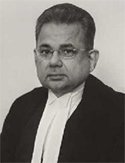
Dalveer Bhandari, J.
1.Leave granted.
2.This appeal is directed against the judgment and order
of the High Court of Bombay Bench at Goa passed in
Election Application No.5 of 2007 in Election Petition No.1 of
2007 on 4
th
July, 2008.
3.The respondent herein has filed an election petition in
the High Court of Bombay at Goa challenging the election of
the appellant (respondent no.1 in the election petition) to
Goa Legislative Assembly from 35 Sanvordem Assembly
Constituency. In the assembly elections held on 2
nd
June,
2007, the appellant secured overwhelming mandate from the
electorates securing 10705 votes out of total 19657 votes
polled whereas, his nearest rival (respondent no.2 in the
election petition) set up by the Bharatiya Janata Party
secured only 3782 votes and the respondent (election
petitioner) polled only 275 votes and forfeited his deposits.
In the election petition before the High Court, a prayer has
been made to declare the election of the appellant herein as
null and void on ground of corrupt practices in which the
appellant indulged during the elections. The allegations in
the petition are as under:
i) The returned candidate with an
intent to secure the votes of the
voters of his constituency got 13
bore wells constructed at his own
cost in the seven villages of the
said constituency;
ii) The returned candidate had also
provided ambulances to the
villages namely Collem,
Sanvordem, Mollem, Dharbandora
and Khirpal Dabhal as a part of
his action in luring voters to vote
in his favour.
4.It has also been alleged that the appellant indulged in
the abovementioned corrupt practices and incurred election
expenditure in contravention of section 77 of the
Representation of the People Act, 1951 (hereinafter referred
to as “the Act”) thereby crossing the limit of Rs.5,00,000/-
prescribed under the Act and the Rules framed thereunder.
5.The written statement to the election petition was filed
by the appellant in the High Court. The allegations
mentioned in the election petition were specifically refuted
and denied in the written statement. Apart from number of
preliminary objections, it was stated by the appellant that
the election petition does not comply with the provisions of
Chapter II of the Act and is, therefore, required to be
dismissed at the threshold.
6.The appellant also stated in the written statement that
the election petition does not contain a concise statement of
the material facts on which the respondent relies and,
therefore, the petition does not comply with clause (a) of
sub-section (1) of section 83 of the Act. It was also
incorporated in the written statement that the election
petition does not set forth the material facts of the alleged
corrupt practice. The respondent herein has also failed to
disclose the names of the parties alleged to have committed
the corrupt practice. In the election petition, the date and
place of the commission of such alleged corrupt practice has
not been mentioned and, therefore, the election petition
deserved to be dismissed as not maintainable.
7.In the written statement it was also stated that the
appellant secured 10705 votes whereas the respondent
(election petitioner) got only 275 votes. The margin is too
huge to state that the candidate has been returned on
account of some alleged corrupt practice. The respondent in
the election petition is required to show that the candidate
has been elected and that the result of the election has been
materially affected by any alleged corrupt practice committed
as such.
8.The allegations of alleged corrupt practices pleaded by
respondent (election petitioner) are limited to digging of 13
bore wells in villages falling under the constituency in
question after issuance of the election notification. The
basis for this allegation is that the machinery allegedly used
to dig bore holes in the ground as mentioned in paragraph
16 of the election petition was the same machinery owned by
a third party which was hired in the past to work for the
Salgaoncar Mining Industries at Vagus valley. The
respondent in paragraph 16 of the election petition has also
averred that the owner of the Salgaoncar Mining Industries
is the appellant herein and on this sole basis the conclusion
is sought to be drawn and averment made to the effect that
it is obvious that the cost of the said wells and the other
wells were borne by the returned candidate through his
business concern, namely, Salgaoncar Mining Industries.
9.The pleadings of the said allegations of corrupt practice
are limited to digging of bore wells only and there is no
pleading on the material facts whether any water drawing
equipment was installed in the said bore holes so dug and
that such bore holes became water bore wells and that the
water could be drawn from them. Neither any facts have
been pleaded nor particulars given to the effect of how and
in what manner the voters were influenced in favour of the
appellant so as to cast votes in his favour. No particulars of
such voters have been given in the election petition. As such
there is total absence of material pleadings so as to prove
that due to the alleged corrupt practice the election has been
vitiated in a manner that but for such bore holes not being
dug the appellant would not have been returned as a
winning candidate and either respondent herein or
respondent no.2 of the election petition could have been
returned as a winning candidate.
10.There are no averments to the effect whether such bore
holes were dug with the consent and/or active knowledge of
the appellant. The estimates of cost involved supplied in the
election petition are also limited to the cost of drilling the
bore holes and not of installing the water drawing plant and
machinery in them to draw water from the bore holes. As
such, the said pleading is totally general and vague in
nature and is entirely incapable of passing the muster of the
test as laid in the Azhar Hussain v. Rajiv Gandhi 1986
(Supp) SCC 315 or such facts as are pleaded in the petition
are capable of being later on amplified in view of the test laid
down in H.D. Revanna v. G. Puttaswamy Gowda &
Others (1999) 2 SCC 217 so as to arrive at a conclusion that
a triable case is made out.
11.The second allegation of the alleged corrupt practice is
to the effect that the appellant herein has, in the name of his
mining company viz. M/s Salgaoncar Mining Industries Pvt.
Ltd. Vagus, Palem, Bicholim, Goa, bought 5 Maruti
Ambulances from M/s Sai Service Station Ltd., Verna,
Salcete, Goa by incurring a cost of Rs.2,50,000/- for each of
the ambulances and the cost of the 5 ambulances
approximately would be a sum of Rs.12,50,000/- and once
the said elections were declared and he filed his nomination
for the said election, caused the said company to put the
said ambulances at the disposal of the villagers of the said
villages.
12.There are absolutely no averments with regard to which
villagers or electors had used such ambulances and for
whose benefit such ambulances were deployed so as to
constitute ‘bribe’ to the voters and that to an extent that
would have influenced the outcome of the election. It is
stated that any company operating mines on large scale with
heavy machinery is under a statutory duty to maintain
safety at the mines and is, as such, statutorily required to
provide required facilities including deployment of
ambulances in adequate numbers at various mines to
ensure safety of the persons working at these mines. The
various mines of Salgaoncar Mining Industries are spread
over large areas falling in the constituency.
13.The petition is absolutely devoid of any averment with
regard to such ambulances being specifically deployed for
the benefit of any elector in the constituency much less a
number of electors who would have benefited from such
service even if not admitted but proved to be true that could
have influenced the election so as to change its outcome.
14.There are absolutely no averments to the effect that
these ambulances were deployed at which specific place, at
which specific time and for the benefit of whom and whether
at the instance or with knowledge of the appellant. As such,
the said pleading is incapable of passing the test as laid in
the Azhar Hussain’s case (supra) or such facts as are
pleaded in the petition are capable of being later on
amplified in view of the test laid down in H.D. Revanna’s
case (supra) so as to arrive at a conclusion that a triable
case is made out.
15.The third allegation pertains to the election expenses
incurred by the appellant on the basis that amount spent on
digging of bores holes as well as the cost of 5 ambulances
deployed for discharge of statutory requirements for carrying
out mining operations by a company ought to be calculated
towards the election expenses incurred by the appellant and,
as such, devoid of any merit in view of the insufficiency of
pleadings in terms of ‘material facts’ with respect to the two
main allegations of corrupt practices relating to digging of
borewells and 5 ambulances.
16.The High Court has totally misdirected itself by
misconstruing the ratio laid down in a catena of decision
pronounced by this Court including the law laid down in
Azhar Hussain’s case (supra) and H.D. Revanna’s case
(supra) which if properly applied to the facts and
circumstances of the present case would lead to rejection of
the election petition in limine.
17.The other important questions of law of general
importance involved in the present petition require
adjudication by this Court are whether amenities or facilities
provided in general and not in particular to a candidate or
his agent or by any other person with the consent of the
candidate, is a corrupt practice or a bribery or a gratification
within the meaning of section 100(1)(b) read with section
123(1) of the Act. Whether the absence of the prescribed
affidavit in Form 25 as required under Rule 94A of the
Conduct of Election Rules, 1961 and in terms of proviso to
section 83 of the Act is fatal to the maintainability of an
election petition on the ground of corrupt practices?
18.In the election petition the respondent has mentioned
that there was scarcity of water supply in certain villages.
However, the respondent has failed to mention the numbers
of houses which face such alleged water scarcity. In the
written statement, the appellant also alleged that the
respondent in the election petition has also failed to mention
about water availability of these villages; the respondent has
further failed to mention as to since when has there been
water scarcity?
19.The appellant in the written statement further alleged
that the respondent has also not mentioned as to how many
houses are there in these villages; how many persons are
living in each of the houses; and how many persons are
voters in these villages. The respondent has also not
mentioned as to how many villages have water connections;
and when and where the water scarcity had been noticed in
these villages. He has also not mentioned as to when this
complete breakdown or insufficient water supply had
occasioned to these villages nor has he mentioned the date,
time, place or any other details of such breakdown and has
generally failed to give the details as required under section
83 of the Act.
20.In the written statement it was also stated that the
drilling machines allegedly owned by Tejaswini Bore Wells
which were being operated at Ambeudok. There is,
therefore, no concrete evidence that the boreholes drilled
were bore wells to establish the flow of water from the
ground table to surface ground. Similarly, the respondent
has miserably failed to give particulars as to which villages
did not have ambulances and what was the number of
voters in the said villages. The respondent has failed to give
particulars regarding parking of the ambulances i.e. where
these ambulances were parked; in which villages they were
parked; whether there was any driver to drive the said
ambulances and as to where they were parked. Similarly,
the respondent failed to give particulars regarding the bore
wells whose cost as alleged amounts to Rs.6,38,557/-.
Similarly, expenditure of Rs.12,50,000/- has been alleged to
have been made for the purchase of ambulances. The
particulars have not been provided. It is not clear as to how
the respondent has come to the figure of Rs.5,00,000/-
which according to him has been spent by the appellant. He
did not give any particulars regarding either of the bore wells
or the ambulances.
21.`The appellant denied crossing the limit of
Rs.5,00,000/- as prescribed under the Act and the Rules
framed thereunder. It is also alleged that the appellant did
not construct any bore wells nor did he provide any
ambulances to the villagers and, therefore, the question of
showing the same in the election expenses did not arise at
all. The appellant denied that an amount of Rs.6,38,557/-
and an amount of Rs.12,50,000/- as alleged has been the
expenditure factually incurred by the appellant and denied
having committed any corrupt practice. The question of the
election results being materially affected does not arise at all
and, therefore, the election petition is liable to be dismissed.
22.It was specifically argued that the election petition is
liable to be dismissed because there has been non
compliance of section 83(1) of the Act because there was no
sufficiency and adequacy of pleadings in the election
petition. Section 83(1) of the Act reads as under:
83.Contents of petition.—(1) An election
petition—
a)shall contain a concise statement of the
material facts on which the petitioner
relies;
b)shall set forth full particulars of any
corrupt practice that the petitioner
alleges including as full a statement as
possible of the names of the parties
alleged to have committed such corrupt
practice and the date and place of the
commission of each such practice; and
c)shall be signed by the petitioner and
verified in the manner laid down in the
Code of Civil Procedure, 1908 (5 of
1908) for the verification of pleadings:
Provided that where the petitioner
alleges any corrupt practice, the petition
shall also be accompanied by an affidavit in
the prescribed form in support of the
allegation of such corrupt practice and the
particulars thereof.”
23.According to the appellant, the High Court had
erroneously held that the election petition is not liable to be
dismissed in limine under section 86 of the Act for alleged
non-compliance of the provisions of section 83(1) of the Act.
24.In the impugned judgment, the High Court erroneously
concluded that the election petition when read as a whole
discloses that it has material facts stated and regarding
which triable issues are also framed and, therefore, it cannot
be rejected at the preliminary stage.
25.The High Court in the impugned judgment has
discussed the decision of this Court in Dhartipakar Madan
Lal Agarwal v. Rajiv Gandhi (1987) Supp. SCC 93.
According to the appellant, the High Court erroneously
distinguished this case. The impugned judgment of the High
Court is neither in consonance with the provisions of the Act
nor according to the settled legal position as has been
crystallized in a number of cases by this court.
26.Being aggrieved by the impugned judgment, the
appellant has preferred this appeal.
27.In this election petition, respondent no.1 has
challenged appellant’s election primarily on the ground of
corrupt practices, alleging that the appellant dug bore wells
in the constituency and provided ambulances after the
election notification was issued in order to lure the voters
from the constituency or induce them to vote for the
appellant. According to the appellant, the aforesaid
allegations do not even on their face value constitute corrupt
practices within the meaning of Section 100 or section 123
of the Act. The Act postulates or contemplates bribery to
mean any gift, offer or promise by a candidate of any
gratification with the object, directly or indirectly of inducing
any elector in order to make him vote for him.
28.For reference, section 100 and section 123 of the 1951
Act read as under:-
“Section 100 - Grounds for declaring election
to be void -- (1) Subject to the provisions of sub-
section (2) if
the High court is of opinion-
(a) that on the date of his election a returned
candidate was not qualified, or was disqualified,
to be chosen to fill the seat under the Constitution
or this Act or the Government of Union Territories
Act, 1963 (20 of 1963); or
(b) that any corrupt practice has been committed
by a returned candidate or his election agent or by
any other person with the consent of returned
candidate or his election agent; or
(c) that any nomination has been improperly
rejected; or
(d) that the result of the election, in so far as it
concerns a returned candidate, has been
materially affected-
(i) by the improper acceptance or any nomination,
or
(ii) by any corrupt practice committed in the
interests of the returned candidate by an agent
other than his election agent, or
(iii) by the improper reception, refusal or rejection
of any vote or the reception of any vote which is
void, or
(iv) by any non-compliance with the provisions of
the Constitution or of this Act or of any rules or
orders made under this Act,
the High Court shall declare the election of the
returned candidate to be void.
(2) If in the opinion of
[the High Court, a
returned candidate has been guilty by an agent
other than his election agent, of any corrupt
practice but
the High Court is satisfied-
(a) that no such corrupt practice was committed
at the election by the candidate or his election
agent, and every such corrupt practice was
committed contrary to the orders, and [without
the consent], of the candidate or his election
agent;
(b) omitted
(c) that the candidate and his election agent took
all reasonable means for preventing the
commission of corrupt
practices at the election;
and
(d) that in all other respects the election was free
from any corrupt practice on the part of the
candidate or any of his agents,
then
the High Court may decide that the election
of the returned candidate is not void”.
“Section 123 - Corrupt practices -- The
following shall be deemed to be corrupt practices
for the purposes of this Act:--
(1) "Bribery" that is to say--
(A) any gift offer or promise by a candidate or his
agent or by any other person with the consent of a
candidate or his election agent of any
gratification, to any person whomsoever, with the
objects, directly or indirectly of inducing--
(a) a person to stand or not to stand as, or to
withdraw or not to withdraw from being a
candidate at an election, or
(b) an elector to vote or refrain from voting at an
election, or as a reward to-
(i) a person for having so stood or not stood, or for
having withdrawn or not having withdrawn his
candidature; or
(ii) an elector for having voted or refrained from
voting;
(B) the receipt of, or agreement to receive, any
gratification, whether as a motive or a reward--
(a) by a person for standing or not standing as, or
for [withdrawing or not withdrawing] from being, a
candidate; or
(b) by any person whomsoever for himself or any
other person for voting or refraining from voting,
or inducing or attempting to induce any elector to
vote or refrain from voting, or any candidate to
withdraw or not to withdraw his candidature.”
29.The appellant submitted that corrupt practices pleaded
by respondent no.1 are limited to digging of 13 bore wells in
villages falling under the constituency in question after
notification of holding of election was issued. The basis for
this allegation that the machinery allegedly used to dig bore
holes in the ground as provided in paragraph 16 of the
election petition and the same machinery owned by a third
party which was hired in the past to work for the Salgaoncar
Mining Industries at Vagus Valley.
30.Respondent no.1 in paragraph 16 of the election
petition has alleged that owner of the Salgaoncar Mining
Industries is the appellant herein and on this basis the
conclusion is sought to be drawn and the averments made to
the effect that “it is obvious that the cost of the said wells
and the other wells were borne by the returned candidate
through his business concern, namely Salgaoncar Mining
Industries”.
31.According to the appellant, the pleadings in the election
petition regarding corrupt practice are limited to digging of
bore wells only and there is no pleading on the material facts
whether and in what manner the voters of the constituency
were influenced to vote in favour of the appellant. There is
no pleadings on the material facts whether any water
drawing equipment was installed in the said bore holes so
dug and that such bore holes became water bore wells and
that the water could be drawn from them.
32.The appellant submitted that there is total absence of
material pleadings so as to prove that due to the alleged
corrupt practice the election has been vitiated in a manner
that such bore holes not being dug by the appellant who has
been returned as a winning candidate and either respondent
no.2 or respondent no.1 could have been returned as a
winning candidate.
33.The material fact whether such bore holes were dug
with the consent and/or active knowledge of the appellant is
totally missing.
34.The material fact regarding the estimates of costs
involved is missing and is limited to the costs of drilling the
bore holes and not of installing the water drawing plant and
machinery in them to draw water from the bore holes.
According to the appellant, the said pleading is totally
general and vague in nature.
35.The second allegation is regarding the alleged corrupt
practice by purchasing 5 Maruti Ambulances in the name of
his mining company viz. M/s Salgaoncar Mining Industries
Pvt.Ltd.
36.According to the appellant, there are no material facts
in the pleading of the election petition that for whose benefit
such ambulances were deployed so as to constitute a ‘bribe’
to the voters and that to an extent that would have
influenced the outcome of the election.
37.The appellant also submitted that there are no
averments with regard to such ambulances being specifically
deployed for the benefit of any elector in the constituency.
38.The appellant submitted that any company operating
mines on large scale with heavy machinery is under an
obligatory duty to maintain safety of the mines and is, as
such, statutorily required to provide required facilities
including deployment of ambulances in adequate numbers
at various mines to ensure safety of the persons working in
the mines. The various mines of Salgaoncar Mining
Industries are spread over large areas falling in the
constituency.
39.According to the appellant there is no material fact in
the pleading of the election petition to the effect regarding
the deployment of such ambulances at which specific places
at which specific time and for the benefit of whom and
whether that was done at the behest and influence of the
appellant.
40.According to the appellant, the third allegation pertains
to the election expenses incurred by the appellant on the
basis of that amount spent on digging of bore holes as well
as the cost of 5 ambulances deployed for discharge for
statutory requirement for carrying out mining operations by
a company ought to be calculated towards the election
expenses incurred by the appellant is devoid of any merit in
view of the insufficiency of pleadings in terms of ‘material
facts’ with respect to the two main allegations of corrupt
practices relating to digging of bore holes and purchase of 5
ambulances.
41.According to the appellant, the High Court in the
impugned judgment has totally misdirected itself by
misconstruing the ratio laid down in a catena of cases
pronounced by this Court. The other material questions of
general importance arising in the petition for determination
by this court are whether amenities or facilities provided in
general and not in particular by a candidate or his agent or
by any other person with the consent of the candidate, is a
corrupt practice or a bribery or a gratification within the
meaning of section 100 (1)(b) read with section 123 (1) of the
1951 Act. According to the appellant, the respondent did
not furnish affidavit in Form 25 as required under Rule 94A
of the Conduct of Election Rules, 1961 and in terms of
proviso to Section 83 of the Act, is fatal to the
maintainability of an election petition on the ground of
corrupt practices.
42.According to the appellant, the respondent failed to
plead the fact which constitutes an offence under section
100 of the Act and the appeal deserves to be allowed and the
election petition deserves to be dismissed.
43.The short question which falls for adjudication in this
case is whether the election petition is liable to be dismissed
because of lack of material facts. This controversy is no long
res integra. More than a century ago, in Phillips v.
Phillips, (1878) 4 QBD 127: 48 LJ QB 135, Cotton, L.J.
stated:
"What particulars are to be stated must depend
on the facts of each case. But in my opinion it is
absolutely essential that the pleading, not to be
embarrassing to the defendants, should state
those facts which will put the defendants on their
guard and tell them what they have to meet when
the case comes on for trial."
44.In Bruce v. Odhams Press Ltd. (1936) 1 KB 697:
(1936) 1 All ER 287 (CA), Scott, L.J. referring to Phillips’
case (supra) observed:
"The cardinal provision in Rule 4 is that the
statement of claim must state the material facts.
The word 'material' means necessary for the
purpose of formulating a complete cause of action;
and if any one 'material' statement is omitted, the
statement of claim is bad; it is 'demurrable' in the
old phraseology, and in the new is liable to be
'struck out' under R.S.C. Order 25 Rule 4 (see
Phillips v. Phillips); or 'a further and better
statement of claim' may be ordered under Rule 7."
45.In Halsbury’s Laws of England (4th Edn.), Vol. 36,
para 38, it has been stated:
“38. The function of particulars is to carry
into operation the overriding principle that the
litigation between the parties, and particularly the
trial, should be conducted fairly, openly and
without surprises, and incidentally to reduce
costs. This function has been variously stated,
namely, either to limit the generality of the
allegations in the pleadings, or to define the
issues which have to be tried and for which
discovery is required. Each party is entitled to
know the case that is intended to be made against
him at the trial, and to have such particulars of
his opponent’s case as will prevent him from being
taken by surprise. Particulars enable the other
party to decide what evidence he ought to be
prepared with and to prepare for the trial. A party
is bound by the facts included in the particulars,
and he may not rely on any other facts at the trial
without obtaining the leave of the court.”
46.When we revert to the Indian cases, we find that our
courts have accepted the principle laid down by the English
cases. We would like to refer to some of them.
47.In Manubhai Nandlal Amorsey v. Popatlal Manilal
Joshi & Others (1969) 1 SCC 372, this Court observed as
under:
“5. The first question is whether the trial
judge should have allowed the amendment.
Section 83(1)(b) provides that "An election petition
shall set forth full particulars of any corrupt
practice that the petitioner alleges, including as
full a statement as possible of the names of the
parties alleged to have commit such corrupt
practice and the date and place of the commission
of each such practice". The section is mandatory…
…………..”
48.In Samant N. Balkrishna & Another v. George
Fernandez & Others (1969) 3 SCC 238, this Court
observed as under:
“37. From our examination of all the cases
that were cited before us we are satisfied that an
election petition must set out a ground or charge.
In other words, the kind of corrupt practice which
was perpetrated together with material facts on
which a charge can be made out must be stated.
It is obvious that merely repeating the words of
the statute does not amount to a proper
statement of facts and the section requires that
material facts of corrupt practices must be stated.
If the material facts of the corrupt practice are
stated more or better particulars of the charge
may be given later, but where the material facts
them-selves are missing it is impossible to think
that the charge has been made or can be later
amplified. This is tantamount to the making of a
fresh petition.”
49.In Hardwari Lal v. Kanwal Singh (1972)1 SCC 214, a
three judge Bench of this Court observed as under:
“22. ………… The gravamen of the charge of
corrupt practice within the meaning of Section
123(7) of the Act is obtaining or procuring or
abetting or attempting to obtain or procure any
assistance other than the giving of vote. In the
absence of any suggestion as to what that
assistance was the election petition is lacking in
the most vital and essential material fact to
furnish a cause of action.”
50.The question of materials facts in the election petition
was comprehensively dealt with by this Court in Azhar
Hussain’s case (supra). The court observed that it is not
disputed that the Code of Civil Procedure applies to the trial
of an election petition by virtue of section 87 of the
Representation of the People Act, 1950. Section 87(1) and
section 87(2) of the Act apply to the election petition.
Section 87(1) of the Act reads as under:
“87. Procedure before the High Court - (1)
Subject to the provisions of this Act and of any
rules made thereunder, every election petition
shall be tried by the High Court, as nearly as may
be, in accordance with the procedure applicable
under the Code of Civil Procedure, 1908 (5 of
1908) to the trial of the suits ;
Provided that the High Court shall have the
discretion to refuse, for reasons to be recorded in
writing, to examine any witness or witnesses if it
is of the opinion that the evidence of such witness
or witnesses is not material for the decision of the
petition or that the party tendering such witness
or witnesses is doing so on frivolous grounds or
with a view to delay the proceedings.
(2) xxxxxxxxx”
51.In this view of the matter, the court trying the election
petition can act in exercise of the powers of the Code
including Order 6 Rule 16 and Order 7 Rule 11(a) of the
Code. These provisions are set out as under:
“Order 6, Rule 16: Striking out
pleadings.— The court may at any stage of the
proceedings order to be struck out or amend any
matter in any pleading—
a) which may be unnecessary, scandalous,
frivolous or vexatious; or
(b) which may tend to prejudice, embarrass
or delay the fair trial of the suit; or
(c) which is otherwise an abuse of the
process of the court.
Order 7, Rule 11(a): Rejection of plaint.—
The plaint shall be rejected in the following cases
—
a)where it does not disclose a cause of
action;
xxx xxx xxx
xxx xxx xxx”
42.The position is well settled that an election petition can
be summarily dismissed if it does not furnish the cause of
action in exercise of the power under the Code of Civil
Procedure. Appropriate orders in exercise of powers under
the Code can be passed if the mandatory requirements
enjoined by Section 83 of the Act to incorporate the material
facts in the election petition are not complied with.
53.This Court in Samant N. Balkrishna’s case (supra)
has expressed itself in no uncertain terms that the omission
of a single material fact would lead to an incomplete cause of
action and that an election petition without the material
facts relating to a corrupt practice is not an election petition
at all.
54.In Udhav Singh v. Madhav Rao Scindia (1977) 1 SCC
511, the law has been enunciated that all the primary facts
which must be proved by a party to establish a cause of
action or his defence are material facts. In the context of a
charge of corrupt practice it would mean that the basic facts
which constitute the ingredients of the particular corrupt
practice alleged by the petitioner must be specified in order
to succeed on the charge. Whether in an election petition a
particular fact is material or not and as such required to be
pleaded is dependent on the nature of the charge levelled
and the circumstances of the case. All the facts which are
essential to clothe the petition with complete cause of action
must be pleaded and failure to plead even a single material
fact would amount to disobedience of the mandate of Section
83(l)(a). An election petition therefore can be and must be
dismissed if it suffers from any such vice. The first ground of
challenge must therefore fail.
55.In V. Narayanaswamy v. C.P. Thirunavukkarasu
(2000) 2 SCC 294, this Court reiterated the legal position
that an election petition is liable to be dismissed if it lacks in
material facts.
56.In L.R. Shivaramagowda & Others v. T.M.
Chandrashekar (dead) by LRs & Others (1999) 1 SCC
666, this Court again considered the importance of
pleadings in an election petition alleging corrupt practice
falling within the scope of Section 123 of the Act and
observed as under:
“11.This Court has repeatedly stressed the
importance of pleadings in an election petition
and pointed out the difference between "material
facts" and "material particulars". While the failure
to plead material facts is fatal to the election
petition and no amendment of the pleading could
be allowed to introduce such material facts after
the time-limit prescribed for filing the election
petition, the absence of material particulars can
be cured at a later stage by an appropriate
amendment……”
57.In Udhav Singh’s case (supra), this Court observed as
under:
“41.Like the Code of Civil Procedure, this
section also envisages a distinction between
“material facts” and “material particulars”. Clause
(a) of sub-section (1) corresponds to Order 6, Rule
2, while clause (b) is analogous to Order 6, Rules
4 and 6 of the Code. The distinction between
“material facts” and “material particulars” is
important because different consequences may
flow from a deficiency of such facts or particulars
in the pleading. Failure to plead even a single
material fact leads to an incomplete cause of
action and incomplete allegations of such a charge
are liable to be stuck off under Order 6, Rule 16,
Code of Civil Procedure. If the petition is based
solely on those allegations which suffer from lack
of material facts, the petition is liable to be
summarily rejected for want of cause of action. In
the case of a petition suffering from a deficiency of
material particulars the court has a discretion to
allow the petitioner to supply the required
particulars even after the expiry of limitation.”
58.In H.D. Revanna’s case (supra), the appeal was filed
by the candidate who had succeeded in the election and
whose application for dismissal of the election petition in
limine was rejected by the High Court. This Court noticed
that it has been laid down by this Court that non-
compliance with the provisions of Section 83 may lead to
dismissal of the petition if the matter falls within the scope
of Order 6 Rule 16 and Order 7 Rule 11 of the Code of Civil
Procedure.
59.In Harmohinder Singh Pradhan v. Ranjeet Singh
Talwandi & Others (2005) 5 SCC 46, this Court observed
thus:
“14. Necessary averment of facts
constituting an appeal on the ground of “his
religion” to vote or to refrain from voting would be
material facts within the meaning of clause (a) of
sub-section (1) of Section 83 of the Act. If such
material facts are missing, they cannot be
supplied later on, after the expiry of period of
limitation for filing the election petition and the
plea being deficient, can be directed to be struck
down under Order 6 Rule 16 of the Code of Civil
Procedure, 1908 and if such plea be the sole
ground of filing an election petition, the petition
itself can be rejected as not disclosing a cause of
action under clause (a) of Rule 11 Order 7 of the
Code.”
60.In Harkirat Singh v. Amrinder Singh (2005) 13 SCC
511, this Court again reiterated the distinction between
‘material facts’ and ‘material particulars’ and observed as
under:
“51. A distinction between “material facts”
and “particulars”, however, must not be
overlooked. “Material facts” are primary or basic
facts which must be pleaded by the plaintiff or by
the defendant in support of the case set up by
him either to prove his cause of action or defence.
“Particulars”, on the other hand, are details in
support of material facts pleaded by the party.
They amplify, refine and embellish material facts
by giving distinctive touch to the basic contours of
a picture already drawn so as to make it full, more
clear and more informative. “Particulars” thus
ensure conduct of fair trial and would not take the
opposite party by surprise.
52. All “material facts” must be pleaded by
the party in support of the case set up by him.
Since the object and purpose is to enable the
opposite party to know the case he has to meet
with, in the absence of pleading, a party cannot be
allowed to lead evidence. Failure to state even a
single material fact, hence, will entail dismissal of
the suit or petition. Particulars, on the other
hand, are the details of the case which is in the
nature of evidence a party would be leading at the
time of trial.”
61.In Sudarsha Avasthi v. Shiv Pal Singh (2008) 7 SCC
604, this Court observed as under:
“20. The election petition is a serious matter
and it cannot be treated lightly or in a fanciful
manner nor is it given to a person who uses this
as a handle for vexatious purpose……………”
62.It is settled legal position that all “material facts” must
be pleaded by the party in support of the case set up by him
within the period of limitation. Since the object and purpose
is to enable the opposite party to know the case he has to
meet with, in the absence of pleading, a party cannot be
allowed to lead evidence. Failure to state even a single
material fact will entail dismissal of the election petition.
63.The election petition must contain a concise statement
of “material facts” on which the petitioner relies. There is no
definition of “material facts” either in the Representation of
Peoples Act, 1951 nor in the Code of Civil Procedure. In a
series of judgments, this court has laid down that all facts
necessary to formulate a complete cause of action should be
termed as “material facts”. All basic and primary facts
which must be proved by a party to establish the existence
of cause of action or defence are material facts. “Material
facts” in other words mean the entire bundle of facts which
would constitute a complete cause of action.
64.This court in Harkirat Singh’s case (supra) tried to
give various meanings of “material facts”. The relevant
paragraph 48 of the said judgment is reproduced as under:-
“The expression 'material facts' has neither been
defined in the Act nor in the Code. According to
the dictionary meaning, 'material' means
'fundamental', 'vital', 'basic', 'cardinal', 'central',
'crucial', 'decisive', 'essential', 'pivotal',
indispensable', 'elementary' or 'primary'. [Burton's
Legal Thesaurus, (Third Edn.); p.349]. The phrase
'material facts', therefore, may be said to be those
facts upon which a party relies for his claim or
defence. In other words, 'material facts' are facts
upon which the plaintiff's cause of action or the
defendant's defence depends. What particulars
could be said to be 'material facts' would depend
upon the facts of each case and no rule of
universal application can be laid down. It is,
however, absolutely essential that all basic and
primary facts which must be proved at the trial by
the party to establish the existence of a cause of
action or defence are material facts and must be
stated in the pleading by the party.”
65.In the context of a charge of corrupt practice, “material
facts” would mean all basic facts constituting the ingredients
of the particular corrupt practice alleged, which the
petitioner (respondent herein) is bound to substantiate
before he can succeed on that charge. It is also well-settled
that if “material facts” are missing they cannot be supplied
after expiry of period of limitation for filing the election
petition and the pleading becomes deficient.
66.According to the appellant, in the election petition,
there was no averment whether the bore wells were dug with
the consent and/or active knowledge of the appellant. This
averment was absolutely imperative and the failure to
mention such an important averment in the petition is fatal
for the election-petitioner (respondent herein) and the
election petition is liable to be summarily dismissed on that
ground.
67.The legal position has been crystallized by a series of
the judgments of this Court that all those facts which are
essential to clothe the election petitioner with a complete
cause of action are “material facts” which must be pleaded,
and the failure to place even a single material fact amounts
to disobedience of the mandate of section 83(1)(a) of the Act.
68.When we apply the aforementioned test to the election
petition in this case, then the conclusion becomes
irresistible that the election petition lacks the materials
facts. The election petition read as a whole does not disclose
any cause of action. Considering the facts and
circumstances of this case and principles applicable to the
election petition, this appeal deserves to be allowed and we
accordingly allow this appeal. Consequently, the election
petition stands dismissed.
69.In the facts and circumstances of this case, we direct
the parties to bear their own costs.
…….…………………….. J.
(Dalveer Bhandari)
…….…………………….. J.
(Harjit Singh Bedi)
New Delhi,
August 20, 2009.

 Login with google
Legal Notes
Add a Note....