
As per case facts, the appellant, a teacher, allegedly promised to marry the victim and established physical relations with her on multiple occasions. The victim claimed initial forceful intercourse, followed ...
2026:JHHC:28478
1
IN THE HIGH COURT OF JHARKHAND AT RANCHI
Criminal Appeal (S.J.) No. 157 of 2017
----------
Anup Ekka S/o Late Anthoney Ekka, Resident of Village-
Dorma, Footkal Toli, P.O.-Dorma, P.S.-Torpa, Dist.-Khunti
…… Appellant
Versus
The State of Jharkhand …… Respondent
----------
For the Appellant : Mr. Shresth Gautam, Advocate
For the State : Mr. Sanjay Kr. Srivastava, A.P.P.
----------
PRESENT
HON'BLE MR. JUSTICE ARUN KUMAR RAI
-----
J U D G M E N T
C.A.V. on 14.01.2026 Pronounced on: 21.09.2026
1. Heard Mr. Shresth Gautam, learned counsel
appearing for the appellant/accused and Mr. Sanjay Kr.
Srivastava, learned A.P.P appearing on behalf of the State.
2. The instant Criminal Appeal is directed against the
judgment of conviction and order of sentence dated
19.12.2016 passed by District & Additional Sessions Judge-I,
Khunti in Sessions Trial Case No. 12 of 2016, whereby and
whereunder the appellant has been convicted for the offence
punishable under Section 376 of IPC and sentenced him to
undergo R.I. for 7 years with a fine of Rs 25,000/-. Further,
in default of payment of fine, the convict is also directed to
further undergo R.I. for one more year.
3. In the present case, FIR has been based upon the
written report dated 20.06.2015 of the victim, wherein she
stated that she has passed Matriculation examination in the
2026:JHHC:28478
2
year 2010. There is a Rajkiya High School, Pelol situated at
100 yards from her place where the appellant (resident of
village-Dorma, Futkal Toli, P.S.-Torpa, District-Khunti) had
been working as a teacher since 2014 and he often used to
visit to her house to meet her father but he had an evil eye
on her and would occasionally interact with her. In January,
2015, he expressed his desire to marry the victim. On
25.01.2015, the victim was taken to the house of the
appellant/accused on the assurance given to her father that,
after meeting his mother and showing her his house, she
would be brought back. However, after having dinner at the
house of the appellant/accused, the victim was taken in a
room where the appellant forcibly committed rape upon her.
When she started weeping, the appellant/accused told the
victim that he would marry her.
4. It has further been alleged that, again, on
10.02.2015, the appellant took the victim to his house and,
during the night established physical relations with her. She
was not allowed to return to her house on 11.02.2015 as she
was kept in appellant's house, where during that night also,
physical relation was established with her against her will.
The victim told the appellant/accused that her parents had
already come to know about their relationship and, therefore,
requested him to speak to her parents regarding their
marriage. Thereafter, in the month of May 2015, the
appellant/accused visited victim's house and told her father
that he would marry the victim. However, on 18.06.2015, he
flatly refused to marry her. It is also alleged that the
appellant was influenced by his mother not to marry the
victim.
2026:JHHC:28478
3
5. Upon the aforesaid allegation, an FIR being Murhu
P.S. Case No.49/2015 dated 20.06.2015 registered under
Sections 376/417 of IPC against the appellant and after due
investigation, charge-sheet was submitted on 18.09.2015
against the appellant/accused under Sections 376/419 of
IPC and against Jesinta Ekka (mother of the
appellant/accused) under Section 109 of IPC. Learned
Magistrate took cognizance of the offences and committed
the case to the Court of Sessions, where it was registered as
S.T. No. 12/2016. Charges were framed, against the
appellant/accused for the offence punishable under Sections
376 and 419 of IPC and against Jesinta Ekka (mother of the
appellant/accused) under Section 109 of IPC. The above-
stated charges were read over to them and explained to the
accused persons in Hindi, to which they pleaded not guilty
and claimed to be tried.
6. To prove its case, the prosecution has examined 11
witnesses in the present case; however, no witnesses were
examined on behalf of the defence. The statements of the
accused persons under Section 313 Cr.P.C. were recorded on
23.11.2016 whereby there is simple denial on the part of the
accused persons.
7. The trial court after considering the evidences
available on the record, acquitted Jesinta Ekka (mother of
the appellant/accused) from the charge under Section 109 of
IPC, however convicted the appellant/accused for the offence
punishable under Section 376 of IPC and sentenced him to
undergo R.I. for 7 years with a fine of Rs 25,000/-. Further,
in default of payment of fine, the convict was directed to
undergo R.I. for one more year. Being aggrieved, the
appellant/accused preferred the instant appeal.
2026:JHHC:28478
4
8. Learned counsel for the appellant/accused has
pointed out that there are material contradictions in the
version of the victim (PW-1) which render the prosecution
case doubtful. It is submitted that, as per her own version,
she was enticed by the appellant/accused to accompany him
to his house and she subsequently resiled from her earlier
statement that she had voluntarily accompanied the
appellant/accused to his house on two occasions and that
on both occasions, physical relations were established
between them, and she voluntarily stayed with the
appellant/accused for overnight. It is further submitted that
even if the victim had gone to the house of the
appellant/accused against her will, she could have raised an
alarm when the appellant/accused allegedly forced himself
upon her, particularly as the mother and sister of the
appellant/accused were also present in the house. As such,
it is submitted that there are material contradictions in the
testimony of the victim, which have not been duly considered
by the learned trial court.
9. Learned counsel for the appellant/accused has
further submitted that, admittedly the victim was major at
the time of alleged occurrence and had accompanied the
appellant/accused of her own free will and volition.
Therefore, the physical relations established between the
victim and the appellant were consensual. It is further
submitted that the allegation of sexual intercourse on the
basis of a false promise of marriage cannot be sustained in
the eyes of law; as a mere breach of promise to marry does
not by itself, amount to a misconception of fact within the
meaning of Section 90 of IPC. As such, no offence under
section 376 of IPC is made out. Rather at best from
2026:JHHC:28478
5
prosecution perspective the case may amount to a breach of
promise by the appellant to marry the victim.
10. To buttress the aforesaid argument, learned counsel
for the appellant/accused has placed reliance upon the
judgment rendered by the Hon'ble Supreme Court in the case
of Pramod Suryabhan Pawar v. State of Maharashtra
reported in (2019) 9 SCC 608 and Deelip Singh v. State of
Bihar reported in (2005) 1 SCC 88 wherein it has been held
that, "a breach of promise to marry cannot, be a false
promise and to establish false promise, maker of promise
should have had no intention of upholding his words at the
time of giving it". Upon the aforesaid premise, prayer has
been made that this is a fit case for acquittal of the
appellant/accused.
11. Per contra , learned A.P.P for the State has
submitted that the learned trial court has rightly convicted
the appellant/accused under Section 376 of IPC on the
ground that the physical relationship was established on the
basis of false promise to marry. It is submitted that the
victim had not consented to the appellant/accused having
forcefully establishing physical relation with her for the first
time and that, in the course of occurrence the
appellant/accused made a promise to marry her so that she
would not disclose the incident to anyone. It is pointed out
that there existed cordial relation between the
appellant/accused and victim's father and that the victim
had gone to the house of appellant/accused on his
assurance to her father that she would be brought back after
meeting with his mother. Thus, the appellant/accused took
the victim to his house and committed rape upon her. It is,
2026:JHHC:28478
6
therefore, submitted that there was no consent on the part of
the victim to the physical relationship.
12. It is further submitted that the appellant/accused
forcibly committed rape upon her and when she started
weeping gave her a false assurance/promise of marriage. It is
further submitted that when the victim attempted to raise an
alarm, appellant/accused gagged her mouth so as to prevent
her from screaming seeking help. Thus, according to learned
counsel for the State, promise of marriage was made by the
appellant/accused while committing rape without any
intention to fulfill from the very inception to fulfill the said
promise. It is, therefore, submitted that the promise was
false and vitiated the consent of the victim, and that no
interference is required with the judgment passed by the
learned trial court is warranted.
13. Heard the counsel for the parties and perused the
materials available on record.
14. Before coming to the facts of the present case, it is
apposite to discuss the judgment rendered by the Hon’ble
Supreme Court in the case of Deepak Gulati v. State of
Haryana, reported in (2013) 7 SCC 675 wherein the Apex
Court has made distinction between rape and consensual
intercourse and differentiated between a mere breach of
promise and not fulfilling a false promise and held that an
accused will only be liable if the Court concludes that his
intentions are mala fide and he has clandestine motives. The
relevant paragraphs are reproduced herein below :-
“21. Consent may be express or implied, coerced or misguided,
obtained willingly or through deceit. Consent is an act of reason,
accompanied by deliberation, the mind weighing, as in a balance,
the good and evil on each side. There is a clear distinction between
rape and consensual sex and in a case like this, the court must very
carefully examine whether the accused had actually wanted to
marry the victim, or had mala fide motives, and had made a false
promise to this effect only to satisfy his lust, as the latter falls
2026:JHHC:28478
7
within the ambit of cheating or deception. There is a distinction
between the mere breach of a promise, and not fulfilling a false
promise. Thus, the court must examine whether there was made, at
an early stage a false promise of marriage by the accused; and
whether the consent involved was given after wholly understanding
the nature and consequences of sexual indulgence. There may be a
case where the prosecutrix agrees to have sexual intercourse on
account of her love and passion for the accused, and not solely on
account of misrepresentation made to her by the accused, or where
an accused on account of circumstances which he could not have
foreseen, or which were beyond his control, was unable to marry
her, despite having every intention to do so. Such cases must be
treated differently. An accused can be convicted for rape only if the
court reaches a conclusion that the intention of the accused was
mala fide, and that he had clandestine motives.
24. Hence, it is evident that there must be adequate evidence to
show that at the relevant time i.e. at the initial stage itself, the
accused had no intention whatsoever, of keeping his promise to
marry the victim. There may, of course, be circumstances, when a
person having the best of intentions is unable to marry the victim
owing to various unavoidable circumstances. The “failure to keep a
promise made with respect to a future uncertain date, due to
reasons that are not very clear from the evidence available, does
not always amount to misconception of fact. In order to come within
the meaning of the term “misconception of fact”, the fact must have
an immediate relevance”. Section 90 IPC cannot be called into aid in
such a situation, to pardon the act of a girl in entirety, and fasten
criminal liability on the other, unless the court is assured of the fact
that from the very beginning, the accused had never really intended
to marry her.”
15. The Hon’ble Supreme Court in the case of Mahesh
Damu Khare v. State of Maharashtra reported in (2024)
11 SCC 398 whereby the Apex court has discerned the
prerequisites as underlined in the case of Pramod
Suryabhan Pawar v. State of Maharashtra reported in
(2019) 9 SCC 608 wherein it has been has held that to make
a man, accused of having sexual relationship by making a
false promise of marriage, criminally liable, the physical
relationship must be traceable directly to the false promise
made and it must not be qualified by other circumstances or
consideration. In a situation where the woman knowingly
maintains the physical relationship for a prolonged period, it
cannot be said with certainty that the said physical
relationship was purely because of alleged promise made by
the accused to marry her. In conclusion, the Court held that
2026:JHHC:28478
8
unless it can be shown that the physical relationship was
purely because of the promise of marriage and without being
influenced by any other consideration, it cannot be said that
there was vitiation of consent under misconception of fact.
The relevant paragraphs are reproduced herein below :–
25. Keeping this aspect in mind as to what amounts to consent with
reference to Section 375IPC, this Court has examined and considered in a
number of cases that if the person acts with an active understanding of the
circumstances, actions and consequences of the act, it would indicate the
presence of consent. It was observed in Shambhu Kharwar v. State of
U.P. [Shambhu Kharwar v. State of U.P., (2024) 16 SCC 502 : 2022 SCC
OnLine SC 1032] as follows: (SCC para 9)
“9. In Pramod Suryabhan Pawar v. State of Maharashtra [Pramod
Suryabhan Pawar v. State of Maharashtra, (2019) 9 SCC 608 : (2019) 3
SCC (Cri) 903] , a two-Judge Bench of this Court of which one of us was a
part (D.Y. Chandrachud J.), held in Sonu v. State of U.P. [Sonu v. State of
U.P., (2021) 18 SCC 517] , observed that: (Pramod Suryabhan Pawar
case [Pramod Suryabhan Pawar v. State of Maharashtra, (2019) 9 SCC
608 : (2019) 3 SCC (Cri) 903] , SCC pp. 616-18 & 620, paras 12, 14, 16 &
18)
‘12. This Court has repeatedly held that consent with respect to Section
375IPC involves an active understanding of the circumstances, actions and
consequences of the proposed act. An individual who makes a reasoned
choice to act after evaluating various alternative actions (or inaction) as
well as the various possible consequences flowing from such action or
inaction, consents to such action. …
***
14. … Specifically in the context of a promise to marry, this Court has
observed that there is a distinction between a false promise given on the
understanding by the maker that it will be broken, and the breach of a
promise which is made in good faith but subsequently not fulfilled. …
***
16. Where the promise to marry is false and the intention of the maker at
the time of making the promise itself was not to abide by it but to deceive
the woman to convince her to engage in sexual relations, there is a
“misconception of fact” that vitiates the woman's “consent”. On the other
hand, a breach of a promise cannot be said to be a false promise. To
establish a false promise, the maker of the promise should have had no
intention of upholding his word at the time of giving it. The “consent” of a
woman under Section 375 is vitiated on the ground of a “misconception of
fact” where such misconception was the basis for her choosing to engage
in the said act. …
***
18. To summarise the legal position that emerges from the above cases,
the “consent” of a woman with respect to Section 375 must involve an
active and reasoned deliberation towards the proposed act. To establish
whether the “consent” was vitiated by a “misconception of fact” arising out
of a promise to marry, two propositions must be established. The promise
2026:JHHC:28478
9
of marriage must have been a false promise, given in bad faith and with
no intention of being adhered to at the time it was given. The false promise
itself must be of immediate relevance, or bear a direct nexus to the
woman's decision to engage in the sexual act.”
(emphasis supplied)
26. The complainant had taken the plea that the appellant had physical
relationship with her against her consent by making a false promise that
he would marry her. In this regard, it has to be considered whether
making a false promise to marry amounts to an offence. If a false promise
of marriage is made to a woman by a man, thus deceiving the woman
leading her to engage in sexual relations, it may amount to misconception
of fact, in which case the consent given by the woman may be vitiated. In
this regard one may refer to the decision of this Court in Naim
Ahamed v. State (NCT of Delhi) [Naim Ahamed v. State (NCT of Delhi),
(2023) 15 SCC 385] : (SCC p. 398, para 21)
“21. The bone of contention raised on behalf of the respondents is that the
prosecutrix had given her consent for sexual relationship under the
misconception of fact, as the accused had given a false promise to marry
her and subsequently he did not marry, and therefore such consent was
no consent in the eye of law and the case fell under the Clause —
Secondly of Section 375IPC. In this regard, it is pertinent to note that there
is a difference between giving a false promise and committing breach of
promise by the accused. In case of false promise, the accused right from
the beginning would not have any intention to marry the prosecutrix and
would have cheated or deceited the prosecutrix by giving a false promise
to marry her only with a view to satisfy his lust, whereas in case of breach
of promise, one cannot deny a possibility that the accused might have
given a promise with all seriousness to marry her, and subsequently might
have encountered certain circumstances unforeseen by him or the
circumstances beyond his control, which prevented him to fulfil his
promise. So, it would be a folly to treat each breach of promise to marry as
a false promise and to prosecute a person for the offence under Section
376.”
27. In our view, if a man is accused of having sexual relationship by
making a false promise of marriage and if he is to be held criminally liable,
any such physical relationship must be traceable directly to the false
promise made and not qualified by other circumstances or consideration. A
woman may have reasons to have physical relationship other than the
promise of marriage made by the man, such as personal liking for the male
partner without insisting upon formal marital ties.
28. Thus, in a situation where physical relationship is maintained for a
prolonged period knowingly by the woman, it cannot be said with certainty
that the said physical relationship was purely because of the alleged
promise made by the appellant to marry her. Thus, unless it can be shown
that the physical relationship was purely because of the promise of
marriage, thereby having a direct nexus with the physical relationship
without being influenced by any other consideration, it cannot be said that
there was vitiation of consent under misconception of fact.
16. As far as, in the judgment rendered by the Hon’ble
Supreme Court in the case of Deelip Singh (Supra), as
2026:JHHC:28478
10
relied by the learned counsel for the appellant/accused, it
was held that consent or absence of promise could be
gathered from the attendant circumstances and the previous
or contemporaneous acts or the subsequent conduct can be
legitimate guides. The relevant paragraph is reproduced
herein below :–
30. Is it a case of passive submission in the face of psychological pressure
exerted or allurements made by the accused or was it a conscious decision
on the part of the prosecutrix knowing fully the nature and consequences
of the act she was asked to indulge in? Whether the tacit consent given by
the prosecutrix was the result of a misconception created in her mind as to
the intention of the accused to marry her? These are the questions which
have to be answered on an analysis of the evidence. The last question
raises the allied question, whether the promise to marry, if made by the
accused, was false to his knowledge and belief from the very inception
and it was never intended to be acted upon by him. As pointed out by this
Court in Uday case [(2003) 4 SCC 46 : 2003 SCC (Cri) 775 : (2003) 2 Scale
329] the burden is on the prosecution to prove that there was absence of
consent. Of course, the position is different if the case is covered by Section
114-A of the Evidence Act. Consent or absence of it could be gathered from
the attendant circumstances. The previous or contemporaneous acts or the
subsequent conduct can be legitimate guides.
17. Now, coming to the case in hand, it transpires that,
in order to prove its case, the prosecution has examined as
many as 11 witnesses out of which six witnesses PW-2
Robart Bhengra, PW-3 Nitin Lugun, PW-4 Kushpender
Swansi, PW-5 Jagarnath Runda, PW-6 Sohrai Swansi and
PW-7 Gomiya Tiru are the villagers of the victim who turned
hostile during the trial. PW-1 is the victim. PW-8 is the
mother of the victim. PW-9 is Dr. Monika Bajrai who
examined victim on 22.06.2015. PW-10 is the father of the
victim, and PW-11 is the I.O. of the present case.
18. PW-1 has deposed in her testimony substantially in
consonance with the averment made by her in the written
report. The victim has stated that in the night of 25.01.2015,
on the promise of marriage, the appellant/accused enticed
her and took her to his place at Dorma Futkal Toli. The
2026:JHHC:28478
11
appellant/accused assured her father that victim would be
brought back to Pelol village after meeting his mother. The
victim further stated that after taking dinner she was taken
into a room, where the appellant/accused forcibly committed
rape the upon her. When she started weeping,
appellant/accused assured her that she should not cry and
he would marry her. The victim has further stated that,
again, on 10.02.2015, the appellant/accused took her to his
house where physical relations were again established with
her on that day, as well as on 11.02.2015 and she was not
allowed to return to her home. At the instance of the victim,
the appellant interacted with her father and mother
regarding their marriage. However, on 18.06.2015 he flatly
refused to marry her. Thereafter, upon his refusal to marry
her, the victim submitted an application to the police station
which is in her own handwriting and has been marked as
Ext.-I.
19. In her cross-examination, the victim has stated that
she had known the appellant/accused since October-
November, 2014. She had passed the Intermediate
examination and stated her date of birth as 10.05.1995. The
appellant was having good relations with her father as well
as with her. According to her, her house was situated at a
distance of about 10 KMs from the house of the
appellant/accused at Dorma Futkal Toli. She further stated
that, she reached the house of the appellant/accused on his
motorcycle within 15-20 minutes and at that time, his
mother and sister were present there. She further admitted
that she had visited the place of the appellant/accused with
her consent.
2026:JHHC:28478
12
20. She also stated that there was no door to the room
of the appellant/accused, however, in the night, she was
taken to another room and after committing rape by the
appellant/accused, she did not raise any alarm or shout as
the appellant/accused had told her not to do so, stating that
her cries would be heard by his mother. She further stated
that appellant/accused had gagged her mouth for five
minutes. Even thereafter, she did not raise an alarm or
shout. She slept with the appellant/accused throughout the
night and left for Dorma Futkal Toli at 5 AM in the morning.
She disclosed the incident to her friend and her younger
sister and her cousin sister. She further stated that as she
was willing to marry the appellant/accused, she again visited
his house on 10.02.2015. Significantly, she categorically
admitted that, having attained the age of majority, she had
gone out for an outing with a boy at 8 PM at her own volition.
21. PW-8 is the mother of the victim. She has stated
that the incident is from 25.01.2015 to 10.02.2015. She
came to know about the incident from her daughter, who is
her step-daughter. She has reiterated the version of the
victim by stating that her daughter had told her that the
appellant/accused was a Teacher in Pelol School and had
taken her to his house on the promise of marriage and
showing his house, where he established physical relation
with her. On 10.02.2015, the victim returned to her house.
The appellant/accused had been saying that he would marry
the victim, however when the victim's mother asked him
about the marriage, he refused to marry her.
In her cross-examination, she has stated that
whenever the appellant used to visit her house, she would
serve him tea and snacks. She further stated that she
2026:JHHC:28478
13
however did not like the appellant/accused though she had
not conveyed this fact to the victim.
22. PW-10 is the father of the victim. He has stated that
the incident is of 25.01.2015 and as told by his daughter, the
victim and the appellant/accused had agreed to marry each
other. Thereafter they went to Dorma, to the house of the
appellant/accused, to meet his mother, however the family
members of the appellant/accused refused to agree to the
marriage. Consequently, his daughter lodged a case at the
police station. He also stated that he came to know from PW-
8, the mother of the victim that the appellant/accused had
taken the victim to his house on the pretext of marriage and
had committed rape upon her.
In his cross-examination, he has stated that PW-8
is his second wife and he visited to Dorma for the first time
on 17.06.2015 with a proposal for the marriage of the victim,
but the same was refused by the accused persons. He also
stated that the marriage of the victim had already been
finalized.
23. PW-9 is the doctor who has opined the age of victim
is above 18 years and has further opined that since there
was no tenderness present in the private part of the victim,
so it appears that intercourse was not of recent one.
PW-11 is the I.O. of the present case. He has stated
that, during the course of investigation, he recorded the
statements of witnesses and also visited the place of
occurrence. He has further described the place of occurrence
in his testimony.
24. In the light of the aforesaid legal proposition and the
evidence discussed in the preceding paragraphs, it is
apparent from the testimony of the victim that, the
2026:JHHC:28478
14
appellant/accused had made a promise to marry her. On the
night of 25.01.2015, the appellant/accused took the victim
on his motorcycle from her house to his house with the
consent of her father. At the house of the appellant, apart
from him, his mother and sister were also present. It is
alleged that, after dinner, the appellant/accused forcibly
committed rape upon her. When she started weeping, the
appellant/accused told her not to cry and assured her, he
would marry her. Thereafter, the victim slept for the whole
night with the appellant/accused in the same room and left
the place of the appellant/accused at 5 AM the following
morning, and proceeded towards her village from Dorma
Futkal Toli.
25. As far as the first incident is concerned, submission
has been made on behalf of the State that there was no
consent on the part of the victim. In order to examine the
issue of consent with regard to establishment of the first
physical relationship, it is necessary to take into
consideration the subsequent conduct of both the victim and
the appellant/accused. In this regard, it is pertinent to note
that after the first visit of the victim to the house of the
appellant/accused, the victim again went there on
10.02.2015 and also remained there until 11.02.2015.
During this period, physical relations were established
between them. Significantly, the victim has stated
categorically in her evidence that on both these dates
physical relations were established with her consent.
26. It has also been stated by the victim that, prior to
taking her on 25.01.2015, the appellant/accused had
promised to marry her and thereafter took her to his house
to meet his mother and to show his house. It has also come
2026:JHHC:28478
15
in the testimony of victim that, when she persuaded the
appellant/accused that, since they were in a relationship, he
should visit her house and seek her father's consent for their
marriage, the appellant/accused accordingly visited the
victim's house and told her father and mother that he would
like to marry her. The conduct of the appellant/accused
clearly indicates that there was no false promise of marriage
on his part at the time of alleged incident in January, 2015
particularly when he himself subsequently visited the
victim's house and sought her father's consent for the
marriage. Even, father of the victim as well as the victim
herself, has stated in their respective testimony that the
family members of the appellant/accused refused to agree to
the marriage between the victim and the appellant/accused.
However, the victim has categorically stated that it was the
mother of the appellant who dissuaded him from marrying
her.
27. In view of the aforesaid discussion, this Court is of
considered view that, in the present case, the evidence
available on record does not disclose any material emanating
from the testimony of either the victim or her parents which
could give rise to an inference, beyond reasonable doubt,
that the appellant/accused had no intention of marrying the
victim from the inception, when the promise to marry her
was made in January, 2015 or the promise so made was
false to his knowledge at the time it was made. On the
contrary, the victim (PW-1) has stated in her evidence that
the mother of the appellant dissuaded him from marrying
her. This circumstance indicates that the appellant/accused
might have been actuated by a genuine intention to marry
the victim, which however, did not materialize on account of
2026:JHHC:28478
16
opposition from his family members. Therefore, the present
case appears to be one of breach of promise to marry rather
than a case of false promise to marry.
28. In conclusion, this Court is of the considered view
that the prosecution has failed to establish, beyond
reasonable doubt, that the appellant/accused had made a
false promise of marriage to the victim with no intention
whatsoever of fulfilling the same from its very inception. The
evidence of the victim, considered in its entirety and in the
light of her subsequent conduct as well as the surrounding
circumstances, does not support such inference.
Consequently, the essential ingredients of the offence alleged
against the appellant/accused are not established beyond
reasonable doubt.
29. Resultantly, the judgment of conviction and order of
sentence dated 19.12.2016 passed by District & Additional
Sessions Judge-I, Khunti in Sessions Trial Case No. 12 of
2016 are, hereby, set aside.
30. The instant appeal being, Criminal Appeal (S.J.) No.
157 of 2017 is, hereby, allowed.
31. Since, the appellant/accused is on bail, he is
discharged from the liability of his bail bonds.
32. Let the trial court record be sent back to the court
concerned forthwith.
33. Pending I.A., if any, stands disposed of.
(Arun Kumar Rai, J.)
Jharkhand High Court, at Ranchi
Dated : 21.09.2026
R.K/- A.F.R.
Uploaded on

 Login with google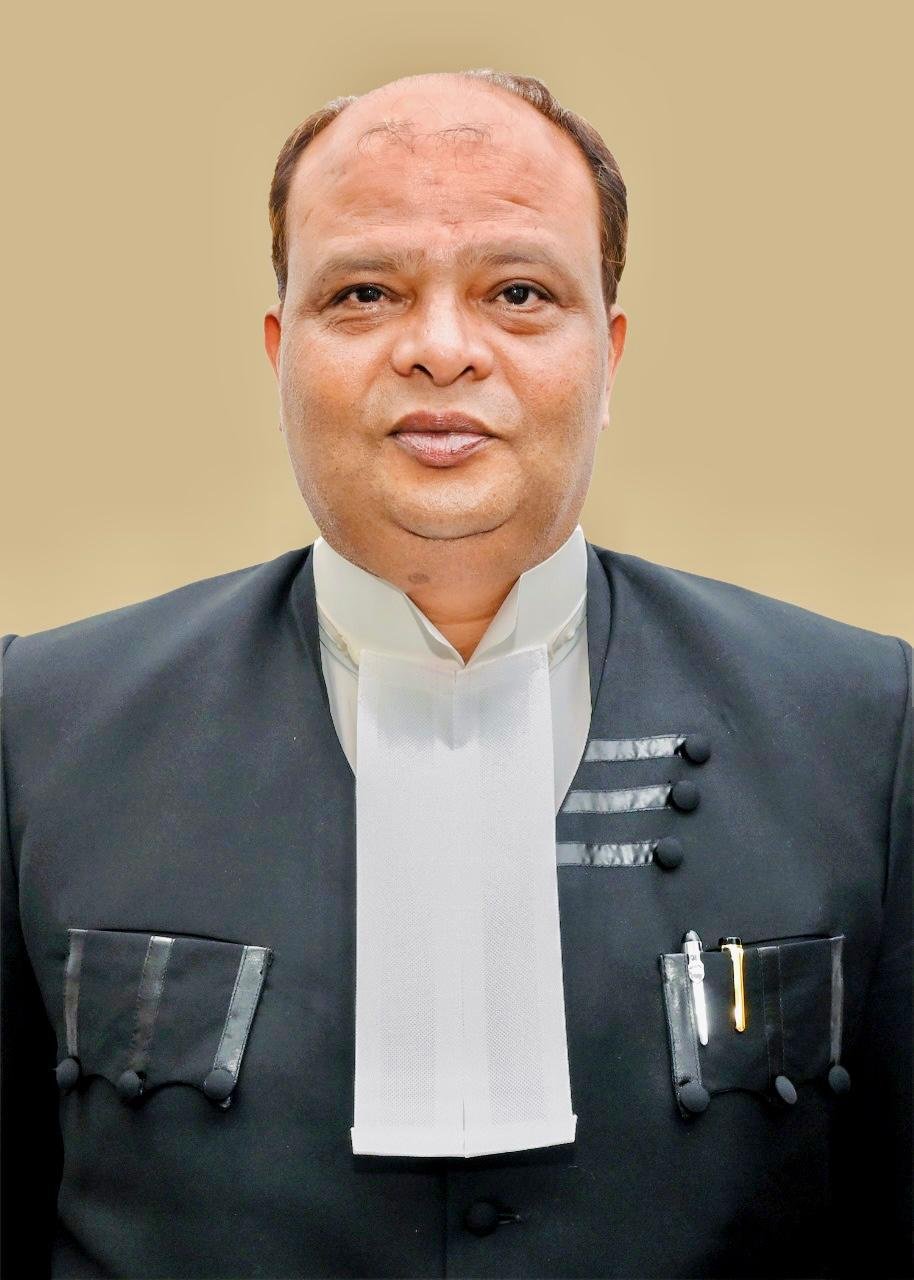
Legal Notes
Add a Note....