
These appeals are directed against the judgment of the High Court of Madras dated 12.3.2002 in Criminal Appeal No. 315 of 1992 and Criminal R.C. No. 691 of 1991 respectively.

No Acts & Articles mentioned in this case
REPORTABL E
IN THE SUPREME COURT OF INDIA
CIVIL APPELLATE JURISDICTION
CRIMINAL APPEAL NOS. 1233-1234 OF 2002
Arulvelu & Another .. Appellants
Versus
State represented by the Public
Prosecutor & Another .. Respondents
J U D G M E N T
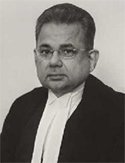
Dalveer Bhandari, J.
1.These appeals are directed against the judgment of the
High Court of Madras dated 12.3.2002 in Criminal Appeal
No. 315 of 1992 and Criminal R.C. No. 691 of 1991
respectively.
2.In the instant case, the High Court has reversed the
judgment of acquittal passed by the II Additional Assistant
Sessions Judge, Periyar District in Sessions Case No. 45 of
1999 and convicted the accused persons.
3.Brief facts which are necessary to dispose of the matter
are recapitulated as under:
This appeal is filed by Arulvelu, A-1 and Krishnasamy,
A-2 (father of A-1). Appellant Arulvelu has been convicted
under section 304-B of the Indian Penal Code (for short
‘IPC’) and sentenced to seven years rigorous imprisonment
and he has been further convicted under section 498-A IPC
and sentenced to rigorous imprisonment for a period of two
years and to pay a fine of Rs.1,000/-, in default to suffer
three months rigorous imprisonment. Appellant accused
no.2 has been imposed sentence of fine of Rs.1,000/- under
section 498-A of IPC, in default to suffer simple
imprisonment for a period of three months.
4.Before the marriage of Arulvelu with Mangayarkarasi
(since deceased), an agreement was entered into to the effect
that towards the consideration of the marriage, deceased’s
father P.W.1 would give gold ornaments of the weight of 50
sovereigns along with other articles and a car to Arulvelu.
2
5.The father of the deceased could give ornaments of the
weight of only 30 sovereigns of gold and also could not give
the car as undertaken. Instead of giving the remaining
ornaments of 20 sovereigns and a car, P.W.1 in all gave only
Rs.5,000/- in small installments. This was the main cause
of annoyance of Arulvelu and his family members with the
deceased. It is the case of the prosecution that accused nos.
1 to 3 had been torturing the deceased Mangayarkarasi by
demanding a car and money.
6.A baby boy was born to Arulvelu and the deceased
Mangayarkarasi. Arulvelu told his wife that he would take
back her along with the newly born child only if ornaments
of the weight of 5 sovereigns and a cash amount of
Rs.5,000/- were given to him. The father of the deceased
had given ornaments of the weight of 4 sovereigns and a
cash of Rs.5,000/- to the first accused. The first accused
had taken back the deceased and the child only after
receiving the aforementioned articles from P.W.1.
7.The first accused had demanded the balance ornament
of the weight of one sovereign when the second child was
3
born. The father of the deceased gave ornament of the weight
of one sovereign.
8.The first accused had sent the deceased
Mangayarkarasi many times to her father for getting money
for doing business. According to the prosecution, since the
car was not given to the first accused, he had beaten and
tortured the deceased asking her to get the car from P.W.1.
Mangayarkarasi ultimately became disgusted with her life
and at 11.30 a.m. on 15.3.1989, she committed suicide by
hanging herself.
9.The prosecution, in order to prove its case, had
examined 20 witnesses. K. Ramalingam P.W.1 is the father
of the deceased. D. Latha P.W.4 is the sister of the
deceased. S.T.P. Muthusamy Mudaliar P.W.5 is the
neighbour. Thirumathi N. Yasodha P.W.2 is the tenant of
P.W.1and P.W.3 A. Periasamy is the person who had
arranged the marriage of the first accused and the deceased.
V.P. Subramaniam P.W.6 is a close relative of the deceased.
N.Manickam P.W.8 is a member of the Panchayat. S.A.
4
Periasamy P.W.9 is another Sambandhi of P.W.1 who later
on turned hostile.
10.The fact that the deceased had committed suicide by
hanging herself is undisputed. The question which arises
for our adjudication is whether the appellant is guilty for
compelling the deceased to commit suicide. According to
the prosecution she was forced to commit suicide because of
consistent demands of dowry made by the first accused.
According to P.W.1 the father of the deceased, his daughter
committed suicide because he could not give gold and a car
as agreed before her marriage. The accused persons started
torturing and harassing the deceased which ultimately led to
suicide.
11.The trial court in its lengthy and comprehensive
judgment has dealt with the prosecution evidence and also
all the 33 material exhibits. According to the learned trial
Judge, the evidence of P.W.1 that he agreed to give balance
ornaments was not corroborated by P.W.3. According to the
trial court, P.W.1 had admitted that for the first time, he told
the court that accused no. 2 demanded 40 sovereigns and
5
the same was not stated either before the police officers or
during Revenue Divisional Officer’s enquiry. According to
the trial Judge, P.Ws. 15, 17 and 20 would depose that
P.W.1 has not told about the demand of ornaments during
his cross-examination. The trial court further held that
P.W.1 had admitted that he did not tell about the demand of
40 sovereigns of gold by accused no. 2 during the course of
investigation, it is his case that an agreement was reached at
35 sovereigns. This has been corroborated by P.W.3 also.
P.W.15, the Revenue Division Officer who conducted the
enquiry and who also held the inquest came to the
conclusion that the death was due to cruelty meted out to
the deceased by way of demand of dowry. He has stated
in the cross examination that during enquiry P.W.1 did not
tell him that first accused demanded 5 sovereigns as a
condition to take his wife and the child after delivery.
P.W.15 further stated that during enquiry P.W.1 did not tell
him that the first accused demanded Rs.10,000/- for his
business. During cross-examination on the side of the
accused, P.W.15 had admitted as follows:
“P.W.1 stated that in his evidence that A2
demanded 50 sovereign of gold before marriage,
6
but he accepted to put only 30 sovereign of gold
and remaining 20 sovereign will be given later
and if the business goes well then he will get a
car. But he never stated in his evidence that A2
demanded 40 sovereign of gold and P.W.1
refused and then accepted to give later.”
12.The trial judge, while discussing the evidence of
P.W.15, found that there was no demand of bridal gifts
before the marriage. The trial judge disbelieved the version
of P.W.3 holding that he is not related to P.W.1 and he
pleaded ignorance about the date and month of meeting of
P.W.1 and accused no. 2. The trial judge also disbelieved the
testimony of P.W.1 regarding giving of 4 sovereigns and
Rs.5,000/- to the first accused after the birth of the first
child and another sovereign of jewel at the time of birth of
the second child for the reason that those facts were not
spoken to during investigation. This part of the prosecution
case is disbelieved. The trial judge has clearly held that
P.W.1 deposed for the first time in the court with regard to
demand of a car. He did not mention this fact in the first
information report.
13.Ex. P.8 is the suicide note of the deceased which reads
as under:
7
“Nobody is responsible for my death. Children
should be handed over to mother’s house.”
In the suicidal note, the deceased had not implicated any
accused. This factor has also weighed heavily with the trial
court in acquitting all the accused. The argument on behalf
of the accused was that the accused no. 1 had suspected the
character of his mother-in-law and other members of his in-
law’s family, so he did not want the deceased to visit her
parents’ house and to resolve the dispute Panchayat was
held and, as per the version of P.W.1, according to the
decision of Panchayat, P.W.1 should not go to the house of
the accused and the deceased and accused nos. 1 to 3 also
should not go to the house of P.W.1. As per the version of
the accused, the decision of the Panchayat not permitting
the deceased to go to her parents perhaps led to suicide.
The trial court after carefully examining the entire evidence
acquitted the accused.
14.According to the High Court, if she (the deceased) had
no problem in her marital house and she was living
peacefully with her husband and in-laws, what was the
necessity for her to commit suicide? Why should she write
8
in her suicide note to leave her children in her mother’s
house? According to the High Court, unless an intolerable
harassment was meted out to her, there was absolutely no
necessity for her to write like this that the children be
handed over to her mother’s house. Therefore, the High
Court held that, in all probabilities, there was demand of
dowry and the deceased was harassed by the first accused
and therefore, she committed suicide.
15.The High Court set aside the judgment of the trial court
on the count that the trial court gave undue emphasis on the
minor inconsistencies and contradictions. The High Court
discarded the version of the trial court regarding P.W.1’s
deposition for the first time in court regarding demand of car
which he did not mention in the first information report
(FIR).
16.The High Court observed that the FIR cannot be an
encyclopedia to contain all the details of history of the case.
This approach of the High Court does not seem to be correct.
The FIR should at least mention a broad story of the
9
prosecution and not mentioning of material and vital facts
may affect the credibility of the FIR.
17.The trial court doubted the veracity of the statement of
P.W.1 because it did not find any corroboration of the
statement of P.W.1 with the statement of P.W.3 regarding
agreeing to give the balance gold sovereigns. The High
Court without any basis discarded the judgment of the trial
court.
18.The trial judge observed that the testimony of P.W.1 is
not credible because he for the first time in the court had
stated that accused no. 2 had demanded 40 sovereigns. This
was not stated either before the police officer or during
Revenue Divisional Officers’ enquiry.
19.The trial court disbelieved the version of P.W.1
regarding giving 4 sovereigns and Rs.5,000/- to the first
accused after the birth of the first child and another
sovereign of jewel at the time of birth of the second child for
the reason that those facts were not spoken to during the
investigation. The High Court held this part of the
prosecution case unbelievable, but the fact remains that the
10
demand of dowry was proved beyond doubt through the
evidence of P.Ws. 1 and 3. This approach of the High Court
is not correct.
20.The High Court ought to have considered the entire
evidence in a proper perspective. Unless comprehensive view
of the entire evidence is taken in the proper perspective, a
correct conclusion may not be possible. In this case, there has
been acquittal by the trial court and, while reversing the order
of acquittal, the High Court ought to have carefully considered
the following circumstances:
(1)In the suicide note Ex. P-8, the deceased has not
implicated any of the accused. This is indeed a very
significant and vital factor which ought to have
received proper attention by the High Court.
(2)There is no credible evidence to suggest that soon
before the death, the deceased has been subjected to
cruelty or harassment by the accused in connection
with any demand of dowry which led to a serious act of
committing suicide.
11
(3)The High Court failed to consider that the marriage
took place in the year 1983 and the deceased
committed suicide in the year 1989 i.e. after more than
six years of the marriage. There are two small children
out of the wedlock. It is quite improbable that
ordinarily there would be consistent demands of dowry
after six years. The fact of consistent demands is not
established from clear evidence of the prosecution.
(4)The distance between the matrimonial home and the
parental home of the deceased is merely one kilometer.
There are many houses around the house of the
accused. It is submitted that there was neither a
whisper nor any complaint was filed by P.W.1 before
the deceased committed suicide.
(5)It appears from the statement under section 313 IPC
that A-1 wanted his wife (deceased) to keep some
distance from her parental home. It transpired in the
meeting of the Panchayat that to settle the dispute
between the husband and wife and to reduce the
affinity of the wife (deceased) towards her parental
home (One kilometer away from the parental home),
12
the Panchayat took the decision that both the families
should not visit each other. The impact of the decision
of Panchayat on the deceased was not properly
appreciated by the High Court.
(6)S.A. Periyasamy P.W.9 has not supported the case of
the prosecution. He has stated that “we told
Ramalingam that he and his wife should not go to
Arulvelu”s house often”. He has also admitted that A-1
and Magaiyarkarsi (deceased) were living happily.
(7)Ramalingam P.W.1 has stated that he consoled and
advised his daughter to be bold as they would not come
to see her as per the dictum of the Panchayat and
wisely handle the situation at her matrimonial house.
In fact the suggestion of defence is that the Panchayat
was convened as there was a serious apprehension
about the character of the mother of the deceased and
her family. That is why in the Panchayat no discussion
about dowry demand was whispered. Moreover, if the
first appellant did not like his deceased wife, he would
not be keen on keeping her with him.
13
(8)It appears that the Panchayat’s decision caused
serious depression to the deceased. It is submitted that
the deceased’s strong affinity towards her parents and
her inability to cope up with the situation coupled with
her sickness, she was driven to such a situation to
commit suicide.
(9)R. Murugesan P.W.15, the RDO who prepared the
inquest report has also stated about the panchayat’s
decision and has opined that “the reason for her death
may be the control exerted on her that she should not
go to her mother’s house”.
(10)The trial court has observed that when the accused
were questioned under section 313 Cr.P.C., they filed a
written statement jointly. In that written statement it
has been explained that – “Due to mental agony,
incurable stomach-ache, pain over the body and the
control by the first accused that she should not go to
the house of her parents, Mangayarkarasi had
committed suicide”. Further that “Arulvelu, without
marrying for the second time for several years looked
after the children with lot of love and affection so that
14
the children may not feel the absence of their mother.
The family of accused is a joint family. In that family,
accused nos. 1 to 3 and Vijayakumar, another son of
accused nos. 2 and 3 and his wife Padma are living
jointly.”
(11)The trial court noticed serious contradictions and
inconsistencies in the evidence of P.W.1 and those
became relevant particularly when the High Court was
dealing with the order of acquittal.
(12)There are material contradictions in the statements of
P.W.1 and P.W.3. P.W.1 says after the birth of first
child there was demand. Whereas P.W.3 says after 6-7
months of the marriage there was demand. Further
P.W.1 says that 20 days before the occurrence A-2 and
A-3 said that customary gifts were not good. Whereas
P.W.3 says that after 6-7 months of 1
st
incident
deceased was told that the articles were not good.
P.W.1 says 30 sovereigns. However, P.W.3 says 35
sovereigns. P.W.1 has stated that he said to A-2 that
he could give 20 sovereign later on. However, P.W.3
does not corroborate the same. Though P.W.3 has
15
stated that A-2 demanded car during the marriage
negotiation, however, P.W.3 has not corroborated the
evidence of P.W.1 with regard to the demand of car.
It is submitted that none of the investigating officers
have supported P.W.1 with regard to the demand of
jewels, car, cash and/or with regard to harassment to
the deceased due to non fulfillment of the above said
items.
(13)A. Periyasamy P.W.3 has not been examined by the
DSP Sivanandam, RDO, Karuppusamy and others.
Only CB CID Velu examined him. CB CID, Velu has
stated that P.W.3 told him that the (a) P.W.1 is not his
relative (b) not a family friend (c) accused is also not
related (d) that he did not go for condolence when
Mangai died (e) he does not know about Seer Varisai (f)
he does not know about the dates on which he
arranged the talks. However during his deposition he
has admitted that he knows Palaniappan, the brother
of Rukmani (P.W.1’s wife) and he is his relative. P.W.20
has admitted that P.W.3 has said that Ramlingam
(P.W.1) is his family friend. For the above said reasons
16
the evidence was of P.W.3 was not relied upon the trial
court. It is submitted that the High Court has not
considered these aspects.
(14)D. Latha P.W.4 stated that she was present during the
talks when the demand during the marriage
negotiation took place. However, P.W.3 says during
talks except P.W.1 and A-2 no body was present.
Further none of the witnesses including P.W.1 has said
that P.W.4 was present during the talks.
K. Sivanandhan, Deputy Superintendent of Police
P.W.17 has stated that P.W.4 has not stated that
failure to buy a car became a problem. She has not
stated about the demand of 50 sovereigns and a car.
Therefore the trial court has disbelieved the presence of
P.W.4 during the talks.
D. Latha P.W.4 has not given in her evidence that she
had known personally that little by little 20 sovereign
were given. The trial court has held that P.W.4 does
not speak anything about the timings of the torture
like four weeks, 20 days or 8 days before the death.
17
(15)S.T.P. Muthusamy Mudaliar P.W.5’s testimony does
not inspire confidence. He says that during the verbal
argument between A-1 and Rukmani Amma, A-1 asked
about car. However, Yasodha P.W.2 did not say the
same. Further, Rukmani Amma was not examined. It
is submitted that the trial court has discussed the
contradictions between P.W.2, P.W.1 and P.W.5 and
about utterance with regard to car in the quarrel and
therefore the trial court has not relied on P.W.5. It is
submitted that apart from Rukminiammal, Shaktivel
(P.W.1’s son) and Planniappan was also not examined
by the prosecution.
(16) S.A. Periyasamy P.W.9 (Sambandhi of P.W.1) has not
supported the case of prosecution. He says that he
advised Ramlingam that they should not go to A-1’s
house often. During his cross-examination he has
stated that “I understood that Arulvelu and
Mangaiyarkarasi were living a happy matrimonial life.
There is a Car in my son Sivakumar’s name TNC-4128.
Its RC was in the name of Ramalingam S/o Palaniappa
Mudhaliar.”
18
(17)The Assistant Judicial Magistrate PW 11 has stated
that crime number of Exhibit A-1 has been
manipulated. Further, P.W.13 has stated that
“Ramalingam has given only one complaint on that
day. Exhibit A13 is the first original copy. Exhibit A18
is the original of another set of copies taken. The
person who has written Exhibit 13 has not written
Exhibit A18”. The trial court has also discussed the
discrepancy with regard to Exh. A-13 and Exh.A-18.
(18)R. Murugesan P.W.15, RDO who prepared the inquest
report has admitted that Yashoda (P.W.2) was
examined on 30.03.89. He also stated that nearly
1000 houses would be there. It was crowded area with
many houses. However, no neighbour was examined
as a witness. Further, P.W.17 has admitted that A-1
said to him that he (A-1) brought the doctor. However,
P.W.15 did not believe the same. It is submitted that
P.W.15 has not given any cogent reason for
disbelieving the same. It is submitted that the conduct
of P.W.15 (the RDO) was adversely commented by the
trial court.
19
(19)R.Murugesan P.W.15 has stated that Rukmaniammal
said that on 18.3.89 Mangayarkarsi came to the house
as she was ill. She asked as to why did she
(Rukmaniammal) made controversy in a house where
the death had taken place. She has also stated that
on 21.3.89 she had sent medicine and tablets to
Mangayarkarasi’s husband’s house through a car. It
is submitted that R. Murugesan P.W.15 has admitted
that Ramlingam (P.W.1) has not stated that A-1 had
told him that he was going to get into another
marriage. Further, he (P.W.1) did not say about
demand of 5 sovereigns, Rs.10,000/- and that dowry
was not enough. He (P.W.1) has also not stated before
P.W.15 that Mangayarkarsi came to his house 8 days
before and told that she could live only if he buys a
car. Further, P.W.1 had also not stated before him
that on Tuesday their daughter’s parents in law asked
them to buy a car. P.W.15 has further admitted that
Yashoda (P.W.2) had stated that A-1 came to
Rukmanniammal and told that ‘because of you, A am
very ashamed’. P.W.15 has also stated that P.W.1 had
20
not told him that before marriage there was any
discussion about dowry on presence of some persons.
Further that none of the witnesses has stated that they
discussed about jewels and car before the marriage.
(20)The Panchayat’s decision coupled with the condition of
illness could have driven the deceased to commit
suicide. This possibility cannot be ruled out. P.W.15
has also stated that on 22.3.89 a panchayat was
convened to decide on the issue of dispute between
both the families. In that Panchayat it has been
decided that they should not visit each others house
and Mangaiyarkarasi has to be advised accordingly.
(21)The High Court has made erroneous observation that:
“It is not the panchayat decision that the deceased
should not visit her parents. The only thing is P.W.1
should not go to the house of the accused”.
As per the case of prosecution and as per the evidence
it is crystal clear that the Panchayat’s decision was
that ‘both the familier should not visit each other’.
21
(22)The High Court failed to appreciate that the
prosecution has failed to prove that with all certainty,
the dowry demand was the only cause for the deceased
to commit suicide. The High Court has simply
presumed with the following words: “The immediate
temptation for her to commit suicide appears to be the
demand of a car and subsequent quarrel of the first
accused with the mother of the deceased. She has died
in her in-law’s house. Why should she commit suicide
if she was happily living with the first accused?”
21.These are some of the material and vital aspects which
clearly demonstrate that the trial court has carefully analyzed
the entire evidence on record and the view taken by the trial
court is certainly a possible or plausible view.
22.In our considered opinion, the approach of the High Court
in the impugned judgment is not in consonance with the settled
principles of criminal jurisprudence. The High Court while
reversing the judgment of the trial court observed that “in all
probabilities, I am inclined to hold that there was demand of
dowry and the deceased was harassed by the first accused and
22
therefore, she committed suicide.” In criminal cases the
conviction can be sustained only when there is clear evidence
beyond reasonable doubt. The accused cannot be convicted on
the ground that in all probabilities the accused may have
committed the crime. The approach of the High Court is wholly
fallacious and unsustainable in law.
23.The real question which falls for our consideration is
whether the view which has been taken by the trial court was a
possible or a plausible view.
24.We have carefully perused the judgment of the trial court
and the impugned judgment of the High Court. The trial court
very minutely examined the entire evidence and all documents
and exhibits on record. The trial court’s analysis of evidence
also seems to be correct. The trial court has not deviated from
the normal norms or methods of evaluation of the evidence.
By no stretch of imagination, we can hold that the judgment of
the trial court is based on no evidence or evidence which is
thoroughly unreliable and no reasonable person would act
upon it and consequently the judgment of the trial court is
perverse.
23
25.We also fail to arrive at the conclusion that the discussion
and appreciation of the evidence of the trial court is so
outrageously defies logic as to suffer from the vice of
irrationality incurring the blame of being perverse and the
findings rendered by the trial court are against the weight of
evidence. The law is well settled that, in an appeal against
acquittal, unless the judgment of the trial court is perverse, the
Appellate Court would not be justified in substituting its own
view and reverse the judgment of acquittal.
26.The expression ‘perverse’ has been dealt with in number of
cases. In Gaya Din (Dead) through LRs. & Others v.
Hanuman Prasad (Dead) through LRs. & Others (2001) 1
SCC 501 this Court observed that the expression ‘perverse’
means that the findings of the subordinate authority are not
supported by the evidence brought on record or they are
against the law or suffer from the vice of procedural
irregularity.
27.In Parry’s (Calcutta ) Employees’ Union v. Parry & Co.
Ltd. & Others AIR 1966 Cal. 31, the Court observed that
24
‘perverse finding’ means a finding which is not only against the
weight of evidence but is altogether against the evidence itself.
28.In Triveni Rubber & Plastics v. Collector of Central
Excise, Cochin AIR 1994 SC 1341, the Court observed that
this is not a case where it can be said that the findings of the
authorities are based on no evidence or that they are so
perverse that no reasonable person would have arrived at those
findings.
29.In M. S. Narayanagouda v. Girijamma & Another AIR
1977 Kar. 58, the Court observed that any order made in
conscious violation of pleading and law is a perverse order.
30.In Moffett v. Gough, 1 L.R. 1r. 371, the Court observed
that a perverse verdict may probably be defined as one that is
not only against the weight of evidence but is altogether against
the evidence.
31.In Godfrey v. Godfrey 106 NW 814, the Court defined
‘perverse’ as turned the wrong way, not right; distorted from the
right; turned away or deviating from what is right, proper,
correct etc.
25
32.The expression “perverse” has been defined by various
dictionaries in the following manner:
1.Oxford Advanced Learner’s Dictionary of Current English
Sixth Edition
PERVERSE: Showing deliberate determination to behave in a way
that most people think is wrong, unacceptable or unreasonable.
2. Longman Dictionary of Contemporary English –
International Edition
PERVERSE: Deliberately departing from what is normal and
reasonable.
3. The New Oxford Dictionary of English – 1998 Edition
PERVERSE: Law (of a verdict) against the weight of evidence or the
direction of the judge on a point of law.
4. New Webster’s Dictionary of the English Language (Deluxe
Encyclopedic Edition)
PERVERSE: Purposely deviating from accepted or expected behavior
or opinion; wicked or wayward; stubborn; cross or petulant.
5.Stroud’s Judicial Dictionary of Words & Phrases, Fourth
Edition
PERVERSE: A perverse verdict may probably be defined as one that
is not only against the weight of evidence but is altogether against
the evidence.
33.In Shailendra Pratap & Another v. State of U.P. (2003)
1 SCC 761, the Court observed thus:
“We are of the opinion that the trial court was
quite justified in acquitting the appellants of the
charges as the view taken by it was reasonable one
and the order of acquittal cannot be said to be
perverse. It is well settled that appellate court
26
would not be justified in interfering with the order
of acquittal unless the same is found to be
perverse. In the present case, the High Court has
committed an error in interfering with the order of
acquittal of the appellants recorded by the trial
court as the same did not suffer from the vice of
perversity.”
34.In Kuldeep Singh v. The Commissioner of Police &
Others (1999) 2 SCC 10, the Court while dealing with the scope
of Articles 32 and 226 of the Constitution observed as under:
“9.Normally the High Court and this Court
would not interfere with the findings of fact
recorded at the domestic enquiry but if the finding
of “guilt” is based on no evidence, it would be a
perverse finding and would be amenable to judicial
scrutiny.
10.A broad distinction has, therefore, to be
maintained between the decisions which are
perverse and those which are not. If a decision is
arrived at on no evidence or evidence which is
thoroughly unreliable and no reasonable person
would act upon it, the order would be perverse.
But if there is some evidence on record which is
acceptable and which could be relied upon,
howsoever compendious it may be, the conclusions
would not be treated as perverse and the findings
would not be interfered with.”
35.The meaning of ‘perverse’ has been examined in H. B.
Gandhi, Excise and Taxation Officer-cum- Assessing
Authority, Karnal & Others v. Gopi Nath & Sons & Others
1992 Supp (2) SCC 312, this Court observed as under:
27
“7.In the present case, the stage at and the
points on which the challenge to the assessment in
judicial review was raised and entertained was not
appropriate. In our opinion, the High Court was in
error in constituting itself into a court of appeal
against the assessment. While it was open to the
respondent to have raised and for the High Court to
have considered whether the denial of relief under
the proviso to Section 39(5) was proper or not, it
was not open to the High Court re-appreciate the
primary or perceptive facts which were otherwise
within the domain of the fact-finding authority
under the statute. The question whether the
transactions were or were not sales exigible to sales
tax constituted an exercise in recording secondary
or inferential facts based on primary facts found by
the statutory authorities. But what was assailed in
review was, in substance, the correctness – as
distinguished from the legal permissibility – of the
primary or perceptive facts themselves. It is, no
doubt, true that if a finding of fact is arrived at by
ignoring or excluding relevant material or by taking
into consideration irrelevant material or if the
finding so outrageously defies logic as to suffer from
the vice of irrationality incurring the blame of being
perverse, then, the finding is rendered infirm in
law.”
36.The legal position seems to be well settled and consistent
at least since 1934 when the Privy Council decided the case of
Sheo Swarup & Others v. King Emperor AIR 1934 PC 227 in
which the Court (per Lord Russell) observed as under:
“..the High Court should and will always give
proper weight and consideration to such matters as
(1) the views of the trial Judge as to the credibility
of the witnesses, (2) the presumption of innocence
in favour of the accused, a presumption certainly
28
not weakened by the fact that he has been
acquitted at his trial, (3) the right of the accused to
the benefit of any doubt, and (4) the slowness of an
appellate Court in disturbing a finding of fact
arrived at by a Judge who had the advantage of
seeing the witnesses..”
The aforesaid decision was followed in subsequent judgments of
this Court. [See: Surajpal Singh & Others v. The State, AIR
1952 SC 52; Tulsiram Kanu v. The State, AIR 1954 SC 1,
Atley v. State of Uttar Pradesh AIR 1955 SC 807; Balbir
Singh v. State of Punjab AIR 1957 SC 216; M.G. Agarwal v.
State of Maharashtra AIR 1963 SC 200; Khedu Mohton &
Others v. State of Bihar, (1970) 2 SCC 450; Bishan Singh &
Others v. The State of Punjab (1974) 3 SCC 288; K. Gopal
Reddy v. State of Andhra Pradesh (1979) 1 SCC 355; Tota
Singh & Another v. State of Punjab (1987) 2 SCC 529;
Sambasivan & Others v. State of Kerala (1998) 5 SCC 412;
Bhagwan Singh & Others v. State of M.P. (2002) 4 SCC 85;
Harijana Thirupala & Others v. Public Prosecutor, High
Court of A.P., Hyderabad (2002) 6 SCC 470; State of
Rajasthan v. Raja Ram (2003) 8 SCC 180; Budh Singh &
Others v. State of UP (2006) 9 SCC 731; Kalyan Singh v.
State of MP (2006) 13 SCC 303; Kallu alias Masih & Others
29
v. State of MP (2006) 10 SCC 313; and State of Goa v.
Sanjay Thakran & Another, (2007) 3 SCC 755]
37.In Shambhoo Missir & Another v. State of Bihar (1990)
4 SCC 17, this Court observed thus:
“We are of the view that the High Court has
interfered with the order of acquittal passed by the
trial court not only for no substantial reasons but
also by ignoring material infirmities in the
prosecution case. Hence, we allow the appeals and
set aside the order of the High Court convicting and
sentencing the accused in both the appeals.”
38.In Chandrappa & Others v. State of Karnataka (2007)
4 SCC 415, this Court reiterated the legal position as under:
“(1) An appellate court has full power to review,
reappreciate and reconsider the evidence upon
which the order of acquittal is founded.
(2) The Code of Criminal Procedure, 1973 puts no
limitation, restriction or condition on exercise of
such power and an appellate court on the evidence
before it may reach its own conclusion, both on
questions of fact and of law.
(3) Various expressions, such as, “substantial
and compelling reasons”, “good and sufficient
grounds”, “very strong circumstances”, “distorted
conclusions”, “glaring mistakes”, etc. are not
intended to curtail extensive powers of an appellate
court in an appeal against acquittal. Such
phraseologies are more in the nature of “flourishes
of language” to emphasise the reluctance of an
appellate court to interfere with acquittal than to
curtail the power of the court to review the evidence
and to come to its own conclusion.
30
(4) An appellate court, however, must bear in
mind that in case of acquittal, there is double
presumption in favour of the accused. Firstly, the
presumption of innocence is available to him under
the fundamental principle of criminal
jurisprudence that every person shall be presumed
to be innocent unless he is proved guilty by a
competent court of law. Secondly, the accused
having secured his acquittal, the presumption of
his innocence is further reinforced, reaffirmed and
strengthened by the trial court.
(5)If two reasonable conclusions are possible on
the basis of the evidence on record, the appellate
court should not disturb the finding of acquittal
recorded by the trial court.”
39.In Ghurey Lal v. State of Uttar Pradesh (2008) 10 SCC
450, a two Judge Bench of this Court of which one of us
(Bhandari, J.) was a member had an occasion to deal with most
of the cases referred in this judgment. This Court provided
guidelines for the Appellate Court in dealing with the cases in
which the trial courts have acquitted the accused. The
following principles emerge from the cases above:
1.The accused is presumed to be innocent until
proven guilty. The accused possessed this
presumption when he was before the trial court.
The trial court’s acquittal bolsters the
presumption that he is innocent.
2.The power of reviewing evidence is wide and the
appellate court can re-appreciate the entire
31
evidence on record. It can review the trial court’s
conclusion with respect to both facts and law,
but the Appellate Court must give due weight
and consideration to the decision of the trial
court.
3.The appellate court should always keep in mind
that the trial court had the distinct advantage of
watching the demeanour of the witnesses. The
trial court is in a better position to evaluate the
credibility of the witnesses.
4.The appellate court may only overrule or
otherwise disturb the trial court’s acquittal if it
has “very substantial and compelling reasons”
for doing so.
5. If two reasonable or possible views can be
reached - one that leads to acquittal, the other to
conviction - the High Courts/appellate courts
must rule in favour of the accused.
40.This Court in a recently delivered judgment State of
Rajasthan v. Naresh @ Ram Naresh 2009 (11) SCALE 699
again examined judgments of this Court and laid down that “An
order of acquittal should not be lightly interfered with even if
the court believes that there is some evidence pointing out the
finger towards the accused. This Court has dealt with the
scope of interference with an order of acquittal in a number of
cases.”
41.Careful scrutiny of all these judgments lead to the definite
conclusion that the appellate court should be very slow in
32
setting aside a judgment of acquittal particularly in a case
where two views are possible. The trial court judgment can not
be set aside because the appellate court’s view is more
probable. The appellate court would not be justified in setting
aside the trial court judgment unless it arrives at a clear finding
on marshalling the entire evidence on record that the judgment
of the trial court is either perverse or wholly unsustainable in
law.
42.In State of Uttar Pradesh v. Banne Alias Baijnath and
Ors. (2009) 4 SCC 271, a two-Judge Bench of this court of
which one of us (Bhandari, J.) was a member had an occasion
to deal with this controversy in detail has laid down some of the
circumstances in which this court would be justified in
interfering with the judgment of the High Court. The
circumstances discussed in the judgment are illustrative not
exhaustive.
i)The High Court’s decision is based on totally
erroneous view of law by ignoring the settled
legal position;
ii)The High Court’s conclusions are contrary to
evidence and documents on record;
33
iii)The entire approach of the High Court in
dealing with the evidence was patently illegal
leading to grave miscarriage of justice;
iv)The High Court’s judgment is manifestly
unjust and unreasonable based on erroneous
law and facts on the record of the case;
v)This Court must always give proper weight
and consideration to the findings of the High
Court;
vi)This Court would be extremely reluctant in
interfering with a case when both the Sessions
Court and the High Court have recorded an
order of acquittal.
43.The appellate courts must keep in view these
aforementioned observations in dealing with the appeals where
the trial court has acquitted the accused.
44In Dhanapal v. State by Public Prosecutor, Madras
(Criminal Appeal No.987 of 2002 decided on September 1,
2009), this Court again examined the aforementioned decisions
and analyzed the principles emerging out of the said decisions,
it seems to us that despite series of judgments, the High Court
has not clearly appreciated the legal position. Unquestionably,
the Appellate Court has power to review and re-appreciate the
entire evidence on record. The appellate court would be
justified in reversing the judgment of acquittal only if there are
34
substantial and compelling reasons and when the judgment of
the trial court is found to be perverse judgment. Interfering in
a routine manner where other view is possible is contrary to the
settled legal position crystallized by aforementioned judgments
of this Court. The accused is presumed to be innocent until
proven guilty. The accused possessed this presumption when
he was before the trial court. The trial court’s acquittal bolsters
the presumption that he is innocent. This fundamental
principle must be kept in view while dealing with the judgments
of acquittal passed by the trial court.
45.We have re-examined the entire case because of the
conflicting judgments of the Trial Court and the High Court.
On careful marshalling of the entire evidence and the
documents on record, we arrive at the conclusion that the view
taken by the trial court is a possible and plausible view. The
judgment of the trial court cannot be termed as perverse. The
High Court ought not to have substituted the same by its own
possible view. The impugned judgment of the High Court
cannot stand the scrutiny of the well settled legal position
which has been crystallized for more than 80 years since the
case of Sheo Swarup. In the facts and circumstances of this
35
case, we are constrained to set aside the impugned judgment of
the High Court.
46.Consequently, these appeals filed by the appellants are
allowed. The impugned judgment of the High Court set aside
and that of the trial court is restored.
..............................J.
(Dalveer Bhandari)
..............................J.
(Dr. B.S. Chauhan)
New Delhi;
October 7, 2009.
36

 Login with google
Legal Notes
Add a Note....