
As per case facts, the Madhya Pradesh Administrative Tribunal struck down amendments to the Recruitment and Promotion Rules, 1973, and related circulars concerning the selection of Assistant Teachers under the ...
http://JUDIS.NIC.IN SUPREME COURT OF INDIA Page 1 of 7
PETITIONER:
ARUN TEWARI & ORS.
Vs.
RESPONDENT:
ZILA MANSAVI SHIKSHAK SANGH & ORS. ETC.
DATE OF JUDGMENT: 01/12/1997
BENCH:
SUJATA V. MANOHAR, M. JAGANNADHA RAY
ACT:
HEADNOTE:
JUDGMENT:
THE 1ST DAY OF DECEMBER, 1997
Present:
Hon'ble Mrs.Justice Sujata V.Manohar
Hon'ble Mr.Justice M.Jagannadha Rao
P.P.Singh, Prakash Srivastava, B.S.Banthia, S.K.Agnihotri,
A.K.Singh, Anoop G.Choudhary, K.V.Sreekumar, R.C.Gubrele end
Ms.Nanita Sharma, Advs. for the appearing parties.
J U D G M E N T
The following Judgment of the Court was delivered:
[With CA Nos. 813/95, 4168/95, C.A. Nos 8443-8446/97
(Arising out of SLP (C) Nos. 10462/95, 14389/95, 26032/95
and 4579/97)]
Mrs. Sujata V.Manohar, J.
Delay in S.L.P(C) Nos. 10462, 14389 & 26032 of 1995 is
condoned.
Leave in S.L.P. (C) Nos. 10462, 14389 26032 of 1995 and
4579 of 1997 is granted.
Intervention applications are allowed.
Civil Appeal No.77 of 1995 and appeals arising from the
four special leave petitions are from a judgment and order
of the Madhya Pradesh Administrative Tribunal at Jabalpur,
dated 18.3.1994 in a group of applications challenging the
amendments made in the Madhya Pradesh Non-Gazetted Class III
Education Service (Non-Collegiate Service) Recruitment and
Promotion Rules, 1973 by a notification published in Madhya
Pradesh Government Gazette (Extra Ordinary) dated 10.5.1993
and another notification published in Madhya Pradesh
Government Gazette (Extra Ordinary) dated 17.6.1993; as also
the circulars of the School Education Department dated
5.8.1993 and 9.8.1993. By the impugned judgment and order,
the Madhya Pradesh Administrative Tribunal struck down the
two amendments and the circulars. These related to criteria
and procedure for selection of Assistant Teachers in the
Madhya Pradesh Education Service under the Operation Black
Board Scheme. As a result, selection of around 7000
Assistant Teachers and the ongoing process of selection of
such teachers in some districts was set aside at the
instance of the applications who were persons not eligible
for selection under the impugned amendments.
C.A.No.813/95 challenges a subsequent order of the
http://JUDIS.NIC.IN SUPREME COURT OF INDIA Page 2 of 7
Madhya Pradesh Administrative Tribunal dated 31.10.1994. In
the group of applications finally decided on 18.3.1994, the
Tribunal had granted on 14.9.1993 an interim stay of the
impugned amendments and circulars. On 15.9.1993, the Deputy
Director of Education, Hoshangabad issued appointment
letters to 86 selected persons. These appointment letters
have been set aside by the Tribunal in the light of its
judgment and order of 18.3.1994, by the impugned order of
31.10.1994.
C.A.No. 4168/95 is against the order of the Madhya
Pradesh Administrative Tribunal dated 26.11.19194. After the
above interim order of 14.9.1993, the Deputy Director of
Education, Dhar had issued on 16.9.1993 appointment letters
to 48 selected candidates. He cancelled the appointments by
his order of 26.7.1994 in view of the Tribunal's judgment
and order of 18.3.1994. The selected candidates applied to
the Tribunal for their continuation. Their applications have
been dismissed by the Tribunal in view of its judgment and
order of 18.3.1994, by the impugned order of 26.11.1994.
The recruitment, inter alia, of Assistant Teachers of
Madhya Pradesh is governed by the Madhya Pradesh Non-
Gazetted Class III Education Service (Non-Collegiate
Service) Recruitment and Promotion Rules, 1973 (hereinafter
called the 'Recruitment Rules'). The method of recruitment
is direct recruitment by competitive examination followed by
an interview. During the eight Plan period i.e. from 1992 to
1997 the Central Government sponsored a scheme known as
Operation Black Board Scheme. Under this scheme the
Government of India gave financial clearance to the State of
Madhya Pradesh to implement this scheme by appointing an
Additional Teacher in all primary/middle schools which had
only one teacher in order to improve the standards of
education. In order to implement the scheme the State of
Madhya Pradesh decided to fill in about 7,000 to 11,000
posts of Assistant Teachers in such schools.
As the scheme was to be implemented within the Eighth
Plan period, in order to expedite implementation, the
respondent-State, on 10.5.1993, amended Rule 10(3) of the
Recruitment Rules by adding a proviso. Rule 10 is as
follows:-
"10. Direct Recruitment by
Selection:
(1) There shall be a committee for
selection by direct recruitment,
the membership of which shall be
like the membership of the
Committee constituted for selection
by promotion.
(2) Selection for recruitment to
the service shall be held at such
intervals as the appointing
authority may fix time to time
determine.
(3) The Selection of candidates for
service shall be made by the
committee by conducting a
competitive examination and after
interviewing them."
The proviso which has been inserted by the amendment of
10.5.1993 is as follows:-
"Provided that in any specific
circumstance the State Government
may, in consultation with the
general Administration Department
prescribe the criteria and
http://JUDIS.NIC.IN SUPREME COURT OF INDIA Page 3 of 7
procedure for the selection of
candidates."
By publication in Madhya Pradesh Government Gazette
Extra Ordinary dated 7th of June, 1993 a further amendment
was made in Schedule III Item at serial No.7 in column 5 of
the Recruitment Rules by inserting the following
qualification for recruitment of L.D.Ts. (Assistant
Teachers): "Basic Training Certificate or B.Ed. Degree".
On 21.5.1993 the School Education Department proposed a
scheme for selection of Assistant Teachers under the said
proviso for the purposes of the Operation Black Board
Scheme. It was proposed that selections would be made
district-wise by inviting applications from employment
exchanges. The selection would be made by selection
committees constituted in each district to be presided over
by a nominated officer in each district. The administrative
department of the Government put up this scheme for approval
of the Governor and the Governor approved the proposal on
16.6.1993. On 30.7.1993 the Secretary, School Education
Department sent the file to the Secretary of the General
Administration Department for the purposes of approval under
the proviso to Rule 10(3). The Secretary, General
Administration Department returned the file with there marks
"since the Administration Department approval of Hon'ble
Governor had already been obtained the consent of the
General Administration Department was not essential". With
the approval of the Principal Secretary, General
Administration Department, the file was returned to School
Education Department on 4.8.1993.
As a result, instruction were issued in the exercise of
powers under the proviso the Rule 10(3), prescribing the
criteria as per amended Recruitment Rules and procedure for
selection of eligible candidates. The prescribed
qualifications under Schedule IV as amended were: Basic
Training Certificate or B.Ed. qualification. District
Employment Exchanges were asked to sponsor eligible
candidates from their list. The selection was to be made
district-wise. The Secretary, Education Department sent D.O.
letters in August 1993 to Deputy Directors of Education in
the State informing them about the decision of the State
Government for implementation of Operation Black Board
Scheme. Keeping in view the need for a time-bound programme,
the recruitment process was initiated and a time-bound
programer to implement the scheme was launched. The
instruction provided that the power to select Assistant
Teachers during 1993 was withdrawn from the purview of
Junior Service Selection Board by G.A.D. order dated
19.5.1993. The selection of Assistant Teachers in 1993 will
be made by a Committee which shall be presided over by a
nominated officer. The Revenue District shall be the unit
for selection of the teachers. The instruction further
stated that the criteria for selection and the weight to be
given on each head were a detailed in Schedule III.
As a result, lists of eligible candidates were obtained
from District Employment Officers, who were matriculates or
above and had B.T.I. or B.Ed. qualification. They were
interviewed by a Selection Committee in accordance with the
criteria in Schedule III. Select lists were thereafter
prepared in the order of merit. Appointment letters were
issued to selected candidates in most districts before these
were challenged before the Tribunal. These assistant
teachers have been appointed initially on probation for a
period of two years and on successful completion of
probationary period their pay would be in accordance with
the minimum of the regular scale and admissible allowances.
http://JUDIS.NIC.IN SUPREME COURT OF INDIA Page 4 of 7
All the original applications before the Tribunal who
have challenged the provisions for recruitment of Assistant
Teachers under the Operation Black Board Scheme did not
possess the requisite qualifications for being selected
under the said scheme as Assistant Teachers. Their names do
not figure among the lists forwarded by the concerned
District Employment Exchanges. Surprisingly, the
applications filed by all these persons and/or groups before
the Tribunal did not make the selected/appointed candidates
who were directly affected by the outcome of their
applications, as party respondents. The Tribunal has passed
the impugned order without making them parties or issuing
notice to any of them. The entire exercise is seriously
distorted because of this omission. They have now filed the
present appeals after they have been granted leave to file
the appeals. In the case of Prabodh Verma & Ors. Vs. State
of Uttar Pradesh & Ors. (1984 [4] SCC 251 at page 273),
this court observed that in the case before them there was a
serious defect of non-joinder of necessary parties and the
only respondents to the Sangh's petition were the State of
Uttar Pradesh and its concerned officers. The employees who
were directly concerned were not made parties -- not even by
joining some of them in a representative capacity,
considering that their number was too large for all of them
to be joined individually as respondents. This Court
observed that High Court ought not have decided a writ
petition under Article 226 of the Constitution without the
persons who would be vitally affected by its judgment being
before it as respondents or at least some of them before it
as respondents in a representative capacity. These
observations apply with equal force here. The same view has
been reiterated by this Court in Ishwar Singh & Ors. Kuldip
Singh & Ors. (1995 Supp [1] SCC 179), where the Court said
that a writ petition challenging selection and appointments
without impleading the selected candidates was not
maintainable. (Vide also J. Jose Dhanapaul Vs. S. Thomas &
Ors. (1996 [3] SCC 581, paragraph 4). On this ground alone
the decision of the Tribunal is vitiated. However, even on
merit we do not find that the judgment of the Tribunal can
be sustained.
The first contention is to the effect that the proviso
to Rule 10(3) is bad in law because it confers unguided and
excessive delegation of powers to that State Government in
the matter of criteria and procedure for recruitment. Now,
the Recruitment Rules have been framed under the proviso to
Article 309 of the Constitution of India. These Rules, inter
alia, prescribe the procedure for selection and the criteria
for selection. The proviso which has been inserted in Rule
10(3) gives to the State Governments in consultation with
the General Administration Department, power to prescribe
separate criteria and procedure for selection of candidates
in specific circumstances. The power to frame these criteria
and procedure is not delegated to any subordinate authority.
The very authority which framed the original Rules is
delegated the power to frame special Rules prescribing
criteria and procedure in specific circumstances in
consultation with the General Administration Department. The
question of excessive delegation does not, therefore, arise
because the rule-making authority has given to itself the
power to prescribe criteria and procedure for selection in
specific circumstances.
In the case of Workmen of Meenakshi Mills Ltd. & Ors.
Vs. Meenakshi Mills Ltd. Anr. (1993 [3] SCC 336, at page
372), a Constitution Bench of this Court considered a
similar question which arose before it and held that when
http://JUDIS.NIC.IN SUPREME COURT OF INDIA Page 5 of 7
the discretion is given to the Government itself and not to
a subordinate officer, it cannot be said that there is
excessive and uncontrolled delegation. The provision for
consideration before the Court in that case was "the State
Government or any authority so specified in this behalf".
The validity of this provision was assailed on the ground
that it gave unfettered and uncontrolled discretion tot he
State Government or to the offices authorised by it.
Rejecting this contention, this Court said that the
discretion is given in the first place to the State
Government itself and not to a very subordinate officer like
the licensing officer. The fact that the power of delegation
is to be exercised by the State Government itself is a
safeguard against the abuse of this power of delegation.
In the present case the criteria and procedure have to
be prescribed by the State Government itself in exercise of
power conferred on its by statutory Rules. This cannot be
considered as excessive delegation. Also. prescribing of
separate criteria and procedure is permitted only in
specific circumstances. In the present case, the departure
from normal recruitment process has been occasioned on
account of the time-bound programme of the Operation Black
Board Scheme. This necessitated a large number of Assistant
Teachers being recruited to strengthen the education
programme of the State within a time-bound schedule. If the
State Government felt that the existing procedure would be
unduly time-consuming, and provided a special procedure
which is not unfair, no objection can be raised to such
procedure when an express power has been conferred on the
State in this connection.
It was next contended that the criteria and the
procedure prescribed under the proviso require consultation
with the General Administration Department. This was not
done. From the facts which have been set out above, however,
it is clear that the scheme which was framed by the Central
Government was placed by the General Administration
Department before the Governor for approval and was sent
back to the School Education Department by the General
Administration Department. When a formal approval of the
General Administration Department was asked for
subsequently, it was pointed out by the General
Administration Department that this was not required when
their department had itself obtained the approval of the
Governor to the scheme. This contention has, therefore, no
substance.
The next contention challenge the qualifications which
are prescribed by the amendment to Scheduled III as being
unfair. The prescribed qualifications are Basic Training
Certificate or a B.Ed. Degree. It was contented that the
prescription of these qualifications is unreasonable and
discriminatory because there are other qualifications which,
according to the original applicants, are equivalent and
which should have been included. It is urged that Montessory
and Mahilla Bal Sevika Prasikshan Pramanpatras and Diploma T
are equivalent qualifications. It has been pointed out by
the State that the B.T. Certificate qualification is
superior to the qualifications of Diploma T, Montessory and
Mahilla Sevika Prasikshan Pramanpatras. The criteria for
selection of students. syllabus and period of training are
all different for pre-primary prasikshan (Montessory) and
Bal Sevika Prasikshan. Minimum qualification for admission
is middle school and High School and the period of training
in both the courses is one year only. For Diploma T the
minim qualification for admission is a Higher Secondary
School Education. For B.T.I. the minimum qualification is
http://JUDIS.NIC.IN SUPREME COURT OF INDIA Page 6 of 7
passing of the Higher Secondary School Examination in the
Second Division and the courses are also different. The
State Council of Educational Research and Training
considered the question of equivalence of B.T.I. and Diploma
This recommendation was accepted by the State Government.
The State Government has, therefore, submitted that B.T.
qualification is superior to the other training
qualification and, therefore, they have prescribed only B.T.
qualification apart from a B.Ed.
Looking to the above reasons set out by the State
Government for recognising a B.T. qualification as superior
to Diploma T and other qualifications the exclusion of other
qualifications cannot be held to be discriminatory or
unreasonable. A higher qualification which is prescribed for
a particular scheme cannot be considered as violative of
Article 14. When candidates with higher qualifications are
available, choosing them instead of candidates with inferior
qualifications is not violation of Article 14 or 16.
The next contention relates to inviting applications
from Employment Exchanges instead of by advertisement. This
procedure has been resorted to looking to the requirement of
a time-bound scheme. The original applicants contended that
if the posts had been advertised, many others like them
could have applied. The original applicants who so complain,
however, do not possess the requisite qualifications for the
post. As far as we can see from the record, nobody who had
the requisite qualifications, has complained that he was
prevented from applying because advertisement was not
issued. What is more important, in the special circumstances
requiring a speedier process of selection and appointment,
applications were invited through employment exchanges for
1993 only. In this context, the special procedure adopted is
not unfair. The State has relied upon the case of Union of
India & Ors. Vs. N. Hargopal & Ors. (1987 [3] SCC 308),
where Government instruction enjoining that the filed of
choice should, in the first instance, be restricted to
candidates sponsored the first instance, be restricted to
candidates sponsored by the Employment Exchanges, was upheld
as not offending Article 14 and 16 of the Constitution. In
the case of Delhi Development Horticulture Employees' Union
Vs. Delhi Administration, Delhi & Ors. (1992 [4] SCC 99, at
page 111). this Court approved of recruitment through
employment Exchanges as a method of preventing malpractices.
But in the subsequent and more recent case of Excise
Superintended Malkapatnam, Krishna District A.P. V. K.B.N.
Visweshwara Rao & Ors. [(1996) 6 SCC 216], this Court has
distinguished Union of India V. Hargopal (supra) on the
basis of special facts of that case. It has observed that
the better course for the State would be to invite
applications from employment exchanges as well as to
advertise and also give wide publicity through TV, Radio
etc. The Court had to consider whether persons who had
applied directly and not through employment exchange should
be considered. The Court upheld their claim for
consideration.
There are different methods of inviting applications.
The method adopted in the exigencies of the situation in the
present case not be labelled as unfair, particularly when,
at the relevant time, the two earlier decisions of this
Court were in vogue.
We do not see any reason to fault procedure prescribed
or the qualifications prescribed or to set aside these
selections and consequent appointments since none of the
grounds on which the amendments, circulars and selection
have been challenged, is sustainable in law. We have been
http://JUDIS.NIC.IN SUPREME COURT OF INDIA Page 7 of 7
informed that after the stay of the judgment of the Tribunal
by this Court, those who were selected/appointed under the
prescribed procedure have been given appointments and they
have been functioning as Assistant Teachers. In the case of
selected candidates not joining, the persons kept on the
relevant waiting list in order of merit have been given
appointments. There is no reason to set aside these
appointments.
In the premises, the impugned amendments to the
Recruitment Rules as also the circulars relating to the
procedure for selection and the criteria for selection are
upheld. All these are allowed and the impugned judgments and
orders of the Tribunal are set aside. There will, however,
be no order as to costs.
This in-depth Supreme Court Judgment Analysis delves into the significant 1997 ruling in Arun Tewari & Ors. vs. Zila Mansavi Shikshak Sangh & Ors. Etc., a pivotal case concerning a Recruitment Rules Challenge in the Madhya Pradesh education sector. This landmark decision, available on CaseOn, offers critical insights into the powers of state governments to amend recruitment procedures and the scope of judicial intervention in such matters.
The central dispute revolved around amendments made to the Madhya Pradesh Non-Gazetted Class III Education Service (Non-Collegiate Service) Recruitment and Promotion Rules, 1973. Specifically, the petitioners challenged:
The Supreme Court examined the case against the backdrop of:
The Madhya Pradesh Administrative Tribunal had initially struck down the amendments and circulars, leading to the setting aside of selections for around 7,000 Assistant Teachers. The Supreme Court, however, undertook a comprehensive review.
The apex court found a significant flaw in the Tribunal's proceedings: the original applications challenging the selection rules did not include the selected and appointed candidates as necessary parties. This omission, the Court emphasized, rendered the Tribunal's judgment vitiated, echoing previous rulings on the importance of hearing directly affected parties.
Regarding the proviso to Rule 10(3), the Supreme Court upheld its validity. It reasoned that the power to prescribe specific criteria and procedures was delegated to the State Government itself—the very authority that framed the original rules. This was deemed not an instance of excessive or unguided delegation, especially given the urgent, time-bound nature of the "Operation Black Board Scheme" to appoint 7,000-11,000 Assistant Teachers rapidly.
The Court also found the prescribed qualifications (Basic Training Certificate or B.Ed. Degree) to be reasonable and non-discriminatory. It noted that the State Council of Educational Research and Training had assessed various qualifications and considered B.T.I. to be superior to others. The decision to prescribe a higher standard of qualification was therefore legitimate and did not violate Articles 14 or 16.
The method of inviting applications solely through Employment Exchanges was justified by the specific exigencies of the "Operation Black Board Scheme," which required a speedy selection process. The Court reiterated that in such time-bound scenarios, this method, supported by precedents like Hargopal, was not unfair, particularly as the original applicants themselves did not possess the required qualifications.
For legal professionals and students looking to grasp these nuanced legal arguments efficiently, CaseOn.in offers 2-minute audio briefs. These concise summaries are designed to assist in analyzing specific rulings like Arun Tewari by highlighting key facts and judicial pronouncements, making complex judgments more accessible.
In its comprehensive ruling, the Supreme Court set aside the judgments and orders of the Madhya Pradesh Administrative Tribunal. The Court found no legal infirmity in the amendments to the recruitment rules, the accompanying circulars, or the selection criteria. All challenged aspects were upheld, affirming the validity of the appointments made under the amended procedure.
The Arun Tewari judgment serves as a crucial reference for several reasons:
Disclaimer: All information provided in this article is for informational purposes only and does not constitute legal advice. While efforts have been made to ensure accuracy, readers are advised to consult with a qualified legal professional for advice pertaining to their specific circumstances.

 Login with google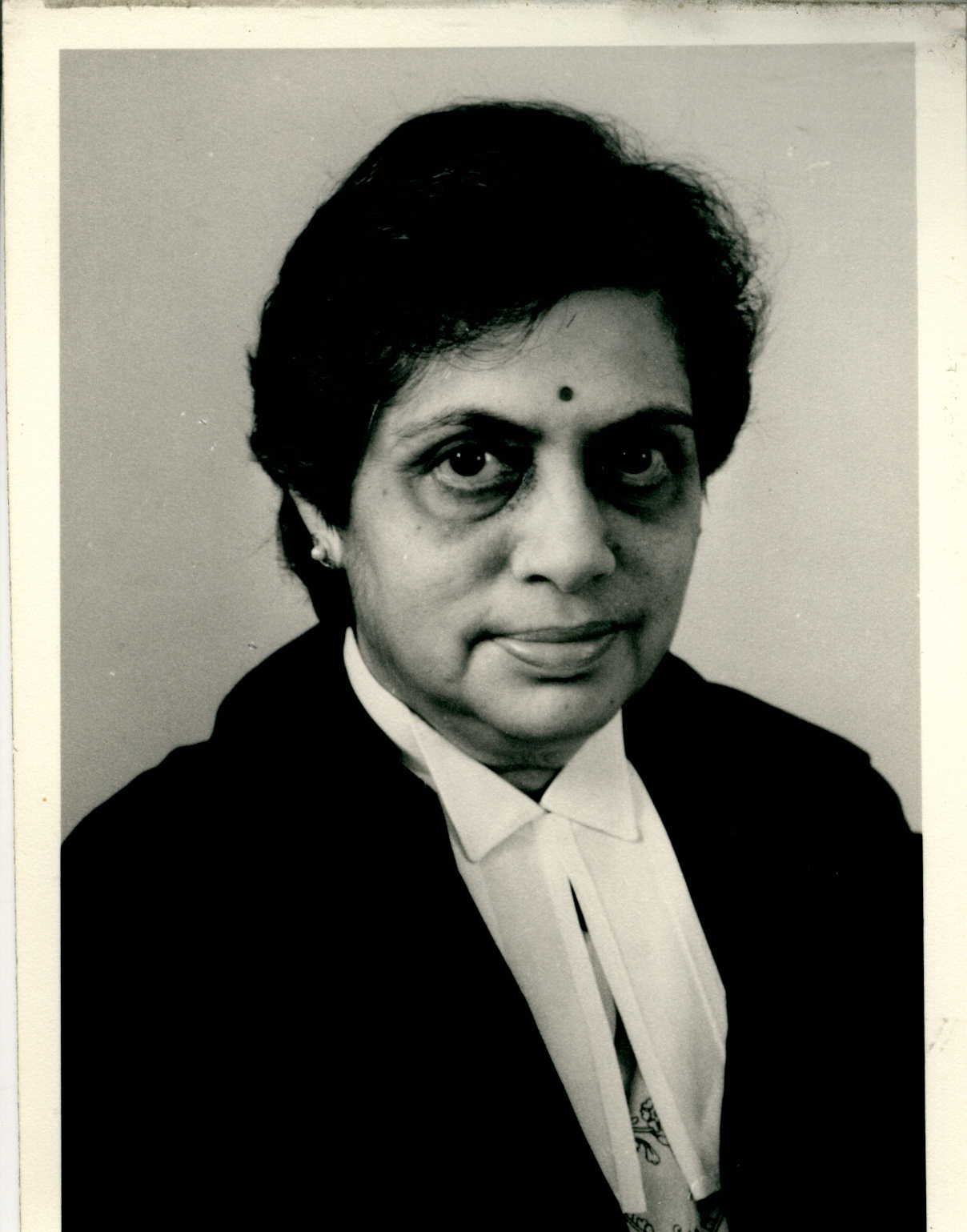
Legal Notes
Add a Note....