
The following issues arise for consideration in the present petition – (a) as to whether work executed by a contractor, in his capacity as a sub-contractor, can be considered to ...

No Acts & Articles mentioned in this case
High Court of H.P.IN THE HIGH COURT OF HIMACHAL PRADESH, SHIMLA
Civil Writ Petition No.880/2017
Reserved on : 19.5.2017
Date of Decision : May 26, 2017
Ashok Chauhan ...Petitioner.
Versus
State of Himachal Pradesh & others ...Respondents.
Coram:
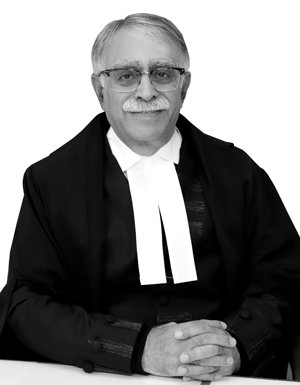
The Hon’ble Mr. Justice Sanjay Karol, Acting Chief Justice.
The Hon’ble Mr. Justice Ajay Mohan Goel, Judge.
Whether approved for reporting?
1 Yes.
For the Petitioner : Mr. Suneet Goel, Advocate.
For the Respondents : Mr. Shrawan Dogra, Advocate
General with Mr. Romesh Verma,
and Mr. Anup Rattan, Additional
Advocate General.
Sanjay Karol, Acting Chief Justice
The following issues arise for consideration in
the present petition – (a) as to whether work executed by a
contractor, in his capacity as a sub-contractor, can be
considered to have been executed by “a contractor” as
defined under sub-clause (iii) of clause (2) of Conditions of
Contract, and (b) whether work so executed by the
petitioner that of “Open Excavation of Roads and Barrage”
Whether reporters of the local papers may be allowed to see the judgment?
::: Downloaded on - 08/10/2022 10:21:35 :::CIS
High Court of H.P.
…2…
and “underground excavation work of Head Race Tunnel
with concrete lining and other allied works” as a contractor
can be construed to be similar to the “work”, “contracted to
be executed”, so defined under sub-clause (1) of Clause 2
of the Conditions of Contract.
2. The Himacha l Pradesh Public Works
Department invited tenders for construction of following
work, with an estimated cost of `22,00,32,747/-:
“NAME OF WORK Construction of Rajiv Gandhi
Multipurpose Sports Stadium at Katasani Shimla,
Tehsil and District Shimla, H.P. (Sh. Construction
of Building portion, WS and SI, Site Development
Rain harvesting tank, Septic Tank and approach
road and C/o sitting steps.”
3. The tender document prescribes both
“General Rules and Directions” as also the “Conditions of
Contract”, containing the definition clause.
4. The relevant clauses of the tender document,
with which we are concerned, for the purpose of
convenience and ready reference, are extracted as
under:
“General Rules and Directions”
………….
19. The contractor shall submit list of works which are
completed/in hand (progress) in the following form:
Work Done Detail: In last five years with base year
indicated in performs of schedule “F”
::: Downloaded on - 08/10/2022 10:21:35 :::CIS
High Court of H.P.
…3…
Sr.
No.
Name of
HP Govt.
Division
or State
or
Central
PSU’s
Name
of
work
Cost of completion Remarks
(Indicate in %
of completion
of awarded
components)
Awarded
amount
Completi
on
amount
Penalty if any
and amount
paid
thereunder
1. 2. 3. 4. 5.
Work in hand Detail
Name
of
work.
Name of
HP Govt.
Division or
State or
Central
PSU’s
where
work is
executed
Amount of work completed Position of
works in
progress
(indicate in %
of completion
of awarded
components)
Stipulated
date of
completion
Rema
rks
Awarded
amount
Amount
of work
done
upto
last
running
bill
Penalty if
any and
amount
pain
thereafter.
1 2 3 4 5 6
These statements should be countersigned by the Engineer in
charge, not below the rank of an Executive Engineer or
equivalent in State/Central Govt. PSU’s with his seal.”
“28. Eligibility criteria:
28.1 (This eligibility condition shall be applicable for
those works of amount put to tender is up to Rs.50.00
lacs) As per Govt notification the contractor should not
have more than two contracts at a time each of
Rs.100.00 lacs or more in any HPPWD circles. The
contractor has to submit the list of incomplete works in
hand on the proforma mentioned at S.No.19 of General
Rules and Directions.
28.2 (This eligibility condition shall be applicable for
those works of amount put to tender is more than 50.00
lacs)
28.2.a :Bidding Capacity:- Bidders who meet the
minimum qualification criteria will be qualified only if
their assessed available bid capacity for construction
works is equal to or more than the total bid value. The
available bid capacity will be calculated as under:
Assessed Available Bid capacity = (A x N x M – B)
where
A=Maximum value of civil engineering works executed
in any one year during the last five years (updated to
the price level of the financial year in which bids are
::: Downloaded on - 08/10/2022 10:21:35 :::CIS
High Court of H.P.
…4…
revised at the rate of 8 percent a year) taking i nto
account the completed as well as works in progress.
Lasst Five years
(excluding current
year)
Amount of
work done
in each
financial
year
Total annual valume
of civil engineering
construction work
executed and
payments received in
the last five years
preceding the year in
which bids are
invited (Attach/
upload certificate
from Chartered
Accountant)
(Rs. In lakhs)
Year-2011-12
Year-2012-13
Year-2013-14
Year-2014-15
Year-2015-16
N = Number of years prescribed for completion of the
works for which bids are invited (period up to 6 months
to be taken as half-year and more than 6 months as one
year).
M = 2
B = Value, at the current price level, of existing
commitments and on -going works to be completed
during the period of completion of the works for which
bids are invited. The details should be on the formats
indicated in condition no 19.
28.2.b: Minimum work done condition: - Minimum one
similar work done of amount not less than 40% (forty
percent) of the estimated cost (without Liquidated
Damage or compensation) in last five years”.
(Emphasis
supplied)
5. “Conditions of Contract”
“2. In the contract, the following expressions
shall, unless the context otherwise requires, have
the meanings hereby respectively assigned to
them:-
::: Downloaded on - 08/10/2022 10:21:35 :::CIS
High Court of H.P.
…5…
(i) The expression works or work shall, unless
there be something either in the subject or
context repugnant to such construction, be
construed and taken to means the works by
or by virtue of the contract contracted to be
executed whether temporary or permanent,
and whether original, altered, substituted or
additional.
(ii) ………
(iii) The Contractor shall mean the individual,
firm or company, whether incorporated or
not, undertaking the works and shall include
the legal personal representative of such
individual or the persons composing such
firm or company, or successors of such firm
or company and the permitted assignees of
such individual, firm or company.”
(Emphasis supplied)
6. Petitioner, who is a Class-A Contractor, has
executed works, certificates whereof, relevant for
adjudication of the present lis, are extracted as under:
(1) Certificate No.1
“ WORK DONE CERTIFICATE
Name of Sub Contractor -: Ashok Chauhan & Co.
……………
Name of work-: Contract agreement no.SK/CII-
HRT Balance work, da ted
25/11/2014 for construction of
5.0m Dia-Shaped Head Race
Tunnel (HRT) form RD-0.00 to
RD-11145.00 complete in all
respect – Balance works for
Sawra Kuddu HEP (111 MM) in
Distt. Shimla (HP) Inida.
Agreement-: SC/100/3351/LOI/01, Dated
15/03/2015
Value of work Executed:- 55,93,61,306.14
::: Downloaded on - 08/10/2022 10:21:35 :::CIS
High Court of H.P.
…6…
Work executed-: Feb’2017
M/s Ashok Chauhan & Co. sub contractor of HCC has executed
the Underground excavation work of Head Race Tunnel with
concrete lining & other allied works as per above mentioned
agreement are as under:-
S.N Description Unit Quantity
1 Underground
Excavation
Cum 39,795,629
2 Removal of slush Cum 13601.533
3 Hauling of excavated
material
Cum 5586.109
4 Structural steel works MT 278.015
5 Rock bolting & Rock
Anchoring
RMT 10,082.00
6 Drilling holes RMT 10,415.284
7 Steel reinforcement MT 1,62.188
8 Grouting MT 2445.89
9 Shotcrete Cum 6,43.443
10 Concrete Cum 63,719.374
11 Admixtures Kg 5,02,359.073
12 Dewatering Kwh 2,60,997.30
The certificate is issued to M/s. Ashok Chauhan & Co. on their
request for their future Tendering purpose only.”
(2) Certificate No.2
“Certificate Regarding Performance of Contractor
Name of Contractor - Ashok Chauhan & Co.
Permanent Address - Durga Niwas, Below HIMFED
Building, BCS, New Shimla, HP
Name of work - Award of “Construction of Civil
Works” for (Package-II) Chanju-
1 Hydroelectric Project Head
Race Tunnel.
Date of Award - 12-08-2011.
Criteria for Award - Lowest bidder in terms of unit
rate.
Value of Work Awarded - Rs.29,87,19,150/-
Value of work Executed - Rs.18,83,08,601 (Scope
reduced by client)
Status of Work - Completed in June,15
::: Downloaded on - 08/10/2022 10:21:35 :::CIS
High Court of H.P.
…7…
Agreement No.- IA Energy/Chanju-1/Package-II/
2011-438
They have executed the Road works, underground excavation
of Head Race Tunnel, HRT Adit, and all Other allied works. The
breakups of items as per above mentioned agreement no. are
as under:-
Sl.
No.
Description of items Unit Quantity Remarks
1 Open Excavation in Roads
and Barrage
1.1 Soft Rock Cum 6707.29
1.2 Hard Rock Cum 5308.38
2 Underground excavation in
Tunnelling
Cum 52265.502
3 Rock Bolt and Rock Anchor Rmt 3977.70
4 Drilling holes Rmt 3775.33
5 Structural Steel Works MT 109.277
6 Shotcrete Cum 3.108
7 Wire mesh Sqm 8.00
8 G.I. Gabion Blocks (Wire
crates)
Cum 4469.80
9 Dewatering Kwh 290947.39
10 Cement Concrete works. Cum 1801.095
Liquidated damages or anynay other
Panel action if imposed - No
Comments on the capabilities of the contractor:-
Technical Proficiency Very Good
Financial Soundness Excellent
Mobilization of T&P Very Good
General Behaviour Excellent
The excavation was completed by Contractor with in time. His
mobilization of men, material & machinery is also very good.
Contractor is very serious & prompt while performing his
duties. The quality of the work and management at the site is
very appreciable. He will certainly be assets of any
organization of any organization for performing time bound
and quality works of the tunnel Excavation.”
(3) Certificate No.3
“Certificate Regarding Performance of Contractor
Name of Contractor - Ashok Chauhan & Co.
::: Downloaded on - 08/10/2022 10:21:35 :::CIS
High Court of H.P.
…8…
Permanent Address - Durga Niwas, Below HIMFED
Building, BCS, New Shimla, H.P.
Name of work: Award of “Construction of Civil
Works” (Package-1) for Chanju-
1 Hydroelectric Project (River
Diversion Feeder Tunnel and
Desilting Chamber and Head
Race Tunnel up RD 0 -518
including Adit-1.
Date of Award - 13-09-2011
Criteria for Award - Lowest Bidder in terms of unit
rate.
Value of Work Awarded - Rs.18,58,97,200/-
Value of Work Executed - Rs.22,68,00,793/-
Status of Work - Completed in June, 15
Agreement No. - IA Energy/Chanju -1/Package-
1/2011-458
They have executed the Road works, underground excavation
of Head Race Tunnel, Diversion works, HRT Adit, Silt Flushing
Tunnel, De-silting Chamber, Adit to SFT, Adit to Gate Shart,
Adit to Gate Hoist Chamber, Transition between De -silting
chamber, Silt connection Tunnel & all other allied works. The
breakups of items as per above mentioned agreement no. are
as under:
Sl.No. Description
of Items
Unit Quantity Remarks
1 Open
Excavation
in Roads and
Barrage
1.1. Soft Rock Cum 356325.87
1.2 Hard Rock Cum 86340.17
2 Underground
excavation
in Tunnelling
Cum 31863.16
3 Rock Bolt
and Rock
Anchor
Rmt 13288.25
4 Drilling holes Rmt 12848.00
5 Structural
Steel works
MT 42.113
6 Shotcrete Cum 462.082
7 Wire mesh Sqm 4412.59
8 G.I. Gabion
Blocks (Wire
crates)
Cum 7527.31
::: Downloaded on - 08/10/2022 10:21:35 :::CIS
High Court of H.P.
…9…
9 Dewatering Kwh 42190.80
Liquidated damages or any other
Panel action if imposed - No
Comments on the capabilities of the contractor:-
Technical Proficiency Very Good
Financial Soundness Excellent
Mobilization of T&P Very Good
General Behaviour Excellent
The excavation was completed by Contractor with in time. His
mobilization of men, material & machinery is also very good.
Contractor is very serious & prompt while performing his
duties. The quality of the work and management at the site is
very appreciable. He will certainly be assets of any
organization of any organization for performing time bound
and quality works of the tunnel Excavation.”
7. At this point in time, we may also observe
that the contractor stands awarded work, similar to the
work, subject matter of lis, for a sum of approximately `3
crores, which we have not considered , for the simple
reason that such information never came to be furnished
alongwith the technical bid.
8. Petitioner executed the works, in relation to
Certificate No.1 (supra), as a Sub-Contractor, for a Public
Sector Undertaking, and works in relation to Certificates
No.2 & 3 (supra) stand executed by him as a Contractor,
for a private enterprise.
9. It is not in dispute that finding the petitioner
to be ineligible, only for the reason that he had not
executed any work, that of the Government/Public Sector
::: Downloaded on - 08/10/2022 10:21:35 :::CIS
High Court of H.P.
…10…
Undertaking, as a Contractor, technical bid, so submitted
by him, stands rejected by the respondents.
10. Respectfully, we are not in agreement with
the submission made by the learned Advocate General
that Condition No.19 is essential, and that it is required to
be read with or as a condition prescribed under Clause
28, prescribing the eligibility criteria. Conditions No.19 &
28 fall under that part of the tender document, which
prescribes “General Rules and Directions”. Save and
except for Condition No.19, there is nothing in the
document, more so in the clause prescribing the eligibility
criteria, that only such of those contractors, who
executed work for “last five years”, and that too only of
the State of Himachal Pradesh or any other State/ Central
Public Sector Undertaking, shall be eligible. Conversely,
there is nothing to exclude such of those contractors,
who never ever execut ed any work that of the
Government or Public Sector Undertaking . Conditions of
the tender document are evidently and unambiguously
clear. In fact Condition No.28, that of the eligibility
criteria, stipulates a condition, debarring a contractor
who is simultaneously executing two contracts of the
::: Downloaded on - 08/10/2022 10:21:35 :::CIS
High Court of H.P.
…11…
State Government, having value of more than `1 crore.
This perhaps is to break monopoly and to ensure that a
contractor does not have more work in hand than that
can be executed ordinarily. Reference of Conditions
No.19 in condition No.28.1 is only for ascertaining such
qualification/ disqualification. Clause 28.1, exclusionary
in nature, debars certain category of contractors. It is
clause 28.2 which stipulates the eligibility criteria. The
crux lies in this clause.
11. Expression “work” in the definition clause is
only with reference to the work, subject matter of the
contract and not the previous work so executed by the
concerned contractor.
12. “Contractor” so defined is only to mean an
entity and in this case the individual, who is engaged for
undertaking the “works”, so stipulated “under the
contract”.
13. What is contemplated in the tender is that
there has to be a contractor who has capacity to
undertake and execute the work for which tender stands
issued and also to ensure that previously he had carried
out similar works of at least 40% of the total sanctioned
::: Downloaded on - 08/10/2022 10:21:35 :::CIS
High Court of H.P.
…12…
value of the work for which the tender is issued. Of
course, he must not fall within the limitations of clause
28.1.
14. There is no dispute that once a per son
participates in a tender process, thereafter he cannot be
allowed to challenge the said process, more so for the
reason that he has been declared unsuccessful.
However, in this case, petitioner has not challenged the
conditions of tender, on the basis of which he
participated in the process. Grievance of the petitioner is
that respondents have misread , misconstrued and
misapplied Clauses 19 & 28.2.b of the tender document
and thus erroneously and illegally rejected his technical
bid.
15. It is not in dispute that the petitioner, in his
own capacity, as a contractor has executed works worth
`18,83,00,000/- (Approx.) and `22,68,00,000/- (Approx.),
Though this work stands executed by him for private
parties, yet it remains a fact that the works executed are
of civil nature, may be for a hydroelectric project.
Besides this, work done certificate, issued in favour of the
petitioner by a Public Sector Undertaking , also
::: Downloaded on - 08/10/2022 10:21:35 :::CIS
High Court of H.P.
…13…
acknowledges execution of the work , executed by the
petitioner, in his capacity as a sub-contractor. It is
relevant to take note that though the primary contractor
was HCC, but however, HPPCL acknowledged factum of
satisfactory completion of the actual work by the
petitioner. Also, the work done certificate has not been
issued in favour of the primary contractor, but the
present petitioner, certifying that petitioner executed the
works and not the Primary Contractor. Significantly, this
work done certificate is not being ignored by the
respondents on the ground that the works so executed by
the petitioner is not similar to the work for which the
tender has been issued. Objection of the respondents is
that the said work was not executed by the petitioner in
his capacity as a contractor but that as a sub-contractor.
In other words, it is evident that had the said work been
executed by the petitioner in his capacity as a contractor,
then technically, he would have qualified for further
participation in the bidding process.
16. Further, if one were to carefully peruse the
works, which were executed by the p etitioner as a sub-
contractor/contractor, we do not find any major
::: Downloaded on - 08/10/2022 10:21:35 :::CIS
High Court of H.P.
…14…
difference in the works so executed, with the “works”
required to be executed. In fact works executed by him in
his capacity as a contractor and sub -contractor are
similar in nature. Therefore, in the absence of any
specific clause in the tender document that work
experience of a contractor gained under the private party
shall not be looked into for the purposes of determining
the eligibility, ignoring the said experience of the present
petitioner, is an arbitrary action of the respondents.
17. Terms and conditions of a tender document
have to be read as they are. Neither of the parties can
either add something or subtract anything therefrom. In
the absence of there being an express rider contained in
the tender document itself, that experience gained by a
contractor with a private body shall not be taken into
consideration or that experience gained by a contractor
as a sub-contractor shall not be taken into consideration,
for the purposes of assessing eligibility, the experience so
gained by a contractor cannot be discarded arbitrarily by
the other party on its whims and fancies.
18. Subject matter of lis is that of civil
construction, including water supply, sewerage, site
::: Downloaded on - 08/10/2022 10:21:35 :::CIS
High Court of H.P.
…15…
development, rain water harvesting, approach road,
which we find is similar to the work already executed by
the petitioner with the execution of works, namely open
excavation in roads and barrage and underground
excavation work of head race tunnel with concrete lining
and other allied works.
19. Careful perusal of certificates reproduced
supra (Pages 122, 123 & 124) would reveal that the
major component of the work executed by the contractor
is of concrete; steel re-enforcement; structural steel
works; excavation and removal of s lush; and cement
concrete works.
20. To emphasize on construction of the
agreement making Condition No.19 to be essential, our
attention is invited to the response filed by the State
(Page 152 of the Paper Book), wherein the terms of
PMGSY works bidding docume nt is referred to, which
averment, we extract as under:
“……….Moreover, in the state PWD
works wherever sub -contractor are
allowed/considered to participate in the
bidding process, it is clearly mentioned in the
tender document as in the state PMGSY works
bidding document (clause 4.4A(b) of
Instructions to Bidders (ITB), Section 2) of
which states as under:
::: Downloaded on - 08/10/2022 10:21:35 :::CIS
High Court of H.P.
…16…
“Satisfactorily completed, as prime
Contractor or sub-contractor, at least
one similar work equal in value to one-
third one-fourth in case of Naxal/LWE
affected districts) of the estimated cost
of work………….”
Similarly, had it been mentioned in the
bidding document of this work that sub -
contractor can participate in the bidding
process, the bid of the petitioner would have
definitely been allowed/considered…..”
21. We are afraid, such condition cannot be
imported into the contract in question for two reasons –
(a) work sought to be executed is not under PMGSY
Scheme, (b) it is not one of the conditions of the contract.
For proper construction of the contra ct, which is
unambiguously clear, aid cannot be taken that of a totally
separate and a different contract, for had it been the
intent of the Department to create a distinction between
the prime contractor and a sub -contractor, reference
thereof should have been made accordingly.
22. We take support from the decision rendered
by the Hon’ble Supreme Court of India, in M.R. Engineers
and Contractors Private Limited v. Som Datt Builders
Limited, (2009) 7 SCC 696, wherein it is observed as
under:
::: Downloaded on - 08/10/2022 10:21:35 :::CIS
High Court of H.P.
…17…
“16. There is a difference between reference to
another document in a contract and incorporation
of another document in a contract, by reference.
In the first case, the parties intend to adopt only
specific portions or part of the referred document
for the purposes of the contract. In the second
case, the parties intend to incorporate the
referred document in entirety, into the contract.
Therefore when there is a reference to a
document in a contract, the court has to consider
whether the reference to the document is with the
intention of incorporating the contents of that
document in entirety into the contract, or with the
intention of adopting or borrowing specific
portions of the said document for application to
the contract.
17. We will give a few instances of incorporation
and mere reference to explain the position
(illustrative and not exhaustive). If a contract
refers to a document and provides that the said
document shall form part and parcel of the
contract, or that all terms and conditions of the
said document shall be read or treated as a part
of the contract, or that the contract will be
governed by the provisions of the said document,
or that the terms and conditions of the said
document shall be incorporated into the contract,
the terms and conditions of the doc ument in
entirety will get bodily lifted and incorporated into
the contract. When there is such incorporation of
the terms and conditions of a document, every
term of such document, (except to the extent it is
inconsistent with any specific provision in the
contract) will apply to the contract. If the
document so incorporated contains a provision for
settlement of disputes by arbitration, the said
arbitration clause also will apply to the contract.
18. On the other hand, where there is only a
reference to a document in a contract in a
particular context, the document will not get
incorporated in entirety into the contract. For
example if a contract provides that the
specifications of the supplies will be as provided in
an earlier contract or another purchas e order,
then it will be necessary to look to that document
only for the limited purpose of ascertainment of
::: Downloaded on - 08/10/2022 10:21:35 :::CIS
High Court of H.P.
…18…
specifications of the goods to be supplied. The
referred document cannot be looked into for any
other purpose, say price or payment of price.
Similarly if a contract between X and Y provides
that the terms of payment to Y will be as in the
contract between X and Z, then only the terms of
payment from the contract between X and Z, will
be read as part of the contract between X and Y.
The other terms, say relating to quantity or
delivery cannot be looked into.”
23. By now, it is well settled that normally Courts
do not interfere in the tender/contractual matters, while
exercising its power of judicial review. Petitioner is
required to show – (a) that the authority has acted with
malafide, (b) that the decision is so arbitrary and
irrational that no responsible authority, acting
reasonably, could have arrived at such conclusion, (c)
public interest is involved. (Transfer Case (Civil) Nos.43 of
2015, 64 of 2015, 65 of 2015 (SC), Reliance Telecom Ltd.
& Anr. V. Union of India & Anr., decided on 12.1.2017;
State of Jharkhand v. M/s CWE -SOMA Consortium, AIR
2016 SC 3366; Central Coalfields Limited v. SLL-SML
(Joint Venture Consortium), (2016) 8 SCC 622; Michigan
Rubber (Inida) Limited v. State of Karnataka and others,
(2012) 8 SCC 216; Air India Ltd. v. Cochin Internal Airport
Ltd, (2000) 2 SCC 617; and Tata Cellular v. Union of
India, (1994) 6 SCC 651.
::: Downloaded on - 08/10/2022 10:21:35 :::CIS
High Court of H.P.
…19…
24. In Tata Cellular (supra), the apex Court has
observed as under:
“(1) The modem trend points to judicial restraint
in administrative action.
(2) The court does not sit as a court of appeal but
merely reviews the manner in which the decision
was made.
(3) The court does not have the expertise to
correct the administrative decision. If a review of
the administrative decision is permitted it will be
substituting its own decision, without the
necessary expertise which itself may be fallible.
(4) The terms of the invitation to tender cannot be
open to judicial scrutiny because the invitation to
tender is in the realm of contract. Normally
speaking, the decision to accept the tender or
award the contract is reached by process of
negotiations through several tiers. More often
than not, such decisions are made qualitatively by
experts.
(5) The government must have freedom of
contract. In other words, a fair play in the joints is
a necessary concomitant for an administrative
body functioning in an administrative sphere or
quasi-administrative sphere. However, the
decision must not only be tested by the
application of Wednesbury principle of
reasonableness (including its other facts pointed
out above) but must be free from arbitrariness not
affected by bias or actuated by malafides.
(6) Quashing decisions may impose heavy
administrative burden on the administration and
lead to increased and unbudgeted expenditure.
Based on these principles we will examine the
facts of this case since they commend to us as the
correct principles.
25. The principles, so enunciated by the apex
court, stand referred to and relied upon, by this Court in
::: Downloaded on - 08/10/2022 10:21:35 :::CIS
High Court of H.P.
…20…
CWP No.9337 of 2013, titled as Ashok Thakur v. State of
Himachal Pradesh & others, decided on 6.5.2014; and
CWP No.359 of 2017, titled as M/s Zenith Event and
Service and another v. State of H.P. and others, decided
on 19.4.2017, the decisions relied upon and referred to
by the learned Advocate General, during the course of
hearing.
26. We clarify that reference of the decisions was
only for inviting our attention to the aforesaid principles.
27. In any case, we have gone through the said
decisions and find them not to have adjudicated or
decided the issue with which we are concerned.
28. Recently, the apex Court in Civil Appeal
No.12065 of 2016, titled as CRRC Corporation Ltd. v.
Metro Link Express for G andhinagar & Ahmedabad
(MEGA) Company Ltd., decided on 15.5.2017, has
observed as under:
“………But where a decision is taken
that is manifestly in consonance with the
language of the tender document or sub -
serves the purpose for which the tender is
floated, the court should follow the principle
of restraint. Technical evaluation or
comparison by the court would be
impermissible. The principle that is applied to
scan and understand an ordinary instrument
relatable to contract in other spheres has to
::: Downloaded on - 08/10/2022 10:21:35 :::CIS
High Court of H.P.
…21…
be treated differently than interpreting and
appreciating tender documents relating to
technical works and projects requiring special
skills. The owner should be allowed to carry
out the purpose and there has to be
allowance of free play in the joints.”
29. Also, in Central Coalfields Limited & another
v. SLL-SML (Joint Venture Consortium) & others, (2016) 8
SCC 622, the apex Court observed as under:
“47. The result of this discussion is that the issue
of the acceptance or rejection of a bid or a bidder
should be looked at not only from the point of
view of the unsuccessful party but also from the
point of view of the employer. As held in Ramana
Dayaram Shetty the terms of the NIT cannot be
ignored as being redundant or superfluous. They
must be given a meaning and th e necessary
significance. As pointed out in Tata Cellular there
must be judicial restraint in interfering with
administrative action. Ordinarily, the soundness of
the decision taken by the employer ought not to
be questioned but the decision making process
can certainly be subject to judicial review. The
soundness of the decision may be questioned if it
is irrational or mala fide or intended to favour
someone or a decision "that no responsible
authority acting reasonably and in accordance
with relevant law could have reached" as held in
Jagdish Mandal followed in Michigan Rubber.
48. Therefore, whether a term of the NIT is
essential or not is a decision taken by the
employer which should be respected. Even if the
term is essential, the employer has the inherent
authority to deviate from it provided the deviation
is made applicable to all bidders and potential
bidders as held in Ramana Dayaram Shetty.
However, if the term is held by the employer to be
ancillary or subsidiary, even that decision should
be respected. The lawfulness of that decision can
be questioned on very limited grounds, as
mentioned in the various decisions discussed
above, but the soundness of the decision cannot
::: Downloaded on - 08/10/2022 10:21:35 :::CIS
High Court of H.P.
…22…
be questioned, otherwise this Court would be
taking over the function of the tender issuing
authority, which it cannot.”
(Emphasis supplied)
30. The rules of construction of a contract stand
reiterated by the apex Court , though in a case of
Insurance Policy, in Rahee Industries Limited v. Export
Credit Guarantee Corporation of Inida Limited & another,
(2009) 1 SCC 138, as under:
“15. In this case the entire controversy revolves
around interpretation of Clause 16 of the Policy. It
is well-settled rule of construction that words in a
contract (Policy herein) are to be understood in
their ordinary meaning. However, this ordinary
meaning will not prevail in two cases, namely,
where a word has technical or legal meaning and
secondly where the context requires otherwise.”
(Also: United India Insurance Co. Ltd. v.
Pushpalaya Printers, (2004) 3 SCC 694)
31. In Harmony Innovation Shipping Limited v.
Gupta Coal India Limited & another, (2015) 9 SCC 172,
the apex Court observed as under:
“48. …………When the aforesaid stipulations are
read and appreciated in the contextual
perspective, "the presumed intention" of the
parties is clear as crystal that the juridical seat of
arbitration would be London. In this context, a
passage from Mitsubishi Heavy Industries Ltd. v.
Gulf Bank, 1997 1 Lloyd’s Rep 343 is worth
reproducing:
"It is of course both useful and frequently
necessary when construing a clause in a
contract to have regard to the overall
commercial purpose of the contract in the
broad sense of the type and general
::: Downloaded on - 08/10/2022 10:21:35 :::CIS
High Court of H.P.
…23…
content, the relationship of the parties and
such common commercial purpose as may
clearly emerge from such an exercise.
However, it does not seem to me to be a
proper approach to the construction of a
default clause in a commercial contract to
seek or purport to elicit some self-contained
'commercial purpose' underlying the clause
which is or may be wider than the ordinary
or usual construction of the words of each
sub-clause will yield."
49. In Cargill International S.A. v. Bangladesh
Sugar & Food Industries Corpn , 1998 1 WLR 461,
Potter, L.J. balanced the two approaches and said
(All ER pp.412h-j&413b):
"….In this connection [counsel] has
rightly made the point that, when
construing the effect of particular words in a
commercial contract, it is wrong to put a
label on the contract in advance and this to
approach the question of construction on
the basis of a pre-conception as to the
contact's intended effect, with the result
that a strained construction is placed on
words, clear in themselves, in order to fit
them within such pre-conception...On the
other hand, modern principles of
construction require the court to have
regard to the commercial background, the
context of the contract ad the
circumstances of the parties, and to
consider whether, against that background
and I that context, to give the words a
particular or restricted meaning would lead
to an apparently unreasonable and unfair
result."
32. In Bharat Aluminium Company v. Kaiser
Aluminium Technical Services Inc., (2016) 4 SCC 126, the
apex Court observed:
“10. In the matter of interpretation, the court has
to make different approaches depending upon the
instrument falling for interpretation. Legislative
::: Downloaded on - 08/10/2022 10:21:35 :::CIS
High Court of H.P.
…24…
drafting is made by experts and is subjected to
scrutiny at different stages before it takes final
shape of an Act, Rule or Regulation. There is
another category of drafting by l awmen or
document writers who are professionally qualified
and experienced in the field like drafting deeds,
treaties, settlements in court, etc. And then there
is the third category of documents made by
laymen who have no knowledge of law or
expertise in the field. The legal quality or
perfection of the document is comparatively low
in the third category, high in second and higher in
first. No doubt, in the process of interpretation in
the first category, the courts do make an attempt
to gather the purpose of the legislation, its
context and text. In the second category also, the
text as well as the purpose is certainly important,
and in the third category of documents like wills,
it is simply intention alone of the executor that is
relevant. In the case before us, being a contract
executed between the two parties, the court
cannot adopt an approach for interpreting a
statute. The terms of the contract will have to be
understood in the way the parties wanted and
intended them to be. In that context, particularly
in agreements of arbitration, where party
autonomy is the grundnorm, how the parties
worked out the agreement, is one of the
indicators to decipher the intention, apart from
the plain or grammatical meaning of the
expressions and the use of the expressions at the
proper places in the agreement.
11. Contextually, it may be noted that in the
present case, the respondent had invoked the
provisions of English law for the purpose of the
initiation of the unsettled disputes. It has hence,
while interpreting an agreement, to be kept in
mind that the parties, intended to avoid
impracticable and inconvenient processes and
procedures in working out the agreement. Potter J.
made a similar observation in Cargill International
S.A. v. Bangladesh Sugar and Food Ind ustries
Corporation, 1998 1 WLR 461 (WR p.468):
"As Saville, J. observed in another
context in Palm Shipping Inc. v. Kuwait
::: Downloaded on - 08/10/2022 10:21:35 :::CIS
High Court of H.P.
…25…
Petroleum Corpn. , 1988 1 Lloyd’s Rep 500
at 502:
‘….It is not a permissible method of
construction to propound a general or
generally accepted principal ... and then….
to seek to force the provisions of the (the
contract) into the straightjacket of that
principle…..’
On the other hand, modern principles of
construction require the court to have regard to
the commercial background , the context of the
contract and the circumstances of the parties and
to consider whether, against that background and
in that context, to give the words a particular or
restricted meaning would lead to an apparently
unreasonable and unfair result."
(Emphasis supplied)
33. In Vishnu (Dead) by LRs. V. State of
Maharashtra & others, (2014) 1 SCC 516, the apex Court
observed:
“35. Before concluding, we may observe that
circulars issued by the State Government may
provide useful guidance to the authorities
involved in the implementation of the project but
the same are not conclusive of the correct
interpretation of the relevant clauses of the
agreement and, in any case, the Government's
interpretation is not binding on the Courts. In the
result, the appeals are dismissed.”
34. In the instant case, we find the respondents-
authorities to have made redundant the eligibility criteria,
which is impermissible in law to do. The goal post is
sought to be changed, confining eligibility qua limited
persons, thus carving out a class for contractors having
worked only for the Government, which is neither the
::: Downloaded on - 08/10/2022 10:21:35 :::CIS
High Court of H.P.
…26…
intent nor the prescription of the tender document. Thus,
the scope of judicial review is certainly within the
parameters laid down by the apex Court.
35. Submission of the learned Advocate General
that the respondents understand the difference between
a prime contractor and a sub-contractor, is not based on
correct interpretation, for the document does not create
any such distinction, more so that of the eligibility clause.
36. Only with the rejection of the technical bid,
petitioner approached this Court, but then, as already
stands clarified, petitioner does not lay any challenge to
the terms of the tender document. It is the mis -
interpretation, resulting into erroneous rejection of the
technical bid, which prompted the contractor to approach
this Court.
37. On 2.5.2017, by way of interim order, this
Court directed the respondents to allow the petitioner to
participate in the financial bid, which however, was
directed to be kept in a sealed cover and that tender be
not allotted to anyone without leave of the Court.
Learned Advocate General clarified that the process of
tender is computerized. In fact, it is an E-Tender. In our
::: Downloaded on - 08/10/2022 10:21:35 :::CIS
High Court of H.P.
…27…
considered, view such fact would not make any
difference. Process of bidding has to relegate back to the
stage of rejection of technical bid(s), both of the
petitioner or anyone else, only on account of
misconstruction of such of the terms of the tender
document.
38. Hence, for all the aforesaid reasons, decision
of the authorities, in rejecting the technical bid of the
petitioner, being illegal, is quashed and as such the
respondents-authorities are directed to consider the
technical bid, as also the financial bid, of the petitioner,
alongwith other bidders, in accordance with law.
In view of the above discussion, present
petition stands disposed of, so also pending
application(s), if any.
( Sanjay Karol ),
Acting Chief Justice
( Ajay Mohan Goel ),
May 26, 2017(sd) Judge.
::: Downloaded on - 08/10/2022 10:21:35 :::CIS

 Login with google
Legal Notes
Add a Note....