
As per the case facts, the appellant, who is colorblind, was denied admission to a Diploma in Editing course. The High Court had suggested a de novo process for the ...
No Acts & Articles mentioned in this case
1
REPORTABLE
IN THE SUPREME COURT OF INDIA
CIVIL APPELLATE JURISDICTION
CIVIL APPEAL NO.7719/2021
ASHUTOSH KUMAR Appellant(s)
VERSUS
THE FILM AND TELEVISION
INSTITUTE OF INDIA & ANR. Respondent(s)
J U D G M E N T
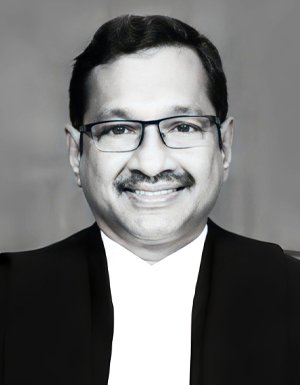
SANJAY KISHAN KAUL, J.
1. The art is non-conformist in character!
We are reminded of Edgar Degas’ poignant
observation that “Art is not what you see, but what you
make others see.”
2. The respondent Institute is a premier Institute
and one would expect it to encourage a liberal thought
process and not put courses connected with films in any
conformists’ box. It is this thought process which
made us pass the order on 30.11.2021 dealing with the
aspect of colour blindness. We had sketched out that
2
the colour blindness is not a form of blindness at all
but a deficiency in the way you see colour. This
medical condition makes it difficult to distinguish
certain colours such as blue and yellow or red and
green, and an estimated eight percent of the male
population and less than one per cent of the female
population have red and green colour deficiency, being
the most common form of colour blindness.
3. The lis which has arisen before us is from a
fundamental question where a person who is colour blind
is excluded from pursuing a course for Diploma in
Editing in the Films and Television Institute of India,
Pune(FTII)/respondent No.1. It is not necessary for us
to get into the depth of the facts which already stand
noticed in the aforementioned order or the respective
submissions of the counsels made on that date. Suffice
to say that instead of taking a call itself on whether
colour blindness would be an aspect which would be an
impediment in going through the course, we found it
appropriate to form a committee to look into the issue
and connected issues. On suggestions from counsels for
parties and our own path of discovery, we constituted a
Committee of the following:-
“(i) Film Director Mr. Ravi K Chandran
(ii) Colourist- Mr. Swapnil Patole
3
(iii) Script Ms. Shubha Ramachandra
Supervisor
(iv) Film Editor Mr. Akkineni Sreekar Prasad
(v) Course Creator/ Mr. Rajasekharan
HOD, Editing
(vi) Ophthalmologist Dr. Jignesh Taswala
(vii) Mr. Shoeb Alam, Advocate who was the
counsel in the Committee appointed in Praney
Kumar Poddar vs. State of Tripura & Ors. (2017)
13 SCC 351.”
4. We put a caveat at the inception itself that in
view of the passage of time of almost six years, the
respondent would have to go through the rigors of the
process of a selection anew, but dependent on the fate
of the order to be passed on consideration of the
report of the Committee, it had the potentiality to
remove the impediment in the future on account of
colour blindness, if the Committee so opined.
5. We also considered appropriate to facilitate a
more comprehensive exercise by the Committee to opine
on the aspect of colour blindness qua all the courses
for which it is perceived as a disqualification.
4
6. The report of the Committee has been placed
before us. It is signed by all THE members except one
i.e. Mr. K. Rajasekaran, HOD Editing, FTII who had some
caveats which we will consider after noticing the
report of the Committee.
7. The Committee rightly framed the two issues on
which the opinion of the Committee was sought as under:
“i. Whether the course curriculum provided for
diploma in Editing can be successfully
completed by the appellant who suffers from
color blindness?
ii. To facilitate a more comprehensive
exercise, the role of the committee would be
to opine on the aspect of color blindness qua
all the courses for which it is perceived as a
disqualification.”
KEY HIGHLIGHTS FROM THE COMMITTEE’S DISCUSSIONS
8. The Committee held about eight online meetings.
With a view to inform itself of the practice of
admission of colour blind individuals prevalent in
premier international institutes, it short listed and
wrote to ten top international film and television
institutes, it but responses were received only from
two of them. In the course of deliberations of the
5
Committee, it was found that the appellant had not been
examined by the an expert Ophthalmologist to ascertain
the nature and extent of his colour blindness as at the
time of seeking admission in the FTII. The eye
examination was by the Institute’s General Medical
Officer. It is in view thereof that an application was
filed before this Court on which orders were passed on
18.02.2022 for the Director, AIIMS to constitute a
Committee at the earliest to examine the appellant to
ascertain the nature and extent of colour visual
deficiency.
9. The report of the AIIMS prepared on 08.03.2022
records that the appellant had “red and green colour
vision deficiency as per the grading level of colour
perception, the candidate is found to have colour
perception (CP)4”.
10. The Committee has thereafter deliberated on all
the aspects and has submitted its report. It carries
various sections.
11. The first section of the report deals with
Ophthalmological perspective prescription of colour
blindness. It discusses: (a) about colour blindness (b)
the causes of colour blindness (c) types of colour
blindness.
12. Suffice to reproduce the (c) part of the report
6
as under:
“c. Types of color blindness
(i) Red-green color blindness:
The most common type of color blindness makes it
hard to tell the difference between red and green.
There are 4 types of red-green color blindness:
DEUTERANOMALY is the most common type of
red-green color blindness. It makes green
look more red. This type is mild and
doesn’t usually get in the way of normal
activities.
PROTANOMALY makes red look more green and
less bright. This type is mild and usually
doesn’t get in the way of normal
activities.
PROTANOPIA and DEUTERANOPIA both make you
unable to tell the difference between red
and green at all.
(ii) Blue-yellow color blindness:
This less-common type of color blindness
makes it hard to tell the difference
between blue and green, and between yellow
and red. There are 2 types of blue-yellow
7
color blindness:
TRITANOMALY makes it hard to tell the
difference between blue and green, and
between yellow and red.
TRITANOPIA makes you unable to tell
the difference between blue and green,
purple and red, and yellow and pink. It
also makes colors look less bright.
(iii) Complete color blindness:
If you have complete color blindness,
you can’t see colors at all. This is
also called monochromacy, and it’s
quite uncommon. Depending on the type,
you may also have trouble seeing
clearly and you may be more sensitive
to light. Different types of color
blindness cause problems seeing
different colors.”
BAR TO FTII COURSES:
13. The Committee thereafter examined the bar to
FTII courses on account of colour blindness, keeping in
mind the various modules of the curriculum which may be
a hurdle for admitting colour blind candidates, the
significance and professional utility of such modules,
colour blindness and the occupational role of the
8
professional etc. in order to determine whether a
colour blind candidate, who otherwise possessed
creative potential, ought to be refused admission to a
particular TV/Film making course.
14. As per the 2020 FTII prospectus, individuals
with colour blindness are ineligible to be admitted to
the following course:
“(i) Cinematography, (ii) Electronic
Cinematography, (iii) Editing, (iv) Video
Editing, (v) Art Direction and Production
Design.”
15. It is the view of the committee that individuals
with colour blindness should be permitted to enroll for
all courses offered by the FTII. The reasoning which
permeates this finding of the Committee is as under:
(a) Film and television creations are
collaborative art forms. Restricting entry of
colour blind candidates to film courses may
sacrifice creative talent and stultify the
development of the art. Inclusivity enriches
this creative art form by introducing variety,
any limitation can be overcome by assistance in
the educational and professional life.
9
(b) It is not the role of FTII to decide for
candidates their future prospects as a
film/television professional. If learning
limitation of the candidate can be overcome by
making reasonable accommodation or with the
help of an assistant, the candidate should be
eligible for admission to courses offered by
FTII.
(C) Film editing is the art, technique and
practice of assembling shots into a coherent
sequence and the job of an Editor is not simply
to mechanically put piece of a film together,
cut off film slates or edit dialogue scenes.
The Film Editor must creatively work with the
layers of images, story, dialogue, music,
pacing as well as the actors performances to
effectively “reimagine” and even re-write the
film to craft a cohesive whole.
FILM EDITING CURRICULUM AND COLOR GRADING:
16. The Committee thereafter examined the film
editing curriculum and colour grading aspect which is a
20 minute module of colour grading in the fifth
semester. It is opined that there is no relevance of
the colour grading to the role of a professional Film
Editor. A Colourist who is a specialized professional
makes up for the colour enhancement, corrections etc.
10
17. The Committee has analyzed the historical
perspective of the role which is as late as the year
2000 in the pre-digital film era. Film editing was
carried out on black and white rushes and colour was
added to the rushes subsequently. T he Editor thus, had
to only deal with the black and white rushes and had no
requirement for colour vision. Thus the presence of
colour blindness in a person did not prevent him from
becoming an expert Film Editor.
18. Illustratively, Mr. Ravi K. Chandran,
Cinematographer informed that Sir Roger Deakins CBE, is
one of the acclaimed international Cinematographers and
won an Oscar Award apart from being nominated 13 times
for Oscar Awards for his Cinematographic works and has
difficulty in operating new age digital equipments, for
which he relies upon assistants. In fact Mr. Chandran
opined that he himself relies on the help of assistants
and professionals while handling complex new age
digital equipments or to overcome any other limitation
where he may need help with.
19. A significant aspect noticed was that the 2020
FTII prospectus did not contain refer to any particular
kind or extent of colour blindness which may operate as
a bar to admission but mentioned that candidates
suffering from colour blindness/colour vision
deficiency are ineligible to apply for specialization
11
at serial Nos. 1,2,5, 6 and 7.
EXISTING COLOR EDITING CURRICULUM
20. The next aspect analyzed is the existing colour
editing curriculum. On analysis of the FTII film
editing curriculum, it was found that candidates with
the following types of colour blindness i.e.
Achromatopsia, Tritanopia, Deuteranopia and Protanopia
may have difficulties in successfully completing the
existing 20 minutes obstructive colour element grading
module in the Diploma in Film Editing curriculum
offered by the FTII, and individuals with other types
of colour blindness will not have any problem in
completing the existing curriculum. What is relevant
to note is that the Committee has opined that “colour
grading module“ has no relevance or nexus with the role
of a Film Editor.
BEST PRACTICES IN FOREIGN FILM INSTITUTES:
21. The Committee, in order to better appraise
itself, wrote to different premier international film
Institutes to know their best practices. On the basis
of the responses, albeit limited, it was found that
there was no discrimination based on physical
limitation etc. and if a fellow needed accommodation
they would make a request to Students’ Affairs Office
12
with a doctor’s note and no medical examination was
required.
22. In fact the response from CalArts further stated
that “all reasonable accommodation would be provided to
enable a colour blind student to complete their
course.” The Committee opined that FTII, being an
internationally acclaimed premier film Institute,
should set an example by making reasonable
accommodation for colour blind candidates. The art of
film making is a collaborative art form and any
limitations would be compensated by the team of
professionals. Thus, the all inclusive approach
followed by premier foreign Institutes supports a view
that FTII too should open its doors to colour blind
individuals.
BLACK AND WHITE FILMS:
23. The Committee thereafter has deliberated on
black and white films which are an integral genre of
the film industry where the colour blind individual
will have no impediment in creating a black and white
film. That itself has been opined as a good reason to
not prevent colour blind individuals to the film
schools. Illustrations have been given of black and
white films which have received critical acclaim
including Schindler’s List.
13
PHYSICAL/SENSORY LIMITATION & THE ARTS:
24. An interesting aspect of discussion is under the
heading of physical & sensory limitation in arts which
sets forth individuals with great eminence who have
seen no bounds on account of colour blindness. We would
like to extract the same as under:
“o. PHYSICAL/SENSORY LIMITATIONS & THE ARTS:
There are myriad instances of film
professionals, artists, actors etc. who have
excelled at their job despite their personal
limitations. The following instances amplify
the argument:
i. Madhu Ambat, a top Indian Cinematographer
(also an FTII alumnus), has won the National
Award for Best Cinematography thrice. He has
shot over a 100 feature films in various
languages. He suffered a paralytic attack at
the age of 10, affecting his operating arm, but
he has overcome his limitations to succeed in
this physically demanding craft.
ii. Loren Long is a renowned illustrator who
has worked on countless children’s books,
including Barack Obama ‘Of Thee I Sing’,
despite his colorblindness. At art school, he
14
learned color theory and ways to work around
his disability. He says he has a heightened
sense of values or saturation that helps him
and works with the help of colleagues & family.
iii. An amputee, Sudha Chandran become an
acclaimed Bharatnatyam dancer. With a Jaipur
foot, Sudha went on to perform worldwide & has
acted in countless movies and television shows.
iv. Pranav Lal, a blind photographer, captures
images using sound.
v. Dame Evelyn Glennie a Grammy award winning,
Scottish percussionist began to lose her
hearing at the age of 8 and by age 12 was
completely deaf. Together with her band
teacher, she developed ways to feel the musical
vibration through her hands, feet and face.
She literally taught herself to truly ‘listen’
with the rest of her body.
vi. Helen Keller, an unforgettable lore. She
graduated summa cum laude from Radcliffe in
Harvard & published 12 books in a language she
neither heard nor read. She was both deaf &
blind.
vii. Rowan Atkinson with severe speech
disabilities became a great actor,
15
immortalizing Mr. Bean for generations to come.
viii. Ian Treherne is profoundly deaf & 95 %
blind and a photographer. He shot portraits of
the Tokyo 2020 Para-Olympic athletes. He also
paints, makes films and plays music.”
25. The two other aspects discussed including the
use of prosthetic glasses are also being reproduced
hereunder:
“p. CODA: The 94
th
Academy Awards (2022)/Oscar
Award, for Best Picture, Best Adapted
Screenplay and Best Supporting Actor has been
conferred on the film ‘CODA’ (Children of Deaf
Adults). The film casts several deaf actors
including Marlee Matlin, an Oscar and BAFTA
(British Academy of Film and Television Arts)
awardee herself.
q. PROSTHETIC GLASSES: The use of prosthetic
color vision correction glasses such as those
marketed under the brand name EnChroma etc.,
which may reduce the impact of color blindness,
should be encouraged and allowed to be used by
colorblind candidates applying to the FTII in
order to limit the impact of the condition.”
16
CONCLUSIONS/ RECOMMENDATIONS:
26. The conclusion and recommendations of the
Committee under para IV are as under:-
“IV. CONCLUSIONS/RECOMMENDATIONS
After examination of all relevant issues and
deliberations, the committee makes the
following conclusions/recommendations in
response to the references forwarded to it:
a. In re. Court’s reference# 1 : “Whether the
course curriculum provided for diploma in
Editing can be successfully completed by the
appellant who suffers from color blindness?”
Committee’s recommendations : The appellant Mr.
Ashutosh Kumar who has Red and Green color
vision deficiency and has color perception of
CP4, as per the AIIMS Medical Board report,
will have difficulty in completing the existing
course curriculum of the diploma in Film and
Editing course offered by the FTII. This is
more particularly due to a twenty-minute ‘color
grading module’ which is part of the Film
Editing curriculum. However, the color grading
module has no relevance to either the film
editing course or to the film editor’s
professional role (Mr. K. Rajasekaran, HoD
17
Editing, FTII, does not agree that the color
grading module is irrelevant to the film
editing course).
b. In re. Court’s Reference#2 : “To facilitate a
more comprehensive exercise, the role of the
committee would be to opine on the aspect of
color blindness qua all the courses for which
it is perceived as a disqualification.”
Committee’s recommendation : It is the opinion
of the committee that :
i. It is recommended that individuals with
color blindness should be permitted to
enroll for ALL courses offered by FTII.
There should be no bar to admissions to the
FTII for colorblind individuals. Any
limitation can be overcome by an assistant
in educational and professional life.
ii. FTII should make reasonable
accommodation in their curriculum for
candidates with color blindness, in all
courses where there is a bar to the
admission of colorblind individuals. For
example, by providing elective/optional
modules in the curriculum for those core
credits which may require intensive color
18
appreciation or in any other way.
iii. The color grading module in the
existing Diploma in Film Editing Course
curriculum, should either be excluded or
made elective, thereby lifting the bar of
admissions for individuals with color
blindness.”
27. The aforesaid conclusions clearly show that all
individuals with colour blindness should be permitted
to enroll for all courses offered by FTII and any
limitation can be overcome. The FTII should make
accommodation in their curriculum for candidates with
colour blindness and the 20 minutes obstructive element
of colour grading module in the existing Diploma in
Film Editing course curriculum should be excluded or
made elective.
28. We must at the threshold appreciate the effort
put in by the Committee in looking to all aspects and
opining collectively except with one caveat. That
caveat is from Mr. K. Rajasekaran, as noticed. Let us
now turn to the caveat.
29. Mr. Rajasekaran somehow does not agree that the
colour grading module is irrelevant to the film editing
course as the role of FTII is to give all inclusive
education. He has opined that the syllabus has been
19
designed by experts and was further approved by the
academic council and governing council and that opining
in favour of the irrelevancy of colour grading module
would be “ crossing the line and will also be
challenging the knowledge of experts who have very
thoughtfully designed this syllabus.” The syllabus was
designed in 2015. Seven years have passed. The
hesitancy of Mr. Rajasekaran makes it appear he would
not like to ruffle feathers in the Institute.
30. He has sought to emphasis qua other courses also
that the colour blind students of Cinematography, art
production and design will find it very difficult to
carry out studies under these courses again based on
syllabus being “carefully and thoughtfully designed by
experts.”
31. Interestingly his final view is “wherever
possible, FTII has already accommodated colour blinds
in as many as 05 courses out of a total of 11”!
32. Thus, what he opines is a status quo. The FTII
knows best, its experts know best. Don’t touch us!
Despite the opinion of the expert panel set up by this
Court and unanimous in its decision except one dissent.
33. With due respect, we do not find this course
acceptable.
34. The theme which permeates the report of the
20
Committee is based on an appreciation of art and
culture, of innovation, intuitiveness, unrestricted by
impediments which can be overcome with assistance.
35. We find ourselves wholeheartedly in agreement
with the majority view of the Committee and thus, opine
that the same is required to be adopted by the FTII in
its curriculum. We do not believe that it impinges on
the freedom of the FTII, as sought to be canvassed by
the learned counsel for the respondent, but gives the
FTII an even broader canvass in its pioneering efforts
in the field. As the great photographer Ansel Adams
once said, “You don’t make a photograph just with a
camera. You bring to the act of photography all the
pictures you have seen, the books you have read, the
music you have heard, the people you have loved.” We
also opine that if there are other institutes carrying
on a similar educational curriculum, they would also be
required to adhere to the discussion on this subject as
forms the conclusion of the Committee.
36. We may only notice that possibly a mountain out
of a molehill is being made as the particular module is
a 20 minute module in the whole course curriculum and
even the Committee has opined that it can be made
elective.
37. The passage of time and our earlier order
unfortunately does not permit us to grant relief to the
21
appellant though he has been a flag bearer to see that
changes take place for others as also for him for the
future.
38. It does appear to be a case of “ no jam today“
but then sometimes there is a pioneering role played by
individuals who may not immediately get the direct
benefit.
39. We can only hope that this report as adopted by
us and the judgment would go further in a broader
conspectus of appreciation of the art forms. We would
do well to remember Aristotle, when he said that “ the
aim of art is to represent not the outward appearance
of things, but their inward significance.” Although
made in the context of art and the freedom of
expression, it would also be apposite to reproduce
observations made by one of us (Hon’ble Sanjay Kishan
Kaul, J.) in Maqbool Fida Hussain v. Rajkumar Pandey &
Ors. (2008 SCC OnLIne Del 562):
“114. Human personality can bloom fully and
humanism can take deep roots and have its
efflorescence only in a climate where all
display an attitude of tolerance and a spirit
of moderation.”
40. We would have closed the proceedings with the
aforesaid order but learned counsel for the appellant
22
makes a valiant endeavour to persuade us to revisit our
observations made in the order dated 30.11.2021 wherein
we had opined that the appellant would have to go
through the process de novo. The submission of the
learned counsel is based on the principle of
“reasonable accommodation ” as enunciated in Vikash
Kumar v. Union Public Service Commission & Ors.
1
and
Pranay Kumar Poddar v. State of Tripura & Ors.
2
and he
contends that the Court innovatively granted admission
to the candidate exercising jurisdiction under Article
142 of the Constitution of India.
41. He submits that the appellant had gone through
the curriculum for about six months and he was found
medically fit till this impediment came in his way.
What he suggests is that the candidate should be
accommodated in the next academic year by increasing
the strength of the course by one person.
42. However, before we consider to embark on such a
course, we must have the views of the Institute which
will file a response in this behalf and endeavour to
find a solution. The response be filed within two weeks
as prayed for.
43. Rejoinder if any, be filed within a week
thereafter on this aspect.
1 (2021) 5 SCC 370
2 (2017) 13 SCC 351
23
List for further proceedings on 10.05.2022.
…………………………………………….J.
[SANJAY KISHAN KAUL]
…………………………………………….J.
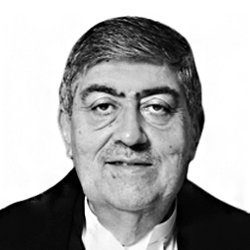
[M.M. SUNDRESH]
NEW DELHI;
APRIL 12, 2022.

 Login with google
Legal Notes
Add a Note....