
This appeal is directed against the judgment of the Bombay High Court, which raises the question relating to the conviction of the accused under Sections 302 and 307 of the ...
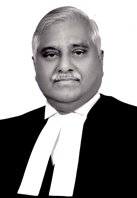
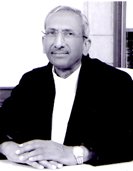
No Acts & Articles mentioned in this case
Page 1 1
REPORTABLE
IN THE SUPREME COURT OF INDIA
CRIMINAL APPELLATE JURISDICTION
CRIMINAL APPEAL NO.1516 OF 2011
BHAGWAN JAGANNATH MARKAD
& ORS. … APPELLANTS
VERSUS
STATE OF MAHARASHTRA ... RESPONDENT
J U D G M E N T
ADARSH KUMAR GOEL, J.
1.The appellants are aggrieved by the judgment and order dated 20
th
April, 2007 passed by the High Court of Judicature at Bombay in Criminal
Appeal No.533 of 1990 whereby they have been convicted under Sections
147, 149, 302 read with Sections 149, 324 and 326 of the Indian Penal
Code and sentenced to undergo imprisonment for life, apart from other
lesser sentences which are to run concurrently and payment of fine, setting
aside their acquittal by the trial court.
2.Originally there were 16 accused namely:-
1) Bhagwan Jagannath Markad,
2) Janardhan Rambhau Tate,
3) Dada Sayyednoor Mulani,
4) Sayyed Sayyadnoor Mulani,
5)Sandipan Sakhara Koyale,
6)Nivrutti Sakharam Koyale,
7)Krishna Sakharam Koyale,
Page 2 2
8) Shailendra Sandipan Koyale,
9) Chandrakant Shankar Markad,
10)Babu Rama Berad,
11)Balu Naradeo Berad,
12) Manik Rama Berad,
13) Pandurang Babu Arade,
14) Sadashiv Shahu Arade,
15) Kisan Rama Berad, and
16) Appa Shabu Arade.
3.The trial court acquitted all the accused. The High Court upheld
acquittal of accused Nos. 8, 9, 12, 13, 14, 15 and 16.
4.Accused No.2 is reported to have died. Thus, eight appellants are
before this Court. They are A1 Bhagwan Jagannath Markad; A3 Dada
Sayyednoor Mulani; A4 Sayyed Sayyadnoor Mulani; A5 Sandipan Sakhara
Koyale; A6 Nivrutti Sakharam Koyale; A7 Krishna Sakharam Koyale; A10
Babu Rama Berad and A11 Balu Naradeo Berad respectively.
5.According to the prosecution, one Bibhishan Vithoba Khadle has been
murdered and six persons have been injured being Indubai, PW11 Dagadu
Gopinath Koyale, PW18 Chaturbhuj Khade, PW15 Bibhishan Kshirsagar,
Gopinath Mahadev Koyale and PW12 Kernath Koyale in the attack by the
accused.
6.As per the prosecution version recorded in the FIR lodged by PW10
Satyabhama, her husband PW11 Dagadu Gopinath Koyale, father-in-law
Gopinath Koyale, deceased Bibhishan Vithoba Khadle, PW18 Chaturbhuj
Khade, PW15 Bibhishan Kshirsagar along with others were present in their
house on the date of the occurrence on 13
th
November, 1988 at 12.00 noon
when all the accused came there to attack her husband. Accused No.3
Dada Sayyednoor Mulani put the house on fire on account of which
Page 3 3
everyone came out. Accused Nos.1 and 2 Bhagwan Jagannath Markad and
Janardhan Rambhau Tate attacked Dagadu with swords on hands, legs and
knees. Accused No.3 Dada Sayyednoor had barchi. Accused No.4 Sayyed
Sayyadnoor Mulani had knife. Accused No.5 Sandipan Sakharam Koyale
had iron rods. Accused No.6 Nivrutti Sakharam Koyale had barchi. Accused
No.7 Krishna Sakharam Koyale had axe. Accused No.10 and 11 Babu Rama
Berad and Balu Naradeo Berad had axe. Accused No.8 Shailendra Sandipan
Koyale had sticks. PW11 Dagadu fell down on account of beating and
became unconscious. Accused No.3 Dada Sayyednoor, accused No.4
Sayyed Sayyadnoor Mulani, accused No.5 Sandipan Sakharam Koyale,
accused No.6 Nivrutti Sakharam Koyale, accused No.7 Krishna Sakharam
Koyale caused beating to the deceased Bibhishan Vithoba Khade. Accused
Nos.1 and 2 Bhagwan Jagannath Markad and Janardhan Rambhau Tate
also attacked deceased Bibhishan Vithoba Khadle. The accused then beat
PW11 Dagadu Gopinath Koyale and PW18 Chaturbhuj Khade with sticks
and swords. The occurrence was a result of the enmity on account of party
faction in Panchayat and Co-operative Society elections.
7.In the statement before the court, apart from repeating above version,
PW10 Satyabhama further stated that a bullock cart was arranged to carry
injured Dagadu and the deceased Bibhishan Vithoba Khade upto the main
road and thereafter they were carried in a jeep. On the way, the FIR was
lodged at 5.30 p.m. and thereafter the injured and the deceased were taken
to the PHC and then to the civil hospital. PW11 Dagadu remained in the
hospital for three to four months and thereafter in private hospital for two
Page 4 4
to three months.
8.After registering the FIR, investigation was carried out and
charge-sheet was submitted before the Court. The accused denied the
charge. Accused No.5 Sandipan Sakharam, however, stated that he was
called by Dagadu through deceased Bibhishan Vithoba Khade to his place
where PW18 Chaturbhuj Khade and PW12 Kernath Koyale were also
present. PW11 Dagadu told him that he should not contest the election.
The said accused, however, replied that PW11 Dagadu had been Sarpanch
for 10-12 years and thus, accused should be allowed to become Sarpanch.
This led to inter se assault between PW11 Dagadu and deceased Bibhishan
Vithoba Khade and the said accused was also assaulted by PW11 Dagadu.
9.The prosecution led evidence comprising of medical evidence, recovery
of material objects, eye-witnesses and the investigation. We will make
reference only to the relevant evidence on record. PW4 Dr. Shravan
Gavhane conducted the post mortem on the body of the deceased and found
seven injuries. Injury No.1 was on the head which was found to be fatal.
Injuries Nos. 2 to 7 were said to be with hard and blunt object like sticks or
swords. PW5 Dr. Dinesh Kumar examined the injured PW11 Dagadu and
found 10 injuries which included eight incised wounds, two injuries on
Gopinath Mahadev Koyale, one contused wound on PW18 Chaturbhuj
Khade, three injuries on Murlidhar Yeshu Kshirsagar. He also found one
incised wound on the right forearm of accused No.5 Sandipan Sakharam.
He found two injuries on Bibhishan PW15.
10.The prosecution relied upon the eye witness account rendered by
Page 5 5
PW10 Satyabhama, PW11 Dagadu, PW15 Bibhishan Kshirsagar, PW18
Chaturbhuj Khade, PW12 Kernath Koyale. PW2 Shivaji Fuge, PW3 Yuvraj
Koyale, PW7 Bhimrao and PW9 Bhimrao Dhavale are witnesses to the
recovery in pursuance of the statements under Section 27 of the Evidence
Act. The Chemical Analyser’s report was also produced about the blood
group on some of the recovered articles.
11.The trial Court rejected the prosecution version inter alia for following
reasons :
(i)Recovery was not admissible as the location of the articles
recovered was already known;
(ii)There was inordinate delay in sending the case property to the
Chemical Analyser and possibility of tempering was not ruled
out;
(iii)There was inconsistency in the evidence of PWs Kernath Koyale,
Bibhishan Vithoba Khadle and Chaturbhuj Khade in the
manner of assault and the weapon used;
(iv)The prosecution did not examine Indubai and Gopinath;
(v)Motive was not established as there was no immediate election
of the Panchayat or of the Cooperative Society;
(vi)There was improvement in the version initially given to the
police and the version put forward before the Court; and
(vii)All the material witnesses are either related or otherwise
interested and their testimony could not be accepted in absence
of corroboration in material particulars.
12.The High Court observed that acquittal by the trial court was based on
omissions and contradictions which were not material and did not affect the
veracity of the prosecution case. Thus, the trial Court adopted a “totally
perverse approach”. It was observed :
“32. It is true that there are contradictions and omissions but none of
them, according to us, is vital or material. They are regarding the
particulars. When 7/8 persons are injured and assailants are about
16, then these omissions are bound to be there. They are natural
omissions and contradictions and the most important fact that wipes
out the effect of these contradictions and omissions is that many
persons from the side of complainant had received injuries, so also
Page 6 6
accused No.5.
33.This is not a case of exercising the right of self defence of the
accused. No such plea was raised before us nor from the case of the
prosecution any such plea can be permitted to be raised directly or
indirectly by the accused. The accused are aggressors. They have
launched attack while persons from the complainant’s side had
assembled to celebrate their Diwali. Vasti was set to fire. Bibhishan
Khade died in the said attack and many persons from the side of
complainant had received injuries. The assault was by deadly
weapons like sword, barchi, knife, gupti and sticks. This was,
therefore, not a case of clear cut acquittal of all the 16 accused. No
further corroboration is necessary. Investigation is prompt and swift
and even if other evidence regarding recovery of incriminating articles
is not considered, the oral evidence and ocular evidence of the
aforesaid witnesses i.e. P.W.10, 11, 12, 13, 15 and 18 and others
discussed by us including those two doctors fully prove the
prosecution case. The findings of the trial Court are totally perverse
and therefore this appeal is required to be allowed, but to what extent
and against which of the accused is the question. The close scrutiny
of the evidence of eye witnesses particularly P.W.10, 11, 15 and 18
shows that P.W.10 has implicated accused Nos.1,2,3,5,6,7, 10 and
11. P.W.11 has implicated accused Nos.1,2,3,4,5,6,7 and according to
P.W.11, accused No.3 set fire to the Vasti. P.W.15 has implicated
accused Nos.1,2,3,4,5,6, 10 and 11. P.W. 18 has implicated accused
Nos.1,2,3,5,6,7 and according to him, accused No.3 set fire to the
Vasti. Presence of accused No.5 Sandipan at the spot is fully proved,
apart from other evidence, because of the injuries suffered by him.
There are in all 16 accused. Considering the aforesaid evidence, this
appeal against acquittal has to be allowed in respect of accused
Nos.1,2,3,4,5,6,7, 10 and 11, and their acquittal is required to be set
aside. So far as accused Nos.8,9,12,13,14,15 and 16 are concerned,
their acquittal is required to be upheld. Undoubtedly, the accused
Nos.1 to 7 and 10 and 11 had formed an unlawful assembly with a
common object of launching an assault. The house or vasti of Dagadu
was set to fire. In the attack Bibhishan Khade died and P.W.11, 15
and 18 and others received injuries by deadly weapons. Therefore,
for causing death of Bibhishan Khade the accused are required to be
held guilty under Section 302 read with Section 149 of the Indian
Penal Code and for causing severe injuries to the aforesaid
prosecution witnesses and others, they are required to be held guilty
under Sections 324 and 326 r/w 149 of the Indian Penal Code. So far
as offence under Section 436 of the Indian Penal Code is concerned,
the evidence of the prosecution witnesses is not consistent and,
therefore, nobody can be convicted under that section.”
13.We have heard learned counsel for the appellants on the one hand as
also learned counsel for the State and the complainant on the other and
with their assistance, gone through the material on record.
Page 7 7
14.Main contention raised on behalf of the appellants is that the
judgment of acquittal rendered by the trial Court was certainly a possible
view on appreciation of evidence and the High Court could not reverse the
same as there was no perversity. The High Court has not fully discussed
the evidence nor dealt with the reasons recorded by the trial Court for
rejecting the prosecution version. There was no explanation for the injury
suffered by accused No.5. There are omissions and contradictions in the
version of the prosecution witnesses. In the first version given by PW 12,
the accused have not been named and instead of recording the said version
as FIR, it was on belated statement of PW 10 which was an improved
version that the FIR was registered. The omissions in the statement made
to the police amount to contradictions as per explanation to Section 162
Cr.P.C. Thus, the evidence of eye witnesses PWs10, 11, 12, 15 and 18 has
been rightly rejected by the trial court and could not be relied upon by the
High Court. Since there was enmity between the parties, there was
possibility of exaggeration and false implication and it was not safe to
convict the appellants. It was also submitted that since the incident was 28
years old, some of the appellants have become very old and ought not to be
convicted at this stage. Reliance has been placed on the judgments of this
Court in Padam Singh versus State of U.P.
1
, Devatha Venkataswamy
versus Public Prosecutor, High Court of A.P.
2
, Narendra Singh versus
1
(2000) 1 SCC 621
2
(2003) 10 SCC 700
Page 8 8
State of M.P.
3
, Prasanna Das versus State of Orissa
4
, Majjal versus
State of Haryana
5
, Lalita Kumari versus Govt. of U.P.
6
, and Baby alias
Sebastian versus Central Inspector of Police
7
.
15.On the other hand, learned counsel for the State and the complainant,
supported the judgment of the High Court and pointed out that the reasons
for acquittal by the trial court were perverse and the High Court has duly
dealt with the said reasons and found them to be perverse. There is
consistent evidence of injured eye witnesses which could not be altogether
brushed aside. Contradictions and omissions which are not vital or
material are bound to be there in every case. The same did not affect the
credibility of the main version that the accused caused the death of the
deceased and injuries to six persons on the complainant side. The accused
formed unlawful assembly and action of even one accused in prosecution of
common object of the unlawful assembly or which was known to likely to be
so committed was action of all the accused in law. It was not necessary to
prove individual role of different accused. The information by PW12 on
telephone was cryptic and could not be treated as FIR. Therein though
name of accused No.5 was mentioned and it was further stated that he was
accompanied by others also, other details were not mentioned. This was
3
(2004) 10 SCC 699
4
(2004) 13 SCC 30
5
(2013) 6 SCC 798
6
(2014) 2 SCC 1
7
(2016) 7 Scale 444
Page 9 9
not at par with the statement to be recorded by the officer in charge of the
Police Station under Section 154 CrPC which can be treated as FIR. Thus,
the telephonic message could not be treated as FIR. The statement of PW
10 made in the Police Station has rightly been treated as FIR. The said
statement was prompt and could not be treated as an improved version.
The statement was corroborated by sworn testimony of the author of the
FIR before the Court which has been corroborated in all material particulars
by four other injured witnesses. Thus, the evidence on record fully
warranted conviction of the appellants and no interference was called for by
this Court. Reliance has been placed on the judgments of this Court in
Damodar versus State of Rajasthan
8
, Mano Dutt & Anr. Versus State
of Uttar Pradesh
9
, Sanjeev versus State of Haryana
10
, A. Shankar
versus State of Karnataka
11
, State of Karnataka versus Suvarnamma
& Anr.
12
, Bava Hajee Hamsa versus State of Kerala
13
, Patai Alias
Krishna Kumar versus State U.P.
14
, Ravishwar Manjhi versus State of
Jharkhand
15
, T.T. Antony versus State of Kerala
16
.
8
(2004) 12 SCC 336
9
(2012) 4 SCC 79
10
(2015) 4 SCC 387
11
(2011) 6 SSC 279
12
(2015) 1 SCC 323
13
(1974) 4 SCC 479
14
(2010) 4 SCC 429
15
(2008) 16 SCC 561
16
(2001) 6 SCC 181
Page 10 10
16.We have given due consideration to the rival submissions. The
question for consideration is whether the High Court was justified in
reversing the acquittal of the appellants on the basis of evidence available
on record.
17.Before considering this aspect with reference to the evidence on
record, we may advert to the settled principles of law dealing with the issues
arising in the present case. The approach to be adopted by the court
generally in appreciating the evidence in a criminal case as also the
approach of the appellate court is discussed in several decisions of this
Court, some of which have been cited by learned counsel for the parties.
18.It is accepted principle of criminal jurisprudence that the burden of
proof is always on the prosecution and the accused is presumed to be
innocent unless proved guilty. The prosecution has to prove its case
beyond reasonable doubt and the accused is entitled to the benefit of the
reasonable doubt. The reasonable doubt is one which occurs to a prudent
and reasonable man. Section 3 of the Evidence Act refers to two conditions
– (i) when a person feels absolutely certain of a fact – “believe it to exist” and
(ii) when he is not absolutely certain and thinks it so extremely probable
that a prudent man would, under the circumstances, act on the assumption
of its existence. The doubt which the law contemplates is not of a confused
mind but of prudent man who is assumed to possess the capacity to
“separate the chaff from the grain”. The degree of proof need not reach
certainty but must carry a high degree of probability
17
17
Vijayee Singh vs. State of U.P.- (1990) 3 SCC 190, Paras18, 28-30
Page 11 11
19.While appreciating the evidence of a witness, the court has to assess
whether read as a whole, it is truthful. In doing so, the court has to keep in
mind the deficiencies, drawbacks and infirmities to find out whether such
discrepancies shake the truthfulness. Some discrepancies not touching the
core of the case are not enough to reject the evidence as a whole. No true
witness can escape from giving some discrepant details. Only when
discrepancies are so incompatible as to affect the credibility of the version of
a witness, the court may reject the evidence. Section 155 of the Evidence
Act enables the doubt to impeach the credibility of the witness by proof of
former inconsistent statement. Section 145 of the Evidence Act lays down
the procedure for contradicting a witness by drawing his attention to the
part of the previous statement which is to be used for contradiction. The
former statement should have the effect of discrediting the present
statement but merely because the latter statement is at variance to the
former to some extent, it is not enough to be treated as a contradiction. It is
not every discrepancy which affects creditworthiness and trustworthiness of
a witness. There may at times be exaggeration or embellishment not
affecting credibility. The court has to sift the chaff from the grain and find
out the truth. A statement may be partly rejected or partly accepted
18
.
Want of independent witnesses or unusual behavior of witnesses of a crime
is not enough to reject evidence. A witness being a close relative is not
enough to reject his testimony if it is otherwise credible. A relation may not
conceal the actual culprit. The evidence may be closely scrutinized to
18
Leela Ram vs. State of Haryana (1999) 9 SCC 525, paras 9 - 13
Page 12 12
assess whether an innocent person is falsely implicated. Mechanical
rejection of evidence even of a ‘partisan’ or ‘interested’ witness may lead to
failure of justice. It is well known that principle “falsus in uno, falsus in
omnibus” has no general acceptability
19
. On the same evidence, some
accused persons may be acquitted while others may be convicted,
depending upon the nature of the offence. The court can differentiate the
accused who is acquitted from those who are convicted. A witness may be
untruthful in some aspects but the other part of the evidence may be
worthy of acceptance. Discrepancies may arise due to error of observations,
loss of memory due to lapse of time, mental disposition such as shock at
the time of occurrence and as such the normal discrepancy does not affect
the credibility of a witness.
20.Exaggerated to the rule of benefit of doubt can result in miscarriage of
justice. Letting the guilty escape is not doing justice. A Judge presides over
the trial not only to ensure that no innocent is punished but also to see that
guilty does not escape.
20
21.An offence committed in prosecution of common object of an unlawful
assembly by one person renders members of unlawful assembly sharing the
common object vicariously liable for the offence. The common object has to
be ascertained from the acts and language of the members of the assembly
and all the surrounding circumstances. It can be gathered from the course
of conduct of the members. It is to be assessed keeping in view the nature
19
Gangadhar Behera vs. State of Orissa (2002) 8 SCC 381 -para 15
20
Gangadhar Behera (supra), para 17
Page 13 13
of the assembly, arms carried by the members and the behavior of the
members at or near the scene of incident. Sharing of common object is a
mental attitude which is to be gathered from the act of a person and result
thereof. No hard and fast rule can be laid down as to when common object
can be inferred. When a crowd of assailants are members of an unlawful
assembly, it may not be possible for witnesses to accurately describe the
part played by each one of the assailants. It may not be necessary that all
members take part in the actual assault
21
. In Gangadhar Behera (supra),
this Court observed :
“25. The other plea that definite roles have not been ascribed to the
accused and therefore Section 149 is not applicable, is untenable. A
four-Judge Bench of this Court in Masalti case [AIR 1965 SC 202]
observed as follows:
“15. Then it is urged that the evidence given by the witnesses
conforms to the same uniform pattern and since no specific
part is assigned to all the assailants, that evidence should not
have been accepted. This criticism again is not well founded.
Where a crowd of assailants who are members of an unlawful
assembly proceeds to commit an offence of murder in
pursuance of the common object of the unlawful assembly, it
is often not possible for witnesses to describe accurately the
part played by each one of the assailants. Besides, if a large
crowd of persons armed with weapons assaults the intended
victims, it may not be necessary that all of them have to take
part in the actual assault. In the present case, for instance,
several weapons were carried by different members of the
unlawful assembly, but it appears that the guns were used
and that was enough to kill 5 persons. In such a case, it
would be unreasonable to contend that because the other
weapons carried by the members of the unlawful assembly
were not used, the story in regard to the said weapons itself
should be rejected. Appreciation of evidence in such a complex
case is no doubt a difficult task; but criminal courts have to do
their best in dealing with such cases and it is their duty to sift
the evidence carefully and decide which part of it is true and
21
Gangadhar Behera (supra), paras 22-24
Page 14 14
which is not.”
22.We have referred to the above settled principles as the trial court has
adopted perverse approach in rejecting the entire evidence comprising of
injured eye witnesses when one person has been killed and six others have
been injured. The trial court ignored the above principles by mechanically
rejecting the evidence of all the witnesses by finding one or the other
contradiction. The occurrence has taken place in broad day light. One of
the accused himself mentioned about the enmity on account of the
panchayat election. The said accused himself is injured which proves his
presence at the scene of the occurrence. This version further shows the
presence of deceased and the injured. But his version fails to explain as to
why the deceased would have been killed by PW11 when the deceased was
the messenger of PW11 himself. Except for some contradictions, the
version of eye witnesses PWs 10, 11, 15, 12 and 18 is consistent. There is
no reason to reject the said version. Of course, the court has to be cautious
in appreciating evidence and rule out exaggeration.
23.We may also note that version of A5 is not probable and mere fact that
injury on him is not explained is not enough to reject the prosecution
version. In such a case, the Court is to examine whether evidence is
trustworthy. This aspect has been repeatedly examined by this Court and
settled law is that non explanation of injuries on accused is an important
circumstance which requires the court to satisfy itself that true version is
Page 15 15
not suppressed and whether defence version is probable
22
,
23
,
24
. This by
itself is not enough to reject the prosecution case.
24.To demonstrate that the approach of the trial court is outrightly
perverse, some of the observations are put in :
“ But in general terms she has stated that accused came with
weapons. Similarly it is admitted by her during the
cross-examination that she has not stated assault by particular
accused on the person of Bibhishan Khade. But she has stated in
general terms that Bibhishan was assaulted by the accused.
Moreover it is to be noted that she has admitted that Dagadu and
Bibhishan were assaulted by said weapons like cutting a wood by
an axe, sword and barchi. But there is no piercing wound or cut
injury on the person of deceased Bibhishan as well as Dagadu.
Moreover it is in her complaint that she had been to the vasti of
Murlidhar and Bibhishan Kshirsagar to hand over the break fast to
Dagadu. But the evidence of PWs and Dagadu and other eye
witnesses disclose that they all had been to the house of Murlidhar
Kshirsagar for Diwali snacks and there Dagadu invited for meals in
the noon time. Hence, all the eye-witnesses mentioned above had
been to the vasti of Dagadu. But P.W. Dagadu, Kernath, P.W.
Bibhishan Kshirsagar and P.W. Chaturbhuj disclose that they were
called for the Diwali snacks and not for meals in the house of
Dagadu. It is to noted that if Dagadu was invited for Diwali snacks
in the house of Murlidhar kshirsagar then there was no necessity to
take breakfast for Dagadu to the house of Murlidhar Kshirsagar.
Considering all the aspects the evidence of the complaint cannot be
accepted. ”
25.Similar is the appreciation by the trial court of other witnesses. Since
rejection of eye witness account is uncalled for, other reasons given by trial
court are not sufficient to reject the prosecution case. Even if recoveries or
Chemical Analyzer’s report are disregardedly the same have only
corroborative value, prosecution case is established by credible eye witness
22
Vijayee Singh (supra), para 9
23
(2001) 6 SCC 145-Takhaji Hiraji vs. Thakore Kubersing Chamansing
24
(2012) 4 SCC 79-Mano Dutt vs. State of U.P.
Page 16 16
account. Mere fact that some of the witnesses have not been examined is
also of no consequence when credible evidence to prove the case has been
produced. We thus, find that the High Court rightly reversed the trial Court
judgment.
26.One of the submission of learned counsel for the appellants is that
telephonic message by PW12 recorded at the police station should have
been treated as FIR. We have been taken through the said message which is
to the effect that A5 and other accused assaulted the complainant party.
Learned counsel relied upon the observation in Lalita Kumari (supra) to
the effect that a GD Entry can also be treated as FIR in an appropriate case.
From the said observation, it cannot be laid down that every GD Entry or
every cryptic information must be treated as FIR. In Anand Mohan versus
State of Bihar
25
while referring to Section 154 Cr.P.C., this Court observed
that every cryptic information, even if not signed by the person giving the
information, cannot be treated as FIR. The information should sufficiently
disclose the nature of the offence and the manner in which the offence was
committed. It was observed :
“50. In Sk. Ishaque v. State of Bihar [(1995) 3 SCC 392] Gulabi
Paswan gave a cryptic information at the police station to the effect
that there was a commotion at the village as firing and brickbatting
was going on and this Court held that this cryptic information did not
even disclose the commission of a cognizable offence nor did it
disclose who were the assailants and such a cryptic statement of
Gulabi Paswan cannot be treated to be an FIR within the meaning of
Section 154 CrPC.
51. Similarly, in Binay Kumar Singh v. State of Bihar [(1997) 1
SCC 283] information was furnished to the police in Ext. 10/3 by
Rabindra Bhagat that the sons of late Ram Niranjan Sharma along
25
(2012) 7 SCC 225
Page 17 17
with large number of persons in his village had set fire to the houses
and piles of straws and had also resorted to firing. This Court held
that Ext. 10/3 is evidently a cryptic information and is hardly
sufficient to discern the commission of any cognizable offence
therefrom.”
27.Similar view has been taken by this Court in Damodar (supra), T.T.
Antony (supra), Patai Alias Krishna Kumar (supra) and Ravishwar
Manjhi (supra).
28.Learned counsel for the appellants also criticized the judgment of the
High Court by submitting that the principles laid down by this Court in
Padam Singh (supra), Devatha Venkataswamy (supra), Narendra
Singh (supra), Prasanna Das (supra), Majjal (supra), Lalita Kumari
(supra), and Baby (supra) for exercise of appellate jurisdiction have not
been followed. The appellate court should deal with reasons for acquittal
and interfere only if acquittal is perverse. There is no doubt about the
proposition that the appellate court has to arrive at an independent
conclusion about the credibility of the evidence and to re-appreciate the
evidence to arrive at a just conclusion. If the appellate court is to reverse
the judgment of the trial court, the reasoning of the trial court has to be
adverted to and reversal of acquittal is permissible only if the view of the
trial court is not only erroneous but also unreasonable and perverse. At the
same time, the appellate court has full power to review the evidence and to
reach at its own conclusion. The appellate court can set aside the acquittal
if the acquittal is not justified. Of course, the appellate court has to
consider the fact that the trial court has the benefit of seeing the witnesses
in the witness box and the presumption of innocence is not weakened by
Page 18 18
the acquittal. If two reasonable conclusions can be reached, the appellate
court should not disturb the finding of the trial court. In the present case,
the High Court has followed the above principles.
29.In Bava Hajee Hamsa (supra) while approving the reversal of
acquittal by the High Court, it was held that erroneous approach of the trial
Court led to misdirection in appraising the evidence and the High Court was
justified in rejecting the approach of the trial court and in analyzing the
evidence in its own way. This Court observed :
“30. We agree with the High Court that the very “scheme of approach”
adopted by the trial Judge was faulty and misleading. It led to aberration
and misdirection in appraising evidence, and vitiated his conclusions. The
learned trial Judge started correctly when on a broad look of the evidence,
he found the evidence of PWs 1, 8 and 9 prima facie acceptable. But after
the second lap of discussion, he became sceptical; and reversed his mind
at the end of the third round of circumgyratory discussion. In such cases
where large number of persons are involved and in the commotion some
persons cause injuries to others and the evidence is of a partisan
character, it is often safer for the Judge of fact to be guided by the
compass of probabilities along the rock-ribbed contours of the case
converging on the heart of the matter. Once the court goes astray from the
basic features of the case, it is apt to lose itself in the labyrinths of
immaterial details, desultory discussion and vacillation arising from
unfounded suspicions. This is exactly what has happened in the instant
case. Despite the pains taken and the conscentious effort put in to write an
elaborate judgment, the trial Judge had, as it were, missed the wood for
the trees. The learned Judges of the High Court were, therefore, right in
discarding altogether the basically wrong “scheme of approach” adopted
by the trial court, and in analysing the evidence in their own way.”
30.As already observed, the discrepancies of trivial nature could not be
the basis of rejecting the evidence of injured eye witnesses nor
non-examination of some of the witnesses be a ground to reject the
prosecution case when injured eye witnesses were examined.
31.We may also refer to the judgment of this Court in Masalti versus
Page 19 19
State of U.P.
26
to the effect that the evidence of interested partisan
witnesses though required to be carefully weighed, the same could not be
discredited mechanically. When a crowd of unlawful assembly commits an
offence, it is often not possible to accurately describe the part played by
each of the assailants. Though the appreciation of evidence in such cases
may be a difficult task, the court has to perform its duty of sifting the
evidence carefully.
32.Applying the above principles to the present case, it is clear that all
the five eye witnesses have named A1 to A7. Other accused have not been
named by PW11 and PW18. By way of abundant caution, we give benefit of
doubt to A10 and A11 for the reason that they have not been named by
PW11 and PW18 and also for the reason that PW10 has attributed specific
role only to A1 to A7. But as far as A1 to A7 are concerned (A2 has already
died) all the five witnesses have consistently named them. A1 to A7 have
been assigned specific role in assaulting the deceased. Their conviction and
sentence under Section 302/149 of the IPC has to be upheld.
33.For the above reasons, this appeal is partly allowed to the extent that
appellant Nos.7 and 8 (Babu Rama Berad and Balu Naradeo Berad) are
given benefit of doubt and are acquitted. They be released from custody, if
not required in any other case. Appeal of other appellants is dismissed.
However, appellant Nos.5 and 6 (Nivrutti Sakharam Koyale and Krishna
Sakharam Koyale) will continue to remain on bail for one month and if they
make an application for remission of the remaining sentence on the ground
26
(1964) 8 SCR 133
Page 20 20
of advanced age within one month, they will continue to remain on bail
thereafter till the decision of the said application by the appropriate
authority. If their application for remission is not accepted, they will
surrender to serve out the remaining sentence.
……………………………………………… J.
( V. GOPALA GOWDA )
……………………………………………… J.
( ADARSH KUMAR GOEL )
NEW DELHI;
OCTOBER 04, 2016.

 Login with google
Legal Notes
Add a Note....