
As per case facts, the appellant, a co-sharer and father's brother's son of the vendors, sought to exercise his pre-emption right under Section 15(1)(b) 'Fourthly' of the Punjab Pre-emption Act, ...
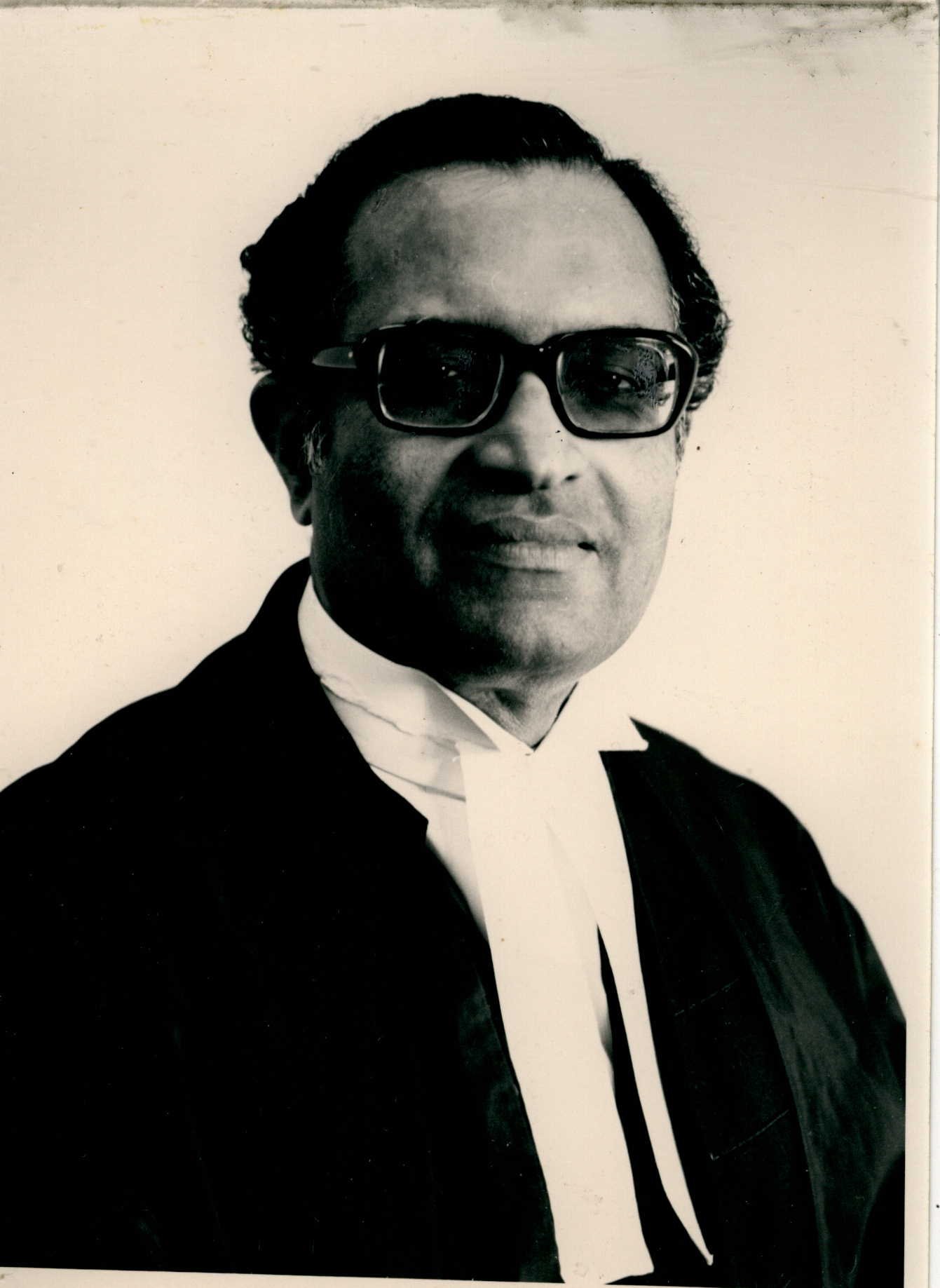
No Acts & Articles mentioned in this case
http://JUDIS.NIC.IN SUPREME COURT OF INDIA Page 1 of 8
PETITIONER:
BHIKHA RAM
Vs.
RESPONDENT:
RAM SARUP AND ORS.
DATE OF JUDGMENT31/10/1991
BENCH:
AHMADI, A.M. (J)
BENCH:
AHMADI, A.M. (J)
MISRA, RANGNATH (CJ)
SAWANT, P.B.
CITATION:
1992 AIR 207 1991 SCR Supl. (2) 119
1992 SCC (1) 319 JT 1991 (4) 199
1991 SCALE (2)909
ACT:
Punjab pre-emption Act, 1913--Section 15(1) (b),
Fourthly---Pre-intention---A tam Prakash's emption--Pre and
post Amendment--Legislative case---Purport of.
Punjab pre-emption Act, 1913--Section 15(1) (b), Fourth-
ly--"Other ca-sharers "Construction.
HEADNOTE:
The appellant seeking to exercise the right of pre-
emption as a co-sharer, i.e. father's brother's son of the
vendors, contended that he fell within the expression 'other
co-sharers' in clause 'Fourthly' of section 15(1)(b) of the
Punjab pre-emption Act, 1913 and was, therefore, entitled to
exercise the right of pre-emption.
The courts below negatived his contention following the
decision of this Court in Jagdish & Ors. v. Nathi Mal Kej-
riwal & Ors.,[1986] 4 SCC 510.
In this appeal filed by special leave, the appellant
submitted that since the suit land belonged to more than one
co-sharer and had not been sold jointly by all the co-shar-
ers, he, as a co-sharer,
as entitled to claim the right of pre-emption under clause
'fourthly'of section 15(1)(b) and that in Jagdish's case,
the interpretation placed on the expression 'other co-shar-
ers' in section 15(1)(b) required reconsideration.
Allowing the appeal, this Court,
HELD: 1. According to section 15 of the Act before its
amendment in 1960, in the case of sale of share out of joint
land or property, the right of pre-emption was conferred
firstly on the lineal descendants of the vendor in order of
succession; secondly, in the co-sharers, if any, who are
agnates, in order of succession; thirdly, in persons not
included under firstly or secondly above, in order of suc-
cession, who but for such sale would be entitled, on death
of the
120
vendor, to inherit the land or property sold and fourthly,
in the cosharers. [126 E-F]
2. Section 15 after its amendment in 1960 provided that
where the sale is of a share out of the joint land or
http://JUDIS.NIC.IN SUPREME COURT OF INDIA Page 2 of 8
property and is not by all the co-sharers jointly, the right
of pre-emption was vested, first, in the sons or daughters
or son's son or daughter's sons of the vendor or vendors;
Secondly, in the brothers or brother's sons of the vendor or
vendors; Thirdly, in the father's brother or father's broth-
er's sons of the vendor or vendors; Fourthly, in the other
cosharers and Fifthly, in the tenants. [126 F-G]
3. The legislature desired to confer the right of pre-
emption on specified family members of the vendor or vendors
in the first three clauses of section 15(1)(b) and with a
view to covering all the remaining co-sharers not specifi-
cally mentioned in the preceding clauses it used the expres-
sion 'other co-sharers' in the fourth clause which was meant
to serve as a residuary clause to ensure that no cosharer is
left out. [126 G-127 A]
4. The expression 'other co-sharers' was used in the
fourth clause of the said provision to ensure that no co-
sharer was left out or omitted and not to deny the right to
kinsfolk co-sharers covered by the preceding clauses. If the
preceding clauses were not erased from the statute book as
unconstitutional the kinsfolk would have exercised the right
in the order of preference, for which no justification was
found. The relations in the first three clauses of section
15(1)(b) may or may not be co-sharers. The use of the ex-
pression 'other' in clause fourthly conveys the possibility
of their being cosharer also. [127 D-F]
5. The purport of Atam Prakash's case was that while
cosharers were entitled to pre-empt, the conferment of that
right on certain kinsfolk based on the rule of consanguinity
being a relic of the feudal past could not be tolerated.
This Court never intended to exclude any specified co-owners
from the scope of clause fourthly of section 15(1)(b) of the
Act. Once conferment of the right of preemption in favour of
co-sharers was considered to be a reasonable restriction on
the right to hold, acquire and dispose of property under
Article 19(1)(f), the same restriction was held to be valid
when tested on the touchstone of Articles 14 or 15 of the
Constitution. [127 B-D]
121
6. What this Court disapproved as offensive to Articles
14 and 15 is the classification based on consanguinity and
not on co-ownership. The right of pre-emption to co-sharers
is held to be intra-vires the Constitution. Therefore, it is
difficult to hold that this Court intended to deny the right
of pre-emption of those kinsfolk even if they happened to be
co-sharers, That would clearly be discriminatory. [127 F-G]
7. The interpretation placed on clause 'fourthly' of
section 15(1)(b) of the Act by this court in Jagdish's case
was not correct on a proper construction of that clause
after the preceding clause were held to be unconstitutional,
the word 'other' preceding the word 'co-sharer' is rendered
redundant. [127 G]
Ram Sarup v. Munshi & Ors., [1963] 3 SCR 858 = AIR 1963
SC 553; Atam Prakash v. State of Haryana & Ors., [1986] 2
SCC 249 = AIR 1986 SC 859; Bhau Ram v.B. Baijnath Singh,
[1962] Suppl. SCR 724 = AIR 1962 SC 1476, referred to.
Jagdish & Ors. v. Nathi Mal Kejriwal & Ors., [1986] 4
SCC 510 'AIR 1987 SC 68, over-ruled.
JUDGMENT:
CIVIL APPELLATE JURISDICTION: Civil Appeal No. 4366 of
1991.
From the Judgment and Order dated 16.5.1988 of the
http://JUDIS.NIC.IN SUPREME COURT OF INDIA Page 3 of 8
Punjab & Haryana High Court in Regular Second Appeal No.
3648 of 1987.
R.K.Kapoor and Anis Ahmed Khan for the Appellant.
S.N.Mishra, L.K. Gupta, D.K. Yadav and D.K.Garg for the
Respondents.
The Judgment of the Court was delivered by
AHMADI, J. Delay condoned. Special leave granted.
The constitutional validity of section 15(1)(a) of the
Punjab Preemption Act, 1913 was challenged on the ground
that it offended the fundamental right guaranteed by Article
19(1)(f) m Ram Sarup v. Munshi & Ors., [1963] 3 SCR 858-AIR
1963 SC 553 A Constitution Bench of this Court upheld the
validity holding that there was no infringement of Article
19(1)(1') of the Constitution. Thereafter, a host of writ
petitions
122
were filed in this Court under Article 32 of the Constitu-
tion challenging the constitutional validity of section 15
on the ground that it infringed Articles 14 and 15 of the
Constitution. It may be mentioned that the mother State, the
State of Punjab, had repealed the Act in 1973 but it contin-
ued to be in force in the State of Haryana which prior to
1966 was a part of the State of Punjab. Section 15 of the
1913 Act, as it originally stood, underwent substantial
changes in 1960 and as amended read as under:
"15. Persons in whom right of pre-emption
vests in respect of sales of agricultural land
and village immovable property-
(1) The right of pre-emption in respect of
agricultural land and village immovable
property shall vest---
(a) where the sale is by a sole onwer--
First, in the son or daughter or son's son or
daughter's son of the vendor;
Secondly, in the brother or brother's son of
the vendor;
Thirdly, in the father's brother or father's
brother's son of the vendor;
Fourthly, in the tenant who holds under tenan-
cy of the vendor the land or properly sold or
a part thereof
Co) where the sale is of a share out of
joint land or property and is not made by all
the co-sharers jointly--
First, in the sons or daughters or son's son
or daughter's sons of the vendor or vendors;
Secondly, in the brothers or brother's sons of
the vendor or vendors;
Thirdly, in the father's brother or father's
brother's sons of the vendor or vendors;
Fourthly, in the other co-sharers;
Fifthly, in the tenants who hold under tenancy
of the vendor or vendors the land or property
sold or a part thereof;
(c) where the sale is of land or property
owned jointly and is made by all the co-shar-
ers jointly--
123
First, in the sons or daughters or sons' sons
or daughters' sons of the vendors;
Secondly in the brothers or brother's sons of
the vendors; Thirdly, in the father's brothers
or father's brother's sons of the vendors
Fourthly, in the tenants, who hold under
tenancy of the vendors or any one
http://JUDIS.NIC.IN SUPREME COURT OF INDIA Page 4 of 8
of them the land or properly sold or a
part thereof.
(2) Notwithstanding anything con-
tained in sub-section (1):
(a') where the sale is by a female of
land or property to which she has succeeded
through her father or brother or the
sale in respect of such land or property is by
the son or daughter of such female after
inheritance, the right of pre-emption shall
vest:
(i) if the sale is by such female, in her
brother or brother's son;
(ii) if the sale is by the son or
daughter of such female, in the mother's
brothers or the mother's brother's sons of the
vendor or vendors;
(b) where the sale is by a female of land
or property to which she has succeeded through
her husband, or through her son in case the
son has inherited the land or property sold
from his lather, the right of pre-emption
shall vest--
First, in the son or daughter of such husband
of the female:
Secondly, in the husband's brother or hus-
band's brother's son of such female."
This Court in Atam Prakash v. State of Haryana & Ors,
[1986] 2 SCC 249 - AIR 1986 SC 859 held that the right of
pre-emption given to co-sharers as well as to a tenant can
be justified as they constitute a class by themselves. This
Court, therefore, upheld the constitutional validity of
clause 'fourthly of section 15(1)(a) clauses 'fourthly' and
'fifthly' of section 15(1)(b) and clause fourthly of section
15(1)(c) as valid and not infringing Articles 14 or 15 of
the Constitution This Court, however, did not find any
justification for the classification contained m section 15
which conferred a right of pre-emption on the kinsfolk. The
right of preemption based on consanguinity was held to be a
relic of the feudal past totally inconsistent with the
constitutional philosophy and scheme. It also found the list
of kinsfolk entitled to pre-emption as intrinsically defec-
tive and Self-contradictory. Finding no reasonable classifi-
cation it struck down
124
clauses 'first', 'secondly' and 'thirdly' of section
15(1)(a), clauses 'first', 'secondly', and 'thirdly' of
section 15(1)(b) and clause 'first', 'secondly', and 'third-
ly' of section 15(1)(c) and the entire section 15(2) as
ultra vires the Constitution. The right of pre-emption in
regard to a co-sharer was upheld on the consideration that
if an outsider is introduced as a co-sharer in a property it
will make common management extremely difficult and destroy
the benefits of ownership in common. The right of pre-emp-
tion vested in a tenant was sustained on the ground that 1
and reform legislations in regard to the tiller of the soil
to obtain proprietary right in the soil with a view to
ensuring his continuance in possession of the land and
consequently of his livelihood without threat or disturbance
from the superior proprietor. The right of pre-emption
granted to a tenant was taken as another instance of a
legislation aimed at protecting the tenant's interest in the
land. Holding that the co-sharers and the tenants constitut-
ed a distinct class by themselves, the right of pre-emption
conferred on them was upheld as reasonable and in public
http://JUDIS.NIC.IN SUPREME COURT OF INDIA Page 5 of 8
interest. In taking this view strong reliance was placed on
the ratio of the decision of this court in Bhau Ram v.B.
Baijnath Singh, [1962] Suppl. SCR 724 - AIR 1962 SC 1476
wherein the vires of a provision of the Rewa State Pre-
emption Act which conferred a right of pre-emption based on
vicinage and the right of preemption conferred on co-sharers
and the Punjab Pre-emption Act, 1913 were challenged on the
ground of infraction of Article 19(1) (f) of the Constitu-
tion. In that case it was held that a right of pre-emption
by vicinage offended Article 19(1) (f) of the Constitution
but a similar right conferred on co-sharers was intra vires
Article 19(1)(1) of the Constitution. In that case also this
Court held that the right of pre-emption vested in co-shar-
ers was a reasonable restriction on the right to hold,
acquire or dispose of property conferred by Article 19(1)(1)
of the Constitution. In Atam Prakash s case, this Court,
therefore, held that what was said about the right of pre-
emption granted to co-sharers in relation to Article
19(1)(1) of the Constitution applied with equal force to
justify the classification in relation to Articles 14 and 15
of the Constitution.
After the surgery, section 15 underwent at the hands of
this Court removing the offending pans in Atarn Prakash's
case, what survives of section 15 is that in the case of
sale of agricultural land and village immovable property by
a sole owner, the tenant alone can exercise the right of
pre-emption. Where the sale is of a share out of joint land
or property, and is, not made by all the co-sharers jointly,
only the other co-sharers and the tenants can exercise the
right of pre-emption. Where the sale is of a land or proper-
ty owned jointly and is made by all the co-sharers jointly,
the right to pre-empt survives to the tenants only. Since in
the present case, we are concerned with sale by a single
co-sharer and not
125
by all the co-sharers jointly, the remaining part of section
15(1)(b), with which we are concerned, reads as under:
"15(b). Persons in whom right of pre-emption
vests in respect of sales of agricultural land
and village immovable property--
(1) The right of pre-emption in respect
of agricultural land and village immovable
property shall vest--
Co) where the sale is of a share out of joint
land or property and is not made by all the
co-sharers jointly--
XXX XXX XXX XXX
XXX XXX XXX XXX
XXX XXX XXX XXX
XXX XXX XXX XXX
XXX XXX XXX XXX
XXX XXX XXX XXX
Fourthly, in the other co-sharers;
Fifthly, in the tenants who hold under tenancy
of the vendor or vendors the land or property
sold or a part thereof."
Counsel for the appellant submitted that since the suit
land belonged to more than one co-sharer and had not been
sold jointly by all the co-sharers, he, as a co-sharer, was
entitled to claim the right of pre-emption under clause
'fourthly' of section 15(1)(b). A similar question came up
before this Court in Jagdish & Ors. v. Nathi Mal Kejriwal &
0rs.,[1986] 4 SCC 510 - AIR 1987 SC 68 wherein a two-judge
Bench of this Court negatived the contention in the follow-
ing words:
http://JUDIS.NIC.IN SUPREME COURT OF INDIA Page 6 of 8
"In order to understand the meaning of the
words 'other co-sharers' in Section 15(1)(b)
we have to read the Act as it stood before the
decision in Atam Prakash 's case (AIR 1986 SC
859) (supra). It is seen that the expression
'other co-sharers' in clause 'Fourthly' of
Section 15(1)(b) of the Act refers to only
those co-sharers who do not fail under clause
'First' or 'Secondly' or 'Thirdly' of Section
15(1)(b) of the Act. Since the petitioners
admittedly fall either under clause 'First' or
under clause 'Secondly' of Section 15(1)(b)
of the Act they are clearly outside the scope
of clause 'Fourthly'. Therefore, the petition-
ers cannot claim the right of pre-emption
under clause 'Fourthly' We do not, therefore,
find any substance in this contention...... "
In the present case also the appellant seeks to exercise
the right of pre-emption as a co-sharer i.e. father's broth-
er's son of the vendors. His contention is that he falls
within the expression other co-sharers' in clause 'Fourthly'
of section 15(1)(b) and is, therefore, entitled to exercisee
the right of pre-emption conferred on him by that provision.
The courts below
126
have negatived this contention solely on the ground that it
cannot stand after the pronouncement of this Court in the
case of Jagdish (supra). Counsel for the appellant, however,
contended that the interpretation placed by the two-judge
Bench on the expression 'other co-sharers' in section
15(1)(b) requires reconsideration as it leads to certain
anomalous situation e.g. a sister who is a co-sharer can
claim pre-emption while her brother cannot or a daughter's
daughter of the vendor can claim pre-emption but not the
son.
The history of the Punjab Pre-emption law may be kept in
mind to understand the purport of clause 'Fourthly' of
section 15(1)(b) of the Act. Under the Punjab Pre-emption
Act, 1905, the corresponding provision, section 12, con-
ferred a right of pre-emption, in the case of a sale of a
share of such land or properly held jointly, firstly, in the
lineal discendents of the vendor in male line in order of
succession; secondly, in the co-sharers, if any, who are
agnates, in order of succession; thirdly, in the persons
described in sub-clause (a) i.e. in persons who but for such
sale would be entitled to inherit the properly in the event
of his or their decease, in order of succession and fourth-
ly, in the co-sharers jointly or severally. It will be
noticed that priority for the exercise of the right owes
statutorily fixed and even in the case of those falling
within the same class, the exercise of right was-regulated
by the use of the expression, 'in order of succession'. The
1905 Act was repealed and replaced by the 1913 Act. Accord-
ing to section 15 of this Act before its amendment in1960,
in the case of sale of a share out of joint land or proper-
ty, the right of preemption was conferred firstly on the
lineal descendents of the vendor in order of succession;
secondly, in the co-sharers, if any, who are agnates, in
order of succession; thirdly in persons not included under
firstly or secondly above, in order of succession, who but
for such sale would be entitled, on death of the vendor, to
inherit the land or property sold and fourthly, in the co-
sharers. Section 15 after its amendment in 1960 provided
that where the sale is of a share out of the joint land or
property and is not by all the co-sharers jointly, the right
http://JUDIS.NIC.IN SUPREME COURT OF INDIA Page 7 of 8
of pre-emption was vested, first, in the sons or daughters
or son's son or daughter's sons of the vendor or vendors;
Secondly, in the brothers or brother's sons of the vendor or
vendors; Thirdly, in the father's brother or father's broth-
er's sons of the vendor or vendors Fourthly, in the other
co-sharers and Fifthly n the tenants. Read in the context,
it becomes clear that the legislature desired to confer the
right of pre-emption on specified family members of the
vendor or vendors in the first three clauses of section
15(1)(b) and with a view to covering all the remaining co-
sharers not specifically mentioned the preceding clauses it
used the expression 'other co-sharers' in the fourth clause
which was meant to serve as a residuary clause to ensure
127
that, no co-sharer is left out. Since this Court found
certain intrinsic contradictions in the list of relatives
covered by the first three clauses, it saw no justification
for the classification contained in the said provision
conferring a right based on consanguinity and, therefore,
struck down those clauses:as discriminatory and violative of
Articles 14 and 15 of the Constitution. At the same time it
upheld the right conferred on co-sharers for reasons stated
earlier. Thus the purport of Atam Prakash's case (supra) was
that while co-sharers were entitled to pre-empt, the confer-
ment of that right on certain kinsfolk based on the rule of
consanguinity being a relic of the feudal past could not be
tolerated. This Court never intended to exclude any speci-
fied co-owners from the scope of clause fourthly of section
15(1)(b) of the Act. Once conferment of the right of pre-
emption in favour of co-sharers was considered to be a
reasonable restriction on the right to hold, acquire and
dispose of property under Article 19(1) (f), the same re-
striction was held to be valid when tested on the touchstone
of Articles 14 or 15 of the Constitution. We find it diffi-
cult to hold that the purport of the of Court's decision in
Attam Prakash's case was to deny the right of pre-emption to
those relative or relatives of the vendor or vendors who
were specified in the erstwhile first three clauses of
section 15(1)(b) even if they happen to be co-sharers. The
expression 'other co-sharers' was used in the fourth clause
of the said provision to ensure that no co-sharer was left
out or omitted and not to deny the right to kinstolk-coshar-
ers covered by the preceding clauses. If the preceding
clauses were not erased from the statute book as unconstitu-
tional the kinsfolk would have exercised the right in the
order of preference, for which no justification was found.
The relations in the first three clauses of section 15(1)(b)
may or may not be co-sharers, The use of the expression
'other' in clause fourthly conveys the possibility of their
being co-sharer also. What this Court disapproved as offen-
sive to Articles 14 and 15 is the classification based on
consanguinity and not on co-ownership. The right of pre-
emption to co-sharers is held to be intra-vires the Consti-
tution Therefore, it is difficult to hold that this Court
intended to deny the right of pre-emption of those kinsfolk
even if they happened to be co-sharers. That would clearly
be discriminatory. With respect, therefore, we find it
difficult to approve of the interpretation placed on clause
`fourthly'; of section 15(1)Co) of the Act by this Court in
Jagdish 's case. We think on a proper construction of that
clause after the preceding clauses were held to be unconsti-
tutional the word 'other' preceding. the word 'co-sharer' is
rendered redundant. We, therefore, do not approve the ratio
of Jagdish's case and overrule the same.
In the result the appeal succeeds, '[he decision of all
http://JUDIS.NIC.IN SUPREME COURT OF INDIA Page 8 of 8
the three courts below dismissing the appellant's suit is
set aside and the suit is decreed.
128
We direct that on the appellant-plaintiff depositing the
entire amount of sale price together with the amount needed
for the stamp duty for the execution of the conveyance in
his favour within three months from today, the purchaser-
respondent No. 1 shah within one month of such deposit
execute a conveyance of the land, i.e. his share therein
derived from his vendors, in favour of the appellant and
shall deliver possession thereof to the appellant. If the
respondent No. 1 fails to do so, the Court shall appoint a
Commissioner who shall execute the conveyance on behalf of
the respondent No. 1 and the Court shall put the appellant
in possession of the suit land. There will be no order as to
costs throughout.
V.P.R. Appeal
allowed.
129
The seminal judgment of Bhikha Ram vs. Ram Sarup & Ors., a cornerstone ruling on the Right of Pre-emption under the Punjab Pre-emption Act, 1913, is now comprehensively analyzed on CaseOn. This 1991 Supreme Court decision critically re-examined the rights of co-sharers, ultimately overruling a previous judgment to prevent discriminatory outcomes and uphold the true legislative intent behind pre-emption laws.
The case revolved around Bhikha Ram, the appellant, who sought to exercise his right of pre-emption on a piece of land sold by his cousins (father's brother's sons). As a co-sharer in the joint property, he believed he had a legal right to purchase the land before any outsider. However, the lower courts, including the High Court, dismissed his claim. They relied on a previous Supreme Court ruling in Jagdish & Ors. v. Nathi Mal Kejriwal & Ors. (1986), which had interpreted the law in a way that excluded co-sharers who were also relatives of the seller. Aggrieved by this decision, Bhikha Ram brought his appeal to the Supreme Court, arguing that the interpretation in the Jagdish case required urgent reconsideration.
The central issue before the Supreme Court was the correct interpretation of the phrase "other co-sharers" found in Clause 'Fourthly' of Section 15(1)(b) of the Punjab Pre-emption Act, 1913. Specifically, could a person who is both a relative and a co-sharer be denied the right of pre-emption after the sections granting such rights based purely on blood relations (consanguinity) had been struck down as unconstitutional?
The legal landscape was shaped by three key elements:
The nuances of how the court dismantled the reasoning in the Jagdish case are critical for legal practitioners. For a quick and efficient grasp of these pivotal arguments, the 2-minute audio briefs available on CaseOn.in provide an invaluable tool for analyzing such landmark rulings on the go.
The Supreme Court conducted a thorough analysis of the legislative intent and the constitutional principles at play. The Bench, led by Justice A.M. Ahmadi, reasoned as follows:
The Supreme Court concluded that the interpretation placed on Clause 'Fourthly' by the court in the Jagdish case was incorrect. It held that after the preceding clauses were declared unconstitutional, the clause should be read to confer the right of pre-emption on all co-sharers, regardless of their relationship to the seller.
Consequently, the Court allowed Bhikha Ram's appeal, set aside the judgments of the lower courts, and decreed the suit in his favour. In a significant move, the Court explicitly overruled its previous decision in Jagdish & Ors. v. Nathi Mal Kejriwal & Ors.
In essence, the Supreme Court in Bhikha Ram vs. Ram Sarup & Ors. clarified that the right of pre-emption under Section 15(1)(b), Fourthly, of the Punjab Pre-emption Act, 1913, is available to every co-sharer. The word "other" in the provision was deemed superfluous after the clauses giving preference to relatives were struck down as unconstitutional. The judgment corrected a legal anomaly and ensured that the right of a co-sharer to protect joint property from fragmentation is not defeated by their familial relationship with the vendor.
Disclaimer: The information provided in this article is for informational purposes only and does not constitute legal advice. For specific legal issues, please consult with a qualified legal professional.

Legal Notes
Add a Note....