
As per case facts, following the takeover of Patna Electric Supply Company Limited (PESCO) by the Bihar State Electricity Board (BSEB), disputes arose concerning compensation for PESCO's assets. The Supreme ...

No Acts & Articles mentioned in this case
REPORTABLE
IN THE SUPREME COURT OF INDIA
CIVIL APPELLATE JURISDICTION
I.A. NO. 5
IN
CIVIL APPEAL NO. 2630 OF 1982
Bihar State Electricity Board … Appellant
Vs.
The Patna Electric Supply Co.
Ltd. & Ors. Respondents
O R D E R
1.After the respondent No.1, Patna Electric
Supply Company Limited (PESCO), was taken over
by the appellant, Bihar State Electricity Board
(BSEB), certain disputes arose regarding
payment of compensation by BSEB to PESCO in
respect of the assets of PESCO. This resulted
in litigation and ultimately in C.A. No.2630 of
1982 this Court, while granting leave, directed
that BSEB would pay to PESCO the purchase price
on the basis of book-value in accordance with
the provisions of the Indian Electricity Act,
1910. Since payments were not made by BSEB to
PESCO in terms of the said directions, PESCO
filed I.A. No.5 for appropriate directions to
be given to BSEB in this regard.
2.On 8.1.2005, after noting that what was payable
by BSEB to PESCO was the book-value and not the
market value of the assets of PESCO, this Court,
after taking into consideration the submissions of
the respective parties, came to the conclusion that
the net amount of compensation payable to PESCO
worked out to 135.45 lakhs. Out of the said
amount, a sum of 99.72 lakhs had already been paid
by BSEB to PESCO, leaving a balance amount of
35.74 lakhs payable by BSEB to PESCO. It was also
noted that under the directions of this Court the
2
balance amount of 35.74 lakhs had been paid by
BSEB to the Bank of India to liquidate the dues of
PESCO.
3.In addition to the above, a further sum of
36.59 lakhs was shown as liability in the accounts
of PESCO. It was noted that it was not the case of
BSEB that the said amount had been paid by it to
the aforesaid Bank. On the other hand, it was
noted that it was PESCO’s case that this amount
had been paid by it to the Bank of India and in
support thereof a ‘No Objection Certificate’ dated
21.3.2001 issued by the Bank in favour of PESCO had
been placed on record. On the basis of the
aforesaid calculations and the submissions made on
behalf of the respective parties, I.A. No.5 was
disposed of with the following observations :
(1)The amount of consumer dues
calculated while arriving at the book
value of the assets of PESCO cannot be
questioned by BSEB at this stage;
3
(2)PESCO is entitled to the sum of
Rs.36.59 lakhs provided it has made the
payment on that account to the Bank; and
(3) PESCO is entitled to interest in the
manner above stated on filing requisite
material on record along with an affidavit
showing payment of interest.
4.Thereafter, the matter was taken up on several
occasions to enable PESCO to prove that such
payment had actually been made by PESCO to the Bank
of India on account whereof the said amount was
shown as a liability in PESCO’s accounts. On
26.3.2009, the Bank of India, Kolkata Main Branch,
was directed to supply the statements relating to
the cash credit account maintained by PESCO for the
period commencing from 1973 till the closure of the
account. Leave was given to the appellant to
respond to the same once the statements were made
available by the Bank. Ultimately, on 30.9.2010 it
was submitted on behalf of the Bank that the
information, as was required to be given, had been
filed by way of separate affidavits and leave was
4
also granted to file an additional affidavit to
place on record certain other documents.
5. The first affidavit affirmed on behalf of the
Bank on 31.10.2006 mentions a final settlement
arrived at between the Bank and PESCO, to the tune
of 45.93 lakhs and with the interest accrued
thereupon the amount became 48.34 lakhs.
According to the Bank records, the said amount was
paid by PESCO between 15.1.2001 to 19.12.2001. The
second affidavit affirmed on behalf of the Bank
indicates that the balance as was outstanding in
the Cash Credit Account of PESCO, as on 5.2.1974,
was 37,26,137.77. It was also made clear that a
sum of 84,08,363/- had been received by the Bank,
out of which BSEB had paid 38.74 lakhs and PESCO
had paid 48,34,363/-. It is, therefore, clear that
the Bank received two amounts, one from BSES and
the other from PESCO. It is also clear that the
amount of 35.74 lakhs paid by BSEB, which was the
5
balance of the book-value of the assets of PESCO,
was pursuant to the directions given by the Court
on account of the fact that the said amount had
initially been paid by PESCO. It is also clear
that the other amount of 48,34,363/- was paid by
PESCO to the Bank and was the Cash Credit amount of
PESCO’s account with Bank of India, and which
amount, together with interest, was payable to
PESCO in terms of the order passed by this Court on
8.11.2005.
6.This was in effect the substance of the
submissions made by Mr. Puneet Jain, learned
Advocate, appearing for PESCO. On the other hand,
learned Additional Solicitor General, Mr. Gaurav
Banerjee, submitted that once the total dues of
PESCO had been assessed at 135.46 lakhs and the
entire amount had been paid, including a sum of
35.74 lakhs paid by BSEB to the Bank, nothing
further remained outstanding to be paid to PESCO.
6
7.We have carefully considered the submissions
made on behalf of the respective parties and it is
necessary to put an end to the controversy
regarding the amount which PESCO is entitled to
receive from the BSEB on account of its take over
by the BSEB.
8.The figure of 135.46 lakhs was arrived at by
this Court upon deducting all the liabilities from
the book-value of the assets of PESCO, after taking
into consideration the ad hoc payments made by BSEB
to PESCO to the tune of 99.72 lakhs between
1.4.1974 and 8.2.1980. This Court concluded that
the net amount payable to PESCO was 35.74 lakhs,
which, in fact, was due from PESCO to the Bank and
which amount was ultimately liquidated by BSEB.
The dues in relation to the said sum of 135.46
lakhs, therefore, stood concluded on such payments
being made. Further this Court also took notice of
the sum of 36.59 lakhs in the liabilities column
7
of PESCO’s account and the same was shown against
cash credit with Bank of India. Ultimately, as
indicated hereinbefore, this Court held that PESCO
was also entitled to the sum of 36.59 lakhs,
provided such payment had been paid by PESCO to the
Bank.
9.One of the affidavits filed on behalf of the
Bank, as referred to hereinabove, clearly indicates
that the said sum of 48,34,363/-, had been paid by
PESCO to the Bank. The third affidavit affirmed
on behalf of the Bank on 30.9.2010, contains an
annexure being a letter addressed to PESCO by the
Bank of India certifying that PESCO had paid to the
Bank a sum of 48,34,363/- between 15.1.2001 to
19.12.2001 towards final settlement of dues to the
Bank.
10.Accordingly, in terms of the order dated
8.11.2005, PESCO is entitled to recover the said
sum from BSEB, since it has been able to prove that
8
the amount had been paid by it to the Bank.
Consequently, the directions given on 5.4.2011 for
reimbursement of the aforesaid amount to PESCO,
together with interest @ 6 per cent per annum, from
19.12.2001 till the date of the order, in view of
what has been discussed hereinabove, does not
require any elaboration. The application for
direction, is therefore, disposed of in terms of
the order passed by this Court on 15.4.2011. The
payment, if not made, shall be made within one
month from the date of communication of this order.
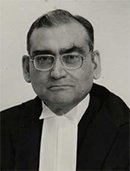
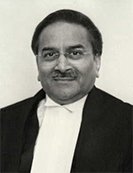
………………………………………J.
(ALTAMAS KABIR)
………………………………………J.
(D.K. JAIN)
………………………………………J.
(MARKANDEY KATJU)
New Delhi,
Dated:01.09.2011
9
In a significant ruling from the Supreme Court of India, Civil Appeal No. 2630 of 1982, involving Bihar State Electricity Board vs. The Patna Electric Supply Co. Ltd. & Ors., illuminates a crucial compensation payment dispute concerning electricity board liabilities. This detailed judgment, available on platforms like CaseOn, provides invaluable insights into the complexities of corporate takeovers and subsequent financial settlements, bringing clarity to a prolonged legal battle.
The primary issue before the Supreme Court was to determine the precise amount of compensation and outstanding liabilities owed by the Bihar State Electricity Board (BSEB) to The Patna Electric Supply Co. Ltd. (PESCO) following BSEB's takeover of PESCO, specifically regarding a contested liability of approximately ₹36.59 lakhs that PESCO claimed to have settled with its bank.
The Court's decision was guided by the provisions of the Indian Electricity Act, 1910, which mandates that compensation for such takeovers be based on the book-value of the assets. Additionally, the principles of natural justice, equity, and fairness in settling outstanding liabilities were applied to ensure that the acquired entity (PESCO) was duly reimbursed for payments made on liabilities that, post-takeover, rightfully belonged to the acquiring entity (BSEB).
The genesis of this litigation dates back to 1982 when the Bihar State Electricity Board (BSEB) took over the Patna Electric Supply Company Limited (PESCO). The initial directive from the Court mandated BSEB to pay PESCO the purchase price based on the book-value of its assets, in accordance with the Indian Electricity Act, 1910.
Despite the 1982 directive, payments remained outstanding, leading PESCO to file I.A. No. 5. On January 8, 2005, the Court determined that the net amount of compensation payable by BSEB to PESCO was ₹135.45 lakhs. Out of this, BSEB had already paid ₹99.72 lakhs. The remaining balance of ₹35.74 lakhs was subsequently paid by BSEB directly to the Bank of India to liquidate PESCO's dues.
A further sum of ₹36.59 lakhs was recorded as a liability in PESCO's accounts. PESCO contended that it had paid this amount to the Bank of India and provided a 'No Objection Certificate' dated March 21, 2001, as proof. The Court, in its 2005 order, had allowed PESCO to recover this sum if it could substantiate the payment with requisite material and an affidavit.
Subsequently, the Bank of India filed two affidavits. The first, dated October 31, 2006, confirmed a final settlement between the Bank and PESCO for ₹45.93 lakhs, which, with accrued interest, totaled ₹48.34 lakhs. This amount was paid by PESCO between January 15, 2001, and December 19, 2001. The second affidavit clarified that an outstanding balance of ₹37,26,137.77 existed in PESCO's Cash Credit Account as of February 5, 1974, and that the Bank had received a total of ₹84,08,363/-, with BSEB contributing ₹35.74 lakhs and PESCO paying ₹48,34,363/-.
For legal professionals and students looking to quickly grasp the essence of such intricate financial and legal rulings, CaseOn.in's 2-minute audio briefs serve as an indispensable tool, offering concise summaries that highlight key judicial pronouncements and their implications.
The Supreme Court carefully distinguished between the two sets of payments. The payment of ₹35.74 lakhs by BSEB successfully concluded its obligation for the *net amount payable* derived from the initial ₹135.46 lakhs assessment. However, the Court found that the sum of ₹48,34,363/-, which PESCO paid to the Bank to settle its Cash Credit Account liabilities (including the disputed ₹36.59 lakhs and interest), represented an obligation that should have been borne by BSEB as part of the takeover. Since PESCO had already settled this liability on behalf of the acquired entity, it was entitled to reimbursement from BSEB.
In its final judgment, the Supreme Court directed the Bihar State Electricity Board to reimburse The Patna Electric Supply Co. Ltd. the sum of ₹48,34,363/-, along with interest at 6% per annum, calculated from December 19, 2001, until the actual date of payment. The Court further mandated that this payment be made within one month from the date of communication of the order.
This judgment is a crucial read for lawyers and law students alike, particularly those specializing in corporate law, mergers and acquisitions, and public sector undertakings. It underscores the meticulous approach required in assessing financial liabilities during corporate takeovers, the critical importance of transparent documentary evidence (such as bank affidavits and 'No Objection Certificates'), and the Court's unwavering commitment to ensuring equitable compensation and the precise settlement of all outstanding dues, even decades after the initial transaction. It reinforces the principle that the acquiring entity ultimately bears the responsibility for the pre-existing, proven liabilities of the acquired entity, necessitating careful scrutiny of all financial records and a clear understanding of the terms of takeover.
All information provided in this blog post is for informational purposes only and does not constitute legal advice. While efforts have been made to ensure accuracy, readers are advised to consult with a qualified legal professional for advice pertaining to their specific circumstances.

 Login with google
Legal Notes
Add a Note....