
As per case facts, the applicant, Bihari Lal Gupta, sought regular bail under Section 483 of BNSS after being arrested for an offense under Section 8/20B of the N.D.P.S. Act, ...
IN THE HIGH COURT OF MADHYA PRADESH
<>
AT JABALPUR
<>
BEFORE
<>
HON'BLE SHRI JUSTICE PRAMOD KUMAR AGRAWAL
<>
ON THE 27
<>
th
<>
OF JANUARY, 2026
<>
MISC. CRIMINAL CASE No. 55263 of 2025
<>
BIHARI LAL GUPTA
<>
Versus
THE STATE OF MADHYA PRADESH
<>
Appearance:
<>
Shri Sandeep Kumar Jain - Advocate for the applicant.
Shri B.K. Upadhyay - Government Advocate for the respondent/State.
ORDER
<>
This is the first application filed by the applicant under Section 483 of
BNSS for grant of regular bail relating to Crime No. 391/2025 registered at
Police Station - Jaithri, District Anuppur (M.P.) for the offence punishable
under Section 8/20B of N.D.P.S. Act. The applicant has been arrested on
12.09.2025.
2.
<>
As per the prosecution story, police seized 12.285 grams of ganja
from the joint possession of applicant and co-accused, therefore, the
aforesaid offence has been registered against him.
3.
<>
Learned counsel for the applicant submits that applicant is innocent
and has been falsely implicated in this case. He is in custody since
12.09.2025. It is also submitted that FSL report has not been received. The
procedure under Section 52-A of NDPS Act was complied with after a delay
13 days. It is further submitted that seizure memo does not mentioned that
1 MCRC-55263-2025NEUTRAL CITATION NO. 2026:MPHC-JBP:7148
where the applicant had kept the bag at the time of search. It is further
submitted that the grounds of arrest has not been communicated to the
applicant, which is mandatory under Article 22(1) of Constitution of
India. There is violation of Article 22 of the Constitution of India and
detention is illegal on this ground also, applicant is entitled to be released on
bail. Applicant is in custody since 09.06.2025. He has placed reliance upon
the decisions of Hon'ble Supreme Court in the cases of Mihir Rajesh Shah
<>
Vs. The State of Maharashtra (Criminal Appeal No.2195 of 2025).
<>
Trial will
take time to conclude, hence, it is prayed that applicant may be released on
bail.
4.
<>
On the other hand, learned counsel for the State has opposed grant
of bail to the applicant and submits that applicant was having knowledge of
his arrest and he was well aware of the fact that contraband has been seized
from him and measured in front of him. The intention behind furnishing the
ground of arrest is that accused should know why he is being arrested. In this
case, applicant was well aware that contraband articles has been seized from
his possession and he knows the consequences of possessing such
contraband articles. When applicant was arrested, police has informed him
that for which offence he has been arrested. The reliance placed by the
learned counsel for the applicant in the aforesaid cases of is not applicable in
this case as the facts and circumstances of this case different from the
aforesaid cited cases. It is submitted that applicant knew that why he has
been arrested therefore at the time of deciding the bail application before the
trial Court, the question regarding ground of arrest was not raised by the
2 MCRC-55263-2025NEUTRAL CITATION NO. 2026:MPHC-JBP:7148
applicant. Applicant has criminal record of five cases, out of which four
cases are of a similar nature bearing Crime No.294/19, Crime No.258/23,
Crime No.330/2021 and Crime No.391/25. One case is under the Excise Act
bearing Crime No.322/25. Hence, the applicant is not entitled to be released
on bail.
5.
<>
Heard learned counsel for the parties and perused the record.
6.
<>
In this case, on behalf of the present applicant, it is argued that
applicant is also entitled for bail on the ground of non-filing of FSL report
along with the chargesheet.
7.
<>
It is pertinent to mention here that in recent judgment of Supreme
Court delivered in the case of CBI. Vs. Kapil Wadhawan 2024 SCC OnLine
<>
SC 66
<>
, wherein it was held as under:
"22. In view of the above settied legal position, there
remains no shadow of doubt that the statutory requirement of the
report under Section 173 (2) would be complied with if the various
details prescribed therein are included in the report. The report
under Section 173 is an intimation to the court that upon
investigation into the cognizable offence, the investigating officer
has been able to procure sufficient evidence for the court to
inquire into the offence and the necessary information is being
sent to the court. The report is complete if it is accompanied with
all the documents and statements of witnesses as required by
Section 175 (5). As settled in the afore-stated case, it is not
necessary that all the details of the offence must be stated.
3 MCRC-55263-2025NEUTRAL CITATION NO. 2026:MPHC-JBP:7148
23. The benefit of proviso appended to sub-section (2) of
Section 167 of the Code would be available to the offender only
when a chargesheet is not filed and the investigation is kept
pending against him. Once however, a chargesheet is filed, the
said right ceases. It may be noted that the right of the investigating
officer to pray for further investigation in terms of sub-section (8)
of Section 173 is not taken away only because a chargesheet is
filed under sub-section (2) thereof against the accused. Though
ordinarily all documents relied upon by the prosecution should
accompany the chargesheet, nonetheless for some reasons, if all
the documents are not filed along with the chargesheet, that reason
by itself would not invalidate or vitiate the chargesheet. It is also
well settled that the court takes cognizance of the offence and not
the offender. Once from the material produced along with the
chargesheet, the court is satisfied about the commission of an
offence and takes cognizance of the offence allegedly committed
by the accused, it is immaterial whether the further investigation in
terms of Section 173(8) is pending or not. The pendency of the
further investigation qua the other accused or for production of
some documents not available at the time of filing of chargesheet
would neither vitiate the chargesheet, nor would it entitle the
accused to claim right to get default bail on the ground that the
chargesheet was an incomplete chargesheet or that the chargesheet
was not filed in terms of Section 173(2) of Cr. P.C."
4 MCRC-55263-2025NEUTRAL CITATION NO. 2026:MPHC-JBP:7148
8.
<>
Though in cases of State of Haryana Vs. Dildar Ram @ Dari, CRM-
M25600-2021, Krishan Singh Vs. State of Haryana, CRR - 755/2021, Bablu
Singh Vs. The State of Madhya Pradesh, Special Leave to Appeal (Crl.) No.
631/2024, Vinay Kumar Singh Vs. Union of India, M.Cr.C. No. 39524/2022,
Dharmendra Kumar Yadav Vs. Union of India, M.Cr.C. No. 38897/2022,
Pradeep Kumar Vs. Union of India, M.Cr.C. No. 48460/2022, Ajit Singh
alias Jeeta and another Vs. State of Punjab, Cr.R. No. 4659/2015 and
Amanpreet Kaur @ Preeti (IN JC) Vs. State, Cri. Rev. P. 471/2023, the
accused person has been enlarged on interim bail/bail by the Hon'ble Apex
Court/High Court.
9.
<>
It is pertinent to mention here that, interim bail has been declined by
the Hon'ble Apex Court in the case of CBI. Vs. Kapil Wadhawan (supra),
Pabitra Narayan Pradhan Vs. The State (NGT) of Delhi (SLP (crI.) Diary
No. 43791 of 2023), Shankar @ Shiva Maheshwar Savai Vs. The State of
Gujarat (order dated 03.03.2023 in SLP (CrI) No.2562/2023)
10
<>
. Therefore, in view of the aforesaid discussion, there is no ground
for grant of bail on the basis of incomplete charge sheet to the present
applicant.
11.
<>
The contention of the learned counsel for the applicant that
grounds of arrest were not communicated to the applicant at the time of his
arrest and thus, he should be granted bail, is also unmerited. It is to be noted
that in the notice under Section 50 of NDPS Act served upon the applicant, it
was specifically mentioned that the raiding team was in receipt of
information that applicant had kept ganja. Thus, prima facie, it cannot be
5 MCRC-55263-2025NEUTRAL CITATION NO. 2026:MPHC-JBP:7148
held that the applicant herein was not made aware as to why and on what
ground he had been arrested in this case. This Court's attention has also been
drawn to the judgment dated 14.08.2025 of the Hon'ble Supreme Court in
State of Karnataka v. Sri Darshan: 2025 INSC 979
<>
wherein it has been held
as under:
" 78.The final word: The true test to ascertain whether discretion
has been judiciously exercised or not is to see whether the court
has been able to strike a balance between the personal liberty of
the accused and the interest of the State, in other words, the
societal interests. Each bail application should be decided in the
facts and circumstances of the case having regard to the various
factors germane to the well settled principles of grant or refusal of
bail. In the words of Philip Stanhope, “Judgment is not upon all
occasions required, but discretion always is..
79. In the result all these appeals succeed and are allowed. The
impugned orders of bail passed by the High Court are hereby set
aside.
20. In the present case, the High Court, by the impugned order,
enlarged the respondents on bail, primarily relying on a set of
factual and legal findings. However, a closer examination of these
findings reveals serious infirmities that warranting interference.
We shall discuss the same in detail.
20.1. Delay in furnishing the grounds of arrest cannot, by itself,
constitute a valid ground for grant of bail.
20.1.1. The learned counsel for the respondents – accused
contended that the arrest was illegal as the grounds of arrest were
not furnished immediately in writing, thereby violating Article 22
(1) of the Constitution and Section 50 Cr.P.C (now Section 47 of
the Bharatiya Nagarik Suraksha Sanhita). This submission,
however, is devoid of merit.
20.1.2. Article 22(1) of the Constitution mandates that “no person
who is arrested shall be detained in custody without being
informed, as soon as may be, of the grounds for such arrest, nor
6 MCRC-55263-2025NEUTRAL CITATION NO. 2026:MPHC-JBP:7148
shall he be denied the right to consult, and to be defended by, a
legal practitioner of his choice”. Similarly, Section 50 (1) Cr.P.C.
requires that “every police officer or other person arresting any
person without warrant shall forthwith communicate to him full
particulars of the offence for which he is arrested or other grounds
for such arrest.
20.1.3. The constitutional and statutory framework thus mandates
that the arrested person must be informed of the grounds of arrest
– but neither provision prescribes a specific form or insists upon
written communication in every case. Judicial precedents have
clarified that substantial compliance with these requirements is
sufficient, unless demonstrable prejudice is shown.
20.1.4. In Vihaan Kumar v. State of Haryana22, it was reiterated
that Article 22(1) is satisfied if the accused is made aware of the
arrest grounds in substance, even if not conveyed in writing.
Similarly, in Kasireddy Upender Reddy v. State of Andhra
Pradesh 23 , it was observed that when arrest is made pursuant a
warrant, reading out the warrant amounts to sufficient compliance.
Both these post- Pankaj Bansal decisions clarify that written,
individualised grounds are not an inflexible requirement in all
circumstances. 2025 SCC Online SC 456 2025 INSC 768.
20.1.5. While Section 50 Cr.P.C is mandatory, the consistent
judicial approach has been to adopt a prejudice-oriented test when
examining alleged procedural lapses. The mere absence of written
grounds does not ipso facto render the arrest illegal, unless it
results in demonstrable prejudice or denial of a fair opportunity to
defend.
20.1.6. The High Court, however, relied heavily on the alleged
procedural lapse as a determinative factor while overlooking the
gravity of the offence under Section 302 IPC and the existence of
a prima facie case. It noted, inter alia, that there was no mention in
the remand orders about service of memo of grounds of arrest
(para 45); the arrest memos were allegedly template-based and not
personalised (para 50); and eyewitnesses had not stated that they
were present at the time of arrest or had signed the memos (para
48). Relying on Pankaj Bansal v. Union of India24 and Prabir
Purkayastha v. State (NCT of Delhi) (supra), it concluded (paras
43, 49 – 50) that from 03.10.2023 onwards, failure to serve
7 MCRC-55263-2025NEUTRAL CITATION NO. 2026:MPHC-JBP:7148
detailed, written, and individualised grounds of arrest immediately
after arrest was a violation entitling the accused to bail.
20.1.7. In the present case, the arrest memos and remand records
clearly reflect that the respondents were aware of the reasons for
their arrest. They were legally (2024) 7 SCC 576 represented from
the outset and applied for bail shortly after arrest, evidencing an
immediate and informed understanding of the accusations. No
material has been placed on record to establish that any prejudice
was caused due to the alleged procedural lapse. In the absence of
demonstrable prejudice, such as irregularity is, at best, a curable
defect and cannot, by itself, warrant release on bail. As reiterated
above, the High Court treated it as a determinative factor while
overlooking the gravity of the charge under Section 302 IPC and
the existence of a prima facie case. Its reliance on Pankaj Bansal
and Prabir Purkayastha is misplaced, as those decisions turned on
materially different facts and statutory contexts. The approach
adopted here is inconsistent with the settled principle that
procedural lapses in furnishing grounds of arrest, absent prejudice,
do not ipso facto render custody illegal or entitle the accused to
bail.
20.2. Courts are not expected to render findings on the merits of
the case at the bail stage."
12.
<>
On due consideration to the submissions advanced by the learned
counsel for the parties and after perusal of record, it is found that applicant
was aware that contraband articles "Ganja" has been seized from his
possession and he knows the consequences of possessing contraband articles.
Police has also informed applicant that for which offence he has been
arrested. No material has been placed on record to establish that any
prejudice was caused due to the alleged procedural lapse. Total 12.285 of
Ganja were seized from the possession of present applicant and co-accused.
Applicant has criminal antecedents of four cases of a similar nature, which
shows his repeated involvement in narcotics-related offences.
8 MCRC-55263-2025NEUTRAL CITATION NO. 2026:MPHC-JBP:7148
(PRAMOD KUMAR AGRAWAL)
<>
JUDGE
<>
13.
<>
Therefore, looking to the overall facts and circumstances of the
case, this Court is not inclined to enlarge the applicant on bail.
14.
<>
Accordingly, this MCRC stands dismissed.
vai
9 MCRC-55263-2025NEUTRAL CITATION NO. 2026:MPHC-JBP:7148

 Login with google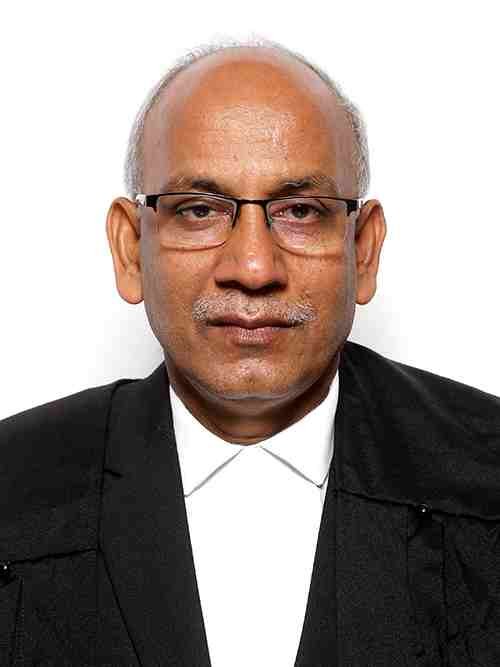
Legal Notes
Add a Note....