
Whether a Civil Court can pass a decree on the ground that the defendant is a trespasser in a simple suit for eviction is the question involved in this appeal.

No Acts & Articles mentioned in this case
REPORTABLE
IN THE SUPREME COURT OF INDIA
CIVIL APPELLATE JURISDICTION
CIVIL APPEAL NO. _________OF 2009
[Arising out of Special Leave Petition (Civil) No. 10194 of 2007]
BISWANATH AGARWALLA … APPELLANT
Versus
SABITRI BERA & ORS. … RESPONDENTS
WITH
CIVIL APPEAL NO. _________OF 2009
[Arising out of Special Leave Petition (Civil) No. 15058 of 2007]
BISHWANATH AGARWALLA … APPELLANT
Versus
SABITRI BERA & ORS. … RESPONDENTS
J U D G M E N T
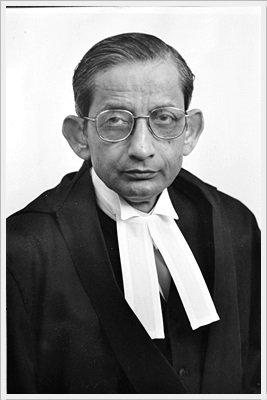
S.B. SINHA, J.
1.Leave granted.
2.Whether a Civil Court can pass a decree on the ground that the
defendant is a trespasser in a simple suit for eviction is the question involved
in this appeal.
It arises out of a judgment and order dated 17
th
August, 2006 passed
by a learned single judge of the Calcutta High Court in C.O.A. No. 253 of
2006 in RVW No. 2671 of 1996.
3.The suit premises is a shop situate in a small town commonly known
as Raghunathpur in the district of Purulia. Appellant herein is said to have
entered into possession of the suit premises in the year 1970. Originally, he
claimed to have come into possession in the said premises pursuant to or in
furtherance of an agreement for sale entered into on or about 18
th
March,
1970 by and between him and S.K. Abdul Wahid Molla, the father of
Safiqur Rahaman.
The respondents purchased the suit premises from Safiqur Rahaman
on 21
st
July, 1980 by three registered deeds of sale.
4.Indisputably, the respondent No.1 filed a suit being Title Suit No.88
of 1990 in the Court of Munsif, Raghunathpur, District Purulia (West
Bengal) inter alia praying for eviction of the appellant from the suit premises
2
and mesne profit claiming themselves to be the owners and landlords
thereof.
He prior to institution of the suit also served a notice upon the
appellant in terms of Section 106 of the Transfer of Property Act asking him
to handover peaceful and vacant possession alleging that he had been a
tenant therein on a monthly rental of Rs.45/- under his vendor Safiqur
Rahaman.
5.Appellant denied and disputed that he had ever been a tenant of
Safiqur Rahaman at any point of time. The relationship between them was,
thus, denied and disputed.
6.The learned trial judge having regard to the rival pleadings of the
parties framed the following issues:
“1)Have the plaintiffs any cause of action to bring this suit?
2)Is the suit maintainable in its present form?
3)Is the suit barred by law of limitation?
4)Is the suit barred by provisions of the S.R. Act?
5)Is the suit barred by the principle of waiver, estoppel and
acquiescence?
3
6)Have the plaintiffs landlord and tenant relationship with
the defendant?
7)Have the plaintiffs served valid notice u/s 106 of the T.P.
Act?
8)Have the plaintiffs right, title and interest in the suit
property?
9)Are the plaintiffs entitled to get the decree as prayed for?
10)To what other reliefs, if any are the plaintiffs entitled?
The learned trial judge opined:
i.The plaintiffs have proved to be the owner of the suit property
having purchased the same from the admitted owner S.K. Abdul Wahid
Molla;
ii.The defendant has failed to prove his independent title over the
suit property.
iii.The plaintiffs have failed to prove the relationship of landlord
and tenant in between the plaintiffs and the defendant
iv.The plaintiffs having failed to prove the tenancy are not entitled
to a decree.
4
7.The respondent No.1 preferred an appeal thereagainst marked as Title
Appeal No. 20/1993. By a judgment and order dated 31
st
May, 1995, the
learned Appellate Court held that although the plaintiffs have failed to prove
the relationship of landlord and tenant by and between them and the
defendant or that the defendant had been let into the tenanted premises on
leave and license basis, the plaintiffs - respondents are entitled to a decree
for possession on the basis of his general title.
8. The learned First Appellate Court also rejected the appellant’s
contention that he has acquired title by adverse possession.
It was held:
“It is needless to mention the learned Munsif of the
court below in the body of the judgment, at the
time of discussion (page 20 begins) issue nos. 6
and 8 on being satisfied by the plaintiffs chain of
documents of their title over the suit premises and
in such a position, the plaintiffs were entitled to get
the decree for recovery of possession as owner of
the suit premises and in this regard decision so
referred by the learned lawyer of the appellants as
reported in AIR 1984 ROC 78 Allahabad page A
35, and other decision so reported in AIR 1984
Allahabad page 66 completely on the flat point of
the suit in favour of the plaintiffs and where it has
been clearly stated in a suit for eviction by the
plaintiffs against the defendant under the relevant
provision of Transfer of Property Act where title of
5
the plaintiffs over the suit property being proved
and the relationship of landlord and tenant not
proved, in spite of the same, the plaintiffs or
proving the landlords title are entitled to get
recovery of possession of the suit premises from
the defendant as owner thereof and what in fact,
happened in the given facts and circumstances, out
of which this appeal arose.
xxx xxx xxx
For the discussion made above and on the
existing materials on the case record and when the
plaintiffs proved their title and ownership over the
suit premises by virtue of Ext. 4 series and on the
other hand the defendant as per their written
statement failed and neglected to discharge his
onus on proving his right or permanency in the suit
premises as tenant or otherwise, the plaintiffs suit
must succeed and the findings of the learned
Munsif in deciding the issue Nos. 6 and 8
particularly the contents of the issue no. 6 are not
at all satisfactory and cannot be sustained in law in
the given facts and circumstances of the case and
as such the irresistible conclusion from the above
discussion is that the judgment and decree so
passed by the Ld. Munsif is not tenable in law and
the plaintiffs are entitled to get the decree for
eviction against the defendants. As a result, the
appeal succeed in part on contest. “
9.By reason of the impugned judgment, the High Court dismissed the
Second Appeal preferred by the appellant, opining:
“I am sorry to say that such submission on the part
of the appellant cannot be accepted. A person can
6
be in possessory right in various ways i.e.
licensee/tenant/permissible possession holder/
adverse possession holder/trespasser. But, the
onus heavily lies with the tenant to prove in what
capacity he is occupying the premises as the
landlord is not in a position to claim any recovery
of the possession as against him since there is no
landlord and tenant relationship. In the instant
case, the schedule land under the deed of gift and
so-called agreement for sale are different. So far
as the execution of Deed of gift is concerned, it has
been sufficiently proved. So far as payment of rent
is concerned, that has been stated in the cross-
examination. The only failure is about the non-
disclosure of the rent receipt. But, simply such
statement will not develop the case of adverse
possessory right of the tenant, which he has
claimed now before the second appellate court.
Therefore, when he is not claiming to be a tenant
at best, he can claim as a licensee of the premises
in question whereunder the title of the landlord has
already been proved by virtue of the document.
Therefore, such licensee is estopped from
questioning the title of the landlord as per Section
116 of the Indian Evidence Act, 1872. Tenancy is
not proved, therefore, he is not a tenant. He is not
claiming to be the licensee although he could have,
therefore, I cannot compel him to be licensee. The
remaining, if any, is permissive occupation, which
is as good as license. However, it is well settled
that the permissible occupation cannot be regarded
as adverse possessory right. Adverse possession is
not proved. Therefore, the remaining capacity, if
any, is trespasser. It is far to say that a trespasser
can challenge the title of the landlord. Under such
situation the presumption, which has been drawn
by the lower appellate court is an appropriate
presumption on that score.”
7
10.A review application filed thereagainst by the appellant has also been
dismissed by the High court.
Both the aforementioned orders are in question before us.
11.Mr.V. Prabhakar, learned counsel appearing on behalf of the appellant
would contend:
i.No substantial questions of law having been formulated by the
High Court, a jurisdictional error has been committed by it in
passing the impugned judgment.
ii.The relationship of landlord and tenant and/or the licensor and
licensee having not been proved, the High Court as also the
First Appellate Court committed a serious error in passing the
impugned judgment on the premise that the appellant was a
trespasser.
12.Mr. R.K. Gupta, learned counsel appearing on behalf of the
respondents, on the other hand, would support the impugned judgment,
contending:
8
i.Even in a suit for eviction, the plaintiffs would be entitled to
obtain a decree for possession relying on or on the basis of his
title.
ii.In a suit for eviction, it is for the defendant to show that he has
a right to remain on the tenanted premises either as a permanent
tenant or otherwise.
13.The plaintiffs served a notice on the defendant under Section 106 of
the Transfer of Property Act. Such notice evidently was served on the
premise that the defendant – appellant was his tenant. He denied and
disputed the same. The plaintiff in his plaint disclosed the cause of action
for the suit having arisen on and from 1
st
October, 1990 from which date the
monthly tenancy had ceased to exist. The plaintiff prayed for grant of mesne
profits at the rate of Rs.3/- for each day for wrongful occupation of the
premise as after the termination of tenancy the defendant was to be treated as
a trespasser.
14.Paragraph 10 of the plaint reads as under:
“10.That for the purpose of jurisdiction and
court fee the value of this suit for prayer (A) is laid
at Rs. (sic) For eviction a tentative court fee of
9
Rs.100/- is paid for future mesne profits to a
decree.”
How much court fee was paid and on what basis has not been
disclosed.
The reliefs prayed for by the plaintiffs are:
“a)A decree for eviction of the defendant from
the schedule premises, be passed against the
defendants.
b)A decree for mesne profits in case eviction
is allowed, at the rate of Rs.3/- per day from (sic)
be passed against the defendants as scheduled in
schedule-II and III below and for future mesne
profits uptil delivery of possession of suit property
at the rate the court is pleased to order for which
tentative court fee is paid at present.”
15.It is not clear what amount of court fee was paid. Presumably, the
court fee was paid of one year’s rent that is calculated on the basis of twelve
months’ rent at the rate of Rs.45/- in terms of Section 7(xi)(cc) of the Court
Fees’ Act, 1870.
Section 4 of the Court Fees’ Act, 1870 reads as under:
10
“4. Fees on documents filed, etc., in High
Courts in their extraordinary jurisdiction;- No
document of any of the kinds specified in the First
or Second Schedule to this Act annexed, as
chargeable with fees, shall be filed, exhibited or
recorded in, or shall be received or furnished by,
any of the said High Courts in any case coming
before such Court in the exercise of its
extraordinary original civil jurisdiction; or in the
exercise of its extraordinary original criminal
jurisdiction;
in their appellate jurisdiction; - or in the
exercise of its jurisdiction as regards appeals from
the judgments (other than judgments passed in the
exercise of the ordinary original civil jurisdiction
of the Court) of one or more Judges of the said
Court, or of a division Court;
or in the exercise of its jurisdiction as
regards appeals from the Courts subject to its
superintendence;
as Courts of reference and revision. – or in
the exercise of its jurisdiction as a Court of
reference or revision’
unless in respect of such document there be
paid a fee of an amount not less than that indicated
by either of the said Schedules as the proper fee for
such document.”
For obtaining a decree for recovery of possession, court fees are
required to be paid in terms of Section 7(v) of the Court Fees’ Act, 1870 i.e.,
according to the value of the subject matter of the suit.
11
16.We will have to proceed on the basis that whereas the plaintiff proved
his title, the defendant could not. The learned trial judge has held that the
defendant could not prove the agreement of sale.
The High Court formulated the following points in the form of
question which are as under:
“6.Have the plaintiffs landlord and tenant relationship with
the defendant?
7.Have the plaintiffs served valid notice u/s 106 of the T.P.
Act.”
17.Was, in the aforementioned situation, a suit for recovery of possession
maintainable is the question.
The landlord in a given case although may not be able to prove the
relationship of landlord and tenant, but in the event he proves his general
title, may obtain a decree on the basis thereof. But in a case of this nature, a
defendant was entitled to raise a contention that he had acquired an
indefeasible title by adverse possession.
In Radha Devi and Ors. v. Ajay Kumar Sinha [1998 (2) BLJR 1061],
the Patna High Court accepted that a landlord is entitled to obtain a decree of
12
eviction on the basis of his general title, though he could not prove the
relationship of landlord and tenant. It was opined:
“…In other words, where there is relationship of
landlord and tenant, order of eviction be passed on
the existence of any one of the grounds mentioned
in Section 11 of the said Act. It is, therefore, clear
that proof of relationship of landlord and tenant
gives right to a landlord to get an order of eviction
under the provisions of the aforesaid Act…”
In Champa Lal Sharma v. Smt. Sunita Maitra [(1990) 1 BLJR 268], it
was held:
“It is also well settled that one such
relationship is admitted or established,
tenant would be estopped and precluded
from challenging the title of the landlord and
if he does so, under the general rule, make
himself liable for eviction on that ground.
It, therefore, logically follows that a finding
of existence of relationship of landlord and
tenant is a sine qua non for passing a decree
for eviction against a tenant except in a case,
as mentioned hereinbefore the plaintiff on
payment of ad valorem Court fee may obtain
a decree for eviction on the basis of his
general title.
*** *** ***
13
It is, therefore, evident that the court has to
ultimately decide the question as to whether
the plaintiff in case his title is in dispute,
would be entitled to withdraw the rent so
deposited by the tenant or not. It, therefore,
makes the position, in my opinion,
absolutely clear that before the said question
is decided finally so as to enable the court to
come to a decision whether the plaintiff
landlord is entitled to a decree for eviction
or not must come to the finding that there
exists a relationship of landlord and tenant
by and between the plaintiff and the
defendant, if such an issue is raised. In
absence of any such finding the court will
have no jurisdiction to pass a decree of
evidence as against the defendant in such a
suit.”
[See also Deepak Kumar Verma and Ors. v. Ram Swarup Singh 1992
(1) BLJR 102]
A defendant as is well known may raise inconsistent pleas so long
they are not mutually destructive.
In Gautam Sarup v. Leela Jetly and Ors. [(2008) 7 SCC 85], this Court
held:
“22. What, therefore, emerges from the discussions
made hereinbefore is that a categorical admission
cannot be resiled from but, in a given case, it may
14
be explained or clarified. Offering explanation in
regard to an admission or explaining away the
same, however, would depend upon the nature and
character thereof. It may be that a defendant is
entitled to take an alternative plea. Such alternative
pleas, however, cannot be mutually destructive of
each other.”
An issue as to whether the defendant was a trespasser or not, thus, was
required to be framed.
18.Mr. Gupta, however, would rely upon a decision of this Court in
Bhagwati Prasad v. Shri Chandramaul [(1966) 2 SCR 286].
Gajendragadkar, C.J. therein was dealing with the rules of pleadings. It was
opined that although the rules of pleadings should be adhered to; when
parties go to the trial knowing fully well the points he is required to meet,
the Court may not insist on the strict application thereof, stating:
“ When Mr. Setalvad was pressing his point
about the prejudice to the defendant and the
impropriety of the course adopted by the High
Court in confirming the decree for ejectment on
the ground of licence, we asked him whether he
could suggest to us any other possible plea which
the defendant could have taken if a licence was
expressly pleaded by the plaintiff in the alternative.
The only answer which Mr. Setalvad made was
that in the absence of definite instructions, it would
not be possible for him to suggest any such plea. In
15
our opinion, having regard to the pleas taken by
the defendant in his written statement in clear and
unambiguous language, only two issues could arise
between the parties : is the defendant the tenant of
the plaintiff, or is he holding the property as the
licence subject to the terms specified by the written
statement? In effect, the written statement pleaded
licence, subject to the condition that the licence
was to remain in possession until the amount spent
by him was returned by the plaintiff. This latter
plea has been rejected, while the admission about
the permissive character of the defendant's
possession remains. That is how the High Court
has looked at the matter and we are unable to see
any error of law in the approach by the High Court
in dealing with it.
In support of its conclusion that in a case
like the present a decree for ejectment can be
passed in favour of the plaintiff, though the
specific case of tenancy set up by him is not
proved, the High Court has relied upon the two of
its earlier Full Bench decisions. In Abdul Ghani v.
Musammat Babni I.L.R. 25 All. 256 the Allahabad
High Court took the view that in a case where the
plaintiff asks for the ejectment of the defendant on
the ground that the defendant is a tenant of the
premises, a decree for ejectment can be passed
even though tenancy is not proved, provided it is
established that the possession of the defendant is
that of a licensee. It is true that in that case, before
giving effect to the finding that the defendant was
a licensee, the High Court remanded the case,
because it appeared to the High Court that that part
of the case had not been clearly decided. But once
the finding was returned that the defendant was in
possession as a licensee, the High Court did not
feel any difficulty in confirming the decree for
16
ejectment, even though the plaintiff had originally
claimed ejectment on the ground of tenancy and
not specifically on the ground of licence. To the
same effect is the decision of the Allahabad High
Court in the case of Balmakund v. Dalu I.L.R. 25
All. 498”
(Emphasis supplied).
The said decision itself is an authority for the proposition that it was
necessary to bring on record some evidence that the defendant was a
licensee and he could not have raised any other alternative plea. It was
followed by a learned Single Judge of the Allahabad High Court in Shri
Ram & Anr. vs. Smt. Kasturi Devi & Anr. [AIR 1984 Allahabad 66],
stating:
“15. Lastly, it was argued for the appellants that
there is no relationship of landlord and tenant as
between Smt. Kastoori Devi on the one hand and
Sri Ram or Satya Pal. on the other. The trial court
was of the view that no such relationship has been
made out. This finding was, however, reversed by
the lower appellate court and not without cogent
basis. Sri Ram admits that one Desh Rai was the
tenant in this part of the house who vacated. Sri
Ram thereafter came in the said portion of the
house. In cross-examination, he admitted also that
it was agreed between him and Smt Kastoori Devi
what would be treated as the rent for the said
portion. Further the case of the appellants is that on
January 20. 1970, Sri Ram got this portion allotted
17
in his name. All these are pointers in the direction
that there was relationship of landlord and tenant
and not that Sri Ram has been residing in that
portion of the house as licencee of Smt. Kastoori
Devi. This apart the suit for eviction brought by
Smt. Kastoori Devi against them does not fail even
if it is assumed that there was no relationship of
landlord or of tenant or that Sri Ram was in the
position of a mere licensee. The licence has been
determined by registered notice given by Smt.
Kastoori Devi already. In the plaint. Smt. Kastoori
Devi referred expressly to her title to the house by
virtue of the will executed in her favour by the
husband. The law is settled that even if Sri Ram
was the licensee, Smt. Kastoori Devi can, on the
basis of title claim eviction even though she has set
up the case that there was the relationship of the
landlord and tenant and assumed that the same is
not established, vide Bhagwati Pd. v. Chandramaul
AIR 1966 SC 735. Abdul Ghani v. Mst. Babni
(1903) ILR 25 All 256 (FB) Bal Mukund v. Dalu
(1903) ILR 25 All 498 (FB).”
(Emphasis supplied)
19.Mr. Gupta would further rely upon a decision of the Calcutta High
Court in Hajee Golam Hossain Ostagar vs. Sheik Abu Bakkar [AIR 1936
Calcutta 351] to contend that the defendant in a suit for ejectment was bound
to show that he had a right to remain on a land permanently wherefor the
onus would be on him. That case related to a agricultural tenancy. A simple
tenancy can be terminated by service of notice under Section 106 of the
18
Transfer of Property Act. Once a valid notice is served, the tenant becomes
trespasser.
The situation, however, has undergone a sea change after almost all
the States have enacted the premises tenancy Acts governing the conditions
of tenancy in respect of house premises. The State of West Bengal has also
enacted the West Bengal Premises Tenancy Act, 1956.
In terms of the 1956 Act, the tenant upon termination of tenancy does
not become a trespasser. He becomes a statutory tenant (loosely called).
When, however, a defendant is a trespasser and is sued as such, the
situation would be totally different. Plaintiff must file a suit having regard
to the cause of action thereof. The Court, in a given case, mould the relief
having regard to the provisions of Order VII Rule 7 of the Code of Civil
Procedure, but the said provision cannot be applied in a situation of this
nature.
20.We, therefore, are of the opinion that it is not a case where by non
framing of an issue as to whether the defendant – appellant was a trespasser
or not he was not prejudiced. Had such an issue been framed he could have
brought on record evidence to establish that he had the requisite animus
19
possidendi, particularly in view of the fact that it has been held by the courts
below that he was not put in possession by the predecessor-in-interest of the
plaintiffs in terms of an agreement for sale or otherwise. If he has not been
able to prove the agreement, he could have taken the other plea, i.e., he has
acquired indefeasible title by adverse possession. He is said to have been in
possession of the suit premises for more than twelve years prior to the
institution of the suit. The question as to whether he acquired title by
adverse possession was a plausible plea. He, in fact, raised the same before
the appellate court.
21.Submission before the First Appellate Court by the defendant that he
had acquired title by adverse possession was merely argumentative in nature
as neither there was a pleading nor there was an issue. The learned trial
court had no occasion to go into the said question.
22.We, therefore, are of the opinion that in a case of this nature an issue
was required to be framed. Furthermore, the High Court while determining
the issues involved in the Second Appeal should have formulated questions
of law.
20
In Dharam Singh vs. Karnail Singh & Ors. [(2008) 9 SCC 759], this
Court held:
“6.In response, learned Counsel for the
respondents submitted that on considering the
memorandum of appeal and the grounds indicated
therein, the High Court had allowed the second
appeal and, therefore, there was nothing wrong. It
is stated that after considering the materials on
record, the High Court had recorded its findings
that the suit deserves to be dismissed.
xxx xxx xxx
9.A perusal of the impugned judgment passed
by the High Court does not show that any
substantial question of law has been formulated or
that the second appeal was heard on the question,
if any, so formulated. That being so, the judgment
cannot be maintained.
xxx xxx xxx
15.Under the circumstances, the impugned
judgment is set aside, we remit the matter to the
High Court so far as it relates to Second Appeal
No. 285 of 2000 for disposal in accordance with
law. The appeal is disposed of on the aforesaid
terms with no order as to costs.”
{See also Koppisetty Venkat Ratnam (D) through LRs. v. Pamarti
Venkayamma [(2009) 4 SCC 244]}
21
23.However, we are of the opinion that keeping in view the peculiar facts
and circumstances of this case and as the plaintiffs have filed the suit as far
back in the year 1990, the interests of justice should be subserved if we in
exercise of our jurisdiction under Article 142 of the Constitution of India
issue the following directions with a view to do complete justice to the
parties.
i.The plaintiffs may file an application for grant of leave to
amend his plaint so as to enable him to pray for a decree for
eviction of the defendant on the ground that he is a trespasser.
ii.For the aforementioned purpose, he shall pay the requisite court
fee in terms of the provisions of the Court Fees Act.
iii.Such an application for grant of leave to amend the plaint as
also requisite amount of court fees should be tendered within
four weeks from date.
iv.The defendant – appellant would, in such an event, be entitled
to file his additional written statement.
22
v.The learned trial judge shall frame an appropriate issue and the
parties would be entitled to adduce any other or further
evidence on such issue.
vi.All the evidences brought on record by the parties shall,
however, be considered by the court for the purposes of
disposal of the suit.
vii.The learned trial judge is directed to dispose of the suit as
expeditiously as possible and preferably within 3 months from
the date of filing of the application by the plaintiffs in terms of
the aforementioned direction (i).
24.The appeals are allowed with the aforementioned directions. No costs.
……………….…..………….J.
[S.B. Sinha]
..………………..……………J.
[Deepak Verma]
New Delhi;
August 4, 2009
23

 Login with google
Legal Notes
Add a Note....