
As per case facts, a slum redevelopment project led to a dispute between the developer (appellant) and a contractor (respondent) regarding construction activities and FSI sharing. An Arbitral Tribunal issued ...
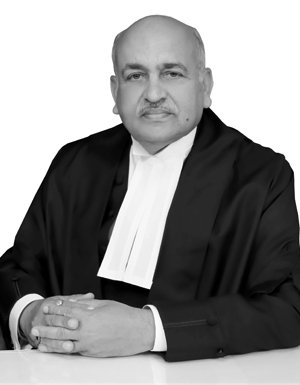

2024 INSC 478 REPORTABLE
IN THE SUPREME COURT OF INDIA
CIVIL APPELLATE JURISDICTION
CIVIL APPEAL NO.7247 OF 2024
(Arising out of Special Leave Petition (C) No.16451 of 2023)
Bombay Slum Redevelopment Corporation
Private Limited … Appellant
versus
Samir Narain Bhojwani … Respondent
with
CIVIL APPEAL NO.7248 OF 2024
(Arising out of Special Leave Petition (C) No.20359 of 2023)
and
CIVIL APPEAL NO.7249 OF 2024
(Arising out of Special Leave Petition (C) No. 14238 of 2024)
(Diary No.40494 of 2023)
J U D G M E N T
ABHAY S. OKA, J.
1.The application for permission to file special leave
petition is allowed. Leave granted.
FACTUAL ASPECTS
2.These appeals take exception to the same judgment and
order dated 7
th
July 2023 passed by the High Court of
Civil Appeal @ SLP (C) No.16451 of 2023, etc. Page 1 of 35
Judicature at Bombay. Therefore, the same are being decided
together. We are setting out a few factual aspects necessary
for deciding the appeals.
3.On 31
st
March 1993, the Maharashtra Housing and Area
Development Authority (MHADA) executed a lease agreement
in respect of the subject property in favour of Andheri Kamgar
Nagar Cooperative Housing Society Limited (for short, ‘the
Society’). It is stated to be a society of slum dwellers. The
Society, by the agreement dated 6
th
October 1996, appointed
M/s. Aurora Properties and Investments (for short, ‘M/s.
Aurora’) as the property developer to implement a slum
rehabilitation scheme. M/s. Aurora was to construct 237
rehabilitation tenements for slum dwellers and 40 tenements
for projectaffected persons (PAPs) free of cost and develop the
property using the available Floor Space Index (FSI) and
dispose of the same. It appears that M/s. Aurora could not
discharge its obligations. Therefore, by the agreement dated
22nd September 1999 (described as an agreement for the
grant of subdevelopment rights), the society appointed
Bombay Slum Redevelopment Corporation Private Limited
(the appellant) as the developer. Apart from taking over the
obligations of M/s. Aurora under the development agreement
dated 6th October 1996, the appellant corporation agreed to
hand over 15,000 square feet of builtup area in the
redeveloped property to M/s.Aurora against M/s. Aurora
paying the cost of construction at Rs.600 per square foot.
After that, the appellant started the development of the
Civil Appeal @ SLP (C) No.16451 of 2023, etc. Page 2 of 35
property. On 10
th
March 2003, an agreement was executed
by and between the appellant and one Samir Narain Bhojwani
(the respondent), under which the appellant retained 45% of
the total available FSI and permitted the respondent to
construct the free sale area by allotting him FSI to the extent
of the remaining 55%. According to the appellant's case, the
respondent was appointed as a contractor to carry out the
construction activities of the said building on the site. On 3
rd
July 2004, a deed of confirmation was executed to register the
agreement dated 10
th
March 2003. Thereafter, on 11
th
September 2009, there was a letter/tripartite agreement
executed, to which M/s. Aurora, the appellant and the
respondent were parties under which it was agreed that the
appellant would provide 22,500 square feet of constructed
area to M/s. Aurora instead of 15,000 square feet, which was
agreed to be allotted under the agreement dated 22
nd
September 1999.
4.The dispute began on 22
nd
March 2012 when the
respondent, by his letter, alleged default against the appellant
as set out in the said letter. After the letter was sent, there
was a prolonged correspondence, exchange of drafts of the
sale agreements, etc. Ultimately, the respondent filed a
petition before the High Court under Section 11 of the
Arbitration and Conciliation Act, 1996 (for short, ‘the
Arbitration Act’). An Arbitrator was appointed. The arbitral
proceedings concluded in the form of an award made by the
Arbitral Tribunal on 7
th
September 2018 in favour of the
Civil Appeal @ SLP (C) No.16451 of 2023, etc. Page 3 of 35
respondent (the claimant before the Arbitral Tribunal). Most
of the claims made by the respondent were granted. The
counterclaim made by the appellant was rejected. The
appellant filed a petition under Section 34 of the Arbitration
Act before the High Court to challenge the award. By the
judgment dated 13
th
September 2019, the learned Single
Judge of the High Court allowed the petition under Section 34
of the Arbitration Act and proceeded to set aside the award on
various grounds, such as perversity, patent illegality, etc. The
respondent filed an appeal under Section 37(1)(c) of the
Arbitration Act to challenge the judgment of the learned
Single Judge. By the impugned judgment, which set aside
the judgment of the learned Single Judge, the Division Bench
of the High Court passed an order of remand to the learned
Single Judge on the ground that the learned Single Judge did
not consider several issues. The Division Bench referred to
an application made by the third parties. It directed that the
interim arrangements made earlier by making an
appointment of the Court Receiver shall continue for four
weeks with a liberty to the parties to seek appropriate interim
orders in the restored petition under Section 34 of the
Arbitration Act. Both the parties to the appeal under Section
37 have preferred these crossappeals.
SUBMISSIONS
5.We have heard the learned senior counsel appearing for
the parties in these appeals. The learned senior counsel
Civil Appeal @ SLP (C) No.16451 of 2023, etc. Page 4 of 35
representing the appellant submitted that an appeal under
Section 37 of the Arbitration Act is essentially a continuation
of the proceedings under Section 34. The scope of interference
in an appeal under Section 37(1)(c) is narrower than what is
available under Section 34 of the Arbitration Act. Reliance
was placed on various decisions of this Court in support of
the said submissions. Another contention is that while
deciding the appeal under Section 37(1)(c), the Court can
either set aside the award or affirm the award but cannot
remand the petition under Section 34 for a fresh hearing. The
submission is that the provisions of Order XLI of the Code of
Civil Procedure, 1908 (for short, ‘the CPC’) concerning remand
do not apply to an appeal under Section 37 of the Arbitration
Act as the provisions of the CPC do not apply to such an
appeal. Inviting our attention to the findings recorded by the
learned Single Judge, the learned senior counsel submitted
that while allowing the petition under Section 34 of the
Arbitration Act, the learned Single Judge, by a detailed
judgment, has dealt with all the issues canvassed by the
parties. Pointing out the findings recorded by the Division
Bench in the impugned judgment, he submitted that it cannot
be said that the reasons recorded by the learned Single Judge
are not elaborate. The reasons are very detailed and more
than elaborate. In short, the submission is that the remand
order is wholly unwarranted, and the Division Bench ought to
have decided the appeal under Section 37 of the Arbitration
Act on merits.
Civil Appeal @ SLP (C) No.16451 of 2023, etc. Page 5 of 35
6.The appellant was the respondent before the Arbitral
Tribunal. Even the claimant Samir Narain Bhojwani
(described in this judgment as the respondent) has filed the
Civil Appeal arising out of Special Leave Petition (C) No.20359
of 2023. The intervenor before the Division Bench in the
appeal under Section 37 of the Arbitration Act has preferred a
Civil Appeal arising out of Special Leave Petition (C)Diary
No.40494 of 2023. The plea by the respondent is naturally
for restoration of the award of the Arbitral Tribunal. We have
heard the detailed submissions of the learned senior counsel
representing the respondent (the claimant) and the
intervenors. We are not referring to the submissions made by
them relating to the merits of the Award, considering the
limited scope of these appeals.
CONSIDERATION OF SUBMISSIONS
7. After considering the submissions made across the Bar,
we find that the issue revolves around the power of the
Appellate Court dealing with the appeal under Section 37(1)(c)
of the Arbitration Act to pass an order of remand to Section
34 Court. Before we address the issue regarding the power of
the Appellate Court, we will need to refer to the award made
by the Arbitral Tribunal. There are six different parts of the
award by the Arbitral Tribunal. The operative part of the
award of the Arbitral Tribunal reads thus:
Civil Appeal @ SLP (C) No.16451 of 2023, etc. Page 6 of 35
“.. .. .. .. .. .. .. .. .. .. .. .. ..
203. In view of the foregoing discussion,
the following Award is made:
I
(a) It is declared that the Development
Agreement dated 10th March 2003 is
valid, subsisting and binding upon the
Claimant and the Respondent;
(b) It is declared that the Claimant is
entitled to retain possession of 15 Flats
in Wing A (earmarked for the
Respondent) and 0.63 Flat in Wing B
(earmarked for the Respondent), till the
Respondent complies with all the
directions being given in this Award;
(c) The Respondent is directed to
construct at its own cost 107 PAP
tenements (or any higher number as
may be specified by SRA) at Shiv Shakti
Nagar, Kandivali, relatable to the
Andheri Kamgar Nagar CHS Scheme
and handover the same to SRA within 2
months from the date of this Award;
(d) The Respondent is further directed
to obtain from SRA a certificate of
discharge of the Respondent from its
obligation of constructing 107 (or any
higher number of) PAP tenements
relatable to Andheri Kamgar Nagar CHS
Scheme, and handing over the same to
SRA, within 3 months from the date of
this Award;
Civil Appeal @ SLP (C) No.16451 of 2023, etc. Page 7 of 35
(e) The Respondent is directed to obtain
further Commencement Certificate for
construction of 6th to 22nd floors of
Wing C (further CC for Wing C) on the
basis of sanctioned building plans dated
21
st
October 2010, within 4 months
from the date of this Award;
(f) In case SRA requires the Respondent
to comply with any condition under any
Letter of Intent or under any Regulation
or Circular, including payment of any
premium, before issuance of further CC
for Wing C, the Respondent shall
comply with such condition or direction
with utmost expedition and within one
month from the date of receipt of such
communication;
(g) Once the Respondent obtains further
CC for Wing C as aforesaid, the
Claimant shall at its own cost construct
6th to 22nd floors of Wing C as per the
sanctioned building plans dated 2ist
October 2010, within 18 months from
the date of receiving further CC for
Wing C and after completion of
construction of Wing C, give intimation
thereof to the Respondent for applying
to SRA for Occupation Certificate (OC)
for Wing C;
(h) The Respondent shall obtain from
SRA OC for Wing C, within 2 months
from the date of receipt of intimation
from the Claimant as per the above
direction;
(i) In case SRA requires the Respondent
to comply with any condition under any
Letter of Intent or under any Regulation
Civil Appeal @ SLP (C) No.16451 of 2023, etc. Page 8 of 35
or Circular, including payment of any
premium, before issuance of OC for
Wing C, the Respondent shall comply
with such condition or direction with
utmost expedition and within one
month from the date of receipt of such
communication;
II
(j) The Respondent shall pay the
Claimant Rs.67,00,000/ (Rupees Sixty
Seven lakhs) along with Rs.26,00,000/
(Rupees Twenty Six Lakhs) being
interest @ 18% p.a. from 19th July,
2016 till the date of this Award and
further interest @ 18% p.a. from the
date of this Award till the date of
payment / realization, within 3 months
from the date of this Award;
(k) The Respondent shall also pay the
Claimant Rs.53,00,00,000/(Rupees
Fifty Three Crores) as compensation for
the period from 19
th
July 2016 till the
date of this Award, being compensation
for the delay on the part of the
Respondent in not obtaining further CC
for Wing C, within 4 months from the
date of this Award;
(I) The Respondent shall further pay the
Claimant Rs.50,00,00,000/(Rupees
Fifty Crores) as compensation for delay
in obtaining further CC for Wing C for
the period of 24 months from the date
of this Award till issuance of OC for
Wing C, within 4 months from the date
of issuance of OC for Wing C;
III
Civil Appeal @ SLP (C) No.16451 of 2023, etc. Page 9 of 35
(m) The Respondent is directed to
remove all encroachments from 9.15
mtr wide road to the South Side of the
property under the said project; (n) The
Respondent is also directed to obtain at
its own cost, all necessary permissions
for separate Lease and/or Assignment
from MHADA in respect of the free sale
component area in favour of the
Andheri Kamgar Nagar Society, and,
thereafter, in favour of the purchasers
of the Apartments or their Association
under the Indenture of Lease dated 31st
March 1993 from MHADA;
(o) The Respondent is further directed to
pay Stamp Duty on the Indenture of
Lease dated 31st March 1993 executed
by MHADA and on the Development
Agreement for Development dated 6th
October 1996 between Andheri Kamgar
Nagar CHS and Aurora Properties &
Investments and also on the Agreement
for Sub Development dated
22nd September 1999 between Aurora
Properties & Investments and the
Respondent;
IV
(p) Till the OC is received for Wing C,
neither the Claimant nor the
Respondent shall sell, or in any other
manner dispose of, encumber, or create
any third party rights in any flat or any
parking space in Wing C;
(q) Till the OC is received for Wing C
and till the Respondent complies with
the other directions given in Part II of
the operative portion of this Award, the
Civil Appeal @ SLP (C) No.16451 of 2023, etc. Page 10 of 35
Respondent and the persons claiming
through the Respondent shall not sell/
resell or in any other manner dispose
of or encumber or create any third party
rights in any of the 15 flats in Wing A
(earmarked for the Respondent) and the
parking spaces related thereto;
V
(r) It is declared that the Letters of
Allotment purportedly issued by the
Respondent in respect of 31 flats in
Wings A and B (earmarked for the
Respondent) are sham, bogus, illegal
and null and void abinitio and not
binding on the Claimant;
(s) It is further declared that the
Agreements for Sale of 15 flats in Wing
A (earmarked for the Respondent)
purportedly executed by the
Respondent in favor of the Managing
Director and Directors of the
Respondent Company and their family
members are also sham and null and
void abinitio and not binding on the
Claimant;
(t) In case, within 4 months from the
date of this Award, the Respondent does
not pay the Claimant the aforesaid
amount of Rs.54.03 crores or does not
surrender 3.63 flats in Wing B ( out of
those earmarked for the Respondent),
the Claimant shall be entitled to sell
0.63 flat in Wing
B (Flat No.4 on the pt floor) and 3 flats
in Wing B, out of the following 9 flats:
Civil Appeal @ SLP (C) No.16451 of 2023, etc. Page 11 of 35
► 2 Flats purportedly transferred by
the Respondent to Mr. Kiran
H.Hemani M.D. of the Respondent,
► 7 flats purportedly transferred by
the Respondent to Mr. Priyank K.
Hemani Director of the
Respondent;
(u) The Respondent and the persons
claiming through the Respondent are
hereby restrained from selling/reselling,
or in any other manner disposing of or
encumbering or parting with possession
of or creating any third party rights, in
the flats in Wing B purportedly
transferred to Mr. Kiran H. Hemani and
Mr. Priyank K. Hemai till identification
and intimation of 3 flats out of those 9
flats in Wing B is conveyed by the
Respondent to the Claimant for the
purpose of being available for sale by
the Claimant for recovery Rs.54.03
crores as directed in (h), (i) & (r)
hereinabove and explained in detail
para 199 hereinabove;
(v) In case the Respondent does not
obtain further CC for Wing C within 4
months from the date of this Award, the
Claimant shall be entitled to sell the 15
flats in Wing A (earmarked for the
Respondent) and adjust the sale
proceeds thereof against the loss of
profit from Wing C;
(w) In case the Respondent obtains
further CC for Wing C and also obtains
OC for Wing C within the time limits
stipulated in this Award, but the
Respondent does not pay the Claimant
Rs.50 crores, as directed in (j) above
Civil Appeal @ SLP (C) No.16451 of 2023, etc. Page 12 of 35
within 4 months from the date of
obtaining OC for Wing C, or does not
surrender 3.37 flats to the Claimant
and the parking spaces related thereto,
within the said period, the Claimant
shall be entitled to sell off 3.37 flats
earmarked for the Respondent in Wing
C and the parking spaces related
thereto;
VI
(x) The Respondent shall pay the
Claimant costs of this proceeding
quantified at Rs.1,50,00,000/ (Rupees
One Crore Fifty Lakhs), within 4
months from the date of this Award.
The Respondent shall bear its own costs
for this proceeding.
205. The claims made by the Claimant
for the other reliefs not granted in this
Award are hereby rejected. All the
Counter Claims made by the
Respondent are also rejected.
206. It is clarified that this Award does
not deal with any of the 5 flats in Wing
A, 3 flats in Wing B and 4 flats in Wing
C, earmarked for Aurora Properties &
Investments, for which orders of
injunction were passed by the Bombay
High Court on 3rd and 17th December
2013 in Notice of Motion 147 of 2013,
and which injunction orders have been
restored by the Supreme Court by
judgment and order dated 2ist August
2018 in Civil Appeal No. 7079 of 2018.
.. .. .. .. .. .. .. .. .. .. .. .. .. .. .. .. .. .. ..”
Civil Appeal @ SLP (C) No.16451 of 2023, etc. Page 13 of 35
8.While deciding the petition under Section 34 of the
Arbitration Act, the learned Single Judge has made an in
depth discussion on the factual aspects and the submissions
of the learned counsel representing the parties. Paragraphs 1
to 35 of his judgment deal with the factual aspects and
details about the directions issued by the Arbitral Tribunal
under the award. Paragraphs 36 to 125, spanning over 45
pages, record the submissions made by the parties, and
paragraphs 126 to 194, covering 37 pages, are the reasons
recorded by the learned Single Judge. There is a discussion
about the oral and documentary evidence adduced by the
parties. From paragraphs 140 onwards, the learned Single
Judge discussed the issue of jurisdiction of the Arbitral
Tribunal to pass the award against the third parties who
were not parties to the arbitral proceedings. The learned
Single Judge referred to the finding of the Arbitral Tribunal
that 31 agreements/allotment letters for the sale of flats were
sham and bogus and were not binding on the respondent.
The learned Single Judge found that no persons shown as
purchasers under the agreement were parties to the
proceedings before the Arbitral Tribunal. The learned Single
Judge also noted that these 31 flats were mortgaged in
favour of various Banks and Financial Institutions.
Therefore, the learned Single Judge held that even the Banks
and Financial Institutions would be affected by the finding of
the Arbitral Tribunal that 31 flats under the sale agreements
were sham, bogus, null, and void. Therefore, the learned
Civil Appeal @ SLP (C) No.16451 of 2023, etc. Page 14 of 35
Single Judge held that the Arbitral Tribunal had exceeded its
jurisdiction. The learned Single Judge also held that the
respondent before the Arbitral Tribunal (the appellant herein)
was entitled to sell the said 31 flats, and the purchasers
thereof were neither parties to the agreement containing the
arbitration clause nor claiming under the said agreement.
9.The learned Single Judge also referred to that part of
the arbitral award, which provided that there would be a
charge over the flats held by the appellant herein. The
learned Single Judge held that the charge on the properties
could be either created by operation of law or by agreement
of the parties, and in this case, there was no such
agreement. Therefore, the learned Single Judge held that the
direction to create the charge was exfacie without the
jurisdiction. Thereafter, the learned Single Judge referred to
the reliefs granted by the Arbitral Tribunal in clauses (c) to
(l), (m) to (q), (t), (u) and (v) of paragraph 203 of the award.
According to the learned Single Judge, some of the reliefs
could have been granted only in the execution of the award.
Further, the learned Single Judge held that under clauses (c)
to (l) and (m) to (q) of paragraph 203 of the award, the
appellant herein was directed to carry out various acts to
obtain multiple permissions from the authorities within the
prescribed time and based on such compliance, further
directions were issued for the execution of multiple
documents, etc. The authorities from whom the appellant
was directed to obtain various permissions were admittedly
Civil Appeal @ SLP (C) No.16451 of 2023, etc. Page 15 of 35
not parties before the arbitral proceedings. The learned
Single Judge also noted that the directions issued in the
abovementioned clauses required continuous supervision by
the Court. Therefore, in view of the provisions of the Specific
Relief Act, 1963, such reliefs ought not to have been granted
by the Arbitral Tribunal.
10.The learned Single Judge also held that though specific
performance was sought in the claim made before the
Arbitral Tribunal based on the Letter of Intent dated 7
th
March 2012, the Arbitral Tribunal granted specific
performance based on the Letter of Intent of 2010. The
learned Single Judge also held that the learned Arbitrator or
the Court could not supervise whether the appellant can
shift 107 PAPs in its other properties as directed under the
award. Further, it was observed that the direction to
construct the 6th to 22nd floors could be implemented only
upon completing the entire chain of events, such as
obtaining permissions, shifting of PAPs, etc. The learned
Single Judge held that the grant of specific performance in
the present case would be hit by Section 14 of the Specific
Relief Act, 1963, as the enforcement of such a contract
involves continuous supervision by the Court. On perusing
the material on record, the learned Single Judge also held
that the respondent herein had not proved his readiness and
willingness to perform his obligations. The learned Single
Judge held that since the relief of specific performance is
Civil Appeal @ SLP (C) No.16451 of 2023, etc. Page 16 of 35
discretionary, the conduct of the respondent ought to have
been taken into consideration by the Arbitral Tribunal.
11.The learned Single Judge dealt with the award of
damages in the sum of Rs.53 crores for the period from 19
th
July 2016 till the date of the award on account of the alleged
delay by the respondent. The learned Single Judge held that
the evidence on record had been completely overlooked while
granting the relief of damages in the sum of Rs.53 crores.
The learned Single Judge recorded that the Arbitral Tribunal
referred to only a part of the depositions of the witnesses and
ignored the rest. Further, the learned Single Judge held that
the delay on the part of the appellant in completing other
projects was neither pleaded nor proved. Moreover, the
learned Single Judge held that even assuming that there was
a delay in completion of other projects on the part of the
appellant, that would be no ground for grant of relief for
specific performance. The learned Single Judge recorded
something about the approach of the Arbitral Tribunal in
paragraph 168. The learned Single Judge objected to the
learned Arbitrator relying on the news report of some other
developer's project in the Times of India. The learned Single
Judge noted that the news article was published after the
arguments were concluded. Moreover, the learned Single
Judge found that relying upon the material, not forming part
of the record, amounts to a breach of the principles of
natural justice. A clear finding recorded by the learned
Single Judge is that the learned Arbitrator has applied
Civil Appeal @ SLP (C) No.16451 of 2023, etc. Page 17 of 35
different yardsticks to the evidence adduced by both parties.
Therefore, the Arbitral Tribunal did not treat the parties as
equals.
12.The learned Judge held that while dealing with the per
square feet rate of the flats for awarding a claim for damages,
the Arbitral Tribunal completely ignored the evidence on
record, which showed that the respondent had sold the flats
at much lower rates. The learned Single Judge also
discussed the finding recorded while rejecting the
counterclaim. The learned Single Judge held that though the
Arbitral Tribunal concluded that the building did not have a
loadbearing capacity of 22 floors, the respondent neither
pleaded nor proved the loadbearing capacity of the building.
The learned Single Judge also held that awarding payment of
interest on interestfree deposit was contrary to the terms of
the contract, which shows patent illegality. However, the
learned Single Judge rejected the allegation of bias made by
the appellant against the learned Arbitrator.
13.We have referred to only material findings of the
learned Single Judge by way of illustration to emphasise that
there is a very elaborate consideration of the merits of the
challenge to the award in the judgment of the learned Single
Judge.
14.Now, we turn to the judgment of the Division Bench in
the appeal under Section 37 of the Arbitration Act. The
Civil Appeal @ SLP (C) No.16451 of 2023, etc. Page 18 of 35
approach of the Division Bench is reflected in paragraph 4 of
the impugned judgment, which reads thus:
“4. Having heard the learned counsel
for the parties, we were of the
opinion that the impugned order is
required to be set aside and the
matter needs to be remanded to the
learned Single Judge for de novo
consideration. We had put it to the
counsel for the parties that the
appeal can be remanded, without
detailed reasons, by consent, keeping
all contentions open. The Appellant
was ready but the Respondent was
not ready. Therefore, we are required
to give elaborate reason why remand
is necessary. In this context, we have
briefly referred to the core facts of the
case, the rival contentions, the award
and the impugned order. The factual
backdrop leading to the dispute is
narrated in detail in the Award and by
the learned Single Judge. The summary
of the factual position is as follows.
.. .. .. .. .. .. .. .. .. .. .. .. .. .. .. .. ..”
(emphasis added)
In paragraphs 42 and 43, the Division Bench held thus:
“42. Even otherwise, question would
arise as to whether such a detailed
factual enquiry can be made to set
aside the award. To reach such a
conclusion that it suffers from
perversity, the Award had to be
carefully analyzed to rule out other
possibilities. It is not enough to
merely state a conclusion. Further,
Civil Appeal @ SLP (C) No.16451 of 2023, etc. Page 19 of 35
when such a conclusion can be reached
under Section 34 of the Act is a
debatable issue that also needs to be
addressed.
43. In the impugned order in
paragraphs 161 and 162 reference is
made to the principle of law governing
the discretion to be used for grant of
specific performance. In paragraph 163,
it is stated that 'perusal of the record'
will indicate that the Appellant has not
proved that he was ready and willing.
When the Appellant sought to argue
that the Appellant was ready and
willing, the same was dealt with in
paragraph 164. The submission of the
Appellant that unless the Respondent
would have fully satisfied the Appellant
that he had made appropriate provision
for shifting 107 PAPs to some other plot
the Appellant was not required to
proceed with the construction of
building, was not accepted. However,
there is no discussion as to why this
stand of the Appellant was rejected.
.. .. .. .. .. .. .. .. .. .. .. .. .. .. .. . .. .. … ..”
(emphasis added)
In the impugned judgment, certain findings recorded by the
learned Single Judge have been criticised. Ultimately, in
paragraphs 61 and 62 of the impugned judgment, the
Division Bench held thus:
“61. Considering that the impugned
order has not addressed several issues
raised by both parties before setting
aside the Award, for the above reasons
we are inclined to set aside the
Civil Appeal @ SLP (C) No.16451 of 2023, etc. Page 20 of 35
impugned order to remand the
proceedings to the learned Single
Judge. Further under the Award itself.
question now will remain for damages.
62. Since we are of the opinion that the
petition filed by the Respondent needs
to be reconsidered, we refrain from
going deeper into the controversy and in
our discussion, which have only
highlighted as to why the impugned
order is unreasoned and therefore
needs to be set aside for
reconsideration.
.. .. .. .. .. .. .. .. .. .. .. .. .. .. ..”
Thus, eventually, an order of remand was passed directing
the learned Single Judge to hear the petition under Section
34 afresh.
15.We need not dwell on the limited scope of the
interference in the petition under Section 34 of the
Arbitration Act. That position is very well settled. However,
as far as the appeal under Section 37(1)(c) of the Arbitration
Act is concerned, in the case of MMTC Limited v. Vedanta
Limited
1
, in paragraph 14, this Court held thus:
“14. As far as interference with an
order made under Section 34, as per
Section 37, is concerned, it cannot
be disputed that such interference
under Section 37 cannot travel
beyond the restrictions laid down
under Section 34. In other words, the
court cannot undertake an
1 (2019) 4 SCC 163
Civil Appeal @ SLP (C) No.16451 of 2023, etc. Page 21 of 35
independent assessment of the
merits of the award, and must only
ascertain that the exercise of power
by the court under Section 34 has
not exceeded the scope of the
provision. Thus, it is evident that in
case an arbitral award has been
confirmed by the court under Section
34 and by the court in an appeal under
Section 37, this Court must be
extremely cautious and slow to disturb
such concurrent findings.”
(emphasis added)
In another decision of this Court in the case of UHL Power
Company Limited v. State of Himachal Pradesh
2
, in
paragraph 16, it was held thus:
“16. As it is, the jurisdiction
conferred on courts under Section 34
of the Arbitration Act is fairly
narrow, when it comes to the scope
of an appeal under Section 37 of the
Arbitration Act, the jurisdiction of an
appellate court in examining an
order, setting aside or refusing to set
aside an award, is all the more
circumscribed. In MMTC
Ltd. v. Vedanta Ltd. [MMTC
Ltd. v. Vedanta Ltd., (2019) 4 SCC 163 :
(2019) 2 SCC (Civ) 293] , the reasons for
vesting such a limited jurisdiction on
the High Court in exercise of powers
under Section 34 of the Arbitration Act
have been explained in the following
words : (SCC pp. 16667, para 11)
2 (2022) 4 SCC 116
Civil Appeal @ SLP (C) No.16451 of 2023, etc. Page 22 of 35
“11. As far as Section 34 is
concerned, the position is well
settled by now that the Court does
not sit in appeal over the arbitral
award and may interfere on merits
on the limited ground provided
under Section 34(2)(b)(ii) i.e. if the
award is against the public policy of
India. As per the legal position
clarified through decisions of this
Court prior to the amendments to
the 1996 Act in 2015, a violation of
Indian public policy, in turn,
includes a violation of the
fundamental policy of Indian law, a
violation of the interest of India,
conflict with justice or morality, and
the existence of patent illegality in
the arbitral award. Additionally, the
concept of the “fundamental policy
of Indian law” would cover
compliance with statutes and
judicial precedents, adopting a
judicial approach, compliance with
the principles of natural justice,
and Wednesbury [Associated
Provincial Picture Houses
Ltd. v. Wednesbury Corpn., (1948) 1
KB 223 (CA)] reasonableness.
Furthermore, “patent illegality” itself
has been held to mean
contravention of the substantive law
of India, contravention of the 1996
Act, and contravention of the terms
of the contract.”
(emphasis added)
Civil Appeal @ SLP (C) No.16451 of 2023, etc. Page 23 of 35
In the decision of this Court in the case of Konkan Railway
Corporation Limited v. Chenab Bridge Project
Undertaking
3
, in paragraph 18, it was held thus:
“18. At the outset, we may state that
the jurisdiction of the court under
Section 37 of the Act, as clarified by
this Court in MMTC Ltd. v. Vedanta
Ltd. [MMTC Ltd. v. Vedanta Ltd.,
(2019) 4 SCC 163 : (2019) 2 SCC (Civ)
293], is akin to the jurisdiction of the
court under Section 34 of the Act.
[Id, SCC p. 167, para 14:“14. As far as
interference with an order made under
Section 34, as per Section 37, is
concerned, it cannot be disputed that
such interference under Section 37
cannot travel beyond the restrictions
laid down under Section 34. In other
words, the court cannot undertake an
independent assessment of the merits of
the award, and must only ascertain that
the exercise of power by the court under
Section 34 has not exceeded the scope
of the provision.”] Scope of
interference by a court in an appeal
under Section 37 of the Act, in
examining an order, setting aside or
refusing to set aside an award, is
restricted and subject to the same
grounds as the challenge under
Section 34 of the Act.”
(emphasis added)
16.The jurisdiction of the Appellate Court dealing with an
appeal under Section 37 against the judgment in a petition
3 (2023) 9 SCC 85
Civil Appeal @ SLP (C) No.16451 of 2023, etc. Page 24 of 35
under Section 34 is more constrained than the jurisdiction of
the Court dealing with a petition under Section 34. It is the
duty of the Appellate Court to consider whether Section 34
Court has remained confined to the grounds of challenge
that are available in a petition under Section 34. The
ultimate function of the Appellate Court under Section 37 is
to decide whether the jurisdiction under Section 34 has been
exercised rightly or wrongly. While doing so, the Appellate
Court can exercise the same power and jurisdiction that
Section 34 Court possesses with the same constraints.
17.In the facts of the case in hand, while deciding the
petition under Section 34 of the Arbitration Act, the learned
Single Judge has made a very elaborate consideration of the
submissions made across the Bar, the findings recorded by
the Arbitral Tribunal and the issue of illegality or perversity
of the award. Detailed reasons while dealing with the alleged
patent illegalities associated with the directions issued under
the arbitral award have been recorded. Considering the
nature of the findings recorded by the learned Single Judge,
the job of the Appellate Court was to scrutinise the said
findings and to decide, one way or the other, on merits. In
this case, the finding of the Appellate Bench that the
impugned judgment of the learned Single Judge does not
address several issues raised by the parties cannot be
sustained at all.
Civil Appeal @ SLP (C) No.16451 of 2023, etc. Page 25 of 35
18.The provisions of the CPC have not been made
applicable to the proceedings before the learned Arbitrator
and the Court under Sections 34 and 37 of the Arbitration
Act. The legislature's intention is reflected in Section 19(1) of
the Arbitration Act, which provides that an Arbitral Tribunal
is not bound by the provision of the CPC. That is why the
provisions of the CPC have not been made applicable to the
proceedings under Sections 34 and 37(1)(c). We are not even
suggesting that because the provisions of the CPC are not
applicable, the Appellate Court dealing with an appeal under
Section 37(1)(c) is powerless to pass an order of remand. The
remedy of an appeal will not be effective unless there is a
power of remand vesting in the appellate authority. In the
Arbitration Act, there is no statutory embargo on the power
of the Appellate Court under Section 37(1)(c) to pass an order
of remand. However, looking at the scheme of the Arbitration
Act, the Appellate Court can exercise the power of remand
only when exceptional circumstances make an order of
remand unavoidable. There may be exceptional cases where
remand in an appeal under Section 37 of the Arbitration Act
may be warranted. Some of the exceptional cases can be
stated by way of illustration:
a.Summary disposal of a petition under Section 34
of the Arbitration Act is made without
consideration of merits;
Civil Appeal @ SLP (C) No.16451 of 2023, etc. Page 26 of 35
b.Without service of notice to the respondent in a
petition under Section 34, interference is made
with the award; and
c.Decision in proceedings under Section 34 is
rendered when one or more contesting parties are
dead, and their legal representatives have not
been brought on record.
19.Some of the objectives mentioned in the Statement of
Objects and Reasons of the Arbitration Act are very relevant
which are as follows:
“4. The main objectives of the Bill are as
under:
(i) to comprehensively cover
international commercial arbitration
and conciliation as also domestic
arbitration and conciliation;
(ii) to make provision for an arbitral
procedure which is fair, efficient and
capable of meeting the needs of the
specific arbitration;
(iii) to provide that the arbitral tribunal
gives reasons for its arbitral award;
(iv) to ensure that the arbitral tribunal
remains within the limits of its
jurisdiction;
(v) to minimise the supervisory role
of courts in the arbitral process;
…………………………………”
(emphasis added)
Civil Appeal @ SLP (C) No.16451 of 2023, etc. Page 27 of 35
While coming out with the 2015 Amendment Bill, the
legislature has noted in the objects and reasons that a lot of
delay is involved in concluding the arbitral proceedings. In
paragraphs 6 and 7 of the objects and reasons of the Bill, the
Legislature has stated thus:
“6. It is proposed to introduce the
Arbitration and Conciliation
(Amendment) Bill, 2015, to replace the
Arbitration and Conciliation
(Amendment) Ordinance, 2015, which
inter alia, provides for the following,
namely—
(i) to amend the definition of “Court” to
provide that in the case of international
commercial arbitrations, the Court
should be the High Court;
(ii) to ensure that an Indian Court can
exercise jurisdiction to grant interim
measures, etc., even where the seat of
the arbitration is outside India;
(iii) an application for appointment of
an arbitrator shall be disposed of by the
High Court or Supreme Court, as the
case may be, as expeditiously as
possible and an endeavour should be
made to dispose of the matter within a
period of sixty days;
(iv) to provide that while considering
any application for appointment of
arbitrator, the High Court or the
Supreme Court shall examine the
existence of a prima facie arbitration
agreement and not other issues;
Civil Appeal @ SLP (C) No.16451 of 2023, etc. Page 28 of 35
(v) to provide that the arbitral
tribunal shall make its award within
a period of twelve months from the
date it enters upon the reference and
that the parties may, however,
extend such period up to six months,
beyond which period any extension
can only be granted by the Court, on
sufficient cause;
(vi) to provide that a model fee Schedule
on the basis of which High Courts may
frame rules for the purpose of
determination of fees of arbitral
tribunal, where a High Court appoints
arbitrator in terms of Section 11 of the
Act;
(vii) to provide that the parties to
dispute may at any stage agree in
writing that their dispute be resolved
through fast track procedure and the
award in such cases shall be made
within a period of six months;
(viii) to provide for neutrality of
arbitrators, when a person is
approached in connection with possible
appointment as an arbitrator;
(ix) to provide that application to
challenge the award is to be disposed
of by the Court within one year.
7. The amendments proposed in the
Bill will ensure that arbitration
process becomes more user friendly,
cost effective and lead to expeditious
disposal of cases.”
(emphasis added)
Civil Appeal @ SLP (C) No.16451 of 2023, etc. Page 29 of 35
The object of the Arbitration Act is to provide an arbitral
procedure that is fair, efficient, and capable of meeting the
needs of specific arbitration. The object is to ensure that the
arbitral proceedings and proceedings filed for challenging the
award are concluded expeditiously. The proceedings have to
be costeffective. The supervisory role of the Courts is very
restricted. Moreover, we cannot ignore that arbitration is one
of the modes of Alternative Disputes Redressal Mechanism
provided in Section 89 of the CPC. If the Courts dealing with
appeals under Section 37 of the Arbitration Act start
routinely passing the orders of remand, the arbitral
procedure will cease to be efficient. It will cease to be cost
effective. Such orders will delay the conclusion of the
proceedings, thereby defeating the very object of the
Arbitration Act. Therefore, an order of remand by Section 37
Court can be made only in exceptional cases where remand
is unavoidable. As observed earlier, the scope of interference
in a petition under Section 34 is very narrow. The
jurisdiction under Section 37 of the Arbitration Act is
narrower. Looking to the objects of the Arbitration Act and
the limited scope available to the Courts to interfere with the
award of the Arbitral Tribunal, this Court, while dealing with
the decisions under Sections 34 and 37 of the Arbitration
Act, in its jurisdiction under Article 136 of the Constitution
of India, has to be circumspect. By their own volition, the
parties choose to go before the Arbitral Tribunal instead of
availing remedy before the traditional civil courts. Therefore,
Civil Appeal @ SLP (C) No.16451 of 2023, etc. Page 30 of 35
the Courts must be very conservative when dealing with
arbitral awards and confine themselves to the grounds
strictly available under Section 34 of the Arbitration Act.
20.In the facts of the case, the remand was completely
unwarranted. The reason is that the learned Single Judge
has elaborately dealt with the merits of the challenge in the
Section 34 petition. This Court should benefit from reasoned
judgment rendered by the Court under Section 37. In this
case, we do not have the benefit of a decision of the Appellate
Court dealing with all the issues dealt with by the learned
Single Judge while deciding the petition under Section 34 of
the Arbitration Act. Therefore, it will not be appropriate for
this Court to look at the arbitral award and the findings
recorded by the Section 34 Court and exercise the
jurisdiction of the Section 37 Court. If we do something
which Section 37 Court was required to do, it will be unjust
to the parties as the unsuccessful party before us will be
deprived of one forum of challenge. Therefore, we have no
option but to set aside the impugned judgment of the
Division Bench and request the Division Bench to decide the
appeals on merits after considering the arbitral award and
the decision of Section 34 Court.
21.Before we part with the judgment, we must record
some serious concerns based on our judicial experience.
Case after case, we find that the arbitral proceedings have
become synonymous with very bulky pleadings and evidence
Civil Appeal @ SLP (C) No.16451 of 2023, etc. Page 31 of 35
and very long, timeconsuming submissions, leading to very
lengthy awards. Moreover, there is a tendency to rely upon a
large number of precedents, relevant or irrelevant. The
result of all this is that we have very long hearings before the
Courts in Sections 34 and 37 proceedings.
22.By way of illustration, we are referring to the factual
aspects of the present case. The award runs into 139 pages.
The petition under Section 34 of the Arbitration Act runs into
93 pages and incorporates 151 grounds. The judgment of
the learned Single Judge dealing with the petition under
Section 34 consists of 101 pages. One of the contributing
factors is that more than 35 decisions were relied upon by
the parties before the learned Single Judge. On the same
point, multiple judgments have been cited, taking similar
views. As per the practice in the High Court of Judicature at
Bombay, a memorandum of appeal under Section 37 of the
Arbitration Act does not contain the facts but only the
grounds of challenge. In the memorandum of appeal
preferred by the respondent consisting of 46 pages, 164
grounds have been incorporated. Considering the narrow
scope of interference under Sections 34 and 37 of the
Arbitration Act, we cannot comprehend how there could be
151 grounds in a petition under Section 34 and 164 grounds
in an appeal under Section 37. It is not surprising that this
appeal has a synopsis running into 45 pages, and it contains
as many as 54 grounds of challenge.
Civil Appeal @ SLP (C) No.16451 of 2023, etc. Page 32 of 35
23.In many cases, the proceedings under Sections 34 and
37 are being treated as if the same are appeals under Section
96 of the CPC. When members of the bar take up so many
grounds in petitions under Section 34, which are not covered
by Section 34, there is a tendency to urge all those grounds
which are not available in law and waste the Court’s time.
The time of our Courts is precious, considering the huge
pendency. This is happening in a large number of cases. All
this makes the arbitral procedure inefficient and unfair. It is
high time that the members of the Bar show restraint by
incorporating only legally permissible grounds in petitions
under Section 34 and the appeals under Section 37.
Everyone associated with the arbitral proceedings must
remember that brevity will make the arbitral proceedings and
the proceedings under Sections 34 and 37 more effective.
All that we say is that all the stakeholders need to introspect.
Otherwise, the very object of adopting the UNCITRAL model
will be frustrated. We are not called upon to consider
whether the arbitral proceedings are costeffective. In an
appropriate case, the issue will have to be considered.
Arbitration must become a tool for expeditious, effective, and
costeffective dispute resolution.
24.As we are directing the rehearing of the appeal under
Section 37 of the Arbitration Act, it is necessary to extend the
interim relief that was operative during the pendency of these
appeals.
Civil Appeal @ SLP (C) No.16451 of 2023, etc. Page 33 of 35
25.Accordingly, we pass the following order:
a.The impugned judgment dated 7
th
July 2023 in
Commercial Appeal no.31 of 2023 is, hereby, set
aside, and Commercial Appeal no.30 of 2023 is
restored to the file of the High Court of Judicature
at Bombay;
b.The restored appeal shall be placed before the
roster Bench on 29
th
July 2024 at 10:30 a.m. The
parties to the appeal before this Court shall be
under an obligation to appear before the
concerned Bench on that day, and no fresh notice
shall be served to the parties. The High Court will
permit the appellants to file an amended
memorandum of appeal containing only the
relevant and permissible grounds. The concerned
Division Bench shall fix a schedule for hearing of
the appeal;
c.The Registry of this Court shall forward a copy of
this judgment to the Prothonotary and Senior
Master of the High Court of Bombay, who shall
ensure that the appeal is listed before the roster
Bench as directed above;
d.The interim relief, granted by this Court on 11
th
August 2023, shall continue to operate till the
disposal of the remanded appeal;
Civil Appeal @ SLP (C) No.16451 of 2023, etc. Page 34 of 35
e.We make it clear that we have made no
adjudication on the merits of the arbitral award
and the judgment of the learned Single Judge and
all the issues arising in the remanded appeal are
left open to be decided by the High Court; and
f.The appeals are, accordingly, partly allowed with
no orders as to costs.
……………………..J.
(Abhay S. Oka)
……………………..J.
(Pankaj Mithal)
New Delhi;
July 08, 2024
Civil Appeal @ SLP (C) No.16451 of 2023, etc. Page 35 of 35

 Login with google
Legal Notes
Add a Note....