
As per case facts, the Brahmo Samaj Education Society and others challenged the West Bengal College Service Commission Act and the West Bengal College Teachers (Security of Service) Act. They ...
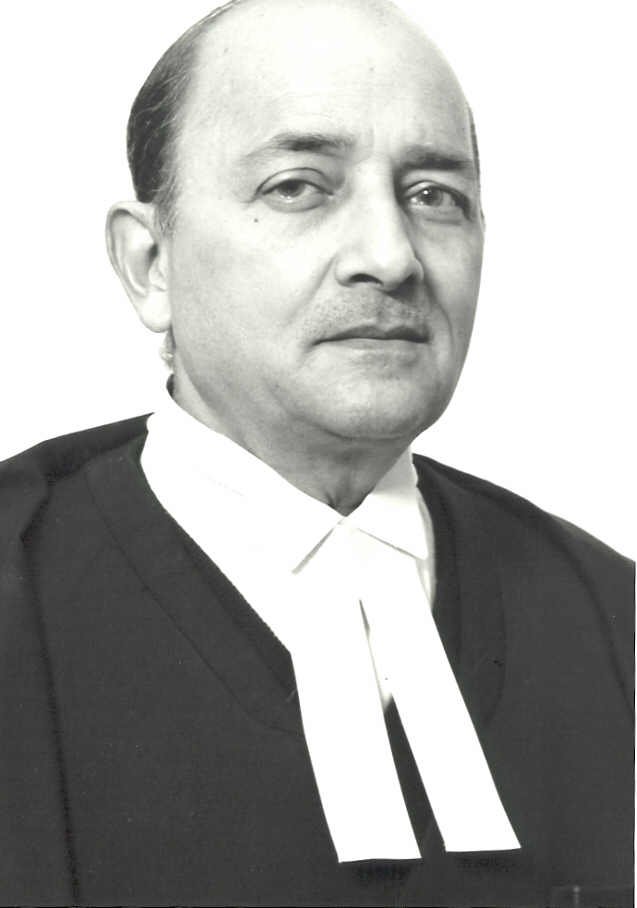
http://JUDIS.NIC.IN SUPREME COURT OF INDIA Page 1 of 5
CASE NO.:
Writ Petition (civil) 9683-84 of 1983
PETITIONER:
Brahmo Samaj Education Society & Ors.
RESPONDENT:
State of West Bengal & Ors.
DATE OF JUDGMENT: 05/05/2004
BENCH:
CJI & G.P. MATHUR.
JUDGMENT:
J U D G M E N T
RAJENDRA BABU, CJI. :
Role of State in the appointment of a teacher at a
State aided educational institution is the matter for
settlement here.
Facts that lead to the present case are as follows.
The State of West Bengal passed the West Bengal
College Teachers (Security of Service) Act, 1975 (the
Security of Service Act) and West Bengal College Service
Commission Act, 1978 (the College Service Commission
Act). Latter mainly provides for the constitution of a
College Service Commission in West Bengal. Vide section
7 of the College Service Commission Act, the Commission
is vested with the duty to select persons for appointment
to the post of teachers of a college. By virtue of which,
the power of appointment of a teacher in a college or
institution affiliated to a University in West Bengal
became vested in the Government appointed College
Service Commission. Pursuant to the College Service
Commission Act, the West Bengal College Service
Commission (Manner of Selection of Persons for
Appointment to the posts of Teachers including Principals)
Regulations, 1980 was also made. Appointments of
teachers were made under this scheme thereafter.
Brahmo Samaj Education Society / Petitioners
challenge this procedure of appointing teachers.
Petitioners case is that they are a religious minority and a
religious denomination within the meaning of Articles 25,
26, and 30(1) of the Constitution; that the appointment
of teachers by the College Service Commission under the
College Service Commission Act and other Orders/Rules
is unconstitutional; that they alone have the right to
appoint teachers and enforce discipline amongst them;
that therefore they prayed to prohibit the State of West
Bengal / Respondents from enforcing the Security of
Service Act and the College Service Commission Act.
Stand maintained by the Respondents is that the
Petitioner society does not belong to a minority religious
community; that the Institutions run by them are
receiving funds from the state coffers and the State is
under an obligation to maintain a uniform standard of
education throughout the State; that the Petitioner's
demand not to abide by the recommendation of an
http://JUDIS.NIC.IN SUPREME COURT OF INDIA Page 2 of 5
independent statutory authority (College Service
Commission) would amount to denying opportunity of
appointment to the best available qualified persons as
teachers; that therefore they prayed to dismiss the
Petition.
The main question for consideration is - whether the
appointment of teachers through the selection of College
Service Commission is permissible or not, in other
words, to decipher the role of State in the matter of
appointment of teachers. To establish and administer an
educational institution is held to be a right coming under
Article 19(1)(g) of the Constitution as enunciated in T M A
Pai Foundation v. State of Karnataka (2002) 8 SCC 481
[at pages 533 \026 535, paragraphs 18 \026 25]. According to
Article 19(6) of the Constitution, the right to establish
and maintain an educational institution is subject to the
reasonable restrictions imposed by the State in the
interest of general public. At the same time, subject to
public order, morality and health, every religious
denomination or any section thereof can establish and
maintain educational institutions under Article 26(a) of
the Constitution. (See T M A Pai \026 cited supra at page
535, paragraph 26). Reading Articles 19(1)(g) and
Article 26(a) of the Constitution together, the petitioners
have a right to establish and maintain educational
institutions and hence we do not think it is necessary to
decide the issue of minority / denominational status of
Brahmo Samaj to decide the issue in hand. In our view
this issue does not arise in the context of present case.
The question now before us is to decide whether the
appointment of teachers in an aided institution by the
College Service Commission by restricting the Petitioner's
right to appointment is a reasonable restriction in the
interest of general public or not. The Petitioner has a
right to establish and administer educational institution.
Merely because the petitioners are receiving aid, their
autonomy of administration cannot be totally restricted
and institutions cannot be treated as a government
owned one. Of course the State can impose such
conditions as are necessary for the proper maintenance
of standards of education and to check
maladministration. It is stated in T M A Pai that :
"While giving aid to professional institutions, it
would be permissible for the authority giving
aid to prescribe by rules or regulations, the
conditions on the basis of which admission will
be granted to different aided colleges by virtue
of merit, coupled with the reservation policy of
the State. The merit may be determined
either through a common entrance test
conducted by the university or the Government
followed by counselling, or on the basis of an
entrance test conducted by individual
institutions \026 the method to be followed is for
the university or the Government to decide.
The authority may also devise other means to
ensure that admission is granted to an aided
professional institution on the basis of merit.
In the case of such institutions, it will be
permissible for the Government or the
university to provide that consideration should
be shown to the weaker sections of the
http://JUDIS.NIC.IN SUPREME COURT OF INDIA Page 3 of 5
society."
[at p. 550, para 71]
"Once aid is granted to a private professional
educational institution, the Government or the
State agency, as a condition of the grant of
aid, can put fetters on the freedom in the
matter of administration and management of
the institution. The State, which gives aid to
an educational institution, can impose such
conditions as are necessary for the proper
maintenance of the high standards of
education as the financial burden is shared by
the State. The State would also be under an
obligation to protect the interest of the
teaching and non-teaching staff. In many
States, there are various statutory provisions
to regulate the functioning of such educational
institutions where the States give, as a grant
or aid, a substantial proportion of the revenue
expenditure including salary, pay and
allowances of teaching and non-teaching staff.
It would be its responsibility to ensure that the
teachers working in those institutions are
governed by proper service conditions. The
State, in the case of such aided institutions,
has ample power to regulate the method of
selection and appointment of teachers after
prescribing requisite qualifications for the
same. Ever since, in Re. Kerala Education
Bill, 1957 [1959 SCR 995] this Court has
upheld, in the case of aided institutions, those
regulations that served the interests of
students and teachers. Checks on the
administration may be necessary in order to
ensure that the administration is efficient and
sound and will serve the academic needs of the
institutions. In other words, rules and
regulations that promote good administration
and prevent maladministration can be
formulated so as to promote the efficiency of
teachers, discipline and fairness in
administration and to preserve harmony
among affiliated institutions. At the same
time it has to be ensured that even an aided
institution does not become a government-
owned and controlled institution. Normally,
the aid that is granted is relatable to the pay
and allowances of the teaching staff. In
addition, the management of the private aided
institutions has to incur revenue and capital
expenses. Such aided institutions cannot
obtain that extent of autonomy in relation to
management and administration as would be
available to a private unaided institution, but
at the same time, it cannot also be treated as
an educational institution departmentally run
by Government or as a wholly owned and
controlled government institution and interfere
with constitution of the governing bodies or
thrusting the staff without reference to
management."
[pp. 550, 551, para 72]
"There are a large number of educational
http://JUDIS.NIC.IN SUPREME COURT OF INDIA Page 4 of 5
institutions, like schools and non-professional
colleges, which cannot operate without the
support or aid from the State. Although these
institutions may have been established by
philanthropists or other public-spirited persons,
it becomes necessary, in order to provide
inexpensive education to the students, to seek
aid from the State. In such cases, as those of
the professional aided institutions referred to
hereinabove, the Government would be
entitled to make regulations relating to the
terms and conditions of employment of the
teaching and non-teaching staff whenever the
aid for the posts is given by the State as well
as admission procedures. Such rules and
regulations can also provide for the reasons
and the manner in which a teacher or any
other member of the staff can be removed. In
other words, the autonomy of a private aided
institution would be less than that of an
unaided institution.
[p 551, para 73]
But that control cannot extend to the day-to-day
administration of the institution. It is categorically stated
in T M A Pai (cited supra at page 551, paragraph 72)
that the State can regulate the method of selection and
appointment of teachers after prescribing requisite
qualification for the same. Independence for the selection
of teachers among the qualified candidates is
fundamental to the maintenance of the academic and
administrative autonomy of an aided institution. The
State can very well provide the basic qualification for
teachers. Under the University Grants Commission Act,
1956, the University Grants Commission (UGC) has laid
down qualifications to a teaching post in a University by
passing Regulations. As per this Regulations UGC
conducts National Educational Testing (NET) for
determining teaching eligibility of candidates. UGC has
also authorized accredited States to conduct State Level
Eligibility Test (SLET). Only a person who has qualified
NET or SLET will be eligible for appointment as a teacher
in an aided institution. This is the required basic
qualification of a teacher. Petitioner's right to administer
includes the right to appoint teachers of its choice among
the NET / SLET qualified candidates.
Argument on behalf of the State that the
appointment through College Service Commission is to
maintain the equal standard of education all through out
the state of West Bengal does not impress us. The equal
standard of teachers are already maintained by the NET /
SLET. Similarly, receiving aid from State coffers can also
not be treated as a justification for imposition of any
restrictions that cannot be imposed otherwise.
Both sides rely on the passages quoted above from
the judgment in T M A Pai to project their respective
contentions.
When a larger Bench consisting of 11 Judges of this
Court in T M A Pai has declared what the law on the
matter is, we do not want to dilute the effect of the same
by analysing various statements made therein or indulge
in any dissection of the principles underlying it. We
would rather state that the State Government shall take
note of the declarations of law made by this Court in this
http://JUDIS.NIC.IN SUPREME COURT OF INDIA Page 5 of 5
regard and make suitable amendments to their laws,
rules and regulations to bring them in conformity with the
principles set out therein.
In this view of the matter, it is unnecessary to
examine whether the present rules are valid or not. Until
such time as such rules are framed in terms of the order
made by us now, the interim orders made by this Court
in these proceedings will be operative.
These petitions shall stand allowed in terms of what
is stated above.

 Login with google
Legal Notes
Add a Note....