
These two appeals are directed against a common judgment of the High Court of Kerala at Ernakulum passed in Election Petition. By the impugned judgment, the High Court dismissed Election ...

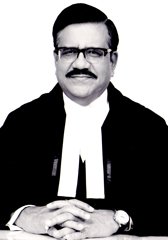
No Acts & Articles mentioned in this case
Page 1 Reportable
IN THE SUPREME COURT OF INDIA
CIVIL APPELLATE JURISDICTION
CIVIL APPEAL NOS.5987-5988 OF 2012
C.P. John …Appellant
VERSUS
Babu M. Palissery & Ors. …
Respondents
J U D G M E N T
Fakkir Mohamed Ibrahim Kalifulla, J.
1.These two appeals are directed against a common judgment of
the High Court of Kerala at Ernakulum dated 02.12.2011 passed in
Election Petition No.1 of 2011 and I.A. No. 3 of 2011. By the
impugned judgment, the High Court, while allowing I.A. No. 3 of
2011 simultaneously dismissed Election Petition No.1 of 2011 filed
by the Appellant challenging the successful election of the First
Respondent to 062 Kunnamkulam Constituency in the general
election held on 13.04.2011, as a candidate of Communist Party of
India (Marxist) (hereinafter called “CPI (M)”), which is a constituent
of the Left Democratic Front (hereinafter called “LDF”). Such a
decision of the Election Petition was at the threshold under Sections
Civil Appeal Nos.5987-5988 of 2012 1 of 46
Page 2 83(1) and 86 of the Representation of the People Act, 1951
(hereinafter called “the Act”) read with Rule 11 of Order 7 of Code of
Civil Procedure, 1908.
2.The brief facts which are required to be stated are that the
Appellant was a candidate of the Communist Marxist Party
(hereinafter called “CMP”), which was a constituent of United
Democratic Front (hereinafter called “UDF”). The Second
Respondent was also a candidate in the said election along with
Respondent Nos.3 to 5. The First Respondent secured 58,244 votes
whereas the Appellant secured 57,763 votes. The Second
Respondent, who was an independent candidate, secured 860
votes. According to the Appellant, the Second Respondent whose
name is identical to that of the Appellant was maliciously set up by
the First Respondent to contest the election and in that process
indulged in various corrupt practices, namely, inducing the Second
Respondent by offering bribe, issued a pamphlet which was marked
as Annexure IV in the High Court in the name of the Second
Respondent deceptively which attracted Section 123(1)(A) and (4)
of the Act and consequently his election was liable to be set aside.
One other allegation of the Appellant raised in the Election Petition
was that the First Respondent was convicted in two criminal cases,
Civil Appeal Nos.5987-5988 of 2012 2 of 46
Page 3 namely, Sessions Case No.4 of 1975 (Crime No.136/1974 of
Pattambi Police Station) for offences under Sections 143, 148, 323,
324 and 302 read with 149, IPC for murdering one Syed Ali, an S.F.I.
activist and that the First Respondent was the second accused in
Crime No.463/1994 of Kunnamkulam Police Station where again he
was convicted by the Judicial First Class Magistrate, Kunnamkulam
in CC No.167/1995 along with other accused and was sentenced to
undergo two years rigorous imprisonment apart from a fine of
Rs.2000/- for the offences under Sections 143, 147, 148, 151, 332,
353 and 427 and 149, IPC and Section 3(2)(r) of the Prevention of
Destruction to Public Properties Act. It is the contention of the
Appellant in the Election Petition that the First Respondent
concealed the above convictions in his nomination which was a
deliberate suppression and in violation of Section 33A(1) of the Act.
It is based on the above three substantive grounds, the Appellant
challenged the successful election of the First Respondent in
Election Petition No.1 of 2011.
3.As far as the allegations against the First Respondent were
concerned, the allegation relating to the issue of bribery falling
under Section 123(1)(A) was levelled in paragraphs 4, 5, 6 and 9 of
the Election Petition. The allegation relating to the issuance of
Civil Appeal Nos.5987-5988 of 2012 3 of 46
Page 4 pamphlets attracting Section 123(4) of the Act was made in
paragraphs 11, 12, 13, 14 and 15 of the Election Petition. The
allegation relating to the criminal conviction and its suppression was
raised in paragraph 7 of the Election Petition.
4.The various above allegations were refuted on behalf of the
First Respondent in the written statement filed as against the
Election Petition. The First Respondent filed I.A.No.3 of 2011
contending that the Election Petition was liable to be rejected on the
ground that it was not filed in accordance with Section 83 as well as
Section 86 of the Act. The contentions raised in the I.A. were to the
effect that as regards the issue of bribery, though the same was
referred to in paragraphs 4, 5, 6 and 9 of the Election Petition, in the
affidavit, which was mandatory as per the proviso to Section 83(1)
of the Act, the Appellant failed to support the said allegations with
exception to what was stated in paragraph 9 of the Election Petition.
It was contended in the I.A. that while the allegations relating to the
offer of bribe to the Second Respondent by way of a gift of
Rs.50,000 and a promise to pay Rs.1,00,000/- after the elections
were raised in paragraphs 4, 5, 6 and 9, the affidavit did not support
the allegations in paragraphs 4, 5 and 6 of the Election Petition and
the affidavit only mentioned paragraph 9. It was, therefore,
Civil Appeal Nos.5987-5988 of 2012 4 of 46
Page 5 contended that it was not in compliance with the proviso to Section
83(1) and consequently, the Election petition was liable to be
rejected on the ground of want of cause of action.
5.As far as the allegation of corrupt practice falling under Section
123(4) of the Act was concerned, the First Respondent by referring
to Annexure IV took the stand that the pleadings in paragraphs 11,
12, 13 and 14, which pertained to Annexure IV-pamphlet in the
name of the Second Respondent contended that there was no
pleading as to which part of it was false and incorrect and how
based on Annexure IV alone it was stated that a false statement in
relation to the personal character or conduct of any candidate or in
relation to the candidature or withdrawal of any candidate with
reasonable calculation would prejudice the prospect of that
candidate’s election. It was, therefore, contended that the Appellant
failed to plead the required facts and material particulars to support
the ground of corrupt practice stipulated under Section 123(4) of the
Act.
6.With regard to the allegations based on criminal convictions, it
was contended that of the two criminal cases which were referred to
by the Appellant in the Election Petition, in one case the First
Respondent was acquitted by the Sessions Court in Criminal Appeal
Civil Appeal Nos.5987-5988 of 2012 5 of 46
Page 6 No.248/2000 and that in CC No.167 of 1995, the sentence awarded
was less than a year and, therefore, there was no violation of
Section 33A of the Act. The First Respondent, therefore, prayed for
the dismissal of the Election Petition as the same was not in
conformity with Section 83 of the Act.
7.On behalf of the Appellant a counter affidavit was filed to I.A.
No.3 of 2011. In the counter affidavit a categoric stand was taken on
behalf of the Appellant that the required facts and material
particulars as required under Section 83 have been fully pleaded
with supporting Affidavit and, therefore, it was in compliance of the
Act and the Election Petition cannot be dismissed in limine. In other
words, it was contended that there was full compliance of both the
substantive parts of Section 83 as regards the furnishing of the facts
as required under Section 83 as well as material particulars with
supporting affidavit as required under the proviso to Section 83(1)
of the Act and, therefore, the prayer of the First Respondent as
made in I.A. No.3 of 2011 was liable to be rejected.
8.The High Court having examined the rival contentions of the
parties, reached a conclusion that in support of the Election Petition,
the averments contained in paragraphs 4, 5 and 6 of Election
Petition were not specifically affirmed and that the affidavit only
Civil Appeal Nos.5987-5988 of 2012 6 of 46
Page 7 referred to paragraph 9 of the Election Petition. The High Court
further held that since the averments contained in paragraph 9 of
the Election Petition only referred to personal information of the
Appellant, which lacked in very many material particulars, there was
total lack of pleadings as required under Section 83 of the Act and
consequently, the said allegation did not give scope for any cause of
action to support the Election Petition.
9.For the allegation based on Annexure IV, here again the High
Court held that the statement contained in the said Annexure did
not make out a cause of action as against the First Respondent in
order to attract the allegation of corrupt practice as stipulated under
Section 123(4) of the Act and, therefore, on that ground as well, the
Election Petition could not be proceeded with.
10.As far as the allegation based on the criminal cases was
concerned, the High Court has found that the conviction in Sessions
Case No.4 of 1975 was set aside in Criminal Appeal No.248 of 2000,
which was also admitted by the Appellant and the conviction in CC
No.167 of 1995, the certified copy of which was placed before the
Court, disclosed that the sentence awarded was less than a year
and consequently, there was no violation of Section 33A of the Act.
Civil Appeal Nos.5987-5988 of 2012 7 of 46
Page 8 11.Based on the above findings, the High Court held that the I.A.
filed by the First Respondent deserved to be allowed and,
consequently, for want of cause of action the Election Petition itself
was dismissed.
12.We heard Mr. Romy Chacko, learned counsel for the Appellant
and Mr. Pallav Shishodia, learned Senior Counsel for the First
Respondent. Mr. Romy Chacko learned counsel for the Appellant in
his submissions contended that the Appellant stood in the election
for Kunnamkulam Constituency in 2011 as a candidate of CMP,
under the banner of UDF. He pointed out that Appellant lost the
election with a thin margin of 408 votes and that the Second
Respondent who had the same name as that of the Appellant
secured 860 votes. According to the Appellant, but for the
candidature of the Second Respondent, there was every scope for
the Appellant to win the election. It was the contention of the
Appellant that the First Respondent, with a view to mislead the
voters, indulged in the corrupt practices of bribery, as well as,
issuance of pamphlet with misleading and distorted version about
the candidature which was covered by Sections 123(1)(a) and
123(4) of the Act and that the Appellant otherwise had a very good
chance of success in the election.
Civil Appeal Nos.5987-5988 of 2012 8 of 46
Page 9 13.The learned counsel contended that the Election Petition
contained the required averments both relevant facts and material
particulars and was also supported by the affidavit filed in
accordance with the proviso to Section 83(1) and Rule 94A of the
Conduct of Election Rules, 1961 (hereinafter called “the Rules”) and,
in any event, if in the opinion of the High Court there was anything
lacking in the affidavit or the Election Petition filed by the Appellant,
the High Court should have given an opportunity to carry out
necessary amendment to the Election Petition and also to file
additional affidavit in support of the Election Petition. The learned
counsel contended that the outright rejection by the High Court of
the Appellant’s right to file necessary amended Election Petition and
affidavit deprived the valuable rights of the Appellant under the
provisions of the Act.
14.In support of his submissions, the learned counsel relied upon
the decisions in Balwan Singh vs. Lakshmi Narain and others
reported in AIR 1960 SC 770 , Umesh Challiyill vs. K.P.
Rajendran reported in (2008) 11 SCC 740, G.M. Siddeshwar vs.
Prasanna Kumar reported in (2013) 4 SCC 776, Raj Narain vs.
Smt. Indira Nehru Gandhi and another reported in (1972) 3
SCC 850, G. Mallikarjunappa and another vs. Shamanur
Civil Appeal Nos.5987-5988 of 2012 9 of 46
Page 10 Shivashankarappa and others reported in (2001) 4 SCC 428 ,
Sardar Harcharan Singh Brar vs. Sukh Darshan Singh and
others reported in (2004) 11 SCC 196 , Harkirat Singh vs.
Amrinder Singh reported in (2005) 13 SCC 511 . The learned
counsel in his submissions, relating to improper resumption of
nomination papers which according to Appellant was in violation of
Section 33A of the Act, relied upon the decisions in Shaligram
Shrivastava vs. Naresh Singh Patel reported in (2003) 2 SCC
176, Resurgence India v. Election Commission of India and
another reported in AIR 2014 SC 344 and People’s Union for
Civil Liberties (PUCL) and another vs. Union of India and
another reported in (2003) 4 SCC 399.
15.As against the above submissions, Mr. Pallav Shishodia,
learned Senior Counsel appearing for the First Respondent
submitted that there was no violation of Section 33A of the Act in
the filing of the nomination by the First Respondent. The learned
Senior Counsel pointed out that to support the said submission, the
Appellant referred to two criminal cases in which the First
Respondent was involved and that in one criminal case the
Appellant was acquitted by the Appellate Court in Criminal Appeal
No.248 of 2000 and that in the other criminal case in CC No.167 of
Civil Appeal Nos.5987-5988 of 2012 10 of 46
Page 11 1995, the sentence imposed was less than a year and, therefore,
there was no violation of Section 33A.
16.As regards the other deformity in the Election Petition, the
learned Senior Counsel contended that the First Respondent in his
written statement to the Election Petition pointed out the serious
defects in the Election Petition, but yet the Appellant did not take
any steps to correct the errors. The learned Senior Counsel further
contended that when the First Respondent filed I.A. No.3 of 2011
raising a preliminary objection as to lack of cause of action in the
said I.A., the Appellant filed a counter affidavit maintaining his stand
that his Election Petition fully complied with the statutory
requirement of the Act and, therefore, nothing more was required to
be done. The learned Senior Counsel, therefore, contended that
since sufficient opportunities were made available to the Appellant
and the same having not been availed by him, the High Court
cannot be expected to show any extraordinary indulgence to the
Appellant for filing any further affidavit to fill up the serious lacunae
in his pleadings. The learned Senior Counsel, therefore, contended
that none of the decisions would support the said stand of the
Appellant and, therefore, the impugned judgment does not call for
any interference. It was also contended on behalf of the First
Civil Appeal Nos.5987-5988 of 2012 11 of 46
Page 12 Respondent that such defects which have been noted by the High
Court while allowing I.A. No.3 of 2011 and dismissing the Election
Petition were not merely cosmetic in nature in order to extend any
further opportunity to the Appellant.
17.Having heard learned counsel for the respective parties and in
order to appreciate the legal issues raised in these appeals which
have been elaborately dealt with by the High Court in its judgment,
the relevant sections to be noted are Sections 83, 86, 123(1)(A) and
123(4) of the Act as well as Rule 94A and Form 25 of the Rules. The
said provisions are as under:
83. Contents of petition.—(1) An election petition—
(a) shall contain a concise statement of the material
facts on which the petitioner relies;
(b) shall set forth full particulars of any corrupt
practice that the petitioner alleges, including as full
a statement as possible of the names of the parties
alleged to have committed such corrupt practice
and the date and place of the commission of each
such practice; and
(c) shall be signed by the petitioner and verified in the
manner laid down in the Code of Civil Procedure,
1908 (5 of 1908) for the verification of pleadings:
[Provided that where the petitioner alleges any
corrupt practice, the petition shall also be
accompanied by an affidavit in the prescribed form in
support of the allegation of such corrupt practice and
the particulars thereof.]
Civil Appeal Nos.5987-5988 of 2012 12 of 46
Page 13 (2) Any schedule or annexure to the petition shall
also be signed by the petitioner and verified in the
same manner as the petition.
86. Trial of election petitions.—(1) The High Court
shall dismiss an election petition which does not
comply with the provisions of section 81 or section 82
or section 117.
Explanation.—An order of the High Court dismissing an
election petition under this sub-section shall be
deemed
to be an order made under clause (a) of section 98.
(2) As soon as may be after an election petition has
been presented to the High Court, it shall be referred
to the Judge or one of the Judges who has or have
been assigned by the Chief Justice for the trial of
election petitions under sub-section (2) of section 80A.
(3) Where more election petitions than one are
presented to the High Court in respect of the same
election, all of them shall be referred for trial to the
same Judge who may, in his discretion, try them
separately or in one or more groups.
(4) Any candidate not already a respondent shall,
upon application made by him to the High Court within
fourteen days from the date of commencement of the
trial and subject to any order as to security for costs
which may be made by the High Court, be entitled to
be joined as a respondent.
Explanation.—For the purposes of this sub-section and
of section 97, the trial of a petition shall be deemed to
commence on the date fixed for the respondents to
appear before the High Court and answer the claim or
claims made in the petition.
(5) The High Court may, upon such terms as to costs
and otherwise as it may deem fit, allow the particulars
of any corrupt practice alleged in the petition to be
amended or amplified in such manner as may in its
opinion be necessary for ensuring a fair and effective
trial of the petition, but shall not allow any
Civil Appeal Nos.5987-5988 of 2012 13 of 46
Page 14 amendment of the petition which will have the effect
of introducing particulars of a corrupt practice not
previously alleged in the petition.
(6) The trial of an election petition shall, so far as is
practicable consistently with the interests of justice in
respect of the trial, be continued from day to day until
its conclusion, unless the High Court finds the
adjournment of the trial beyond the following day to
be necessary for reasons to be recorded.
(7) Every election petition shall be tried as
expeditiously as possible and endeavour shall be
made to conclude the trial within six months from the
date on which the election petition is presented to the
High Court for trial.
123(1)(A). Corrupt practices .—The following shall
be deemed to be corrupt practices for the purposes of
this Act:—
(1) "Bribery", that is to say—
(A) any gift, offer or promise by a candidate or his
agent or by any other person with the consent of a
candidate or his election agent of any gratification, to
any person whomsoever, with the object, directly or
indirectly of inducing—
(a) a person to stand or not to stand as, or to withdraw
or not to withdraw from being a candidate at an
election, or
(b) an elector to vote or refrain from voting at an
election, or as a reward to—
(i) a person for having so stood or not stood, or for
having withdrawn or not having withdrawn his
candidature; or
(ii) an elector for having voted or refrained from
voting;
123(4). The publication by a candidate or his agent or
by any other person with the consent of a candidate or
his election agent, of any statement of fact which is
Civil Appeal Nos.5987-5988 of 2012 14 of 46
Page 15 false, and which he either believes to be false or does
not believe to be true, in relation to the personal
character or conduct of any candidate, or in relation to
the candidature, or withdrawal of any candidate, being
a statement reasonably calculated to prejudice the
prospects of that candidate's election.
Rule 94A. Form of affidavit to be filed with
election petition.- The affidavit referred to in the
proviso to sub-section (1) of section 83 shall be sworn
before a magistrate of the first class or a notary or a
commissioner of oaths and shall be in Form 25.
FORM 25
I, …………….., the petitioner in the accompanying
election petition calling in question the election of
Shri/Shrimati…………… (respondent No……………. in
the said petition) make solemn affirmation/oath and
say-
(a) that the statements made in
paragraphs……….. of the accompanying election
petition about the commission of the corrupt practice
of …………… and the particulars of such corrupt
practice mentioned in paragraphs ……………. of the
same petition and in paragraphs …………… of the
Schedule annexed thereto are true to my knowledge;
(b) that the statements made in paragraphs ……..
of the said petition about the commission of the
corrupt practice of ……….. and the particulars of such
corrupt practice given in paragraphs ……….of the said
petition and in paragraphs ……………. of the Schedule
annexed thereto are true to my information;
(c)
(d)
etc.
Signature of
deponent
Solemnly affirmed/sworn by Shri/Shrimati…………… at
………….this ………. Day of …………. 20……….
Civil Appeal Nos.5987-5988 of 2012 15 of 46
Page 16 Before me, Magistrate of the first class/
Notary/Commissioner of Oaths.”
18.When we read Section 83, the substantive part of Section
83(1) consists of three important elements, namely, that an Election
Petition should contain a concise statement of material facts which
an election petitioner relies upon. The emphasis is on the material
facts which should be stated in a concise form. Under Section 83(1)
(b) it is stipulated that the Election Petition should set forth full
particulars of any corrupt practice which is alleged by the petitioner.
A reading of the said sub-clause 83(1)(b) is to the effect that such
particulars should be complete in every respect and when it relates
to an allegation of corrupt practice it should specifically state the
names of the parties who alleged to have committed such corrupt
practice and also the date and place where such corrupt practice
was committed. In other words, the particulars relating to corrupt
practice should not be lacking in any respect. One who reads the
averments relating to corrupt practice should be in a position to
gather every minute detail about the alleged corrupt practice such
as the names of the persons, the nature of the alleged corrupt
practice indulged in by such person or persons, the place, the date,
Civil Appeal Nos.5987-5988 of 2012 16 of 46
Page 17 the time and every other detail relating to the alleged corrupt
practice.
19.To put it differently, when the Election Petition is taken up for
consideration, the Court which deals with such an Election Petition,
should be in a position to know in exactitude as to what is the
corrupt practice alleged as against the parties without giving any
room for doubt as to the nature of such allegation, the parties
involved, the date, time and the place etc. so that the party against
whom such allegation is made is in a position to explain or defend
any such allegation without giving scope for any speculation. In that
context, both Sections 83(1)(a) and (1)(b) and the proviso play a
very key role since the election petitioner cannot simply raise an
allegation of corrupt practice and get away with it, inasmuch as the
affidavit to be filed in respect of corrupt practice should specifically
support the facts pleaded, as well as, the material particulars
furnished. Rule 94A of the Rules in turn stipulates that the affidavit
should be in the prescribed Form 25 and should be sworn before the
Magistrate of 1
st
class or a notary or the Commissioner of Oaths and
makes it mandatory for the election petitioner to comply with the
said requirement statutorily. The format of the affidavit as
prescribed in Form No.25 elaborates as to the requirement of
Civil Appeal Nos.5987-5988 of 2012 17 of 46
Page 18 specifically mentioning the paragraphs where the statement of facts
are contained and also the other paragraphs where material
particulars relating to such corrupt practices are alleged. It also
mentions as to which of those statement of facts and material
particulars are based on the personal knowledge of the election
petitioner and such of those statements and particulars that are
made based on the information gained by the election petitioner.
20.Therefore, a conspectus reading of Section 83(1)(a) read along
with its proviso of the Act, as well as, Rule 94A and Form No. 25 of
the Rules make the legal position clear that in the filing of an
Election Petition challenging the successful election of a candidate,
the election petitioner should take extra care and leave no room for
doubt while making any allegation of corrupt practice indulged in by
the successful candidate and that he cannot be later on heard to
state that the allegations were generally spoken to or as discussed
sporadically and on that basis the petition came to be filed. In other
words, unless and until the election petitioner comes forward with a
definite plea of his case that the allegation of corrupt practice is
supported by legally acceptable material evidence without an iota of
doubt as to such allegation, the Election Petition cannot be
entertained and will have to be rejected at the threshold. It will be
Civil Appeal Nos.5987-5988 of 2012 18 of 46
Page 19 relevant to state that since the successful candidate in an election
has got the support of the majority of the voters who cast their
votes in his favour, the success gained by a candidate in a public
election cannot be allowed to be called in question by any
unsuccessful candidate by making frivolous or baseless allegations
and thereby unnecessarily drag the successful candidate to the
Court proceedings and make waste of his precious time, which
would have otherwise been devoted for the welfare of the members
of his constituency. Therefore, while deciding the issue raised, we
wish to keep in mind the above lofty ideas, with which the
provisions contained in Section 83(1) read along with Section 86
came to be incorporated while deciding this appeal.
21.Keeping the above statutory prescription in mind, when we
examine the case on hand, the allegation of corrupt practice raised
by the Appellant in the Election Petition was two fold falling under
Sections 123(1)(A) and 123(4) of the Act. Section 123(1)(A) defines
the act of bribery, namely, any gift, offer or promise by a candidate
or his agent or any other person with the consent of the candidate
or with the consent of his election agent of any gratification to any
person whomsoever with the object directly or indirectly for
inducing a person to stand or not to stand as a candidate or to
Civil Appeal Nos.5987-5988 of 2012 19 of 46
Page 20 withdraw or not to withdraw from being a candidate at an election.
In the case on hand, the allegation of bribery is made in paragraphs
4, 5, 6 and 9 of the election petition. In paragraph 4, it is alleged
that the First Respondent went to the house of the Second
Respondent whose father was an active member of CPI (M) and
induced him by a gift of Rs.50,000 in cash and promised to give
Rs.1,00,000/- for developing his printing press, if he agreed to file
his nomination to contest from 062 Kunnamkulam Constituency and
further promised to bear all the expenses for the election and by
such inducement he was successful in making the Second
Respondent submit his nomination in the said constituency styling
himself as an independent candidate. It also contained the
allegation that the persons who signed the nomination of the
Second Respondent as proposers were workers/members of CPI (M).
The handwritings found in Form No.18 appointing the counting
agents of Respondent Nos. 1 and 2 were of the same person. On the
above broad averments, it was contended that the same would fall
under Section 123(1)(A) of the Act. In paragraph 9, it was reiterated
that the Second Respondent filed his nomination as an independent
candidate at the instance of the First Respondent by an offer of
gratification for a gift of Rs.50,000 with a promise to pay
Civil Appeal Nos.5987-5988 of 2012 20 of 46
Page 21 Rs.1,00,000/-after the elections and that the said inducement was
made by the First Respondent with the ulterior motive of creating a
confusion among the voters and divide the votes, inasmuch as, the
names of the Appellant as well as that of Second Respondent are
identical.
22.With that we come to a crucial question as to how it was
contended on behalf of the First Respondent that the said
averments were not in conformity with the provisions of Section 83
of the Act or that in the affidavit which was filed in support of the
Election Petition, there was no reference to paragraphs 4, 5 and 6
and that the affidavit only mentioned about paragraph 9 alone. It
was contended that the Election Petition was not filed in compliance
with Section 83 read with Rule 94A and Form 25. The sum and
substance of the stand of the First Respondent in the written
statement as regards the allegation of bribery was that in paragraph
4 there was no specific pleading as to who paid the bribe, the date,
time and place at which the alleged bribe was paid as mandated
under Section 83(1)(b) of the Act and that the said pleading of
corrupt practice was not supported by the affidavit and, therefore,
the entire pleadings in paragraph 4 has to be eschewed from
consideration. As far as the averments contained in paragraph 9
Civil Appeal Nos.5987-5988 of 2012 21 of 46
Page 22 were concerned, according to the First Respondent, the entire
averments in paragraph 9 will not satisfy the statutory requirement
of Section 83(1)(b) and further the said averments relating to
corrupt practice were based on information and not based on
personal knowledge.
23.It was further contended that the allegation of bribery having
been pleaded in paragraphs 4, 6, 9 and 10 of the Election Petition,
those averments contained in paragraphs 4, 6 and 10 of the Election
Petition were not supported by the affidavit as required under the
proviso to Section 83(1) of the Act. In the affidavit filed in support of
I.A.No.3 of 2011, the First Respondent while reiterating the above
contentions, stated that after striking off and eschewing paragraphs
4, 7, 9 to 15 and grounds (a), (c), (d) and (e) of the Election Petition,
there were left no material facts giving any cause of action for the
Election Petition subsist. It was, therefore, prayed that the Election
Petition should be dismissed at the threshold.
24.The Appellant in his counter affidavit to I.A. No.3 of 2011, did
not state anything as regards the filing of proper affidavit relating to
paragraphs 4, 6 and 10 which related to corrupt practice. On the
other hand, it was contended that the Election Petition contained full
material facts and particulars of corrupt practice including the date,
Civil Appeal Nos.5987-5988 of 2012 22 of 46
Page 23 place and name of the parties. It is relevant to note that till the
present impugned judgment came to be passed by the High Court,
there was no prayer made either in writing or orally for permitting
the Appellant to file necessary amendment to the Election Petition
or file any additional affidavit curing the defects relating to failure to
support the averments contained in paragraphs 4, 6 and 10 of the
Election Petition by way of fresh affidavit or for supplementing the
averments already made with additional particulars or details
relating to the allegation of corrupt practices.
25.The High Court while dealing with the above issues, after
referring to paragraphs 4 as well as 9 of the Election Petition, held
as under:
“It is a complex sentence. By reading it, one cannot be
say that the allegation is that first respondent
personally approached the second respondent or paid
the cash or promised Rs.1,00,000/- for developing his
printing press. In such circumstances, there is force in
the submission of the learned senior counsel
appearing for the first respondent that the allegations
are too vague to constitute an allegation of corrupt
practice, to set aside the election of the returned
candidate under section 100(1)(b) of the Act. Added to
this the affidavit shows that the allegations in
paragraph 4 was not supported by the affidavit. The
question is if it does not constitute a complete cause
of action, whether the election petition is liable to be
dismissed in limine at the threshold or is it is for the
court to post the case to enable the election petitioner
to file another affidavit or an application to amend the
Civil Appeal Nos.5987-5988 of 2012 23 of 46
Page 24 election petition. As rightly pointed out by the learned
senior counsel in spite of the written statement filed
by the first respondent contending that the election
petition does not disclose a complete cause of action
and the affidavit filed is not the affidavit contemplated
under the proviso to Section 83(1) and under section
94A of the Conduct of Elections Rules, the election
petitioner did not take steps to get the election
petition amended or to file another affidavit in
compliance with proviso to Section 83(1)(a) and Rule
94A. On the other hand, the counter affidavit filed by
the election petitioner to I.A. 3/2011 shows that it is
the definite case of the election petitioner that there is
no defect in the election petition. He has no case that
an opportunity is to be granted to cure the defects.
Paragraph 8 of the said counter affidavit reads:-
“8.It is submitted that the averments in the
Election Petition are fully in compliance with the
mandatory requirements of the Act and Rules,
especially under Sections 83 and 87 of the
Representation of the People Act and Rule 94 of
the Conduct of Election Rules, 1968. Specific
averments are set out in the election petition,
pointing out the specific acts as well as the
name/identity of the persons who are parties to
the transactions which forms the basis of the
election petition.”
In paragraph 9 of the affidavit he has further asserted
that the affidavit is in accordance with the
requirement of Rule 94. In such circumstances
question is whether an opportunity is to be granted to
cure the defect.”
(Underlining is ours)
26.Thereafter, the High Court after referring to the various
decisions of this Court, relating to the interpretation of Section 83(1)
(a) of the Act, ultimately held as under:
Civil Appeal Nos.5987-5988 of 2012 24 of 46
Page 25 “It is clear that the affidavit filed along with the
election petition in Form 25 is in accordance with the
requirement provided under Rule 94A and as
mandated under the proviso to section 83(1) of the
Act. The affidavit filed does not support the allegations
made in paragraph 4 of the election petition which
deals with the allegation of corrupt practice of bribery,
based on which election is sought to be declared void
under section 100(1)(b) of the Act. Though learned
counsel argued that in that case it is the duty of the
court to grant an opportunity to cure the defect, I
cannot agree with the submission. As pointed out by
the Apex Court in V. Narayanaswamy’s case
(supra) when the first respondent pointed out that
the election petition does not contain the required
concise statement of material facts and the affidavit
filed under proviso to Section 83(1) does not satisfy
the legal requirement, the case of the petitioner is that
it satisfied all the requirements. He did not take any
steps to get the pleadings amended or to file an
affidavit in conformity with the proviso to section 83(1)
and Rule 94A of the Conduct of Election Rules. In such
circumstances it can only be found that it is not an
affidavit as required under the proviso to section 83(1)
and Rules 94A……..”
27.On the above issue, the contention of the Appellant was two
fold. In the first instance, Mr. Chacko, learned counsel contended
that even if there was some omission on the part of the Appellant in
filing the necessary affidavit, with particular reference to the
allegations in paragraphs 4, 6 and 10 of the Election Petition, the
High Court ought to have given an opportunity to cure the said
defects which were purely cosmetic. It was also contended that the
averments, contained in paragraph 9 which were duly supported by
Civil Appeal Nos.5987-5988 of 2012 25 of 46
Page 26 the affidavit were sufficient to prove the allegation of bribery
alleged against the First Respondent, which the Appellant would
have been able to sufficiently demonstrate and establish at the time
of hearing of the Election Petition. According to the learned counsel,
the Election Petition ought not to have, therefore, been dismissed by
the High Court in limine.
28.In support of the above contentions the learned counsel relied
upon the decision in Balwan Singh (supra) . The learned counsel
by relying upon the statement of law at page 774 contended that
the said decision being a Constitution Bench decision, the High
Court should have applied the said ruling and extended an
opportunity to the Appellant to file necessary affidavit in support of
the allegation contained in the Election Petition. To appreciate the
stand of the Appellant, we refer to the passage relied upon by the
learned counsel which is found in paragraph 8 of the said decision.
The said part of paragraph 8 can be usefully referred to which reads
as under:
“8.……..An election petition is not liable to be
dismissed in limine merely because full particulars of a
corrupt practice alleged in the petition, are not set out.
Where an objection is raised by the respondent that a
petition is defective because full particulars of an
alleged corrupt practice are not set out, the Tribunal is
Civil Appeal Nos.5987-5988 of 2012 26 of 46
Page 27 bound to decide whether the objection is well-founded.
If the Tribunal upholds the objection, it should give an
opportunity to the petitioner to apply for leave to
amend or amplify the particulars of the corrupt
practice alleged; and in the event of non-compliance
with that order the Tribunal may strike out the charges
which remain vague…………”
29.When we refer to the said passage of the Constitution Bench
decision, we have to bear in mind that in that case when we looked
into the facts which gave rise to the said judgment, we find that in
the Election Petition, the allegation of corrupt practice falling under
Section 123(5) was alleged to the effect that the successful
candidate indulged in gathering the voters by hiring bullock carts
and tractors to and from the polling station. When in the written
statement, it was pointed out that the said allegation lacked in
detailed particulars by way of Annexure D-1 to the main Election
Petition, the election petitioner furnished the details as to who
procured the bullock carts and tractors and who were all transported
from which village to which polling station and so on. At the instance
of the successful candidate, the Election Tribunal declined to accept
the said Annexure D-1 and deleted the relevant paragraph in the
Election Petition for want of detailed particulars. However, when the
election petitioner sought for a review, the Tribunal in review
accepted the Annexure D-1. This order in review was challenged
Civil Appeal Nos.5987-5988 of 2012 27 of 46
Page 28 before the High Court. The High Court also upheld the order in
review passed by the Tribunal, which was ultimately brought before
this Court by the successful candidate. It was in this context, it was
held that when an objection is raised by the Respondent in the
Election Petition pointing out the defects that full particulars of
alleged corrupt practice were not set out, the Election Tribunal,
while accepting the said statement should give an opportunity to
the election petitioner to apply for leave, to amend or amplify the
corrupt practice alleged.
30.In the case on hand, the said situation relating to want of
particulars and the failure to support the allegations made in the
Election Petition by necessary affidavit as required to be filed under
the proviso to Section 83(1) was brought to the notice of the
Appellant at the instance of the First Respondent in his written
statement. The written statement was filed by First Respondent on
24.09.2011. The I.A. No.3 of 2011 was filed on the same date. The
counter affidavit to the said I.A. was filed by the Appellant on
06.10.2011. The impugned order came to be passed on 02.12.2011.
It is significant to note that in the counter affidavit of the Appellant
to I.A. No.3 of 2011, the Appellant did not seek for any prayer to
amend or add any plea to the Election Petition or the affidavit filed
Civil Appeal Nos.5987-5988 of 2012 28 of 46
Page 29 in support of the Election Petition. On the other hand, in the counter
affidavit, the Appellant continued to maintain his stand that
whatever particulars required, have been sufficiently set out in the
petition and affidavit and it was not lacking in any statutory
requirement. Thus, the Appellant allowed the High Court to examine
the contention raised at the preliminary stage as to the
maintainability of the Election Petition for want of compliance of
statutory requirement as prescribed under Section 83(1) of the Act
read along with Rule 94A of the Rules and as prescribed in Form 25
of the relevant Election Rules. Therefore, when the Appellant was
not inclined to seek for any amendment to the Election Petition or to
the affidavit filed in support of the Election Petition, we fail to
understand as to how the Appellant can now raise any grievance to
the effect that the High Court ought to have granted an opportunity
to the Appellant to amend the pleadings. In any event, the ratio of
the decision set out in the Constitution Bench decision can have no
application to the case on hand, as it materially differed in very
many facts and the conduct of the party. We, therefore, do not find
any scope to apply the decision in Balwan Singh (supra) to the
case of the Appellant.
Civil Appeal Nos.5987-5988 of 2012 29 of 46
Page 30 31.Reliance was then placed upon the decision in Umesh
Challiyill (supra). In that case, a preliminary objection was raised
to the effect that the affidavit in Form 25 was not affirmed and as
such the affirmation was not duly certified and the verification of the
Election Petition was defective, etc. While dealing with the said
objection, the Election Tribunal summarily dismissed the Election
Petition at the stage when the Election Petition was taken up for
enquiry. While examining the correctness of the said decision of the
High Court, this Court has held as under in paragraphs 12 and 13:
“12. Both the defects which have been pointed out by
the learned Single Judge were too innocuous to have
resulted in dismissal of the election petition on the
basis of the preliminary objection. The courts have to
view whether the objections go to the root of the
matter or they are only cosmetic in nature. It is true
that the election petition has to be seriously
construed. But that apart the election petition should
not be summarily dismissed on such small breaches of
procedure. Section 83 itself says that the election
petition should contain material facts. Section 86 says
that the High Court shall dismiss the election petition
which does not comply with the provisions of Section
81 or Section 82 or Section 117. But not of defect of
the nature as pointed out by the respondent would
entail dismissal of the election petition. These were
the defects, even if the Court has construed them to
be of serious nature, at least notice should have been
issued to the party to rectify the same instead of
resorting to dismissal of the election petition at the
outset. (Emphasis added)
Civil Appeal Nos.5987-5988 of 2012 30 of 46
Page 31 13. Learned counsel for the respondent has tried to
justify and support the order of the learned Single
Judge and submitted that in fact these objections were
raised by the respondent in his counter-affidavit and
the appellant had sufficient opportunity to have cured
them and in that connection, learned counsel for the
respondent pointed out that the election petition was
presented on 22-6-2006 and the first date of hearing
was on 30-8-2006. The appellant should have cured
these defects but the same was not done. Therefore,
there was no option with the learned Single Judge but
to dismiss the election petition. We fail to appreciate
this argument of the learned counsel for the
respondent for the simple reason that how can the
appellant who bona fidely felt that his election petition
in all respects is complete will entail such a serious
consequence of dismissal of the election petition on
such minor omissions. In case the learned Single Judge
found that the election petition was not in the format
then after recording his finding, the learned Single
Judge should have given an opportunity to the
appellant to amend or cure certain defects pointed out
by the Court. It may be relevant to mention, these are
not the grounds mentioned in Section 86 of the Act for
dismissal of the election petition. But nonetheless
even if it is to entail serious consequence of dismissal
of the election petition for not being properly
constituted, then too at least the appellant should
have been given an opportunity to cure these defects
and put the election petition in proper format. But the
learned Single Judge instead of giving an opportunity
has taken the easy course to dismiss the election
petition which in our opinion, was not warranted.”
32.What has been stated in the above paragraphs is that where
the defects pointed out were too innocuous and cosmetic in nature,
the Election Tribunal should have given an opportunity to rectify
those defects instead of throwing out the Election Petition at the
Civil Appeal Nos.5987-5988 of 2012 31 of 46
Page 32 very threshold. There can be no two opinions about the proposition
of law so stated by this Court in the above referred to decisions. The
defects which were pointed out in those cases were that the
affidavit was not sworn in the prescribed format and in the
verification column, certain words were missing. It was in that
context that this Court held that when such innocuous mistakes in
the format of the affidavit were noted, in the interest of justice, the
proper course was that the Tribunal should have called upon the
election petitioner to rectify those minor cosmetic defects instead of
dismissing the Election Petition at the threshold.
33.In the case on hand, since the allegation of bribery falling
under Section 123(1)(A) was a serious allegation, if according to the
Appellant, for levelling the said allegation there were no details
furnished as to on which date and by whom the bribe amount was
promised to be paid to the Second Respondent then, when such
averments were not duly supported in the affidavit and when such
serious defects were pointed out in the written statement as well as
in the affidavit filed in support of I.A. No.3 of 2011, the Appellant
having taken a rigid stand that he wanted to go by whatever
averments contained in the Election Petition and affidavit filed in
support of the Election Petition, he cannot subsequently turn around
Civil Appeal Nos.5987-5988 of 2012 32 of 46
Page 33 and state that inspite of such a categoric stand taken by him, the
High Court should have gone out of the way and called upon him to
rectify the defects, which were very serious defects concerning
material particulars relating to corrupt practice, for which there was
no necessity for the High Court to show any such extraordinary
indulgence to the Appellant. We, therefore, do not find any scope to
apply the decision in Umesh Challiyill (supra) to support the
stand of the Appellant.
34.Mr. Chacko, learned counsel then relied upon the decision in
G.M. Siddeshwar (supra) . In the said decision, it was held that if
there is substantial compliance with the prescribed format of the
affidavit, an Election Petition cannot be thrown out on a hyper
technical ground particularly when there were some defects in the
format which were curable. Paragraphs 37 and 38 are relevant for
our consideration which are as under:
“37. A perusal of the affidavit furnished by Prasanna
Kumar ex facie indicates that it was not in absolute
compliance with the format affidavit. However, we
endorse the view of the High Court that on a perusal
of the affidavit, undoubtedly there was substantial
compliance with the prescribed format. It is correct
that the verification was also defective, but the defect
is curable and cannot be held fatal to the
maintainability of the election petition.
Civil Appeal Nos.5987-5988 of 2012 33 of 46
Page 34 38. Recently, in Ponnala Lakshmaiah v. Kommuri
Pratap Reddy the issue of a failure to file an affidavit in
accordance with the prescribed format came up for
consideration. This is what this Court had to say: (SCC
p. 802, para 28)
“28. … The format of the affidavit is at any rate
not a matter of substance. What is important and
at the heart of the requirement is whether the
election petitioner has made averments which
are testified by him on oath, no matter in a form
other than the one that is stipulated in the Rules.
The absence of an affidavit or an affidavit in a
form other than the one stipulated by the Rules
does not by itself cause any prejudice to the
successful candidate so long as the deficiency is
cured by the election petitioner by filing a proper
affidavit when directed to do so.”
We have no reason to take a different view. The
contention urged by Siddeshwar is rejected.”
35.A reading of the above paragraphs themselves show that if the
defect was one of format and not of substance, such defect should
also be allowed to be cured. In the case on hand, we have already
held that the defects pointed out in the Election Petition, as well as,
in the affidavit were not of mere format but of substance and,
therefore, we are unable to apply the ratio in G.M. Siddeshwar
(supra) to the case on hand.
36.In Raj Narain (supra) paragraph 23 can be usefully referred
to which reads as under:
Civil Appeal Nos.5987-5988 of 2012 34 of 46
Page 35 “23. Now coming to the appeal against the order on
the amendment application, the learned trial Judge
disallowed the amendments sought on the sole ground
that if those amendments are allowed, it will amount
to amending the statement of material facts and the
same is not permissible in view of Section 86(5). We
have already found that that conclusion of the learned
trial Judge is not correct. The amendment application
was moved even before the trial of the case
commenced. It is not shown how the amendments
sought in respect of paragraphs 2 and 5 of the petition
can prejudice the case of the respondent. They are
merely clarificatory in character. This Court ruled in
Shri Balwan Singh v. Shri Lakshmi Narain and others,
that an election petition was not liable to be dismissed
in limine because full particulars of corrupt practice
alleged were not set out.
It further observed that if an objection was taken and
the Tribunal was of the view that the full particulars
have not been set out, the petitioner had to be given
an opportunity to amend or amplify the particulars. It
was only in the event of non-compliance with the
order to supply the particulars that the charge which
remained vague could be struck out. In that case the
amendment was sought after the evidence was closed
in the case. This Court allowed the same. Courts are
ordinarily liberal in allowing amendment of pleadings
unless it results in prejudicing the case of the opposite
party. Any inconvenience caused by an amendment
can always be compensated by costs. We think that
the amendments asked for, should have been allowed
and we allow the same. The election petition will be
accordingly amended and the respondent will be
afforded an opportunity to file any additional written
statement, if she so desires.”
37.As the statements contained in the said paragraph disclose
that when some defects in the Election Petition were pointed out,
Civil Appeal Nos.5987-5988 of 2012 35 of 46
Page 36 the Election Petitioner in that case took steps for amending the
pleadings which were declined. In contrast to the above case, in the
case on hand, inspite of pointing out the defects, the Appellant did
not evince any interest to amend either the Election Petition or the
affidavit filed in support of the Election Petition. We, therefore, do
not find any scope to apply the decision in Raj Narain (supra) to
the facts of this case.
38.Reliance was placed upon the decision in G. Mallikarjunappa
(supra), paragraph 7, which reads as under:
“7. An election petition is liable to be dismissed in
limine under Section 86(1) of the Act if the election
petition does not comply with either the provisions of
“Section 81 or Section 82 or Section 117 of the RP
Act”. The requirement of filing an affidavit along with
an election petition, in the prescribed form, in support
of allegations of corrupt practice is contained in
Section 83(1) of the Act. Non-compliance with the
provisions of Section 83 of the Act, however, does not
attract the consequences envisaged by Section 86(1)
of the Act. Therefore, an election petition is not liable
to be dismissed in limine under Section 86 of the Act,
for alleged non-compliance with provisions of Section
83(1) or (2) of the Act or of its proviso. The defect in
the verification and the affidavit is a curable defect.
What other consequences, if any, may follow from an
allegedly “defective” affidavit, is required to be judged
at the trial of an election petition but Section 86(1) of
the Act in terms cannot be attracted to such a case.”
Civil Appeal Nos.5987-5988 of 2012 36 of 46
Page 37 39.There can be no two opinions that consequences envisaged by
Section 86(1) of the Act will have no application to the non-
compliance of Section 83(1) or (2) or its proviso. But the question
before us is when the mandatory requirement of the pleadings as
stipulated under Section 83(1) and its proviso was brought to the
notice of the Appellant, as well as, to the Court, and when a specific
application was filed for rejecting the Election Petition for want of
particulars and consequent lack of cause of action for maintaining
the Election Petition and the election petitioner, namely, the
Appellant herein chose not to cure the defects but insisted that his
Election Petition can be proceeded with keeping the material
defects on record, he cannot later on be heard to state that at any
later point of time he must be given an opportunity to set right the
defects. We are unable to appreciate such an extreme stand made
on behalf of the Appellant. Therefore, even while applying the above
proposition of law stated by this Court in paragraph 7, we do not
find any scope to interfere with the order impugned in these
appeals.
40.Reliance was then placed upon the decision in Sardar
Harcharan Singh Brar (supra) . After making reference to the
nature of defects in the affidavit, and dismissal of the Election
Civil Appeal Nos.5987-5988 of 2012 37 of 46
Page 38 Petition at the threshold, this Court has stated as under in
paragraph 14:
“14.……..Therefore, an election petition is not liable to
be dismissed in limine under Section 86 of the Act, for
alleged non-compliance with provisions of Section
83(1) or (2) of the Act or of its proviso. The defect in
the verification and the affidavit is a curable defect.
What other consequences, if any, may follow from an
allegedly “defective” affidavit, is required to be judged
at the trial of an election petition but Section 86(1) of
the Act in terms cannot be attracted to such a case.”
41.As has been stated therein the defect was only in the form and
not in substance. In fact, in the case on hand after pointing out the
substantial defects in the Election Petition as well as the affidavit
filed in support of the Election Petition, the First Respondent came
forward with a separate application, namely, I.A. No.3 of 2011 for
rejecting the Election Petition for want of cause of action. When the
said I.A. along with an Election Petition was taken up for hearing,
the Appellant ought to have realized his serious mistake in not filing
the petition as well as the affidavit in the proper manner and should
have taken adequate recourse in filing the amended petition and
affidavit. The Appellant having failed to take recourse to such a
corrective step cannot now be heard to state that the High Court
Civil Appeal Nos.5987-5988 of 2012 38 of 46
Page 39 went wrong in dismissing the Election Petition. We, therefore, do not
find any support from the said decision to the case on hand.
42.The last of the decision relied upon by the learned counsel for
the Appellant was Harkirat Singh (supra). In paragraphs 51 and
52, the necessity for pleading material facts and particulars as
required under Section 83 of the Act have been succinctly stated.
The said paragraphs are as under:
“51. A distinction between “material facts” and
“particulars”, however, must not be overlooked.
“Material facts” are primary or basic facts which must
be pleaded by the plaintiff or by the defendant in
support of the case set up by him either to prove his
cause of action or defence. “Particulars”, on the other
hand, are details in support of material facts pleaded
by the party. They amplify, refine and embellish
material facts by giving distinctive touch to the basic
contours of a picture already drawn so as to make it
full, more clear and more informative. “Particulars”
thus ensure conduct of fair trial and would not take
the opposite party by surprise.
52. All “material facts” must be pleaded by the party
in support of the case set up by him. Since the object
and purpose is to enable the opposite party to know
the case he has to meet with, in the absence of
pleading, a party cannot be allowed to lead evidence.
Failure to state even a single material fact, hence, will
entail dismissal of the suit or petition. Particulars, on
the other hand, are the details of the case which is in
the nature of evidence a party would be leading at the
time of trial.”
Civil Appeal Nos.5987-5988 of 2012 39 of 46
Page 40 43.However, this Court found that the High Court without any plea
from any party went into the allegations made in the Election
Petition and rejected the same holding that the Election Petition did
not state material facts and, therefore, did not disclose a cause of
action. In paragraphs 82 and 83 it has been held as under:
“82. As we have already observed earlier, in the
present case, “material facts” of corrupt practice said
to have been adopted by the respondent had been set
out in the petition with full particulars. It has been
expressly stated as to how Mr. Chahal who was a
gazetted officer of Class I in the Government of Punjab
assisted the respondent by doing several acts, as to
complaints made against him by authorities and
taking of disciplinary action. It has also been stated as
to how a police officer, Mr. Mehra, who was holding
the post of Superintendent of Police helped the
respondent by organising a meeting and by
distributing posters. It was also alleged that correct
and proper accounts of election expenses have not
been maintained by the respondent. Though at the
time of hearing of the appeal, the allegation as to
projecting himself as “Maharaja of Patiala” by the
respondent had not been pressed by the learned
counsel for the appellant, full particulars had been set
out in the election petition in respect of other
allegations. The High Court, in our opinion, was wholly
unjustified in entering into the correctness or
otherwise of the facts stated and allegations made in
the election petition and in rejecting the petition
holding that it did not state material facts and thus did
not disclose a cause of action. The High Court, in our
considered view, stepped into the prohibited area of
appreciating the evidence and by entering into merits
of the case which would be permissible only at the
stage of trial of the election petition and not at the
stage of consideration whether the election petition
was maintainable.
Civil Appeal Nos.5987-5988 of 2012 40 of 46
Page 41 83. We, therefore, hold that the High Court was wrong
in dismissing the election petition on the ground that
material facts had not been set out in the election
petition and the election petition did not disclose a
cause of action. The order passed by the High Court,
therefore, deserves to be quashed and set aside.”
44.The distinguishing feature which we noted as between the said
case and the case on hand is that here there was a written
statement filed pointing out the serious defects as regards the
material facts and the particulars as set out in the Election Petition
and also the non-compliance of the proviso to Section 83(1) in the
affidavit filed in support of the Election Petition. That apart, an I.A.
was taken out in I.A. No.3 of 2011 at the instance of the First
Respondent to reject the Election Petition for want of cause of action
in which specific grounds were raised which were contested by the
Appellant by filing a counter affidavit but yet, even at that stage,
the Appellant did not take the stand that he was inclined to rectify
whatever defects were pointed in the Election Petition as well as in
the affidavit. When such a categoric stand was taken on behalf of
the Appellant and he was fully prepared to accept the ultimate
decision of the High Court in the application as well as in the
Election Petition, we see no reason why the Appellant should now be
given any further opportunity to cure the defects which were
Civil Appeal Nos.5987-5988 of 2012 41 of 46
Page 42 substantial in nature. Therefore, the said decision also does not in
any way support the case of the Appellant.
45.With that when we come to the next part of the judgment,
namely, the alleged corrupt practice under Section 123(4) based
upon Annexure IV, which was the pamphlet distributed in the name
of Second Respondent, the contention was that the First Respondent
was responsible for issuing the said pamphlet in the name of the
Second Respondent with a view to divert the votes of UDF and
thereby, the candidature of the Appellant was put to serious
prejudice. Dealing with the said issue, the High Court has stated as
under in paragraphs 17 and 19:
“17. The question is even if the case of the election
petitioner is to be accepted and the notice was printed
and published by the first respondent in the name of
the second respondent, whether it is a corrupt practice
as provided under sub section (4) of Section 123. The
argument of the learned counsel appearing for the
election petitioner is that election petitioner is the
candidate of the United Democratic Front and by
reading the appeal the voters may think that second
respondent, who is having identical name as that of
the election petitioner, is the candidate of the United
Democratic Front and it was printed and published
with the intention of causing loss of votes to the
election petitioner, as those who read the appeal may
think that second respondent is the candidate of the
United Democratic Front and would cast their votes to
the second respondent on a mistaken impression that
instead of the election petitioner second respondent is
the candidate of the United Democratic Front. Learned
Civil Appeal Nos.5987-5988 of 2012 42 of 46
Page 43 senior counsel appearing for the election petitioner
argued that unless Annexure IV appeal contains any
statement which are false and either the first
respondent believed to be false or did not believe to
be true and such statements are in relation to the
personal character or conduct of any candidate or in
relation to the candidature or withdrawal of any
candidate and that too reasonably calculated to
prejudice the prospects of that candidate’s election, it
will not constitute a corrupt practice as provided under
sub section (4) of Section 123 of the Act.
19. It is clear that in order to attract sub section (4) of
section 123, there should be a publication by a
candidate or his agent or by any other person with the
consent of the candidate or his election agent. The
statement of fact in the publication must be false. The
candidate should either believe it to be false or does
not believe it to be true. The statement must be in
relation to the personal character or conduct of any
candidate or in relation to the candidature or
withdrawal of any candidate. The statement must be
reasonably calculated to prejudice the prospects of
that candidate’s election. Even if the statement is
false and the candidate did not believe the statement
to be true or believe it to be false, unless the
statement is in relation to the personal character or
conduct of any candidate or in relation to the
candidature or withdrawal of any candidate, it is not a
corrupt practice. Even if the statement is in relation to
the personal character or conduct of any candidate or
in relation to the candidature or withdrawal of any
candidate, unless it was reasonably calculated to
prejudice the prospects of that candidate’s election, it
will not amount to a corrupt practice. Each of the
ingredients in the section has its own importance. The
omission to plead any one of the ingredients is fatal. In
the absence of any of the ingredients, it will not
constitute a complete cause of action to challenge the
election on the ground of corrupt practice under
section 123(4) of the Act.”
Civil Appeal Nos.5987-5988 of 2012 43 of 46
Page 44 46.On a reading of the above discussion made by the High Court
with which we fully concur, we do not find any scope to take a
different view. The said conclusion of the High Court in the context
of Section 123(4) is the only way to understand the implication of
the Annexure IV-pamphlet alleged to have been distributed by the
Second Respondent at the instance of the First Respondent.
Therefore, on this ground, as well, we do not find any scope to
interfere with the impugned judgment of the High Court.
47.The only other ground which was raised in the Election Petition
related to violation of Section 33A of the Act wherein, the First
Respondent stated to have suppressed his conviction in two criminal
cases. As far as those two criminal cases are concerned, Mr.
Shishodia, learned Senior Counsel appearing for the First
Respondent brought to our notice that the contention of the
Appellant based on those two criminal cases were factually
incorrect. In the impugned judgment it has been noted that the
First Respondent was convicted for offence in Sessions Case No.4 of
1975 but, however, the said conviction was set aside in Criminal
Appeal No.248 of 2000 which was not in dispute. Similarly, with
Civil Appeal Nos.5987-5988 of 2012 44 of 46
Page 45 reference to the conviction in CC No.167 of 1995 the High Court has
noted that the certified copy of the judgment in the said case was
produced which disclosed that the sentence imposed in the said
case was less than a year. Under Section 33A(1)(ii) of the Act, the
requirement of the candidate is to furnish the information in the
nomination as regards his/her conviction for any offence referred to
in sub-sections (i), (ii) and (iii) of Section 8 and if he/she is
sentenced to imprisonment for a period of one year or more, only
then should it be disclosed in the nomination. As it has been found
in the present case that the conviction in CC No.167 of 1995 and the
sentence imposed was less than a year, there was no compulsion
for the First Respondent to disclose the said conviction in his
nomination. Therefore, on this ground when the High Court declined
to interfere with the election of the First Respondent, no fault can be
found with the said conclusion.
48.Having regard to our above discussions and findings there is
no merit in these appeals and the same are dismissed. No costs.
…...…..……….…………………………...J.
[Fakkir Mohamed Ibrahim
Kalifulla]
Civil Appeal Nos.5987-5988 of 2012 45 of 46
Page 46 ……………….
………………………………J.
[Shiva Kirti Singh]
New Delhi;
September 11, 2014.
Civil Appeal Nos.5987-5988 of 2012 46 of 46

 Login with google
Legal Notes
Add a Note....