
Supreme Court of India heard an appeal regarding a bank employee's dismissal. The High Court had ruled the dismissal violated natural justice. The Supreme Court reviewed the misconduct allegations, finding ...

No Acts & Articles mentioned in this case
http://JUDIS.NIC.IN SUPREME COURT OF INDIA Page 1 of 12
CASE NO.:
Appeal (civil) 2300 of 2005
PETITIONER:
Canara Bank
RESPONDENT:
V.K. Awasthy
DATE OF JUDGMENT: 31/03/2005
BENCH:
Arijit Pasayat & S.H. Kapadia
JUDGMENT:
JUDGMENT
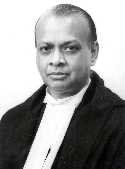
ARIJIT PASAYAT, J.
Leave granted.
Challenge in this Appeal is to correctness of the judgment rendered by a
Division Bench of the Kerala High Court holding that the order directing
respondent's dismissal from service was in violation of the principles of
natural justice. Therefore, it was held that the order was passed without
proper application of mind regarding the findings recorded by the
Disciplinary Authority on the basis of report of the enquiry officer, and
relating to imposition of punishment. However, High Court permitted the
respondent - writ petitioner to make a detailed representation to the
Disciplinary Authority in respect of the enquiry proceedings and findings,
within a stipulated time and direction was given to the Disciplinary
Authority to consider the submission and pass a fresh order. High Court
further directed that the period during which respondent was out of service
was to be treated as period under suspension, and the employee was to be
paid subsistence allowance. It would be relevant to note that the
respondent filed a Writ Petition questioning the order directing his
dismissal from service. Learned Single Judge came to hold that the quantum
of punishment i.e. dismissal from service was disproportionate to the
misconduct proved. It was however, held that no prejudice was caused to the
writ petitioner and there was no violation of principles of natural
justice. Both the writ petitioner and the present appellant had preferred
writ appeals before the High Court, which were heard and disposed of by the
impugned common judgment.
In support of the appeal, Mr. Sudhir Chandra, learned Senior Advocate
submitted that the show cause notice was issued on 2.7.1992. Since the
respondent was not working at the Branch where he was originally posted and
was living at Kanpur, the notice was served on him on 6.8.1992 and 15 days,
time was granted for the purpose of filing response. Order was passed on
17.8.1992. Even though the respondent-employee preferred an appeal before
the prescribed Appellate Authority, in the Memorandum of Appeal there was
no stand taken that there was any prejudice caused to him on account of the
fact that the order was passed prior to the expiry of the indicated period.
He was given personal hearing by the Appellate Authority. Before him also
no such stand was taken and no plea regarding any prejudice was raised.
That being the position, the learned Single Judge was right in holding that
there was no prejudice caused. The Division Bench has clearly missed these
vital factors and, therefore, its view regarding violation of the
principles of natural justice cannot be maintained. Further, in view of the
proved misconduct, the punishment imposed cannot in any way be held to be
disproportionate. In any event, there was hardly any scope within the
limited scope of judicial review to interfere with the quantum of
punishment.
http://JUDIS.NIC.IN SUPREME COURT OF INDIA Page 2 of 12
In response, learned counsel for the respondent-employee submitted that
prejudice is writ large and did not be pleaded. Merely because no specific
ground regarding prejudice was taken either in the Memorandum of Appeal or
at the time of personal hearing that does not cure the fatal defect of
violation of principles of natural justice.
It is not in dispute that in the meantime the respondent has reached the
age of superannuation, even if the order of dismissal is kept out of
consideration. In the instant case, undisputedly respondent-employee did
not raise any ground relating to violation of principles of natural justice
in either the Memorandum of Appeal or, at the time of personal hearing
before the Appellate authority.
Additionally, there was no material placed by the employee to show as to
how he has been prejudiced. Though in all cases the post-decisional hearing
cannot be a substitute for pre-decisional hearing, in the case at hand the
position is different. The position was illuminatingly stated by this Court
in Managing Director, ECIL, Hyderabad and Ors. v. B. Karunakara and Ors.,
[1993] 4 SCC 727 at para 31 which reads as follows:
"Hence, in all cases where the enquiry officer.s report is not furnished to
the delinquent employee in the disciplinary proceedings, the Courts and
Tribunals should cause the copy of the report to be furnished to the
aggrieved employee if he has not already secured it before coming to the
Court/Tribunal and give the employee an opportunity to show how his or her
case was prejudiced because of the non-supply of the report. If after
hearing the parties, the Court/Tribunal comes to the conclusion that the
non-supply of the report would have made no difference to the ultimate
findings and the punishment given, the Court/Tribunal should not interfere
with the order of punishment. The Court/Tribunal should not mechanically
set aside the order of punishment on the ground that the report was not
furnished as is regrettably being done at present. The courts should avoid
resorting to short cuts. Since it is the Courts/Tribunals which will apply
their judicial mind to the question and give their reasons for setting
aside or not setting aside the order of punishment, (and not any internal
appellate or revisional authority), there would be neither a breach of the
principles of natural justice nor a denial of the reasonable opportunity.
It is only if the Court/Tribunal finds that the furnishing of the report
would have made a difference to the result in the case that it should set
aside the order of punishment. Where after following the above procedure,
the Court/Tribunal sets aside the order of punishment, the proper relief
that should be granted is to direct reinstatement of the employee with
liberty to the authority/management to proceed with the inquiry, by placing
the employee under suspension and continuing the inquiry from the state of
furnishing him with the report. The question whether the employee would be
entitled to the back-wages and other benefits from the date of his
dismissal to the date of his reinstatement if ultimately ordered, should
invariably be left to be decided by the authority concerned according to
law, after the culmination of the proceedings and depending on the final
outcome. If the employee succeeds in the fresh inquiry and is directed to
be reinstated, the authority should be at liberty to decide according to
law how it will treat the period from the date of dismissal till the
reinstatement and to what benefits, if any and the extent of the benefits,
he will be entitled. The reinstatement made as a result of the setting
aside of the inquiry for failure to furnish the report, should be treated
as a reinstatement for the purpose of holding the fresh inquiry from the
stage of furnishing the report and no more, where such fresh inquiry is
held. That will also be the correct position in law."
It is to be further noted that in the appeal before the Appellate Authority
findings of the Inquiry Officer and Disciplinary Authority were challenged
and, therefore, the question of any prejudice does not arise. Since
employee had the opportunity to meet the stand of the Bank, it was to his
advantage, and opportunity for personal hearing was also granted. Keeping
in view what was observed in B. Karunakara's case (supra) there was no
http://JUDIS.NIC.IN SUPREME COURT OF INDIA Page 3 of 12
question of violation of principles of natural justice.
The crucial question that remains to be adjudicated is whether principles
of natural justice have been violated; and if so, to what extent any
prejudice has been caused. It may be noted at this juncture that in some
cases it has been observed that where grant of opportunity in terms of
principles of natural justice do not improve the situation, ``useless
formality theory'' can be pressed into service.
Natural justice is another name for commonsense justice. Rules of natural
justice are not codified canons. But they are principles ingrained into the
conscience of man. Natural justice is the administration of justice in a
commonsense liberal way. Justice is based substantially on natural ideals
and human values. The administration of justice is to be freed from the
narrow and restricted considerations which are usually associated with a
formulated law involving linguistic technicalities and grammatical
niceties. It is the substance of justice which has to determine its form.
The expressions ``natural justice'' and ``legal justice'' do not present a
water-tight classification. It is the substance of justice which is to be
secured by both, and whenever legal justice fails to achieve this solemn
purpose, natural justice is called in aid of legal justice. Natural justice
relieves legal justice from unnecessary technicality, grammatical pedantry
or logical prevarication. It supplies the omissions of a formulated law. As
Lord Buckmaster said, no form or procedure should ever be permitted to
exclude the presentation of a litigants. defence.
The adherence to principles of natural justice as recognized by all
civilized States is of supreme importance when a quasi-judicial body
embarks on determining disputes between the parties, or any administrative
action involving civil consequences is in issue. These principles are well
settled. The first and foremost principle is what is commonly known as audi
alteram partem rule. It says that no one should be condemned unheard.
Notice is the first limb of this principle. It must be precise and
unambiguous. It should appraise the party determinatively the case he has
to meet. Time given for the purpose should be adequate so as to enable him
to make his representation. In the absence of a notice of the kind and such
reasonable opportunity, the order passed becomes wholly vitiated. Thus, it
is but essential that a party should be put on notice of the case before
any adverse order is passed against him. This is one of the most important
principles of natural justice. It is after all an approved rule of fair
play. The concept has gained significance and shades with time. When the
historic document was made at Runnymede in 1215, the first statutory
recognition of this principle found its way into the ``Magna Carta''. The
classic exposition of Sir Edward Coke of natural justice requires to
``vocate interrogate and adjudicate''. In the celebrated case of Cooper v.
Wandsworth Board of Works, (1963) 143 ER 414, the principle was thus
stated:
"Even God did not pass a sentence upon Adam, before he was called
upon to make his defence. ``Adam'' says God, ``where art thou has
thou not eaten of the tree whereof I commanded thee that though
should not eat''.
Since then the principle has been chiselled, honed and refined, enriching
its content. Judicial treatment has added light and luminosity to the
concept, like polishing of a diamond.
Principles of natural justice are those rules which have been laid down by
the Courts as being the minimum protection of the rights of the individual
against the arbitrary procedure that may be adopted by a judicial, quasi-
judicial and administrative authority while making an order affecting those
rights. These rules are intended to prevent such authority from doing
injustice.
http://JUDIS.NIC.IN SUPREME COURT OF INDIA Page 4 of 12
What is meant by the term `principles of natural justice' is not
easy to determine. Lord Summer (then Hamilton, L.J.) in Ray v.
Local Government Board, (1914) 1 KB 160 at p.199:83 LJKB 86)
described the phrase as sadly lacking in precision. In General
Council of Medical Education & Registration of U.K. v. Sanckman,
(1943) AC 627: [1948] 2 All ER 337, Lord Wright observed that it
was not desirable to attempt `to force it into any procusteam bed'
and mentioned that one essential requirement was that the Tribunal
should be impartial and have no personal interest in the
controversy, and further that it should give `a full and fair
opportunity', to every party of being heard.
Lord Wright referred to the leading cases on the subject. The most
important of them is the Board of Education v. Rice, (1911) AC 179:80 LJKB
796), where Lord Loreburn, L.C. observed as follows:
"Comparatively recent statutes have extended, if they have
originated, the practice of imposing upon departments or offices of
State the duty of deciding or determining questions of various
kinds. It will, I suppose usually be of an administrative kind, but
sometimes, it will involve matter of law as well as matter of fact,
or even depend upon matter of law alone. In such cases, the Board
of Education will have to ascertain the law and also to ascertain
the facts. I need not and that in doing either they must act in
good faith and fairly listen to both sides for that is a duty lying
upon everyone who decides anything. But I do not think they are
bound to treat such a question as though it were a trial......''
The Board is in the nature of the arbitral tribunal, and a Court of
law has no jurisdiction to hear appeals from the determination
either upon law or upon fact. But if the Court is satisfied either
that the Board have not acted judicially in the way I have
described, or have not determined the question which they are
required by the Act to determine, then there is a remedy by
mandamus and certiorari".
Lord Wright also emphasized from the same decision the observation of the
Lord Chancellor that the Board can obtain information in any way they think
best, always giving a fair opportunity to those who are parties to the
controversy for correcting or contradicting any relevant statement
prejudicial to their view''. To the same effect are the observations of
Earl of Selbourne, LO in Spackman v. Plumstead District Board of Works,
(1985) 10 AC 229:54 LJMC 81), where the learned and noble Lord Chancellor
observed as follows:
"No doubt, in the absence of special provisions as to how the
person who is to decide is to proceed, law will imply no more than
that the substantial requirements of justice shall not be violated.
He is not a judge in the proper sense of the word; but he must give
the parties an opportunity of being heard before him and stating
their case and their view. He must give notice when he will proceed
with the matter and he must act honestly and impartially and not
under the dictation of some other person or persons to whom the
authority is not given by law. There must be no malversation of any
kind. There would be no decision within the meaning of the statute
if there were anything of that sort done contrary to the essence of
justice".
Lord Selbourne also added that the essence of justice consisted in
requiring that all parties should have an opportunity of submitting to the
person by whose decision they are to be bound, such considerations as in
their judgment ought to be brought before him. All these cases lay down the
very important rule of natural justice contained in the oft-quoted phrase
`justice should not only be done, but should be seen to be done'.
Concept of natural justice has undergone a great deal of change in recent
http://JUDIS.NIC.IN SUPREME COURT OF INDIA Page 5 of 12
years. Rules of natural justice are not rules embodied always expressly in
a statute or in rules framed thereunder. They may be implied from the
nature of the duty to be performed under a statute. What particular rule of
natural justice should be implied and what its context should be in a given
case must depend to a great extent on the fact and circumstances of that
case, the frame-work of the statute under which the enquiry is held. The
old distinction between a judicial act and an administrative act has
withered away. Even an administrative order which involves civil
consequences must be consistent with the rules of natural justice.
Expression `civil consequences' encompasses infraction of not merely
property or personal rights but of civil liberties, material deprivations,
and non-pecuniary damages. In its wide umbrella comes everything that
affects a citizen in his civil life.
Natural justice has been variously defined by different Judges. A
few instances will suffice. In Drew v. Drew and Lebura, (1855) 2
Macg. 1.8, Lord Cranworth defined it as `universal justice'. In
James Dunber Smith v. Her Majesty the Queen, (1877-78)3 App. Case
614, 623 JC Sir Robort P. Collier, speaking for the judicial
committee of Privy council, used the phrase `the requirements of
substantial justice', while in Arthur John Specman v. Plumstead
District Board of Works, (1884-85) 10 App.Case 229, 240, Earl of
Selbourne, S.C. preferred the phrase `the substantial requirement
of justice'. In Vionet v. Barrett, (1885) 55 LJRD 39, 41, Lord
Esher, MR defined natural justice as `the natural sense of what is
right and wrong'. While, however, deciding Hookings v. Smethwick
Local Board of Health, (1890) 24 QBD 712, Lord Fasher, M.R. instead
of using the definition given earlier by him in Vionet's case
(supra) chose to define natural justice as `fundamental justice' In
Ridge v. Baldwin, (1963) 1 WB 569, 578, Harman LJ, in the Court of
Appeal countered natural justice with `fair-play in action' a
phrase favoured by Bhagawati, J. in Maneka Gandhi v. Union of
India, [1978] 2 SCR 621. In re R.N. (An Infaot) (1967) 2 B617, 530,
Lord Parker, CJ, preferred to describe natural justice as `a duty
to act fairly'. In fairmount Investments Ltd. v. Secretary to State
for Environment, (1976) WLR 1255 Lord Russell of Willowan somewhat
picturesquely described natural justice as `a fair crack of the
whip' while Geoffrey Lane, LJ. In Regina v. Secretary of State for
Home Affairs Ex Parte Hosenball, (1977 ) 1 WLR 766 preferred the
homely phrase `common fairness'.
How then have the principles of natural justice been interpreted in the
Courts and within what limits are they to be confined? Over the years by a
process of judicial interpretation two rules have been evolved as
representing the principles of natural justice in judicial process,
including therein quasi-judicial and administrative process. They
constitute the basic elements of a fair hearing, having their roots in the
innate sense of man for fair-play and justice which is not the preserve of
any particular race or country but is shared in common by all men. The
first rule is `nemo judex in causa sua' or `nemo debet esse judex in
propria causa sua' as stated in (1605) 12 Co.Rep.114 that is, `no man shall
be a judge in his own cause' Coke used the form `aliquis non debet esse
judex in propria causa quia non potest esse judex at pars. (Co.Litt. 1418),
that is, `no man ought to be a judge in his own case' because he cannot act
as Judge and at the same time be a party' The form `nemo potest esse simul
actor et judex', that is, `no one can be at once suitor and judge' is also
at times used. The second rule is `audi alteram partem', that is, `hear the
other side' At times and particularly in continental countries, the form
`audietur at altera pars' is used, meaning very much the same thing. A
corollary has been deduced from the above two rules and particularly the
audi alteram partem rule, namely `qui aliquid statuerit parte inaudita
alteram actquam licet dixerit, haud acquum facerit' that is, `he who shall
decide anything without the other side having been heard, although he may
have said what is right, will not have been what is right' (See Bosewell's
case (1605) 6 Co.Rep. 48-b, 52-a) or in other words, as it is now
http://JUDIS.NIC.IN SUPREME COURT OF INDIA Page 6 of 12
expressed, `justice should not only be done but should manifestly be seen
to be done' Whenever an order is struck down as invalid being in violation
of principles of natural justice, there is no final decision of the case
and fresh proceedings are left upon. All that is done is to vacate the
order assailed by virtue of its inherent defect, but the proceedings are
not terminated.
What is known as `useless formality theory' has received consideration of
this Court in M.C. Mehta v. Union of India, [1999] 6 SCC 237. It was
observed as under:
"Before we go into the final aspect of this contention, we would
like to state that case relating to breach of natural justice do
also occur where all facts are not admitted or are not all beyond
dispute. In the context of those cases there is a considerable
case-law and literature as to whether relief can be refused even if
the court thinks that the case of the applicant is not one of `real
substance' or that there is no substantial possibility of his
success or that the result will not be different, even if natural
justice is followed (See Malloch v. Aberdeen Corpn., [1971] 2 All
ER 1278, HL (per Lord Reid and Lord Wilberforce), Glynn v. Keele
University, [1971] 2 All ER 89; Cinnamond v. British Airports
Authority, [1980] 2 All ER 368, CA and other cases where such a
view has been held. The latest addition to this view is R. v.
Ealing Magistrates. Court, ex p. Fannaran, (1996) 8 Admn. LR 351,
358) See de Smith, Suppl. P.89 (1998) where Straughton, L.J. held
that there must be `demonstrable beyond doubt. that the result
would have been different. Lord Woolf in Lloyd v. McMohan, [1987] 1
All ER 1118, CA has also not disfavoured refusal of discretion in
certain cases of breach of natural justice. The New Zealand Court
in McCarthy v. Grant, (1959) NZLR 1014 however goes halfway when it
says that (as in the case of bias), it is sufficient for the
applicant to show that there is `real likelihood-not certainty- of
prejudice.' On the other hand, Garner Administrative Law (8th Edn.
1996. pp.271-72) says that slight proof that the result would have
been different is sufficient. On the other side of the argument, we
have apart from Ridge v. Baldwin, (1964) AC 40: [1963] 2 All ER 66,
HL), Megarry, J. in John v. Rees, [1969] 2 All ER 274 stating that
there are always `open and shut cases. and no absolute rule of
proof of prejudice can be laid down. Merits are not for the court
but for the authority to consider. Ackner, J has said that the
`useless formality theory' is a dangerous one and, however
inconvenient, natural justice must be followed. His Lordship
observed that `convenience and justice are often not on speaking
terms' More recently, Lord Bingham has deprecated the `useless
formality theory' in R. v. Chief Constable of the Thames Valley
Police Forces, ex p. Cotton (1990 IRLR 344) by giving six reasons
(see also his article `Should Public Law Remedies be
Discretionary?" 1991 PL. p.64). A detailed and emphatic criticism
of the `useless formality theory. has been made much earlier in
`Natural Justice, Substance or Shadow' by Prof. D.H. Clark of
Canada (see 1975 PL.pp.27-63) contending that Malloch (supra) and
Glynn (supra) were wrongly decided. Foulkes (Administrative Law,
8th Edn. 1996, p.323), Craig (Administrative Law, 3rd Edn. P.596)
and others say that the court cannot prejudge what is to be decided
by the decision-making authority. De Smith (5th Edn. 1994, paras
10.031 to 10.036) says courts have not yet committed themselves to
any one view though discretion is always with the court. Wade
(Administrative Law, 5th Edn. 1994, pp.526-530) says that while
futile writs may not be issued, a distinction has to be made
according to the nature of the decision. Thus, in relation to cases
other than those relating to admitted or indisputable facts, there
is a considerable divergence of opinion whether the applicant can
be compelled to prove that the outcome will be in his favour or he
has to prove a case of substance or if he can prove a `real
http://JUDIS.NIC.IN SUPREME COURT OF INDIA Page 7 of 12
likelihood' of success or if he is entitled to relief even if there
is some remote chance of success. We may, however, point out that
even in cases where the facts are not all admitted or beyond
dispute, there is a considerable unanimity that the courts can, in
exercise of their `discretion', refuse certiorari, prohibition,
mandamus or injunction even though natural justice is not followed.
We may also state that there is yet another line of cases as in
State Bank of Patiala v. S.K. Sharma, [1996] 3 SCC 364 and Rajendra
Singh v. State of M.P., [1996] 5 SCC 460 that even in relation to
statutory provisions requiring notice, a distinction is to be made
between cases where the provision is intended for individual
benefit and where a provision is intended to protect public
interest. In the former case, it can be waived while in the case of
the latter, it cannot be waived.
We do not propose to express any opinion on the correctness or
otherwise of the `useless formality theory' and leave the matter
for decision in an appropriate case, inasmuch as the case before
us, `admitted and indisputable' facts show that grant of a writ
will be in vain as pointed by Chinnappa Reddy, J."
As was observed by this Court we need not to go into `useless formality
theory' in detail; in view of the fact that no prejudice has been shown. As
is rightly pointed out by learned counsel for the appellant unless failure
of justice is occasioned or that it would not be in public interest to do
so in particular case, this Court may refuse to grant relief to the
concerned employee. (see Gadde Venkateswara Rao v. Govt. of A.P. and Ors.,
AIR (1966) SC 828). It is to be noted that legal formulations cannot be
divorced from the fact situation of the case. Personal hearing was granted
by the Appellate Authority, though not statutorily prescribed. In a given
case post-decisional hearing can obliterate the procedural deficiency of a
pre-decisional hearing. (See Charan Lal Sahu v. Union of India etc., AIR
(1990) SC 1480.
The aforesaid position in law was again reiterated in Canara Bank and Ors.
v. Debasis Das and Ors., [2003] 4 SCC 557.
Inevitably, the conclusion arrived at by the Division Bench that there was
violation of principles of natural justice cannot be maintained.
Coming to the question whether the punishment awarded was disproportionate,
it is to be noted that the various allegations as laid in the departmental
proceedings reveal that several acts of misconduct unbecoming a bank
official were committed by the respondent.
It is to be noted that the detailed charge sheets were served on the
respondent-employee who not only submitted written reply, but also
participated in the proceedings. His explanations were considered and the
Inquiry Officer held the charges to have been amply proved. He recommended
dismissal from service. The same was accepted by the Disciplinary
Authority. The proved charges clearly established that the respondent-
employee failed to discharge his duties with utmost integrity, honesty,
devotion and diligence and his acts were prejudicial to the interest of the
bank. In the appeal before the prescribed Appellate Authority, the findings
of the Inquiry Officer were challenged. The Appellate Authority after
analyzing the materials on record found no substance in the appeal.
The scope of interference with quantum of punishment has been the subject-
matter of various decisions of this Court. Such interference cannot be a
routine matter.
Lord Greene said in 1948 in the famous Wednesbury case (1948 (1) KB 223)
that when a statute gave discretion to an administrator to take a decision,
the scope of judicial review would remain limited. He said that
interference was not permissible unless one or the other of the following
http://JUDIS.NIC.IN SUPREME COURT OF INDIA Page 8 of 12
conditions was satisfied, namely the order was contrary to law, or relevant
factors were not considered, or irrelevant factors were considered; or the
decision was one which no reasonable person could have taken. These
principles were consistently followed in the UK and in India to judge the
validity of administrative action. It is equally well known that in 1983,
Lord Diplock in Council for Civil Services Union v. Minister of Civil
Service, (1983) 1 AC 768 (called the CCSU case) summarized the principles
of judicial review of administrative action as based upon one or other of
the following viz., illegality, procedural irregularity and irrationality.
He, however, opined that ``proportionality'' was a "future possibility".
In Om Kumar and Ors. v. Union of India, [2001] 2 SCC 386, this Court
observed, inter alia, as follows:
"The principle originated in Prussia in the nineteenth century and
has since been adopted in Germany, France and other European
countries. The European Court of Justice at Luxembourg and the
European Court of Human Rights at Strasbourg have applied the
principle while judging the validity of administrative action. But
even long before that, the Indian Supreme Court has applied the
principle of ``proportionality'' to legislative action since 1950,
as stated in detail below.
By "proportionality", we mean the question whether, while
regulating exercise of fundamental rights, the appropriate or
least-restrictive choice of measures has been made by the
legislature or the administrator so as to achieve the object of the
legislation or the purpose of the administrative order, as the case
may be. Under the principle, the court will see that the
legislature and the administrative authority ``maintain a proper
balance between the adverse effects which the legislation or the
administrative order may have on the rights, liberties or interests
of persons keeping in mind the purpose which they were intended to
serve''. The legislature and the administrative authority are,
however, given an area of discretion or a range of choices but as
to whether the choice made infringes the rights excessively or not
is for the court. That is what is meant by proportionality.
xxx xxx xxx xxx xxx
The development of the principle of ``strict scrutiny'' or
``proportionality'' in administrative law in England is, however,
recent. Administrative action was traditionally being tested on
Wednesbury grounds. But in the last few years, administrative
action affecting the freedom of expression or liberty has been
declared invalid in several cases applying the principle of
``strict scrutiny''. In the case of these freedoms, Wednesbury
principles are no longer applied. The courts in England could not
expressly apply proportionality in the absence of the convention
but tried to safeguard the rights zealously by treating the said
rights as basic to the common law and the courts then applied the
strict scrutiny test. In the Spycatcher case Attorney General v.
Guardian Newspapers Ltd., (No.2) (1990) 1 AC 109 (at pp. 283-284),
Lord Goff stated that there was no inconsistency between the
convention and the common law. In Derbyshire County Council v.
Times Newspapers Ltd., (1993) AC 534, Lord Keith treated freedom of
expression as part of common law. Recently, in R. v. Secy. of State
for Home Deptt., ex p. Simms, [1999] 3 All ER 400 (HL), the right
of a prisoner to grant an interview to a journalist was upheld
treating the right as part of the common law. Lord Hobhouse held
that the policy of the administrator was disproportionate. The need
for a more intense and anxious judicial scrutiny in administrative
decisions which engage fundamental human rights was re-emphasised
in in R. v. Lord Saville ex p., [1999] 4 All ER 860 CA, at pp.
870,872. In all these cases, the English Courts applied the
http://JUDIS.NIC.IN SUPREME COURT OF INDIA Page 9 of 12
``strict scrutiny'' test rather than describe the test as one of
``proportionality''. But, in any event, in respect of these rights
``Wednesbury'' rule has ceased to apply.
However, the principle of "strict scrutiny" or "proportionality"
and primary review came to be explained in R. v. Secy. of State for
the Home Deptt. ex p Brind, (1991) 1 AC 696. That case related to
directions given by the Home Secretary under the Broadcasting Act,
1981 requiring BBC and IBA to refrain from broadcasting certain
matters through persons who represented organizations which were
proscribed under legislation concerning the prevention of
terrorism. The extent of prohibition was linked with the direct
statement made by the members of the organizations. It did not
however, for example, preclude the broadcasting by such persons
through the medium of a film, provided there was a "voice-over"
account, paraphrasing what they said. The applicant's claim was
based directly on the European Convention of Human Rights. Lord
Bridge noticed that the Convention rights were not still expressly
engrafted into English law but stated that freedom of expression
was basic to the Common law and that, even in the absence of the
Convention, English Courts could go into the question (see p.
748-49).
"whether the Secretary of State, in the exercise of his discretion,
could reasonably impose the restriction he has imposed on the
broadcasting organisations"
and that the courts were
"not perfectly entitled to start from the premise that any
restriction of the right to freedom of expression requires to be
justified and nothing less than an important public interest will
be sufficient to justify it".
Lord Templeman also said in the above case that the courts could go into
the question whether a reasonable minister could reasonably have concluded
that the interference with this freedom was justifiable. He said that ``in
terms of the Convention'' any such interference must be both necessary and
proportionate (ibid pp. 750-51).
In the famous passage, the seeds of the principle of primary and
secondary review by courts were planted in the administrative law
by Lord Bridge in the Brind case (1991) 1 AC 696. Where Convention
rights were in question the courts could exercise a right of
primary review. However, the courts would exercise a right of
secondary review based only on Wednesbury principles in cases not
affecting the rights under the Convention. Adverting to cases where
fundamental freedoms were not invoked and where administrative
action was questioned, it was said that the courts were then
confined only to a secondary review while the primary decision
would be with the administrator. Lord Bridge explained the primary
and secondary review as follows:
` "The primary judgment as to whether the particular
competing public interest justifying the particular restriction imposed
falls to be made by the Secretary of State to whom Parliament has entrusted
the discretion. But, we are entitled to exercise a secondary judgment by
asking whether a reasonable Secretary of State, on the material before him,
could reasonably make the primary judgment.''
But where an administrative action is challenged as "arbitrary" under
Article 14 on the basis of Royappa [1974] 4 SCC 3 (as in cases where
punishments in disciplinary cases are challenged), the question will be
whether the administrative order is ``rational'' or ``reasonable'' and the
test then is the Wednesbury test. The courts would then be confined only to
http://JUDIS.NIC.IN SUPREME COURT OF INDIA Page 10 of 12
a secondary role and will only have to see whether the administrator has
done well in his primary role, whether he has acted illegally or has
omitted relevant factors from consideration or has taken irrelevant factors
into consideration or whether his view is one which no reasonable person
could have taken. If his action does not satisfy these rules, it is to be
treated as arbitrary. In G.B. Mahajan v. Jalgaon Municipal Council, [1991]
3 SCC 91 at p. 111 Venkatachaliah, J. (as he then was) pointed out that
``reasonableness'' of the administrator under Article 14 in the context of
administrative law has to be judged from the stand point of Wednesbury
rules. In Tata Cellular v. Union of India, [1994] 6 SCC 651 at pp. 679-80),
Indian Express Newspapers Bombay (P) Ltd. v. Union of India, [1985] 1 SCC
641 at p. 691, Supreme Court Employees. Welfare Assn. v. Union of India,
[1989] 4 SCC 187 at p. 241 and U.P. Financial Corpn. v. Gem Cap(India) (P)
Ltd., [1993] 2 SCC 299 at p. 307 while judging whether the administrative
action is ``arbitrary'' under Article 14 (i.e. otherwise then being
discriminatory), this Court has confined itself to a Wednesbury review
always.
The principles explained in the last preceding paragraph in respect
of Article 14 are now to be applied here where the question of
``arbitrariness'' of the order of punishment is questioned under
Article 14.
xxx xxx xxx xxx xxx
Thus, from the above principles and decided cases, it must be held
that where an administrative decision relating to punishment in
disciplinary cases is questioned as ``arbitrary'' under Article 14,
the court is confined to Wednesbury principles as a secondary
reviewing authority. The court will not apply proportionality as a
primary reviewing court because no issue of fundamental freedoms
nor of discrimination under Article 14 applies in such a context.
The court while reviewing punishment and if it is satisfied that
Wednesbury principles are violated, it has normally to remit the
matter to the administrator for a fresh decision as to the quantum
of punishment. Only in rare cases where there has been long delay
in the time taken by the disciplinary proceedings and in the time
taken in the courts, and such extreme or rare cases can the court
substitute its own view as to the quantum of punishment."
In B.C. Chaturvedi v. Union of India and Ors., [1995] 6 SCC 749 it was
observed:
"A review of the above legal position would establish that the
disciplinary authority, and on appeal the appellate authority,
being fact-finding authorities have exclusive power to consider the
evidence with a view to maintain discipline. They are invested with
the discretion to impose appropriate punishment keeping in view the
magnitude or gravity of the misconduct. The High Court/Tribunal,
while exercising the power of judicial review, cannot normally
substitute its own conclusion on penalty and impose some other
penalty. If the punishment imposed by the disciplinary authority or
the appellate authority shocks the conscience of the High
Court/Tribunal, it would appropriately mould the relief, either
directing the disciplinary/appellate authority to reconsider the
penalty imposed, or to shorten the litigation, it may itself, in
exceptional and rare cases, impose appropriate punishment with
cogent reasons in support thereof."
In Union of India and Anr. v. G. Ganayutham, [1997] 7 SCC 463, this Court
summed up the position relating to proportionality in paragraphs 31 and 32,
which read as follows:
"The current position of proportionality in administrative law in
England and India can be summarized as follows:
http://JUDIS.NIC.IN SUPREME COURT OF INDIA Page 11 of 12
(1) To judge the validity of any administrative order or
statutory discretion, normally the Wednesbury test is to be
applied to find out if the decision was illegal or suffered
from procedural improprieties or was one which no sensible
decision-maker could, on the material before him and within
the framework of the law, have arrived at. The court would
consider whether relevant matters had not been taken into
account or whether irrelevant matters had been taken into
account or whether the action was not bona fide. The court
would also consider whether the decision was absurd or
perverse. The court would not however go into the
correctness of the choice made by the administrator amongst
the various alternatives open to him. Nor could the court
substitute its decision to that of the administrator. This
is the Wednesbury (1948 1 KB 223) test.
(2) The court would not interfere with the administrator's
decision unless it was illegal or suffered from procedural
impropriety or was irrational \026 in the sense that it was in
outrageous defiance of logic or moral standards. The
possibility of other tests, including proportionality being
brought into English administrative law in future is not
ruled out. These are the CCSU (1985 AC 374) principles.
(3)(a) As per Bugdaycay (1987 AC 514), Brind (1991 (1) AC
696) and Smith (1996 (1) All ER 257) as long as the
Convention is not incorporated into English law, the
English courts merely exercise a secondary judgment to find
out if the decision-maker could have, on the material
before him, arrived at the primary judgment in the manner
he has done.
(3)(b) If the Convention is incorporated in England making
available the principle of proportionality, then the English courts
will render primary judgment on the validity of the administrative
action and find out if the restriction is disproportionate or
excessive or is not based upon a fair balancing of the fundamental
freedom and the need for the restriction thereupon.
(4)(a) The position in our country, in administrative law,
where no fundamental freedoms as aforesaid are involved, is
that the courts/tribunals will only play a secondary role
while the primary judgment as to reasonableness will remain
with the executive or administrative authority. The
secondary judgment of the court is to be based on
Wednesbury and CCSU principles as stated by Lord Greene and
Lord Diplock respectively to find if the executive or
administrative authority has reasonably arrived at his
decision as the primary authority.
(4)(b) Whether in the case of administrative or executive
action affecting fundamental freedoms, the courts in our
country will apply the principle of ``proportionality'' and
assume a primary role, is left open, to be decided in an
appropriate case where such action is alleged to offend
fundamental freedoms. It will be then necessary to decide
whether the courts will have a primary role only if the
freedoms under Articles 19, 21 etc. are involved and not
for Article 14.
Finally, we come to the present case. It is not contended before us
that any fundamental freedom is affected. We need not therefore go
http://JUDIS.NIC.IN SUPREME COURT OF INDIA Page 12 of 12
into the question of ``proportionality''. There is no contention
that the punishment imposed is illegal or vitiated by procedural
impropriety. As to ``irrationality'', there is no finding by the
Tribunal that the decision is one which no sensible person who
weighed the pros and cons could have arrived at nor is there a
finding, based on material, that the punishment is in
``outrageous'' defiance of logic. Neither Wednesbury nor CCSU tests
are satisfied. We have still to explain "Ranjit Thakur, [1987] 4
SCC 611)".
In Chairman and Managing Director, United Commercial Bank and Others v.
P.C. Kakkar, [2003] 4 SCC 364 the rigid standards to be adopted when
considering the case of Bank officials were highlighted.
Aforesaid being the position, the decisions of the learned Single Judge on
the quantum of punishment and of the Division Bench regarding alleged
violation of the principles of natural justice cannot be maintained and
are, therefore, set aside. The inevitable conclusion is that the order of
dismissal as passed by the Appellant-Bank does not suffer from any
infirmity. Appeal is accordingly allowed, but with no order as to costs.

 Login with google
Legal Notes
Add a Note....