
As per case facts, the petitioner, a disabled Armed Forces veteran who became an IRS officer, was ranked first for appointment as Member (Accountant), ITAT. His appointment was repeatedly stalled ...
2026 INSC 101 1
REPORTABLE
IN THE SUPREME COURT OF INDIA
CIVIL ORIGINAL JURISDICTION
WRIT PETITION(CIVIL) NO(S). 1180 OF 2025
CAPTAIN PRAMOD
KUMAR BAJAJ ….PETITIONER(S)
VERSUS
UNION OF INDIA AND ANR. ….RESPONDENT(S)
J U D G M E N T
Mehta, J.
1. Heard.
2. The present case discloses a sordid tale of
targeted departmental vendetta, full of mala fide
actions and protracted persecution that has
compelled the petitioner to invoke the extraordinary
jurisdiction of this Court under Article 32 of the
Constitution of India.
3. The petitioner before us is a former member of
the Armed Forces who was released from service on
account of physical disability suffered during the
course of the Army operations.
2
4. Pursuant to his release, the petitioner appeared
and succeeded in the Civil Services Examination. He
was appointed to the Indian Revenue Service against
an unreserved category post way back in the year
1990. Having earned an unblemished service record,
including promotion to the high position of
Commissioner of Income Tax in the year 2012, the
petitioner applied for the post of Member
(Accountant), ITAT, and was interviewed by an SCSC
headed by an Hon’ble sitting Judge of this Court. The
Committee evaluated the petitioner and ranked him
first on the all-India merit list. It appears that this
success of the petitioner did not go down well with
the Officers of the respondents. The chain of events
which transpired as a sequel have led to the filing of
the present writ petition under Article 32 of the
Constitution of India.
5. The present writ petition has been instituted by
the petitioner, inter alia, seeking the following reliefs:-
i. “Issue a writ of certiorari, mandamus or
any other appropriate writ, order, or
direction or declaration for re-constitution
of the Search Cum Selection Committee to
consider the case of Petitioner within four
weeks in terms of orders dated 15.11.2017
3
and 09.09.2020 in SLP(C) No.22596/2017
and M.A. 2557/2019, so that appointing
authority can take a decision within two
weeks thereafter,
ii. Issue a writ of certiorari, mandamus or
any other appropriate writ, order, or
direction or declaration after summoning
the complete file, so that justice is done to
the Petitioner, who has been
recommended 11 years ago by the SCSC
(2013 Notification) and faced 3 SCSCs
subsequently, in accordance with the
judgment of this Hon'ble Court dated
15.11.2017 in S.L.P. Civil No.
22596/2017”
BACKGROUND
6. The present matter has a chequered history as
it has traversed multiple rounds of litigation, which
renders it necessary to set out the factual
background in some detail. Accordingly, the facts
relevant and necessary for the disposal of the present
writ petition are noted hereinbelow.
A. Service Background and Initial Selection
Process
7. The petitioner was inducted as a Permanent
Commissioned Officer in the Indian Army in the year
1980. During the course of Army operations, he
4
suffered a physical disability and was, consequently,
demobilised and released from service on account of
disability attributable to active military operations.
Thereafter, he qualified the Civil Services
Examination in the year 1989 and was appointed to
the Indian Revenue Service in the general category,
being allocated to the 1990 batch. In the course of his
service in the Department of Income Tax, he held
various posts and was promoted to higher ranks,
including promotion to the post of Commissioner on
12
th January, 2012, while maintaining an
unblemished service record throughout his tenure.
8. In the year 2014, the petitioner applied for
appointment to the post of Member (Accountant),
Income Tax Appellate Tribunal
1, and was called for
an interview before the Search -cum-Selection
Committee
2 chaired by Hon’ble Shri Justice T.S.
Thakur (as he then was), along with the Additional
Solicitor General, the Law Secretary , and the
President of the ITAT as its members.
9. Upon evaluation of all candidates, the SCSC
placed the petitioner at All India Rank One. However,
1
For short, ‘ITAT’.
2
For short,’SCSC’.
5
notwithstanding the said recommendation, the
respondents did not issue a formal letter of
appointment on the premise that certain adverse
Intelligence Bureau
3 inputs were available against
the petitioner, which allegedly emanated from
litigation between the petitioner and his estranged
spouse.
10. In the year 2016, the petitioner was also
empaneled by the Appointments Committee of the
Cabinet
4 for appointment as Joint Secretary to the
Government of India.
B. Litigation Arising from the Withholding of
Appointment
11. Aggrieved by the non-issuance of a formal
appointment letter despite being placed at the top of
the merit list by the SCSC, the petitioner approached
the Central Administrative Tribunal
5, Lucknow
Bench, by filing Original Application No. 95 of 2016,
which came to be allowed vide judgment dated 10
th
February, 2017, directing the respondents to place
the alleged IB report before the SCSC within a period
3
For short, ‘IB’.
4
For short, ‘ACC’.
5
Hereinafter, referred to as the ‘Tribunal’.
6
of one month, for it to take a final view on the
petitioner’s claim for appointment to the subject post.
12. Pursuant thereto, the re-constituted SCSC
convened its meeting and, vide its opinion dated 26
th
April, 2018, rejected the fetters created by the
respondents and reiterated the merit position of the
petitioner for appointment as Member (Accountant),
ITAT.
13. Meanwhile, the respondents assailed the order
dated 10
th February, 2017, passed by the Tribunal by
filing Writ Petition No.8648 of 2017 before the High
Court of Judicature at Allahabad, Lucknow Bench
6.
The High Court, vide order dated 30
th May, 2017,
dismissed the writ petition and directed the
respondents to act in accordance with the directions
issued by the Tribunal and to conclude the process
of reconsideration of the petitioner’s candidature
within a period of three months.
14. Aggrieved by the order dated 30
th May, 2017,
passed by the High Court, the respondents
approached this Court by filing SLP (Civil) No. 22596
of 2017. The said Special Leave Petition came to be
6
Hereinafter, referred to as the ‘High Court’.
7
dismissed vide order dated 15
th November, 2017,
with a direction to comply with the order passed by
the High Court.
C. Vigilance, Disciplinary Proceedings, and
Compulsory Retirement
15. On 29
th November, 2017, a vigilance inspection
was conducted in the office of the petitioner.
Consequent thereto, the respondents issued a show
cause notice dated 31
st January, 2018 to the
petitioner. Even prior thereto, on 21
st January, 2018,
the vigilance clearance earlier granted in favour of the
petitioner was withheld. The petitioner assailed both
the aforesaid actions by filing separate OAs before the
Tribunal. The Tribunal, by an interim order, observed
that the issuance of the show cause notice shall not
impede or influence the petitioner’s consideration for
appointment to the post of Member (Accountant),
ITAT. By a subsequent interim order dated 4
th May,
2018, the Tribunal further provided that withholding
of vigilance clearance would also not stand in the way
of such appointment. A second SLP preferred by the
respondents against the interim relief granted by the
Tribunal, as affirmed by the High Court in W rit
Petition (Civil) Nos. 22179-22187 of 2018 vide order
8
dated 6
th August, 2018, came to be dismissed by this
Court on 29
th March, 2019.
16. In the interregnum, on 11
th April, 2018, the
petitioner was placed in the “Agreed List”, being a list
of Gazetted Officers of suspected integrity maintained
by the Department. Aggrieved by the action of the
respondents in placing his name in the “Agreed List”,
the petitioner approached the Tribunal for the third
time, wherein an interim order was granted in his
favour. Ultimately, by a common judgment dated 6
th
March, 2019, the Tribunal allowed O.A. No. 137 of
2018 and O.A. No. 279 of 2018, quashing the
inclusion of the petitioner’s name in the “Agreed List”
along with the consequential proceedings, so also the
decision of the respondents denying him vigilance
clearance. The Tribunal further directed the
respondents to forward the name of the petitioner to
the competent authority for selection and
appointment to the post of Member (Accountant),
ITAT. The respondents remained adamant and did
not comply with the said judgment and again
preferred a writ petition before the High Court.
Admittedly, no interim order staying the operation of
9
the judgment dated 6
th March, 2019 was granted by
the High Court.
17. Aggrieved by the continued non-compliance of
the order dated 30
th May, 2017, passed by the High
Court in his favour, as well as the directions issued
by the Tribunal vide its common judgment dated 6
th
March, 2019, in O.A. No. 137 of 2018 and O.A. No.
279 of 2018, the petitioner initiated contempt
proceedings, being Contempt Petition No. 2681 of
2017 before the High Court and Contempt Case Nos.
15 of 2019 and 26 of 2019 before the Tribunal,
respectively. Despite the judicial mandate that the
petitioner’s name be forwarded to the appointing
authority within a period of two weeks, the
respondents failed to comply, and their application
seeking extension of time was rejected by the
Tribunal vide order dated 8
th April, 2019. The High
Court vide order dated 13
th August, 2019, permitted
impleadment of the then Chairman of the Central
Board of Direct Taxes
7 and issued notice to show
cause as to why such officer should not be proceeded
against for willful disobedience of the order dated 30
th
7
For short, ’CBDT’.
10
May, 2017. Similar notices were issued by the
Tribunal for non-compliance of the orders dated 30
th
May, 2017, and 6
th March, 2019.
18. In the proceedings before the High Court, the
respondents, with a clear intention of avoiding
compliance, continued to seek adjournments on the
premise that steps were being taken to forward the
petitioner’s name to the ACC for processing his
appointment as Member (Accountant), ITAT.
Ultimately, on 31
st May, 2019, the respondents were
granted a final opportunity to effect compliance and,
at their request, the matter was adjourned to 9
th July,
2019.
19. In the interregnum, the respondents issued a
charge memorandum dated 17
th June, 2019, and
placed the petitioner under suspension on 1
st July,
2019.
20. In July, 2019, a Departmental Promotion
Committee convened by the Union Public Service
Commission considered the case of the petitioner for
promotion to the post of Principal Commissioner.
However, the decision in respect of the petitioner was
kept in a sealed cover on account of the pending
disciplinary proceedings. The petitioner had, in the
11
meantime, approached the High Court by filing a writ
petition challenging the charge memorandum,
wherein interim protection was granted in his favour.
21. While the said proceedings were still pending,
the respondents, by resorting to Rule 56(j) of the
Fundamental Rules, proceeded to compulsorily retire
the petitioner vide order dated 27
th September, 2019,
barely three months prior to his superannuation,
which was due in January, 2020. Thereafter, the list
of promotions to the post of Principal Commissioner
was published on 11
th November, 2019, by which
time the petitioner stood excluded from
consideration.
22. As a consequence of the issuance of the charge
memorandum and pursuant to the action of
compulsory retirement initiated by the CBDT, the
Department of Personnel and Training
8 in a façade
showing compliance of the Tribunal’s order dated 6
th
March, 2019, issued an Office Memorandum dated
9
th September, 2019, directing that the petitioner’s
file for appointment as Member (Accountant), ITAT be
placed afresh before the SCSC.
8
For short, ‘DoPT’.
12
23. An office memorandum was issued on 9
th
September, 2019, directing Respondent No. 2
(Secretary, Ministry of Law and Justice) to place the
matter relating to the issuance of the charge
memorandum and the action under Rule 56(j) before
the SCSC afresh, in terms of the directions of the
appointing authority. This Court, vide order dated 9
th
January, 2020 passed in Miscellaneous Application
No.2557 of 2019 in Special Leave Petition (Civil)
No.22596 of 2017, observed that the respondents
would be at liberty to consider all relevant material,
including material that had emerged after 29
th
August, 2014, insofar as the same bore upon the
suitability of the petitioner for appointment as
Member (Accountant), ITAT.
24. Further directions were issued granting liberty
to the petitioner to challenge the aforesaid actions of
the respondents in accordance with law.
25. Pursuant to the notice issued by the
respondents, the petitioner again appeared before the
third SCSC. The Committee, however, deferred
consideration of the petitioner’s candidature until
judicial scrutiny of the two pending actions, namely
the charge memorandum and the order of
13
compulsory retirement under Rule 56(j), was
concluded.
D. Judicial Scrutiny of Disciplinary Action and
Consequential Proceedings
26. The petitioner challenged the order of
compulsory retirement dated 27
th September, 2019,
as also the subsequent order dated 2
nd January,
2020, passed by the Representation Committee
declining to interfere with the said action, by
approaching the Central Administrative Tribunal,
Principal Bench, New Delhi by filing an Original
Application, being OA No.703 of 2020 . The said
Original Application came to be dismissed vide
judgment dated 9
th December, 2020, which was
upheld by the High Court vide judgment dated 31
st
May, 2022.
27. Aggrieved by the judgment dated 31
st May, 2022
passed by the High Court, affirming the judgment
dated 9
th December, 2020 rendered by the CAT, the
petitioner approached this Court by filing Civil
Appeal No. 6161 of 2022. The said appeal came to be
allowed by this Court vide judgment dated 3
rd March,
2023, with scathing findings and observations on the
14
conduct of the respondents which are extracted
hereinbelow: -
“36. In the teeth of the series of orders passed by the
Tribunal and the High Court in favour of the appellant,
the respondents elected to withhold his vigilance
clearance, thereby compelling the appellant to file
contempt petitions against the concerned officers for
non-compliance of the orders passed. Both, the High
Court as well as the Tribunal, issued notices for wilful
disobedience of the orders passed. In the proceedings
before the High Court, on the one hand, the
respondents kept seeking adjournments on the ground
that steps were being taken to forward the appellant’s
name to the ACC for being processed for his
appointment as Member, ITAT, till as late as on 31st
May 2019 on which date they were granted one last
opportunity for making compliances and at their
request, the matter was adjourned to 9th July 2019
and on the other hand, the respondents slapped the
appellant with a Charge Memorandum dated 17th
June 2019 and suspended him on 1st July, 2019.
37. Having regard to the fact that the respondents did
not take the disciplinary proceedings initiated against
the appellant to its logical conclusion and instead
issued an order compulsorily retiring him, this Court
does not deem it expedient to delve into the allegations
levelled in the said Charge Memorandum; all the same,
we have cursorily gone through the Charge
Memorandum that mentions three charges – one
alleging that the appellant failed to seek permission
from the department to purchase a flat in relation to
the matrimonial dispute between him and his
estranged wife and the second one is in respect of the
allegation of bigamy levelled against him by his
estranged wife. We have already noted earlier that
15
during the course of the matrimonial dispute, the
parties had arrived at a settlement and the flat that
was agreed to be given to the wife, was not purchased
by the appellant but by his brother, which fact is amply
borne out from the documents placed on record. The
matrimonial dispute between the parties stood closed
on a decree of divorce being granted on the basis of
mutual consent. That the respondents were also
cognizant of the said fact, is apparent from the
contents of O.M. dated 15th July, 2015 which records
inter alia that the said allegations levelled by the wife
had not been established. The third charge was
relating to the appellant having attended Court
hearings without sanctioned leave. However, the
disciplinary proceedings initiated against the appellant
on 17th July, 2019 were abandoned by the
respondents on the order of compulsory retirement
being passed against him in less than three months
reckoned therefrom, on 27th September, 2019.
38. The appellant has made allegations of institutional
bias and malice against the respondents on the plea
that the Chairman, CBDT who was a Member of the
Review Committee, was facing three contempt
proceedings relating to the appellant’s service dispute,
wherein notices had been issued by the High Court as
well as the Tribunal. There is no doubt that rule of law
is the very foundation of a well-governed society and
the presence of bias or malafides in the system of
governance would strike at the very foundation of the
values of a regulated social order. The law relating to
mala fide exercise of power has been the subject matter
of a catena of decisions [Refer: S. Pratap Singh v. State
of Punjab23; Jaichand Lal Sethia v. State of W.B24;
J.D. Srivastava v. State of M.P And Others25; and
Express Newspapers Pvt. Ltd. And Others v. Union of
India And Others26]. It has been repeatedly held that
16
any exercise of power that exceeds the parameters
prescribed by law or is motivated on account of
extraneous or irrelevant factors or is driven by
malicious intent or is on the face of it, so patently
arbitrary that it cannot withstand judicial scrutiny,
must be struck down. In the instant case, though the
appellant has levelled allegations of institutional bias
and prejudice against the respondents, particularly
against the then Chairman, CBDT who was a Member
of the Review Committee, the said officer was not
joined by the appellant as a party before the Tribunal
or the High Court, for him to have had an opportunity
to clarify his stand by filing a counter affidavit. Hence,
these allegations cannot be looked into by this Court.
39. Dehors the aforesaid allegations of institutional
bias and malice, having perused the material placed on
record, we find merit in the other grounds taken by the
appellant. It is noticed that though FR 56(j)
contemplates that the respondents have an absolute
right to retire a government servant in public interest
and such an order could have been passed against the
appellant any time after he had attained the age of fifty
years, the respondents did not take any such decision
till the very fag end of his career. The impugned order
of compulsory retirement was passed in this case on
27th September, 2019 whereas the appellant was to
superannuate in ordinary course in January, 2020.
There appears an apparent contradiction in the
approach of the respondents who had till as late as in
July, 2019 continued to grade the appellant as
‘Outstanding’ and had assessed his integrity as
‘Beyond doubt’. But in less than three months
reckoned therefrom, the respondents had turned turtle
to arrive at the conclusion that he deserved to be
compulsorily retired. If the appellant was worthy of
being continued in service for little short of a decade
17
after he had attained the age of 50 years and of being
granted an overall grade of 9 on the scale of 1 - 10 on
31st July, 2019 it has not been shown as to what had
transpired thereafter that made the respondents resort
to FR 56(j) and invoke the public interest doctrine to
compulsorily retire him with just three months of
service left for his retirement, in routine. In such a
case, this Court is inclined to pierce the smoke screen
and on doing so, we are of the firm view that the order
of compulsory retirement in the given facts and
circumstances of the case cannot be sustained. The
said order is punitive in nature and was passed to
short-circuit the disciplinary proceedings pending
against the appellant and ensure his immediate
removal. The impugned order p assed by the
respondents does not pass muster as it fails to satisfy
the underlying test of serving the interest of the public.
40. In view of the above discussion, it is deemed
appropriate to reverse the impugned judgment dated
31st May, 2022 and quash and set aside the order
dated 27th September, 2019 passed by the
respondents, compulsorily retiring the appellant.
Resultantly, the adverse consequences if any, flowing
from the said order of compulsory retirement imposed
on the appellant, are also set aside. The appeal is
allowed and disposed of on the aforesaid terms while
leaving the parties to bear their own costs.”
28. On 15
th March, 2024, the respondents issued a
fresh notification inviting applications from aspiring
candidates for appointment as Members of the ITAT
for a tenure of four years. The petitioner thereafter
made repeated representations to the then
18
Secretary
9, Department of Revenue, seeking
implementation of the judgment dated 3
rd March,
2023 passed by this Court . However, no action
ensued. In these circumstances, the petitioner was
constrained to approach this Court by filing
Contempt Petition (Civil) No. 210 of 2024, titled
“Capt. Pramod Kumar Bajaj v. XXX and Anr”
10.
29. This Court, vide order dated 29
th July, 2024,
summoned “the Officer”, being the then Revenue
Secretary, in the contempt proceedings for deliberate
defiance of the judgment passed by this Court. The
Officer tendered an unconditional written apology in
the aforesaid contempt proceedings. Vide order dated
5
th August, 2024, this Court was pleased to direct the
respondents to release all consequential benefits in
favour of the petitioner on or before 15
th August,
2024.
30. Meanwhile, the CBDT suo motu dropped the
charge memorandum issued to the petitioner vide
proceedings dated 2
nd August, 2024.
31. However, no consequential order offering
appointment to the petitioner as Member
9
Hereinafter, referred to as “the Officer”.
10
Name of the Officer has been screened as he holds a sensitive position.
19
(Accountant), ITAT was issued. Instead, the petitioner
was again called upon to appear before the fourth re-
constituted SCSC, chaired by an Hon’ble sitting
Judge of this Court as per the prescribed procedure.
E. Fourth Search-cum-Selection Committee
and Present Writ Petition
32. Upon appearing before the fourth SCSC in its
meeting held on 1
st September, 2024, the petitioner
was surprised to find that “the Officer” who had
earlier been actively involved in matter relating to the
petitioner’s protracted struggle for appointment and
had faced contempt proceedings initiated by the
petitioner (Contempt Petition (C) No.210/2024), was
included as a member of the Committee.
33. Thereafter, by proceedings communicated in
November, 2025, the candidature of the petitioner
was rejected by the Committee.
34. Aggrieved by the minutes of the SCSC dated 1
st
September, 2024, which were received by the
petitioner in November, 2025, the petitioner has
approached this Court by filing the present writ
petition under Article 32 of the Constitution of India.
35. Notice was issued to the respondents on 2
nd
December, 2025, returnable on 16
th December, 2025
20
on which date appearance was entered on behalf of
the Union of India, and two weeks’ time was sought
to obtain instructions and to file a counter affidavit,
if necessary. It was made clear on the very date that
no further time would be granted for the said
purpose, keeping in view the fact that, if the
petitioner were to be considered for appointment as a
Member of the ITAT at this stage, he would be left
with a very short tenure. Despite service of notice and
grant of opportunity, neither a counter affidavit was
filed nor did anyone appear on behalf of the
respondents when the matter was taken up on 15
th
January, 2026. Accordingly, we have heard the
petitioner, who appeared in -person, and have
carefully perused the material available on record.
DISCUSSION AND ANALYSIS
36. As per the factual matrix noted above, at every
stage of proceedings, the respondents have
deliberately created hurdles in the path of the
petitioner by either putting up cooked-up charges or
failing to ensure compliance with the orders passed
by various fora. Even in the present case, the rank
procrastination exhibited by the respondents in not
21
filing a counter affidavit inspite of the specific
direction given by this Court, manifests that by not
instructing the counsel to file the counter affidavit,
the departmental Officers desired to waste precious
time and deprive the petitioner of having access to
the slender window which remains available as he is
approaching the age of 70 years being the outer age
limit for the assignment. Even after the judgment was
reserved on 15
th January, 2026, there has been no
attempt on behalf of the respondents to make any
mention or to seek leave to file a counter affidavit so
as to traverse the averments set out in the writ
petition.
37. The petitioner in the writ petition has attributed
serious bias, mala fides, and personal vendetta to the
departmental officers. It is asserted that the
petitioner was continuously and repeatedly treated
with vindictive approach inspite of having ranked
first in the initial evaluation by the SCSC constituted
in the year 2014. The Department continued to
procrastinate, and created intentional hurdles in the
appointment of the petitioner. Not only this,
roadblocks were created and his subsisting service as
a Senior Officer in the Income Tax Department was
22
cut short by the action of compulsory retirement
which was later struck down by this Court . This
attribution and perception of bias pleaded in the writ
petition remains uncontroverted, as no reply or
counter affidavit has been filed on behalf of the
respondents.
38. The petitioner fervently contended that one of
the members of the fourth SCSC was none other than
“the Officer”, who had earlier been a respondent in
contempt proceedings instituted by the petitioner
before this Court. He contended that owing to his
prior prosecution in contempt, “the Officer”
harboured animus and a biased attitude against the
petitioner.
39. The petitioner further contended that the fact
that the decision of the SCSC is supposed to have
been taken with a consensus, the presence of “the
Officer” as a member of the Committee gave rise to a
genuine apprehension as regards the fairness of the
process, and particularly in view of the fact that on
two earlier occasions the SCSCs had recommended
the petitioner for appointment with high evaluation.
Repeated vindictive actions and egoistic approach
was adopted by the Departmental officers who
23
persecuted the petitioner on baseless charges, and in
a gross arbitrary manner, which conclusion has been
recorded by this Court in the judgment dated 3
rd
March, 2023 (supra). In this backdrop, it was urged
that the presence and participation of “the Officer” in
the composition of the SCSC, which resolved not to
recommend the petitioner, bolsters the genuine and
sustainable apprehension expressed by the petitioner
that the decision-making process was biased from
the core.
40. Having thoroughly considered the material on
record and more particularly, the observations made
by this Court in the judgment dated 3
rd March, 2023,
we are overwhelmingly convinced that the petitioner
has been subjected to grave injustice and rank high-
handedness by the respondents by intentionally
hampering and impeding his candidature for
appointment as Member (Accountant), ITAT.
Notwithstanding his promotion to the post of
Commissioner of Income Tax and imminent
probability for further promotion, a trumped-up
baseless charge memorandum was issued to him,
which was ultimately dropped . However, taking
shelter behind this subterfuge, the petitioner was
24
compulsorily retired. The order of compulsory
retirement was ultimately set aside by this Court in
an earlier round of litigation vide the judgment dated
3
rd March, 2023 (supra), recording strong
observations on the high-handed and mala fide
manner in which the departmental action had been
undertaken.
41. Though considering the fact that “the Officer”
now holds a sensitive position, we refrain from
making any observations on his role in the entire
sequence of events leading to the present litigation.
Nonetheless, we feel that the inclusion of “the Officer”
as a member of the SCSC , which rejected the
petitioner’s candidature, has undoubtedly created a
genuine perception of bias in the mind of the
petitioner and was in gross violation of the principles
of natural justice. “The Officer” had earlier faced
contempt proceedings at the instance of the
petitioner in relation to the very same ongoing tussle,
and in such circumstances, a reasonable
apprehension as to his impartiality and
independence in the process of selection of the
petitioner as Member (Accountant), ITAT, is fortified.
True it is, that “the Officer” was only one among the
25
members of the Committee; however, his presence
and participation in the selection process, inspite of
his arraignment as a contemnor in the contempt
proceedings initiated at the instance of the petitioner,
was not justified and rendered the decision-making
process vulnerable on the touchstone of the
principles of natural justice and gives rise to a
reasonable apprehension of bias.
42. Reference in this regard may usefully be made
to the observations of this Court in State of Gujarat
v. R.A. Mehta
11
on the doctrine of bias, which
encapsulate the principles governing the present
controversy. The relevant observations made by this
Court in the said judgment are reproduced
hereinbelow: -
“58. Absence of bias can be defined as the total
absence of any preconceived notions in the mind of
the authority/Judge, and in the absence of such a
situation it is impossible to expect a fair deal/trial
and no one would therefore see any point in
holding/participating in one as it would serve no
purpose. The Judge/authority must be able to think
dispassionately and submerge any private feelings
with respect to each aspect of the case. The
apprehension of bias must be reasonable i.e.
which a reasonable person would be likely to
entertain. Bias is one of the limbs of natural
11
(2013) 3 SCC 1.
26
justice. The doctrine of bias emerges from the
legal maxim nemo debet esse judex in propria
causa. It applies only when the interest
attributed to an individual is such so as to tempt
him to make a decision in favour of, or to further
his own cause. There may not be a case of actual
bias, or an apprehension to the effect that the
matter most certainly will not be decided or dealt
with impartially but where the circumstances are
such so as to create a reasonable apprehension
in the minds of others that there is a likelihood
of bias affecting the decision, the same is
sufficient to invoke the doctrine of bias.
59. In the event that actual proof of prejudice is
available, the same will naturally make the case
of a party much stronger, but the availability of
such proof is not a necessary precondition, for
what is relevant, is actually the reasonableness
of the apprehension in this regard in the mind of
such party. In case such apprehension exists the
trial/judgment/order, etc. would stand vitiated
for want of impartiality and such judgment/order
becomes a nullity. The trial becomes coram non
judice.
60. While deciding upon such an issue, the court
must examine the facts and circumstances of the
case and examine the matter from the viewpoint of
the people at large. The question as regards
“whether or not a real likelihood of bias exists must
be determined on the basis of probabilities that are
inferred from the circumstances of the case by the
court objectively or upon the basis of the impression
that may reasonably be left upon the minds of those
aggrieved or the public at large”. (Vide S.
Parthasarathi v. State of A.P. [(1974) 3 SCC 459 :
1973 SCC (L&S) 580 : AIR 1973 SC 2701], State of
27
Punjab v. V.K. Khanna [(2001) 2 SCC 330: 2001 SCC
(L&S) 1010: AIR 2001 SC 343], N.K. Bajpai v. Union
of India [(2012) 4 SCC 653] and State of
Punjab v. Davinder Pal Singh Bhullar [(2011) 14 SCC
770 : (2012) 4 SCC (Civ) 1034: AIR 2012 SC 364].
[Emphasis supplied]
The aforesaid observations made by this Court makes
it clear that an authority exercising adjudicatory or
selection functions must not only act fairly but must
also appear to act fairly, for justice must manifestly
be seen to be done. The rule against bias would
certainly be attracted where the person/authority
intrinsically involved in the evaluation process has a
personal connection with, personal interest in, or
prior involvement in the matter under consideration,
or has earlier taken a position which he may be
interested in sustaining. The doctrine is applied not
only to avoid the possibility of a partial decision but
also to preserve public confidence in the impartiality
of the decision-making process.
43. We may also gainfully refer to the judgment of
the High Court of Judicature at Allahabad in Km.
Shailja Srivastava v. Banaras Hindu
28
University
12, wherein the following observations
were made: -
“15. The allegations of the petitioners are that the
proceedings before the Examination Grievance
Board as well as Central Grievance Board are both
vitiated. Before dealing with the allegations
regarding the Examination Grievance Board I may
first mention that the proceedings before the Central
Grievance Board were vitiated because of the
presence of respondent No. 4 in the said Board. In
paragraph 19 of the counter affidavit of the
University it is mentioned that the respondent No. 4
was a member of the Central Grievance Board which
considered the petitioners representation. Annexure
CA-1 to the counter affidavit of respondent No. 4 also
mentions that the respondent No. 2 was present in
the meeting of the Central Grievance Board. In my
opinion, the presence of the respondent No. 4 on the
Central Grievance Board completely vitiates the
proceedings of the said Board since the main
allegations of the petitioners were against
respondent No. 4. In this connection it may be
mentioned that by now it is well establi shed
principle of Administrative Law that not only
should justice be done but should appear to be
done. Since the main allegations of the
petitioners were against respondent No. 4, she
should have disassociated herself from the
proceeding of the Central Grievance Board, in
this connection I may mention the relevant
decisions on this point.
16. In A.K. Kraipak v. Union of India, [(1969) 2
SCC 262 : AIR 1970 SC 150.] the Hon'ble
12
1992 SCC OnLine All 465.
29
Supreme Court held that the presence of a
candidate for selection as a member of the
Selection Board vitiates the proceeding of the
Board. In that case the Acting Chief Conservator
of Forests Naquishbund, who was himself a
candidate for selection was a mem ber of the
Selection Board. The Hon'ble Supreme Court held
that the entire proceedings for selection were
vitiated on this account. Although each member
of the Selection Board other than Naqisbund filed
affidavits in the court swearing that Naquisbund
hand in no manner influenced their decision in
making the selection it was nevertheless
observed by the court “in a group deliberation
each member of the group is bound to influence
the others, more so, if the member concerned is
a person with special knowledge, his bias is likely
to operate in a subtle manner. It is no wonder that
the other members of the Selection Board are
unaware to the extent to which his opinion
influenced their conclusion.” The Court also held
that the rules of natural justice apply not only to
quasi-judicial, proceedings but also to certain
administrative proceedings.
17. In G. Sarana v. Lucknow University, [(1976)
3 SCC 585 : AIR 1976 SC 2428.] it was observed
“what has to be seen is whether there is a
reasonable ground for believing that he was likely
to have been biased. In deciding the question of
bias human probabilities and ordinary course of
human co nduct have to be taken into
consideration. In a group deliberation and
decision like that of the Selection Board the
members do not function as computers. Each
member of the group of Board is bound to
influence the other, more so, if the person
30
concerned is a person with special knowledge.
His bias is likely to operate in a subtle manner.”
In paragraph 13 of the said decision the Hon'ble
Supreme Court has quoted professor S.A. De
Smith “the case law on the point is thin, but on
principle it was seen that where a report on
determination lacking final effect may
nevertheless have a seriously judicial effect on
the legally protected interest of individuals (e.g.
that it is a necessary pre-requisite of the final
order) and the person making the report or
preliminary decision must not be affected by the
interest or likelihood of bias.
18. In J. Mahapatra & Co. v. State of Orissa, [(1984)
4 SCC 103 : AIR 1984 SC 1572.] the selection of
books for school and college libraries was held to be
vitiated because the Selection Committee included a
person who was the author of the books which had
been submitted for selection by the committee.
19. In K. Chellaih v. Chiamman, [AIR 1973 Mad
122.] the Chairman of the Board of the Industrial
Finance Corporation had passed the dismissal order
against the petitioner, and the said Chairman was a
member of the Board which considered the appeal
against the dismissal order. It was held that the
appellate decision was vitiated.
20. In Kirti Deshmankar v. Union of India, [(1991) 1
SCC 104.] it was held that the presence of the
mother-in-law of the selected candidate on the
selection committee vitiated the selection. It was also
held therein, following the decision in Ashok Kumar
Yadava v. State of Haryana, [(1985) 4 SCC 417.]
that it was not necessary to establish actual bias,
and that if it could be shown that there was
reasonable likelihood of bias, the selection process
was vitiated.
31
21. In Halsbury's Laws of England, 4th Ed. Vol. 1,
page 87 (para 70) it has been “if one of the
adjudicators has a direct pecuniary interest in the
issue, the proceedings will be set aside even though
none of his fellow adjudicators was thus
disqualified; and it appears that the same principle
applies where one adjudicator is subject to
disqualification for likelihood of bias. In such cases
the court will not consider whether the disqualified
person did in fact influence the decision.”
22. In Rex v. Darnsley, M.B.S., [1976 (3) All ER 452.]
it was observed “it must be remembered that in
application for certiorari the applicant knows very
little of what has happened behind the scene. He
only knows that the decision has been taken which
is adverse to him, and he complai ns of it. His
statement of grounds should not be treated as rigidly
as a pleading in an ordinary civil action.”
23. From the above decisions the following
principles relating to the rule of bias emerge:
(1) It is not necessary to establish actual
bias. A reasonable apprehension or
likelihood of bias is sufficient to vitiate the
proceedings.
As stated by Garner in his Administrative
Law “Turning our attention to the substance
of the rule relating to bias, the first point to
emphasise is that it is not necessary to
prove actual bias. The natural justice bias
rule looks to external appearances r ather
than the proof of actual improper exercise of
power”. In this connection Geoffrey Flick in
his book Natural Justice has mentioned
“There are two established lines of
authority, one to the effect that an interest
will disqualify if it gives rise to a real
32
likelihood of bias, the other to the effect
that all that is needed is a reasonable
suspicion of bias. It is the reasonable
suspicion test which currently seems to hold
sway.” It may also be pointed out here that
in the case of Kirti Deshmankar (Supra) the
Hon'ble Supreme Court has used the words
“reasonable likelihood of bias”, and not “real
likelihood of bias. This distintion between
real likelihood and reasonable likelihood is
important, and in my opinion, even if there
is no real likelihood of bias, a reasonable
likelihood from the point of view of the
petitioners will vitiate the proceedings.
In G. Sarana's case (supra) the test laid
down was “Whether there is a substantial
possibility of bias animating the mind of the
member against the aggrieved party.”
(2) Even if one member of the selection
committee suffers from the disqualification
of the rule of bias, then the entire selection
or proceeding is vitiated because it is not
possible to known as to what extent such
disqualified member influenced the others.
(3) Where a person is disqualified due to rule
of bias, he should disassociate himself from
the proceedings.
(4) Bias in a member of a recommendatory
body will also vitiate the proceedings.”
[Emphasis supplied]
44. The rule of law constitutes the foundation of a
well-governed society, and the shadow of bias or mala
fides in the exercise of power concerning public
33
functions strikes at the very root of a regulated social
order. The law relating to mala fide exercise of power
has been the subject matter of discussion in a catena
of decisions of this Court.
13 It has been consistently
held that where statutory or administrative power is
exercised for purposes extraneous to those for which
it is conferred, or is influenced by irrelevant
considerations, or is actuated by malice in law, such
exercise cannot be sustained. Judicial review in such
circumstances is directed not merely at the decision
but at the decision-making process itself.
45. Further, in the absence of any counter affidavit
on behalf of the respondents, the averments made in
the writ petition have remained uncontroverted. In
such circumstances, this Court is constrained to
proceed on the basis that all relevant facets of the
case may not have been placed before the SCSC at
the time when the petitioner’s candidature was
considered. There is a genuine possibility that the
fact of “the Officer” having earlier faced contempt
proceedings at the instance of the petitioner was not
13
Pratap Singh v. State of Punjab, 1963 SCC OnLine SC 10; Jaichand
Lal Sethia v. State of W.B., 1966 SCC OnLine SC 96; E.P. Royappa v.
State of Tamil Nadu, 1974 AIR 555; Jaichand Lal Sethia v. State of
W.B., 1966 SCC OnLine SC 96.
34
brought to the notice of the Committee. In the
interest of fairness and to dispel any reasonable
apprehension of bias, it would have been appropriate
for “the Officer” to have recused from the evaluation
process on his own. His failure to do so fortifies the
aspersion of bias.
46. Consequently, the minutes of the meeting of the
SCSC held on 1
st September, 2024, insofar as they
relate to the petitioner and whereby, he was not
recommended for appointment as Member
(Accountant), ITAT, are hereby set aside. The
respondent No.1-DoPT shall ensure that a fresh
meeting of the SCSC is convened within a period of
four weeks from today to consider the candidature of
the petitioner for the above post, ensuring exclusion
of “the Officer” from the said proceedings. The
outcome of the SCSC proceedings shall be
communicated to the petitioner within a further
period of two weeks thereafter.
47. In view of the rank procrastination shown by the
respondents in these proceedings and the deliberate
obstacles created by them in the path of the
petitioner bordering to vendetta and as the
allegations set out in the writ petition remain
35
untraversed, we impose cost quantified at Rs.5 lakhs
on the respondents. The cost shall be deposited in the
Registry of this Court within a period of four weeks
from today and the same shall thereafter be paid to
the petitioner.
48. The writ petition is disposed of accordingly.
49. Pending application(s), if any, shall stand
disposed of.
….……………………J.
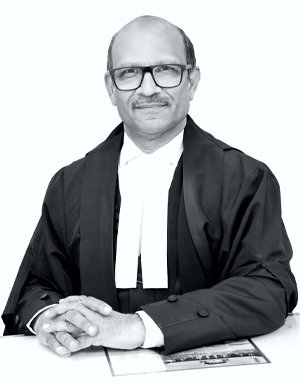
(VIKRAM NATH )
...…………………….J.
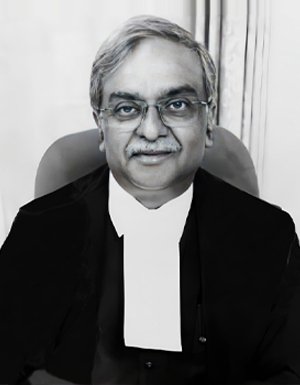
(SANDEEP MEHTA)
NEW DELHI;
JANUARY 30, 2026.

Legal Notes
Add a Note....