
As per case facts, the petitioner, a probationer in the Indian Revenue Service, was terminated from service after being implicated in a bribery case, arrested, and remaining unauthorizedly absent from ...
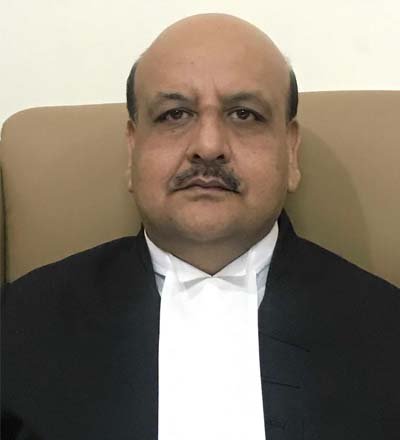

No Acts & Articles mentioned in this case
IN THE HIGH COURT OF JUDICATURE AT PATNA
Civil Writ Jurisdiction Case No. 12052 of 2024
======================================================
Chandan Prakash Pandey Son of Shri J.P. Pandey, ex. Assistant
Commissioner, Central Goods Service Tax and Central Excise, Ranchi zone,
1st floor, Central Revenue building (Annexeo, Birchand Patel path,P.S -
Kotwali, District - Patna, Pin code 800001, resident of Maurya vihar
apartment, flat no.204, Maurya path, Baily Road, Khajpura P.S - Shastri
Nagar, District - Patna - 800014 (Bihar).
... ... Petitioner/s
Versus
1.The Union of India through the Secretary (Revenue), Government of India,
Ministry of Finance, Department of Revenue, New Delhi - 110021.
2.The Under Secretary to the Government of India, Department of Revenue,
Ministry of finance, Central Board of Indirect Taxes and Customs Office of
the Chief Vigilance Officer, 6th floor, Hudco Vishala Building, Bhikaji cama
place, New Delhi -110066.
3.The Chairman, Central Board of Excise and Customs, Ministry of Finance,
Government of India, North Block, New Delhi -110021.
4.The Chief Commissioner, Central Goods Service Tax and Central Excise
(Ranchi zone), Central Revenue Building, Birchand Patel Path, Patna.
... ... Respondent/s
======================================================
with
Civil Writ Jurisdiction Case No. 11330 of 2024
======================================================
Chandan Prakash Pandey son of Shri J.P. Pandey, ex. Assistant Commissioner,
Central Goods Service Tax and Central Excise, Ranchi zone, 1st floor, Central
Revenue building (Annexe, Birchand Patel path, P.S-Kotwali, District- Patna,
Patna, Pin code 800001, resident of Maurya vihar apartment, flat no.204,
Maurya path, Baily road, P.S.- Shastri Nagar, District- Patna,Khajpura-
800014 (Bihar).
... ... Petitioner/s
Versus
1.The Union of India through the Secretary (Revenue), Government of India,
Ministry of Finance, Department of Revenue, New Delhi 110021.
2.The Under Secretary to the Government of India, Department of Revenue,
Ministry of finance, Central Board of Indirect Taxes and Customs Office of
Patna High Court CWJC No.12052 of 2024 dt.03-04-2026
2/42
the Chief Vigilance Officer, 6th floor, Hudco Vishala Building, Bhikaji cama
place, New Delhi-110066
3.The Chairman, Central Board of Excise and Customs, Ministry of Finance,
Government of India, North Block, New Delhi-110021.
4.The Chief Commissioner, Central Goods Service Tax and Central Excise
(Ranchi zone), Central Revenue Building, Birchand Patel Path, Patna-
800001 (Bihar).
... ... Respondent/s
======================================================
Appearance:
(In Civil Writ Jurisdiction Case No. 12052 of 2024)
For the Petitioner/s: Mr. Munna Pd Dixit, Advocate
For the Respondent/s: Dr. K.N. Singh, ASG
Mr. Anshuman, Sr. SC, CGST & CX
Mr. Shivaditya Dhari Sinha, Advocate
(In Civil Writ Jurisdiction Case No. 11330 of 2024)
For the Petitioner/s: Mr. Munna Pd Dixit, Advocate
For the Respondent/s: Dr. K.N. Singh, ASG
Mr. Anshuman, Sr. SC, CGST & CX
Mr. Shivaditya Dhari Sinha, Advocate
======================================================
CORAM: HONOURABLE MR. JUSTICE MOHIT KUMAR SHAH
and
HONOURABLE MR. JUSTICE ALOK KUMAR PANDEY
CAV JUDGMENT
(Per: HONOURABLE MR. JUSTICE MOHIT KUMAR SHAH)
Date: 03.04.2026
The aforesaid two writ petitions have been filed against the
common order dated 08.04.2024 passed by the learned Central
Administrative Tribunal, Patna Bench, Patna (hereinafter referred
to as the ‘Ld. CAT’) in O.A. No. 050/00105/2021 with O.A. No.
050/00362/2020 whereby and whereunder both the said original
applications have been dismissed being devoid of merit, hence
these two writ petitions have been heard together and are being
disposed off by the present common judgment.
Patna High Court CWJC No.12052 of 2024 dt.03-04-2026
3/42
CWJC No. 11330 of 2024
2. This writ petition i.e. CWJC No. 11330 of 2024 arises out
of O.A. No. 050/00105/2021. The brief facts of the case, according
to the petitioner herein is that he was appointed through the Civil
Services Examination, 2015 in Group ‘A’ Service vide
appointment letter dated 08.12.2016 on the following terms and
conditions:-
“(i) Your appointment will be subject to all the rules
applicable to the Members of the IRS (C&CE) Group "A".
(ii) You will be required to work in the Customs, Central
Excise and Narcotics wings of the Central Board of Excise
& Customs (CBEC) for training or otherwise as and when
required.
(iii) You will draw pay in the Level 10 of Pay Matrix
(corresponding to Pre-Revised Pay Band - 3 (Rs. 15,600-
39,100) plus Grade Pay of Rs. 5400/-) in the manner as
laid down in CCS (Revised Pay) Rule 2016 and other
Government instructions issued on the subject.
(iv) You will be on probation for a period of two years.
During this period you will undergo theoretical and
practical training in the working of the Customs, Central
Excise and Narcotics wings of CBEC in the National
Academy of Customs, Excise & Narcotics (NACEN),
Faridabad and its Regional Training Institute, Bhandup,
Mumbai and also in the field formations of CBEC that will
be indicated in the due course by DG, NACEN and will
have to pass Part l and Part Il of the Departmental
Examination in Customs & Central Excise laws and other
related subjects within the probationary period of two
years. The grant of Increment shall be in accordance with
the extant rules/orders of the Government of India.
Patna High Court CWJC No.12052 of 2024 dt.03-04-2026
4/42
(v) The period of probation may be extended at the
discretion of Government, if you do not pass the
Departmental Examinations within the prescribed time or
for any other reason, in accordance with the orders or
instructions issued by the Government from time to time in
this regard. Repeated failure to pass the Departmental
Examination within the extended period of probation will
entail loss of employment.
(vi) The Government may discharge you from service at
any time during the period of probation, if, in the opinion
of the Government your work or conduct during this
period is considered unsatisfactory, or shows that you are
unlikely to become an efficient officer.
(vii) You will be considered for confirmation in service on
successful completion of the period of probation and also
if you are found fit in every respect for confirmation.
(viii) It should be clearly understood that your
appointment is subject to any change in the constitution of
the Indian Revenue Service /Customs & Central Excise)
Group 'A' which the Union Government may think proper
to make from time to time and that you will have no claims
for compensation in consequence of any such change.
(ix) You will be liable for transfer to any station within the
Union of India.
(x) No person:
(a) Who has entered into or contracted a marriage
with a person having a spouse living: or
(b) Who, having a spouse living, has entered into or
contracted a marriage with any person, shall be
eligible for appointment to the service.
Provided that where the Central Government is
satisfied that such marriage is permissible under the
personal law, applicable to such person and the other
party to the marriage and there are other grounds for
doing so, exempt any person from the operation of this
rule.
Patna High Court CWJC No.12052 of 2024 dt.03-04-2026
5/42
(xi) In accordance with instructions contained in the
Department of Personnel & Training's O.M. No.13018/
8/96-AIS) dt. 23.04.97, you cannot seek exemption from
probationary training to appear in the next Civil Service
Examination. Further, no exemption shall be granted to
abstain from probationary training for any reason.
(xii) If you are a member of Scheduled Caste/ Scheduled
Tribe/ Other Backward Class and have changed your
religion or if you change your religion at any time in
future, you should inform the appointing authority
immediately about the change.
(xiii) Officers appointed as a result of an earlier
examination shall rank senior to officers appointed as
result of subsequent examination.
(xiv) Your service will be governed in accordance with the
Indian Revenue Service (Customs and Central Excise)
Group 'A' Rules, 2016.
(xv) In case the enquiry as envisaged under Rule 20 of the
Civil Services Examination Rules is pending in your case,
your appointment will be subject to being found suitable
on conclusion of such enquiry.
(xvi) It may be noted that the Government has
Implemented a new structured defined Contributory
Pension system for new entrants to the All India Service/
Central Government Service w.e.f. 1
st
January, 2004
replacing the earlier system of defined Benefit pension
system. Accordingly. wherever applicable, on joining you
will be covered by the said new Pension system.
(xvii) In case, at any stage, it is found that any Certificate/
Document/Testimonial etc. having a bearing on your
eligibility, as furnished by you is not in order, your
appointment shall be cancelled forthwith without
prejudice to any punitive action under the relevant rules.”
3. It is the case of the petitioner that he had joined the services
on 22.12.2016 at National Academy of Customs, Excise &
Patna High Court CWJC No.12052 of 2024 dt.03-04-2026
6/42
Narcotics (hereinafter referred to as ‘NACEN’) at Faridabad for
training which he had completed in the month of July, 2017,
whereafter the petitioner herein was directed to join at Regional
Training Center, Bhandup at Mumbai where he reported on
14.07.2017 and there he completed his training successfully. The
petitioner was then sent for field formations at different places in
the country and finally after successfully completing the
mandatory training, he joined at Patna on 12.12.2017. Thereafter,
the petitioner was independently posted on the post of Assistant
Commissioner, Anti-Evasion (Headquarters), Patna in the month
of May, 2018.
4. The petitioner was then sent by the respondents to appear in
Part-I and Part-II of the departmental examinations in Customs
and Central Excise Laws and other related subjects as per Clause
(iv) of the appointment letter dated 08.12.2016 which was held in
between 03.07.2018 to 09.07.2018, however barring Paper-X, the
petitioner is stated to have passed in all the papers vide result dated
31.08.2018. On 30.11.2018, the petitioner had appeared and
cleared the said Paper-X also. The petitioner is stated to have
completed all the requisite and mandatory training and he also
cleared the mandatory Part-I and Part-II examinations before
expiry of the probation period, however in the meantime one Md.
Patna High Court CWJC No.12052 of 2024 dt.03-04-2026
7/42
Shoaibuddin, Superintendent (Anti-Evasion) and the petitioner
were implicated in one criminal case lodged by the Central Bureau
of Investigation on 27.06.2019 bearing RC No. 023 2019, A 0007
under Section 7 of the Prevention of Corruption Act, 1988 and
Section 120 B of the Indian Penal Code. The petitioner was
arrested on 27.06.2019 and was sent to judicial custody on
28.06.2019. On 01.08.2019, the petitioner and the said Md.
Shoaibuddin were placed under deemed suspension on account of
detention exceeding 48 hours, with effect from 27.06.2019,
however both the petitioner and the said Md. Shoaibuddin were
enlarged on bail on 28.08.2019. The petitioner had then reported
for duty on 30.08.2019 as also had submitted an application on
04.09.2019 for revocation of deemed suspension but instead of
revoking the suspension, the respondents herein had issued orders
dated 19.09.2019, 18.03.2020 and 14.09.2020 extending the period
of deemed suspension while the suspension of the said Md.
Shoaibuddin was revoked on 14.09.2020. The petitioner had then
filed an original application bearing O.A. No. 362 of 2020
challenging his suspension as also the extension orders but the
same was admitted for hearing. Nonetheless, the petitioner
suddenly received an order dt. 05.2.2021, issued by the respondent
No.2, whereby the services of the petitioner has been ordered to be
Patna High Court CWJC No.12052 of 2024 dt.03-04-2026
8/42
terminated in view of Rule 5(1) of the Central Civil Services
(Temporary Service) Rules, 1965 (hereinafter referred to as the
‘Rules, 1965’), which was challenged by the petitioner by filing
the connected original applications bearing O.A. No.
050/00105/2021, before the Ld. CAT, however the same have
stood dismissed by the impugned order dated 08.04.2024, which
has been challenged by the petitioner by way of the present writ
petition.
5. The learned counsel for the petitioner, Sri. M.P. Dixit has at
the outset submitted that a bare perusal of the appointment letter
dated 08.12.2016 would show that the probation period is of two
years during which the probationer has to undergo theoretical and
practical training at NACEN, Faridabad and at Regional Training
Center, Bhandup at Mumbai as also has to pass Part-I and Part-II
of the departmental examinations within the said probation period
of two years. It is thus submitted that the petitioner has not only
completed his training successfully but has also passed Part-I and
Part-II examinations within the probation period of two years. The
Ld. counsel has next referred to the appointment letter dated
08.12.2016, more particularly Clause (v) of the terms and
conditions to submit that the period of probation can be extended
at the discretion of the Government if the probationer does not
Patna High Court CWJC No.12052 of 2024 dt.03-04-2026
9/42
pass the departmental examinations within the prescribed time or
for any other reason, in accordance with the orders or instructions
issued by the Government from time to time and reference has also
been made to Clause (vi) of the terms and conditions which
prescribes that the Government may discharge a probationer from
service at any time during the period of probation, if in the opinion
of the Government the work or conduct of the probationer during
the said period is considered unsatisfactory or it is seen that such
probationer is unlikely to become an efficient officer.
6. The Ld. counsel for the petitioner has also referred to the
Office Memorandum dated 11.03.2019, which contains the Master
Circular on Probation and Confirmation in Central Services. The
Master Circular provides that save for exceptional reasons,
probation should not be extended for more than a year and in no
circumstance an employee should be kept on probation for more
than double the normal period and the probation reports for the
whole period should be considered by a Board of senior officers
for determining whether the probationer concerned is fit to be
confirmed in service or not, apart from an opportunity being given
to the probationer in case the probationer is being discharged from
service. The learned counsel has also referred to Clause 27 of the
Master Circular to contend that the same postulates that an officer
Patna High Court CWJC No.12052 of 2024 dt.03-04-2026
10/42
will be deemed to have successfully completed the probation
period if no order confirming, discharging or reverting the officer
is issued within eight weeks after expiry of double the normal
period of prescribed probation.
7. Reference has also been made by the learned counsel for
the petitioner to the Office Memorandum dated 02.07.2018,
containing the Master Circular on Probation and Confirmation in
Central Services to contend that Clause 5 thereof also speaks of
probationer being given an opportunity to work under more than
one officer during the probation period and the probation reports
for the whole period should be then considered by a Board of
senior officers for determining as to whether the probationer
concerned is fit to be confirmed in service. It is stated by the Ld.
counsel for the petitioner that all the aforesaid requirements have
not been fulfilled and by-passing the same, the respondent No.2
has passed the order dt. 05.02.2021, by which the services of the
petitioner has been terminated forthwith. Thus, it is submitted that
the order of termination dated 05.2.2021 is punitive and stigmatic.
8. The Ld. counsel for the petitioner has further referred to
paragraph No.11 of the written statement filed by the respondents
before the Ld. CAT, specially paragraph No.11 thereof to submit
that for the first time before the Ld. CAT the respondents have
Patna High Court CWJC No.12052 of 2024 dt.03-04-2026
11/42
come out with the reasons for terminating the services of the
petitioner i.e. firstly, he had not successfully completed his training
and had remained unauthorizedly absent during his furbisher
course, hence he was not confirmed in the service along with his
batchmates and secondly, the petitioner lacks moral responsibility
and was caught red handed taking bribe which contravenes the
Government’s policy towards zero tolerance to corruption, hence
the case of the petitioner was submitted to the appointing authority
who did not find the petitioner to be fit to remain in service, hence
by invoking Rule 5(1) of the Rules, 1965 read with paragraph
No.1, Clause (vi) of the offer of appointment and paragraph
No.6(3) of the Indian Revenue Service (Customs and Central
Excise) Group ‘A’ Rules, 2016 (hereinafter referred to as the
‘Rules, 2016’) has ordered for discharge of the petitioner from
services vide order dated 05.02.2021. It is thus submitted that the
expression ‘unauthorized absence’ is stigmatic in nature and,
therefore, he ought to have been given an opportunity of hearing
prior to passing of the impugned order dated 05.02.2021. It is
further submitted that the furbisher courses were held during the
following periods:-
(i) 13.08.2018 to 07.09.2018
(ii) 14.10.2019 to 08.11.2019
(iii) 16.11.2020 to 04.12.2020
Patna High Court CWJC No.12052 of 2024 dt.03-04-2026
12/42
(iv) 27.06.2019 to 28.09.2019
9. It is pointed out by the Ld. Counsel for the petitioner that
the Additional Director General, NACEN, Faridabad vide letters
dated 18.09.2019, 01.08.2019 and 20.10.2020 had requested the
respondents to relieve the petitioner for the furbisher course but
the Chief Commissioner had not passed any order relieving the
petitioner to complete the furbisher course, hence it is submitted
that the petitioner was precluded from completing his furbisher
course, for no fault of his.
10. Now coming to the other issue regarding the petitioner
having been caught red handed while taking bribe, it is submitted
by the learned counsel for the petitioner that the same is also
stigmatic, inasmuch as the petitioner has been treated to be guilty
although the criminal case lodged against him is still pending
consideration and till date the petitioner has not been convicted.
11. At this juncture, the learned counsel for the petitioner has
referred to the order dated 18.03.2020, issued by the Under
Secretary to the Government of India, Ministry of Finance,
Department of Revenue, Central Board of Indirect Taxes and
Customs, New Delhi to submit that the said order speaks of the
draft charge-sheet under Rule 14 of the Central Civil Services
(Classification, Control & Appeal) Rules, 1965 (hereinafter
Patna High Court CWJC No.12052 of 2024 dt.03-04-2026
13/42
referred to as the ‘Rules, 1965’) against the petitioner being under
consideration, hence it is submitted that the departmental
proceedings qua the petitioner was under contemplation and
rightly so, therefore the services of the petitioner could not have
been terminated without resorting to a full-fledged departmental
proceedings. It is contended that the provisions of the Rules, 1965
are not applicable to the petitioner herein inasmuch Rule 2(g)
thereof prescribes that the said Rule shall not apply to such other
category of employees as may be specified by the Central
Government by notification published in the Official Gazette and
in view of notification dated 22.04.2016 issued by the Ministry of
Finance (Department of Revenue) whereby and whereunder the
Indian Revenue Services (Customs of Central Excise) Group-A
Rules, 2016 have been framed. Thus, the provision of law under
which the services of the petitioner has been terminated is not
applicable to the petitioner, thus the impugned order dated
05.02.2021, is itself void ab initio.
12. The learned counsel for the petitioner has next contended
that the impugned order passed by the Ld. CAT dated 08.04.2024
is perverse, inasmuch as on the one hand it has been held that the
petitioner was no longer on probation, however on the other hand,
it has also been held that there was no order of confirmation,
Patna High Court CWJC No.12052 of 2024 dt.03-04-2026
14/42
nonetheless the Ld. CAT has come to a finding that since the
petitioner was not a regular government servant, hence his claim
for an inquiry under the Rules, 1965 is not tenable and further the
Ld. CAT has also erred by holding that the Rules, 1965 do not
specifically exclude the probationers or persons on probation and
since the probation of the petitioner was not extended beyond two
years and further no order was issued on confirmation of his
services, hence the petitioner’s status was governed under the
Rules, 1965, thus there was no illegality in termination of his
services under Rule 5(1) of the said Rules, 1965.
13. The learned counsel for the petitioner has referred to a
judgment rendered by the Hon’ble Apex Court in the case of
Karnataka State Road Transport Corporation and Another vs. S.
Manjunath, reported in (2000) 5 SCC 250, paragraph No. 14
whereof is reproduced herein below:-
“14. As indicated by us, the Regulation deals with two
different categories of cases - one about the probation of
an appointee other than by way of promotion and the
other relating to officiation of a person appointed on
promotion. The similarity of purpose and identity of object
apart, of such provision, there is an obvious difference and
positive distinction disclosed in the manner they have to
be actually dealt with. The deliberate use of two different
phraseology probation and officiation cannot be so lightly
ignored obliterating the substantial variation in the
method of handling such categories of persons envisaged
by the Regulations. The mere fact that a reference is made
Patna High Court CWJC No.12052 of 2024 dt.03-04-2026
15/42
to sub regulation (3) also in the later part of sub
regulation (8) of the Regulation could not be used to apply
all the provisions relating to the category of appointees on
officiation to the other category of appointees on
probation. The stipulation in sub regulation (8) of the
Regulation when making the passing of an order, a
condition precedent for satisfactory completion
specifically refers only to the completion of period of
officiation. Similarly, notwithstanding a reference made to
sub regulation (3) alongside sub regulation (4), in
stipulating the consequences of any delay in making an
order declaring satisfactory completion, the reference is
confined only to deemed satisfaction and completion of
the period of officiation, and not of probation. Sub
regulation (9) of the Regulation insofar as it provides for
confirmation as a sequel to declaration, only deals with a
promotee to a temporary post and not of the other
category. While dealing with the termination of a
candidate, not found suitable for the post, sub regulation
(3) of the Regulation envisage such termination being
made, at any time within the period of probation, and not
at any time after the completion of such maximum period
of probation. Consequently, the cases on hand also would
fall within the category of cases dealt with in Dayaram
Dayal case (supra) and Wasim Begs case (supra) and the
services of the respondents could not be put an end to
except by means of departmental disciplinary
proceedings, after following the mandatory requirements
of law. Therefore, the High Court cannot be faulted for
interfering with the orders of termination of the services of
the respondents.”
14. The learned counsel for the petitioner has also referred to a
judgment rendered in the case of Ratnesh Kumar Choudhary vs.
Indira Gandhi Institute of Medical Sciences, Patna, Bihar &
Patna High Court CWJC No.12052 of 2024 dt.03-04-2026
16/42
Ors. reported in (2015) 15 SCC 151, paragraph Nos. 26 & 27
whereof are reproduced herein below:-
“26. In the facts of Palak Modi case, the Court proceeded
to state that there is a marked distinction between the
concepts of satisfactory completion of probation and
successful passing of the training/test held during or at the
end of the period of probation, which are sine qua non for
confirmation of a probationer and the Bank’s right to
punish a probationer for any defined misconduct,
misbehaviour or misdemeanour. In a given case, the
competent authority may, while deciding the issue of
suitability of the probationer to be confirmed, ignore the
act(s) of misconduct and terminate his service without
casting any aspersion or stigma which may adversely
affect his future prospects but, if the misconduct/
misdemeanour constitutes the basis of the final decision
taken by the competent authority to dispense with the
service of the probationer albeit by a non-stigmatic order,
the Court can lift the veil and declare that in the garb of
termination simpliciter, the employer has punished the
employee for an act of misconduct.
27. In the case at hand, it is clear as crystal that on the
basis of a complaint made by a member of the Legislative
Assembly, an enquiry was directed to be held. It has been
innocuously stated that the complaint was relating to
illegal selection on the ground that the appellant did not
possess the requisite qualification and was appointed to
the post of Chest Therapist. The report that was submitted
by the Cabinet (Vigilance) Department eloquently states
about the conduct and character of the appellant. The
stand taken in the counter affidavit indicates about the
behaviour of the appellant. It is also noticeable that the
authorities after issuing the notice to show cause and
obtaining a reply from the delinquent employee did not
supply the documents. Be that as it may, no regular
enquiry was held and he was visited with the punishment
of dismissal. It is well settled in law, if an ex parte enquiry
Patna High Court CWJC No.12052 of 2024 dt.03-04-2026
17/42
is held behind the back of the delinquent employee and
there are stigmatic remarks that would constitute
foundation and not the motive. Therefore, when the
enquiry commenced and thereafter without framing of
charges or without holding an enquiry the delinquent
employee was dismissed, definitely, there is clear violation
of principles of natural justice. It cannot be equated with a
situation of dropping of the disciplinary proceedings and
passing an order of termination simpliciter. In that event it
would have been motive and could not have travelled to
the realm of the foundation. We may hasten to add that
had the appellant would have been visited with minor
punishment, the matter possibly would have been totally
different. That is not the case. It is also not the case that
he was terminated solely on the ground of earlier
punishment. In fact, he continued in service thereafter. As
the report would reflect that there are many an allegation
subsequent to the imposition of punishment relating to his
conduct, misbehaviour and disobedience. The Vigilance
Department, in fact, had conducted an enquiry behind the
back of the appellant. The stigma has been cast in view of
the report received by the Central Vigilance Commission
which was ex parte and when that was put to the
delinquent employee, holding of a regular enquiry was
imperative. It was not an enquiry only to find out that he
did not possess the requisite qualification. Had that been
so, the matter would have been altogether different. The
allegations in the report of the Vigilance Department
pertain to his misbehaviour, conduct and his dealing with
the officers and the same also gets accentuated by the
stand taken in the counter affidavit. Thus, by no stretch of
imagination it can be accepted that it is termination
simpliciter. The Division Bench has expressed the view
that no departmental enquiry was required to be held as it
was only an enquiry to find out the necessary qualification
for the post of Chest Therapist. Had the factual score been
so, the said analysis would have been treated as correct,
but unfortunately the exposition of factual matrix is
absolutely different. Under such circumstances, it is
Patna High Court CWJC No.12052 of 2024 dt.03-04-2026
18/42
extremely difficult to concur with the view expressed by
the Division Bench.”
15. Lastly, the learned counsel for the petitioner has referred to
a judgment rendered by the Hon’ble Apex Court in the case of V.P.
Ahuja vs. State of Punjab and Others reported in (2000) 3 SCC
239, paragraph No.7 whereof is reproduced hereinbelow:
“7. A probationer, like a temporary servant, is also
entitled to certain protection and his services cannot be
terminated arbitrarily, nor can those services be
terminated in a punitive manner without complying with
the principles of natural justice.”
16. Per contra, the learned Additional Solicitor General of
India, Dr. K.N. Singh has submitted that the training of the officer
trainees of 68
th
Batch to which the petitioner belongs commenced
on 19.12.2016 at NACEN, Faridabad, whereafter the officer
trainees of the 68
th
Batch were directed vide letter dated
02.12.2017 to report to the Joint Chief Commissioner for the
purposes of training on or before 11.12.2017 and then the furbisher
course for the 68
th
Batch of officer trainees had commenced on
13.08.2018 which was to be concluded on 07.09.2018, however
during the relieving formalities, attendance records of all the
officer trainees of the 68
th
Batch was compiled and it was noticed
that several officers had remained absent for a specific period of
time during the furbisher course and eight of such officers had less
Patna High Court CWJC No.12052 of 2024 dt.03-04-2026
19/42
than 75 % attendance during the entire furbisher course and were
unauthorizedly absent which amounts to indiscipline on the part of
the said eight officer trainees. The petitioner was also one of them,
hence he was not given furbisher course completion certificate.
The petitioner and his controlling authority were informed that the
furbisher course for the petitioner would be repeated next year
with the furbisher course of the next Batch i.e. 69
th
Batch,
however, in the meantime the petitioner was caught red handed by
the CBI accepting a bribe of Rs. 2.5 lakhs on 27.06.2019, leading
to the CBI, Anti-Corruption Bureau, Patna registering a case
bearing RC No. 023 2019 A 0007, whereafter the petitioner was
arrested on 27.06.2019 and was sent to judicial custody leading to
him being placed under suspension vide letter dated 01.08.2019
with effect from 27.06.2019. The suspension of the petitioner was
reviewed and extended for further period of 180 days each time,
vide orders dated 19.9.2019, 18.3.2020 and 14.9.2020. Since the
petitioner was on suspension, he did not join the furbisher course.
Thereafter, the case of the petitioner was examined and it was
observed that he has not successfully completed his training & had
remained unauthorizedly absent during his furbisher course, thus
his services were not confirmed along with his batchmates.
Patna High Court CWJC No.12052 of 2024 dt.03-04-2026
20/42
17. The learned ASG appearing for the respondents has further
submitted that the respondents observed that the petitioner lacks
moral responsibilities, inasmuch as he was caught red handed
taking bribe which contravenes the government’s policy towards
zero tolerance to corruption, hence the case of the petitioner was
placed before the appointing authority who did not find the
petitioner fit to remain in service, thus by invoking Rule 5(1) of
the Rules, 1965 read with paragraph No.1, Clause (vi) of the offer
of appointment issued to the petitioner & paragraph No. 6(3) of the
Rules, 2016, the appointing authority ordered for discharge of the
petitioner from service vide order dated 05.02.2021. It is thus
submitted that since the petitioner was not confirmed in service as
on 05.02.2021, he was a temporary employee to be governed by
the Rules, 1965. It is stated that a temporary employee has no right
on the post held by him and cannot claim so, thus the department
is well within its right to discharge the petitioner from service in
view of his indiscipline.
18. The learned ASG has next submitted that it is a well settled
law that the department is not bound to give any show cause notice
to remove a temporary employee from service in terms of Rule
5(1) of the Rules, 1965, hence there is no question of violation of
the principles of natural justice in such cases. In this regard, the
Patna High Court CWJC No.12052 of 2024 dt.03-04-2026
21/42
learned ASG has referred to a judgment rendered by the Hon’ble
Apex Court in the case of High Court of Judicature at Patna vs.
Pandey Madan Mohan Prasad Sinha and Others, reported in
(1997) 10 SCC 409, paragraph Nos. 6 and 9 whereof are
reproduced herein below:-
“6. The service record of Respondent 1 contains the
following remarks:
1976-77 (C.R. of Hazaribagh) - “Outturn was poor”
1977-78(C.R. of Patna)-“An officer of below average merit”
Remark by Court-“Should improve his image”.
1979-80 (C.R. of Patna)-“Outturn poor, so was the quality
of his orders. Did not enjoy the confidence of the Bar and
litigant. Integrity questionable.”
1981-82 (C.R. of Sitamarhi) - “Injunction order passed in
T.S. No. 81 of 1979 was based on extraneous reasons.”
Remarks by the Court – “He did not enjoy good
reputation as Execution Munsif, Patna.”
“Further, in course of inspection of Sitamarhi
Judgeship in May 1983, by an Hon'ble Judge of this
Court, the conduct & antecedents of Shri Sinha at that
station were reported to be very much undesirable &
unbecoming of a Judicial Officer. Apart from the
complaints touching his integrity with respect to his
judicial work, serious complaints regarding his
character and morality were also received. It was
reported that he used to drink heavily & play “flush”
in the town with different rich persons.” (pp. 7-8)
The remarks for the years 1976-77 and 1979-80 had been
communicated to Respondent 1 prior to the High Court
took the decision on 19-6-1985 that Respondent 1 is not fit
for retention in service. The other remarks mentioned
about were, however, communicated to Respondent 1 after
Patna High Court CWJC No.12052 of 2024 dt.03-04-2026
22/42
the said decision had been taken. The question is whether
the non-communication of the said adverse remarks
vitiates the action that has been taken against Respondent
1, viz., termination of his services on the ground that he
was not fit for confirmation on the post of Munsif. As
regards a probationer, the law is well settled that he does
not have a right to hold the post during the period of
probation. The position of a probationer cannot be
equated with that of an employee who has been
substantively appointed on a post and has a right to hold
that post. An order terminating the services of a
probationer can be questioned only if it is shown that it
has been passed arbitrarily or has been passed by way of
punishment without complying with the requirements of
Article 311(2) of the Constitution. Since a probationer has
no right to hold the post on which he has been appointed
on probation, he cannot claim a right to be heard before
an order terminating his services is passed. The obligation
to communicate the adverse material to a person before
taking action against him on the basis of the said material
is a facet of the principles of natural justice. But principles
of natural justice have no application in the case of
termination of the services of a probationer during the
period of probation since he has no right to hold the post.
It is, therefore, not possible to hold that there is an
obligation to communicate the adverse material to a
probationer before a decision is taken on the basis of the
said material that he is not fit for being retained in service.
Such material can be relied upon to show that such a
decision does not suffer from the vice of arbitrariness and
is not capricious. In this context it may be mentioned that
even with respect to persons who have been substantively
appointed on a post and have a right to hold that post, it
has been held that the failure to communicate the adverse
remarks in the service record would not vitiate the order of
compulsory retirement. (See: Union of India v. M.E. Reddy
[(1980) 2 SCC 15] and Baikuntha Nath Das v. Chief Distt.
Medical Officer.
Patna High Court CWJC No.12052 of 2024 dt.03-04-2026
23/42
9. In support of the other reason given by the High Court
that the order terminating the services of Respondent 1
was passed by way of punishment, Shri Swarup has placed
reliance on the decision of this Court in Anoop Jaiswal v.
Govt. of India [(1984) 2 SCC 369]. We have carefully
perused the said decision. It has no application to the facts
of the present case. In that case this Court, after
considering the relevant material, came to the conclusion
that the real foundation for the action which was taken
against the employee was the alleged act of misconduct in
having instigated other trainees in not coming to P.T. in
time on 22-6-1981. It was held that since the said act of
misconduct was the foundation of the order, the order of
termination was passed by way of punishment and since
the requirements of Article 311(2) of the Constitution were
not complied with, the said order was set aside. We cannot
say so in the facts of the present case. Here the decision to
terminate the services of Respondent 1 was taken by the
High Court after considering the entries in the service
record of Respondent 1 covering the entire period of
probation. It cannot be said that the said decision of the
High Court was founded on any particular act of
misconduct. Merely because in the letter dated 5-3-1986,
reference has been made to the complaints touching the
integrity of Respondent 1 with respect to his judicial work
and complaints regarding his character and morality and
that he used to drink heavily and play “flush” in the town
with different rich persons does not lead to the inference
that the order was passed by way of punishment for
particular acts of misconduct. These reports were taken
into account for assessing the performance of Respondent
1 during the period of probation and for determining
whether he was fit for confirmation on the post of Munsif.
The said remarks, in our opinion, could legitimately form
the basis for deciding whether Respondent 1 was suitable
for retention in service or not. It is, therefore, not possible
to hold that the order for termination of the services of
Respondent 1 dated 28-8-1986 was passed by way of
punishment for misconduct.”
Patna High Court CWJC No.12052 of 2024 dt.03-04-2026
24/42
It is thus submitted that the Hon’ble Apex Court has held
that the principles of natural justice have no application in a case
of termination of the services of a probationer during the period of
probation since he has no right to hold the post and there is no
obligation to communicate the adverse material to a probationer
before a decision is taken on the basis of the said material that he
is not fit to be retained in service.
19. The learned ASG has also relied on a judgment rendered by
the Hon’ble Apex Court in the case of Rajasthan High Court vs.
Ved Priya and another, reported in 2020 SCC OnLine SC 337,
paragraph Nos.19 and 21 whereof are reproduced herein below:-
“19. Probationers have no indefeasible right to continue in
employment until confirmed, and they can be relieved by
the competent authority if found unsuitable. It is only in a
very limited category of cases that such probationers can
seek protection under the principles of natural justice, say
when they are “removed” in a manner which prejudices
their future prospects in alternate fields or casts
aspersions on their character or violates their
constitutional rights. In such cases of “stigmatic” removal
only that a reasonable opportunity of hearing is sine qua
non. Way back in Parshotam Lal Dhingra v. Union of
India [AIR 1958 SC 36], a Constitution Bench opined that:
(AIR p. 49, para 28)
“28. … In short, if the termination of service is
founded on the right flowing from contract or the
service rules then, prima facie, the termination is not a
punishment and carries with it no evil consequences
Patna High Court CWJC No.12052 of 2024 dt.03-04-2026
25/42
and so Article 311 is not attracted. But even if the
Government has, by contract or under the rules, the
right to terminate the employment without going
through the procedure prescribed for inflicting the
punishment of dismissal or removal or reduction in
rank, the Government may, nevertheless, choose to
punish the servant and if the termination of service is
sought to be founded on misconduct, negligence,
inefficiency or other disqualification, then it is a
punishment and the requirements of Article 311 must
be complied with.”
21. True it is that the form of an order is not crucial to
determine whether it is simpliciter or punitive in nature.
An order of termination of service though innocuously
worded may, in the facts and circumstances of a peculiar
case, also be aimed at punishing the official on probation
and in that case it would undoubtedly be an infraction of
Article 311 of the Constitution. The Court in the process of
judicial review of such order can always lift the veil to find
out as to whether or not the order was meant to visit the
probationer with penal consequences. If the Court finds
that the real motive behind the order was to “punish” the
official, it may always strike down the same for want of
reasonable opportunity of being heard.”
It is thus contended that probationers have no indefeasible
right to continue in employment until confirmed and they can be
relieved by the competent authority, if found unsuitable.
20. The Ld. ASG has next contended that para No. 27 of the
DOPT’s O.M. dt. 11.03.2019, Rule 5(1) of the Rules, 1965, para
No. 1 (vi) and (vii) of the offer of appointment dated 08.12.2016
and Rule 6(3) of the Rules, 2016 are fully applicable in the present
case and accordingly the services of the petitioner have been
Patna High Court CWJC No.12052 of 2024 dt.03-04-2026
26/42
terminated, hence there is no infirmity in the procedure followed
while issuing the impugned order dated 05.02.2021, by the
respondent No.2. It is also submitted that neither there is any
perversity nor irrationality nor impropriety in the judgment dated
08.04.2024, passed by the Ld. CAT, hence the present petition is fit
to be dismissed. It is contended that the order of termination dated
05.02.2021 is neither stigmatic nor punitive, inasmuch as no
punishment has been awarded qua the petitioner herein, hence the
provision of Article 311 of the Constitution of India will not be
attracted. Lastly, it is submitted that since the petitioner had joined
the services on 19.12.2016, therefore, as per the guidelines of the
DOPT issued vide O.M. dated 11.03.2019, the petitioner would be
deemed to have successfully completed the probation period, if no
order confirming, discharging or reverting the officer is issued
within eight weeks after expiry of double the normal period of
prescribed probation, which in the present case would be
12.02.2021, however the services of the petitioner have stood
terminated vide order dated 05.2.2021, i.e. before 12.02.2021, thus
there is no question of deemed completion of the probation period.
21. We have heard the learned counsel for the parties and gone
through the materials available on record.
Patna High Court CWJC No.12052 of 2024 dt.03-04-2026
27/42
22. The facts of the present case lie in a narrow compass. The
petitioner was given an offer of appointment vide letter dated
08.12.2016 as a probationer in the Indian Revenue Service
(Customs and Central Excise) Group-A on the basis of the result of
the Civil Service Examination 2015 subject to the terms and
conditions mentioned therein. For the purposes of the present case,
Clause (iv) to Clause (vi) and Clause (xiv) of the offer of
appointment dated 08.12.2016 would be relevant. According to the
said clauses, the probation will be for a period of two years, during
which period the probationer has to undergo training and will have
to pass Part-I and Part-II examinations within the said probation
period of two years, however the period of probation can be
extended at the discretion of the Government not only for not
passing the departmental examination within the prescribed time
but for any other reasons and further the Government can also
discharge the probationer from service at any time during the
period of probation, if in the opinion of the Govt., the work or
conduct of such probationer is considered unsatisfactory or it is seen
that the probationer is unlikely to become an efficient officer.
Clause (xiv) postulates that the service of such probationer will be
governed by the Indian Revenue Service (Customs and Central
Patna High Court CWJC No.12052 of 2024 dt.03-04-2026
28/42
Excise) Group 'A' Rules, 2016. We deem fit and proper to
reproduce Rule 6 of the Rules, 2016 herein below:
“6. Probation and confirmation.–(1) Every officer on
appointment to the Service, either by direct recruitment or
by promotion in Junior Time Scale shall be on probation
for a period of two years:
Provided that the Controlling Authority may extend
the period of probation in accordance with the instructions
issued by the Central Government from time to time:
Provided further that any decision for extension of a
probation period shall be taken ordinarily within eight
weeks after expiry of the initial period of probation and
communicated in writing to the concerned officer together
with the reasons for so doing within the said period.
(2) On completion of the period of probation, or any
extension thereof, officers shall, if considered fit for
permanent appointment, be retained in their posts on
regular basis and be confirmed.
(3) If, during the period of probation, or any extension
thereof, as the case may be, the Controlling Authority is of
the opinion that an officer is not fit for permanent
appointment, it may discharge or revert the officer to the
post held by him prior to his appointment in the service, as
the case may be.
(4) During the period of probation, or any extension
thereof, an officer may be required by the Controlling
Authority to undergo such course of training and
instructions and to pass examinations, and tests (including
examination in Hindi) as it may deem fit, as a condition to
satisfactory completion of the probation.
(5) As regards other matters relating to probation, the
members of the Service shall be governed by the
instructions issued by the Central Government in this
regard from time to time.”
Patna High Court CWJC No.12052 of 2024 dt.03-04-2026
29/42
23. Now, we may also gainfully reproduce Rule 5 of the Rules,
1965 which is reproduced herein below:-
“5. Termination of temporary service- 1(a) The services
of a temporary Government Servant shall be liable to
termination at any time by a notice in writing given either
by the Government Servant to the appointing authority or
by the appointing authority to the Government Servant;
(b) the period of such notice shall be one month:
Provided that the services of any such Government
Servant may be terminated forthwith by payment to him of
a sum equivalent to the amount of his pay plus allowance
for the period of the notice at the same rates at which he
was drawing them immediately before the termination of
his services, or, as the case may be, for the period by
which such notice falls short of one month.”
24. Now coming back to the facts of the present case, we find
that pursuant to the offer of appointment dated 08.12.2016, the
petitioner is stated to have joined services on 19.12.2016 and
purportedly after completion of training he was posted at Patna at
the Anti-Evasion Branch, CGST and CX (Headquarters), Patna
and was then given independent charge of the post of Assistant
Commissioner, Anti-Evasion Branch, CGST and CX Headquarters
Patna, however in the meantime he was caught red handed by the
CBI on 27.06.2019 while taking bribe and consequently arrested
on 27.06.2019, whereupon he was sent to judicial custody on
28.06.2019, leading to him being placed under deemed suspension
Patna High Court CWJC No.12052 of 2024 dt.03-04-2026
30/42
vide order dated 01.08.2019 with effect from 27.06.2019, however
he was enlarged on bail on 28.08.2019 but his suspension was not
revoked and the same was extended from time to time till passing
of the order challenged by the petitioner dated 05.02.2021
whereby and whereunder the services of the petitioner has been
terminated. It would be apt to reproduce the order dated
05.02.2021 herein below:-
“In pursuance of the proviso to sub-rule (1) of Rule 5 of
the Central Civil Services (Temporary Service) Rules,
1965, the President hereby terminates forthwith the
services of Shri Chandan Prakash Pandey (Date of Birth
12.05.1987) from Indian Revenue Service (Customs &
Central Excise) and directs that he shall be entitled to
claim a sum equivalent to the amount of his pay and
allowances for a period of one month (in lien of the period
of notice) calculated at the same rate at which he was
drawing them immediately before the date on which this
order is served on or, as the case may be, tendered to him.
“(By order and in the name of the President of India)”
25. A holistic reading of the terms and conditions mentioned in
the offer of appointment dated 08.12.2016, Rule 5(1) of the Rules,
1965 and the provisions contained in the Rules, 2016 including
Rule 6 of the said Rules, 2016 would show that the provisions
regarding probation, its confirmation and discharge/termination of
temporary service are unambiguous and in simple and clear words
what is provided for is that any decision for extension of a
Patna High Court CWJC No.12052 of 2024 dt.03-04-2026
31/42
probation period shall be taken ordinarily within eight weeks after
expiry of the initial period of probation of two years and if during
the period of probation or any extension thereof, as the case may
be, the controlling authority is of the opinion that an officer is not
fit for permanent appointment, it may discharge or revert the
officer to the post held by him prior to his appointment in the
services, as the case may be. In fact, both Rule 6(3) of the Rules,
2016 and Rule 5(1) of the Rules, 1965 are more or less the same
and do not envisage either giving any show cause prior to
termination of temporary service or compliance of the principles
of natural justice or furnishing any reason for terminating/
discharging the probationer. As far as the Rules, 2016 are
concerned, the petitioner is admittedly governed by the same,
inasmuch as Clause (xiv) of the offer of appointment dated
08.12.2016, issued to the petitioner, categorically states that the
service of the petitioner shall be governed in accordance with the
Rules, 2016. In fact, Rule 6(5) of the Rules, 2016 also provides
that the probationers shall be governed by the instructions issued
by the Central Government with regard to matters pertaining to
probation and confirmation from time to time and one of such
Office Memorandum is the one dated 11.03.2019, which contains
Patna High Court CWJC No.12052 of 2024 dt.03-04-2026
32/42
the Master Circular on Probation and Confirmation in Central
Services, Clause 27 whereof is being reproduced herein below:-
“27. The date from which confirmation should be given
effect is the date following the date of satisfactory
completion of the prescribed period of probation or the
extended period of probation, as the case may be. The
decision to confirm the probationer or to extend the period
of probation as the case may be should be communicated
to the probationer normally within 6 to 8 weeks. Probation
should not be extended for more than a year and, in no
circumstance, an employee should be kept on probation for
more than double the normal prescribed period of
probation. The officer will be deemed to have successfully
completed the probation period if no order confirming,
discharging or reverting the officer is issued within eight
weeks after expiry of double the normal period of
prescribed probation.”
26. A bare perusal of the said provision would show that a
probationer will be deemed to have successfully completed the
probation period if no order confirming, discharging or reverting
the officer is issued within eight weeks after expiry of double the
normal period of prescribed probation. In the present case, the
period of eight weeks after expiry of double the normal period of
prescribed probation would have ended on 12.02.2021, however
prior to that the services of the petitioner have been terminated on
05.02.2021, hence admittedly he was a probationer, not confirmed
in service as on the date of termination of his services. A
temporary government employee is definitely governed by the
Patna High Court CWJC No.12052 of 2024 dt.03-04-2026
33/42
Rules, 1965, inasmuch as the Central Government has not issued
any notification exempting such categories of employees in which
the petitioner falls, for non-applicability of the said Rules, 1965
apart from the fact that the Rules, 1965 do not specifically exclude
probationers. Thus, we find that the petitioner’s probation period
had not stood completed. Clause 27 of the Master Circular
unequivocally provides that a probationer shall be deemed to have
successfully completed the probation period if no order
confirming, discharging or reverting the officer is issued within
eight weeks after expiry of double the normal period of prescribed
probation. In the present case, the said period of eight weeks after
expiry of double the normal period of prescribed probation was to
end on 12.02.2021, however prior to that the services of the
petitioner have stood terminated on 05.02.2021. Therefore, there is
no question of deemed completion of the probation period of the
petitioner. In fact, the petitioner is definitely governed, both by the
Rules, 1965 as also by the Rules, 2016. Consequently, we find
from a bare perusal of the provisions contained in the Rules, 2016
and the Rules, 1965 that neither there is any necessity of giving
show cause nor there is any requirement of holding a full-fledged
regular departmental inquiry in a case of termination of the
services of a probationer during the period of probation. Thus, the
Patna High Court CWJC No.12052 of 2024 dt.03-04-2026
34/42
order terminating the services of the petitioner dt. 5.2.2021, which is
simpliciter in nature, in our considered view does not suffer from
either any infirmity or illegality.
27. The present case, in our view is squarely covered by the law
laid down by the Hon’ble Apex Court in the case of Pandit
Madan Mohal Prasad Sinha (supra). As regards the judgment
referred to by the learned counsel for the petitioner, rendered by
the Hon’ble Apex Court in the cases of S Manjunath (supra),
Rajesh Kumar Choudhary (supra) and V.P. Ahuja (supra), we
find that the same are distinguishable in the facts and
circumstances of the present case and have been aptly dealt with
by the Ld. CAT in its judgment dated 08.04.2024, hence repetition
is being avoided.
28. As regards non-completion of the furbisher course, we find
that the petitioner could not complete the same on account of him
remaining under suspension till termination of his services vide
order dated 05.02.2021. Nonetheless, we find that the petitioner
was caught red handed while taking bribe leading to the CBI
lodging a criminal case against the petitioner as also he was
arrested and sent to judicial custody, resulting in the petitioner
remaining in custody for couple of months. Thus, all such
instances can definitely be a premise for the Controlling Authority
Patna High Court CWJC No.12052 of 2024 dt.03-04-2026
35/42
to form an opinion that a probationer is not fit for permanent
appointment, leading to right being vested with the employer to
dispense with the services of such probationer. In this regard, we
may refer to a judgment rendered by the Hon’ble three judges
Bench of the Hon’ble Apex Court in the case of State of Punjab
and Others vs. Sukhwinder Singh, reported in (2005) 5 SCC 569,
paragraph no. 20 whereof is reproduced herein below:-
“20. In the present case neither any formal departmental
inquiry nor any preliminary fact-finding inquiry had been
held and a simple order of discharge had been passed. The
High Court has built an edifice on the basis of a statement
made in the written statement that the respondent was a
habitual absentee during his short period of service and
has concluded therefrom that it was his absence from duty
that weighed in the mind of the Senior Superintendent of
Police as absence from duty is a misconduct. The High
Court has further gone on to hold that there is direct nexus
between the order of discharge of the respondent from
service and his absence from duty and, therefore, the order
discharging him from service will be viewed as punitive in
nature calling for a regular inquiry under Rule 16.24 of
the Rules. We are of the opinion that the High Court has
gone completely wrong in drawing the inference that the
order of discharge dated 16-3-1990 was, in fact, based
upon misconduct and was, therefore, punitive in nature,
which should have been preceded by a regular
departmental inquiry. There cannot be any doubt that the
Patna High Court CWJC No.12052 of 2024 dt.03-04-2026
36/42
respondent was on probation having been appointed about
eight months back. As observed in Ajit Singh v. State of
Punjab [(1983) 2 SCC 217] the period of probation gives
time and opportunity to the employer to watch the work,
ability, efficiency, sincerity and competence of the servant
and if he is found not suitable for the post, the master
reserves a right to dispense with his service without
anything more during or at the end of the prescribed
period, which is styled as period of probation. The mere
holding of preliminary inquiry where explanation is called
from an employee would not make an otherwise innocuous
order of discharge or termination of service punitive in
nature. Therefore, the High Court was clearly in error in
holding that the respondent's absence from duty was the
foundation of the order, which necessitated an inquiry as
envisaged under Rule 16.24(ix) of the Rules.”
Thus, we find that the order dated 05.02.2021, by which the
services of the petitioner has been terminated has been passed in
accordance with the provisions contained in the Rules, 1965,
Rules, 2016 and O.M. dated 11.03.2019, hence the present writ
petition is devoid of any merit and liable to be dismissed.
CWJC No. 12052 of 2024
29. Now coming to the second writ petition i.e. CWJC No.
12052 of 2024, we find from the records that the petitioner had
filed an original application bearing O.A. No. 050/00362/2020
before the Ld. CAT, inter alia praying therein to quash the order
Patna High Court CWJC No.12052 of 2024 dt.03-04-2026
37/42
dated 01.08.2019 by which the petitioner had been placed under
deemed suspension with effect from 27.06.2019 on account of his
detention exceeding 48 hours, i.e. judicial custody since
27.06.2019, in connection with one criminal case lodged by the
CBI bearing RC No. 023 2019 A 0007 U/s. 7 of the Prevention of
Corruption Act, 1988 and Section 120 B of the IPC, which
according to the petitioner has come to an end immediately upon
his release on bail on 28.8.2019 in view of Rule 10 (2) (a) of the
CCS (CCA) Rules, 1965.
30. The learned counsel for the petitioner submits that instead
of revoking the said order of deemed suspension dated 01.08.2019,
the respondent No.2 has extended the period of deemed suspension
for a period of 180 days each time, vide orders dated 19.9.2019,
18.3.2020 and 14.9.2020. The Ld. counsel for the petitioner has
relied on a judgment rendered by the Hon’ble Apex Court in the
case of Ajay Kumar Choudhary vs. Union of India and Another,
reported in (2015) 7 SCC 291 to submit that the Hon’ble Apex
Court has held therein that the currency of the suspension order
should not extend beyond three months, if within this period the
memorandum of charges/ charge sheet is not served on the
delinquent officer/ employee and if the memorandum of charges/
Patna High Court CWJC No.12052 of 2024 dt.03-04-2026
38/42
charge sheet has been served, a reasoned order must be passed for
extension of the suspension period.
31. Per contra, the learned ASG appearing for the respondents
has submitted that the CBI, Anti-Corruption Bureau, Patna had
registered an FIR bearing RC 023 2019 A 0007 dated 27.06.2019
under Section 7 of the Prevention of Corruption Act, 1988 and
Section 120 B of the IPC against the petitioner and one other
person namely Md. Shohibuddin, both of whom were arrested on
27.06.2019 and were sent to judicial custody on 28.06.2019. The
relevant contents of the FIR states that a written complaint dated
25.06.2019 addressed to the Superintendent of Police, CBI, ACB,
Patna was submitted by Shri Subodh Kumar, Hon’ble MLC,
Vaishali District, S/o Shri Harinath Ray. The genuineness of the
allegation contained in the said complaint was verified. The facts
mentioned in the said complaint and the verification thereof
discloses commission of offences under Section 120 B of Indian
Penal Code and under Section 7 of Prevention of Corruption Act,
1988, hence a regular case was registered against the accused
officials. Further, it was informed that the petitioner, then posted as
Assistant Commissioner was caught red handed while accepting a
bribe of Rs. 2.5 lakhs on 27.6.2019 with Shri Shoaibuddin,
Superintendent. The searches were conducted in the office
Patna High Court CWJC No.12052 of 2024 dt.03-04-2026
39/42
chamber of the petitioner and Shri Shoaibuddin situated at 5
th
Floor, CTTC Building, Sanchar Parisar, Buddh Marg, Patna-I.
32.Thus, it is submitted by the learned ASG appearing for the
respondents that since the petitioner had remained in custody for
more than 48 hours, he was placed under deemed suspension vide
order dated 01.08.2019 with effect from the date of his arrest i.e.
27.06.2019 and then his suspension was extended for 180 days
each time, vide orders dated 19.09.2019, 18.03.2020 and
14.09.2020. Thereafter, sanction for prosecution was granted by
the Hon’ble President vide order dt. 14.01.2020 qua the petitioner
U/s. 19 (1) (a) of the Prevention of Corruption Act, 2018. It is
stated that the CBI vide O.M. dated 11.09.2020 had advised for
initiating major penalty proceedings qua the petitioner, however in
the meantime the services of the petitioner was terminated vide order
dt. 5.2.2021, hence no further action was taken in the matter of
initiating disciplinary proceedings. It is contended that there is no
provision under Rules 10 of the CCS (CCA) Rules, 1965 for
automatic cessation of suspension in case the applicant has been
released from custody on bail and further the suspension order has
been extended from time to time with the approval of the
competent authority as per the prevailing Rules, after due
application of mind and due consideration of the relevant facts and
Patna High Court CWJC No.12052 of 2024 dt.03-04-2026
40/42
circumstances of the case of the petitioner. It is also stated that in
fact suspension was extended on the basis of recommendation of
the Suspension Review Committee constituted under Rule 10 (6)
of the CCS (CCA) Rules, 1965 and the pending CBI case is also
one of the reasons for extension of the order of suspension of the
petitioner.
33. As far as, the issue of legality of the order of suspension
dated 1.8.2019 & the three orders extending the suspension period
of the petitioner by 180 days each, as aforesaid, is concerned we
find that the case of the petitioner is fully covered by Rule 10(6) of
the CCS (CCA) Rules, 1965 which reads as follows:
“10. Suspension
(6) An order of suspension made or deemed to have been
made under this rule shall be reviewed by the authority
which is competent to modify or revoke the suspension,
before expiry of ninety days from the effective date of
suspension, on the recommendation of the Review
Committee constituted for the purpose and pass orders
either extending or revoking the suspension. Subsequent
reviews shall be made before expiry of the extended period
of suspension. Extension of suspension shall not be for a
period exceeding one hundred and eighty days at a time.”
34. A bare perusal of the provisions contained in the Rules,
1965 would show that the same empowers the appointing
authority/ disciplinary authority or any other authority empowered
in that behalf by the President to place a government servant under
Patna High Court CWJC No.12052 of 2024 dt.03-04-2026
41/42
suspension where a case against him in respect of any criminal
offence is under investigation, inquiry or trial as also a government
servant shall be deemed to have been placed under suspension
with effect from the date of his detention/re-detention, if he is
detained in custody for a period of 48 hours and the same also
provides for extension of order of suspension/ deemed suspension,
hence we do not find any illegality in the said orders dated
01.08.2019, 19.09.2019, 18.03.2020 and 14.09.2020, issued by the
respondents with regard to the suspension/extension of the period
of suspension of the petitioner.
35. We also find that the judgment referred to by the learned
counsel for the petitioner in the case of Ajay Kumar Choudhary
(supra) is not applicable in the facts and circumstances of the
present case inasmuch as the said guidelines pertains to a regular
government servant who is not a probationer and moreover, in the
present case admittedly no regular full-fledged departmental
proceeding is required to be conducted prior to termination of the
services of a temporary government servant/ probationer, as has
been discussed at length hereinabove in the preceding paragraphs.
Thus, the challenge of the petitioner to the aforesaid orders of
suspension/extension of the period of suspension do not suffer
from any infirmity, hence his challenge to the same is misplaced,
Patna High Court CWJC No.12052 of 2024 dt.03-04-2026
42/42
therefore the present writ petition is liable to be dismissed, being
devoid of any merit.
36. Having regard to the facts and circumstances of the case
and for the foregoing reasons we do not find any infirmity much
less any illegality in the impugned judgment and order dated
08.01.2024 passed by the Ld. CAT in O.A. No. 050/00105/2021
and O.A. No. 050/00362/2020. Consequently, the aforesaid two
writ petitions stand dismissed being bereft of any merit.
GAURAV S./-
(Mohit Kumar Shah, J)
(Alok Kumar Pandey, J)
AFR/NAFR AFR
CAV DATE 06.01.2026
Uploading Date 03.04.2026
Transmission Date NA

 Login with google
Legal Notes
Add a Note....