
As per case facts, the appellant, a police constable, was convicted for the murder of a 25-year-old man. The prosecution alleged that the appellant shot the deceased multiple times in ...
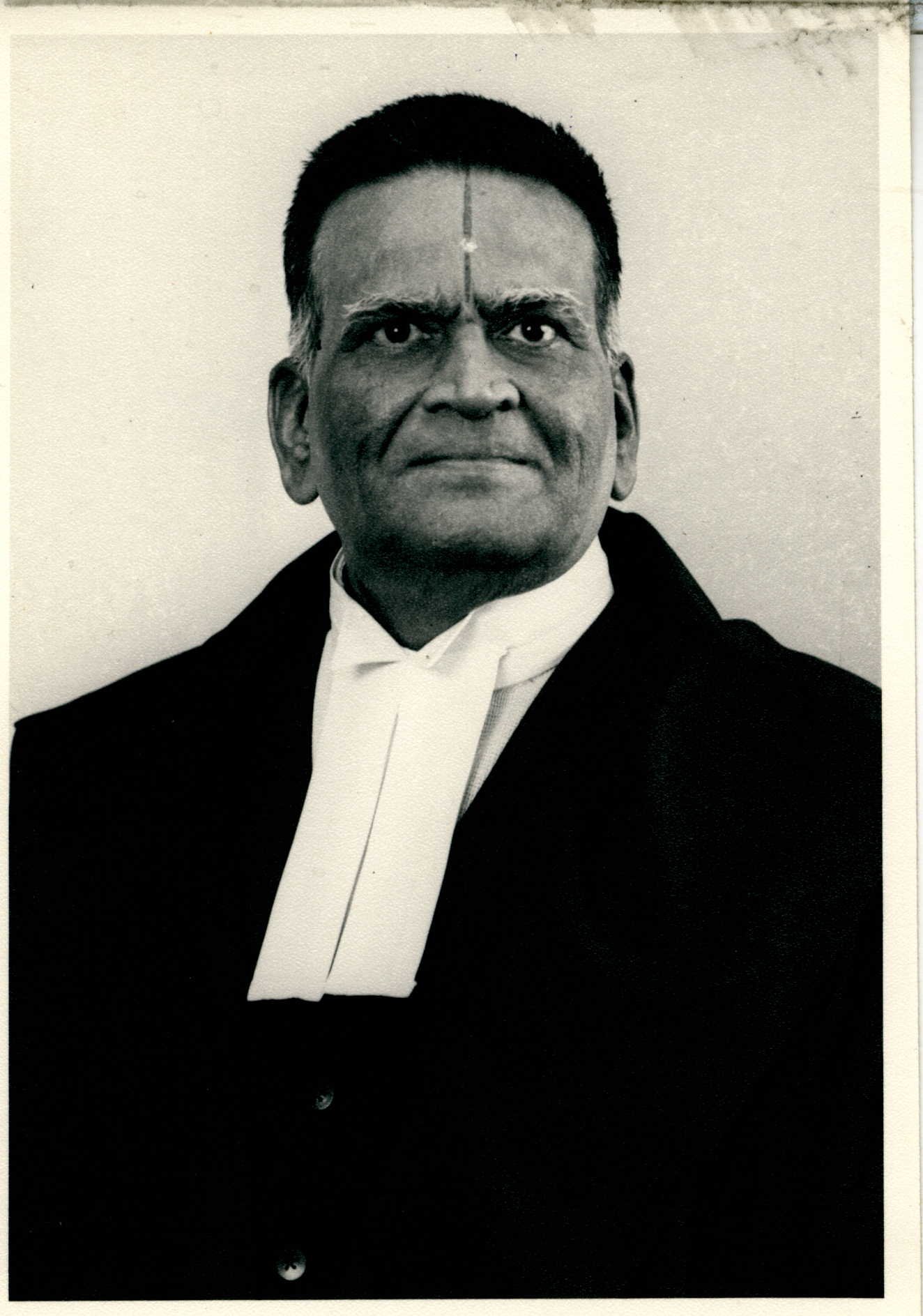
DAULAT RAM
v.
STATE OF PUNJAB
APRIL 29, 1997
[M.M. PUNCHHI AND KS. PARIPOORNAN, JJ.]
Criminal Tlial :
No11-appreciatio11/ignora11ce of vital defence witnesses by the Trial
Cowt as well as by the High Court-Appreciation of defence evidence by the
Supreme Cowt called for if ignored by the Courts below.
No neighbour coming fo1ward to support the case of the prosecu
tio11-Wl1ether fatal-Held 'Yes'.
A
B
c
Dress of the deceased at the time of death-Relevance of-Held, the D
manner of his dress was least suggestive of the fact that he was set for travel
to another destinatiol!-Conviction can be set aside if the timing of death
proves to be mutelially different than the one alleged by the prosecution.
Medical Jurisprudence
Timing of death-To be ascertained by properly i11te1preting the post
m01tem repo1t and evidence of the doctor (conducting the post-mortem) and
11ot by the prosecutio11 story.
Cri111i11al Procedure Code, 1973 :
Section 313-Wliether stateme11t made by the accused releval!t if the
version came as suggestions i11 the cross-exami11atio11 of the witnesses as well
as deposition by a prosecutio11 wit11ess (wife of accused), whom the prosecu
tion got declared hostile at the very i11itiation of her stateme11t.
/11dia11 Pe11al Code, 1860 :
E
F
G
Section
302 read with Section 27 of the Anns Act-Murder of educated
unmanied young man of 25 years-Murder i11 the prese11ce of alleged eye
witnesses-Accused a police constable-Murder by his service revolver--Con
viction ca11not be upheld if the defence version is different and the timi11g of H
1061
1062 SUPREME COURT REPORTS [1997] 3 S.C.R.
A death is proved to be different than the one alleged by the prosecution.
B
The Appellant was employed as a Constable in the Police and PW 6
was his
wife. The couple had a single room house to live in locality R.
Deceased, a man of 25 years having done his M.A., had constructed a house
close to the house of the Appellant,
and was staying alone. His father,
Sub-Inspector
GS had at one time been posted at R, but at the relevant
time was posted
at M, a town about 53 miles away from R. Deceased's
father's brother,
G, a PW, lived at
S, at a distance of about 55 miles from
R. Both the towns were in different directions.
C The case of the prosecution was that G, father's brother of the
deceased
had visited the place R on a number of occasions and had
developed a feeling that the deceased was carrying on with PW6 and he
wanted to disrupt the relationship. Thus
on the date of occurrence,
some
time after 1.00: PM, he came to the place R accompanied by H, in order
to take the deceased with him to his native place. Half an
hour later, at
D about 1.45 pm. G, H and the deceased set out from the latter's house for
going to their native place. While doing so, the deceased told G
and H that
he had a message to deliver at the house of the Appellant.
Saying so he
went and entered the house of Appellant followed
by G and H. They saw
him talking to
PW6. In the meantime Appellant arrived. Appellant shouted
E that he was going to teach a lesson to the deceased for having entered his
house and saying so
he fired live shots in quick succession towards the
deceased from the service revolver.
On receipt of injuries the deceased fell
on a cot, which lay in the sole room. The Appellant then further assaulted
the deceased 'l\ith a knife on his face. Then PW6 intervened. She too got
some injuries inflicted
by the Appellant. The Appellant thereafter left the
F place of occurrence carrying his revolver with him. G and H, the
eyewit
nesses went near the deceased and found him dead.
The prosecution case further was
that G leaving behind H near the
dead body went to the Local
Police Station and lodged the FIR at 2:45 PM.
G The police came to the spot and prepared the inquest report and the dead
body was sent for post-mortem which
was conducted by Doctor PW 1, at
5:35 PM.
The post-mortem report (Ex
PA) of the deceased revealed that the
death was instantaneous and that the time between death
and post-mortem
H was within six hours. At the trial, however, PW 1 amended his statement
DAULATRAM. v. STATE 1063
to say that the probable duration between death and post mortem could A
also be eight hours. The blood stained clothes of the deceased which were
a T-shirt and pyjamas, were removed
and given to the police.
However, the Appellant had a counter version and this came as
suggestions in the cross-examination of the witnesses as
well as deposition
by
PW 6, whom the prosecution got declared hostile at the very initiation
of the statement. Under Section 313 Cr.P.C, the Appellant gave a statement
B
that on the day of occurrence in the morning when he was away from his
house to the market for making purchase of vegetables etc. deceased
intruded into his house
and tried to criminally assault his wife. In the
process she received injuries and she caused injuries to the deceased with
C
which he died. On his return, he found his wife absent from the house while
the dead body of the deceased
was there. He then went to the
Police Station
where his wife was sitting and she narrated the occurrence. He also
requested the Police to record her statement, but they refused. The local
Police then sent information to the places M and S and then, father of the
deceased arrived,
who arranged G and H as
PWs. This false case was then
concocted. The revolver with
live cartridges had been taken to the
Police
Station by his wife.
D
PW6 in her statement admitted having killed the deceased by the
service revolver of the Appellant which she said lay under the pillow on
E
the cot on which deceased was found lying dead.
The Appellant in his defence examined
13 official witnesses of the
Punjab Police to suggest that since the occurrence had taken place at about
8:00 AM in the morning, there had been frantic telephonic and wireless
messages
by
Police to contact GS, father of the deceased. This effort was F
to dislodge the time of occurrence as projected by the prosecution.
On these facts Trial Court convicted the Appellant under Section
302 of the Indian Penal Code read with Section 27 of the Arms Act, and
the same was affirmed in appeal before the High Court. Hence this appeal. G
Allowing the Appeal, this Court
HELD :
1. If holes can be picked in the defence that doesn't lead to
the prosecution story being automatically proved. The prosecution has to
stand on its own legs and can derive no advantage from the weakness
~f H
1064 SUPREME COURT REPORTS [1997) 3 S.C.R.
A the defence. (1068-E]
2. The time of the occurrence is seriously in dispute. According to
the prosecution the occurrence took place
at
2.00 PM and according to the
defence it took place
at about
8.00 AM in the morning. The situs of the
crime
is not disputed. According to
PWl the time between death and post
B mortem could be upto eight hours. Thus according to the medical opinion
the crime could have been committed eight hours earlier to S.30 PM,
putting it around 9.00 AM. However that cannot be viewed as a certainty.
(1068-F·G]
C 3. As per the post mortem report, the abdomen of the deceased when
dissected showed
that the small intestines and their contents were
described as healthy and containing small amount of semi-digested food.
Large intestine
and their contents were shown to be healthy and empty.
The bladder
was shown to be healthy and containing small amount of
urine. Thus from the post mortem report, it is conclusively established
D that before his death the deceased had not taken full meals for hours. The
prosecution would have the Court believe that until
2.00 PM when deceased
was about to leave for his native place in the company of his uncle
G, he
was not expected to have taken regular breakfast or the noontime meal.
According to G when
he and H had reached R at about
1.00 PM, they had
E not taken tea etc. at the house of deceased and further that the deceased
also had not taken any food etc. in the presence of these
two. The condition
of the stomach
and that of the intestines and the bladder does indicate
that the occurrence perhaps took place much earlier to the expected time
for breakfast and lunch, possibly in the morning hours. The courts below
have totally ignored this aspect of the case.
[1068-G· H; 1069-A·C]
F
4. The manner of his dress was least suggestive of the fact that he
was set for travel to another destination SS miles away in the company of
his uncle. The dress of the deceased is therefore somewhat intriguing. It
is more close to the theory
that in morning hours he was casually dressed
G and had gone to the house of the accused with designs which were far from
honourable.
[1069-E·Fl
S. The two supposed eye witnesses G and H are from S and according
to their
own version they seem to have come there to take away the
deceased. Their coming to the house of the deceased is a strange
coin·
H cidence orchestrated so as to witness him being killed. It is rather strange
DAULAT RAM. v. STATE [PUNCHHl,J.] 1065
that G on his own would be caring for his nephew to desist from his A
amorous relationship with PW6 without taking into confidence the
deceased's father. [1069-G-H]
6. The prosecution has not advanced any cogent reason as to why the
presence of these witnesses
be not doubted, especially when the time of
occurrence is shrouded in doubt. In addition thereto is the defence evidence
B
suggesting that both police stations i.e. at M and
S where the father and
the uncle of the deceased lived respectively were frantically being attempted
to be contacted on police station to police station connection.
All these facts
lend credence to the defence version
that the
PWs had come to know of the
crime because the matter had been reported
at the police station in the first C
instance by
PW6 followed by the Appellant. [1070-A-C]
7. No one from the neighbourhood has come forward to support the
prosecution even though the investigating officer says
that he had
ques
tioned some people in the neighbourhood. [1070-C]
8. On the totality of circumstances this Court entertains the doubt
that neither of the two supposed eyewitnesses were present at the scene of
the occurrence,
nor have they witnessed the same.
[1070-D]
9. The dress of the deceased and the contents of his abdomen suggest
D
that he was murdered much before 2.00 PM, the time asserted by the E
prosecution. [1070-E]
CRIMINAL APPELLATE JURISDICTION: Criminal Appeal No.
489 of 1989.
From the Judgment and Order dated 19.10.87 of the Punjab &
Haryana High Court in Cr!. A. No. 227 of 1986.
Pankaj Katra and Vijay Kumar for the Appellant.
R.S. Sodhi for the Respondent.
The Judgment of the Court was delivered by
PUNCHHI, J. This appeal has arisen from an appellate Judgment
and Order of the Punjab and Haryana High Court passed on October 19,
F
G
1987 in Criminal Appeal No. 427/DB of 1986. H
1066 SUPREME COURT REPORTS [1997] 3 S.C.R.
A The appellant was employed as a Constable in the Punjab Police and
at the relevant lime
was assigned duty as the
Personal Guard of one Brij
Lal Goel, Ex-MLA, Rajpura, District Patiala. Smt. Pushpa, PW was his
wife. The couple had a handful of children. They had a single room house
to live in a locality al Rajpura.
In the neighbourhood, Narinder
Singh
deceased was living having constructed a house, quite close to the house
B of Daulat Ram. Narinder Singh was an educated unmarried young man of
25 having done his MA. He was contemplating to start some business at
Rajpura. He was staying alone
in his house. His father,
Sub-Inspector
Gurbachan Singh had at one time been posted at Rajpura, but at the
relevant time
was posted in the C.I.A.
Staff at Malerkotla, a town about 53
C miles away from Rajpura. His father's brother, Gurnam Singh, PW lived at
Sunam, at a distance of about 55 miles from Rajpura. Both the towns were
in different directions.
The case of the prosecution
is that Gurnam
Singh, PW, father's
brother of the deceased had visited Rajpura on a number of occasions and
D had developed a feeling that the deceased was carrying on with
Pushpa,
P.W. Gurnam Singh, PW wanted to disrupt the relationship. Thus on July
23, 1985, sometime after 1.00 PM, he came to Rajpura accompanied by
Hardial Singh, PW in order to take the deceased with him to his native
place Sunam. Half an hour later, at about 1.45 PM, Gurnam Singh, Hardial
E Singh, PWs and the deceased set out from the latter's house for going to
Sunam. While so, the deceased told Gurnam Singh and Hardial Singh, I-Ws
that he had a message to deliver at the house of Daulat Ram. Saying so he
went and entered the house of Daulat Ram followed
by Gurnam
Singh and
Hardial Singh PWs. They saw him talking to Pushpa PW. Jn the meantime,
Daulat Ram, appellant arrived. Daulat
Ram shouted that he was going to
F teach a lesson lo the deceased for having entered his house and saying so,
he fired
five shots in quick succession towards the deceased from his
service revolver.
On receipt of injuries the deceased fell on a cot, which
lay in the sole room. The appellant then further assaulted the deceased
with a knife on
his face. Then
Pushpa PW intervened. She too was given
some injuries
by
the appellant. The appellant thereafter left lhe place of
G occurrence carrying his revolver with him. Gurnam Singh and Hardial
Singh eye-witnesses went near the deceased and found him dead.
The prosecution case further
is that Gurnam
Singh leaving behind
Hardial Singh near the dead body went to the local Police Station, Rajpura
H and lodged the FIR at 2.45 P.M. The investigative machinery was set in
\~
DAULAT RAM. v. STATE [PUNCHHI, J.] 1067
motion. SI, Harsajjan Singh PW 12 came to the spot and prepared the A
inquest report. He has shown therein the dead body lying on the cot in
position. The dead body was sent for post-mortem examination which \Vas
conducted by Dr. Vinod Kumar PW.1 al 5.35 PM. He was also required
to examine the injuries of Pushpa PW at 7.00 PM the same day. He found
on her three injuries, l
wo of whom were as a result of a blunt
weapdil
assault and one by a sharp-edged weapon. The post-!11ortem report of the
deceased revealed that the death
was instantaneous and that the time
between death and post mortem
was within six hours. At the trial however
he amended
his statement to say that the probable duration between death
and post mortem could also be eight hours. The blood-stained clothes of
B
the deceased which were a T-shirt and pyjamas, were removed and given C
to the police as case properly.
After completion of investigation, the appellant
was tried by the
Sessions Judge,
Patiala under Section 302 of Indian Penal Code as also
under Section
27 of the Arms Act. He was convicted for both the offences
and sentenced to life imprisonment and payment of fine of Rs.
1000; in
default further rigorous imprisonment for one year for the former offence
and sentenced to undergo rigorous imprisonment for one year for the latter
offence; serttences to be running concurrently. They were affirmed in
appeal before the High Court.
The appellant had a counter-version. That version came
as sugges
tions
in the cross-examination of the witnesses as well as deposition by
PW.
6 Pushpa, whom the prosecution got declared hostile at the very initiation
of her statement. The appellant have the following statement under Section
313
Cr.P.C.
"I am innocent. I have been falsely implicated. On the day of
occurrence in the morning when I was
away from my house to the
market for making purchase of vegetables etc. deceased intruded
D
E
F
into my house and tried to criminally assault my wife and she
resisted. In the process she received
injuric~ at her hands and she G
caused injuries to the deceased with which he died. On my return
I found
my wife absent from the house while the dead-body of the
deceased was there. I then went to the
Police Station where my
wife was sitting and she narrated the occurrence. I also requested
the police to record her statement, but they refused. The local
H
1068 SUPREME COURT REPORTS [1997) 3 S.C.R.
A police then sent information to Malerkotla and Sunam and Gur
bachan Singh S.I. father of the deceased arrived,who arranged
Gurnam Singh and Hardial Singh as PWs. This false case
was then
concocted. The revolver with
live cartridges had been taken to the
Police Station
by my
wife."
B P.W. 6 Pushpa in her statement admitted having killed the deceased by the
service revolver of the appellant which she said
lay under the pillow on the
cot on which the deceased
was found lying dead in position.
The appellant
in his defence examined 13 official witnesses of the
C Punjab Police of the Wireless Department to suggest that since the
occur
rence had taken place at about 8.00 A.M. in the morning, there had been
frantic telephonic and wireless messages
by Rajpura Police to contact S.I.
Gurbachan Singh, father of the deceased
who was then posted at
Malerkot
la. This effort was to dislodge the time of occurrence as projected by the
prosecution and hence the story
by itself.
D
The learned Sessions Judge devoted more than half of his judgment
in critically examining the defence version
as if it required the standard of
proof
as that of a prosecution case. The High
Court however avoided
pursuing that course and confined itself to the prosecution case.
If holes
E can be picked in the defence that doesn't lead to the prosecution story
being automatically proved. The prosecution has to stand on its
own legs
and can derive no advantage from the weakness of the defence. Keeping
that
in view, we proceed further.
The time of the occurrence
is seriously in dispute. According to the
F prosecution the occurrence took place at
2.00 PM and according to the
defence it took place at about 8.00 A.M. in the morning. The situs of the
·crime is not disputed. According to Dr. Vinod Kumar PW.1 the time
between death and post-mortem could be upto eight hours. Thus according
to the medical opinion the crime could have been committed eight hours
earlier to 5.30 PM, putting it around 9.00 am. However that cannot be
G viewed as a certainty. Coming to the post-mortem report Ex. PA, the
abdomen of the deceased when dissected showed that the stomach and
its
contents were healthy and empty. The small intestines and their contents
were described
as healthy and containing small amount of semi-digested
food. Large intestines and their contents were shown to be healthy and
H empty. The bladder was shown to be heahhy and containing small amount
---
DAUIATRAM.v. STATE [PUNCHHI,J.) 1069
of urine. Thus from the post-mortem report, it is conclusively established A
that before his death the deceased had not taken full meals for hours. The
prosecution would have
us believe that uptil 2
PM, when he was about to
leave Rajpura
for
Sunam in the company of his Uncle Gurnam Singh PW,
he was not expected to have taken regular breakfast or the noon-time meal.
According to Gurnam Singh PW when he and Hardial Singh had reached
Rajpura at about 1.00 PM, they had not taken tea etc. at the house of the
deceased and further that deceased also had not taken any food etc. in the
presence of those
two. The condition of the stomach and that of the
intestines and the bladder does indicate that the occurrence perhaps took
place much earlier to the expected time for breakfast and lunch, possibly
in the morning hours. The courts below have totally ignored this aspect of
the case.
It
is worthy of recall that the deceased was an educated youngman
of
25 wanting to set up a business at Rajpura. He seemingly had done well
B
c
in building a house of his own. He had good parentage. Supposedly D
accompanying his uncle in order to go to
Suman he is said to have been
wearing a T-shirt and pyjamas, a dress uncommon to be worn for going to
places. The top dress does not match with the bottom one. Having regard
to the normal pattern of life, the deceased was expected when wearing a
T-shirt to match
it with a pair of trousers or Jeans and not with pyjamas.
Likewise if he
was to be wearing pyjamas he would be matching it with a E
shirt or a kurta not a T-shirt. The manner of his dress was least suggestive
of the fact that he
was set for travel to another destination 55 miles away
in the company of his uncle. The dress of the deceased is therefore
somewhat intriguing.
It is more close to the theory that in morning hours
he was casually dressed and had gone to the house of the accused with
F
designs which were far from honourable.
The
two supposed eye-witnesses Gurnam
Singh and Hardial Singh
PWs are from Sunam and according to their own version seem to have
come there to take
away the deceased. Their coming to the house of the
deceased
is a strange coincidence orchestrated so as witness him being G
killed. It is rather strange that Gurnam
Singh PW on his own would be
caring for his nephew to desist from
his amorous relationship with
Pushpa,
PW without taking into confidence the deceased's father. According to his
statement he had kept the affair to himself. Strangely he took into con
fidence rather Hardial Singh, P.W. and brought him along to Rajpura. It H
1070 SUPREME COURT REPORTS [1997] 3 S.C.R.
A is difficult to understand what purpose had Hardial Singh to serve in
accompanying
Gurnam
Singh to Rajpura to fetch the deceased. The
prosecution has not advanced any cogent reason as to why the presence of
these witnesses be not doubted, especially when the time of occurrence
is
shrouded in doubt. In addition thereto is the defence evidence suggesting
that both police stations i.e. at Malerkotla and
Sunam where the father and
B uncle of the deceased lived respectively were frantically being attempted
to be contacted on police station to police station connection. All these
facts lend credence
to the defence version that the
P.Ws had come to know
of the crime because the matter had been reported at the police station in
the first instance by P.w. 6 followed by the appellant.
c
D
Lastly no one from the neighbourhood has come forward to support
the prosecution even though the investigating officer says that he ques
tioned some people in the neighbourhood. It was for him to say as to whom
he had questioned and not for the defence to elicit those names so as to
call those persons in defence, as expected by the learned
Sessions Judge.
Thus on the totality of circumstances we have come to entertain the
doubt that neither of the two supposed eye-witnesses were present at the
scene
of the occurrence, nor have they witnessed the same. We have also
entertained the doubt about the time of the occurrence and the manner in
E which the prosecution would have us believe that it look place. It could
well be that it had taken place
as suggested by the defence. The dress of
the deceased and the contents of his abdomen suggest that he was mur
dered much before 2.00
PM, the time positively asserted by the prosecu-
tion.
F For the foregoing reasons, we allow this appeal, set aside
th..: im-
pugned judgment and order of the High Court as also that of the Court of
Session and acquit ihe appellant of all charges. The appellant is on baiL
His bail bonds are discharged. Fine, if paid by him be refunded to him.
R.K.S. Appeal allowed.

 Login with google
Legal Notes
Add a Note....