
The case revolves around an incident where Dayal Singh and other accused individuals were involved in a violent altercation resulting in the death of Pyara Singh.

No Acts & Articles mentioned in this case
Page 1 REPORTABLE
IN THE SUPREME COURT OF INDIA
CRIMINAL APPELLATE JURISDICTION
CRIMINAL APPEAL NO.529 OF 2010
Dayal Singh & Ors. … Appellants
Versus
State of Uttaranchal … Respondent
J U D G M E N T
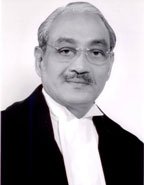
Swatanter Kumar, J .
1.Settled canons of criminal jurisprudence when applied in their
correct perspective, give rise to the following questions for
consideration of the Court in the present appeal:
a) Where acts of omission and commission, deliberate or
otherwise, are committed by the investigating agency or other
significant witnesses instrumental in proving the offence,
what approach, in appreciation of evidence, should be
adopted?
Page 2 b) Depending upon the answer to the above, what directions
should be issued by the courts of competent jurisdiction?
c) Whenever there is some conflict in the eye-witness version of
events and the medical evidence, what effect will it have on
the case of the prosecution and what would be the manner in
which the Court should appreciate such evidence?
2.The facts giving rise to the questions in the present appeal are
that the fields of Gurumukh Singh and Dayal Singh were adjoining
in the village Salwati within the limits of Police Station Sittarganj,
district Udham Singh Nagar. These fields were separated by a
mend (boundary mound). On 8
th
December, 1985, Gurumukh
Singh, the complainant, who was examined as PW2, along with his
father Pyara Singh, had gone to their fields. At about 12 noon,
Smt. Balwant Kaur, PW4, wife of Pyara Singh came to the fields to
give meals to Pyara Singh and their son Gurumukh Singh. At
about 12.45 p.m, the accused persons, namely, Dayal Singh, Budh
Singh & Resham Singh (both sons of Dayal Singh) and Pahalwan
Singh came to the fields wielding lathis and started hurling abuses.
They asked Pyara Singh and Gurumukh Singh as to why they were
44
Page 3 placing earth on their mend, upon which they answered that mend
was a joint property belonging to both the parties. Without any
provocation, all the accused persons started attacking Pyara Singh
with lathis. Gurumukh Singh, PW2, at that time, was at a little
distance from his father and Smt. Balwant Kaur, PW4, was nearby.
On seeing the occurrence, they raised an alarm and went to rescue
Pyara Singh. The accused, however, inflicted lathi injuries on both
PW2 and PW4. In the meanwhile, Satnam Singh, who was
ploughing his fields, which were quite close to the fields of the
parties and Uttam Singh (PW5) who was coming to his village from
another village, saw the occurrence. These two persons even
challenged the accused persons upon which the accused persons
ran away from the place of occurrence. Pyara Singh, who had been
attacked by all the accused persons with lathis fell down and
succumbed to his injuries on the spot. Few villagers also came to
the spot. According to the prosecution, pagri (Ex.1) of one of the
accused, Budh Singh, had fallen on the spot which was
subsequently taken into custody by the Police. Gurumukh Singh,
PW2, left the dead body of his deceased father in the custody of the
villagers and went to the police station where he got the report,
44
Page 4 Exhibit Ka-3, scribed by Kashmir Singh in relation to the
occurrence. The report was lodged at about 2.15 p.m. on 8
th
December, 1985 by PW2 in presence of SI Kartar Singh, PW6. FIR
(Exhibit Ka-4A) was registered and the investigating machinery was
put into motion. The two injured witnesses, namely, PW2 and PW4
were examined by Dr. P.C. Pande, PW1, the medical officer at the
Public Health Centre, Sittarganj on the date of occurrence. At 4.00
p.m., the doctor examined PW2 and noticed the following injuries
on the person of the injured witness vide Injury Report, Ex. Ka-1.
PW-2
“1.Lacerated wound of 5 cm X 1 cm and 1 cm
in depth. Margins were lacerated. Red
fresh blood was present over wound.
Wound was caused by hard and blunt
object. Wound was at the junction of left
parietal and occipital bone 7 cm from upper
part of left ear caused by blunt object.
Advised X-ray. Skull A.P. and lateral and
the injury was kept under observation.
2.Contusion of 6 cm X 2.5 cm on left side of
body 3 cm above the left ilic crest. Simple
in nature caused by hard and blunt object.”
According to the Doctor, the injuries were caused by hard and
blunt object and they were fresh in duration.
44
Page 5 On 8.12.1985 at 7.30 p.m. Dr. P.C. Pande (PW1) examined the
injuries of Smt. Balwant Kaur PW4 and found the following injuries
on her person vide injury report Ex.Ka.2:
PW-4
1.Contusion 6 cm X 3 cm on left shoulder
caused by hard and blunt object.
2.Contusion of 5 cm X 2 cm on lateral side of
middle of left upper arm. Bluish red in
colour caused by hard and blunt object.
3.Contusion of 4 cm X 2 cm on left parietal
bone 6 cm from left ear caused by hard and
blunt object.
According to Dr. Pande, these injuries were caused by hard
and blunt object and the duration was within 12 hours and the
nature of the injuries was simple. According to Dr. Pande the
injuries of both these injured persons could have been received on
8.12.1985 at 12.45 p.m. by lathi.”
3.As noted above, according to Dr. Pande, the injuries were
caused by a hard and blunt object and duration was within 12
hours. Thereafter, SI Kartar Singh, PW6, proceeded to the place of
occurrence in village Salwati. He found the dead body of Pyara
Singh lying in the fields. In the presence of panchas, including
44
Page 6 Balwant Singh, PW8, he noticed that there were three injuries on
the person of the deceased, Pyara Singh and prepared Inquest
Report vide Ex. Ka-6 recording his opinion that the deceased died
on account of the injuries found on his body. After preparing the
site plan, Ext. Ka-10, he also wrote a letter to the Superintendent,
Civil Hospital, Haldwani for post mortem, being Exhibit Ka-9. The
dead body was taken to the said hospital by Constable Chandrapal
Singh, PW7. Dr. C.N. Tewari, PW3, medical officer in the Civil
Hospital, Haldwani, performed the post mortem upon the body of
the deceased and did not find any ante-mortem or post-mortem
injuries on the dead body. On internal examination, he did not find
any injuries and could not ascertain the cause of death. Further,
he preserved the viscera and gave the post-mortem report, Exhibit
Ka-4. After noticing that there was no injury or abnormality found
upon external and internal examination of the dead body, the
doctor in his report recorded as under:
“Viscera in sealed jars handed over to the
accompanying Constables.
Jar No.1 sample preservative saline water.
Jar No.2 Pieces of stomach
44
Page 7 Jar No.3 Pieces of liver, spleen and kidney.
Death occurred about one day back.
Cause of death could not be ascertained.
Hence, viscera preserved.”
4.It appears from the record that the deceased’s viscera, which
allegedly was handed over by doctor to the police, was either never
sent to the Forensic Science Laboratory (for short, the ‘FSL’) for
chemical examination, or if sent, the report thereof was neither
called for nor proved before the Court. In fact, this has been left to
the imagination of the Court.
5.The accused persons, at about 5.45 p.m. on the same day,
lodged a written report at the same Police Station, which was
received by Head Constable Inder Singh, who prepared the check
report Exhibit C-1 and made appropriate entry. The case was
registered under Section 307 of the Indian Penal Code, 1860 (IPC)
against PW2, Gurumukh Singh. Dayal Singh was arrested in
furtherance of the FIR, Exhibit Ka-4A. He was also sent for medical
examination and was examined by Dr. K.P.S. Chauhan, CW2. After
examining the said accused at about 7.45 p.m., the doctor found
two injuries on his person and prepared the report (Exhibit C-4).
44
Page 8 According to Dr. Chauhan, the injuries on the person of the
accused could have been received by a firearm object and injuries
were fresh within six hours.
6.The investigating officer completed the investigation and filed
charge sheet (Exhibit Ka-11) against the accused persons on 15
th
January, 1986. It may be noticed that in furtherance to Exhibit C-
2, neither any case was registered nor any charge-sheet was
presented before the Court of competent jurisdiction. The accused
also took no steps to prove that report in Court. They also did not
file any private complaint.
7.Considering the ocular and other evidence produced by the
prosecution, the learned Trial Court vide its judgment of conviction
and order of sentence, both dated 29
th
June, 1990, found the
accused persons guilty of offences under Section 302 read with
Section 34 IPC as well as under Section 323 read with Section 34
IPC. The Trial Court, while dealing with the arguments of the
accused for application of Section 34, as well as the submission
that the witnesses had not attributed specific role to the respective
accused persons, held as under:
44
Page 9 “The attack was premeditated and the
accused had come fully prepared to do the
overt act. The injury was caused on the
head of the deceased which is a vital part of
the body at which it was aimed by employing
lathi, it was clear that the accused persons
had intended to cause death by giving blow
on vital part of the body of the deceased.
After receiving the injuries, the deceased fell
down and even thereafter he was attacked by
the accused persons and he died on the spot
immediately. This all goes to show that the
accused persons who all were armed with
lathis and had attacked in furtherance of
their common intention by surrounding Sri
Pyara Singh. At that juncture when the
occurrence took place suddenly and the
witnesses were at some distance it was quite
natural for the witnesses not to have noted
as to whose lathi blow caused the injuries on
Sri Pyara Singh and also on the injured
persons. It was thus quite natural in such
circumstances for the witnesses not to have
noted the minute details of the incident. The
Hon’ble Supreme Court has held in 1971
Cri.L.J. 1135 Har Prasad vs. State of
Madhya Pradesh that in view of the large
number of accused involved in the
occurrence it is quite natural for the
prosecution witnesses to get a bit confused.
In fact, no cross-examination was made on
this respect of the case which has been
discussed by me above. The fact that the
accused persons had gone to the place of
occurrence fully armed with lathis and
immediately on the basis of ‘mend’ started
attacking the deceased Sri Pyara Singh
indicates that they had gone there with
premeditation and prior concert. All the four
44
Page 10 accused were physically present at the time
of the commission of offence. The criminal
act was done by the accused persons and
they all had shared the common intention by
engaging in that criminal enterprise for
which they had come fully prepared. The
prosecution has succeeded in showing the
existence of common purpose or design. All
the accused persons were confederates in
the commission of the offence and they had
participated in that common intention. Each
of the accused person is liable for the fact
done in pursuance of that common purpose
of design. The acts done by the accused
persons are similar as they all had come
prepared armed with lathis and lathi blows
were struck on the deceased Sri Pyara Singh
by the accused persons in furtherance of
their common intention. Each of them is
liable for the blows struck with lathi on the
deceased and also on the injured persons. It
is proved beyond all reasonable doubt that
lathi blow was struck on the head of Sri
Pyara Singh which was a vital part and he
died on the spot due to injuries. Whoever
may have struck that lathi blow, each of the
accused person is liable for the lathi blows
struck on the vital part of the deceased.
Since the ladhi blow was struck on the head
of the deceased which is a vital part, the
offence amounts to murder (See 1972 SCC
(Cri) 438 Gudar Dusadh Vs. State of Bihar).
The death of Sri Pyara Singh was caused in
the occurrence and it is proved to the hilt
and beyond all reasonable doubt that he
died on the spot on account of lathi blows
inflicted on him. It is nobody’s case that he
died natural death. The accused persons
have committed offence punishable under
44
Page 11 Section 302/34 I.P.C. for committed offence
punishable under Section 323/34 I.P.C. for
causing voluntary hurt to Sri Gurumukh
Singh and Smt. Balwant Kaur.”
8.The above judgment of the Trial Court was assailed by the
accused persons in appeal before the High Court. The High Court,
vide its judgment dated 17
th
March, 2008, dismissed the appeal and
affirmed the judgment of conviction and order of sentence passed
by learned Trial Court giving rise to the present appeal.
9.From the narration of the above facts, brought on record by
the prosecution and proved in accordance with law, it is clear that
there are three eye-witnesses to the occurrence. Out of them, two
are injured witnesses, namely PW2 and PW4. PW2 is the son of the
deceased and PW4 is the wife. Presence of these two witnesses at
the place of occurrence is normal and natural. According to PW4,
she had gone to the place of occurrence to give food to her husband
and son around 12 noon, which is the normal hour for lunch in the
villages. The son of the deceased had come to the field with his
father to work. They were putting earth on the mend which was
objected to by the accused persons who had come there with lathis
44
Page 12 and with a premeditated mind of causing harm to the deceased.
Upon enquiry, the deceased informed the accused persons that the
mend was a joint property of the parties. Without provocation, the
accused persons thereupon started hurling abuses upon Pyara
Singh and his son, and assaulted the deceased with lathis. PW2
and PW4 intervened to protect their father and husband
respectively, but to no consequence and in the process, they
suffered injuries. In the meanwhile, when the accused persons
were challenged by PW5 and Satnam Singh, who were close to the
place of occurrence, they ran away. The presence of PW2, PW4 and
PW5 cannot be doubted. The statement made by them in the Court
is natural, reliable and does not suffer from any serious
contradictions. Once the presence of eye-witnesses cannot be
doubted and it has been established that their statement is reliable,
there is no reason for the Court to not rely upon the statement of
such eye witnesses in accepting the case of the prosecution. The
accused persons had come with pre-meditated mind, together with
common intention, to assault the deceased and all of them kept on
assaulting the deceased till the time he fell on the ground and
became breathless.
44
Page 13 10.This Court has repeatedly held that an eye-witness version
cannot be discarded by the Court merely on the ground that such
eye-witness happened to be a relation or friend of the deceased.
The concept of interested witness essentially must carry with it the
element of unfairness and undue intention to falsely implicate the
accused. It is only when these elements are present, and statement
of the witness is unworthy of credence that the Court would
examine the possibility of discarding such statements. But where
the presence of the eye-witnesses is proved to be natural and their
statements are nothing but truthful disclosure of actual facts
leading to the occurrence and the occurrence itself, it will not be
permissible for the Court to discard the statements of such related
or friendly witness. The Court in the case of Dharnidhar v. State of
Uttar Pradesh [(2010) 7 SCC 759] took the following view :
“12. There is no hard-and-fast rule that family
members can never be true witnesses to the
occurrence and that they will always depose
falsely before the court. It will always depend
upon the facts and circumstances of a given
case. In Jayabalan v. UT of Pondicherry (2010)
1 SCC 199, this Court had occasion to
consider whether the evidence of interested
witnesses can be relied upon. The Court took
the view that a pedantic approach cannot be
44
Page 14 applied while dealing with the evidence of an
interested witness. Such evidence cannot be
ignored or thrown out solely because it comes
from a person closely related to the victim. The
Court held as under: (SCC p. 213, paras 23-
24)
“23. We are of the considered view that in
cases where the court is called upon to
deal with the evidence of the interested
witnesses, the approach of the court,
while appreciating the evidence of such
witnesses must not be pedantic. The
court must be cautious in appreciating
and accepting the evidence given by the
interested witnesses but the court must
not be suspicious of such evidence. The
primary endeavour of the court must be
to look for consistency. The evidence of a
witness cannot be ignored or thrown out
solely because it comes from the mouth
of a person who is closely related to the
victim.
24. From a perusal of the record, we find
that the evidence of PWs 1 to 4 is clear
and categorical in reference to the
frequent quarrels between the deceased
and the appellant. They have clearly and
consistently supported the prosecution
version with regard to the beating and the
ill-treatment meted out to the deceased
by the appellant on several occasions
which compelled the deceased to leave
the appellant's house and take shelter in
her parental house with an intention to
live there permanently. PWs 1 to 4 have
unequivocally stated that the deceased
feared threat to her life from the
44
Page 15 appellant. The aforesaid version narrated
by the prosecution witnesses viz. PWs 1
to 4 also finds corroboration from the
facts stated in the complaint.”
13. Similar view was taken by this Court in
Ram Bharosey v. State of U.P. AIR 1954 SC
704, where the Court stated the dictum of law
that a close relative of the deceased does not,
per se, become an interested witness. An
interested witness is one who is interested in
securing the conviction of a person out of
vengeance or enmity or due to disputes and
deposes before the court only with that
intention and not to further the cause of
justice. The law relating to appreciation of
evidence of an interested witness is well
settled, according to which, the version of an
interested witness cannot be thrown
overboard, but has to be examined carefully
before accepting the same.”
11.Similar view was taken by this Court in the cases of Mano Dutt
& Anr. v. State of UP [(2012 (3) SCALE 219] and Satbir Singh & Ors.
v. State of Uttar Pradesh [(2009) 13 SCC 790].
12.With some vehemence, it has then been contended on behalf
of the appellant that the post mortem report and the statement of
PW3, Dr. C.N Tewari, specifically state that no external or internal
injuries were found on the body of the deceased. In other words, no
injury was either inflicted by the accused or suffered by the
44
Page 16 deceased. In face of this expert medical evidence, the statement of
the eye-witnesses cannot be believed. The expert evidence should
be given precedence and the accused persons are entitled to
acquittal. This argument is liable to be rejected at the very outset
despite the fact that it sounds attractive at first blush. No doubt
the post mortem report (Exhibit Ka-4) and the statement of PW3 Dr.
C.N. Tewari, does show/reflect that he had not noticed any injuries
upon the person of the deceased externally or even after opening
him up internally. But the fact of the matter is that Pyara Singh
died. How he suffered death is explained by three witnesses, PW2,
PW4 and PW5, respectively. Besides this, the statement of the
investigating officer, PW6, also clearly shows that the body of the
deceased contained three apparent injuries. He recorded in his
investigative proceedings that the accused had died of these injuries
and was found lying dead at the place of occurrence. It is not only
the statement of PW-6, but also the Panchas in whose presence the
body was recovered, who have endorsed this fact. The course of
events as recorded in the investigation points more towards the
correctness of the case of the prosecution than otherwise.
Strangely, Dayal Singh and other accused persons not only took the
44
Page 17 stand of complete denial in their statement under Section 313 of
the Code of Criminal Procedure, 1973 (CrPC) but even went to the
extent of stating that they had no knowledge (pata nahin) when they
were asked whether Pyara Singh had died as a result of injuries.
13.We have already discussed above that the presence of PW2,
PW4 and PW5 at the place of occurrence was in the normal course
of business and cannot be doubted. Their statements are reliable,
cogent and consistent with the story of the prosecution. Merely
because PW3 and PW6 have failed to perform their duties in
accordance with the requirements of law, and there has been some
defect in the investigation, it will not be to the benefit of the
accused persons to the extent that they would be entitled to an
order of acquittal on this ground. Reference in this regard can
usefully be made to the case of C. Muniappan v. State of Tamil Nadu
{AIR 2010 SC 3718 : (2010) 9 SCC 567}.
14.Now, we will deal with the question of defective or improper
investigation resulting from the acts of omission and/or
commission, deliberate or otherwise, of the Investigating Officer or
other material witnesses, who are obliged to perform certain duties
44
Page 18 in discharge of their functions and then to examine its effects. In
order to examine this aspect in conformity with the rule of law and
keeping in mind the basic principles of criminal jurisprudence, and
the questions framed by us at the very outset of this judgment, the
following points need consideration:
(i)Whether there have been acts of omission and
commission which have resulted in improper or
defective investigation.
(ii)Whether such default and/or acts of omission
and commission have adversely affected the case
of the prosecution.
(iii)Whether such default and acts were deliberate,
unintentional or resulted from unavoidable
circumstances of a given case.
(iv)If the dereliction of duty and omission to perform
was deliberate, then is it obligatory upon the
court to pass appropriate directions including
directions in regard to taking of penal or other
civil action against such officer/witness.
15.In order to answer these determinative parameters, the Courts
would have to examine the prosecution evidence in its entirety,
especially when a specific reference to the defective or irresponsible
44
Page 19 investigation is noticed in light of the facts and circumstances of a
given case.
16.The Investigating Officer, as well as the doctor who are dealing
with the investigation of a criminal case, are obliged to act in
accordance with the police manual and the known canons of
medical practice, respectively. They are both obliged to be diligent,
truthful and fair in their approach and investigation. A default or
breach of duty, intentionally or otherwise, can sometimes prove
fatal to the case of the prosecution. An Investigating Officer is
completely responsible and answerable for the manner and
methodology adopted in completing his investigation. Where the
default and omission is so flagrant that it speaks volumes of a
deliberate act or such irresponsible attitude of investigation, no
court can afford to overlook it, whether it did or did not cause
prejudice to the case of the prosecution. It is possible that despite
such default/omission, the prosecution may still prove its case
beyond reasonable doubt and the court can so return its finding.
But, at the same time, the default and omission would have a
reasonable chance of defeating the case of the prosecution in some
44
Page 20 events and the guilty could go scot-free. We may illustrate such
kind of investigation with an example where a huge recovery of
opium or poppy husk is made from a vehicle and the Investigating
Officer does not even investigate or make an attempt to find out as
to who is the registered owner of the vehicle and whether such
owner was involved in the commission of the crime or not. Instead,
he merely apprehends a cleaner and projects him as the principal
offender without even reference to the registered owner.
Apparently, it would prima facie be difficult to believe that a cleaner
of a truck would have the capacity to buy and be the owner, in
possession of such a huge quantity, i.e., hundreds of bags, of poppy
husk. The investigation projects the poor cleaner as the principal
offender in the case without even reference to the registered owner.
17.Even the present case is a glaring example of irresponsible
investigation. It, in fact, smacks of intentional mischief to misdirect
the investigation as well as to withhold material evidence from the
Court. It cannot be considered a case of bona fide or unintentional
omission or commission. It is not a case of faulty investigation
simplicitor but is an investigation coloured with motivation or an
44
Page 21 attempt to ensure that the suspect can go scot free. This can safely
be gathered from the following:
a)The entire investigation, including the statement of the
investigating officer, does not show as to what happened to the
viscera which was, as per the statement of PW3, handed over
to the Constable, PW7, who, in turn, stated that the viscera
had been deposited in the Police Station Malkhana. In the
entire statement of the Investigating Officer, there is no
reference to viscera, its collection from the hospital, its deposit
in the Malkhana and whether it was sent to the FSL at all or
not. If sent, what was the result and, if not, why?
b)Conduct of the Investigating Officer is more than doubtful in
the present case. In his statement, he had stated that he
noticed three injuries on the body of the deceased. He also
admitted that in the post mortem report, no internal or
external injuries were shown on the body of the deceased.
According to him, he had asked PW3 in that regard but the
reply of the doctor was received late and the explanation
rendered was satisfactory. Firstly, this reply or explanation
44
Page 22 does not find place on record. There is no document to that
effect and secondly, even in his oral evidence, he does not say
as to what the explanation was.
c)In his statement, PW3, Dr. C.N. Tewari, stated that he did not
find any external or internal injuries even after performing the
post mortem on the body of the deceased. This remark on the
post mortem report apparently is falsified both by the eye-
witnesses as well as the Investigating Officer. It will be beyond
apprehension as to how a healthy person could die, if there
were no injuries on his body and when, admittedly, it was not
a case of cardiac arrest or death by poison etc., more so, when
he was alleged to have been assaulted with dandas (lathi) by
four persons simultaneously. In any case, the doctor gave no
cause for death of the deceased and prepared a post mortem
report which ex facie was incorrect and tantamount to
abrogation of duty. The Trial Court while giving the judgment
of conviction, noticed that medico-legal post mortem
examination is a very important part of the prosecution
evidence and, therefore, it is necessary that it be conducted by
44
Page 23 a doctor fully competent and experienced. The Court also
commented adversely upon the professional capabilities
and/or misconduct of Dr. C.N. Tewari, as follows:
“Whatever may have been the reasons but it
is quite evident that Dr. C.N. Tewari failed in
his professional duty and he did not perform
post mortem examination properly after
considering the inquest report and the police
papers sent to him. If his finding deferred
from the finding of the Panchas he should
have informed his superior officers in that
regard so that another opinion could have
been obtained before the disposal of the dead
body. The evidence leaves no room for doubt
that Sri Pyara Singh was attacked with lathis
as alleged by the prosecution and he
received three injuries already referred to
above which were mentioned in the inquest
report (Ex.Ka-6)….
The case of the prosecution cannot be
thrown on account of the gross negligence
and apathy of the Medical Officer Dr. C.N.
Tewari who had performed autopsy on the
dead body of Sri Pyara Singh. Since the
Medical Officer Dr. C.N. Tewari had
conducted in a manner not befitting the
medical profession and prepared post
mortem report against facts for reasons best
known to him and was negligent in his duty
in ascertaining the injuries on the body of
the deceased, hence it is just and proper
that the Director General, Medical health
U.P. be informed in this regard for taking
44
Page 24 necessary action and for eradicating such
practices in future .”
(Emphasis supplied)
18.From the record, it is evident that the learned counsel
appearing for the State was also not aware if any action had been
taken against Dr. C.N. Tewari. On the contrary, Mr. Ratnakar
Dash, learned senior counsel appearing for Dr. C.N. Tewari,
informed us that no action was called for against Dr. C.N. Tewari as
he had authored the post mortem report and given his evidence
truthfully and without any dereliction of duty. He also informed us
that since Dr. C.N. Tewari is now retired and is not well, this Court
need not pass any further directions.
19.We are not impressed with this contention at all. We have
already noticed that PW3, Dr. C.N. Tewari, certainly did not act with
the requisite professionalism. He even failed to truthfully record
the post mortem report, Exhibit Ka-4. At the cost of repetition, we
may notice that his report is contradictory to the evidence of the
three eye-witnesses who stood the test of cross-examination and
gave the eye-version of the occurrence. It is also in conflict with the
statement of PW6 as well as the inquest report (Exhibit Ka-6)
44
Page 25 prepared by him where he had noticed that there were three
injuries on the body of the deceased. It is clear that the post
mortem report is silent and PW3 did not even notice the cause of
death. If he was not able to record a finding with regard to the
cause of death, he was expected to record some reason in support
thereof, particularly when it is conceded before us by the learned
counsel for the parties, including the counsel for Dr. C.N. Tewari
that it was not a case of death by administering poison.
20.Similarly, the Investigating Officer has also failed in
performing his duty in accordance with law. Firstly, for not
recording the reasons given by Dr. C.N. Tewari for non-mentioning
of injuries on the post mortem report, Exhibit Ka-4, which had
appeared satisfactory to him. Secondly, for not sending to the FSL
the viscera and other samples collected from the body of the
deceased by Dr. C.N. Tewari, who allegedly handed over the same to
the police, and their disappearance. There is clear callousness and
irresponsibility on their part and deliberate attempt to misdirect the
investigation to favour the accused.
44
Page 26 21.This results in shifting of avoidable burden and exercise of
higher degree of caution and care on the courts. Dereliction of duty
or carelessness is an abuse of discretion under a definite law and
misconduct is a violation of indefinite law. Misconduct is a
forbidden act whereas dereliction of duty is the forbidden quality of
an act and is necessarily indefinite. One is a transgression of some
established and definite rule of action, with least element of
discretion, while the other is primarily an abuse of discretion. This
Court in the case of State of Punjab & Ors. v. Ram Singh Ex.
Constable [(1992) 4 SCC 54] stated that the ambit of these
expressions had to be construed with reference to the subject
matter and the context where the term occurs, regard being given to
the scope of the statute and the public purpose it seeks to serve.
The police service is a disciplined service and it requires
maintenance of strict discipline. The consequences of these
defaults should normally be attributable to negligence. Police
officers and doctors, by their profession, are required to maintain
duty decorum of high standards. The standards of investigation
and the prestige of the profession are dependent upon the action of
such specialized persons. The police manual and even the
44
Page 27 provisions of the CrPC require the investigation to be conducted in
a particular manner and method which, in our opinion, stands
clearly violated in the present case. Dr. C.N. Tewari, not only
breached the requirement of adherence to professional standards
but also became instrumental in preparing a document which, ex
facie, was incorrect and stood falsified by the unimpeachable
evidence of eye witnesses placed by the prosecution on record.
Also, in the same case, the Court, while referring to the decision in
Ram Bihari Yadav and Others v. State of Bihar & Ors. [(1995) 6 SCC
31] noticed that if primacy is given to such designed or negligent
investigation, to the omission or lapses by perfunctory investigation
or omissions, the faith and confidence of the people would be
shaken not only in the law enforcement agency but also in the
administration of justice.
22.Now, we may advert to the duty of the Court in such cases. In
the case of Sathi Prasad v. The State of U.P. [(1972) 3 SCC 613], this
Court stated that it is well settled that if the police records become
suspect and investigation perfunctory, it becomes the duty of the
Court to see if the evidence given in Court should be relied upon
44
Page 28 and such lapses ignored. Noticing the possibility of investigation
being designedly defective, this Court in the case of Dhanaj Singh @
Shera & Ors. v. State of Punjab [(2004) 3 SCC 654], held, “in the
case of a defective investigation the Court has to be circumspect in
evaluating the evidence. But it would not be right in acquitting an
accused person solely on account of the defect; to do so would
tantamount to playing into the hands of the investigating officer if
the investigation is designedly defective.”
23.Dealing with the cases of omission and commission, the Court
in the case of Paras Yadav v. State of Bihar [AIR 1999 SC 644],
enunciated the principle, in conformity with the previous
judgments, that if the lapse or omission is committed by the
investigating agency, negligently or otherwise, the prosecution
evidence is required to be examined de hors such omissions to find
out whether the said evidence is reliable or not. The contaminated
conduct of officials should not stand in the way of evaluating the
evidence by the courts, otherwise the designed mischief would be
perpetuated and justice would be denied to the complainant party.
In the case of Zahira Habibullah Sheikh & Anr. Vs. State of Gujarat
44
Page 29 & Ors. [(2006) 3 SCC 374], the Court noticed the importance of the
role of witnesses in a criminal trial. The importance and primacy of
the quality of trial process can be observed from the words of
Bentham, who states that witnesses are the eyes and ears of justice.
The Court issued a caution that in such situations, there is a
greater responsibility of the court on the one hand and on the other
the courts must seriously deal with persons who are involved in
creating designed investigation. The Court held that legislative
measures to emphasize prohibition against tampering with witness,
victim or informant have become the imminent and inevitable need
of the day. Conducts which illegitimately affect the presentation of
evidence in proceedings before the Courts have to be seriously and
sternly dealt with. There should not be any undue anxiety to only
protect the interest of the accused. That would be unfair, as noted
above, to the needs of the society. On the contrary, efforts should
be to ensure fair trial where the accused and the prosecution both
get a fair deal. Public interest in proper administration of justice
must be given as much importance if not more, as the interest of
the individual accused. The courts have a vital role to play .
(Emphasis supplied)
44
Page 30 24.With the passage of time, the law also developed and the
dictum of the Court emphasized that in a criminal case, the fate of
proceedings cannot always be left entirely in the hands of the
parties. Crime is a public wrong, in breach and violation of public
rights and duties, which affects the community as a whole and is
harmful to the society in general.
25.Reiterating the above principle, this Court in the case of
National Human Rights Commission v. State of Gujarat [(2009) 6
SCC 767], held as under:
“The concept of fair trial entails familiar
triangulation of interests of the accused, the
victim and the society and it is the
community that acts through the State and
prosecuting agencies. Interest of society is
not to be treated completely with disdain and
as persona non grata. The courts have
always been considered to have an overriding
duty to maintain public confidence in the
administration of justice—often referred to
as the duty to vindicate and uphold the
‘majesty of the law’. Due administration of
justice has always been viewed as a
continuous process, not confined to
determination of the particular case,
protecting its ability to function as a court of
law in the future as in the case before it. If a
criminal court is to be an effective
instrument in dispensing justice, the
44
Page 31 Presiding Judge must cease to be a spectator
and a mere recording machine by becoming
a participant in the trial evincing
intelligence, active interest and elicit all
relevant materials necessary for reaching the
correct conclusion, to find out the truth, and
administer justice with fairness and
impartiality both to the parties and to the
community it serves. The courts
administering criminal justice cannot turn a
blind eye to vexatious or oppressive conduct
that has occurred in relation to proceedings,
even if a fair trial is still possible, except at
the risk of undermining the fair name and
standing of the judges as impartial and
independent adjudicators.”
26.In the case of State of Karnataka v. K. Yarappa Reddy [2000
SCC (Crl.) 61], this Court occasioned to consider the similar
question of defective investigation as to whether any manipulation
in the station house diary by the Investigating Officer could be put
against the prosecution case. This Court, in Paragraph 19, held as
follows:
“19. But can the above finding (that the
station house diary is not genuine) have
any inevitable bearing on the other
evidence in this case? If the other
evidence, on scrutiny, is found credible
and acceptable, should the Court be
influenced by the machinations
demonstrated by the Investigating
44
Page 32 Officer in conducting investigation or in
preparing the records so
unscrupulously? It can be a guiding
principle that as investigation is not the
solitary area for judicial scrutiny in a
criminal trial, the conclusion of the
Court in the case cannot be allowed to
depend solely on the probity of
investigation. It is well-nigh settled that
even if the investigation is illegal or
even suspicious the rest of the evidence
must be scrutinised independently of
the impact of it. Otherwise the criminal
trial will plummet to the level of the
investigating officers ruling the roost.
The court must have predominance and
pre-eminence in criminal trials over the
action taken by the investigation
officers. Criminal Justice should not be
made a casualty for the wrongs
committed by the investigating officers
in the case. In other words, if the court
is convinced that the testimony of a
witness to the occurrence is true the
court is free to act on it albeit the
investigating officer's suspicious role in
the case.”
27.In Ram Bali v. State of Uttar Pradesh [(2004) 10 SCC 598], the
judgment in Karnel Singh v. State of M.P. [(1995) 5 SCC 518] was
reiterated and this Court had observed that ‘in case of defective
investigation the court has to be circumspect while evaluating the
evidence. But it would not be right in acquitting an accused person
44
Page 33 solely on account of the defect; to do so would tantamount to
playing into the hands of the investigation officer if the investigation
is designedly defective’.
28.Where our criminal justice system provides safeguards of fair
trial and innocent till proven guilty to an accused, there it also
contemplates that a criminal trial is meant for doing justice to all,
the accused, the society and a fair chance to prove to the
prosecution. Then alone can law and order be maintained. The
Courts do not merely discharge the function to ensure that no
innocent man is punished, but also that a guilty man does not
escape. Both are public duties of the judge. During the course of
the trial, the learned Presiding Judge is expected to work objectively
and in a correct perspective. Where the prosecution attempts to
misdirect the trial on the basis of a perfunctory or designedly
defective investigation, there the Court is to be deeply cautious and
ensure that despite such an attempt, the determinative process is
not sub-served. For truly attaining this object of a ‘fair trial’, the
Court should leave no stone unturned to do justice and protect the
interest of the society as well.
44
Page 34 29.This brings us to an ancillary issue as to how the Court would
appreciate the evidence in such cases. The possibility of some
variations in the exhibits, medical and ocular evidence cannot be
ruled out. But it is not that every minor variation or inconsistency
would tilt the balance of justice in favour the accused. Of course,
where contradictions and variations are of a serious nature, which
apparently or impliedly are destructive of the substantive case
sought to be proved by the prosecution, they may provide an
advantage to the accused. The Courts, normally, look at expert
evidence with a greater sense of acceptability, but it is equally true
that the courts are not absolutely guided by the report of the
experts, especially if such reports are perfunctory, unsustainable
and are the result of a deliberate attempt to misdirect the
prosecution. In Kamaljit Singh v. State of Punjab [2004 Cri.LJ 28],
the Court, while dealing with discrepancies between ocular and
medical evidence, held, “It is trite law that minor variations between
medical evidence and ocular evidence do not take away the primacy
of the latter. Unless medical evidence in its term goes so far as to
completely rule out all possibilities whatsoever of injuries taking
44
Page 35 place in the manner stated by the eyewitnesses, the testimony of
the eyewitnesses cannot be thrown out.”
30.Where the eye witness account is found credible and
trustworthy, medical opinion pointing to alternative possibilities
may not be accepted as conclusive. The expert witness is expected
to put before the Court all materials inclusive of the data which
induced him to come to the conclusion and enlighten the court on
the technical aspect of the case by examining the terms of science,
so that the court, although not an expert, may form its own
judgment on those materials after giving due regard to the expert’s
opinion, because once the expert opinion is accepted, it is not the
opinion of the medical officer but that of the Court. {Plz. See Madan
Gopal Kakad v. Naval Dubey & Anr. [(1992) 2 SCR 921 : (1992) 3
SCC 204]}.
31.Profitably, reference to the value of an expert in the eye of law
can be assimilated as follows:
“The essential principle governing expert
evidence is that the expert is not only to
provide reasons to support his opinion but the
result should be directly demonstrable. The
court is not to surrender its own judgment to
44
Page 36 that of the expert or delegate its authority to a
third party, but should assess his evidence like
any other evidence. If the report of an expert
is slipshod, inadequate or cryptic and the
information of similarities or dissimilarities is
not available in his report and his evidence in
the case, then his opinion is of no use. It is
required of an expert whether a government
expert or private, if he expects, his opinion to
be accepted to put before the court the
material which induces him to come to his
conclusion so that the court though not an
expert, may form its own judgment on that
material. If the expert in his evidence as a
witness does not place the whole lot of
similarities or dissimilarities, etc., which
influence his mind to lead him to a particular
conclusion which he states in the court then
he fails in his duty to take the court into
confidence. The court is not to believe the ipse
dixit of an expert. Indeed the value of the
expert evidence consists mainly on the ability
of the witness by reason of his special training
and experience to point out the court such
important facts as it otherwise might fail to
observe and in so doing the court is enabled to
exercise its own view or judgment respecting
the cogency of reasons and the consequent
value of the conclusions formed thereon. The
opinion is required to be presented in a
convenient manner and the reasons for a
conclusion based on certain visible evidence,
properly placed before the Court. In other
words the value of expert evidence depends
largely on the cogency of reasons on which it is
based.”
[See: Forensic Science in Criminal Investigation
& Trial (Fourth Edition) by B.R. Sharma]
44
Page 37 32.The purpose of expert testimony is to provide the trier of fact
with useful, relevant information. The overwhelming majority rule
in the United States, is that an expert need not be a member of a
learned profession. Rather, experts in the United States have a
wide range of credentials and testify regarding a tremendous variety
of subjects based on their skills, training, education or experience.
The role of the expert is to apply or supply specialized, valuable
knowledge that lay jurors would not be expected to possess. An
expert may present the information in a manner that would be
unacceptable with an ordinary witness. The common law tried to
strike a balance between the benefits and dangers of expert
testimony by allowing expert testimony to be admitted only if the
testimony were particularly important to aiding the trier of fact.
Even in United States, if the helpfulness of expert testimony is
substantially outweighed by the risk of unfair prejudice, confusion
or waste of time, then the testimony should be excluded under the
relevant Rules, and State equally balanced. Expert testimony on
any issue of fact and significance of its application has been
doubted by the scholars in the United States. Even under the law
44
Page 38 prevalent in that country, the opinion of an expert has to be
scientific, specific and experience based. Conflict in expert opinions
is a well prevalent practice there. While referring to such incidence
David H. Kaye and other authors in ‘The New Wigmore A Treatise on
Evidence – Expert Evidence’ (2004 Edition) opined as under :
“The district court opinion reveals that one
pharmacologist asserted “that Danocrine
more probably than not caused plaintiff’s
death from pulmonary hypertension,” but it
describes the reasoning behind this opinion
in the vaguest of terms, referring only to
“extensive education and training in
pharmacology” and an unspecified “scientific
technique” that “relied upon epidemiological,
clinical and animal studies, as well as
plaintiff’s medical records and medical
history…” The nature of these studies and
their relationship to the patient’s records is
left unstated. The district court incanted the
same mantra to justify admitting the
remaining testimony. It asserted that the
other experts “similarly base their testimony
upon a careful review of medical literature
concerning Danocrine and pulmonary
hypertension, and plaintiff’s medical records
and medical history.”
The court of appeals elaborated on the
testimony of two of the experts. The
physician “was confident to a reasonable
medical certainty that the Danocrine caused
Mrs. Zuchowicz’s PPH” because of “the
temporal relationship between the overdose
44
Page 39 and the start of the disease and the
differential etiology method of excluding
other possible causes.” Yet the “differential
etiology” here was barely more than a
differential diagnosis of PPH. The causes of
PPH are generally unknown and it appears
that the only other putative alternative
causes considered were drugs other than
Danocrine. It is not at all clear that such a
“differential etiology” is adequate to support
a conclusion of causation to any kind of a
“medical certainty.” The pharmacologist, not
being a medical doctor, testified “to a
reasonable degree of scientific certainty . . .
[that] the overdose of Danocrine, more likely
than not, caused PPH. . . .” He postulated a
mechanism by which this might have
occurred: “I) a decrease in estrogen; 2)
hyperinsulinemia, in which abnormally high
levels of insulin circulate in the body; and 3)
increase in free testosterone and
progesterone . . . that . . . taken together,
likely caused a dysfunction of the
endothelium leading to PPH.”
In sum, plaintiff’s experts did not know what
else might have caused the hypertension,
and they offered a conjecture as to a causal
chain leading from the drug to the
hypertension. This logic would be more than
enough to justify certain clinical
recommendations—the advice to Mrs.
Zuchowicz to discontinue the medication, for
example. But is it enough to allow an expert
not merely to testify to a reasonable
diagnosis of PPH, or “unexplained pulmonary
hypertension,” as the condition also is
known, but also be able to propound a novel
44
Page 40 explanation that has yet to be verified, even
in an animal model?”
33. The Indian law on Expert Evidence does not proceed on any
significantly different footing. The skill and experience of an expert
is the ethos of his opinion, which itself should be reasoned and
convincing. Not to say that no other view would be possible, but if
the view of the expert has to find due weightage in the mind of the
Court, it has to be well authored and convincing. Dr. C.N. Tewari
was expected to prepare the post mortem report with appropriate
reasoning and not leave everything to the imagination of the Court.
He created a serious doubt as to the very cause of death of the
deceased. His report apparently shows an absence of skill and
experience and was, in fact, a deliberate attempt to disguise the
investigation.
34.We really need not reiterate various judgments which have
taken the view that the purpose of an expert opinion is primarily to
assist the Court in arriving at a final conclusion. Such report is not
binding upon the Court. The Court is expected to analyse the
report, read it in conjunction with the other evidence on record and
44
Page 41 then form its final opinion as to whether such report is worthy of
reliance or not. Just to illustrate this point of view, in a given case,
there may be two diametrically contradictory opinions of
handwriting experts and both the opinions may be well reasoned. In
such case, the Court has to critically examine the basis, reasoning,
approach and experience of the expert to come to a conclusion as to
which of the two reports can be safely relied upon by the Court.
The assistance and value of expert opinion is indisputable, but
there can be reports which are, ex facie, incorrect or deliberately so
distorted as to render the entire prosecution case unbelievable. But
if such eye-witnesses and other prosecution evidence are
trustworthy, have credence and are consistent with the eye version
given by the eye-witnesses, the Court will be well within its
jurisdiction to discard the expert opinion. An expert report, duly
proved, has its evidentiary value but such appreciation has to be
within the limitations prescribed and with careful examination by
the Court. A complete contradiction or inconsistency between the
medical evidence and the ocular evidence on the one hand and the
statement of the prosecution witnesses between themselves on the
44
Page 42 other, may result in seriously denting the case of the prosecution in
its entirety but not otherwise.
35.Reverting to the case in hand, the Trial Court has rightly
ignored the deliberate lapses of the investigating officer as well as
the post mortem report prepared by Dr. C.N. Tewari. The
consistent statement of the eye-witnesses which were fully
supported and corroborated by other witnesses, and the
investigation of the crime, including recovery of lathis, inquest
report, recovery of the pagri of one of the accused from the place of
occurrence, immediate lodging of FIR and the deceased succumbing
to his injuries within a very short time, establish the case of the
prosecution beyond reasonable doubt. These lapses on the part of
PW3 and PW6 are a deliberate attempt on their part to prepare
reports and documents in a designedly defective manner which
would have prejudiced the case of the prosecution and resulted in
the acquittal of the accused, but for the correct approach of the trial
court to do justice and ensure that the guilty did not go scot-free.
The evidence of the eye-witness which was reliable and worthy of
credence has justifiably been relied upon by the court.
44
Page 43 36.Despite clear observations of the Trial Court, no action has
been taken by the Director General, Medical Health, Uttar Pradesh.
We do not see any justification for these lapses on the part of the
higher authority. Thus, it is a fit case where this Court should
issue notice to show cause why action in accordance with the
provisions of the Contempt of Courts Act, 1971 be not initiated
against him and he be not directed to conduct an enquiry
personally and pass appropriate orders involving Dr. C.N. Tewari
and if found guilty, to impose punishment upon him including
deduction of pension. Admittedly, this direction was passed when
Dr. C.N. Tewari was in service. His retirement, therefore, will be
inconsequential to the imposing of punishment and the limitation of
period indicated in the service regulations would not apply in face of
the order of this Court.
37.Similarly, the Director General of Police UP/Uttarakhand also
be issued notice to take appropriate action in accordance with the
service rules against PW6, SI Kartar Singh, irrespective of the fact
whether he is in service or has since retired. If retired, then
44
Page 44 authorities should take action for withdrawal or partial deduction in
the pension, and in accordance with law.
38.Lastly, the learned counsel for the appellant had, of course,
with some vehemence, argued that the offence even if committed by
the appellant, would not attract the provisions of Section 302 IPC
and would squarely fall within the ambit of Part II of Section 304
IPC. In other words, he prays for alteration of the offence to an
offence punishable under Part II of Section 304 IPC. We are
concerned with a case where four persons armed with lathis had
gone to the fields of the deceased. They first hurled abuses at him
and without any provocation started assaulting him with the dang
(lathi) that they were carrying. Despite efforts to stop them by the
the wife and son of the deceased, PW4 and PW2, they did not stop
assaulting him and assaulted both these witnesses also.
Thereupon, they kept on assaulting the deceased until he fell down
dead on the ground. Three injuries were noticed by the Police on
the body of the deceased including a protuberant injury on the
head, which the Court is only left to presume has resulted in his
death. In the absence of an authentic and correct post-mortem
44
Page 45 report (Exhibit Ka-4), the truthfulness of the prosecution eye-
witnesses cannot be doubted. In addition thereto, the stand taken
by the accused that they had suffered injuries was a false defence.
Firstly, according to the doctor, CW2, it was injuries of a firearm,
while even according to the defence, the deceased or his son were
not carrying any gun at the time of occurrence. Secondly, they did
not choose to pursue their report with the police at the time of
investigation or even when the trial was on before the Trial Court.
The accused persons had gone together armed with lathis with a
common intention to kill the deceased and they brought their
intention into effect by simultaneously assaulting the deceased.
They had no provocation. Thus, the intention to kill is apparent. It
is not a case which would squarely fall under Part II of Section 304
IPC. Thus, the cumulative effect of appreciation of evidence, as
afore-discussed, is that we find no merit in the present appeal.
39.Having analyzed and discussed in some elaboration various
aspects of this case, we pass the following orders:
A)The appeal is dismissed both on merits and on quantum of
sentence.
44
Page 46 B)The Director Generals, Health Services of UP/Uttarakhand are
hereby issued notice under the provisions of the Contempt of
Courts Act, 1971 as to why appropriate action be not initiated
against them for not complying with the directions contained
in the judgment of the Trial Court dated 29
th
June, 1990.
C)The above-said officials are hereby directed to take disciplinary
action against Dr. C.N. Tewari, PW3, whether he is in service
or has since retired, for deliberate dereliction of duty,
preparing a report which ex facie was incorrect and was in
conflict with the inquest report (Exhibits Ka-6 and Ka-7) and
statement of PW6. The bar on limitation, if any, under the
Rules will not come into play because they were directed by
the order dated 29
th
June, 1990 of the Court to do so. The
action even for stoppage/reduction in pension can
appropriately be taken by the said authorities against Dr. C.N.
Tewari.
D)Director Generals of Police UP/Uttarakhand are hereby
directed to initiate, and expeditiously complete, disciplinary
proceedings against PW6, SI Kartar Singh, whether he is in
44
Page 47 service or has since retired, for the acts of omission and
commission, deliberate dereliction of duty in not mentioning
reasons for non-disclosure of cause of death as explained by
the doctor, not sending the viscera to the FSL and for
conducting the investigation of this case in a most callous and
irresponsible manner. The question of limitation, if any,
under the Rules, would not apply as it is by direction of the
Court that such enquiry shall be conducted.
E)We hold, declare and direct that it shall be appropriate
exercise of jurisdiction as well as ensuring just and fair
investigation and trial that courts return a specific finding in
such cases, upon recording of reasons as to deliberate
dereliction of duty, designedly defective investigation,
intentional acts of omission and commission prejudicial to the
case of the prosecution, in breach of professional standards
and investigative requirements of law, during the course of the
investigation by the investigating agency, expert witnesses and
even the witnesses cited by the prosecution. Further, the
Courts would be fully justified in directing the disciplinary
44
Page 48 authorities to take appropriate disciplinary or other action in
accordance with law, whether such officer, expert or employee
witness, is in service or has since retired.
40.The appeal is accordingly dismissed.
………...….………… ......................J.
(Swatanter Kumar)
………...….………… ......................J.
(Fakkir Mohamed Ibrahim Kalifulla)
New Delhi,
August 3, 2012
44
Page 49 REPORTABLE
IN THE SUPREME COURT OF INDIA
CRIMINAL APPELLATE JURISDICTION
CRIMINAL APPEAL NO.529 OF 2010
Dayal Singh & Ors. … Appellants
Versus
State of Uttaranchal …
Respondent
O R D E R
Today, by a separate judgment, we have directed that action
be taken against PW 3 Dr. C.N. Tewari and PW 6 SI Kartar Singh.
The Director General of Police and Director General, Health of State
of Uttar Pradesh and/or Uttarakhand whoever is the appropriate
authority, to take action within three months from today and report
the matter to this Court. List for limited purpose on 15th October,
2012.
………...….………… ......................J.
44
Page 50 (Swatanter Kumar)
………...….………… ......................J.
(Fakkir Mohamed Ibrahim Kalifulla)
New Delhi,
August 3, 2012
44

 Login with google
Legal Notes
Add a Note....