
As per case facts, Respondents 2-4, permanent employees of Delhi Transport Corporation (DTC), received termination notices under Regulation 9(b) of the Delhi Road Transport Authority (Conditions of Appointment & Service) ...
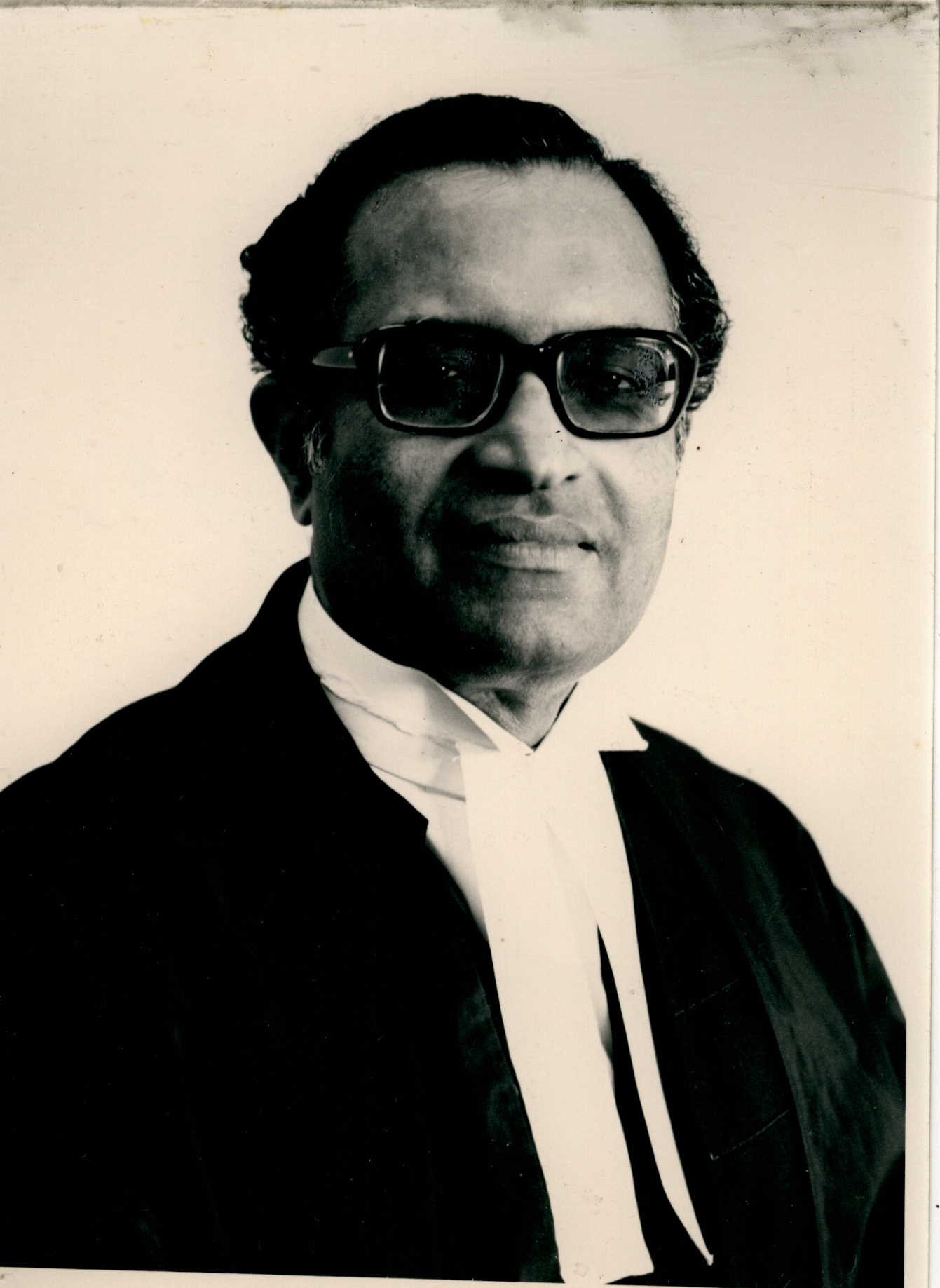
No Acts & Articles mentioned in this case
http://JUDIS.NIC.IN SUPREME COURT OF INDIA Page 1 of 139
PETITIONER:
DELHI TRANSPORT CORPORATION
Vs.
RESPONDENT:
D.T.C. MAZDOOR CONGRESS
DATE OF JUDGMENT04/09/1990
BENCH:
MUKHARJI, SABYASACHI (CJ)
BENCH:
MUKHARJI, SABYASACHI (CJ)
RAMASWAMY, K.
RAY, B.C. (J)
SHARMA, L.M. (J)
SAWANT, P.B.
CITATION:
1991 AIR 101 1990 SCR Supl. (1) 142
1991 SCC Supl. (1) 600 JT 1990 (3) 725
1990 SCALE (2)1
CITATOR INFO :
D 1992 SC1072 (4)
ACT:
Service Law: Delhi Road Transport Act, 1950: Section
53/Delhi Road Transport Authority) (Conditions of Appoint-
ment and Service) Regulations, 1952--Regulation 9(b)/Shastri
Award---Para 522/District Board Rules, 1926, Part V--Rule
1(1)/Indian Airlines Employees' Regulations--Regulation
13/Air India Employees' Regulations--Regulation 48--Validity
of--Termination of service of permanent employee without
assigning any reasons and holding enquiry--Whether arbi-
trary, unfair, unjust, unreasonable and opposed to public
policy-Whether violative of Articles 12, 14, 16, 19, 31 and
311(2) of the Constitution of India, principles of natural
justice and Section 23 of Contract Act, 1872--Statutory
corporations--Power to terminate services of employees
without holding enquiry--Validity of.
Contract Act, 1872: Section 23--Contract providing for
termination of service without notice and holding of en-
quiry--Whether enforceable.
Constitution of India, 1950: Articles 14, 16, 19(1) (g),
21 and 311(2)--Termination of service of an employee without
assigning reasons and holding enquiry--Whether violative of
Fundamental Rights and principles of natural justice--Regu-
lations/Rules-- Validity of.
Article 141.' Expressions "declared" and "found or made"
--Scope and ambit of.
Interpretation of Statutes: Internal aid to construc-
tion--Doctrine of reading down--Scope and Applicability
of--Provision illegal and invalid--Whether could be validat-
ed by reading down--Where provision clear and
unambiguous--Whether permissible to read down into the
provision something which was not intended.
Public Policy vis-a-vis constitutionality of
statute--Whether public policy can be drawn from the Consti-
tution--Whether constitutional policy provides an aid--Role
and purpose of constitutional interpretation by apex court.
143
Administrative Law--Discretionary power--Exercise
of--Limitations-Absence of arbitrary power--First essential
http://JUDIS.NIC.IN SUPREME COURT OF INDIA Page 2 of 139
of Rule of Law.
HEADNOTE:
Respondents No. 2 to 4, regular employees of the appel-
lant Delhi Transport Corporation, were served with termina-
tion notices under Regulation 9(b) of the Delhi Road Trans-
port Authority (Conditions of Appointment & Service) Regula-
tions, 1952 by the appellant Corporation on the ground that
they became inefficient in their work and started inciting
other members not to perform their duties.
The three respondents and their Union, respondent No. 1
filed writ petition in High Court, challenging the constitu-
tional validity of Regulation 9(b), which gave the manage-
ment right to terminate the services of an employee by
giving one month's notice or pay in lieu thereof. The Divi-
sion Bench of the High Court struck down the Regulation,
holding that the Regulation gave absolute, unbridled and
arbitrary powers to the management to terminate the services
of any permanent or temporary employee, and such power was
violative of Article 14 of the Constitution. Hence, the
Corporation filed the appeal before this Court, by special
leave.
The validity of similar provisions in Para 522 of the
Shastri Award, rule 1(i) of the District Board Rules 1926,
Part V, Regulation 13 of Indian Airlines Employees' Service
Regulations, Regulation 48 of Air India Employees' Service
Regulations and also the clause in the contract of appoint-
ment in respect of employees of Zilla Parishad and the New
India Assurance Company, also came up for consideration in
the connected appeals and applications filed before this
Court.
It was contended on behalf of the Delhi Transport Corpo-
ration that there was sufficient guideline in Regulation
9(b) and the power of termination, properly read, would not
be arbitrary or violative of Article 14 of the Constitution,
that the Court would be entitled to obtain guidance from the
preamble, the policy and the purpose of the Act and the
power conferred under it and to see that the power was
exercised only for that purpose, that even a term like
'public interest' could be sufficient guidance in the matter
of retirement of a government employee, and such a provision
could be read into a statute even when it was not otherwise
expressly there, that it was well-settled that the Court
would sustain the presumption of constitutionality by con-
sidering matters of common knowledge and to assume every
state of facts which could be conceived and could even read
down the section, if it became necessary to uphold the
validity of the provision, that the underlying
144
rationale of this rule of interpretation, or the doctrine of
reading down of a statute being that when a legislature,
whose powers were not unlimited, enacted a statute, it was
aware of its limitations, and in the absence of express
intention or clear language to the contrary, it must be
presumed to have implied into the statute the requisite
limitations and conditions to immunise it from the virus of
unconstitutionality, that since every legislature intended
to act within its powers, in a limited Government, the
legislature would attempt to function within its limited
powers and it would not be expected to have intended to
transgress its limits, that the guidelines for the exercise
of the power of termination simpliciter under Regulation
9(b) could be found in the statutory provisions of the 1950
http://JUDIS.NIC.IN SUPREME COURT OF INDIA Page 3 of 139
Act under which the regulations had been framed, the pream-
ble; Sections 19, 20 and 53, the context of Regulation 9(b)
read with Regulations 9(a) and 15, that even for the exer-
cise of this power, reasons could be recorded although they
need not be communicated which would ensure a check on the
arbitrary exercise of power and effective judicial review in
a given case, ensuring efficient running of services and in
public interest and the regulations in question were paral-
lel to, but not identical with, the exceptions carved out
under proviso to Article 311(2), that even the power of
termination simipliciter under Regulation 9(b) could only be
exercised in circumstances other than those in Regulation
9(a), i.e. not where the foundation of the order was 'mis-
conduct', the exercise of such power could only be for
purposes germane and relevant to the statute, that the
principles of natural justice or holding of an enquiry is
neither a universal principle of justice nor inflexible
dogma and the principles of natural justice were not incapa-
ble of exclusion in a given situation, if importing the
right to be heard has the effect of paralysing the adminis-
trative process or the need for promptitude or the urgency
of the- situation so demands, natural justice could be
avoided; that the words "where it is not reasonably prac-
ticable to hold an enquiry" may be imported into the regula-
tion, that where termination took place by the exclusion of
audi alteram partem rule in circumstances which were circum-
scribed and coupled with the safeguard of recording of
reasons which were germane and relevant, then the termina-
tion would not render the regulation unreasonable or arbi-
trary, and if the regulation was read in this manner it
could not be said that the power was uncanalised or unguid-
ed, that under ordinary law of "master and servant" the
Corporation was empowered by the Contract of Service to
terminate the services of its employees in terms thereof;
the Declaration in Brojo Nath's case that such a contract
was void under section 23 of the Indian Contract Act or
opposed to public policy offending the Fundamental Rights
and the Directive Principles was not sound in law; as a
master, the Corporation had unbridled right
145
to terminate the contract in the interests of efficient
functioning of the Corporation or to maintain discipline
among its employees, and if the termination, was found to be
wrongful, the only remedy available to the employees was to
claim damages for wrongful termination but not a declaration
as was granted in Brojo Nath's case.
On behalf of the workmen/intervenors, it was submitted
that provision of any rule that service would be liable to
termination on notice for the period prescribed therein
contravened Article 14 of the Constitution, as arbitrary and
uncontrolled power was left in the authority to select at
its will any person against whom action would be taken; that
Articles 14, 19 and 21 were inter-related and Article 21 did
not exclude Article 19 and even if there was a law providing
a procedure for depriving a person of personal liberty and
there was, consequently no infringement of fundamental right
conferred by Article 21, such law in so far as it abridged
or took away any fundamental right under Article 19 would
have to meet the challenge of that Article, that violation
of principle of natural justice by State action was viola-
tion of Article 14 which could be excluded only in excep-
tional circumstances, and, therefore, a clause which autho-
rised the employer to terminate the services of an employee,
whose contract of service was for indefinite period or till
the age of retirement, by serving notice, and which did not
http://JUDIS.NIC.IN SUPREME COURT OF INDIA Page 4 of 139
contain any guidance for the exercise of the power and
without recording reasons for such termination, violated the
fundamental rights guaranteed under Articles 14, 19(1)(g)
and 21 and principles of natural justice and was void under
Section 2(g) of the Indian Contract Act, 1872, and unforce-
able under Section 2(hi; that since audi alteram partem was
a requirement of Article 14. and conferment of arbitrary
power itself was contrary to Article 14, the rule in ques-
tion could not be sustained as valid; that the Constitution-
al guarantees under Articles 14 and 21 were for all persons
and there could be no basis for making a distinction between
'workmen' to whom the Industrial Disputes Act and other
industrial laws applied and those who were outside their
purview, and the law applicable to the former could only add
to and not detract from the rights guaranteed by Part 111 of
the Constitution; that the power to terminate the services
of a person employed to serve indefinitely or till the age
of retirement could be exercised only in cases of proved
misconduct or exceptional circumstances having regard to the
Constitutional guarantee available under Article 14,
19(1)(g) and 21 and unless the exceptional circumstances
were spelt out, the power to terminate the services would
cover both permissible and impermissible grounds rendering
it wholly invalid, particularly because, the requirement of
audi alteram partem which was a part of the guarantee of
146
Article 14 was sought to be excluded, and there could be no
guidance available in the body of the law itself, since the
purpose for which an undertaking was established and the
provisions dealing with the same in the law could provide no
guidance regarding exceptional circumstances under which
alone the power could be exercised, that the question in-
volved, in the instant cases was not the exercise of power
which an employer possessed to terminate the services of his
employee, but the extent of that power; that provisions of
Regulation 9(b) of the Delhi Road Transport Authority
(Conditions of Appointment and Service) Regulations, 1952,
could not be rendered constitutional by reading the require-
ment of recording reasons and confining it to cases where it
was not reasonably practicable to hold an enquiry and read-
ing it down further as being applicable to only exceptional
cases would not be permissible construction and proper; that
the Regulation conferred arbitrary power of leaving it to
the DTC Management to pick and choose, either to hold an
enquiry or terminate the services for the same misconduct
and there was nothing in the provisions of the Act or the
regulations from which the Management could find any guid-
ance and, therefore, in order to conform to the constitu-
tional guarantees contained in Articles 14, 19(1)(g) and 21,
the regulation would have to make a distinction between
cases where services were sought to be terminated for mis-
conduct and cases of termination on grounds other than what
would constitute misconduct; that regulation 9(b) deliber-
ately conferred wide power of termination of service without
giving reasonable opportunity to an employee even if he was
regular or permanent employee, in addition to regulation 15
which provided for dismissal or removal after a disciplinary
enquiry, thus, the intention of the regulation-making au-
thority was clear and unambiguous; the provision was not
capable of two interpretations, and consequently, the ques-
tion of reading down did not arise, and reading down in the
instant cases involved not interpretation of any single word
in regulation 9(b) but adding a whole clause to it, which
amounted to rewriting the provisions, which courts had
refused to make up for the omission of the legislature, and
http://JUDIS.NIC.IN SUPREME COURT OF INDIA Page 5 of 139
would inevitably drain out Article 14 of its vitality, and
the right to equality which was regarded as a basic feature
of the Constitution, and subject permanent employees of the
DTC to a tremendous sense of insecurity which is against the
philosophy and scheme of the Constitution, that unless the
provision of the Constitution itself excluded the principles
of natural justice, they continued to be applicable as an
integral part of the right to equality guaranteed by the
Constitution, that as the employees of the DTC were not
Government employees, Article 311(2) was not applicable, and
Article 14 fully applied to them, including the principles
of natural justice.
147
On behalf of the Indian Airlines Corporation and the Air
India, which filed intervention applications, it was submit-
ted that there had been distinction between the discharge
simpliciter and dismissal from service by way of punishment,
that the effect of the judgments of this Court in the Cen-
tral Inland Water's case and West Bengal's case was to take
away the right of the employer to terminate the services of
an employee by way of discharge simpliciter, that this Court
had recognised the existence of the inherent right of an
employer to terminate the services of an employee in terms
of the contract of employment and also under the various
labour enactments, that a plain reading of the amended
Regulation 13 of the Indian Airlines Employees' Regulations
and a cumulative reading of the amended regulations 48 and
44 of the Air India Employees Service Regulations clearly
established that the vice, if any, of arbitrariness had been
completely removed and that the power to terminate had been
vested with the Board of Directors, and not with any indi-
vidual, and sufficient guidelines made available to the
Board to exercise the restricted and limited power available
to the employer under these regulations.
On behalf of another intervenor, New India Assurance
Co., it was submitted that the Central Inland Water's case
was erroneous, insofar as it made complete negation of power
of the employer to terminate and rendered the termination
illegal even where the employer had made all the necessary
investigation and had given hearing to the employee con-
cerned before making the order, and took in even private
employment; therefore, the judgment of this Court should be
read down and made applicable prospectively.
In Civil Appeal No. 4073 of 1986 it was contended on
behalf of the Bank employee whose services were terminated
under para 522 of the Shastri Award, that mere failure of
the employee to mention the loan taken by him from another
branch of the Bank, which was repaid subsequently, had
deprived him of his livelihood, and his services were termi-
nated without charge of 'misconduct' and without an enquiry,
and paragraph 522 of the Shastri Award gave no indication as
to on what conditions this arbitrary uncontrolled power
could be used to get rid of one or more permanent employees
for "efficient management of Banks" on subjective opinions
or suspicion not tested in enquiry into facts, and that this
provision provided for "insecurity of tenure" for lakhs of
permanent employees; Articles 14, 19(1)(g) and 21 and the
integrated protection of these Fundamental Rights excluded
the "doctrine of pleasure" and insisted on security of
tenure "during good behaviour", and the right to livelihood
could not be rendered precari-
148
ous or reduced to a "glorious 'uncertainty", that no princi-
ple of interpretation permitted reading down a provision so
as to make it into a different provision altogether differ-
http://JUDIS.NIC.IN SUPREME COURT OF INDIA Page 6 of 139
ent from what was intended by the legislature or its dele-
gate, and there could not be any reading down which was
contrary to the principles of interpretation; that if two
provisions existed, firstly to remove from service after
holding an enquiry on a charge of 'misconduct' and secondly,
without serving a charge-sheet or holding an enquiry, all
provisions for holding enquiry would be rendered otiose and
would be reduced to a mere redundancy, that the Court had a
duty to correct wrongs even if orders had been made which
were later found to be violative of any fundamental right
and to recall its orders to avoid injustice; that substan-
tive provision of para 522 could not be controlled or cur-
tailed effectively so as to confine its operation within
narrow constitutional limits; that it was not the duty of
the court to condone the constitutional delinquencies of
those limited by the Constitution if they arrogated uncon-
trolled unconstitutional powers, which were neither neces-
sary nor germane for supposed efficiency of services in the
Banks as a business enterprise, and that in a system gov-
erned by rule of law, discretion when conferred upon execu-
tive authorities must be confined within clearly defined
limits.
In Civil Appeal No. I 115 of 1976, the appellant-employ-
ee of the Zila Parishad contended that his services were
terminated on account of the vindictiveness of some of the
employees of the respondent, and without enquiry. The em-
ployer submitted that the termination order was passed on
the basis of the condition in the mutually agreed terms of
contract of appointment, and resolution passed by the Board,
and that Rule 1(i) of District Board Rules, 1926, Part V
gave right to both the parties to terminate the employment
on one month's notice.
On the questions (i) whether Regulation 9(b) of the
Delhi Road Transport Authority (Conditions of Appointment
and Service) Regulations, 1952, was arbitrary, illegal,
discriminatory and violative of audi alteram partem and so
constitutionally invalid and void; and (ii) whether the
Regulation could be interpreted and read down in such a
manner as to hold that it was not discriminatory, or arbi-
trary and did not confer unbriddled and uncanalised power on
the authority to terminate the service of an employee,
including a permanent employee, without any reason whatsoev-
er.
Dismissing Civil Appeal No. 2876 of 1986 (appeal by the
Delhi Transport Corporation), allowing Civil Appeal No. 1115
of 1976, and directing other matters to be placed before a
Division Bench, in ac-
149
cordance with the majority decision (per Ray, Sharma, Sawant
and K. Ramaswamy, JJ.) this Court,
HELD: Per Ray, J.:
1. I Regulation 9(b) of the Delhi Road Transport Author-
ity (Conditions of Appointment and Service) Regulations,
1952 which confers powers on the authority to terminate the
services of a permanent and confirmed employee by issuing a
notice terminating the services or by making payment in lieu
of notice without assigning any reasons in the order and
without giving any opportunity of hearing to the employee
before passing the orders is wholly arbitrary, uncanalised
and unrestricted violating principles of natural justice as
well as Article 14 of the Constitution. There is no guide-
line in the Regulations or in the Delhi Road Transport
Authority Act, 1950 as to when or in which cases and circum-
stances this power of termination by giving notice or pay in
lieu thereof can be exercised. [264G, 285C]
http://JUDIS.NIC.IN SUPREME COURT OF INDIA Page 7 of 139
1.2 Government Companies or Public Corporations which
carry on trade and business activity of State being State
instrumentalities, are State within the meaning of Article
12 of the Constitution and as such they are subject to the
observance of fundamental rights embodied in Part 111 as
well as to conform to the directive principles in Part IV of
the Constitution. In other words, the Service Regulations or
Rules framed by them are to be tested by the touchstone of
Article 14 of the Constitution. Furthermore, the procedure
prescribed by their Rules or Regulations must be reasonable,
fair and just and not arbitrary, fanciful and unjust. [264H,
265A-B]
1.3 The 'audi alteram partem' rule which, in essence,
enforces the equality clause in Article 14 of the Constitu-
tion is applicable not only to quasi-judicial orders but to
administrative orders affecting prejudicially the party-in-
question unless the application of the rule has been ex-
pressly excluded by the Act or Regulation or Rule which is
not the case here. Rules of natural justice do no supplant
but supplement the Rules and Regulations. Moreover, the Rule
of Law, which permeates the Constitution of India, demands
that it has to be observed both substantially and
procedurally. Rule of law posits that the power to be
exercised in a manner which is just, fair and reasonable and
not in an unreasonable, capricious or arbitrary manner
leaving room for discrimination. [265D-E]
Regulation 9(b) does not expressly exclude the application
of the
150
'audi alteram parterm' rule and as such the order of termi-
nation of service of a permanent employee cannot be passed
by simply issuing a month's notice or pay in lieu thereof
without recording any reason in the order and without giving
any hearing to the employee to controvert the allegation on
the basis of which the purported order is made. [265F]
1.4 Considering from all these aspects Regulation 9(b)
is illegal and void, as it is arbitrary, discriminatory and
without any guidelines for exercise of the power. It confers
unbridled, uncanalised and arbitrary power on the authority
to terminate the services of a permanent employee without
recording any reasons and without conforming to the princi-
ples of natural justice. It is also void under Section 23 of
the Contract Act, as being opposed to public policy and also
ultra vires of Article 14 of the Constitution. [265E, 265B-
C, 266G]
Moti Ram Deka Etc. v. General Manager, NEF Railways,
Maligaon. Pandu, Etc., [1964] 5 SCR 683; Parshotam Lal
Dhingra v. Union of India, [1958] SCR 828; Shyam Lal v. The
State of Uttar Pradesh and Anr., [1955] SCR 26; Shri Ram
Krishna Dalmia v. Shri Justice S.R. Tendolkar & Ors., [1959]
SCR 279; Jyoti Pershad v. The Administrator for the Union
Territory of Delhi, [1962] 2 SCR 125; State of Orissa v. Dr.
(Miss) Binapani Devi & Ors., [1967] 2 SCR 625; A.K. Kraipak
JUDGMENT:
of India v. Col. J.N. Sinha and Anr., [1971] 1 SCR 791; Air
India Corporation v. V.A. Rebello & Ant., AIR 1972 S.C.
1343; The Workmen of Sudder Office Cinnamara v. The Manage-
ment, [1971] 2 Lab LJ 620; Tata Oil Mills Co. Ltd. v. Work-
men & Anr., [1964] 2 SCR 125; Maneka Gandhi v. Union of
India, [1978] 2 SCR 621; E.P. Royappa v. State of Tamil Nadu
and Anr.. [1974] 2 SCR 348; Municipal Corporation of Greater
Bombay v. Malvenkar & Ors., [1978] 3 SCR 1000; Manohar P.
Kharkher and Anr. v. Raghuraj & Anr., [1981] 2 LLJ 459; 1..
Michael & Anr. v. Johnaton Pumps India Ltd., [1975] 3 SCR
489; Sukhdev Singh & Ors. v. Bhagat Ram Sardar Singh Raghu-
http://JUDIS.NIC.IN SUPREME COURT OF INDIA Page 8 of 139
vanshi & Anr., [1975] 1 SCC 421; S.S. Muley v. J.R.D. Tata &
Ors., [1979] 2 SLR 438; West Bengal State Electricity Board
& Ors. v. Desh Bandhu Ghosh and Ors., [1985] 3 SCC 116;
Workmen Of Hindustan Steel Ltd. and Anr. v. Hindustan Steel
Ltd. and Ors., [1985] 2 SCR 428; O.P. Bhandari v. Indian
Tourism Development Corporation Ltd. & Ors., [1986] 4 SCC
337; Central Inland Water Transport Corporation Ltd. & Anr.
v. Brojo Nath Ganguly & Anr., [1986] 3 SCC 156 and Delhi
Transport Undertaking v. Balbir Saran Goel, [1970] 3 SCR
757, referred to.
2.1 An Act can be declared to be valid wherein any term has
been
151
used which per se seems to be without jurisdiction, but can
be read' down in order to make it constitutionally valid by
separating and excluding the part which is invalid or by
interpreting the word in such a fashion as to make it con-
stitutionally valid and within jurisdiction of the legisla-
ture which passed the said enactment, by reading down the
provisions of the Act. This however, does not under any
circumstances, mean that where the plain and literal meaning
that follows from a bare reading of the provisions of the
Act, Rule or Regulations that it confers arbitrary uncana-
lised, unbridled unrestricted power to terminate the serv-
ices of a permanent employee without recording any reasons
for the same and without adhering to the principles of
natural justice and equality before the law as envisaged in
Article 14 of the Constitution, it can be read down to save
the said provision from constitutional invalidity, by bring-
ing or adding words in the said legislation, such as saying
that it implies that reasons for the order of termination
have to be recorded. [271C-F]
2.2 In interpreting the provisions of an Act, it is not
permissible where the plain language of the provision gives
a clear and unambiguous meaning that it can be interpreted
by reading down and presuming certain expressions in order
to save it from constitutional invalidity. Therefore, it is
impossible to hold by reading down the provisions of Regula-
tion 9(b) framed under section 53 of the Delhi Road Trans-
port Act, 1950 read with Delhi Road Transport (Amendment)
Act, 1971 that the said provision does not confer arbitrary,
unguided, unrestricted and uncanalised power without any
guidelines on the authority to terminate the services of an
employee without conforming to the principles of natural
justice and equality as envisaged in Article 14 of the
Constitution of India. [271F-H, 272A]
Union of India & Anr. v. Tulsiram Patel & Ors., [1985]
Supp. 2 SCR 131; Roshan Lal Tandon v. Union of India, [1968]
1 SCR 185; Commissioner of Sales Tax, Madhya Pradesh, Indore
& Ors. v. Radhakrishan & Ors., [1979] 2 SCC 249; In Re The
Hindu Women's Rights to Property Act, 1937, and the Hindu
Women's Rights to Property (Amendment) Act, 1938 and in Re a
Special Reference under Section 213 of the Government of
India Act, 1935, [1941] FCR 12; R.M.D. Chamarbaugwalla v.
The Union of India, [1957] SCR 930; R.L. Arora v. State of
Uttar Pradesh & Ors., [1964] 6 SCR 784 and The Mysore State
Electricity Board v. Bangalore Woollen, Cotton and Silk
Mills Ltd. & Ors., [1963] Supp. 2 SCR 127, Jagaish Pandey v.
The Chancellor of Bihar & Anr., [1968] 1 SCR 231, referred
to.
H.N. Seervai: Constitutional Law of India, Third Edi-
tion, p. 119, referred to.
152
Per Sharma, J.
1.1 The rights of the parties in the present cases
http://JUDIS.NIC.IN SUPREME COURT OF INDIA Page 9 of 139
cannot be governed by the general principle of master and
servant, and the management cannot have unrestricted and
unqualified power of terminating the services of the employ-
ees. In the interest of efficiency of the public bodies,
however, they should have the authority to terminate the
employment of undesirable, inefficient, corrupt, indolent
and disobedient employees, but it must be exercised fairly,
objectively and independently; and the occasion for the
exercise must be delimited with precision and clarity.
Further, there should be adequate reason for the use of such
a power, and a decision in this regard has to be taken in a
manner which should show fairness, avoid arbitrariness and
evoke credibility. And this is possible only when the law
lays down detailed guidelines in unambiguous and precise
terms so as to avoid the danger of misinterpretation of the
situation. An element of uncertainty is likely to lead to
grave and undesirable consequences. Clarity and precision
are. therefore, essential for the guidelines. [272D-F]
1.2 Regulation 9(b) of the Delhi Road Transport Authori-
ty (Condition of Appointment and Service) Regulation, 1952
cannot, therefore. be upheld for lack of adequate and appro-
priate guidelines. [272G]
Per Saw,ant, J.
1.1. There is need to minimise the scope of the arbi-
trary use of power in all walks of life. It is inadvisable
to depend on the good sense of the individuals. however
high-placed they may be. It is all the more improper and
undesirable to expose the precious rights like the rights of
life. liberty and property to the vagaries of the individual
whims and fancies. It is trite to say that individuals are
not and do not become wise because they occupy high seats of
power, and good sense, circumspection and fairness do not go
with the posts, however high they may be. There is only a
complaisant presumption that those who occupy high posts
have a high sense of responsibility. The presumption is
neither legal nor rational. History does not support it and
reality does not warrant it. In particular, in a society
pledged to uphold the rule of law, it would be both unwise
and impolitic to leave any aspect of its life to be governed
by discretion when it can conveniently and easily be covered
by the rule of law. [276E-F]
1.2 Beyond the self-deluding and self-asserting right-
eous presumption, there is nothing to support the 'high
authority' theory. This
153
theory undoubtedly weighed with some authorities for some
time in the past. But its unrealistic pretensions were soon
noticed and it was buried without even so much as an ode to
it. [278A-B]
1.3 The employment under the public undertakings is a
public employment and a public property. It is not only the
undertakings but also the society which has a stake in their
proper and efficient working. Both discipline and devotion
are necessary for efficiency. To ensure both, the service
conditions of those who work for them must be encouraging,
certain and secured, and not vague and whimiscal. With
capricious service conditions, both discipline and devotion
are endangered, and efficiency is impaired. [276G-H, 277A]
1.4 The right to life includes right to livelihood. The
right to livelihood, therefore, cannot hang on to the fan-
cies of individuals in authority. The employment is not a
bounty from them nor can its survival be at their mercy.
Income is the foundation of many fundamental rights and when
work is the sole source of income, the right to work becomes
as much fundamental. Fundamental rights can ill-afford to be
http://JUDIS.NIC.IN SUPREME COURT OF INDIA Page 10 of 139
consigned to the limb of undefined premises and uncertain
applications. That will be a mockery of them. [277B]
1.5 Both the society and the individual employed, there-
fore, have an anxious interest in service conditions being
well-defined and explicit to the extent possible. The arbi-
trary rules which are also sometimes described as Henry VIII
Rules, can have no place in any service conditions. [277C]
Sukhdev Singh & Ors. v. Bhagatram Sardar Singh Raghu-
vanshi & Anr., [1975] 3 SCR 619; Maneka Gandhi v. Union of
India, [1978] 2 SCC 621; The Manager, Government Branch
Press & Ant. v. D.R. Belliappa, [1979] 1 SCC 477; The Manag-
ing Director, Uttar Pradesh Warehousing Corporation & Anr.
v. Vinay Narayan Vajpayee, [1980] 2 SCR 773; A.L. Kalra v.
The Project & Equipment Corporation of India Ltd., [1984] 3
SCR 646; Workmen of Hindustan Steel Ltd. & Anr. v. Hindustan
Steel Ltd. & Ors., [1985] 2 SCR 428; West Bengal State
Electricity Board & Ors. v. Desh Bandhu Ghosh & Ors., [1985]
2 SCR 1014; Olga Tellis & Ors. v. Bombay Municipal Corpora-
tion & Ors. etc., [1985] Supp. 2 SCR 51; Union of India &
Anr. v. Tulsiram Patel& Ors., [1985] Supp. 2 SCR 131; Cen-
tral Inland Water Transport Corporation Ltd. & Anr. v. Brojo
Nath Ganguly & Anr. etc., [1986] 3 SCR 156; O.P. Bhandari v.
Indian Tourism Development Corporation Ltd. & Ors.. [1986] 4
SCC 337; N.C. Dalwadi v. State of Gujarat, [1987] 3
154
SCC 611; M.K. Agarwal v. Gurgaon Gramin Bank & Ors., [1987]
Supp. SCC 643 and Daily Rated Casual Labour employed under P
& T Department through Bhartiya Dak Tar Mazdoor Manch etc.
v. Union of India & Ors., [1988] 1 SCC 122, referred to.
2.1 The doctrine of reading down or of recasting the
statute can be applied in limited situations. It is essen-
tially used, firstly, for saving a statute from being struck
down on account of its unconstitutionality. It is an exten-
sion of the principle that when two interpretations are
possible--one rendering it constitutional and the other
making it constitutional the former should be preferred. The
unconstitutionality may spring from either the incompetence
of the legislature to enact the statute or from its viola-
tion of any of the provisions of the Constitution. The
second situation which summons its aid is where the provi-
sions of the statute are vague and ambiguous and it is
possible to gather the intention of the legislature from the
object of the statute, the context in which the provision
occurs and the purpose for which it is made. However, when
the provision is cast in a definite and unambiguous language
and its intention is clear, it is not permissible either to
mend or bend it even if such recasting is in accord with
good reason and conscience. In such circumstances, it is not
possible for the Court to remake the statute. Its only duty
is to strike it down and leave it to the legislature if it
so desires, to amend it. If the remaking of the statute by
the courts is to lead to its distortion that course is to be
scrupulously avoided. The doctrine can never be called into
play where the statute requires extensive additions and
deletions. Not only it is no part of the court's duty to
undertake such exercise, but it is beyond its jurisdiction
to do so. [288F-H, 289A-B]
Re Hindu Women's Rights to Property Act, 1937, and the
Hindu Women's Rights to Property (Amendment) Act, 1938 etc.,
[1941] FCR 12; Nalinakhya Bysack v. Shyam Sunder Halder &
Ors., [1953] SCR 533; R.M.D. Chamarbaugwalla v. The Union of
India, [1957] SCR 930; Kedar Nath Singh v. State of Bihar,
[1962] Supp. 2 SCR 769; R.L Arora v. State of Uttar Pradesh
& Ors., [1964] 6 SCR 784; Jagdish Pandey v. The Chancellor,
University of Bihar & Anr., [1968] I SCR 231; Shri Umed v.
http://JUDIS.NIC.IN SUPREME COURT OF INDIA Page 11 of 139
Raj Singh & Ors., [1975] I SCR 918; Mohd. Yunus Salim's
case, AIR 1974 SC 1218; Sunil Batra etc. v. Delhi Adminis-
tration & Ors., [1978] 4 SCC 494; Excel Wear etc. v. Union
of India & Ors., [1979] 1 SCR 1009; Minerva Mills Ltd. &
Ors. v. Union of India & Ors., [1981] 1 SCR 206; Union of
India & Anr. etc. v. Tulsiram Patel etc., [1985] 3 SCC 398
and Elliott Ashton Welsh, 11 v. United States, 398 US 333;
26 L.ed. 2nd 308, referred to.
155
2.2 Therefore, the doctrine of reading down cannot be
availed of for saving the regulation in the instant case. In
the first instance, the regulation is a part of the service
regulations of the employees made by the Delhi Road Trans-
port Authority in exercise of the powers conferred by sub-
section (1) read with clause (c) of sub-section (2) of
Section 53 of the Delhi Road Transport Act, 1950, whose
object is to provide for the establishment and the regula-
tion of Road Transport Authority for the promotion of a co-
ordinated system of road transport in the State of Delhi.
There is nothing either in the object of the service regula-
tions or in the object of the Act which has a bearing on
Regulation 9(b). If anything the object of the Act would
require framing of such service regulations as would ensure
dedicated and diligent employees to run the undertaking. The
dedication of the employees would pre-suppose security of
employment and not a constant hanging of the Democle's sword
over their head, and hence would in any case not bear the
existence of such regulation. Secondly, the language of
regulation is so crystal clear that no two interpretations
are possible to be placed on it and hence it is not permis-
sible to read in it any meaning other than what is clearly
sought to be conveyed by it. Thirdly, the context of the
regulation makes it abundantly clear that it is meant to be
a naked hire and fire rule and the authority has been vested
with unguided and arbitrary power to dispense with the
services of any category of the employees. Sub-clause (a) of
the Regulation mentions elaborately the circumstances in
which the services of an employee can be terminated without
any notice or pay in lieu of such notice. Sub-clause (b)
follows closely on its heel and states in clear language
that when the termination is made due to reduction of estab-
lishment or in circumstances other than those mentioned in
sub-clause (a), one month's notice or pay in lieu thereof is
all that is necessary to be given for terminating an employ-
ee's services. The intention of the rule-making authority,
therefore, is more than clear. It was to give an absolute
free hand without any limitations whatsoever to terminate
the services of any employee. Both the language of the
regulation as well as the context in which it is cast leave
no scope for reading into it any further provision. [289C-H,
290A]
2.3 Moreover, reading in the rule circumstances under
which alone the rule can be used, and reading it down to
read in it words or expressions or provisions in order to
save the legislation would not only distort the intention of
the rule-making authority but would also require extensive
amendment of a very vague nature to it. The reading in the
regulation of a provision that the concerned employees
should be given a hearing with regard to his mis-conduct
will require that be should first be intimated of the mis-
conduct of which he is guilty. But
156
that kind of a situation is taken care of by sub-clause (a)
of the said regulation. There is. therefore. no need of a
separate prevision for the same. If. on the other hand. the
http://JUDIS.NIC.IN SUPREME COURT OF INDIA Page 12 of 139
services of an employee are to be terminated on grounds
other than those mentioned in sub-clause (a), then those
grounds being unknown to the employee, cannot be met by him
even if he is given a hearing. The Court cannot read in the
rule all circumstances where it is not possible or necessary
to hold an enquiry. Such situations are capable of being
formulated easily and conveniently at least in general terms
as is done by the Constitution-makers in the second proviso
to Article 311( 2). The reading of such circumstances in the
existing regulation would require its extensive recasting
which is impermissible for the Court to do. There is no
authority which supports such wide reading down of any
provision of the statute or rule/regulation. Therefore the
doctrine of reading down is singularly inapplicable to the
present case. [281B, 290B, 291A-F]
3. Clause (b) of Regulation 9 contains the much hated
and abused rule of hire and fire reminiscent of the days of
laissez faire and unrestrained freedom of contract. [274E]
Per Ramaswamy.J 1.
1.1 The question of security of work is of most impor-
tance. If a person does not have the feeling that he belongs
to an organisation engaged in promotion. he will not put
forward his best effort to produce more. That sense of
belonging arises only when he feels that he will not be
turned out of employment the next day at the whim of the
management. Therefore, as far as possible security of work
should be assured the employees so that they may contribute
to the maximisation of production. [300D-E]
Daily Rated Casual Labour v. Union of India, [1988] 1
SCR 598 [1988] 1 SCC 122 at 130-131, referred to.
1.2 A permanent employee of a statutory authority,
corporation or instrumentality under Article 12 has a lien
on the post till he attained superannuation or compulsorily
retired or service is duly terminated in accordance with the
procedure established by law. Security of tenure enures the
benefit of pension on retirement. Dismissal, removal or
termination of his/her service for inefficiency, corruption
or other misconduct is by way of penalty. He/She has a right
to security of tenure which is essential to inculcate a
sense of belonging to the service or organisation and in-
volvement for maximum production or efficient
157
service. It is also a valuable right which is to be duly put
an end to only as per valid law. [300A-G]
Roshan Lal Tandon v. Union of India, [1968] 1 SCR 185 at
195-196; Calcutta Dock Labour Board v. Jarfar Imam, [1965] 3
SCR 463 and Sirsi Municipality v. Cecelia Kom Francis Tal-
lis, [1973] 3 SCR 348, referred to.
1.3 The right to life, a basic human right, assured by
Article 21 of the Constitution comprehends some thing more
than mere animal existence; it does not only mean physical
existence, but includes basic human dignity. The right to
public employment and its concomitant right to livelihood
receive their succour and nourishment under the canopy of
the protective umbrella of Articles 14, 16(1), 19(1)(g) and
21. [296A, 297B]
Munn v. Illinois, [1876] 94 US 113 and 154, referred to.
Kharak Singh v. State of U.P., [1964] 1 SCR 332; Olga
Tellis v. Bombay Municipal Corporation, [1985] 2 Suppl. SCR
page 51 at 79; Menaka Gandhi v. Union of India, [1978] 2 SCR
621; State of Maharashtra v. Chander Bhan, [1983] 3 SCR
387=AIR 1983 SC 803 and Board of Trustees, Port of Bombay v.
Dilip Kumar, [1983] 1 SCR 828, referred to.
1.4 The arbitrary, unbridled and naked power of wide
discretion to dismiss a permanent employee without any
http://JUDIS.NIC.IN SUPREME COURT OF INDIA Page 13 of 139
guidelines or procedure would tend to defeat the constitu-
tional purpose of equality and allied purposes. Therefore,
when the Constitution assures dignity of the individual and
the right to livelihood, the exercise of power by the execu-
tive should be combined with adequate safeguards for the
rights of the employees against any arbitrary and capricious
use of those powers.
Workmen of Hindustan Steels Ltd. v. Hindustan Steel Ltd.
& Ors., [1985] 2 SCR 428 and Francis Corallie v.U.T. of
Delhi, [1981] 2 SCR 516 = AIR 1981 SC 746, referred to.
1.5 It is well settled constitutional law that different
Articles the Chapter on Fundamental Rights and the Directive
Principles in Part IV of the Constitution must be read as an
integral and incorporeal whole with possible overlapping
with the subject-matter of what is to be protected by its
various provisions, particularly the Fundamental Rights. The
fundamental rights, protected by Part III of the constitu-
tion, out of which Articles 14. 19 and 21 are the most
frequently
158
invoked to test the validity of executive as well as legis-
lative actions when these actions are subjected to judicial
scrutiny, are necessary means to develop one's own person-
ality and to carve out one's own life in the manner one
likes best subject to reasonable restrictions imposed in
the paramount interest of the society and to a just. fair
and reasonable procedure. The effect of restriction or
deprivation and not of the form adopted to deprive the right
is the conclusive test. Thus, the right to a public employ-
ment is a constitutional right under Article 16(1). All
matters relating to employment include the right to continue
in service till the employee reaches superannuation or his
service is duly terminated in accordance with just, fair and
reasonable procedure prescribed under the provisions of the
Constitution or the Rules made under proviso to Article 309
of the Constitution or the statutory provision or the Rules.
regulations or instructions having statutory flavour made
thereunder. But the relevant provisions must be conformable
to the rights guaranteed in Parts III & IV of the Constitu-
tion. Article 21 guarantees the right to live which includes
right to livelihood. to many. assured tenure of service is
the source. [311G; 312G-H, 313A-B]
R.C. Cooper v. Union of India, [1970] 3 SCR 530; Minerva
Mills Ltd. v. Union of India, [1981] 1 SCR 2116 and Union of
India & Ant. v. Tulsiram Patel & 0rs.. [1985] Suppl. 2 SCR
131 at 233 referred to.
1.6 Article 14 is the general principle while Art.
311(2) is a special provision applicable to all civil serv-
ices under the State. Article 311(2) embodies the principles
of natural justice but proviso to clause (2) of Art. 311
excludes the operation of principles of natural justice
engrafted in Art. 311(2) as an exception in the given cir-
cumstances enumerated in these clauses of the proviso to
Art. 311(2) of the Constitution. Article 14 read with Arti-
cles 16(1) and 311 are to be harmoniously interpreted that
the proviso to Art. 311(2) excludes the application of the
principles of natural justice as an exception; and the
applicability of Article 311(2) must, therefore, be circum-
scribed to the civil services and to be construed according-
ly. In respect of all other employees covered by Article 12
of the Constitution the dynamic role of Article 14 and other
relevant Articles like 21 must be allowed to have full play
without any inhibition. unless the statutory rules them-
selves, consistent with the mandate of Articles 14.16.19 and
21 provide, expressly, such an exception. [317F-H, 315A]
http://JUDIS.NIC.IN SUPREME COURT OF INDIA Page 14 of 139
Union of India & Ant. v. Tulsiram Patel & Ors., [1985]
Suppl. 2 SCR 131 at 233; A.K. Kraipak & Ors. etc. v. Union
of India & Ors., [1970] 1 SCR 457 and Union of India v. Col
J.N. Sinha & Ors., [1971] 1 SCR 791, referred to.
159
1.7 Article 19(1)(g) empowers every citizen right to
avocation or profession etc., which includes right to be
continued in employment under the State unless the tenure is
validly terminated and consistent with the scheme enshrined
in the fundamental rights of the Constitution. Whenever
there is arbitrariness in State action--whether it be of the
Legislature or of the Executive or of an authority under
Article 12. Articles 14 and 21 spring into action and strike
down such an action. The concept of reasonableness and non-
arbitrariness pervades the entire constitutional spectrum
and is a golden thread which runs through the whole fabric
of the Constitution. [315B-D]
1.8 Thus, Article 14 read with 16(1) accords right to an
equality or an equal treatment consistent with principles of
natural justice. Any law made or action taken by the employ-
er, corporate statutory or instrumentality under Article 12
must act fairly and reasonably. Right. to fair treatment is
an essential inbuilt of natural justice. Exercise of unbri-
dled and uncanalised discretionary power impinges upon the
right of the citizen; vesting of discretion is no wrong
provided it is exercised purposively, judiciously and with-
out prejudice. Wider the discretion, the greater the chances
of abuse. Absolute discretion is destructive of freedom than
of man's inventions. Absolute discretion marks the beginning
of the end of the liberty. The conferment of absolute power
to dismiss a permanent employee is antithesis to justness or
fair treatment. The exercise of discretionary power wide of
mark would bread arbitrary, unreasonable or unfair actions
and would not be consistent with reason and justice. [320B-
D]
1.9 The right to public employment which includes right
to continued public employment till the employee is superan-
nuated as per rules or compulsorily retired or duly termi-
nated in accordance with the procedure established by law is
an integral part of right to livelihood which in turn is an
integral part of right to life assured by Art. 21 of the
Constitution. Any procedure prescribed to deprive such a
right to livelihood or continued employment must be just,
fair and reasonable procedure and conformable to the mandate
of Articles 14 and 21. In other words, an employee in a
public employment also must not be arbitrarily, unjustly or
unreasonably deprived of his/her livelihood which is ensured
in continued employment till it is terminated in accordance
with just, fair and reasonable procedure. Otherwise any law
or rule in violation thereof is void. [320E-F]
A.K. Kraipak & Ors. etc. v. Union of India & Ors.,
[1970] 1 SCR 457; Union of India v. Col. J.N. Sinha and
Anr., [1971] 1 SCR 791;
160
Fertilizer Corporation Kamgar Union (Regd.), Sindri & Ors.
v. Union of India & Ors., [1981] 2 SCR 52 at 60-61; S.S.
Muley v. J.R.D. Tata, [1979] 2 SLR 438 (Bombay); Superin-
tendent of Post Office v. K. Vasayya, [1984] 3 Andhra Pra-
desh law Journal 9; West Bengal Electricity Board & Ors. v.
D.B. Ghosh & Orb'., [1985] 2 SCR 1014; Workmen of Hindustan
Steel Ltd. & Anr. v. Hindustan Steel Ltd. & Ors., [1985] 2
SCR 428; O.P. Bhandari v. Indian Tourism Development Corp.
Ltd. & Ors., [1986] 4 SCC 337; A.P.S.R.T. Corp. v. Labour
Court, AIR 1980 A.P. 132; R.M.D. Chamarbaugwalla v. State of
Punjab, [1957] SCR 930; Kanhialal v. District Judge & Ors.,
http://JUDIS.NIC.IN SUPREME COURT OF INDIA Page 15 of 139
[1983] 3 SCC 32; M.K. Agarwal v. Gurgaon Gramin Bank & Ors.,
[1987] Suppl. SCC 643; All Saints High School v. Government
of A.P., [1980] 2 SCR 924 & 938 e to f; Frank Anthoney
Public School v. Union of India, [1987] 1 SCR 238 & 269 b to
e; Christian Medical College Hospital Employees' Union &
Anr. v. Christian Medical College Veilore Association &
Ors., [1988] 1 SCR 546 & 562; Kameshwar Prasad v. State of
Bihar, [1962] Suppl. 3 SCR 369 and O.K. Ghosh v. EZX Joseph,
[1963] Supp. 1 SCR 789, referred to.
United States v. Samuel D. singleton, [1981] 109 US. 3,
referred
1.10 Undoubtedly, efficiency of the administration and
the discipline among the employees is very vital to the
successful functioning of an institution or maximum produc-
tion of goods or proper maintenance of the services. Disci-
pline in that regard amongst the employees is its essential
facet and bas to be maintained. The society is vitally
interested in the due discharge of the duties by the govern-
ment employees or employees of corporate bodies or statutory
authorities or instrumentalities under Art. 12 of the Con-
stitution. The government or corporate employees are,
after-all, paid from the public exchequer to which everyone
contributes either by way of direct or indirect taxes. The
employees are charged with public duty and they should
perform their public duties with deep sense of responsibili-
ty. The collective responsibility of all the officers from
top most to the lowest maximises the efficient public admin-
istration. They must, therefore, be held to have individual
as well as collective responsibility in discharge of their
duties faithfully honestly with full dedication and utmost
devotion to duty. Equally the employees must also have a
feeling that they have security of tenure. They should also
have an involvement on their part in the organisation or
institution, corporation, etc. They need assurance of serv-
ice and protection. The public interest and the public good
demands that those who discharge their duties honestly,
efficiently and
161
with a sense of devotion and dedication to duty should
receive adequate protection and security of tenure. There-
fore, before depriving an employee of the means of liveli-
hood to himself and his dependents, i.e. job, the procedure
prescribed for such deprivation must be just, fair and
reasonable under Arts. 21 and 14 and when infringes Art.
19(1)(g) must be subject to imposing reasonable restrictions
under Art. 19(5). [320G-H, 321A-D, 322D]
1.11 Conferment of power on a high rank officer is not
always an assurance, in particular, when the moral standards
are generally degenerated, that the power would be exercised
objectively, reasonably, conscientiously, fairly and justly
without inbuilt protection to an employee. Even officers who
do their duty honestly and conscientiously are subject to
great pressures and pulls. Therefore, the competing claims
of the "public interest" as against "individual interest" of
the employees are to be harmoniously blended so as to serve
the societal need consistent with the constitutional scheme.
[322D-E]
1.12 Regulation 9(b) of the Delhi Road Transport (Condi-
tions of Appointment and Service) Regulations, 1952, is
arbitrary, unjust, unfair and unreasonable offending Arti-
cles 14, 16(1), 19(1)(g) and 21 of the Constitution. It is
also opposite to the public policy and thereby is void under
Section 23 of the Indian Contract Act. [330G]
1.13 Under ordinary law of master and servant, whether
the contract of service is for a fixed period or not, if it
http://JUDIS.NIC.IN SUPREME COURT OF INDIA Page 16 of 139
contains a provision for termination of service by notice,
in terms thereof, it can be so determined and if the con-
tract finds no provision to give notice and the contract of
service is not for a fixed period, law implies giving of a
reasonable notice. Where no notice or a reasonable notice
was issued. before terminating the contract. the termination
of the contract of service is wrongful and the aggrieved
employee is entitled at law to sue for damages. It is not
disputed that the Delhi Road Transport Corporation is a
statutory Corporation under the Delhi Road Transport Act and
the Regulations are statutory and its employees are entitled
to the fundamental rights enshrined in Part 111 of the
Constitution. The Corporation or an instrumentality or other
authority under Article 12 is not free, like an ordinary
master (a private employer) to terminate the services of its
employees at its whim or caprices or vagary. It is bound by
the Act and the Regulation and paramount law of the land,
the Constitution. [292G-H; 293A-B]
1.14 Any law, much less the provisions of Contract Act,
which are inconsistent with the fundamental rights guaran-
teed in Part III of
162
the Constitution, are void by operation of Article 13 of the
Constitution. The law of contract, like the legal system
itself, involves a balance between competing sets of values.
Freedom of contract emphasises the need for stability.
certainty and predictability. But, important as values are.
they are not absolute, and there comes a point when they
face a serious challenge. 'This Court, as a court of consti-
tutional conscience enjoined and is jealously to project and
uphold new values in establishing the egalitarian social
order. As a court of constitutional functionary exercising
equity jurisdiction, this Court would relieve the weaker
parties from unconstitutional contractual obligations,
unjust, unfair, oppressive and unconscionable rules or
conditions when the citizen is really unable to meet on
equal terms with the State. It is to find whether the citi-
zen, when entered into contracts of service, was in distress
need or compelling circumstances to enter into contract on
dotted lines or whether the citizen was in a position of
either to "take it or leave it" and if it finds to be so,
this Court would not shirk to avoid the contract by appro-
priate declaration. [302G, 303B, 304H, 305A-B]
Central Inland Water Transport Company Limited v. Brojo-
nath Ganguly, [1986] 3 SCC 156=AIR 1986 SC 1571, affirmed.
Ramdas Vithaldas Durbar v. S. Amarchand & 60., 43 Indian
Appeals. 164 and V. Raghunadha Rao v. State of Andhra Pra-
desh, [1988] 2 A.L.T. 461, referred to.
Anson's Law of Contract, p. 6 and 7 and Professor Guido
Calabresi of Yale University Law School "Refractivity,
Paramount power and Contractual Changes", 1961-62 71 Yale
Law Journal, P- 1191, referred to.
2.1 The golden rule of statutory construction is that
the words and phrases or sentences should be interpreted
according to the intent of the legislature that passed the
Act. All the provisions should be read together. If the
words of the statutes are in themselves precise and unambig-
uous, the words, or phrases or sentences themselves alone
do, then no more can be necessary than to expound those
words or phrases or sentences in their natural and ordinary
sense. But if any doubt arises from the terms employed by
the legislature, it is always safe means of collecting the
intention, to call in aid the ground and cause of making the
statute, and have recourse to the preamble, which is a key
to open the minds of the makers of the statute and the
http://JUDIS.NIC.IN SUPREME COURT OF INDIA Page 17 of 139
mischiefs which the Act intends to redress. In determining
the meaning of statute the first question to ask always is
what is the natural or ordinary meaning of that
163
word or phrase in its context. It is only when that meaning
leads to some result which cannot reasonably be supposed to
have been the intent of the legislature, then it is proper
to look for some other possible meaning and the court cannot
go further. [323D-G]
2.2 The Doctrine of Reading Down is, therefore, an
internal aid to construe the word or phrase in a statute to
give reasonable meaning, but not to detract, disort or
emasculate the language so as to give the supposed purpose
to avoid unconstitutionality. Thus, the object of reading
down is to keep the operation of the statute within the
purpose of the Act and constitutionally valid. [324E, 325B]
2.3 It cannot be accepted that the Courts, in the proc-
ess of interpretation of the Statute, would not make law but
leave it to the legislature for necessary amendments. In an
appropriate case, Judges would articulate the inarticulate
major premise and would give life and force to a Statute by
reading harmoniously all the provisions ironing out the
creezes. The object is to elongate the purpose of the Act.
[323B]
2.4 The Courts, though, have no power to amend the law
by process of interpretation, but do have power to mend it
so as to be in conformity with the intendment of the legis-
lature. Doctrine of reading down is one of the principles of
interpretation of statute in that process. But when the
offending language used by the legislature is clear, precise
and unambiguous, violating the relevant provisions in the
constitution, resort cannot be had to the doctrine of read-
ing down to blow life into the void law to save it from
unconstitutionality or to confer jurisdiction on the legis-
lature. Similarly it cannot be taken aid of to emasculate
the precise, explicit, clear and unambiguous language to
confer arbitrary, unbridled and uncanalised power on an
employer which is a negation to just, fair and reasonable
procedure envisaged under Articles 14 and 21 of the Consti-
tution and to direct the authorities to record reasons,
unknown or unintended procedure. [326H, 327A-B]
Elliott Ashton Walsh, H v. United States, 398 U.S. 333;
Nalinakhya Bysack v. Shyam Sunder Haldar & Ors., [1953] SCR
533 at 544-45; United States v. Wunderlick, 342 U.S. 93;
S.C. Jaisinghani v. Union of India, [1967] 2 SCR 703; In re
Hindu Women's Right to Property Act, [1941] FCR, 12; K.N.
Singh v. State of Bihar, [1962] Suppl. 2 SCR 769; R.L. Arora
v. State of U.P., [1964] 6 SCR 784; Jagdish Pandev v. Chan-
cellor of the Bihar, [1969] 1 SCR 231; Amritsar Municipality
v. State of Punjab, [1969] 3 SCR 447;Sunil Batra v. Delhi
Admn., [1978] 4 SCC 494; N.C. Dalwadi v. State of Gujarat,
[1987] 3
164
SCC 611; Charanlal Sahu v. Union of India, [1989] Suppl.
Scale 1 at p. 61; Delhi Transport Undertaking v. Balbir
Saran Goel, [1970] 3 SCR 747; Air India Corporation v.
Rebellow, [1972] 3 SCR 606 and Municipal Corporation of
Greater Bombay v. P.S. Malvankar, [1978] 3 SCR 1000, re-
ferred to.
Federal Steam Navigation Co. v. Department of Trade and
Industry, [1974] 2 All E.R. 97 at p. 100 and Saints High
School, Hyderabad v. Govt. of A. P., [1980] 2 SCR 924, re-
ferred to.
Craies Statute Law, 7th Ed. Ch. V, P. 64.
2.5 The language of Regulation 9(b) is not capable of
http://JUDIS.NIC.IN SUPREME COURT OF INDIA Page 18 of 139
two interpretations. This power is in addition to the normal
power in Regulation 15 to conduct an enquiry into misconduct
after giving reasonable opportunity. Thereby the legislative
intention is manifest that it intended to confer such draco-
nian power couched in language of width which hangs like
Damocles sword on the neck of the employee, keeping every
employee on tenter-hook under constant pressure of uncer-
tainty, precarious tenure at all times right from the date
of appointment till date of superannuation. It equally
enables the employer to pick and choose an employee at whim
or vagary to terminate the service arbitrarily and capri-
ciously. Regulation 9(b), thereby deliberately conferred
wide power of termination of services of the employee with-
out following the principles of audi alteram partem or even
modicum of procedure of representation before terminating
the services of permanent employee. [327E-G]
2.6 No doubt, the power to take appropriate and expedi-
tious action to meet the exigencies of weeding out ineffi-
cient, corrupt, indolent officers or employees from service
should be provided and preserved to the competent authority
but any action taken without any modicum of reasonable
procedure and prior opportunity always generates an un-
quenchable feeling that unfair treatment was meted out to
the aggrieved employee. To prevent miscarriage of justice or
to arrest a nursing grievance that arbitrary whimsical or
capricious action was taken behind the back of an employee
without opportunity, the law must provide a fair, just and
reasonable procedure as is exigible in a given circumstance
as adumbrated in proviso to Art. 311(2) of the Constitution.
If an individual action is taken as per the procedure on its
own facts its legality may be tested. But it would be no
justification to confer power with wide discretion on any
authority without any procedure which would not meet the
test of justness, fairness and reasonable-
165
ness envisaged under Arts. 14 and 21 of the Constitution.
Therefore, conferment of power with wide discretion without
any guidelines, without any just, fair or reasonable proce-
dure is constitutionally anathema to Arts. 14, 16(1),
19(1)(g) and 21 of the Constitution. Doctrine of reading
down cannot be extended to such a situation. [328A-C, 329B-
C]
2.7 In view of the march of law, made by Article 14 it
is too late in the day to contend that the competent author-
ity would be vested with wide discretionary power without
any proper guidelines or the procedure. When it is found
that the legislative intention is unmistakably clear, unam-
biguous and specific, the preamble, the other rules and the
circumstances could not be taken aid of in reading down the
provisions of the rules or the regulations of the constitu-
tional scheme. [330F-G]
3.1 The phrases "public policy", opposed to public
policy, or "contrary to public policy" are incapable of
precise definition. It is valued to meet the public good or
the public interest. What is public good or in the public
interest or what would be injurious or harmful to the public
good or the public interest vary from time to time with the
change of the circumstances. Therefore, in the absence of
specific head of public policy which covers a case, then the
court must in consonance with public conscience and in
keeping with public good and public interest invent new
public policy and declare such practice or rules that are
derogatory to the constitution to be opposed to public
policy. The rules which stem from the public policy must of
necessity be laid to further the progress of the society, in
http://JUDIS.NIC.IN SUPREME COURT OF INDIA Page 19 of 139
particular when social change is to bring about an egalitar-
ian social order through rule of law. In deciding a case
which may not be covered by authority, courts have before
them the beacon light of the trinity of the Constitution
viz., the preamble, Part III and Part IV and the play of
legal light and shade must lead on the path of justice
social, economic and political. Lacking precedent, the court
can always be guided by that light and the guidance thus
shed by the trinity of our Constitution. [308C-D, 309G-H,
310A]
3.2 Since Constitutions are the superior law of the
land, and because one of their outstanding features is
flexibility and capacity to meet changing conditions, con-
stitutional policy provides a valuable aid in determining
the legitimate boundaries of statutory meaning. Thus public
policy having its inception in Constitutions may accomplish
either a restricted or extended interpretation of the liter-
al expression of a statute. A statute is always presumed to
be constitutional and where necessary, a constitutional
meaning will be inferred to preserve validity. Likewise,
where a statute tends to extend or preserve a constitutional
166
principle, reference to analogous constitutional provisions
may be of great value in shaping the statute to accord with
the statutory aim or objective. Therefore, when the provi-
sions of an Act or Regulations or Rules are assailed as
arbitrary, unjust, unreasonable, unconstitutional, public
law element makes it incumbent to consider the validity
thereof on the anvil of inter play of Arts. 14, 16(1),
19(1)(g) and 21 and of the inevitable effect of the provi-
sion challenged on the rights of a citizen and to find
whether they are constitutionally valid. [310C-D, 311E]
4. The absence of arbitrary power is the first essential
of the rule of law upon which our whole constitutional
system is based. In a system governed by rule of law, dis-
cretion, when conferred upon executive authorities, must be
confined within defined limits. The rule of law from this
point of view means that decisions should be made by the
application of known principles and rules and, in general,
such decisions should be predictable and the citizen should
know where he is. If a decision is taken without any princi-
ple or without any rule it is unpredictable and such a
decision is the antithesis of a decision taken in accordance
with the rule of law. [328D-E]
5. No doubt, it is open to the authorities to terminate
the services of a temporary employee without holding an
enquiry. But in view of the march of law made, viz., that it
is not the form of the action but the substance of the order
which is to be looked into, it is open to the Court to lift
the veil and pierce the action challenged to find whether
the said action is the foundation to impose punishment or is
only a motive. The play of fair play is to secure justice
procedural as well as substantive. The substance of the
order, the effect thereof is to be looked into. [330C-D]
Shamsher Singh v. State of Punjab, [1975] 4 SCR 814, re-
ferred to.
It is for concerned authorities to make appropriate
rules or regulations and to take appropriate action even
without resorting to elaborate enquiry needed consistent
with the constitutional scheme. [331A]
Workmen of Hindustan Steel Ltd. v. Hindustan Steel Ltd.
& Ors., [1985] 2 SCR 428, referred to.
Ram Chander v. Union of India, [1986] 2 SCR 980, referred
to.
6. The ratio in Brojonath's case was correctly laid down
http://JUDIS.NIC.IN SUPREME COURT OF INDIA Page 20 of 139
and requires no reconsideration. [331D]
167
Central Inland Water Transport Company Limited v. Brojo-
nath Ganguly, [1986] 3 SCC 156-AIR 1986 SC 1517, affirmed.
Per Mukharji, CJ., (Contra)
1. The constitutionality of the conferment of power to
terminate services of a permanent employee without holding
an enquiry is sustained by reading that the power must be
exercised on reasons relevant for the efficient running of
the services or performing of the job by the societies or
the bodies. It should be done objectively, the reasons
should be recorded, and the basis that it is not feasible or
possible reasonably to hold any enquiry without disclosing
the evidence which in the circumstances of the case would be
hampering the running of the institution. The reasons though
recorded, need not be communicated, it is only for the
purpose of running of the institution. There should be
factors which hamper running of the institution without the
termination of the employment of the employee concerned at
the particular time, either because he is a surplus or
inefficient, disobedient and dangerous. [235C-E]
2.1 The philosophy of the Indian Constitution, as it has
evolved, from precedent to precedent, has broadened the
horizons of the right of the employees and they have been
assured security of tenures and ensured protection against
arbitrariness and discrimination in discharge or termination
of his employment. This is the basic concept of the evolu-
tion from the different angles of law of master and servant
or in the evolution of employer and employee relationship.
It is true that the law has traveled in different channels,
government servants or servants or employees having status
have to be differentiated from those whose relationships are
guided by contractual obligations. However, the basic and
fundamental question to be judged is, in what manner and to
what extent, the employees of either of semi-Government or
statutory corporations or public undertakings who enjoy the
rights, privileges, limitations and inhibitions of institu-
tions who come within the ambit of Article 12 of the Consti-
tution could be affected in their security of tenure by the
employers consistent with the rights evolved over the years
and rights emanating from the philosophy of the Constitution
as at present understood and accepted. [229D-G]
2.2 Efficiency of the administration of these undertak-
ings is very vital and relevant consideration. Production
must continue, services must be maintained and run. Efficacy
of the services can be manned only by the disciplined em-
ployees or workers. Discipline. decency and
168
order will have to be maintained. Employees should have
sense of participation and involvement and necessarily sense
of security in semipermanent or quasi-permanent or permanent
employment. There must be scope for encouragement for good
work. In what manner and in what measure, this should be
planned and ensured within the framework of the Constitution
and, power mingled with obligations, and duties enjoined
with rights, are matters of constitutional adjustment at any
particular evolved stage of the philosophy of our Constitu-
tion. [230A-C]
2.3 Arbitrary, whimsical or discriminatory action can
flow or follow in some cases by the preponderance of these
powers to terminate. The tact that the power is entrusted
with a high ranking authority or body is not always a safe
or sound insurance against misuse. At least, it does not
always ensure against erosion of credibility in the exercise
of the power in particular contingency. Yet discipline has
http://JUDIS.NIC.IN SUPREME COURT OF INDIA Page 21 of 139
to be maintained, efficiency of the institution has to be
ensured. It has to be recognised that quick actions are very
often necessary in running of an institution or public
service or public utility and public concern. It is not
always possible to have enquiry because disclosure is diffi-
cult; evidence is hesitant and difficult, often impossible.
In those circumstances, the approach to the location of
power, possession and exercise of which is essential for
efficient running of the industries or services, has to be a
matter both of balancing and adjustment, on which one can
wager the salivation of rights and liberties of the employ-
ees concerned and the future of the industries or the serv-
ices involved. [330D-F]
2.4 The power to terminate the employment of permanent
employment must be there. Efficiency and expediency and the
necessity of running an industry or service make it impera-
tive to have these powers. Power must, therefore, be with
authorities to take decision quickly, objectively and inde-
pendently. Power must be assumed with certain conditions of
duty. The preamble, the policy, purpose of the enacting
provision delimit the occasions or the contingencies for the
need for the exercise of the power and these should limit
the occasions of exercise of such powers. The manner in
which such exercise of power should be made should ensure
fairness, avoid arbitrariness and mala fide and create
credibility in the decisions arrived at or by exercise of
the power. All these are essential to ensure that power is
fairly exercised and there is fair play in action. Reasons
good and sound, must control the exercise of power. [230G-H,
231A]
Thus, for the running of the industry or the service, effi-
ciently,
169
quickly and in a better manner or to avoid dead-locks or
inefficiency or friction, the vesting of the power in cir-
cumstances must be such that it will evoke credibility and
confidence. Notice of hearing and opportunity in the form of
an enquiry may or may not be given, yet arbitrariness and
discrimination and acting whimsically must be avoided. These
powers must, therefore, be so read that the powers can be
exercised on reasons, which should be recorded, though need
not always be communicated, and must be by authorities who
are high ranking or senior enough and competent and are
expected to act fairly, objectively and independently. The
occasion for the use of power must be clearly circumscribed
in the above limits. These must also circumscribe that the
need for exercise of those powers without holding a detailed
or prolonged enquiry is there. [231E, F-G]
Workmen of Hindustan Steel Ltd. & Anr. v. Hindustan
Steel Ltd. & Ors., [1985] 2 SCR 428; West Bengal State
Electricity Board and Others v. Desh Bandhu Ghosh and Oth-
ers, [1985] 3 SCC 116; Moti Ram Deka v. North East Frontier
Railway, [1985] 5 SCR 683; S.S. Muley v. J.R.D. Tata, [1979]
2 SLR 438; Manohar P. Kharkhar v. Raghuraj, [1981] 2 LLJ
459; Central Inland Water Transport Corporation Limited and
Anr. v. Brojo Nath Ganguly and Anr., [1985] 3 SCC 156;
Sukhdev Singh v. Bhagatram Sardar Singh Raghuvanshi, [1975]
3 SCR 619; Union of India & Anr. v. Tulsi Ram PateI, [1985]
Suppl. 2 SCR 131 at p. 166; Tata Oil Mills Co. Ltd. v.
Workmen & Anr., [1964] 2 SCR 125 at 130; L. Michael & Anr.
v. M/s Johnston Pumps India Ltd., [1975] 3 SCR 489 at 498;
Delhi Transport Corporation Undertaking v. Balbir Saran
Goel, [1970] 3 SCR 757 at 764; Air India Corporation, Bombay
v. V.A. Rebellow & Anr., [1972] 3 SCR 606; Municipal Corpo-
ration of Greater Bombay v. P.S. Malvenkar & Ors., [1978] 3
http://JUDIS.NIC.IN SUPREME COURT OF INDIA Page 22 of 139
SCR 1000 at page 1006; Roshan Lal Tandon v. Union of India,
[1968] 1 SCR 185 at 195 D-E; Champak Lal Chiman Lal Shah v.
The Union of India, [1964] 5 SCR 190 at 204; Ram Gopal
Chaturvedi v. State of M.P., [1970] 1 SCR 472 at 475; Gheru
Lal Parekh v. Mahadeodas Maiva & Others, [1959] Supp. 2 SCR
406 at 440; O.P. Bhandari v. I.T.D.C. & Ors., [1986] 4 SCC
337; The Hindu Women's Rights to Property Act, [1941] FCR
12; Fertilizer Corporation Kamgar Union (Regd.) Sindri and
Others v. Union of India and Others, [1981] 2 SCR at 60-61;
Ajay Hasia etc. v. Khalid Mujib Sehravardi & Ors. etc.,
[1981] 2 SCR 79 at 100-102; A.V. Nachane & Anr. v. Union of
India & Anr., [1982] 2 SCR 246; India Tobacco Co. Ltd. v.
The Commercial Tax Officer, Bhavanipore & Ors., [1975] 2 SCR
619 at 657; A.L. Kalra v. The Project and Equipment Corpora-
tion of India Ltd., [1984] 3 SCR 646 at 664; Bandhua Mukti
Morcha v. Union of India & Ors., [1984] 2
170
SCR 79 at 101; Hindustan Antibiotics Ltd. v. The Workmen &
Ors., [1967] 1 SCR 652 at 669; The Collector of Customs,
Madras v. Nathella Sampathu Chetty, [1962] 3 SCR 786 at 825;
Commissioner of Sales Tax, Madhya Pradesh v. Radhakrishan &
Ors., (supra); Gurdev Singh Sidhu v. State of Punjab & Anr.,
[1964] 7 SCR 587 at 592-593; U.P. State Electricity Board v.
Hari Shankar Jain, [1979] 1 SCR 355/362-3; A.R. Antulay v.
R.S. Nayak and Anr., [1988] 2 SCC 602; S.G. Jaisinghani v.
Union of India and Ors., [1967] 2 SCR 703 at p. 718-19 and
Kesavananda Bharati v. State of Kerala, [1973] Supp. 1 SCR
1, referred to.
A. Schroeder Music Publishing Co. Ltd. v. Macaulay,
(formerly Instone), [1974] 1 W.L.R. 1308, referred to.
Chitty on Contract, 46th Edition Vol. II, p. 808 or
25th Edition Vol. II p. 712 paragraph and Halsbury's Law of
England, 4th Edition Vol. No. 16 paras 607 and 608, referred
to.
3.1 Courts have been tempted to read down in the path of
judicial law making on the plea that legislature could not
have intended to give powers to the authorities or employers
which would be violative of fundamental rights of the per-
sons involved in the exercise of those powers and, there-
fore, should be attributed those powers on conditions which
will only make these legal or valid. Our law making bodies
are not law unto themselves and cannot create or make all
laws. They can only confer powers or make laws for the
conferment of powers on authorities which are legal and
valid. Such powers conferred must conform to the constitu-
tional inhibitions. [232C-D]
3.2 Legislation, both statutory and constitutional, is
enacted from experience of evils. But its general language
should not necessarily be confined to the form that the evil
had taken place. Time works changes, brings into existence
new conditions and purposes and new awareness of limita-
tions. Therefore, a principle to be valid must be capable of
wider application than the mischief which gave it birth.
This is particularly true of the constitutional construc-
tions. Constitutions are not ephemeral enactments designed
to meet passing occasions, but designed to approach immor-
tality as nearly as human institutions can approach it. In
the application of a Constitutional limitation or inhibi-
tion, the interpretation cannot be only of 'what has been'
but of 'what may be'. Therefore. in the interpretation of
the provisions of an Act, where two constructions are possi-
ble, the one which leads towards constitutionality of the
legislation would be preferred to that which has the effect
of
171
http://JUDIS.NIC.IN SUPREME COURT OF INDIA Page 23 of 139
destroying it. If the Courts do not read the conferment of
power in the aforesaid manner, the power is liable to be
struck down as bad. [233B-D]
3.3 The Court must proceed on the premise that the law
making authority intended to make a valid law to confer
power validly or which will be valid. The freedom therefore,
to search the spirit of the enactment or what is intended to
obtain or to find the intention of parliament gives the
Court the power to supplant and supplement the expressions
used to say what was left unsaid. This is an important
branch of judicial power, the concession of which if taken
to the extreme is dangerous, but denial of that power would
be ruinous and this is not contrary to the expressed inten-
tion of the legislature or the implied purpose of the legis-
lation. [234G-H; 235A]
3.4 It has been said that if the legislature has mani-
fested a clear intention to exercise an unlimited power, it
is impermissible to read down the amplitude of that power so
as to make it limited. This cannot be agreed to. Our legis-
latures are limited by the constitutional inhibitions and it
is made, that the Court should read their Acts and enact-
ments with the attribute that they know their limits and
could not have intended to violate the Constitution. It is
true that the Court should be loath to read down where there
are clear, unambiguous and positive terms in a legislation
and should proceed with a straight forward method of strik-
ing down such legislations. But where the statute is silent
or not expressive or inarticulate, the Court must read down
in the silence of the statute and in the inarticulation of
its provisions, the Constitutional inhibitions and transmute
the major inarticulate premise into a reality and read down
the statute accordingly. [236H, 237A-B]
3.5 The plain thrust of legislative enactment has to be
found out in the inarticulate expressions and in the silence
of the legislation. In doing so, to say what the legislature
did not specifically say is not distortion to avert any
constitutional collision. [237E]
In the language of the relevant provisions of the
instant cases, there is no intention of the legislature to
flout the constitutional limitations. [237E]
Elliot Ashto Welsh 11 v. United States, 398 US 333, 26
Ed. 2d. 308, referred to.
3.6 It is not that the reading down is used for a
purpose which is just the opposite which the legislature had
intended. Legislature had not
172
intended arbitrary or uncontrolled-or whimsical power.
Indeed it considered. This is not the proper way to read
that power in the Regulation 9(b). Para 522 of the Shastri
Award, read properly, must be circumscribed with the condi-
tions indicated above as a necessary corollary or conse-
quence of that power. It is also not reading to the legisla-
ture conditions which were not there in the second proviso
to Article 311(2) of the Constitution. [237H, 238A-B]
Union of India & Anr. v. Tulsiram Patel, [1985] Supp. 2
SCR 131, relied on.
No doubt, absolute powers cannot be regulated without
essential legislative policy, but in the instant cases
properly read, absolute power was not there. Power that was
only constitutionally valid, that power can be presumed to
have been given and if that presumption is made, conditions
indicated above inevitably attach. But these conditions are
necessary corollary flowing from the conferment of the power
of termination in a constitutional manner for the smooth,
proper and efficient running of the industry. [238C, E]
http://JUDIS.NIC.IN SUPREME COURT OF INDIA Page 24 of 139
3.7 In the circumstances power must be there, the power
must be read down in the manner and to the extent indicated
above, of terminating the services of permanent employees
without holding any enquiry in the stated contingencies and
this would be either by virtue of the silence of the provi-
sion indicating the contingencies of termination or by
virtue of constitutional inhibitions. That reading would not
violate the theory that judges should not make laws. [238F-
G]
Shri Ram Krishna Dalmia v. Justice Tandolkar, [1959] SCR
279 at 299; Jyoti Prasad v. The Administrator for the Union
Territory of Delhi, [1962] 2 SCR 125 at 139; Union of India
v. Col. J.N. Sinha & Anr., [1970] 2 SCC 450 at 461; N.C.
Dalwadi v. State of Gujarat, [1987] 3 SCC 611 paragraphs 9
and 10 at page 619; Commissioner of Sales Tax, M.P., Indore
& Ors. v. Radhakrishan & Ors., [1979] 2 SCC 249 at 257; Olga
Tellis & Ors. etc. v. Bombay Municipal Corporation & Ors.,
[1985] Suppl. 2 SCR 51 at 89; R.M.D. Chamarbaugwalla v.
Union of India, [1957] SCR 930 at p. 935 and 938; Kedar Nath
Singh v. State of Bihar, [1962] Supp. 2 SCR 769; R.L. Arora
v. State of Uttar Pradesh, [1964] 6 SCR 784; Jagdish Pandev
v. The Chancellor, University of Bihar & Anr., [1968] 1 SCR
231, at pages 236-237; Sunil Batra v. Delhi Administration &
Ors., [1978] 4 SCC 494; Tinsukhia Electric Supply Co. Ltd.
v. State of Assam & Ors., [1989] 3 SCC 709; Charan Lal Sahu
& Ors. v. Union of India, [1989] Suppl. SCALE 1, at
173
pages 53 and 54, paras 101 as well as p. 61 para 114; Shah &
Co. v. State of Maharashtra, [1967] 3 SCR 466 at 477-78; M.
Pentiah and Ors. v. Veera-Mallappa and Ors., [1961] 2 SCR
295; Bangalore Water Supply and Sewerage Board etc. v. A.
Rajappa & Ors., [1978] 3 SCR 207; Minerva Mills Ltd.& Ors.,
v. Union of India & Ors., [1981] 1 SCR 206, at p. 239 and
259; Elliott Ashton Welsh, 11 v. United States, 26 Lawyers'
Edition 2nd, 308 at 327; Malinakhva Bysack v. Shyam Sunder
Haldar & Ors., [1953] SCR 533, at p. 544-545 and Municipal
Committee, Amritsar & Anr. v. State of Punjab & ors., [1969]
3 SCR 447, referred to.
United States of America v. Edward A. Rumely, 97 Law-
yers Edition 770 at 775; Reg. v. Sadiers Co., 10 H.L.C. 404,
460 and 463; Framamus v. Film Artists Association, 1962 QB
527 at 542 and Seaford Court Estates, [1949] 2 KB 481,
referred to.
H.M. Seervaid 'Constitutional Law of India', 3rd Edn.
Vol. 1 pages 119-120 and Lord Denning: "The discipline of
Law", at p. 12, referred to.
3.8 Termination simpliciter under Regulation 9(b) of the
Regulation 1952, Delhi Road Transport Authority (Conditions
of Appointment and Services) or similar powers can be exer-
cised only in circumstances other than those in Regulation
9(a). The exercise of such powers can only be for purposes
germane and relevant to the statute, viz., the employee is
incompetent or unsuitable so as to make his continuance in
the employment detrimental to the interest of the institu-
tion, or where the continuance of the employee is a grave
security risk making his continuance detrimental to the
interest of the Corporation and where because of the conduct
of the employee, or there is lack of confidence in the
employee which makes it necessary in the interest of the
Corporation to immediately terminate the services of the
employee etc., etc. Therefore, each case of conferment of
power involved should be judged on the aforesaid basis.
[236E-G]
3.9 Having regard to the finality of the position of
law and having regard to the theory that parties have ad-
http://JUDIS.NIC.IN SUPREME COURT OF INDIA Page 25 of 139
justed their rights on the understanding of the law as it
was, justice of the situation would be met if pending liti-
gations are examined and disposed of in the light of afore-
said principles. Where issues of damages or consequences of
termination by virtue of exercise of the power are still
pending adjudication in any forum and have been finally
adjudicated, these should be re-examined by the appropriate
authorities before whom these issues
174
are pending, but previous terminations, where no lis is
pending, will not be reopened. To that extent, the law will
be prospective. [239D-F]
4. This Court. under Article 141 of the Constitution, is
enjoined to declare law. The expression 'declared' is wider
than the words 'found or made'. To declare is to announce
opinion. Indeed, the latter involves the process. while the
former expresses result. Interpretation, ascertainment and
evolution are parts of the process, while that interpreted,
ascertained or evolved is declared as a law. The law de-
clared by this Court is the law of the land. To deny this
power to this Court on the basis of some outmoded theory
that the Court only finds law but does not make it, is to
make ineffective the powerful instrument of justice placed
in the hands of the highest judiciary of this country.
Therefore. there should be a more active and creative role
for the courts in declaring what the law is. [240E-G]
1. C. Golaknath & Ors. v. State of Punjab & Anr., [1967]
2 SCR 762 @ 811,813/84, referred to.
&
CIVIL APPELLATE JURISDICTION: Civil Appeal No. 2876 of
1986.
From the Judgment and Order dated 14.5.1986 of the Delhi
High Court in Civil Writ No. 1422 of 1985.
Soli J. Sorabji, Attorney General, Ashok Desai, Solici-
tor General, Vinod Bobade, M.C. Bhandare, M.K. Ramamurthy,
R.K. Garg, Mrs. Shyamala Pappu, P.P. Rao, Mrs. J. Wad, Mrs.
Aruna Mathur, Ms. A. Subhashini. P. Parmeshwaran, D.K. Garg,
A.K. Sil, G. Joshi, S.K. Gupta, B.R. Sabharwal, Mrs. Seita
Vidyalingam, S.K. Bisaria (NP), Salman Kurshid, Irshad
Ahmad, V.D. Phadke, A. Sharan, Lalit Bhasin, Ms. Nina Gupta,
Vineet Kumar, R.C. Bhatia, P.C. Kapur (NP), B.S. Charya
(NP), Vijay K. Verma, C.M. Nayar, H.S. Munjral and A.V.S.L.
Somayajulu (NP) for the appearing parties.
Satnam Singh appellant in person in C.A. No. 1115 of 1976.
The Judgments of the Court were delivered by
SABYASACHI MUKHARJI, CJ. These civil appeals, special
leave petitions and civil miscellaneous petitions deal with
the question of constitutional validity of the right of the
employer to terminate the
175
services of permanent employees without holding any inquiry
in certain circumstances by reasonable notice or pay in lieu
of notice. The facts involved in these matters are diverse
but the central question involved in all these is one, i.e.
whether the clauses permitting the employers or the authori-
ties concerned to terminate the employment of the employees
by giving reasonable notice or pay in lieu of notice but
without holding any inquiry, are constitutionally valid and,
if not, what would be the consequences of termination by
virtue of such clauses or powers, and further whether such
powers and clauses could be so read with such conditions
which would make such powers constitutionally and legally
http://JUDIS.NIC.IN SUPREME COURT OF INDIA Page 26 of 139
valid? In order to appreciate the question the factual
matrix of these cases so far as these are relevant for the'
determination of the aforesaid questions, will have to be
borne in mind in the light of the actual legal provisions
involved in the respective cases.
It will, therefore, be proper and appropriate to deal
with the relevant facts in civil appeal No. 2876 of 1986
first. The appellant herein--the Delhi Transport Corpora-
tion, is a statutory body formed and established under
Section 3 of the Delhi Road Transport Act, 1950 read with
Delhi Road Transport (Amendment) Act, 1971 (hereinafter
called 'the Act'). The appellant carries out the objects of
vital public utility, according to the appellant, i.e.
transport of passengers in the Union Territory of Delhi and
other areas. Respondent No. 2, Sri Ishwar Singh was appoint-
ed as conductor therein on probation for a period of 1 year
in 1970. The probation period was extended thereafter for a
further period of one year and thereafter he was regularised
in service of the appellant. Similarly, respondent No.
3--Sri Ram Phal was appointed as Assistant Traffic Incharge
and after the probation period he was regularised in serv-
ice. Respondent No. 4--Sri Vir Bhan was appointed as driver
and after completing the probation period he was also regu-
larised in service. It is stated that respondents Nos. 2 to
4 became, according to the appellant, inefficient in their
work and started inciting other staff members not to perform
their duties. They were served with termination notices on
4th June, 1985 under Regulation 9(b) of the Delhi Road
Transport Authority (Conditions of Appointment & Service)
Regulations, 1952. On 11th June, 1985 respondents Nos. 2 to
4 and their Union being respondent No. I-DTC Mazdoor Con-
gress, filed writ petition No. 1422/85 in Delhi High Court,
challenging the constitutional validity of Regulation 9(b)
of the Delhi Road Transport Act. On 11th May, 1986 the
division bench of the High Court of Delhi allowed the said
writ petition and struck down Regulation 9(b) of the said
Regulations, and directed the appellant to
176
pay back respondents' wages and benefits within 3 months
from the date of the said judgment. This is an appeal,
therefrom, by special leave. The question, therefore, is,
was the High Court justified in the view it took? It may be
mentioned that regulations 9(a) & (b) were framed in exer-
cise of the powers conferred u/s 53 of the said Act, which
enables the formulation of Regulations. Regulation 9 of the
said regulations, which is material for the present contro-
versy, reads as follows:
"9. Termination of service: (a) Except as otherwise speci-
fied in the appointment orders, the services of an employee
of the authority may be terminated without any notice or pay
in lieu of notice:
(i) During the period of probation and without assigning any
reason thereof.
(ii) For misconduct,
(iii) On the completion of specific period of appointment.
(iv) In the case of employees engaged on contract for a
specific period, on the expiration of such period in accord-
ance with the terms of appointment.
(b) Where the termination is made due to reduction of estab-
lishment or in circumstances other than those mentioned at
(a) above, one month notice or pay in lieu thereof will be
given to all categories of employees.
(c) Where a regular/temporary employee wishes to resign from
his post under the authority he shall give three/one month's
notice in writing or pay in lieu thereof to the Authority
http://JUDIS.NIC.IN SUPREME COURT OF INDIA Page 27 of 139
provided that in special cases, the General Manager may
relax, at his discretion, the conditions regarding the
period of notice of resignation or pay in lieu thereof."
The said Regulation, as set out hereinbefore, deals with
termination of services. Four contingencies are contemplated
vide clause (a) of Regulation 9, whereupon the services of
employees may be terminated without any notice or pay in
lieu thereof except as otherwise provided in the appointment
order. Apart from these four contingencies where termination
is made due to reduction of establishment
177
or in circumstances other than those mentioned in clause (a)
above, one month's notice of pay in lieu thereof is required
to be given to all categories of employees. Therefore,
except in the said four cases, if there is reduction of
establishment or there is any termination uncovered by these
four contingencies referred to in clause (a) the same shall
be by giving one month's notice or pay in lieu thereof to
all categories of employees. Clause (c) postulates when a
regular or temporary employee wishes to resign from his post
under the authority then in such a situation one month's
notice in writing or pay in lieu thereof to the authority
may be provided.
The High Court in the judgment under appeal noted that
since the filing of this petition the notices issued by
D.T.C. to its various employees have been withdrawn and all
these persons have been reinstated, therefore, the court was
not concerned with the validity of clause (a) of Regulation
9 but respondents Nos. 2 to 4 against whom action had been
taken by the appellant by issuing notices of termination
under Regulation 9(b) had not been reinstated and the court
considered the validity of Regulation 9(b). It was held by
the court that the said provision gave absolute, unbridled
and arbitrary powers to the Management to terminate the
services of any permanent or temporary employee. It was
contended that such power was violative of Article 14 of the
Constitution.
In support of this contention, reliance had been placed,
on which the High Court also relied upon, on the decision of
this Court in Workmen of Hindustan Steel Ltd. & Anr. v.
Hindustan Steel Ltd. & Ors., [1985] 2 SCR 428. In that case,
Standing Order 31 of M/s. Hindustan Steel Ltd., a public
sector undertaking, had prescribed for a detailed procedure
for dealing with cases of misconduct; and for imposing major
penalty, the employer had to draw up a chargesheet and give
an opportunity to the delinquent workman to make his repre-
sentation within 7 days. If the allegations were controvert-
ed, an enquiry had to be held by an officer to be nominated
by the management and in such an enquiry reasonable opportu-
nity of explaining and defending the alleged misconduct had
to be given to the workman. Suspension of the delinquent
workman pending enquiry was also permitted. At the end of
the enquiry, if the charges were proved, and it was provi-
sionally decided to impose any major penalty, the delinquent
workman had to be afforded a further reasonable opportunity
to represent why the penalty should not be imposed on him.
Standing Order 32 provided for a special procedure in case a
workman was convicted for a criminal offence in a court of
law or where the General
178
Manager was satisfied for reasons to be recorded in writing
that it was inexpedient or against the interests of security
to continue to employ the workmen' viz. the workman could be
removed or dismissed from service without following the
procedure laid down in Standing Order No. 31. There the
http://JUDIS.NIC.IN SUPREME COURT OF INDIA Page 28 of 139
appellant was an Assistant in the respondent's undertaking,
who was removed from service on the ground that it was no
longer expedient to employ him. The management dispensed
with the departmental enquiry, after looking into the secret
report of one of their officers that the appellant therein
had misbehaved with the wife of an employee and that a
complaint in respect thereof had been lodged with the po-
lice. In the reference to the Industrial Tribunal, the
Tribunal held that as the employer dispensed with the disci-
plinary enquiry in exercise of the power conferred by Stand-
ing Order 32, it could not be said that the dismissal was
unjustified, and that if there were allegations of miscon-
duct, the employer was quite competent to pass an order of
removal from service without holding any enquiry in view of
the provisions contained in Standing Order 32, and rejected
the reference. There was an appeal to this Court. This Court
held that the reasons for dispensing with the enquiry do not
spell out what was the nature of the misconduct alleged to
have been committed by the appellant and what prompted the
General Manager to dispense with the enquiry. As there was
no justification for dispensing with the enquiry, imposition
of penalty of dismissal without the disciplinary enquiry as
contemplated by Standing Order 31 was illegal and invalid.
It was directed that the respondent should recall and cancel
the order dated 24th August, 1970 removing the appellant
from service, and reinstate him and on the same day the
appellant was directed to tender resignation of his post
which should be accepted by the respondent. The respondent
should pay as and by way of back wages and future wages, a
sum of Rs.1.5 lakhs to the appellant within 2 months which
should be spread over from year to year commencing from the
date of removal from service. It was reiterated that where
an order casts a stigma or affected livelihood, before
making the order, principles of natural justice of a reason-
able opportunity to present one's case and controvert the
adverse evidence must have full play. Even under the Consti-
tution which permits dispensing with the inquiry under
Article 311(2) a safeguard is introduced that the concerned
authority must specify reasons for its decision why it was
not reasonably practicable to hold the inquiry. Standing
Order 32 nowhere obligates the General Manager to record
reasons for dispensing with the inquiry as prescribed by
Standing Order 31. On the contrary, it was held that the
language of Standing Order 32 enjoins a duty upon the Gener-
al Manager to record reasons for his satisfaction why it was
inexpedient
179
or against the interest of the security of the State to
continue to employ the workman. Reasons for dispensing with
the enquiry and reasons for not continuing to employ the
workman, stand wholly apart from each other. This Court
finally observed that it was time for the public sector
undertaking to recast Standing Order, and to bring it in
tune with the philosophy of the Constitution failing which
the vires of the said Standing Order ,would have to be
examined in an appropriate proceeding.
Reliance was also placed before this Hon'ble Court on
the decision of this Court in the case of West Bengal State
Electricity Board and Others v. Desh Bandhu Ghosh and Oth-
ers, [1985] 3 SCC 116, where this Court was concerned with
regulations 33 and 34 of the West Bengal State Electricity
Board. The said regulations 33(1) and 34 were as follows:
"33(1) Unless otherwise specified in the appointment order
in any particular case, the services of a permanent employee
of the Board may be terminated without notice--
http://JUDIS.NIC.IN SUPREME COURT OF INDIA Page 29 of 139
(i) on his attaining the age of retirement or by reason of a
declaration by the competent medical authority that he is
unfit for further service; or
(ii) as a result of disciplinary action;
(iii) if he remains absent from duty, on leave or otherwise,
for a continuous period exceeding 2 years.
34. In case of a permanent employee, his services may be
terminated by serving three months' notice or on payment of
salary for the corresponding period in lieu thereof."
The High Court had come to the conclusion in that case
that Regulation 34 was arbitrary in nature and suffered from
the vice of enabling discrimination. The High Court, there-
fore, struck down the first paragraph of Regulation 34 and
as a consequence quashed the order terminating the services
of the first respondent therein. It was contended before
this court on appeal that the Regulation 34 did not offend
Article 14 of the Constitution, that Sections 18-A and 19 of
the Electricity Supply Act laid down sufficient guidelines
for the exercise of the power under Regulation 34 and in any
case the power to terminate the services of any permanent
employee was vested in high ranking officials who might be
expected to exercise the same in a
180
reasonable way. This Court was unable to accept that argu-
ment. This Court was of the view that the regulation was
totally arbitrary and conferred on the Board a power which
was capable of vicious discrimination. This Court was of the
view that it was naked 'hire and fire' rule, the time for
banishing which, according to this Court in the said deci-
sion, altogether from employer-employee relationship was
fast approaching. It is only parallel, this Court was of the
view, to the Henry VIII clause so familiar to administrative
lawyers.
Reference was made to the decision of this Court in Moti
Ram Deka v. North East Frontier Railway, [1985] 5 SCR 683,
where Rules 148(3) and 149(3) of the Indian Railway Estab-
lishment Code had been challenged on the ground that these
Rules were contrary to Article 311(2) of the Constitution.
The challenge was upheld though no opinion was expressed on
the question whether the rule offended Article 14 of the
Constitution or not since then Article 14 has been inter-
preted in several decisions of this Court and conferment and
exercise of arbitrary power on and by the State or its
instrumentalities have been frowned upon and struck down by
this Court as offending Article 14 of the Constitution.
Indeed, it was noted in S.S. Muley v. J.R.D. Tara,
[1979] 2 SLR 438 by this Court that, Justice Sawant, of
Bombay High Court had considered at great length Regulation
48(a) of the Air India Employees' Service Regulations which
conferred similar power on the Corporation as Regulation 34
confers on the Board in the present case. The learned Judge
therein (Sawant, J.) had struck down that Regulation. Reli-
ance had also been placed on another decision of the Bombay
High Court in the case of Manohar P. Kharkhar v. Raghuraj.
[1981] 2 LLJ 459. This Court found it difficult to accept
the reasoning therein. In that view of the matter the appeal
was dismissed.
Reference in this connection may also be made to the
decision of this Court in Central Inland Water Transport
Corporation Limited and Anr. v. Brojo Nath Ganguly and Anr.,
[1986] 3 SCC 156. There the appellant-Corporation was a
Government company incorporated under the Companies Act. The
majority shares of the Corporation were held by the States
of West Bengal and Assam. Article 51 of the Articles of
Association of the Corporation conferred upon the President
http://JUDIS.NIC.IN SUPREME COURT OF INDIA Page 30 of 139
of India power to issue directions/instructions regarding
affairs and conduct of the business of the Corporation or of
the Directors thereof as also regarding exercise and per-
formance of its functions pertaining to national security
and public interest. Article 51-A of the
181
said articles entitled the President to call for returns,
accounts etc. of the Corporation. Articles 14, 15, 16, 17
and 37 conferred on the President power to appoint and
remove Chairman and the Board of Directors of the Corpora-
tion. Articles 41 and 42 were regarding the' President's
control over the working of the Corporation. Article 47
provided for appointment of the auditors of the Corporation
to be made by the Central Government on the advice of the
Comptroller' and Auditor-General of India and the nature of
control to be exercised by the Comptroller and Auditor-
General in the matter of audit and accounts. Since another
company namely the Rivers Steam Navigation Co. Ltd. was
carrying on the same business as the Corporation was doing,
a Scheme of Arrangement was entered into between the Corpo-
ration and that Company for dissolution of the latter and
taking over of its business and liabilities by the former.
The Scheme, inter alia, stipulated that the Corporation
shall take as many of the existing staff or labour as were
possible and that those who could not be taken over shall be
paid by the transferor company all moneys due to them under
the law and all legitimate and legal compensations payable
to them either under Industrial Disputes Act or otherwise
legally admissible and that such moneys shall be provided by
the Government of India to the transferor Company who would
pay these dues. The Calcutta High Court approved the Scheme.
Each of the respondents therein were in the service of the
said company. Their services were taken over by the Corpora-
tion after the High Court's sanction to the Scheme of Ar-
rangement. While the respondent Ganguly therein was appoint-
ed as the Deputy Chief Accounts Officer and was later pro-
moted as Manager (Finance), the respondent Sengupta was
appointed as Chief Engineer (River Services) and was later
promoted as General Manager (River Services)- Their appoint-
ment letters were in stereotype forms under which the Corpo-
ration could without any previous notice terminate their
services, if the Corporation was satisfied that the employee
was unfit medically or if he was guilty of any insubordina-
tion, intemperance or other misconduct, or of any breach of
any rules pertaining to this service or conduct or non-
performance of his duties. The letters of appointment fur-
ther stipulated that they would have been subject to the
rules and regulations of Corporation. Rule 9(i) of the
Corporation's Service, Discipline and Appeal Rules of 1979
had provided that the services of permanent employee could
be terminated on three months' pay plus DA to the employee
or on deduction of a like amount from his salary as the case
might be in lieu of the notice. By confidential letter the
respondent Ganguly was asked to reply within 24 hours to the
allegations of negligence made against him. After having his
representation and detailed reply, a notice under
182
Rule 9(i) was served on him terminating his services with
immediate effect by paying three months' pay. Similarly a
charge-sheet was issued to the respondent Sengupta intimat-
ing that a disciplinary inquiry was proposed against him
under the Rules and calling upon him to file his written
statement of defence. Sengupta denied the charges made
against him and asked for inspection of documents and copies
of statements of witnesses mentioned in the said charge-
http://JUDIS.NIC.IN SUPREME COURT OF INDIA Page 31 of 139
sheet. But a notice was serviced on him under Rule 9(i)
terminating his services with immediate effect of paying
three months' salary. Both Ganguly and Sengupta filed Writ
Petitions before High Court. A Division Bench of that Court
allowed the same. The Corporation filed appeals before this
Court. The main questions for determination therein were (i)
whether the appellant-Corporation was an instrumentality of
the State as to be covered by Article 12 and 36 of the
Constitution and (ii) whether an unconscionable term in a
contract of employment entered into with the Corporation was
void under Section 23 of the Contract Act and violative of
Article 14 of the Constitution and as such whether Rule
19(i) which formed part of the contract of employment be-
tween the Corporation and its employees to whom the said
Rules applied, was void? This Court confirmed the judgment
of the High Court with modification in the declaration made
and dismissed the Corporation's appeal to this Court. This
Court held that the appellant was State within the meaning
of Article 12 of the Constitution. This Court further held
that an unconscionable bargain or contract is one which is
irreconcilable with what is right or reasonable or the terms
of which are so unfair and unreasonable that they shock the
conscience of the Court. This Court was of the view that the
doctrine of distributive justice is another jurisprudential
concept which has affected the law of contracts. According
to that doctrine, distributive fairness and justice in the
possession of wealth and property could be achieved not only
by taxation and regulatory control of private and contractu-
al transactions even though this might involve some sacri-
fice of individual liberty. This Court referred to articles
38 and 39 of the Constitution so far as the test of reasona-
bleness was concerned. The test of reasonableness or fair-
ness of a clause in a contract where there was inequality of
bargaining power is another theory recognised in the sphere
of law of contacts. It was reiterated in that decision that
the Courts will not enforce and will, when called upon to do
so, strike down an unfair and unreasonable contract, or a
clause in the contract. Reference was made to the observa-
tions of Lord Diplock in A. Schroeder Music Publishing Co.
Ltd. v. Macaulay (formerly Instone), [1974] i W.L.R. 1308
and that test was:
183
"Whether the restrictions are both reasonably necessary for
the protection of the legitimate interests of the promisee
and commensurate with the benefits secured to the promiser
under the contract? For the purpose of this test all the
provisions of the contract must be taken into
consideration."
Justice Madon of this Court in the said decision found
that this was in consonance with right and reason, intended
to secure social and economic justice and conformed to the
mandate of the equality clause in Article 14 of the Consti-
tution. It was further recognised that there might be myriad
situations which result in unfair and unreasonable bargains
between parties possessing wholly disproportionate and
unequal bargaining power. These cases can neither be enumer-
ated nor fully illustrated. The Court must judge each case
on its own facts and circumstances. The above principle
would apply, this Court reiterated, where the inequality of
bargaining power is the result of the disparity in the
economic strength of the contracting parties or where the
inequality is the result of circumstances, whether of the
creation of the parties or not or where the weaker party is
in a position in which he could obtain goods or services or
means of livelihood only upon the terms imposed by the
http://JUDIS.NIC.IN SUPREME COURT OF INDIA Page 32 of 139
stronger party or go without them or where a man had no
choice, or rather no meaningful choice, but to give his
assent to a contract or to sign on the dotted line in pre-
scribed or standard form or to accept a set of rules as part
of the contract, however, unfair, unreasonable and uncon-
scionable clause in that contract or form or rules might be.
This Court, however, reiterated that this principle would
not apply where the bargaining power of the contracting
parties is equal or almost equal. This principle would not
apply where both parties are businessmen and the contract is
a commercial transaction. The contracts of this type to
which the principle formulated above applied were not con-
tracts which were tainted with illegality but were contracts
which contained terms which were so unfair and unreasonable
that they shock the conscience of the Court. In the vast
majority of cases such contracts are entered into by the
weaker party under pressure of circumstances, generally
economic, which results in inequality of bargaining power.
Such contracts will not fall within the four corners of the
definition of "undue influence" given in Section 16(1) of
the Contract Act, even though at times they are between
parties one of whom holds a real or apparent authority over
the other. Contracts in prescribed or standard forms or
which embody a set of rules as part of the contract are
entered into by the party with superior bargaining power
with large number of persons or
184
a group of persons, if they are unconscionable, unfair and
unreasonable, are injurious to the public interest, should
be adjudged void according to Justice Madon, under Section
23 of the Contract Act on the ground of being opposed to
public policy. Public policy, it was reiterated, is not the
policy of any particular Government. It connotes some matter
which concerns the public good and the public interest. The
principles governing public policy must be and are capable
on proper occasion, of expansion or modification. If there
is no head of public policy which covers a case, then the
Court must in consonance with public conscience and in
keeping with public goods and public interest declare such
practice to be opposed to public policy. In any case which
is not covered by authority, courts should be guided by the
Preamble to the Constitution and the principles underlying
the Fundamental Rights and the Directive Principles. Rule
9(i) can aptly be called 'the Henry VIII Clause" this Court
opined therein. It confers an absolute, arbitrary and un-
guided power upon the Corporation to exercise that power.
This Court was concerned with the "Central Inland Water
Transport Corporation Ltd. Service Discipline and Appeal
Rules" framed by the Corporation. The relevant provisions of
the said Rule 9 relating to permanent employees therein were
as follows:
"9. Termination of employment for Acts other than misdemea-
nour--
(i) The employment of a permanent employee shall be subject
to termination on three months' notice on either side. The
notice shall be in writing on either side. The Company may
pay the equivalent of three months basic pay and dearness
allowances, if any, in lieu of notice or may deduct a like
amount when the employee has failed to give due notice.
(ii) The services of a permanent employee can be terminated
on the grounds of "services no longer required in the inter-
est of the Company" without assigning any reason. A perma-
nent employee whose services are terminated under this
clause shall be paid 15 days' basic pay and dearness allow-
ance for each completed year of continuous service in the
http://JUDIS.NIC.IN SUPREME COURT OF INDIA Page 33 of 139
Company as compensation. In addition he will be entitled to
encashment of leave to his credit."
This Court found that Rule 9(i) can be called 'the Henry
VIII
185
Clause'. It confers an absolute,-arbitrary and unguided
power upon the Corporation. It does not even say who on
behalf of the Corporation was to exercise that power. While
the Rules provided for four different modes in which the
services of a permanent employee could be terminated earlier
than his attaining the age of superannuation, namely, Rules
9(i), 9(ii), 36(iv)(b) read with 38 and 37, Rule 9(i) is the
only rule which does not state in what circumstances the
power conferred by that rule is to be exercised. Thus even
where the Corporation could proceed under a regular disci-
plinary inquiry, it is free to resort instead to Rule 9(i)
in order to avoid the trouble of an inquiry. No opportunity
of a hearing was at all intended to be afforded to the
permanent employee whose service was being terminated in the
exercise of that power. It violated audi alteram partem rule
of natural justice also which was implicit in Article 14 of
the Constitution. It is not covered by any of the situations
which would justify the total exclusion of the audi alteram
parterm rule. The view that the Board of Directors would not
exercise this power arbitrarily or capriciously as it con-
sisted of responsible and highly placed persons ignored, it
was held, the fact that however highly placed a person might
be, he must necessarily possess human frailties and "power
tends to corrupt, and absolute power corrupts absolutely."
It was, however, held that Rule 9(i) was also discriminatory
for the Corporation was given power to discriminate between
employee and employee. It was stated that it could back up
one employee and apply to him Rule 9(i). It could pick up
another employee and apply to him Rule 9(ii). It was further
reiterated that the Corporation was a large organisation.
The said Rules formed part of the contract of employment
between the Corporation and its employees who were not
workmen. These employees had no powerful Union to support
them. They had no voice in the framing of the said Rules.
They had no choice but to accept the said Rules as part of
their contract of employment. There was gross disparity
between the Corporation and its employees, whether they be
workmen or officers. The Corporation could afford to dis-
pense with the services of an officer and will find many
others to take his place but an officer cannot afford to
lose his job because if he does so, there are not many jobs
waiting for him. It was, therefore, held that clause 9(i) of
the said regulation was against right and reasons and it was
wholly unconscionable. It had been entered into between
parties between whom there was gross inequality of bargain-
ing power. Rule 9(i) was a term of the contract between the
Corporation and all its officers, it was noted. It affected
a large number of persons and it squarely fell within
the principle stated earlier. The Government and its agen-
cies and instrumentalities constitute the largest employer
in the country. A
186
clause such as Rule 9(i) in a contract of employment, it was
noted, affecting large sections of the public was harmful
and injurious to the public interest for it tended to create
a sense of insecurity in the minds of those to whom it
applied and consequently against public good. Such a clause,
therefore, was opposed to public policy and as such it is
void under Section 23 of the Contract Act, it was held. It
was further held that it was not possible to accept the
http://JUDIS.NIC.IN SUPREME COURT OF INDIA Page 34 of 139
contention that this was a contract entered into by the
Corporation like any other contract entered into by it in
the course of its trading activities and the Court, there-
fore, ought not to interfere with it. The employees could
not be equated with goods which could be bought and sold,
nor could a contract of employment be equated with a mercan-
tile transaction between two businessmen much less when the
contract of employment was between a powerful employer and a
weak employee. Although it was reiterated that the aforesaid
rule 9(i) was supported by mutuality inasmuch as it con-
ferred an equal right upon both the parties but considering
the unequal position of the Corporation and its employees,
there was no real mutuality, this Court opined. It was
reiterated that the Corporation being covered by Article 12,
its actions must also be in accordance with the Directive
Principles prescribed by Part IV of the Constitution. Refer-
ence may be made to paragraph 39 of the aforesaid decision
where this Court noted that in the working of the Constitu-
tion, it was found that some of the provisions of the Con-
stitution were not adequate for the needs of the country or
for ushering in a Welfare State and the constituent body
empowered in that behalf amended the Constitution several
times. By the very first amendment made in the Constitution,
namely, by the Constitution (First Amendment) Act, 1951
clause (6) of Article 19 was amended with retrospectitive
effect. Under this amemdment, sub-clause (g) of Article
19(1) which guarantees to all citizens the right to carry on
occupation, trade or business, was not to prevent the State
from making any law relating to the carrying on by the
State, or by a Corporation owned or controlled by the State,
of any trade, business, industry or service, whether to the
exclusion, complete or partial of citizens or otherwise.
This amendment also validated the operation of all existing
laws insofar as these had made similar provisions. Article
298 of the Constitution, as originally enacted, provided
that the executive power of the Union and of each State was
to extend, subject to any law made by the appropriate legis-
lature, to the grant, sale, disposition or mortgage of any
property held for the purposes of the Union or of such State
as the case may be, and to the purchase or acquisition of
property for those purposes respectively, and to the making
of contracts. and it further provided that all property
acquired for the purposes of the Union or of
187
State was to vest in the Union or in such State, as the case
might be. This Court referred to the decision of this Court
in Sukhdev v. Bhagatrarn Sardar Singh Raghuvanshi, [1975] 3
SCR 619, "the Governing power wherever located must be
subject to the fundamental constitutional limitations."
The High Court in the judgment under appeal was unable
to accept the plea of alternative remedy and allowed the
Writ Petition and declared regulation 9(b) of the Regula-
tions to be illegal and ultra vires and as a consequence
thereof the orders terminating the services of respondents
Nos. 1 to 4 were quashed and these respondents were deemed
to be in the service of DTC and back wages and all other
benefits by way of annual increments were directed to be
paid.
Learned Solicitor General of India contended before us
that in the facts and the circumstances of this case, there
was sufficient guideline in the Regulation 9(b) and the
power of termination, properly read, would not be arbitrary
or violative of Article 14 of the Constitution. It may be
mentioned that under the general law of contract of employ-
ment, which was commonly known as the 'law of master and
http://JUDIS.NIC.IN SUPREME COURT OF INDIA Page 35 of 139
servant', which is not termed as law of employer and employ-
ee, whether the contract of service is for a fixed period or
not, if it contained a provision for its termination by
notice, it could be so terminated. If there was no provision
for giving notice and the contract was not for a fixed
period, the law implied an obligation to give a reasonable
notice. Where no notice in the first case or no reasonable
notice in the second case was given and the contract was
wrongfully terminated, such wrongful termination would give
rise to a claim for damages. In this connection, reference
may be made to the observations of this Court in the five-
judge bench decision in Union of India & Anr. v. Tulsi Ram
Patel, [1985] Supp. 2 SCR 131 at p. 166. This is also the
position at common law. See Chitty on Contract; 26th Edition
Vol. II, p. 808 or 25th Edition Vol. II p. 712, paragraph
3490. In this connection, reliance may also be placed at
paragraphs 607 and 608 of Volume No. 16, 4th Edition of
Halsbury's Law of England.
Under the Industrial Law, subject to the relevant statu-
tory provision, the services of an employee could be termi-
nated by reasonable notice. In such a case it was always
open to the Industrial Tribunal to examine whether the power
of termination by reasonable notice was exercised bona fide
or mala fide. If, however, the industrial Court was satis-
fied that the order of discharge was punitive, that it was
mala fide, or that it amounted to victimisation or unfair
labour practice, the
188
industrial court was competent to set aside the order and in
proper cases, direct the reinstatement of the employee.
Reference may also be made to the observations of this Court
in Tata Oil Mills Co. Ltd. v. Workmen & Anr., [1964] 2 SCR
125 at 130. If, however, the exercise of such power was
challenged on the ground of being colourable or mala fide or
on account of victimisation or unfair labour practice, the
employer must disclose to the Court the ground of his im-
pugned action, so that the same may be tested judicially.
See the observations of this Court in L. Michael & Anr. v.
M/s Johnston Pumps India Ltd., [1975] 3 SCR 489 at 498.
The relationship between a statutory corporation and its
employees is normally governed by the relevant rules, regu-
lations and standing orders. A statutory Corporation is
"State" within the meaning of Article 12 of the Constitution
and its action is subject to judicial review in certain
cases and certain circumstances. In the facts and circum-
stances of these cases, we have proceeded on that basis and
we are of the opinion that it is the correct basis. The
exercise of such power under regulations similar to the one
impugned which has been upheld in various types of cases are
instructive in their variety. It may be mentioned that the
exercise of power under the very same Regulation 9(b) was
upheld by the Court in a matter, wherein in an action by the
employee of D.T.C., this Court in Delhi Transport Corpora-
tion Undertaking v. Balbir Saran Goel, [1970] 3 SCR 757 at
764 held that even if the employees of the respondent
thought that he was a cantankerous man and it was not de-
sirable to retain him in service it was open to them to
terminate his services in terms of Regulation 9(b) and it
was not necessary to dismiss by way of punishment for mis-
conduct.
Reliance was placed on this decision by the High Court
in the Judgment under appeal. The High Court in our opinion
rightly pointed out, however, that the decision was on a
different basis and could not be availed of in deciding
controversy involved in the present determination. In Air
http://JUDIS.NIC.IN SUPREME COURT OF INDIA Page 36 of 139
India Corporation, Bombay v. V.A. Rebellow & Anr., [1972] 3
SCR 606, this Court dealing with the power of the Air India
to terminate the services of a person who was alleged to
have misbehaved with air hostesses, observed on page 6 16 of
the report that the anxiety of the Legislature to effective-
ly achieve the object of duly protecting the workmen against
victimisation of unfair labour practice consistently with
the preservation of the employer's bona fide right to main-
tain discipline and efficiency in the industry for securing
the maximum production in peaceful, harmonious atmosphere is
obvious from the
189
overall scheme of these sections. This Court on page 620 of
the report observed that the record merely disclosed that
the appellant had suspicion about the complainant's suit-
ability for the job in which he was employed and this led to
loss of confidence in him with the result that his services
were terminated under Regulation 48. Loss of confidence in
such circumstances could not be considered to be mala fide,
it was held. Similarly in Municipal Corporation of Greater
Bombay v. P.S. Malvenkar & Ors., [1978] 3 SCR 1000 at page
1006, where it was alleged that the services of an employee
of Bombay Municipal Corporation were unsatisfactory, this
Court held that the powers of dismissal after an inquiry and
the powers of simpliciter termination are to distinct and
independent powers and as far as possible neither should be
construed so as to emasculate the other or to render it
ineffective. One is the power to punish an employee for
misconduct while the other is the power to terminate sim-
pliciter the service of an employee without any other ad-
verse consequence.
It may be mentioned that the case of civil servants is,
however, governed by their special constitutional position
which accords them status; the legal relationship (between
the Government and its servants) is something entirely
different, something in the nature of status. It is much
more than a purely contractual relationship voluntarily
entered into between the parties. The duties of state are
fixed by the law and in the enforcement of these duties
society has an interest. In the language of jurisprudence
status is a condition of membership of a group of which
powers and duties are exclusively determined by law and not
by agreement between the parties concerned. See the observa-
tions of this Court in Roshan Lal Tandon v. Union of India,
[1968] 1 SCR 185 at 195 D-E. But even then the services of a
temporary civil servant (although entitled to the protection
of Article 311 of the Constitution) is subject to termina-
tion by notice. But beside the above, the government may
find it necessary to terminate the services of a temporary
servant if it is not satisfied with his conduct or his
suitability for the job and/or his work. See the observa-
tions of this Court in Champak Lal Chiman Lal Shah v. The
Union of India, [1964] 5 SCR 190 at 204. The services of a
temporary government servant, further. may be terminated on
one month's notice whenever the government thinks it neces-
sary or expedient to do so for administrative reasons. It is
impossible, this Court observed, to define before hand all
the circumstances in which the discretion can be exercised.
The discretion was necessarily left to the Government. See
observations of this Court in Ram Gopal Chaturvedi v. State
of M. P., [1970] 1 SCR 472 at 475.
190
The aforesaid position of a government servant has been
analysed in depth by the decision of this Court in Union of
India v. Tulsi Ram Patel, (supra), where it was reiterated
http://JUDIS.NIC.IN SUPREME COURT OF INDIA Page 37 of 139
that the doctrine of pleasure is not a relic of the feudal
ages or based upon any special prerogative of the Crown but
is based on public interest and for the public good because
it is as much in public interest and for public good that
government servants who are inefficient, dishonest or cor-
rupt or have become a security risk should not continue in
service and that the protection afforded to them by the Acts
and the Rules made under Article 309 and by Article 311 of
the Constitution be not abused by them to the detriment of
the public interest and public good. It was reiterated on
page 190 of the report that if in a situation as envisaged
in one of the three clauses of the second proviso to Clause
(2) of Article 311 arises and the relevant clause is proper-
ly applied and the disciplinary inquiry dispensed with, the
concerned government servant cannot be heard to complain
that he is deprived of his livelihood. This Court reiterated
that the livelihood of an individual is a matter of great
concern to him and his family but his livelihood is a matter
of his private interest where such livelihood is provided by
the public exchequer and the taking away of such livelihood
is in the public interest and for the public good, and the
former must yield to the latter public policy, it was reit-
erated, requires, public interest needs and public good
demands that there should be such a doctrine. It was further
reiterated that the rules of natural justice are not immuta-
ble but flexible. These rules can be adopted and modified by
statutes and statutory rules and also by the constitution of
the Tribunal which has to decide a particular matter and the
rules by which such Tribunal is governed. Not only, can the
principles of natural justice be modified but in exceptional
cases they can even be excluded. See the observations of
this Court at page 237 G of the aforesaid report. Reference
was also made to the observations of this Court at pages
214-215 of the aforesaid report. Thus, the Constitution
Bench laid down that even where a government servant enjoys
constitutional status there can be exclusion of inquiry in
the cases prescribed for termination of employment.
It must, however, be borne in mind that in some recent
cases this Court has taken the view that a regulation pro-
viding for the termination of the service of an employee of
the public corporation by notice only or pay in lieu thereof
is invalid under Article 14 of the Constitution. We have
referred to the decisions of the Workmen of Hindustan
Steel's case (supra); West Bengal State Electricity Board's
case (supra) and Central Inland Water Transport Corpora-
tion's case (supra). Mr.
191
Ashok Desai, learned Solicitor General of India submitted
that the decisions in the West Bengal State Electricity
Board's (supra) and Central Inland Water Transport Corpora-
tion's case (supra) were incorrectly decided and the deci-
sion proceeded on the theory of unconscionable bargains and
that termination by notice is against public policy. He,
however, drew our attention to Gheru Lal Parekh v. Mahadeo-
das Maiya & Others, [1959] Supp. 2 SCR 406 and 440 where it
was held that though theoretically it may be permissible to
evolve a new head under exceptional circumstances in a
changing world, it is advisable in the interest of stability
of society not to make any attempt to discover new heads of
avoidance of such clauses in these days. Furthermore, as
stated above, learned Solicitor General submitted that in
the ordinary law of contract termination of employment by
reasonable notice on either side has never been regarded as
unconscionable. Therefore, the learned Solicitor General
submitted that this part of the above judgments was errone-
http://JUDIS.NIC.IN SUPREME COURT OF INDIA Page 38 of 139
ous and should be overruled.
It must, however, be noted that in a later judgment of
this Court, which followed this line of reasoning, it was
recognised that a public corporation requires protection
from employees who are inefficient or those who lacked
probity or even made faulty policy decisions. Reference was
made to the decision of this Court in O.P. Bhandari v. 1.
T.D.C. & Ors., [1986] 4 SCC 337 where this Court held that
so far as some of the higher placed employees are concerned
(described as 'gold collar' employees) public sector under-
takings may be exposed to irreversible damage on account of
faulty policy decisions or on account of lack of efficiency
or probity of such employees and its very existence might be
endangered beyond recall. A public corporation may not be
able to cut the dead wood and get rid of a managerial cadre
employee in case he is considered to be wanting in perform-
ance or integrity. Reference may be made to page 343 para-
graph 5 (supra) of the report. It may be mentioned that in
Moti Ram Deka's case (supra) at p. 707 of the said report, a
similar rule was considered by seven learned Judges in the
context of government servants in Railway. The majority
judgment did not express opinion on the question of the
Railway rule being bad on the ground of unguided and uncana-
lised power. In his judgment, Mr. Justice Das Gupta held
that the rule gave no guidance and was, therefore, violative
of Article 14. (See page 769 of the report). On this point
Mr. Justice Shah, as the learned Chief Justice then was, in
his judgment observed at page 799-800 of the aforesaid
report:
"In considering the validity of an order an assumption that
the power may be exercised mala fide and on that ground
192
discrimination may be practised is wholly out of place.
Because of the absence of specific directions in Rule 148
governing the exercise of authority conferred thereby, the
power to terminate employment cannot be regarded as an
arbitrary power exercisable at the sweet will of the author-
ity, when having regard to the nature of the employment and
the service to be rendered, the importance of the efficient
functioning of the rail transport in the scheme of our
public economy, and the status of the authority invested
with the exercise of power would appropriately be exercised
for the protection of public interest on grounds of adminis-
trative convenience. Power to exercise discretion is not
necessarily to be assumed to be a power which will invali-
date the conferment of power. Conferment of power has neces-
sarily to be coupled with the duty to exercise it bona fide
and for effectuating the purpose and policy underlying the
rules which provide for the exercise of the power. If in the
scheme of the rule, a clear policy relating to the circum-
stances in which the power is to be exercised is discerni-
ble, the conferment of power must be regarded as being made
in furtherance of the scheme, and is not open to attack as
infringing the' equality clause. It may be remembered that
the rules relating to termination of employment of temporary
servants and those on probation, and even those relating to
compulsory retirement generally do not lay down any specific
directions governing the exercise of the powers conferred
thereby. The reason is obvious: the appointing authority
must in all these cases be left with discretion to determine
employment having regard to the exigencies of the service,
suitability of the employee for absorption or continuance in
the cadre, and the larger. interest of the public being
served by retaining the public servant concerned in
service."
http://JUDIS.NIC.IN SUPREME COURT OF INDIA Page 39 of 139
Learned Solicitor General submitted that the question is
whether it is the very existence of power which is bad or
the exercise is bad in any specific case. It was submitted
that the Court would be entitled to obtain guidance from the
preamble, the policy and the purpose of the Act and the
power conferred under it and to see that the power is exer-
cised only for that purpose. It was submitted that even if a
statute makes no clarification Court would ascertain if the
statute laid down any principle or policy. In such a case,
the statute will be upheld although a given exercise may be
struck down in particular cases. See
193
the observations of this Court in Shri Ram Krishna Dalmia v.
Justice Tandolkar, [1959] SCR 279 at 299. The guidance in
the statute for the exercise of discretion may be found from
the preamble read in the light of surrounding circumstances
or even from the policy or the purpose of the enactment or
generally from the object sought to be achieved. See the
observations of this Court in Jyoti Prasad v. The Adminis-
trator for the Union Territory of Delhi, [1962] 2 SCR 125 at
139. Even a term like 'public interest' can be sufficient
guidance in the matter of retirement of a government employ-
ee. See the observations of this Court in Union of India v.
Col. J.N. Sinha & Anr., [1970] 2 SCC 458 at 461 and such a
provision can be read into a statute even when it is not
otherwise expressly there. Learned Solicitor General draw
our attention to the observations of this Court in N.C.
Dalwadi v. State of Gujarat, [1987] 3 SCC 611 paragraphs 9
and 10 at page 619. It is well settled and the learned
Solicitor General made a point of it that the Court will
sustain the presumption of constitutionality by considering
matters of common knowledge and to assume every state of
facts which can be conceived and can even read down the
section, it was submitted, if it becomes necessary to uphold
the validity of the provision. Reliance was placed on the
decision of this Court in Commissioner of Sales Tax, M.P.,
Indore & Ors. v. Radhakrishan & Ors., [1979] 2 SCC 249 at
257.
In the case of Olga Tellis & Ors. etc. v. Bombay Munici-
pal Corporation & Ors., [1985] Suppl. 2 SCR 51 at 89 this
Court has held that considering the scheme of the act, a
section which enabled the Commissioner to remove encroach-
ment without notice must be read to mean that notice would
be given unless circumstances are such that it is not rea-
sonably practicable to give it. This Court further held that
the discretion is to be exercised in a reasonable manner so
as to comply with the constitutional mandate that the proce-
dure accompanying the performance of a public act must be
fair and reasonable. We must lean in favour of that inter-
pretation because it helps to sustain the validity of the
law.
Learned Solicitor General submitted that the appeal
involved herein the power of Delhi Transport Corporation (a
statutory corporation) regarding termination of service
simpliciter under Regulation 9(b). These Regulations were
framed as mentioned under Section 53 of the Delhi Road
Transport Authority Act, 1950. The said Act was replaced by
the Delhi Municipal Corporation Act, 1957 but the regula-
tions have been saved and even though in 1971 a new Corpora-
tion, viz. the Delhi Transport Corporation (the appellant),
was constituted
194
under the Road Transport Corporation Act, 1950, the regula-
tions have been continued.
The guidelines for the exercise of such power, according
http://JUDIS.NIC.IN SUPREME COURT OF INDIA Page 40 of 139
to the Solicitor General, could be found in the statutory
provisions of the 1950 Act under which the regulations have
been framed, the preamble; Sections 19 and 20 (equivalent to
Sections 18 and 19 of the Road Transport Corporation Act,
1950); Section 53 (equivalent to 45 of the Road Transport
Corporation Act, 1950); the context of Regulation 9(b) read
with 9(a) and 15. Even for the exercise of this power,
reasons could be recorded although they need not be communi-
cated. This will ensure according to the Solicitor General,
a check on the arbitrary exercise of power and effective
judicial review in a given case. The present regulations are
parallel, to but not identical with, the exceptions carved
out under Article 311(2) proviso. It was submitted that even
the power of termination simpliciter under Regulation 9(b)
can only be exercised in circumstances other than those in
Regulation 9(a), i.e., not where the foundation of the order
is 'misconduct'. The exercise of such power can only be for
purposes germane and relevant to the statute. It was submit-
ted by the learned Solicitor General that these would in-
clude several cases which have been held by Courts to give
rise to termination simpliciter including where the employee
shows such incompetence or unsuitability as to make his
continuance in employment detrimental in the interest of the
Corporation, where the continuance of the employee is a
grave security risk making his continuance detrimental in
the interest of the Corporation, if there is a justifiable
lack of confidence which makes it necessary in the interest
of the Corporation to immediately terminate the services.
These are illustrative and not exhaustive.
It was submitted by the learned Solicitor General that
the above guidelines of recording reasons and confining
action under Regulation 9(b) for purposes germane and rele-
vant to the statute would prevent arbitrary action by the
Corporation while enabling it to run its services efficient-
ly and in public interest. Thus, there is no vice of arbi-
trariness in the regulation. The judgment of the High Court,
therefore, cannot and should not be upheld according to the
learned Solicitor General.
In Civil Appeal No. 2876 of 1986, the learned Attorney
General urged that the settled rule judicially evolved in
matters of constitutional adjudication is that in order to
sustain the constitutionality of legislation, the words of a
statute may be qualified, its operation limited and condi-
tions, limitations and obligations may be implied or
195
read into the statute in order to make it conform to consti-
tutional requirements. The underlying rationale, according
to the learned Attorney General, of this rule of interpreta-
tion, or the doctrine of reading down of a statute is that
when a legislature, whose powers are not unlimited, enacts a
statute, it is aware of its limitations, and in the absence
of express intention or clear language to the contrary, it
must be presumed to have implied into the statute the requi-
site limitations and conditions to immunise it from the
virus of unconstitutionality. From what the learned Attorney
General submitted and what appears to be the correct that
every legislature intends to act within its powers. There-
fore, in a limited Government, the legislature attempts to
function within its limited powers. It would not, therefore,
be expected to have intended to transgress its limits. In Re
The Hindu Women's Rights to Property Act, [1941] FCR 12, the
question before the Federal Court was about the meaning of
the word 'property' in the Act. The Court limited the opera-
tion of the word 'property' to property other than agricul-
tural land because otherwise the Central Legislature would
http://JUDIS.NIC.IN SUPREME COURT OF INDIA Page 41 of 139
have had no competence to enact the statute. The Court
observed at pages 26 and 27 of the Report as follows:
"No doubt if the Act does affect agricultural land in the
Governors' Provinces, it was beyond the competence of the
Legislature to enact it: and whether or not it does so much
depend upon the meaning which is to be given to the word
'property' in the Act. If that word necessarily and inevita-
bly comprises all forms of property, including agricultural
land, then clearly the Act went beyond the powers of the
Legislature; but when a Legislature with limited and re-
stricted powers makes use of a word of such wide and general
import, the presumption must surely be that it is using it
with reference to that kind of property with respect to
which it is competent to legislate and to no other. The
question is thus one of construction, and unless the Act is
to be regarded as wholly meaningless and ineffective, the
Court is bound to construe the word 'property' as referring
only to those forms of property with respect to which the
Legislature which enacted the Act was competent to legis-
late; that is to say, the property other than agricultural
land ...... "
See also the observations of Chief Justice Gwyer at
pages 27 to 29 of the Report on how legislations of legisla-
ture with limited powers should be construed. See also the
observations of this Court in R.M.D.
196
Chamarbaugwalla v. Union of India, [1957] SCR 930, at p. 935
and 938. There section 2(d) of Prize Competitions Act, 1955
defined 'prize competition' as meaning any competition in
which prizes are offered for the solution of any puzzle. As
defined, the statute covered not only competition in which
success depended on chance but also those which involved
substantial degree of skill. It was conceded that the Act
would be violative of Article 19(1)(g) of the Constitution
if competitions which involved substantial degree of skill
were included in the statutory definition. See the observa-
tions of this Court at p. 935 of the report. This Court
rejected the argument of the petitioners therein that since
the language of the definition of prize competition was wide
and unqualified, it was not open to the Court to read into
it a limitation which was not there. This principle was
reiterated and applied by this Court in the case of Kedar
Nath Singh v. State of Bihar, [1962] Supp. (2) SCR 769. The
question before this Court was about the validity of s. 124A
of the Indian Penal Code. This Court in order to sustain the
validity of the section on the touch-stone of Article
19(1)(a) of the Constitution of India, limited its applica-
tion only to acts involving intention or tendency to create
disorder, or disturbance of law and order, or incitement to
violence. This Court held that it was well settled that if
certain provisions of law construed in one way would make
them consistent with the Constitution, and another interpre-
tation would render them unconstitutional, the Court would
lean in favour of the former construction. The provisions of
the sections read as a whole, along with the explanations,
make it reasonably clear that the sections aim at rendering
penal only such activities as would be intended, or have a
tendency, to create disorder or disturbance of public peace
by resort to violence.
Reference may also be made to the decision of this Court
in R.L. Arora v. State of Uttar Pradesh, [1964] 6 SCR 784
where the question was about the Constitutionality of sec-
tion 41(aa) of the Land Acquisition (Amendment) Act, 1962.
This Court upheld the validity of the section following the
principle of interpreting the said rule in a way which would
http://JUDIS.NIC.IN SUPREME COURT OF INDIA Page 42 of 139
be consistent with the Constitution. See the observations of
this Court at p. 797 of the said report.
The technique of reading down has been adopted in numer-
ous cases to sustain the validity of the provision. For
example, in Jagdish Pandey v. The Chancellor, University of
Bihar & Anr., [1968] 1 SCR 23 1, at pages 236-37, this Court
made resort to section 4 of the Bihar State Universities
Act, 1962. It was observed that section 4 so read literally
it did appear to give uncanalised powers to the Chancellor
to
197
do what he liked on the recommendation of the Commission
with respect to teachers covered by it. But this Court was
of the opinion that the legislature did not intend to give
such an arbitrary power to the Chancellor and was of the
opinion that s. 4 should be read down and if it is read
down, there was no reason to hold that the legislature was
conferring a naked arbitrary power on the Chancellor and
that power cannot be struck down ,as discriminatory under
Article 14 of the Constitution. See the observations of this
Court in Sunil Batra v. Delhi Administration & Ors., [1978]
4 SCC 494. There the constitutionality of s. 30, sub-section
(2) and section 56 of the Prisons Act, 1894 was in question.
Krishna Iyer, J, speaking for this Court at p. 511, para 34,
of the report observed that the Court does not 'rush in' to
demolish provisions where judicial endeavour, amelioratively
interpretational, may achieve both constitutionality and
compassionate resurrection. This salutary strategy, the
learned Judge observed, of sustaining the validity of the
law and softening its application was of lovely dexterity.
The semantic technique of updating the living sense of a
dated legislation is, in our view, perfectly legitimate.
Semantic readjustments are necessary to obviate alegicidal
sequel and a validation-oriented approach becomes the phi-
losophy of statutory construction sometimes. Similar obser-
vations were made in N.C. Dalwadi v. State of Gujarat,
(supra). In Tinsukhia Electric Supply Co. Ltd. v. State of
Assam & Ors., [1989] 3 SCC 709, this Court upheld the valid-
ity of sections 9 and 10 of the Act by reading in several
matters by necessary implication in order to sustain the
validity of the sections. In Charan Lal Sahu & Ors. v. Union
of India, [1989] Supp. SCALE 1, at pages 53 and 54, paras
101 as well as p. 61, para 114, it was observed that this
principle of reading down has been adopted in U.S. Supreme
Court in several cases. See also United States of America v.
Edward A. Rumely, 97 Lawyers Edition 770 at 775. The princi-
ple as enunciated in Rumely's case (supra) has been approved
by this Court in Shah & Co. v. State of Maharashtra, [1967]
3 SCR 466 at 477-78. This principle of reading down or
placing limited construction has been adopted by courts in
England in deciding the validity of bye-laws and regula-
tions. See Reg. v. Sadlers Co., 10 H.L.C. 404, at 460 and
463 and Faramus v. Film Artists Association, 1962 QB 527 at
542. The courts must iron out the creases, as said Lord
Denning in Seaford Court Estates, [1949] 2 KB 481. This
Court has also on numerous occasions followed this practice.
See the observations of this Court in M. Pentiah and Ors. v.
Veera Mallappa and Ors., [1961] 2 SCR 295; Bangalore Water
Supply and Sewerage Board etc. v. A. Rajappa & Ors., [1978]
3 SCR 207. See also H.M. Seervai's 'Constitutional Law of
India', 3rd Edn. Vol. I, pages 119-120. In the background of
this, the learned Attorney General also
198
drew our attention that the present regulation, as mentioned
hereinbefore, should be read and construed in the said
http://JUDIS.NIC.IN SUPREME COURT OF INDIA Page 43 of 139
manner and the reasons and conditions of its exercise can be
spelt out and it may be so construed. He submitted that it
should be spelt out that the regulation requires reasons to
be there, reasons which are germane and relevant.
The principles of natural justice or holding of an
enquiry is neither a universal principle of justice nor
inflexible dogma. The principles of natural justice are not
incapable of exclusion in a given situation. For example,
Article 311(2) of the Constitution which essentially em-
bodies the concept of natural justice, itself contemplates
that there may be situations which warrant or permit the
non-applicability of the principles underlying Article
311(2) of the Constitution. Reference may be made to the
second proviso to Article 311 of the Constitution. This
court has also recognised that the rule of audi alteram
partera can be excluded where having regard to the nature of
the action to be taken, its object and purpose and the
scheme of the relevant statutory provision, fairness in
action does not demand its application and even warrants its
exclusion. If importing the right to be heard has the effect
of paral.Vsing the administrative process or the need for
promptitude or the urgency of the situation so demands,
natural justice could be avoided. See the observations of
this Court in Maneka Gandhi's case at p. 681 of the report
(supra). This Court in Tulsi Ram Patel's case (supra) had in
terms ruled that not only, therefore, can the principles of
natural justice be modified but in exceptional cases they
can even be excluded. But the principles of natural justice
must not be displaced save in exceptional cases. Consequent-
ly, the learned Attorney General submitted that the words
"where it is not reasonably practicable to hold an enquiry"
may be imported into the regulations. It was submitted by
the learned Attorney General that the exclusion of audi
alteram partera rule in circumstances which are circum-
scribed and coupled with the safeguard of recording of
reasons which are germane and relevant, the termination in
such a situation would not render the regulation unreasona-
ble or arbitrary. Then it could not be said that the power
was uncanalised or unguided if the regulation is construed
and read down in the manner indicated above, according to
the learned Attorney General. The reading down, the learned
Attorney General conceded cannot, however, be done where
there was no valid reason and where it would be contrary to
proclaimed purpose. See the observations of this Court in
Minerva Mills Ltd. & Ors. v. Union of India & Ors., [1981] 1
SCR 206, at p. 239 and 259.
On behalf of the workmen of the respondent DTC, Shri
199
Ramamurthi, submitted that the Constitutional questions of
great public importance arising in the present appeal, have
to be examined in the light of the law laid down by the Full
Court in the case of R.C. Cooper v. Union of India, [1970] 3
SCR 530 at 577 and by larger Constitution Benches in the
cases of Maneka Gandhi v. Union of India (supra), Moti Ram
Deka v. Union of India (supra), State of West Bengal v.
Union of India, (supra) and the Constitution Bench decisions
in the cases of Olga Tellis and Others v. Bombay Municipal
Corporation and Others, (supra), Fertilizer Corporation
Kamgar Union (Regd.) Sindri and Others v. Union of India and
Others, [1981] 2 SCR at 60-61, Union of India v. Tulsiram
Patel and Others (supra), Sukhdev Singh & Others v. Bhagat
Ram Sardar Singh Raghuvanshi and Another (supra) and Ajay
Hasia etc. v. Khalid Mujib Sehravardi & Ors. etc., [1981] 2
SCR 79 at 100-102. According to Shri Ramamurthi these deci-
sions are authority for the following propositions:
http://JUDIS.NIC.IN SUPREME COURT OF INDIA Page 44 of 139
(a) The declarations in the provisions contained in
the Fundamental Rights Chapter involve an obligation imposed
not merely upon the "State" but upon all persons to respect
the rights declared, unless the context indicates otherwise,
against every person or agency seeking to infringe them. See
the observations of this Court in State of West Bengal v.
Union of India, [1964] 1 SCR 371 at page 438:
(b) Part III of the Constitution weaves a pattern of
guarantee on the texture of basic human rights. The guaran-
tees delimit the protection of those rights in their allot-
ted field. They do not attempt to enunciate distinct right.
[See R.C. Cooper's case (supra( at p. 577 of the report].
The extent of protection against impairment of a fundamental
right is determined not by the object of the Legislature nor
2by the form of the action, but by its direct operation upon
the individual's rights.
(c) Any person who is deprived of his right to live-
lihood except according to just and fair procedure estab-
lished by law can challenge the deprivation as offending the
right to life, conferred by Article 21. See the observations
of this Court in Olga Tellis's case (supra( at 80-81 and 85
of the report. Therefore, the holding to the contrary in
A.V. Nachane & Anr. v. Union of India & Anr., [1982] 2 SCR
246 is no longer good law.
In any event Counsel is right that the observations
made at p. 259 of the report (supra) were in a different
context and the challenge
200
based on Articles 19(1)(g) and 31 does not appear to have
any substance in resolving the present controversy before
us. Mr. Ramamurthi submitted that provision of any Rule that
service shall be liable to termination on notice for the
period prescribed therein contravenes Article 14 of the
Constitution as arbitrary and uncontrolled power is left in
the authority to select at its will any person against whom
action will be taken. See the observations of this Court in
Moti Ram Deka's case (supra) at p. 770 and 751 of the re-
port.
It was submitted that Articles 14, 19 and 21 of the
Constitution are inter-related and the law must, therefore,
now be taken to be well settled that Article 21 does not
exclude Article 19 and even if there is a law providing a
procedure for depriving a person of personal liberty (this
will equally apply to life) and there is, consequently, no
infringement of fundamental right conferred by Article 21,
such law in so far as it abridges or takes away any funda-
mental right under Article 19 would have to meet the chal-
lenge of the Article. See the observations of this Court in
Maneka Gandhi's case (supra). Article 19(1)(g), it was
urged, confers a broad and general right which is available
to all persons to do work of any particular kind and of
their choice. See the observations in Fertilizer Corporation
Kamgar Union's case (supra) at p. 60-61 of the report.
According to Mr. Ramamurthi, there is a distinction
between Public Employment or service and "pure master and
servant cases". He referred to the observations of this
Court in India Tobacco Co. Ltd. v. The Commercial Tax Offi-
cer, Bhavanipore & Ors., [1975] 2 SCR 619 at 657; followed
in A.L. Kalra v. The Project and Equipment Corporation of
India Ltd., [1984] 3 SCR 646 at 664; Whenever, therefore,
according to Shri Ramamurthi, there is arbitrariness in
State Action whether it be of the Legislature or of the
Executive or of an authority under Article 12, article 14
immediately springs into action and strikes down such State
action. In fact, the concept of reasonableness and
http://JUDIS.NIC.IN SUPREME COURT OF INDIA Page 45 of 139
non/arbitrariness pervades the entire constitutional scheme
and is a golden thread which runs through the whole of the
fabric of the Constitution. See the observations of this
Court in Bandhua Mukti Morcha v. Union of India & Ors.,
[1984] 2 SCR 79 at 101. A violation of a principle of natu-
ral justice by State action is a violation of Article 14 of
the Constitution, which can be excluded only in exceptional
circumstances. See the observations of this Court in Tulsi
Ram Patel's case (supra) at 229, and at 233 of the report.
It was, therefore, submitted that a clause authorising the
?201
employer to terminate the services of an employee whose
contract of service is for an indefinite period or till the
age of retirement, by serving notice violates the fundamen-
tal rights guaranteed under Articles 14, 19(1) (g) and 21 of
the Constitution for Article 21 is violated when right to
livelihood is taken away by termination of service of a
person; employed for an indefinite period or till the age of
retirement except for proved misconduct. Assuming, it was
argued, that in such a case right to livelihood can be taken
away by termination of service by giving notice, nonetheless
it could be validly done only, according to Shri Ramamurthi,
if:
(i) There is a fair and just procedure by way of--(1)
recording of reasons and (2) notice to show cause;
(ii) And the right to terminate is restricted to
exceptional grounds.
When the service of a person employed for an indefinite
period or till the age of retirement is terminated, Shri
Ramamurthi assets, then Article 14 is violated when there is
no guidance for the exercise of power and reasons are not
required to be recorded and principles of natural justice
are abrogated. Similarly Article 19(1)(g) is violated,
according to him, for the reasons that there is no guidance,
no requirement of reasons to be recorded and there is viola-
tion of the principles of natural justice.
Shri Ramamurthi reminded us that before India became
independent in 1947, the Indian Contract Act 1872 was ap-
plicable only to British India on its own force. By Merged
State Laws Act, 1949 it was extended to the new provinces
and merged States to the States of Manipur, Tripura by
Vindhya Pradesh by Union territories Law Act 1950. It was
also extended to the States merged in the States of Bombay
and Punjab by Bombay Act 4 of 1950 and Punjab Act 5 of 1950.
With the promulgation of the Constitution, the Indian Con-
tract Act 1872 extends to the whole of India except the
State of Jammu & Kashmir. Shri Ramamurthi asserted the what-
ever might have been the position in regard to the provinces
comprised in British India before independence, as far as
other areas, forming part of the Union of India under the
Constitution are concerned, only the Indian Contract Act
1872 is applicable. By article 372 of the Constitution, this
Act has been continued in operation even after the Constitu-
tion came into force, subject to the other provisions of the
Constitution.
202
A contract of service, according to Shri Ramamurthi is a
species of contract and will, therefore, be governed by the
provisions of the Indian Contract Act 1872. This Act has
been held to be an Amending as well as a Consolidating Act.
Therefore, there can be no question of common law of Eng-
land, as made applicable in India during the British Rule,
being the basis for deciding any question relating to con-
tract of employment after 1950. In any event any provisions
of either the Indian Contract Act, 1872, or of the English
http://JUDIS.NIC.IN SUPREME COURT OF INDIA Page 46 of 139
Common Law Applicable in British India before the Constitu-
tion came into force would be void by reason of Article 13
of the Constitution if it infringed any of the fundamental
rights contained in Part III of the Constitution, pleaded
Mr. Ramamurthi before us. Under Section 2(h) of the Indian
Contract Act, 1872 an agreement (including an agreement of
service) becomes a contract only when it is enforceable by
law. If it is not enforceable in law, it would be void by
reason of section 2(g) of the Contract Act. The question for
consideration would, therefore, be whether a clause in an
agreement of service when it is for an indefinite period or
till the age of retirement providing for termination by
giving notice would be enforceable? It was submitted by the
workers' union that it would not be enforceable if it vio-
lates the fundamental rights guaranteed by Articles 14,
19(1)(g) and 21 of the Constitution. See the observations of
this Court in Moti Ram Deka's case (supra) at 709 of the
Report. It was submitted that the broader submission was
that under our Constitution there can be no contract of
employment providing for termination of service by an em-
ployer of an employee by giving notice, when the employment
is for indefinite period or till the age of retirement. In
any event, such a clause cannot find a place either in the
contract of service or in the statutory provisions governing
the conditions of service in the case of public employment
under the 'state' as defined in Article 12 of the Constitu-
tion.
Shri Ramamurthi urged that the observations contained in
the judgment of this Court in Tulsiram Patel's case (supra)
at 166 of the report, regarding the ordinary law of master
and servant cannot be construed as laying down the proposi-
tion that under the Indian law, even if a contract of serv-
ice is for an indefinite period or till the age of retire-
ment, it can still be terminated by giving reasonable period
of notice. In any event, even in the Common Law of England,
a distinction is made between public employment and "pure
master and servant cases" [See the observations of this
Court in Sukhdev Singh's case (supra) at page 657 of the
report.
Mr. Ramamurthi submitted that the doctrine of pleasure
203
advanced by the learned Solicitor General of India was
confined to employment under the Union of India and States
dealt with under Part XIV, Chapter I of the Constitution and
cannot and do not extend to employment under local or other
authorities referred to under Article 12 of the Constitu-
tion. There cannot be any pleasure by such authority in
respect of employment of the permanent employee. It was
submitted by Shri Ramamurthi further that even in cases of
employment under the Union and the States, the pleasure
doctrine is limited by the express provisions of Article 311
of the Constitution. For that reason, according to him, it
has lost some of its majesty and power. He referred us to
the observations of this Court in Moti Ram Deka's case
(supra) at p. 704 and Tulsi Ram Patels's case (supra) at
page 196.
In dealing with the question of validity of rules autho-
rising the Government to terminate the services of temporary
servants as upheld by this court in Champaklal Chimanlal
Shah's case (supra) and Ram Gopal Chaturvedi's case (supra)
it was submitted that it is important to note that the
validity of the rules was challenged on the ground of denial
of equality of opportunity in employment under the State
guaranteed by Article 16 of the Constitution. In that con-
text this Court observed at p. 20 1 (supra) of the report
http://JUDIS.NIC.IN SUPREME COURT OF INDIA Page 47 of 139
that there can also be no doubt, if such a class of tempo-
rary servants could be recruited, there could be nothing
discriminatory or violative of equal opportunity if the
conditions of service of such servants are different from
those of permanent employees. It is thus apparent that this
Court, it was submitted, had no occasion to consider the
reasonableness of a provision for termination of service on
giving notice under Article 14 of the Constitution and,
therefore, this decision can be of no assistance to the
appellants. Shri Ramamurthi submitted that since, audi
alteram partem is a requirement of Article 14, in view of
recent decisions of this Court, and conferment of arbitrary
power itself is contrary to Article 14, the rule in question
can, according to Shri Ramamurthi, no larger be sustained as
valid.
As far as the decision in Ram Gopal Chaturvedi's case
(supra) was concerned, Shri Ramamurthi submitted that the
reasons given for rejecting the argument that the rule
confers an arbitrary and unguided power are not valid for in
Moti Ram Deka' case (supra), where the view of two learned
judges of this Court who had held similar power to be arbi-
trary had not ever been noticed. The observation that it is
impossible to define before hand all the circumstances in
which the discretion can be exercised and the discretion had
necessarily to be left to the Government, has not taken into
consideration the circumstance
204
that the denial of audi alteram parlem which is a require-
ment of Article 14, can be only in exceptional circumstances
and, therefore, such circumstances have necessarily to be
spelt out. This Court had no occasion, according to Shri
Ramamurthi, to consider the cumulative impact of the funda-
mental rights guaranteed by Article 14, 19(1)(g) and 21 of
the Constitution.
Shri Ramamurthi sought to urge before us that industrial
law recognises the right of the employer to exercise, bona
fide, the power to terminate the services of workman by
giving notice, except in case of misconduct, which is unlike
the law of master and servant. Shri Ramamurthi urged that it
is important to note that in all cases under industrial law,
decisions have been rendered by industrial tribunal when
disputes had been raised by workmen challenging the action
of the employer terminating their services by giving notice,
under the terms of the contract of service or the Certified
Standing Orders. The question was never raised, nor could it
be raised, before the Tribunals that the very term in the
contract of service or in Standing Orders would have to
stand the test of Articles 14, 19(1)(g) and 21 of the Con-
stitution. Further a constitution bench of this Court had
rejected the contention that Industrial Tribunals should
make a distinction between public sector and private sector
industries. Reliance was placed on the observations of this
Court in Hindustan Antibiotics Ltd. v. The Workmen & Ors.,
[1987] 1 SCR 652 at 669. On the consideration of the rele-
vant material placed before us, we are asked to come to the
conclusion that the same principles evolved by industrial
adjudication in regard to private sector undertakings will
govern those in the public sector undertakings having a
distinct corporate existence. Therefore, all the decisions
referred to by the appellant, it was argued, and interven-
ers, were all concerned with applying the industrial law
even though some Of them dealt with employees, working in
statutory corporations or public sector undertakings. It
was, therefore, submitted by Shri Ramamurthi that these
decisions could afford no assistance to the Court, in decid-
http://JUDIS.NIC.IN SUPREME COURT OF INDIA Page 48 of 139
ing the issues raised in the present case, where the validi-
ty of a term of employment, permitting the employer to
terminate the services of a permanent employee by simply
giving notice, is challenged on the ground that such a term
violates fundamental rights guaranteed by Articles 14,
19(1)(g) and 21 of the Constitution. It was submitted fur-
ther that the constitutional guarantees under Articles 14
and 21 of the Constitution are for all persons and there can
be no basis for making a distinction between 'workmen' to
whom the Industrial Disputes Act and other industrial laws
apply and those who are outside their purview. The laws
applicable to the former
205
can only add to and not detract from the rights guaranteed
by Part III of the Constitution.
It was important to note that all the decisions so far
rendered by this Court striking down rules and regulations
or a provision in the contract of service, authorising
termination of service of permanent employees by giving
notice relate to cases of non-workman and we were referred
to the decisions in West Bengal State Electricity Board's
case (supra), Central Inland Water Transport Corporation
Ltd. 's case (supra) and O.P. Bhandari's case (supra). There
is the theory that possibility of abuse of power is no
ground for striking down the law. Attention may be drawn to
the observations of this Court in The Collector of Customs,
Madras v. Nathella Sampathu Chetty, [1962] 3 SCR 786 at 825
and Commissioner of Sales Tax, Madhya Pradesh v. Radhakri-
shan & Ors. (supra). However, these decisions, it was sub-
mitted on behalf of the respondents, would have no relevance
for the present case because the power to terminate the
services of a person employed to serve indefinitely or till
the age of retirement can be exercised only in cases of
proved misconduct or exceptional circumstances having regard
to the Constitutional guarantee available under Articles 14,
19(1)(g) and 21 of the Constitution. Unless the exceptional
circumstances are spelt out the power to terminate the
services would cover both permissible and impermissible
grounds rendering it wholly invalid, it was urged. This was
particularly so because the requirement of audi alteram
partem which is a part of the guarantee of Article 14 is
sought to be excluded. There can be no guidance available in
the body of the law itself because the purpose for which an
undertaking is established and the provisions dealing with
the same in the law can provide no guidance regarding excep-
tional circumstances under which alone the power can be
exercised. The question involved, Shri Ramamurthi empha-
sised, in these cases is not the exercise of power which an
employer possesses to terminate the services of his employee
but the extent of that power.
Shri Ramamurthi drew our attention to the award and
referred to paragraph 5.6 of the Shastri Award and other
provisions of the award defining misconduct and also para-
graph 522 of the Award dealing with the procedure for termi-
nation of employment and 523 onwards. Mr. Ramamurthi further
submitted that provisions of Regulation 9(b) of the Delhi
Road Transport Authority (Conditions of Appointment and
Service) Regulations, 1952 cannot be rendered constitutional
by reading the requirement of recording reasons and confin-
ing it to cases where it is not reasonably practicable to
hold an enquiry
206
and reading it down further as being applicable to only
exceptional cases would not be permissible construction and
proper.
http://JUDIS.NIC.IN SUPREME COURT OF INDIA Page 49 of 139
Shri Ramamurthi drew our attention to the true scope of
Regulation 9(b) of the aforesaid Regulations in the light of
the judgment of this Court in Balbir Saran Goel's case
(supra). This rule, it has to be borne in mind, according to
him, has been interpreted as applicable to all cases of
termination including termination for misconduct as defined
in the Standing Orders. In the aforesaid decision, at p. 761
of the report. this Court observed that:
"Regulation 9(b) clearly provides for termination of serv-
ices in two modes: the first is where the services may be
terminated without any notice or pay in lieu of notice. This
can be done among other reasons for misconduct. The second
mode is of terminating the services owning to reduction of
establishment or in circumstances other than those mentioned
in clause (a) which relate to termination without notice.
When termination is made under clause (b) one month's notice
or pay in lieu thereof is to be given to the employee. Thus
it is clear that if the employer chooses to terminate the
services in accordance with clause (b) after giving one
month's notice or pay in lieu thereof it cannot amount to
termination of service for misconduct within the meaning of
clause (a). It is only when some punishment is inflicted of
the nature specified in Regulation 15 for misconduct that
the procedure laid down therein for an enquiry etc. becomes
applicable."
If this was the true scope of the Regulation, Shri
Ramamurthi contended, then it was obvious that it leaves the
choice entirely to the DTC Management either to proceed
against the person for misconduct by holding an enquiry or
for the same misconduct terminate his services by giving one
month's notice. It is the conferment of such a power that
has been held to be unguided and arbitrary in all decisions
from Moti Ram Deka's case (supra) to the more recent deci-
sions of this Court such as West Bengal Electricity Board's
case (supra), etc. Therefore, it was submitted that the
argument based on the assumption that Regulation 9(b) was
confined to cases under than misconduct really overlooked
the interpretation placed upon this Regulation by this
Court.
Shri Ramamurthi further submitted that if regulation 9(b)
con-
207
fers this arbitrary power of leaving it to the DTC manage-
ment to pick and choose then it is plain that there is
nothing in the provisions of the Act or the regulations from
which the DTC management can find any guidance. It was,
therefore, the submission of the respondents that in order
to conform to the Constitutional guarantees contained in
Articles 14, 19(1)(g) and 21 of the Constitution as inter-
preted by this Court, the first and foremost the regulation
will have to make a distinction between cases where services
are sought to be terminated for misconduct and cases of
termination on grounds other than what would constitute
misconduct. As far as termination or dismissal on ground of
misconduct is concerned, ordinarily the detailed procedure
for establishing misconduct had to be followed. In cases
where it is not possible to follow the detailed procedure,
then at least the minimum procedure of issuing a show cause
notice should be followed after recording reasons why it is
not practicable to hold a full-fledged enquiry. In cases
where even this requirement of the elementary principles of
natural justice is not to be followed, then the regulation
must itself indicate those cases in which principles of
natural justice can be totally abrogated after recording
reasons.
http://JUDIS.NIC.IN SUPREME COURT OF INDIA Page 50 of 139
As far as termination of service of a permanent employee
on grounds which do not constitute misconduct is concerned,
assuming that this is held to be permissible, it can be only
in very exceptional cases and that too after observing at
least the elementary principle of natural justice of asking
for explanation before terminating the services and also
recording reasons. Shri Ramamurthi urged that to read all
this into the regulations would literally mean re-writing
the regulations which is not permissible under any of the
decisions or the law.
As one of the cases cover termination under The Punjab
Civil Services Rules, 1952, Shri Ramamurthi drew our atten-
tion to some of the provisions of these rules. He drew our
attention to rule 3.12 which provides that unless in any
case it be otherwise provided in those rules, a Government
employee on substantive appointment to any permanent post
acquired a lien on that post and ceased to hold any lien
previously acquired on any other post. He also drew our
attention to rule 3.15(a) which provided that except as
provided in clause (b) and (c) of that rule and in note
under rule 3.13, a Government employee's lien on a post may,
in no circumstances, be terminated, even with his consent,
if the result would be to leave him without a lien or a
suspended lien upon a permanent post. Clause (b) of rule
3.15 provided that notwithstanding the provisions of rule
3.14(a), the lien of a Govern-
208
ment employee holding substantively a permanent post shall
be terminated while on refused leave granted after the date
of compulsory retirement under rule 6.21; or on his appoint-
ment substantively to the post of Chief Engineer of the
Public Works Department. And clause (c) of this rule provid-
ed that a Government employee's lien on a permanent post,
shall stand terminated on his acquiring a lien on a perma-
nent post (whether under the Central Government or a State
Government) outside the cadre on which he is borne. Note
under rule 3.13 speaks about a Government employee holding
substantially the post of a Chief Engineer of the Public
Works Department, taking leave immediately on vacating his
post he then shall during the leave be left without a lien
on any permanent post. The expression 'vacate' used in the
note refers only to vacation as a result of completion of
tenure of attainment of superannuation.
Mr. R.K. Garg, appearing for the respondents in C.A. No.
4073 of 1986 stated that the Attorney General had rightly
pointed out that employee's services were terminated under
Para 522 of the Shastri Award merely because he had failed
to mention a loan of Rs. 1.5 lakhs taken from another Branch
of the Bank. Mr. Garg pointed out that the loan had been
repaid. The failure to mention this loan had deprived the
appellant of his livelihood. The use of this power claimed
under Para 522 of the Shastri Award was not defended by the
Attorney General in this case. We had fairly conceded that
he might not support this termination when the case is heard
on merits. But, that does not derogate from the wide ampli-
tude of this uncontrolled, arbitrary power claimed by the
management under Para 522 of the Shastri Award. Powers
claimed under Para 522 must, therefore, be examined in the
background of the facts and circumstances of this Appeal. It
was submitted that this Court must hold that nothing in Para
522 of the Shastri Award confers on the management power so
far as they can get rid of permanent employees of the Banks
merely after service of notice on the imaginary belief that
they were doing so for "efficient Management" of the Banks.
Mr. Garg reminded us that it is common knowledge that all
http://JUDIS.NIC.IN SUPREME COURT OF INDIA Page 51 of 139
despots act as tyrants in the firm belief that the intolera-
ble indignities and atrocities they inflict, were necessary
in public interest and to save the Society. Mr. Garg submit-
ted that the rule of law cannot be preserved if absolute,
uncontrolled powers are tolerated and fundamental rights or
Directive Principles are allowed to be reduced to a "dead
letter".
Mr. Garg urged that the fundamental requirements of
natural justice are not dispensible luxury. The express
language of Para 522 of
209
the Shastri Award is totally destructive of this require-
ment.
The express language as mentioned hereinbefore of Para
522 of the Shastri Award provides:
"(1) In cases not involving disciplinary action for miscon-
duct and subject to clause (6) below. The employment of a
permanent employee may be terminated by three months' notice
or on payment of three months' pay and allowances in lieu of
notice. The services of a probationer may be terminated by
one month's notice or on payment of a month's pay and allow-
ances in lieu of notice."
Rule 148(3) reads:
"(3) Other (non-pensionable) railway servants shall be
liable to termination on notice on either side for the
periods shown below. Such notice is not, however, required
in cases of dismissal or removal as a disciplinary measure
after compliance with the provisions of Clause (2) of Arti-
cle 311 of the Constitution, retirement on attaining the age
of superannuation, and termination of service due to mental
or physical incapacity."
"Note: The appointing authorities are empowered to reduce or
waive, at their discretion, the stipulated period of notice
to be given by an employee, but the reason justifying their
action should be recorded."
Rule 348(4) reads:
"In lieu of the notice prescribed in this rule, it shall be
permissible on the part of the Railway Administration to
terminate the service of a railway servant by paying him the
pay for the period of notice."
Rule 149(3) reads:
"Other railway servants: The services of other railway
servants shall be liable to termination on notice on either
side for the periods shown below. Such notice is not howev-
er, required in cases of dismissal or removal as a discipli-
nary measure after compliance with the provisions
210
of clause (2) of Article 311 of the Constitution, retirement
on attaining the age of superannuation, and termination of
service due to mental or physical incapacity."
It was urged by Mr. Garg that the services of a perma-
nent bank employee cannot be terminated without charge of
'misconduct' and without an enquiry and the aforesaid para-
graph gives no indication as to on what conditions this
arbitrary uncontrolled power can be used to get rid of one
or more permanent employees for "efficient management of
Banks" on subjective opinions or suspicion not tested in
enquiry into facts. It was further urged that this provision
provides for "insecurity of tenure" for lakhs of permanent
employees, Articles 14, 19(1)(g) and 21 of the Constitution
and the integrated protection of these Fundamental Rights
excludes the "doctrine of pleasure" and insists on security
of tenure "during good behaviour". The right to livelihood
cannot be rendered precarious or reduced to a glorious
uncertainty", it was urged by Mr. Garg. Mr. Garg submitted
http://JUDIS.NIC.IN SUPREME COURT OF INDIA Page 52 of 139
that the right to "hire and fire" was the prerogative
claimed by the employer in the days of uncontrolled "laissez
faire." This was the "doctrine of pleasure of the Crown" in
case of Government servants, who held office during the
pleasure of the King who had absolute powers over his sub-
jects. Articles 14, 19(1)(g) and 21 secure the rights of the
citizen and act as limits on the powers of the "State" in
Democratic Republic of India. Unjust, arbitrary, uncon-
trolled power of "premature" termination of services of
permanent employees should not be tolerated according to Mr.
Garg by the Constitution of free India.
In case of Government servants, Articles 311(1) and
311(2) of the Constitution expressly restrict the "doctrine
of pleasure" contained in Article 310. Article 14 also
insists on natural justice as was provided in Article
311(2), in order to prevent arbitrary use of power of termi-
nation. Articles 19(1)(g) and 21 read together require just,
fair and reasonable procedure for termination of services
for good cause. Without these safeguards, employees are
reduced to the status of slaves of their masters. Employers
are no longer masters as in the days of slavery of feudal
relations, Mr. Garg tried to emphasise. He submitted that
Article 14 of the Constitution did not permit permanent
railway employees to be exposed to termination of their
services on notice without charge of misconduct or a reason-
able opportunity to answer the charge. Rules 148 and 149 of
the Railway Establishment Code which have been set only
hereinbefore have the same effect, as is the effect of para
522 of the Shastry Award, and both these Rules were declared
unconstitutional in Moti Ram Deka's case (supra) by a seven
211
Judges' Bench, according to Mr.-Garg.
Rules 148 and 149 were found violative of Article 14 for
two reasons, it was submitted:
(i) Railway servants in the matter of termination of
service could not form a separate Class from other Govern-
ment servants (As per majority view, in the Judgment of
Justice Gajendragadkar, in Moti Ram Deka '5 case [1964] 5
SCR 683,729-731).
(ii) Rule 148 conferred unguided, uncontrolled power
of termination and, therefore, was hit by Article 14. (As
per Justice Subba Rao and Justice Das Gupta, in Moti Ram
Deka's case (supra).
Mr. Garg sought to urge that this binding decision of
seven Judges' Bench in Moti Ram Deka's (supra) was applied
in Gurdev Singh Sidhu v. State of Punjab & Anr., [1964] 7
SCR 587 at 592-593 by the Constitution Bench of five Judges
to strike down a Service Rule which permitted compulsory
retirement on completion of 10 years' services on the ground
of 'inefficiency' etc. This Court held that Compulsory
retirement could not be tolerated even after 10 years of
service in view Of such retirement being not based on rele-
vant considerations, including expected longivity of life
of the employees in India. If the power of removal by way of
compulsory retirement even after ten years was held uncon-
stitutional in Gurdev Singh's case (supra) para 522 of the
Shastri Award was far more arbitrary, unjust and unreasona-
ble, it was urged before us.
It was reiterated before us that in view of the binding
decision of seven Judges in Moti Ram Deka's Case and its
application by five Judges in Case of compulsory retirement
after 10 years in Gurdev Singh's Case (supra), it is not
open to the employees to submit that similar powers claimed
under paragraph 522 of the Shastri Award, even without 10
years' service for removal without charge of 'misconduct'
http://JUDIS.NIC.IN SUPREME COURT OF INDIA Page 53 of 139
and without enquiry, can be upheld as constitutional on any
grounds whatsoever. It cannot be upheld as constitutional on
any grounds whatsoever. It cannot be done without over-
ruling Moti Ram Deka's case or without an express constitu-
tional provision like second Proviso (a), (b) or (C) to
Article 311(2), which was adopted.by the Constituent Assem-
bly, not by a court of law, it was reiterated before us.
212
It was submitted that no principle of interpretation
permits reading down a provision so as to make it into a
different provision altogether different from what was
intended by the legislature or its delegate. (R. M.D.C. 's
case (supra).
It was urged that it was established law that on reading
down a provision, Court cannot preserve a power for a pur-
pose which is just the opposite of what the legislature had
intended. Para 522 of the Shastri Award was not at all
intended to be used within limits expressed or implied. The
Court must not legislate conditions such as were adopted by
the Constituent Assembly in case of second Proviso to Arti-
cle 311(2) in the Constitution of India. Even Parliament
could not graft such limitations on Article 311(2), if
second Proviso to Article 311 was not there in the Constitu-
tion. This Court cannot and ought. it was submitted not to
arrogate powers to legislate what was patently outside even
the competence of Parliament of India.
It was submitted that in Tulsi Ram Patel's Case, the
majority decision could not hold second Proviso to Article
311(2) unconstitutional. In order to give effect to the
express language of second Proviso to Article 311(2), Court
denied the protection of Article 14 to permit the President
to terminate the services without following principles of
natural justice' in cases covered by the said Proviso. In
every other case, natural justice is the command of Article
311(2) of the Constitution was submitted.
The operation of Articles 14, 19(1)(g) and 311(2) of the
Constitution does not permit Courts to lay down essential
legislative policy, such as was laid down by the Constituent
Assembly to over-ride 311(2) of the Constitution.
Mr. Garg, therefore, submitted that the requirement of
defining 'misconduct' in the Standing Orders and providing
by meticulous provisions for a just, fair and reasonable
enquiry into charges of 'misconduct' are the mandatory
requirement of Industrial Employment Standing Orders Act.
(U. P State Electricity Board v. Hari Shankar Jain, [1979] 1
SCR 355/362-3).
Shri Garg urged that the I.L.O. Conventions, accepted by
India. required all employers to frame Standing Orders. He
further urged that the demands of natural justice, which
form part of Article 14 of the Constitution have been raised
to the status of 'public policy' controlling section 23 of
the Indian Contract Act. On that basis, clauses in
213
contract of employment which provide for removal from serv-
ice on the will of the employer have been condemned as 'The
Henry VIII Clause' (see the observations of this Court in
Central Inland Water Transports case (supra) against the
ethos of the Constitution of Socialist Democratic Republic
of India. In this connection, reference was made to the
decision of this Court in Central Inland Water Transport's
case (supra) and Maneka Gandhi's case (supra). In India,
Shri Garg submitted. workers have a right to participate in
the management. The participation in the management cannot
exclude the 'power to be heard' and thus participate in a
decision to remove a permanent employee. Government alone
http://JUDIS.NIC.IN SUPREME COURT OF INDIA Page 54 of 139
has power to refer to the industrial tribunal, Shri Garg
submitted. He was against any reading down which is contrary
to the principles of interpretation. He referred to the
observations of the Privy Council in Nazir Ahmed's case [AIR
1936 PC 253]. He submitted that if two provisions exist,
firstly, to remove from service after holding an enquiry on
a charge of a 'misconduct'; and secondly without serving a
charge-sheet or holding an enquiry all provisions for hold-
ing enquiry will be rendered otiose and will be reduced to a
mere redundancy. Such an interpretation will expose workers
to harsher treatment than those guilty of misconduct, who
will enjoy greater protection than those who have committed
no misconduct. Such powers are patently discriminatory.
Reference under section 10 of the Industrial Disputes
Act would serve no purpose, submitted Mr. Garg. Court has a
duty, according to him. to correct wrongs even if orders
have been made which are later found to be violative of any
fundamental right and to recall its orders to avoid injus-
tice. He referred to the decision of this Court in A.R.
Antulay v. R.S. Nayak and Anr., [1988] 2 SCC 602. He remind-
ed us that no draft had been submitted by the Attorney
General or the Solicitor General, which could be added as a
proviso to para 522 of the Shastri Award by this Court as a
piece of judicial legislation to amend the impugned para
522. Substantive provision of para 522 could not be con-
trolled or curtailed effectively so that its operation could
be confined within narrow constitutional limits. Mr. Garg
reminded us that it is not the duty of the court to condone
the constitutional delinquencies of those limited by the
Constitution if they arrogate uncontrolled unconstitutional
powers, which are neither necessary nor germane for supposed
efficiency of services in the Banks as a business enter-
prise. Mr. Garg submitted that in a system governed by rule
of law, discretion when conferred upon executive authorities
must be confined within clearly defined limits. The rule of
law from this point means that decisions should be made by
the application of known
214
principles and rules and. in general, such decisions should
be predictable and the citizen should know where he is. Law
can only reach its finest moments when it has freed man from
the unlimited discretion of ruler. He referred to the obser-
vations of this Court in S.C. Jaisinhhani v. Union of India
and Ors., [1967] 2 SCR 703 at p. 718-19.
On behalf of the Interveners in Civil Appeal No. 2876,
Mr. P.P. Rao submitted that the aforesaid decision in Tulsi
Ram Patel's case (supra) was an authority for the proposi-
tion that but for clause (b) of the second proviso to Arti-
cle 311(2) of the Constitution, the principles of natural
justice could not have been excluded from the scope of
Article 14 of the Constitution. It was urged by him that the
said second proviso to Article 311(2) being itself a consti-
tutional provision, such exclusion was upheld by this Court
in the said Tulsi Ram Patel's case (supra). page 237 and at
last para to p. 242. Mr. Rao drew our attention to the
well-settled rule of interpretation and submitted that where
two interpretations are possible, one of which would pre-
serve and gave the constitutionality of the particular
statutory provision while the other would render it uncon-
stitutional and void, the one which saves and preserves its
constitutionality should be adopted and the other should be
rejected. Fie, further, submitted that unless the provision
of the Constitution itself excludes the principles of natu-
ral justice, they continue to be applicable as an integral
part of the right to equality guaranteed by the Constitu-
http://JUDIS.NIC.IN SUPREME COURT OF INDIA Page 55 of 139
tion.
It was further reiterated that as the employees of the
DTC were not Government employees, Article 311(2) of the
Constitution was not applicable. Consequently, the second
proviso thereof was also not applicable, with the result
that Article 14 of the Constitution fully applied to them
and it included the principles of natural justice as held in
Tulsi Ram Patel's (supra) itself at p. 233, last paragraph.
Mr. Rao submitted that it is not permissible to read down
statutory provisions when the avowed purpose is to confer
power on an authority without any limitation whatever. That
would be reading down contrary to the expressed or manifest
intention of the legislature. He drew our attention to the
observations of this Court in Minerva Mills Limited v. Union
of India & Ors., [1981] 1 SCR 206 at 261. Therein, at p. 259
of the report, it was reiterated that the principles of
reading down could not be distorted even when words of width
are used inadvertently. In the instant case, Mr. Rao submit-
ted, reading down would amount to distortion of the right to
equality conferred by Article 14, which was regarded as a
basic feature of the Constitution. Nothing short of an
amendment of the Constitution could cut down the scope of
the basic
215
principle of equality, submitted Mr. Rao then referred to us
Kesavananda Bharati v. State of Kerala, [1973] Supp. 1
S.C.R. 1 and submitted that any constitutional amendment
which impairs the doctrine of equality would be liable to be
declared unconstitutional on the ground of violation of the
basic structure of the Constitution.
In the instant case, Mr. Rao submitted, regulation 9(b)
deliberately conferred wide power of termination of service
without giving a reasonable opportunity to an employee even
if he is a regular or permanent employee, in addition to
regulation 15 which provided for dismissal or removal after
a disciplinary enquiry. Therefore, the intention of the
regulation-making authority was clear and unambiguous. The
provision is not capable of two interpretations. Consequent-
ly, the question of reading down did not arise. Mr. Rao drew
our attention to the observations of the Supreme Court of
America in Elliott Ashton Welsh, II v. United States, 26
Lawyers' Edition 2nd, 308 at 327. Mr. Rao submitted that the
decisions referred to by the learned Attorney General were
not applicable to the instant case. He submitted that the
decision of the Federal Court in Re The Hindu Women's Rights
to Property Act's case (supra) involved the interpretation
of a single word in the context of legislative competence.
That was not the context of the present controversy, submit-
ted Mr. Rao. Mr. Rao submitted that R.M.D. Chamarbaughwal-
la's case (supra) was a case on severability. That was a
case where the word 'competition' was interpreted. In the
present case, the suggested reading down involves, according
to Mr. Rao, not interpretation of any single word in regula-
tion 9(b) but adding a whole clause to it which amounted to
rewriting the provisions. Courts have refused to rewrite
legislation to make up for the omissions of the legislature.
Reliance was placed by Mr. Rao on Nalinakhya Bysack v. Shyam
Sunder Halder & Ors., [1953] SCR 533, at p. 544-545. Mr Rao
referred to the observations of this Court in Kedar Nath
Singh v. State of Bihar, (supra) involving the interpreta-
tion of section 124A IPC in the context of Article 19(1)(a)
of the Constitution. The content of Article 19(1)(a) was not
cut down. In the present case, the suggested reading down
would inevitably drain out Article 14 of its vitality.
Shri Rao drew our attention to the decision of this
http://JUDIS.NIC.IN SUPREME COURT OF INDIA Page 56 of 139
Court in R.L. Arora v. State of Uttar Pradesh, (supra) and
submitted that the said decision did not involve cutting
down the scope of a fundamental right. He also drew our
attention to the decision of this Court in Jagdish Pandey v.
The Chancellor, University of Bihar (supra) which did not
involve reading down so as to sacrifice the principle of
natural justice
216
which are considered an essential part of the rule of law.
In Municipal Committee, Amritsar & Anr. v. State of Punjab &
Ors., [1969] 3 SCR 447, this Court was concerned with the
intention of the legislature and interpreted the Act con-
sistent with the said intention. In the instant case. the
intention was to confer power of termination of services of
all categories of employees without any further enquiry.
Sunil Batra v. Delhi Administration (supra) was again a
decision where this Court found that the intention of the
legislature was not to confer arbitrary power. In the in-
stant case, the intention was different. N.C. Dalwadi v.
State of Gujarat. (supra) was a case of giving reasonable
interpretation to a provision which was capable of such an
interpretation. In the scheme of DTC Regulations. regulation
9(b) was not susceptable to two interpretations. submitted
Mr. Rao. According to Mr. Rao, the principle of reading down
was not applicable where the intention of the law maker was
to confer too wide a power intended to be exercised without
giving an opportunity to the affected party to be heard. It
was, therefore, submitted that the principle of reading down
was not applicable and if applied would amount to cutting
down the scope of Article 14 and subjecting permanent em-
ployees of the DTC to a tremendous sense of insecurity which
is against the philosophy and scheme of the Constitution.
Mr Nayar, appearing in Civil Appeal No. 1115 of
1976--(Shri Samara Singh v. Zila Parishad Ferozepure) for
the respondent, drew our attention to the fact that the
appellant, Shri Satnam Singh was appointed by the respondent
vide letter of appointment dated 9th March. 1961 the appel-
lant ceased to work for the respondent, when his services
were terminated simpliciter vide Resolution dated 26th
November, 1965. He, therefore, had worked for the respondent
only for a short period of less than four years. The serv-
ices of the appellant ceased on the basis of the contract.
the terms of which were mutually agreed between the parties.
In case he had continued to work, he would have reached the
age of superannuation in the year 1984. His total emoluments
with effect from 1st November, 1964 to 30th September,
1984 would have been approximately Rs.2,46,464. Mr. Nayar
filed a detailed statement and stated that the appellant
ceased to work for the respondent with effect from 26th
November, 1964 when he was discharged from service.
In this case, it is necessary to bear in mind that the
appellant, Shri Satnam Singh was appointed by the respond-
ent, Zila Parishad, Ferozepure by letter of appointments
dated 9th March. 1961. The Board approved his terms of
appointment and the same were duly
217
accepted by the appellant. The 'relevant clause of Contract
between the parties for present purposes was clause 4 which
was as follows:
"His services will be terminated on one month's notice on
either side provided it will be open to pay him his salary
for the period by which the notice falls short of one month.
Similarly, if he wishes to resign he may do so by depositing
with the District Board his salary for the period by which
the notice given by him fails short of one month."
http://JUDIS.NIC.IN SUPREME COURT OF INDIA Page 57 of 139
The appellant, however, was continued to be governed by
the Statutory Rules, known as District Board Rules, 1926.
According to the respondent, the appellant did not cooperate
inasmuch as he was not available in the Headquarters and
presumably left without permission and without handing over
important record and documents of the District Board, etc.
But the appellant's version, as stated in the grounds of
appeal, was entirely different. He urged that it was on
account of vindictive attitude on the part of some of the
employees of the respondent, which had produced his termina-
tion order without enquiry. The District Board resolved that
in terms of condition 4 of the terms of appointment, his
services should be terminated on one month's notice or pay
in lieu thereof.
Mr. Nayar submitted that rule 1(i) of District Board
Rules, 1926, Part V also gave right to both the parties to
terminate the contract of employment on one month's notice,
etc. The said rule reads as follows:
"In the absence of a written contract to the contrary every
officer or servant employed by a District Board shall be
entitled to one month's notice before discharge or to one
month's wages in lieu thereof, unless he is discharged
during the period of probation or for misconduct or was
engaged for a specified term and discharged at the end of
it."
The services of the appellant were terminated vide
Resolution dated 26th November, 1964 of the Board and he was
discharged by allowing him one month's salary in lieu of
notice. The termination order was dated 14th December, 1964.
The appellant, Shri Satnam Singh filed a suit for declara-
tion in the Court of Senior Sub-Judge, Ferozepure, challeng-
ing the order of termination dated 14th December, 1964 as
illegal, void, ultra vires, etc. The Senior Sub-Judge,
Ferozepure, vide judgment and decree dated 9th January, 1969
held
218
that the discharge of the appellant amounted to dismissal
and as clearly no enquiry was held against him, the termina-
tion simpliciter was bad in law. The respondent, Zila Pari-
shad filed an appeal in the Court of 3rd Additional District
Judge, Ferozepure, who vide order dated 22nd December, 1969
affirmed the decision of the trial Judge and dismissed the
appeal of the respondent. The respondent filed regular
appeal in the High Court of Punjab and Haryana at Chandi-
garh, inter alia, pleading that the appellant was validly
discharged in terms of his appointment order and rule 1(i),
Part V-A of the District Board Rules, 1926.
The learned Single Judge of the High Court considered
the matter in detail and referred to various judgments of
this Court and held that it could not be said that the
action of termination prima facie amounted to an order of
dismissal even though the appellant was at the time a con-
firmed employee of the respondent. The learned Single Judge
found that the respondent had a contractual right to termi-
nate the services of the appellant by giving a month's
notice or a month's salary in lieu of notice. According to
Shri Garg, the removal of the appellant from service was in
accordance with the terms governing his appointment. Merely
because on the 7th of November, 1964, the respondent re-
solved to charge sheet the appellant for acts of omission
and commission and ordered an enquiry, and such an enquiry
never commenced, would certainly not be enough reason to
hold that the termination of the appellant's services, was
ordered by way of punishment and therefore, amounted to his
dismissal, argued Mr. Nayar. It was submitted by Mr. Nayar
http://JUDIS.NIC.IN SUPREME COURT OF INDIA Page 58 of 139
that the appellant had conceded that condition no. 4 was
legally good but he had argued that it was not meant to be
effective after the appellant had been confirmed.
Aggrieved by the order mentioned above, the appellant
had filed Letters Patent Appeal before the Division Bench of
the High Court. The Division Bench of the High Court by an
order dated 13th September, 1972 referred the question of
law for the decision of the full bench. The full bench of
the High Court refrained the question of law as under:
"Whether, the termination of services of a permanent Dis-
trict Board Employee by giving him one month's notice or pay
in lieu thereof in terms of the conditions of his appoint-
ment and/or rule 1 in part V-A of the District Board Rules,
1926, is bad in law and cannot be made?
219
The majority of the learned Judges, inter alia, held
that the appellant not being a government servant cannot
have the protection of Article 311 of the Constitution as he
was not a civil servant under the Central Government of the
State Government. He was an employee of the District Board
and his tenure of appointment was governed by the provisions
of the District Board's Act, 1883 and the rules flamed
thereunder as well as by the terms and conditions of his
appointment. The condition no. 4 gave mutual right to the
District Board as well as to the appellant to terminate the
service by giving one month's notice or pay in lieu of
notice, etc. The condition in the appointment letter shall
not be deemed to have been abrogated by the Punjab Civil
Services Rules. The Court held further that the condition
stated in the letter of appointment of the appellant contin-
ued to bind the parties even after the appellant's confirma-
tion and his services could be terminated by an order of
discharge simpliciter in accordance with the condition no. 4
thereof as this condition was almost in the same terms as
Rule I in Part V-A of the Rules. It was further held by the
full bench of the High Court that the Punjab Civil Service
Rules had no over-riding effect and these rules were to
apply in respect of matters for which no provision had been
made anywhere else because of the phrase used "so far as may
be".
Rule 8.1 of the Business Rules reads as under:
"In all matters relating to the conditions of service of its
employees the Board shall so far as may be follow the rules
from time to time in force for servants of the Punjab Gov-
ernment."
The finding of the Letters Patent Bench in this regard
was as under:
"According to Rule 8.1 ibid, the Punjab Civil Services Rules
were to apply in respect of matters for which no provision
had been made anywhere else because of the phrase used "so
far as may be". Naturally, if a provision was made anywhere
else, which went counter to the Punjab Civil Services Rules,
the application of the latter rules It thus follows that the
Punjab Civil Services Rules were not to apply to the appel-
lant in respect of matters for which specific provision was
made in his letter of appointment, which constituted the
contract of service between him and the District Board, as
he joined
220
service on those terms.after accepting the same."
The learned Chief Justice of Punjab & Haryana High
Court, however, dissented. The answer to the question,
therefore, was given in the negative vide order dated 3rd
April, 1974. The Division Bench of the High Court which
heard the matter after the question of law was answered by
http://JUDIS.NIC.IN SUPREME COURT OF INDIA Page 59 of 139
the Full Bench, dismissed the appeal of the appellant vide
order dated 28th October, 1974 and this appeal to this Court
arises from this order.
The appellant in Civil Appeal No. 1115/76, who appeared
in person before us reiterated the relevant facts and urged
that his removal was bad and the rule under which he was
removed may be quashed. It may be mentioned that as regards
letter of Shri Kuldip Singh Virk to the Senior Superintend-
ent of Police, Ferozepure regarding the charges of corrup-
tion against the appellant, a case under s. 5(2) of the
Prevention of Corruption Act was registered. The appellant
was tried for the said alleged offence and acquitted of the
charges by the Special Judge Ferozepure. A further case was
registered under ss. 381/ 409 of IPC against the appellant.
Accordingly, the appellant was tried by the Judicial Magis-
trate Ferozepure. The charge was framed by the Judicial
Magistrate against the appellant. Against the aforesaid, the
appellant filed a petition in the High Court and the charge
and the proceedings in question were thereupon quashed by
the High Court in July/August, 1967. There were three more
cases tried by the Special Judge, Ferozepure and acquitted.
The appellant filed a document in this Court claiming
the monetary claim on the basis that his termination was
wrongful. According to the appellant, he was entitled to
recover Rs.4,83,061.90 paise. However. according to the
statement filed by Shri Nayar, learned counsel for the
respondents in this case, the appellant was entitled to
withdraw from the District Board Rs.2,46,464.46 paise, in
case he would have been in service before his date of super-
annuation, i.e., 30th September, 1984. There is no evidence
from either side as to whether the appellant had worked
somewhere else though the appellant did not work with the
respondent because of his suspension. The appellant had,
however, stated that he did not so work. In that view of the
matter, if the contentions or' the appellant are accepted
that the clause under which the terms of employment of the
appellant was agreed and under which the termination was
effected without any enquiry and further in view of the fact
that the learned trial Judge before whom the appellant had
filed the suit first and decreed the suit declaring the
221
appellant to be entitled to be in service, the appellant, in
our opinion. should rightly be granted a monetary claim for
Rs.4,83,061.90 paise and further interest at 6% from 30th
September, 1984. This would be in consonance with justice
and equity in the facts and the circumstances of this case.
This order, however, will have to be passed if we accept the
contention on behalf of the appellant herein on the con-
struction of the clause.
In the matter of M/s Indian Airlines, which is the
subject-matter of the Application for Intervention No. 1 of
1990:in Civil Appeal No. 2846 of 1986, Mr. Lalit Bhasin, on
behalf of the interveners contended that there has been
distinction between the discharge simpliciter and dismissal
from service by way of punishment. According to Mr. Bhasin
the effect of the judgments of this Court in the Central
Inland Water's case (supra) and West Bengal's (supra) was to
take away the right of the employer to terminate the serv-
ices of an employee by way of discharge simpliciter. Accord-
ing to Mr. Bhasin, this Court had recognised the existence
of the inherent right of an employer to terminate the serv-
ices of an employee in terms of the contract of employment
and also under the various labour enactments.
Attention of this Court was invited to the provisions of
the Industrial Employment (Standing Orders) Act, 1946, which
http://JUDIS.NIC.IN SUPREME COURT OF INDIA Page 60 of 139
applies to all industrial establishments whether in the
public or private sector. Under and as a part of the said
Act, model standing' orders are set out and Standing Order
No. 13 provides for simple termination of employment by
giving one month's notice etc. Similarly, there are provi-
sions under various Shops and Establishments Acts of differ-
ent States providing for termination of employment of perma-
nent employee after giving one month's notice or pay in lieu
of notice. Attention of this Court was invited to s. 30 of
Delhi Shops and Establishments Act.
The Industrial Disputes Act itself makes distinction
between discharge and dismissal and attention of this Court
was invited to s. 2(00) of the Industrial Disputes Act,
which defines 'retrenchment'. This section expressly ex-
cludes termination of services as a result of nonrenewal of
contract of employment. Section 2(s) of the Industrial
Disputes Act defines 'workman' to include any person who has
been dismissed, discharged or retrenched. Section 2A distin-
guishes discharge, dismissal and retrenchment.
It is pertinent to point out that the Original Regula-
tion 13 of Indian Airlines Employees Service Regulations was
set out as under:
222
"13. The services of an employee are terminable at 30 days
on either side or basic pay in lieu:
Provided however, the Corporation will be at liberty to
refuse to accept the termination of his service by an em-
ployee where such termination is sought in order to avoid
disciplinary action contemplated or taken by the
Management."
After the decisions of this Court in Central Inland
Water's case (supra), Indian Airlines initiated steps to
amend its Regulation 13 and bring it in line with Article
311(2) of the Constitution as directed by this Court in
Hindustan Steels Lid' case (supra). It appears that the
Board of Directors of Indian Airlines had accordingly ap-
proved of the amendments to Regulation 13 and the amended
Regulation reads as under:
"(a) The services of an employee may be terminated without
assigning any reasons to him/her and without any prior
notice but only on the following grounds not amounting to
misconduct under the Standing Orders, namely:
(i) If he/she is, in the opinion of the Corporation (the
Board of Directors of Indian Airlines) incompetent and
unsuitable for continued employment with the Corporation and
such incompetence and unsuitability is such as to make
his/her continuance in employment detrimental to the inter-
est of the Corporation;
OR
If his/her continuance in employment constitutes, in the
opinion of the Corporation (the Board of Directors of Indian
Airlines), a grave security risk making his/her continuance
in a service detrimental to the interests of the Corporat
ion;
OR
if in the opinion of the Corporation (the Board of Directors
of Indian Airlines) there is such a justifiable lack of
confidence which, having regard to the nature of duties
performed, would make it necessary in the interest of the
Corporation, to immediately terminate his/her services.
223
(b) The employee can seek termination of his/her employment
by giving 30 days notice or basic pay in lieu:
Provided however the Corporation will be at liberty to
refuse to accept the termination of his/her service by an
http://JUDIS.NIC.IN SUPREME COURT OF INDIA Page 61 of 139
employee where such termination is sought in order to avoid
disciplinary action contemplated or taken by the
Management."
According to Mr. Bhasin, in the amended Regulation 13,
Indian Airlines had taken care to set out the circumstances
in which the services of an employee can be terminated by
way of discharge and without holding enquiry. Mr Bhasin
urged that these are eventualities which do not constitute
misconduct and yet retention of an employee in the service
by the management for any one of the grounds mentioned in
the aforesaid Regulation might be considered as detrimental
for the management or against public interest. Mr. Bhasin
submitted that the power has been vested with the Board of
Directors and not with any individual. According to Mr.
Bhasin, plain reading of Regulation 13, as amended, would
clearly establish that the vice. if any, or arbitrariness is
completely removed and sufficient guidelines are made avail-
able to the highest functionary, namely, the Board of Direc-
tors to exercise the restricted and limited power now avail-
able to the employer under these Regulations.
Similar submissions have been made on behalf of Air
India, who are interveners. Submissions made hereinbefore
were alternative submissions. The original Regulation 48 of
Air India Employees Service Regulations was as follows:
"Termination .'
The services of an employee may be terminated without as-
signing any reason, as under:
(a) of a permanent employee by giving him 30 day's notice in
writing or pay in lieu of notice;
(b) of any employee on probation by giving him 7 days'
notice in writing or pay in lieu of notice:
(c) of a temporary employee by giving him 24 hours' notice
in writing or pay in lieu of notice.
224
Explanation.' For the purposes of the regulation, the word
"pay" shall include all emoluments which would be admissible
if he were on Privilege leave."
After the decisions of this Court declaring the afore-
said Regulation as void in Civil Appeal No. 19 of 1982 in
the Case of Manohar P. Kharkar & Anr. v. Kaghu Raj & Anr.,
Air India amended the aforesaid Regulation, which now reads
as under:
"(a) The services of a permanent employee may be terminated
without assigning any reasons to him/her and without any
prior notice but only to the following grounds not amounting
to misconduct under Service Regulation 42, namely:
(i) if he/she is, in the opinion of the Corporation (the
Board of Directors of Air India) incompetent and unsuitable
for continued employment with the Corporation and such
incompetence and unsuitability is such as to make his/her
continuance in employment detrimental to the interests of
the Corporation;
OR
If his/her continuance in employment constitutes, in the
opinion of the Corporation (the Board of Directors of Air
India), a/grave security risk making his/her continuance in
service detrimental) to the interests of the Corporation;
OR
If, in the opinion of the Corporation (the Board of Direc-
tors of Air India), there is such a justifiable lack of
confidence which, having regard to the nature of duties
performed, would make it necessary, in the interest of the
Corporation, to immediately terminate his/her services.
(b) The services of an employee on probation may be termi-
nated without assigning any reason to him/her but on giving
http://JUDIS.NIC.IN SUPREME COURT OF INDIA Page 62 of 139
30 days notice in writing or pay in lieu thereof.
(c) The services of a temporary employee may be terminated
without assigning any reason to him/her but on giving 15
days notice in writing or pay in lieu thereof.
225
Explanation For the purpose of this Regulation the word
"pay" shall include all emoluments which would be admissible
if he were on privilege leave."
The question regarding justification of the action taken
by the management was touched by this Court, but since the
action was based on the old Regulation 48, it had to be
quashed. It was submitted on behalf of the Air India that
care had been taken to suit the circumstances in which the
services of an employee could be terminated by way of dis-
charge simpliciter and without holding enquiry. These are
eventualities which do not constitute misconduct and yet
retention of an employee in the service of the management
for any one of the grounds mentioned in the said Regulation
might be considered as detrimental for the management or
against public interest. It was submitted that the said
regulation 48 has to be read with Regulation 44(A) which
reads as under:
"44(A)(i) Notwithstanding anything contained in these Regu-
lations and if, in the opinion of the Corporation (the Board
of Directors of Air India), it is not possible or practica-
ble to hold an enquiry under the relevant provisions of
these Regulations, the Corporation may, if satisfied that
the employee has been guilty of any misconduct, any one of
the punishment mentioned in Regulation 43 on the employee
concerned.
Provided that before exercising his extra ordinary power,
the Board shall give 30 days prior notice to the employee
concerned of the act of misconduct that the reasons why it
is not possible or practicable to hold an enquiry into such
misconduct, and the punishment proposed by the Board and the
employee shall be entitled to make a full written represen-
tation to the Board in response to such notice.
(ii) No action shall be taken under the Regulation until the
Board has taken into consideration the representation made
by the concerned employee under the proviso to Section (i)
within the notice period."
The original regulation 44 was also modified. According
to the interveners, the cumulative reading of regulation 48,
as amended, and regulation 44, as amended, would clearly
establish that the vice, if any, of arbitrariness is com-
pletely removed and sufficient guidelines are
226
made available to the Board of Directors to exercise the
restricted and limited power now available to the employer
under these Regulations.
In C.M.P. No. 30309 of 1988, on behalf of the New India
Assurance Co., the intervention application was filed. It
was stated that in the courts below the writ petition No.
835 of 1975 was filed by the employee challenging his termi-
nation and the appeal filed thereon were decided on grounds
available to the petitioner at that time. A special leave
petition was filed by the employee concerned which has now
become C.A. No. 655 of 1984. After the judgment in the
Central Inland Water's case (supra), an additional ground is
now being taken to contend that a contract entered into way
back in the sixties when the employee concerned was an
employee of the Orissa Cooperative Insurance Society Ltd.,
Cuttack could not be enforced now and the same ought to be
declared void in view of the Central Inland Water's case
(supra).
http://JUDIS.NIC.IN SUPREME COURT OF INDIA Page 63 of 139
The intervention was allowed on 24th January, 1990 and
Smt. Shyamla Pappu, Senior Advocate submitted written sub-
missions. It was submitted that adjudication on the merits
and the consideration of the facts and circumstances of the
case may be left to the Bench hearing the matter after the
decision of the question of law referred to the Constitution
Bench.
In this connection, it may, however, be noted that the
General Insurance was nationaIised under the provisions of
the General Insurance Provisions (Nationalisation) Act, 1972
and the said Act came into force on 20th September, 1972.
Prior to this, General Insurance (Emergency Provisions) Act,
1971 was passed under the provisions of which Act all under-
takings of all Insurers vested in the Central Government
with effect from I3th May, 1971. This was pending nationali-
sation which took place in 1972 as aforesaid.
Section 7(1) of the said Act which provided for the
takeover of former employees reads as under:
"Every whole-time officer or other employee of an existing
Insurer other than an Indian Insurance Company, who was
employed by that insurer, wholly or mainly with his general
insurance business immediately before the appointed day,
shall, on the appointed day, become an officer or other
employee, as the case may be, of the Insurance Company, in
which the Undertaking to which the service of the officer
227
or other employee relates has vested and shall hold his
office or service on the same terms and conditions and with
the same rights to pension, gratuity and other matters as
would have been admissible to him if there had been no such
vesting and shall continue to do so until his employment in
the Indian Insurance Company in which the undertaking or
part has vested, is terminated or until his remuneration,
terms and conditions are duly altered by that Indian Insur-
ance Company."
The original terms and conditions had not been altered
and the employees like the appellant in C.A. No. 855/84
continued to be governed by the original terms and condi-
tions of the contract at the time of termination. The origi-
nal terms and conditions of employment, therefore, continued
in force. The contract of service was entered into when the
appellant joined the Orissa Cooperative Insurance Society
Ltd. way back in 196 1 and at the time of take-over by the
Central Government was the Divisional Manager of the said
society. After the take over by the Central Government of
general insurance in 1972, a great deal of reorganisation
had to be effected in order to tone up the system of general
insurance which had become unwieldy due to the mushroom
growth of societies with no control whatsoever when insur-
ance was in private hands.
It was submitted by Smt. Shyamla Pappu that there are
many such cases where action was taken soon after nationali-
sation of general insurance in 1972. If such orders are set
aside today, Smt. Shyamla Pappu posed the question, what
would be the result? Would the order set aside, at this
stage give the employee a right to be reinstated'? If the
answer to the above is in the affirmative, would it be
conducive to efficiency in the conduct of a public utility
such as general insurance, Smt. Pappu raised the question.
Would it not hamper the Company's business considering that
the reduction/reorganisation of staff was essential for the
effective functioning of the public service? Smt. Pappu
asked the question would the public service not be saddled
with unnecessary and/or incompetent staff, thus, burdening
the public utility/service with unmanageable costs and staff
http://JUDIS.NIC.IN SUPREME COURT OF INDIA Page 64 of 139
that is ineffective'? It was urged that the New India Assur-
ance Company had a clause, in the contract at the relevant
time, which was as follows:
"in the event of the society not having any further need of
any employees services, whether permanent or temporary,
which shall be decided by the board, the Principal Officer
228
shall give 30 days notice in writing for termination of his
services or in lieu thereof pay such employee a sum equiva-
lent to one month pay including allowance upto the period of
notice."
The above clause covered cases of retrenchment, aboli-
tion of posts and other situations which had been adjudicat-
ed upon by this Court. If, however, the Central Inland
Water's case (supra) is applied, Smt. Shyamla Pappu submit-
ted, then the management of the Intervene r Company will be
powerless even in a case of abolition of posts or retrench-
ment or any other allied situation. It is seen that the
power to terminate an employee is co-existent with the power
to appoint. Smt. Shyamla Pappu relied on the General Clauses
Act and submitted that the Central Inland Water's case
(supra) was erroneous in so far as it made a complete nega-
tion of this power. Then, it was submitted by her that in
case of an employer who had made all the necessary investi-
gation and the employee concerned has been fully heard
before the order 01' termination and if the decision of
Central Inland Water's case was applied, then even such a
case would be a case of illegal termination, considering
that there would be no power to terminate. It was submitted
that the Central Inland Water's case had to be read down
because paras 77, 92 and 93 of the report take in even
private employment. The sweep of the judgment cannot hold
good and had to be curtailed.
According to Smt. Pappu, what then was the position of
terminations effected when the law was different? It cannot
be said that they are entitled to relief now. It should be
clarified that the judgment of this Court would apply pro-
spectively, it was submitted. Past cases might be treated as
concluded in view of the law prevailing at that time and
also in view of the contentions urged by the parties in the
courts below at various stages. In the event, this Court
comes to the conclusion that even old cases would be covered
by the judgment now rendered, the orders already passed may
be upheld and a post-decisional hearing might be directed so
that the management concerned has the opportunity of showing
that there existed good reasons for termination though the
same were not communicated to the employee concerned because
the law then existing did not require such a communication.
In the interest of justice, we should allow such a course.
In the light of the provisions and in the facts and the
circumstances of the case, it is, therefore, necessary to
consider the validity of the power of termination of employ-
ment by the employers or authorities of the employees with-
out holding any enquiry in the circum-
229
stances noted in the several civil appeals and applications
herein.
In these civil appeals. the question of actual user of
power is not the main issue. but the validity of clauses or
regulations containing the aforesaid power. The instances of
actual user of power, however, are not wholly irrelevant on
the question of the validity or extent of the power because
these explain the extent and content of power and/or occa-
sion for such user. Firstly. we have to. in view of the
facts and the circumstances of the Civil Appeal No. 2876 of
http://JUDIS.NIC.IN SUPREME COURT OF INDIA Page 65 of 139
1986, consider the amplitude of the power under clause (b)
of Regulation 9 of the Regulations concerned. We have noted
the contents of that Regulation. We have also noted the
amplitude of the expression of that power as was canvassed
before the High Court in the matter under appeal and as
noticed by the decision of this Court in Delhi Transport
Undertaking v. Balbir Saran Goel's case (supra). A survey of
the several authorities of law and the development of law
from time to time would lead one to the conclusion that the
philosophy of the Indian Constitution, as it has evolved,
from precedent to precedent. has broaden the horizons of the
right of the employees and they have been assured security
of tenures and ensured protection against arbitrariness and
discrimination in discharge or termination of his employ-
ment. This is the basic concept of the evolution from the
different angles of law of master and servant or in the
evolution of employer and employee relationship. It is true
that. the law has travelled in different channels, govern-
ment servants or servants or employees having status have to
be differentiated from those whose relationships are guided
by contractual obligations.
But it has to be borne in mind that we are concerned in
these matters with the employees either of semi-Government
or statutory corporations or public undertakings who enjoy
the rights. privileges. limitations and inhibitions of
institutions who come within the ambit of Article 12 of the
Constitution. It is in the background of these parameters
that we must consider the question essentially and basically
posed in these matters. The basic and the fundamental ques-
tion to be judged is. in what manner and to what extent, the
employees of these bodies or corporations or institutions
could be affected in their security of tenure by the employ-
ers consistent with the rights evolved over the years and
rights emanating from the philosophy of the Constitution as
at present understood and accepted.
We have noted the exhaustive and the learned analysis of
the background of the diverse facts projected in the several
cases and appeals before us.
230
Efficiency of the administration of these undertakings is
very relevant consideration. Production must continue,
services must be maintained and run. Efficacy of the serv-
ices can be manned by the disciplined employees or workers.
Discipline, decency and order will have to be maintained.
Employees should have sense of participation and involvement
and necessarily sense of security in semi-permanent or
quasi-permanent or permanent employment. There must be scope
for encouragement for good work. In what manner and in what
measure. this should be planned and ensured within the
framework of the Constitution and, power mingled with obli-
gations, and duties enjoined with rights, are matters of
constitutional adjustment at any particular evolved stage of
the philosophy of our Constitution.
We have noted several decisions, numerous as these are,
and the diverse facts, as we have found. We have noted that
in some cases arbitrary action or whimsical action or dis-
criminatory action can flow or follow by the preponderance
of these powers. The fact that the power so entrusted with a
high ranking authority or body is not always a safe or sound
insurance against misuse. At least, it does not always
ensure against erosion of credibility in the exercise of the
power in particular contingency. Yet, discipline has to be
maintained, efficiency of the institution has to be ensured.
It has to be recognised that quick actions are very often
necessary in running of an institution or public service or
http://JUDIS.NIC.IN SUPREME COURT OF INDIA Page 66 of 139
public utility and public concern. It is not always possible
to have enquiry because disclosure is difficult; evidence is
hesitant and difficult, often impossible. In those circum-
stances, what should be the approach to the location of
power and what should be the content and extent of power,
possession and exercise of which is essential for efficient
running of the industries or services'? It has to be a
matter both of balancing and adjustment on which one can
wager the salvation of rights and liberties of the employees
concerned and the future of the industries or the services
involved.
Bearing in mind the aforesaid principles and objects, it
appears to us that the power to terminate the employment of
permanent employment must be there. Efficiency and expedien-
cy and the necessity of running an industry or service make
it imperative to have these powers. Power must, therefore,.
with authorities to take decision quickly, objectively and
independently. Power must be assumed with certain conditions
of duty. The preamble, the policy, purpose of the enacting
provision delimit the occasions or the contingencies for the
need for the exercise of the power and these should limit
the occasions
231
of exercise of such powers. The manner in which such exer-
cise of power should be made should ensure fairness, avoid
arbitrariness and mala fide and create credibility in the
decisions arrived at or by exercise of the power. All these
are essential to ensure that power is fairly exercised and
there is fair play in action. Reasons, good and sound, must
control the exercise of power.
We have noted the rival submissions. Learned Attorney
General of India and the learned Solicitor General and
others appearing those who sought for sustaining the power
by the employers or the authorities, contend that for effi-
ciency of the industry, for the attainment of the very
purpose for which institutions are created, there should be
power to terminate the employment- of undesirable, ineffi-
cient, corrupt, indolent, disobedient employees in those
cases where holding of enquiry or prolonging these employees
for that purpose would be detrimental, difficult and frus-
trating. It is in this context that we should examine the
power under the aforesaid Regulation 9(b). The power must be
there, the power must be utilised by person or authority,
high ranking enough or senior enough who can be trusted or
who can be presumed to be able to act fairly, objectively
and independently. The occasion for the exercise of the
power must be delimited with precision, clarity or objectiv-
ity. And those occasions must be correlated to the purpose
for which the powers are sought to be exercised. In concrete
terms, for the running of the industry or the service,
efficiently, quickly and in a better manner or to avoid
deadlocks or inefficiency or friction, the vesting of the
power in circumstances must be such that will evoke credita-
bility and confidence. Reasons must be there, reasons must
be perspectable, reasons must be relevant and the reasons
must be of authority independently, fairly and objectively
arrived at.
Notice of hearing may or may not be given, opportunity
in the form of an enquiry may or not be given, yet arbi-
trariness and discrimination and acting whimsically must be
avoided. These power must, therefore, be so read that the
powers can be exercised on reasons, reasons should be re-
corded, reasons need not always be communicated, must be by
authorities who are competent and are expected to act fair-
ly, objectively and independently. The occasion for the use
http://JUDIS.NIC.IN SUPREME COURT OF INDIA Page 67 of 139
of power must be clearly circumscribed in the above limits.
These must also circumscribe that the need for exercise of
those power without holding a detailed or prolonged enquiry
is there.
As we have noted, a good deal of controversy was that these
232
inhibitions or limitations or conditions are not there in
the amplitude or the extent of the power enumerated or
stated in Regulation 9(b) of the aforesaid Regulations
concerned or of similar provisions that we have examined in
these cases.
We have noted the argument, learned and interesting, on
the question of judicial law making imputing to the legisla-
tures what these have not articulated. Should the courts say
or can say what the legislatures have not said'? We have
noted the controversy of how should legislation of limited
legislatures, Parliaments or rule making bodies, who are not
expected or enjoined to make rules or laws contrary to or in
derogation or the constitutional prohibitions and inhibi-
tions be read. We have been tempted to read down in the path
of judicial law making on the plea that legislature could
not have intended to give powers to the authorities or
employers which would be violative of fundamental rights of
the persons involved in the exercise of those powers and,
therefore, should be attributed those powers on conditions
which will only make these legal or valid. Our law making
bodies are not law into themselves and cannot create or make
all laws. They can only confer powers or make laws for the
conferment of powers on authorities which are legal and
valid. Such powers conferred must conform to the consitu-
tional inhibitions. The question, therefore, is--is it
possible or desirable to read down the power conferred under
Regulation 9(b) or similar regulations permitting employer
or the authority to terminate the employment of the employ-
ees by giving reasonable notice or pay in lieu of notice
without holding enquiry with the conditions indicated or
mentioned hereinbefore? Will it or will it not amount to
making laws of stating which the legislature or the law
making body has not stated?
We have been reminded that judges should not make laws.
But the question is--can the judges articulate what is
inarticulate and what can be reasonably and plainly found to
be inherent on the presumption that a legislature or a law
making body with the limited authority would act only within
limitations so as to make the legislation or law valid and
the legislature must be presumed to act with certain amount
of knowledge and fairness protecting the rights of people
concerned and aiming at fairness in action?
We have noted the rival contentions. We have noted the
submission that Mr. Garg, Mr. Ramamurthi and others invited
us not to read down and against legislating positively with
conditions. But the question is--are those conditions which
we are invited to attribute to
233
the legislature or the law making bodies contrary to or
against the manifest intention of the legislature?
Legislation, both statutory and constitutional, is
enacted, it is true, from experience of evils. But its
general language should not, therefore, necessarily be
confined to the form that evil had taken. Time works
changes, brings into existence new conditions and purposes
and new awareness of limitations. Therefore, a principle to
be valid must be capable of wider application than the
mischief which gave it birth. This is particularly true of
the constitutional constructions. Constitutions are not
http://JUDIS.NIC.IN SUPREME COURT OF INDIA Page 68 of 139
ephemeral enactments designed to meet passing occasions.
These are, to use the words of Chief Justice Marshall,
"designed to approach immortality as nearly as human insti-
tutions can approach it ..... ". In the application of a
Constitutional limitation or inhibition, our interpretation
cannot be only of 'what has been' but of 'what may be'. See
the observations of this Court in Sunil Batra v. Delhi
Administration (supra). Where, therefore, in the interpreta-
tion of the provisions of an Act, two constructions are
possible, one which leads towards constitutionality of the
legislation would be preferred to that which has the effect
of destroying it. If we do not read the conferment of the
power in the manner we have envisaged before, the power is
liable to be struck down as bad. This, we say in spite of
the argument by many including learned Solicitor General of
India and Smt. Shyamla Pappu that in contractual obligations
while institutions or organisations or authorities, who come
within the arebit of Article 12 of the Constitution are free
to contract on the basis of 'hire and fire' and the theory
of the concept of unequal bargain and the power conferred
subject to constitutional limitations would not be applica-
ble. We are not impressed and not agreeable to accept that
proposition at this stage of the evolution of the constitu-
tional philosophy of master and servant framework or if you
would like to call it employer or employee relationship.
Therefore, these conferments of the powers on the employer
must be judged on the constitutional peg and so judged
without the limitations indicated aforesaid, the power is
liable to be considered as arbitrary and struck down.
Whenever a statute comes up for consideration, it must
be remembered that it is not within human powers to ,foresee
the manifold sets of facts which may arise, and, even if it
were, it is not possible to provide for them in terms free
from all ambiguity. The English language, and for that
matter any language in use today, is not an instrument of
mathematical precision. It has been said that our literature
would have been much the poorer if it were.Leaving, how-
234
ever. the question of richness or poverty of our literature
apart, we must proceed on the assumption that human mind
cannot foresee everything. It has, therefore, been said that
when a question arises whether the power has been properly
conferred and even if so, the extent of it. Lord Denning has
opined that a Judge in such a situation cannot simply fold
his hand and blame the draftsmen and look for new enactment.
Lord Denning invites us to set to work on the construction
task of finding the intention of the Parliament or the law
making body and we must. however. do this not only from the
language of the statute. because. as we have seen. language
is an imperfect medium and very often thoughts are perpetu-
ally in search of 'broken language'. But the judge must also
do it from a consideration of the social conditions which
give rise to it, and o[ the mischief which it was intended
to remedy and also in the light of the constitutional inhi-
bitions and then supplant the written words and add to it
end give 'force and life' to the intention and purpose of
the legislature or the law making authority. A judge must
not alter the material of which a law or an instrument is
woven, but he can and should iron out the creases and if one
may venture to say, make articulate the inarticulate premise
but make articulate only which follow from necessary compul-
sions of the situations and the constitutional position. See
in this connection the observations of Lord Denning in "The
Discipline of Law" at p. 12.
It is true that judicial jealously of legislature in law
http://JUDIS.NIC.IN SUPREME COURT OF INDIA Page 69 of 139
making has long been outdrawn, but the strict construction
remains still an established rule. It is generally accepted
principle that judges in interpreting statutes, should give
effect to the legislators' intent. By doing so. the courts
do recognise their subordinate position and their obligation
to help the legislature to achieve its purpose. But in that
effort. creativity is essential. There have been differences
of opinion on the practices that the courts may employ in
attempting to discover the legislative intent. In the begin-
ning, conventional practice was only to look to the words of
the statutes. Now the entire spectrum has to be examined. It
has been said that judges are not unfettered glossators.
is true that there is no actual expression used ena-
bling the legislation or the statute in question indicating
the limitations or conditions as aforesaid. But it must
proceed on the premise that the law making authority intend-
ed to make a valid law to confer power validly or which will
be valid. The freedom, therefore, to search the spirit of
the enactment or what is intended to obtain or to find the
intention of the Parliament gives the Court the power to
supplant and supplement the expressions used to say what was
left unsaid. This is a power which
235
is an important branch of judicial power, the concession of
which if taken to the extreme is dangerous, but denial of
that power would be ruinous and this is not contrary to the
expressed intention of the legislature or the implied pur-
pose of the legislation. It was not as Shri Ramamurthi tried
to argue that legislature wanted to give an uncontrolled and
absolute power to discharge employees on the part of the
employers without any enquiry in all circumstances. That
cannot be and that was not intended to be as can be implied
from all the circumstances.
In the aforesaid view of the matter, I would sustain the
constitutionality of this conferment of power by reading
that the power must be exercised on reasons relevant for the
efficient running of the services or performing of the job
by the societies or the bodies. It should be done objective-
ly, the reasons should be recorded, it should record this
and the basis that it is not feasible or possible reasonably
to hold any enquiry without disclosing the evidence which in
the circumstances of the case would be hampering the running
of the institution. The reasons should be recorded, it need
not be communicated and only for the purpose of the running
of the institution, there should be factors which hamper the
running of the institution without the termination of the
employment of the employee concerned at that particular time
either because he is a surplus, inefficient, disobedient and
dangerous.
Construction or interpretation of legislative or rule
provisions proceeds on the assumption that courts must seek
to discover and translate the intention of the legislature
or the rule-making body. This is one of the legal fictions
upon the hypothesis of which the framework of adjudication
of the intention of a piece of legislation or rule proceeds.
But these are fictional myths to a large extent as experi-
ence should tell us. In most of the cases legislature, that
is to say, vast majority of the people who are supposed to
represent the views and opinions of the people, do not have
any intention, even if they have, they cannot and do not
articulate those intentions. On most of these issues their
is no comprehension or understanding. Reality would reveal
that it is only those who are able to exert their view-
points, in a common parliamentary jargon, the power lobby,
gets what it wants, and the machinery is of a bureaucratic
http://JUDIS.NIC.IN SUPREME COURT OF INDIA Page 70 of 139
set up who draft the legislation or rule or law. So, there-
fore, what is passed on very often as the will of the people
in a particular enactment is the handy work of a bureaucrat-
ic machine produced at the behest of a power lobby control-
ling the corridors of power in a particular situation. This
takes the mythetical
236
shape of the 'intention of the people' in the form of legis-
lation. Again, very often, the bureaucratic machine is not
able to correctly and properly transmute what was intended
to be conveyed. In such a situation, is it or is it not
better, one would ponder to ask, whether the courts should
attribute to the law-making body the knowledge of the values
and limitations of the Constitution, and knowledge of the
evils that should be remedied at a particular time and in a
situation that should be met by a particular piece of legis-
lation, and the court with the experience and knowledge of
law, with the assistance of lawyers trained in this behalf,
should endeavour to find out what will be the correct and
appropriate solution, and construe the rule of the legisla-
tion within the ambit of constitutional limitations and upon
reasonable judgment of what should have been expressed. In
reality, that happens in most of the cases. Can it be con-
demned as judicial usurpation of law-making functions of the
legislature thereby depriving the people of their right to
express their will? This is a practical dilemma which Judges
must always, in cases of interpretation and construction,
face and a question which they must answer.
I have noted the guidelines for the exercise of the
power, preamble, relevant sections from which the reasons
should be inferred and recorded, although they need not be
communicate. These should be recorded in order to ensure
effective judicial review in a given case. Termination
simpliciter under Regulation 9(b) or similar powers can be
exercised only in circumstances other than those in regula-
tion 9(a). The exercise of such powers can only be for
purposes germane and relevant to the statute. There are
several illustrations of that, namely, the employee is
incompetent or unsuitable so as to make his continuance in
the employment detrimental to the interest of the institu-
tion, where the continuance of the employee is a grave
security risk making his continuance detrimental to the
interest of the Corporation and where because of the conduct
of the employee, there is lack of confidence in the employee
which makes it necessary in the interest of the Corporation
to immediately terminate the services of the employee.
These, however, are illustrative and not exhaustive. There-
fore, each case of the conferment of the power involved
should be decided on the aforesaid basis.
I am conscious that clear intention as indicated in a
legislation cannot be permitted to be defeated by means of
construction. It has been said that if the legislature has
manifested a clear intention to exercise an unlimited power,
it is impermissible to read down the amplitude of that power
so as to make it limited. I do not agree. Our
237
legislatures are limited by the constitutional inhibitions
and it is time, in my opinion, that we should read their
Acts and enactments with the attribute that they know their
limits and could not have intended to violate the Constitu-
tion. It is true that where there are clear, unambiguous and
positive terms in a legislation, the Court should be loath
to read down. It should proceed with a straight-forward
method of striking down such legislations. But where the
statute is silent or not expressive or inarticulate, the
http://JUDIS.NIC.IN SUPREME COURT OF INDIA Page 71 of 139
Court must read down in the silence of the statute and in
the inarticulation of its provisions, the constitutional
inhibitions and transmute the major inarticulate premise
into a reality and read down the statute accordingly. It is
true perhaps, as has been said, that in the history of
constitutional law, statutes are seldom read down to mean
what they say and intend. It is begging the question. If the
statutes are seldom read down to mean what they say and
intend. It is begging the question. If the statute does not
specifically say, in such circumstances, as to how do we
find the intention to transgress the constitutional limita-
tions. At least, the relevant provisions of the relevant
statutes and the rules, mentioned hereinbefore, are, in my
opinion, on these points, not expressive enough to betray an
intention transgress constitutional limitations. I am afraid
that reference to Elliott Ashton Welsh, II v. United States,
398 US 333; 26 L.Ed. 2d 308 is inept in the background of
the principles we are confronted with. The plain thrust of
legislative enactment has to be found out in the inarticu-
late expressions and in the silence of the legislation. In
doing so, to say what the legislature did not specifically
say, is not distortion to avert any constitutional colli-
sion, In the language of the relevant provisions with which
we are confronted, I do not find that intention of the
legislature to flout the constitutional limitations.
I am also unable to accept the contention of Mr. Garg as
well as Mr. Ramamurthi that it is clear as a result of the
constitutional position of the security of tenure of the
employees as well as the expressed language of the provi-
sions of several enactments that there is no valid power of
the termination of employment of the permanent employees
without holding an enquiry or giving an opportunity to the
employees to rebut the charges on the grounds of termination
in all circumstances. It was contended, as I have noted, by
Shri R.K. Garg that no principle of interpretation permitted
reading down a provision so as to make it into a different
provision altogether different from what was intended by the
legislature or its delegate. Reference was made to the
decision of this Court in R.M.D.C. 's case (supra). I am
unable to accept this contention. It is not that the reading
down is used for a purpose which is just the opposite which
the legislature had intended.
238
Legislature had not intended arbitrary or uncontrolled or
whimsical power. Indeed it considered. This is not the
proper way to read that power in the said Regulation 9(b).
Para 522 of the Shastri Award, read properly, must be cir-
cumscribed with the conditions indicated above as a neces-
sary corollary or consequence of that power. It is also not
reading to the legislature conditions which were not there
in the second proviso Article 311(2) of the Constitution. In
view of the ratio of the five-judge Bench decision of this
Court in Tulsiram's case (supra), which had examined all the
relevant decisions, I am unable to accept the submission of
Shri R.K. Garg and Mr. Ramamurthi. Absolute powers, it is
true, cannot be regulated without essential legislative
policy, but here properly read, absolute power was not
there. Power that was only constitutionally valid, that
power can be presumed to have been given and if that pre-
sumption is made, conditions indicated above inevitably
attach.
We are not concerned with the concept of industrial
democracy sought to be propounded by Mr. Garg in this case.
The validity and the propriety of having industrial democra-
cy is not in issue. What is in issue is demonstrable fair
http://JUDIS.NIC.IN SUPREME COURT OF INDIA Page 72 of 139
play and justice, as sought for by Mr. Garg, in the exercise
of the power which must be conceded as an essential at-
tribute for proper functioning of the institution.
It is true that no drafts as such have been submitted by
the learned Attorney General or by the learned Solicitor
General nor by any counsel appearing for the management. But
these conditions, which we have noted, are necessary corol-
lary flowing from the conferment of the power of termination
in a constitutional manner for the smooth, proper and effi-
cient running of the industry.
In the aforesaid view of the matter, 1 am unable to
accept the submissions of Mr. Garg and Mr. Ramamurthi. The
power must be there, the power must be read down in the
manner and to the extent indicated above, in my opinion, of
terminating the services of permanent employees without
holding any enquiry in the stated contingencies and this
would be by either virtue of the silence of the provision
indicating the contingencies of termination or by virtue of
constitutional inhibitions. That reading would not violate
the theory that judges should not make laws.
In the aforesaid view of the matter, I direct that
whenever question of exercise of the power of termination of
permanent employees by reasonable notice without holding any
enquiry arises, the extent of
239
the power should be read in the manner indicated above and
we reiterate that such powers can be exercised for the
purposes of the Act which will be determinable by the pream-
ble and by relevant enacting provisions and the contingen-
cies for the exercise of the power must be specified and
powers should be exercised by authority competent and inde-
pendent enough and should be articulated by reasons stated
even if not communicated. These are the limitations inherent
and latent in the framework of our Constitution and the
power with these limitations is valid.
Having regard to the aforesaid view, I will have to
dispose of the appeals in terms of the aforesaid principles.
Next the question arises--what would be the position of
the rights and liabilities determined as anterior to or
before our reading these powers to be conditioned as afore-
said. Having regard to the finality of the position of law
and having regard to the theory that parties have adjusted
their rights on the understanding of the law as it was, in
our opinion, justice of the situation would be met if we
declare and hold that pending litigations should be examined
in the light of the aforesaid principles and dispose of in
the aforesaid light, namely, where issues of damages or
consequences of termination by virtue of exercise of the
power are still pending adjudication in any forum and have
not been finally adjudicated, these should be re-examined by
the appropriate authorities before whom these issues are
pending in the light of these principles, that is say, the
exercise of the power should be judged on these conditions
and in the light of those conditions. If in the light of
these conditions, the exercise of the power is valid, the
termination should be held to be valid, if on the other
hand, there was exercise without compliance with these
conditions, the termination would be invalid and conse-
quences in law of damages or reinstatement or others will
follow. But previous terminations where the lis is no longer
pending before any authority will not be reopened. To that
extent. I will declare this to be the law prospectively.
I had, after circulating the draft judgment herein, the
advantage of the views of my learned brothers. They do not
agree with me. With respect. I am definitely of the opinion
http://JUDIS.NIC.IN SUPREME COURT OF INDIA Page 73 of 139
that time has come for the judicial interpretation to play
far more active, creative and purposeful role in deciding
what is "according to law". Law as evolved in India today,
in my opinion, makes the limitations on user of power quite
clear and distinct, in this branch. These are constitutional
limitations. Therefore, every provision in any legislation
by limited legislatures, in
240
my opinion, should be judged bearing in mind that the legis-
lature and the law-making authorities were aware and are
bound by these constitutional limitations. These inhibitions
must be read into these provisions so that law becomes
effective, purposeful and legal. In that view of the matter,
I am of the opinion that we should approach the question of
constitutional limitations or inhibitions in our interpreta-
tion in deciding in each individual cases by not 'what has
been' but 'what may be'. This is the role and purpose of
constitutional interpretation by the apex Court of the
country. I know that this view of mine is not shared in this
decision by my learned brothers. I respect their views, but
I would like to hope that one day or the other this Court
would be mature enough to fulfil what is purposeful and I
believe to be the true role and purpose of the Court in
interpretation in the light of constitutional inhibitions.
Having had the advantage of the views of my learned broth-
ers, I regret, with respect, I cannot join them in their
views. I am the loser for the same, but I will fondly hope
only for the time being.
I believe that we must do away with 'the childish fic-
tion' that law is not made by the judiciary. Austin in his
Jurisprudent at page 65, 4th edn. has described the BIack-
stone's principle of finding the law as 'the childish fic-
tion'. Chief Justice K. Subba Rao in I.C. Golak Nath & Ors.
v. State of Punjab & Ant'., [1967] 2 SCR 762 at p. 811 has
referred to these observations. This Court under Article 14
1 of the Constitution is enjoined to declare law. The ex-
pression 'declared' is wider than the words 'found or made'.
To declare is to announce opinion. Indeed, the latter in-
volves the process, while the former expresses result.
Interpretation, ascertainment and evolution are parts of the
process, while that interpreted, ascertained or evolved is
declared as law. The law declared by this Court is the law
of the land. To deny this power to this Court on the basis
of some outmoded theory that the Court only finds law but
does not make it, is to make ineffective the powerful in-
strument of justice placed in the hands of the highest
judiciary of this country. See the observations of Chief
Justice K. Subba Rao in 1. C. Golak Nath & Ors'. v. State of
Punjab & Anr., (supra at pp. 813/14). I would, therefore,
plead for a more active and creative role for the courts in
declaring what the law is.
In the aforesaid light, in Civil Appeal No. 2876 of
1986, having regard to the facts and the circumstances and
the attitude taken by the Delhi Transport Corporation, I do
not interfere with the order of the High Court. The appeal
shall, therefore, fail.
241
Having regard to the facts and the circumstances and the
observations above. Civil Appeal No. 655 of 1984 (M.L.
Kamra v. Chairman-cum-Managing Director, New India Assurance
Co. ) will be placed before a division bench of this Court
to be disposed of in accordance with law and the light of
the observations made herein.
For the reasons that I have indicated above, in Civil
Appeal No. 1115 of 1976 (Satnam Singh v. Zilla Parishad
http://JUDIS.NIC.IN SUPREME COURT OF INDIA Page 74 of 139
Ferozepur & Anr., ), with the facts herein where apparently
no reasons were recorded, the appeal of Satnam Singh suc-
ceeds and in the interest of justice, the monetary relief
should be given to the appellant which is quantified at
Rs.4,83,061.90 paise (Rupees four lakhs eighty three thou-
sand and sixty one and ninety paise). I have indicated
before the basis on which this quantification has been made.
For the same reasons, Civil Appeal No. 4073(NL) of 1986
(Mahesh Kumar Giroti v. Regional Manager, Region 11, Region-
al Office, State Bank of India, Bareilly & Ors.), Civil
Appeal No. 331 of 1987 (The Delhi Transport Corporation &
Anr. v. Shri Hans Raj), Civil Appeal No. 328 of 1987 (The
Delhi Transport Corporation & Anr. v. Shri Rohtash Singh),
Special Leave Petition No. 75 12 of 1987 (Delhi Transport
Corporation v. Shri Mohinder Singh & Anr.), and Civil
Appeal No. 330 of 1987 (The Delhi Transport Corporation &
Anr. v. Shri Prem Singh) should be placed before the divi-
sion bench of this Court to be disposed of in accordance
with the observations made herein and in accordance with
law. The appeals I would dispose of accordingly.
Intervention of the parties are allowed and the C.M.Ps.
are disposed of in the aforesaid terms.
RAY, J. I have had the privilege of deciphering the
judgment rendered by the learned Chief Justice. As the
question involved in these groups of appeals for decision is
very important, it is deemed necessary to express my views
on this important matter.
The pivotal question which arises for consideration is
whether Regulation 9(b) of the Regulations framed under
section 53 of the Delhi Road Transport Act, 1950 which
provides for termination of services of permanent employees
on giving simply one month's notice or pay in lieu thereof
without recording any reason therefore in the order of
termination is arbitrary, illegal, discriminatory and viola-
tive of Audi Alteram Partern Rule and so constitutionaly
invalid and void. It is
242
also necessary to consider in this respect whether the said
Rule 9(b) can be interpreted and read down in such a manner
to hold that it was not discriminatory nor arbitrary nor
does it confer unbridled and uncanalised power on the trans-
port authority to, terminate, however, the services of any
employee including permanent employee without any reason
whatsoever by the Delhi State Transport Authority. It is
also necessary to consider whether such a power can be
exercised without conforming to the fundamental right em-
bodied in the Article 14 as interpreted by this Court in
E.P. Royappa's case that arbitrariness is the anti-thesis of
equality enshrined in Article 14 of the Constitution. In
other words, whether such a regulation has to comply with
the observance of fundamental rights guaranteed by Part III
of the Constitution and whether such a power is to be exer-
cised in furtherance of and in consonance with the Directive
Principles embodied in Article 38 and 39 of the Constitu-
tion.
It is convenient to set out the relevant provisions of
Regulation 9(b) framed by the Delhi Road Transport Authority
under the 1950 Act.
9(b) Termination of services
(b) Whether the termination is made due to reduction of
establishment or in circumstances other than those mentioned
in (a) one month's notice or pay in lieu thereof will be
given to all categories of employees.
On a plain reading of this Regulation it is apparent
that the authority has been conferred the power to terminate
http://JUDIS.NIC.IN SUPREME COURT OF INDIA Page 75 of 139
the services of any employee whether permanent or temporary
by giving the month's notice or pay in lieu thereof without
recording any reason whatsoever in the purported order of
termination of services. Thus a regular, temporary or perma-
nent employee of the State Transport Authority can be dis-
missed or removed from service at the whims and caprices of
the concerned authority without any reason whatsoever and
undoubtedly this evidence that such unbridled, indiscrimi-
nate and uncanalised power to terminate the services even of
a permanent employee without assigning any reason and with-
out giving any opportunity of hearing as far play and jus-
tice demands a reasonable procedure is per se, arbitrary and
discriminatory. It has been contended by the Attorney Gener-
al, appearing on behalf of the State that such a power is
not uncanalised or unbridled and arbitrary in as much as
firstly such power has been conferred on the responsible
authority namely D.T.C.
243
for public purposes and secondly, the Regulation 9(b) is to
be read down so as to make it constitutionally valid. It
will be seen that there is guidance for exercise of this
power in the regulation itself. It has also been submitted
in this connection by the learned Attorney General that a
provision of the Constitution has to be presumed to be valid
unless it is proved by the other side challenging the con-
stitutional validity of such a provision that the same is
arbitrary and so void. Several authorities have been cited
at the Bar on this point.
It is profitable to refer to the earlier pronouncements
of this Court on this crucial question. Rules 148(3) and
149(3) in contravention of the provision of Article 14 of
the Constitution were challenged before this Court in the
case Moti Ram Deka etc. v. General Manager, N.E.F. Railways,
Maligaon, Pandu, etc., [1964] 5 SCR 683. Rule 148(3) of the
Railways Establishment Code is set out here under:
"148(3) "Other (non-pensionable) railway servants:
The service of other (non-pensionable) railway servants
shall be liable to termination on notice on either side for
the periods shown below. Such notice is not however required
in cases of dismissal or removal as a disciplinary measure
after compliance with the provisions of clause (2) of Arti-
cle 311 of the Constitution, retirement on attaining the age
of superannuation and termination of service due to mental
or physical incapacity."
In this case the service of Moti Ram Deka, a peon em-
ployed by the Railway and Sudhir Kumar Das a confirmed
clerk, whose services have been terminated under Rule 148(3)
of the said Rules challenged the termination of their serv-
ices before the Assam High Court which rejected the same and
ultimately it came up to this Court on Special Leave. It was
held by the Majority that Rules 148(3) and 149(3) are in-
valid in as such as they are inconsistent with the provi-
sions of Art. 311(2), as they purport to removal from serv-
ice of permanent servants without compliance with the proce-
dure prescribed by Article 311(2). It was also held that the
Rule 148(3) contravenes Art. 14 as it does not give any
guidance for exercise of the discretion by the authority
concerned and hence it is invalid.
It is necessary to refer in this connection to the
pronouncement of this Court in the case of Parshotam Lal
Dhingra v. Union of India, [1958] SCR 828 where it has been
held that protection of Article 311 is
244
available only where dismissal, removal or reduction in rank
is sought to be inflicted by way of punishment and not
http://JUDIS.NIC.IN SUPREME COURT OF INDIA Page 76 of 139
otherwise. Thus even the probationer or temporary employee
if removed from service or dismissed from service as a penal
measure having civil consequences has to conform to the
procedure prescribed by Article 311(2) of the Constitution.
Even a probationer who has no right to the post cannot be
removed from service as a penal measure without complying
with Article 311(2) of the Constitution.
In the case of Shyam Lal v. The State of Uttar Pradesh
and Anr., [1955] SCR 26 it was held by this Court that a
compulsory retirement from service under the Civil Services
(Classification, Control and Appeal) Rules does not amount
to dismissal or removal within the meaning of Article 311 of
the Constitution and therefore does not fall within the
provision of the said Act.
In the case of Shri Ram Krishna Dalmia v. Shri Justice
S.R. Tendolkar & Others, [1959] SCR 279 the constitutionali-
ty of the Commission of Enquiry Act, 1952 was challenged. It
was held that the Act was valid and intra vires and that the
notification was also valid excepting the words "as and by
way of securing redress or punishment" in CI. 10 thereof
which went beyond the Act.
It has been further held that it is now well settled
that while Article 14 forbids class legislation, it does not
forbid reasonable classification for the purposes of legis-
lation. Thus, to pass the test of permissible classification
two conditions must be fulfilled, namely, that (i) That the
classification must be rounded on an intelligible differen-
tia which distinguishes persons or things that are grouped
together from others left out of the group and, (ii) that
that differentia must have a rational relation to the object
sought to be achieved by the statute in question.
It has also been held that it must be presumed that the
legislature understands and correctly appreciates the need
of its own people, that its laws are directed to problems
made manifest by experience and that its discriminations are
based on adequate grounds.
This Court observed in Jyoti Pershad v. The Administra-
tor For the Union Territory of Delhi, [1962] 2 SCR 125 while
holding that Section 19 of the Slum Areas (Improvement and
Clearance) Act, 1956, was not obnoxious to the equal protec-
tion of laws guaranteed by Art, 14 of the Constitution,
there was enough guidance to the competent
245
authority in the use of his discretion under Section 19(1)
of the Act. The restrictions imposed by Section 19 of the
Act could not be said to be unreasonable.
It has been further observed that (1) If the statute
itself or the rule made under it applies unequally to per-
sons or things similarly situated, it would be an instance
of a direct violation of the Constitutional Guarantee and
the provision of the statute or the rule in question would
have to be struck down.
(2) The enactment or the rule might not in terms enact a
discriminatory rule of law but might enable an unequal or
discriminatory treatment to be accorded to persons or things
similarly situated. This would happen when the legislature
vests a discretion in an authority, be it the Government or
an administrative official acting either as an executive
officer or even in a quasi-judicial capacity by a legisla-
tion which does not lay down any policy or disclose any
tangible or intelligible purpose, thus clothing the authori-
ty with unguided and arbitrary powers enabling it to dis-
criminate.
In State of Orissa v. Dr. (Miss) Binapani Dei & Ors.,
[1967] 2 SCR 625 the respondent joined service of the State
http://JUDIS.NIC.IN SUPREME COURT OF INDIA Page 77 of 139
Government in 1938. In the service record certain date of
birth was recorded. In 196 1 Government held enquiry as to
date of birth and she was asked to show cause why a certain
date of birth should not be taken as a date of birth. The
enquiry report was not disclosed to her and she was not
given any opportunity to meet the evidence. The Government
refixed her date of birth and ordered that she will be
compulsorily retired. It was held that such a enquiry and
decision were contrary to the basis concept of justice and
cannot have any value. It is true that the order is adminis-
trative in character, but even an administrative order which
involves civil consequences as already stated, must be made
consistently with the rules of natural justice after inform-
ing the first respondent of the case of State, the evidence
in support thereof and after giving an opportunity to the
first respondent of being heard and meeting or explaining
the evidence. No such steps were admittedly taken; the High
Court was, in our judgment, right in setting aside the order
of the State.
In A.K. Kraipak and Others v. Union of India and Others,
[1969] 2 SCC 262 it has been held at page 268-269 Paragraph
13:
"The dividing line between an administrative power and a
246
quasi judicial power 'is quite thin and is being gradually
obliterated. For determining whether a power is an adminis-
trative power or a quasi-judicial power one has to look to
the nature of the power conferred, the person or persons on
whom it is conferred, the framework of the law conferring
that power, the consequences ensuing from the exercise of
that power and the manner in which that power is expected to
be exercised. Under our Constitution the rule of law per-
vades over the entire field of administration. Every organ
of the State under our Constitution is regulated and con-
trolled by the rule of law. In a welfare State like ours it
is inevitable that the jurisdiction of the administrative
bodies is increasing at a rapid rate. The concept of rule of
law would lose its vitality if the instrumentalities of the
State are not charged with the duty of discharging their
functions in a fair and just manner. The requirement of
acting judicially in essence is nothing but a requirement to
act justly and fairly and not arbitrarily or capriciously.
The procedures which are considered inherent in the exercise
of a judicial power are merely those which facilitate if not
ensure a just and fair decision .........
What was considered as an administrative power some years
back is now being considered as a quasi'judicial power. ' '
In the case of Union of India v. Col. J.N. Sinha and
Anr., [1971] 1 SCR 79 1. Col. J.N. Sinha was compulsorily
retired by an order of the President of India dated 13.8.69
under Section 56(j) of the Fundamental Rules from Government
service without assigning any reason in the order. The High
Court on a writ petition against the impugned order held
that there was violation of principles of natural justice.
On an appeal on Special Leave this Court held:
"Rules of natural justice are not embodied rules nor can
they be elevated to the position of fundamental rights. As
observed by this Court in Kraipak and Ors. v. Union of India
"the aim of rules of natural justice is to secure justice or
to put it negatively to prevent miscarriage of justice.
These rules can operate only in areas not covered by any law
validly made. If a statutory provision can be read consist-
ently with the principles of natural justice, the courts
should do so because it must be presumed that the legisla-
247
http://JUDIS.NIC.IN SUPREME COURT OF INDIA Page 78 of 139
ture and the statutory authorities intend to act in accord-
ance with the principles of natural justice. But on the
other hand a statutory provision either specifically or by
necessary implication excludes the application of any or all
the principles of natural justice then the court cannot
ignore the mandate of the legislature or the statutory
authority and read into the concerned provision the princi-
ples of natural justice. Whether the exercise of a power
conferred should be made in accordance with any of the
principles of natural justice or not depends upon the ex-
press words of the provisions conferring the power, the
nature of the power conferred, the purpose for which it is
conferred and the effect of the exercise of that power."
It was held that Fundamental Rule 56(j) does not in term
require that any opportunity should be given to the con-
cerned servant to show cause against the compulsory retire-
ment. The order of the President is, therefore, not bad as
the authority bona fide forms that opinion.
In the case of Air India Corporation v. V.A. Rebello &
Anr., AIR 1972 SC 1343 the service of the respondent was
terminated under Regulation 48 of the Air India Employees'
Service Regulations. The said Regulation 48 reads as under:
CHAPTER VIII--Cessation of Service
X X X X X X X X X X X X X X X X X X
48. Termination: The service of an employee may be terminat-
ed without assigning any reason, as under:
(a) of a permanent employee by giving him 30 days' notice in
writing or pay in lieu of notice;
(b) of an employee on probation by giving him 7 days' notice
in writing or pay in lieu of notice;
(c) of a temporary employee by giving him 24 hours' notice
in writing or pay in lieu of notice.
In this case the complainant, V.A. Rebello was dismissed
from service under Regulation 48 by paying salary of 30 days
in lieu of notice. The order does not suggest any misconduct
on behalf of the
248
complainant and it is not possible to hold that the order
was passed on any misconduct. This has been challenged by
the complainant by filing a complaint before the National
Industrial Tribunal. Under Section 33-A of the Industrial
Disputes Act, 1947 the order was challenged as amounting to
dismissal from service. The Tribunal held in its award that
the discharge of the respondent is not a discharge simplic-
iter but in breach of section 33-A of Industrial Disputes
Act and as such directed the complaint to be considered on
the merits. On appeal by Special Leave this Court while
considering the purpose and scope of Section 33(1) and 33(2)
of the Industrial Disputes Act, held following its decision
in The Workmen of Sudder Office Cinnamara v. The Management,
[1971] 2 Lab LJ 620 as follows:
"That if the termination of service is a colourable exercise
of the power vested in the management or as a result of
victimisation or unfair labour practice, the Industrial
Tribunal would have jurisdiction to intervene and set aside
such a termination. In order to find out whether the order
of termination is one of termination simpliciter under the
provisions of contract or of standing orders, the Tribunal
has ample jurisdiction to go into all the circumstances
which led to the termination simpliciter. The form of the
order of termination, is not conclusive of the true nature
of the order, for it is possible that the form may be merely
a camouflage for an order of dismissal for misconduct. It
is, therefore, open to the Tribunal to go behind the form of
the order and look at the substance. If the Tribunal comes
http://JUDIS.NIC.IN SUPREME COURT OF INDIA Page 79 of 139
to the conclusion that though in form the order amounts to
termination simpliciter but in reality cloaks a dismissal
for misconduct, it will be open to it to set aside the
orders as a colourable exercise of power by the management."
The same principles have also been reiterated in the
later decision of this Court in Tara Oil Mills Co. Ltd. v.
Workmen & Anr., [1964] 2 SCR 125. It has been observed in
this case:
"That the position of the industrial workman is different
from that of a Government servant because an industrial
employer cannot "hire and fire" his workmen on the basis of
an unfettered right under the contract of employment, that
right now being subject to industrial adjudication; and
there is also on the other hand no provision of the Consti-
tution like Arts. 3 10 and 311 requiring consideration in
the
249
case of industrial workmen."
It has been further observed:
"That Regulation 48 which has been set out earlier as its
plain language shows does not lay down or contemplate any
defined essential pre-requisite for invoking its operation.
Action under this Regulation can be validly taken by the
employer at his sweet will without assigning any reason. He
is not bound to disclose why he does not want to continue in
service the employee concerned. It may be conceded that an
employer must always. have some reason for terminating the
services of his employee. Such reasons apart from misconduct
may, inter alia, by want of full satisfaction with his
overall suitability in the fact that the employer is not
fully satisfied with the overall result of the performance
of his duties by his employee does not necessarily imply
misconduct on his part."
In the case of Maneka Gandhi v. Union of India, [1978] 2
SCR 62 1. The petitioner was issued a passport on June 1,
1976 under the Passport Act, 1967. On the 4th July, 1977,
the petitioner received a letter dated 2nd July, 1977, from
the Regional Passport Officer, Delhi, intimating to her that
it was decided by the Government of India to impound her
passport under s. 10(3)(c) of the Act "in public interest."
The petitioner was required to surrender her passport within
7 days from the receipt of that letter. The petitioner
immediately addressed a letter to the Regional Passport
Officer requesting him to furnish a copy of the statement of
reasons for making the order as provided in Section 10(5),
reply was sent by the Government of India, Ministry of
External Affairs on 6th July 1977 stating inter alia that
the Government decided "in the interest of the general
public" not to furnish her copy of the statement of reasons
for the making of the order. The petitioner challenges the
action of the Government in impounding her passport by a
writ petition. Sub-section (1) of Section 10 empowers the
Passport Authority to vary or cancel the endorsement on a
passport or travel document or to vary or cancel it on the
conditions subject to which a passport or travel document
has been issued having regard to, inter alia, the provisions
of s. 6(1) or any notification under Section 19. Sub-section
(2) confers powers on the Passport Authority to vary or
cancel the conditions of the passport or travel document on
the application of the holder of the passport or travel
document and with the previous approval of the Central
Government, Sub-section (3) pro-
250
vides that the Passport Authority may impound or cause to be
impounded or revoke a passport or travel document on the
http://JUDIS.NIC.IN SUPREME COURT OF INDIA Page 80 of 139
grounds set out in cl.(a) to (h). The order impounding the
passport in the present case was made by the Central Govern-
ment under cl. (c) which reads as follows:
"(c) If the passport authority deems it necessary so to do
in the interest of the sovereignty and integrity of India,
the security of India, friendly relations of India with the
foreign country, or in the interest of the general public."
It was held that the right to travel and go outside the
country is included in the right to Personal Liberty.
In order to apply the test contained in Arts. 14 and 19
of the Constitution we have to consider the objects for
which the exercise of inherent rights recognised by Art. 21
of the Constitution are restricted as well as the procedure
by which these restrictions are sought to be imposed, both
substantive and procedural laws and actions taken under them
will have to pass the test imposed by Arts. 14 and 19,
whenever facts justifying the invocation of either of these
Articles may be disclosed. Violation for both Arts. 21 and
19(1)(g) may be put forward making it necessary for the
authorities concerned to justify the restriction imposed by
showing satisfaction of tests of validity contemplated by
each of these two Articles.
The tests of reason and justice cannot be abstract. They
cannot be divorced from the needs of the nation. The tests
have to be pragmatic otherwise they would cease to be rea-
sonable. The discretion left to the authority to impound a
passport in public interest cannot invalidate the law it-
self.
The orders under Section 10(3) must be based upon some
material even if the material concerns in some cases of
reasonable suspicion arising from certain credible asser-
tions made by reliable individual. In an emergent situation,
the impounding of a passport may become necessary without
even giving an opportunity to be heard against such a step
which could be reversed after an opportunity is given to the
holder of the passport to show why the step was unnecessary.
It is well-settled that even if there is no specific
provision in a statute or rules made thereunder for showing
cause against action proposed to be taken against an indi-
vidual, which affects the right of
251
that individual the duty to give reasonable opportunity to
be heard will be implied from the nature of the function to
be performed by the authority which has the power to take
punitive or damaging action.
An order impounding a passport must be made quasi-judi-
cially. This was not done in the present case. It cannot be
said that a good enough reason has been shown to exist for
impounding the passport of the petitioner. The petitioner
had no opportunity of showing that the ground for impounding
it given in this Court either does not exist or has no
bearing on public interest or that the public interest can
be better served in some other manner. The order should be
quashed and the respondent should be directed to give an
opportunity to the petitioner to show cause against any
proposed action on such grounds as may be available.
Even executive authorities when taking administrative
action which involves any deprivation of or restriction on
inherent fundamental rights of citizens must take care to
see that justice is not only done but manifestly appears to
be done. They have a duty to proceed in a way which is free
from even the appearance of arbitrariness, unreasonableness
or unfairness. They have to act in a manner which is patent-
ly impartial and meets the requirements of natural justice.
It is also pertinent to refer in this connection the
http://JUDIS.NIC.IN SUPREME COURT OF INDIA Page 81 of 139
pronouncement of this Court in the case of E.P. Royappa v.
State of Tamil Nadu and Anr., [1974] 2 SCR 348.
"Equality and arbitrariness are sworn enemies, one belongs
to the rule of law in a public while the other to the whim
and caprice of an absolute monarch. Article 14 strikes at
arbitrariness in State action and ensures fairness and
equality of treatment. The principle of reasonableness which
legally as well as philosophically, is an essential element
of equality or non-arbitrariness pervades Article 14 like a
brooding omni-presence and the procedure contemplated by
Article 21 must answer the test of reasonableness in order
to be in conformity with Article 14, it must be right and
just and fair and not arbitrary, fanciful or oppressive."
In the case of Municipal Corporation of Greater Bombay
v. Malvenkar and Ors., [1978] 3 SCR 1000 the services of
respondent No. 2, a permanent clerk in the Bombay Electric
Supply and Transport Undertaking, which is run by the appel-
lant were terminated from the
252
close of work on January 23,' 1968 as her record of service
was unsatisfactory. The order of termination stated that the
respondent No. 2 should be paid one month's wages in lieu of
notice and would also be eligible for all the benefits as
might be admissible under the Standing Orders and Service
Regulations of the Undertaking. The respondent No. 2 made an
application before the Labour Court under Section 42(4) of
the Bombay Industrial Relations Act contending that the
order terminating her services was invalid as it was not
passed by the competent authority as envisaged by the Stand-
ing Order and that the so called Executive Assistant to the
General Manager had no authority to terminate her services
because no validly sanctioned post of that designation
existed on 20th or 23rd January, 1968. It was also contended
that the aforesaid oders besides being mala fide was viola-
tive of the principles of natural justice in as much as the
same was passed without holding any enquiry. The Labour
Court dismissed the application. The respondent's appeal
before the President of the Industrial Court was however
allowed. The Industrial Court held that the impugned orders
bore only the initials of the Central Manager and therefore
it was passed by an authority which was lacking in authori-
ty, the wording "unsatisfactory service record" cast a
stigma and was patently punitive attracting the non-observ-
ance of Standing Order No. 26 which did not create an abso-
lute right in the management to terminate the services of an
employee for misconduct without holding an enquiry or giving
her a fair opportunity of being heard. A Writ application
filed by the appellant was dismissed holding inter alia that
the appellant was dismissed holding inter alia that the fact
that Standing Order 26 required reasons to be mentioned in
the order terminating the services of an employee did not
mean that an order of dismissal on the ground of misconduct
could be converted into an order of discharge simpliciter by
mentioning therein the nature of misconduct.
While allowing the appeal on Special Leave it was held
by this Court that under Standing Order 26 powers have been
given to the Management in a particular case and this ques-
tion has to be determined having regard to the substance of
the matter and not its form. One is the power of holding
disciplinary enquiry under clause (3) of Standing Order 231
read with standing Order 23 and the other is the power to
terminate the services of an employee by one calendar
month's written notice or pay in lieu thereof under Standing
Order 26. The question is as to which power has been exer-
cised by the Management in a particular case and this ques-
http://JUDIS.NIC.IN SUPREME COURT OF INDIA Page 82 of 139
tion has to be determined having regard to the substance of
the matter and not its form. There are two distinct and
independent powers and as far as possible, neither should
253
be construed so as to emasculate the other or to render it
ineffective. One is the power to punish an employee for
misconduct while the other is the power to terminate sim-
pliciter the service of an employee without any other ad-
verse consequences. Proviso (i) to clause (1) of Standing
Order 26 requires that the reason for termination of the
employment should be given in writing to the employee when
exercising the power of termination of services of the
employee under Standing Order 26. The Management is required
to articulate the reason which operated in its mind for
terminating the services of the employee. But merely because
the reason must obviously not be arbitrary. capricious or
irrelevant, it would not necessarily in every case make the
order of termination punitive in character so as to require
compliance with the requirements of clause (2) of Standing
Order 21 read with Standing Order 23. It was further held
that the service of the respondent was not satisfactory was
undoubtedly based on past incidents set out in the record
but for each of these incidents punishment is one form or
another had already been meted out to her and it was not by
way of punishment for any of these incidents, but because as
gathered from these incidents, her record of service was
unsatisfactory that her service was terminated by the man-
agement under Standing Order 26. The appellant produced
satisfactory evidence to show that the impugned order termi-
nating the service of the respondent was justified and hence
the impugned order must be sustained despite its having been
passed without complying with the requirements of clause (2)
of Standing Order 21 read with Standing Order 23. This
decision has been made in the special facts and circum-
stances in that particular case.
In the case of Manohar P. Kharkhar And Anr. v. Raghuraj
& Anr., [1981] 4 LLJ 459 the petitioners challenged the
order of termination of services dated 29.4. 1981, under
Regulation 48 of Air India Employees' Service Regulations.
The petitioner No. 1 was The Director of Engineering and the
Head of the Engineering Department while the petitioner No.
2 was Deputy Director of Engineering (Maintenance) and the
Head of the Maintenance Division of the Air India Corpora-
tion. The Chairman and Managing Director of the said Corpo-
ration lost confidence in their ability and suitability to
hold such important posts of Head of Departments which were
reasonable for maintenance of the Air Crafts, safety of the
Air Crafts and safety of the passengers carried therein and
the order of termination were based on the note of The
Chairman dated 29.4. 1981. Loss of confidence was the result
of the negligence and failure to discharge their duty culmi-
nating in the admitted sabotage in the case of Makalu, an
air craft
254
for the flight of VVIP. On this occasion the petitioners
services were terminated on April 29, 1981 by the Chairman
who recorded in its record the ground of loss of confidence.
This order was challenged as arbitrary and capricious and
Regulation 48 was violative of Article 14 of the Constitu-
tion as it contained to guidelines for choosing between
employees and employees, occasion to occasion for the con-
templated action.
In negativing the contentions, it was held after exhaus-
tively analysing the note dated 29.4.1981, that sheer un-
suitability and unfitness to hold office is not a misconduct
http://JUDIS.NIC.IN SUPREME COURT OF INDIA Page 83 of 139
in its generic sense or in its artificial meaning under
Regulation 42. Regulations 42 to 44 have no application.
Confidence in the petitioners' suitability was lost due to
such overall inefficiency of the departments under the
petitioners. Conclusions could not be different even if it
assumed that the note contemplated finding of the petition-
ers guilty of gross inefficiency and negligence. Inefficien-
cy by itself did not amount to misconduct in its generic
sense.
It was further held that the petitioners have no right
to the post and do not possess any security of tenure. It
was also held that if the Corporation choose to act under
Regulation 48 and the action is not mala fide, arbitrary or
capricious the question of its having acted in colourable
exercise of its power could not arise. It was further held
that the power conferred under Regulation 48 to terminate
the services of permanent employees on 30 days notice with-
out assigning any reason is not violative of Article 14 of
the Constitution. Accordingly the writ petition was dis-
missed and the rule was discharged. This decision however
has not duly considered the ratio of the decision made by
this Court in L. Michael & Anr. v. Johnaton Pumps India
Ltd., [1975] 3 SCR 489 and also in the case of Air India
Corporation v. V.A. Rebello, (supra) as well as the ratio of
the decision in the case of Sukhdev Singh & Ors. v. Bhagat
Ram Sardar Singh Raghuvanshi & Anr., [1975] 1 SCC421.
In the case of S.S. Muley v. J.R.D. Tata & Ors., [1979]
2 SLR 438 constitutionality came up for consideration and
this Court held the said Regulation 48 to be discriminatory
and void as it gives unrestricted and unguided power on the
Authority concerned to terminate the services of a permanent
employee by issuing a notice or pay in lieu thereof without
giving any opportunity of hearing to the employee concerned
and thereby violating the principles of natural justice and
also Article 14 of the Constitution.
255
In West Bengal State Electricity Board & Ors. v. Desh
Bandhu Ghosh and Others, [1985] 3 SCC 116 the first respond-
ent, a permanent employee of the West Bengal State Electric-
ity Board, filed the writ petition out of which the appeal
arises in the Calcutta High Court to quash an order dated
March 22, 1984 of the Secretary, West Bengal State Electric-
ity Board terminating his services as Deputy Secretary with
immediate effect on payment of three months' salary in lieu
of three months' notice. The order was made under Regulation
34 of the Board's Regulations which enables the Board to
terminate the services of any permanent employee 'by serving
three months' notice or on payment of salary for the corre-
sponding period in lieu thereof." The Regulation 34 reads as
follows:
"34. In case of a permanent employee, his services may be
terminated by serving three months' notice or on payment of
salary for the corresponding period in lieu thereof."
This order of termination was challenged on the ground
that Regulation 34 was arbitrary in nature and it was pat-
ently discriminatory. The High Court struck down the first
paragraph of Regulation 34 and quashed the order of termina-
tion of service of the first respondent.
In the case of Workmen of Hindustan Steel Ltd. and Anr.
v. Hindustan Steel Ltd. and Ors., [1985] 2 SCR 428. Standing
Order 32 which provided for conferment of power in the
General Manager to terminate the services of an employee if
satisfied for reasons recorded in writing that it was inex-
pedient or against the order of security to employ the
workman, the workman could be removed or dismissed from
http://JUDIS.NIC.IN SUPREME COURT OF INDIA Page 84 of 139
service without following the procedure laid down in Stand-
ing Order 31.
"32. Special Procedure in certain cases.
Where a workman has been convicted for a criminal offence in
a Court of law or where the General Manager is satisfied,
for reasons to be recorded in writing, that it is inexpedi-
ent or against the interests of security to continue to
employ the workman, the workman may be removed or dismissed
from service without following the procedure laid down in
Standing Order 31."
The appellant, an Assistant in the 1st Respondent-under-
taking was removed from service on the ground that it was
'no longer expe-
256
dient' to employ him. The management dispensed with the
departmental enquiry, after looking into the secret report
of one of their officers that the appellant had misbehaved
with the wife of an employee and that a complaint in respect
thereof had been lodged with the police. The Tribunal held
that as the employer dispensed with the disciplinary enquiry
in exercise of the power conferred by Standing Order 32, it
could not be said that the dismissal from service was not
justified and the respondent was quite competent to dismiss
him from service without holding any enquiry.
It was held that the reasons for dispensing with the
enquiry do not spell out what was the nature of the miscon-
duct alleged to have been committed by the appellant and
what prompted the General Manager to dispense with the
enquiry.
As there was no justification for dispensing with the
enquiry imposition of penalty of dismissal without the
disciplinary enquiry as contemplated by Standing Order 31 is
illegal and invalid.
It was further held that :-"A Standing Order which
confers such arbitrary. uncanalised and drastic power to
dismiss an employee by merely stating that it is inexpedient
or against the interest of the security to continue to
employ the workman is violative of the basic requirement of
natural justice inasmuch as that the General Manager can
impose penalty of such a drastic nature as to affect the
livelihood and put a stigma on the character of the workman
without recording reasons why disciplinary inquiry is dis-
pensed with and what was the misconduct alleged against the
employees. It is time for such a public sector undertaking
as Hindustan Steel Ltd. to recast S.O. 32 and to bring it in
tune with the philosophy of the Constitution failing which
it being other authority and therefore a State under Art. 12
in an appropriate proceeding, the vires of S.O. 32 will have
to be examined. It is not necessary to do so in the present
case because even on the terms of S.O. 32, the order made by
the General Manager is unsustainable."
In the case of Tata Oil Mills Co. Ltd. v. Workmen &
Anr., (supra) the service of Mr. Banerjee, an employee of
the appellant, was terminated on the ground that the appel-
lant had lost confidence in him and in lieu of notice he was
paid one month's salary. The Union to which Mr. Banerjee
belonged took up his cause and on the failure of -'he par-
ties to reach a settlement the matter was referred to the
Industrial Tribunal by the Government. It was contended
before the Tribunal by the appellant that the order of
termination of services of Mr.
257
Banerjee was an order of discharge which it was competent to
make under R. 40(1) of the Service Rules, whereas the re-
spondent contended that the termination was not a discharge
http://JUDIS.NIC.IN SUPREME COURT OF INDIA Page 85 of 139
simpliciter but was in substance dismissal and that the
Tribunal was entitled to consider the propriety of the
appellant's action.
The Tribunal held that it had jurisdiction to look into
the reasons behind the discharge of an employee. On the
examination of the evidence the Tribunal found that no mala
fides on the part of the employer had been proved and that
the termination of service did not amount to victimisation
or unfair labour practice. Even so it held that the dis-
charge was not justified and directed the reinstatement of
Mr. Banerjee.
This Court held that in the matter of an order of dis-
charge of an employee the form of the order is not decisive.
An Industrial Tribunal has jurisdiction to examine the
substance of the matter and decide whether the termination
is, in fact, discharge simpliciter or it amounts to dismiss-
al which has put on the cloak of discharge simpliciter. The
test always has to be whether the act of the employer is
bona fide or whether it is a mala fide and colourable exer-
cise of the powers conferred by the terms of contract or by
the standing orders.
In O.P. Bhandari v. Indian Tourism Development Corpora-
tion Ltd. and Others, [1986] 4 SCC 337. The question of
constitutionality of Rule 31(v) of the Indian Tourist Devel-
opment Corporation Rules came up for consideration before
this Court in this case. Rule 31 is quoted below:
"31. Termination of services--The services of an employee
may be terminated by giving such notice or notice pay as may
be prescribed in the contract of service in the following
manner:
(v) of an employee who has completed his probationary period
and who has been confirmed or deemed to be confirmed by
giving him 90 days' notice or pay in lieu thereof."
It has been observed by this Court:
"This rule cannot co-exist with Articles 14 and 16(1) of the
Constitution of India. The said rule must therefore die, so
that the fundamental rights guaranteed by the aforesaid
258
constitutional provisions remain alive. For otherwise. the
guarantee enshrined in Articles 14 and 16 of the Constitu-
tion can be set at naught simply by framing a rule authoriz-
ing termination of an employee by merely giving a notice. In
order of uphold the validity of the rule in question it will
have to be held that the tenure of service of a citizen who
takes up employment with the State will depend on the pleas-
ure or whim of the competent authority unguided by any
principle or policy. And that the services of an employee
can be terminated though there is no rational ground for
doing so. even arbitrarily or capriciously. To uphold this
right is to accord a "magna carta" to the authorities in-
vested with these powers to practice uncontrolled discrimi-
nation at their pleasure and caprice on considerations not
necessarily based on the welfare of the organisation but
possibly based on personal likes and dislikes, personal
preferences and prejudices. An employee may be retained
solely on the ground that he is asycophancy and indulges in
flattery, whereas the services of one who is meritorious
(but who is wanting in the art of sycophancy and tempermen-
tally incapable of indulging in flattery) may be terminated.
The power may be exercised even on the unarticulated ground
that the former belongs to the same religious faith or is
the disciple of the same religious teacher or holds opinions
congenial to him. The power may be exercised depending on
whether or not the concerned employee belongs to the same
region. or to the same caste as that of the authority exer-
http://JUDIS.NIC.IN SUPREME COURT OF INDIA Page 86 of 139
cising the power, of course without saying so. Such power
may be exercised even in order to make way for another
employee who is favourite of the concerned authority. Pro-
vincialism, casteism, nepotism, religious fanaticism, and
several other obnoxious factors may in that case freely
operate in the mind of the competent authority on deciding
whom to retain and whom to get rid of. And these dangers are
not imaginary ones. They are very much real in organisations
where there is a confluence of employees streaming in from
different States. Such a rule is capable of robbing an
employee of his dignity, and making him a supine person
whose destiny is at the mercy of the concerned authority
(whom he must humour) notwithstanding the constitutional
guarantee enshrined in Articles 14 and 16 of the Constitu-
tion of India. To hold otherwise is to hold that the funda-
259
mental right embedded in Articles 14 and 16(1) is a mere
paper tiger and that is so ethereal that it can be nullified
or eschewed by a simple device of framing a rule which
authorizes termination of the service of an employee by
merely giving a notice of termination. Under the circum-
stances the rule in question must be held to be unconstitu-
tional and void."
This decision followed the observations of this Court in
Central Inland Water Transport Corporation Limited And
Another v. Brojo Nath Gangtdy and Another and West Bengal
State Electricity Board v. Desh Bandhu Ghosh and Ors.,
(Supra).
In Central Inland Water Transport Corporation Limited
and Another v. Brojo Nath Ganguly and Another, [1986] 3 SCC
156 the appellant Corporation is a Government Company incor-
porated under the Companies Act. The Majority shares of the
Corporation are held by the Union of India and the remaining
shares are held by the State of West Bengal and Assam.
Article 47 provided for appointment and reappointment of the
auditors of the Corporation to be made by the Central Gov-
ernment on the advice of the Comptroller and AuditorGeneral
of India and the nature of control to be exercised by the
Comptroller and Auditor-General in the matter of audit and
accounts. Article 51-A entitled the President to call for
returns, accounts etc. of the Corporation. The respondents
in the two appeals were in the service of the said company.
Their appointment letters were in a stereotype form under
which the Corporation could without any previous notice
terminate their services. A Scheme of Arrangement was en-
tered into between the Corporation and that company for
dissolution of the latter and takeover of its business and
liabilities by the former. The Scheme inter alia stipulated
that the Corporation shall take as many of the existing
staff or labour as possible and that those who could not be
taken over shall be paid by the concerned company all moneys
due to them under the law and all legitimate and legal
compensations payable to them either under Industrial Dis-
putes Act or otherwise legally admissible and that such
moneys shall be provided by the Government of India to the
transferor Company who would pay these dues. The two re-
spondents were in the service of the said company and their
services were taken over by the Corporation after the Scheme
of Arrangement was sanctioned by the High Court. The re-
spondent Ganguly was appointed as the Deputy Chief Accounts
Officer and was later promoted as Manager (Finance), the
respondent Sengupta was appointed as Chief Engineer (River
Services) and was
260
later promoted as General Manager (River Services).
http://JUDIS.NIC.IN SUPREME COURT OF INDIA Page 87 of 139
Rule 9(i) of the Corporation's Service, Discipline and
Appeal Rules of 1979 provided that the services of a perma-
nent employee could be terminated on three months' notice on
either side or on payment of three months' pay plus DA to
the employee or on deduction of a like amount from his
salary as the case may be in lieu of the notice. A notice
under Rule 9(i) was served on him terminating his services
with immediate effect by paying three months' pay. Both
Ganguly and Sengupta filed writ petition before High Court
and a Division Bench of that Court allowed the same.
The Corporation filed appeals before Supreme Court. The
impugned questions for determination were (i) whether the
appellant Corporation was an instrumentality of the State so
as to be covered by Articles 12 and 36 of the Constitution
and (ii) whether an unconscionable term in a contract of
employment entered into with the Corporation was void under
Section 23 of the Contract Act and violative of Article 14
and as such whether Rule 9(i) which formed a part of the
contract of employment between the Corporation and its
employees to whom the said Rules applied, was void? This
Court held that it being a Government Company within the
meaning of Article 12 of the Constitution has to comply with
the rights embodied in Part III of the Constitution and the
Directive Principles in Part IV of the Constitution. It was
further held that by extending the executive power of the
Union and each of the States to the carrying on any trade or
business. Article 298 does not convert either the Union of
India or any of the States which collectively form the Union
into a merchant buying and selling goods or carrying on
either trading or business activity, for the executive power
of the Union and the States, whether in the field of trade
or business or in any other field, is always subject to
constitutional limitations and particularly the provisions
relating to Fundamental Rights in Part III and is exercisa-
ble in accordance with and for the furtherance of the Direc-
tive Principles of State Policy.
Rule 9(i) can aptly be called the 'Henry VIII Clause'.
It confers an absolute. arbitrary and unguided power upon
the Corporation. It does not even state who on behalf of the
Corporation is to exercise that power. While the Rules
provide for four different modes in which the services of a
permanent employee can be terminated earlier than his at-
taining the age of superannuation, namely, Rules 9(i),
9(ii). 36(iv)(b) read with Rules 38 and 37. Rule 9(i) is the
only rule which does not state in what circumstances the
power conferred by the rule is
261
to be exercised. Thus even where the Corporation could
proceed under Rule 36 and dismiss an employee on the ground
of misconduct after holding a regular disciplinary inquiry,
it is free to resort instead to Rule 9(i) in order to avoid
the hassle of an inquiry. No opportunity of a hearing is at
all to be afforded to the permanent employee whose service
is being terminated in the exercise of this power. It thus
violates audi alteram partent rule of natural justice also
which is implicit in Article 14. It is not covered by any of
the situations which would justify the total exclusion of
the audi alteram partem rule. The view that the Board of
Directors would not exercise this power arbitrarily or
capriciously as it consists of responsible and highly placed
persons ignores the fact that however highly placed a person
may be he must necessarily possess human frailties and
"power tends to corrupt, and absolute power corrupts abso-
lutely."
Rule 9(i)is also discriminatory for it enables the
http://JUDIS.NIC.IN SUPREME COURT OF INDIA Page 88 of 139
Corporation to discriminate between employee and employee.
It can pick up one employee and apply to him Rule 9(i). It
can pick up another employee and apply to him Rule 9(ii). It
can pick up yet another employee and apply to him Rule
36(iv)(b) read with Rule 38 and to yet another employee it
can apply Rule 37. All this the Corporation can do when the
same circumstances exist as would justify the Corporation in
holding under Rule 38 a regular disciplinary inquiry into
the alleged misconduct of the employee.
This court in Delhi Transport Undertaking v. Balbir
Saran Goel, [1970] 3 SCR 757 considered the question whether
the services of a permanent employee under Delhi Transport
Undertaking could be terminated under Regulation 9(b) of the
Regulation without complying with the procedure prescribed
by Regulation 15 and (ii) whether although the order was
made in perfectly harmless and innocuous terms purporting to
be within Regulation 9(b) it was a mere camouflage for
inflicting punishment for breach of Standing Order 17. as
the respondent approached the High Court without exhausting
the Departmental remedies and held that the order was not
proved to be made mala tide on the part of the authority
terminating the service nor the question of mala fide was
gone into by the Courts below.
Regulation 9(b) empowered the authorities to terminate
the service after giving one month's notice or pay in lieu
thereof. The order was held to have been made unequivocally
in terms of the Regulation 9(h) as the employee was a con-
tankerous person and it was desirable to retain him in
service. The order was upheld. The question
262
whether Regulation 9(b) was illegal and void as it conferred
arbitrary and uncanalised power to terminate the service of
a permanent employee without recording any reason and with-
out giving any opportunity of hearing before passing the
purported order as required under Article 14 of the Consti-
tution was neither raised nor considered in this case.
In L. Michael & Anr. v. M/s Johnston Pumps India Ltd.,
(supra) the services of the appellant, an employee of the
respondent, were terminated by the latter giving him one
month's notice as per. the standing orders without assigning
any reasons for the termination. An industrial dispute was
referred to the Labour Court. The management alleged that
the employee misused his position by passing an important
and secret information about affairs of the company to
certain outsiders, that even after he was transferred to
another section he made attempts to elicit information from
the section with a view to pass it on to outsiders, and that
therefore, the management lost confidence in the employee
and terminated his services by a bona fide order. The Labour
Court confirmed the order.
On appeal this Court set aside the order holding that
the Labour Court has misled itself on the law. This Court
directed reinstatement of the employee with all back wages.
The manner of dressing up an order does not matter. The
Court will lift the veil to view the reality or substance of
the order.
The Tribunal has the power and indeed the duty to X-ray
the order and discover its true nature, if the object and
effect, if the attendant circumstances and the ulterior
purpose be to dismiss the employee because he is an evil to
be eliminated. But if the management, to cover up the ina-
bility to establish by an inquiry, illegitimately but inge-
niously passes an innocent looking order of termination
simpliciter, such action is bad and is liable to be set
aside. Loss of confidence is no new armour for the manage-
http://JUDIS.NIC.IN SUPREME COURT OF INDIA Page 89 of 139
ment; otherwise security of tenure, ensured by the new
industrial jurisprudence and authenticated by a catend of
cases of this Court can be subverted by this neo formula
Loss of Confidence in the law will be the consequence of the
Loss of Confidence doctrine.
An employer who believes and suspects that his employee
particularly one holding a position of confidence, has
betrayed that confidence, can, if the conditions and terms
of employment permit
263
terminate his employment and discharge him without any
stigma attaching to the discharge. But such belief or suspi-
cion or' the employer should not be a mere whim or fancy. It
should be bona fide and reasonable. It must rest on some
tangible basis and the power has to be exercised by the
employer objectively', in good faith. which means honestly
and with due care and prudence. If the exercise of such
power is challenged on the ground of being colourable or
mala fide or an act of victimisation or unfair labour prac-
tice. the employer must disclose to the Court the grounds of
his impugned action so that the same may be tested judicial-
ly.
This Court in the case of workmen of Hindustan Steel
Ltd. and Ant. v. Hindustan Steel Ltd. and Ors., (supra)
while considering the constitutionality of Standing Order 32
of the Hindustan Steel Ltd. which conferred power on the
General Manager to remove or dismiss a workman without
following the procedure for holding a disciplinary enquiry
laid down in Standing Order 31 observed that:
"It is time for such a public sector undertaking as Hindu-
stan Steel Ltd. to recast S.O. 32 and to bring it in tune
with the philosophy of the Constitution failing which it
being other authority and therefore a State under Article 12
in an appropriate proceeding, the views of S.O. 32 will have
to be examined."
It is convenient to refer in this context relevant
passage in paragraph 4 in Chitty on Contracts, 25th Edition,
Volume 1:
"These ideas have to a large extent lost their appeal today.
'Freedom of contract', it has been said, 'is a reasonable
social ideal only to the extent that equality of bargaining
power between contracting parties can be assumed, and no
injury is done to the economic interest of the community at
large.' Freedom of contract is of little value when one
party has no alternative between accepting a set of terms
proposed by the other or doing without the goods or services
offered. Many contracts entered into by public utility
undertakings and others take the form of a set of terms
fixed in advance by one party and not open to discussion by
the other. These are called 'contracts d'adhesion' by French
lawyers. Traders frequently contract, not on individually
negotiated terms, but on those contained in a standard form
of contract settled by a trade association. And the
264
terms of an employee's contract of employment may be deter-
mined by agreement between his trade union and his employer,
or by a statutory scheme of employment. Such transactions
are nevertheless contracts notwithstanding that freedom of
contract is to a great extent lacking."
This Court has observed in Central Inland Water Trans-
port Corporation Ltd. and Anr. v. Brojo Nath Ganguly and
Anr.. (supra)as under:
.... Article 14 of the Constitution guarantees to
all persons equality before the law and the equal protection
of the laws. The principle deducible from the above discus-
http://JUDIS.NIC.IN SUPREME COURT OF INDIA Page 90 of 139
sions on this part of the case is in consonance with right
and reason, intended to secure social and economic justice
and conforms to the mandate of the great equality clause in
Article 14. This principle is that the courts will not
enforce and will, when called upon to do so, strike down an
unfair and unreasonable contract, or an unfair and unreason-
able clause in a contract. entered into between parties who
arc not equal in bargaining power ..... It will apply to
situations in which the weaker party is in a position in
which he can obtain goods or services or means of livelihood
only upon the terms imposed by the stronger party or go
without them."
The Court has. therefore, the jurisdiction and power to
strike or set aside the unfavourable terms in a contract of
employment which purports to give effect to unconscienable
bargain violating Art. 14 of the Constitution
Thus on a conspectus of the catena of cases decided by
this Court the only conclusion follows is that Regulation
9(b) which confers powers on the authority to terminate the
services of a permanent and confirmed employee by issuing a
notice terminating the services or by making payment in lieu
of notice without assigning any reasons in the order and
without giving any opportunity of hearing to the employee
before passing the impugned order is wholly arbitrary,
uncanalised and unrestricted violating principles of natural
justice as well as Article 14 of the Constitution. It has
also been held consistently by this Court that the Govern-
ment carries on various trades and business activity through
the instrumentality of the State such as Government Company
or Public Corporations. Such Government Company or
265
Public Corporation being State 'instrumentalities are State
within the meaning of Article 12 of the Constitution and as
such they are subject to the observance of fundamental
rights embodied in Part III as well as to conform to the
directive principles in Part IV of the Constitution. In
other words the Service Regulations or Rules framed by them
are to be tested by the touchstone of Article 14 of Consti-
tution. Furthermore, the procedure prescribed by their Rules
or Regulations must be reasonable, fair and just and not
arbitrary, fanciful and unjust. Regulation 9(b), therefore,
confers unbridled, uncanalised and arbitrary power on the
authority to terminate the services of a permanent employee
without recording any reasons and without conforming to the
principles of natural justice. There is no guideline in the
Regulations or in the Act, as to when or in which cases and
circumstances this power of termination by giving notice or
pay in lieu of notice can be exercised. It is now well
settled that the 'audi alteram partem' rule which is es-
sence, enforces the equality clause in Article 14 of the
Constitution is applicable not only to quasi-judicial orders
but to administrative orders affecting prejudicially the
party-in-question unless the application of the rule has
been expressly excluded by the Act or Regulation or Rule
which is not the case here. Rules of natural justice do not
supplant but supplement the Rules and Regulations. Moreover,
the Rule of Law which permeates our Constitution demands
that it has to be observed both substantially and procedure-
ly. Considering from all aspects Regulation 9(b) is illegal
and void as it is arbitrary, discriminatory and without any
guidelines for exercise of the power. Rule of law posits
that the power to be exercised in a manner which is just,
fair and reasonable and not in an unreasonable, capricious
or arbitrary manner leaving room for discrimination. Regula-
tion 9(b) does not expressly exclude the application of the
http://JUDIS.NIC.IN SUPREME COURT OF INDIA Page 91 of 139
'audi alteram partern' rule and as such the order of termi-
nation of service of a permanent employee cannot be passed
by simply issuing a month's notice under Regulation 9(b) or
pay in lieu thereof without recording any reason in the
order and without giving any hearing to the employee to
controvert the allegation on the basis of which the purport-
ed order is made.
It will be profitable to refer in this connection the
observations of this Court in the case of Union of India and
Anr. v. Tulsiram Patel and Ors., [1985] Supp. (2) SCR 131
where the constitutionality of provisions of Art. 311 par-
ticularly the 2nd proviso to clause (2) of 'the said Article
came up for consideration. This Court referred to the find-
ings in Roshan Lal Tandon v. Union of India, [1968] 1 SCR
185 wherein it was held that though the origin of a Govern-
ment service is contractual
266
yet when once appointed to his post or office, the Govern-
ment servant acquires a status and his rights and obliga-
tions are no longer determined by the consent of both the
parties, but by statute or statutory rules which may be
framed and altered unilaterally by the Government. In other
words, the legal position of a Government servant is more
one of status than of contract. The hall-work of status is
the attachment to a legal relationship of rights and duties
imposed by the public law and not by mere agreement of the
parties. It has been observed that Art. 14 does not govern
or control Art. 311. The Constitution must be read as a
whole. Art. 311(2) embodies the principles of natural jus-
tice including audi alteram partem rule. Once the applica-
tion of clause (2) is expressly excluded by the Constitution
itself, there can be no question of making applicable what
has been so excluded by seeking recourse to Article 14 of
the Constitution.
In the case of Sukdev Singh & Ors. v. Bhagatrarn Sardar
Singh Raghuvanshi & Anr. (supra), Mathew, J. pointed out
that:
"The governing power wherever located must be
subject to the fundamental constitutional limitations."
This has been referred to and relied upon in Central
Inland Water Transport Corporation Ltd. and Anr. v. Brojo
Nath Ganguly and Anr. (supra) and a similar Rule 9(i) was
termed as "Henry VIII clause" as it confers arbitrary and
absolute power upon the Corporation to terminate the service
of a permanent employee by simply issuing a notice or pay in
lieu thereof without recording any reason in the order and
without giving any opportunity of hearting to the employee.
Thus, the Rule 9(i) of the Services Discipline and Appeal
Rules, 1979 was held void under Section 23 of the Indian
Contract Act, 1872, as being opposed to public policy and is
also ultra vires of Article 14 of the Constitution to the
extent that it confers upon the Corporation the right to
terminate the employment of a permanent employee by giving
him three months' notice in writing or by paying him the
equivalent of three months' basic pay and dearness allowance
in lieu of such notice.
Regulation 9(b) of the impugned Regulation framed under
the Delhi Transport Corporation Act which is in pare materia
with the said Rule 9(i) is void under Section 23 of the
Contract Act as being opposed to public policy and is also
ultra vires of Article 14 of the Constitution.
Another crucial question is to consider how far the
impugned provisions of Regulation 9(b) framed under the
Delhi Road Transport
267
http://JUDIS.NIC.IN SUPREME COURT OF INDIA Page 92 of 139
Act can be read down in order to save it from unconstitu-
tionality. Several decisions have been cited at the bar in
order to impress upon the Court that the impugned provisions
have been made for public purposes and for public interest
and as such it should be read down in a manner that will
save the said provisions from the on-slaught of constitu-
tional invalidity.
In the case of Commissioner of Sales Tax, Madhya Pra-
desh, Indore and Ors. v. Radhakrishnan and Ors., [1979] 2
SCC 249 it has been held by this Court that for sustaining
the presumption of constitutionality, the court may take
into consideration matters of common knowledge, matters of
common report, the history of the times and may assume every
state of facts which can be conceived and can even read down
this section.
It is convenient to mention here the meaning and scope
of the word 'reading down' and 'Severance' dealt with on
page 7, para B in Australian Federal Constitutional Law by
Colin Howard which reads as follows:
"The High Court presumes the validity of legislation to the
extent that it will not of its own motion raise questions of
constitutionality. Legislation is treated as valid unless
the parties to litigation challenge it on constitutional
grounds. The techniques of construction known as reading
down and severance are corollaries of this presumption.
Reading down puts into operation the principle
that so far as it is reasonably possible to do so, legisla-
tion should be construed as being within power. It has the
practical effect that where an Act is expressed in language
of a generality which makes it capable, if read literally,
of applying to matters beyond the relevant legislative
power, the court will construe it in a more limited sense so
as to keep it within power.
XX XX XX
XX XX XX
It does not necessarily follow that because a statute cannot
be read down it is wholly invalid. The presumption of valid-
ity leads naturally to the view that where a statute cannot
be held wholly valid it should be held valid at least to the
268
extent that it is reasonably possible or practicable to do
so. Where reading down is not available the court next
decides where there is a case for severing the invalid parts
of the statute from the parts which, standing alone, are
valid. If this can be done the court declares only the
invalid parts to be beyond power and leaves the remainder
operative.
In Re The Hindu Women's Rights to Property Act, 1937,
and The Hindu Women's Rights to Property (Amendment) Act,
1938 and in Re a Special Reference under Section 2 13 of the
Government of India Act, 1935, [1941] FCR 12 the question
arose whether the Hindu Women's Rights to Property Act, 1937
(Central Act XVIII of 1937) and the Hindu Women's Rights to
Property (Amendment) Act, 1938 (Central Act XI of 1938), are
applicable to agricultural land and what was the meaning of
the word 'property'. It was observed that:
"When a Legislature with limited and restricted powers makes
use in an Act of a word of such wide and general import as
"property", the presumption must be that it is using it with
reference to that kind of property with respect to which it
is competent to legislate and to no other. The word "proper-
ty" in the Hindu Women's Right to Property Act must accord-
ingly be construed as referring to property other than
agricultural land.
There is a general presumption that a Legislature
http://JUDIS.NIC.IN SUPREME COURT OF INDIA Page 93 of 139
does not intend to exceed its jurisdiction."
In the case of R.M.D. Chamarbaugwalla v. The Union of
India, [1957] SCR 930 the petitioners who had been promoting
and conducting prize competitions in the different States of
India, challenged the constitutionality of ss. 4 and 5 of
the Prize Competitions Act (42 of 1955) and rr. 11 and 12
framed under s. 20 of the Act on the grounds that prize
competition as defined in s. 2(d) of the Act included not
merely competitions that were of a gambling nature but also
those in which success depended to a substantial degree on
skill and the sections and the rules violated their funda-
mental right to carry on business, and were unsupportable
under Act. 19(6) of the Constitution, that they constituted
a single inseverable enactment and, consequently. must fail
entirely. It was held that validity of the restrictions
imposed by ss. 4 and 5 and rr 11 and 12 of the Act as re-
gards gambling competitions was no longer open to challenge
under Art. 19(6) of the Constitution in view of the decision
of this Court that gambling did not
269
fall within the purview of Art. 19(1)(g) of the Constitu-
tion.
It has been further observed that:
"When a question arises as to the interpretation to be put
on an enactment, what the Court has to do is to ascertain
"the intent of them that make it" and that must of course.
be gathered from the words actually used in the
statute. ............ To arrive at the real meaning, it is
always necessary to get an exact conception of the aim,
scope and object of the whole Act .......... To decide the
true scope of the present Act, therefore, we must have
regard to all such factors as can legitimately be taken into
account in ascertaining the intention of the legislature,
such as the history of the legislation and the purposes
thereof, the mischief which it intended to suppress and the
other provisions of the statute, and construe the language
of s. 2(d) in the light of the indications furnished by
them."
Having regard to the circumstances, it was held that the
law which the State Legislatures moved Parliament to enact
under Art. 252(1) was one to control and regulate prize
competitions of a gambling character and as such it was held
that the Act was valid It has been further observed that
where the legislation falls in part within the area allotted
to it and in part outside it, it is undoubtedly void as to
the latter.
In the case of R. 1. Arora v. State of Uttar Pradesh and
Ors., [1964] 6 SCR 784 challenge was thrown to the constitu-
tionality of the amendments made to Ss. 40, 41 and s. 7 by
the Land Acquisition Amendment Act (Act 31 of 1962) on the
ground that it contravened Art. 31(2) inasmuch as it makes
acquisition for a company before July 20, 1962 as being for
a public purpose even though it may not be so in fact.
Section 7 was also challenged on the ground that it contra-
venes Art. 14 inasmuch as it makes an unreasonable discrimi-
nation in the matter of acquisition for a company before
July 20, 1962 and after that date insolaf as the former
acquisitions are validated on the basis of their being
deemed to be for a public purpose while the latter acquisi-
tions are not so deemed and have to satisfy the test of
public purpose.
it has been held that if the language of a provision of
law is capable of only one construction and if according to
that construction
270
http://JUDIS.NIC.IN SUPREME COURT OF INDIA Page 94 of 139
the provision contravenes a constitutional provision it must
be struck down. A literal interpretation is not always the
only interpretation of a provision in a statute and the
court has to look at the setting in which the words are used
and the circumstances in which the law came to be passed to
decide whether there is something implicit behind the words
actually used which would control the literal meaning of the
words used. It has been further held following the observa-
tions in The Mysore State Electricity Board v. Bangalore
Woollen, Cotton and Silk Mills Ltd. & Ors., [1963] Supp. 2
SCR 127 that it is well settled that if certain provisions
of law construed in one way will be consistent with the
Constitution and if another interpretation would render them
unconstitutional the court would bear in favour of the
former construction.
In the case of Jagdish Pandey v. The Chancellor Univer-
sity of Bihar & Anr., [1968] 1 SCR 23 1 the challenge was to
the constitutionality of s. 4 of Bihar State Universities
(University of Bihar, Bhagalpur and Ranchi) (Amendment) Act
13 of 1962 as discriminatory and violative of Art. 14 of the
Constitution. It has been urged that s. 4 confers uncana-
lised powers on the Chancellor without indicating any crite-
rion on the basis of which the power under s. 4 can be
exercised. It has been observed that:
" ...... There is no doubt that if one reads s. 4 literal-
ly it does appear to give uncanalised powers to the Chancel-
lor to do what he likes on the recommendations of the Com-
mission with respect to teachers covered by it. We do not
however think that the Legislature intended to give such an
arbitrary power to the Chancellor. We are of opinion that s.
4 must be read down and if we read it down there is no
reason to hold that the legislature was conferring a naked
arbitrary power on the Chancellor."
Seervai in his book 'Constitutional Law of India', Third
Edition has stated at p. 119 that:
" .... the Court are guided by the following rules in
discharging their solemn duty to declare laws passed by a
legislature unconstitutional:
(1) There is a presumption in favour of constitutionality
and a law will not be declared unconstitutional unless the
case is so clear as to be free from doubt; "to doubt the
271
constitutionality of a law is to resolve it in favour of its
validity."
.............................................
.............................................
(6) A Statute cannot be declared unconstitutional merely
because in the opinion of the Court it violates one or more
of the principles of liberty, or the spirit of the Constitu-
tion, unless such principles and that spirit are found in
the terms of the Constitution."
On a proper consideration of the cases cited hereinbe-
fore as well as the observations of Seervai in his book
'Constitutional Law of India' and also the meaning that has
been given in the Australian Federal Constitutional Law by
Coin Howard, it is clear and apparent that where any term
has been used in the Act which per se seems to be without
jurisdiction but can be read down in order to make it con-
stitutionally valid by separating and excluding the part
which is invalid or by interpretting the word in such a
fashion in order to make it constitutionally valid and
within jurisdiction of the legislature which passed the said
enactment by reading down the provisions of the Act. This,
however, does not under any cicumstances mean that where the
plain and literal meaning that follows from a bare reading
http://JUDIS.NIC.IN SUPREME COURT OF INDIA Page 95 of 139
of the provisions of the Act, Rule or Regulation that it
confers arbitrary, uncanlised, unbridled, unrestricted power
to terminate the services of a permanent employee without
recording any reasons for the same and without adhering to
the principles of natural justice and equality before the
law as envisaged in Article 14 of the Constitution, cannot
be read down to save the said provision from constitutional
invalidity by bringing or adding words in the said legisla-
tion such as saying that it implies that reasons for the
order of termination have to be recorded. In interpreting
the provisions of an Act, it is not permissible where the
plain language of the provision gives a clear and unambigu-
ous meaning can be interpreted by reading down and presuming
certain expressions in order to save it from constitutional
invalidity. Therefore, on a consideration of the above
decisions, it is impossible to hold by reading down the
impugned provisions of Regulation 9(b) framed under s. 53 of
the Delhi Road Transport Act, 1950 read with Delhi Road
Transport (Amendment) Act, 1971 that the said provision does
not confer arbitrary, unguided, unrestricted and uncanalised
power without any guidelines on the authority to terminate
the services of an employee without conforming to the prin-
ciples of natural justice and equality as
272
envisaged in Article 14 of the Constitution of India. I am,
therefore, constrained to uphold the judgment of the Delhi
High Court in C.W.P. No. 1422 of 1985 and dismiss Civil
Appeal No. 2876 of 1986. I allow Civil Appeal No.1115 of
1976 and agree with the order proposed to be passed thereon
by the learned Chief Justice. The other appeals as referred
to in detail in the judgment of the learned Chief Justice be
placed before the Division Bench of this Court to be dis-
posed of in accordance with the observations made herein. I
agree with conclusion arrived of by my learned brother K.
Ramaswamy, J.
SHARMA.J. I have gone through the judgments prepared by
the learned Chief Justice and by my other learned Brothers.
In view 01 the elaborate consideration by them of the ques-
tions raised by the parties, from both points of view. I
proceed to indicate my conclusions without further discus-
sion.
I agree with the learned Chief Justice that the rights
of the parties in the present cases cannot be governed by
the general principle of master and servant, and the manage-
ment cannot have unrestricted and unqualified power of
terminating the services of the employees. In the interest
of efficiency of the public bodies, however. they should
have the authority to terminate the employment of undesira-
ble, inefficient, corrupt. indolent and disobedient employ-
ees. but it must be exercised fairly, objectively and inde-
pendently: and the occasion for the exercise must be delim-
ited with precision and clarity. Further, there should be
adequate reason for the use of such a power. and a decision
in this regard has to be taken in a manner which should show
fairness. avoid arbitrariness and evoke credibility. And
this. in my view, is possible only when the law lays down
detailed guidelines in unambiguous and precise terms so as
to avoid the danger of misinterpretation of the situation.
An element of uncertainty is likely to lead to grave and
undesirable consequences. Clarity and precision are. there-
fore. essential for the guidelines. Examining in this back-
ground, I am of the view that Regulation 9(b) of the Delhi
Road Transport Authority (Condition of Appointment and
Service) Regulation, 1952 cannot be upheld for lack of
adequate and appropriate guidelines. For these reasons Civil
http://JUDIS.NIC.IN SUPREME COURT OF INDIA Page 96 of 139
Appeal No. 2876 of 1986 is dismissed.
I also agree that the Civil Appeal No. 1115/76 should be
allowed in the terms indicated in the judgment of the
learned Chief Justice. The other cases shall be placed
before a division bench for final disposal.
273
SAWANT..J. I had the advantage of reading the judg-
ments of the learned Chief Justice and B.C. Ray and K.
Ramaswamy, JJ. While with respect I agree with the conclu-
sion of the learned Chief Justice in Civil Appeal No.
1115/76, with utmost respect to him, I am unable to share
his view of law on the subject in Civil Appeal No. 2876/86.
I am in respectful agreement with the view on the point
expressed by Ray and Ramaswamy, JJ. in the said Civil Ap-
peal. I give my separate reasons for the same.
The only question involved in all these matters is
whether the absolute power given to the Management of the
public undertakings under their respective rules/regulations
to terminate the services of an employee without assigning
any reason, is constitutionally valid.
2. It is not necessary to refer to the facts and service
rules in each case. It will be sufficient if I reproduce
hereinbelow the relevant service regulation of one of the
public undertakings, viz., Delhi Transport Corporation (DTC'
for short) the validity of which is in question in the
present case. The said regulation being Regulation 9(b) of
the Delhi Road Transport Authority (Conditions of Appoint-
ment & Service) Regulations, 1952 (hereinafter referred to
as the "Regulations") reads as follows:
Termination of service: (a) Except as otherwise
specified in the appointment orders, the services of an
employee of the Authority may be terminated without any
notice or pay in lieu of notice:
(i) During the period of probation and without assigning any
reasons thereof,
(ii) For misconduct,
(;,ii) On the completion of specific period of appointment,
(iv) In the case of employees engaged on contract for a
specific period, on the expiration of such period in accord-
ance with the terms of appointment.
(b) Where the termination is made due to reduc-
tion of establishment or in circumstances other than those
mentioned at (a) above, one month's notice or pay in lieu
274
thereof will be given to all categories of employees.
(c) Where a regular/temporary employee wishes to
resign from his post under the Authority he shall given
three/one month's notice in writing or pay in lieu thereof
to the Authority provided that in special cases, the General
Manager may relax, at his discretion, the condition regard-
ing the period of notice of resignation or pay in lieu
thereof."
It will be obvious from the provisions of clause (b) the
above that it applies not only in the case of retrenchment
of employees on account of reduction in the establishment
but also in circumstances other than those mentioned in
clause (a). The circumstances mentioned in clause (a) are
(i) probationary period, (ii) misconduct, (iii) completion
of specific period of appointment and (iv) expiration of
contractual period of appointment when the appointment is
contractual. In other words, when the management decides to
terminate the services of an employee but not for his mis-
conduct 'or during his probation or because his tenure of
appointment, contractual or otherwise, has come to an end,
it is free to do so without assigning any reason and by
http://JUDIS.NIC.IN SUPREME COURT OF INDIA Page 97 of 139
merely giving either a notice of the specific period or pay
in lieu of such notice. Reduced to simple non-technical
language, clause (b) contains the much hated and abused rule
of hire and fire reminiscent of the days of laissez faire
and unrestrained freedom of contract. There is no dispute
that although the language differs, the substance of the
relevant rules of the other public undertakings which are
before us, is the same and hence what applies to Regulation
9(b) of the Regulations will apply equally to the relevant
rules of the other undertakings as well.
3. The contentions advanced before us on behalf of the
managements of the undertakings acknowledge at the very
outset that such a service rule without anything further was
not only ultra vires the Constitution but was indefensible
in law even otherwise being opposed to the principles of
natural justice vesting as it does the naked arbitrary power
in the management. The contention, however, was that the
rule had to be read down to imply that the power vested by
it could be exercised only in certain circumstances and for
valid reasons and not otherwise. It was further contended
that the rigour of the rule is mitigated because the power
granted by it is exercised by a high ranking officer. It was
also urged that the exercise of the said power can be con-
trolled by holding that it is open to scrutiny by the court,
in individual cases. In other words, the contention was that
the rule by itself
275
is innocent and legal and its movements are properly con-
trolled being under elderly care. Its occasional wayward
behaviour in unguarded moments can be corrected by chastise-
ment by the courts. But the rule, it was solemnly urged, was
necessary since otherwise the management of the undertakings
will be well-high impossible. The controversy before us thus
lies in a narrow compass, viz., whether the rule whatever
its admitted demerits, should continue to blot the statute
book because it is necessary and will be used in certain
circumstances only and its use in any other circumstances
can be checked by the Court.
4. It can at once be discerned that at the bottom of all
the lengthy ardent arguments lies an anxiety not to specify
the circumstances under which the power given by the rule
will be exercised on the spacious plea that such circum-
stances cannot be stated in advance and in the interests of
the administration of the undertakings it is best that they
are not so stated. For once I thought that the framers of
our Constitution had committed an irretrievable mistake by
ignoring the interests of the Union and the State Govern-
ments and enumerating such circumstances in the second
proviso to Article 311(2) of the Constitution. But then I
was mistaken. The interests of the public undertakings
appear to be more important than those of the Governments.
May be they are super-Governments. By claiming the privilege
not to enumerate even the broad guidelines as contained in
Article 311(2), the managements of the undertakings are
indeed wearing a supercrown. The posture adopted by them is
all the more obdurate and untenable in law when they ask the
court to read down the rule, and read in it circumstances
under which the power can be used, but maintain that they
will under no circumstances mend it nor should they be asked
to do it, by incorporating in it those very circumstances.
5. With this prologue to the controversy, I may now
examine the contentions advanced before us. It is contended
that it is necessary to retain the rule in its present
ambiguous form because it is not possible to envisage in
advance all the circumstances which may arise necessitating
http://JUDIS.NIC.IN SUPREME COURT OF INDIA Page 98 of 139
its use. When we asked the learned counsel for the manage-
ments whether there were any circumstances which would not
be governed by the broad guidelines given in the second
proviso to subclause (2) of Article 311 of the Constitution,
and why at least such intelligible guidelines should not be
incorporated in the rule, we received no reply. We could
appreciate the embarrassment of the counsel, and as stated
earlier. there lies the nub of the matter. What this Court
in the various decisions has struck down is a similar rule
in its present naked form without any guideline whatsoever,
broad or
276
otherwise. It was never the argument on behalf of the em-
ployees nor indeed is it to-day before us that all the
possible circumstances in which the rule may be used should
be enumerated in it. Their argument has been that at least
the broad circumstances under which its exercise may become
necessary should be incorporated to avoid an arbitrary use
or rather the abuse of power, and to guarantee the security
of employment. That argument has been accepted by this Court
in the past by holding that such a rule is violative of the
Constitution and was not necessary to safeguard the inter-
ests of the undertakings or the interests of the public. The
decisions which appear to take an inconsistent view show on
close analysis that either they were not dealing with the
validity of the rule or were rendered when the dimensions of
both Articles 14 and 21 were not expanded as they have been
subsequently.
6. In the year 1990, it is not necessary for me to
discuss in detail the authorities which have widened the
horizons of Article 14 of the Constitution. Some of these
precedents are directly on the point in as much as the
validity of similar service rules was considered there. It
is enough if I summarise the position of law as it obtains
to-day.
There is need to minimise the scope of the arbitrary use
of power in all walks of life. It is inadvisable to depend
on the good sense of the individuals, however high-placed
they may be. It is all the more improper and undesirable to
expose the precious rights like the rights of life, liberty
and property to the vagaries of the individual whims and
fancies. It is trite to say that individuals are not and do
not become wise because they occupy high seats of power, and
good sense, circumspection and fairness does not go with the
posts, however high they may be. There is only a complaisant
presumption that those who occupy high posts have a high
sense of responsibility. The presumption is neither legal
nor rational. History does not support it and reality does
not warrant it. In particular, in a society pledged to
uphold the rule of law, it would be both unwise and impoli-
tic to leave any aspect of its life to be governed by dis-
cretion when it can conveniently and easily be covered by
the rule of law.
The employment under the public undertakings is a public
employment and a public property. It is not only the under-
takings but also the society which has a stake in their
proper and efficient working. Both discipline and devotion
are necessary for efficiency. To ensure both, the service
conditions of those who work for them must be encouraging,
certain and secured, and not vague and whimsical. With
capricious service conditions, both discipline and devotion
are endan-
277
gered, and efficiency is impaired. -
The right to life includes right to livelihood. The
http://JUDIS.NIC.IN SUPREME COURT OF INDIA Page 99 of 139
right to livelihood therefore cannot hang on to the fancies
of individuals in authority. The employment is not a bounty
from them nor can its survival be at their mercy. Income is
the foundation of many fundamental rights and when work is
the sole source of income, the right to work becomes as much
fundamental. Fundamental rights can ill-afford to be con-
signed to the limbo of undefined premises and uncertain
applications. That will be a mockery of them.
Both the society and the individual employees, there-
fore, have an anxious interest in service conditions being
well-defined and explicit to the extent possible. The arbi-
trary rules, such as the one under discussion, which are
also sometimes described as Henry VIII Rules, can have no
place in any service conditions.
These are the conclusions which flow from Sukhdev Singh
& Ors. v. Bhagatram Sardar Singh Raghuvanshi & Anr., [1975]
3 SCR 619; Maneka Gandhi v. Union of India, [1978] 2 SCR
621; The Manager, Government Branch Press & Anr. v. D.B.
Felliappa, [1979] 1 SCC 477; Managing Director, Uttar Pra-
desh Warehousing Corporation & Anr. v. Vinay Narayan Vajpay-
ee, [1980] 2 SCR 773; A.L. Kalra v. The Project & Equipment
Corporation of India Limited, [1984] 3 SCR 646; Workmen of
Hindustan Steel Ltd. & Anr. v. Hindustan Steel Ltd. & Ors.,
[1985] 2 SCR 428; West Bengal State Electricity Board & Ors.
v. Desh Bandhu Ghosh & Ors., [1985] 2 SCR 1014; Olga Tellis
& Ors. v. Bombay Municipal Corporation & Ors. etc., [1985]
Supp. 2 SCR 51; Union of India & Anr. v. Tulsiram Patel &
Ors., [1985] Supp. 2 SCR 13 1; Central Inland Water Trans-
port Corporation Ltd. & Anr. v. Brojo Nath Ganguly & Anr.
etc., [1986] 3 SCR 156; O.P. Bhandari v. Indian Tourism
Development Corporation Ltd. & Ors., [1986] 4 SCC 337; N.C.
Dalwadi v. State of Gujarat, [1987] 3 SCC 611; M.K. Agarwal
v. Gurgaon Gramin Bank & Ors., [1987] Supp. SCC 643 and
Daily Rated Casual Labour employed under P & T Department
through Bhartiya Dak Tar Mazdoor Manch etc. v. Union of
India & Ors., [1988] 1 SCC 122.
7. Since, before us the rule in question which admitted-
ly did not lay down explicit guidelines for its use was
sought to be defended only on two grounds, viz., that the
power conferred by it is to be exercised only by high au-
thorities and that it is capable of being read down to imply
circumstances under which alone it can be used, I need deal
only with the said grounds.
278
8. The "high authority" theory so-called has already
been adverted to earlier. Beyond the self-deluding and
self-asserting righteous presumption, there is nothing to
support it. This theory undoubtedly weighed with some au-
thorities for some time in the past. But its unrealistic
pretensions were soon noticed and it was buried without even
so much as an ode to it. Even while Shah, J. in his dissent-
ing opinion in Moti Ram Deka etc. v. General Manager, N.E.P.
Railways, Maligaon, Pandu, etc., [1964] 5 SCR 683 had given
vent to it, Das Gupta, J. in his concurring judgment but
dealing with the same point of unguided provisions of Rule
148(3) of the Railway Establishment Code, had not supported
that view and had struck down the rule as being violative of
Article 14 of the Constitution. The majority did not deal
with this point at all and struck down the Rule as being
void on account of the discrimination it introduced between
railway servants and other government servants.
The reliance placed on the decision in Shri Ram Krishna
Dalmia v. Shri Justice S.R. Tendolkar & Ors., [1959] SCR 279
to support the above theory is also according to me not
correct. As has been pointed out there, the Commission of
http://JUDIS.NIC.IN SUPREME COURT OF INDIA Page 100 of 139
Inquiry Act, 1952, the validity of which was challenged on
the ground of unguided powers to institute inquiries, was
not violative of Article 14 because the long title and
Section 3 of the Act had contained sufficient guidelines for
exercise of the power. Section 3 has stated that the appro-
priate government can appoint a Commission of Inquiry only
for the purpose of making inquiry into any definite matter
of public importance. It is in the context of this guideline
in the Act, that it is further stated there that even that
power is to be exercised by the government and not any petty
official. Hence a bare possibility that the power may be
abused cannot per se invalidate the Act itself. The proposi-
tion of law stated there is to be read as a whole and not in
its truncated form. The authority does not lay down the
proposition that even in the absence of guidelines, the
conferment of power is valid merely because the power is to
be exercised by a high official. It must further be remem-
bered that in this case, the contention was that although
the appropriate government was given power to appoint Com-
mission of Inquiry into any definite matter of public impor-
tance, the delegation of power was excessive since it was
left to the government to decide for itself in each case
what constituted such matter. The court repelled the argu-
ment by pointing out that "definite matter of public impor-
tance" constituted sufficient guideline to the government.
It was not, therefore, a case of no guideline but of the
absence of details of the guideline.
279
Of similar nature is the reliance placed on the decision
in The Collector of Customs, Madras v. Nathella Sampathu
Chetty & Anr., [1962] 3 SCR 786 for the proposition that the
possibility of the abuse of the powers is no ground for
declaring the provision to be unreasonable or void. The
relevant observations are made while repelling the conten-
tion there that the burden thrown under provisions of Sec-
tion 178A of the Sea Customs Act, 1878 on the possessor of
the goods to show that they were not smuggled was violative
of Article 19(1)(f) and (g) of the Constitution. The obser-
vations are as follows:
"The possibility of abuse of a statute otherwise valid does
not impart to it any element of invalidity. The converse
must also follow that a statute which is otherwise invalid
as being unreasonable cannot be saved by its being adminis-
tered in a reasonable manner. The constitutional validity of
the statute would have to be determined on the basis of its
provisions and on the ambit of its operation as reasonably
construed. If so judged it passes the test of reasonable-
ness, possibility of the powers conferred being improperly
used is no ground for pronouncing the law itself invalid and
similarly if the law properly interpreted and tested in the
light of the requirements set out in Part III of the Consti-
tution does not pass the test it cannot be pronounced valid
merely because it is administered in a manner which might
not conflict with the constitutional requirements. In saying
this we are not to be understood as laying down that a law
which might operate harshly but still be constitutionally
valid should be operated always with harshness or that
reasonableness and justness ought not to guide the actual
administration of such laws."
The statute there was saved by the provisions of Article
19(6) of the Constitution and was otherwise valid. It was
not a case of a provision which was constitutionally invalid
being saved by recourse to the spacious assumption of its
reasonable exercise in individual cases.
In Tata Oil Mills Co. Ltd. v. Workmen & Anr., [1964] 2
http://JUDIS.NIC.IN SUPREME COURT OF INDIA Page 101 of 139
SCR 125, it was a case of an employee of a private company
who was given a discharge simpliciter. This Court following
its earlier decisions on the point observed that in several
cases, contract of employment or Standing Orders authorise
an industrial employer to terminate the employee's service
by giving one month's notice or salary of one month in lieu
of notice and normally an employer may, in a proper
280
case be entitled to exercise the power. But where such
order gives rise to an industrial dispute, the form of the
order would not be decisive and the industrial adjudicator
would be entitled to probe it to find out whether it is mala
fide or is made in colourable exercise of the power. Being
a private employment, the power so conferred was not as-
sailed on the ground that it violated Article 14 of the
Constitution. I fail to understand the reliance placed on
this authority to support the appellants' case before us.
9. The other authorities relied on behalf of the
appellants have similarly no relevance to the point. In
Jyoti Pershad v. The Administrator for the Union Territory
of Delhi, [1962] 2 SCR 125, the Slum Clearance Act which was
challenged there contained enough guidelines for the exer-
cise of the power. In Municipal Corporation of Greater
Bombay v. P.S. Malvenkar & Ors., [1978] 3 SCR 1000, Order 26
of the Standing Orders and Service Regulations which was in
question there required reasons to be given for effecting
termination simpliciter of an employee. In Organo Chemical
Industries & Anr. v. Union of India & Ors., [1980] 1 SCR 61,
Section 143 of the Provident Fund Act which was challenged
was held to be valid since the Act contained enough guide-
lines for imposing penal damages. In Champaklal Chimanlal
Shah v. The Union of India, [1964] 5 SCR 190, Rule 5 of the
Central Civil Services (Temporary Services) Rules, 1949 was
challenged on the ground that it discriminated between
temporary and permanent employees. There was no challenge
to the absolute power given by the said rule to terminate
the services of temporary employees. In Ram Gopal Chaturve-
di v. State of Madhya Pradesh, [1970] 1 SCR 472, it was a
case of termination of a temporary Government servant's
services. In Air India Corporation, Bombay v. V.A. Rebellow
& Anr., [1972] 3 SCR 606, the challenge was to the termina-
tion of services on the ground that it was done in colour-
able exercise of power under Regulation 48 of the Air India
Employees' Service Regulations. The said regulation was not
challenged on the ground that it gave unchannelised and
unguided power of terminating the services of employees. In
Hira Nath Mishra & Ors. v. The Principal, Rajendra Medical
College, Ranchi and Anr., [1973] 1 SCC 805, it was the case
of the expulsior of students from college for two academic
sessions pursuant to the order passed by the Principal of
that college. The expulsion was effected following a confi-
dential complaint received from 36 girl students residing in
the girls' hostels alleging that the students in question d
entered the compound of the girls' hostels at belated night
and walked without clothes on them. The students were heard
but the evidence of the girls was not recorded in their
presence.
281
The Court held that under the circumstances the requirements
of natural justice were fulfilled since the principles of
natural justice were not inflexible and differed in differ-
ent circumstances. I have not been able to appreciate the
relevance of this decision to the point in issue.
10. I may now deal with the second contention vehemently
urged on behalf of the appellants. The contention was that
http://JUDIS.NIC.IN SUPREME COURT OF INDIA Page 102 of 139
if it is possible to save a legislation by reading it down
to read in it words, expressions or provisions, it should
not be struck down. In order to save the present rule, it
was urged on behalf of the appellants that the Court should
read in it circumstances under which alone it can be used.
What precise circumstances should be read in it, however,
was not stated by the learned counsel. I am afraid that the
doctrine of reading down a statute has been wrongly pressed
into service in the present case. The authorities relied
upon by the learned counsel for the appellants not only do
not help the appellants but go against their case. It would
be better if I first deal with the authorities cited at the
Bar for they will also bring out the correct meaning and
application of the said doctrine as well as its limitations.
In Re The Hindu Women's Rights to Property Act, 1937,
and the Hindu Women's Rights to Property (Amendment) Act,
1938 etc., [19411 FCR 12 what fell for consideration was
whether the said two Act which were the Central pieces of
legislation operated to regulate succession to agricultural
land in the then Governors' Provinces. Admittedly, under the
scheme of the then Government of India Act, 1935, after
April 1, 1937, the Central Legislature was precluded from
dealing with the subjects numerated in List II of the 7th
Schedule so far as the Governors' Provinces were concerned.
Laws with respect to the "devolution of agricultural land"
could be enacted only by the Provincial Legislatures (Entry
No. 21 of List II) and wills, intestacy and succession, save
as regards agricultural land appeared as Entry No. 7 of List
III, i.e., the Concurrent List. Hence, it was obvious that
the said Acts enacted as they were by the Central Legisla-
ture could not have dealt with succession to agricultural
land so far as the Governors' Provinces were concerned. It
is in these circumstances that the Federal Court read the
two Acts of 1937 and 1938 as being not operative to regulate
succession to agricultural land in the Governors' Provinces
but operative to regulate devolution by survivorship of
property other than agricultural land. It will thus be
obvious that the limited purpose for which the doctrine of
reading down was called into play in that case was to ex-
clude from the purview of the Act a subject which was not
within the competence of the legislature which had enacted
it.
282
In Nalinakhya Bysack v. Shyam Sunder Haldar & Ors.,
[1953] SCR 533 the expression "decree for recovery of pos-
session" in Section 18(1) of the West Bengal Premises Rent
Control (Temporary Provisions) Act (XVII of 1950) fell for
consideration, and the controversy was whether it included
also an order for recovery of possession made under Section
43 of the Presidency Small Cause Court Act, 1882 and hence a
person against whom an order under the latter provision was
made was not entitled to claim relief under the former
provision. In that connection the Court observed as follows:
"It must always be borne in mind, as said by Lord Halsbury
in Commissioner for Special Purposes of Income Tax v. Pem-
sel, LR 189 1 AC 53 1 at p. 549, that it is not competent to
any Court to proceed upon the assumption that the Legisla-
ture has made a mistake. The Court must proceed on the
footing that the Legislature intended what it has said. Even
if there is some defect in the phraseology used by the
Legislature the Court cannot, as pointed out in Crawford v.
Spooner, 6 Moo. PC 1; 4 MIA 179; aid the Legislature's
defective phrasing of an Act or add and amend or, by con-
struction, make up deficiencies which are left in the Act.
Even where there is a casus omissus, it is, as said by Lord
http://JUDIS.NIC.IN SUPREME COURT OF INDIA Page 103 of 139
Russel of Killowen in Hansraj Gupta v. Official Liquidator
of Dehra Dun-Mussoorie Electric Tramway Co. Ltd., [1933] LR
60 IA 13; AIR 1953 PC 63 for others than the Courts to
remedy the defect. In our view it is not right to give to
the word "decree" a meaning other than its ordinary accepted
meaning and we are bound to say, in spite of our profound
respect for the opinions of the learned Judges who decided
them, that the several cases relied on by the respondent
were not correctly decided."
In R.M.D. Chamarbaugwalla v. The Union of India, [1957]
SCR 930, more or less a similar situation arose. The Parlia-
ment had enacted the Prize Competitions Act to provide for
the control and regulation of the prize competitions, and
Section 2 of the Act had defined "Prize Competitions" to
mean "any competition (whether called a crossword prize
competition, a missing-word competition, a picture prize
competition or by any other name), in which prizes are
offered for the solution of any puzzle based upon the build-
ing up, arrangement, combination or permutation of letters,
words or figures". The validity of.the restrictions imposed
by the Act was challenged as going beyond Article 19(6) of
the Constitution. The Court took a recourse to the
283
doctrine of reading down and held that the definition of
prize competition given in Section 2(d) of the Act had in
view only such competitions as were of gambling nature and
no others. The Court further held there that in interpreting
an enactment the Court should ascertain the intention of the
legislature not merely from a literal meaning of the words
used but also from such matters as the history of the legis-
lation, its purpose and the mischief which it seeks to
suppress.
In Kedar Nath Singh v. State of Bihar, [1962] Supp. 2
SCR 769, the challenge was to the constitutional validity of
Section 124A of the Indian Penal Code. Two views were before
this Court with regard to the ambit of the said section. One
which held that words, deeds or writings constituted the
offence of sedition under the said section only when they
had the intention or tendency to disturb public tranquility,
to create public disturbance or to promote disorder. The
other view was that it was not an essential ingredient of
the offence of sedition under the said section that the
words, deeds or writings should be intended to or be likely
to incite public disorder. The latter view of the section
would have rendered it unconstitutional. It is in these
circumstances that this Court held that the former view'
should be taken which would render the said section consti-
tutional. The Court in that connection also further held
that keeping in mind the reasons for the introduction of the
said section and the history of sedition the former view was
the correct interpretation of the ambit of the said section.
In R.L. Arora v. State of Uttar Pradesh & Ors., [1964] 6
SCR 784, the validity of Sections 40 and 41 of the Land
Acquisition Act, 1894, and of Section 7 of the Amending Act,
was similarly upheld by placing on them construction which
would render them constitutional. The relevant provisions
were construed to mean that where land is acquired for the
construction of a building or work which subserves the
public purpose of the industry or work in which a company is
engaged or is about to be engaged, it can be said that the
land was acquired for a public purpose.
In Jagdish Pandey v. The Chancellor, University of Bihar
& Anr. [1968] 1 SCR 231, Section 4 of the Bihar State Uni-
versities (University of Bihar, Bhagalpur and Ranchi)
(Amendment) Act 13 of 1962 was called in question as being
http://JUDIS.NIC.IN SUPREME COURT OF INDIA Page 104 of 139
violative of Article 14 of the Constitution on the ground
that the said section did not make any provision for giving
the teacher a hearing before passing the order thereunder.
By that section, every appointment, dismissal etc. of any
teacher of a college affiliated to the University (but not
belonging to
284
the State) made on or after 27th November, 1961 and before
1st March, 1962 was to be subject to such order as the
Chancellor of the University may on the recommendation of
the University Service Commission established under Section
48 of the said Act pass with respect thereto. The Court held
that the said section was not invalid on the ground of
unchannelised power given to the Chancellor because it never
authorised the Chancellor to scrutinise the relevant ap-
pointments for satisfying himself that they were in accord-
ance with University Act and its Statutes etc. The Court
further held that although the said section did not make a
provision for giving the teacher a hearing before passing
order thereunder, such hearing must be read in the said
section which the Commission had to give according to the
principles of natural justice before making its recommenda-
tions to the Chancellor.
In Shri Umed v. Raj Singh & Ors., [1975] 1 SCR 918, one
of the questions which fell for consideration was whether
the expression "to withdraw or not to withdraw from being a
candidate" referred to the stage of withdrawal of candida-
ture under Section 37 and whether it applied to a situation
where a contesting candidate announced that he does not wish
to contest the election or declared his intention to sit
down after the last date for withdrawal of candidature under
Section 37 had passed. Over-ruling its earlier decision in
Mohd. Yunus Salim's case AIR 1974 SC 12 18, the Court held
that the function of the Court is to gather the intention of
the legislature from the words used by it, and it would not
be right for the Court to attribute an intention to the
legislature which though not justified by the language used
by it, accords with what the Court conceives to be reason
and good sense and then bend the language of the enactment
so as to carry out such presumed intention of the legisla-
ture. For the Court to do so would be to overstep its lim-
its. The Court also held that the words used by the legisla-
ture must be construed according to their plain natural
meaning, and in order to ascertain the true intention of the
legislature, the Court must not only look at the words used
by the legislature but should also have regard to the con-
text and the setting in which they occur. The word "context"
has to be construed in a wide sense to mean all the provi-
sions of the Act which bear upon the same subject matter and
these provisions have to be read as a whole and in their
entirety each throwing light and illumining the meaning of
the other.
In Sunil Batra etc. v. Delhi Administration & Ors.,
[1973] 4 SCC 494 it was held that under Section 30(2)of the
Prisons Act which provided that a prisoner under sentence of
death shall be confined in a
285
cell apart from all other prisoners, did not mean that he
has to be confined cellularly or separately from the rest of
the prisoners so as to put him in a solitary confinement.
The said expression had a restricted meaning and it only
meant that such a prisoner has to be kept in a separate cell
but one which is not away from the other cells. Thus, the
said expression, viz. "shall be confined in a cell apart
from all other prisoners" in the said provision was read
http://JUDIS.NIC.IN SUPREME COURT OF INDIA Page 105 of 139
down to exclude solitary confinement.
In Excel Wear etc. v. Union of India & Ors., [1979] 1
SCR 1009, one of the questions before this Court was whether
the Court could read in Section 25-O (2) of the Industrial
Disputes Act that it was incumbent on the authority to give
reasons in his order for refusing permission to close down
the undertaking. The Court answered it in the negative.
Although in the discussion that follows explicit reasons for
the same are not found, it is legitimate to presume that the
Court did not accept the said contention because of the
clear and explicit language of the said section.
In Minerva Mills Ltd. & Ors. v. Union of India & Ors.,
[1981] 1 SCR 206, the majority judgment has discussed the
limitations of the doctrine of reading down which is rele-
vant for our purpose. In that case, it was contended on
behalf of the State that Article 31C should be read down so
as to save it from the challenge of unconstitutionality and
it was urged that it would be legitimate to read into that
Article the intendment that only such laws would be immu-
nised from the challenge under Article 14 and 19 as did not
damage or destroy the basic structure of the Constitution.
The Court opined that "to do so in that case would involve a
gross distortion of the principle of reading down depriving
that doctrine of its only or true rationale when words of
width are used inadvertently." According to the Court, "the
device of reading down is not to be resorted to in order to
save the susceptibilities of the law makers, nor indeed to
imagine a law of one's liking to have been passed. One must
at least take the Parliament at its word when, especially,
it undertakes a constitutional amendment .......
.......... If the Parliament has manifested a clear
intention to exercise an unlimited power, it is impermissi-
ble to read down the amplitude of that power so as to make
it limited. The principle of reading down cannot be invoked
or applied in opposition to the clear intention of the
legislature. We suppose that in the history of the constitu-
tional law, no constitutional amendment has ever been read
down to mean the exact opposite of what it says and intends.
In fact, to accept the argument that we should read down
Article 31C, so as to make it
286
conform to the ratio of the majority decision in Kesavananda
Bharati, is to destroy the avowed purpose of Article 31C as
indicated by the very heading "Saving of certain laws" under
which Articles 31, 3 lB and 31C are grouped. Since the
amendment to Article 31C was unquestionably made with a view
to empowering the legislatures to pass laws of a particular
description even if those laws violate the discipline of
Articles 14 and 19, it seems to us impossible to hold that
we should still save Article 3 iC from the challenge of
unconstitutionality by reading into that Article words which
destroy the rationale of that Article and an intendment
which is plainly contrary to its proclaimed purpose."
The Court then dealt with the argument of the learned
Additional Solicitor General who contended that it was still
open to the Court under Article 3 IC of the Constitution to
decide whether the law enacted pursuant to it secured any of
the Directive Principles of the State Policy and whether the
object of the Directive Principles could not be secured
without encroaching upon the Fundamental Rights and the
extent to which encroachment was necessary and whether such
encroachment violated the basic structure of the Constitu-
tion. The Court opined that this argument was open to the
same criticism to which the argument of Attorney General was
open and that "it would be sheer adventurism of a most
http://JUDIS.NIC.IN SUPREME COURT OF INDIA Page 106 of 139
extraordinary nature to undertake the kind of judicial
enquiry which according to the learned Additional Solicitor
General, the courts are free to undertake." The Court fur-
ther held that in the very nature of things it was difficult
for a court to determine whether a particular law gave
effect to a particular policy and whether a law was adequate
enough to give effect to that policy. It was pointed out by
the Court that it was not possible for the Court to set
aside the law so enacted as invalid merely because in the
opinion of the Court, the law was not adequate enough to
give effect to that policy. The Court further pointed out
that "the only question open to judicial review was whether
there was a direct and reasonable nexus between the impugned
law and the provisions of the Directive Principles. The
reasonableness was to be examined with regard to such nexus
and not with regard to the impugned law. Hence, it was not
open to the Court to undertake the kind of enquiry suggested
by the Additional Solicitor General. That would involve an
extensive judicial review which was impermissible in law."
The Court then pointed out that where the express words of
the statute are clear and intended to give power without
limitation, the statute cannot be saved by reading into them
words and intendment of a diametrically opposite meaning and
content. The Court opined that provisions such as these
provide a
287
striking illustration of the limitations of the doctrine of
reading down.
In Union of India & Anr. etc. v. Tulsiram Patel etc.,
[1985] 3 SCC 398 the majority judgment asserts that when the
statute expressly excludes the rule of audi alteram partem,
there is no scope for reintroducing it by a side-door to
provide the enquiry which has been expressly prohibited.
In Elliott Ashton Welsh, II v. United States, 398 US
333; 26 L. ed. 2nd 308 while making useful observations on
the doctrine of reading down and of recasting the statute,
in his concurring opinion Harlan, J. stated as follows:
"When the plain thrust of a legislative enactment
can only be circumvented by distortion to avert an inevita-
ble constitutional collision, it is only by exalting form
over substance that one can justify this veering off the
path that has been plainly marked by the statute. Such a
course betrays extreme skepticism as to constitutionality,
and, in this instance, reflects a groping to preserve the
conscientious objector exemption at all cost.
I cannot subscribe to a wholly emasculated con-
struction of a statute to avoid facing a latent constitu-
tional question, in purported fidelity to the salutary
doctrine of avoiding unnecessary resolution of constitution-
al issues, a principle to which I fully adhere. It is, of
course, desirable to salvage by construction legislative
enactments whenever there is good reason to believe that
Congress did not intend to legislate consequences that are
unconstitutional, but it is not permissible, in my judgment,
to take a lateral step that robs legislation of all meaning
in order to avert the collision between its plainly intended
purpose and the commands of the Constitution.
It must be remembered that although this Court
will often strain to construe legislation so as to save it
against constitutional attack, it must not and will not
carry this to the point of perverting the purpose of a
statute ... or judicially rewriting it. To put the matter
another way, this Court will not consider the abstract
question of whether Congress might have enacted a valid
statute but instead must ask whether the statute that Con-
http://JUDIS.NIC.IN SUPREME COURT OF INDIA Page 107 of 139
gress did enact will
288
permissibly bear a construction rendering it free from
constitutional defects.
The issue comes sharply into focus in Mr. Justice
Cardozo's statement for the Court in Moore Ice Cream Co. v.
Rose, 289 US 373,379; 77 L ed. 1245, 1270:
'A statute must be construed, if fairly possi-
ble, so as to avoid not only the conclusion that it is
unconstitutional, but also grave doubts upon that
score.' ... But avoidance of a difficulty will not be
pressed to the point of disingenuous evasion. Here the
intention of the Congress is revealed too distinctly to
permit us to ignore it because of mere misgivings as to
power. The problem must be faced and answered."
If an important congressional policy is to be
perpetuated by recasting unconstitutional legislation, as
the prevailing opinion has done here, the analytically sound
approach is to accept responsibility for this decision. Its
justification cannot be by resort to legislative intent, as
that term is usually employed, but by a different kind of
legislative intent, namely the presumed grant of power to
the courts to decide, whether it more nearly accords with
Congress' wishes to eliminate its policy altogether or
extend it in order to render what Congress plainly did
intend, constitutional."
11. It is thus clear that the doctrine of reading down
or of recasting the statute can be applied in limited situa-
tions. It is essentially used, firstly, for saving a statute
from being struck down on account of its unconstitutionali-
ty. It is an extention of the principle that when two inter-
pretations are possible--one rendering it constitutional and
the other making it unconstitutional, the former should be
preferred. The unconstitutionality may spring from either
the incompetence of the legislature to enact the statute or
from its violation of any of the provisions of the Constitu-
tion. The second situation which summons its aid is where
the provisions of the statute are vague and ambiguous and it
is possible to gather the intentions of the legislature from
the object of the statute, the context in which the provi-
sion occurs and the purpose for which it is made. However,
when the provision is cast in a definite and unambiguous
language and its intention is clear, it is not permissible
either to mend or bend it even if such recasting is in
accord
289
with good reason and conscience. In such circumstances, it
is not possible for the Court to remake the statute. Its
only duty is to strike it down and leave it to the legisla-
ture if it so desires, to amend it. What is further, if the
remaking of the statute by the courts is to lead to its
distortion that course is to be scrupulously avoided. One of
the situations further where the doctrine can never be
called into play is where the statute requires an extensive
additions and deletions. Not only it is no part of the
court's duty to undertake such exercise, but it is beyond
its jurisdiction to do so.
12. Judged in the context of the above principles I am
of the view that the doctrine cannot be availed of for
saving the present regulation- In the first instance, the
regulation is a part of the service regulations of the
employees made by the Delhi Road Transport Authority in
exercise of the powers conferred by sub-section (1) read
with clause (c) of sub-section (2) of Section 53 of the
Delhi Road Transport Act, 1950 (hereinafter referred to as
http://JUDIS.NIC.IN SUPREME COURT OF INDIA Page 108 of 139
the "Act"). The object of the Act is to provide for the
establishment and the regulation of Road Transport Authority
for the promotion of a co-ordinated system of road transport
in the State of Delhi. There is nothing either in the object
of the service regulations of which the present regulation
is a part or in the object of the Act which has a bearing on
the said Regulation 9(b). If anything, the object of the Act
would require framing of such service regulations as would
ensure dedicated and diligent employees to run the undertak-
ing. The dedication of the employees would pre-suppose
security of employment and not a constant hanging of the
Democle's sword over their head, and hence would in any case
not bear the existence of such regulation. Secondly, the
language of the regulation is so crystal clear that no two
interpretations are possible to be placed on it and hence it
is not permissible to read in it any meaning other than what
is clearly sought to be conveyed by it. Thirdly, the context
of the said regulation makes it abundantly clear that it is
meant to be a naked hire and fire rule and the authority has
been vested with unguided and arbitrary power to dispense
with the services of any category of the employees. Sub-
clause (a) of the said Regulation 9 mentions elaborately the
circumstances in which the services of an employee can be
terminated without any notice or pay in lieu of such notice.
Sub-clause (b) follows closely on its heel and states in
clear language that when the termination is made due to
reduction of establishment or in circumstances other than
those mentioned in subclause (a), one month's notice or pay
in lieu thereof is all that is necessary to be given for
terminating an employee's services. The intention of the
rule-making authority, therefore, is more than clear. It
290
was to give an absolute free hand without any limitations
whatsoever to terminate the services of any employee. Both
the language of the regulation as well as the context in
which it is cast leave no scope for reading into it any
further provision. What is more, the kind of recasting which
is suggested on behalf of the appellants would not only
distort the intention of the rule-making authority but would
also require extensive amendment to it of a very vague
nature. The appellants suggest firstly that we should read
into the regulation a provision that the concerned employee
would be given a hearing. The suggestion itself begs the
question: Hearing for what? Is he to be heard with regard to
his misconduct? If so, it will require that he should first
be intimated of the misconduct of which he is guilty. But
that kind of a situation is taken care of by sub-clause (a)
of the said regulation. There is, therefore, no need of a
separate provision for the same. If, on the other hand, the
services of an employee are to be terminated on grounds
other than those mentioned in sub-clause (a), then those
grounds being unknown to the employee, cannot be met by him
even if he is given a hearing. The reading in the rule of a
mere provision of a hearing is, therefore, meaningless. The
other suggestion made on behalf of the appellants is still
more objectionable. The suggestion was that we should read
in the rule all circumstances where it is not possible or
necessary to hold an enquiry. 1 thought that such situations
are capable of being formulated easily and conveniently at
least in general terms as is done by the Constitution-makers
in the second proviso to Article 311(2). In fact, one of the
public undertakings viz., Indian Airlines has come out with
such regulation being amended Regulation 13 of its Employ-
ees' Service Regulations, and the same has been placed on
record by them. What is necessary to note in this connection
http://JUDIS.NIC.IN SUPREME COURT OF INDIA Page 109 of 139
is that the reading of such circumstances in the existing
regulation would require its extensive recasting which is
impermissible for the Court to do. 1 know of no authority
which supports such wide reading down of any provision of
the statute or rule/regulation. For all these reasons the
doctrine of reading down is according to me singularly
inapplicable to the present case and the arguments in sup-
port of the same have to be rejected.
13. I am, therefore, of the view that there is no sub-
stance in this appeal. I would rather that the long departed
rule rests in peace at least now. Hence I dismiss Civil
Appeal No. 2876/86 with costs.
1 allow Civil Appeal No. 1115 of 1976 and agree with the
order proposed to be passed therein by the learned Chief
Justice.
291
The rest of the civil appeals, and Special Leave Peti-
tion (Civil) No. 7612 of 1987 be referred to the Division
Bench for disposal in accordance with the opinion expressed
in Civil Appeal No. 2876 of 1986 hereinabove. The applica-
tion for intervention are allowed.
K. RAMASWAMY, J: 1. These batch cases concern, a refer-
ence. the correctness of the ratio rendered in Central
Inland Water Transport Company Limited v. Brojonath Ganguly,
[1986] 3 SCC. 156 = AIR 1986 SC 1571 (for short Brojo Nath).
The facts in C.A. No. 2886/86 lie in a short compass and
sufficient for deciding the controversy are stated thus:
2. The Delhi Transport Corporation, a statutory body
terminated the services of its three permanent employees,
the Conductor (R. 2), Asstt. Traffic Incharge (R. 3), and
the Driver (R. 4) for their alleged inefficiency, by exer-
cising the power of Regulation 9(b) of Delhi Road Transport
Authority (Conditions of appointment and Services) Regula-
tion, 1952 (for short "the Regulation") framed under section
53 of the Delhi Road Transport Act, 1950 read with Delhi
Transport (Amendment) Act, 1971 (for short "the Act"). The
first respondent union assailed the validity of the Regula-
tion which the High Court of Delhi struck it down as offend-
ing Articles 14 and 16 of the Constitution. The High Court
solely relied on the ratio in Brojo Nath whose correctness
is the subject of the reference: My learned brother, My Lord
the Chief Justice extensively stated the argument of the
counsel on either side. Therefore, to avoid needless burden
on this judgment, I consider it redundant to reiterate them
once over.
3. Regulation 9(b) of the Regulations read thus: Termi-
nation of Services:
"Whether the termination is made due to reduction of
establishment or in circumstances other than those mentioned
in (a) above, one. month's notice or pay in lieu thereof
will be given to all categories of employees" as is similar
to Rule 9 of the Rules in Brojo Nath's case (supra) which
this Court declared to be Henry VIII clause, conferring an
absolute, arbitrary and unguided power upon that Corporation
and was held to be ultra vires of the provisions of the
Constitution and was void under section 23 of the Indian
Contract Act. As stated earlier, the correctness thereof is
the primary question in these appeals.
4. Sri Ashok Desai, the learned Solicitor General vehe-
mently contended that, under ordinary law of "master and
servant" the
292
Corporation is empowered by the Contract of Service to
terminate the services of its employees in terms thereof.
The declaration in Brojo Nath's case that such a contract is
http://JUDIS.NIC.IN SUPREME COURT OF INDIA Page 110 of 139
void, under section 23 of the Indian Contract Act or opposed
to public policy offending the Fundamental Rights and the
Directive Principles, is not sound in law. He contends that
as a master the Corporation has unbridled right to terminate
the contract in the interests of efficient functioning of
the Corporation or to maintain discipline among its employ-
ees. The termination, if is found to be wrongful, the only
remedy available to the employees is to claim damages for
wrongful termination but not a declaration as was granted in
Brojo Nath's case. In support thereof, he cited passages
from Chitti on Contract, Halsbury's Laws of England and the
ratio in Union of India v. Tulsiram PateI, [1985] Supp. 2
SCR 131 = AI 1985 SC. 1416. He also placed strong reliance
on Industrial Law and the decisions of this Court cited by
my learned brother, the Chief Justice. Alternatively he
contended that the relevant regulations would be read down
so as to be consistent with Arts. 14 and 16(1) read with
Art. 19(1)(g) of the Constitution and the authority invested
with such power could in an appropriate case, report to
terminate the services of an employee expeditiously without
recourse to an elaborated enquiry and opportunity of hear-
ing. The latter contention of reading down the relevant
rules received support from the learned Attorney General Sri
Soli J. Sorabjee and other counsel appearing for the employ-
ers. M/s. M.K. Ramamurthi, R.K. Garg, and P.P. Rao, learned
counsel appearing for the employees resisted these conten-
tions.
5. The main controversy centres round the question
whether the employer, Statutory Corporation or instrumental-
ity or other authority under Art. 12 of the Constitution has
unbridled power to terminate the services of a permanent
employee by issue of notice or pay in lieu thereof without
inquiry or opportunity, in exercise of the power in terms of
contract which include statutory Rules or Regulations or
instructions having force of law. It is undoubted that under
ordinary law of master and servant, whether the contract of
service is for a fixed period or not, if it contains a
provisions for termination of service by notice, in terms
thereof, it can be so determined and if the contract finds
no provisions to give notice and the contract of service is
not for a fixed period, law implies giving of a reasonable
notice. Where no notice or a reasonable notice was issued,
before terminating the contract, the termination of the
contract of service is wrongful and the aggrieved employee
is entitled at law to sue for damages. But this common law
principle could be applied to the employees, appointed by a
Statutory Corporation or authority or an instrumentality
within
293
the meaning of Article 12 of the Constitution is the square
question. It is not disputed that Delhi Road Transport
Corporation is a Statutory Corporation under the Act and the
Regulations are statutory and its employees are entitled to
the fundamental Rights enshrined in Part III of the Consti-
tution. It is well settled law by a heed role of decisions
of this Court that the Corporation or a Statutory Authority
or an instrumentality or other authority under Art. 12 of
the Constitution is not free, like an ordinary master (a
private employer), to terminate the services of its employ-
ees at its whim or caprices or vagary. It is bound by the
Act and the Regulation and the paramount law of the land,
the Constitution.
Nature of the Power Statutory Authority to terminate the
services of its employees.
6. In Sukhdev Singh v. Bhagatram, [1975] 3 SCR. 619 =
http://JUDIS.NIC.IN SUPREME COURT OF INDIA Page 111 of 139
AIR 1975 SC. 1331, the Constitution Bench of this Court put
a nail in the coffin of the play of the private master's
power to hire and fire his employees and held that Regula-
tions or Rules made under a Statute apply uniformly to
everyone or to all members of the same group or class. They
impose obligations on the statutory authorities who cannot
deviate from the conditions of service and any deviation
will be enforced through legal sanction of declaration by
Courts to invalidate the actions in violation of the Rules
or Regulations. The statutory bodies have no free hand in
framing the terms or conditions of service of their employ-
ees. The Regulations bind both the authorities and also the
public. The powers of the statutory bodies are derived,
controlled and restricted by the Statutes which create them
and the Rules and Regulations framed thereunder. The Stat-
ute, thereby fetters on the freedom of contract. Accordingly
declaration was granted that dismissal or removal of an
employee by statutory Corporation in contravention of statu-
tory provision as void. Mathew, J. in a separate but concur-
rent judgment held that a Public Corporation being the
creation of a Statute is subject to statutory limitations as
a State itself. The preconditions of this Part II viz., that
the corporation is created by Statute and the existence of
power in the corporation is to invade a statutory right of
the individual. Therefore, the governing power must be
subject to fundamental statutory limitations. The need to
subject the power centres to the control of the Constitution
requires an expansion of concept of State action. The duty
of State is affirmative duty seeing that all essentials of
life are made available to all persons. The task of State
today is to make the achievement of good life both by remov-
ing obstacles in the path of such achievement and by assist-
ing individual in realis-
294
ing his ideal of self-perfection. The employment under
public corporation is a public employment and, therefore,
the employee should have
the protection which appurtains to public employment.
(emphasis supplied).
The Court must, therefore, adopt the attitude that declara-
tion is a normal remedy for a wrongful dismissal in case of
public employees which can be refused in exceptional circum-
stances. The remedy of declaration should be a remedy made
an instrument to provide reinstatement in public sector.
This principle was extended to numerous instances where the
termination of services of the employees of a statutory
corporation was affected in violation of the principles of
natural justice or in transgression of the statutory rules
etc. In U.P. State Warehousing Corporation v. N.V. Vajpayee,
[1980] 2 SCR 737 at p 780 F to G and 783G to 784A this Court
held that statutory body cannot terminate the services of
its employees without due enquiry held in accordance with
the principles of natural justice. The persons in public
employment are entitled to the protection of Articles 14 and
16 of the Constitution, when the service was arbitrarily
terminated. The question, therefore, is whether the statuto-
ry corporations are entitled to be invested with absolute
freedom to terminate the services of its employees in terms
of the contract of service.
7. In Ramana v. International Airport Authority of
India, [1979] 3 SCR. 1014 = (1979) SC. p. 1628 this Court
held that expression of welfare and social service functions
necessitates the State to assume control over natural and
economic resources and large scale natural and commercial
activities. For the attainment of socio-economic justice,
http://JUDIS.NIC.IN SUPREME COURT OF INDIA Page 112 of 139
there is vast and notable increase of frequency with which
ordinary citizens come into relationship of direct encoun-
ters with the State. The Government in a welfare state is
the regulator and dispenser of social services and provider
of large number of benefits, including jobs etc. Thousands
of people are employed in Central/State Government Services
and also under local authorities. The Government, therefore,
cannot act arbitrarily. It does not stand in the same posi-
tion as a private individual. In a democratic Government by
rule of law, the executive Government or any of its officers
cannot held to be possessed of arbitrary power over the
interests of the individuals. Every action of the Government
must be informed with reason and should be free from arbi-
trariness. That is the very essence of rule of law. It was
further held:
"It was, therefore, be taken to be the law that where the
Government is dealing with the public, whether by way of
295
giving jobs or entering into contracts .......... the
Government cannot act arbitrarily at its sweet will and,
like a private individual, deal with any person it pleases,
but its action must be in conformity with standard of norm
which, is not arbitrary, irrational or irrelevant. The power
of discretion of the Government in the matter of grant of
largess including award of jobs, .........................
must be conditioned and structured by rational relevant and
non-discriminatory standard or norm and if the Government
departs from such standard or norm in any particular case or
cases, the action or the Government would be liable to be
struck down, unless it can be shown by the Government that
the departure was not arbitrary, but was based on some valid
principle which in itself was not irrational, unreasonable
or discriminatory."
This statement of law, though was made in the context of
contractual relations, it is a general law with width and
amplitude which permeates the entire spectrum of actions,
legislative as well as executive.
8. The Constitution is the permanent law of the land and
its preamble is an integral part thereof. It assures Social
and Economic Justice and also accords equality of opportuni-
ty and status as well as equality before law assuring digni-
ty of the individual. The Constitution Forty Second Amend-
ment Act introduced "Socialism" in the Preamble and made
explicit of what is latent in the Constitutional Scheme.
Article 14 accords equal protection of law and equality
before law. Article 16(1) provides right to an appointment
or employment to an office or post under the State. Article
19(1)(g) assures right to occupation or avocation. Art. 21
assures right to life and any deprivation is as per the
procedure established by law. In General Manager, Southern
Railway v. Rangachari, [1962] S.C.R. page 586 it was held
that matters relating to employment would include salary,
increments, leave, gratuity, pension, age of superannuation
etc. Similarly, in respect of appointments, such matters
would include all the terms and conditions of service per-
taining to the said office. All those matters are included
in the expression "matters relating to employment or ap-
pointment" within the meaning of Art. 16(1) of the Constitu-
tion. This was reiterated in State of M.P.v. Shardul Singh,
[19701 3 S.C.R. page 302 at 305--306 that conditions of
service include holding of posts right from the time of
appointment till his retirement beyond it like pension etc.
The middle class, lower middle class and lower classes'
educated
296
http://JUDIS.NIC.IN SUPREME COURT OF INDIA Page 113 of 139
youths generally, if not mainly,-depend on employment or
appointment to an office or posts under the States which
include corporations, statutory body or instrumentality
under Art. 12 of the Constitution as source to their liveli-
hood and means to improve their intellectual excellence and
liner facets of life individually and collectively as a
member of the society so that himself and his dependents are
economically sound, educationally advanced and socially
dignified so that the nation constantly rises to standards
of higher level in an egalitarian social order under rule of
law as is obligated under Art. 51A(J ).
Right to life scope of
9. The right to life, a basic human right assured by
Art. 21 of the Constitution comprehends something more than
mere animal existence i.e. dignity of the individual. Field
J. in Munn v. Illinois, [1876] 94 US 113 and 154 held that
by the term "life" as here used, something more is meant
than mere animal existence. The inhibition against its
deprivation extends to all those limbs and faculties by
which life is enjoyed. The deprivation not only of life but
of ..... if it a efficacy be not lettered away by Judicial
decision. In Kharak Singh v. State of U.P., [1964] 1 SCR 332
this Court approved the definition of life given by Field J.
in his dissenting opinion. In Olga Tellis v. Bombay Munici-
pal Corporation, [1985] 2 Suppl. SCR page 51 at 79 this
Court further laid that an equally important facet of the
right to life is the right to livelihood because no person
can live without the means of livelihood. If the right to
livelihood is not treated as a part of the Constitutional
right to life, the easiest way of depriving a person of his
right to life would be to deprive him of his means of live-
lihood to the point of abrogation ..... That, which alone
can make it possible to live, leave aside which makes life
liveable, must be deemed to be an integral component of the
right to life ..... The motive force which propels their
desertion of their hearths and homes in the village is the
struggle for survival, that is the struggle for life. So
unimpeachable is the nexus between life and the means of
livelihood. Right to life does not only mean physicaI exist-
ence but includes basic human dignity, vide Menaka Gandhi v.
Union of India, [1978] 2 SCR 621 John Stuart Mill in his
'Consideration of Representative Govt.' said years ago that
"the power of the State is to promote virtue and intelli-
gence of the people". In State of Maharashtra v. Chunder
Bhan, [1983] 3 SCR 387 = AIR 1983 SC 803 Chinnappa Reddy, J.
held that public employment opportunity is a national wealth
in which all citizens are equally entitled to share and
Varadarajan, J. held that public employment is the property
of the nation which has to be shared equally. This rule
297
was laid when rule 15(1)(ii)(b') of B.C.S. Rules to pay
subsistence allowance during period of suspension @ Rs. 1
per month pending departmental enquiry was challenged and
declared the rule as ultra vires by operation of Arts. 14,
16, 21 and 311(2).
The right to public employment and its concomitant right
to livelihood, thus, receive their succour and nourishment
under the canopy of the protective umbrella of Arts. 14,
16(1), 19(1)(g) and 21. Could statutory law arbitrarily take
away or abridged or abrogated it? In Board of Trustees, Port
of Bombay v. Dilip Kumar, [1983] 1 SCR 828 = AIR 1983 SC 109
this Court held that the expression "life" does not merely
connote animal existence or a continued drudgery through
life, the expression life has a much wider meaning. Where,
therefore, the, outcome of a departmental enquiry is likely
http://JUDIS.NIC.IN SUPREME COURT OF INDIA Page 114 of 139
to affect reputation or livelihood of a person, some of the
liner graces of human civilisation which makes life worth
living would be jeopardised and the same can be put in
jeopardy only by law which inheres fair procedure.
In Workmen of Hindustan Steels Ltd. v. Hindustan Steel
Ltd. & Ors., [1985] 2 SCR 428 it was held that the standing
order 31 which confers arbitrary, uncanalised and drastic
power on the Manager to dismiss an employee without enquiry,
apart from being in violation of basic requirement of natu-
ral justice, is such a drastic nature as to effect the
livelihood and put a stigma on the character of the workman.
In Francis Corallie v. U.T. of Delhi, [1981] 2 SCR 516 = AIR
1981 SC 746 this Court held that "it is for the Court to
decide, in exercise of its constitutional power of judicial
review, whether the deprivation of life or personal liberty
in a given case is by procedure which is reasonable, fair
and just and fair treatment". The tests of reason and jus-
tice cannot be abstract nor can be divorced from the actual-
ities of life and the needs of the Society. The tests ap-
plied must be pragmatic and purposive lest they cease to be
reasonable. Reasonableness must be meaningful and effica-
cious in content as well as in form. The procedure provided
in Rule 9(b) or allied rules, therefore, must not be just,
fair and reasonable so as to be in conformity with Arts. 14
and 21 is the cry of the case.
10. The position of the public employee is whether status:
The distinguishing feature of public employment is
status. In Roshanlal Tandon v. Union of India, [1968] 1 SCR
185 at 195-196 the Constitution Bench held that the legal
position of a Government servant is more one of status than
of contract. The hall-mark of status
298
is the attachment to a legal relationship of rights and
duties imposed by, the public law and not by mere agreement
of the parties. The employment of the Government servant and
his terms of service are governed by statute or statutory
rules. Once he is appointed to the post or office, the
Government servant acquires a status and his rights and
obligations are no longer determined by consent of both
parties but by Statute or Statutory Rules. The relationship
between the Government and its servants is not like an
ordinary contract of service between a master and servant.
The legal relationship is in the nature of status. The
duties of statute are fixed by the law and in the enforce-
ment of the duties society has an interest. Status is a
condition of membership of a group of which powers and
duties are exclusively determined by law and not by agree-
ment between the parties concerned. In Calcutta Dock Labour
Board v. Jarfar Imam, [1965] 3 SCR 463 it was held that the
statutory scheme of employment confers on the worker a
status. An unlawful act is an interference with status. This
view was followed in Sirsi Municipality v. Cecelia Kom
Francis Tellis, [1973] 3 SCR 348 Beg, J. (as he then was)
held that the principles applicable to the relation of a
Private Master and servant unregulated by statute, could not
apply to the cases of a public statutory body exercising
powers of punishment lettered or limited by statute and
relevant rules of procedure. This Court in a recent decision
extended all the benefits of pay scales to all the Central
Government Corporate Sector employees. It is, thus, I hold
that the employees of the corporations, statutory authority
or instrumentality under Art. 12 have statutory status as a
member of its employees. The rights and obligations are
governed by the relevant statutory provisions and the em-
ployer and employee are equally bound by that statutory
http://JUDIS.NIC.IN SUPREME COURT OF INDIA Page 115 of 139
provisions.
11. Nature of the right of a permanent employee to a post
In Purushottam Lal Dhingra v. Union of India, [1958] SCR
828 at 84 1-843 it was held that the appointment to a perma-
nent post may be substantive or on probation or on officiat-
ing basis. A substantive appointment to a permanent post in
a public service confers normally substantive right to the
post and he becomes entitled to hold a lien on the post. He
is entitled to continue in office till he attains the age of
superannuation as per rules or is dismissed or removed from
service for inefficiency, misconduct or negligence or any
other disqualification in accordance with the procedure
prescribed in the rules, and fair and reasonable opportunity
of being heard or on compulsory retirement or in certain
circumstances, subject to the conditions like re-employment
on abolition of post. In Motiram Daka v. General Manager,
[1964] 5
299
SCR 683 at 718-721=AIR 1964 SC 600 at 608 & 609 majority of
seven Judges' Bench held that a permanent post carries a
definite rate of pay without a limit of time and a servant
who substantively holds a permanent post has a title to hold
the post to which he is substantively appointed, and that in
terms, means that a permanent servant has a right to hold
the post until, of course, he reaches superannuation or
until he is compulsorily retired under the relevant rule. If
for any other reason that right is invaded and he is asked
to leave the service the termination of his service must
inevitably mean the defeat of his right to continue in
service and as such, it is in the nature of penalty and
amounts to removal. In other words, termination of service
of a permanent servant, otherwise than on superannuation of
compulsory retirement, must per se amount to his removal and
so, by Rule 148(3) or Rule 149(3) of Rly. Establishment
Rules if such a termination is brought about, the rule
clearly contravenes Art. 311(2) and must be held to be
invalid. A permanent employment assures security of tenure
which is essential for the efficiency and incorruptibility
of public administration. In Guruder Singh Sidhu v. State of
Pepsu, [1964] 7 SCR 587 =AIR 1964 SC 1585 another Constitu-
tion Bench held that for efficient administration of the
State, it is absolutely essential that permanent public
servant should enjoy a sense of security of tenure. The
safeguard which Art. 311(2) affords is no more than this
that in case it is intended to dismiss or remove or reduce
them in rank, a reasonable opportunity should be given to
them of showing cause against the action proposed to be
taken in regard to them. In Motiram Daka's case (supra) it
was further held that in a modern democratic State, the
efficiency and incorruptibility of public administration is
of such importance that it is essential to afford to civil
servants adequate protection against capricious action from
their superior authority. If a permanent civil servant is
guilty of misconduct, he should no doubt be proceeded
against promptly under the relevant disciplinary rules,
subject, of course, to the safeguard prescribed by Art.
311(2); but in regard to honest, straight-forward and effi-
cient permanent civil servants, it is of utmost importance,
even from the point of view of the State, that they should
enjoy a sense of security which alone can make them inde-
pendent and truly efficient. The sword of damocles hanging
over the heads of permanent railway servants in the form of
Rule 148(3) or Rule 149(3) would inevitably create a sense
of insecurity in the minds of such servants and would invest
appropriate authorities with very wide powers which may
http://JUDIS.NIC.IN SUPREME COURT OF INDIA Page 116 of 139
conceivably be abused. Thereby this Court laid emphasis that
a permanent employee has a right or lien on the post he
holds until his tenure of service reaches superannuation so
as to earn pension at the evening of his life unless it is
determined as
300
per law. An assurance of security of service to a public
employee is an essential requisite for efficiency and incor-
ruptibility of public administration. It is also an assur-
ance to take independent drive and initiative in the dis-
charge of the public duties to alongate the goals of social
justice set down in the Constitution.
This Court in Daily Rated Casual Labour v. Union of
India, [1988] 1 SCR 598--[1988] 1 SCC 122 at 130-131 further
held that the right to work, the right to free choice of
employment, the right to just and favourable conditions of
work, the right to protection against unemployment etc., and
the right to security of work are some of the rights which
have to be ensured by appropriate legislative and executive
measures. It is true that all these rights cannot be extend-
ed simultaneously. But they do indicate the socialist goal.
The degree of achievement in this direction depends upon the
economic resources, willingness of the people to produce and
more than all the existence of industrial peace throughout
the country. Of those rights the question of security of
work is of most importance. If a person does not have the
feeling that he belongs to an organisation engaged in pro-
duction he will not put forward his best effort to produce
more. (emphasis supplied) That sense of belonging arises
only when he feels that he will not be turned out of employ-
ment the next day at the whim of the management. It is for
this reason it is being repeatedly observed by those who are
in charge of economic affairs of the countries in different
parts of the world that as far as possible security of work
should be assured to the employees so that they may contrib-
ute to the maximisation of production.
12. It must, therefore, be held that a permanent employ-
ee of a statutory authority, corporation or instrumentality
under Art. 12 has a lien on the post till he attains super-
annuation or compulsorily retired or service is duly termi-
nated in accordance with the procedure established by law.
Security of tenure ensures the benefit of pension on retire-
ment. Dismissal, removal or termination of his/her service
for inefficiency, corruption or other misconduct is by way
of penalty. He/ she has a right to security of tenure which
is essential to inculcate a sense of belonging to the serv-
ice or organisation and involvement for maximum production
or efficient service. It is also a valuable right which is
to be duly put an end to only as per valid law.
13. How to angulate the effect of termination of service
Law is a social engineering to remove the existing irabal-
ance and
301
to further the progress, serving the needs of the Socialist
Democratic Bharat under rule of law. The prevailing social
conditions and actualities of life are to be taken into
account to adjudging whether the impugned legislation would
subserve the purpose of the society. The arbitrary, unbrid-
dled and naked power of wide discretion to dismiss a perma-
nent employee without any guidelines or procedure would tend
to defeat the constitutional purpose of equality and allied
purposes referred to above. Courts would take note of actu-
alities of life that persons actuated to corrupt practices
are capable, to maneuver with higher echolons in diverse
ways and also camouflage their activities by becoming syco-
http://JUDIS.NIC.IN SUPREME COURT OF INDIA Page 117 of 139
phants or chronies to the superior officers. Sincere, honest
and devoted subordinate officer unlikely to lick the boots
of the corrupt superior officer. They develop a sense of
self-pride for their honesty, integrity and apathy and
inertia towards the corrupt and tent to undermine or show
signs of disrespect or disregard towards them. Thereby, they
not only become inconvenient to the corrupt officer but also
stand an impediment to the on-going smooth sipbony of cor-
ruption at a grave risk to their prospects in career or even
to their tenure of office. The term efficiency is an elusive
and relative one to the adept capable to be applied in
diverse circumstances. if a superior officer develops likes
towards sycophant, tough corrupt, he would tolerate him and
found him to be efficient and pay encomiums and corruption
in such eases stand no impediment. When he finds a sincere,
devoted and honest officer to be inconvenient, it is easy to
cast him/her off by writing confidential with delightfully
vague language imputing to be 'not upto the mark', 'wanting
public relations' etc. Yet times they may be termed to be
"security risk" (to their activities). Thus they spoil the
career of the honest, sincere and devoted officers. In-
stances either way are gallore in this regard. Therefore,
one would be circumspect, pragmatic and realistic to these
actualities of life while angulating constitutional validity
of wide arbitrary, uncanalised and unbriddled discretionary
power of dismissal vested in an appropriate authority either
by a statute or a statutory rule. Vesting arbitrary power
would be a feeding ground for nepotism and insolence; in-
stead of subserving the constitutional purpose, it would
defeat the very object, in particular, when the tribe of
officers of honesty, integrity and devotion are struggling
under despondence to continue to maintain honesty, integrity
and devotion to the duty, in particular, when moral values
and ethical standards are fast corroding in all walks of
life including public services as well. It is but the need
and imperative of the society to pat on the back of those
band of honest, hard-working officers of integrity and
devotion to duty. It is the society's interest to accord
such officers security of service and avenues of promotion.
302
That apart, the haunting fear of dismissal from service
at the vagary of the concerned officer would dry up all
springs of idealism of the employee and in the process
coarsens the conscience and degrades his spirit. The nobler
impulses of minds and the higher values of life would not
co-exist with fear. When fear haunts a man, happiness van-
ishes. Where fear is, justice cannot be, where fear is,
freedom cannot be. There is always a carving in the human
for satisfaction of the needs of the spirit, by arming by
certain freedom for some basic values without which life is
not worth-living. It is only when the satisfaction of the
physical needs and the demands of the spirit coexists, there
will be true efflorescence of the human personality and the
free exercise of individual faculties. Therefore, when the
Constitution assures dignity of the individual and the right
to livelihood the exercise of the power by the executive
should be cushioned with adequate safeguards for the rights
of the employees against any arbitrary and capracicous use
of those powers.
Contract of service must be consistent with the Constitu-
tion.
14. From the above perspective vis-a-vis constitutional,
social goals and rights of the citizens assured in the
preamble, Parts III & IV i.e. the trinity, the question
whether the statutory corporation or the instrumentality or
http://JUDIS.NIC.IN SUPREME COURT OF INDIA Page 118 of 139
the authority under Art. 12 of the Constitution is validly
empowered to terminate the services of a permanent employee
in terms of the contract of employment or rules without
conducting an enquiry or an opportunity of show cause of
proposed order of termination of the service. The Indian
Contract Act, 1872 operating in British India was extended
to the merged States in 1949 & 1950 except to the State of
Jammu & Kashmir. Therefore, after Bharat attained independ-
ence on August 15, 1947, the Indian Contract Act is applica-
ble to all States except Jammu & Kashmir. By operation of
Article 372 of the Constitution, the Indian Contract Act
continues to be in operation subject to the provisions of
the Constitution. The Indian Contract Act is an amending as
well as consolidating Act as held in Ramdas Vithaldas Durbar
v.S. Amerchand & Co., 43 Indian Appeals 164. Thereby common
law principles applicable in England, if they are inconsist-
ent with or derogation to the provisions of the Indian
Contract Act or the Constitution to that extent they stand
excluded. Any law, muchless the provisions of Contract Act,
are inconsistent with the fundamental rights which guaran-
teed in Part III of the Constitution, by operation of Arti-
cles 13 of the Constitution, are void. Section 2(h) of the
Indian Contract Act defines "an agreement" including an
agreement of service and becomes a Contract only when it is
enforceable by
303
law. If it is not enforceable it would be void by reason of
section 2(g) thereof. The question, therefore, is whether
the contract of service or Regulation 9(b) in derogation to
the Fundamental Rights guaranteed in Part III of the Consti-
tution is valid in law and would be enforceable.
Contract whether changeable with changing times.
15. The law of contract, like the legal system itself,
involves a balance between competing sets of values. Freedom
of contract emphasises the need of stability, certainty and
predictability. But, important as is values are, they are
not absolute, and there comes a point where they "face a
serious challenge" against them must be set the values of
protecting the weak, oppressed and the thoughtless from
imposition and oppressed. Naturally, at a particular time,
one set of value tends to be emphasised at the expense of
the other as the time changes the values get changed and the
old values are under replacement and new values take their
due place. Though certainty and predictability in ordinary
commercial contract law is emphasised and insisted upon the
need for progress of the society and to removing the disa-
bilities faced by the citizens and their relations when
encounter with the State or its instrumentalities are in
conflict with the assured constitutional rights demand new
values and begin to assert themselves, for no civilised
system of law can accept the implications of absolute sanc-
tity of contractual obligations and of their immutability.
In paragraph 4 of Chitty on Contracts (25th Edition,
Volume-I) it is stated that "freedom of contract is a rea-
sonable social ideal only to the extent that equality of
bargaining power between contracting parties can be assumed
and no injury is done to the economic interest of the commu-
nity at large.
In Anson's Law of Contract at p. 6 & 7 stated the scope
of freedom of contract in the changing circumstances thus:
"Today the position is seen in a very different light.
Freedom of contract is a reasonable social ideal only to the
extent that equality of bargaining power between contracting
parties can be assumed, and no injury is done to the econom-
ic interests of the community at large. In the more compli-
http://JUDIS.NIC.IN SUPREME COURT OF INDIA Page 119 of 139
cated social and industrial conditions of a collectivist
society it has ceased to have much idealistic attraction. It
is now realised that economic equality often does not exists
in any real sense, and that individual interests have to be
304
made to subserve those of the community hence there has been
a fundamental change both in our social outlook and in the
policy of the legislature towards contract and the law today
interferes at numerous points with the freedom of the par-
ties to make what contract they like. The relation between
employers and employed, for example, have been regulated by
statutes designed to ensure that the employees condition of
work are safe, that he is properly protected against redun-
dancy and that he knows his terms of service. The public has
been protected against economic pressure by such measures as
the Rent Acts, the supply of goods (implied terms) at, the
consumer Credit Act and other similar enactments. These
legislative provisions will override any contrary terms
which the parties may make for themselves. Further, the
legislature has intervened in the Restrictive Trade Practice
Act 1956 and the Fair Trading Act, 1973 to promote competi-
tion in industry and to safeguard the interests of consum-
ers. This intervention is specially necessary today when
most contracts entered by ordinary people are not the result
of individual negotiation. It is not possible for a private
person to settle the terms of his agreement with a British
Railways Board or with a local electricity authority.
The standard form' contract is the rule. He must either
accept the terms of this contract in toto, or go without.
Since, however, it is not feasible to deprive onself of such
necessary services, the individual is compelled to accept on
those terms. In view of this fact, it is quite clear that
freedom of contract is now largely an illusion.
16. The trinity of the Constitution assure to every
citizen Social and Economic Justice, Equality of Status and
of opportunity with dignity of the person. The State is to
strive to minimise the inequality in income and eliminate
inequality in status between individuals or groups of peo-
ple. The State has intervened with the freedom of contract
and interposed by making statutory law like Rent Acts, Debt
Relief Acts, Tenancy Acts, Social Welfare and Industrial
Laws and Statutory Rules prescribing conditions of service
and a host of other laws. All these Acts and Rules are made
to further the social solidarity and as a step towards
establishing an egalitaran socialist order. This Court, as a
court of constitutional conscience enjoined and a jealously
to project and uphold new values in establishing the egali-
tarian social order. As a court of constitutional function-
ary exercising equity juris-
305
diction, this Court would relieve the weaker parties from
unconstitutional contractual obligations, unjust, unfair,
oppressive and unconscienable rules or conditions when the
citizen is really unable to meet on equal terms with the
State. It is to find whether the citizen, when entered into
contracts or service, was in distress need or compelling
circumstances to enter into contract on dotted lines or
whether the citizen was in a position of either to "take it
or leave it" and if it finds to be so, this Court would not
shirk to avoid the contract by appropriate declaration.
Therefore, though certainty is an important value in normal
commercial contract law, it is not an absolute and immutable
one but is subject to change in the changing social condi-
tions.
17. In Brojonath's case, Madan, J., elaborately consid-
http://JUDIS.NIC.IN SUPREME COURT OF INDIA Page 120 of 139
ered the development of law relating to unfair or unreasona-
ble terms of the contract or clauses thereof in extenso and
it is unnecessary for me to traverse the same grounds once
over. The learned Judge also considered the arbitrary,
unfair and unbridled power on the envil of distributive
justice or justness or fairness of the procedure envisaged
therein. The relevant case law in that regard was dealt with
in extenso in the light of the development of law in the
Supreme Court of United States of America and the House of
Lords in England and in the continental countries. To avoid
needless burden on the judgment, I do not repeat the same
reasoning. I entirely agree with the reasoning and the
conclusions reached therein on all these aspects.
Whether State can impose unconstitutional Conditions.
18. The problem also would be broached from the angle
whether the State can impose unconstitutional conditions as
part of the contract or statute or rule etc. In 1959-60 73
Harvard Law Review, in the Note under the Caption 'Unconsti-
tutional Condition' at page 1595-96 it is postulated that
the State is devoid of power to impose unconstitutional
conditions in the contract that the power to withhold lar-
gess has been asserted by the State in four areas i.e., (1)
regulating the right to engage in certain activities; (2)
Administration of Government welfare programme; (3) Govern-
ment employment; and (4) Procurement of contracts. It was
further adumberated at pages 1602-1603 thus:
"The sovereign's constitutional authority to choose those
with whom it will contract for goods and services is in
effect a power to withhold the benefits to be deprived from
economic dealings with the government. As government
306
activity in the economic sphere increases, the contracting
power enables the government to control many hitherto unreg-
ulated activities of contracting parties through the imposi-
tion of conditions. Thus, regarding the government as a
private entrepreneur threatens to impair constitutional
rights ..... The Government, unlike a private individual,
is limited in its ability to contract by the Constitution.
The federal contracting power is based upon the Constitu-
tion's authorisation of these acts 'necessary and proper' to
the carrying out of the functions which it allocates to the
national government,--Unless the objectives sought by terms
and conditions in government contracts requiring the surren-
der of rights are constitutionally authorised, the condi-
tions must fall as ultra vires exercise of power."
Again at page 1603, it is further emphasised thus:
"When conditions limit the economic benefits to be derived
from dealings with the government to those who forego the
exercise of constitutional rights, the exclusion of those
retaining their rights from participation in the enjoyment
of these benefits may be a violative of the prohibition,
implicit in the due process clause of fifth amendment and
explicit in the equal protection clause of the fourteenth
amendment against unreasonable discrimination in the Govern-
mental bestow of advantages. Finally, disabling those exer-
cising certain rights from participating in the advantages
to be derived from contractual relations with the government
may be a form of penalty lacking in due process. To avoid
invalidation for any of the above reasons, it must be shown
that the conditions imposed are necessary to secure the
legitimate objectives of the contract ensure its effective
use, or protect society from the potential harm which may
result from the contractual relationship between the govern-
ment and the individual.
19. Professor Guido Calabresi of Yale University Law
http://JUDIS.NIC.IN SUPREME COURT OF INDIA Page 121 of 139
School in his "Retroactivity, Paramount power and Contractu-
al Changes" ( 196 1-62) 71 Yale Law Journal P. 119 1 at
1196) stated that the Government can make contracts that are
necessary and proper for carrying out any of the specific
clauses of the Constitution or power to spend for general
welfare. The Federal Government has no power, inherent or
sovereign, other than those specifically or explicitly
granted to it by
307
the Constitution. At page 1197, it is further stated thus:
"The Government acts according to due process standards for
the due process clause is quite up to that task without the
rule. Alterations of Government contracts are not desirable
in a free country even when they do not constitute a 'tak-
ing' of property or impinge on questions of fundamental
fairness of the type comprehended in due process. The gov-
ernment may make changes, but only if war or commerce re-
quire them and not on the broader and more ephemeral grounds
that the general welfare would be served by the change. Any
other rule would allow the Government to which almost at
will."
20. These principles were accepted and followed by the
Andhra Pradesh High Court in V. Raghunadha Rao v. State of
Andhra Pradesh, [1988] 2 A.L.T. 461 dealing with A.P. Stand-
ard specification Clauses 11, 29, 59, 62(b) and 73 and
declared some clauses to be ultra vires of Articles 14,
19(1)(g) and 21 of the Constitution and Sections 23 and 27
of the Contract Act.
21. In Brojonath's case (supra) after elaborate consid-
eration of the doctrine of "reasonableness or fairness" of
the terms and conditions of the contract vis-a-vis the
relative bargaining power of the contracting parties this
Court laid down that the principles deductable from the
discussion made therein is in consonance with right or
reason intended to secure socio-economic justice and con-
forms to mandate of the equality clause in Article 14. The
principle laid was that courts will not enforce and will,
when called upon to do so, strike down an unfair and unrea-
sonable contact or an unfair and unreasonable clause in a
contract, entered into between parties who are not equal in
bargaining power ..... It will apply to situations in
which the weaker party is in a position in which he can
obtain goods or services or means of livelihood only upon
the terms imposed by the stronger party or go without them.
It will also apply where a man has no choice, or rather no
meaningful choice, but to give his assent to a contract or
to sign on the dotted line in a prescribed or standard form
or to accept a set of rules as part of the contract, however
unfair, unreasonable and unconscienable a clause in that
contract or form or rules may be. This principle, however,
will not apply where the bargaining power of the contracting
parties is equal or almost equal or where both parties are
businessmen and the contract is a commercial transaction.
308
22. In today's complex world of giant corporations with
their vast infra-structural organisations and with the State
through its instrumentalities and agencies has been entering
into almost every branch of industry and commerce and field
of service, there can be myriad situations which result in
unfair and unreasonable bargains between parties possess
wholly disproportionate and unequal bargaining power. These
cases can neither be enumerated nor fully illustrated. The
court must judge each case on its own facts and circum-
stances.
Public policy whether changeable.
http://JUDIS.NIC.IN SUPREME COURT OF INDIA Page 122 of 139
23. This Court also angulated the question from the
perspective of public policy or contract being opposed to
public policy. The phrases "public policy", "opposed to
public policy", or "contrary to public policy" are incapable
of precise definition. It is valued to meet the public good
or the public interest. What is public good or in the public
interest or what would be injurious or harmful to the public
good or the public interest vary from time to time with the
change of the circumstances. New concepts take place of old
one. The transactions which were considered at one time as
against public policy were held by the courts to be in
public interest and were found to be enforceable. Therefore,
this Court held in Brojonath's case that "there has been no
well-recognised head of public policy, the courts have not
shirked from extending it to new transactions and changed
circumstances and have at times not even flinched from
inventing a new head of public."
Lord Wright in his legal Essays and Addresses Vol. III
p. 76 and 78 stated that public policy like any other branch
of the common law ought to be and I think is, governed by
the judicial use of precedents ..... If it is said that
rules of public policy have to be moulded to suit new condi-
tions of a changing world, that is true, but the same is
true with the principles of the cannon law generally; Lord
Lindley held in Janson v. Driefontein Mines Ltd., [1902]
A.C.p. 484 and 507 that "a contract or other branch which is
against public policy i.e. against the general interest of
the country is illegal."
24. In Anson's Law of Contract, 24th Edition by A.G.
Guest at p.. 335 stated the scope of variability of public
policy attune to the needs of the day and the march of law
thus:
"At the present time, however, there is an increasing recog-
nition of the positive function of the Courts in matters
309
of public policy: 'The law relating to public policy cannot
remain immutable. It must change with the passage of time.
The wind of change blows upon it'. Some aspects of public
policy are more susceptible to change than others, during
the policy of the law has, on certain subjects, been worked
into a set of tolerably definite rules. The principles
applicable to agreements in restraint of trade, for example,
have on a number of occasions been modified or extended to
accord with prevailing economic conditions, and this process
still continues.
In law of Contract by G.H. Treitei, 7th Edition at p,
366 on the topic 'scope of the public policy' it is stated
thus:
"Public policy is a variable notion, depending on changing
manners, morals and economic conditions. In theory, this
flexibility of the doctrine of public policy could provide a
judge with an excuse for invalidating any contract which he
violently disliked. On the other hand, the law does adapt
itself to change in economic and social conditions, as can
be seen particularly from the development of the rules as to
contracts in restraint of public policy has often been
recognised judicially. Thus Lord Haldane has said; "What the
law recognises as contrary to public policy turns out to
vary greatly from time to time." And Lord Denning has put a
similar point of view. "with a good man in the saddle, the
unruly horse can be kept in control. It can jump over obsta-
cles." The present attitude of the Courts represents a
compromise between the flexibility inherent in the notion of
public policy and the need for certainty in commercial
affairs."
http://JUDIS.NIC.IN SUPREME COURT OF INDIA Page 123 of 139
25. From this perspective, it must be held that in the
absence of specific head of public policy which covers a
case, then the court must in consonance with public con-
science and in keeping with public good and public interest
invent new public policy and declare such practice or rules
that are derogatory to the constitution to be opposed to
public policy. The rules which stem from the public policy
must of necessity be laid to further the progress of the
society in particular when social change is to bring about
an egalitarian social order through rule of law. In deciding
a case which may not be covered by authority courts have
before them the beacon light of the trinity of the Constitu-
tion and the play of legal light and shade must lead on the
path of justice social,
310
economical and political. Lacking precedent, the court can
always be guided by that light and the guidance thus shed by
the trinity of our Constitution.
Public policy can be drawn from the Constitution.
26. Sutherland, in his Statutes and Statutory Construc-
tion Third Edition Vol. 3 paragraph 5904 at page 13 1-132
has stated that the most reliable source of public policy is
to be found in the federal and state constitutions. Since
constitutions are the superior law of the land, and because
one of their outstanding features is flexibility and capaci-
ty to meet changing conditions, constitutional policy pro-
vides a valuable aid in determining the legitimate bound-
aries of statutory meaning. Thus public policy having its
inception in constitutions may accomplish either a restrict-
ed or extended interpretation of the literal expression
a statute. A statute is always presumed to be constitu-
tional and where necessary a constitutional meaning will be
inferred to preserve validity. Likewise, where a statute
tends to extend or preserve a constitutional principle,
reference to analogous constitutional provisions may be of
great value in shaping the statute to accord with the statu-
tory aim or objective.
Article 14 sheds the light to public policy to curb arbi-
trariness.
26A. In Basheshar Nath v. The Commissioner of Income-Tax
& Anr., [1959] Suppl. 1 SCR 528 S.R. Das, CJ., held that
Article 14 is founded on a sound public policy recognised
and valued in all States and it admonishes the State when it
disregards the obligations imposed upon the State.
26B. In E.P. Royappa v. State of Tamil Nadu & Ant.,
[1974] 2 SCR 348 Bhagwati. J. (as he then was) held that
Article 14 is the genus while Article 16 is a specie. Arti-
cle 16 gives effect to the doctrine of equality in all
matters relating to public employment. The basic principle
which. therefore, informs both Articles 14 and 16 is equali-
ty and inhibition against discrimination. "Equality is a
dynamic concept with many aspects and dimensions and it
cannot be "cribbed, cabined and confined" within traditional
and doctrinaire limits. From a positivistic point of view.
equality is antithetic to arbitrariness. In fact, equality
and arbitrariness are sworn enemies; one belongs to the rule
of law in a republic while the other, to the whim and ca-
price of an absolute monarch. Where an act is arbitrary it
is implicit in it that it is unequal both according to
political logic and constitutional law and is therefore
311
violative of Article 14, and if it affects any matter relat-
ing to public employment, it is also violative of Article
16. Articles 14 and 16 strike at arbitrariness in State
action and ensure fairness and equality of treatment. In
http://JUDIS.NIC.IN SUPREME COURT OF INDIA Page 124 of 139
Menaka Gandhi's case it was further held that the principle
of reasonableness, which legally as well as philosophically,
is an essential element of equality or non-arbitrariness
pervades Article 14 like a brooding omnipresence. In Rama-
na's case it was held that it is merely a judicial formula
for determining whether the legislative or. executive action
in question is arbitrary and therefore constituting denial
of equality. If the classification is not reasonable and
does not satisfy the two conditions namely, rational rela-
tion and nexus the impugned legislative or executive action
would plainly be arbitrary and the guarantees of equality
under Article 14 would be breached. Wherever, therefore,
there is arbitrariness in State action whether it be of
legislature or of the executive or of an "authority" under
Article 12, Article 14, "immediately springs into action and
strikes down such State action." In fact, the concept of
reasonableness and non-arbitrariness pervades the entire
constitutional scheme and is a golden thread which runs
through the whole of the fabric of the constitution.
27. In Volga Tellies'Case it was held that the Constitu-
tion is not only paramount law of the land but also it is a
source of sustenance of all laws. Its provisions are con-
ceived in public interest and are intended to serve public
purpose. Therefore, when the provisions of an Act or Regula-
tions or Rules are assailed as arbitrary, unjust, unreasona-
ble, unconstitutional, public law element makes it incumbent
to consider the validity there'of on the envil of inter play
of Arts. 14', 16(1), 19(1)(g) and 21 and of the inevitable
effect of the impugned provision on the rights of a citizen
and to find whether they are constitutionally valid.
Interplay of Arts. 14, 16(1), 19(1)(g) & 21 as guarantors of
public employment as a source of right to livelihood.
28. It is well settled constitutional law that different
Articles in the Chapter on Fundamental Rights and the Direc-
tive Principles in Part IV of the Constitution must be read
as an integral and incorporeal whole with possible overlap-
ping with the subject-matter of what is to be protected by
its various provisions particularly the Fundamental Rights.
By the Full Court in R.C. Cooper v. Union of India,
[1970] 3 SCR 530 it was held that the law must not impair
the guarantee of any
312
of the fundamental rights in Part-III. The law authorising
to impose reasonable restrictions under Article 19(1) must
be intended to advance the larger public interest. Under the
Constitution, protection against impairment of the guarantee
of the fundamental rights is determined by the nature of the
right, interest of the aggrieved party and the degree of
harm resulting from the state action. Impairment of the
right of the individual and not the object of the State in
taking the impugned action is the measure of protection. To
concentrate merely on the power of the State and the object
of the State action in exercising that power is, therefore,
to ignore the true intent of the constitution. The nature
and content of the protection of the fundamental rights is
measured not by the operation of the State action upon the
rights of the individual but by its objects. The validity of
the State action must be adjudged in the light of its opera-
tion upon the rights of the individuals or groups of the
individual in all their dimensions. It is not the object of
the authority making the law imparing the right of the
citizen nor the form of action taken that determines the
protection he can claim; it is the effect of the law and of
the action upon the right which attract the jurisdiction of
the court to grant relief. In Minerva Mills Ltd. v. Union of
http://JUDIS.NIC.IN SUPREME COURT OF INDIA Page 125 of 139
India, [1981] 1 SCR 206 the fundamental rights and directive
principles are held to be the conscience of the Constitution
and disregard of either would upset the equibalance built up
therein. In Menaka Gandhi's case, it was held that different
articles in the chapter of Fundamental Rights of the Consti-
tution must be read as an. integral whole, with possible
overlapping of the subject matter of what is sought to be
protected by its various provisions particularly by articles
relating to fundamental rights contained in Part III of the
Constitution do not represent entirely separate streams of
rights which do not mingle at many points. They are all
parts of an integrated scheme in the Constitution. Their
waters must mix to constitute that grand flow of unimpeded
and impartial justice; social, economic and political, and
of equality of status and opportunity which imply absence of
unreasonable or unfair discrimination between individuals or
groups or classes. The fundamental rights protected by Part
III of the constitution, out of which Articles 14, 19 and 21
are the most frequently invoked to test the validity of
executive as well as legislative actions when these actions
are subjected to judicial scrutiny. Fundamental Rights are
necessary means to develop one's own personality and to
carve out one's own life in the manner one likes best,
subject to reasonable restrictions imposed in the paramount
interest of the Society and to a just, fair and reasonable
procedure. The effect of restriction or deprivation and not
of the form adopted to deprive the right is the conclusive
test. It is already seen that the right to a public employ-
313
ment is a constitutional right under Art. 16(1). All matters
relating to employment include the right to continue in
service till the employee reaches superannuation or his
service is duly terminated in accordance with just, fair and
reasonable procedure prescribed under the provisions of the
Constitution or the Rules made under proviso to Article 309
of the Constitution or the statutory provision or the Rules,
regulations or instructions having statutory flavour made
thereunder, But the relevant provisions must be conformable
to the rights guaranteed in Parts III & IV of the Constitu-
tion, Article 21 guarantees the_ right to live which in-
cludes right to livelihood, to a many the assured tenure of
service is the source, the deprivation thereof must be in
accordance with the procedure prescribed by law conformable
to the mandates of Articles 14 and 21 as be fair, just and
reasonable but not fancyful oppressive or at vagary. The
need for the fairness, justness or reason ableness of the
procedure was elaborately considered in Menaka Gandhi's case
(supra) and it hardly needs reiteration.
Principles of natural justice in Part of Article 14.
29. The Menaka Gandhi's case is also an authority for
the proposition that the principles of natural justice is an
integral part of the guarantee of equality assured by Arti-
cle 14 of the Constitution. In Union of India & Anr. v.
Tulsiram Patel & Ors., [1985] Suppl. 2 SCR 13 1 at 233, this
Court held that the principles of natural justice have thus
come to be recognised as being a part of the guarantee
contained in Article 14 because of the new and dynamic
interpretation given by this Court to the concept of equali-
ty which is the subject-matter of that Article. Shortly put,
the syllogism runs thus:
"Violation of a rule of natural justice results in arbi-
trariness which is the same as discrimination; where dis-
crimination is the result of the State action, it is a
violation of Art. 14, therefore, a violation of a principle
of natural justice by a State action is a violation of Art-
http://JUDIS.NIC.IN SUPREME COURT OF INDIA Page 126 of 139
14. Article 14, however; is not the sole repository of the
principles of natural justice. What it does is to guarantee
that any law or State action violating them will be struck
down. The principles of natural justice, however, apply not
only to the legislation and State action but also where any
tribunal, authority or body of men, not coming within the
definition of 'State' in Art. 12, is charged with the duty
of deciding a matter. In such a case, the principles of
natural justice require that it must decide such a matter
fairly and impartially."
314
In Moti Ram Deka's case this Court already held that "the
rule making authority contemplated by Article 309 cannot be
validly exercised so as to curtail or affect the rights
guaranteed to public servants under Art. 311(2). Article
311(2) is intended to afford a sense of scrutiny to public
servants who are substantively appointed to a permanent post
and one of the principle benefits which they are entitled to
expect is the benefit of pension after rendering public
service for the period prescribed by the Rules. It would, we
think, not be legitimate to contend that the right to earn a
pension to which a servant substantively appointed to a
permanent post is entitled can be curtailed by Rules framed
under Art. 309 so as to make the said right either ineffec-
tive or illusory. Once the scope of Art. 311(1) and (2) is
duly determined, it must be held that no rule framed under
Art. 309 can trespass on the rights guaranteed by Art. 311.
This position is of basic importance and must be borne in
mind in dealing with the controversy in question.
30. In A.K. Kraipak & Ors etc. v. Union of India & Ors.,
[1970] 1 SCR 457 this Court held that Rules of natural
justice aims at securing justice or to prevent injustice.
They operate only in the areas not covered by any law valid-
ly made. In Union of India v. Col. J.N. Sinha and Anr., [197
1] 1 SCR 791 it was held that principles of natural justice
do not supplant the law but supplement it. If a statutory
provision either specifically or by necessary implication
excludes the application of any rules of natural justice
then the court cannot ignore the mandate of the legislature
or the statutory authority and read into the concerned
provision of the principles of natural justice. In that case
this Court held that principles of natural justice cannot be
read into Fundamental Rule and no opportunity need be given
before compulsorily retiring an employee as that implication
does not arise by reason of express statutory language.
31. The principle of natural justice embodied as an
integral part of equality clause. Article 14 is the general
principle while Art. 311(2) is a special provision applica-
ble to all civil services under the State. Article 311(2)
embodies the principles of natural justice but proviso to
Clause (2) of Art. 311 excludes the operation of principles
of natural justice engrafted in Art. 311(2) as an exception
in the given circumstances enumerated in three clauses of
the proviso to Art. 311(2) of the Constitution. Article 14
read with Arts. 16(1) and 311 are to be harmoniously inter-
preted that the proviso to Art. 311(2) excludes the applica-
tion of the principles of natural justice as an exception;
and the applicability of Art. 311(2) must, therefore, be
circumscribed to the civil services and to be construed
accordingly. In respect of all other
315
employees covered by Art. 12 of the Constitution the dynamic
role of Art. 14 and other relevant Articles like 21 must be
allowed to have full play without any inhibition, unless the
statutory rules themselves, consistent with the mandate of
http://JUDIS.NIC.IN SUPREME COURT OF INDIA Page 127 of 139
Arts. 14, 16, 19 & 21 provide, expressly such an exception.
Article 19(1)(g) empowers every citizen right to avoca-
tion or profession etc., which includes right to be contin-
ued in employment under the State unless the tenure is
validly terminated consistent with the scheme enshrined in
the fundamental rights of the Constitution. Therefore, if
any procedure is provided for deprivation of the right to
employment or right to the continued employment till the age
of superannuation as is a source to right to livelihood,
such a procedure must be just, fair and reasonable. This
Court in Fertilizer Corporation Kamgar Union (Regd.), Sindri
& Ors. v. Union of India & Ors., [1981] 2 SCR 52 at 60-61
held that Art. 19(1)(g) confers a broad and general right
which is available to all persons to do works of any partic-
ular kind and of their choice. Therefore, whenever there is
arbitrariness in state action--whether it be of the legisla-
ture or of the Executive or of an authority under Art. 12,
Arts. 14 and 21 spring into action and strikes down such an
action. The concept of reasonableness and nonarbitrariness
pervades the entire constitutional spectrum and is a golden
thread which runs through the whole fabric of the Constitu-
tion. Therefore, the provision of the statute, the regula-
tion or the rule which empowers an employer to terminate the
services of an employee whose service is of an indefinite
period till he attains the age of superannuation, by serving
a notice of pay in lieu thereof must be conformable to the
mandates of Arts. 14, 19(1)(g) and 21 of the Constitution.
Otherwise per se it would be void. In Motiram Deka's case,
Gajendragadkhar, J-, (as he then was) after invalidating the
rules 149(3) and 148(3) under Art. 311(2) which impari
materia Rule 9(b) of the Regulation also considered their
validity in the light of Art. 14 and held thus:
"Therefore, we are satisfied that the challenge to the
validity of the impugned Rules on the ground that they
contravene Art. 14 must also succeed."
This was on the test of reasonable classification as the
principle then was applied. Subba Rao, J., (as he then was)
in a separate but concurrent judgment, apart from. invali-
dating the rule under Article 311(2) also held that the Rule
infringed Article 14 as well, though there is no elaborate
discussion in that regard. But, Das Gupta, J., considered
316
elaborately on this aspect and held:
"Applying the principle laid down in the above case to the
present rule, I find on the scrutiny of the Rule that it
does not lay down any principle or policy for guiding the
exercise of discretion by the authority who will terminate
the service in the matter of selection or classification.
Arbitrary and uncontrolled power is left in the authority to
select at its will any person against whom action will be
taken. The Rule, thus enables the authority concerned to
discriminate between two railway servants to both of whom R.
148(3) equally applied by taking action in one case and not
taking it in the other. In the exercise of the discretion by
the authority the rule has therefore to be struck down as
contravening the requirements of Art. 14 of the Constitu-
tion."
32. Even in Tulsiram Patel's case (supra) this Court
declared that it must satisfy the test of justness, fairness
and reasonableness of the procedure prescribed. But the
proviso to Art. 311(2) was upheld for the reason that the
Constitution itself made proviso--an exception to the prin-
ciple of audi alteram partem engrafted in Art. 311(2) of the
Constitution. As a fact, it expressed thus:
"As the making of such laws and the framing of such rules
http://JUDIS.NIC.IN SUPREME COURT OF INDIA Page 128 of 139
are subject to the provisions of the Constitution, if any
such act or rules violates any of the provisions of the
Constitution, it would be void. Thus, as held in Moti Ram
Deka's case AIR 1964 SC 600 if any such act or rule tres-
passes on the rights guaranteed to government servants by
Art. 311, it would be void. Similarly, such acts and rules
cannot abridge or restrict the pleasure of the President or
the Governor of a State exercisable under Art. 3 10(1)
further than what the Constitution has expressly done. In
the same way, such Act or rule would be void if it violates
any fundamental right guaranteed by part III of the Consti-
tution."
Gurdev Singh's case declares the rules that empowered to
order compulsory retirement of the Government employee after
putting ten years of service as ultra vires. In S.S. Muley
v.J.R.D. Tata, [1979] 2 SLR 438 (Bombay) my learned brother
Sawant, J. (as he then was) held that Regulation 48 which
empowered the employer uncanalised, unrestricted and arbi-
trary power to terminate the service of an employee with
notice or pay in lieu thereof without any opportunity of
317
hearing as violative of principles of natural justice under
Art. 14 of the Constitution.
In Superintendent of Post Office v.K. Vasayya, [1984] 3
Andhra Pradesh Law Journal 9 the respondent Vasayya was
denied of the appointment as a Clerk on the ground that the
Confidential Reports submitted by the Police disclosed
adverse comments on the conduct of the respondent. When the
appointment was denied on that basis it was held that though
the selection to a public office is a privilege and no
vested right has been accrued till the candidate is appoint-
ed, in the context of fair play in action subserving the
mandate of Art. 14 held at p. 45 thus:
"Often times, convenience and justice are not on speaking
terms. It is the actual administration of law and not only
the manner in which it is done that reflects the action of
the State in assuring the equal protection to a citizen. In
adopting the procedure, as held by Frankfurther, J. in Joint
Anti Facist Refugee Commission v. Mc. Grath, 34 1 US 123
that a conclusion satisfies one's private conscience does
not attest its reliability. The validity and moral authority
of a conclusion largely depends on the mode by which it was
reached. Secrecy is not congenial to truth. Seeking and
self-righteousness gives too slander an assurance of right-
ness. No better instrument has been devised for arriving at
the truth than to give a person in jeopardy of a serious
loss, a notice of the case against him and an opportunity to
meet it, nor has a better way been found for generating the
feeling so important to a popular Government that justice
has been done."
Bradley, J. in United States v. Samuel D. singleton,
[1981] 109 US 3 has held that:
"No State shall make or enforce any law which abrogate the
privileges or immunities of citizens of the United States."
In Ramana's case (supra), it has been held that:
is indeed unthinkable that in a democracy governed
by the rule of law, the executive Govt. or any of its offi-
cers should possess arbitrary power over the interests of
the individual .....
318
The procedure adopted should match with what justice de-
mands. History shows that it is always subtle and insidious
encroachments made ostensibly for a good cause that imper-
ceptibly but surely erode the foundations of liberty."
Doughlas, J. in Joint Anti Facist Refugee Commission's
http://JUDIS.NIC.IN SUPREME COURT OF INDIA Page 129 of 139
case (supra) held that:
"This is a Government of laws not of men. The powers being
used are the powers of the Government over the reputation
and fortunes of citizens. In situations far less severe or
important than those a party is told the nature of the
charge against him."
Harry W. Jones in his "Rule of law and Welfare State",
1958 Columbia Law Review, 143 at 146 stated that:
"What is needed then is to make the welfare state itself a
source of new "rights" and to surround the "rights" in
public benefaction with legal safeguards both procedural and
substantive comparable to those enjoyed by the traditional
right of property in our law."
Accordingly it was held that prior opportunity of hearing
before denying appointment is a mandate of Art. 14 of the
Constitution.
In West Bengal Electricity Board & Ors. v. D.B. Ghosh &
Ors., [1985] 2 SCR 1014 in similar circumstances, it was
held that the regulation as "Herry VIII Clause as ultra
vires of Art. 14 of the Constitution. The same principle was
reiterated in Brojonath's case.
In Workman of Hindustan Steel Ltd. & Anr. v. Hindustan
Steel Ltd. & Ors., [1985] 2 SCR 428 the standing order that
empowers the manager to dispense with the enquiry and to
dismiss an employee without any obligation to record reasons
was held to be drastic power but directed to amend the
standing orders consistent with proviso to Art. 311(2) of
the Constitution. This Court in O.P. Bhandari v. Indian
Tourism Development Corpn. Ltd. & Ors., [1986] 4 SCC 337
struck down the similar rule on the same doctrine of 'hire
and fire' and that it is impermissible under the constitu-
tion of the scheme to sustain the doctrine of 'hire and
fire'. In Chandrabhan's case, Rule 15(1)(ii)(b) of Bombay
Service Rule was held to be void. In A.P.S.R.T. Corpn. v.
319
Labour Court, AIR (1980) A.P. 132 a Full Bench of Andhra
Pradesh High Court held that the legislature is not compe-
tent to make law abridging the right to work.
In R.M.D. Chamarbaugwalla v. State of Punjab, [1957] SCR
930 it was held that any Act violating fundamental rights is
void. In Kanhialal v. District Judge & Ors., [1983] 3 SCC 32
this Court held that termination of the service of a tempo-
rary employee without affording opportunity is penal in
character and violates Art. 311(2) and was void. In M.K.
Agarwal v, Gurgaon Gramin Bank & Ors., [1987] Suppl. SCC.
643 this Court struck down regulation 10(2)(a) of the Gurg-
aon Gramin Bank (Staff) Services Rules, 1980. In this light
it is not open to the State to contend that "look here;
though Constitution enjoins and admonishes us saying that it
is no longer open to the State to make law or rule violating
the rights created under Arts. 14 and 21, the citizen, with
a view to secure public employment from us had contracted
out of the constitutional rights and agreed to abide by
rules including the termination of his/her services at any
time at our will without notice or opportunity even for
misconduct, negligence, inefficiency, corruption or rank
nepotism, so we are free to impose the said punishment."
Even in the case of minority institutions, when the employ-
ees are dismissed on the principle of hire and fire, this
Court held it to be impermissible vide All Saints High
School v. Government of A.P., [1980] 2 SCR 924 & 938 e to f;
Frank Anthoney Public School v. Union of India, [1987] 1 SCR
238 & 269 b to e; Christian Medical College Hospital Employ-
ees' Union & Anr. v. Christian Medical College, Veilore
Association & Ors., [1988] 1 SCR 546 & 562.
http://JUDIS.NIC.IN SUPREME COURT OF INDIA Page 130 of 139
In Moti Ram Deka's case this Court held that rules
148(3) and 149(3) trespassed upon the rights guaranteed to
government servants by Art. 311(2) and would be void.
In Kameshwar Prasad v. State of Bihar, [1962] Suppl. 3
SCR 369. Rule 4A of the Bihar Government Servants' Conduct
Rules, 1956, in so far as it prohibited any form of demon-
stration was struck down by this Court as being violative of
sub-clauses (a) and (b) of clause (1) of Art. 19. In O.K.
Ghosh v. EZX Joseph, [1963] Suppl. 1 SCR 789 this Court
'struck down Rule 4A of the Central Civil Services (Conduct
Rules), 1955, on the ground that it violated sub-clause (c)
of clause (1) of Art. 19 of the Constitution and that por-
tion of Rule 4A which prohibited participation in any demon-
stration as being violative of sub-clauses (a) and (b) of
clause (1) of Article 19. It must, therefore, be hold that
any act or provision therein, Rules or Regulations or
320
instructions having statutory force violating fundamental
rights under Articles 14, 16(1), 19(1)(g) and 21 are void.
33. Thus it could be hold that Art. 14 read with 16(1)
accords right to an equality or an equal treatment consist-
ent with the principles of natural justice. Any law made or
action taken by the employer, corporate statutory or instru-
mentality under Article 12 must act fairly, justly and
reasonably. Right to fair treatment is an essential inbuilt
of natural justice. Exercise of unbridled and uncanalised
discretionary power impinges upon the right of the citizen;
vesting of discretion is no wrong provided it is exercised
purposively judiciously and without prejudice. Wider the
discretion, the greater the chances of abuse. Absolute
discretion is destructive of freedom. than of man's other
inventions. Absolute discretion marks the beginning of the
end of the liberty. The conferment of absolute power to
dismiss a permanent employee is antithesis to justness or
fair treatment. The exercise of discretionary power wide of
mark would bread arbitrary, unreasonable or unfair actions
and would not be consistent with reason and justice. The
provisions of a statute, regulations or rules that empower
an employer or the 'management to dismiss, remove or reduce
in rank of an employee, must be consistent with just, rea-
sonable and fair procedure. It would, further, be held that
right to public employment which includes right to continued
public employment till the employee is superannuated as per
rules or compulsorily retired or duly terminated in accord-
ance with the procedure established by law is an integral
part of right to livelihood which in turn is an integral
facet of right to life assured by Art. 21 of the Constitu-
tion. Any procedure prescribed to deprive such a right to
livelihood or continued employment must be just, fair and
reasonable procedure. In other words an employee in a public
employment also must not be arbitrarily unjustly and unrea-
sonably be deprived of his/her livelihood which is ensured
in continued employment till it is terminated in accordance
with just, fair and reasonable procedure. Otherwise any law
or rule in violation thereof is void.
Need for harmony between social interest and individual
right
34. Undoubtedly efficiency of the administration and
the discipline among the employees is very vital to the
successful functioning of an institution or maximum produc-
tion of goods or proper maintenance of the services. Disci-
pline in that regard among the employees is its essential
facet and has to be maintained. The society is vitally
interested in the due discharge of the duties by the govern-
ment employees or
http://JUDIS.NIC.IN SUPREME COURT OF INDIA Page 131 of 139
321
employees of corporate bodies'or statutory authorities or
instrumentalities under Art. 12 of the Constitution. As held
in Tulsiram Patel's case the public are vitally interested
in the efficiency and integrity of the public service. The
government or corporate employees are, after all, paid from
the public exchequer to which everyone contributes either by
way of direct or indirect taxes. The employees are charged
with public duty and they should perform their public duties
with deep sense of responsibility. The collective responsi-
bility of all the officers from top most to the lowest
maximises the efficient public administration. They must,
therefore, be held to have individual as well as collective
responsibility in discharge of their duties faithfully,
honestly with full dedication and utmost devotion to duty
for the progress of the country. Equally the employees must
also have a feeling that they have security of tenure. They
should also have an involvement on their part in the organi-
sation or institution, corporation, etc. They need assurance
of service and they need protection. The public interest and
the public good demand, that those who discharge their
duties honestly, efficiently and with a sense of devotion
and dedication to duty should receive adequate protection
and security of tenure. Equally inefficient, dishonest and
corrupt or who became security risk should be weeded out so
that successful functioning of the industry or manufacture
of the goods or rendering or services would be available at
the maximum level to the society and society thereby re-
ceives optimum benefit from the public money expanded on
them as salary and other perks. Therefore, when a situation
envisaged under statute or statutory rule or regulation or
instructions having statutory force to remove or dismiss an
employee the question arises whether they need at least
minimum protection of fair play in action.
34A. In Vasayya's case when a similar contention was
raised I have stated at p. 47 in Para 130 & 13 1 that.
The Audi alteram partem rule must be flexible; malleable
and an adaptable concept to adjust and harmonise the need
for speed and obligation to act fairly. When the rights of
the Government are widely stressed, the rights of the person
are often threatened, when the latter are ever emphasised
Government becomes weak to keep order. Therefore, the rule
can be tailored and the measure of its application cut short
in reasonable proportion to the exigencies of the situation.
The administrative agency can develop a technique of deci-
sion worthy being called "ethos of adjudication". Meaningful
statutory standards, realistic procedural requirements and
discriminatory techniques of judicial review are among the
tools to control the discretionary
322
power. It makes no difference whether the occasion for the
exercise of power is personal default or act of policy. Good
administration demands fair consultation in each case and
this the law can and should enforce. The insistence of the
observance of fundamental fairness in the procedure becomes
a balancing balm to alleviate apprehension of arbitrary
decision by the executive Government while assuring opportu-
nity to disabuse the prima facie impression formed against
the person to usher in a era of largest good to largest
number of people with proper checks and balances between
needs of the State and the rights of the individual. The
brooding omni benevolence and omnicompetency of the need for
expediency and claim for justness interplay ethos of fair
adjudication in action.
34B. Therefore, it is no well tuned solace to say that
http://JUDIS.NIC.IN SUPREME COURT OF INDIA Page 132 of 139
in a court of law at the fag end of the currier or after
superannuation in the interregnum which often over takes the
litigation, that the employee would be meted out with jus-
tice (a grave uncertainty and exposing to frustrating pro-
crastination of judicial process and expenses and social
humiliation). Before depriving an employee of the means of
livelihood to himself and his dependents, i.e. job, the
procedure prescribed for such deprivation must, therefore,
be just, fair and reasonable under Arts. 21 and 14 and when
infringes Art. 19(1)(g) must be subject to imposing reasona-
ble restrictions under Art. 19(5). Conferment of power on a
high rank officer is not always an assurance, in particular
when the moral standards are generally degenerated that the
power would be exercised objectively, reasonably, conscien-
tiously, fairly and justly without inbuilt protection to an
employee. Even officers who do their duty honestly and
conscientiously are subject to great pressures and pulls.
Therefore, the competing claims of the "public interest" as
against "individual interest" of the employees are to be
harmoniously blended so as to serve the societal need con-
sistent with the constitutional scheme.
Statutory Construction:
35. Statutory construction raises a presumption that an
Act or a provision therein a constitutionally valid unless
it appears to be ultra vires or invalid. The legislature,
subject to the provisions of the Constitution, has undoubt-
edly unlimited powers to make law. In fairness to the
learned Attorney General, he agrees that the impugned provi-
sions are per se invalid. But he attempted to salvage them
by resorting to the doctrine of reading down.
323
Reading a provision down when permissible.
The question emerges whether the doctrine of reading
down would be applied to avoid a void law vesting with
arbitrary power with a naked hire and fire draconian rule.
It is difficult to give acceptance to extreme contention
raised by Sri Garg and Sri Rama Murthy that the Courts
cannot in the process of interpretation of the Statute would
not make law but leave it to the legislature for necessary
amendments. In an appropriate case Judges would articulate
the inarticulate major premise and would give life and force
to a Statute by reading harmoniously all the provisions
ironing out the freezes. But the object is to alongate the
purpose of the Act. In this regard 1 respectfully agree with
my learned brother, my Lord the Chief Justice, on the prin-
ciple of statutory construction. The question is whether
Legislature intended to confer absolute power or would it be
construed in such a way that would supplant the law but not
supplement law made by the Legislature.
35A. Natural construction.
The golden rule of statutory construction is that the
words and phrases or sentences should be construed according
to the intent of legislature that passed the Act. All the
provisions should be read together. If the words of the
statutes are in themselves precise and unambiguous, the
words, or phrases or sentences themselves alone do, then no
more can be necessary than to expound those words or phrases
or sentences in their natural and ordinary sense. But if any
doubt arises from the terms employed by the legislature, it
has always been held a safe means of collecting the inten-
tion, to call in aid the ground and cause of making the
statute, and to have the recourse to the preamble, which is
a key to open the minds of the makers of the statute and the
mischiefs which the Act intend to redress. In determining
the meaning of statute the first question to ask always is
http://JUDIS.NIC.IN SUPREME COURT OF INDIA Page 133 of 139
what is the natural or ordinary meaning of that word or
phrase in its context. It is only when that meaning leads to
some result which cannot reasonably be supposed to have been
the intent of the legislature then it is proper to look for
some other possible meaning then the court cannot go fur-
ther.
35. Craie's Statute Law, Seventh Edition in Chapter 5,
at page 64 it is stated that where the words of an Act are
clear, there is no need for applying any of the principles
of interpretation which are merely presumptions in cases of
ambiguity in the statute. The safer and more correct course
of dealing with the question of construction is to take
324
the words themselves and arrive, if possible, at their
meaning without in the first place refer to cases. Where an
ambiguity arises to supposed intention of the legislature,
one of the statutory constructions, the court profounded is
the doctrine. of reading down. Lord Reid in Federal Steam
Navigation Co. v. Department of Trade and Industry, [1974] 2
All E.R. 97 at p. 100 (as also extracted by Cross Statutory
Interpretation, Butterworths' Edition, 1976 at page 43 in
preposition 3) has stated thus:
"the judge may read in words which he considers to be neces-
sarily implied by words which are already in the statute and
he has a limited power to add to, alter or ignore statutory
words in order to prevent a provision from being unintelli-
gible, absured or totally unreasonable, unworkable, or
totally irre-concileabIe with the rest of the statute."
At page 92 of the Cross Statutory Interpretation, the
author has stated that "The power to add to, alter or ignore
statutory words is an extremely limited one. Generally
speaking it can only be exercised where there has been a
demonstrable mistake on the part of the draftsman or where
the consequence of applying the words in their ordinary, 6r
discernible secondary, meaning would be utterly unreasona-
ble. Even then the mistake may be thought to be beyond
correction by the court, or the tenor of the statute may be
such as to preclude the addition of words to avoid an unrea-
sonable result." Therefore, the Doctrine of Reading Down is
an internal aid to construe the word or phrase in statute to
give reasonable meaning, but not to detract distort or
emasculate the language so as to give the supposed purpose
to avoid unconstitutionality
35C. This Court in Saints High School, Hyderabad v.
Govt. of A.P., [1980] 2 SCR 924 held that:
"this Court has in several cases adopted the reading down
the provisions of the Statute. The reading down of a provi-
sion of a statute puts into operation the principle that so
far as is reasonably possible to do so, the legislation
should be construed as being within its power. It is the
principle effect that where an Act is expressed in language
of a generality which makes it capable, if read literally,
of applying to matters beyond relevant legislative power,
the Court would construe it in a more limited sense so as to
keep it within the power."
325
Similarly restricted meaning was ascribed by Maxwell in his
Interpretation of the Statutes XII Edn. at p. 109 under the
caption "Restriction of operation" that sometimes to keep
the Act within the limits of its scope and not to disturb
the existing law beyond what the object requires, it is
construed as operative between certain purposes only even
though the language expresses no such circumspection of
field of operation.
36. It is, thus, clear that the object of reading down
http://JUDIS.NIC.IN SUPREME COURT OF INDIA Page 134 of 139
is to keep the operation of the statute within the purpose
of the Act and consitutionally valid. In this regard it is
equally of necessity to remind ourselves as held by this
Court in Minerva Mills' case that when the effect of Art. 31
was asked to be read down so as to save it from unconstitu-
tionality this Court held that it is not permissible to read
down the statutory provisions when the avowed purpose is to
confer power on an authority without any limitation whatever
and that at p. 259D and G it was held that the principle of
reading down cannot be used to distort when words of width
are used even advertantly. In Elliott Ashton Welsh, II v.
United States. 398 U.S. 333 (26 Lawyer's Edition 2nd, 308 at
327) Herfan, J. at 327 held that "when the plain thrust of a
legislative enactment can only be circumvented by distortion
to avert constitutional collision, it can only by exalting
form over substance that one can justify veering of the path
that has been plainly marked by the Statute. Such a course
betrays extreme skepticism as to constitutionality and in
this instance reflects a groping to preserve conscientious
objecter exemption at all costs I cannot subscribe wholly to
emasculated construction of a statute to avoid facing con-
stitutional question in purported fidelity to the statutory
doctrine of avoiding unnecessary resolution of constitution-
al issues."
36A. In Nalinakhya Bysack v. Shyam Sunder Haldar & Ors.,
[1953] SCR 533 at 544-45 this Court has refused to rewrite
legislation to make up omissions of the Legislature.
In Moti Ram Deka's case when Rule 148(3) and Rule 149(3)
of the Railway Establishment Code were sought to be sus-
tained on the 'principle of reading down', this court held
thus:
"There is one more point which still remains to be consid-
ered and that is the point of construction. The learned
Addl. Solicitor General argued that in construing the im-
pugned R. 148(3) as well as R. 149(3), we ought to take into
account the fact that the Rule as amended has been so
326
framed as to avoid conflict with or non-compliance of, the
provisions of Art. 311(2), and so, he suggests that we
should adopt that interpretation of the Rule which would be
consistent with Art. 311(2). The argument is that the termi-
nation of services permissible under the impugned rules
really proceeds on administrative grounds or considerations
of exigencies of service. If, for instance, the post held by
a permanent servant is abolished, or the whole of the cadre
to which the post belonged is brought to an end and the
railway servant's services are terminated in consequence,
that cannot amount his removal because the termination of
his service is not based on any consideration personal to
the servant. In support of this argument, the Addl. Solici-
tor General wants us to test the provision contained in the
latter portion of the impugned rules. We are not impressed
by this argument. What are not impressed by this argument.
What the latter portion of the impugned Rules provide is
that in case a railway servant is dealt with under that
portion, no notice need be served on him. The first part of
the Rules can reasonably and legitimately take in all cases
and may be used even in respect of cases falling under the
latter category, provided, of course, notice for the speci-
fied period or salary in lieu of such notice is given to the
railway servant. There is no doubt that on a fair construc-
tion, the impugned Rules authorise the Railway Administra-
tion to terminate the services of all the permanent servants
to whom the Rules apply merely on giving notice for the
specified period or on payment of salary in lieu thereof and
http://JUDIS.NIC.IN SUPREME COURT OF INDIA Page 135 of 139
that clearly amounts to the removal of the servant in ques-
tion. Therefore, we are satisfied that the impugned rules
are invalid inasmuch as they are inconsistent with the
provisions contained in Art. 311(2). The termination of the
permanent servant's tenure which is authorised by the said
Rules is no more and no less than their removal from serv-
ice, and so, Art. 311(2) must come into play in respect of
such cases. That being so, the Rule which does not require
compliance with the procedure prescribed by Art. 311(2) must
be struck down as invalid."
37. I am, therefore, inclined to hold that the Courts
though, have no power to amend the law by process of inter-
pretation, but do have power to mend it so as to be in
confirmity with the intendment of the legislature. Doctrine
of reading down is one of the principles of
327
interpretation of statute in that process. But when the
offending language used by the legislature is clear, precise
and unambiguous, violating the relevant provisions in the
constitution, resort cannot be had to the doctrine of read-
ing down to blow life into the void law to save from uncon-
stitutionality or to confer jurisdiction on the legislature.
Similarly it cannot be taken aid of to emasculate the pre-
cise, explicit, clear and unambiguous language to confer
arbitrary, unbridled and uncanalised power on an employer
which is a negation to just, fair and reasonable procedure
envisaged under Articles 14 and 21 of the Constitution and
to direct the authorities to record reasons, unknown or
unintended procedure, in the manner argued by the learned
counsel for the appellants.
38. At the cost of repetition it is to reiterate that
when the authority intends to take disciplinary action for
imposing penalty of dismissal, removal or reduction in rank
of an employee, an elaborate procedure has been provided in
Regulation 15 to conduct an enquiry into misconduct after
giving reasonable opportunity. Residuary power has been
avowedly conferred in Regulation 9(b) with wide discretion
on the appropriate authority to take actions on similar set
of facts but without any guidelines or procedure at the
absolute discretion of the same authority. The language of
Regulation 9(b) is not capable of two interpretations. This
power appears to be in addition to the normal power in
Regulation 15. Thereby the legislative intention is manifest
that it intended to confer such draconian power couched in
language of width which hangs like Damocles sword on the
neck of the employee, keeping every employee on tenterhook
under constant pressure of uncertainty, precarious tenure at
all times right from the date of appointment till date of
superannuation. It equally enables the employer to pick and
choose an employee at whim or vagary to terminate the serv-
ice arbitrarily and capriciously.
39. Regulation 9(b), thereby deliberately conferred wide
power of termination of services of the employee without
following the principle of audi alteram partem or even
modicum of procedure of representation before terminating
the services of permanent employee. It is well settled rule
of statutory construction that when two interpretations are
possible one which would preserve and save constitutionality
of a particular Statute, would be preferred to the other
that would render it unconstitutional and void. When the
language is clear, unambiguous and specific and it does not
lead to the constructions, it is not permissible to read
into those provisions something which is not intended. It is
undoubtedly true as rightly contended by
328
http://JUDIS.NIC.IN SUPREME COURT OF INDIA Page 136 of 139
Mr. Ashok Desai, the learned Solicitor General that the
power to take appropriate and expeditious action to meet the
exigencies of weeding out inefficient, corrupt, indolent
officers or employees from service should be provided and
preserved to the competent authority. Any action taken
without any modicum of reasonable procedure and prior oppor-
tunity always generates an unquenchable feeling that unfair
treatment was meted out to the aggrieved employee. To pre-
vent miscarriage of justice or to arrest a nursing grievance
that arbitrary, whimsical or capricious action was taken
behind the back of an employee without opportunity, the law
must provide a fair, just and reasonable procedure as is
exigible in a given circumstances as adumbrated in proviso
to Art. 311(2) of the Constitution. If an individual action
is taken as per the procedure on its own facts its legality
may be tested. But it would be no justification to confer
power with wide discretion on any authority without any
procedure which would not meet the test of justness, fair-
ness and reasonableness envisaged under Arts. 14 and 21 of
the Constitution. In this context it is important to empha-
sise that the absence of arbitrary power is the first essen-
tial of the rule of law upon which our whole constitutional
system is based. In a system governed by rule of law, dis-
cretion, when conferred upon executive authorities, must be
confined within defined limits. The rule of law from this
point of view means that decisions should be made by the
application of known principles and rules and, in general,
such decisions should be predictable and the citizen should
know where he is. If a decision is taken without any princi-
ple or without any rule it is unpredictable and such a
decision is the antithesis of a decision taken in accordance
with the rule of law. (See Dicey--"Law of the
Constitution"--10th Edn., Introduction cx). "Law has reached
its finest moments", stated Douglas, J. in United States v.
Wunderlick, 342 U.S. 98 "then it has freed man from the
unlimited discretion of some rules .......... where discre-
tion is absolute, man has always suffered". It is in this
sense that the rule of law may be said to be the sworn enemy
of caprice. Discretion, as Lord Mansfield stated it in
classic terms in the case of John Wilkes "means should
discretion guided by law. It must be governed by rule, not
by humour; it must not be arbitrary, vague and fanciful," as
followed in this Court in S.G. Jaisinghani v. Union of
India., [1967] 2 SCR 703.
40. In an appropriate case where there is no sufficient
evidence available to inflict by way of disciplinary meas-
ure, penalty of dismissal or removal from service and to
meet such a situation, it is not as if that the authority is
lacking any power to make Rules or regulations to give a
notice of opportunity with the grounds or the material on
records on
329
which it proposed to take action, consider the objections
and record reasons on the basis of which it had taken action
and communicate the same. However scanty the material may
be, it must form foundation. This minimal procedure should
be made part of the procedure lest the exercise of the power
is capable of abuse for good as well as for whimsical or
capricious purposes for reasons best known to the authority
and not germane for the purpose for which the power was
conferred. The action based on recording reasoning without
communication would always be viewed with suspicion. There-
fore, 1 hold that conferment of power with wide discretion
without any guidelines, without any just, fair or reasonable
procedure is constitutionally anathema to Arts. 14, 16(1),
http://JUDIS.NIC.IN SUPREME COURT OF INDIA Page 137 of 139
19(1)(g) and 21 of the Constitution. Doctrine of reading
down cannot be extended to such a situation.
41. It is undoubted that in In re Hindu Women's Right to
Property Act, [1941] FCR 12 involve the interpretation of
single word "property" in the context to legislative compe-
tency but that cannot be extended to the facts of these
cases. R.M.D. Charnarbaugwalla's case is of severability and
of a single word competition. The interpretation therein
also cannot be extended to the facts of these cases. Even
the case of K.N. Singh v. State of Bihar, [19621 Suppl. 2
SCR 769 involve interpretation of Section 124(A) I.P.C. in
the context of freedom of speech enshrined under Art.
19(1)(a) of the Constitution. The interpretation was put as
to subserve the freedom under Art. 19(1)(a). R.L. Arora v.
State of U.P., [1964] 6 SCR 784 does not involve of the
doctrine of reading down so as to cut down the scope of
Fundamental Right. Similarly Jagdish Pandey v. Chancellor of
the Bihar, [1969] 1 SCR 23 1 also does not concern with
application of doctrine of reading down so as to sacrifice
the principle of natural justice which are considered as
essential part of rule of law. In Amritsar Municipality v.
State of Punjab, [1969] 3 SCR 447 the court ascertained the
intention of the Legislature and interpreted the Act con-
sistent with the said intention. Sunil Batra v. Delhi Admn.,
[1978] 4 SCC 494 is also a decision where it was found that
the intention of the Legislature was not to confer arbitrary
power. N.C. Dalwadi v. State of Gujarat, [1987] 3 SCC 611 is
also a case giving reasonable interpretation of the inten-
tion of the provisions of the Statute and is not capable of
the meaning. In Charanlal Sahu v. Union of India, [1989]
Suppl. Scale (1) at p. 61 on which strong reliance was
placed by both the learned Attorney General and Solicitor
General, is a case capable of two interpretations to Sec. 4.
The decisions cited by Shri Ashok Desai i.e. Delhi Transport
330
Undertaking v. Balbir Saran Goel, [1970] 3 SCR 757; Air
India Corporation v. Rebellow, [1972] 3 SCR 606; Municipal
Corporation of Greater Bombay v. P.S. Malvankar, [1978] 3
SCR 1000 concern the industrial Iaw wherein the validity of
rules on the touch-stone of the reasonableness, fairness or
justness was not considered. The prevailing doctrine of
reasonable classification and nexus had their play to uphold
the validity of the provisions.
42. It is undoubtedly true as contended by Sri Bhasin,
learned counsel for the intervener, that it is open to the
authorities to terminate the services of a temporary employ-
ee without holding an enquiry. But in view of the match of
law made, viz., that it is not the form of the action but
the substance of the order is to be looked into, it is open
to the Court to lift the veil and pierce the impugned action
to find whether the impugned action is the foundation to
impose punishment or is only a motive. A larger Bench of
seven Judges of this Court in Shamsher Singh v. State of
Punjab, [1975] 4 SCR 814 elaborately considered the question
and laid down the rule in this regard. The play of fair play
is to secure justice procedural as well as substantive. The
substance of the order, the effect thereof is to be looked
into. Whether no misconduct spurns the action or whether the
services of a probationer is terminated without imputation
of misconduct is the test. Termination simpliciter, either
due to loss of confidence or unsuitability to the post may
be a relevant factor to terminate the services of a proba-
tioner. But it must be hedged with a bonafide over-all
consideration of the previous conduct without trained with
either mala-fide or colourable exercise of power or for
http://JUDIS.NIC.IN SUPREME COURT OF INDIA Page 138 of 139
extraneous considerations. Such actions were upheld by this
Court. The action must be done honestly with due care and
prudence.
43. In view of the march of law made by Art. 14, in
particular after Maneka Gandhi's case, it is too late in the
day to contend that the competent authority would be vested
with wide discretionary power without any proper guidelines
or the procedure. The further contention that the preamble,
the other rules and the circumstances could be taken aid of
in reading down the provisions of the impugned rules or the
regulations is also of no assistance when it is found that
the legislative intention is unmistakably clear, unambiguous
and specific. Thus considered, I have no hesitation to
conclude that the impugned regulation 9(b) of the Regula-
tions are arbitrary, unjust, unfair and unreasonable offend-
ing Arts. 14, 16(1), 19(1)(g) and 21 of the Constitution. It
is also opposite to the public policy and thereby is void
under Section 23 of the Indian Contract Act.
331
44. It is made clear that, as suggested by this Court in
Hindustan Steel Case that it is for concerned to make appro-
priate rules or regulations and to take appropriate action
even without resorting to elaborate enquiry needed consist-
ent with the constitutional scheme. The correctness of the
decision in Tulsiram Patel's case though was doubted in Ram
Chunder v. Union of India, [1986] 2 SCR 980 it is unneces-
sary to go into that question. For the purpose of this case
it is sufficient to hold that proviso to Art. 311(2) itself
is a constitutional provision which excluded the applicabil-
ity of Art. 311(2) as an exception for stated grounds. It
must be remembered that the authority taking action under
either of the clauses (b) or (c) to proviso are enjoined to
record reasons, though the reasons are not subject to judi-
cial scrutiny, but to find the basis of which or the ground
on which or the circumstances under which they are satisfied
to resort to the exercise of the power under either of the
two relevant clauses to proviso to Art. 311(2) of the Con-
stitution. Recording reasons itself is a safeguard for
preventing to take arbitrary or unjust action. That ratio
cannot be made applicable to the statutory rules.
45. Accordingly I hold that the ratio in Brojonath's-
case was correctly laid and requires no reconsideration and
the cases are to be decided in the light of the law laid
above. From the light shed by the path I tread, I express my
deep regrets for my inability to agree with my learned
brother, the Hon'ble Chief Justice on the applicability of
the doctrine of reading down to sustain the offending provi-
sions. I agree with my brothren B.C. Ray and P.B. Sawant,
JJ. with their reasoning and conclusions in addition to what
I have laid earlier.
46. The appeal is accordingly dismissed, but without
costs. Similarly Civil Appeal No. 1115 of 1976 is allowed
and the monetary relief granted is reasonable, but parties
are directed to bear their own costs. Rest of the matters
will be disposed of by the Division Bench in the light of
the above law.
In view of the majority judgment, Civil Appeal No. 2876
of 1986 (Delhi Transport Corporation v. D.T.C. Mazdoor Con-
gress) is dismissed. Civil Appeal No. 11 15 of 1976 (Satnam
Singh v. Zilla Parishad Ferozepur & Ant., is allowed and the
other cases snail be placed before a division bench for
final disposal.
C.A. 2876/86 is dismissed
N.P.V. &C.A. 1115/76 isallowed.
332
http://JUDIS.NIC.IN SUPREME COURT OF INDIA Page 139 of 139
The landmark Supreme Court judgment concerning the Delhi Transport Corporation and its powers regarding the termination of service of permanent employees remains a pivotal reference in Indian labor law. This case, widely discussed and analyzed on CaseOn, delves into the constitutional validity of employment regulations that allow for termination without cause or inquiry.
The central question before the Supreme Court was whether Regulation 9(b) of the Delhi Road Transport Authority (Conditions of Appointment & Service) Regulations, 1952, which permits the termination of a permanent employee's service by giving one month's notice or pay in lieu thereof, without assigning reasons or holding an inquiry, is constitutionally valid. Specifically, the Court examined if this regulation violates Articles 14 (equality before law), 16 (equal opportunity in public employment), 19(1)(g) (right to practice any profession), and 21 (right to life and personal liberty, including livelihood) of the Constitution of India, as well as the principles of natural justice and Section 23 of the Indian Contract Act, 1872. A secondary, but crucial, issue was whether the regulation could be “read down” to align with constitutional requirements and thus be saved from invalidity.
The doctrine of “reading down” allows courts to interpret statutory provisions in a way that preserves their constitutionality, especially when two interpretations are possible (one valid, one invalid). However, this doctrine has limitations: it cannot be used to “rewrite” or “distort” clear and unambiguous legislative language that plainly intends to confer arbitrary power.
The Court referred to several previous judgments that established key principles:
The Court's opinions diverged on the applicability of “reading down” the regulation, leading to a split decision.
The majority held that Regulation 9(b) confers absolute, unbridled, and uncanalized power on the authority to terminate the services of permanent employees without assigning reasons or granting an opportunity of hearing. This power was deemed inherently arbitrary, discriminatory, and violative of Articles 14, 16(1), 19(1)(g), and 21 of the Constitution. There are no guidelines within the Regulation itself or the parent Act (Delhi Road Transport Act, 1950) to delineate when or in what circumstances this drastic power can be exercised.
The judges emphasized that public employment ensures security of tenure, which is crucial for efficiency, integrity, and for the employees’ sense of belonging. The right to livelihood, a facet of Article 21, cannot be left to the whims of individuals in authority. Furthermore, the exclusion of the “audi alteram partem” rule in such a context, without any specified exceptional circumstances, makes the provision fundamentally unfair.
For legal professionals seeking swift insights into complex judgments like this, CaseOn.in offers invaluable 2-minute audio briefs. These summaries dissect intricate legal arguments and judicial reasoning, making it easier to grasp the nuances of the rulings, including the differing opinions on “reading down” legislation.
The majority unequivocally rejected the application of the “reading down” doctrine in this case. They reasoned that the language of Regulation 9(b) is “crystal clear” and “unambiguous,” explicitly conferring wide and arbitrary power. To “read down” this provision to include requirements like “recording reasons” or “confining it to exceptional cases” would amount to “rewriting the provisions” or “adding a whole clause,” which is beyond the scope of judicial interpretation. Such an act would distort the clear legislative intent and emasculate the fundamental rights.
The majority also held Regulation 9(b) void under Section 23 of the Indian Contract Act, 1872, as being “opposed to public policy.” They reiterated that contracts entered into under unequal bargaining power, especially in public employment, cannot contain unconscionable or arbitrary terms.
While acknowledging the need for security of tenure and protection against arbitrariness, the Chief Justice argued that the power to terminate permanent employees must exist for the efficient functioning and discipline of public undertakings. He stressed that quick actions are often necessary, and it may not always be feasible to conduct a full-fledged inquiry, especially when evidence is difficult to obtain or disclosure would be detrimental to security or efficiency.
The Chief Justice advocated for “reading down” Regulation 9(b). He posited that courts should presume legislatures intend to act within constitutional limits and should “supplant and supplement the expressions used to say what was left unsaid” if necessary to save a statute from unconstitutionality. He argued that the power could be read to imply conditions such as: (1) reasons for termination must be recorded (though not necessarily communicated), (2) reasons must be germane to the efficient running of the institution, and (3) exercise of power must be objective and independent. These inherent limitations, he believed, would prevent arbitrary action and align the regulation with constitutional philosophy.
In a significant ruling, the Supreme Court, by majority, dismissed the Delhi Transport Corporation's appeal (Civil Appeal No. 2876 of 1986), thereby upholding the High Court's decision to strike down Regulation 9(b) as unconstitutional. The Court concluded that the regulation, in its existing form, granted absolute, uncanalized, and arbitrary power of termination, violating fundamental rights and public policy. The majority found that the doctrine of “reading down” was inapplicable due to the clear and unambiguous nature of the offending provision, which would require rewriting rather than interpretation to save it.
Conversely, Civil Appeal No. 1115 of 1976 (Satnam Singh v. Zila Parishad) was allowed, granting monetary relief for wrongful termination based on the Court's interpretation. Other connected appeals and petitions were referred to Division Benches for disposal consistent with the principles laid down by the majority.
This judgment is a cornerstone for understanding the interplay between statutory employment conditions, fundamental rights, and administrative discretion in India. For lawyers, it reinforces the principle that even statutory corporations, acting as “State,” cannot wield arbitrary powers to terminate employment. It clarifies the limits of the “reading down” doctrine, particularly where legislative intent is clear and unambiguous, preventing judicial overreach into legislative functions. For students, it provides a rich case study on constitutional interpretation, the application of natural justice in administrative law, and the evolution of the “master-servant” relationship in the context of public sector undertakings. The differing opinions also offer valuable insights into judicial philosophy regarding statutory construction and the balance between administrative efficiency and individual rights.
Disclaimer: All information provided in this article is for informational purposes only and does not constitute legal advice. Readers should consult with a qualified legal professional for advice on specific legal issues.

 Login with google
Legal Notes
Add a Note....