
This appeal has been preferred against the judgment and order of the High Court of Madhya Pradesh dated 25th January, 2006 passed in Second Appeal No. 726 of 2003 by ...

No Acts & Articles mentioned in this case
REPORTABLE
IN THE SUPREME COURT OF INDIA
CIVIL APPELLATE JURISDICTION
CIVIL APPEAL NO. 4244 OF 2006
Dinesh Kumar …Appellant
Versus
Yusuf Ali …Respondent
J U D G M E N T
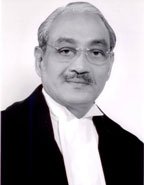
Dr. B.S. CHAUHAN, J.
1. This appeal has been preferred against the judgment and
order of the High Court of Madhya Pradesh dated 25
th
January, 2006
passed in Second Appeal No. 726 of 2003 by which the High Court
while allowing the Second Appeal reversed the judgment and decree
dated 16
th
October, 2003 passed by the First Appellate Court in
First Appeal No. 2/2003 by which the First Appellate Court had
reversed the judgment and decree dated 13.12.2002 passed by the
Trial Court in Civil Suit No. 30A/1999 allowing the application of
the landlord for eviction of the tenant.
2. Facts and circumstances giving rise to this appeal are that
the appellant-tenant was inducted by the respondent-landlord on
1.10.1978 in a shop in house No. 83, Main Street, Mhow for a non-
residential purpose on a monthly rent of Rs.150/-. The respondent-
landlord enhanced the rent from time to time and ultimately it was
enhanced on 1.3.1995 to the extent of Rs.700/-p.m. The
respondent-landlord had taken a sum of Rs.35,000/- as loan from
the appellant-tenant. Some amount therefrom was to be adjusted
towards a part of monthly rent. Respondent-landlord filed suit
No.30A/1999 on 1.4.1999 for eviction of the appellant on the
grounds of nuisance and bone fide requirement for himself
contending that he was carrying on business of plastic goods and
shoes in a rented ‘Gumti’ measuring 3 ft. x 4 ft. on a Nalla.
Respondent was in need of the disputed shop for carrying on his
business alongwith his son Zulfikar Ali. Parties exchanged the
affidavits and examined large number of witnesses in support of
their respective claims before the Trial Court. The Trial Court,
vide judgment and decree dated 13.12.2002, decreed the suit for
eviction under Section 12(1)(f) of M.P. Accommodation Control
Act, 1961 (hereinafter referred to as the ‘Act 1961’) on the
ground of bona fide need, however, did not accept the plea of
nuisance.
3. Being aggrieved, the appellant preferred the First Appeal
No.2/2003 before the First Additional District Judge, Mhow and the
same was allowed vide judgment and decree dated 16.10.2003 on the
ground that the landlord had enhanced the rent from time to time;
his son had been in employment in Dubai, therefore, the bona fide
need was a pretext to enhance the rent or evict the tenant.
4. Being aggrieved, the landlord-respondent approached the
High Court by filing Second Appeal No.726 of 2003 under Section
100 of the Code of Civil Procedure, which has been allowed vide
judgment and order dated 25.1.2006. Hence, this appeal.
5. Mr. Manish Vashisht, learned counsel appearing for the
appellant has vehemently submitted that the High Court committed
grave error in entertaining the Second Appeal though no
substantial question of law was involved therein. As to whether
the courts below have rightly appreciated the evidence on record
to find out as to whether need of the landlord is real and bona
fide, is a question of fact. Therefore, the Second Appeal itself
was not maintainable. The suit property is not required by the
landlord as he is doing his business at another premises for last
35 years; his son is in employment in Dubai. Therefore, the
appeal deserves to be allowed.
6. Per contra, Mr. A.K. Chitale, learned senior counsel
appearing for the respondent-landlord has vehemently opposed the
appeal contending that if the finding of fact recorded by the
court below is found to be perverse, the High Court can entertain
the Second Appeal and re-appreciate the evidence. The landlord is
the best Judge to determine as to what is his requirement and what
is the proper place of his business. A tenant cannot force the
landlord to carry out his business in the rented premises of
negligible dimension. Therefore, the judgment and order of the
High Court does not warrant any interference. The appeal is liable
to be dismissed.
7. We have considered the rival submissions of learned counsel
for the parties and perused the record.
8. In Prativa Devi Vs. T.V. Krishnan (1996) 5 SCC 353, this
Court held that the landlord is the best judge of his requirement
and courts have no concern to dictate the landlord as to how and
in what manner he should live.
9. However, in Ram Dass Vs. Ishwar Chander & Ors. AIR 1988
SC 1422, this Court held that ‘bona fide need’ should be genuine,
honest and conceived in good faith. Landlord’s desire for
possession, however honest it might otherwise be, has, inevitably,
a subjective element in it. The “desire” to become “requirement”
must have the objective element of a “need” which can be decided
only by taking all relevant circumstances into consideration so
that the protection afforded to tenant is not rendered illusory or
whittled down. The tenant cannot be evicted on a false plea of
requirement or “feigned requirement”. (See also Rahabhar
Productions Pvt. Ltd. Vs. Rajendra K. Tandon AIR 1998 SC 1639;
and Shiv Sarup Gupta Vs. Dr. Mahesh Chand Gupta AIR 1999 SC 2507).
10. In Malpe Vishwanath Acharya & Ors. Vs. State of
Maharashtra & Anr. AIR 1998 SC 602, this Court emphasised the need
for social legislations like the Rent Control Act striking a
balance between rival interests so as to be just to law. “The law
ought not to be unjust to one and give a disproportionate benefit
or protection to another section of the society.”
11. In Siddalingamma & Anr. Vs. Mamtha Shenoy AIR 2001 SC 2896,
this Court held that while determining the case of eviction of the
tenant, an approach either too liberal or too conservative or
pedantic must be guarded against. If the landlord wishes to live
with comfort in a house of his own, the law does not command or
compel him to squeeze himself and dwell in lesser premises so as
to protect the tenant’s continued occupation in tenancy premises.
However, the bona fide requirement of the landlord must be
distinguished from a mere whim or fanciful desire. It must be
manifested in actual need so as to convince the Court that it is
not a mere fanciful or whimsical desire. The need should be bona
fide and not arbitrary and the requirement pleaded and proved must
neither be a pretext nor a ruse adopted by the landlord for
evicting the tenant. Therefore, the Court must take relevant
circumstances into consideration while determining the issue of
bona fide need so that the protection afforded to a tenant is not
rendered illusory or whittled down.
12. Second appeal does not lie on the ground of erroneous
findings of facts based on appreciation of the relevant evidence.
The High Court should not entertain a second appeal unless it
raises a substantial question of law. It is the obligation on the
Court of Law to further the clear intendment of the Legislature
and not to frustrate it by ignoring the same.
13. In Ram Prasad Rajak Vs. Nand Kumar & Bros. & Anr., AIR 1998
SC 2730, this Court held that existence of substantial question of
law is a sine-qua-non for the exercise of jurisdiction under
Section 100 of the Code and entering into the question as to
whether need of the landlord was bonafide or not, was beyond the
jurisdiction of the High Court as the issue can be decided only by
appreciating the evidence on record.
14. There may be a question, which may be a “question of fact”,
“question of law”, “mixed question of fact and law” and
“substantial question of law.” Question means anything inquired;
an issue to be decided. The “question of fact” is whether a
particular factual situation exists or not. A question of fact, in
the Realm of Jurisprudence, has been explained as under:-
“A question of fact is one capable of being
answered by way of demonstration. A question of opinion is
one that cannot be so answered. An answer to it is a
matter of speculation which cannot be proved by any
available evidence to be right or wrong.”
(Vide Salmond, on Jurisprudence, 12th Edn. page 69, cited in
Gadakh Yashwantrao Kankarrao Vs. E.V. alias Balasaheb Vikhe Patil
& ors., AIR 1994 SC 678).
15. In Reserve Bank of India & Anr. Vs. Ramakrishna Govind
Morey, AIR 1976 SC 830, this Court held that whether trial Court
should not have exercised its jurisdiction differently, is not a
question of law or a substantial question of law and, therefore,
second appeal cannot be entertained by the High Court on this
ground.
16. In Kulwant Kaur & Ors. Vs. Gurdial Singh Mann (dead) by
L.Rs. & Ors. AIR 2001 SC 1273, this Court held that the question
whether Lower Court’s finding is perverse may come within the
ambit of substantial question of law. However, there must be a
clear finding in the judgment of the High Court as to perversity
in order to show compliance with provisions of Section 100 CPC.
Thus, this Court rejected the proposition that scrutiny of
evidence is totally prohibited in Second Appeal.
17. In Sheel Chand Vs. Prakash Chand, AIR 1998 SC 3063, this
Court held that question of re-appreciation of evidence and
framing the substantial question as to whether the findings
relating to factual matrix by the court below could vitiate due to
irrelevant consideration and not under law, being question of fact
cannot be framed.
18. In Rajappa Hanamantha Ranoji Vs. Mahadev Channabasappa &
Ors. AIR 2000 SC 2108, this Court held that it is not permissible
for the High Court to decide the Second Appeal by re-appreciating
the evidence as if it was deciding the First Appeal unless it
comes to the conclusion that the findings recorded by the court
below were perverse.
19. In Jai Singh Vs. Shakuntala, AIR 2002 SC 1428, this Court
held that it is permissible to interfere even on question of fact
but it has to be done only in exceptional circumstances. The Court
observed as under:-
“While scrutiny of evidence does not stand out to
be totally prohibited in the matter of exercise of
jurisdiction in the second appeal and that would, in our
view, be too broad a proposition and too rigid an
interpretation of law not worth acceptance but that does
not also clothe the superior courts within jurisdiction to
intervene and interfere in any and every matter- it is
only in very exceptional cases and on extreme perversity
that the authority to examine the same in extensor stands
permissible it is a rarity rather than a regularity and
thus in fine it can be safely concluded that while there
is no prohibition as such, but the power to scrutiny can
only be had in very exceptional circumstances and upon
proper circumspection.”
20. In P. Chandrasekharan & Ors. Vs. S. Kanakarajan & Ors. AIR
2007 SC 2306, this Court reiterated the principle that
interference in second appeal is permissible only when the findings
are based on misreading of evidence or are so perverse that no
person of ordinary prudence could take the said view. More so, the
Court must be conscious that intervention is permissible provided
the case involves a substantial question of law which is altogether
different from the question of law. Interpretation of a document
which goes to the root of title of a party may give rise to
substantial question of law.
21. In Shakuntala Chandrakant Shreshti Vs. Prabhakar Maruti
Garvali & Anr., AIR 2007 SC 248, this Court considered the scope of
appeal under Section 30 of the Workmen’s Compensation Act, 1923 and
held as under :
“Section 30 of the said Act postulates an appeal directly to
the High Court if a substantial question of law is involved in
the appeal….. A jurisdictional question will involve a
substantial question of law. A finding of fact arrived at
without there being any evidence would also give rise to a
substantial question of law………… A question of law would arise
when the same is not dependent upon examination of evidence,
which may not require any fresh investigation of fact. A
question of law would, however, arise when the finding is
perverse in the sense that no legal evidence was brought on
record or jurisdictional facts were not brought on record.”
22. Similar view has been reiterated by this Court in Anathula
Sudhakar Vs. P. Buchi Reddy (Dead) by LRs & Ors. AIR 2008 SC 2033.
23. In Rishi Kumar Govil Vs. Maqsoodan and Ors. [(2007) 4 SCC
465], this Court while dealing with the provisions of Section
21(1)(a) of the U. P. Urban Buildings (Regulation of Letting,
Rent and Eviction) Act, 1972 and Rule 16 of the U. P. Urban
Buildings (Regulation of Letting, Rent and Eviction) Rules, 1972,
held that the bona fide personal need of the landlord is a
question of fact and should not be normally interfered with.
24. There is no prohibition to entertain a second appeal even
on question of fact provided the Court is satisfied that the
findings of the courts below were vitiated by non-consideration
of relevant evidence or by showing erroneous approach to the
matter. (Vide Jagdish Singh Vs. Nathu Singh, AIR 1992 SC 1604;
Smt. Prativa Devi Vs. T.V. Krishnan, (1996) 5 SCC 353; Satya
Gupta @Madhu Gupta Vs. Brijesh Kumar, (1998) 6 SCC 423 Ragavendra
Kumar Vs. Firm Prem Machinery & Co., AIR 2000 SC 534; and Molar
Mal Through Lr. Vs. M/s. Kay Iron Works Pvt. Ltd., AIR 2000 SC
1261).
25. Thus, the law on the subject emerges to the effect that
Second Appeal under Section 100 CPC is maintainable basically on
a substantial question of law and not on facts. However, if the
High Court comes to the conclusion that the findings of fact
recorded by the courts below are perverse being based on no
evidence or based on irrelevant material, the appeal can be
entertained and it is permissible for the Court to re-appreciate
the evidence. The landlord is the best Judge of his need,
however, it should be real, genuine and the need may not be a
pretext to evict the tenant only for increasing the rent.
26. The instant case is required to be examined in the light
of the aforesaid settled legal propositions.
27. The admitted facts of the case are that the suit property,
18 ft. x 14 ft. i.e. 152 Sq.ft., is situated at a main road in
the market. The premises in which the landlord is running his
business is 3 ft. x 4 ft. at a monthly rent of Rs. 75/-. The
‘Gumti’ is situated on the Nalla on the land of Cantonment Board.
The said ‘Gumti’ belongs to one Mohd. Hussain who had established
it by encroaching upon the land of the Cantonment Board. Son of
the landlord, namely, Zulfikar Ali is in service in Dubai for
last several years. The suit premises was earlier on rent with
Dental Surgeon Dr. Sharma from 1970 to 1978 who vacated it
considering the need of the landlord. After eviction of Dr.
Sharma, it was given on rent to the appellant at a monthly rent
of Rs.150/-p.m. The rent was enhanced to the tune of Rs.400/-p.m.
in 1990, to Rs.500/-p.m in 1991 and further enhanced to Rs.700/-
p.m. on 1.3.1995. Landlord had taken loan of Rs.35,000/- from
the tenant and a part of it was to be adjusted toward the monthly
rent for the said premises.
28. The Trial Court after considering the pleadings framed as
many as 10 issues. However, the relevant issues had been Issue
Nos. 1 and 3 regarding the bona fide and real need of the
landlord. After considering the evidence on record including
increase in rent from time to time and the fact that after
evicting Dr. Sharma, Dental Surgeon, in 1978, the landlord in
spite of starting his business in the suit premises rented it out
to the appellant, came to the conclusion that need of the
landlord was bona fide as he was running his business on a rented
premises having a very small area at an unhygienic place i.e.
platform on a Nalla. No other alternative or convenient place
was available to him to shift/start his business and there had
been no increase in rent of the suit premises after 1995. The
said findings have been disturbed by the First Appellate Court
mainly on the ground that the landlord did not require the suit
premises for running his business, rather it was a pretext to
increase the rent as rent had been increased from time to time
and the landlord did not occupy the premises after being vacated
by Dr. Sharma, Dentist. These circumstances made it clear that
the landlord wanted to achieve the ulterior purpose. The
landlord could be the best Judge of his need but he cannot be an
arbitrary dictator. There was no evidence to show that his son
Zulfikar Ali was interested to come back and join his father in
business.
29. The High Court reached the conclusion that the landlord,
in spite of the fact that he was owner of the suit premises could
not be forced to continue his business in a shop of negligible
area in a ‘Gumti’ made on platform on Nalla. Mere continuation of
long tenancy could not be a ground to reject the case of bona
fide need.
30. The admitted facts referred to hereinabove, make it clear
that the appellant is enjoying the tenancy of the premises
measuring 152 sq.ft. for the last 32 years. The landlord-
respondent is running his business at a ‘Gumti’ measuring 3 ft. x
4 ft. made on a platform on a Nalla in Cantonment Board
established by encroaching upon the public land. The demand of
plastic goods in which the landlord is dealing is increasing day
by day. Undoubtedly after evicting Dr. Sharma from the suit
premises, the landlord has not started his business in the said
premises but the incidence which occurred several decades ago
cannot be relevant to determine the actual controversy for the
reason that need of the landlord is to be examined as per the
circumstances prevailing on the date of the institution of the
case. Thus, an incident too remote from the date of institution
of suit may not be relevant for consideration at all.
Undoubtedly, the rent has been increased from time to time and it
is not the case of the appellant-tenant that the rent had been
enhanced arbitrarily or unreasonably or it could not be enhanced
in law. The fact that rent had not been enhanced since 1995, the
First Appellate Court erred in drawing the inference that need of
the landlord may not be bona fide and it might be a pretext for
increasing the rent or to evict the tenant. There is no pleading
by the tenant that any attempt had ever been made by the landlord
to enhance the rent during the period of 7 years prior to the
date of institution of the suit. Undoubtedly, Zulfikar Ali, son
of the landlord is continuing his service in Dubai for last
several years and he has not appeared in witness box to prove
that he was willing to start business with his father, remains
immaterial or cannot put balance in favour of the appellant-
tenant for the reason that the landlord himself wants to start
his business in the suit premises. Therefore, it remains
immaterial whether his son, Zulfikar Ali wants to join his
business or not.
31. In such a fact-situation, we do not find any fault with
the judgment of the High Court that it has committed an error
reaching the conclusion that finding recorded by the First
Appellate Court were perverse.
32.However, in the facts and circumstances of the case, the
High Court did not consider the relevant factors i.e. as
what would be the magnitude of his business, and whether
partial eviction of the appellant could serve the purpose
of both the parties.
33.Thus, in order to meet the ends of justice the appeal is
allowed partly. The landlord/respondent shall recover
possession of half of the area of the premises dividing
the same either on the side of “Bohara Masjid” or on the
other side.
Appeal stands disposed of accordingly. No costs.
…………………………………..J.
(Dr. B.S. CHAUHAN)
…………………………………..J.
(SWATANTER KUMAR)
New Delhi,
May 26, 2010

 Login with google
Legal Notes
Add a Note....