

No Acts & Articles mentioned in this case
2024 INSC 966 1
REPORTABLE
IN THE SUPREME COURT OF INDIA
CIVIL APPELLATE JURISDICTION
CIVIL APPEAL NO. 14299 OF 2024
@ SLP (CIVIL) NO. 29929 OF 2024
@ DIARY NO. 34174 OF 2023
DUSHYANT JANBANDHU ...APPELLANT(S)
VERSUS
M/S HYUNDAI AUTOEVER INDIA PVT. LTD. …RESPONDENT(S)
J U D G M E N T
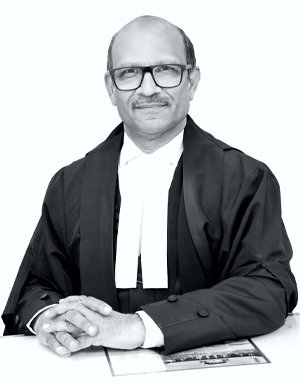
PAMIDIGHANTAM SRI NARASIMHA, J .
1. Delay condoned. Leave Granted.
2. Questioning the appointment of an arbitrator by the High Court
of Madras under Section 11(6) of the Arbitration and Conciliation
Act, 1996
1, by the order impugned before us
2, the appellant has
filed this appeal on the ground that the dispute with the
respondent-employer, M/S Hyundai AutoEver India Pvt. Ltd. is
governed by statute under the Payment of Wages Act, 1936
3 and
1
Hereinafter referred to as the ‘Act’.
2
Order passed by the High Court of Judicature at Madras in Arb O.P. No. 31 of 2022 dated
20.12.2022.
3
Hereinafter referred to as the ‘PW Act’.
2
the Industrial Disputes Act, 1947
4. In the normal course and in
recognition of judicial restraint, as incorporated in Section 5 of
the Act, we would have asked the appellant to raise these
objections before the Arbitral Tribunal itself. However, as the
following narration of facts speaks for itself, we have found that
the application under Section 11 of the Act is a clear abuse of the
remedial process. We have therefore allowed the appeal and
dismissed the Section 11(6) petition with cost.
3. The appellant was appointed as an Assistant Manager on
15.03.2019. Within a year, due to Covid-19 pandemic, the
appellant was asked to work from home from 22.03.2020 to
06.01.2021. However, the respondent called upon the appellant
to resume physical attendance of office from August 2020. As the
appellant refused to comply, a show cause notice was issued on
04.09.2020, followed by an inquiry, report of which is in the
following terms;
“Conclusion
• There has been prima facie evidence against Dushyant for his
purposeful absenteeism to work and its impact on Company’s
business and Customer relations.
• Possibility of too due to his absenteeism. A detailed Charge
sheet can be issued to Mr. Dushyant and refer to Disciplinary
committee to take final decision.
• Till the final decision, he should attend office regularly as per
the roster.
• If he is having access from remote, those days should be
recorded separately by his HOS.
4
Hereinafter referred to as the ‘ID Act’.
3
• Based on the final decision of the disciplinary committee
further action can be taken.”
4. The inquiry led to issuance of a charge memo on 25.11.2020 for
violating certain contractual clauses and these related to non-
cooperation and absenteeism. It is necessary to mention here
itself that there is no reference to Clause 19
5 of the appointment
conditions relating to violation of the non-disclosure obligation.
Ultimately, an order of termination was passed on 21.01.2021,
the relevant portion of the said order of termination is important
for our consideration and it is extracted hereinbelow for ready
reference.
“Please refer our Show Cause Notices dated 4
th
Sep 2020,
Emails dated (05
th
Aug, 03
rd
Sep, 07 Sep 2020 & 07 Jan 2021)
and the charge sheet dated (26 Nov 2020). You have continued
to remain absent at work premises without authorisation and
also you did not present yourself for our enquiry meetings
called for as per our disciplinary Policy. Considering all the
above, as per your agreed employment terms Clause 11, 12(V),
17, 24 & 25, your employment has been terminated with
effective from the closing hours of 06 Jan 2021. […]”
5. It is evident from the above that there is no allegation whatsoever
that the appellant has violated clause 19 of the appointment order
leading to the order of termination.
6. During the pendency of disciplinary action, as the appellant was
not paid his salary, he issued a legal notice for payment of wages
5
“You will not give out to any one, by word of mouth or otherwise, particulars of HAEI’s business or
an administrative or organizational matter of a confidential nature which may be your privilege to
know by virtue of you being HAEI’’s employee.”
4
on 29.05.2021 and filed a petition under Section 15(2) of the PW
Act before the authority under the PW Act. As a counterblast, the
respondent issued a notice alleging that the disputes must be
settled through arbitration and proceeded to unilaterally appoint
an arbitrator. We may mention here itself that even in the said
reply notice dated 22.06.2021 issued by the respondent, there is
no specific allegation of violation of the non-disclosure obligations
by the appellant herein. The claim for arbitration naturally related
to stoppage of payment of wages, which according to the appellant
was within the jurisdiction of the Authority under the PW Act as
per its statutory provisions.
7. Before we deal with the facts relating to the proceedings before
the Authority under the PW Act, it is necessary to mention that
as the unilaterally appointed arbitrator commenced the arbitral
proceedings, the appellant filed an application under Section 16
of the Act calling upon the arbitrator to rule on his competence.
It is interesting to note that the arbitrator himself passed an order
on 01.05.2022 taking into account the decision of this Court in
Perkins Eastman Architects DPC & Anr. v. HSCC (India) Ltd.
6 and
closing the arbitral proceedings. The relevant portion is
reproduced here as follows:
6
(2020) 20 SCC 760.
5
“[…] In the present case, as detailed herein above, the
appointment of the undersigned as the Arbitrator and the
Constitution of the Arbitral Tribunal thereof are without the
consent or the participation of the Respondent. Once the
jurisdiction of this Arbitral Tribunal has been put into question
on that ground, this Tribunal ceases to have the power or
authority to proceed with the matter in any manner.
I therefore have no hesitation in holding that the constitution
of this Arbitral Tribunal is not in accordance with or in
consonance with the provisions of Section 11 of the Arbitration
and Conciliation Act as amended, particularly in the light of
the ratio set out by the Hon'ble Supreme Court in Perkins
Eastman Architects DPC & another V/s HSCC (India) Ltd.
In the light of the same, the arbitral proceedings between the
parties above-named before this Tribunal is closed forthwith
with liberty being granted to both the parties to work out their
respective remedies in accordance with law.”
8. Returning to the proceedings commenced before the Authority, we
note that the respondent moved an application under Section 8 of
the Act seeking reference of the dispute involved in the petition
under Section 15(2) of the PW Act to arbitration. The Authority
under PW Act dismissed the said application on 03.03.2022
holding that; “In view of Section 23 of the Payment of Wages Act,
arbitration agreement cannot stand in the way of the claimant in
respect of illegally deducted wages under Payment of Wages Act.”
9. There is yet another development. Questioning the order of
termination dated 21.01.2021, the appellant approached the
Industrial Tribunal by filing a petition under Section 2(A) of the
ID Act and the same is pending adjudication and determination
by the Industrial Tribunal.
6
10. It is in the above referred background that the respondent
approached the High Court by filing a petition under Section 11(6)
of the Act in August 2022 seeking appointment of an arbitrator.
The disputes between the appellant and the respondent, as
indicated in the arbitration petition relate to non-payment of
wages and also the legality and validity of termination order dated
21.01.2021. Over and above these disputes, for the first time the
respondent sought to give a new angle to the dispute by stating
that the appellant has also violated the non-disclosure obligations
under clause 19 of the appointment order.
11. In the order impugned before us, the High Court has proceeded
to note an arbitration agreement and therefore, appointed an
advocate as the arbitrator.
12. The issue relating to violation of the non-disclosure obligation
under clause 19 is only an afterthought. This was evidently not
the ground when the respondent issued the show cause notice on
04.09.2020, nor was it a part of the inquiry report, the relevant
portion of which we have extracted in the para 3 above. This is
also not a part of the charge memo dated 25.11.2020.
13. Crucially, the termination was not based on any such allegation
as is evident from the termination order dated 21.01.2021 that we
have extracted earlier. Under these circumstances, we can
7
conclude that there is no dispute about violation of non-
disclosure obligations and Section 11(6) petition, to this extent is
non-existent.
14. Insofar as other disputes are concerned, they relate to non-
payment of wages and the legality and validity of the order of
termination dated 21.01.2021. The appellant approached the
Authority under the PW Act much before the order of termination
and the said authority would exercise jurisdiction under Section
15(2) of the PW Act to the exclusion of civil courts and these
disputes are non-arbitrable. Section 22 of the PW Act reads as
under:
“22. Bar of Suits.—No Court shall entertain any suit for the
recovery of wages or of any deduction from wages in so far as
the sum so claimed—
(a) forms the subject of an application under section 15 which
has been presented by the plaintiff and which is pending
before the authority appointed under that section or of an
appeal under section 17; or
(b) has formed the subject of a direction under section 15 in
favour of the plaintiff; or
(c) has been adjudged, in any proceeding under section 15, not
to be owed to the plaintiff; or
(d) could have been recovered by an application under section
15.”
15. Equally, legality of the order of termination dated 21.01.2021 is
within the jurisdiction of Industrial Tribunal under Section 2(A)
of the ID Act and it is important to mention that the jurisdiction
of the Industrial Court is also to the exclusion of the civil courts
and is not arbitrable. It is also important to note that remedies
8
under these statutes were invoked much prior to the filing of
petition under Section 11(6) by the respondent. In Vidya Drolia v.
Durga Trading Corporation
7, the principle of subject-matter
arbitrability is enunciated as follows:
“76. In view of the above discussion, we would like to
propound a fourfold test for determining when the subject-
matter of a dispute in an arbitration agreement is not
arbitrable:
76.1 (1) When cause of action and subject-matter of the
dispute relates to actions in rem, that do not pertain to
subordinate rights in personam that arise from rights in rem.
76.2 (2) When cause of action and subject-matter of the
dispute affects third-party rights; have erga omnes effect;
require centralised adjudication, and mutual adjudication
would not be appropriate and enforceable.
76.3 (3) When cause of action and subject-matter of the
dispute relates to inalienable sovereign and public interest
functions of the State and hence mutual adjudication would be
unenforceable.
76.4 (4) When the subject-matter of the dispute is expressly or
by necessary implication non-arbitrable as per mandatory
statute(s).”
(emphasis supplied)
16. Having considered the factual background in which the Section
11(6) petition has been filed, we are of the opinion that it is an
abuse of process. It was clearly intended to threaten the appellant
for having approached the statutory authorities under the PW Act
and the ID Act. There is no basis for invoking clause 19 of the
agreement and demanding compensation of Rs. 14,02,822/-
when that fact situation did not arise.
7
(2021) 2 SCC 1
9
17. The Section 11(6) petition has two facets. The first relates to
disputes that were anyway pending before the statutory
authorities, and they related to non-payment of wages and legality
and propriety of termination which are non-arbitrable. The second
facet relates to the alleged violation of clause 19 relating to non-
disclosure obligation, which was not raised in the show cause
notice, inquiry report, chargesheet and termination order and as
such is non-existent.
18. In view of the above, we allow the Civil Appeal and set-aside the
judgment and the order passed by the High Court and dismiss the
petition under Section 11(6) filed by the respondent under the
Arbitration and Conciliation Act.
19. The appellant will also be entitled to cost quantified at Rs. 5 lakhs
payable within a period of 3 months from today.
………………………………....J.
[PAMIDIGHANTAM SRI NARASIMHA]
………………………………....J.
[SANDEEP MEHTA]
NEW DELHI;
DECEMBER 11, 2024.

 Login with google
Legal Notes
Add a Note....