
☐Two writ petitions were filed under Article 32 of the Indian Constitution, addressing serious issues in Manipur. The first petition alleged numerous extra-judicial killings by Manipur Police and security forces, ...
No Acts & Articles mentioned in this case
Page 1 REPORTABLE
IN THE SUPREME COURT OF INDIA
CRIMINAL/CIVIL ORIGINAL JURISDICTION
WRIT PETITION (CRIMINAL) NO.129 OF 2012
EXTRA JUDICIAL EXECUTION VICTIM FAMILIES
ASSOCIATION (EEVFAM) AND ANOTHER PETITIONER(S)
VERSUS
UNION OF INDIA & ANOTHER RESPONDENT(S)
WITH
WRIT PETITION (CIVIL) NO.445 OF 2012
SURESH SINGH PETITIONER(S)
VERSUS
UNION OF INDIA & ANOTHER RESPONDENT(S)
O R D E R
These two writ petitions, each filed under Article 32 of the
Constitution of India, raise some disquieting issues pertaining to the
State of Manipur. In writ petition (criminal) No.129 of 2012, it is stated
that, over the years, a large number of people, Indian citizens, have
been killed by the Manipur Police and other security forces while they
were in custody or in stage-managed encounters or in ways broadly
termed as ‘extra-judicial executions’. In writ petition (civil) No.445 of
1
Page 2 2012, it is stated that for a very long time, the State of Manipur is
declared as “disturbed area” and is put under the Armed Forces
(Special Powers) Act, 1958, subverting the civil rights of the citizens of
the State and making it possible for the security forces to kill innocent
persons with impunity.
In this order, we deal with the first writ petition, i.e., writ petition
(criminal) No.129/2012.
In this writ petition it is stated that during the period May, 1979 to
May, 2012, 1528 people were killed in Manipur in extra-judicial
execution. The statement is mainly based on a memorandum prepared
by ‘Civil Society Coalition on Human Rights in Manipur and the UN’ and
submitted to one Christof Heyns, Special Rapporteur on extrajudicial,
summary or arbitrary executions, Mission to India, 19-30 March, 2012.
The Memorandum compiles the list of 1528 people allegedly killed
unlawfully by the State Police or the security forces. The writ petitioners
later on filed “Compilation 1” and “Compilation 2”. In “Compilation 1”
details are given of ten (10) cases relating to the killings of eleven (11)
persons (out of the list of 1528); in “Compilation 2”, similarly details are
given of thirteen (13) cases in which altogether seventeen (17) persons
2
Page 3 (out of the list of 1528) are alleged to have been killed in extra judicial
executions.
A counter affidavit is filed on behalf of the State of Manipur. In
the counter affidavit there is not only a complete denial of the
allegations made in the writ petition but there also seems to be an
attempt to forestall any examination of the matter by this Court. The
plea is taken that the National Human Rights Commission (NHRC) is
the proper authority to monitor the cases referred to in the writ petition.
It is stated that in regard to all the ten (10) cases highlighted in
“Compilation 1” filed by the petitioners, reports have been submitted to it
and in none of those cases the NHRC has recorded any finding of
violation of human rights. It is stated that the occasion for this Court to
examine those cases would arise only if it holds that the NHRC had
failed to perform its statutory functions in safeguarding the human rights
of the people in the State. This Court should not examine this matter
directly but should only ask the NHRC to indicate the status of the cases
listed and highlighted in the writ petition. We are unable even to follow
such a plea. The course suggested by the State will completely
dissipate the vigour and vitality of Article 32 of the Constitution. Article
21 coupled with Article 32 of the Constitution provides the finest
guarantee and the most effective protection for the most precious of all
3
Page 4 rights, namely, the right to life and personal liberty of every person. Any
indication of the violation of the right to life or personal liberty would put
all the faculties of this Court at high alert to find out the truth and in case
the Court finds that there has, in fact, been violation of the right to life
and personal liberty of any person, it would be the Court’s bounden duty
to step-in to protect those rights against the unlawful onslaught by the
State. We, therefore, see no reason not to examine the matter directly
but only vicariously and second-hand, through the agency of the NHRC.
A reference is next made in the counter affidavit to an appeal
pending before this Court against the judgment of the Bombay High
Court and a writ petition, also pending before this Court, filed by the
State of Gujarat on the subject of fake encounters and it is stated that
this case should be tagged with those other two cases to be heard
together. We fail to see any relevance of the two cases referred to in the
counter affidavit and, in our view, the plea that these two writ petitions
should only be heard along with those two cases is meant to detract
from consideration the grave issues raised in the writ petition.
It is thirdly stated in the counter affidavit that the State of
Manipur is faced with the menace of insurgency for many years and
details are given of policemen and civilians killed and injured by the
insurgents. There are about 30 extremist organizations in the State out
4
Page 5 of which six are very powerful and they are armed with sophisticated
weapons. Their aim and object is to secede from the Republic of India
and to form an independent State of Manipur. For realization of their
objective they have been indulging in violent activities, including killing
of civilians and members of security forces. It is stated in the counter
affidavit that during the period 2000 to October, 2012, 105 policemen,
260 security forces personnel, and 1214 civilians were killed; the
number of injured during the same period is 178 for the policemen, 466
for members of security forces and 1173 for civilians.
There is no denying that Manipur is facing the grave threat of
insurgency. It is also clear that a number of the insurgent groups are
operating there, some of which are heavily armed. These groups
indulge in heinous crimes like extortion and killing of people to establish
their hegemony. It is also evident from the counter affidavit filed by the
State that a number of police personnel and members of security forces
have laid down their lives or received serious injuries in fighting against
insurgency. But, citing the number of the policemen and the security
forces personnel and the civilians killed and injured at the hands of the
insurgents does not really answer the issues raised by the writ
petitioners.
5
Page 6 In People’s Union for Civil Liberties v. Union of India and
another
1
, this Court earlier dealt with a similar issue from Manipur itself.
In that case, it was alleged that two persons along with others were
seized by the police and taken in a truck to a distant place and shot
there. In an inquiry by the District and Sessions Judge, Manipur (West),
held on the direction of this Court, the allegation was found to be
correct. In that case, dealing with question of the right to life in a
situation where the State was infested with terrorism and insurgency,
this Court in paragraphs 5 and 6 of the judgment observed as follows:
“5. It is submitted by Ms S. Janani, the learned counsel for the
State of Manipur, that Manipur is a disturbed area, that there
are several terrorist groups operating in the State, that Hamar
Peoples' Convention is one of such terrorist organizations, that
they have been indulging in a number of crimes affecting the
public order — indeed, affecting the security of the State. It is
submitted that there have been regular encounters and
exchange of fire between police and terrorists on a number of
occasions. A number of citizens have suffered at the hands of
terrorists and many people have been killed. The situation is
not a normal one. Information was received by the police that
terrorists were gathering in the house on that night and on the
basis of that information, police conducted the raid. The
raiding party was fortunate that the people inside the house
including the deceased did not notice the police, in which case
the police would have suffered serious casualties. The police
party was successful in surprising the terrorists. There was
exchange of fire resulting in the death of the terrorists.
6. In view of the fact that we have accepted the finding
recorded by the learned District and Sessions Judge, it is not
possible to accede to the contention of Ms Janani insofar as
1
(1997) 3 SCC 433
6
Page 7 the manner in which the incident had taken place. It is true that
Manipur is a disturbed area, that there appears to be a good
amount of terrorist activity affecting public order and, may be,
even security of that State. It may also be that under these
conditions, certain additional and unusual powers have to be
given to the police to deal with terrorism. It may be necessary
to fight terrorism with a strong hand which may involve vesting
of good amount of discretion in the police officers or other
paramilitary forces engaged in fighting them. If the version of
the police with respect to the incident in question were true,
there could have been no question of any interference by the
court. Nobody can say that the police should wait till they are
shot at. It is for the force on the spot to decide when to act,
how to act and where to act. It is not for the court to say how
the terrorists should be fought. We cannot be blind to the fact
that even after fifty years of our independence, our territorial
integrity is not fully secure. There are several types of
separatist and terrorist activities in several parts of the country.
They have to be subdued. Whether they should be fought
politically or be dealt with by force is a matter of policy for the
Government to determine. The courts may not be the
appropriate forum to determine those questions. All this is
beyond dispute. But the present case appears to be one
where two persons along with some others were just
seized from a hut, taken to a long distance away in a truck
and shot there. This type of activity cannot certainly be
countenanced by the courts even in the case of disturbed
areas. If the police had information that terrorists were
gathering at a particular place and if they had surprised them
and arrested them, the proper course for them was to deal
with them according to law. “Administrative liquidation” was
certainly not a course open to them.”
(emphasis added)
We respectfully reiterate what was earlier said by the Court in
People’s Union for Civil Liberties.
7
Page 8 In 1997, in the Peoples’ Union for Civil Liberties this Court,
dealing with the case of killing of two persons in Manipur had cautioned
the State against “Administrative liquidation”. But, after 15 years in this
case, we are faced with similar allegations on a much larger scale.
For this Court, the life of a policeman or a member of the
security forces is no less precious and valuable than any other person.
The lives lost in the fight against terrorism and insurgency are indeed
the most grievous loss. But to the State it is not open to cite the
numbers of policemen and security forces killed to justify custodial
death, fake encounter or what this Court had called “Administrative
liquidation”. It is simply not permitted by the Constitution. And in a
situation where the Court finds a person’s rights, specially the right to
life under assault by the State or the agencies of the State, it must step-
in and stand with the individual and prohibit the State or its agencies
from violating the rights guaranteed under the Constitution. That is the
role of this Court and it would perform it under all circumstances. We,
thus, find that the third plea raised in the counter affidavit is equally
without substance.
Lastly, the counter affidavit, and the Supplementary Counter
Affidavit filed by the State give the State’s version of the 10 cases
8
Page 9 highlighted in the Compilation 1, filed by the petitioners. But on that we
would not like to make any comment at this stage.
The Union of India has also filed a separate counter affidavit. It
is a more responsible affidavit in that it does not evade the issues nor
does it try to dissuade the Court from examining the cases of alleged
extra-judicial executions brought to its notice by the writ petitioners. In
the counter affidavit filed by the Union, first a reference is made to
different legal provisions (Section 146 and Sections 129 to 132 of the
Criminal Procedure Code, Sections 99 to 106 in Chapter IV of the Indian
Penal Code and Section 4 of the Armed Forces (Special Powers) Act,
1959) and it is contended that subject to the conditions stipulated in
those provisions, killing of a person by a police officer or a member of
the armed forces may not amount to an offence and may be justified in
law. It is stated in the counter affidavit that all the cases listed and/or
highlighted in the writ petition and described as extra-judicial executions
are cases of persons who died during counter-insurgency operations or
in performance of other lawful duties by the police and the personnel of
the armed forces. It is emphasized that in most of the cases the so-
called victims might have been killed in the lawful exercise of the
powers and/or in discharge of official duties by the police and the armed
forces personnel. It is further said that “public order” and, by
9
Page 10 implication, the maintenance of “law and order” are primarily State
subjects and the role of the Central Government in deploying the armed
forces personnel in the State is only supportive in aid of the law and
order machinery of the State. The State of Manipur has the primary
duty to deal with the issue of investigation in relevant cases, except
where provided to the contrary in any other law for the time being in
force. It is stated that the “very gloomy picture” of the State of Manipur
sought to be presented by the writ petitioners is incorrect and
misleading. It is asserted that Manipur is fully and completely integrated
with the rest of the country and it is pointed out that in the 1990
elections the voting turnout for the 60 assembly seats in the State was
89.95%. Similarly, during the recent 2012 assembly elections, the voting
turnout was 83.24%. It is added that the voting percentage in Manipur is
amongst the highest in the country as a whole and it clearly shows that
the people of Manipur have taken active participation in the elections
showing their full faith in the Constitution and the constitutional process.
Coming to the issue of insurgency, it is stated in the counter
affidavit as under:
“It is only a handful of disgruntled elements who have
formed associations/ groups that indulge in militant and
unlawful activities in order to retain their influence and
hegemony in the society. These groups also challenge the
sovereignty and integrity of the country by following aims
10
Page 11 and objectives which are secessionist in nature. It is
emphasized that only around 1500 militants are holding a
population of 23 lakhs in Manipur to ransom and keeping
the people in constant fear. The root cause of militancy in
Manipur is the constant endeavour of these insurgent
groups so that they can continue to extort money and the
leaders of such groups can continue to lead luxurious life in
foreign countries. The tribal divide and factions in the
society and the unemployed youth are being exploited by
these militant outfits to fuel tension in the society.”
It is further stated in paragraph 13 of the counter affidavit as
under:
“It may also be submitted that the ethnic rivalries amongst
the different tribal groups viz. Meities, Kukis and Nagas are
deep-rooted and the militant groups fervently advance their
ideologies by taking advantage of the porous international
border with Myanmar which is 256 km long, heavily forested
and contains some of the most difficult terrain. The border
area is inhabited by the same tribes on either side. These
tribes have family relations and for social interactions a free
movement regime for the locals to move up to 16 kms on
both sides is permitted. Taking advantage of this situation
the militant outfits utilize the other side of the border (which
is beyond the jurisdiction of the Indian Armed Forces) for
conveniently conducting their operations of extortions/
kidnapping/ killing/ looting and ambushing the security
forces.”
The counter affidavit goes on to explain that the operations of
not only the State Police but the different security forces under the
control of the Central Government are being strictly monitored and kept
within the parameters set out by the different laws under which those
forces operate. It is stated that different statutory agencies acting as
11
Page 12 watchdog ensure that the armed forces do not overstep the
Constitutional or the legal limits in carrying out the anti-insurgency
operations.
Ms. Guruswamy, the learned amicus has, on the other hand,
presented before us tables and charts showing the inconsistencies in
the materials produced by the State of Manipur itself concerning the 10
cases highlighted in “Compilation 1” filed by the petitioners. She also
submitted that though enquiries were purported to be held by an
Executive Magistrate in the 10 cases described in “Compilation 1”, in
none of those cases the kin of the victims came before the Magistrate to
give their statements even though they were approaching the court,
complaining that the victims were killed in fake encounters. She further
pointed out that in some of the cases even the police/security forces
personnel who were engaged in the killings did not turn up, despite
summons issued by the Magistrate, to give their version of the
occurrence and the Magistrate closed the enquiry, recording that there
was nothing to indicate that the victims were killed unlawfully. In some
cases the Magistrate, even while recording the finding that the case did
not appear to be one of fake encounter made the concluding
observation that it would be helpful to sensitize the police/armed forces
in human rights. She submitted that the so-called enquiries held by the
12
Page 13 Magistrate were wholly unsatisfactory and no reliance could be placed
on the findings recorded in those enquiries.
Apart from the criticisms made by the amicus against the
Magisterial enquiries held in the 10 cases of “Compilation 1” it is
important to note that a number of cases cited by the petitioners had
gone to the Gauhati High Court and on the direction of the High Court,
inquires, of a judicial nature, were made into the killings of (1) Azad
Khan, age 12 years (according to the State, 15 years) (from
“Compilation 1”), (2)Nongmaithem Michael Singh, age 32 years, (3)
Ningombam Gopal Singh, age 39 years, (4) (i) Salam Gurung alias
Jingo, age 24 years, (ii) Soubam Baocha alias Shachinta, age 24 years
(5) (i) Mutum Herojit Singh, age 28 years (ii) Mutum Rajen, age 22
years (6) Ngangbam Naoba alias Phulchand Singh, age 27 years (7)
Sapam Gitachandra Singh, age 22 years (8) (i) Kabrambam Premjit
Singh, (ii) Elangbam Kanto Singh (9) Longjam Uttamkumar Singh, age
34 years (10) Loitongbam Satish @ Tomba Singh, age 34 years (11)
Thockhom Inao @ Herojit Singh, age 31 years, (12) Khumallambam
Debeshower Singh (13) (i) Km. Yumnam Robita Devi (ii) Angom
Romajitn Singh (14) Thoudem Shantikumar Singh (all from “Compilation
2”).
13
Page 14 In all those cases the judicial inquiry found that the victims were
not members of any insurgent or unlawful groups and they were killed
by the police or security forces in cold blood and stage-managed
encounters.
It is stated on behalf of the petitioners that though it was
established in the judicial enquiry that those persons were victims of
extra-judicial executions, the High Court simply directed for payment of
monetary compensation to the kins of the victims. Learned Counsel for
the petitioners submitted that payment of rupees two to four lakhs for
killing a person from funds that are not subjected to any audit, instead of
any accountability for cold blooded murder, perfectly suits the security
forces and they only get encouraged to carry out further killings with
impunity.
On a careful consideration of the averments made in the writ
petition and the counter affidavits filed by the respondents and on
hearing Ms Guruswamy, the amicus, Mr. Gonsalves the learned counsel
appearing for the writ petitioners, Mr. Kuhad, the Additional Solicitor
General appearing for the Union of India, Mr. Ranjit Kumar, senior
advocate appearing for the State of Manipur and Ms. Shobha, advocate
appearing for the NHRC, we find it impossible to overlook the matter
14
Page 15 without further investigation. We are clearly of the view that this matter
requires further careful and deeper consideration.
The writ petitioners make the prayer to constitute a Special
Investigation Team comprising police officers from outside Manipur to
investigate the cases of unlawful killings listed in the writ petition and to
prosecute the alleged offenders but at this stage we are not inclined to
appoint any Special investigation Team or to direct any investigation
under the Code of Criminal Procedure. Instead, we would first like to be
fully satisfied about the truth of the allegations concerning the cases
cited by the writ petitioners. To that end, we propose to appoint a high
powered commission that would tell us the correct facts in regard to the
killings of victims in the cases cited by the petitioners. We, accordingly,
constitute a three-member commission as under:
1.Mr. Justice N. Santosh Hegde, a former Judge of the
Supreme Court of India, as Chairperson
2.Mr. J. M. Lyngdoh, former Chief Election
Commissioner, as Member
3.Mr. Ajay Kumar Singh, former DGP and IGP,
Karnataka.
We request the Commission to make a thorough enquiry in the
first six cases as detailed in “Compilation 1”, filed by the petitioners and
15
Page 16 record a finding regarding the past antecedents of the victims and the
circumstances in which they were killed. The State Government and all
other concerned agencies are directed to hand over to the Commission,
without any delay, all records, materials and evidences relating to the
cases, as directed above, for holding the enquiry. It will be open to the
Commission to take statements of witnesses in connection with the
enquiry conducted by it and it will, of course, be free to devise its own
procedure for holding the enquiry. In light of the enquiries made by it,
the Commission will also address the larger question of the role of the
State Police and the security forces in Manipur. The Commission will
also make a report regarding the functioning of the State Police and
security forces in the State of Manipur and in case it finds that the
actions of the police and/or the security forces transgress the legal
bounds the Commission shall make its recommendations for keeping
the police and the security forces within the legal bounds without
compromising the fight against insurgency.
The Commission is requested to give its report within twelve
weeks from today.
The Central Government and the Government of the State of
Manipur are directed to extend full facilities, including manpower
support and secretarial assistance as may be desired by the
16
Page 17 Commission to effectively and expeditiously carry out the task assigned
to it by the Court.
The Registry is directed to furnish a copy of this order and
complete sets of briefs in both the writ petitions to each of the members
of the Commission forthwith.
Put up on receipt of the report by the Commission.
…..………………………….J.
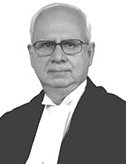
(Aftab Alam)
…..………………………….J.
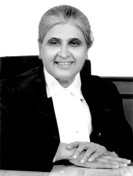
(Ranjana Prakash Desai)
New Delhi;
January 4, 2013.
17

 Login with google
Legal Notes
Add a Note....