
As per case facts, petitioners were detained under the Maintenance of Internal Security Act, 1971, with the detention period linked to the expiry of the Defence of India Act, 1971, ...
http://JUDIS.NIC.IN SUPREME COURT OF INDIA Page 1 of 34
PETITIONER:
FAGU SHAW, ETC., ETC.
Vs.
RESPONDENT:
THE STATE OF WEST BENGAL
DATE OF JUDGMENT20/12/1973
BENCH:
MATHEW, KUTTYIL KURIEN
BENCH:
MATHEW, KUTTYIL KURIEN
RAY, A.N. (CJ)
CHANDRACHUD, Y.V.
ALAGIRISWAMI, A.
BHAGWATI, P.N.
CITATION:
1974 AIR 613 1974 SCR (2) 832
1974 SCC (4) 152
CITATOR INFO :
R 1974 SC 917 (12)
F 1974 SC1739 (3)
RF 1974 SC2151 (14)
RF 1974 SC2154 (27)
F 1975 SC 863 (5)
R 1975 SC1005 (4)
R 1982 SC 149 (241)
ACT:
Constitution of India, 1950- Art. 22(4)(a)(b); (7)(a) and
(b)-Whether Parliament was bound to prescribe the maximum
period of detention.
Maintenance of Internal Security Act, 1971-S. 13-Whether
period fixed in s. 13 is maximum period.
HEADNOTE:
Art. 22(4)(a) of the Constitution says that no law providing
for preventive detention shall authorise the detention of a
person for a period longer than three months unless an
Advisory Board has reported before the expiry of three
months that there is in its opinion sufficient cause for
such detention. The proviso to the Article provides that
nothing in sub-clause (a) shall authorise the detention of
any person "beyond the maximum period prescribed by any law
made by Parliament under sub-cl. (b) of cl. (7) " of Art.
22. By reason of Art. 22 (4) (b) a person can be detained
for a longer period than three months without the necessity
of consulting an Advisory Board if "such person is detained
in accordance with the provisions of any law made by
Parliament under sub-cls. (a) and (b) of cl. (7)" of Art.
22. And Art. 22(7) says
"(7) Parliament may by law prescribe
(a) the circumstances under which, and the class or classes
of cases in which, a person may be detained for a period
longer than three months under any law providing for
preventive detention without obtaining the opinion of an
Advisory Board in accordance with the provisions of sub-
clause (a) of clause (4);
(b) the maximum period for which any person may in any
http://JUDIS.NIC.IN SUPREME COURT OF INDIA Page 2 of 34
class or classes of cases be detained under any law
providing for preventive detention; and
(c) the procedure to be followed by an Advisory Board in an
inquiry under sub-clause (a) of clause (4)."
Section 13 of the Maintenance of Internal Security Act, 1971
as amended by s. 6(d) of the Defence of India Act, 1971
enacts that the "maximum period for which any person may be
detained in pursuance of any detention order which has been
confirmed under s. 12 shall be twelve months from the date
of detention or until the expiry of the Defence of India
Act, 1971, whichever is later." Pursuant to an order of
detention passed by the Government of West Bengal the
petitioners were detained under s. 13 of the Maintenance of
Internal Security Act, 1971. In a petition under Art. 32 of
the Constitution it was contended (i) that the Parliament
was bound to prescribe the maximum period of detention under
Art. 22(7) (b) of the Constitution in order that the
provision of Art. 22 (4) (a) might operate and is s. 13 of
the Act, as amended, did not prescribe the maximum period of
detention, the confirmation of detention orders in terms of
sec. 13 of the Act was bad; (ii) that since the
determination of the period of detention, namely. the expiry
of the Defence of India Act, 1971 is depending upon the
requirement of the proclamation of emergency, the period
fixed in Sec. 13 is Dot "the maximum period" as visualised
by Art. 22(7)(b); and (iii) that the Parliament has
abdicated its power and duty to fix the maximum period to
the executive as the determination of the operation of the
proclamation of emergency is a matter within the discretion
of the President and he is, therefore, the authority to
determine the retirement age of the Defence of India Act.
HELD : (Per Ray C. J., Mathew and Chandrachud, JJ :) (1)
There is no provision in the Constitution which either
expressly or by necessary implication compels Parliament to
prescribe the maximum period of detention under Art. 22 (7)
(b). The proviso does not proprio vigore compel the
Parliament to fix the
833
maximum period. Nor does Art. 22(7) (b). On the other hand
it expressly says otherwise. [841 B]
The language of Art. 22 (4) (b) is in marked contrast with
that of Art. 22 (4) (a) read with the proviso. Art.
22(4)(b) makes it obligatory upon Parliament, if it wants to
pass a law for detaining a person for a period of more than
three months, without making a provision in that law for
obtaining the opinion of an Advisory Board. L841 DE]
Under entry 3 of List III of the Seventh Schedule, both
Parliament and State Legislatures have plenary power to pass
laws for preventive detention as respects the subjects
mentioned therein. A power to pass a law for detention
carries with it the incidental power to provide for the
period of such detention. Therefore, both Parliament and
State Legislatures have power under the entry to provide for
detention of a person for a specified period without fixing
a specified period. The purpose of Art. 22(4) (a) is to put
a curb on that power. What the proviso means is that even
if the Advisory Board has reported before the expiration of
three months that there is sufficient cause for detention,
the period of detention beyond three months shall not exceed
the maximum period that might be fixed by any law made by
Parliament under Art. 22(7)(b). The proviso cannot mean
that even if Parliament does not pass a law fixing the
maximum period tinder Art. 22(7) (b), the State legislatures
cannot pass a law which provides for detention of a person
beyond three months. The period of such detention, viz.,
http://JUDIS.NIC.IN SUPREME COURT OF INDIA Page 3 of 34
detention beyond the period of three months, would then be a
matter within the plenary power of Parliament or State
legislatures, as the case may be, as such a power is
incidental to the power to pass a law with respect to the
topics covered by entry 3 of List III. [839 H; 840 A-D]
Therefore, but, for the proviso to cl. (4)(a) of Art. 22,
the Act as it provides for the opinion of the Advisory
Board, can authorise detention of a person for any period,
by virtue of the plenary character of the legislative power
conferred by the entry. The proviso says in effect that if
Parliament fixed the maximum period under Art. 22(7) (b),
the power of Parliament and State legislatures to fix the
period of detention in a law passed under the entry would be
curtailed to that, extent. [840 E-F]
Gopalan v. The State of. Madras, [1950] S.C.R. 88, Krishnan
v. The State of Madras. [1951] S.C.R. 621 and State of West
Bengal v. Ashok Dey and Others, [1972] 1 S.C.C. 199,
referred to.
(2) (a) The meaning of the word 'maximum' is "the highest
attainable magnitude or quantity (of something); a superior
limit," The meaning of the word 'period' is "a course or
extent of time; time of duration," Therefore the words
'maximum period' mean the highest or the greatest course or
extent or stretch of time, which may be measured in terms of
years, months or days as well as in terms of the occurrence
of an event or the continuance of the state of affairs. [842
G]
(b) It is not necessary that the Parliament should have
fixed a period in terms of years, months or days in order
that it might be the "maximum period" for the purpose of
Art. 22(7)(b). As the object of preventive detention is to
prevent persons from acting in a manner prejudicial to the
maintenance of internal security or public order or supplies
or services essential to the community or other objects
specified by Entry 9 List 1, the power to detain must be
adequate in point of duration to achieve the object. If the
maximum period can be fixed only in terms of years, months
or days, certainly it would have been open to Parliament to
fix a long period in s. 13 and justify it as "the maximum
period". [843 D-E]
(3) It is not correct to say that the Parliament in fixing
the duration of the maximum period of detention with
reference to an event like the cessation of the period of
emergency, has in any way, abdicated its power or function
to fix the maximum period or delegated it to the President.
There can be no doubt that it is Parliament that has fixed
the maximum period in s. 13 of the Act. It cannot be
presumed that the President will act unreasonably and
continue the Proclamation of Emergency even after the
Emergency has ceased to exist. Seeing that the maximum
period of detention has been fixed by s. 13 and that the
discretion to fix the period of detention in a particular
case has to be exercised after taking
834
into account a number of imponderable circumstances three is
no substance in the argument that the power of Government to
determine the period of detention is discretionary or
arbitrary. [844 DE; F]
Suna Ullah v. State of J. & K. A.I.R. 1972 S.C. 2431,
referred to
Per Alagiriswami, J : (a) An analysis of the provisions of
cls. 4 and 7 of Art. 22 clearly shows that a maximum period
of detention should be laid down by Parliament whether it is
a case of detention after obtaining the opinion of an
Advisory Board or without obtaining the opinion of an
http://JUDIS.NIC.IN SUPREME COURT OF INDIA Page 4 of 34
Advisory Board. it is clear from the provisions of cls. (4)
and (7) that a law providing for preventive detention can
authorise the detention of a person for a longer period than
three months only if an Advisory Board has reported that
there is sufficient cause for such detention, that even with
the advice of an Advisory Board the detention cannot exceed
the maximum period prescribed by law made by Parliament
under sub-cl. (b) of cl. (7) and that if a person is
detained in accordance with the provisions of any law made
by Parliament under sub-cls. (a) and (b) of cl. (7) the
detention can be for a period longer than three months.
Therefore, the parliamentary statute can provide for
preventive detention without obtaining the opinion of an
Advisory Board by laying down the circumstances under which,
the class or classes of cases in which it can be done. In
that case the maximum period for which a person can be
detained should also be specified by the parliamentary law,
that is, a person cannot be detained for a period exceeding
three months without obtaining the opinion of an Advisory
Board unless the concerned provision of law also provides
for the maximum period for which such a person is to be
detained. [851 E; 849FG]
(b) The word "may" 'in Art. 22(7) amounts to "shall". The
power to dispense with the opinion of an Advisory Board is
given only to Parliament. When it makes a law under cls.
(7) (a) and (b) of Art. 22 that also would bind the State
Legislatures in so far as they enact any legislation with
regard to preventive detention. Though the State
Legislatures have the power with regard to preventive
detention, they do not have the power to prescribe the
circumstances under which and the class or classes of cases
in which a person may be detained for a period longer than
three months without obtaining the opinion of an Advisory
Board. That power is completely that of Parliament and any
State legislation will also be subject to the maximum period
prescribed by Parliament under a legislation made under Art.
22(7) (a) and (b). [849 H; 850 AB]
A. K. Gopalan v. The State of Madras, [1950] S.C.R. 88, S.
Krishnan v. The State of Madras. [1951] S.C.R. 621, and
State- of West Bengal v. Ashok Dey, [1972] 1 S.C.C. 199.
distinguished.
(2) (a) The power to prescribe a maximum period given to
Parliament (referred to in this proviso) is to prevent the
State Legislatures making laws with regard to preventive
detention without any maximum limit. The Constitution
makers apparently did not want the State Legislatures to
have an unfettered power with regard to preventive detention
even in the field allotted to them under Entry 3 of List III
of Seventh Schedule. [850 D-E]
(b) An harmonious construction of the whole of Arts. 22(4)
and (7) would thus necessitate that Parliament should
provide a maximum period of detention not merely in respect
of laws relating to preventive detention made by State
Legislatures but also its own laws regarding preventive
detention. If the proviso to sub-cl. (a) contemplates
Parliament making a law providing for the maximum period of
detention which cannot be exceeded by any State law
regarding preventive detention the reasonable construction
would be to hold that it is obligatory on Parliament to
legislate under sub-cl. (b) fettering the hands in the
matter of legislating with regard to the maximum period of
detention. If the Parliament can fix the maximum period it
can also alter it. If legislation with regard to the
provisions of a maximum period is merely optional there was
no need for the proviso at all. The concept of a maximum
http://JUDIS.NIC.IN SUPREME COURT OF INDIA Page 5 of 34
period of detention runs through the whole of Art. 22(4) and
(7). This is because while Parliament and State Legis-
latures make laws it is the executive that makes orders of
detention and if no maximum period of detention is specified
by law it would be open to the executive to keep persons in
detention indefinitely. [850 H; 851 A-C]
835
Per Bhagwati, J : (1) (a) Parliament is under no obligation
to make a law under sub-cl. (a) of cl. (7). It is only if
the requirement of obtaining the opinion of the Advisory
Board is intended to be dispensed with that the Parliament
must make a law under sub-cl. (a) of cl. (7). If the
Parliament does not make such a law, cl. (4) (b) will not
come into operation and detention for a period longer than
three months whether under Parliamentary law or under State
law, would be impermissible without obtaining the opinion of
the Advisory Board. The language of cl. (4) (b) posits
clearly and in no uncertain terms that there must be law
both under sub-cls. (a) and (b) of cl. (7) in order that cl.
(4) (b) may operate. If there is a law only under sub-cl.
(a) of cl. (7) and no law under sub-cl. (b) of cl. (7), a
person cannot be detained longer than three months without
obtaining the opinion of the Advisory Board as contemplated
under cl. (4) (b). The making of a law by the Parliament
under sub-cl. (a) of cl. (7) is, therefore, obligatory if
the detention is to be for a longer period than three months
without the intercession of the Advisory Board. [824 E-H]
(b) It is clear on a combined reading of the proviso and
the main provision in cl. (4) (a) that the proviso is an
integral part of the main provision. It is intended to cut
down the large amplitude of the power of detention conferred
under the main provision. The scope and boundary of the
power of detention under cl. (4) (a) can, therefore, be
defined only by reading the proviso and the main provision
as one single enactment. If the proviso does not operate
the main provision also would not, for the main provision is
intended to operate only with the limitation imposed by the
proviso. The proviso is not used in its traditional ortho-
dox sense. It is intended to enact a substantive provision
laying down as outside limit to the period of detention. If
there is no outside limit by reason of Parliament not having
prescribed the maximum period under cl. (7) (b), the
provision enacted in cl. (4) (a) cannot operate and in that
event detention cannot be continued beyond three months,
even though the opinion of the Advisory Board may be
obtained. The proviso clearly posits the existence of a law
made by Parliament under cl. (7) (b) and makes it an
essential element in the operation of cl. (4) (a). [859 B-E]
A. K. Gopalan v. State of Madras, [1950] S.C.R. 88, S.
Krishnan v. The State of Madras, [1951] S.C.R. 621 and State
of West Bengal v. Ashok Dey, [1972] 1 S.C.C., 199,
distinguished.
(c) Parliament is free to prescribe or not to prescribe the
maximum period under cl. (7) (b). But if no maximum period
is prescribed neither Parliament nor the State Legislature
can authorise detention for a long period than three months
either under sub-cl. (a) or sub-cl. (b) of cl. (4). If the
Parliament or the State Legislature wishes to authorise
detention for a period longer than three months it must
conform to the provisions of either sub-cl. (a) or (b) of
cl. (4) and that requires that the maximum period must be
prescribed by Parliament by law made under cl. (7) (b). [860
H]
(2) The highest or the greatest extent or stretch of time
may be determined by means of a fixed date or In terms of
http://JUDIS.NIC.IN SUPREME COURT OF INDIA Page 6 of 34
years, months or days or by reference to the occurrence of
an event. But whatever be the mode of determination the
maximum period must be a definite period. What is necessary
is that the point of time at which the event would happen
must be definite. [863 E]
In the instant case since it cannot be predicated with any
definiteness as to when the emergency would come to an end
the period prescribed by s. 13 of the Act cannot be said to
be the "maximum period" within the meaning of cl. (7) (b).
Parliament has not prescribed the maximum period of
detention as contemplated under cl. (7) (b) and so no person
can be detained under the provisions of the Act for a period
longer than three months. [866 C]
JUDGMENT:
ORIGINAL JURISDICTION : Writ Petition Nos. 41, 106 etc. etc.
of 1973.
Under Art. 32 of the Constitution for issue of a writ in the
nature of habeas corpus.
R. K. Maheshwari, for the petitioner (in W.P. 41).
836
A. K. Gupta, for the petitioner (in W.P. Nos. 106 & 113).
M. S. Gupta, for the petitioner (in W.P. Nos. 441 & 214).
T. S. Arora, for the petitioner (in W.P. 621).
Niren De, Attorney General of India and D. N. Mukherjee, for
the respondent (in W.P. 106).
Dilip Sinha, for the respondents (in W.P. Nos. 113, & 441).
M. M. Kshatriya, for the respondents (in W.P. 214).
P. K. Chatterjee and G. S. Chatterjee, for the respondent
(in W.P. 41).
Nire De, Attorney General of India and R. N. Sachthey, for
Attorney General of India.
Ramamurthy, for intervener No. 1 and for intervener No. 2.
The Judgment of Ray CJ, Mathew & Chandrachud JJ. was
delivered by Mathew J. Alagiriswami, J. and Bhagwati, J.
gave partly dissenting Opinions.
MATHEW, J. In these writ petitions filed under article 32 of
the Constitution, the petitioners question the legality of
their detente and pray for issue of writs in the nature of
habeas corpus. These petitions raise a common
constitutional question, namely, whether Parliament is bound
to prescribe the maximum period of detention under article
22(7)(b) of the Constitution in order that the proviso to
article 22(4)(e) might operate, and, whether, by s. 13 of
the Maintenance of Internal Security Act, 1971 (Act 26 of
1971), hereinafter referred to as the Act, after it was
amended by s. 6(d) of the Defence of India Act, 1971, the
Parliament has prescribed the "maximum period".
The orders passed by the Government of West Bengal under
s.12 (1) of the Act in these cases provide that the Governor
is-pleased to confirm the orders of detention and to
continue the detention of the detenues till the expiration
of 12 months from the dates of their detention of until the
expiry of the Defence of India Act, 1971, whichever is
later.
The material part of s. 13 of the Act as it originally stood
ran as follows :
"The maximum period for which any person may
be detained in pursuance of any detention
order which has been confirmed under s. 12
shall be twelve months from the date of
detention."
After it was amended by s. 6(d) of the Defence
http://JUDIS.NIC.IN SUPREME COURT OF INDIA Page 7 of 34
of India Act, 1971, the material part of s. 13
of the Act reads
"The maximum period for which any person may
be detained it% pursuance of any detention
order which has been confirmed under s. 12
shall be twelve months from the date
837
of detention or until the expiry of the
Defence of India Act, 1971, whichever is
later."
The Defence of India Act, 1971, came into force on December
4, 1971. Section 1(3) of that Act provides that the Act
shall come into force at once and shall remain in force
during the period of operation of the Proclamation of
Emergency and for a period of six months thereafter.
Section 2(g) of that Act defines "Proclamation of Emergency"
as the proclamation issued under clause (1) of article 352
of the Constitution on the 3rd day of December, 1971. The
President issued the Proclamation of Emergency under article
352 of the Constitution on December 3, 1971.
Article 22(4)(a) of the Constitution says that no law
providing for preventive detention shall authorise the
detention of a person for a period longer then three months
unless an Advisory Board has reported before the expiry of
three months that there is in its opinion sufficient cause
for such detention. The proviso to the article provides
that nothing in sub-clause (a) shall authorize, the
detention of any person "beyond the maximum period
prescribed by any law made by Parliament under sub-clause
(b) of clause (7)" of article 22. By reason of article 22
(4) (b), a person can be detained for a longer period than
three months without the necessity of consulting an Advisory
Board if "such person is detained in accordance with the
provisions of any law made by Parliament under sub-clauses
(a) and (b) of clause (7)" of article 22. And, article
22(7) says
"(7) Parliament may by law prescribe-
(a) the circumstances under which, and the
class or classes of cases in which, a person
may be detained for a period longer than three
months under any law providing for preventive
detention without obtaining the opinion of an
Advisory Board in accordance with the
provisions of subclause (a) of clause (4);
(b) the maximum period for which any person
may in any class or classes of cases be
detained under any law providing for
preventive detention; and
(c)the procedure to be followed by an Advisory
Board in an inquiry under sub-clause (a) of
clause (4)."
The contentions of the petitioners were that the Parliament
was bound to prescribe the maximum period of detention under
article 22 (7) (b) of the Constitution in order that the,
proviso to article 22(4) (a) might operate and, as S. 13 of
the Act as amended did not prescribe "the maximum period" of
detention, the confirmation of the detention orders in terms
of s. 13 of the Act was bad.
The learned Attorney General, who appeared for the
respondent in these petitions, submitted that in s. 13 of
the Act the parliament has prescribed "the maximum period"
of detention. And in the alter-
838
native, he said that the Parliament was not. bound to
prescribe the maximum period of detention for the proviso to
http://JUDIS.NIC.IN SUPREME COURT OF INDIA Page 8 of 34
article 22(4)(a) to operate.
in A. K. Gopalan v. The State of Madras(1) Kania, C. J. said
that article 22(7) (b) is permissive, it being not
obligatory on Parliament to prescribe the maximum period and
that if this construction resulted in a Parliamentary law
enabling the detention of a person for an indefinite period
without trial, that unfortunate consequence is the result of
the words of article 22(7) itself and that the Court could
do nothing about it.
In Krishnan v. The State of Madras(2), s. 11 of the
Preventive Detention (Amendment) Act, 1951, was impugned as
violative of article 22 (4) (a) on the ground that S. 11 did
not fix a maximum period of detention, but on the contrary,
empowered the Government in express terms to order that the
detenu was to continue in detention for such period as it
thought fit. The Court, by a majority, held that s.11 was
not invalid on the ground that it did not fix the maximum
period of detention inasmuch as the Act was to be in force
only for a period of one year and no detention under that
Act could be continued after the expiry of the Act.
Mahajan, J. pointed out that the point was concluded by the
decision in Gopalan's case(1) where Kania, C.J. had observed
that it was not obligatory on Parliament to' prescribe any
maximum period. On the other hand, Bose, J. who wrote a
dissenting judgment, held that though it was not obligatory
on Parliament to fix the maximum period of detention under
article 22(7)(b), if it wanted to detain a person for a
period longer than three months, it could only do so by
providing in the Act the maximum period of detention.
In the State of West Bengal v. Ashok Dey and Others(3) the
central issue was whether a State Legislature has power to
pass a law providing for preventive detention of a person
for a period longer than three months even after obtaining
the opinion of an Advisory Board that there was sufficient
cause for detention, unless the Parliament has prescribed
the maximum period of detention under article 22 (7) (b).
The contention was that there was no such power. The Court
negatived the contention and said that article 22(7) is
couched in, a permissive way, that there is nothing
mandatory about it and that the majority decision in
Krishnan's case(2) following the observation of Kania, C.J.
in Gopalan's case(3) was binding on the, Court. The Court
also said that under entry 3 of list III of the Seventh
Schedule, both Parliament and State legislatures have
concurrent power to make laws in respect of "preventive
detention for reasons connected with the security of a
State, the maintenance of public order, or the maintenance
of supplies and services essential to the community; persons
subject to such detention", and that as the State
legislatures have plenary power to make- law providing for
preventive, detention within the limitations imposed by the
Constitution, the power must necessarily extend to all
(1) [1950] S.C.R. 88, (2) [1951] S.C.R. 621
(3) [1972] 1 S.C.C. 199.
839
matters incidental to preventive detention as contemplated
by this entry subject only to the condition that the law
made by the State should not come into conflict with a law
made by Parliament with respect to the same matter. The
Court came to the conclusion that there was no limitation on
the power of a State legislature to make a law providing for
detention for a period beyond three months for the reason
that Parliament has not made a law prescribing the maximum
period of detention under article 22 (7) (b).
Great reliance was placed by the petitioners on the
http://JUDIS.NIC.IN SUPREME COURT OF INDIA Page 9 of 34
reasoning contained in the dissenting judgment of Bose, J.
in Krishnan's case (supra) for the proposition that the
fixation by law of the maximum period of detention is
obligatory upon Parliament in order that the proviso to
article 22 (4) (a) may operate.
According to Bose, J., a law providing for detention of a
person beyond a period of three months must satisfy either
clause (4) (a) or clause (4) (b) of article 22. The learned
judge was not, however, prepared to read the word 'may' in
clause (7) of article 22 as meaning must' as that would
change the usual meaning of the word. He was of the view
that Parliament is free to prescribe or not to prescribe the
maximum period of detention under article 22 (7) (b) and
that neither Parliament nor State legislature can be
compelled to pass a law authorising preventive detention
beyond three months but, if, however, either wishes to do
so, then it is bound to conform to the provisions of either
sub-clause (a) or (b) of article 22(4) or both, and that, in
the case, of sub-clause (a), the proviso is as much a part
of the sub-clause as its main provision. The learned judge
then said that if no maximum limit is prescribed under sub-
clause (b) of article 22(7), the proviso to article 22 (4)
(a) cannot operate, and, if it cannot operate, no legisla-
tive action can be taken under clause (4) (a), and resorted
to reasoning from analogies to fortify his conclusion. He
observed : "'If A is told by B that he may go to a bank and
withdraw a sum of money not exceeding such limit as may be
fixed by C, it is evident that until C fixes the limit no
money can be withdrawn. Equally, if A is told that he may
withdraw money not exceeding a limit which he himself may
fix, there can, in my opinion, be no right of withdrawal
until he fixes the limit". He concluded his judgment by
saying that the majority judgment amounted to the
Constitution telling all persons resident in the land that
"though we authorise Parliament to prescribe a maximum limit
of detention if it so chooses, we place no compulsion on it
to do so and we authorise it to pass legislation which will
empower any person or authority Parliament chooses to name,
right down to, a police constable, to arrest you and detain
you as long as he pleases, for the duration of your life if
he wants, so that you may linger and rot in jail. till you
die, as did men in the Bastille".
We think the analogies which the learned judge referred to
are, In fact, misleading and his seasonings from them not
convincing.
Under entry 3 of List III of the Seventh Schedule, both
Parliament and State legislatures have plenary power to pass
laws for preventive detention as respects the subjects
mentioned therein. As ancillary to
840
that power, or, as an inseparable part of it. Parliament
and State legislatures have power to fix the period of
detention also. One cannot imagine a power to pass a law
for detention unless that power carries with it the
incidental power to provide for the period of such
detention. Therefore, both Parliament and State
legislatures have power under the entry to provide for
detention of a person for a specified period. the purpose of
article 22 (4) (a) is to put a curb on that power by provid-
ing that no law shall authorize the detention,of a person
for a period exceeding three months unless an Advisory board
has reported within the period of three months that there is
sufficient cause for detention. And, what the proviso means
is that even if the Advisory Board has reported before the
expiration of three months that there is sufficient cause
http://JUDIS.NIC.IN SUPREME COURT OF INDIA Page 10 of 34
for detention, the period of detention beyond three months
shall not exceed the maximum period that might be fixed by
any law made by Parliament under article 22(7) (b). The
proviso cannot mean that even if Parliament does not pass a
law fixing the maximum period under article 22 (7) (b), the
State legislatures, for example, cannot pass a law which
provides for detention of a person beyond three months. The
period of such detention,, viz., detention beyond the period
of three months, would then be a matter within the plenary
power of Parliament or State legislatures, as the case may
be, as such a power is incidental to the power to pass a law
with respect to the topics covered by entry 3 of List III.
It is therefore clear that, but for the proviso to clause
(4) (a) of article 22, the Act, as it provides for the
opinion of the Advisory Board, can authorize detention of a
person for any period, by virtue of the plenary character of
the legislative power conferred by the entry. Whether such
a law is liable to be struck down on the ground that it
imposes unreasonable restrictions upon the fundamental
rights under article 19 is an altogether different question.
The proviso says in effect that if Parliament fixes the
maximum period under article 22(7) (b), the power of
Parliament and State legislatures to fix the period of
detention in a law passed under the entry would be curtailed
to that extent.
Seeing, therefore, that the power to pass a law providing
for detention of a person after obtaining the opinion of the
Advisory Board includes the power to fix any reasonable
period beyond three months by virtue of the plenary
character of the legislative power conferred by the entry,
the proper analogy would be : A has authority from B to draw
any amount from a bank but he is told that if C fixes a
limit upon that authority then be can only draw the amount
as fixed by C, in such a case. if C does not fix the amount
the power of A to draw is plenary. Or, if A is told that he
may withdraw money not exceeding a limit which he himself
may fix. A has power to draw any amount, nay, the whole
amount in the Bank, if only he fixes the limit at that
amount. The condition-precedent, namely. the fixation of
the amount by A in such a case, would be wholly illusory,
for whatever be chooses to draw would be the limit of his
authority. To put it differently, as Parliament and State
legislatures have power under the entry to pass a law
enabling the detention of a person for a period longer than
three
841
months in case the law provides for the opinion of the
Advisory Board, there could be no limit to that period,
except in the context of its reasonableness, as the power to
fix the period of detention is incidental to the plenary
power to legislate on the topic of preventive detention.
The proviso merely enables Parliament to put a curb on that
power by prescribing the maximum period of detention under
article 22 (7) (b). The proviso does not, proprio vigore,
compel the Parliament to fix the maximum period. Nor does
article 22(7). On the other hand, it expressly says
otherwise. Whence then arises the obligation of Parliament
to fix the maximum period under article 22 (7) (b) ? We see
no provision which either expressly or by necessary
implication compels Parliament to do so. Personal liberty
is a cherished freedom, more cherished perhaps than all
other freedoms, and we are deeply concerned that no man may
linger and rot in detention. As judges and citizens.,
personal liberty is as dear to us as to anyone else and we
may respectfully venture to make the same assumption in
http://JUDIS.NIC.IN SUPREME COURT OF INDIA Page 11 of 34
regard to those judges who were parties to the decisions in
Gopalan's case(1), Krishnan's case(2) and Ashok Dey's
case(3). But the problem here is one of dispassionate
interpretation of the article in question and we cannot
import an obligation that Parliament "shall" by law
prescribe the maximum period of detention. Such an
obligation could only arise from an invisible, radiation
proceeding from a vague and speculative concept of personal
liberty. The language' of article 22(4(b) is in marked
contrast with that of article 22 (4) (a) read with the
proviso. Article 22(4) (b) makes it obligatory upon
Parliament, if it wants to pass a law for detaining a person
for a period of more than three months without making a
provision in that law for obtaining the opinion of an
Advisory Board within three months. to comply with sub-
clauses (a) and (b) of article 22(7). We, therefore, see no
sufficient reason for departing from the view taken in the
decisions of this Court referred to earlier as regards the
power of Parliament under article 22(7) (b).
The question whether, when Parliament passes a law under
article 22(7) (b) fixing the maximum period of detention in
any class of cases, it is exercising an independent power of
fixing the maximum period of detention derived from clause
(7) of article 22 or a power traceable to the entries on the
subject of preventive detention, does not arise for
consideration here. If the exercise of the power under
article 22(7) is independent of the power conferred by the
entries relating to preventive detention, the question
whether a law passed by virtue of any of the entries fixing
a period of detention in excess of the maximum period fixed
by a law passed under article 22 (7) (b) would, sub-silentio
repeal the provision in regard to the maximum period in the
law passed under article 22(7), and make that period "the
maximum period" for the purpose of article, 22(7) (b) does
not also strictly arise for consideration. But this much we
think is certain, namely, that the prescription of a
'maximum period' by a law made under article 22(7) (b) has
no particular sanctity so far as Parliament is concerned, as
it could pass a law for detention the
(1) [1950] S.C.R. 88. (2) [1951] S.C.R. 621.
(3) [1972] 1 S.C.C. 199.
842
next day providing for a higher 'maximum period' and justify
that law as a law passed both under the relevant entry
relating 'to preventive detention and under article 22 (7)
(b). To put it differently, the, view that the prescription
of the maximum period under article 22(7)(b) is a guarantee
that the Parliament cannot pass a law providing for longer
period of detention than the maximum period fixed under
article 22(7)(b) has no solid foundation, as the law of
detention fixing the longer period would sub silentio
repeal the law under article 22(7)(b) fixing the 'maximum
period'. As Parliament has power to repeal a law fixing
the maximum period under article 22(7)(b), the longer period
fixed under the later law of detention would become the
maximum period.
Detention without trial is a serious matter. It is only
natural that it should conjure up lurid pictures of men
pining in Bastille. But malignant diseases call for drastic
remedies. And it was this realization that made the
Constitution-makers-all lovers of liberty-to reconcile
themselves to the idea of detention without trial.
Even if it is granted that Parliament is bound to fix the
maximum period of detention, as we said, such a fixation
cannot be immutable. what then is the great guarantee of
http://JUDIS.NIC.IN SUPREME COURT OF INDIA Page 12 of 34
personal liberty in the fixation of the maximum period of
detention by Parliament, if that fixation can fluctuate with
the mood of Parliament ?
The learned Attorney General contended in the alternative
that if S. 13 as amended is regarded as fixing the maximum
period of detention under article 22(7) (b), it does not
suffer from any infirmity on the score that the period fixed
is indefinite as contended by the petitioners.
The petitioners bad contended that the expression "the
maximum period" occurring in article 22(7) (b) connotes a
definite period reckoned in terms of years, months or days
and that no period can be said to be a maximum period unless
it is possible to predicate its beginning and end in terms
of years, months or days. In other words, the argument was
that since the determination of the period of detention,
namely, the expiry of the Defence of India Act, 1971, is de-
pendent upon the revocation of the Proclamation of
Emergency, the period fixed in S. 13 is not "the maximum
period" as visualized by article 22 (7) (b).
The meaning of the word 'maximum' is, "the highest
attainable magnitude or quantity (of some thing), a superior
limit" (Shorter Oxford Dictionary, p. 1221, (1953), 3rd
ed.). The meaning of the word 'period' is " A course or
extent of time; Time of duration" (Shorter Oxford
Dictionary, p. 1474). Therefore, the words "maximum period"
mean the highest or greatest course or extent or stretch of
time. The highest or greatest course or extent or stretch
of time may be measured in terms of years, months or days,
as well as in terms of the occurrence of an event or the
continuous of a state of affairs.
In Juggilal Kamlapat v. Collector, Bombay(1), the High Court
of Bombay was concerned with the question whether a
requisition
(1) A.I.R. 1946 Bombay 280.
843
der which stated that the requisition of the immovable
property in question was to continue during the period of
"the, present war and x months thereafter" was vague and
indefinite. Bhagwati, J. said
"The period of the present war through
indefinite in duration was definite in itself
in so far as the petitioners were given in as
clear terms as it could be an indication of
the period for which their property was sought
to be requisitioned by respondent 1 viz., the
duration of the present war. The user of this
term was as definite as the user of the ex-
pression "the life time of A" which is used
when settling or bequeathing a remainder in
favour of B. B could not be heard to say that
the life time of A which was the period
prescribed as the one which was to come to an
end before the remainder would vest in
possession in his favour was a term which was
vague or indefinite. It was as clear and
definite as it could be, having regard to the
fact that the period of the life time of an
individual is indeterminate, though that life
is of necessity going to come to an end some
time or other".
We do not think it necessary that Parliament should have
fixed a period in terms of years, months or days in order
that it might be "the maximum period" for the purpose of
article 2Z(7) (b). Seeing that the object of the law of
preventive detention is to prevent persons from acting in a
http://JUDIS.NIC.IN SUPREME COURT OF INDIA Page 13 of 34
manner prejudicial to the maintenance of internal security,
or of public order, or of supplies and services essential to
the community or other objects specified in entry 9 of List
I of the Seventh Schedule, we see great force in the
contention of the learned Attorney General that "the maximum
period" in article 22(7) (b) can be fixed with reference to
the duration of an emergency. In other words, as the object
of preventive detention is to prevent persons from acting in
a manner prejudicial to the maintenance of internal
security, public order or supplies or services essential to
the community or other objects specified in entry 9 of List
I, the power to detain must be adequate in point of duration
to achieve the object. And, how can the power be adequate
in point of duration, if it is insufficient to cope with an
emergency created by war or public disorder or shortage of
supplies essential to the community, the duration of which
might be incapable of being predicted in terms of years,
months or days even by those gifted with great prophetic
vision ? If 'the maximum period" can be fixed only in terms
of years, months or days, certainly it would have been open
to Parliament to fix a long period in S. 13 and justify it
as "the maximum period". It would be straining the gnat and
swallowing the camel if anybody is shocked by the fixation
of the maximum period of detention with reference to the
duration of an emergency but could stomach with complacency
the fixation of maximum period, say, at fifteen or twenty
years. Whether the fixation of a "maximum period" in terms
of years or in terms of events is reasonable in a particular
circumstance, is a totally different matter.
it was argued on behalf of one of the interveners on the
basis of the decision of this Court in B. Shama Rao v. The
Union Territory
844
of Pondicherry(1) that the Parliament has abdicated its
power al. duty to fix maximum period to the executive as the
determination the duration of the Proclamation of the
Emergency is a matter with the discretion of the President
and he is, therefore, the authority to determine the
retirement age of the Defence of India Act.
We do not think that the Parliament, in fixing the duration
of the maximum period of detention with reference to an
event like the cessation of the period of emergency, has, in
any way, abdicated its power or function to fix the maximum
period or delegated it to the President. There can be no
doubt that it is Parliament that has fixed the maximum
period in S. 13 of the Act. The only question is whether,
because the duration of the period is dependent upon the
volition of the President, it ceases to be "the maximum
period". We cannot presume that the President will act
unreasonably and continue the Proclamation of Emergency even
after the emergency has ceased to exist.
The petitioners argued that s. 13 of the Act is bad for the
reason that it is violative of their fundamental right under
article 19 of the Constitution. This challenge is not open
to them as it is precluded by the Proclamation of Emergency.
Although it was argued that s. 13 of the Act is violative of
article 14 of the Constitution for the reason that it has
conferred unlimited discretion on the detaining authority to
fix the period of detention, we do not think that there is
any substance in that contention. The authority which
passes the initial order of detention is not expected to fix
the period of detention [see Krishnan's case(supra)], nay,
it may be illegal if it were to do so. Nor is the
Government bound, when confirming the order of detention,
under s. 12(1) of the Act, to fix the period of detention
http://JUDIS.NIC.IN SUPREME COURT OF INDIA Page 14 of 34
[see Suna Ullah v. State of J N K(2). Even if a period is
fixed in confirming the detention order under S. 12(1), the
period can be revoked or modified (see s. 13). The maximum
period of detention has been fixed by s. 13 and the
discretion to fix the duration within the maximum has been
given to the Government after considering all the relevant
circumstances. Seeing that the maximum period of detention
has been fixed by S. 13 and that the discretion to fix the
period of detention in a particular case has to be exercised
after taking into account a number of imponderable
circumstances, we do not think that there is any substance
in the argument that the power of Government to determine
the period of detention is discriminatory or arbitrary.
In the result, we overrule the contention of the petitioners
and direct the writ petitions to be listed for disposal.
ALAGIRISWAMI, J. I have read the judgment of our learned
brother Mathew, J. and with respect I differ from him on the
question whether it is obligatory on Parliament to fix the
maximum period of detention. I shall analyse the relevant
provisions later but I shall first deal with three decisions
which have dealt with this question.
(1) [1967] 2 S.C.R. 650.
(2) A.I.R. 1972 S.C. 2431.
845
In A. K. Gopalan v. The State of Madras(1) the six learned
Judges comprising the Bench delivered separate judgments.
Kania C. J. was the only Judge who dealt with this point in
these words :
"It was argued that this gives the Parliament
a right to allow a person to be detained
indefinitely. If that construction is
correct, it springs out of the words of sub-
clause (7) itself and the Court cannot help in
the matter."
It would be noticed that there is no
discussion at all here as to whether the
learned Chief Justice came to the conclusion
that the contention was correct or not or how
it springs out of the words of subclause (7)
that it was not obligatory on Parliament to
prescribe any maximum period.
In the next case of S. Krishnan v. The State
of Madras(2) Patanjali Sastri, J. with whom
Kania, C.J. agreed, did not deal with this
question at all. Mahajan, J., with whom S. R.
Das, J. agreed substantially on the grounds
stated by Mahajan, J. did, of course, deal
with this question in these words :
"The next point canvassed before us was that
the Constitution does not envisage detention
for an indefinite period and that it is
obligatory on Parliament to provide a maximum
period for detention of a person under a law
of preventive detention. In my opinion, this
argument again is not sound. Emphasis was
laid on the proviso to article 22(4) (a) which
enacts that nothing in the sub-clause shall
authorize the detention of any person beyond
the maximum period prescribed by any law made
by Parliament under sub-clause(b)of clause
(7)and it was urged that the, word "may" in
article 22(7) must be read in the sense of
"must" and as having a compulsory force
inasmuch as the enactment authorizes Parlia-
ment to prescribe by law a maximum period for
http://JUDIS.NIC.IN SUPREME COURT OF INDIA Page 15 of 34
detention, for the advancement of justice and
for public good, or for the benefit of persons
subjected to preventive detention. Reference
was made to Maxwell on "Interpretation of the
Statutes" (9th End., page 246) and to the
well-known case of Julius v. Bishop of
Oxford(3) Lord Cairns in that case observed as
follows :-
"Where a power is deposited with a public
officer for the purpose of being used for the
benefit of persons that power ought to be
exercised."
In my opinion, clause (7) of article 22, as
already pointed out, in its true concept to a
certain degree restricts the measure of the
fundamental right contained in clause (4) (a)
and in this context the rule referred to by
Maxwell has no application whatever.
Moreover, the provision in the Constitution is
merely an enabling one and it is well settled
(1) [1950] S.C.R. 88. (2) [1951] S.C.R.
621.
(3) 5 App. cas. 214.
846
that in an enabling Act words of a permissive
nature cannot be given a compulsory meaning.
(Vide Caries on Statute Law, p. 254). Be that
as it may, the point is no longer open as it
has been concluded by the majority decision in
Gopalan's case. The learned Chief Justice at
p. 119 of the report observed as follows :-
"Sub-clause (b) is permissive. It is not
obligatory on the Parliament to prescribe any
maximum period. It was argued that this gives
the Parliament a right to allow a person to be
detained indefinitely. If that construction
is correct, it springs out of the words of
subclause (7) itself and the court cannot help
in the matter."
Nothing said by Mr. Nambiar is sufficient to
persuade me to take a different view of the
matter than was taken in Gopalan's case. It
may be pointed out that Parliament may well
have thought that it was unnecessary to fix
any maximum period of detention in the statute
which was of a temporary nature and whose own
tenure of life was limited to one, year. Such
temporary statutes cease to have any effect
after they expire, they automatically come to
an end at the expiry of the period for which
they have been enacted and nothing further can
be done under them. The detention of the
petitioners therefore is bound to come to an
end automatically with the life of the statute
and in these circumstances Parliament may well
have thought that it would be wholly
unnecessary to legislate and provide a maximum
period of detention for those detained tinder
this law."
It would be noticed that while he did discuss
this question he thought that the point was
concluded by the decision in Gopalan's case.
As I have pointed out earlier that was not a
majority decision but only a passing
observation by Kania, C.J. Both these cases
http://JUDIS.NIC.IN SUPREME COURT OF INDIA Page 16 of 34
mainly proceed on the basis that the Act
itself being a temporary Act to be in force
for a year the question of maximum period did
not arise for serious consideration. Bose, J.
however was of the view that it was obligatory
on Parliament to fix the maximum period of
detention.
In the latest case of State of West Bengal v.
Ashok Dey(1), which was a judgment by four
learned Judges, Dua, J. speaking for the Court
said :
"Now, the argument raised in the High Court
and accepted by it and repeated before us by
Shri S. N. Chatterji on behalf of the
respondents is that clause (7) (b) of Article
22 makes it obligatory for the Parliament to
prescribe by law the maximum period for which
a person may be detained as also the procedure
to be followed by the Advisory Board in
holding the enquiry under clause (4) (a) of
this Article. According to the submission, in
the absence of such a law by Parliament no
order of detention can authorise detention of
any person for a period longer than three
months and at the
(1) [1972] (1) S.C.C. 199.
847
expiry of three months all persons detained
under the Act must be released.
We are unable to accept this construction of
clause (7) of Article 22. It is noteworthy
that Shri Chatterji, learned counsel for the
respondents, expressly conceded before us that
Article 22(7) is only an enabling or a
permissive provision and it does not impose a
mandatory obligation on the Parliament to make
a law prescribing the circumstances under
which a person may be detained for more than
three months as stated therein. But according
to him sub-clause (b) and (c) of clause (7) do
contain a mandate to the Parliament which is
obligatory. In our view, clause (7) of this
Article on its plain reading merely authorises
or enables the Parliament to make a law
prescribing (i) the circumstances under which
a person may be detained for a period longer
than three months, (ii) the maximum period for
which a person may in any class or classes of
cases be detained under any law providing for
preventive detention, and (iii) the procedure
to be followed by the Advisory Board in an
enquiry under clause (4) (a) of this Article.
The respondents' contention that "may" in the
opening part of this Article must be read as
"shall" in respect of sub-clauses (b) and (c)
though it retains its normal permissive
character in so far as clause (a) is
concerned, in the absence of special
compelling reasons can be supported neither on
principle nor by precedent of which we are
aware. On the other hand this Court has in S.
Krishnan v. State of Madras agreeing with the
observations of Kania, C.J. in Gopalan v.
State of Madras held sub-clause (b) of clause
(7) to be permissive. This opinion is not
http://JUDIS.NIC.IN SUPREME COURT OF INDIA Page 17 of 34
only binding on us but we are also in
respectful agreement with it."
This decision does directly deal with the point but not by
detailed analysis of the relevant provisions as done by
Mathew, J. and Bhagwati, J. and as I have tried to do later
on. The decision, however, war. mainly concerned with the
power of the State Legislature to make a law with regard to
preventive detention and the whole approach is coloured by
this consideration rather than the question whether the
prescription of the maximum is obligatory.
The power of Parliament to legislate with regard to
preventive detention arises under Entry 9, List 1 of the
Seventh Schedule as well as Entry 3, List 3 of the Seventh
Schedule. The State Legislature has the power to legislate
with regard to preventive detention under Entry 3 in List 3
of the Seventh Schedule. This, of course, is subject to the
provisions of Article 254(2) of the Constitution. Article
22 is found in Part III of the Constitution regarding
fundamental rights. According to Article 1 3 (2) the State
shall not make any law which takes away or abridges the,
rights conferred by that Part. Therefore, Article 22 is an
article restricting the powers of Parliament and State
Legislatures in regard to preventive detention in the manner
laid down therein. Of the learned Judges who dealt with
Gopalan's case. Kania, C.J., Patanjali Sastri and Dass JJ.
took the view that Article 22 does not
4-L748SuP. CI/74
848
form a complete code of constitutional safeguards relating
to preventive detention. While Mahajan, J, thought that it
contains a self contained code of constitutional safeguards
relating to preventive detention, Das, J. thought that
Article 22 lays down the minimum rules of procedure that
even the Parliament cannot abrogate or overlook. Mukherjea,
J. proceeded to state his conclusions on the assumption that
Art. 22 is not a self-contained code relating to preventive
detention. Fazl Ali, J. took the view that Art. 22 does not
form an exhaustive code by its,-If relating to preventive
detention. All this goes to show that all the learned
Judges more or less took the view that Art. 22 obtained
certain constitutional safeguards regarding the preventive
detention.
Now let us took at Article 22 in so far as it
is necessary for purpose of this discussion :
"Art. 22(4) No law providing for preventive
detention shall authorise the detention of a
person for a longer period than three months
unless--
(a) an Advisory Board consisting of persons
who are, or have been, or are qualified to be
appointed as, Judges of a High Court, has
reported before the expiration of the said
period of three months that there is in its
opinion sufficient cause for such detention
Provided that nothing in this sub-clause shall
authorise the detention of any person beyond
the maximum period prescribed by any law made
by Parliament under sub-clause (b) of clause
(7); or
(b) such person is detained in accordance
with the provisions of any law made by
Parliament under subclauses (a) and (b) of
clause (7).
(7) Parliament may by law prescribe-
a) the circumstances under which, and the
http://JUDIS.NIC.IN SUPREME COURT OF INDIA Page 18 of 34
class or classes of cases in which, a person
may be detained for a period longer than three
months under any law providing for preventive
detention without obtaining the opinion of an
Advisory Board in accordance with the
provisions of sub-clause (a) of clause (4);
(b) the maximum period for which any person
may in any class or classes of cases be
detained under any law providing for
preventive detention; and
(c)..................................
I shall now place the various parts of the
above provisions separately so as to make
matters clear :
1. No law providing for preventive
detention shall authorise the detention of a
person for a longer period than three months
unless the Advisory Board, consisting of
persons who are, or have been, or are
qualified to be the
849
appointed as Judges of the High Court, has
reported before the expiration of the said
period of three months that there is in its
opinion sufficient cause for such detention.
This does not authorise the detention of any
person beyond the maximum period prescribed by
any law made by Parliament under sub-clause
(b) of clause
3. No law providing for preventive
detention shall authorise the detention of a
person for a period longer than three months
unless such person is detained in accordance
with the provisions of any law made by Parlia-
ment prescribing
(a) the circumstances under which, and the
class or classes of cases in which, a person
may be detained for a _period longer than
three months under any law providing for
preventive detention without obtaining the
opinion of an Advisory Board in accordance
with the provisions of sub-clause (a) of
clause (4); (and)
(b) the maximum period for which any person
may in any class or classes of cases be
detained under any law providing for
preventive detention.
The 1st proposition means that a law providing for
preventive detention can authorise the detention of a person
for a longer period than three months only if an Advisory
Board has reported that there is sufficient cause for such
detention.
Proposition (2) means that even with the advice of an
Advisory Board the detention cannot exceed the maximum
period prescribed by law made by Parliament under sub-clause
(b) of clause (7). I shall deal with the question whether
it is obligatory on Parliament to make such a law a little
later.
Proposition (3) means that if a person is detained in
accordance with the provisions of any law made by Parliament
under sub-clauses (a) and (b) of clause (7) the detention
can be for a period longer than three months. It should
be noticed that the law contemplated under this proposition
is one made under sub-clauses (a) and (b) of clause (7).
Therefore a Parliamentary statute can provide for preventive
http://JUDIS.NIC.IN SUPREME COURT OF INDIA Page 19 of 34
detention without obtaining the opinion of an Advisory Board
by laying down the circumstances under which and class or
classes of cases on which it can be done. In that case the
maximum period for which a person can be detained should
also be specified by the parliamentary law i.e. a person
cannot be detained for a period exceeding three months
without obtaining the opinion of an Advisory Board unless
tile concerned provision of law also provides for the
maximum period for which such a person is to be detained.
The Constitution makers have Contemplated that if the
Advisory Board's opinion is to be dispensed with, the
maximum period of detention should be laid down. it is
obvious, therefore, that the word "may" in Art. 22(7)
amounts to `shall". It is also obvious that the power to
dispense with the opinion
850
of an Advisory Board is given only to Parliament. When it
makes a law under clause (7) (a) & (b) of Art. 22 that also
would bind the State Legislatures in so far as they enact
any legislation with regard to preventive detention. This
is not, of course, to say that State Legislatures have no
power with regard to preventive detention. But they do not
have the power to prescribe the circumstances under which
and the class or classes of cases in which a person may be
detained for a period longer than 3 months without obtaining
the opinion of an Advisory Board. That power is completely
that of Parliament and any State legislation will also be
subject to the maximum period prescribed by Parliament under
a legislation made under Art. 22(7) (a) and (b).
The only question that now remains to be considered is
whether if an Advisory Board is provided for in a law
providing for preventive detention under Article 22(4) a
maximum period of detention should be prescribed or not. In
considering this question one thing would be obvious : that
if Parliament does prescribe a maximum period under
proposition (2) i.e. the proviso to Art. 22(4) (a), that
would apply to all laws relating to preventive detention
whether made by Parliament or by a State Legislature.
Apparently the power to prescribe, a maximum period given to
Parliament (referred to in this proviso) is to prevent the
State Legislatures making laws with regard to preventive
detention without any maximum limit. This is another
limitation on the powers of the State Legislature to
legislate with regard to preventive detention. The
Constitution makers apparently did not want the State
Legislatures to have an unfettered power with regard to
preventive detention even in the field allotted to them
under Entry 3 of List 3 of Seventh Schedule. This provision
can be usefully compared with the provision of Art. 31(3)
which provides for a legislation made under the provisions
of clause, (2) of Art. 31 being reserved for consideration
of the President and receiving his assent in order that it
may have effect. This was intended to act as a fetter on
the power of the State Legislatures to legislate under the
provisions of Art. 31(2). The only difference between Art.
31(3) and the proviso to Art. 22(4) (a) is that in the one
case the power is given to the President and in the other
case the power is given to the Parliament. Now if under
subclauses (a) and (b) of clause (7), read together,
Parliament has to prescribe the maximum period of detention,
does the fact that the proviso to Art. 22(4) (a) mentions
only sub-clause (b) of clause (7) but not also sub-clause
(a), makes any difference ? If, as I have already pointed
out, this proviso at least contemplates Parliament making a
law providing for the maximum period of detention which
http://JUDIS.NIC.IN SUPREME COURT OF INDIA Page 20 of 34
cannot be exceeded by any State law regarding preventive
detention the reasonable construction would be to hold that
it is obligatory on Parliament to legislate under sub-clause
(b) fettering the hands of the State Legislature in regard
to the maximum period of detention. It is true that Parlia-
ment cannot fetter its own hands in the matters of
legislating with regard to the maximum period of detention.
If the Parliament can fix the maximum period it can also
alter it. But if the maximum period so fixed is
unreasonably long Art. 19(1) would be attracted. An harmo-
nious construction of the whole of Articles 22(4) and 22(7)
would thus necessitate that Parliament should provide a
maximum period of detention not merely in respect of laws
relating to preventive detention
851
made by State Legislatures but also its own laws regarding
preventive detention. If legislation with regard to the
provision of a maximum period is merely optional there was
no need for the proviso at all. The fact that only sub-
clause (b) of clause (7) is mentioned in the proviso to
Article 22(4) (a) does not make any difference to the
obligatory character of having a maximum period for
preventive detention because, as we have already seen,
fixing of maximum period of detention is obligatory under
Article 22(7) (a) and (b). It can also be said that where
Parliament has prescribed the maximum period of detention
under sub-clauses (a) and (b) of clause (7) such a maximum
would be automatically attracted to the proviso under
Article 22(4) (a). Furthermore, sub-clause (a) of clause
(7) is not mentioned in the, proviso to sub-clause (4) (a)
because Article 22(4) does not deal with detention without
the opinion of an Advisory Board. That is why clause (b)
alone is mentioned. It is clear that the concept of a maxi-
mum period of detention runs through the whole of Article
22(4) and (7). This is because while Parliament and State
Legislatures make laws it is the executive that makes orders
of detention and if no maximum period of detention is
specified by law it would be open to the executive to keep
persons in detention indefinitely. It is not reason-able to
hold that the Constitution makers while providing that if a
person is to be detained without the opinion of an Advisory
Board being taken there should be a maximum period of
detention, thought that no maximum period of detention need
be fixed if the Advisory Board's opinion is taken. It
should be noticed that the opinion of the Advisory Board is
only as regards the sufficiency of the cause for such deten-
tion and not as regards the period for which such detention
can be made. Therefore, taking an overall view and
analysing the provisions of clauses (4) and (7) of Article
22 it is clear that a maximum period of detention should be
laid down by Parliament whether it is a case of detention
after obtaining the opinion of an Advisory Board or without
obtaining the opinion of an Advisory Board. I am fortified
in this view by the debates in the Constituent Assembly to
which Bhagwati J. has referred.
I agree, however, with Mathew J. that the law under
consideration has prescribed the maximum period and
therefore the contention of the petitioners should be
overruled and the writ petitions be listed for disposal.
BHAGWATI, J. The question which arises in these petitions
is of the highest importance. It affects personal liberty
which is one of our most cherished freedoms. How far shall
we permit it to be abridged by judicial construction ? Shall
we by interpretation vest large and unlimited power in the
legislature to detain a person without trial as long as it
http://JUDIS.NIC.IN SUPREME COURT OF INDIA Page 21 of 34
pleases or shall we read constitutional limitations on the
exercise of that power ? That is the real issue before the
Court.
The law is now well-settled by the decision of this Court in
A. K, Gopalan v. State of Madras(1) that the, legislative
power to enact a law providing for preventive detention is
derived from Entry 9, List I and Entry 3, List III of the
Seventh Schedule to the Constitution. The
(1) [1950] S.C.R. 88.
852
Parliament alone has the power to make law for preventive
detention for reasons connected with the subjects enumerated
in entry 9 List 1, while the Parliament and the State
Legislature both can make law for preventive detention for
reasons connected with the subjects specified in entry 3,
List Ill. The legislative power of the Parliament and the
State Legislature to make law for preventive detention
within their allotted fields is plenary, subject only to
constitutional limitations, and this legislative power
necessarily carries with it as incidental or ancillary to it
the power to fix the period for which a person may be
detained under such law. Now, if there were no limitations
on the exercise of this power, the Parliament or the State
Legislature, particularly the latter,. could fix any period
of detention it liked and indefinitely detain a person
without trial. That would be a large and fearful power des-
tructive of personal liberty and Art. 21 would not afford
any protection against it, because the only guarantee that
article provides is that no person shall be deprived of his
personal liberty except according to procedure established
by law. The constitution-makers, therefore, introduced Art.
22 with a view to placing limitations on the Dower of
Parliament and the State Legislature to make law for
preventive detention, so is to safeguard personal liberty of
the individual against excessive inroads by legislative
incursions in the area of personal liberty. Clause 3 to 7
of Art. 22 impose these limitations. We are concerned only
with cls. 4 to 7 which run as follows
"(4) No law providing for preventive detention
shall authorise the detention of a person for
a longer period than three months unless-
(a) an Advisory Board consisting of persons
who are or have been, or are qualified to be
appointed as, Judges of a High Court has
reported before the expiration of the said
period of three months that there is in its
opinion sufficient cause for such detention :
Provided that nothing in this sub-clause shall
authorise the detention of any person beyond
the maximum period prescribed by any law made
by parliament under sub-clause (b) of clause
(7); or
(b) such person is detained in accordance with
the provisions of any law made by Parliament
under subclauses (a) and (b) of clause (7).
(5)When any person is detained in pursuance of
an order made under any law providing for
preventive detention, the authority making the
order shall as soon as may be, communicate to
such person the grounds on which the order his
been made and shall afford him the earliest
opportunity of making a representation against
the order.
(6) Nothing in clause (5) 'shall require the
authority making any such order as is referred
http://JUDIS.NIC.IN SUPREME COURT OF INDIA Page 22 of 34
to in that clause to disclose facts which such
authority considers to be against the public
interest to disclose.
853
(7) Parliament may by law prescribe-
(a) the circumstances under which, and the
class or classes of cases in which, a person
may be detained for a period longer than three
months under any law providing for preventive
detention without obtaining the opinion of an
Advisory Board in accordance with the
provisions of sub-clause (a) of clause (4);
(b) the maximum period for which any person
may in any class of classes of cases be
detained under any law providing for
preventive detention; and
(C) the procedure to be followed by an
Advisory Board in an inquiry under sub-clause
(a) of clause (4)."
It is clear on a combined reading of cls. (4) and (7) that
if a law made by Parliament or the State Legislature
authorises the detention of a person for a period not
exceeding three months, it does not have to satisfy any
other constitutional requirement except that it must be,
within the legislative competence of the Parliament or the
State legislature, as the case may be. The Constitution
permits the Parliament and the State Legislature to make law
providing for detention upto a period of three months
without any limitation, presumably because detention for
such a relatively short period of time without any further
safeguard may be justifiable on practical and administrative
grounds. But when the law seeks to provide for detention
for a longer period than three months, it must comply with
certain constitutional safeguards. These safeguards are to
be found in sub-cls. (a) and (b) of cl. (4). Sub-cl. (a) of
cl. (4) lays down that no law shall provide for detention
for a period longer than three months unless an Advisory
Board consisting of persons with the qualifications there
mentioned has reported before the expiration of the period
of three months that there is in its opinion sufficient
cause for such detention. The law must, therefore, provide
for reference to an Advisory Board and its report within a
period of three months, if the detention is to last longer
than three months. If the Advisory Board opines that there
is no sufficient cause for detention, the person concerned
cannot be detained beyond a period of three months. It is
only if the opinion of the Advisory Board is in favour of
detention that the person concerned can be detained for a
longer period than three months, but in such a case what
shall be the period of detention is entirely a matter for
the detaining authority to decide. Vide Puranlal Lakhanpal
v. Union of India.(1) There is, however, an outside limit to
the period of detention laid down by the proviso which says
that nothing in sub-cl. (a) of cl. (4) shall authorise the
detention of any person beyond the maximum period prescribed
by any law made by Parliament under cl. (7), sub-cl. (b).
It will, therefore, be seen that under cl. (4), sub-cl. (a)
there is a double safeguard. One is that there can be no
detention beyond the period of three months without the
intercession of the Advisory Board and the other is that
even where the Advisory Board is of the opinion that there
is sufficient cause for the detention, the person concerned
cannot be detained beyond the, maximum period prescribed by
Parliamentary law made under cl. (7),
(1) [1958] S.C.R. 460.
http://JUDIS.NIC.IN SUPREME COURT OF INDIA Page 23 of 34
854
sub-cl. (b). Clause (4), sub-cl. (b) lays down an
alternative situation where a person may be detained for a
period longer than three months without obtaining the
opinion of the Advisory Board and that is where the
detention is in accordance, with the provisions of any law
made by Parliament under sub-cls. (a) and (b) of cl. (7).
Sub-cl. (a) of cl. (7) empowers the Parliament to make a law
prescribing the circumstances under which and the class or
classes of cases in which a person may be detained for a
period longer than three months without obtaining the
opinion of the Advisory Board and sub-cl. (b) of el. (7)
provides that Parliament may by law prescribe the maximum
period for which any person may in any class or classes of
cases be detained under any law of preventive detention.
When the Parliament has made a law under sub-cls. (a) and
(b) of cl. (7), a person can be detained in accordance with
such law for a period longer than three months without the
intercession of the Advisory Board. Now we are not
concerned in these petitions with the question as to what is
the scope and ambit of sub-cl. (a) of cl. (7) and what kind
of law is contemplated by this constitutional provision.
That question arose for decision before this Court in Sambhu
Nath Sarkar v. State of West Bengal(1) and there is an
authorative pronouncement of seven judges of this Court on
that point. But that need not detain me. Our concern is
with sub-cl. (b) of cl. (7). The question that we are
called upon to consider is whether it is obligatory on the
Parliament to prescribe the maximum period of detention
under cl. (7), sub-cl. (b), if the, detention is to be made
for a longer period than three months under sub-cl. (a) of
cl. (4).
Now one thing is clear that the Parliament is under no
obligation to make a law under sub-cl. (a) of cl. (7). it is
only if the requirement of obtaining the opinion of the
Advisory Board is intended to be dispensed with that the
Parliament must make a law under sub-cl. (a) of cl. (7). If
the Parliament does not make such a law, cl. (4), sub-cl.
(b) will not come into operation and detention for a period
longer than three months, whether under Parliamentary law or
under State law, would be impermissible without obtaining
the opinion of the Advisory Board. It was not disputed on
behalf of the respondents law a enacts Parliament the where
that be not could it indeed and under sub-cl, (a) of cl.
(7), it must be accompanied by a law made by the Parliament
under sub-cl. (b) of cl. (7). Mere enactment of a law under
sub-cl. (a) of cl. (7) would be futile without a law under
sub-cl. (b) of cl. (7), because what sub-cl. (b) of cl. (4)
requires is that the detention must be in accordance with
the law made by Parliament under sub-cls. (a) and (b) of cl.
(7). The language, of cl. (4), sub-cl. (b) posits clearly
and in no uncertain terms that there must be law both under
sub-cls. (a) and (b) of cl. (7) in order that cl. (4), sub-
cl. (b) may operate. If there is a law only under sub-cl.
(a) of cl. (7) and no law under sub-cl. (b) of cl. (7), a
person cannot be detained longer than three months without
obtaining the opinion of the Advisory Board as contemplated
under cl. (4), sub-cl. (a). The making of a law by the
Parliament under sub-cl. (b) of cl. (7) is therefore
obligatory if the detention, is to be
(1) [1973] 1 S.C.C. 856.
855
for a longer period than three months without the
intercession of the Advisory Board. The object of the
constitution makers in insisting on this requirement clearly
http://JUDIS.NIC.IN SUPREME COURT OF INDIA Page 24 of 34
was that though in "exceptional circumstances and
exceptional classes of cases" the Parliament may by law
authorise detention for a period more than three months
without reference to the Advisory Board, such detention
should be, a maximum period specified by the Parliament
beyond which it should not extend. There should be an
outside limit to the detention by the specification of the
maximum period by the Parliament. This was the safeguard
provided by the constitution makers in protection of
personal liberty. The maximum period specified by the
Parliament must obviously be a reasonable one, because
otherwise the Parliamentary law would be bad as offending
cls. (a) and (d) of Art. 19(1). So much is clear and beyond
dispute. But the question is : does the same requirement of
specification of the maximum period by the Parliament also
apply where the detention is sought to be made for a longer
period than three months under sub-cl. (a) of el. (4) ? The
answer to this question depends on the true interpretation
of the Proviso to sub-cl. (a) of el. (4) read in the context
of el. (4), sub-cl. (b) and el. (7), sub-cls. (a) and (b).
Since the purpose of interpretation is to ascertain the real
meaning of a constitutional provision, it is evident that
nothing that is logically relevant to this process should be
excluded from consideration. It was at one time thought
that the speeches made by the members of the Constituent
Assembly in the course of the debates on the Draft
Constitution were wholly inadmissible as extraneous aids to
the interpretation of a constitutional provision, but of
late there has been a shift in this position and following
the recent trends in juristic thought in some of the Western
countries and the United States, the rule of exclusion
rigidly followed in Anglo-American jurisprudence has been
considerably diluted. Crawford in his book on Statutory
Construction points out at page 388 :
"The judicial opinion on this point is
certainly not quite uniform and there are
American decisions to the effect that the
general history of a statute and the various
steps leading up to an enactment including
amendments or modifications of the original
bill and reports of Legislative Committees can
be looked at for ascertaining the intention of
the legislature where it is in doubt, but they
hold definitely that the legislative history
is inadmissible when there is no obscurity in
the meaning of the statute."
This Court, speaking through Krishna Iyer, J., has also
noted this change in the methodology of interpretation and
recognized its validity in State of Mysore v. R. V. Bidan(1)
where, after referring to the rule laid down in earlier
decisions excluding reference to legislative proceedings for
the purpose of interpretation, the learned Judge said :
"This rule of exclusion has been criticised by
jurists as artificial. The trend of academic
opinion and the Practice
(1) C.A. No. 992 of 1972, dec. on 3-9-1973.
856
in the European system suggest that
interpretation of a statute being an exercise
in the ascertainment of meaning, everything
which is logically relevant should be
admissible. Re Recently, an ambit Indian
Jurist has reviewed the legal position and
expressed his agreement with Julius Stone and
Justice Frankfurter. Of course, nobody
http://JUDIS.NIC.IN SUPREME COURT OF INDIA Page 25 of 34
suggests that such extrinsic materials should
be decisive but they must be admissible.
Authorship and interpretation must mutually
illuminance and interact. There is authority
for the proposition that resort may be had to
these sources with great caution and only when
incongruities and ambiguities are to be re-
solved. There is strong case for wattling
down the rule of Exclusion followed in the
British courts and for less sapologitic
reference to legislative proceedings and like
materials to read the meaning of the words of
a statute. Where it is plain, the
language
prevails, but where there is obscurity or lack
of harmony with other provisions and in other
special circumstances, it may be legitimate to
take external assistance such as the object of
the provisions, the mischief sought to be
remedied, the social context, the words of the
authors and other allied matters."
We may, therefore, legitimately refer to the Constituent
Assembly debates for are purpose of ascertaining what was
the object which the constitution makers had in view and
what was the purpose which they intended to achieve when
they enacted cls. (4) and (7) in their present form. When
cl. (15) of the Draft Constitution, corresponding to Art.
21, was adopted by the Constituent Assembly,there was no
clause in the Draft Constitution corresponding to Art. 22. A
large section of the Constituent Assembly, including Dr.
Ambedkar, was greatly dissatisfied with the wordings of cl.
(16) and it was felt that cl. (15) as adopted gave to the
legislature a carte blanche to provide for the arrest, and
detention of any person under any circumstances and for any
period it deemed fit. Dr. Ambedkar, therefore, introduced a
new cl. 15A providing certain safeguards, but in the course
of a long and spirited debate which followed, it was found
that these safeguards were not adequate. In view of the
discussion which took place, Dr. Ambedkar amended cl. 15A so
as 'Lo incorporate some of the suggestions and the amended
cl. 15A was then further revised by the Drafting Committee.
In the course of revision, the Drafting Committee renumbered
cls. 15 and 15A as Arts. 21 and 22 respectively. Thereafter
when the revised Draft Constitution came up for
consideration before the Constituent Assembly, on behalf of
the Drafting Committee itself Mr. Krishnamchari moved two
amendments which sought further to redraft clauses (4) and
(7) so as to indicate clearly that there would be a maximum
period laid down by Parliament for which any person or any
class or classes of persons could be detained by any law
providing for such detention; even in cases where the
Advisory Board approved of detention beyond three months. no
authority in India could in any circumstances order the
detention of a person beyond the maximum limit
857
so laid down by Parliament. Certain apprehensions as to the
truer effect of these amendments were voiced by some members
but Dr.Ambedkar while replying to the debate clarified the
position and explained the scope of the amended article as
follows
"First, every case of preventive- detention
must be authorised by law. It cannot be ;it
the will of the executive.
Secondly, every case of preventive detention
for a period longer than three months must be
http://JUDIS.NIC.IN SUPREME COURT OF INDIA Page 26 of 34
placed before a judicial board, unless it is
one of those cases in which Parliament, acting
under clause (7), sub-clause (a), has by law
prescribed that it need not be placed before a
judicial board for authority to detain beyond
three months.
Thirdly, in every case, whether it is a case
which is required to be placed before the
judicial board or not, Parliament shall
prescribe the maximum period of detention so,
that no person who is detained under any law
relating to preventive detention can be
detained indefinitely. There
shall always be a maximum period of detention
which Parliament is required to prescribe by
law.
Fourthly, in cases which are required by
article 22 to go before the judicial board,
the procedure to be followed by the Board
shall be laid down by Parliament."
The amendments were then adopted by the Constituent Assembly
and Art. 22 emerged in its present form. There can,
therefore, be no doubt that according to the constitution
makers, it was clearly intended that if detention is to be
for a longer period than three months,, whether under sub-
cl. (a) or under sub-cl. (b) of cl. (4), the Parliament must
prescribe the maximum period of detention and to use the
words of Dr. Ambedkar, "there shall always be a maximum
period. of detention which Parliament is required to
prescribe by law". The problem before us therefore resolves
itself into a very narrow one, namely, are we going to
accept an interpretation which gives effect to the intention
of the constitution makers, or are we going to defeat their
intention by a highly literal interpretation ? Are we going
to preserve the safeguard which the constitution makers in
their overweening anxiety to protect personal liberty
intended to fashion or are we going to dilute it by a
process of construction ?
Fortunately the language of the Proviso to sub-cl. (a)' of
cl. (4) is not so intractable that it cannot be interpreted
so as to effectuate the intention of the constitution makers
a id protect the citizen from indefinite incarceration
without trial. I shall presently examine the language, but
before that. let me once again look at the object of the
provision in cl. (7), sub-cl. (b). This provision, as I
have pointed out in relation to cl. (4) sub-cl. (b), is
Intended to provide a safeguard or insulation against
indefinite detention in cases where detention for a longer
period than three months without reference, to the Advisory
Board is authorised by Parliamentary legislation under sub-
cl. (a) of cl. (7).- Now, if this protection or safeguard is
necessary
858
where the detention may be for a longer period than three
months under a law made by Parliament under sub-cl. (a) of
cl. (7), a fortiorari it should equally be necessary where
the detention is under sub-cl. (a) of cl. (4) because under
that provision too the detention would be. for a period
longer than three months. It can hardly be supposed that
the constitution-makers should have thought that in one case
detention for an indefinite period should be impermissible
as grave encroachment of personal liberty while in the other
it should be allowed without any inhibition. The provision
for reference, to the Advisory Board would certainly ensure
that there is sufficient cause for the detention, but, as
http://JUDIS.NIC.IN SUPREME COURT OF INDIA Page 27 of 34
held by this Court in Puranlal Lakhan pal v. Union of
India(1) the Advisory Board would have no say in the matter
of determination of the period of detention and how long to
detain would be solely within the power of the detaining
authority. There would thus be no check or control of the
Advisory Board so far as the period of detention is
concerned. The power of the detaining authority in regard
to the period of detention would, therefore, be as large and
unlimited in a case falling under sub-cl. (a) of cl. (4) as
it would be in a case falling within a law made by
Parliament under sub-cl. (a) of cl. (7). Equally in both
cases, this power could lend itself to abuse by detention
for indefinite duration and render the guarantee of personal
freedom illusory and meaningless. It was to co-,interact
this menace and safeguard personal liberty from attenuation
by excessive inroads that the constitution-makers enacted
sub-cl. (b) of cl. (7) providing for fixation of maximum
period by the Parliament beyond which no person can be
detained whether under parliamentary law or under State law.
The compelling reasons which necessitated the enactment of
the safeguard in sub-cl. (b) of cl. (7) apply equally
whether the detention for a period longer than three months
is authorised under sub-cl. (a) of cl. (4) or sub-cl. (a) of
cl. (7). It therefore stands to reason that where the
detention is to be for a longer period than three months
under sub-cl. (a) of cl. (4), the safeguard of the maximum
period to be prescribed by Parliament under cl. (7), sub-
cl. (b) must be there so that there can be no detention for
indefinite duration. If there is no maximum period
prescribed by Parliament under cl. (7), sub-cl. (b),
detention cannot be authorised for a period longer than
three months under sub-cl. (a) of cl. (4). To take a
different view would mean that where the Parliament itself
authorises detention for a longer period than three months
under cl. (7), sub-cl. (a), the Parliament is required to
prescribe a maximum period but where the State Legislature
authorises detention for a period longer than three months
under sub-cl. (a) of cl. (4), no maximum period need be
prescribed and once the Advisory Board gives a favourable
opinion, the State Legislature can authorise detention for
an indefinite period. `hat would indeed be a highly
regrettable result. It would free the State Legislature
from any restraint as to the period for which it may
authorise, detention under sub-cl. (a) of cl. (4) and open
the flood gates for "cessive invasion of personal liberty.
I do not think such is the meaning of the constitutional
provision.
(1) [1958] S.C.R. 460.
859
The Proviso to sub-cl. (a) of el. (4) says that though a
person may be detained for a longer period than three,
months after obtaining the opinion of the Advisory. Board,
such detention shall not extend "beyond the maximum period
prescribed by any law made by Parliament under sub-cl. (b)
of el. (7)". It is clear on a combined reading of the
Proviso and the main provision in sub-cl. (a) of el. (4)
that the Proviso is an integral part of the main provision.
It is intended to cut down the large amplitude of the power
of detention conferred under the main provision. The scope
and boundary of the power of detention under el. (4), sub-
Cl. (a) can, therefore, be defined only by reading the
Proviso and the main provision as one single enactment.
Both together represent the will of the constitution
makers.. One cannot be disjoined from the other and given
effect to though the other is not operative. If the Proviso
http://JUDIS.NIC.IN SUPREME COURT OF INDIA Page 28 of 34
does not operate, the main provision also would not, for the
main provision is intended to operate only with the
limitation imposed by the Proviso. It is difficult to
believe, for reasons already discussed, that the
constitution, makers should have intended that the power to
detain for a longer period than three months should be
exercisable, even if the limitation imposed by the Proviso
were non-existent. The Proviso and the main provision form
part of one integral scheme and either both operate together
or none. Here the Proviso is not used in its traditional
orthodox sense. It is intended to enact a substantive
provision laying down an outside limit to the period of
detention. If there is no outside limit by reason of
Parliament not having prescribed the maximum period under
sub-cl. (b) of el. (7), the provision enacted in el. (4),
sub-cl. (a) cannot operate and in that event detention
cannot be continued beyond three months, even though the
opinion of the Advisory Board may be obtained. The Proviso
clearly posits the existence of a law made by Parliament
under sub-cl. (b) of cl. (7) and makes it an essential
element in the operation of el. (4), sub-cl. (,a). The
constitution makers have, by enacting the Proviso in el.
(4), sub-cl. (a), achieved the same legislative end as they
have in el. (4), sub-cl. (b) by u sing the words "and sub-
cl. (b)". The legislative device has been different because
of the differing structural arrangements of the two sub-
clauses. This is in my, opinion the correct construction of
el. (4), sub-cl. (a) read with el. (7), sub-cl. (b). In any
event, it is highly possible construction and if it carries
out the intention of the constitution makers and inhibits
the power of the legislature to authorise detention for
indefinite duration, there is no reason why we should not
prefer it. We must remember that it is a constitution we
are expounding a constitution which gives us a democratic
republican form of government and which recognize the right
of personal liberty as the most prized possession of an
individual. Shall we not then lean in favour of freedom and
liberty when we find that it can be done without any
violence to the language of the constitutional provision ?
Shall we not respond freely and fearlessly to the intention
of the founding father and interpret the Constitutional
provision in the broad and liberal spirit in which they
conceived it, instead of adopting a rather mechanical and
literal construction which defeats their intention ?
860
It may be argued : what is the vale of this safeguard, how
does it strengthen the guarantee of personal liberty, when
the fixation of the maximum period is not immutable, but can
fluctuate according to the pleasure of the Parliament. I do
not think this argument is valid. It fails to take into
account two important considerations. In the first place,
cl. (4), sub-cl. (b) clearly shows that even though the
fixation of maximum period is within the discretion of
Parliament, the constitution makers regarded it as a
valuable safeguard, for otherwise they would not have
insisted upon prescription of maximum period as a condition
of detention for a period longer than three months under a
law made by Parliament under cl.. (7), sub-cl. (a). Even
where Parliament itself makes a law under cl. (7), sub-cl.
(a) authorising detention for a period longer than three
months, the Constitution says that in order that such law
may operate, Parliament should prescribe the maximum period.
That shows the great importance attached by the constitution
makers to this safeguard, even though the maximum period is
to be fixed by the Parliament and a fortiorari,
http://JUDIS.NIC.IN SUPREME COURT OF INDIA Page 29 of 34
theoretically at least, it may be varied from time to time
according to the pleasure of the Parliament. Now if the
prescription of maximum period is regarded by the
Constitution makers as a valuable safeguard necessary to be
complied with even where Parliament makes a law under cl.
(7), sub-cl. (a) authorising detention for a longer period
than three months, how much more necessary and valuable it
would be where instead of a parliamentary law, a State law
authorises detention for a period longer than three months
under cl. (4), sub-cl. (a). Secondly, if the maximum period
is required to be prescribed, Parliament would necessarily
have to apply its mind to the question and when it does so,
it can safely be presumed that, being a highly responsible
body that it is, it would fix a maximum period which is
reasonable and that would provide a check against indefinite
detention by the Government. It is true that theoretically
it may be possible to say that the fixation of the maximum
period can be varied by Parliament arbitrarily according to
its sweet-will, but in practice such an eventuality would be
highly remote having regard to the pressure of democratic
forces and sanction of 'public opinion. Moreover, if the
maximum period fixed is unreasonable, it can always be
struck down by the court as violative of cls. (a) and (d).
of Art. 19. It would not, therefore, be correct to say that
the prescription of maximum period by Parliament is an
illusory safeguard. At least the constitution makers did
not think it to be-so.
These reasons compel me to differ from the view taken in the
leading judgment of my learned brother Mathew, J. In my
opinion Parliament is free to prescribe or not to prescribe
have maximum period under cl. (7), sub-cl. (b). It is under
no obligation to do so' But 'if no maximum period is
prescribed, neither the Parliament nor' the State
Legislature can authorise detention for a longer period than
three months either under sub cl. (a) or sub-cl. (b) of cl.
(4). If the Parliament or the State Legislature wishes to
authorise detention for a period longer than three months,
it must conform to the, provisions of either sub-cl. (a) or
sub-cl. (b) of cl. (4) and that requires
861
that maximum period must be prescribed by Parliament by law
made under cl. (7), sub-cl. (b). There would thus always be
a maximum period of detention : either the initial period of
three months or the maximum period prescribed by Parliament
under cl. (7), sub-cl. (b). There can be no detention for a
period longer than three months unless the maximum period of
detention is prescribed by Parliament under cl. (7), sub-cl.
(b). I know it is not customary to refer to opinions
expressed in the text book of a living author but I cannot
help mentioning that Mr. Seervai in his book on
Constitutional Law also echoes the same line of thought.
(Constitutional Law of India, p. 450, para 12.52).
This is the view which I am taking on construction but I
must consider whether there is anything in the earlier
decisions of this Court which precludes me from doing so.
Three decisions were cited before us and I must now refer to
them. The first is Gopalan's case(supra) Where six learned
judges comprising the constitution bench delivered separate
judgments in regard to the validity of certain provisions of
the Preventive, Detention Act, 1950. None of the learned
judges, except Kania, C.J., dealt with the present point or
expressed any opinion upon it. Kania, C.J., alone had
something to say and he observed : "Sub-clause (b) is
permissive. It is not obligatory on the Parliament to
prescribe any maximum period. It was argued that this gives
http://JUDIS.NIC.IN SUPREME COURT OF INDIA Page 30 of 34
the Parliament a right to allow a person to be detained
indefinitely. If that construction is correct, it springs
out of the words of sub-clause (7) itself and the court
cannot help in the matter." It will be seen that these,
observations merely express the inse dixit of the learned
Chief Justice. There is no discussion of the point and no
reasons are given in support of it. That cannot bind us.
The next decision is that of the constitution Bench is S.
Krishnan v. The State of Madras(1). There were three
main judgments in this case. The first was by Patanjali
Sastri, J., (as he then was), with whom Kania, C.J., agreed.
(Patanjali Sastri, J., did not deal with this question at
all and his judgment does not throw any light on it. The
second judgment was by Mahajan, J., (as he then was), with
whom S. R. Das, J. (as he then was) substantially agreed.
Mahajan, J., certainly dealt with this question but it is
evident from the relevant portion from his judgment
extracted by brother Alagiriswami, J., that the question was
not raised before the Court in that case in the form in
which it has been presented before us. The argument which
was advanced in that case was that the word 'may' in cl. (7)
of Art. 22 must be read in the sense of 'must' and it must,
therefore-, be held to be obligatory on the part of
Parliament to make a law under sub-cl. (b) of cl. (7) of
Art. 22. This argument was rejected by Mahajan, J. That
does not help us because the argument before us is quite
different. Moreover, Mahajan, J., regarded this point as
concluded by the majority decision in Gopalan's case (supra)
and relied on the observations of Kania, C.J., which I have
quoted above. But this was obviously under some
misapprehension because, as pointed out Above. the other
learned Judges did not express themselves on this point and
(1) [1951] S.C.R. 621.
862
the observations of Kania, C.J., did not represent the
majority decision. in any event, this view.expressed by
Mahajan, J. was shared only by S. R. Das, J. and Bose, J,.
emphatically dissented from the, view. Bose J., in a strong
and powerful judgment held that though it is not obligatory
on Parliament to fix a 'maximum period of detention under
sub-cl. (b) of el. (7) of Art. 22, if a person is to be de-
tained for a period longer than three months, a maximum
period must be prescribed by Parliament. This is the same
view which has found favour With me This decision does not
therefore compel me to hold otherwise.
The last decision to which I must refer is that in State of
West Bengal v. Ashok Dev(1). It cannot be disputed that the
question in the form in which it has been presented before
us was raised before the Court in that case. But, if we
look at the judgment of Du a, J., and particularly the
portion extracted in the judgment of brother Alagiriswami,
J., it will, be clear that the argument advanced before the
Court in that case Was the same as that in Krishnan's case
(supra), namely, "that may in the opening part of" el. (7)
of Art. 22."must be read is 'Shall' in respect of sub-
clauses (b) and (c)though it retains its normal permissive
character in so far as clause this argument which was (a) is
concerned. and it was this argument which was rejected by
precedent". the Court by saying that in the absence of
special compelling reason it can be supported neither on
principle nor by precedent". The argument here is quite
different: it is not contended that may must be read as
shall. it is an argument from a different angle and
approach and that does not appear to have been canvassed
before the Court nor has it been discussed. Moreover this
http://JUDIS.NIC.IN SUPREME COURT OF INDIA Page 31 of 34
decision is by a Bench of four judges. It cannot therefore
deflect me from the view I am taking.
Now in the present case s. 13 of the Maintenance of internal
Security Ac 1971 (hereinafter referred to as the Act) as it
originally stood, provided that the maximum period for Which
any person may be detained in pursuance of any detention
which any person may under s. 12 shall be twelve months from
the date of detention. It was common ground between the
parties that the period of twelve months prescribed by the
unamended s.13 as the maximum period for which a person
could be detained under the provisions of the ACt was "maxi-
mum period." as contemplated under sub-cl. (b) of cl.(7) of
Art.22. But by s.6(d) of the Defence of India Act, 1971,
which came into force on 4th December, 1971, s.13 was
amended so as to provided that the maximum period of
detention shall be twelve months from the date of detention
or until the expiry of the Defence of India Act, 1971
whichever is latter". Sec 1(3) of the Defence of India
Act, 1971 laid down the duration of that ACt and said that
Act shall remain in force for the duration of the
proclamation of emergency and a period of six
months thereafter. SEc 13 as amended thus provided that
the maximum period of detention under the Act shall be
twelve months from teh date detention or until the expiry
of a period of six-months
(10 [1972] (10 S.C.C. 199).
863
after the cessation of the proclamation of emergency
whichever is latter. The question is whether this period
prescribed by the amended s. 13 could be said to be "maximum
period" within the meaning of that expression as used in
sub-cl. (b) of cl. (7) of Art. 22. The argument of the
petitioners was that the period specified in the amended s.
13 was indefinite inasmuch as it could not be predicated as
LO When the proclamation of emergency would come to an end
and it could not therefore be regarded as "maximum period"
so as to satisfy the mandate of sub-cl. (b) of cl. (7) of
Art. 22. The. petitioners contended that since no maximum
period was prescribed by Parliament the amended S. 13 being
inadequate for that purpose-the petitioners could 'not be
detained beyond a period of three months and they were
therefore entitled to be freed. This argument requires
serious consideration.
The question is what is the meaning of the expression
'maximum period' in sub-cl. (b) of cl. (7) ? When a period
is fixed with reference to the happening of an event, which
is bound to happen, but of which it cannot be predicated
with any definiteness as to when it' would happen, as for
example, cessation of emergency or death of an individual,
can it be said that the period fixed is 'maximum period
within the meaning of sub-cl. (b) of cl. (7) ? The word
`maximum according to the Shorter Oxford Dictionary means
"highest attainable magnitude or quantity (of something); a
superior limit" and the word `period' means "a course of
extent of time; time of duration"'. Therefore, as a matter
of plain grammatical English, the words 'maximum period'
mean the highest or greatest extent or stretch of time Which
fixes an outside limit. Now this highest or greatest-extent
or stretch of time may' be determined by means of a fixed
date or in terms of years, months or days or by reference to
the occurrence of an event But whatever be the mode of
determination, 'maximum period, must be a definite period.
Ile measure of the period must not be un certain.The outside
limit must be definite and known. The period fixing the
outside limit may be prescribed by reference to art event
http://JUDIS.NIC.IN SUPREME COURT OF INDIA Page 32 of 34
but the date of occurrence of the event must not be
uncertain. It should be possible to predicate that the
event Will happen at a definite ascertained point of time.
It is not enough to say that the event is certain and bound
to happen. What is necessary is that the point of time at
which the event would happen must be definite. Then only it
can be said to fix the 'maximum period, of detention. It Is
indeed difficult to see how 'maximum period, can be Said to
be prescribed, when no one knows how long it will be. It
may be five years, or ten years or more. That would be
uncertain. How can such a period be regarded as 'maximum
period' fixed by law? The very notion of 'maximum period'
carries with it a sense of definiteness. When maximum
period is prescribed, there must be definite qualification
of the length or duration of the period. if the length of
duration is uncertain in that it depends on when a
particular event would happen, the prescription of such a
period would hardly act as a check against indefinite
detention, for there would be no guarantee that the
detention would not continue beyond a determinate point of
time. The period of detention which could be authorised by
the
15 748SCI/74
864
Legislature would in such a case be indefinite, because it
would be uncertain as to when the event, by reference to
which the, period is to be measured, would happen. That
would fail to effectuate the object and purpose of the
requirement of prescription of maximum period enacted in
sub-cl. (b) of cl. (7).
I may at this stage pause, to consider what would be the,
consequences if a construction contrary to that I have
discussed above were accepted. It is true that the
consequences of a suggested construction do not alter the
meaning of a statute but they certainly help to fix its
meaning. If I accept the construction that maximum period
can be prescribed with reference to an event, even though
the event is such that though certain, it cannot be
predicated of it with any definiteness as to when it would
occur-and it is only on the, basis of this construction that
the fixation of maximum period with reference to theduration
of an emergency can be upheld and not otherwise logically it
would mean that 'maximum period' can be, fixed with
reference to the life of the person detained and if such
maximum period is fixed, it would be open to the legislature
to authorise detention of a person for the duration of his
life. That would be a most starting and devastating result.
It is impossible to believe that the constitution makers who
had themselves suffered long periods of in carceration at
the hands of the British rulers should have become so
obvious of the need to safe guard personal liberty that they
, should have given carte blanche to the Parliament to
permit detention of a person for life without trial. The
power to detail without trial is itself a drastic power
justified only in the interest of public security and order.
It is tolerated in a free society as a necessary evil. But
the power to detain a person for life without trail is
something unthinkable in a democracy governed by the rule It
is a draconic power subversive of freedom and liberty and
can have no. place in our constitutional arrangements To
grant,.such a power would be to destroy the democratic way
of life, to annihilate one of the most cherished. values of
a 'free society and to vest in the State authoritarian power
which is the anti thesis of the rule of law. It would rob
the fundamental guarantee of personal liberty of all meaning
http://JUDIS.NIC.IN SUPREME COURT OF INDIA Page 33 of 34
and content and reduce it to a mere husk. It would amount
to the Constitution felling all persons residents in ,the
land, in the words of Bose J.
"Here is th full extent of your liberty so far
as the length of detention is concerned. We
guarantee that you will not be detained beyond
three months unless Parliament otherwise
directs, either generally of in your
particular class of case; but we empower
Parliament to smash the guarantee absolutely
if it so chooses without let or hindrance ,
with out restriction. Though we authorise
Parliament to prescribe a maximum limit of
detention if it so chooses, we place no
compulsion on it to do so and we authorise it
to pass legislation which will empower any
person or authority Parliament chooses to name
right down to a police constable, to arrest
you and detain you as long he pleases for the
865
duration of your life if he wants, so that you may linger
and rot in jail till you die, as did men in the Bastille."
1.shedder to accept such a construction. I think the,
maximum period, jurist be prescribed either by reference to
a fixed date or in terms of years, months or days or by
reference to some event of which it can be predicated with
certainty that it would happen at a determinate point of
time, so that there is complete ascertainment of what the
period is meant to be and it is not indefinite. Of course,
the maximum period which, is so prescribed must be
reasonable, for otherwise it would be violative of cls. (a)
and (d) of Art. 19, This construction ensures two safeguards
against detention for a longer period than three' months.
one under cl. (7), sub-cl. (b) of Art. 22 and 'the' other
under cls. (a) and (d) of Art. 19.
I am conscious that the power to detain a person without
trial is a necessary power for preservation of the State and
maintenance of public security and order and therefore when
there is an emergency, it may be thought expedient that the
State should have the power to detain a person without trial
for the duration of the emergency and the conferment of such
a power may not be regarded as unreasonable. But this
consideration cannot persuade me to accept a meaning of the
words 'maximum period' which would render the fundamental
guarantee of personal liberty precarious. It must be
remembered that the Constitution is meant to provide not
only for times of emergency but also for normal times, and
it would not, therefore.-be right to construe a
constitutional provision such as sub-cl. (b) of cl. (7), as
if it were an emergency provision. The law of preventive
detention is not necessarily a product of emergency. Indeed
it has been there in our country-in one form or another
since the coming into force of the Constitution. Sub-cl.
(b) of cl. (7) ;should not, therefore be interpreted
according to the cannon of construction which is sometimes
adopted in interpreting war time or emergency legislation.
It must be construed like any other constitutional provision
having regard to its object and intentment. The fact that
we are living today in an emergency should not colour our
interpretation of the constitutional provision. The
constitutional provision must speak the same voice, whether
it be in times of emergency or in normal times. We must not
forget what Mr. Justice Brande is said in Whitney case (1)
"Those who won our independence by revolution were not
cowards. They did not fear political change. They did not
http://JUDIS.NIC.IN SUPREME COURT OF INDIA Page 34 of 34
exalt older at the cost of liberty. We may also recall
the words of Mr. Justice Murphy in Bridges case(2) where he
said "The strength of this nation is weakened more by those
who suppress the freedom of others than those who are
allowed freely to think and act as their consciences
dictate." Moreover, I may point out that the interpretation
which I am accepting does not in any way whittle down or
affect the power of the State to detain with a view to
meeting a situation arising out of the emergency.
Parliament can always prescribe a, suitable maximum period
as interpreted by me and authorise detention for the
(1) 274 U.S. 380
(2) 326 U.S. 376
866
duration of such 'maximum period'. If at the end of such
'maximum period' when the person detained is released, it is
found that, having regard to the relevant circumstances then
existing, it 'is still necessary to detain him, the
detaining authority can once again place him under detention
provided of course-and that would be an important safeguard-
that if the case falls within. cl. (4) sub-cl. (a), the
Advisory Board gives an opinion that there is sufficient
cause for such further. detention.
I am, therefore, of the view that since it cannot be
predicated, with any, definiteness in the present case as to
when the emergency would come to an end, the period
prescribed by s. 13 of the Act cannot be said to be 'maximum
period within the meaning of sub-cl. (b) of cl. (7) The
result is that the Parliament has not prescribed the maximum
period, of detention as contemplated under sub-cl. (b) of
cl. (7), and if that be so, no person can be detained
under the provisions of the Act for a period longer than
three months.
I would accordingly allow these petitions and order the
petitioners to be set at liberty forthwith since a period of
three months has already elapsed in the care of each of them
since the date of his detention.
ORDER
In accordance with the opinion of the majority, the
contentions of petitioners are over-ruled. The petitions be
listed before the approach Bench for disposal.
867
The landmark Supreme Court ruling in Fagu Shaw, etc., etc. vs. The State of West Bengal remains a cornerstone in Indian constitutional law, dissecting the intricate balance between state security and individual liberty. This pivotal case delves into the constitutional validity of Preventive Detention Laws and critically examines the necessity of a legislated Maximum Detention Period under Article 22. As a frequently cited authority on the subject, this judgment, available for study on CaseOn, offers profound insights into the interpretation of fundamental rights during a national emergency and the judiciary's role in safeguarding them.
The case arose from a series of writ petitions filed by individuals detained under the controversial Maintenance of Internal Security Act, 1971 (MISA). Their detention orders, confirmed by the Government of West Bengal, stipulated that they would be held for “twelve months from the date of detention or until the expiry of the Defence of India Act, 1971, whichever is later.” The petitioners challenged this provision, arguing that linking their detention to the indefinite period of a National Emergency amounted to unconstitutional, indefinite detention without the safeguards mandated by the Constitution.
To fully grasp the complexities of this judgment, we can apply the IRAC (Issue, Rule, Analysis, Conclusion) method to break down the legal reasoning of the Supreme Court's Constitution Bench.
The central legal questions before the court were:
The case hinged on the interpretation of key clauses within Article 22 of the Constitution of India, which provides safeguards against arrest and detention:
The five-judge bench was divided, presenting a classic judicial tension between literal interpretation and a purposive, liberty-focused approach.
The majority (comprising Chief Justice A.N. Ray, and Justices Mathew and Chandrachud) adopted a literal interpretation of the constitutional text. Their reasoning was:
Justice Bhagwati delivered a powerful dissent rooted in the protection of personal liberty. He argued for a purposive interpretation:
For legal professionals short on time, analyzing the nuances of such divergent judicial opinions is crucial. CaseOn.in offers 2-minute audio briefs that distill the essence of rulings like Fagu Shaw, making complex case analysis efficient and accessible.
By a 3-2 majority, the Supreme Court held that Parliament was not constitutionally obligated to prescribe a maximum period of detention. The court ruled that Section 13 of the MISA, as amended, was valid and did not violate Article 22. The majority’s view, grounded in a literal reading of the Constitution, became the established law, and the petitioners' primary constitutional challenge was overruled.
In essence, the Supreme Court in *Fagu Shaw vs. State of West Bengal* concluded that the constitutional framework does not compel Parliament to set a maximum duration for preventive detention. The majority opinion established that the term “may” in Article 22(7) confers a discretion, not an obligation. It validated the detention period linked to the National Emergency, deeming it a sufficiently determinable event. The dissenting opinions, however, championed the cause of personal liberty, arguing that the prescription of a definite maximum period is a non-negotiable constitutional safeguard against potential executive overreach and indefinite incarceration.
This judgment is essential reading for several reasons:
All information provided in this analysis is for informational and educational purposes only. It does not constitute legal advice. For advice on any specific legal issue, you should consult with a qualified legal professional.

 Login with google
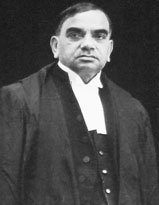

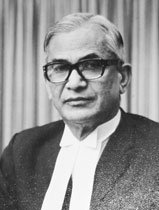
Legal Notes
Add a Note....